The ‘company’ of the title of Casey Affleck’s latest written-directed film is the people we sit with, socialise with, invite into our homes. That last bit is key and a giveaway to the plot twist that comes a little too late in this slow-burn, handsomely-mounted, era-hopping Russian doll movie. It begins with a young woman (Emily Alyn Lind) dressed out of style arriving at a Christmas party in the ’70s. Though not known to the host, she’s charitably ushered into the house and begins to hold court telling a story of Tom, an elderly man who died in the company of a stranger in a remote cabin in 1953. Tom (Nick Nolte doing grizzled) discovers a young woman (Caylee Cowan) in the snow and brings her into his humble abode where she begins to tell him a story too. In that tale, a turn-of-the-century homesteading couple (Scoot McNairy and Adelaide Clemens) find a young man in the snow (Atticus Affleck), and drag him in front of their hearth to recover.
Image Nation Studios/Spooky Pictures
Now, as the stories within stories progress, we look for the common theme. Is it in the otherworldliness of these visitors? Each dresses in black, talks in an olde worlde narrative and seem to have an insolence and poise beyond their years. Is it in the sense of approaching dread as the homesteaders deal with a plague of local murders where hearts are cut from bodies, Tom contemplates his mortality or, in the ’70s, a young man (Indiana Affleck) glowers darkly at the storyteller from across the room? What is the sting in the tale?
To reveal it would be to spoil, but Affleck (co-writing with Ron Hansen) lays clues as characters talk in gothic philosophical terms and move through the painterly vistas. In its use of voiceover and sketching the slow lives of American settlers – and the way that they leave their mark on the world – Company recalls something of Train Dreams. But where Clint Bentley’s film revelled in the simple man and word, Affleck’s narrators get tangled in oblique pondering and references to Persian mystics. It’s difficult to know what anyone is actually trying to say, despite them saying a lot.
The film is a showcase of Affleck’s skill as a director and his family though. Atticus Affleck makes an impression as a mini-me of his dad and pretender to the Chalamet school of precocious, magnetic performance. Affleck senior’s late mother also appears as one of the party guests in the first segment. Meanwhile Nolte and Ben Mendelsohn (as a suspicious Aussie neighbour to the homesteaders) provide a sense of groundedness which keeps the endeavour from floating away on florid ideas of death, life and the meaning of it all. As a genre period piece with an unexpected bite, it’s good looking and stately-paced. But there is a recent existing film (no spoilers) that addresses similar themes to which it will be unfavourable compared.
Words by JANE CROWTHER Images courtesy of IMAGE NATION STUDIOS/SPOOKY PICTURES Company premiered at the 83rd Venice Film Festival
VENICE DISPATCH Photographs by GREG WILLIAMS Words by JANE CROWTHER
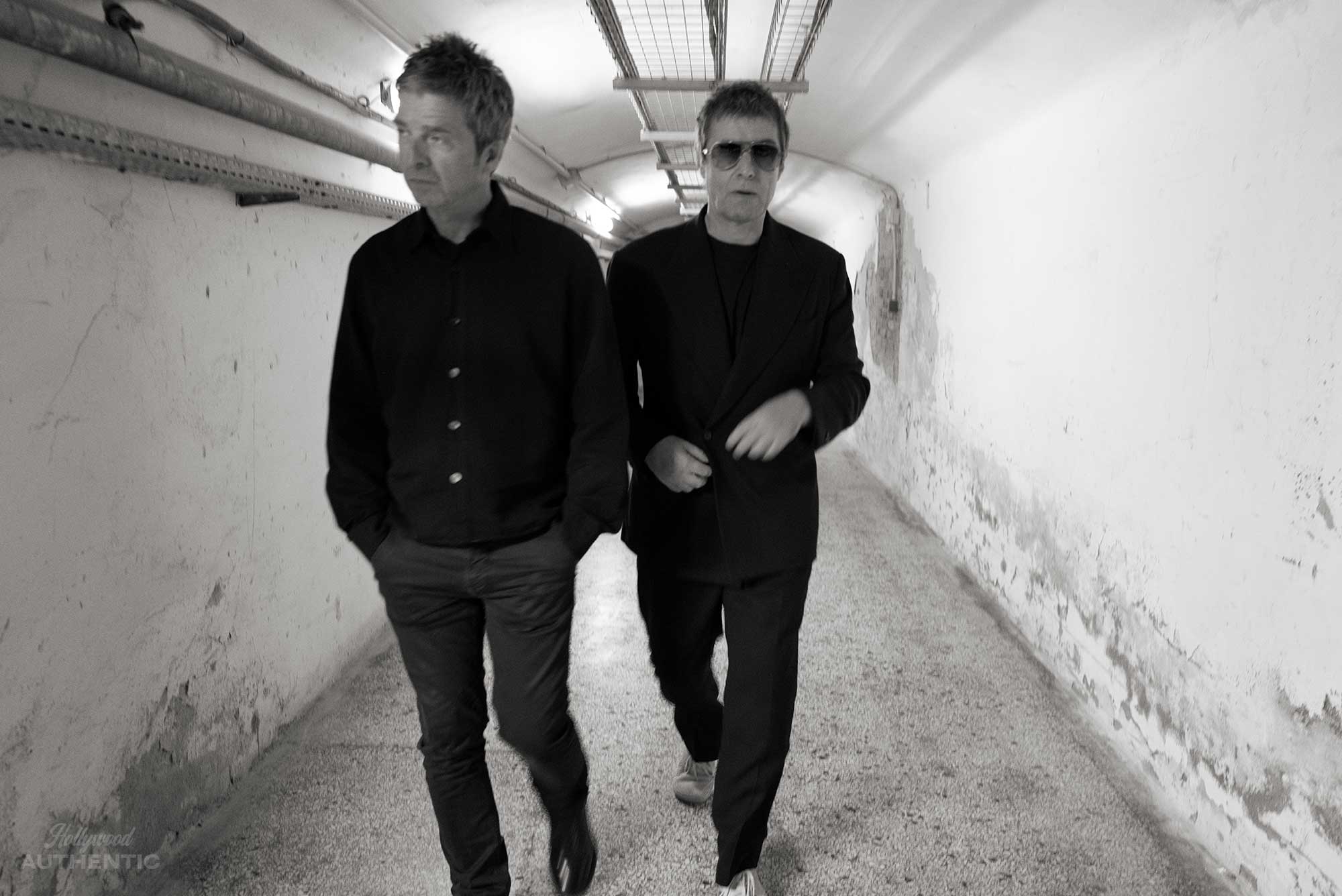
As Greg Williams joins Liam and Noel Gallagher for their first trip to the Venice Film Festival with their documentary, Oasis: Don’t Look Back In Anger, Hollywood Authentic unpacks what makes this movie an essential film of our times.
When the Gallagher brothers arrived on Venice’s Lido they were greeted with even more red carpet fervour than the usual festival hysteria, and their emotional documentary charting their 2025 reunion tour received an eight-minute standing ovation and Manchester City flag waving post premiere in the Sala Grande. Estranged for 15 years after a bust-up at a Paris gig in 2009, Liam and Noel raised their joined hands aloft in the feted cinema, echoing the reconciliatory move they pulled at each concert in their worldwide tour. There wasn’t a dry eye in the house…
Don’t Look Back in Anger may be the title of one of their hits, but the name of their documentary isn’t just a nod to the reunion of two brothers and artists, it’s a rallying cry to a polarised, beleaguered and warring world. In the film created by Steven Knight and co-directed by Dylan Southern and Will Lovelace, the gentle thawing of relations between the siblings which leads to newfound respect, enjoyment of each other and ultimately, forgiveness lies the optimism for any viewer (fan or not) that we are all capable of compassion and redemption. That in our dumpster-fire world which currently values cruelty, division and isolationism, the humanity and brotherly love shown in the documentary, on-stage and off, might be a promise of hope. If two lairy, sweary Manc rock stars can find a common ground, then couldn’t nations, governments, generations?
Mind you, it helps that Noel and ‘our kid’ are also exemplary musicians and showmen (Liam gives up cigarettes and alcohol for the tour, they polish their performance with diligent rehearsing and Liam’s tambourine posturing is undeniably cool by any measure) as well as the creators of anthemic hits that hold social relevance globally. The power of music and art to unite and move is also intrinsic to this film, the reaction of the crowds at the gigs healing the brother’s rift as much as any personal overtures, and giving audiences watching onscreen a front row ticket plus a profound sense of community and communion. Can AI do that?
Oasis: Don’t Look Back In Anger is not only a superlative concert film (charting the 41 shows the band undertook around the world) it’s a shot of welcome nostalgia, and the film we probably need right now as much as want.
Photographs by GREG WILLIAMS Words by JANE CROWTHER Grooming by NATHAN JASZTAL Oasis: Don’t Look Back in Angerpremiered at the 83rd Venice Film Festival and is in cinemas now Read our review here
VENICE DISPATCH Photographs by GREG WILLIAMS Interview by JANE CROWTHER
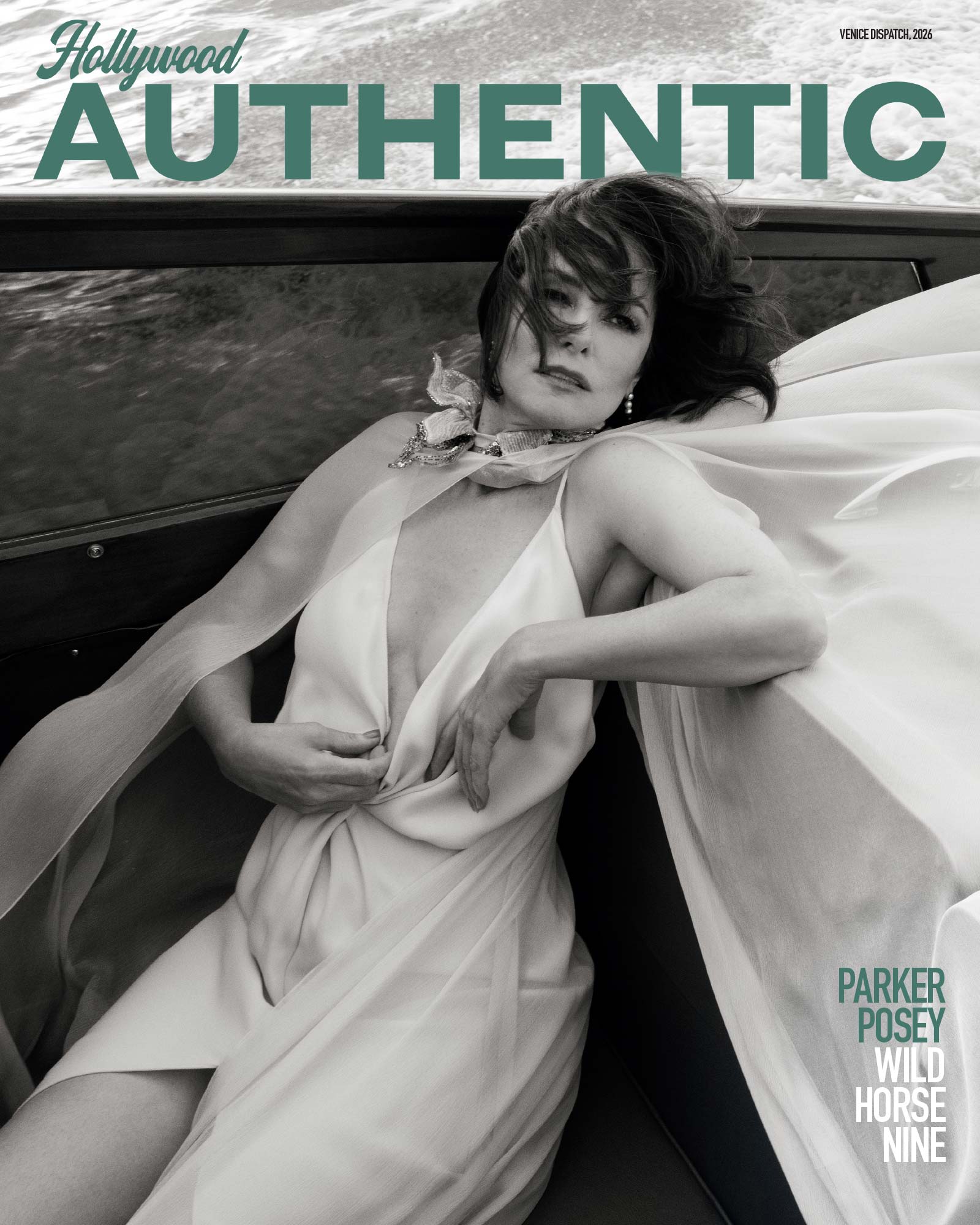
The Wild Horse Nine actor tells Hollywood Authentic how her friendship with Sam Rockwell made their on-screen marriage zing.
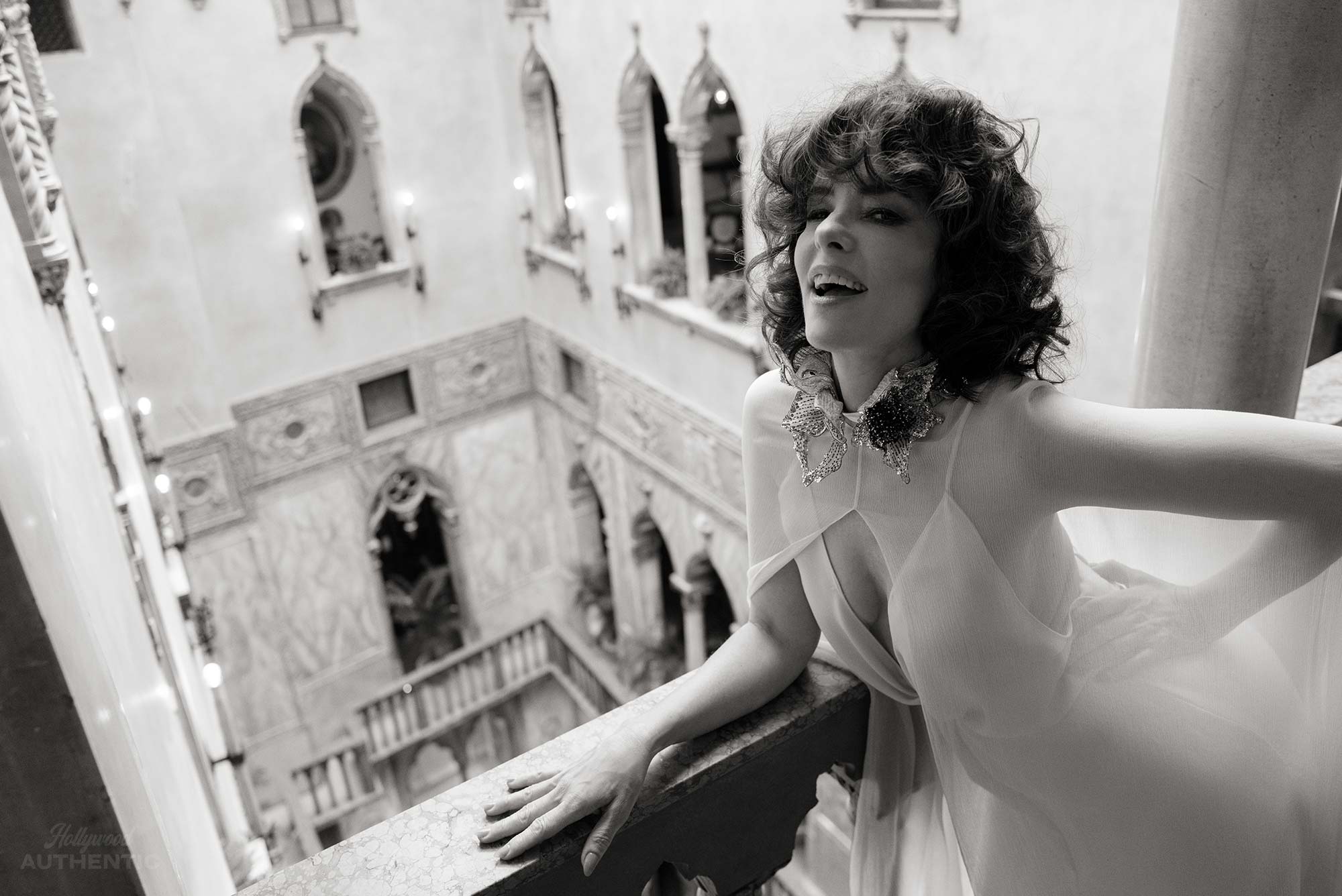
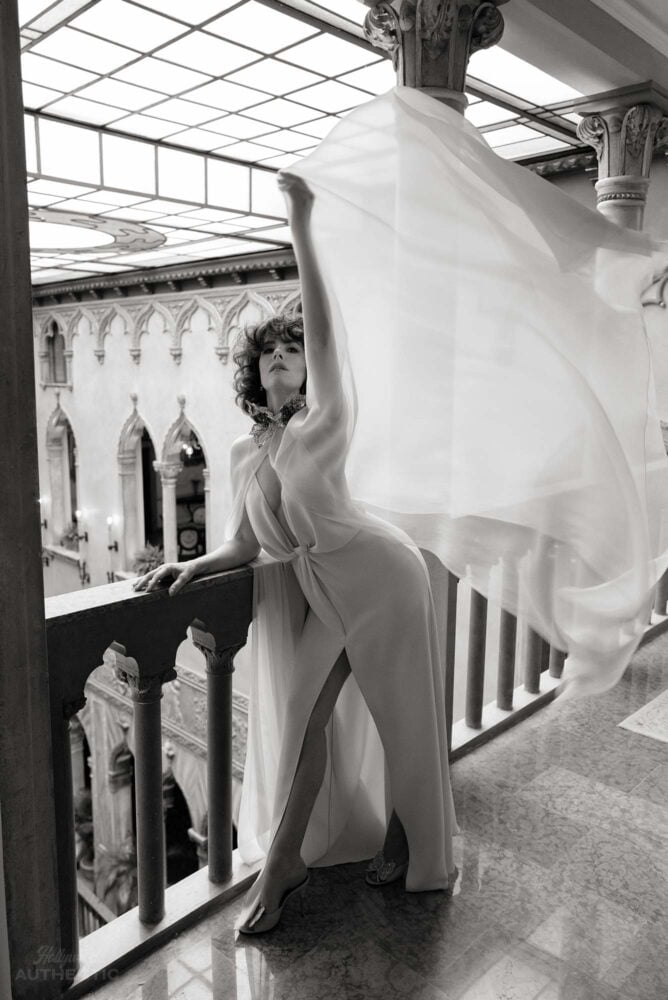
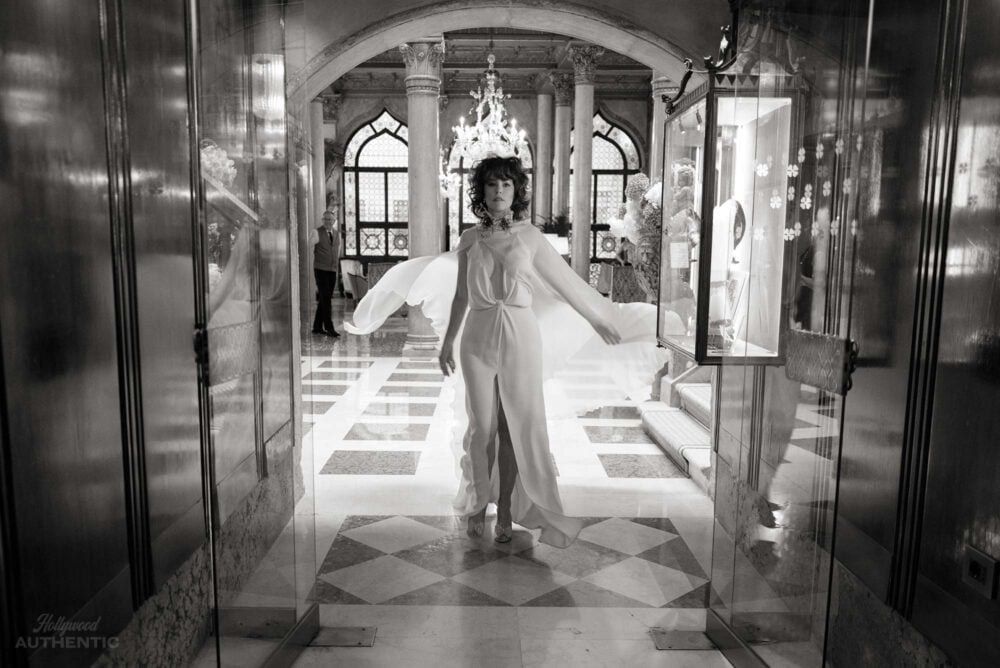
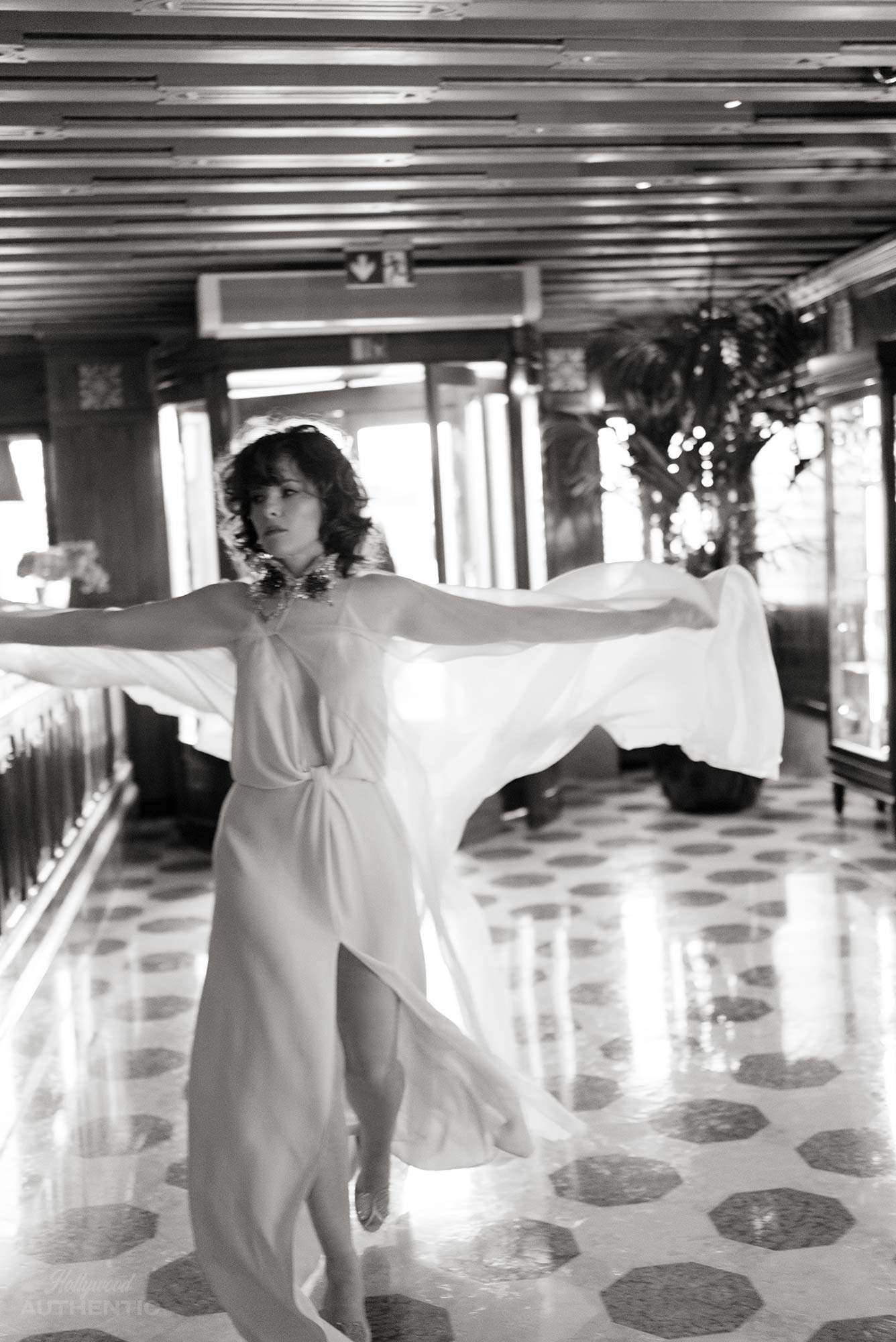
If it feels like Parker Posey and Sam Rockwell have real, tangible history together in Martin McDonaugh’s Venice-bowing Wild Horse Nine, it’s because they have. ‘I’ve known Sam for like 30 years and have always felt a kinship with him,’ Posey tells Hollywood Authentic at the floating city’s Danieli Hotel. ‘We’d had similar career trajectories, from the independent film scene in the ’90s and having lived and worked in New York. Sam was in Lawn Dogs in the ’90s, and I remember Tom Dichello telling me that if the part had been written for a female that I’d have played it. When we were in Venice, Sam reminded me of an improv bit we did when we were in our twenties, in a movie called Drunks, that took place in an AA meeting, and he’d thought ‘oh, i’d really like to work with her… I’d like to fight with her in something…’ He certainly got his wish in McDonagh’s film. With Rockwell playing an exasperated ’70s CIA agent on assignment with his rogue partner (John Malkovich) on Rapa Nui, Posey appears as his no-BS wife, Marge, on the phone from the US. It’s a feat that the duo paint the story of a marriage via combative telephone conversations and in only a few scenes. ‘Acting is like sparring and there’s such a wit and force to Martin’s writing. He brought a copy of Who’s Afraid of Virginia Woolf? when we had a read-through and suggested we read scenes together from it. That never happened, we rehearsed on the phone instead, a few days before I flew to Easter Island.’
Even though her character was on the end of the line in the film, Posey was not about to literally phone it in. She was on-set in person to deliver Rockwell verbal volleys in real time – something she felt vital for the project. ‘It was important that the conversations had as much life as possible to feel present on film,’ she says. ‘“Acting” phone calls are weird because you have to guess how the other actor will perform them, as well as performing yourself. Usually, in these scenes you’re acting with the first AD or the script supervisor – neither of whom are actors – and they tend to call out the lines and project their voices, then the actor has to let all that go and lift it back up into the reality of the story. Phone calls are usually exposition, but in this movie they’re very much a part of the whole.’
Though she’s adept at improv, Posey felt no need to tinker with McDonagh’s scripted words. ‘I didn’t play with my dialogue at all because Martin’s a playwright! I was taught at drama school that the playwright’s words should be respected and the actors’ work is to learn the lines. If there’s room to play, then it’ll come out in the scene — but not until the lines are learned and inhabited — and then you ask the writer. The movies I did with Christopher Guest are a whole different thing, which is that they were entirely improvised on camera, as it’s happening while the camera is rolling. But Sam threw in a line that Martin kept, which was when he called me “a fucking ditz”, ha!’
Marge is the second memorable wife Posey has played recently after her standout performance in White Lotus as snobby Southern belle, Victoria Ratcliff. ‘I hadn’t made the connection to Marge and Victoria, but yes, both husbands have stressful jobs and Marge and Victoria like to lounge. They are both ‘kept women’. I am not a ‘kept woman’ but I do love the costumes of it.’
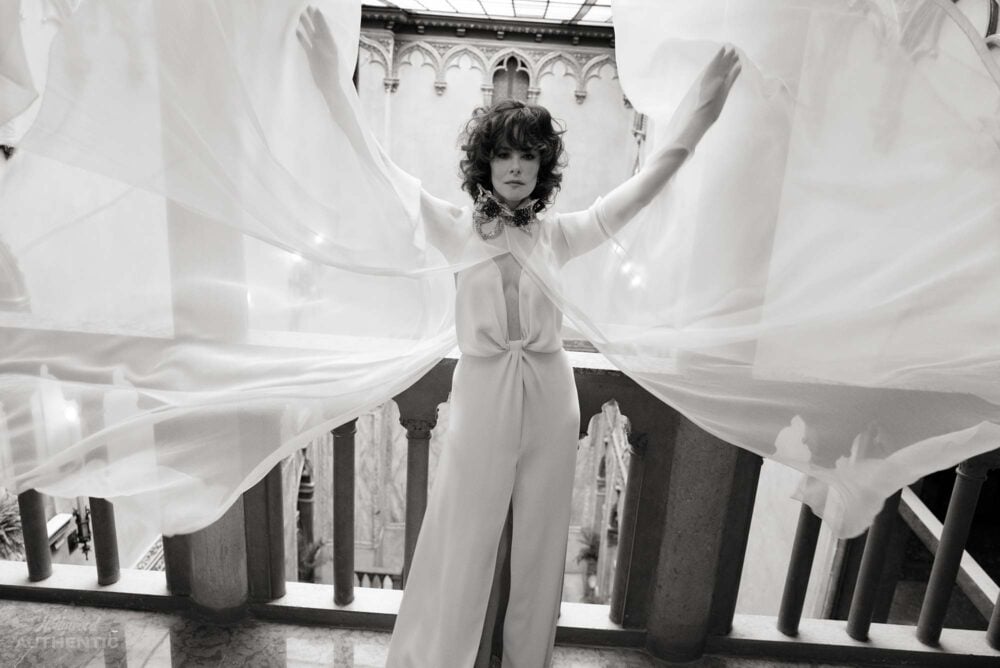
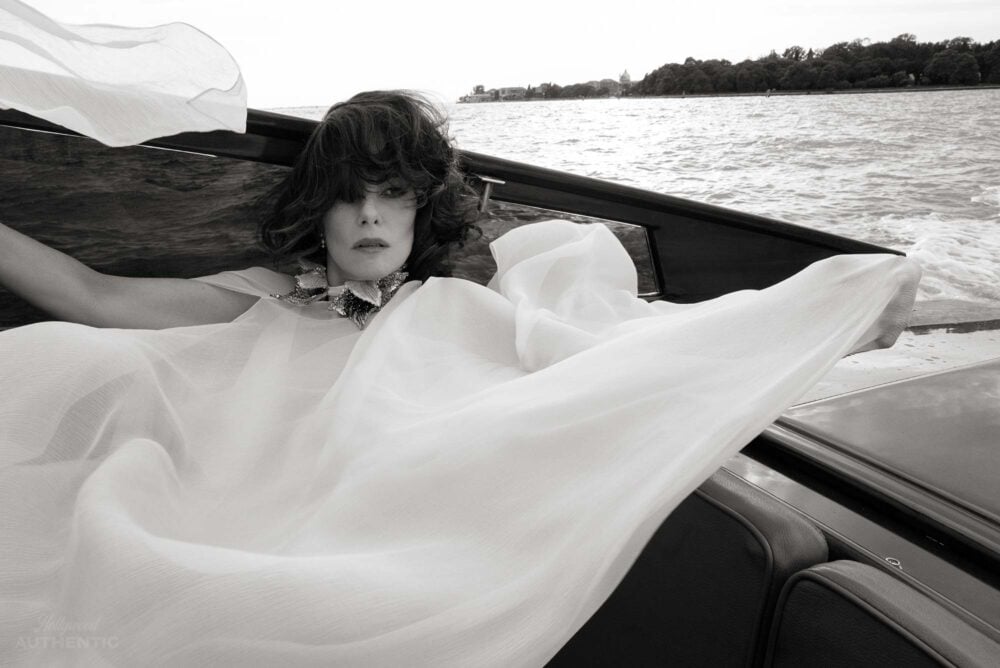
Little wonder she brought the drama to the Lido with her premiere look then: boating across the lagoon with Greg Williams to the premiere of the film in a pale pink Valentino number with floor length cape which billowed dramatically over the back of the water taxi and rippled in the Lido breeze. Victoria Ratcliff and Marge would surely approve…
Photographs by GREG WILLIAMS Interview by JANE CROWTHER Wild Horse Nine premiered at the 83rd Venice Film Festival Read our review here
VENICE DISPATCH Photographs by GREG WILLIAMS Words by JANE CROWTHER
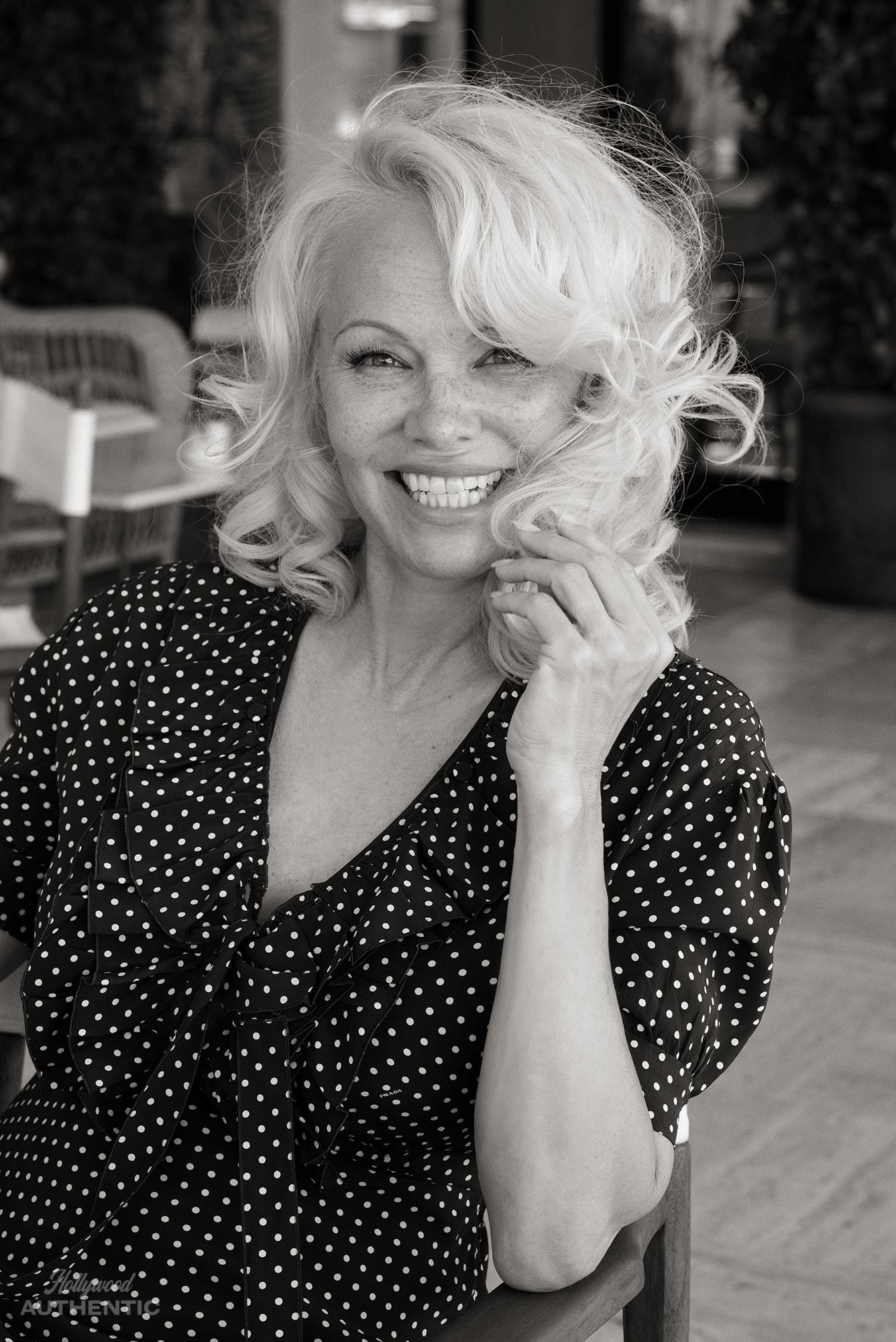
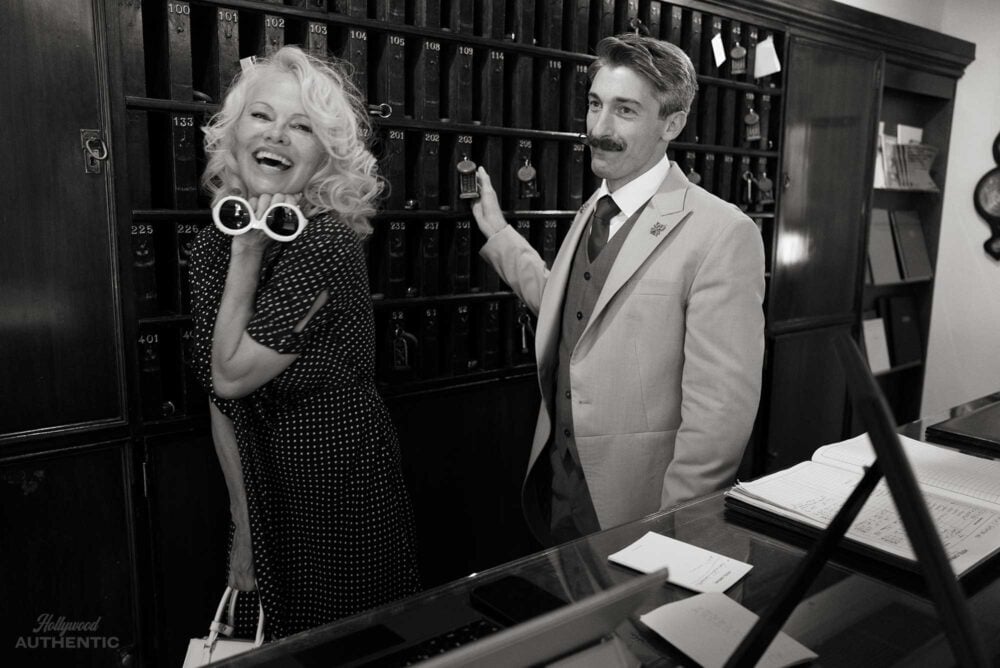
The actor grabs coffee with Greg Williams in Venice and tells Hollywood Authentic about her new film, Place To Be, and how performance has become a life saver.
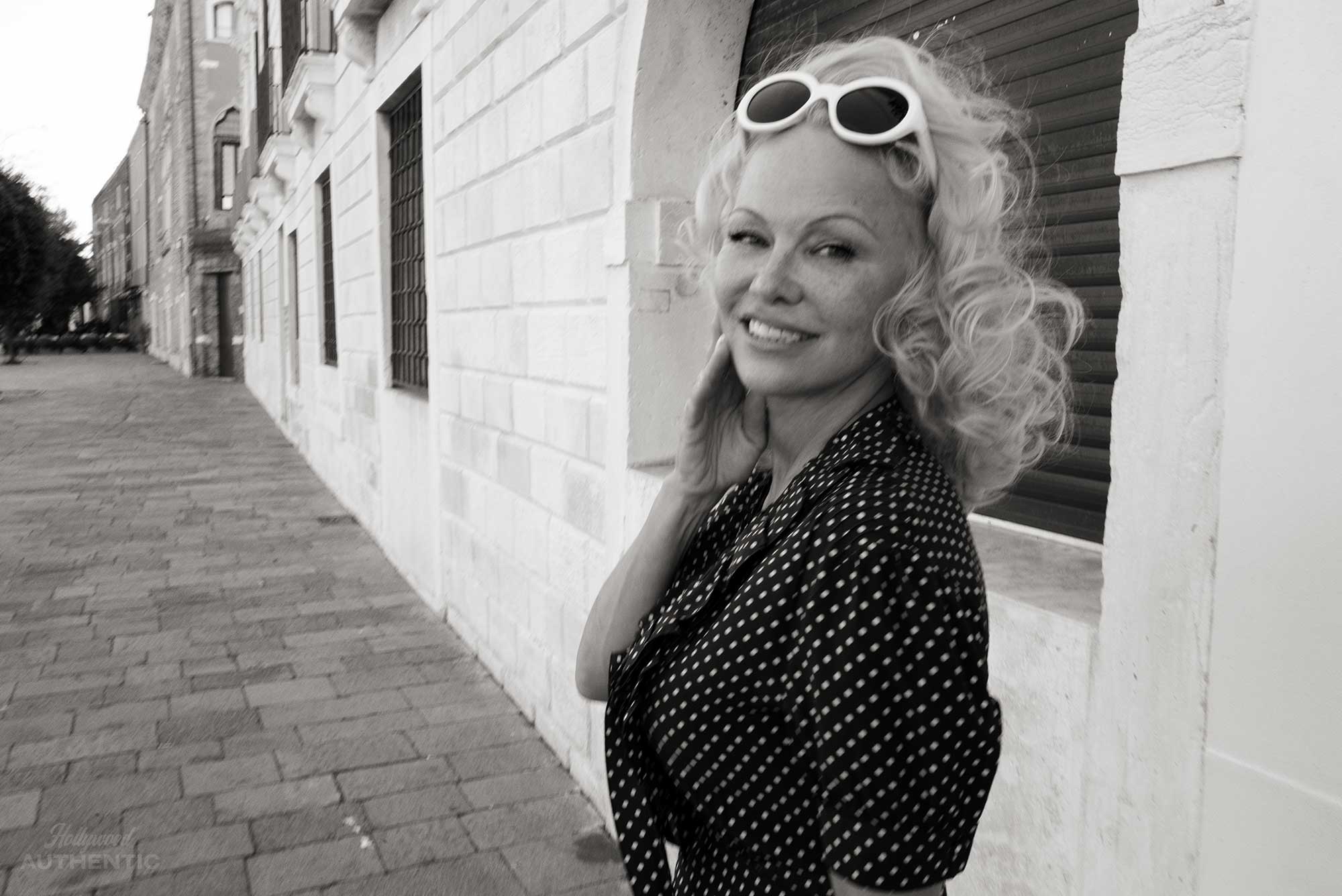
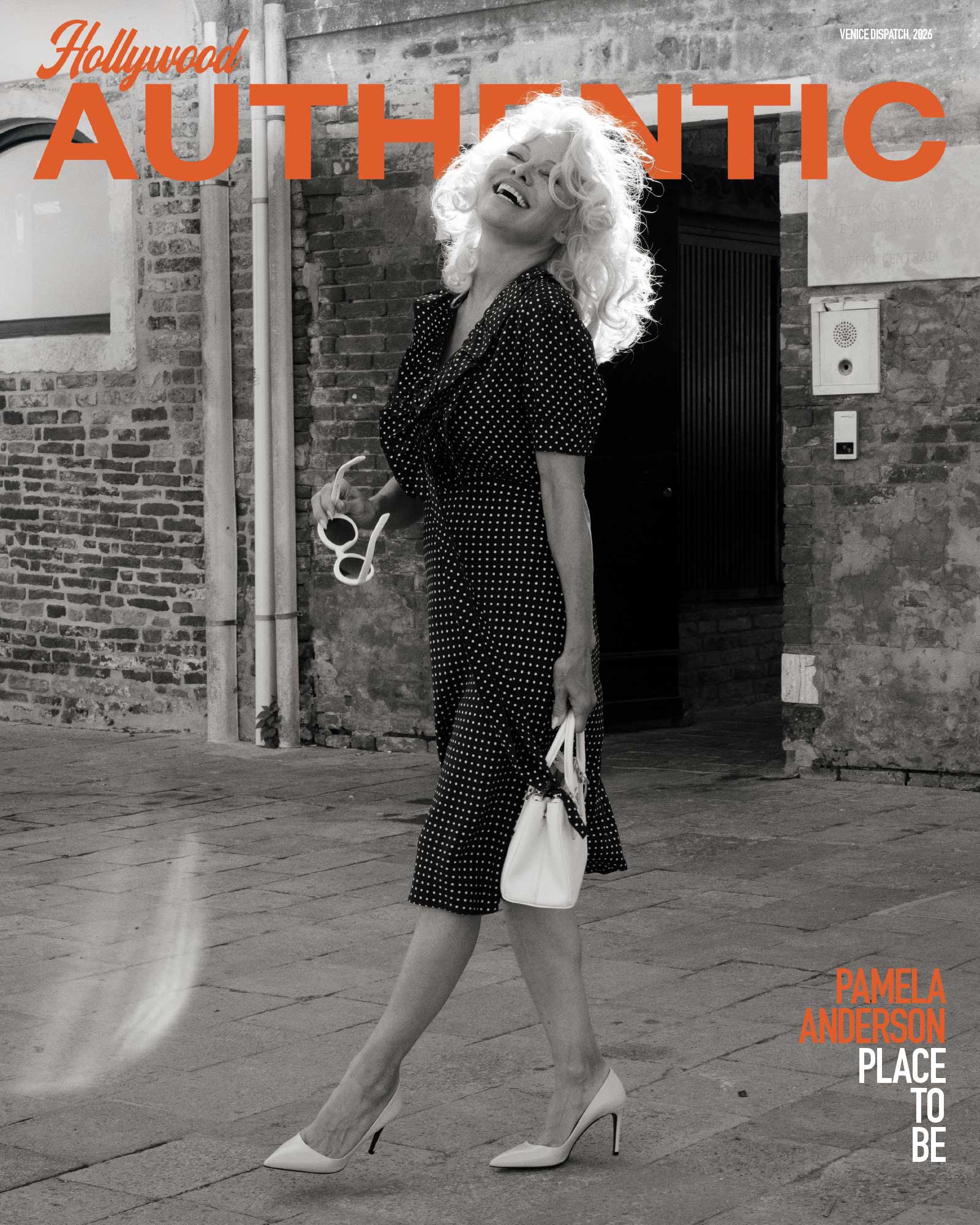
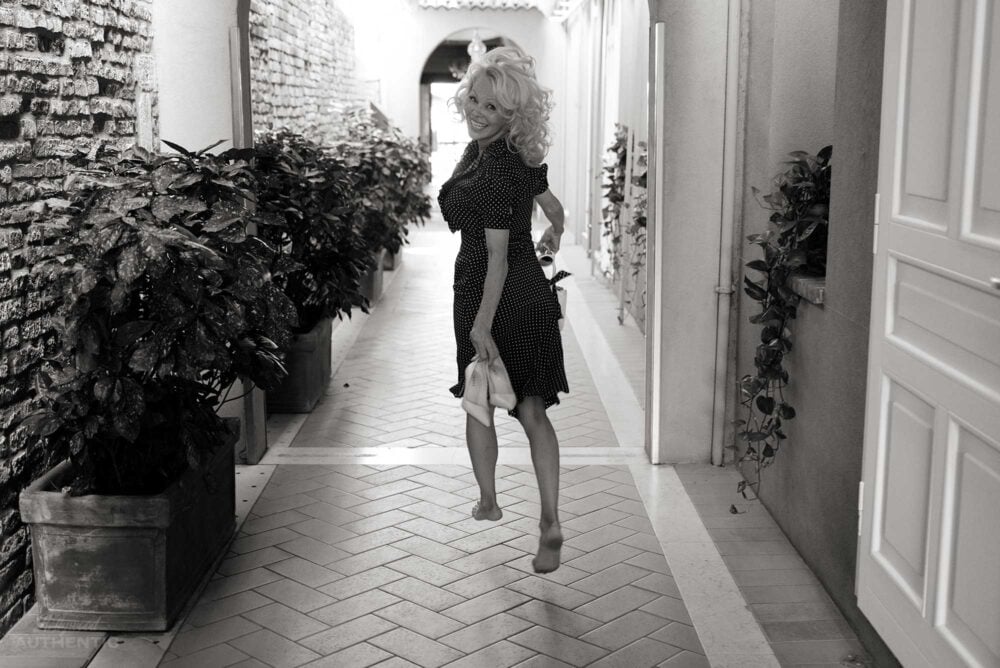
‘I’ve been to Venice a few times, but never to the film festival, which is the favorite of all the actors I know,’ Pamela Anderson says as she takes a stroll around the Giudecca area of the city with Greg Williams. ‘It’s something to aspire to, so I am very grateful to be here with a film finally.’ The film that has brought the actor here is Kornél Mundruczó’s latest, Place To Be – a cross-generational road trip movie starring Ellen Burstyn, Taika Waititi and a white racing pigeon. Anderson plays Burstyn’s daughter, worried when her elderly mother disappears on a spur-of-the-moment adventure to reunite the lost pigeon with its owner.
‘Kornél Mundruczó is a beautiful and artistic director. His films are poetic and meaningful,’ she says of working with the filmmaker behind White God, Pieces of a Woman and At The Sea. ‘I have a small role but I wanted to be a part of it. And to play Ellen Burstyn’s daughter was something I couldn’t pass up. Just being near her you learn by osmosis. She is the kind of actress I wish to be. She is pure magic on screen and off. She has had the career of a legend. She has worked hard on her craft and it shows – she is my utmost inspiration.’ Burstyn was awarded the Golden Lion for lifetime achievement at Venice this year, as well as appearing in Place To Be and Maggie Gyllenhaal’s short, Flesh Impact, exploring the magnetism of Marilyn Monroe. ‘Flesh Impact was beautiful, I loved it,’ enthuses Anderson of her co-star. ‘Only she could have played the part of Marilyn at the age of 100.’
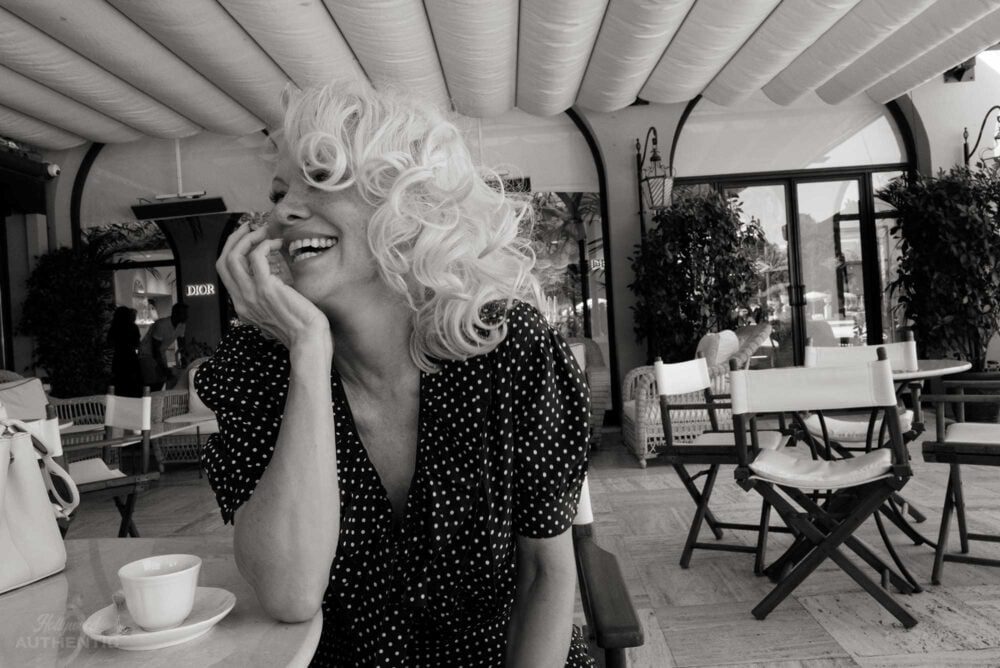
As she drinks a coffee at the Hotel Cipriani, Anderson explains how she’s been lighting a candle in the church attached to her hotel, Airelles Palladio, each morning while she’s been in Venice. It seems to speak to her feelings of gratitude and excitement for a decades-long career that keeps evolving. ‘I have my own dreams and trajectory,’ she says of picking roles to play. ‘I’m choosing projects that challenge me. I have a few things that scare me in the works – in a good way – so that feels right. It’s a mysterious world and has something to do with angels.’ She worked on four films this year so is taking the rest of the year off to support them. ‘I enjoy this part of it too. I’ve done a lot of healing. This is the reward… doing it… but also sharing your work. That’s what I find most liberating about being an actress; It has given me the vehicle to truly know and explore myself. I surprise myself.’
For Anderson, acting has become much more than simply a job. It has changed in importance as she’s grown as an artist over the years. ‘It’s a life saver. It’s better than therapy,’ she says. ‘It is cathartic – when I’m completely immersed in my work, I have no distractions. I’m in love with creating and playing… it’s alchemy. I can turn all I’ve been through into something else. I’m less worried about superficial things. It has freed me. ‘When you don’t have to be perfect, you can be good’ is a quote I love.’’
She has a diverse number of projects incoming. She recently wrapped on Somedays opposite Billy Bob Thornton, and stars in Michael Cera’s feature directorial debut, Love is not the Answer, as well as Sally Potter’s Alma, alongside Richard E. Grant. ‘Each are very different,’ Anderson says of her roles. You’ll have to wait and see – but I’m very proud of all who worked on these projects. It takes a village. From production to crew to actors and directors, it’s an amazing journey each time. I still feel so new at this, you never stop learning. I feel like a brand new starlet – excited and inspired, at the beginning of her career… It’s hard to get a movie made and the industry has changed. So I’m blessed to have found people who believe enough in each other to take risks and support film makers. Indie films are the final frontier…’
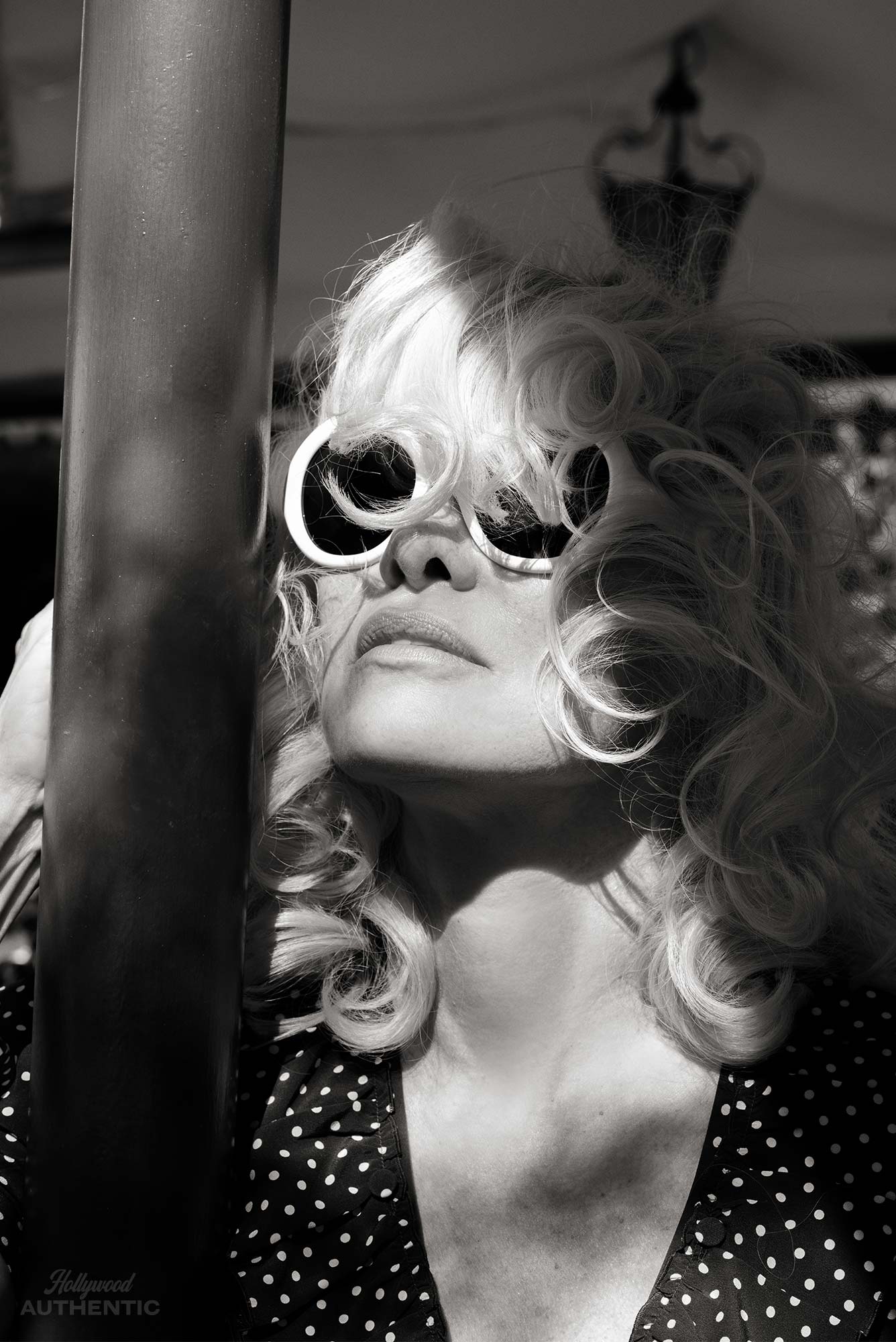
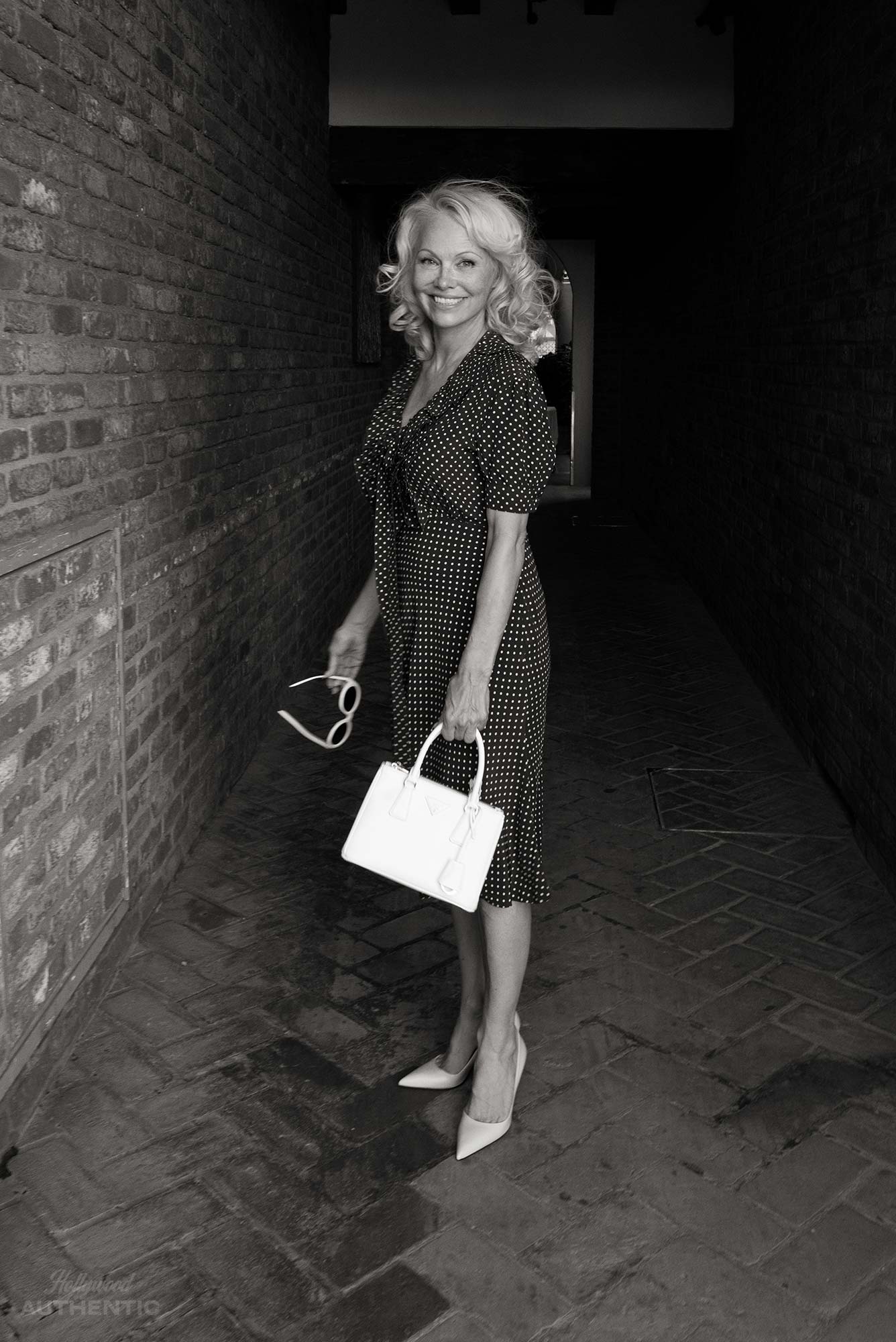
Photographs by GREG WILLIAMS Words by JANE CROWTHER Styling by JONATHAN ZEILER Hair by JOHN NOLLET Pamela wears Prada Place To Be premiered at the 83rd Venice Film Festival
VENICE DISPATCH Photographs by GREG WILLIAMS Interview by JANE CROWTHER
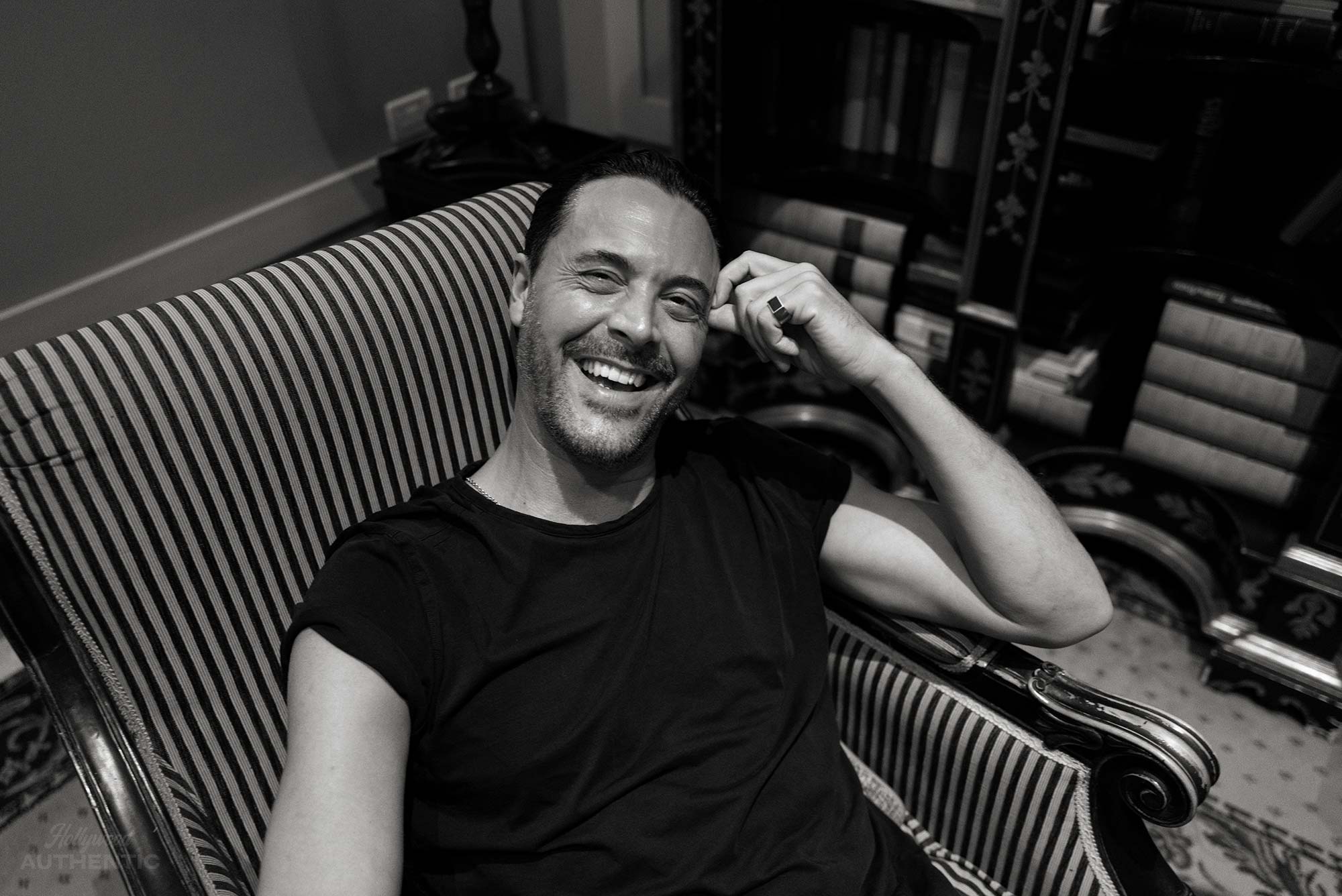
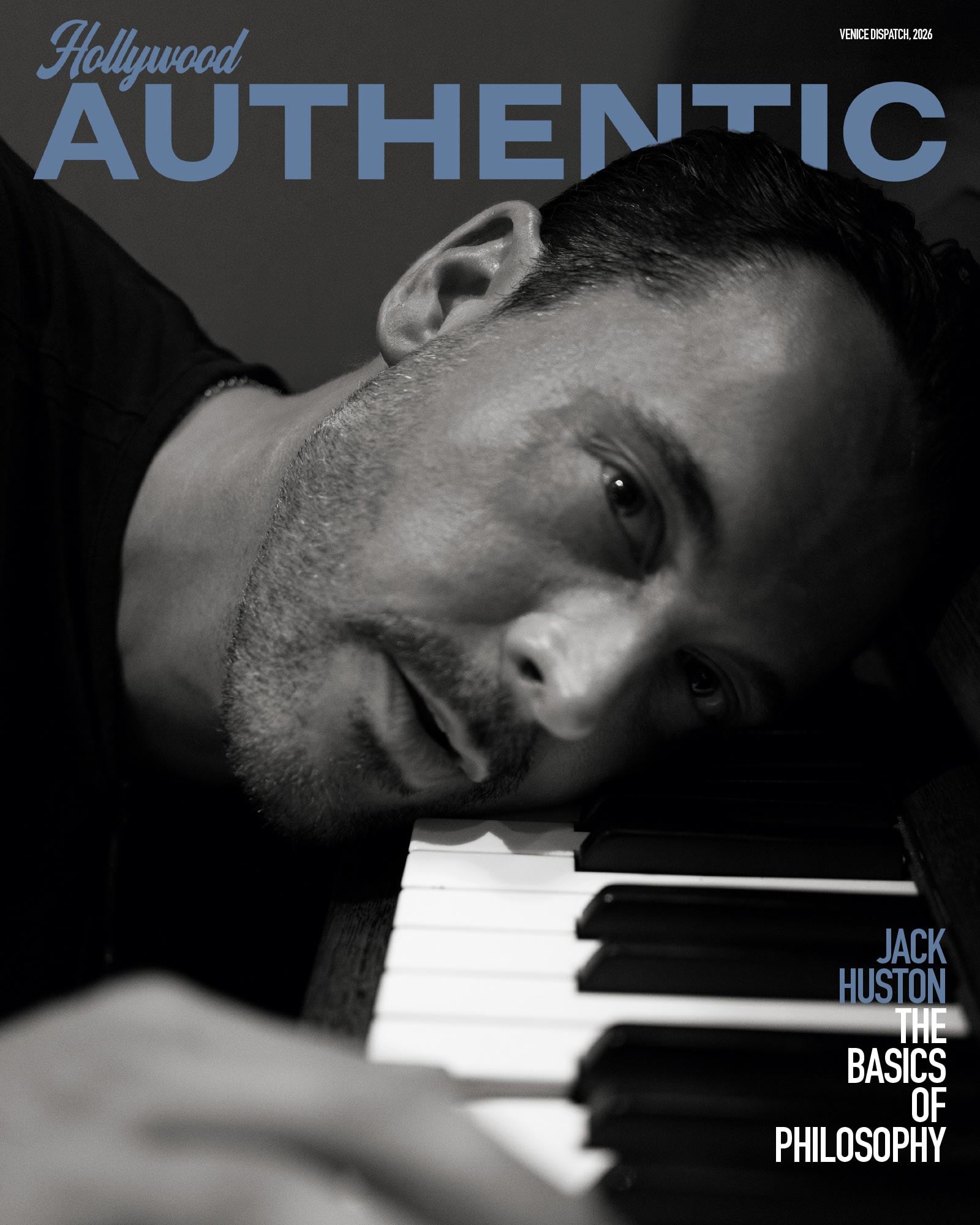
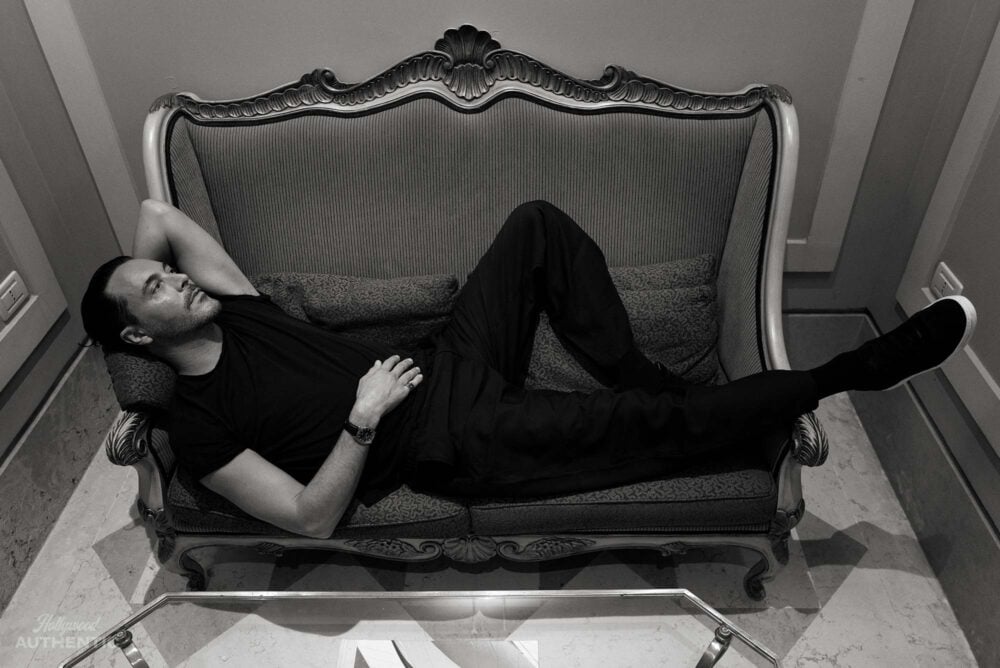
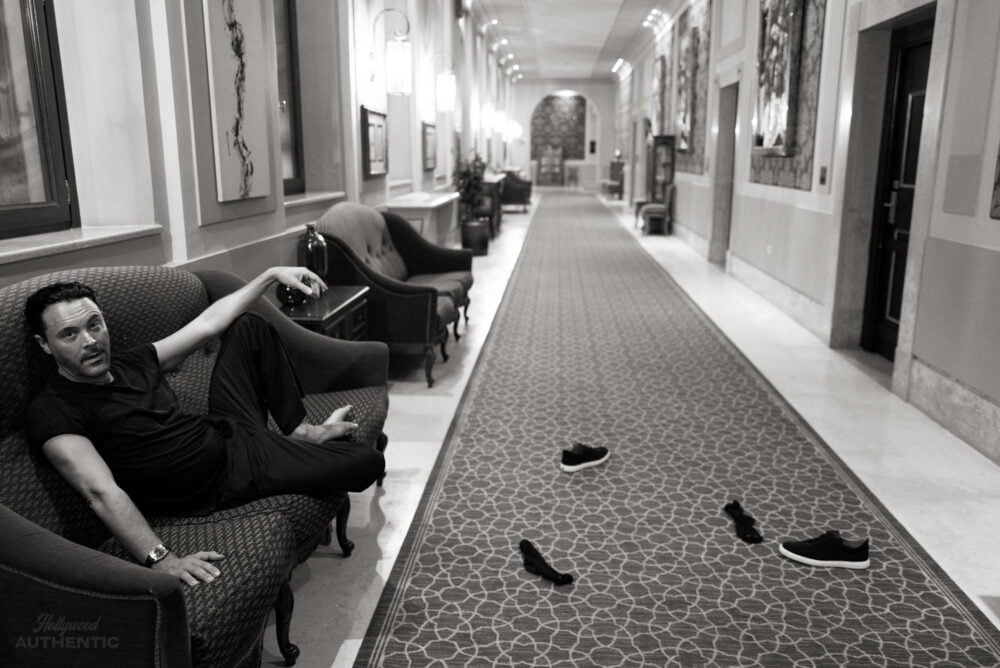
The star of Paul Schrader’s latest, The Basics of Philosophy, tells Hollywood Authentic about becoming a ‘man in a room’, his family legacy and stepping behind the camera.
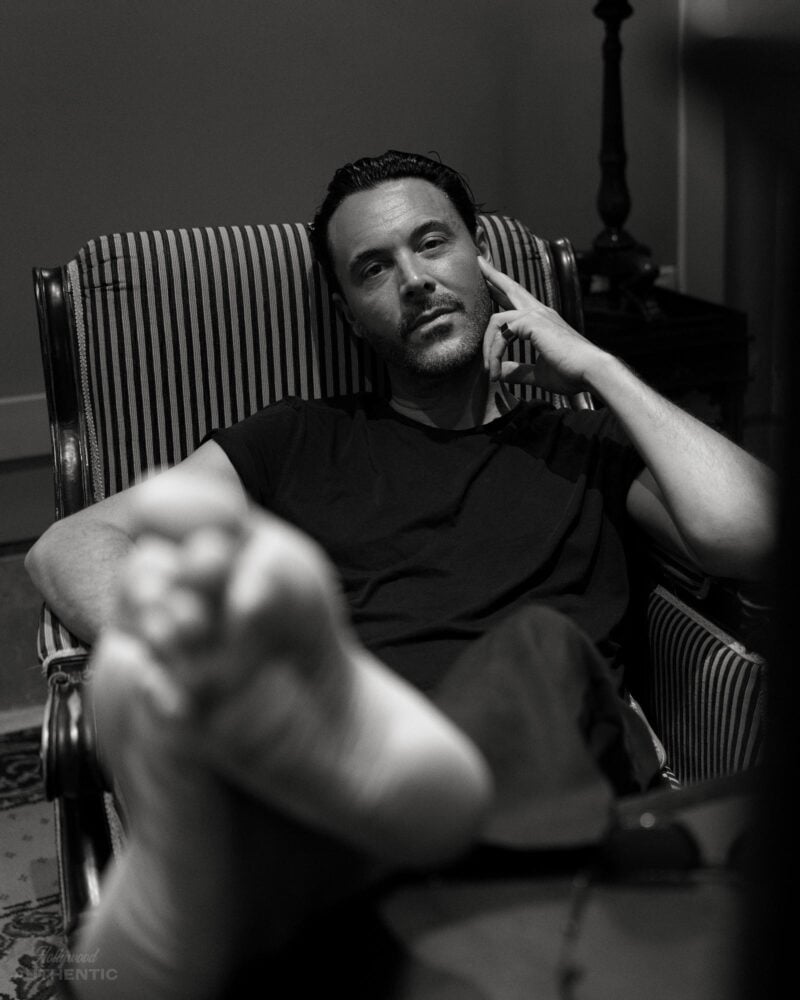
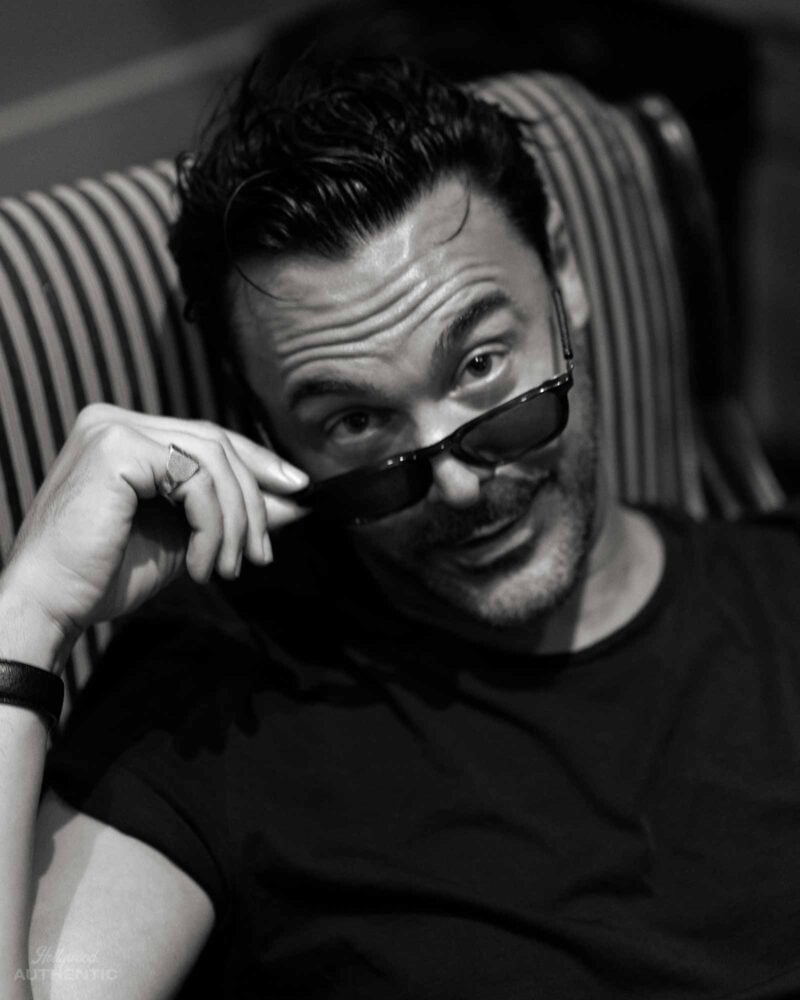
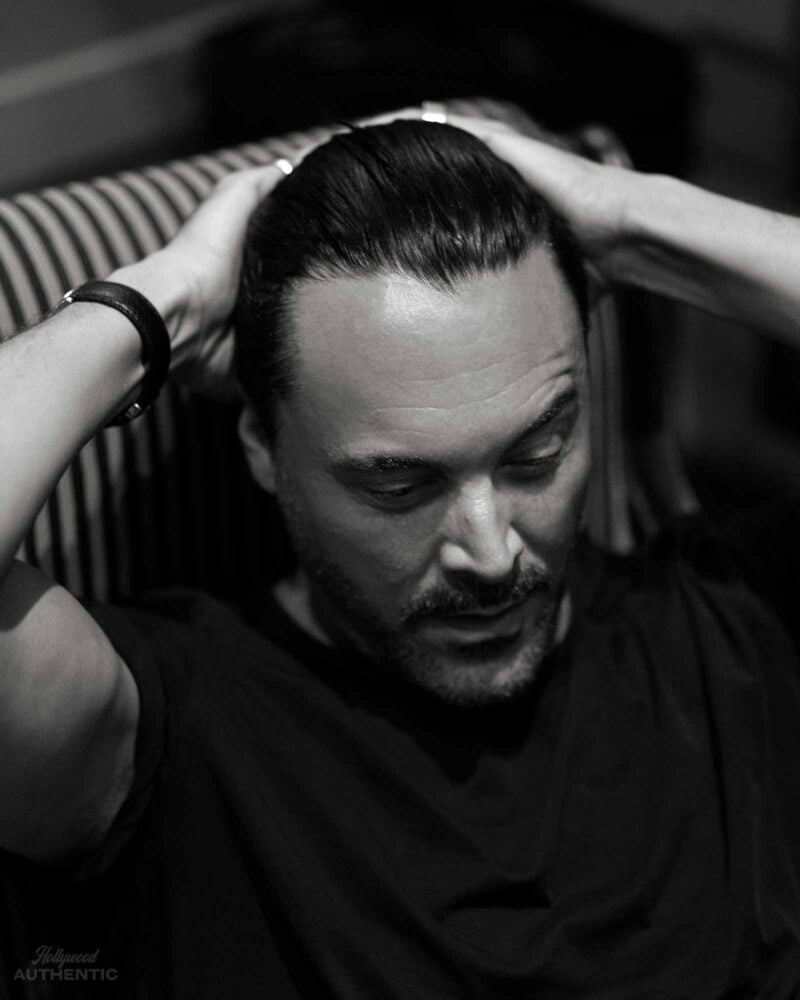
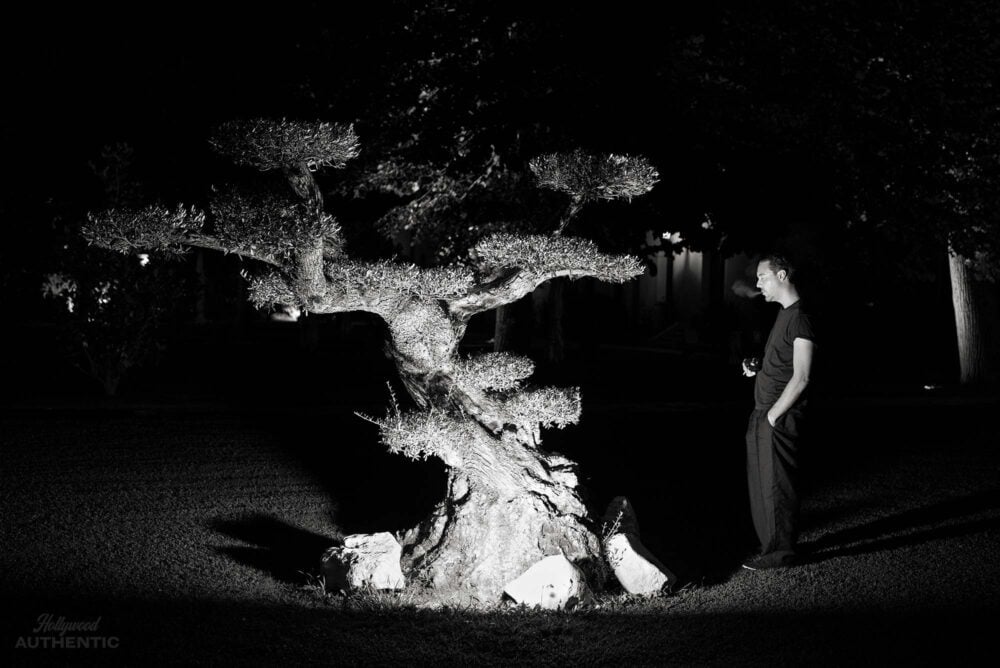
‘I can’t remember the last time I’d read a script and I felt this sort of stone in my stomach, I had to process,’ Jack Huston says of reading the Paul Schrader’s screenplay for his latest film, The Basic of Philosophy, which bowed at this year’s Venice Film Festival. ‘Working with Paul was on my bucket list – I’ve been a huge fan of his for as long as I can remember – and he’s claimed it’s his last ‘man in a room’ films. That’s why it felt like such an honour to be a part of it.’
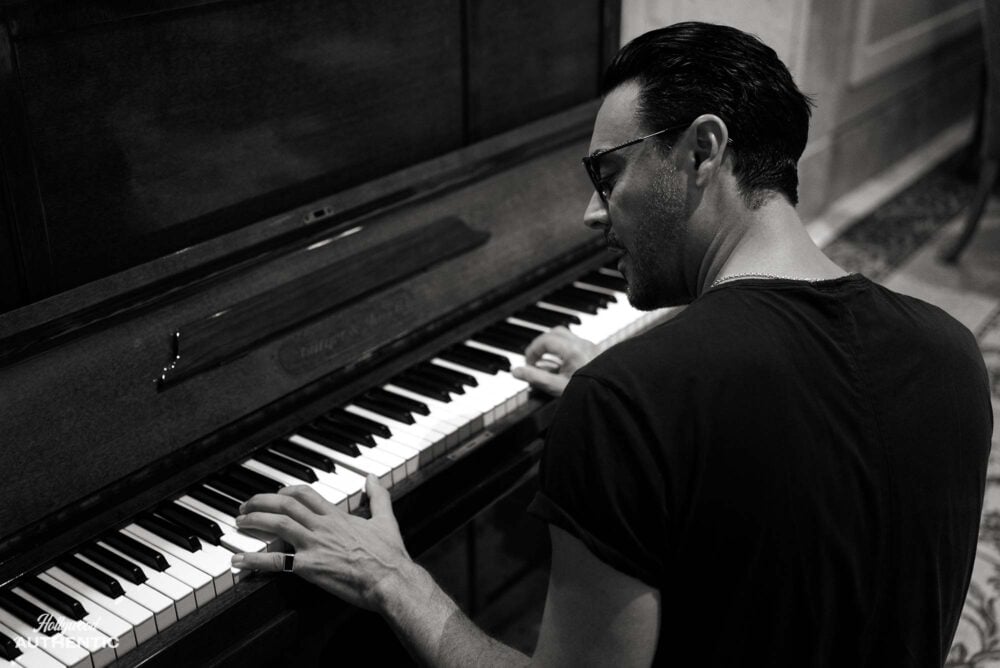
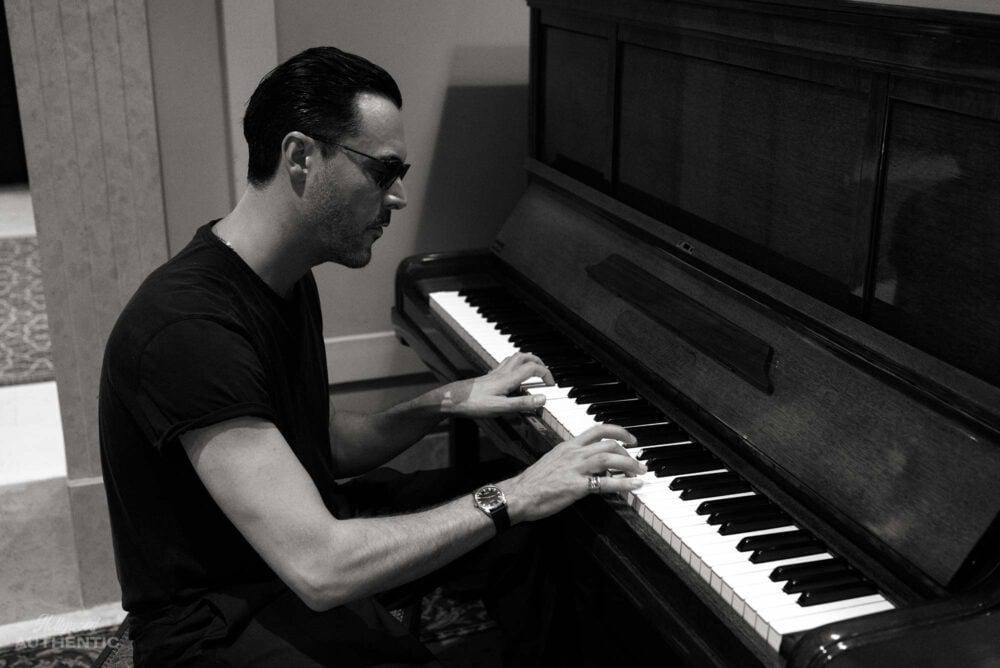
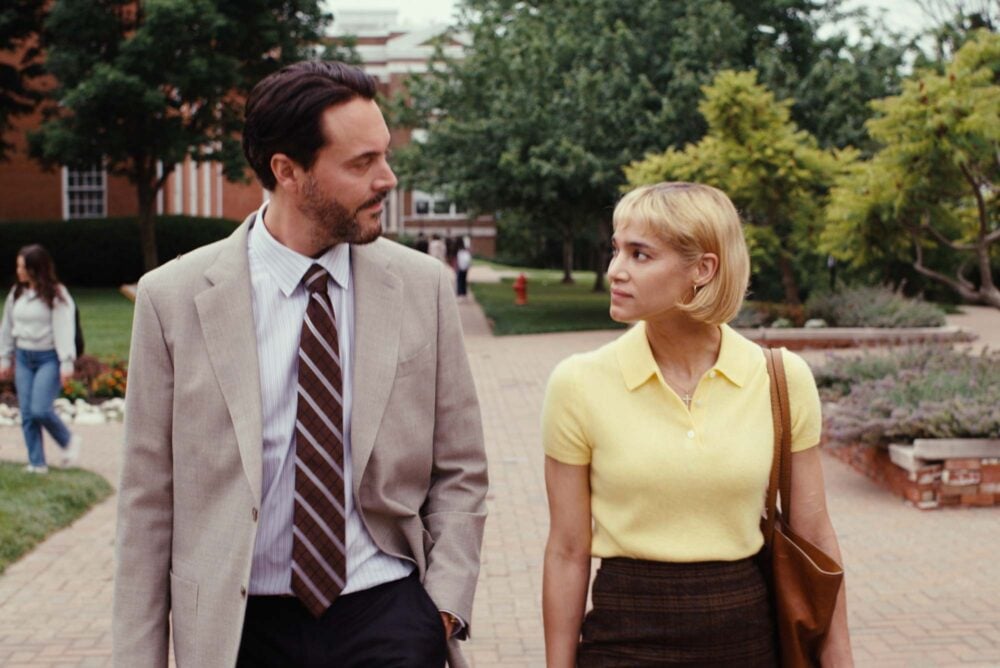
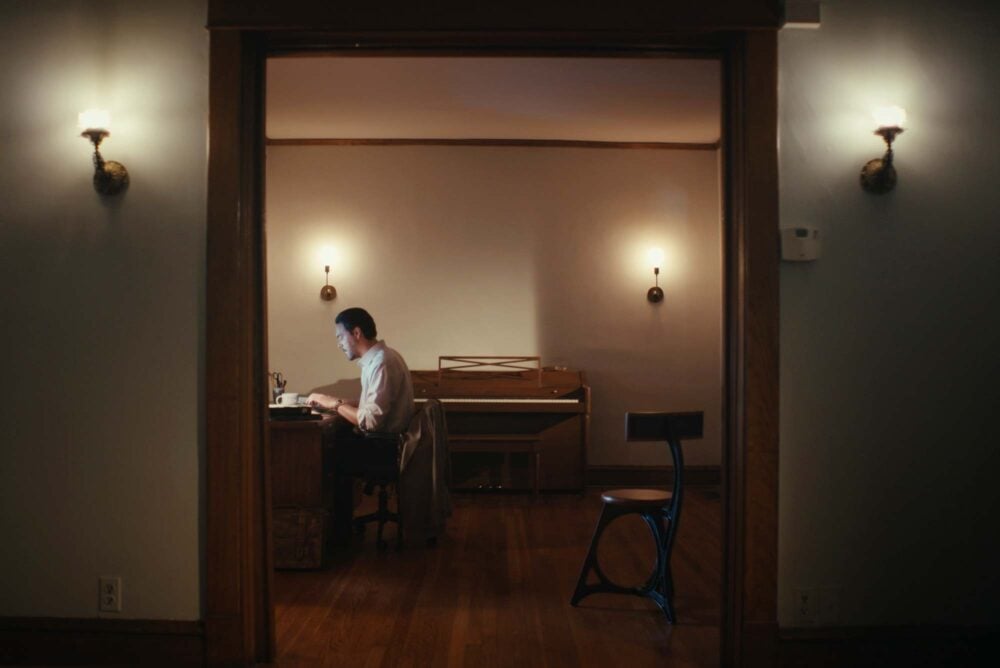
Huston plays a college philosophy professor, John Jorrisen, whose past comes back to haunt him when his father (Bill Pullman) dies. As a younger man he had been a piano player and teacher, and his relationship with one of his young students had crossed the line as they bowed over the keys. Greg Williams captured Huston with a piano during his festival stay at the San Clemente Palace. Schrader’s movie explores redemption, forgiveness, self-flagellation and guilt as Jorrisen works through how to find a way forward.
Grooming and peadaphilia are tough subjects to wallow in as an actor, Huston considers over an espresso as he sits poolside at the Blue Lounge on the the beach at Venice’s Lido to discuss his work with Hollywood Authentic. ‘Every time you deal with this subject they paint the abuser as a real monster, a bogeyman. This is the first time I’ve read a script where a writer humanises the abuser, which is far more real because it’s the people living to the left and right of us; the people living in plain sight that actually we usually have to worry about. The part I find the most startling and unnerving of a film like this is how relatable John is. I felt like if I was to do a film of this nature, I would only do it with someone of Paul’s stature and intelligence, because I don’t think it’s something to take lightly.’
There are many of Schrader’s ‘men in rooms’ who have gone before Huston, not least Richard Gere, who cameos in the film as John’s college president. The actor admits to initially watching many of them when he took on this role. ‘I rewatched First Reformed, and I just remember this sort of starkness. I felt: ‘I’m in such good hands’ with Schrader.’ He also took a dive into the philosophy that his character teaches and wrestles with, specifically Spinoza who John is writing a book about. ‘There’s a great question that Spinoza asks: are we capable of change? That’s a lifelong question. This film is such an exploration of that question, which isn’t answered. It’s posed. Schrader said that he believed the last scene of any film should be the conversation that ensues as the audience leaves the theatre. This film will spark that.’
Schrader’s film also explores the nature of legacy – how we want to be remembered, what we leave behind. Huston comes from two families that have their fair share of heritage; he counts John Huston and the first prime minister of Great Britain among his forebears. ‘Legacy is such an interesting thing, isn’t it?’ he muses. ‘Because it’s not real. The idea is purely optics a lot of the time. It’s not actually who we are. So, on one side, I feel a heck of a lot of duty. I’m duty-bound to hold up a certain appearance or standard. But you can become a prisoner to it.’
In the movie Jorrisen meets his philosophical hero, taking a stroll with Spinoza as they debate the theory of change. Is there a hero Huston would like to meet and pick the brains of? He replies without hesitation. ‘My grandfather [John Huston]. I’d love it. I was five when he died. I’ve been lucky enough to have such a supportive family, and my uncle Danny, and my aunt Anjelica, and people who have really passed on pearls of wisdom that he passed onto them. But I’d love to talk to him myself. And his advice has already been helpful early in my career. I did a film that’s to be forgotten, but there was a review… My uncle said that my great-grandfather said to my grandfather that you can either believe the good reviews or the bad reviews. You can’t believe both. So what a great way of looking at those things: you can believe what they say that’s bad about you, or you can believe what they say that’s good about you. It’s your choice. How do you see yourself? I thought that was such an interesting switch that made me stop caring about the negatives, and focus on the positives. And then the positive reinforcement that goes from that.’ He pauses. ‘And also don’t read your fucking reviews!’
Huston says he’s learnt a great deal in his career, especially from the mistakes he’s made along the way. ‘Now I have a lot more confidence in myself as an actor, because I was given the opportunity to play characters, which is always where I felt far more comfortable. Delving into the character is what makes this job so endlessly fascinating, that we’re able to live these other lives – sometimes lives that we would never go near with a 10ft pole. But being able to explore different people in different parts of life that we wouldn’t usually have that opportunity to do, has opened up a world of intrigue and fascination. That’s the most beautiful part.’
His next big learning curve– and change – is in directing a passion project which he’s written and will direct. Joseph Merrick will track the life of the so-called ‘Elephant Man’ either side of the portion of his life covered by David Lynch’s seismic film starring John Hurt. ‘I would never do something that would step on the toes – or even the toenail – of Lynch’s TheElephant Man, which is probably one of the top five films ever made, and changed my life, and made me want to be in this business in any capacity. But I found a way to tell a part of Joseph’s life that has not been widely told. It’s his childhood, and it’s the last few months of his life where he left London and went to Fawsley Hall to live in nature. It lives ‘arm in arm’ with The Elephant Man and I’ve cast a disabled actor playing Joseph, who we will be announcing soon.’ Huston also has a personal link the Lynch’s film in his off-screen relationship with the late John Hurt. ‘John was my mentor. My nearest and dearest. I loved him dearly. Before he died, he said the sweetest thing; ‘I hope I don’t die before you get the opportunity to direct me’.’ He smiles. ‘He always knew that that’s where my love really lay, on the other side of the camera.’
Photographs by GREG WILLIAMS Interview by JANE CROWTHER The Basics of Philosophy premiered at the 83rd Venice Film Festival Read our review here
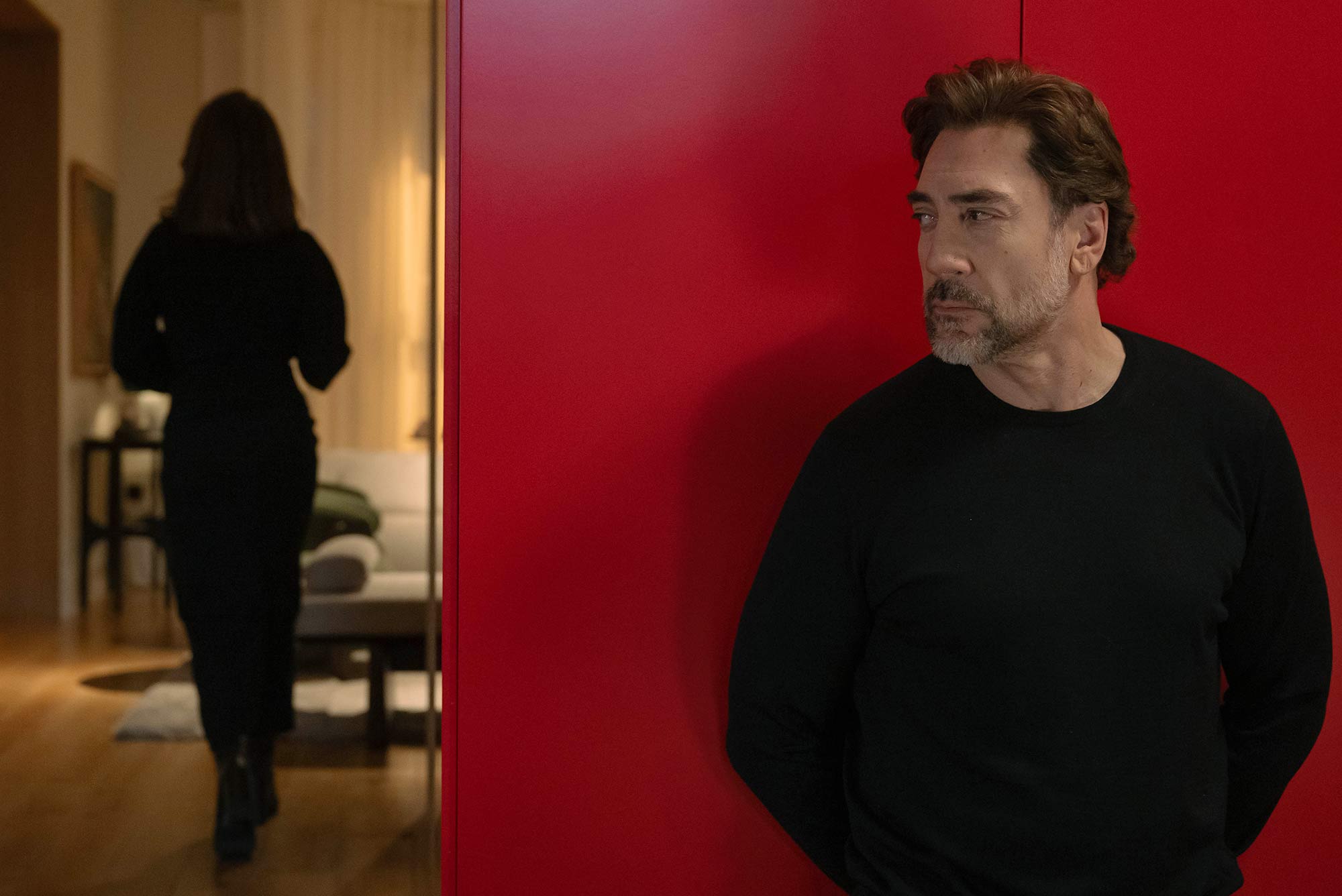
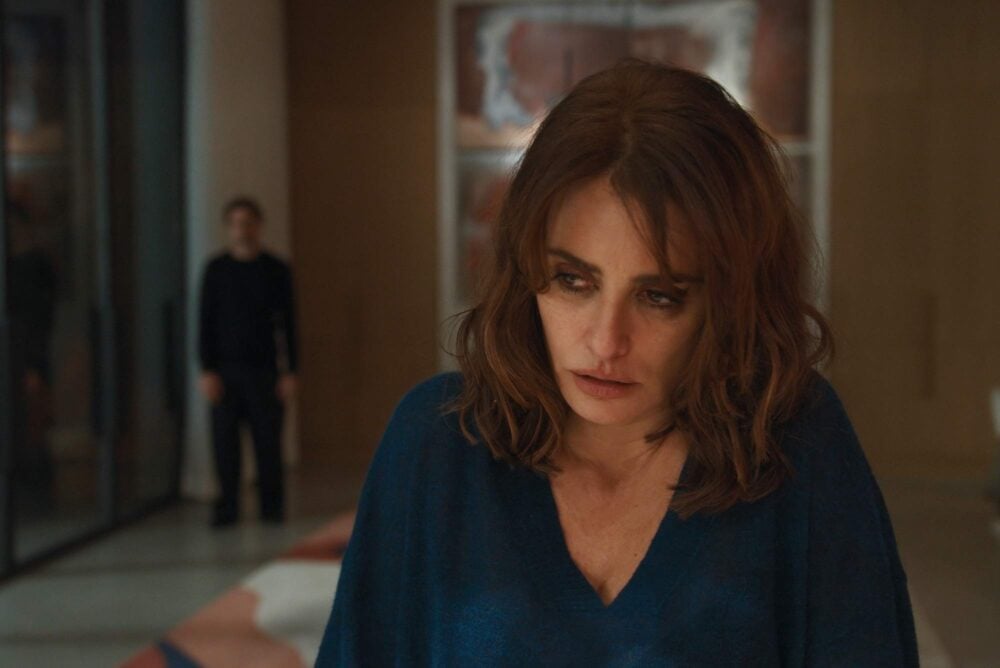
Miguel and Sofia Mereno (Javier Bardem and Penelope Cruz) seem to have it all. He’s an award winning architect, she’s an editor at a publishing house; they live in an expensive, beautiful house in London with their two children and pedigree cat. And when we first meet them Miguel is telling a table of friends at a high end restaurant the story of their romance. Over their first dinner he had wept as she talked and, moved by his sensitivity, she had kissed him. While the table sighs over this, Miguel quickly qualifies the story; she had cats, he was allergic, the tears were not real.
Blue Morning Pictures/Mod Producciones/Pathé Films
When the couple look into each other’s eyes after this confession there is another conversation that is going on – one that takes further shape as he accepts a commission to design a survival bunker for a tech billionaire (Paul Dano channeling Musk). The idea of building fortresses that only the rich can access is immoral to Sofia whose dissatisfaction with her career and marriage becomes a chasm as Miguel says of most things ‘in the end it all comes down to money’.
Money, and wealth disparity, are at the heart of Florian Zeller’s latest drama which explores the way rich people use their resources to control and insulate, that the more they have the more they fear losing. Miguel negotiates with his working class neighbour, Toby (an excellent Stephen Graham) using the lure of cash to smooth over a dispute about a window in a way that prompts Toby to drop the c-bomb under his breath. A massive payday is the sticking point between the spouses, and the spectre of robbery and economic revolution hangs over everything as the tech bro predicts social collapse and a security engineer insists on high-tech alarms in the family home.
But it’s also a study of a fractured marriage, fissuring under the pressure of unspoken discussion. Miguel and Sofia may seem to enjoy one another (they’re funny and light together as they attend a friend’s art gallery and are bemused by some of the pieces) but Sofia’s sadness in viewing a painting of intimacy, her reaction to a young author (Patrick Schwarzenegger) discussing the need to live in the moment, and even the way she folds herself into her duvet at night tell a different story. It’s like that meet-cute Miguel recounts – the reality is less romantic.
Though Zeller’s stagey screenplay and direction are handsome and hold interest, the material is elevated by the pairing of real-life couple Cruz and Bardem. Their genuine history informs every look and gesture, and it’s their humanity and warmth that nudges the final reel over the line as a rather too neat characterisation bait-and-switch is executed. As a conversation about class and economics, Bunker is slippery. As a depiction of mid-life marriage, it’s intriguing. But it’s most compelling as a portrait of the screen presence of Cruz and Bardem, and the tangible connection between them.
Words by JANE CROWTHER Images courtesy of BLUE MORNING PICTURES/MOD PRODUCCIONES/PATHÉ FILMS Bunker premiered at the 83rd Venice Film Festival
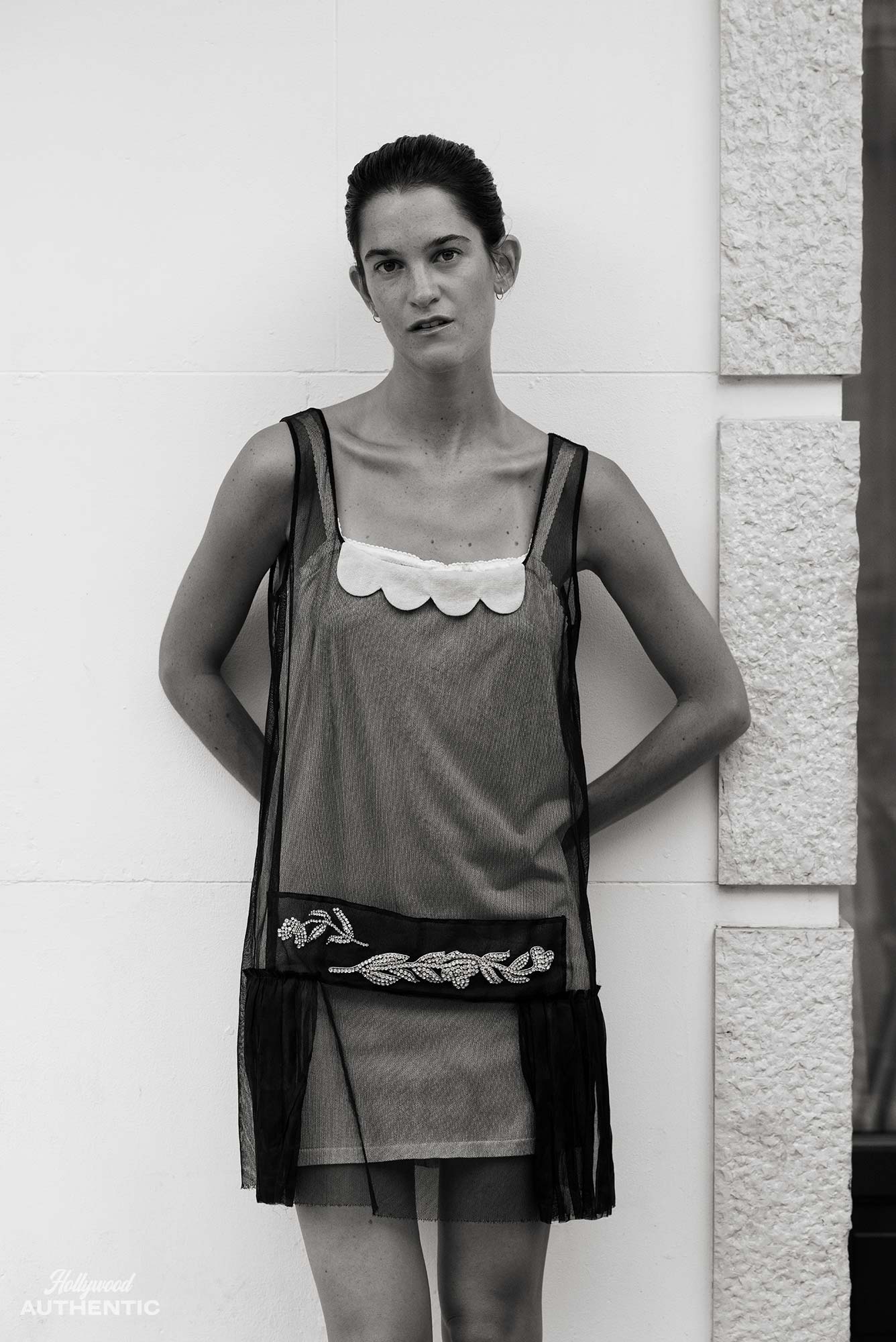
VENICE DISPATCH Photographs by LAUREN CARNELL Interview by JANE CROWTHER
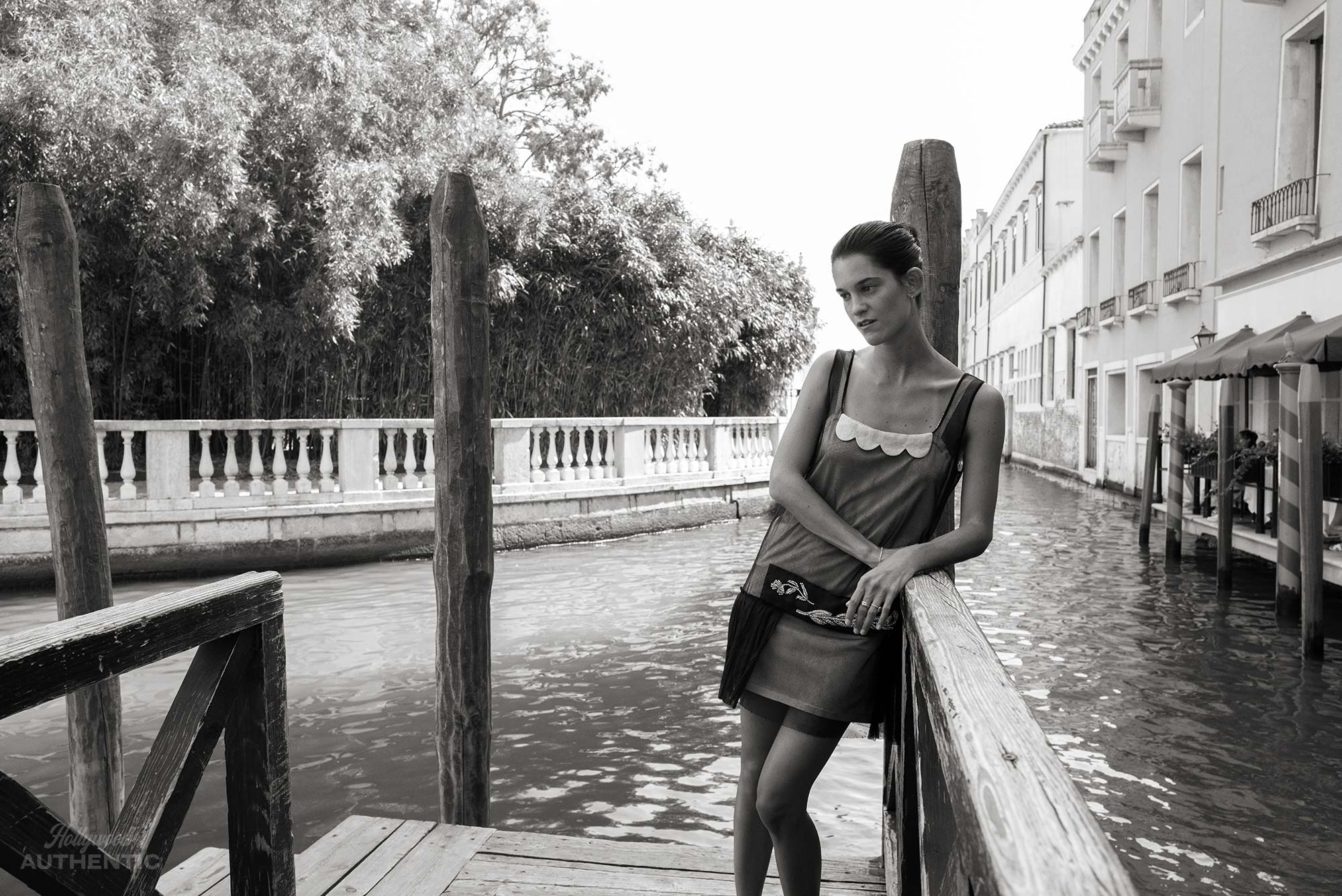
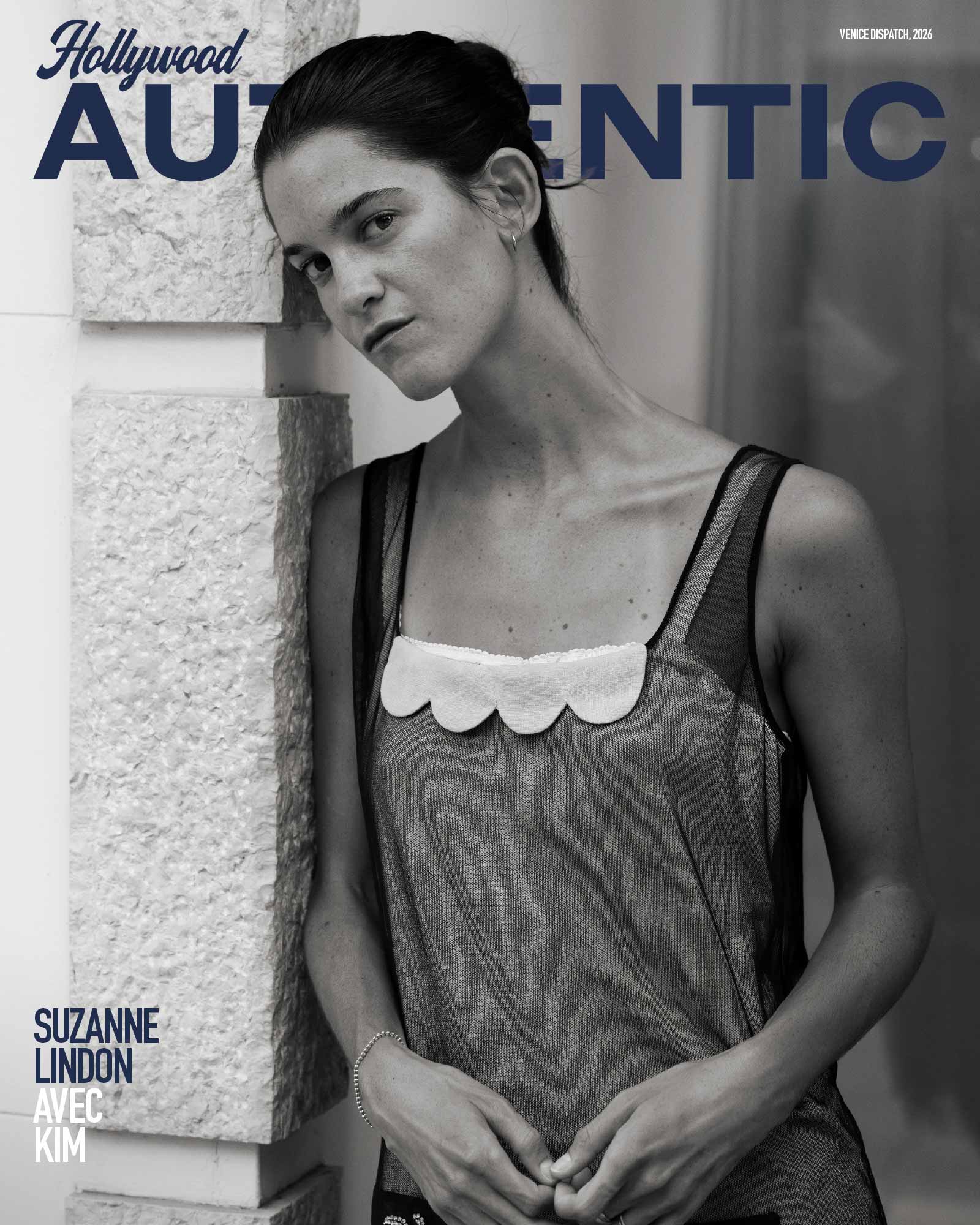
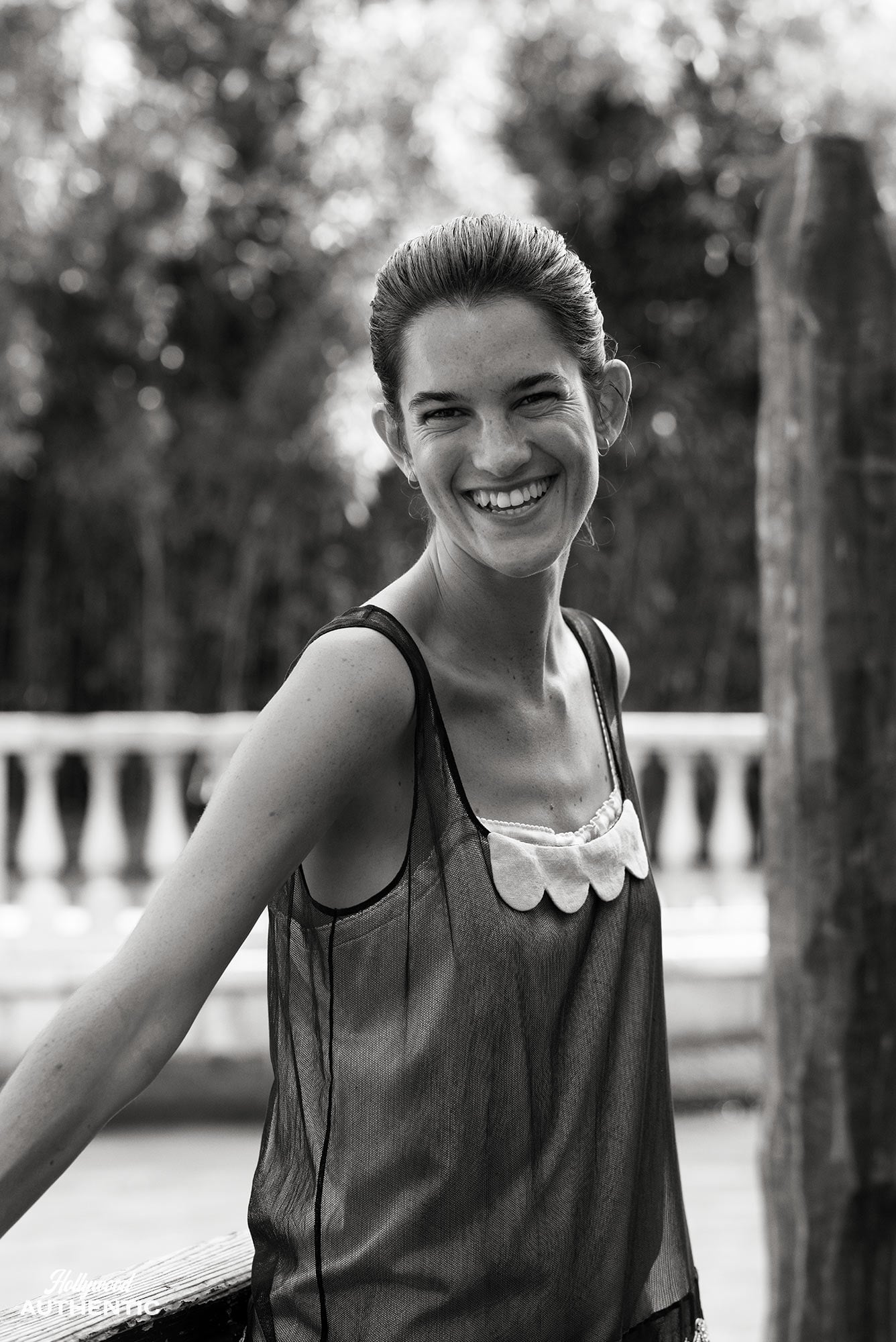
The star of Miu Miu’s #32 Women’s Tales short, Avec Kim, tells Hollywood Authentic about working with the iconic Claire Denis and learning to drive for her role.
Each year fashion house Miu Miu commissions one of the most profound and original female directors working today to investigate vanity and femininity in the 21st century; this year the 32nd collaborative study is from writer-director, Claire Denis and writer-director-actor Suzanne Lindon (Mona Fastvold’s Discipline is #31). In Avec Kim, Lindon stars as a Parisian woman who mends her retro car before taking it onto the streets of the City of Lights for a series of poetic encounters to meet ‘Kim’ (played by Sonic Youth’s Kim Gordon). With a soundtrack from Gordon and clothing from Miu Miu’s latest collection, it’s a film bursting with feminine creativity which premiered at this year’s Venice Film Festival.
Lindon, the daughter of acclaimed French actors Vincent Lindon and Sandrine Kiberlain, is a filmmaker herself (she wrote, directed and starred in Spring Blossom in 2020 and just wrapped filming on her second feature) and has worked with Denis for some time before their collaboration for Miu Miu. The duo co-wrote feature film, The Fence, together previously. ‘It was magical to work with her,’ Lindon says of working with Denis when we catch up with her at the Baglioli Luna Hotel on Venice’s Grand Canal. ‘We started working together by writing the script for The Fence together but getting to work with her on this felt completely different, because I get to see Claire on set, her natural habitat. I’d seen her at home, because we were writing in her kitchen for a year, but I discovered that she was so free on set, so unafraid of trying things, of filming in different ways than what I would expect her to do.’
When Denis first pitched Lindon the idea she had no idea she would need to drive a car, let alone a vintage stick-shift. ‘I didn’t drive, and I didn’t have my license,’ she laughs. ‘And I said, “OK, give me two weeks. In two weeks, I can drive”’. Lindon learnt to drive, passed her test and was ready behind the wheel on day one of shooting. Denis was fluid with her direction, giving the actor space to invent, working towards the denouement when the driver picks up ‘Kim’ and the two share a moment that celebrates intergenerational relationships together in the car. ‘Claire is one of my closest friends now,’ Lindon smiles, ‘and I felt that I would find in Kim something that I found in Claire. I wanted to meet Kim, because I want to meet people that Claire loves – they have to be great if she sees something in them.’
The lure of the project was also its trailblazing nature for Lindon. ‘I think Miu Miu are ahead of their time, because this is an idea that Mrs Prada and her team had before it was fashionable to celebrate women. As a young actress and filmmaker, it felt so important to be a part of this project, also with Kim and Claire, who come from another generation. But I look up to them so much that I felt very privileged.’ Denis, she says, has been her ‘queen’ since she was 15 years old. ‘I’ve always been so struck by her freedom and her independence at a time when a female director was not very listened to. Claire didn’t care. She worked with Wim Wenders, Jim Jarmusch and she always managed to have her own space and her own voice. And to me, she is part of a generation of women in cinema that have helped us to start changing things.’
Photographs by LAUREN CARNELL Interview by JANE CROWTHER Hair by THIBAUD SALDUCCI Makeup by CAMILLE ARNAUD Suzanne wears Miu Miu (from the Fall-Winter 2026 runway collection) Avec Kim is available on Miu Miu digital channel and on MUBI
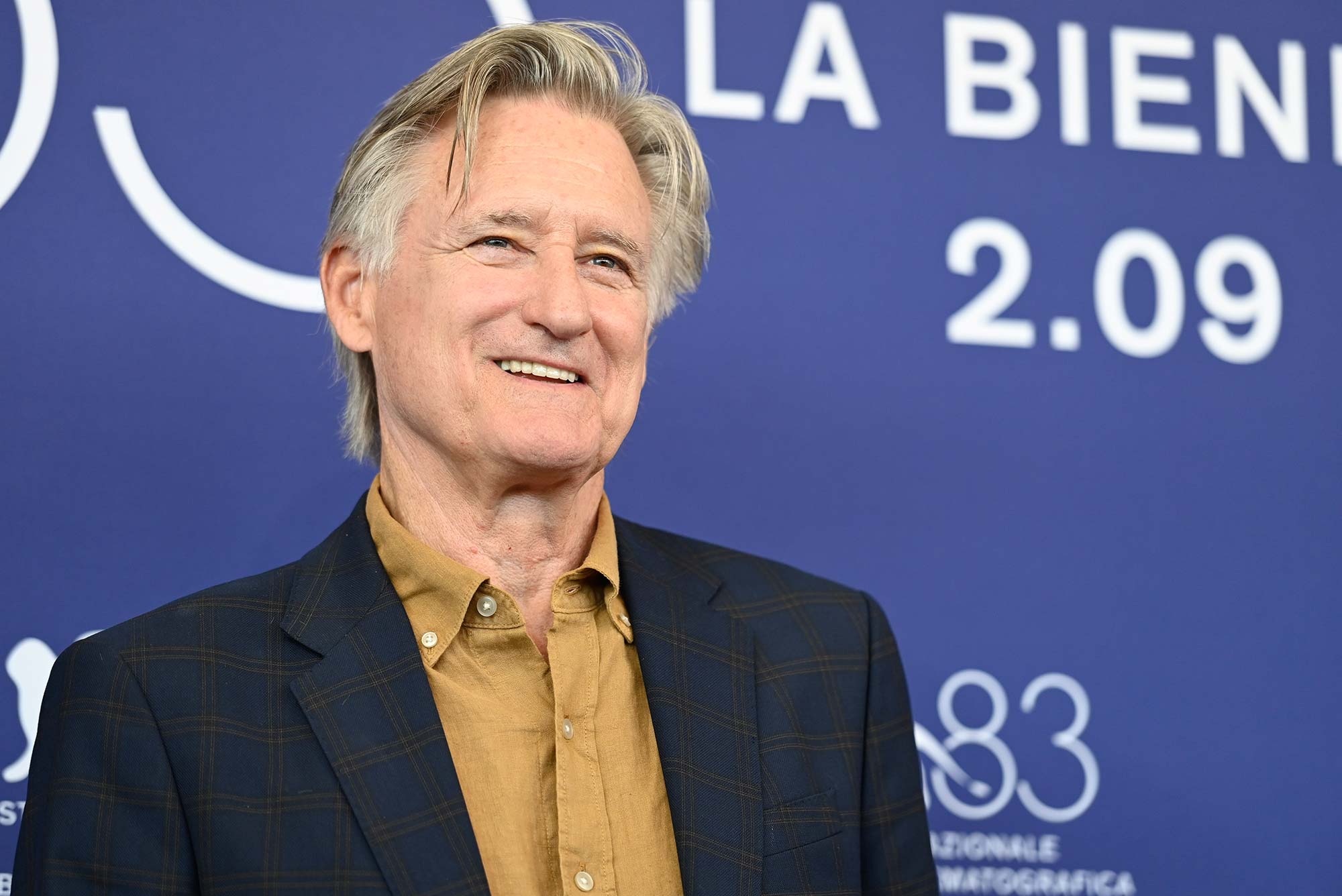
Words by JANE CROWTHER Photograph courtesy of LA BIENNALE DI VENEZIA
The star of The Basics of Philosophy talks about almost quitting acting for jam-making and the importance of maintaining a sense of self in Hollywood as he touches down at Venice Film Festival.
Bill Pullman may have only worked for a day and a half on Paul Schrader’s latest film, The Basics of Philosophy, but he certainly makes an impression as a controlling father whose sense of ‘correctness’ is impressed on his son (Jack Huston). As a father himself to three grown children including actor Lewis Pullman, the actor understands the pressures of parenting – and the impact our own childhood plays on who we become as adults.
Noora Films
‘My bedroom was next to my father and mother’s bedroom, and my father was a doctor at an age where, when he was on a call, the calls would come in the middle of the night,’ Pullman recalls of his relationship with his own dad when Hollywood Authentic sits down with him at the beachside Blue Lounge on Venice’s Lido. ‘I used to hear the phone ringing, and I’d hear him instantly screaming. I just thought that was his foible or something, and it was just a strange thing he did. Now, we would say that’s PTSD, you know? But he would never share anything about that. You’d ask him in the morning, ‘Boy, that was a surprising phone call’. ‘Yeah, it took me by surprise,’ he’d say. And that would be it. So it’s that, and how to deal with shame.’
The father Pullman plays in Schrader’s film deals with a great deal of shame as he covers up his son’s illegal indiscretion and forces him to live an idealised life not of his making. ‘Guilt is an intellectual idea. And shame is kind of like when you slip on a banana peel. Your whole body is involved with the embarrassment of it, and the awkwardness of it, and the suddenness of it, and the fear of what people have perceived. I think that kind of thing was of interest to me, to think of someone who was looking to rescue his son out of this lifetime of slipping on banana peels all the time, and triggering this guilt thing.’
Pullman hasn’t slipped on many banana peels professionally having had a decades-long career in film after making his debut in 1986’s Ruthless People and going on to star in movies such as Spaceballs, Sleepless in Seattle, While You Were Sleeping, Independence Day and Lost Highway, as well as numerous stage shows. Often in his roles he succeeds at projecting real decency, perhaps that’s why he’s often stopped by fans who love his portrayal of a president in Independence Day. His character in The Basic Of Philosophy is consumed with the idea of legacy, so does Pullman think about his own? ‘That is a very dodgy thing these days,’ he considers. ‘I think there was an era when you could count on authenticity, and now identity is built on brands, triggers and virtue signalling. It’s very hard to be authentic these days, because it’s not even about being always candid. You know, sometimes it’s what it is to be able to stay inside a certain code of who you are.’
Pullman certainly knows who he is. He had a career as a university professor teaching theatre before he turned to acting and he still continues to keep one foot very squarely in ‘real’ life, talking about the importance of cultivating his ‘civic side’ in his LA neighbourhood. ‘I’ve been trying that whole thing of ‘think global, act local’, you know?’ he says as he describes his involvement with his wife, Tamara Hurwitz, in the Hollywood Orchard, a community initative that is volunteer-led and non-profit and harvests unwanted fruit for donation and fundraising. Pullman got so into the harvesting, jam-making and donating to food kitchens that he describes it as ‘almost like a job’. ‘I thought I was going to quit being an actor,’ he admits. ‘I was like, ‘This could be my life’. It was a sense of what could be provided in an age in which everyone’s so fractured.’ The lure of agriculture and working with his hands is something Pullman has always had in his life, owning a ranch in Montana where the land and local community has preoccupied him rather than Hollywood. ‘There were so many decades where I just was all about getting to the ranch, and doing the agriculture there. But I’m fortunate enough to have some good roles.’
Noora Films
In a period when Pullman was wondering about switching careers a particular role brought him back to acting. ‘I got an offer to go to the Royal Shakespeare Company in Stratford-upon-Avon to do The Cherry Orchard with Kenneth Branagh and Helen Hunt. That was scary, because it was going back into the whole process of getting the lines, and dealing with a very complicated play, and being surrounded by British people,’ he says. ‘Being ‘in the moment’ in a play was a chance to really use it as a laboratory, because you’re dealing with the same lines night after night. The incentive is to keep inventing, and to keep exploring. That experience made me feel ready to do another movie, and bring a different energy to it.’
He’s bringing his renewed energy to the long-awaited Spaceballs sequel, playing alongside his son, Lewis. ‘Lewis said ‘Dad, it’s going to be a crazy thing to do’,’ Pullman recalls of the duo deciding to do the film. ‘And then he said ‘but it’s even crazier not to do it, because it’s the chance to work together, and go to Australia for three and a half months, and live 10 minutes’ walk from each other’s places.’’ Pullman senior will also appear in Everybody Digs Bill Evans, a biography of the titular jazz pianist, and will explore the idea of celebrity in the 21st century with A24’s thriller Famous, with Zac Efron in a dual role as a movie star and an ordinary joe who looks just like him. ‘We’re all faking it ourselves, anyway,’ Pullman says of fame. ‘We’re hideously trying to manufacture something that we could never consistently stick to.’ It’s interesting that Pullman so resolutely doesn’t see himself as a ‘movie star’. He shakes his head and smiles. ‘No, I don’t. I think because I was so late coming to it, and as I was getting success, I was also having a family. You’re sublimating all your ego when you’re changing diapers. And it’s paid off.’ Plus, he says, he’s still all about squeezing the juice out of everything, not just in Hollywood. ‘There’s a lot of parts, there are plays, and there are scripts that are really interesting movies. But, you know, I’m looking at the clock of my life…’
Words by JANE CROWTHER Images courtesy of NOORA FILMS The Basics of Philosophy premiered at the 83rd Venice Film Festival Read our review here
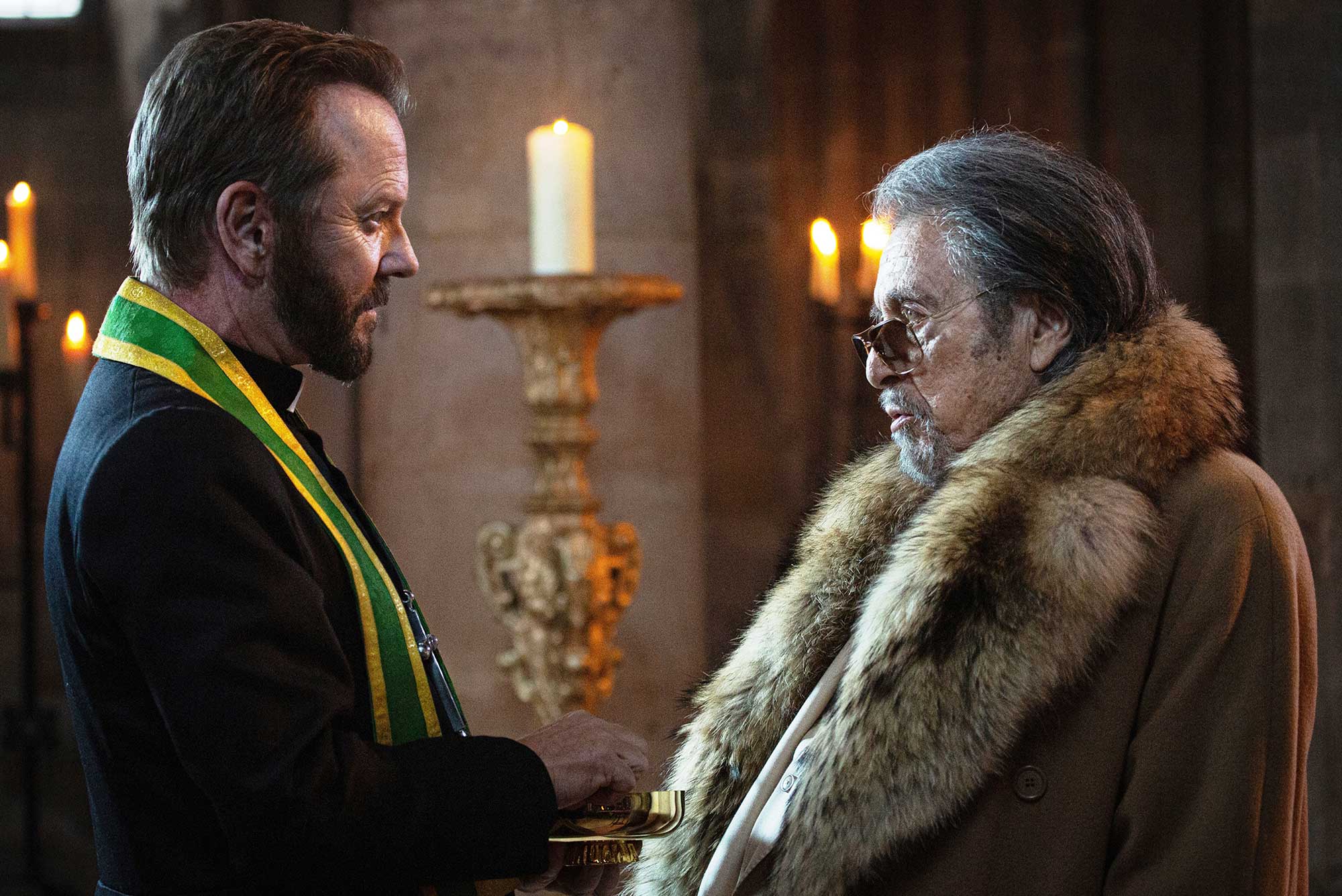
Written by Luc Besson, and produced and fronted by Kiefer Sutherland, Father Joe is exactly the sort of nostalgic ’90s throwback you might expect it to be. It wears its daft heart on its vestment sleeve and makes no apology for being the kind of movie you might have picked up from Blockbuster in yester years. A quasi-Western via mobster movie tropes, it follows the titular Catholic priest (Sutherland) as he attempts to clean up his ’90s Manhattan neighbourhood of drug dealers and organ thieves via murder, violence and a series of one-liners. Plus, it features Al Pacino dressed in furs and sashaying through mass as a Godfather-esque score swells.
EuropaCorp
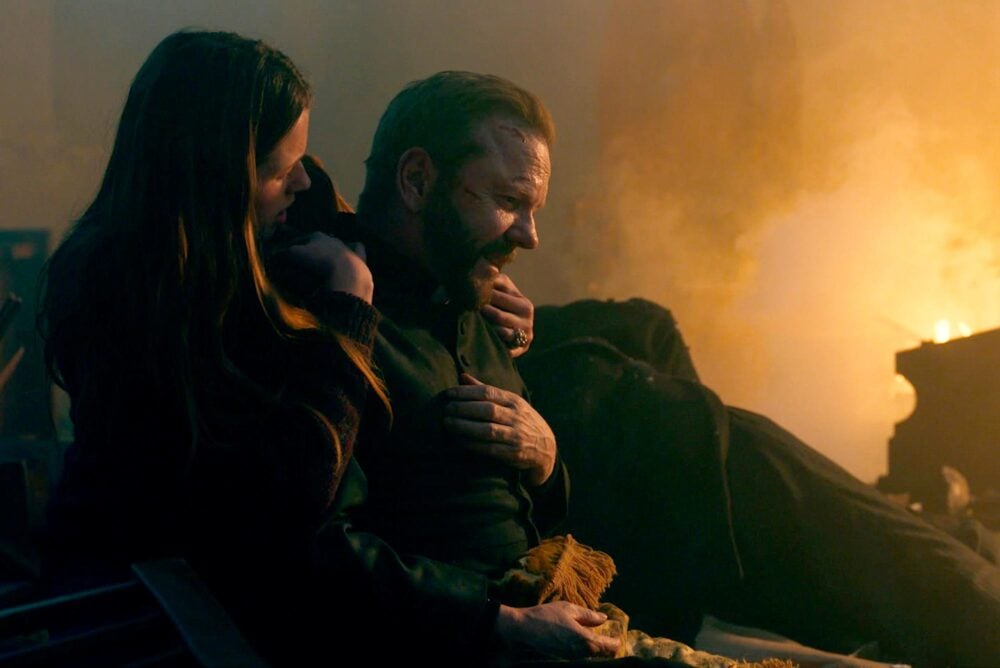
If you’re still with us after that first paragraph, the catalyst for Joe’s vigilantism goes back to his experiences as a special forces soldier and the death of his family as a consequence of illegal drugs flooding NY. Now he runs a church that is an orphanage/soup kitchen/arms den, where his faithful second-in-command is an ace with nunchucks, his orphan choirboys can service a semi automatic and Joe ventures out on an evening armed to the gills and rocking a wide-brim hat, leather waistcoat, billowing trench and massive crucifix (which doubles as a dagger). He calls victims ‘my son’ and quotes the Bible as he destroys drugs labs, maims and murders, injects goons with poison and rescues overdosed teens. His mission is to stop dealers selling to anyone under the age of 21 (‘you can’t save everyone’) and he must be ok cos the local Jewish and Muslim leaders are down with a bit of gunplay too.
Things come to a bullet-spraying head when mobster Giu Falcone (Pacino) puts down his latest book (100 Years Of Solitude, which he gives a review of to his sunglasses-wearing henchmen) and decides to stop the holy father from wreaking any more havoc. Bazookas are used on pulpits, there’s slow-mo walks from explosions and a teenage drug user (played by Milla Jovovich’s daughter, Ever Anderson) becomes a surrogate daughter to emotionally wounded Joe…
But all of this is played with such earnestness and lack of snark that the result is something nostalgically comforting. Ignore the moral seesawing and accept the creed, and Father Joe is a bombastic popcorn movie that promises tasty elevator and toy shop dust-ups, Sutherland looking undeniably cool and the possibility of a sequel teased with a nod to Pacino’s most famous movie. Go in peace – and you may have a silly time at the movies.
Words by JANE CROWTHER Images courtesy of EUROPACORP Father Joe premiered at the 83rd Venice Film Festival
Luke Lorentzen’s meditative year-long study of a Brooklin boat yard in Maine is nautical nirvana for any sailor, but you don’t need to know your port from starboard to appreciate the craftsmanship and community that goes into building a bespoke $4.5million 56-foot sailing yacht. Following the team of 60 builders at Brooklin Boat Yard – from felling the wood to polishing the deck, and through the New England seasons – Coretzen’s gorgeous tone poem is as much about a niche industry as it is about masculinity and the lure of salt water for sustenance and sport.
Spark Features/MetFilm
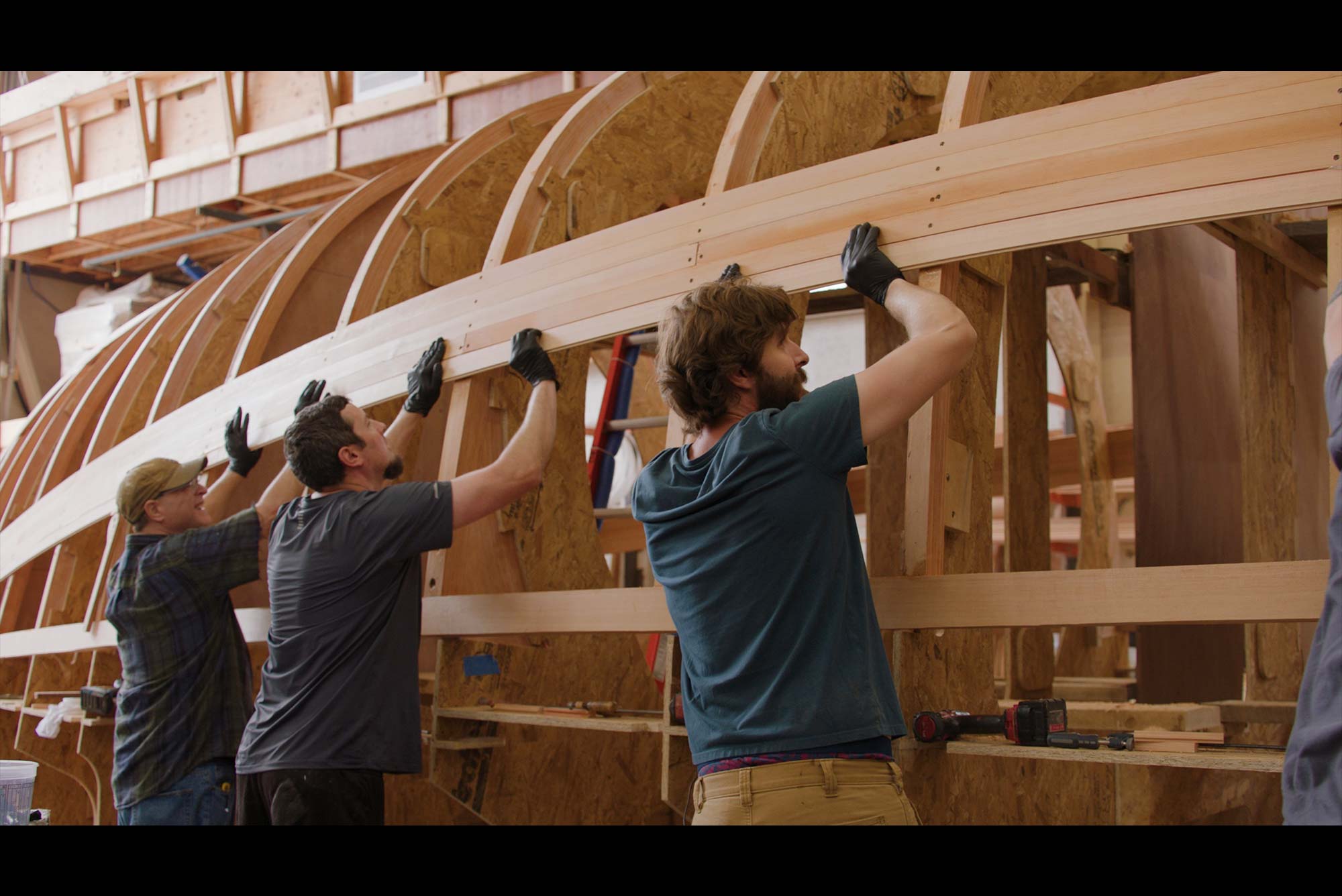
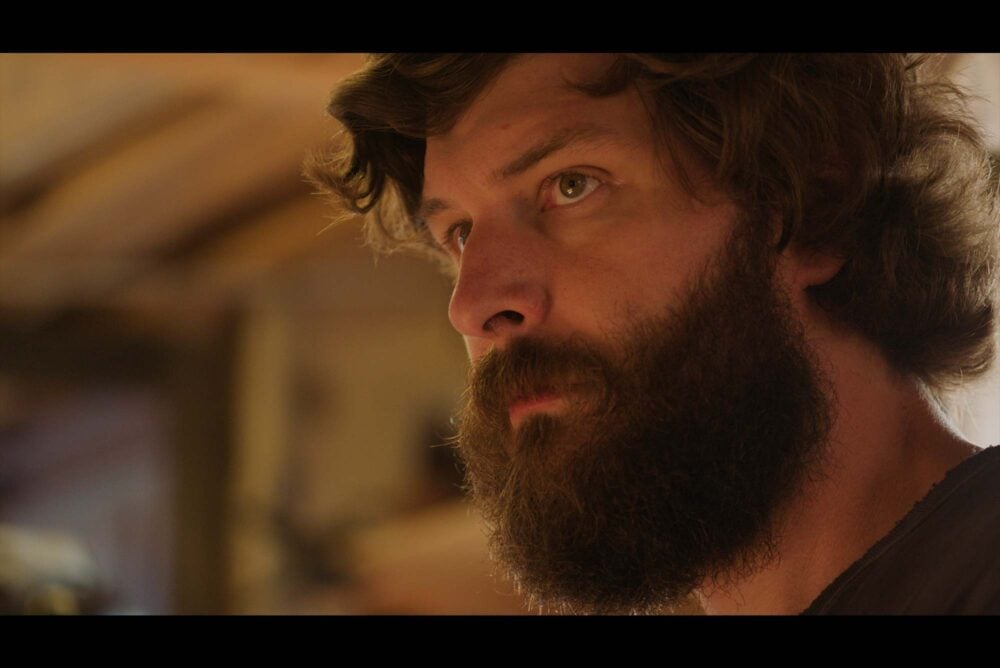
Beginning with the launch of a newly completed vessel, we’re introduced to the men who will create a made-to-measure ship of dreams for a giggly financial advisor to sail around the world in. As the team watch their work slip into the water over beers and a cookout, the graft begins anew with the hull of a new boat taking shape in the dockyard on the edge of Jericho Bay. Project managing the build is Trent, a zen new father who is told in his gentle appraisal to be more forceful with his staff. From an outsider’s POV it doesn’t seem he needs to be as the gang turns up at 7am each morning with their particular set of skills; planing, dovetailing, sanding, gluing and carving the local wood into a feat of engineering and artisan achievement. We watch as planks are pressed together like a jigsaw, the ship’s wheel is clamped incrementally into a circle, the sanding team sway in synchronised silence, a beautifully carved cabin is wheeled down the hill and lowered into precision-drilled holes… it’s hypnotic to watch, especially when given regional and cultural context.
Spark Features/MetFilm
Coretzen is as interested in the world and lives around the endeavour, the bucolic that seems to be poured into the very fabric of the boat. He charts the beauty enveloping Brooklin; a blue bay dotted with the fluttering white triangles of sails during a regatta, a duckling floating on purple water at dusk, lobster potters hauling their glistening catch, the drilling of an ice-fishing hole, the doleful clang of a red harbour bell, children shaking apples from a tree, a peachy sunset, the mowing of an emerald lawn. This little corner of Maine is painted as hardy, idyllic – the only sour notes coming when management very reluctantly dismisses a worker for repeatedly not taking direction or when Trent complains about the cost of his car payments. There is little exploration of hard-scrabble lives or the fragility of this livelihood – and on that level, the film may be considered slight for some. But if you’re looking for a contemplative 90 minute foray into a quiet world where you can practically smell the wood and taste the sea spray, Boatbuilders provides a shipshape escape.
Words by JANE CROWTHER Images courtesy of SPARK FEATURES/METFILM Boatbuilders premiered at the 83rd Venice Film Festival