
Words & Interview by ARIANNE PHILLIPS
As told to JANE CROWTHER


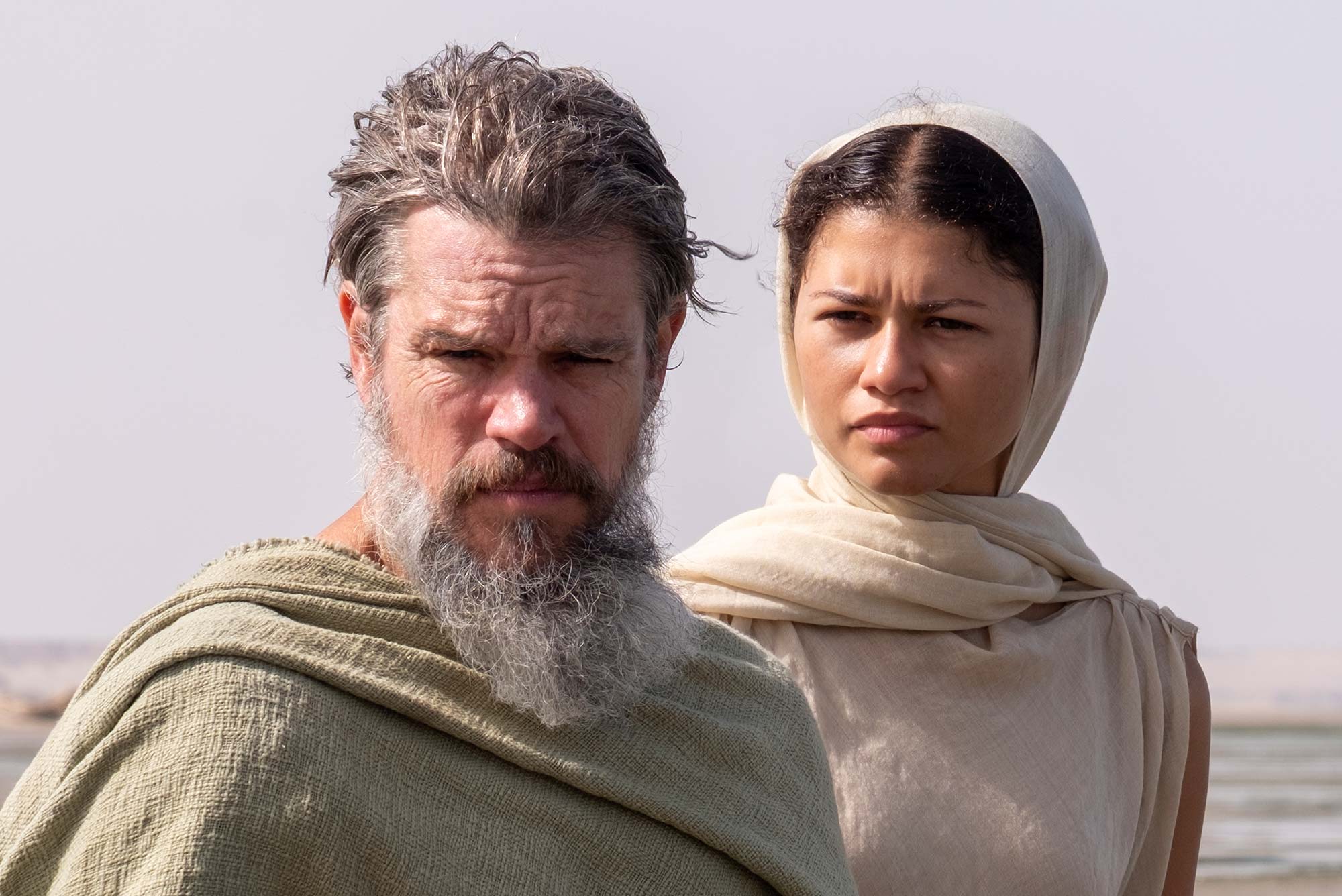
The award-winning British designer who has worked repeatedly with Mike Leigh and Joe Wright unpicks the fantasy element of period costumes in creating unforgettable looks for films such as Anna Karenina, Atonement, Little Women and Wuthering Heights.

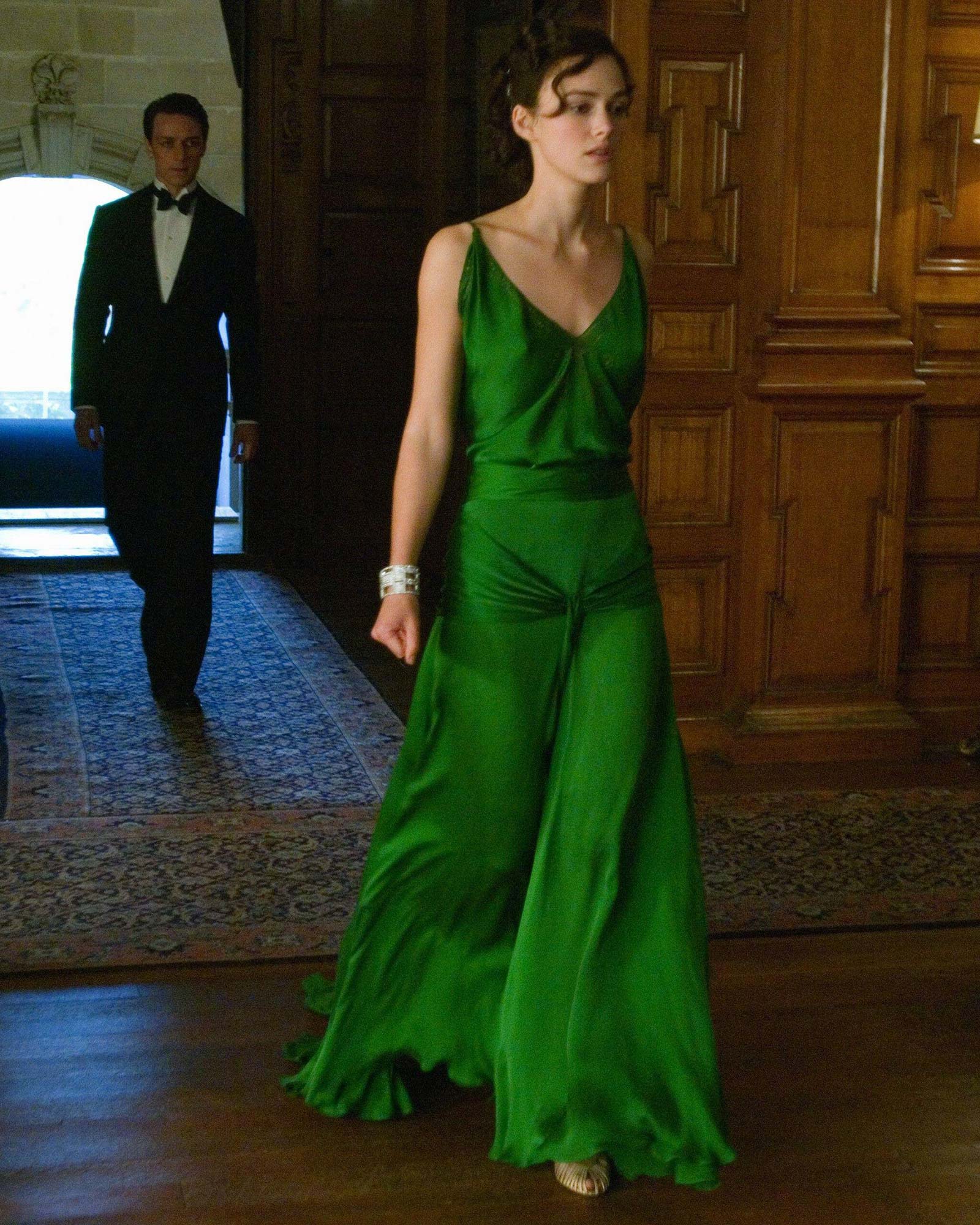
James Mcavoy, Keira Knightley, Atonement, Jacqueline Durran
James Mcavoy and Keira Knightley in Atonement (2007). Working Title

Jacqueline Durran is a British costume designer celebrated for psychologically nuanced, texturally rich films that are both historically accurate and conceptually modern, across period-dramas and contemporary film. With a career spanning more than two decades, Jacqueline has become one of the most respected voices in costume design – and one of my favourite designers. She is known for her work with some of the most celebrated, respected and visionary directors, including Sally Potter, Steve McQueen, Greta Gerwig, Noah Baumbach, Emerald Fennell, Bill Condon, Sam Mendes, Pablo Larraín, and most notably her enduring collaborations with Mike Leigh, with whom she’s designed 10 films on which she has developed a documentary-like sensitivity with character and social texture. 

Jacqueline rose to prominence through her ongoing collaboration with Joe Wright, with whom she designed nine films beginning with Pride & Prejudice in 2005. Notable films Jacqueline has designed include Atonement, Macbeth, Cyrano, 1917, Tinker Tailor Soldier Spy and Blitz, to name just a few. Her versatility extends beyond literary period-drama and across genres that include The Darkest Hour, Beauty and the Beast, Steve McQueen’s television series Small Axe, Spencer, Barbie and, most recently, Jay Kelly and Wuthering Heights. Jacqueline stands as one of contemporary cinema’s defining costume designers, bridging classical craftsmanship with modern sensibility. She is an eight-time Oscar nominee, of which she won two (for Anna Karenina and Little Women), an 11-time BAFTA nominee and three-time winner (for Vera Drake, Anna Karenina and Little Women), and a five-time Costume Designers Guild nominee.

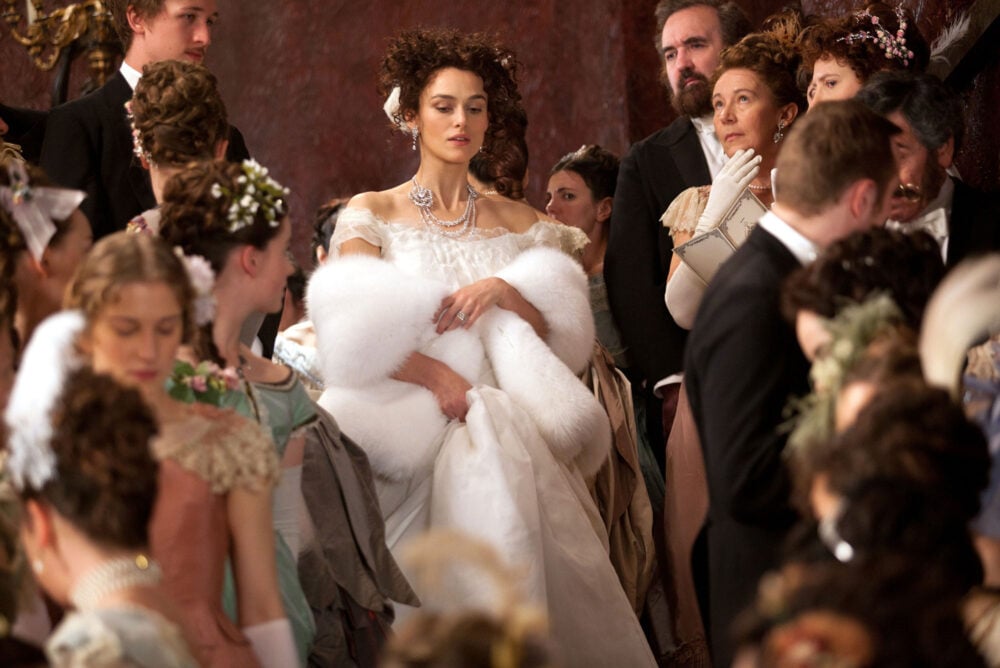
Keira Knightley, Anna Karenina, Jacqueline Durran
Keira Knightley in Anna Karenina Year (2012). Universal Pictures

AP: Where did you grow up and what inspired you to go into costume design?

JD: I grew up in the south of England. And I hadn’t gotten the idea that I would be a costume designer at all, ever. I didn’t even know that it existed all the way through to the end of university. I was a great reader, and I was quite academic. I did philosophy at university, and I left university and I just wasn’t sure where to go, or what to do. I sold vintage clothes at Portobello and Camden [markets], because I’d always loved clothes. I wasn’t brought up with film as a great part of my life, but one day I was watching a soap opera on British television, and I thought that the costumes were terrible. It was the thing in my brain that made me realise that somebody did costume. A good costume is so good that it’s almost beyond explanation or analysis, or you can’t identify with it, or you can’t see anything that you could bring to it, because it’s already perfect. My mother met someone who was filming a commercial in one of the buildings she was looking after. And she just said to them, ‘My daughter wants to do costume. What do you think she should do?’ And they said, ‘Oh, she should work in a costume house.’ So then I wrote to the costume houses, and the one that said yes was Angels. And then the whole world of costume opened up to me. Lindy Hemming was one of the designers that came in that I really connected with, and I really loved working on her shows with her. When I became freelance, I started working with her; Topsy Turvy was one of the first jobs I did with her as a full-time employee. She is entirely responsible for me being a designer. I don’t know if I would have done it, but at the time when Mike [Leigh] was doing his next film, which was All or Nothing, she said, ‘You’ve got to do it. I’m just going to tell him.’ And so she did. And I felt a terrible imposter, but I got the hang of it. And now, finishing on what might be his final film, I’ve done 10 Mike Leigh films.
AP: The fact that you studied philosophy, and that you were an academic makes perfect sense with not only projects that you choose to design, but the work itself. I would imagine you must enjoy research as much as I do?

JD: Yes I do love research but for me that is just the foundation on which you build the costumes. I find it hard to define the process of designing. Each project creates its own problems and its own patterns. Anna Karenina, for instance, was never going to be set in a theatre. It only became a theatre 10 weeks out. Prior to that, it was just going to be a period-drama set in period locations. But for one reason or another, Joe [Wright] decided to pivot and make it a theatrical movie. The switch taught me something – I realised that you picture a scene to understand what the costume is going to be. But if you can’t picture the scene or understand the location it’s a block to where you are going costume-wise. And you realise that everything is connected.

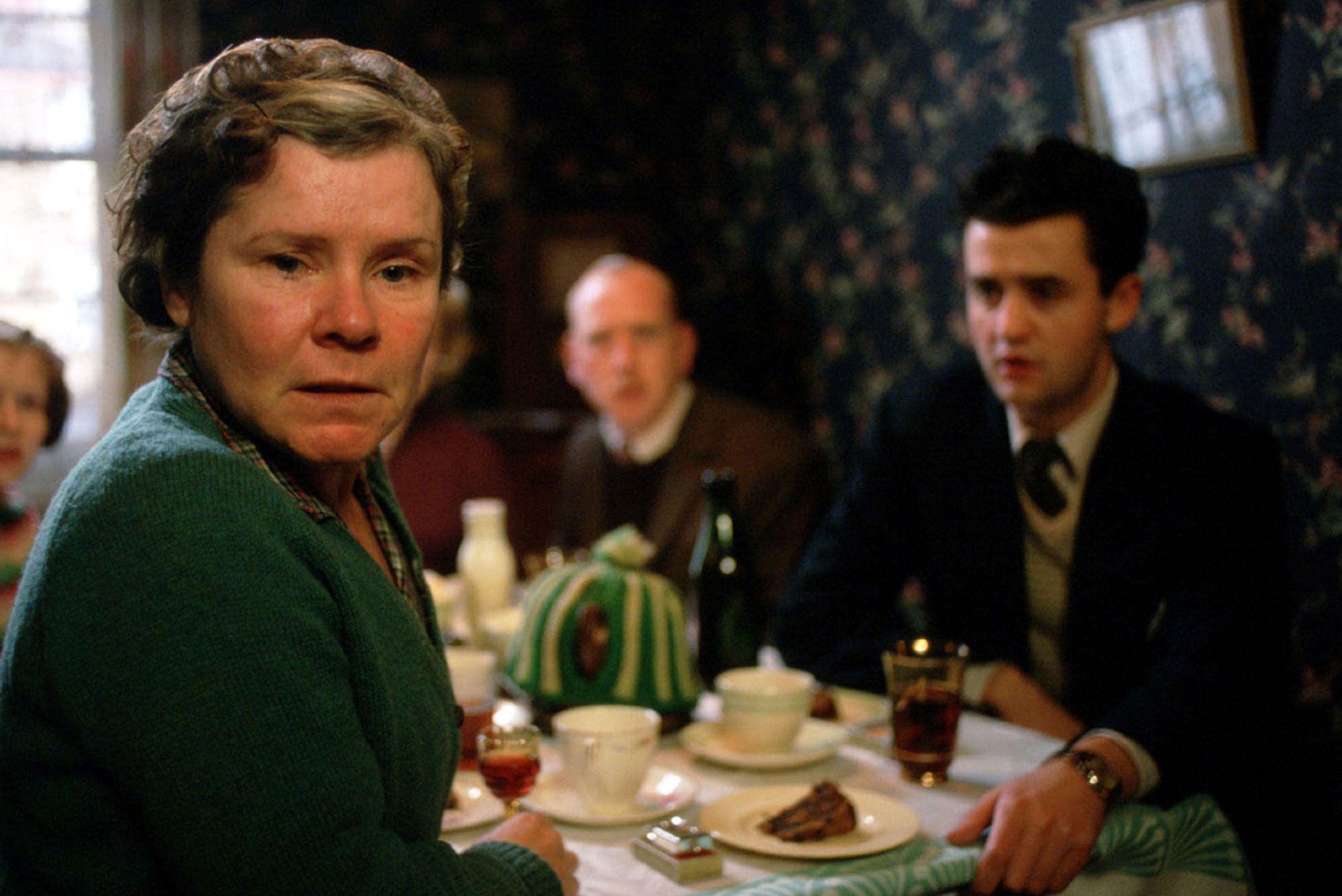
Imelda Staunton, Vera Drake, Jacqueline Durran
Imelda Staunton in Vera Drake (2004). Album

AP: People talk about your work all the time: the green dress in Atonement; the tailoring in Tinker Tailor Soldier Spy; those gowns in Anna Karenina, which I feel are reminiscent of Piero Tosi’s work. And then of course there’s Barbie and Wuthering Heights….

JD: Joe and I came to Atonement having already done Pride & Prejudice together. Obviously I read the book and the dress is such a pivotal moment in the film. Joe would just say to me, ‘It’s just got to be the most amazing dress ever.’ I went through books of different dresses, different designers for the period and I just chose all the elements that I liked. The motivation for the costume is: what would you put on if it was the hottest day of the year and you couldn’t bear the heat? Cinematographer Seamus McGarvey, Joe and I came up with a stack of green swatches, which I gave to Tim Shanahan, the dyer, and he created that beautiful green colour from the range of greens. The fabric for it was fine cream silk from a wholesaler called Whaleys – its lightness because of the heat of the day. And then the detailing on the bodice was taken from a Lartigue photograph where the dress was beaded. But because of the logic of the heat, and because we were trying to take away any weight or depth, I laser-cut that instead of beading it. So everything was about reducing and minimising the weight of this dress. And obviously it came to haunt me because every five minutes this bodice split. We made absolutely loads of them. I was always fully aware of the fact that I wasn’t sticking to period, because obviously if I take all these different elements from these different period references and put them in one dress, the dress is no longer period, because I’ve messed with it.

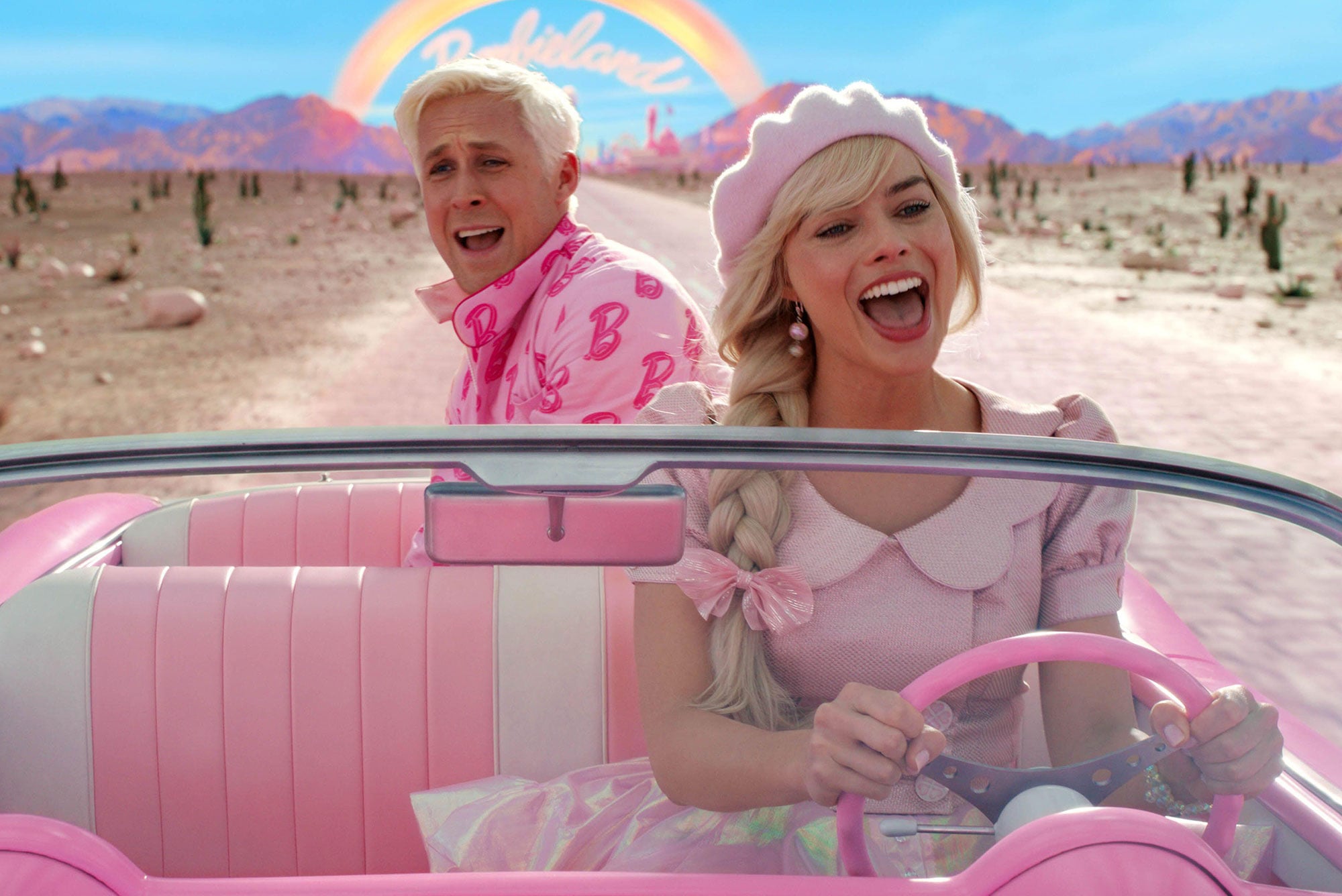
Ryan Gosling, Margot Robbie, Barbie, Jacqueline Durran
Ryan Gosling and Margot Robbie in Barbie (2023). Warner Bros. Pictures

AP: I really appreciate that because we’re making films, we’re interpreting a story and we’re creating a world. I think the greatest gift for me, working with a director, is that ability to interpret, and what’s appropriate for the story that we’re telling. It’s all taking cinematic license. 

JD: When you’re working on the costumes of a period film you have to communicate the character. I do not believe that most of the audience would be able to interpret and understand a period costume if there was no license taken with how you communicate that. Anna Karenina was a good example of an artistic decision made in order to communicate a position, a theme and a meaning that Joe was bringing out in his telling, which was about consumption and opulence and display. So conspicuous consumption and the 1950s and the New Look after the war create a moment that you can transpose into the past. It is something a contemporary audience understands and it opens up the story set in the 1860s – it’s a key into the story but when you mix the two together, you are telling a new story. Costumes sometimes have to be invented for modern tellings of stories set in the past because the action in the script is not something that would have happened in the past. In Little Women, Greta asked for Florence [Pugh] to be downstairs in pyjamas, not fully dressed. If your director is telling a story, you may have to costume it in a way that is not accurate – but it is the director’s story that counts.

AP: What were your conversations like with Emerald Fennell when discussing Wuthering Heights?

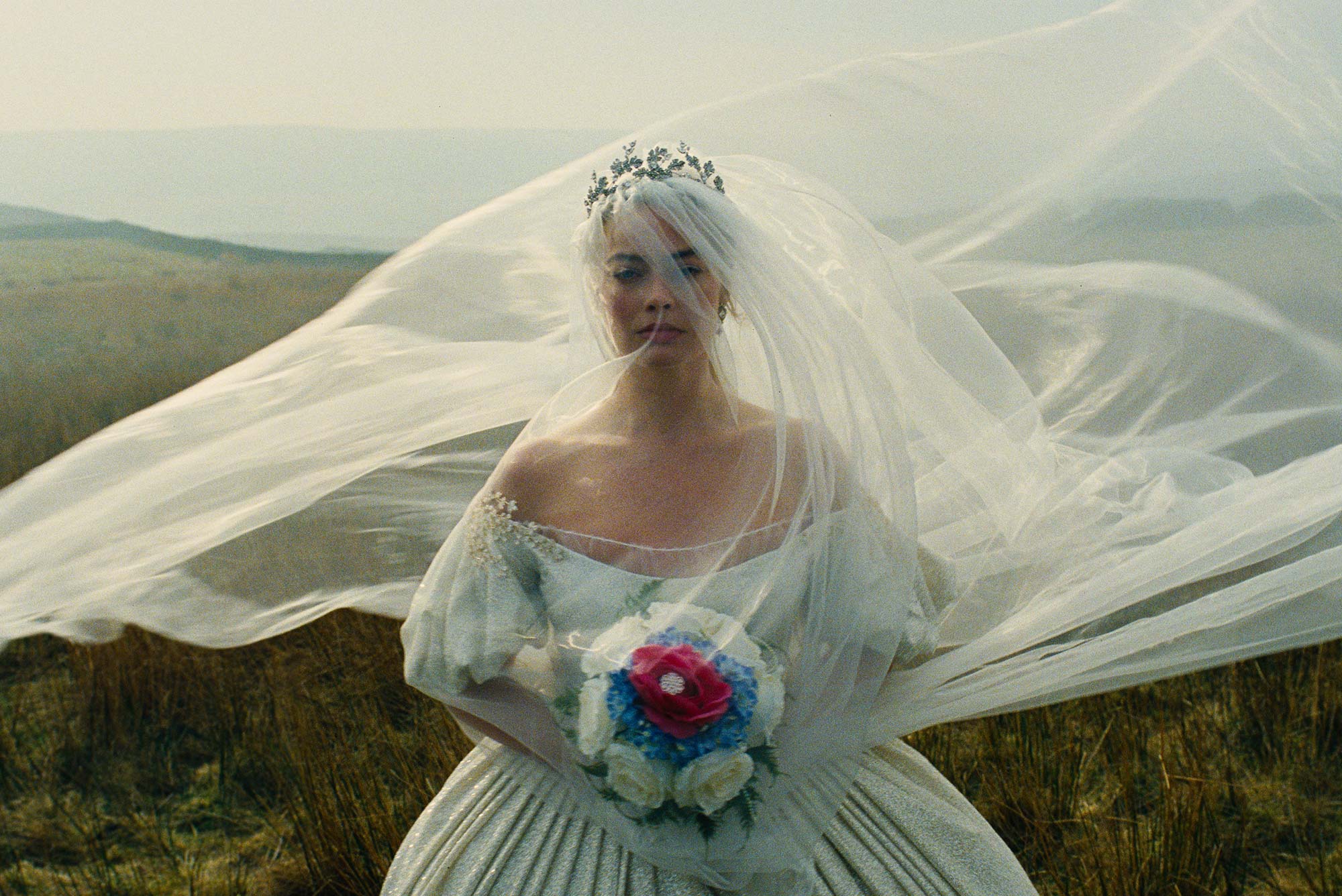
JD: During the time that Emerald had been writing the script, she’d put together this huge file of reference pictures from cinema, old paintings, photographs, fashion, the catwalk… This whole collection that probably spanned five centuries, and was completely eclectic. So that was my starting point. The film falls roughly into three acts. So you have Wuthering Heights, and you have Thrushcross Grange, and then you have Act 3, when Cathy is in mourning but she’s also in the full throes of passion with Heathcliff. Each act has a silhouette, to define it. The first costume that we see Margot [Robbie] in at Wuthering Heights was the result of my favourite piece of reference that Emerald gave me, which was the cover of a paperback edition of Angelique. It’s a drawing of a made-up character in a costume that’s from no period at all. It’s just imagined. And that was always the thinking in the process of Wuthering Heights – to hit this imaginary level all the time, and to hover somewhere in the past that’s non-specific. Margot jumps into the movie. She is in a costume. She is an imagined paperback novel cover. She is not in linen. She’s in silk. It’s not real. It can’t possibly be justified in any way, apart from in the imagination, and in what this woman is representing to the 14-year-old Emerald. Again we are telling Emerald’s version of the story, so I tried to incorporate as many of her references as I could. The wedding night costume came from a picture of a woman sitting wrapped in clear cellophane plastic with a big red ribbon wrapped round it. We wanted to use it because it worked symbolically – the woman was a gift. It doesn’t really have any period context at all!

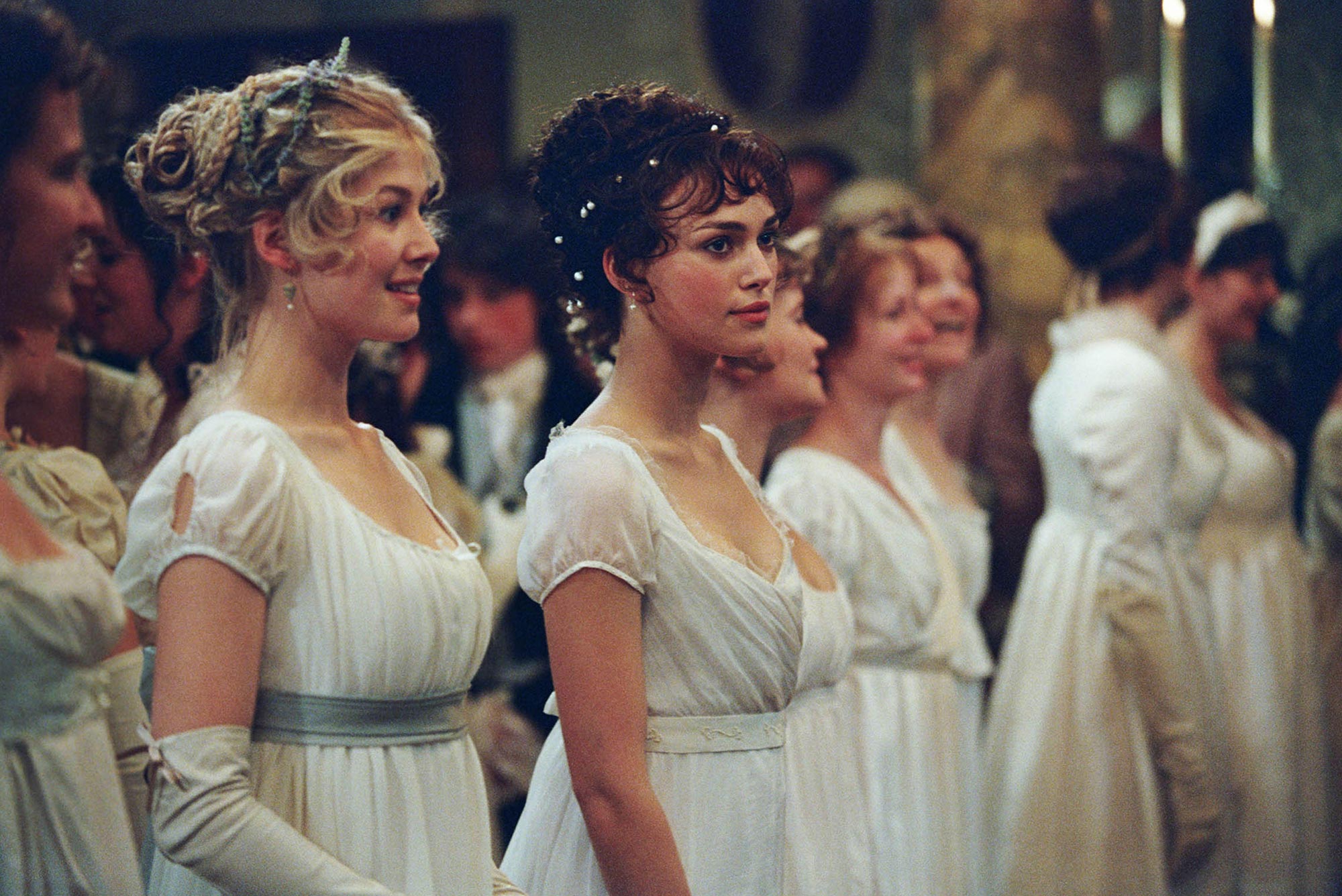
Rosamund Pike, Keira Knightley, Pride and Prejudice, Jacqueline Durran
Rosamund Pike and Keira Knightley in Pride and Prejudice (2005). Universal Pictures

AP: The wedding dress was just beautiful.

JD: And it goes back again to the story that directors are telling. It’s not at all likely that that woman would have been walking across the moors on her own with a huge veil and a white, sparkly dress covered in glitter. 

AP: Your work in Lovers Rock is one of my favourites…

JD: We shot it in 10 days, with two or three weeks of prep. I did a lot of research into different kinds of street looks of that period in Brixton. The one thing I noticed quite often was that at particular types of parties, West Indian women wore a particular type of dress that seemed to be quite proper. There was a soundsystem look, and then there was this other look, which was dressy and quite feminine. And Steve [McQueen] said, ‘Yeah, let’s do it.’ He created this room of people who were so in tune with each other. I think it’s an amazing piece of work. 

AP: Is it important to work with a director with a real vision?

JD: The more precise the brief is, the more you’ve got the challenge of meeting that brief, but you’ve also got the excitement of getting there. If there’s never a brief, how can you ever arrive? That frustrates me. I can be given a really minute destination to land on, but if I don’t have anything to aim for, if I don’t understand what we’re doing, then I find it really hard to be creative. The greatest joy of making a costume is nailing it. Looking at it, and saying, ‘That is it. It’s the right costume for the right film, right now.’

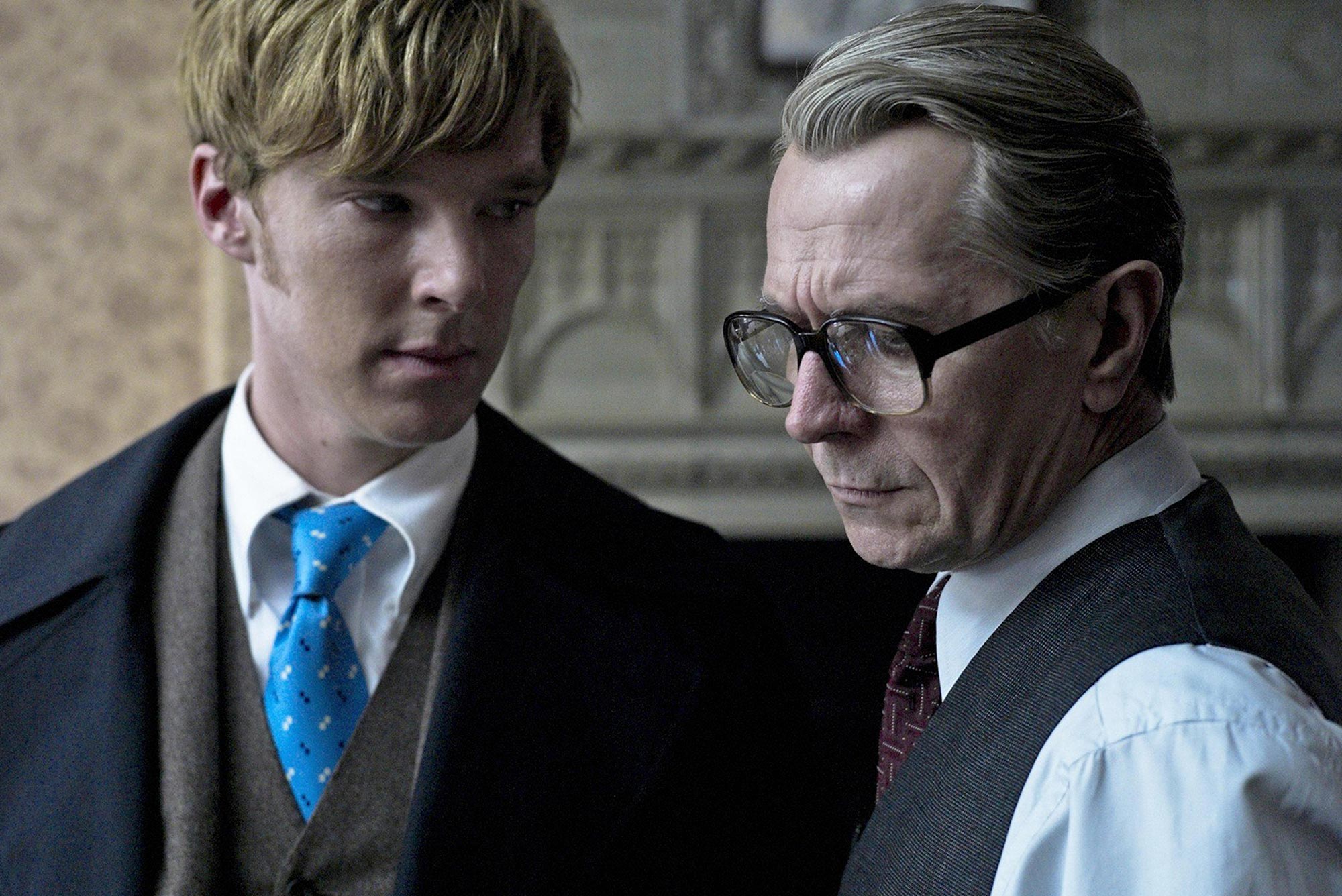
Benedict Cumberbatch, Gary Oldman, Tinker Tailor Soldier Spy, Jacqueline Durran
Benedict Cumberbatch and Gary Oldman in Tinker Tailor Soldier Spy (2011). Entertainment Pictures

AP: Do you draw? Do mood boards? Collages? Do you drape? How do you help your director understand your volume and your colour and the feeling?

JD: I really like mood boards. I just like the way that they’re incomplete. They’re like a suggestion of where you’re going. It’s going to be a combination of this and this and this. And I really like that. I like to get the fabric, and I like to look at it and see what it will do, and then start to look at the proportion on the stand. Interestingly I learnt the other day that Coco Chanel didn’t draw and she built a whole empire! I have often collaborated with Chanel on movies and we used their jewellery in Wuthering Heights. We were looking for fantastic large beautiful costume jewellery. They went through their archive and found an amazing selection from the ’50s to contemporary – it was perfect, especially the large jewelled gothic crosses which were so much a part of Cathy’s look. Over the years, Chanel have supported different movies I’ve worked on. Their contribution is so wonderful because they have a sensitivity to what the movie is and want to support that rather than impose themselves upon it.

AP: It makes me think of Kate Hawley’s relationship with Tiffany this year, for Frankenstein, and how she went into the archive. I had my experience when I did W.E. with Cartier and Van Cleef. It can be such a wonderful asset. I dressed Margot for Once Upon a Time in Hollywood, and we got a couple of pieces of Sharon Tate’s real jewellery from her sister. And that just became such a touchstone for her.

JD: Yeah, totally. And on Anna Karenina, it was diamonds. Chanel lent us millions of pounds of diamonds. I used to bring them out in a tray to Keira [Knightley]. This tray would be shining with diamonds, and it was a great Anna Karenina thing, because it was about that kind of conspicuous consumption. The diamonds were real, and I felt it was a really good kind of contribution to the whole costume.


Words & Interview by ARIANNE PHILLIPS
As told to JANE CROWTHER
Wuthering Heights is available on home entertainment formats now
Atonement / Anna Karenina / Vera Drake / Barbie / Pride and Prejudice / Tinker Tailor Soldier Spy

February 24, 2026

Frankenstein, Crimson Peak, Suicide Squad, The Rings of Power, Edge of Tomorrow

Words & Interview by ARIANNE PHILLIPS
As told to JANE CROWTHER


The Kiwi designer who regularly collaborates with Guillermo del Toro – including awards-season contender Frankenstein – tells Arianne Phillips about growing up surrounded by stories, the alchemy of opportunity, turning fear into motivation and her photocopying addiction.

Frankenstein, Crimson Peak, Suicide Squad, The Rings of Power, Edge of Tomorrow
Frankenstein (2025). Netflix

Kate Hawley is a New Zealander, who grew up in the world of opera and theatre. She attended the Motley School of Theatre Design in London, under the direction of Margaret Harris and Alison Chitty. This provided a foundation and a love for design in all disciplines of her work, including theatre, ballet, opera and film. She began her professional career as a costume designer and set designer in theatre and opera, with her extensive theatre credits including set and costume design for the New Zealand International Arts Festival, the New Zealand Opera Auckland Theatre Company, the Salisbury Playhouse, Wexford Opera Festival, and the National Theatre Studio – to name just a few of her many accomplishments in the sphere.

2003 brought the release of Kate’s feature film debut with The Ride, which would be followed on by On a Clear Day with the same director, Gaby Dellal. In 2013, Kate’s third film would be her first collaboration with director Guillermo del Toro for Pacific Rim, followed by Doug Liman’s Edge of Tomorrow. In 2015, she reunited with director del Toro for Crimson Peak. Notable films that have followed are David Ayer’s Suicide Squad, Christian Rivers’ Mortal Engines, Chris Sanders’ The Call of the Wild, and her second film with Doug Liman, Chaos Walking.

In 2022, Kate made her foray into television, designing the series The Lord of the Rings: The Rings of Power, while 2025 saw her third collaboration with del Toro, Frankenstein. Kate’s designs have been presented at numerous exhibitions, including an upcoming exhibit, The Art of Frankenstein at Selfridges at London; At Home with Monsters at LACMA, Los Angeles, and AGO in Toronto; the theatre design exhibition at the National Theatre in London; the František Zelenka Exhibition at Central St. Martins in London; and the International Scenofest exhibition in Prague and at The Barbican in London.

AP: ​It’s nice to learn about all of your accomplishments…

KH: What I see when I look back is moments of opportunity, that people saw what I was into, and saw the passion that I had for working. Like, during school, I would go and work in the theatre and the opera. I had two teachers that actually understood and supported it. You think of an Olympic talent, and they’re always supported in their youth. Most of us in our world of the arts don’t develop those skills until later. But having those two teachers who actually saw that I wanted to be in this world, and actually turned a blind eye to my appalling grades – it made a difference.

AP: Where did you grow up?

KH: I was born and bred in New Zealand but when I was still a baby my parents moved to the UK, because my father was singing with the opera there. My mother was working in the wardrobe there, as well as being a nurse. I remember this feeling of being in the world of a storybook, and seeing the productions. I would sit through the opera at [age] 5. 

I remember crying when my father was in Eugene Onegin, and he shot someone. But it was larger than life, you know? Tremendous highs, some lows. They’d have parties after the opening night of the opera, and all these women would drift in, in fur coats and this heady perfume… It’s a sensory thing, a lot of it. All of this had an amazing impact on me. We learned to visualise stories by listening to the music. And every night, my mother would read us a story; every birthday, gifting us a story. Imagination and being in those worlds – it was both parents who gifted me that. All of my siblings are creative.

Frankenstein, Crimson Peak, Suicide Squad, The Rings of Power, Edge of Tomorrow
Frankenstein (2025). Netflix

AP: What inspired you to start designing costumes and sets? And drawing your designs?

KH: I can remember the moment. I was painting backdrops on sets, just because I wanted to. You know, it was a great thing to do. I loved being there, in that world. There was one woman who was in charge of the props, and she said to me, ‘You know you can do this as a real job?’ There was that one moment that I went, ‘I never thought that I could do this.’  Back home in New Zealand, there’s so much creativity but there’s also this fear that you must go and study, or have an education behind you to fall back on, because the arts aren’t financially supported. When I went to Motley, the theatre design school, I learned a really amazing process. We had to look at it from a director’s point of view; from an actor’s point of view. A huge part of our job is communication. And drawing was my way in with characters. Sometimes it’s drawing gestures or moments, and not being locked into a finished costume illustration. There’s pressure when you work on big movies to have these highly polished illustrations. But actually the best of the work that I do is when they’re just little gestures or moments, and you can get a sense of volume of a character, or the sense of a silhouette. I think when you’re not locked in by a very highly polished piece of concept art, there’s room to play and live and discover things within it.

AP: How did you make the transition from theatre into film? 

KH: I worked on a short film with David Morrissey and I had my first interview with Gaby Dellal for On a Clear Day, which was the film we did with Brenda Blethyn and Peter Mullan. She did give me a chance and was extraordinary in her use of colour and graphic sensibilities. Another opportunity happened when I was living in Suffolk. I got to meet and know Bernard Hill, the wonderful actor who was in The Lord of the Rings. Somehow my work ended up in conversation on a photocopier in New Zealand, where Peter Jackson and Fran Walsh  saw it. And then I got my opportunity to return home to meet with them. While working with Peter I met Guillermo. Guillermo just looked at my books, and went, ‘We have a common language.’ So it’s all been a series of little accidents. You don’t always choose things. Things happen for you sometimes, you know? An alchemy.

Frankenstein, Crimson Peak, Suicide Squad, The Rings of Power, Edge of Tomorrow
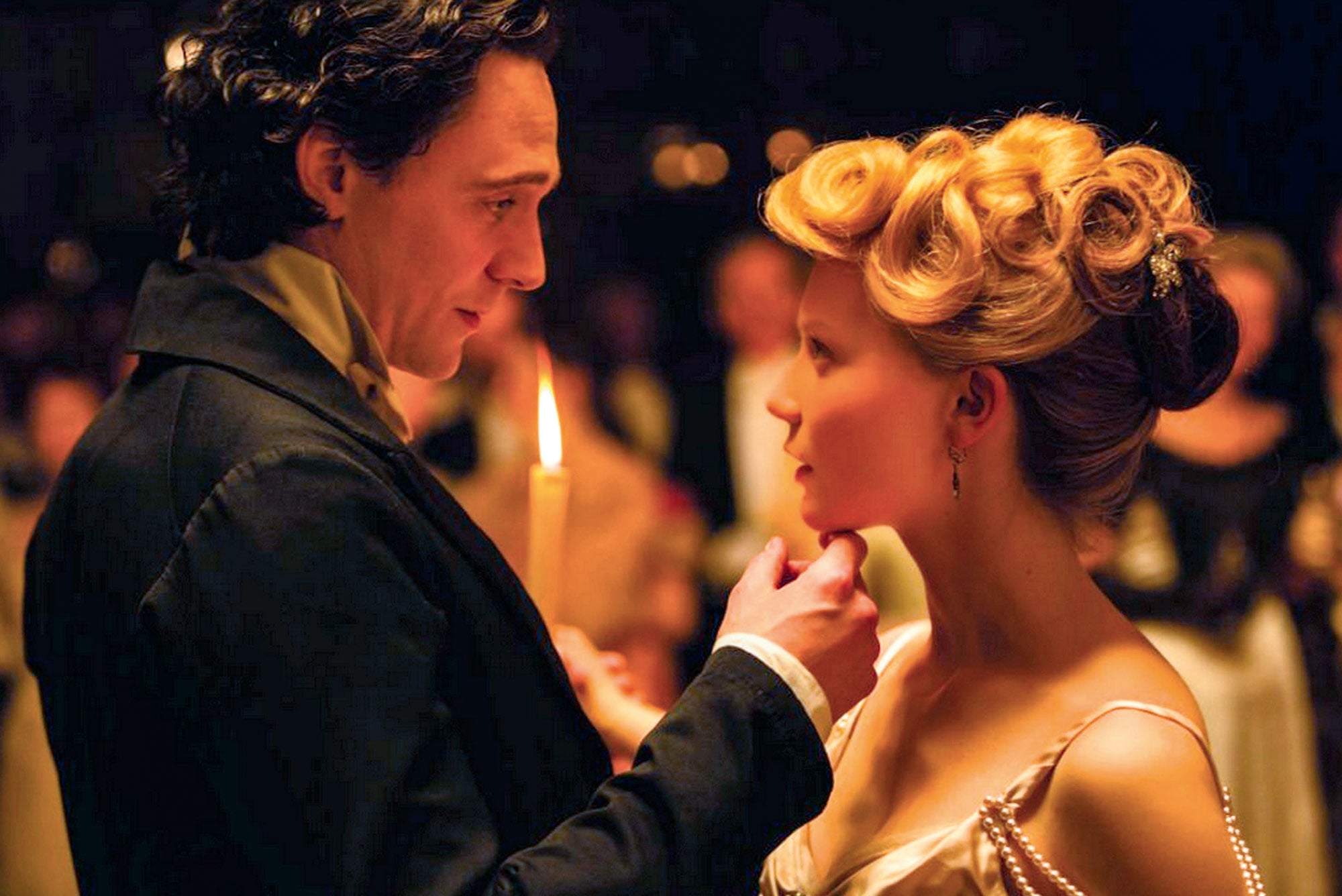
Crimson Peak (2015). Alamy

AP: When working on a film does your experience as a set designer change your conversations with the production designers?

KH: There’s a lot about the language that they’re using, and, in the case of Frankenstein, there’s a lot of imagery that Guillermo and Tamara [Deverell, production designer] used of circles and windows, which also echoed the themes of mythology and religion. So you have the architecture, the bones, the skeleton of the visual language. And then there’s the layering that goes within. Colour works between both of us. Very much the way that Tamara, Guillermo and I work – he’s a conductor. Tamara’s hugely collaborative and sharing. Every note she gets, she shares with me, and I do the same with my crew, or with her. It’s not a competition. Because we all know the language that Guillermo is developing, we know how to respond, or what to offer.

AP: How do you make your choices?

KH: I haven’t always had choices. Sometimes I’ve had to do the realistic thing of: I need to work. There was a time when it was always based on the script. But I’ve learned more and more that it’s actually the chemistry of the director, and understanding their language. When I work with Guillermo, I know we’re going on a journey. With Doug Liman, there’s chaos and a different kind of fun journey to be had. So I think for me, at the end, it’s going to be your director who’s going to shape whatever’s in the script and the vision beyond that. It can be surprising. Sometimes it moves drastically away from where that starts, and sometimes it doesn’t change. I think at the end of the day, if I had my choices, it would be based on all those things coming together – the director and script. But the director is the biggest thing. It’s the most important relationship.

Frankenstein, Crimson Peak, Suicide Squad, The Rings of Power, Edge of Tomorrow
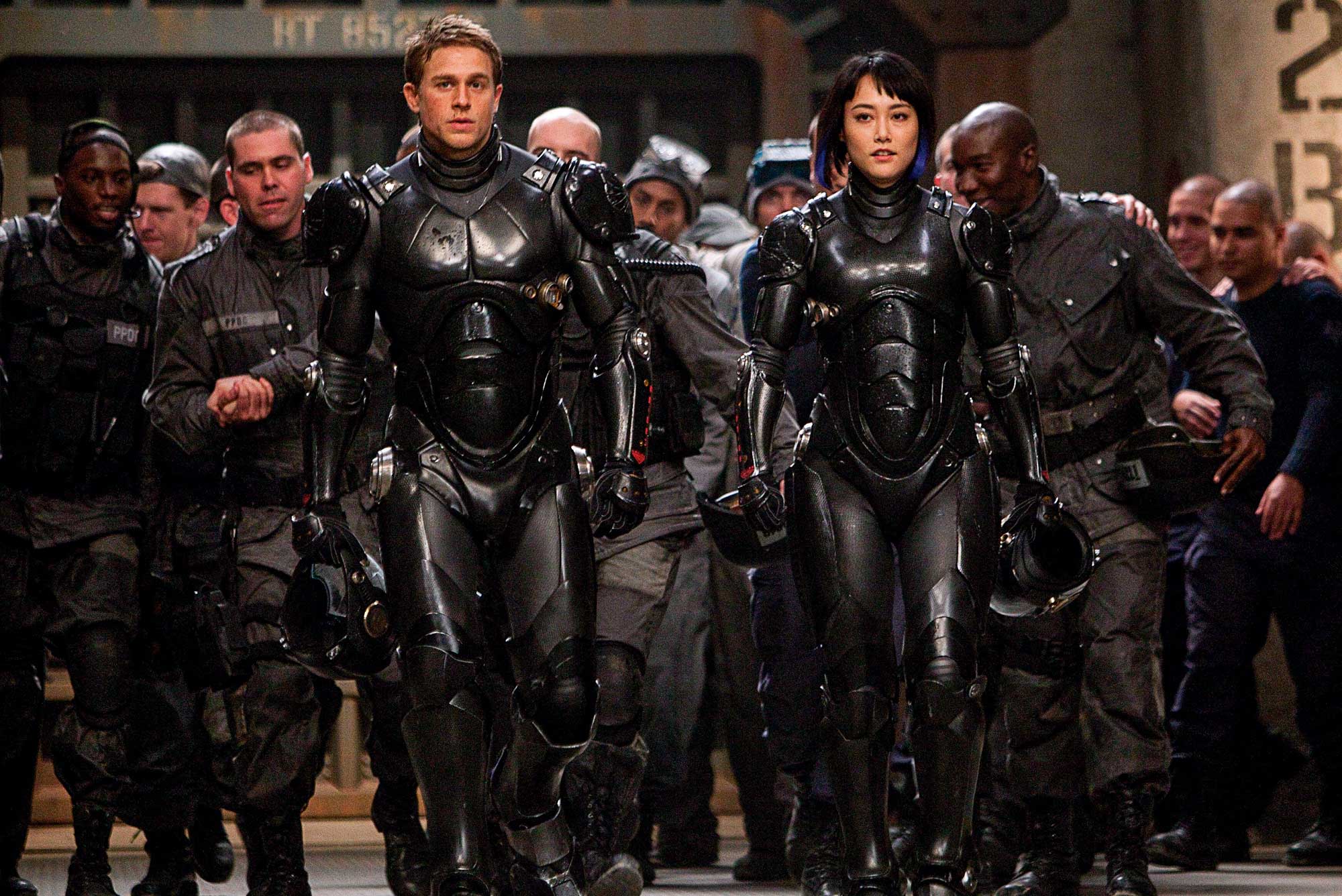
Pacific Rim (2013). Warner Bros. Pictures/Alamy

AP: What is your favourite part of being a costume designer?

KH: My first favourite part is where there’s no talk of money or budget, and you’re in the dreaming. You get the script for the first day, and everything’s possible. You don’t always get that in the end result, but the potential for it all to be possible is magic. And the second moment is when you find one hook that starts describing the language of what you want. There’s one thing that’s catching that idea. It comes back to communication, and allowing the process, too. It’s a very intimate thing, sharing ideas, in a way. And no one’s going to get it right the first time. So you have to trust that. I’ve only now become brave in myself about offering something, and going, ‘It doesn’t matter if it’s not perfect, if it’s not the final idea.’ Because I’d hold onto things. I’d rip up bits of paper and drawings and illustrations going, ‘It’s not good enough.’ And then you realise: it’s a component of parts. It’s trusting in the process, and going, ‘Here’s one idea, and here’s an idea with this added.’ It’s a process of communication.

AP: What would you say would be your strength as a designer?

KH: I always have another idea. So if something gets turned down, I have lots of ideas. Sometimes that’s a bit of a pain in the ass for everyone else, and sometimes it can be overthought. Sometimes if people just want a police uniform, I’m the person that goes, ‘But does it have to be just a police uniform?’ But 90 per cent of what we do is: ‘That’s not working. What else have you got?’ And you’ve got two seconds to do it, right?

Frankenstein, Crimson Peak, Suicide Squad, The Rings of Power, Edge of Tomorrow
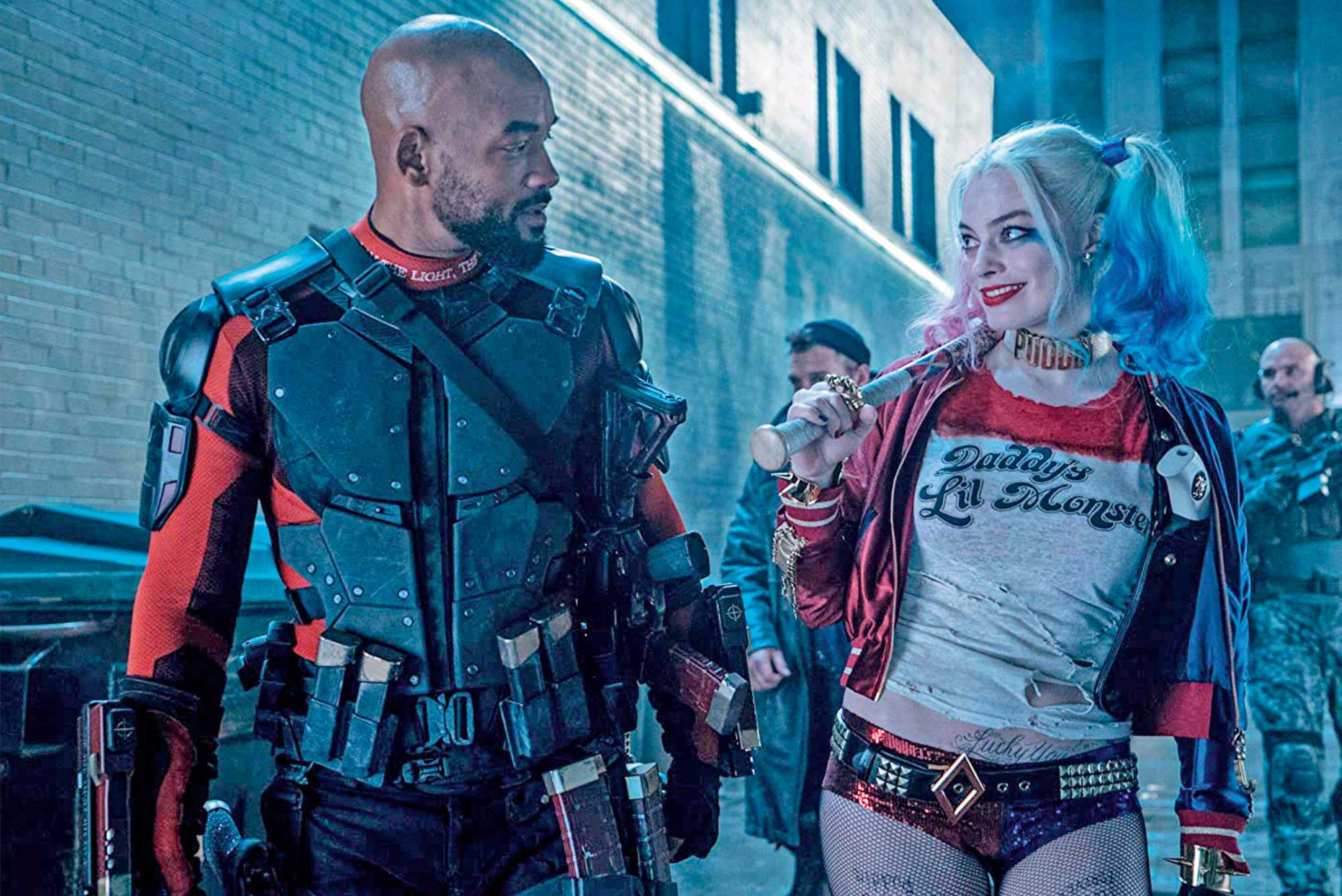
Suicide Squad, 2016. Warner Bros. Pictures/Alamy

AP: What do you think the biggest challenges are? 

KH: The way my head works – I sometimes fixate on something, and it becomes really important to the point of driving everyone up the wall. I’ve got a photocopying problem! I have to plant trees at the end of every project. And learning to let go and say, ‘It’s not perfect. Time’s moving on. There’s a deadline.’  Sometimes I find that difficult because I want everything to fit in a certain way, and I have to let go, and think of the bigger sides of the project, and the good of the project, and for my workroom.

AP: I agree. We have quicker prep times now… 

KH: It’s defined by output, isn’t it? Because we can jump so high; because we have teams with amazing skills, and you meet those amazing deadlines. And then people go, ‘Great. So now we’re giving you half the time to do it.’

AP: When you’re looking for inspiration, where’s the well that you draw from? 

KH: Always books, you know? But actually I’ve chosen to live on this piece of land in New Zealand that’s far away from the rest of the world. It’s a world-building place. It’s just seeing shapes in nature. It’s why I always loved the works of Tolkien and the Norse myths. It’s why I love Frankenstein. Even if I’m doing something that’s more sci-fi or architecture – there’s still a landscape there. There’s still a language. I think it’s all around you. And then in the development of this, Guillermo was building his visual language, and I needed jewellery and Tiffany came on board. We went through the archives and Louis Comfort Tiffany’s use of organic forms in nature, the colours – they echoed Guillermo’s visual and painterly language. And then there was the appreciation of beauty in craftsmanship. Inspiration in the form of nature, breaking its boundaries.

Frankenstein, Crimson Peak, Suicide Squad, The Rings of Power, Edge of Tomorrow
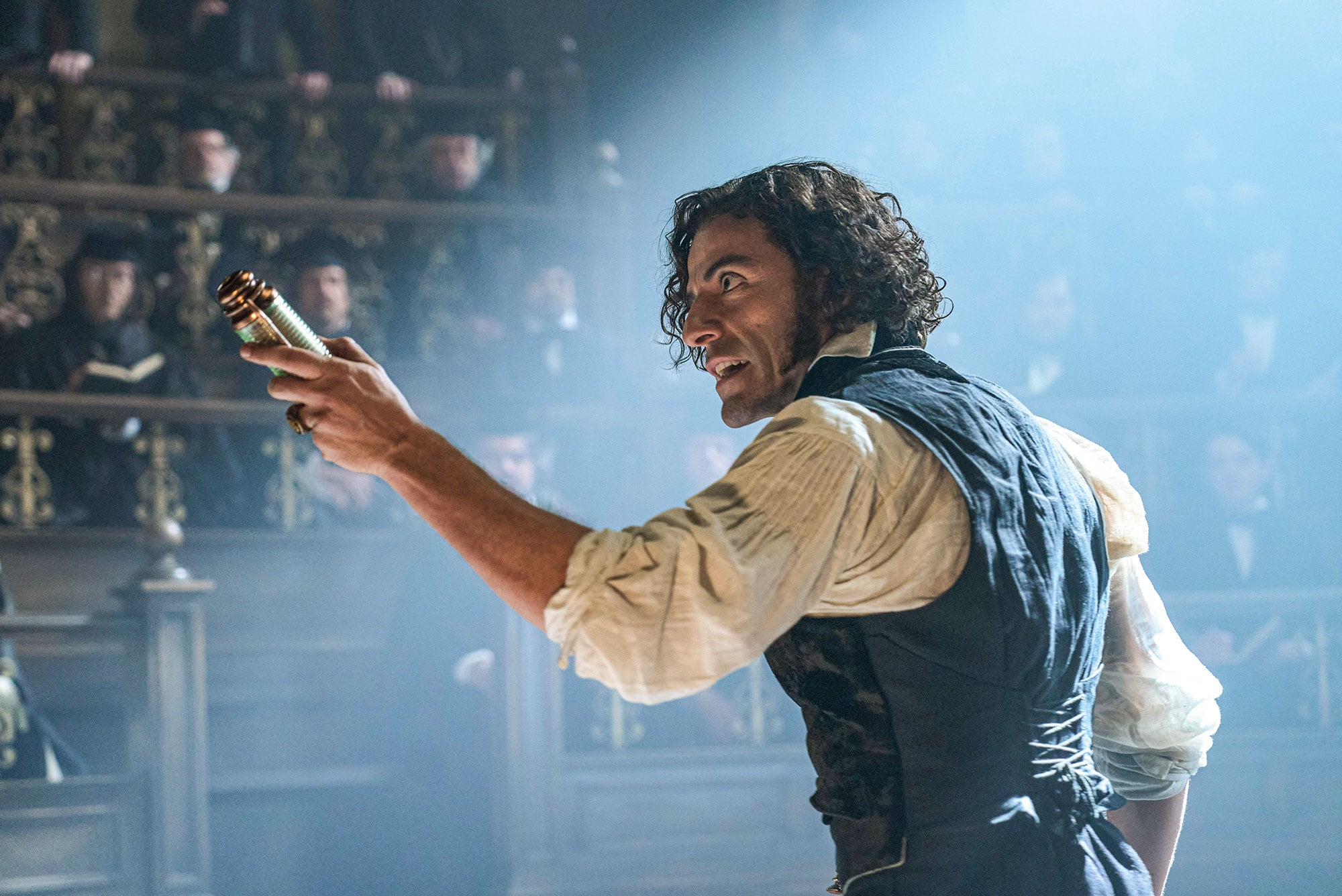
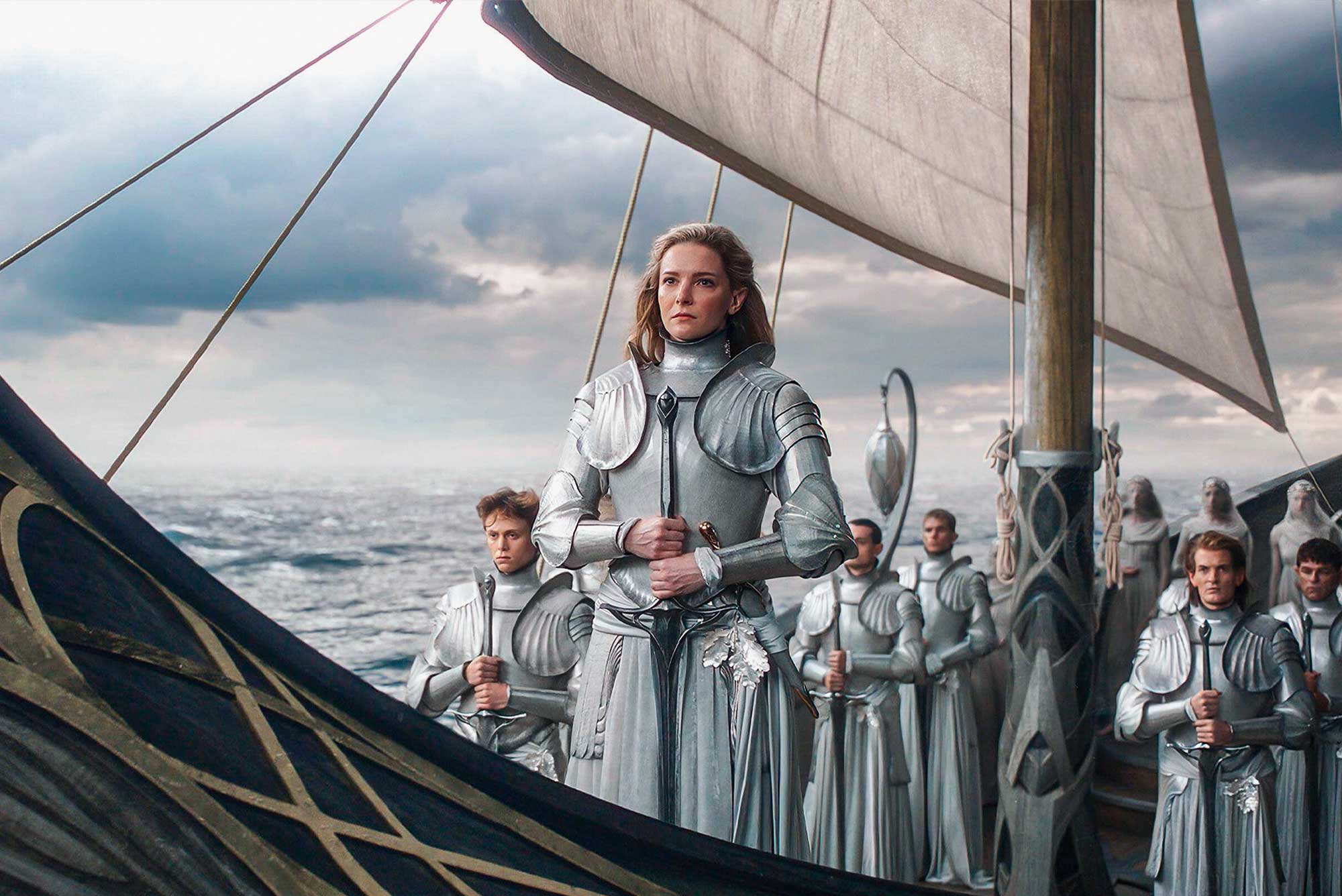
The Lord of the Rings: The Rings of Power (2022). Amazon Studios/Alamy

AP: What continues to motivate you? 

KH: Fear is a great motivator. Not paralysing but it does make you seek and question, and to be brave and learn something new. Going back to Edge of Tomorrow – that was like putting a car together with all its parts. It’s not something that would have been on my wish list, but then when you understood that basically we were making a giant puppet and all the components – then it became a different thing. And then you get through to the end of it. I always compare it to childbirth. There’s the terrible moment of labour where you go ‘never again’… then six months later you forget the pain you went through.

AP: What would you say is your career highlight?

KH: I suppose there’s different achievements. When we did the exosuits on Edge of Tomorrow, I learned a hell of a lot from Tom Cruise about filmmaking. Frankenstein was a once-in-a-lifetime project and to see a finished cut, and go, ‘Oh, look at what the scenic artist did. Look at what the props team did…’ So every frame, I sit there and I go, ‘Well, there’s at least 100 of my department, and there’s 200 over in the ship-building department…’ So every time I look at that, I see all of those people that were involved. And Guillermo celebrates it. The film is a celebration in itself of craft. Crimson Peak was a chamber piece. It’s like when I saw your work on Once Upon a Time in Hollywood, Arianne – I really saw the scale and all the beautiful mythologies within the world of Hollywood being created.

Frankenstein, Crimson Peak, Suicide Squad, The Rings of Power, Edge of Tomorrow
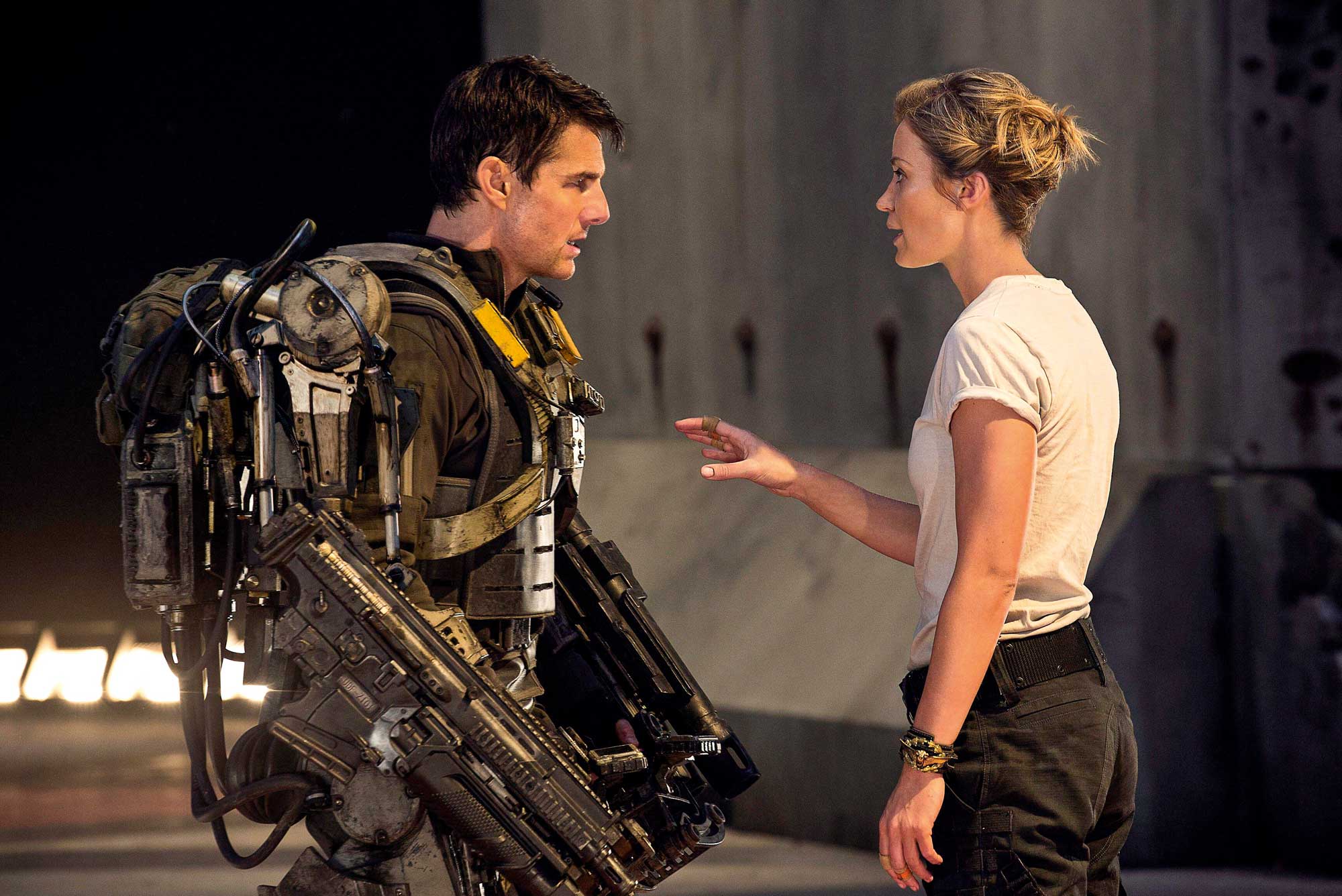
Edge of Tomorrow, 2014. Warner Bros. Studios/Alamy

AP: What films were influential for you?

KH: Definitely Cocteau. Powell and Pressburger’s The Red Shoes was an amazing influence. Pan’s Labyrinth obviously was another defining moment for me. The world of Peter Greenaway and Derek Jarman was a huge influence on me – the way they used colour; the theatrical quality of it. Drowning by Numbers and The Draughtsman’s Contract. All of those films have a quality in world-building. And sometimes it changes as you grow. What Motley taught me is that you serve the text, and you serve your director. What I think is not championed enough, is that all of us costume designers are capable of many languages, different approaches. We are capable of moving from one discipline and genre to another. I find it frustrating that we can get typecast in to a genre – I love crossing disciplines but we all bring our own process, unique language and point of view to it.

AP: What do you tell students about pursuing costume design?

KH: What I have learned is that everybody has a different story about how they came to be costume designers. There doesn’t seem to be a rule. I’d say: find your like-minded people. Find those kids wanting to be directors. Get together, and make stories. Keep being brave and trying things. And learning from others. It might not be your end goal, but you’ll always learn from every opportunity and every situation. Always. And for young directors, it goes back to what we discussed earlier – trusting in the process, that it is a process in terms of trying to communicate and share your ideas, and being kind.


Frankenstein is on Netflix now
Words & Interview by ARIANNE PHILLIPS
As told to JANE CROWTHER
Frankenstein / Crimson Peak / Pacific Rim / The Lord of the Rings: The Rings of Power / Edge of Tomorrow

Photographs & words by GREG WILLIAMS
As told to MATT MAYTUM


Greg Williams looks back on two decades of capturing the BAFTAs, and the Cartier gems that shone on the biggest night in British film…

I’ve been an official photo-grapher of BAFTA since 2005. Due to my longstanding relationships with the British Academy and many of the talent honoured, I’ve been lucky enough to have the privilege of being the first person that the winners see when they come offstage with their award. What you get are those wonderful, honest reactions before their guard is up. I like to think it gives you authentic Hollywood, seeing how someone reacts in that moment, and the emotions of it. If you’re lucky you tend to see the inner child more than the personality. Some people come offstage stunned. They’re a rabbit in the headlights. You have to say, ‘You just won a BAFTA. Wahey!’ Over the years I’ve shot the BAFTAs when it was at the Odeon Leicester Square, the Opera House, the Royal Albert Hall, and now at the Royal Festival Hall. And each one brought something unique.

When I started my career as a photojournalist, you never got a second crack at taking a picture. You were literally capturing a moment. That has come in very useful in these situations where it is often organised madness, and you’ve only got one opportunity to get that first impression. And my pictures are often of that first impression, so my photojournalism background has definitely helped in capturing the moments. For the last decade, I’ve also had a really meaningful relationship with Cartier, often photographing actors in the moments before they head to the red carpet in their hotel suites. Bringing these two institutions together in one spread was just a lovely opportunity to show those spontaneous moments as well as the more still, posed images when you really want to put a spotlight on these beautiful Cartier creations.

I’m very inspired by the old glamour of 50s’ Hollywood. When I was a kid, I was obsessed with the book Magnum at the Movies, and the work of those legendary photojournalists. I put it all in the same bracket of reportage, whether you’re in a war zone or on a red carpet. It’s still reportage, telling stories. In both cases, it’s looking at something that’s reasonably extraordinary to people. It could be extraordinary beauty or extraordinary savagery. 

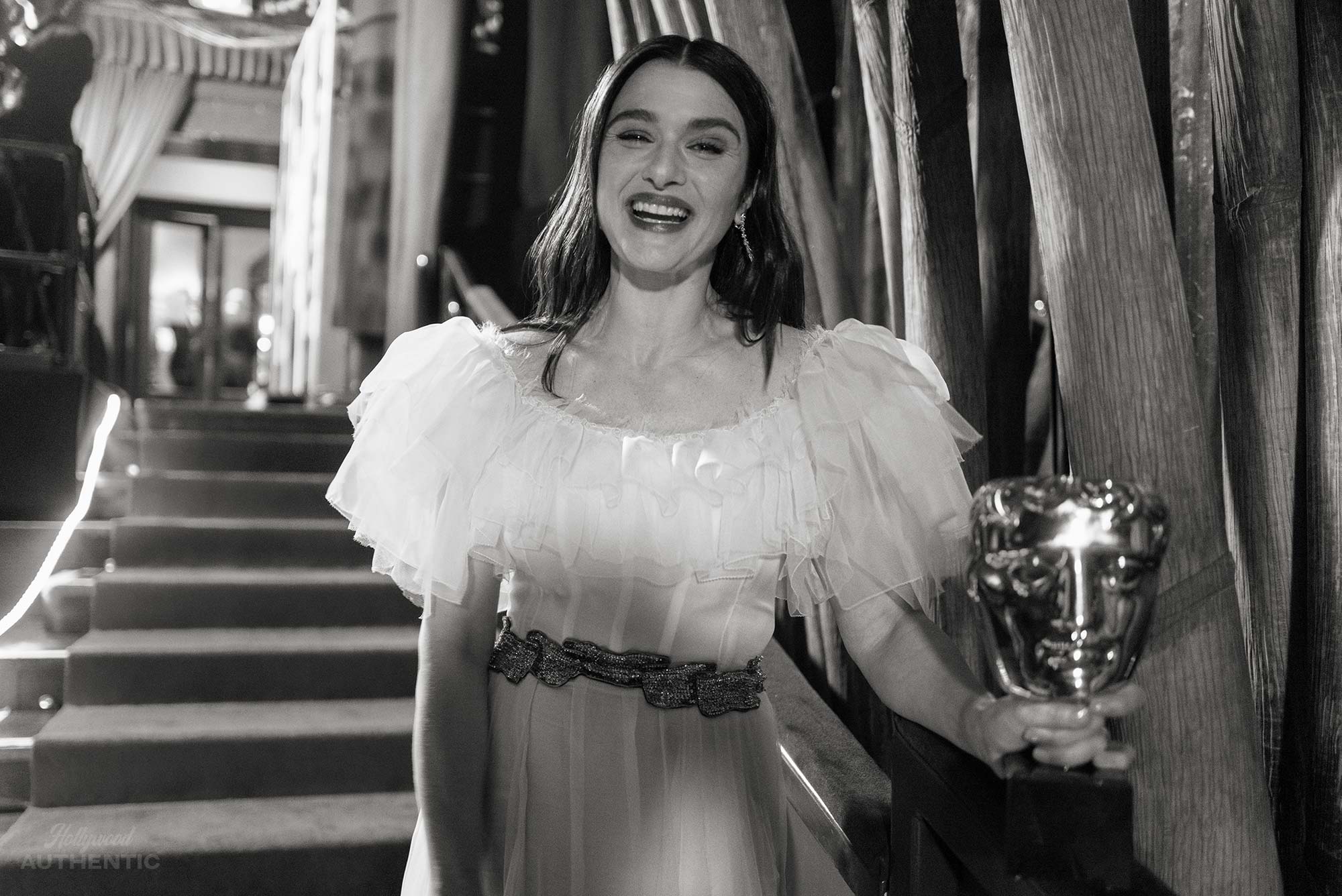
RACHEL WEISZ (Above)
Rachel Weisz leaves the stage at the Royal Albert Hall after winning the Best Supporting Actress BAFTA in 2019 for her role in The Favourite. The amount of space I had backstage was lovely, it gave me room to set up lights including the backlight shaping her hair, and there were no other people backstage. 

Rachel wears:
Cartier High Jewellery earrings, 18ct white gold, diamonds
Cartier High Jewellery ring, 18ct white gold, emerald, black, lacquer, diamonds 

Cartier celebrates BAFTA, Teo Yoo

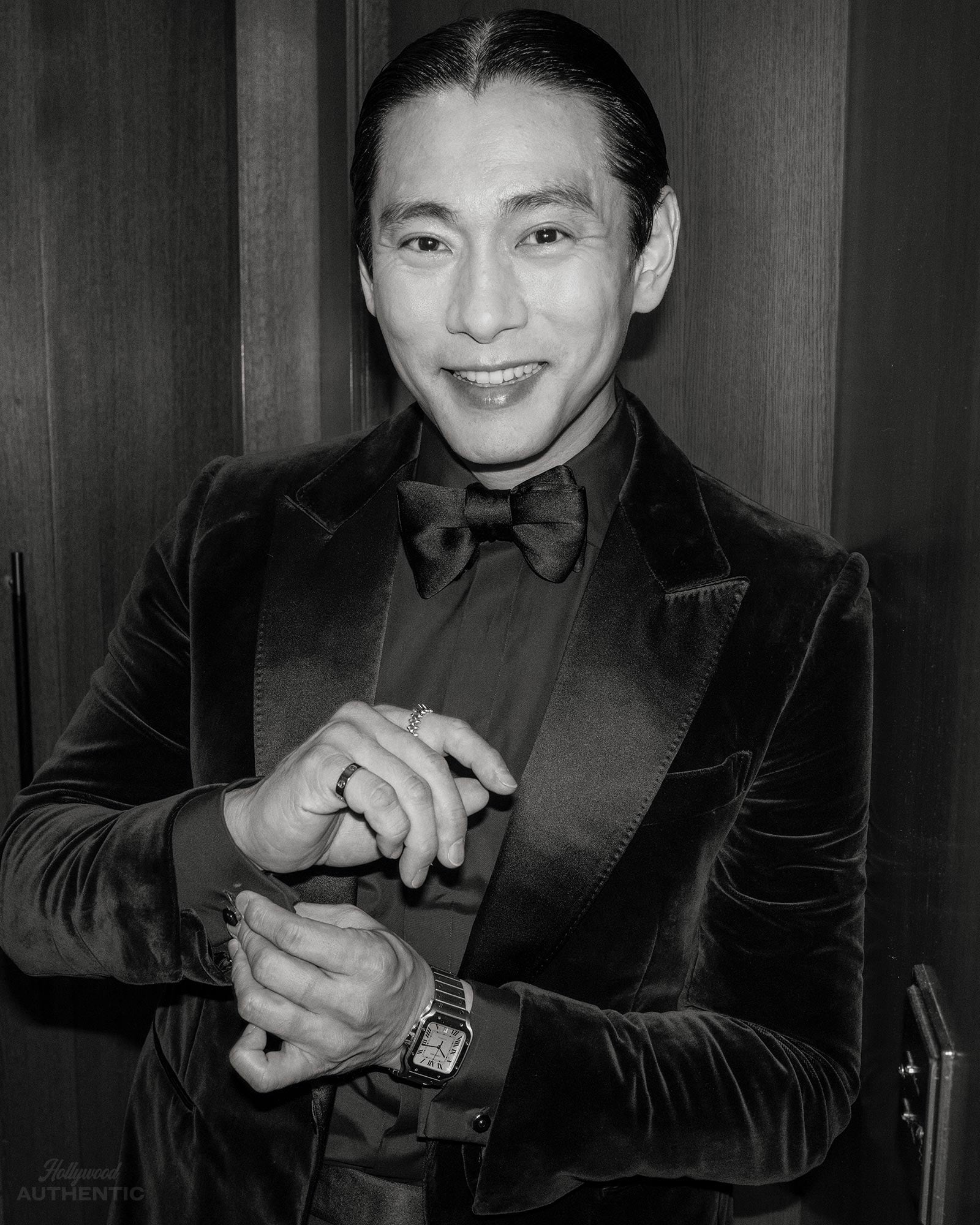
TEO YOO
Teo Yoo captured in his suite before the 2024 BAFTAs, where he was nominated for Best Actor in a Leading Role for Past Lives.

Teo wears:
Santos de Cartier cufflinks, Sterling silver
Cartier Santos watch (Large model), mechanical movement, leather strap 18ct rose gold
Cartier LOVE ring, 18ct white gold
Clash de Cartier ring (Medium model), 18ct white gold

Cartier celebrates BAFTA, Vanesa Kirby

VANESSA KIRBY
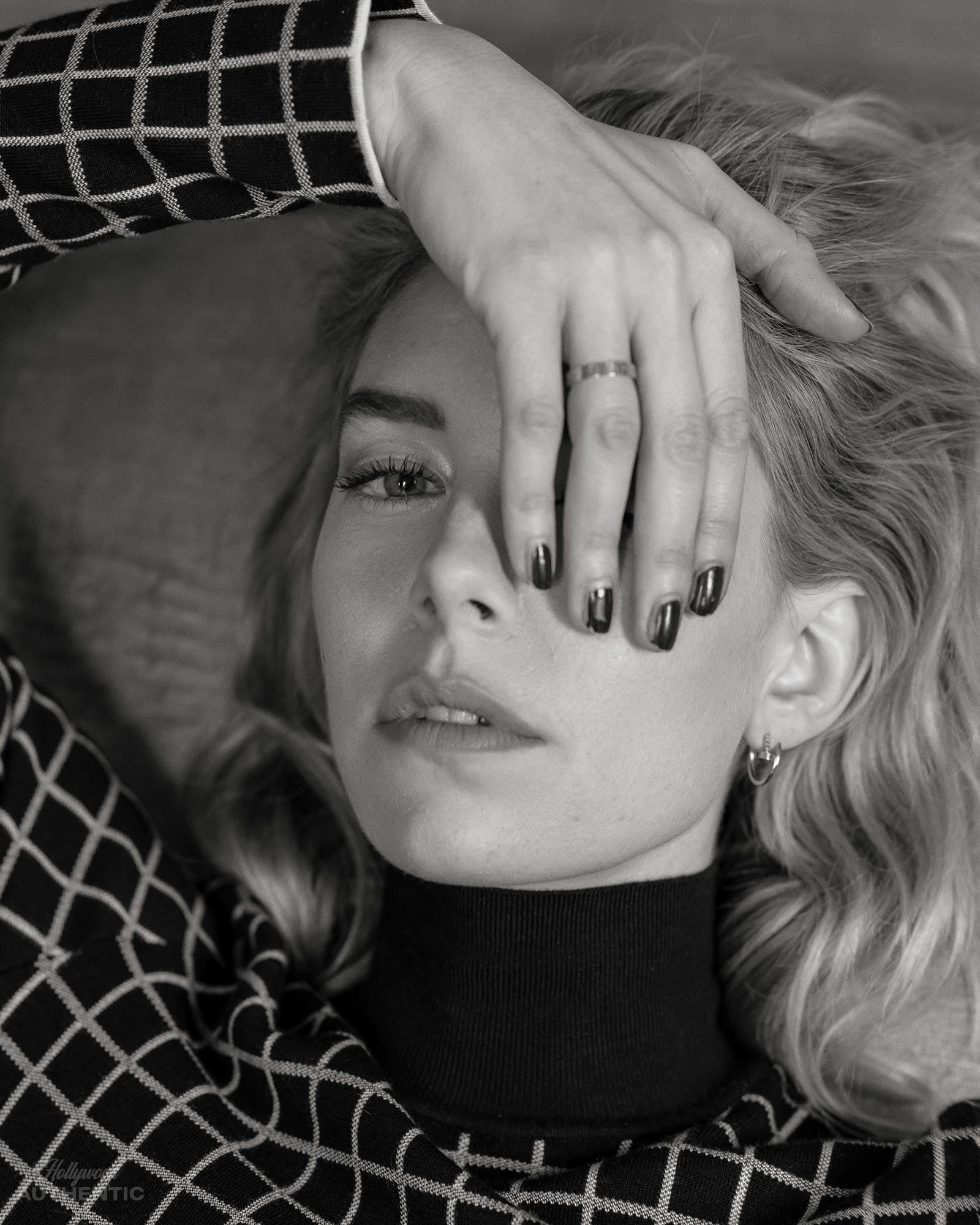
You’re always looking for ways to bring the joy close to the face. There was something about covering her eye that I liked. I liked the shape of the picture, and there’s a bit of intrigue to it.

Vanessa wears:
Cartier Juste un Clou earrings (Small model), 18ct yellow gold
Cartier Love ring (Small model), 18ct yellow gold

Cartier celebrates BAFTA, Lily Collins

LILY COLLINS
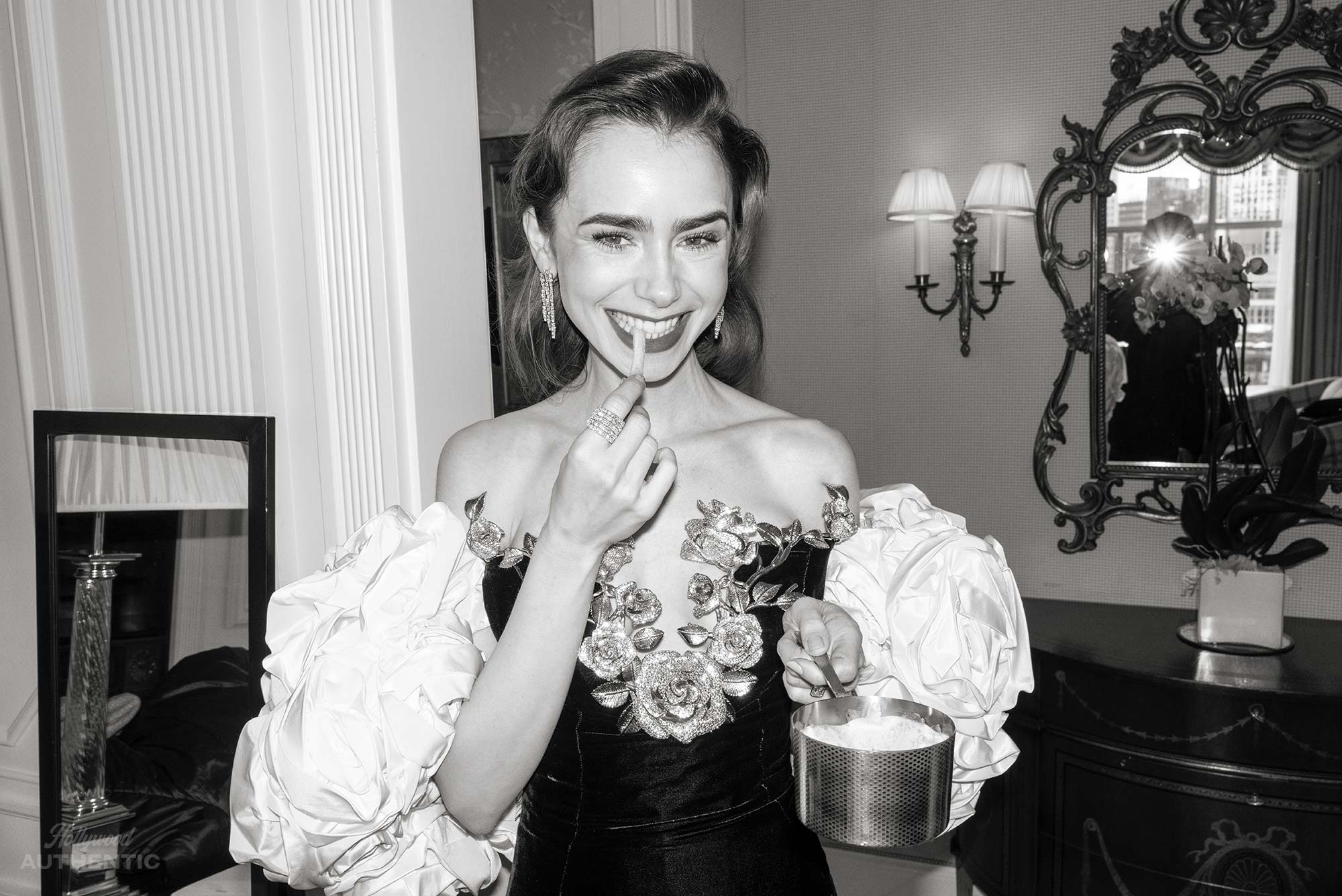
Lily Collins captured in her suite at the Savoy Hotel ahead of the 2024 ceremony. I’m often trying to come up with little things that will light a fuse. It wasn’t planned – and there’s a room service trolley, and I suggested, ‘Eat a chip.’ These things are very fast. I try not to give them much thought. The less thought I give them, the more authentic they are.

Lily wears:
Cartier Diamond earrings, 18ct white gold, diamonds
Cartier Diamond ring, 18ct white gold, diamonds

Cartier celebrates BAFTA, Austin Butler

AUSTIN BUTLER
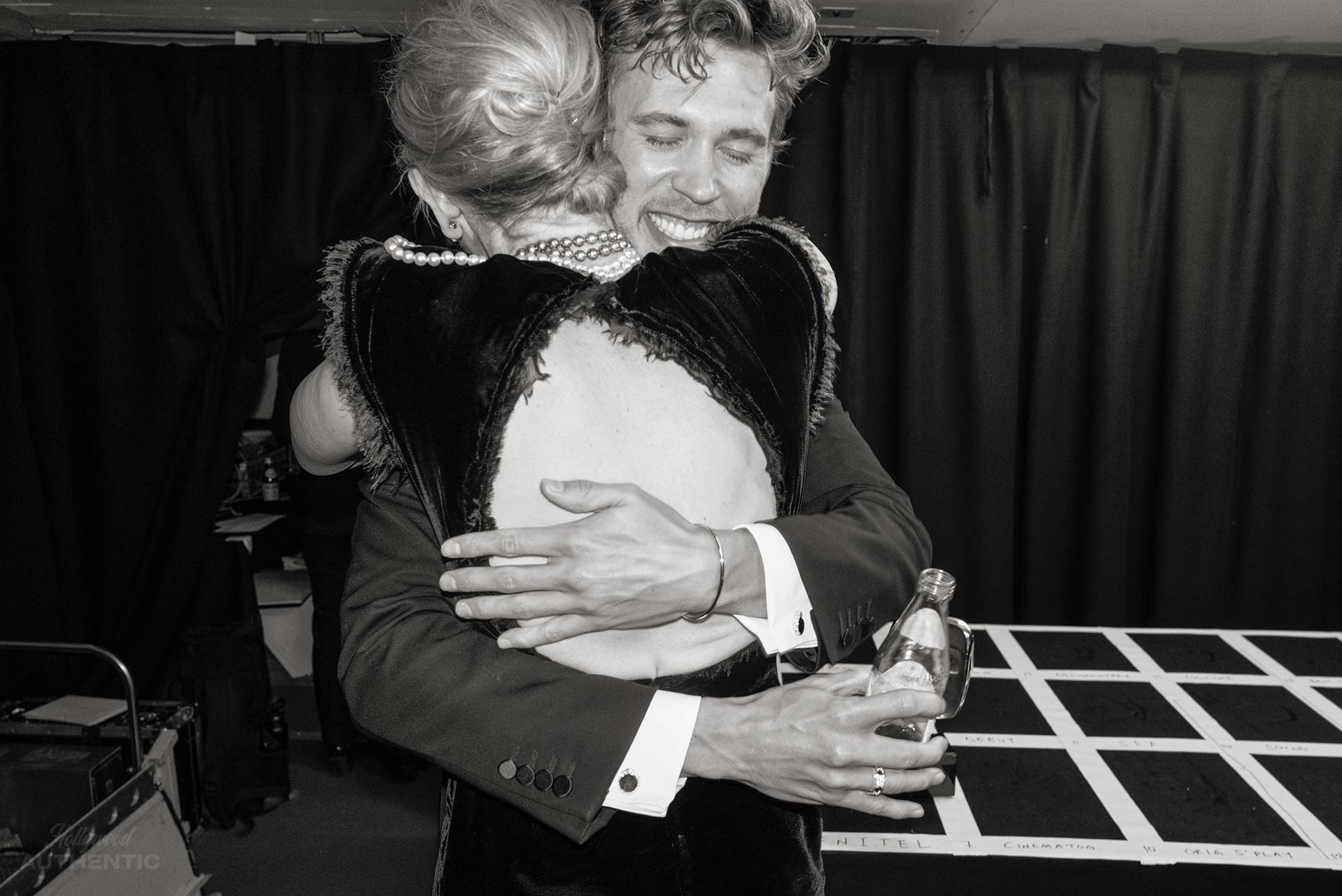
It’s lovely when the person coming offstage is someone who is really comfortable with me, which was the case with Austin Butler. We have a pre-existing friendship, so there’s a real warmth to the shot. Austin was captured embracing Cate Blanchett after he was awarded the Best Actor BAFTA for his role in Elvis at the 2023 ceremony (Blanchett also won that year for her role in Tár).

Austin wears:
Cartier Juste un Clou bracelet, 18ct white gold
Cartier Love Ring, 18ct white gold, ceramic, diamonds
Panthère de Cartier cufflinks, 18ct white gold, diamonds, emeralds, onyx

Cartier celebrates BAFTA, David Oyelowo
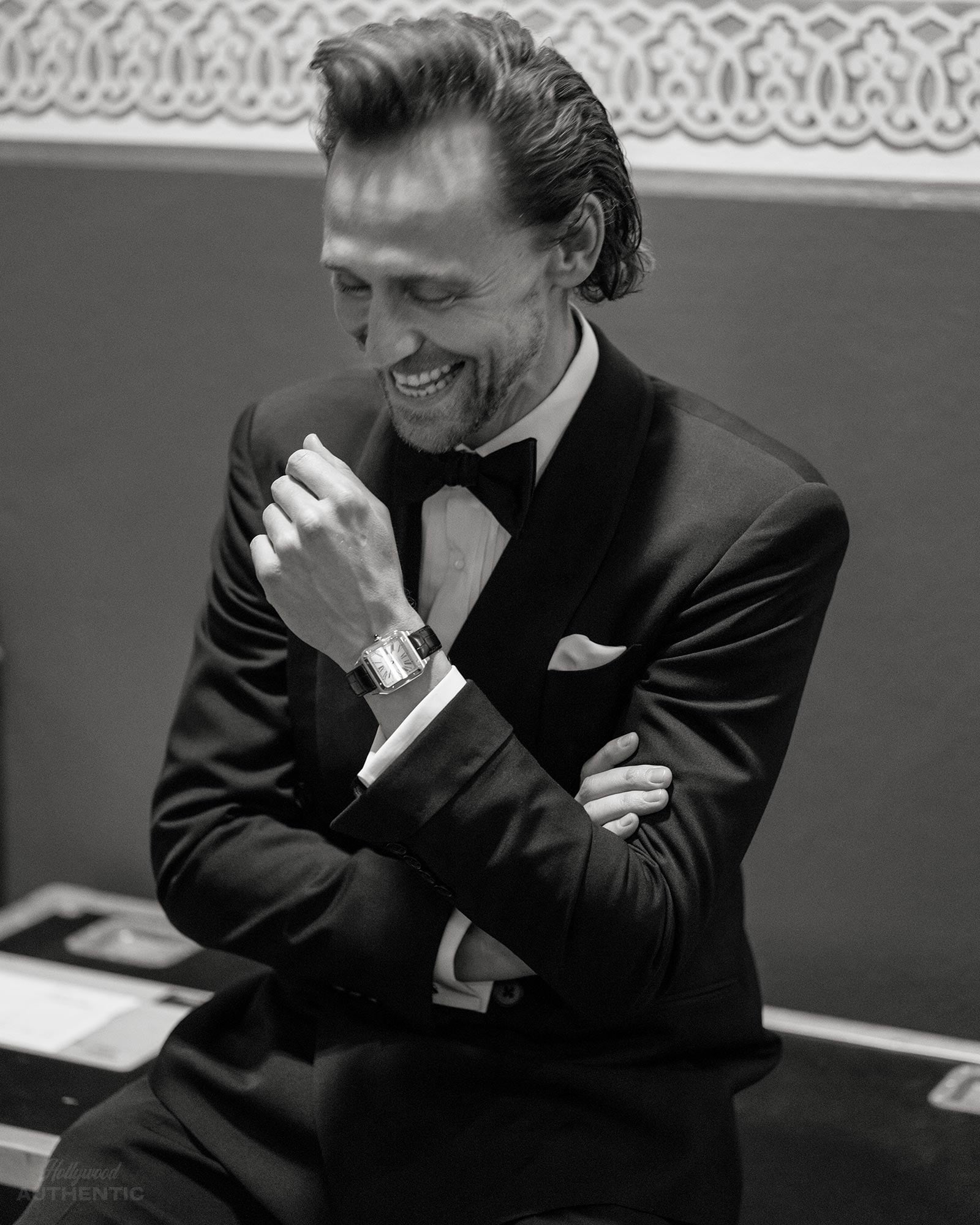
Cartier celebrates BAFTA, Tom Hiddleston

DAVID OYELOWO / TOM HIDDLESTON
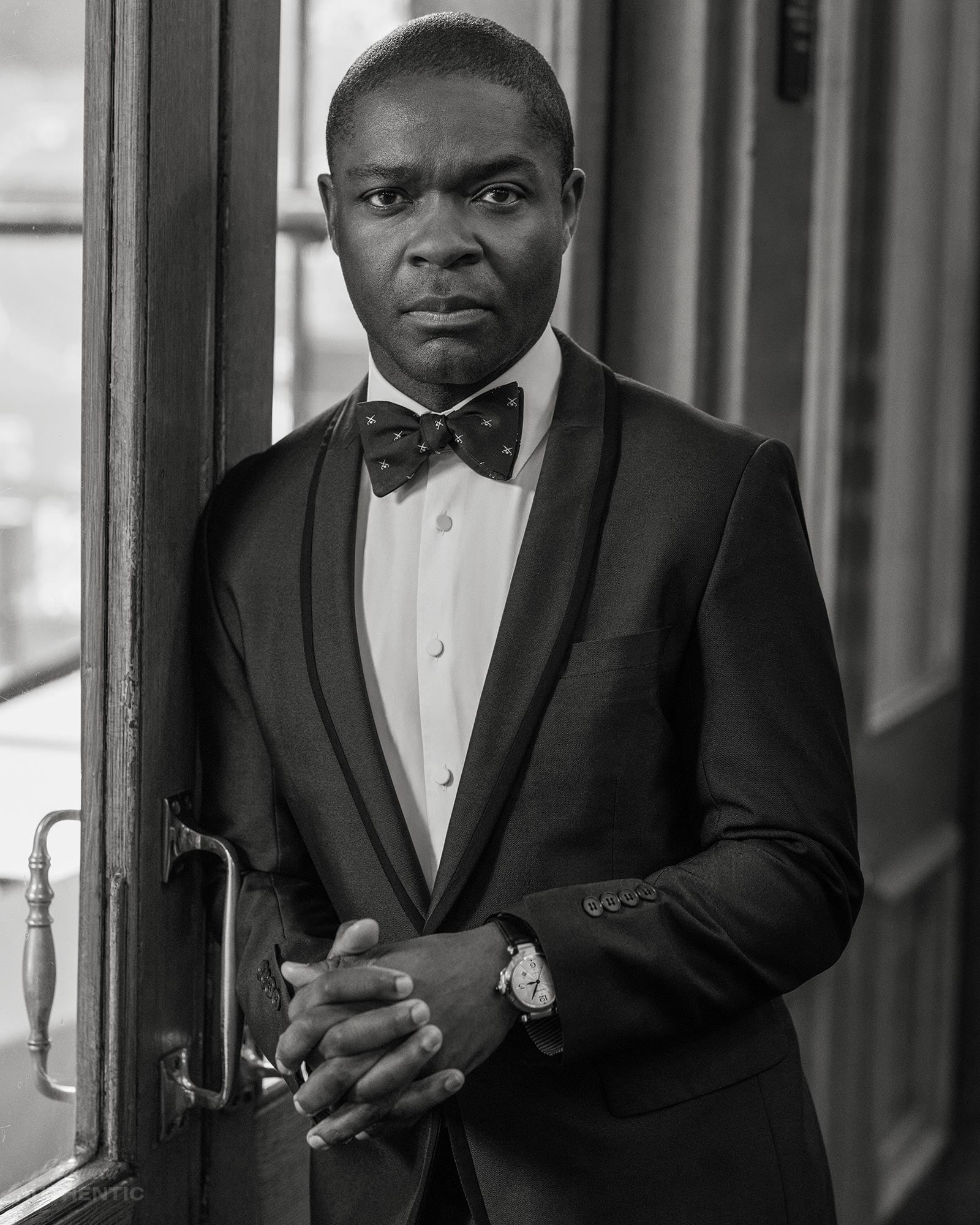
David Oyelowo and Tom Hiddleston both presented an award at the 2021 ceremony at the Royal Albert Hall, which took place during lockdown. These were both shot during rehearsals; there was no audience for the show due to Covid restrictions, so I had the time and space to be able to give them some decent portraits.

David wears:
Pasha de Cartier watch, 41mm, automatic movement,18ct yellow gold, leather
Engraved Sodalite Double C Logo cufflinks, Sterling silver, palladium finish, sodalite

Tom wears:
Cartier Santos-Dumont watch (Extra large model), Hand-wound mechanical movement, 18ct rose gold, steel, leather
Santos de Cartier cufflinks, Sterling silver, palladium finish

Cartier celebrates BAFTA, Sophie Wilde

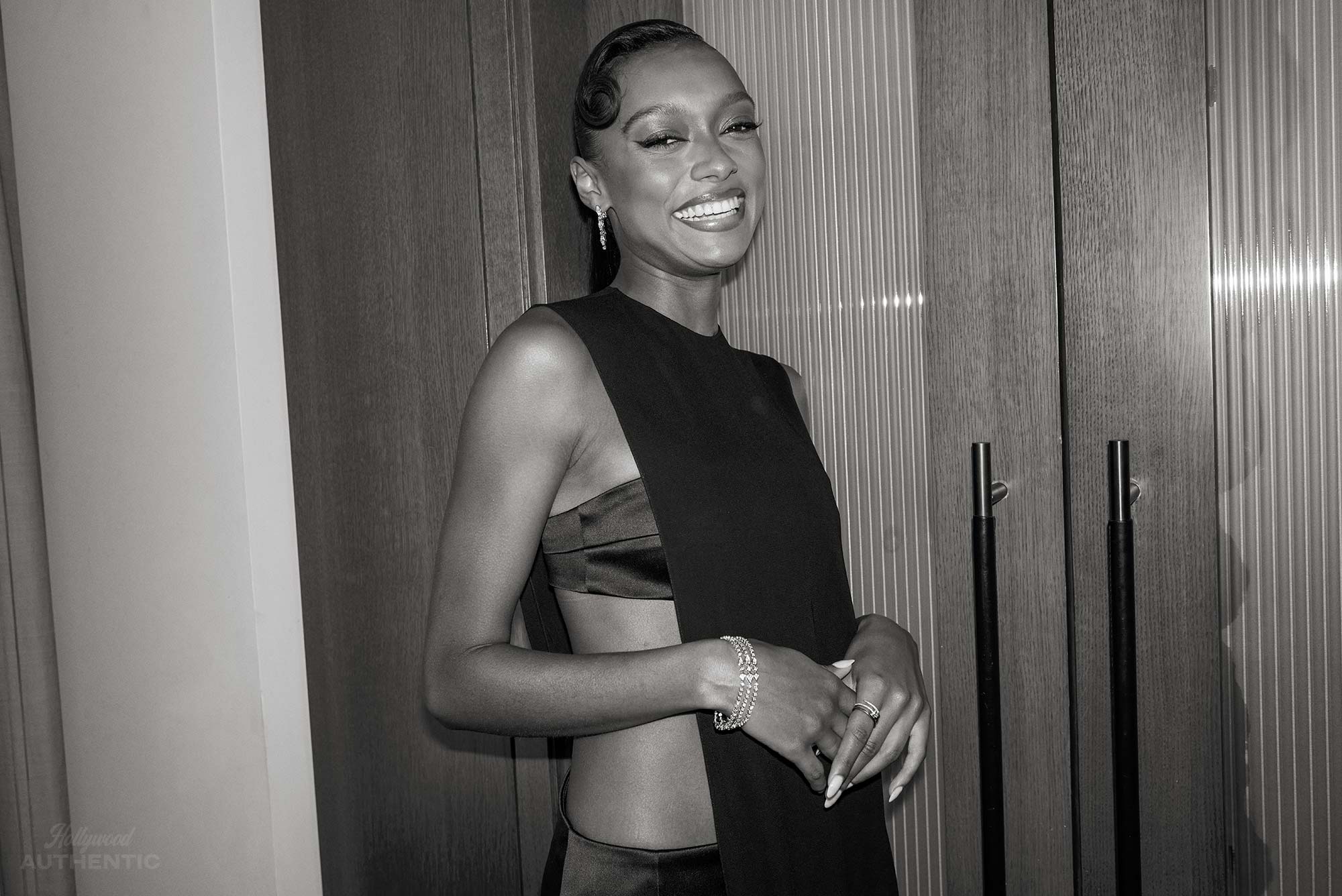
SOPHIE WILDE
Sophie Wilde pictured at her first BAFTA ceremony in 2024, where she was nominated for the Rising Star Award.

Sophie wears:
Pluie de Cartier earrings, 18ct white gold, diamonds
Cartier Diamond Collection bracelet, 18ct white gold, diamonds
Cartier Juste un Clou ring, 18ct white gold, diamonds
Cartier Juste un Clou ring (Small model), 18ct white gold

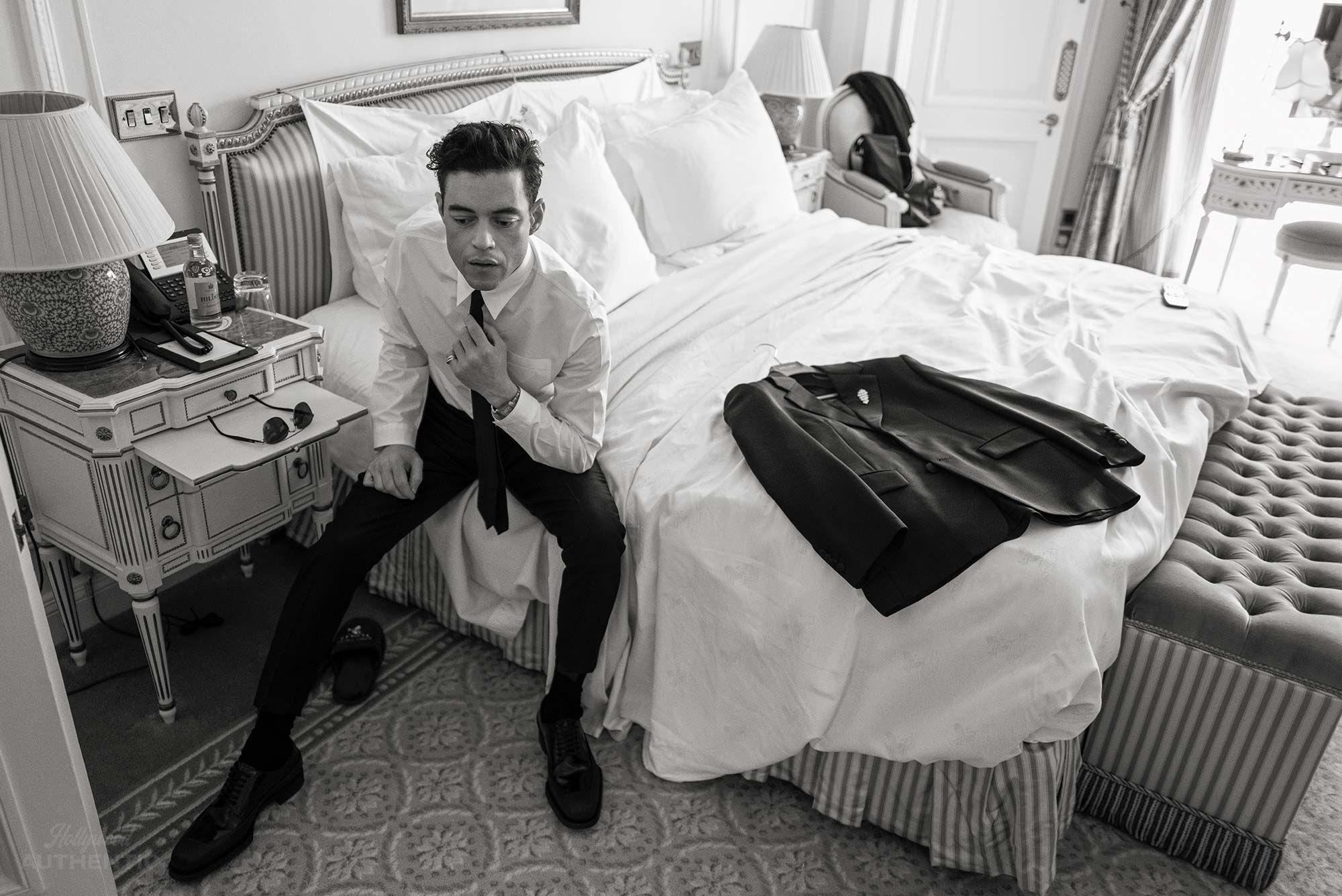
Cartier celebrates BAFTA, Rami Malek

RAMI MALEK
Rami Malek at his suite at the Ritz Hotel in 2023. Rami has a real, old-school Hollywood look. Because the Ritz is so timeless, apart from a digital dial on the telephone and the fact that Rami is obviously of today, there’s nothing in that photo that you couldn’t have shot in the ’60s, and I love that.

Rami wears:
C de Cartier sunglasses, Combined black and gold, matte ruthenium-finish frame, smooth golden-finish bridge, dark grey lenses
Reflection de Cartier brooch/earrings, 18ct white gold, diamonds
Tank Française watch (Large model), Automatic mechanical movement, steel
Trinity ring (Small model), 18ct white gold, 18ct yellow gold, 18ct rose gold
Pasha de Cartier cufflinks, Sterling silver, palladium finish, synthetic spinel


Photographs & words by GREG WILLIAMS
As told to MATT MAYTUM

Cartier, Cartier celebrates BAFTA
83rd Golden Globes, Golden Globes, Hollywood Authentic, Los Angeles
Jennifer Lopez, Timothée Chalamet

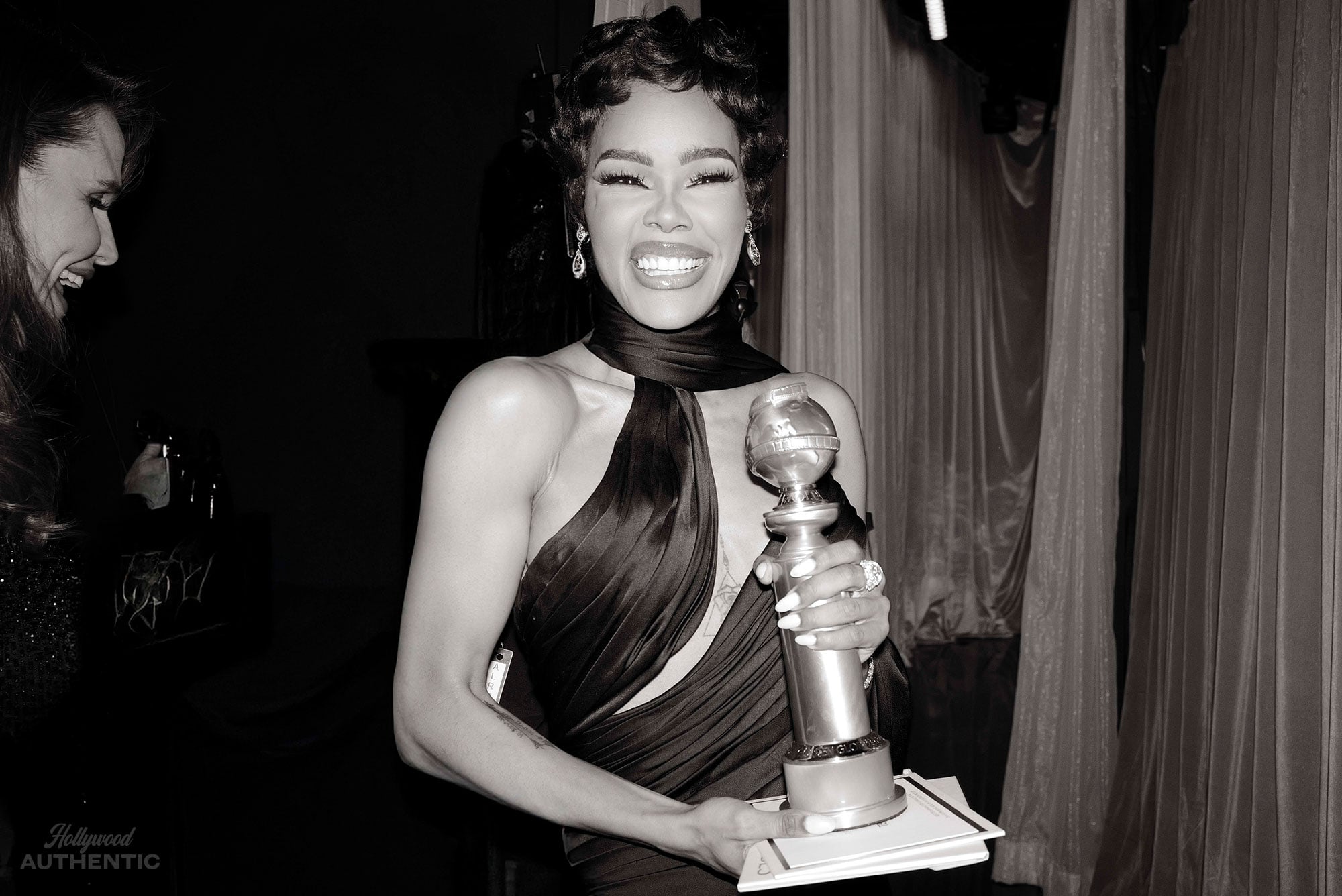
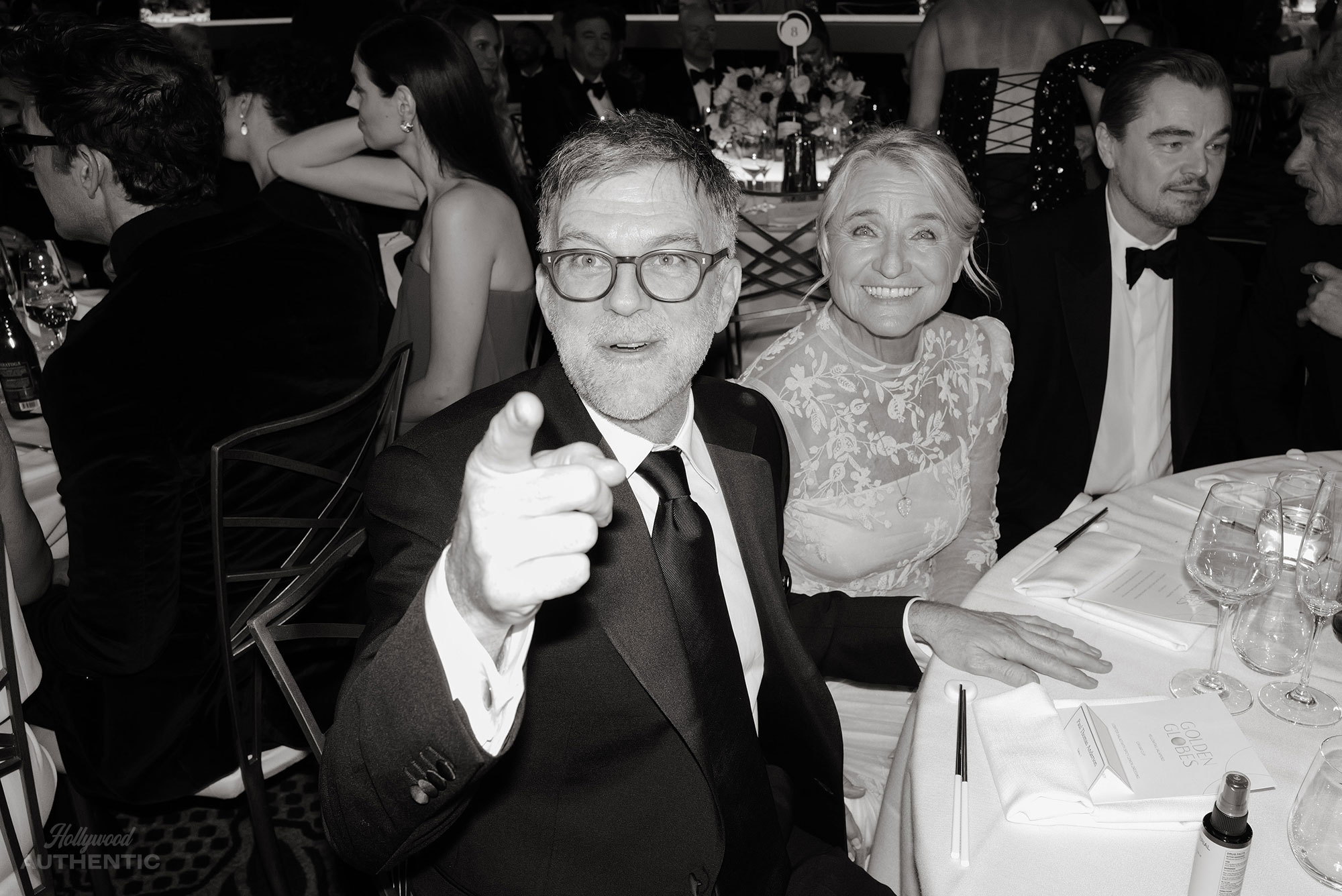
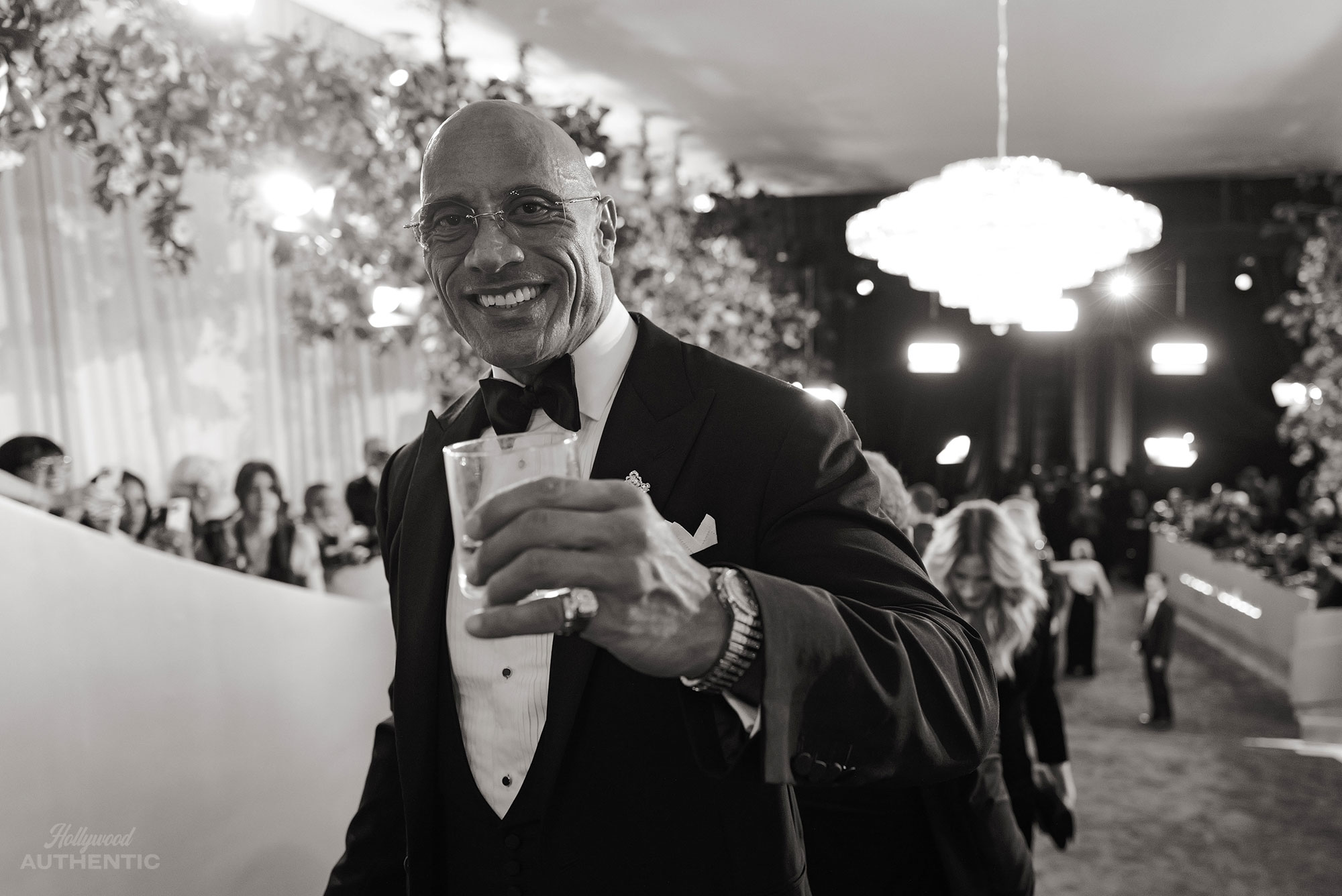
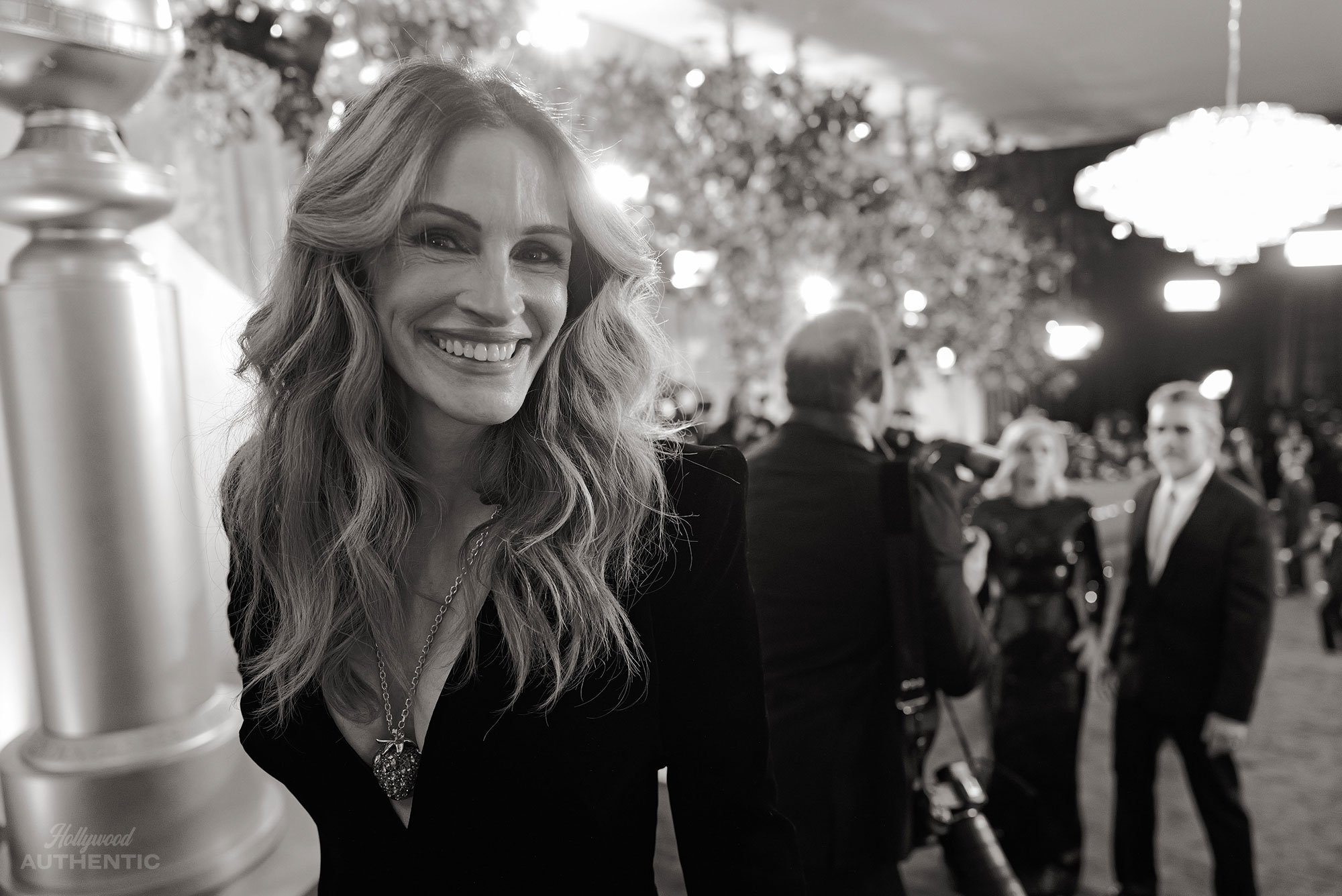
It was the night of Paul Thomas Anderson’s thriller, One Battle After Another, as the film scooped awards for best comedy or musical film, best director and screenplay at the Beverly Hilton on Sunday evening’s 83rd Golden Globe Awards. Teyana Taylor (in custom Schiaparelli) also claimed best supporting actress for her role in the film as anarchist Perdita Beverly Hills. The LA hotel’s usual red carpet was a sweeping staircase this year, allowing gowns to drape over the steps and in the case of Dwayne Johnson, stroll down with a glass of tequila. 

83rd Golden Globes, Golden Globes, Hollywood Authentic, Los Angeles
Paul Thomas Anderson
83rd Golden Globes, Golden Globes, Hollywood Authentic, Los Angeles
Dwayne Johnson

The ceremony in the ballroom kicked off with host, Nikki Glaser, making cracks about contenders with awards being collected as guests nibbled on sushi designed by Nobu’s signature chef, Nobu Matsuhisa. Plates on the tables included a caviar cup, lobster salad with spicy lemon dressing, salmon nigiri, tuna nigiri, and miso black cod while sushi rolls were made to order at a hideaway sushi station.

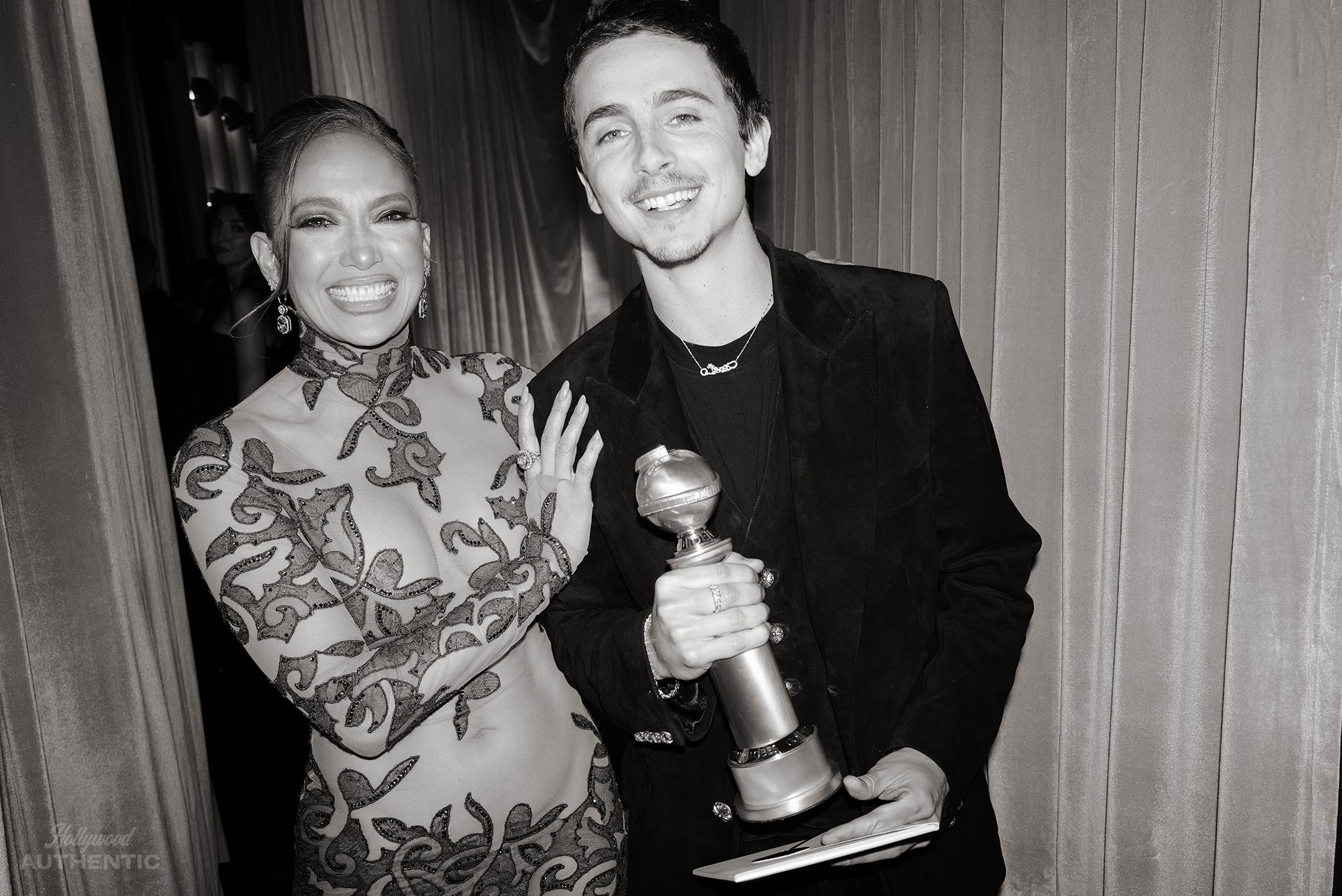
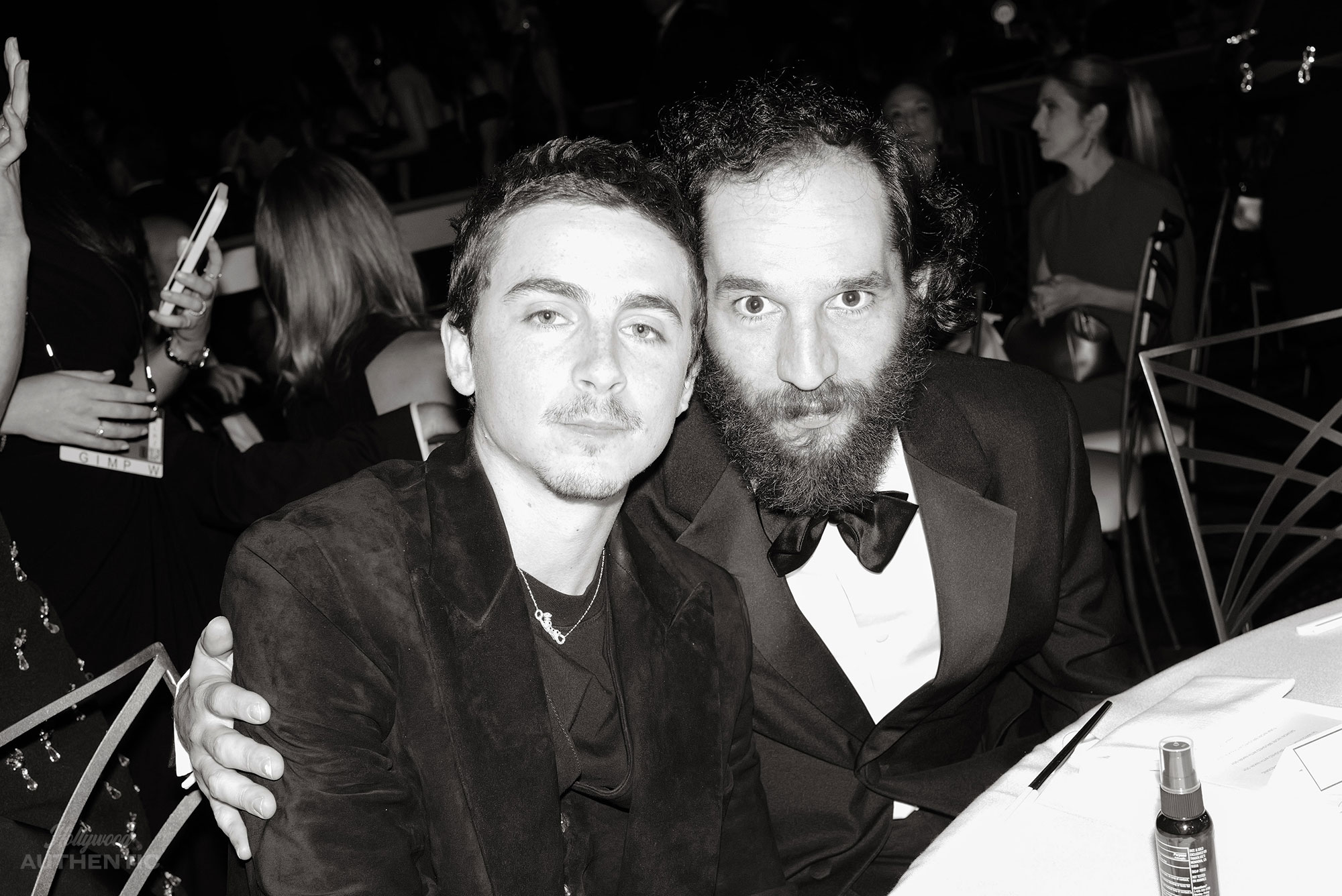
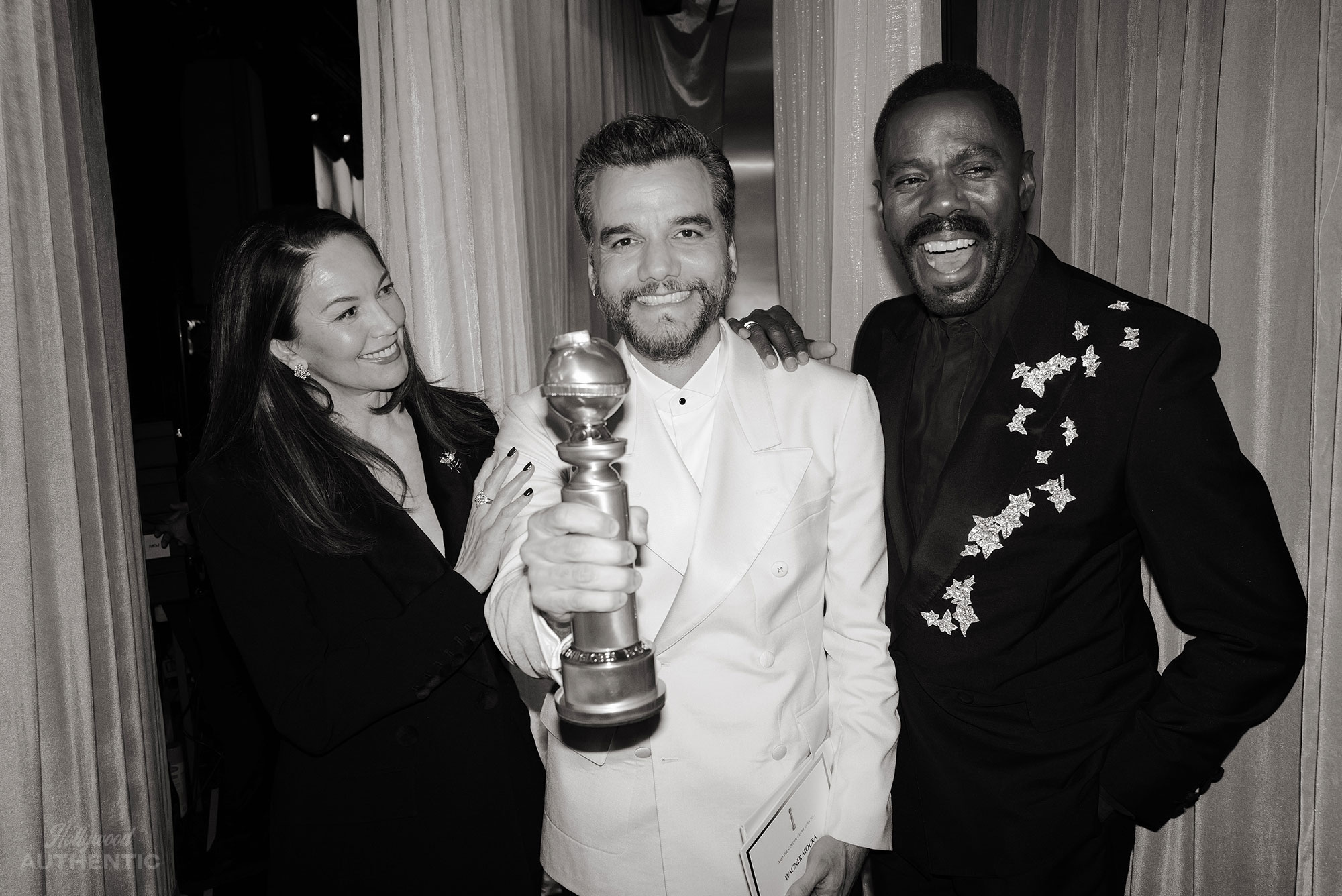
Timothée Chalamet sat chatting at his table wearing custom Chrome Hearts and Cartier with his girlfriend Kylie Jenner (in custom gold Ashi Studio) and Givenchy-clad Jennifer Lawrence, while Leonardo DiCaprio held court at another (wearing Dior). Chalamet took home the gong for best actor in a musical or comedy for Marty Supreme (saying his previous nominations at the event made the win ‘that much sweeter’), while Wagner Moura won best lead actor in a drama for his role in The Secret Agent,  which also landed best film not in the English language.

83rd Golden Globes, Golden Globes, Hollywood Authentic, Los Angeles
Timothée Chalamet, Josh Safdie
83rd Golden Globes, Golden Globes, Hollywood Authentic, Los Angeles
Diane Lane, Wagner Moura, Colman Domingo
83rd Golden Globes, Golden Globes, Hollywood Authentic, Los Angeles
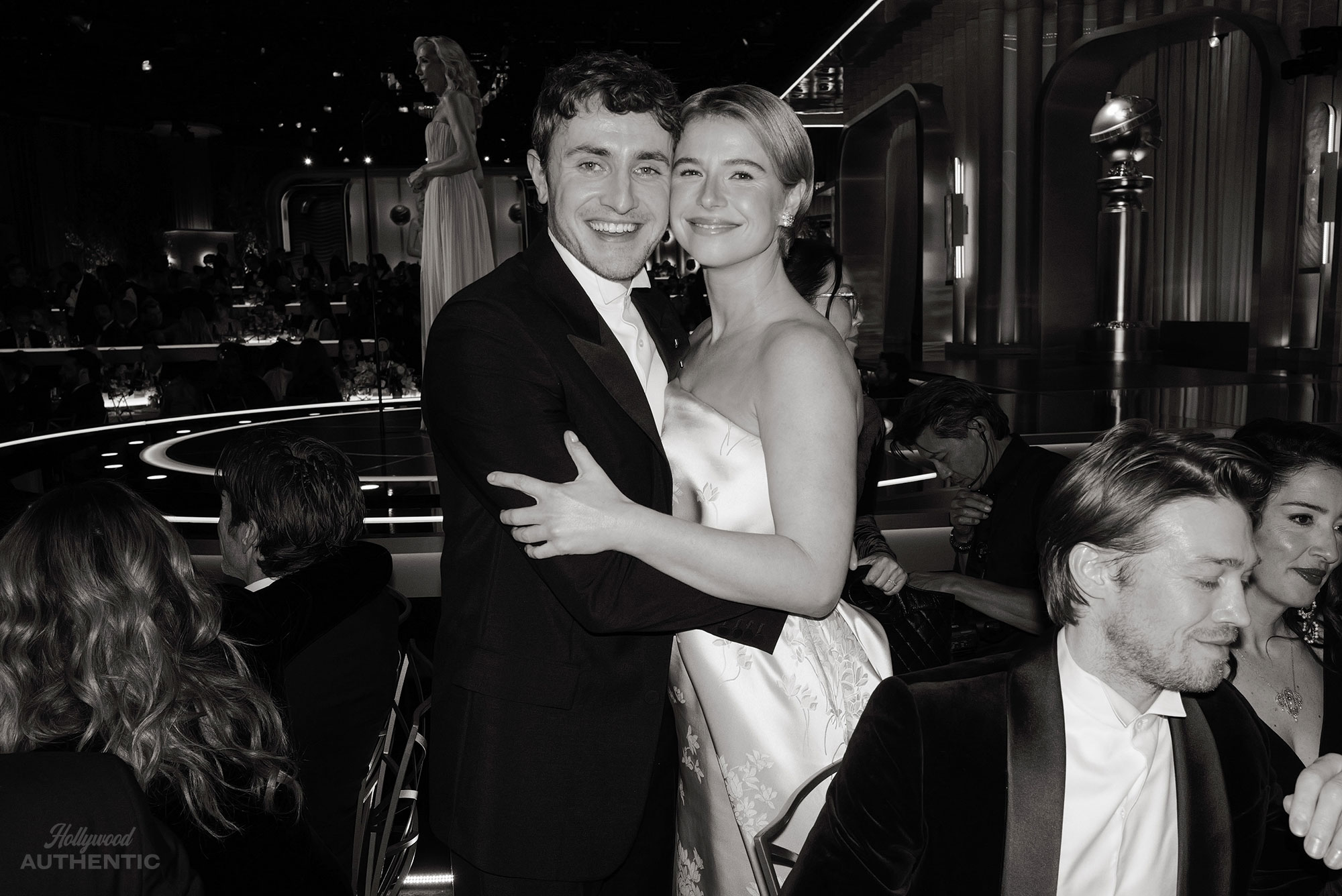
Paul Mescal, Jessie Buckley
83rd Golden Globes, Golden Globes, Hollywood Authentic, Los Angeles
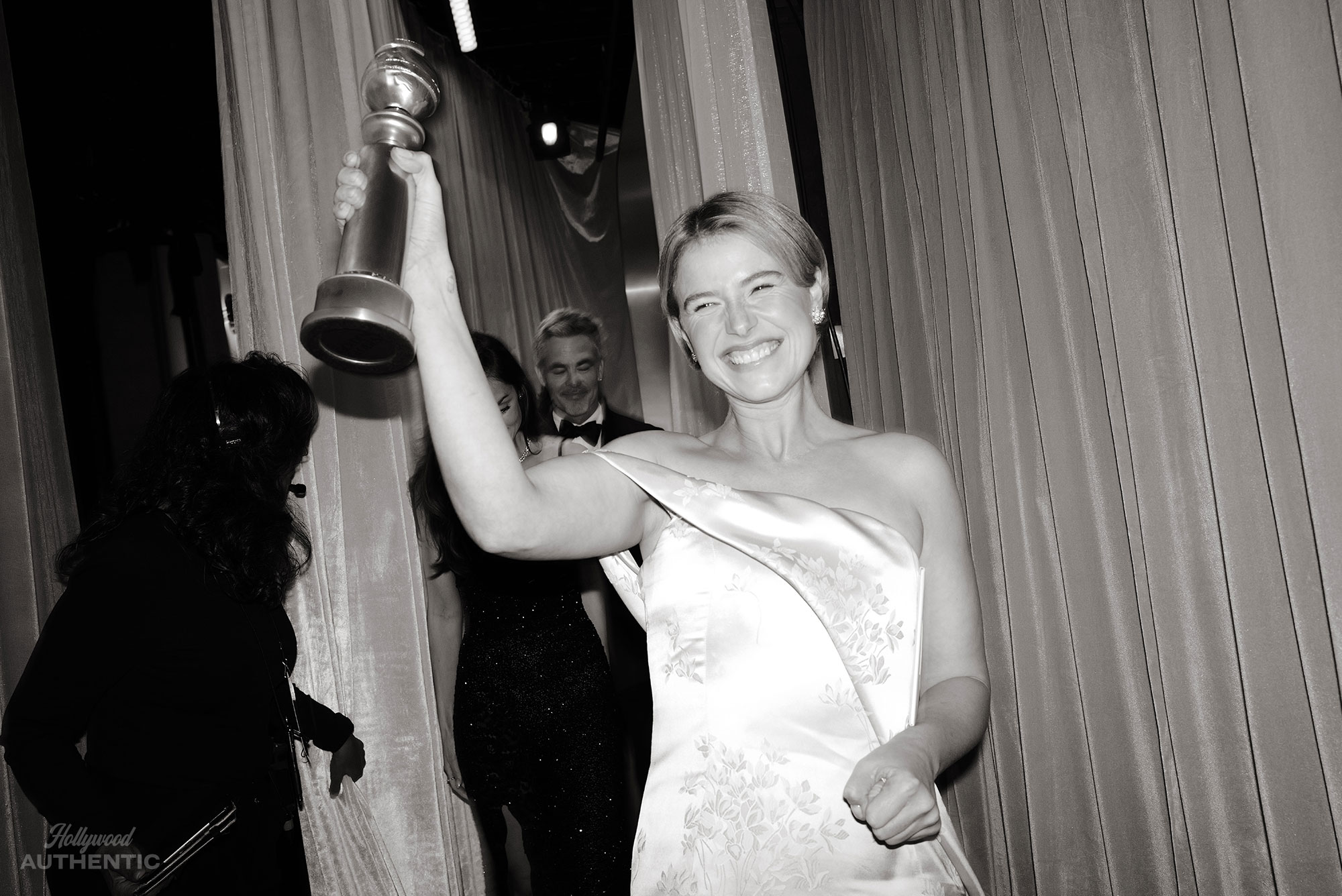
Jessie Buckley

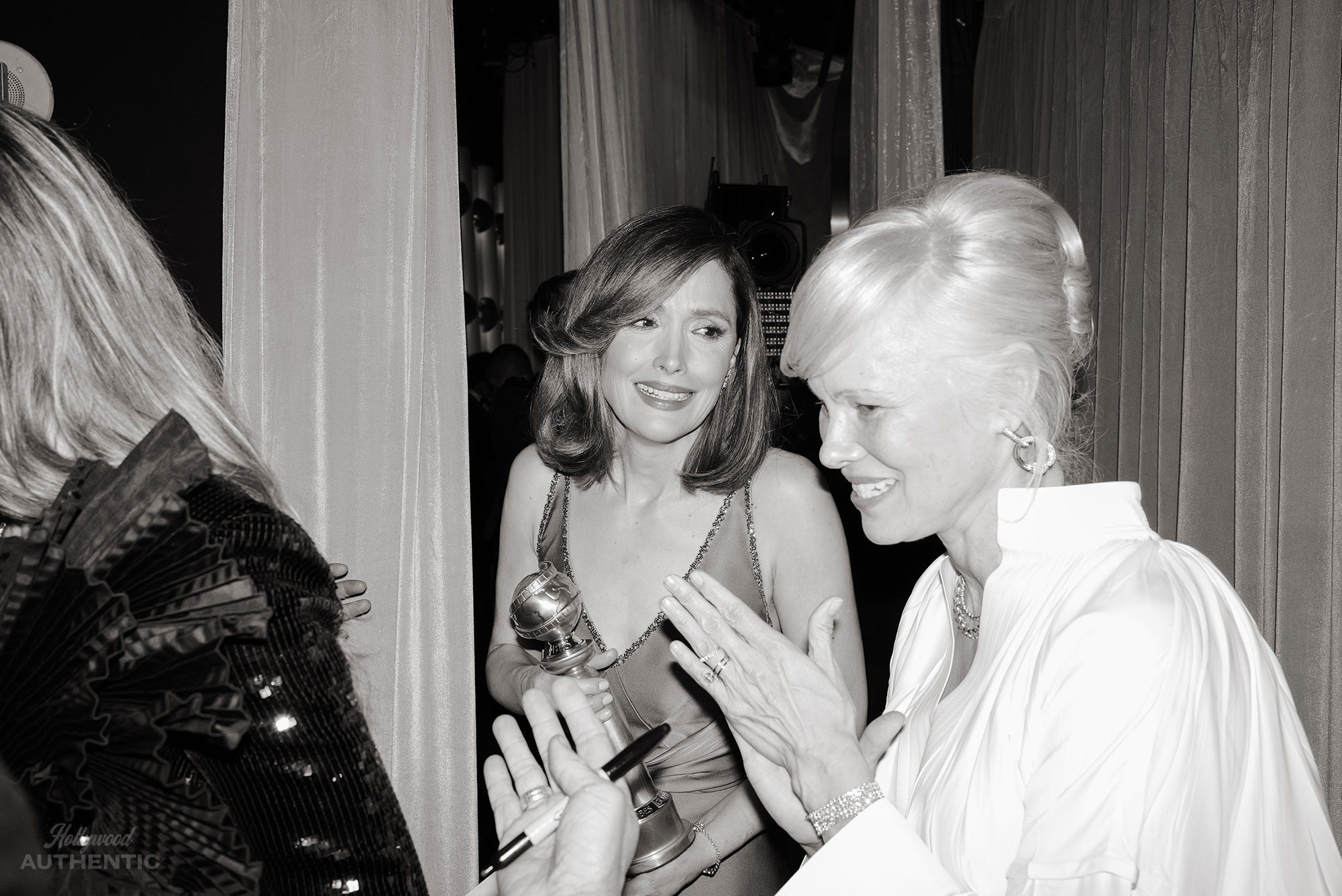
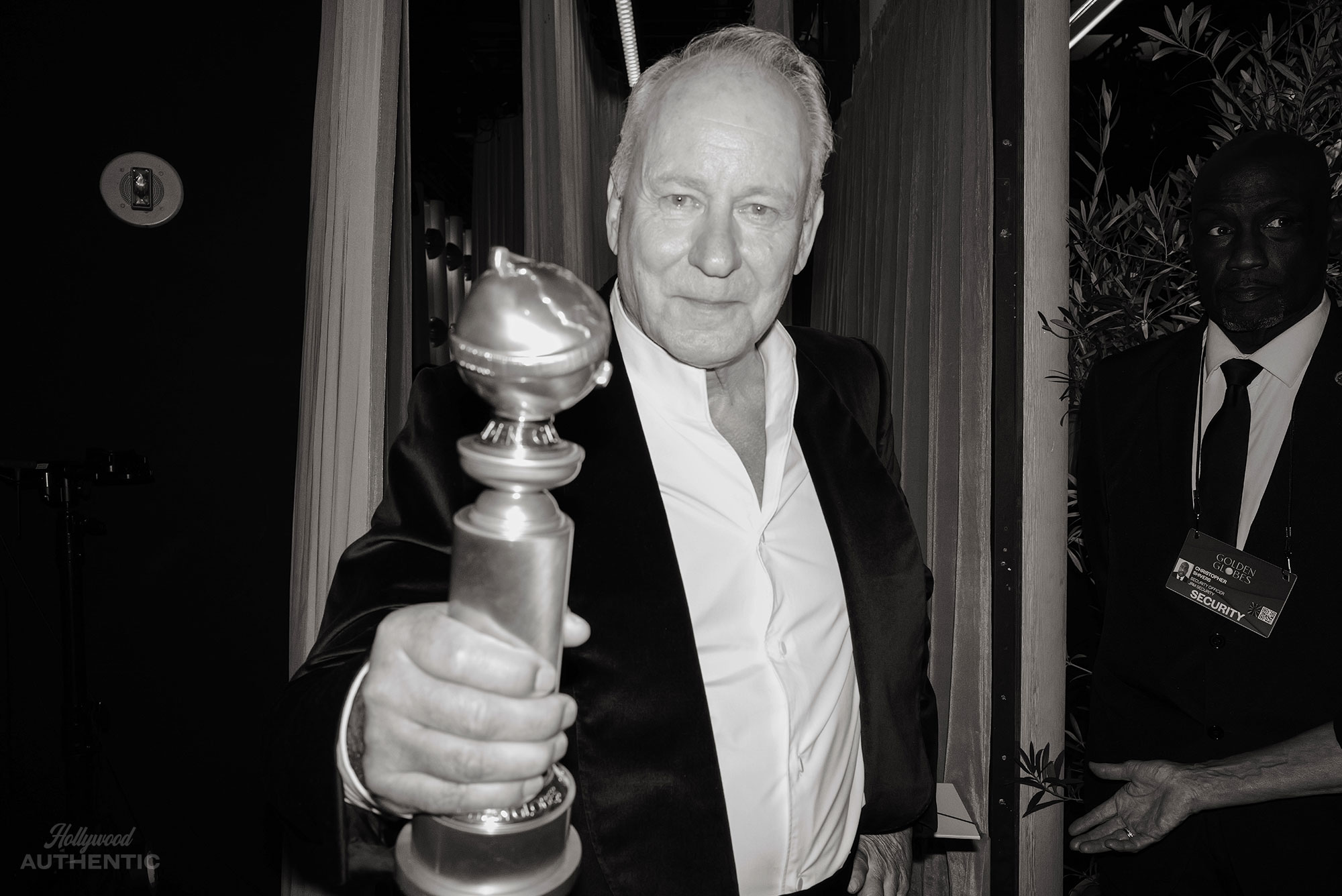
Best drama film went to Hamnet – with the award picked up by producer Steven Spielberg, while Ryan Coogler’s Sinners took best original score and box office achievement awards. Nominated for her supporting role in Sinners, Wunmi Mosaku revealed her pregnancy in a custom made canary yellow gown from Matthew Reisman. Rose Byrne was named best lead female actor in a comedy for Sundance hit  If I Had Legs I’d Kick You (and told the audience her husband Bobby Cannavale was at an exotic pet expo in New Jersey) as Stellan Skarsgård won male supporting actor for Sentimental Value. He implored audiences to support the theatrical experience of seeing films; ‘Hopefully you will see it in the cinema, because they are an extinguished species now. In a cinema, where the lights go down… That is magic. Cinema should be seen in cinemas.’

83rd Golden Globes, Golden Globes, Hollywood Authentic, Los Angeles
Rose Byrne
83rd Golden Globes, Golden Globes, Hollywood Authentic, Los Angeles
Stellan Skarsgård

Both Anderson and Jessie Buckley (in Dior) expressed their love for their vocation when they ascended the winners podium. ‘I love doing what I do. So this is just fun,’ Anderson said, while Buckley declared ‘I love what I do and I love being part of this industry’. She also expressed a love of the Polish soup Hamnet key grip Tomasz Sternicki made on set. 

83rd Golden Globes, Golden Globes, Hollywood Authentic, Los Angeles
Julia Roberts
83rd Golden Globes, Golden Globes, Hollywood Authentic, Los Angeles
Snoop Dogg, Fran Drescher

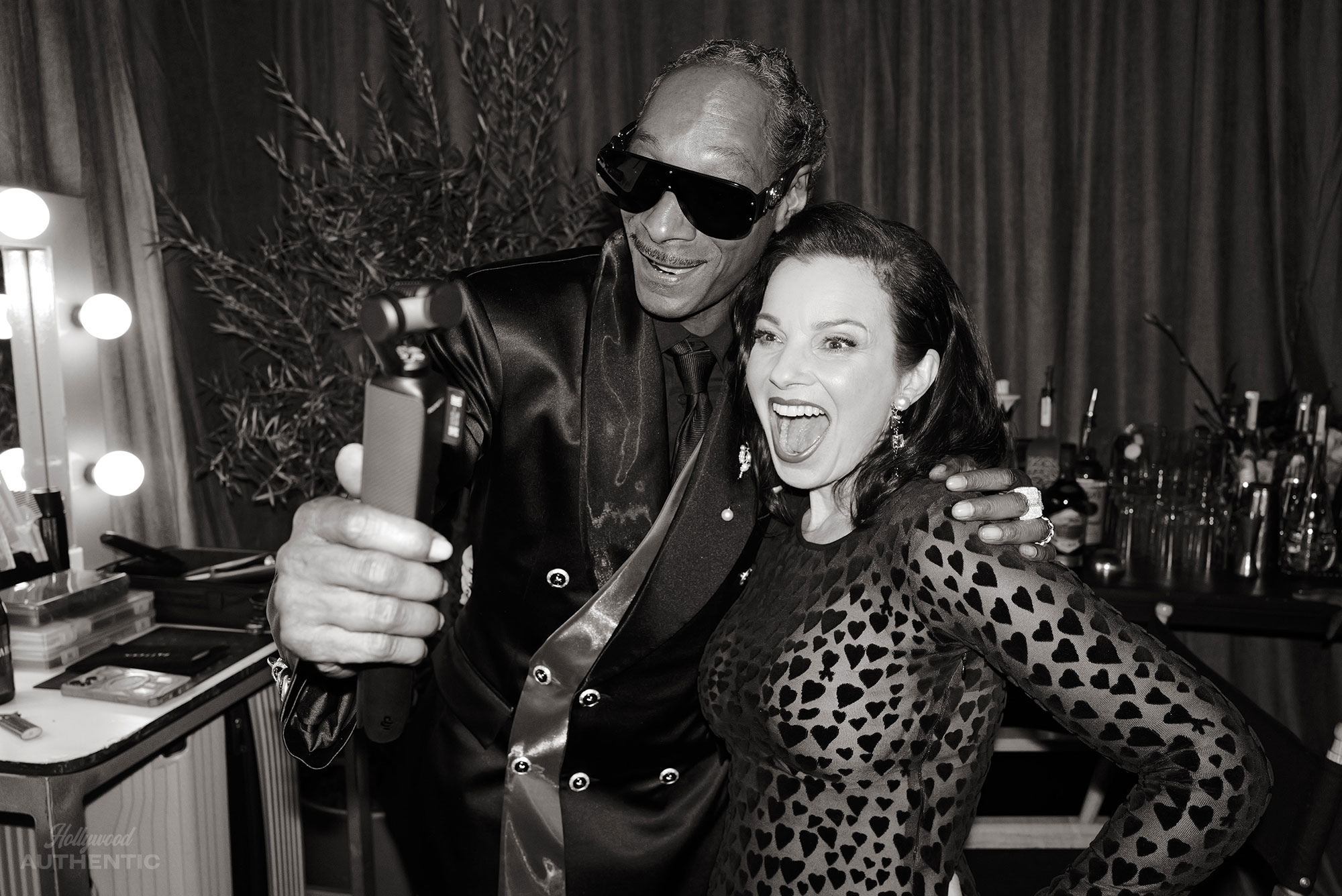
Julia Roberts earned a standing ovation when she presented an award wearing Giorgio Armani Prive and Macauley Culkin returned to the Globes stage for the first time in 35 years to hand out an award. ‘I do exist all year round!’ he joked. Backstage, Snoop Dogg hung out with Fran Drescher, the Hamnet team celebrated their win and Sean Penn caught up with Guillermo Del Toro.

83rd Golden Globes, Golden Globes, Hollywood Authentic, Los Angeles
Stephen Graham

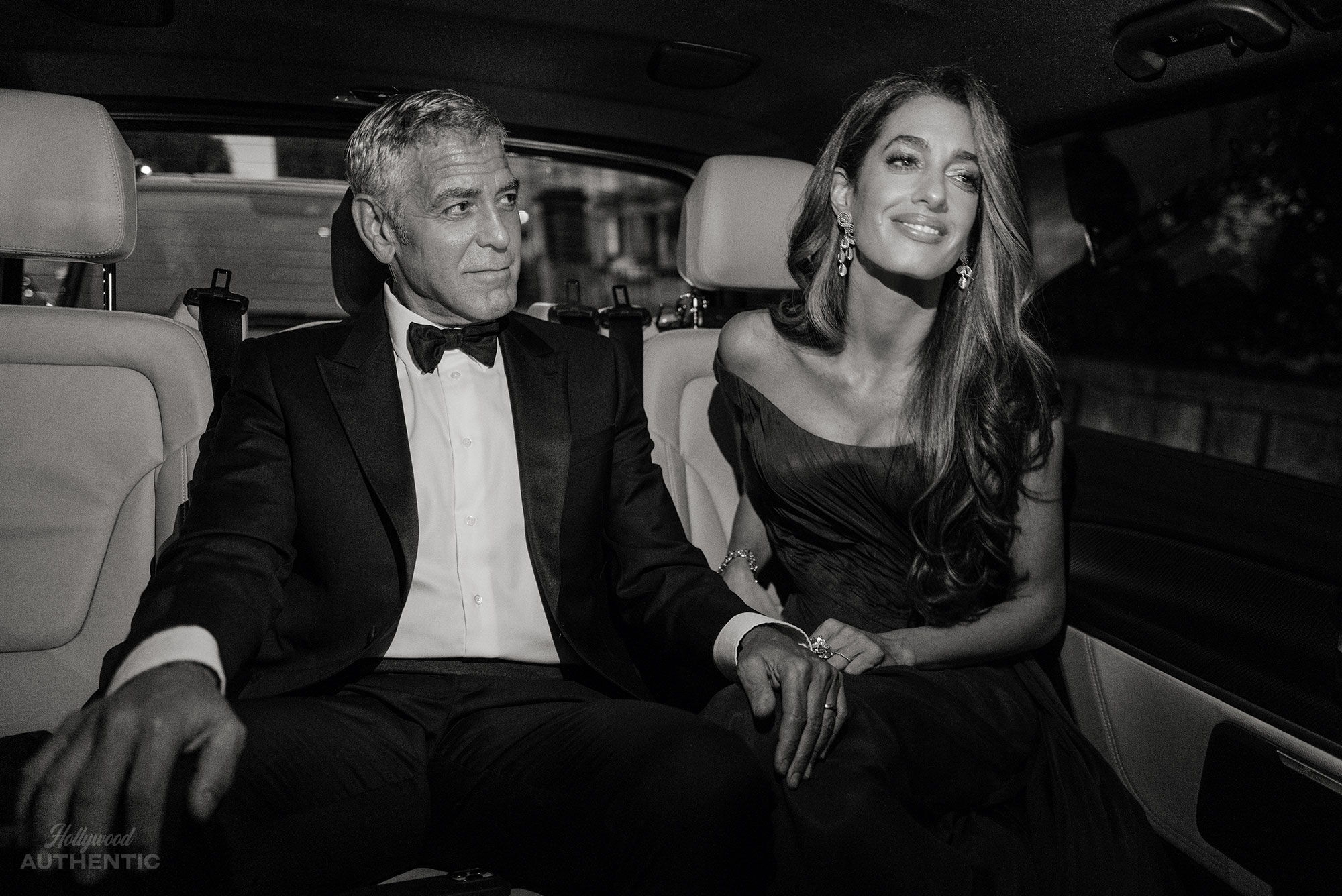
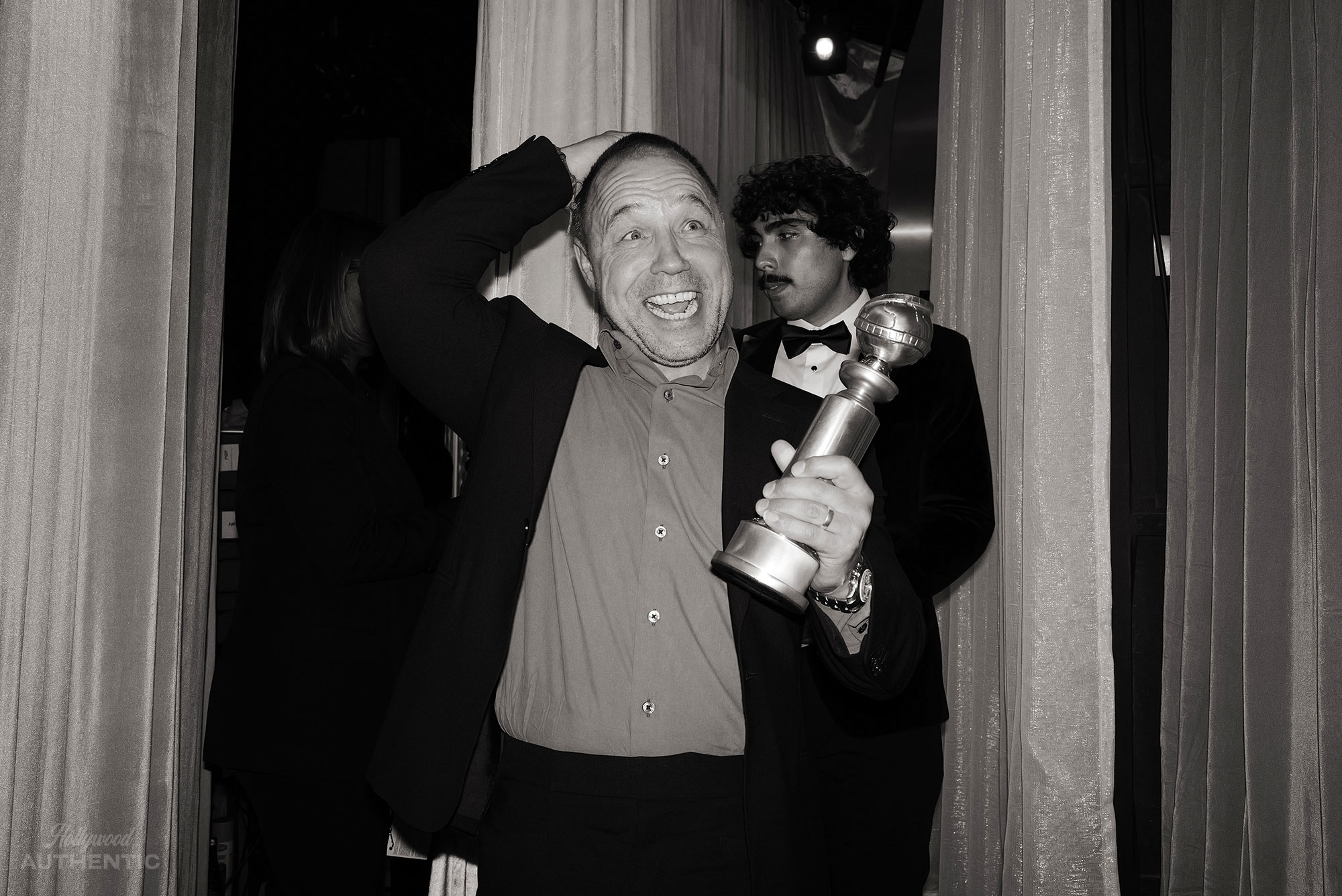
The evening was also dominated by TV with Adolescence taking home best limited TV series, best actor for Stephen Graham, best supporting actress for Erin Doherty and best supporting actor for British teenager Owen Cooper who rocked Bottega Veneta and admitted he probably should have been revising for his exams. The gang headed to Spago’s post ceremony for the Netflix after-party attended by revellers including George and Amal Clooney…

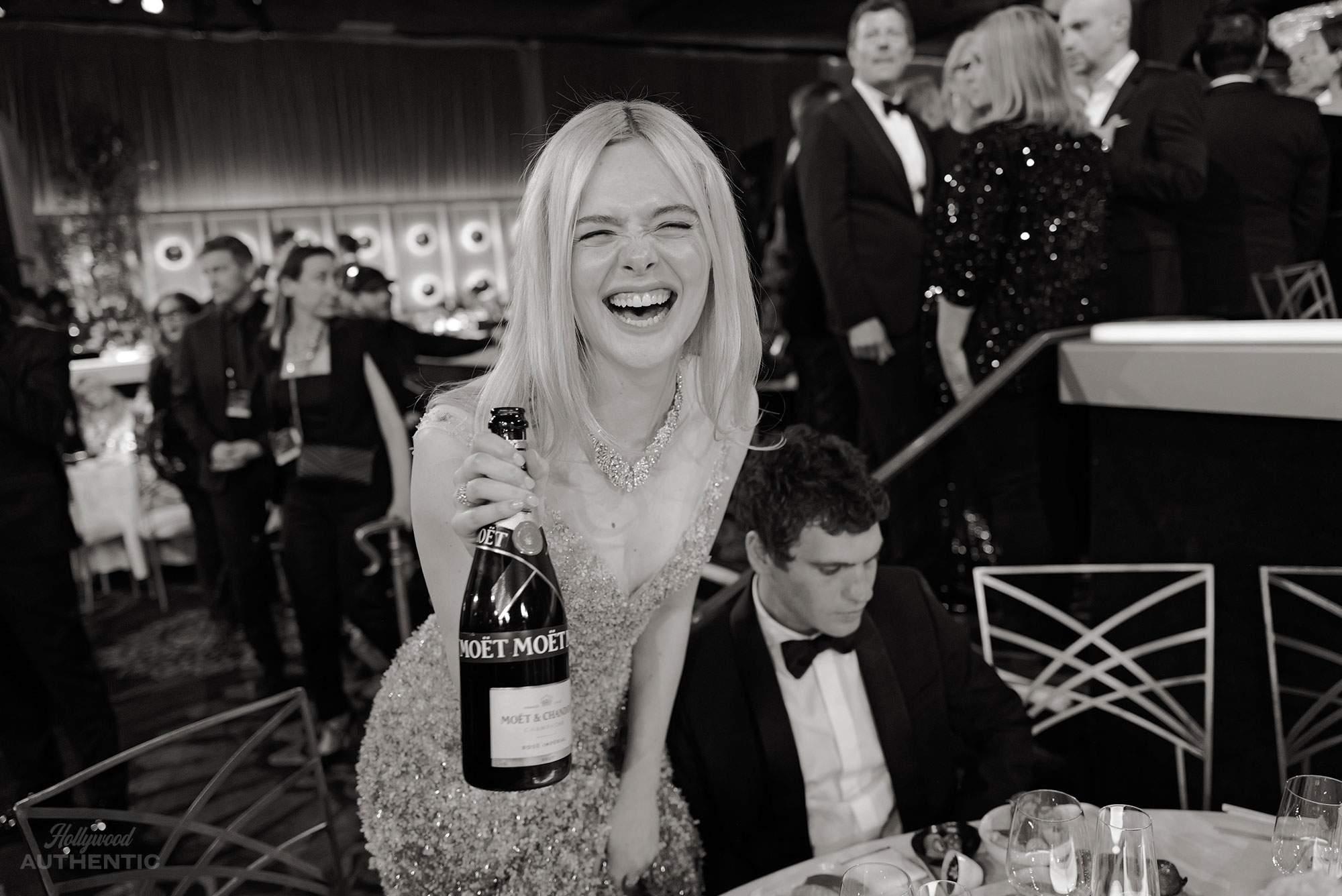
83rd Golden Globes, Golden Globes, Hollywood Authentic, Los Angeles
Elle Fanning

AWARD WINNERS

Best Picture – Comedy Or Musical
One Battle After Another 

Best Picture – Drama
Hamnet 

Best Performance by an Actor in a Motion Picture – Drama
Wagner Moura – The Secret Agent  

Best Performance by an Actor in a Motion Picture – Musical or Comedy
Timothée Chalamet – Marty Supreme 

Best Performance by an Actress in a Motion Picture – Drama
Jessie Buckley – Hamnet 

Best Performance by an Actress in a Motion Picture – Musical or Comedy
Rose Byrne – If I Had Legs I’d Kick You 

Best Supporting Actress 
Teyana Taylor – One Battle After Another 

Best Supporting Actor
Stellan Skarsgård – Sentimental Value 

Best Original Song
“Golden” – KPop Demon Hunters 

Best Original Score – Motion Picture 
Ludwig Göransson – Sinners 

Best Director – Motion Picture
Paul Thomas Anderson – One Battle After 
Another 

Best Screenplay
Paul Thomas Anderson – One Battle After Another 

Best non-English Language Film 
The Secret Agent 

Best Animated Film 
KPop Demon Hunters  

Outstanding Cinematic and Box Office Achievement
Sinners


Photographs by GREG WILLIAMS
Words by JANE CROWTHER

December 15, 2025

Amal Clooney, George Clooney, The Albies 2025

Photograph and words by GREG WILLIAMS
Words by JANE CROWTHER


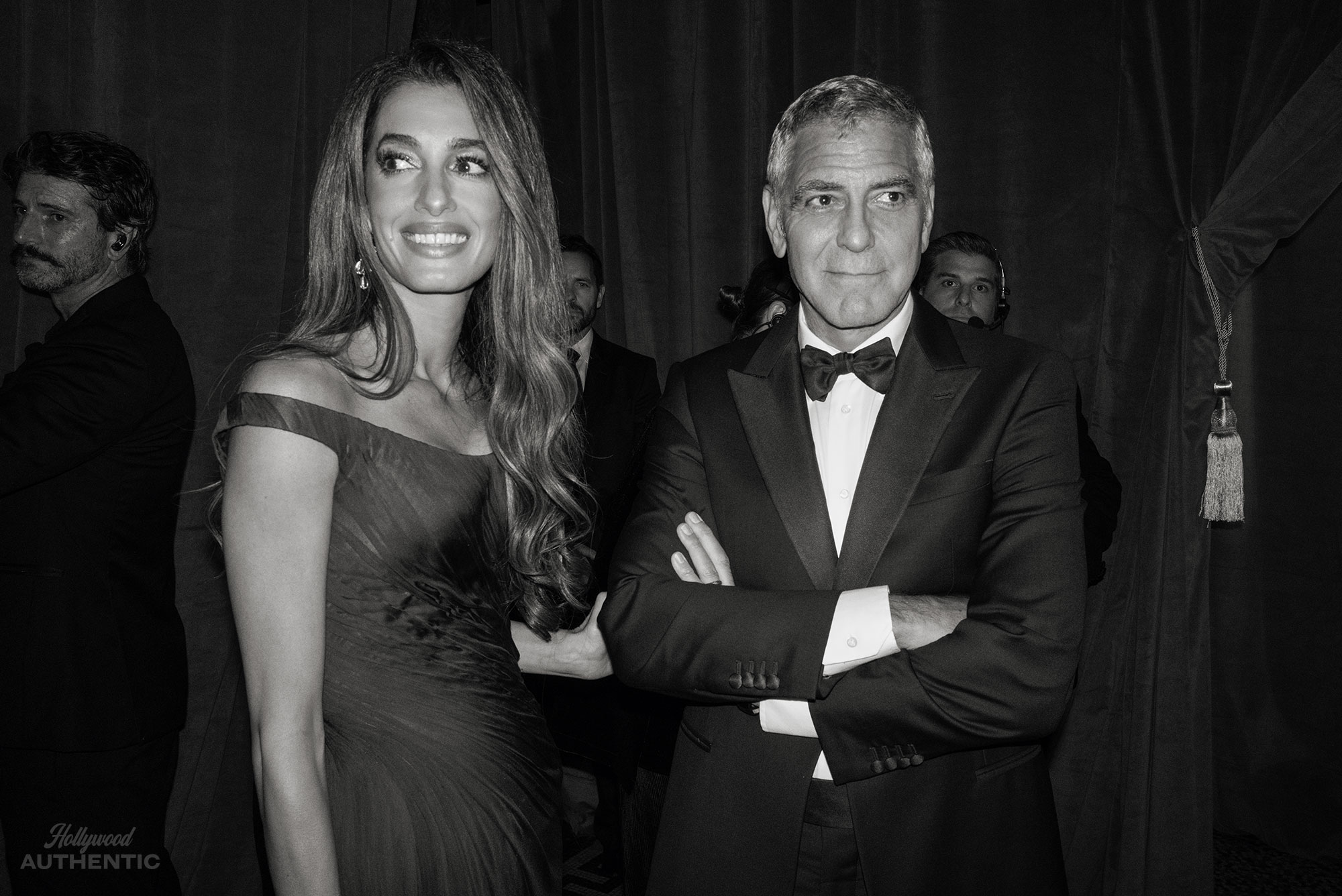
Greg Williams joins George and Amal Clooney at their fourth annual fundraiser in London as the Clooney Foundation for Justice awards trailblazers and icons in philanthropy, freedom of speech and equality.

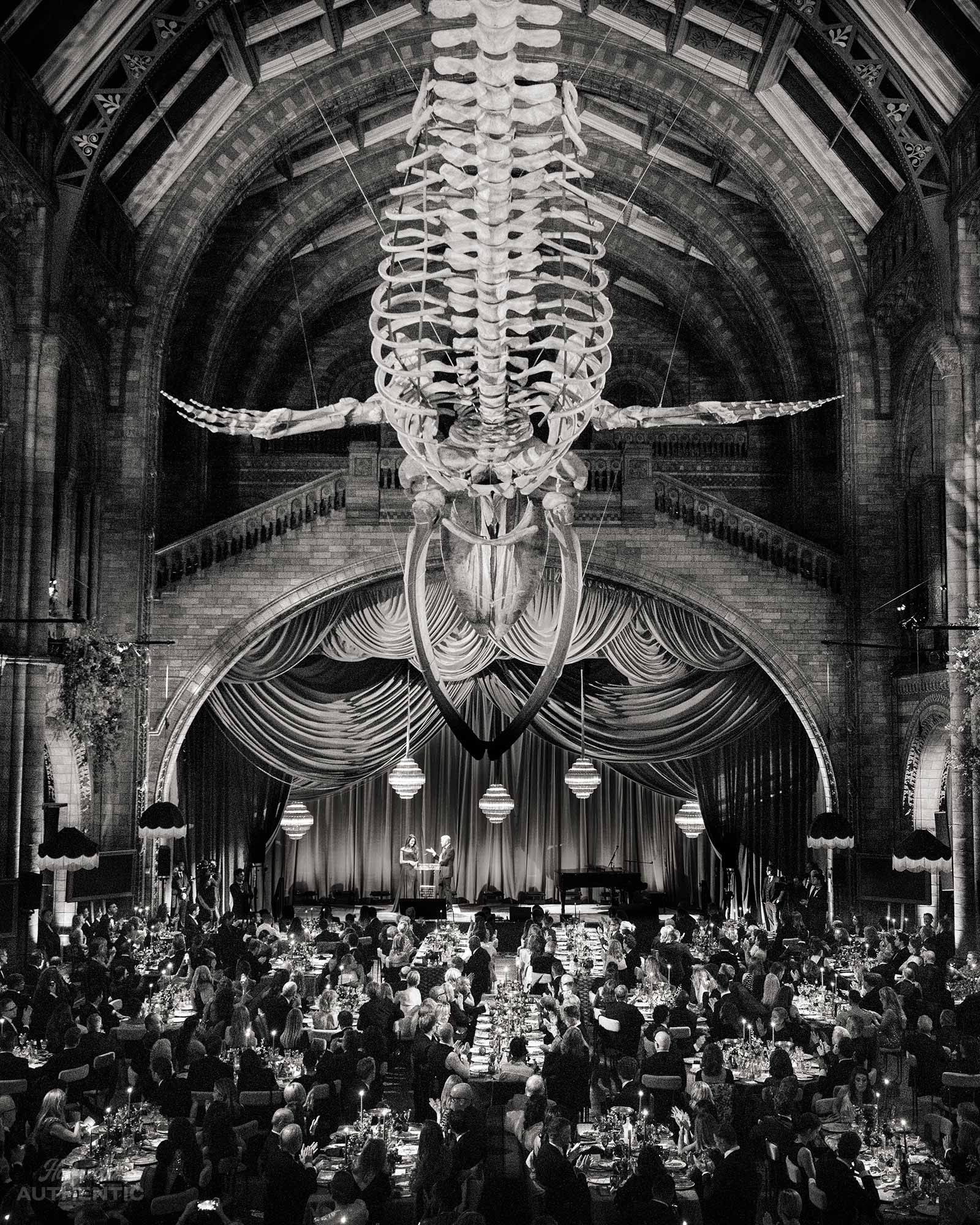
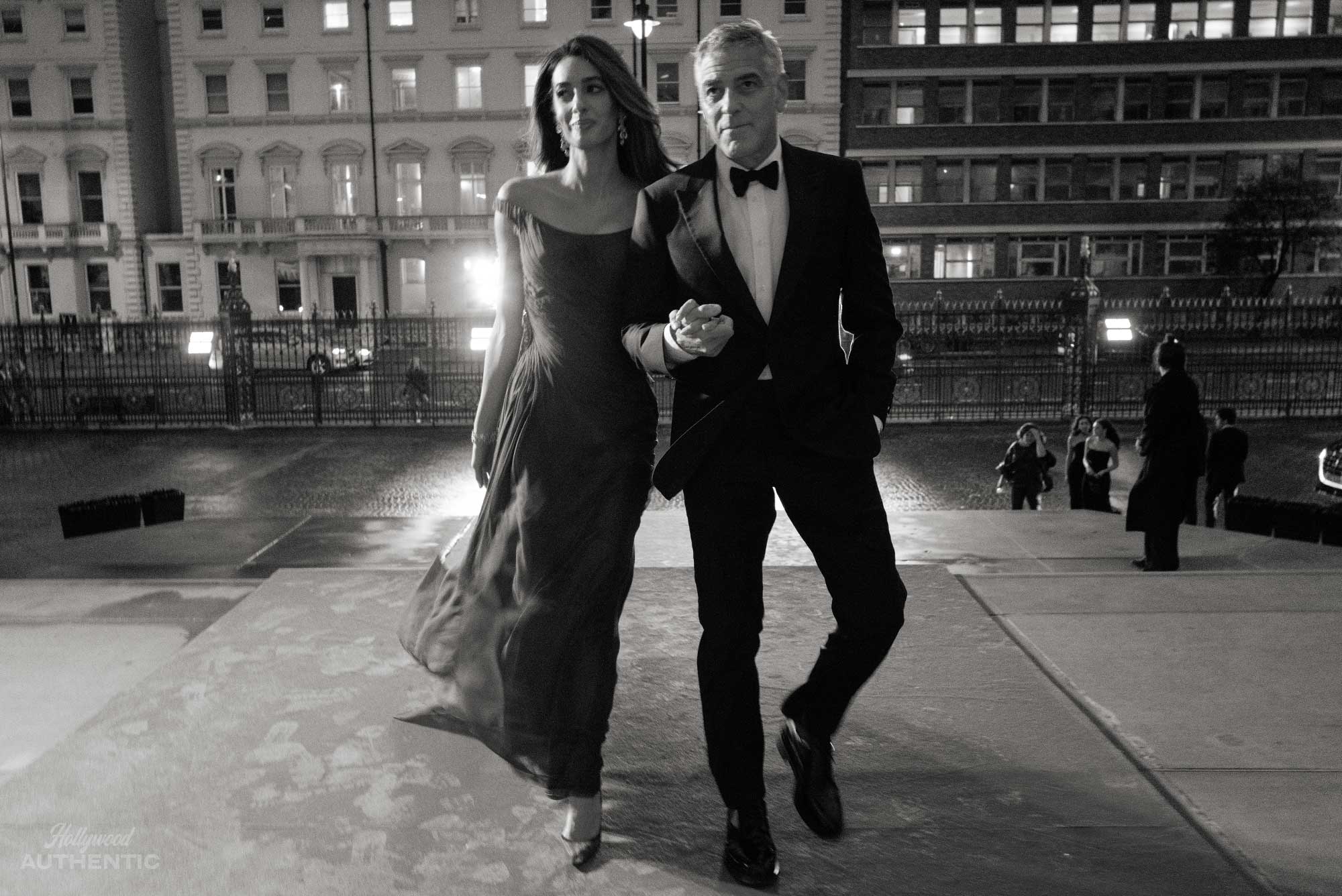
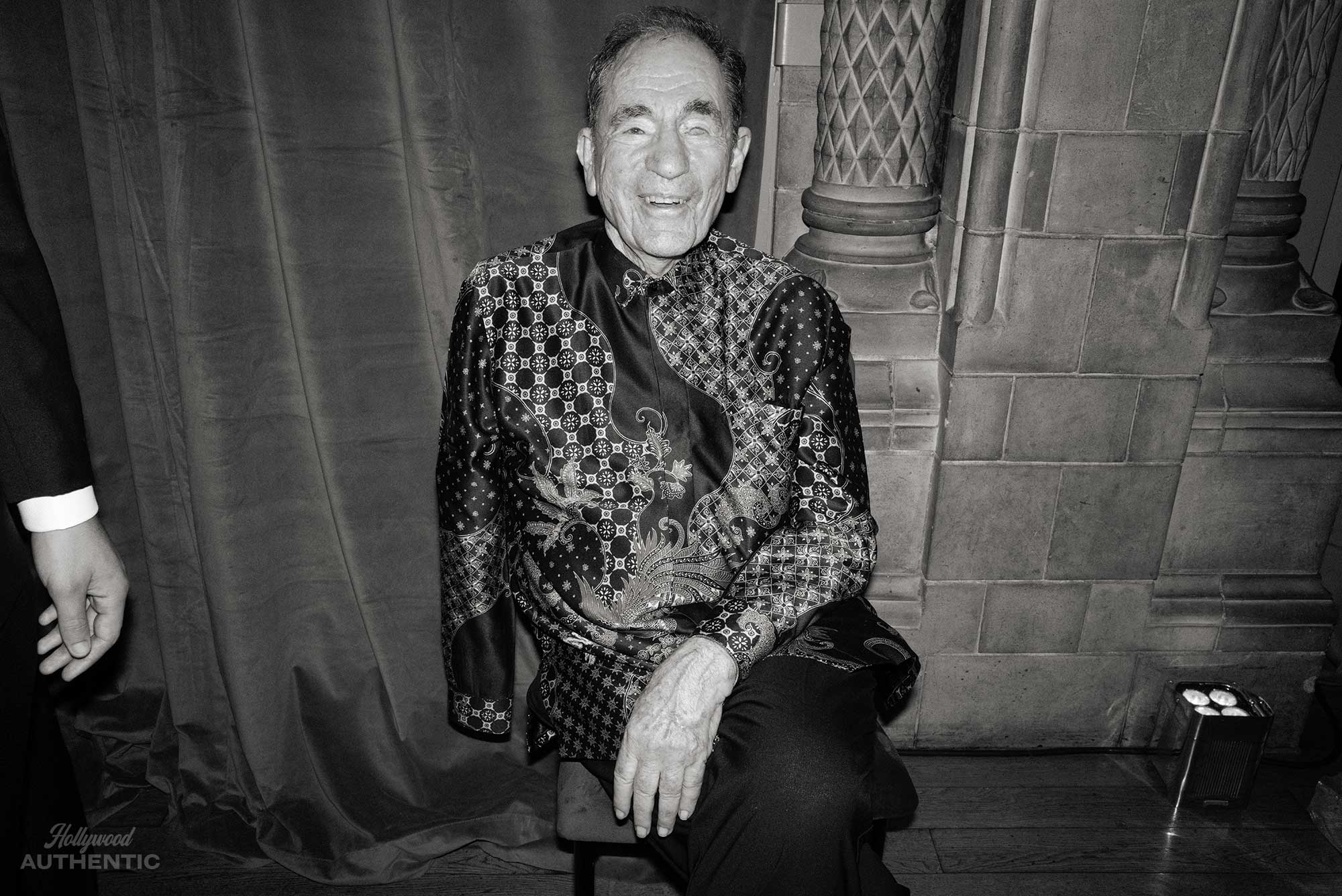
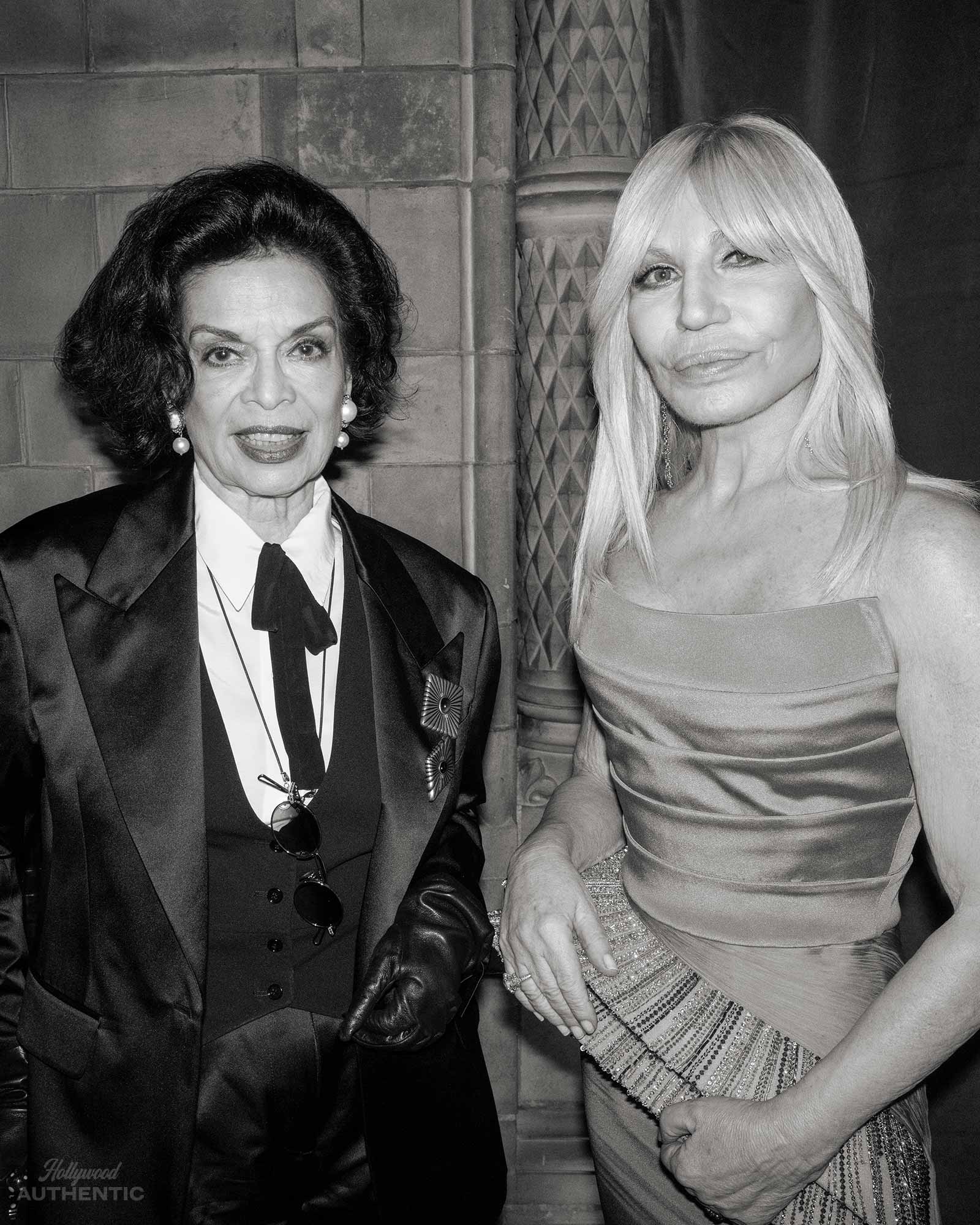
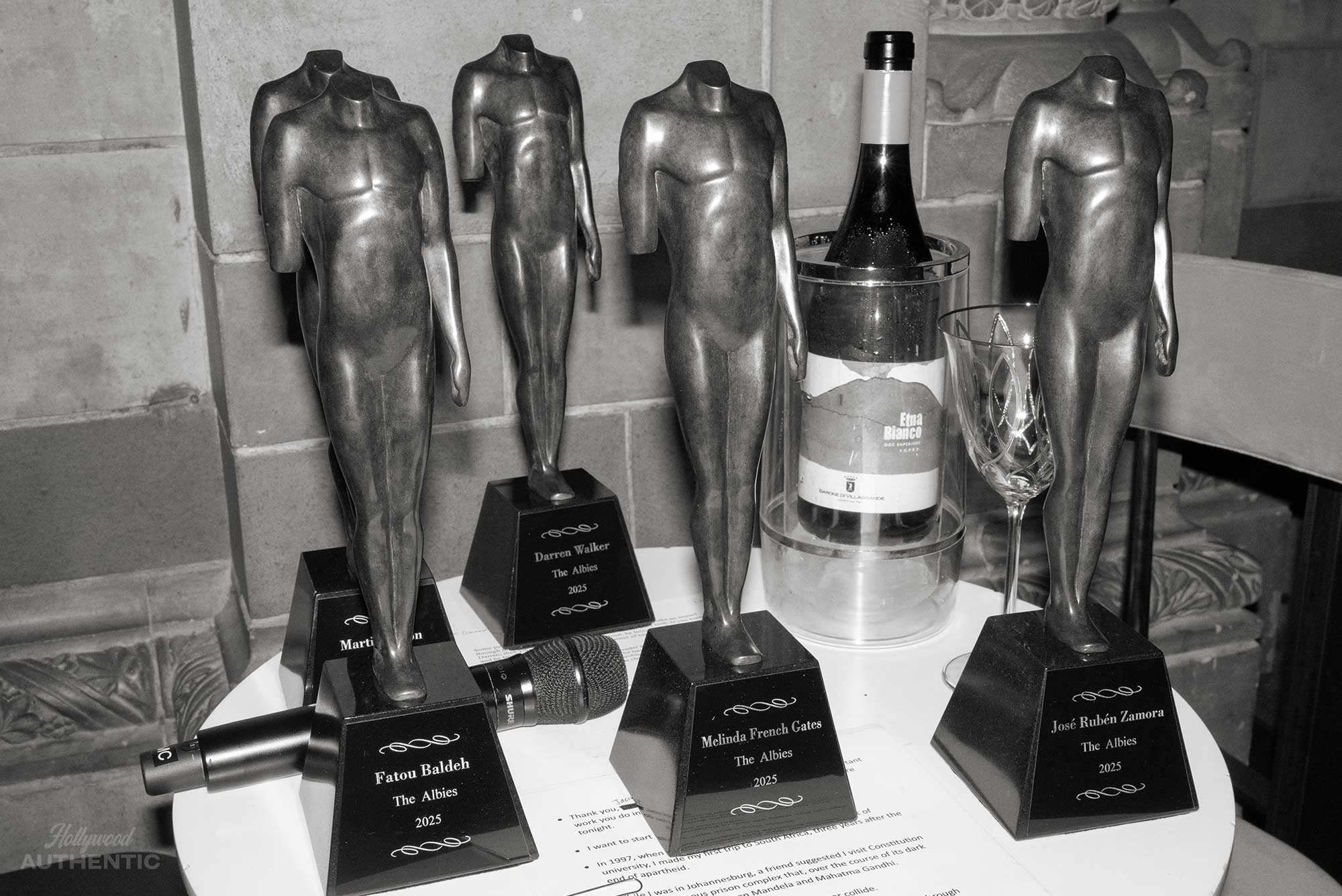
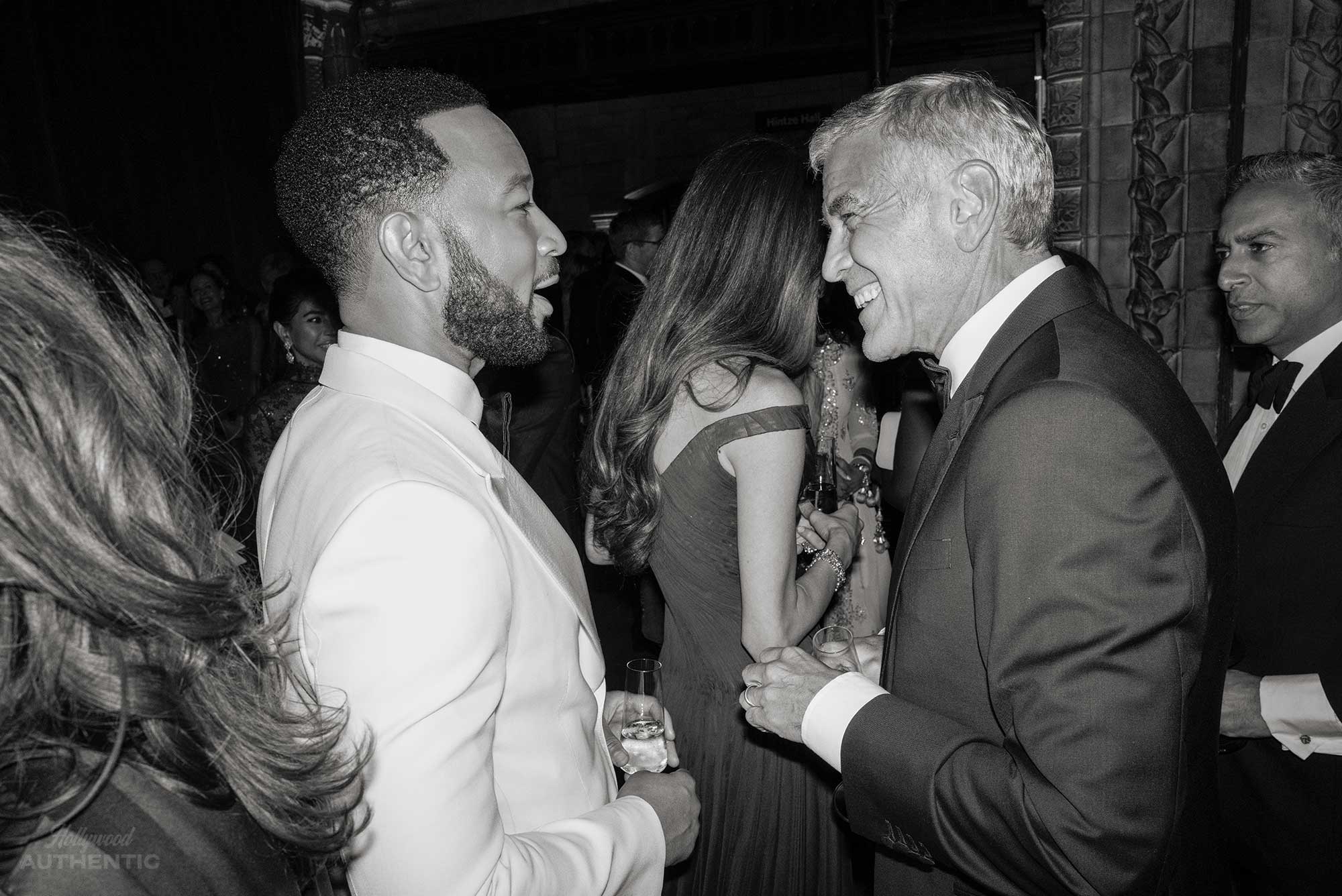
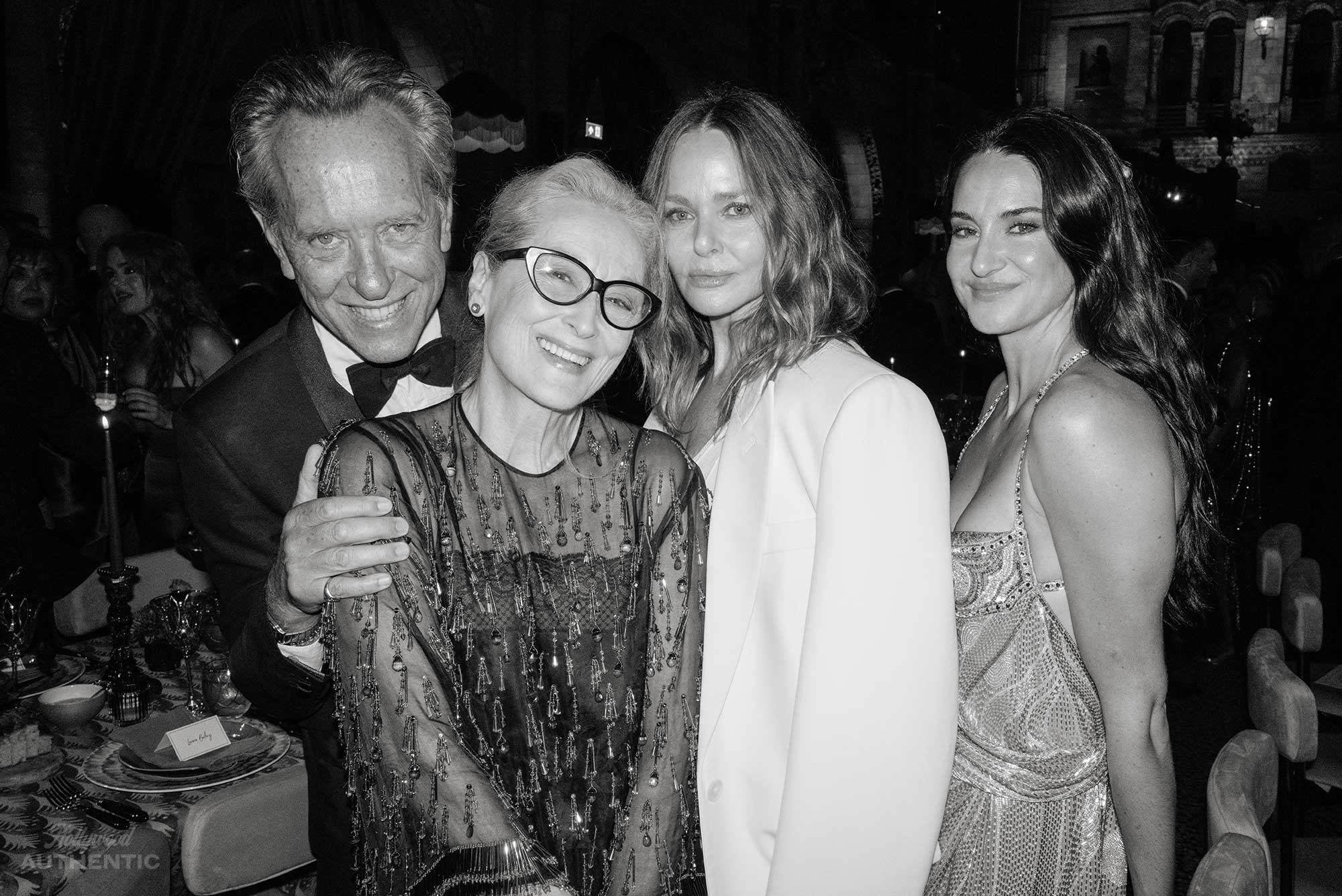
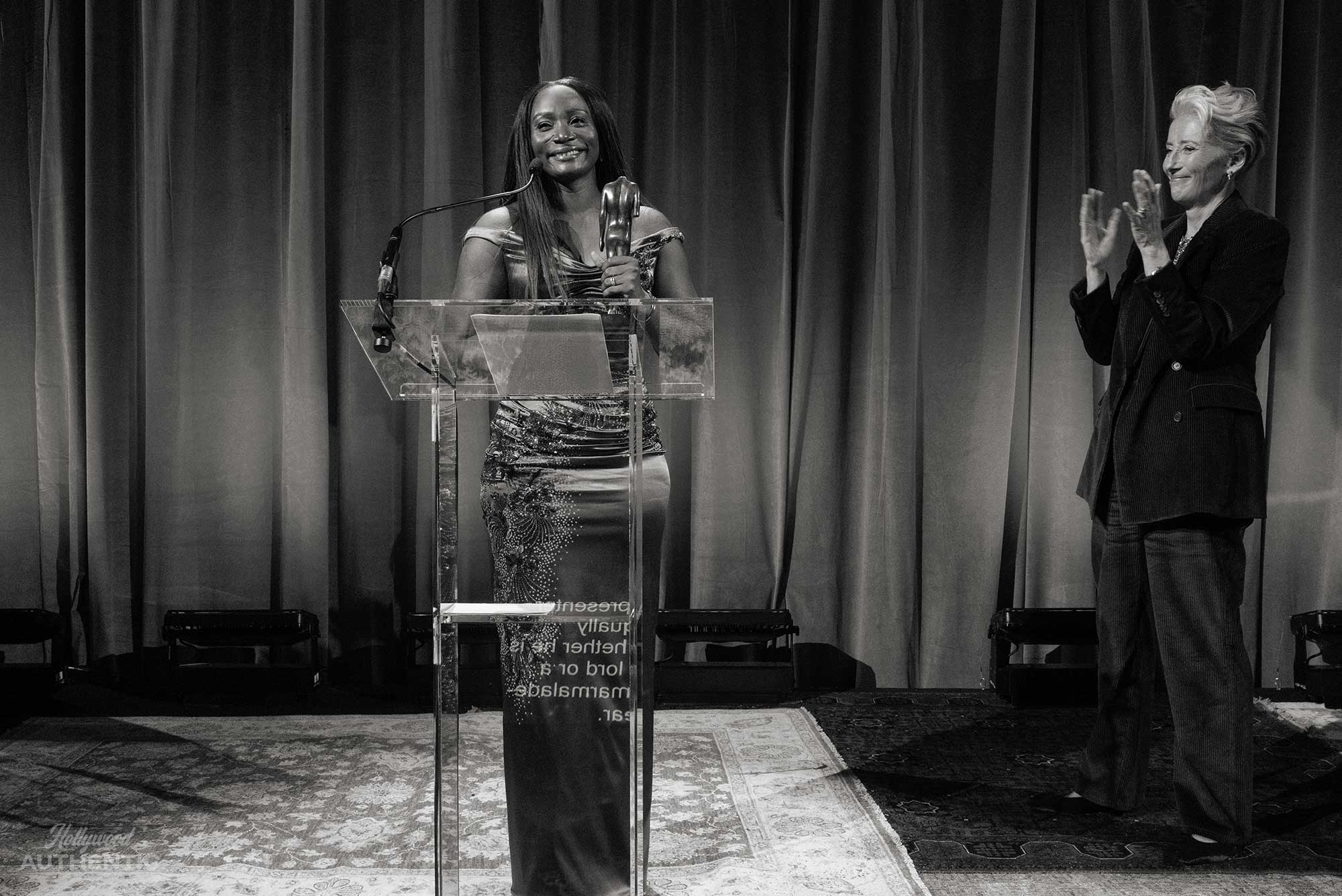
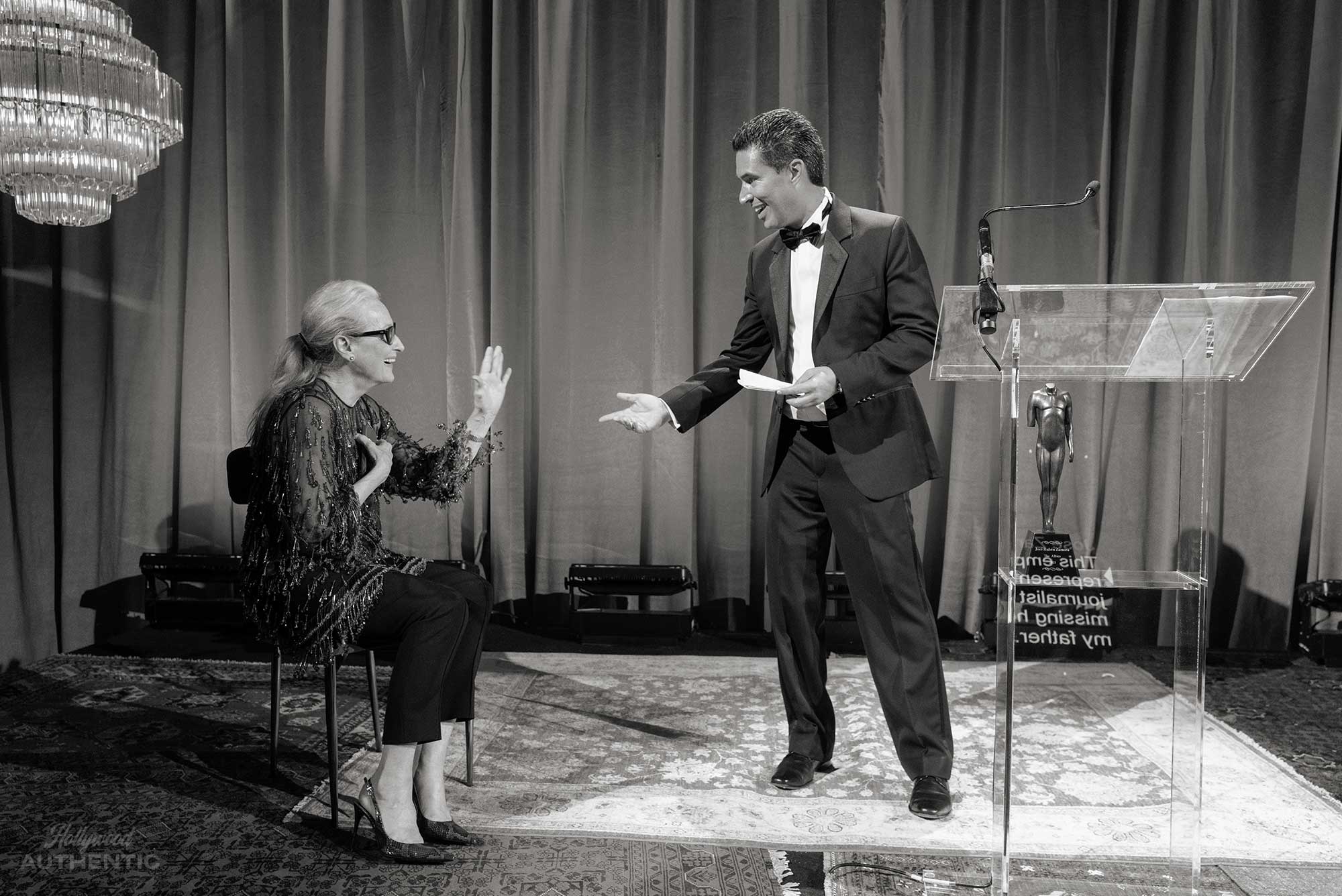
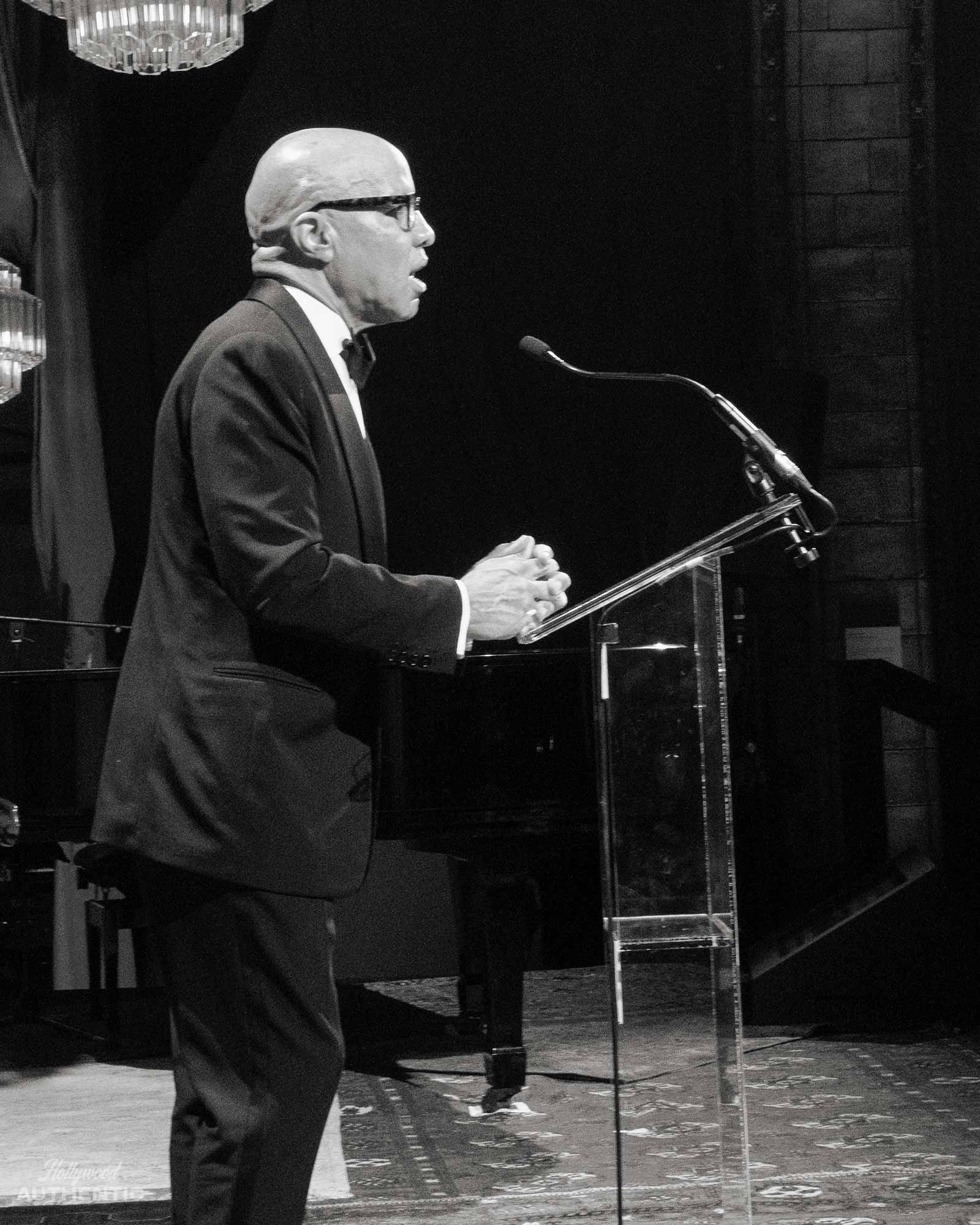
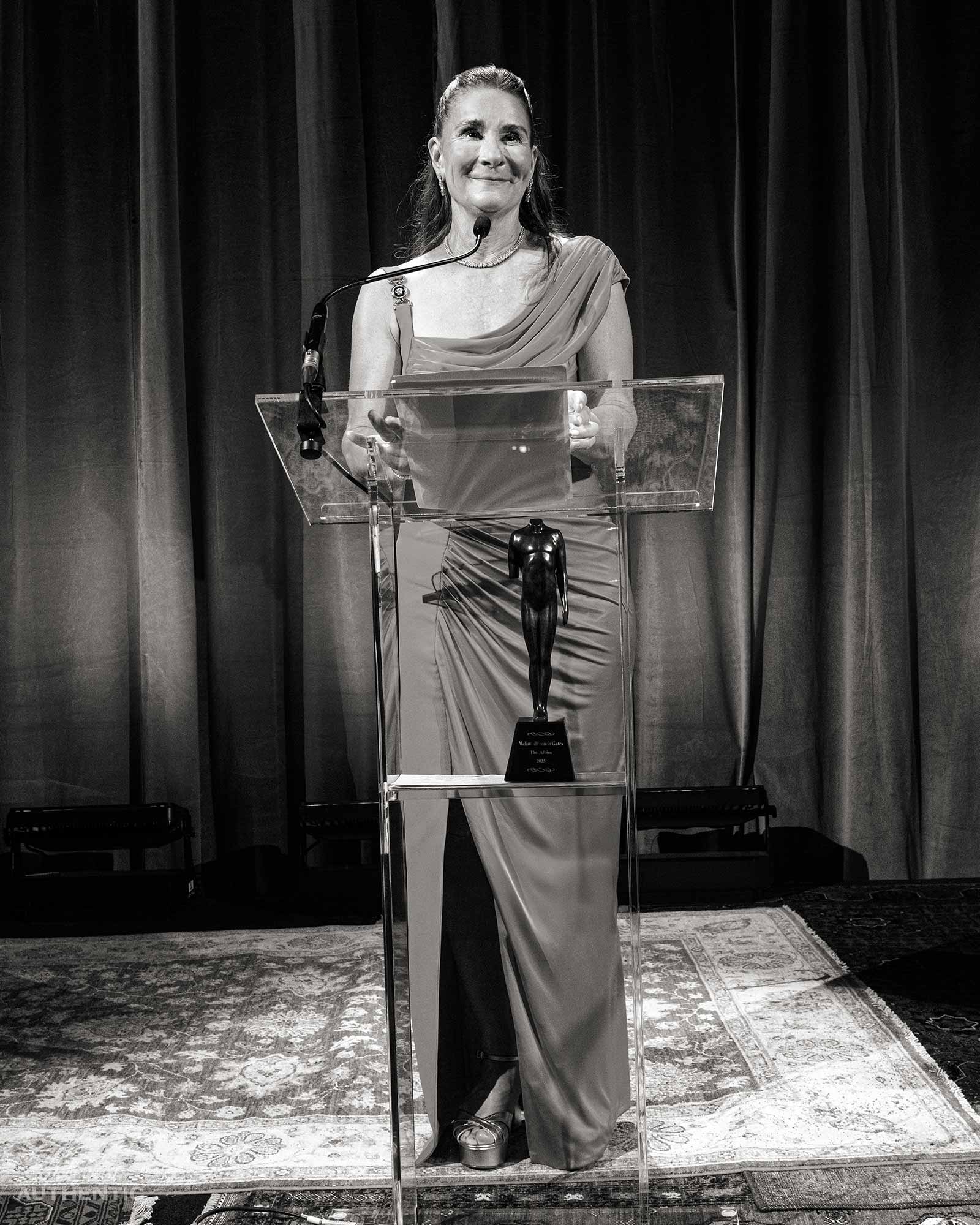
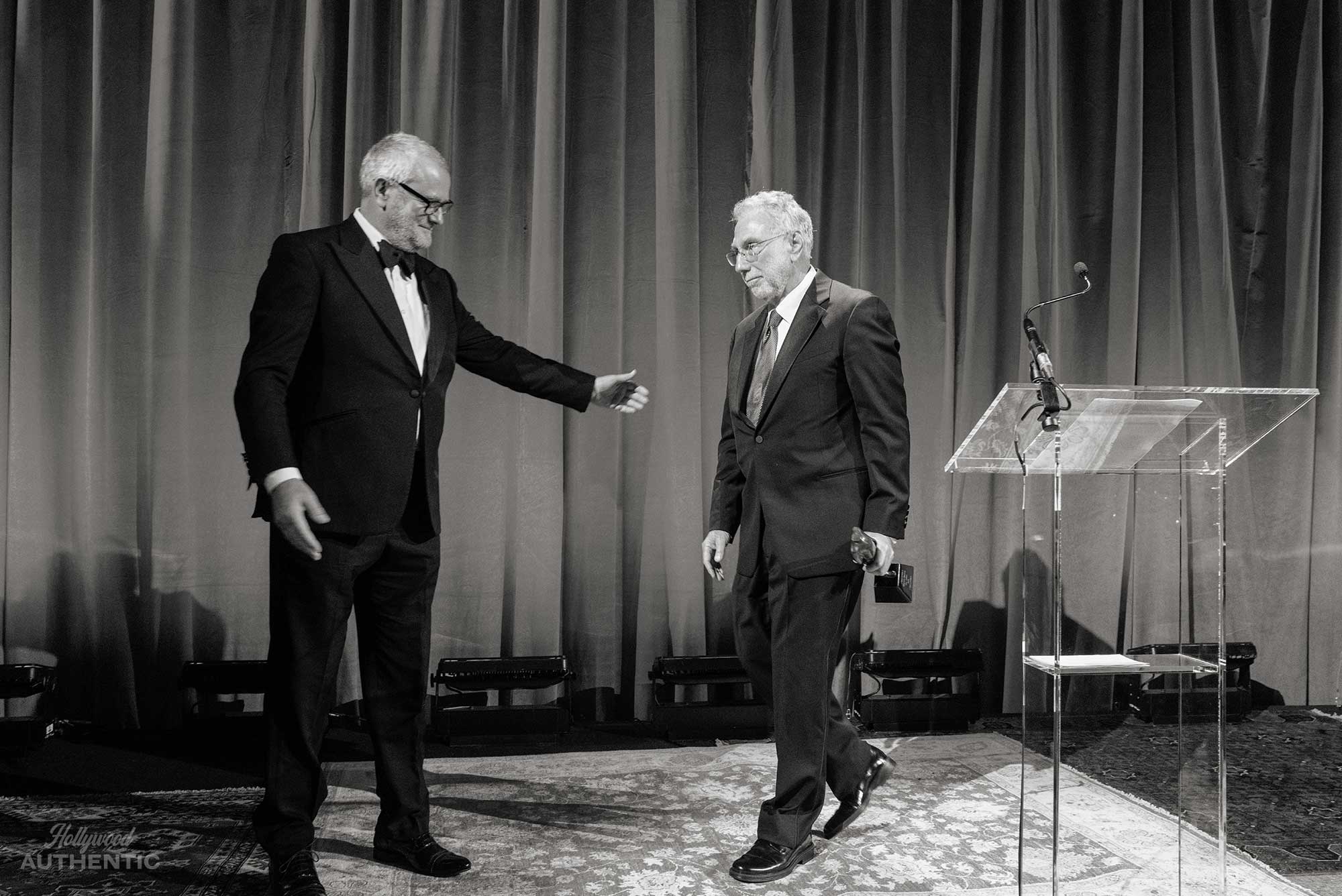
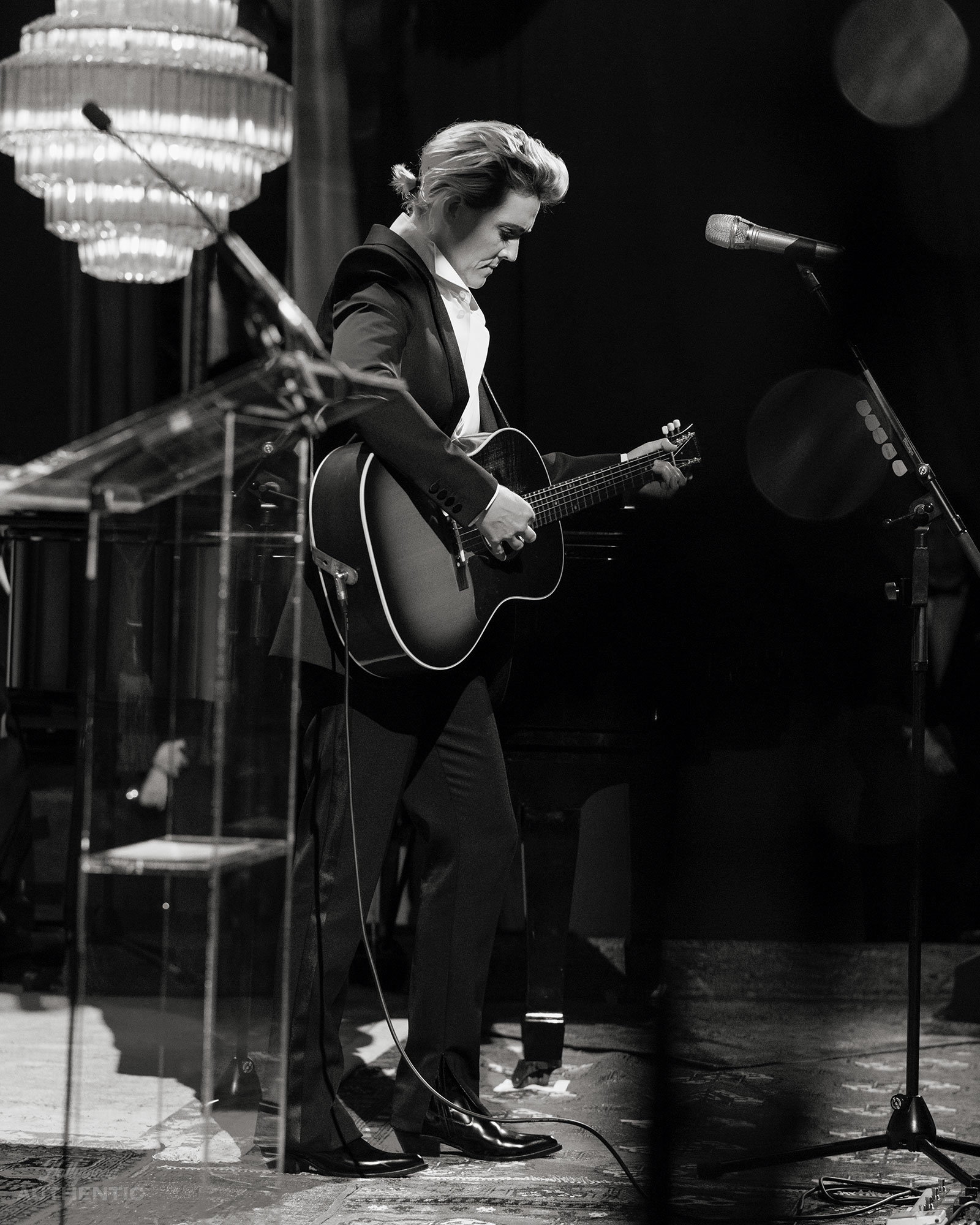
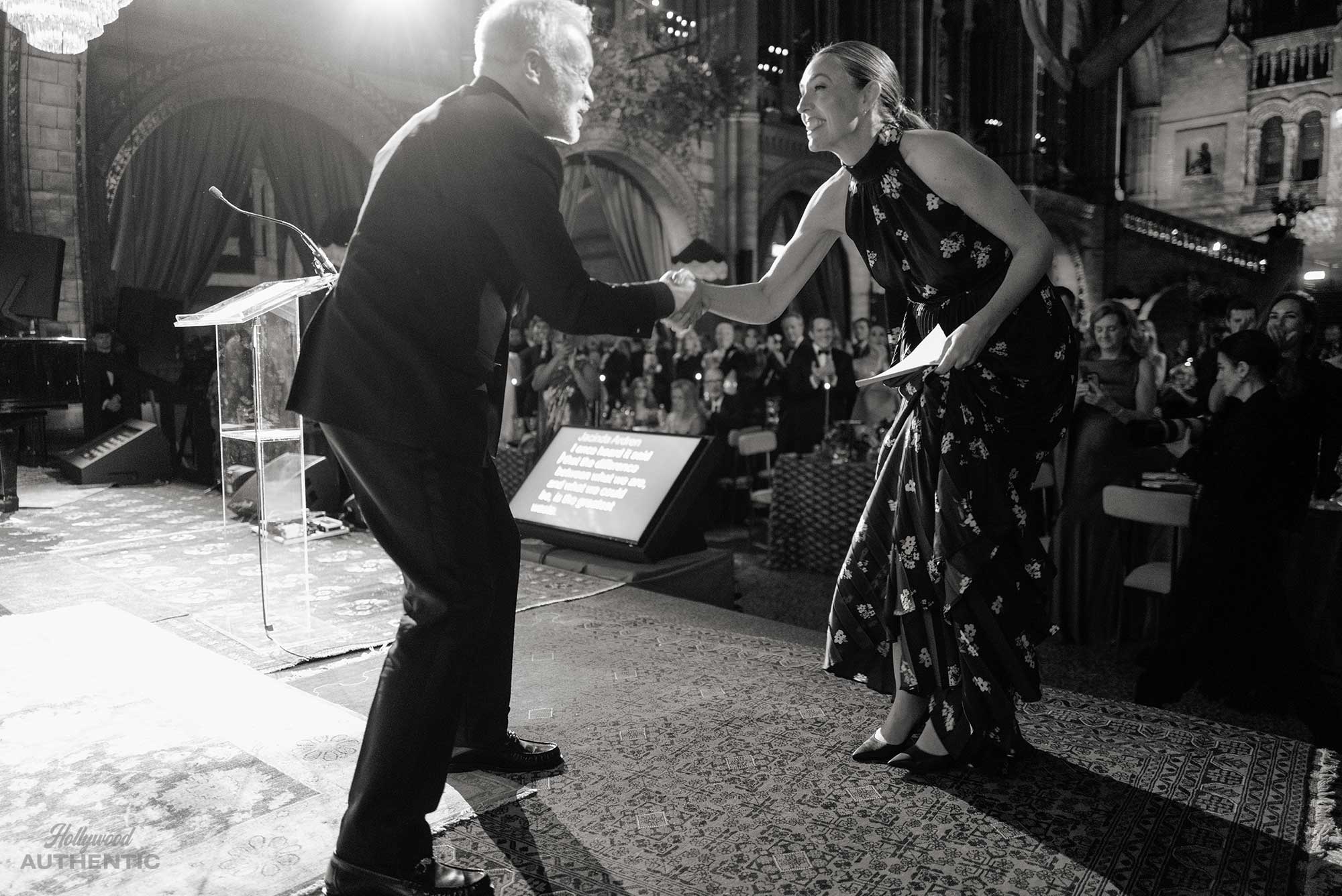
This year’s Albies, the Clooney Foundation for Justice annual fundraiser and awards recognising individuals making a difference in the world, were held at London’s Natural History Museum, with Greg Williams capturing the guests attending the event. Among the attendees was anti-apartheid activist and lawyer Justice Albie Sachs (a recipient in 2022 and who the awards are named after), who dined alongside guests such as Donatella Versace, Shailene Woodley, Charlotte Tilbury, Richard E. Grant, Dominic West and Felicity Jones. Hosted by Graham Norton, presenters included Meryl Streep, Jacinda Ardern, Dame Emma Thompson and the Clooneys, while musical interludes came from Brandi Carlile and John Legend. The dinner menu nodded to the Clooneys’ favourite holiday spot, with Italian penne all’arrabbiata served as table conversations flowed underneath the museum’s famous suspended Blue Whale skeleton. ‘At The Albies, the sacrifices and courageous commitments to justice and human rights take centre stage,’ George and Amal Clooney noted. ‘This is a celebration of the individuals whose lives and careers have come to embody those values that form the cornerstone of our foundation’s global work.’ Award recipients were:

Fatou Baldeh – Women in Liberation and Leadership (WILL)
A leading voice on the dangers of female genital mutilation/cutting (FGM/C) and a survivor herself, Baldeh founded WILL and successfully advocated against a 2024 effort to overturn The Gambia’s ban on the practice.

José Rubén Zamora – Journalist
One of Guatemala’s most respected journalists known for investigating corruption, he was charged and convicted of money laundering after reporting unfavourably on the President of Guatamala. He is in prison awaiting retrial.

Marty Baron – Editor and journalist
The former executive editor of The Boston Globe and The Washington Post.He led the Globe’s exposé on the Catholic Church’s cover-up of sexual abuse, as well as the Post’s reporting on widespread digital surveillance of American citizens.

Melinda French Gates – Philanthropist
A champion of global efforts for women’s health and equality for over 25 years. She now leads Pivotal Ventures – an organisation that advances women’s empowerment around the world. 

Darren Walker – President of the Ford Foundation
The Lifetime Achievement recipient created the first billion-dollar social bond in U.S. capital markets to stabilise nonprofit organisations during Covid. During a long career he has been key in numerous social justice initiatives. 

To find out more about The Albies, visit cfj.org/the-albies. See other causes The Clooney Foundation for Justice supports at cfj.org

Amal Clooney, George Clooney, The Albies 2025
George and Amal Clooney
Amal Clooney, George Clooney, The Albies 2025
George and Amal Clooney
Amal Clooney, George Clooney, The Albies 2025
Albie Sachs
Amal Clooney, George Clooney, The Albies 2025
Bianca Jagger and Donatella Versace
Amal Clooney, George Clooney, The Albies 2025
The Albies
Amal Clooney, George Clooney, The Albies 2025
John Legend and George Clooney
Amal Clooney, George Clooney, The Albies 2025
Richard E. Grant, Meryl Streep, Stella McCartney and Shailene Woodley 
Amal Clooney, George Clooney, The Albies 2025
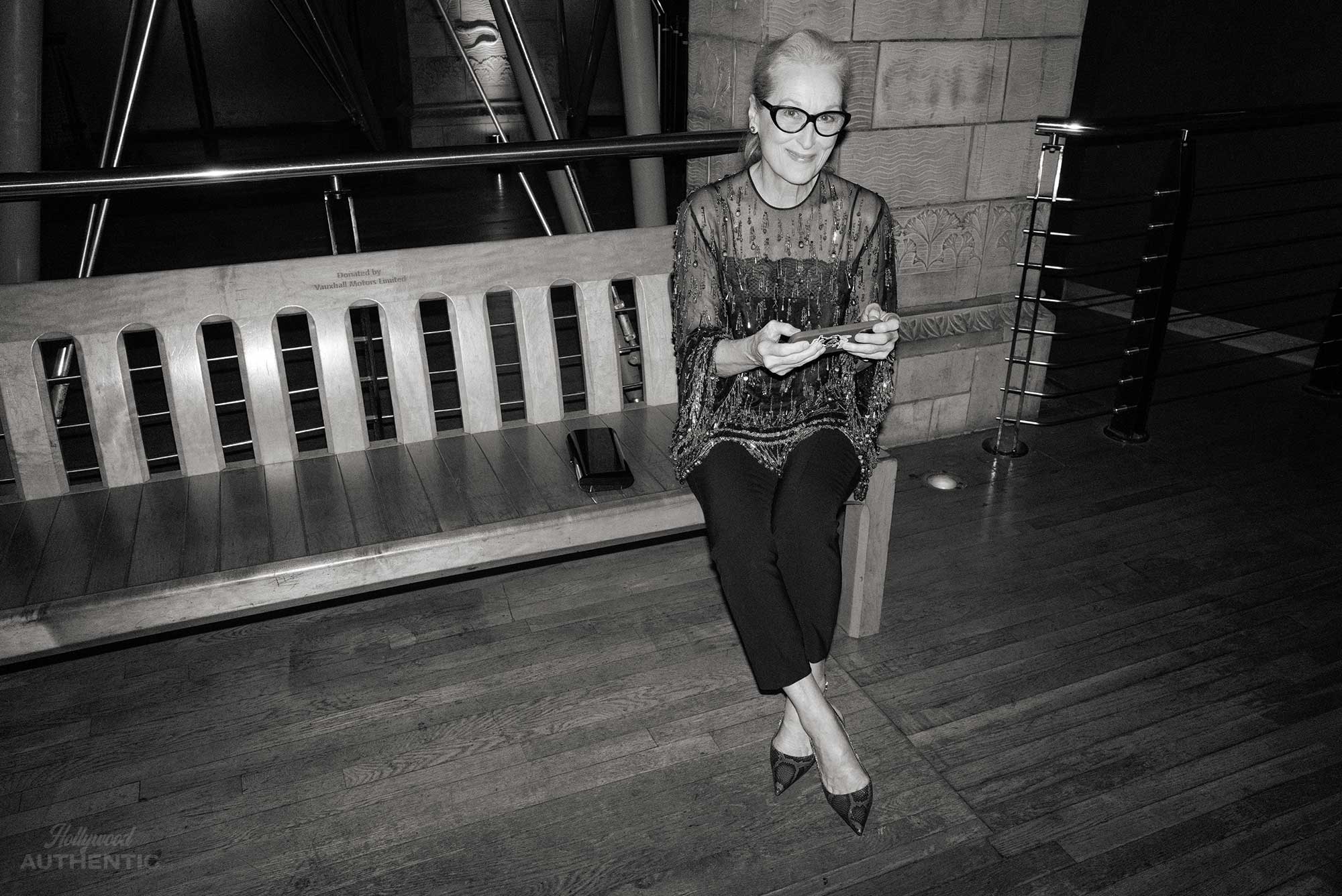
Meryl Streep
Amal Clooney, George Clooney, The Albies 2025
Fatou Baldeh — Women’s Rights Activist (Award) and Dame Emma Thompson
Amal Clooney, George Clooney, The Albies 2025
José Rubén Zamora – (Human Rights Award) accepted by his son José Carlos Zamora  
Amal Clooney, George Clooney, The Albies 2025
Darren Walker — Pursuit of Justice (Lifetime Achievement Award)
Amal Clooney, George Clooney, The Albies 2025
Melinda French Gates — (Award)
Amal Clooney, George Clooney, The Albies 2025
Marty Baron – Editor and journalist (Award)
Amal Clooney, George Clooney, The Albies 2025
Brandi Carlile
Amal Clooney, George Clooney, The Albies 2025
Graham Norton and Jacinda Ardern
Amal Clooney, George Clooney, The Albies 2025
George and Amal Clooney 
Amal Clooney, George Clooney, The Albies 2025
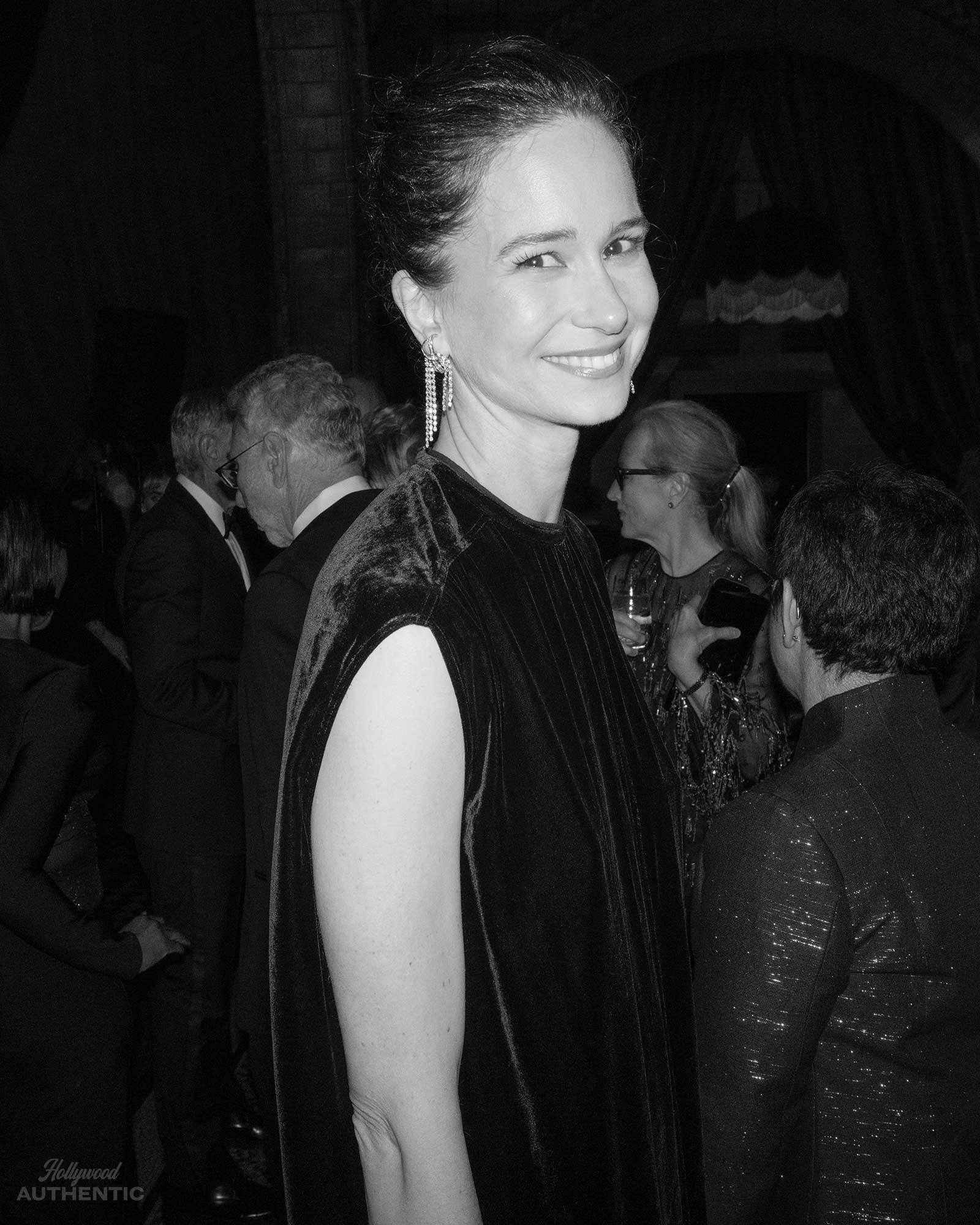
Katherine Waterston
Amal Clooney, George Clooney, The Albies 2025
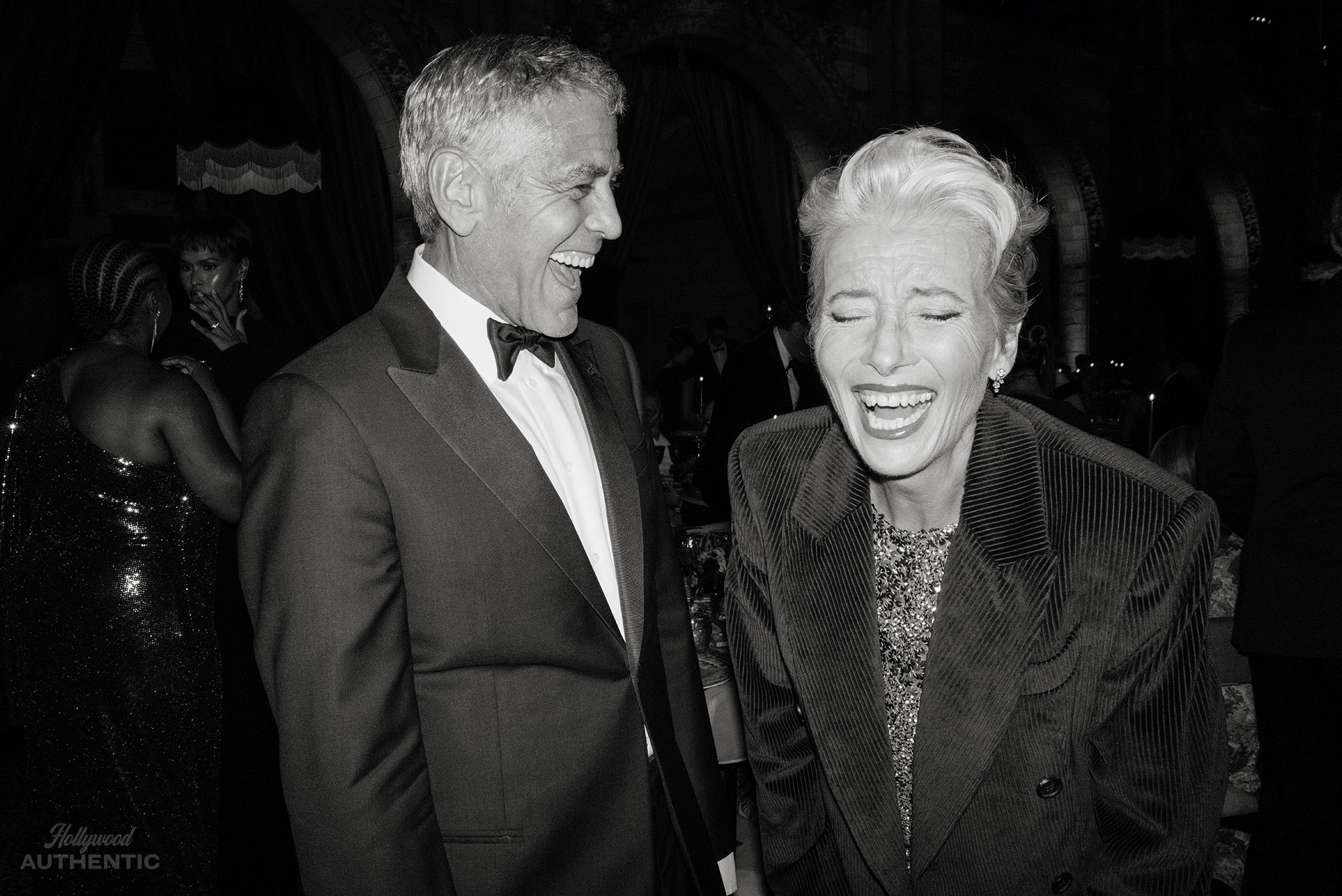
George Clooney and Dame Emma Thompson

Photographs by GREG WILLIAMS
Words by JANE CROWTHER
To find out more about The Albies, visit cfj.org/the-albies. See other causes The Clooney Foundation for Justice supports at cfj.org

December 15, 2025

Hamilton, Harriet, The Wiz! Live, West Side Story, Wicked, Wicked: For Good

Words & Interview by ARIANNE PHILLIPS
As told to JANE CROWTHER


The Oscar-winning vanguard costume designer who created the sartorial world of Oz tells Arianne Phillips about juggling numerous projects, ensuring he stays joyful and his belief in creating opportunities for the next generation of talent.

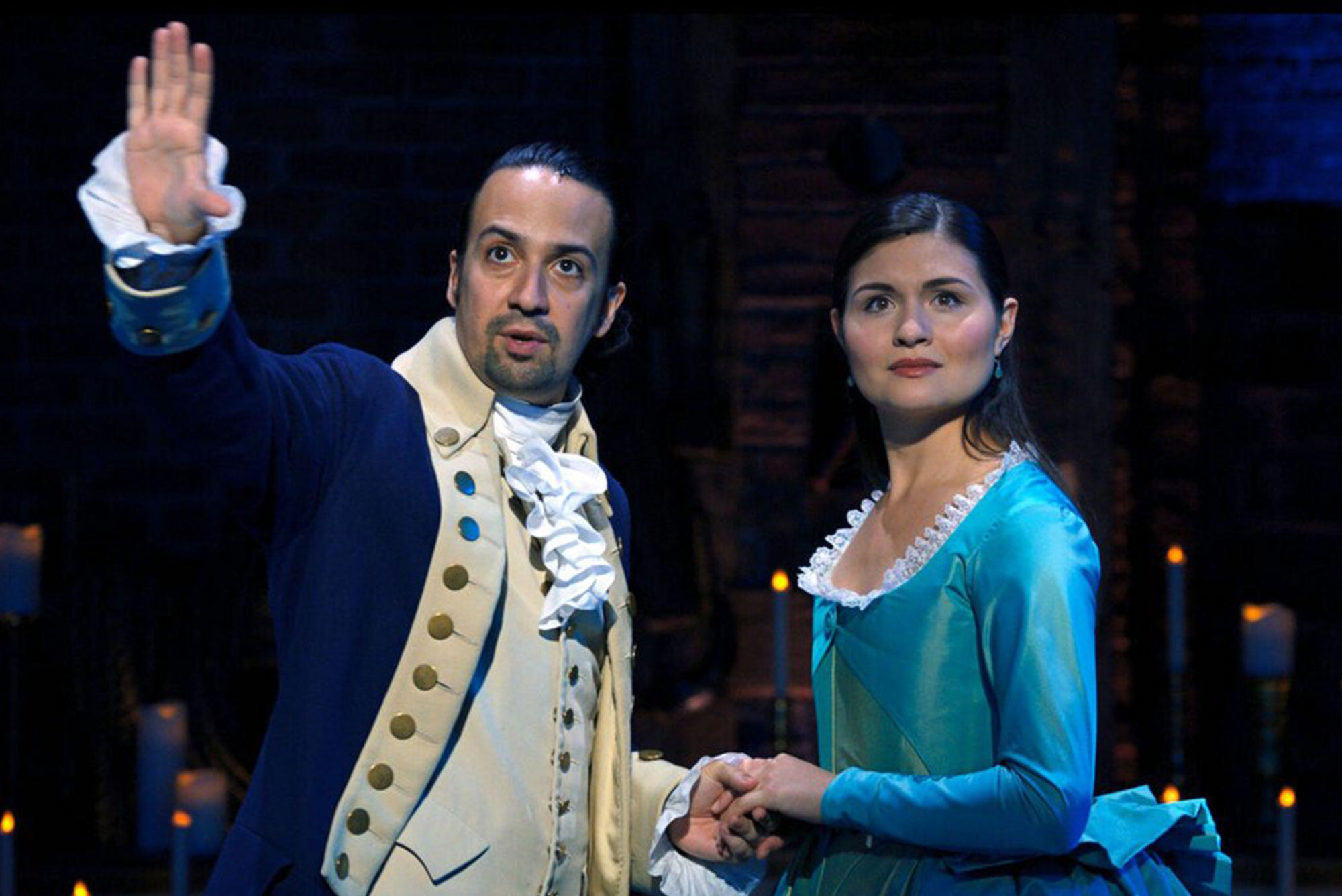
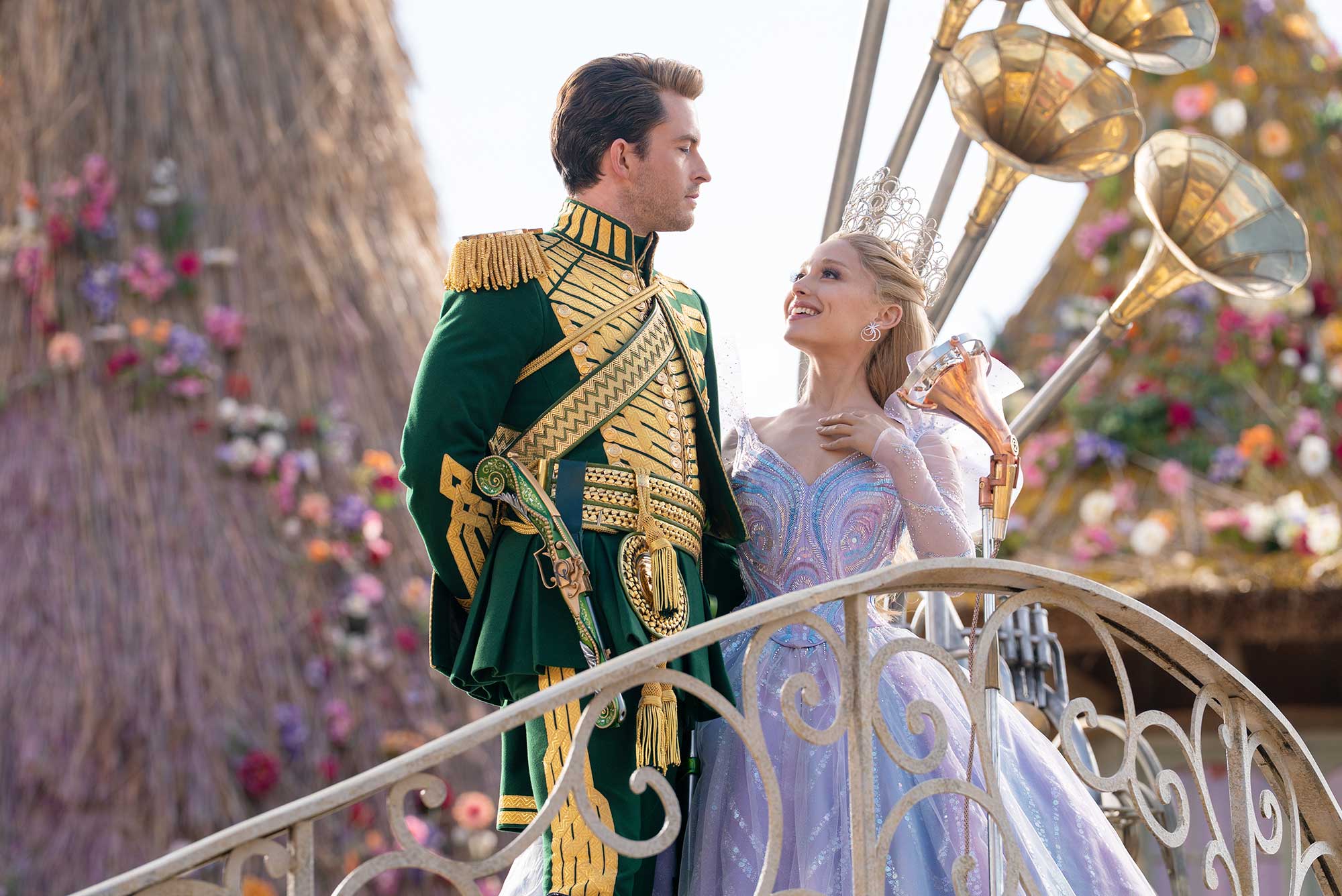
Paul Tazewell has profoundly impacted theatre and film. As well as receiving an Oscar for his work on Wicked earlier this year, he also won the Critics’ Choice Award, the Costume Designers Guild’s Excellence in Sci-Fi/Fantasy Film award, the NAACP Image Award, and the Innovator Award from the African American Film Critics’ Association, underscoring his critical role in bringing the fantastical world of Oz to life. Additional accolades include an Academy Award nomination for West Side Story in 2021, an Emmy for The Wiz! Live, and recognitions for his contributions to Harriet, The Immortal Life of Henrietta Lacks and Jesus Christ Superstar Live in Concert.

Hamilton, Harriet, The Wiz! Live, West Side Story, Wicked, Wicked: For Good
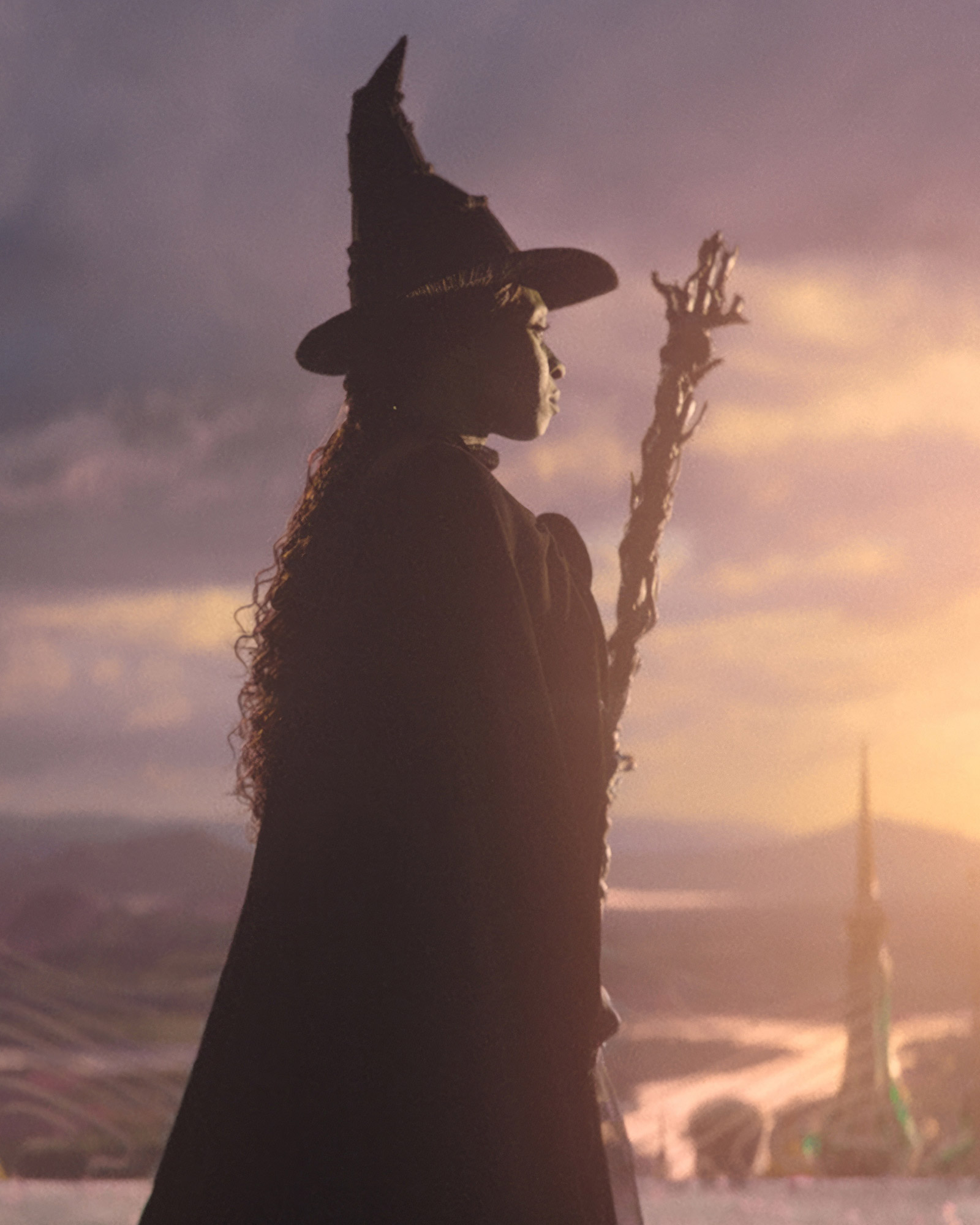
Wicked (2024). Universal Pictures

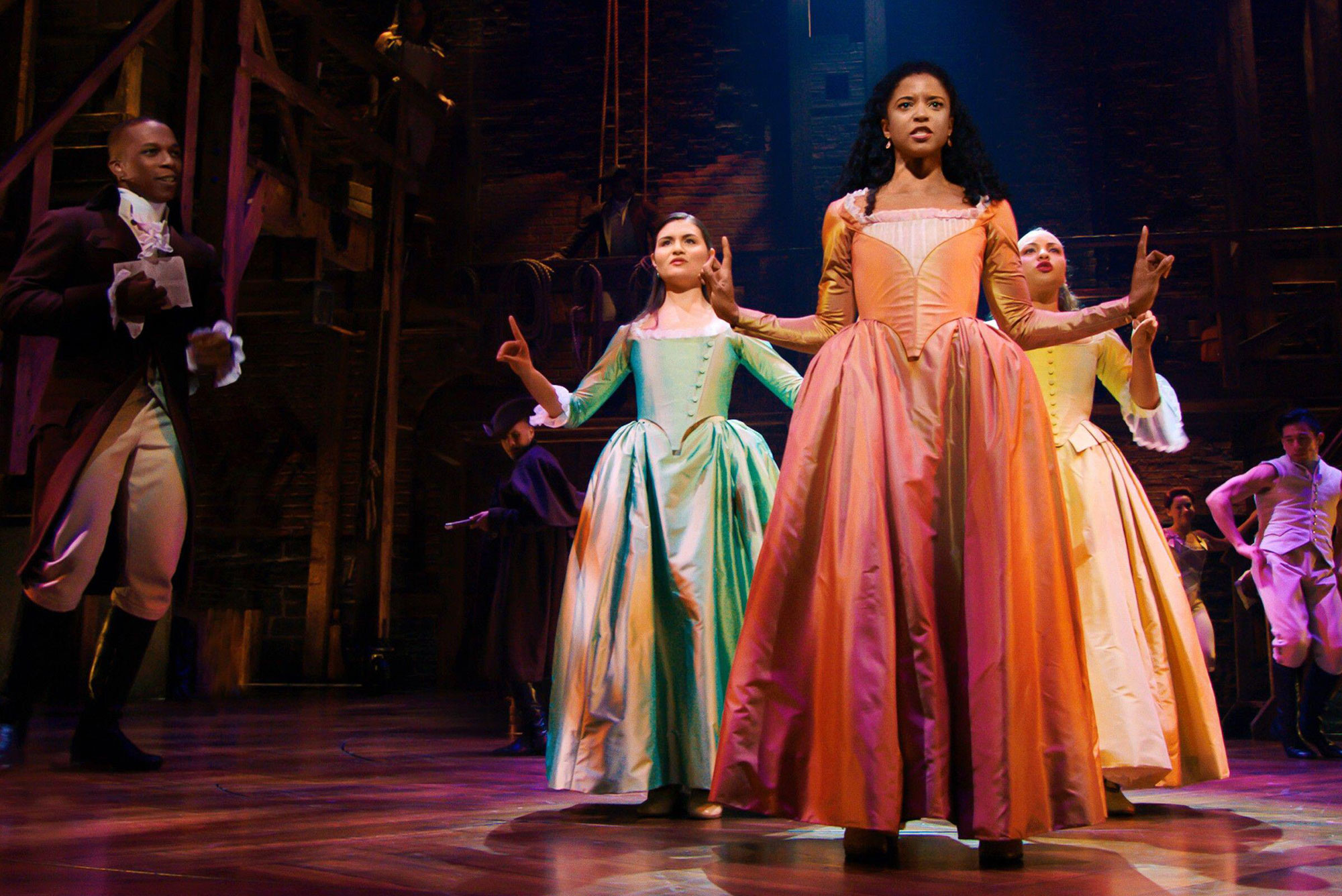
On Broadway, Tazewell has been nominated for a Tony Award 10 times, and won twice. Earlier this year, his costumes for Death Becomes Her – currently on Broadway – won him the 2025 Tony Award. Most notably in 2024, his designs for the production of Suffs earned him a Drama Desk Award and also a Tony nomination. His revolutionary designs for Hamilton won him a Tony Award in 2016, further establishing his reputation in theatrical costume design – and inspiring generations of young people to go to the theatre.

Throughout his career, Tazewell has earned multiple Lucille Lortel Awards, Helen Hayes Awards, and additional accolades from the Costume Designers Guild. His dedication is also evident in his collaborations with The Metropolitan Opera, The Bolshoi Ballet and The English National Opera.

Educated at New York University and the University of North Carolina School of the Arts, Tazewell has shared his expertise as a guest artist at these institutions and served on the faculty at Carnegie Mellon University from 2003 to 2006. Based in New York City – although probably rarely there these days – Tazewell continues to inspire and shape the future of costume design, bringing life to a rich tapestry of characters through his artful and intricate designs. 

AP: ​I’d love to start at the beginning, and understand where you grew up, what family life was, and at what point did you get inspired to pursue costume design?

PT: I grew up as one of four boys in Akron, Ohio to my two parents. My mother was the daughter of a university educator and a pianist. My grandmother studied at Oberlin and then at Wesleyan, and then she taught piano. My mother was an artist and an educator as well. So it set up an environment that was very creative. That was very inspiring and also necessary for me, because I think much of what I experienced as a child informs how I do my work, even to this day. Because my mother also practises as a group therapist I had that interest in what makes people tick; why people do what they do; why they wear what they wear, essentially; and how they create their own individual character; how they represent themselves – it became a big part of the language that I now use as a professional designer.

Hamilton, Harriet, The Wiz! Live, West Side Story, Wicked, Wicked: For Good
Hamilton (2020). Alamy

AP: I really relate to that. In these conversations that I’ve been having I’ve learned that so many of us, in these early years as children, whether it’s community theatre or an artistic environment, were really encouraged to express ourselves in multiple different ways. It’s a beautiful ability to inspire your children to look at life through this amazing lens of storytelling.

PT: It was really theatre that drew me in. The community building, the joining together in creating a production, for the single goal. The drive to recreate that environment where I could excel; where I was engaging with other people that were very creative. It’s how I collaborate even today. What it takes to be a costume designer, it’s inclusive of all those things that I love to do. I love fabric, and what fabric does, what you can do sculpturally with fabric. I love the drawing and painting and coming up with different ideas, whether it’s around space and in an environment, or it’s just specific to, ‘What is a character going to look like?’ I love working with very talented tailors, dressmakers and other craftspeople in creating the different costumes. I love engaging with directors, and figuring out what the point of view of the story is going to be, and also with actors, and that intimate place of finding that individual character.

As an undergraduate, I really wanted to be a musical theatre performer. But because of the time that I was coming up, I wasn’t seeing people that looked like me getting the roles that I wanted to play. And so I made a conscious decision to pull back on performance, and really lean into the world of costumes, because I could then design for any kind of character. Now having practised as a costume designer for about 35 years – I’m so grateful that that was my decision. Last year is a testament to that. All of this love, and all of the accolades that I received. But also it’s made for just a very rich career in a way that I don’t know that it would have been if I had been a performer. And being able to practise my art in live performance, as well as film, television, opera and ballet – there are so many different venues that I’ve been able to practise in, and that has made for a very rich career as well.

Hamilton, Harriet, The Wiz! Live, West Side Story, Wicked, Wicked: For Good
Hamilton (2020). Alamy

AP: In 2002 you had your first opportunity to work in television with Elaine Stritch at Liberty. Then in 2008, just six years later, you designed a film with Spike Lee. What’s your process for working between theatre, opera, ballet, television and film?

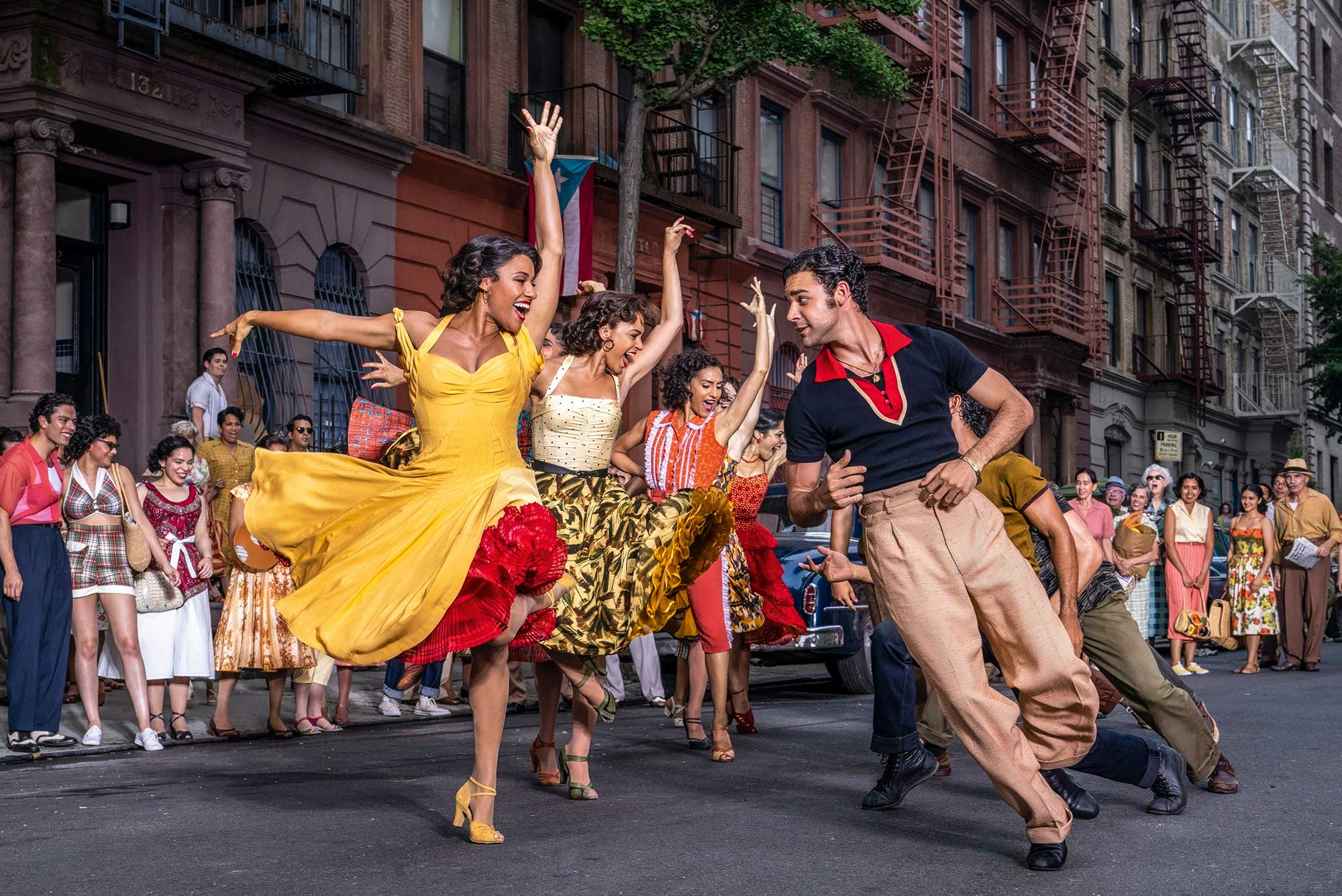
PT: Whatever I’m designing, I’m always myself. So my sensibility remains intact. I’m very aware of the different venues as it relates to scale, or as it relates to a sense of reality. Something like Henrietta Lacks, you are trying to give the illusion, or create these characters that feel like real people that you would see on the streets, or that you engage with wherever you are. You need to find that quality of reality. And then also be specific about who they are as characters – giving them a backstory, giving them a reason to be wearing what they are wearing. So I’m able to do that as well as operate with a mind towards poetry, with a mind towards the world of musical theatre is its own thing. On something like West Side Story, you’re balancing the function of clothing that needs to move and dance and look of a certain energy and beauty. And you also want for the colour palette that you use to mean something. You want to be specific about each of the characters and it has to feel like real ’50s New York. Which is different from Wicked where it’s completely made up, but you have to establish what those rules are in order to be consistent about what this world of Oz is. So it’s always shifting and changing, and I’m completely in love with that – having that broad opportunity to be able to design in many different ways. But with all of those different versions of genres, of performance, of entertainment, I’m the constant. You can see through my work – you know, my draw to strong colour, to detail, to character specificity. All of those play within each of the genres of performance.

AP: How wonderful it is to be able to approach these well-loved stories, and to be able to be intimate with them on film. Your work consistently has beautiful details, and I think it really shines in the room as well on camera. What do you look for when deciding to work on a project? What excites you? 

PT: It’s always informed by the director that has asked me to design the production. When we were starting out as young designers, you’re about developing and nurturing creative relationships that will get you to the second job or the third job. You’re working as a freelance designer so that becomes very practical. You’re pragmatically accepting jobs so that you can maintain a life. But then you have these creative relationships where they really do feed you as a creative being. The familiarity, working on the second production and the third production, is really gratifying because you can learn from what you’ve done. So much of the work we do, we can only do it really well when we trust the people that we’re working with. When we have the trust of the director, the actor, the designer, you have to create a bond.

Early on, I was just saying yes to as much as I could actually take on. Whether it was a great moment of design, at the very least it gave me another opportunity to practise my craft. And it gave me the opportunity to work with other people that I’ve never worked with. And I learned from that. Walking through costume designing in an abundant way, it’s had a really positive result. And then you come upon a Hamilton – which was definitely a marker in my career and hit the zeitgeist, and really launched into the world – that meant that I was more visible to more people, whether that was theatre people or film people. That was one of the big reasons that I started working with Steven Spielberg on West Side Story and I did Harriet. One thing feeds off another. The universe has been very generous in that way, in offering opportunities.

Hamilton, Harriet, The Wiz! Live, West Side Story, Wicked, Wicked: For Good
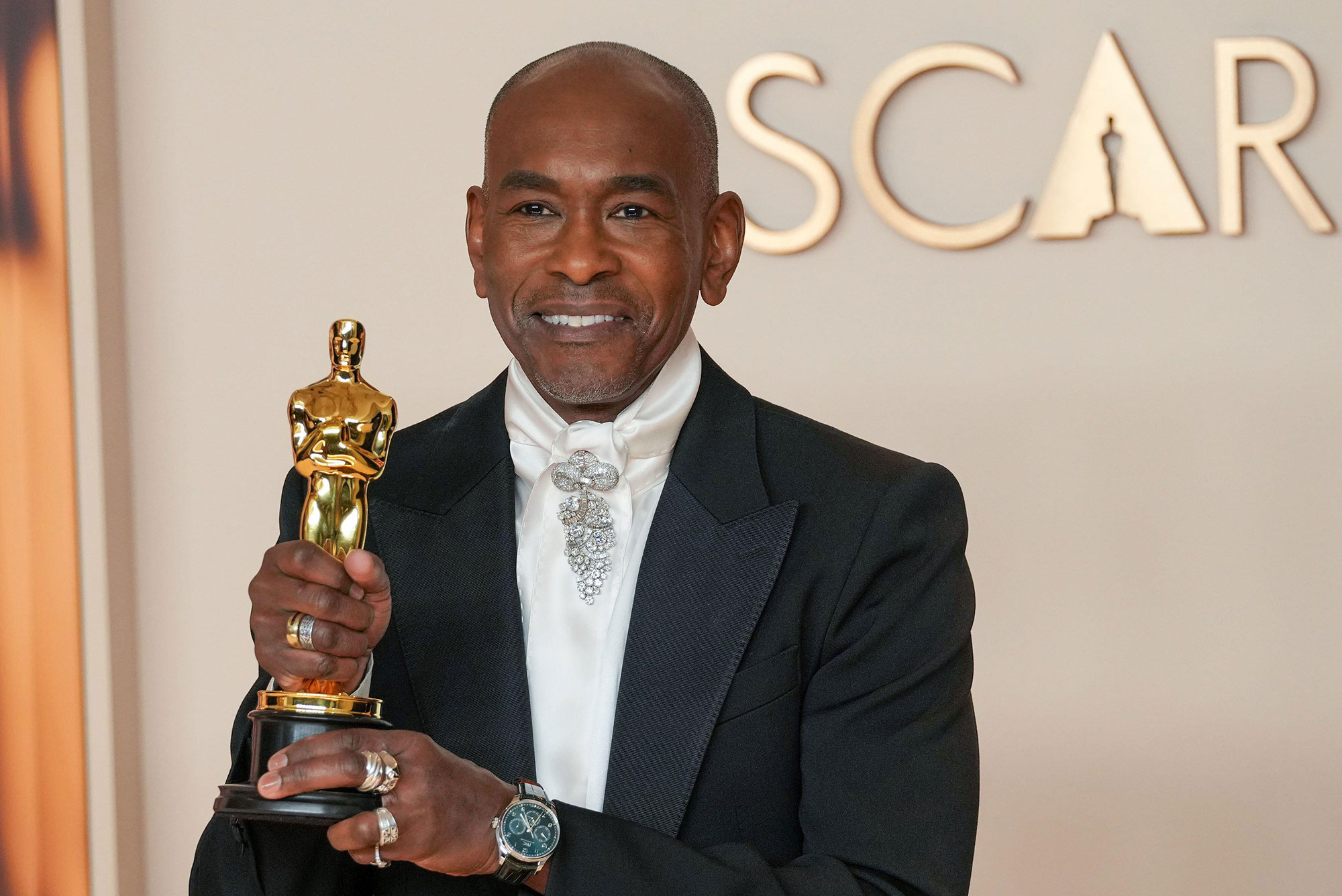
Paul Tazewell at The Oscars 2025. Alamy

AP: Speaking personally, being nominated for an Academy Award alongside you this year, it was not lost on me how historic and important it was for your nomination and your win for Best Achievement in Costume Design for the Oscar [Tazewell was the first Black man to win the category]. Can you reflect for us a little bit about that moment in particular?

PT: One thing that was very special
about this year, it was also where I turned 60. I’ve been a professional costume designer since 1990. That’s a huge body of work that I did prior to this amazing moment. One of the things I was thinking is, ‘I’ve been here doing this for all of these years, and you guys are just catching up!’ But also just being grateful. For me, it was really glorious to then be able to have all of the experiences surrounding it. But I needed everything that led up to the designing of Wicked to happen, because then I could make use of it. I could be a master of how to orchestrate what this vision would potentially be, and what [director] John M. Chu was looking for; matching what [production designer] Nathan Crawley was doing. To then be acknowledged for it in such a loud way was really beautiful. And to then say, ‘Indeed, thank you. I’m a first’…

Ruth Carter and I go way, way back to when I was at North Carolina School of the Arts. She was the first Black woman to receive an Oscar for costume design, and then to be able to stand alongside her and be represented in that way is hugely meaningful. Entering into this career, you know, so often I’m sitting at conference tables where I’m the only Black face at the table. For so many years, I was seen as the right designer for stories about people of colour. First off, it was stories about young people of colour on the street, and then it became about people of colour in a broader sense. Now, finally, I can be seen as a person who is just a storyteller. And that’s hugely meaningful. What my priority is now, is that 10-year-old that looks like me and is struggling to figure out what they want to do, or how they want to create, or how they want to live their life. If I can stand as an inspiration for that kid, for that ‘me’ of today, then that is everything that I want. It’s why I’m on Earth – to power life forward.

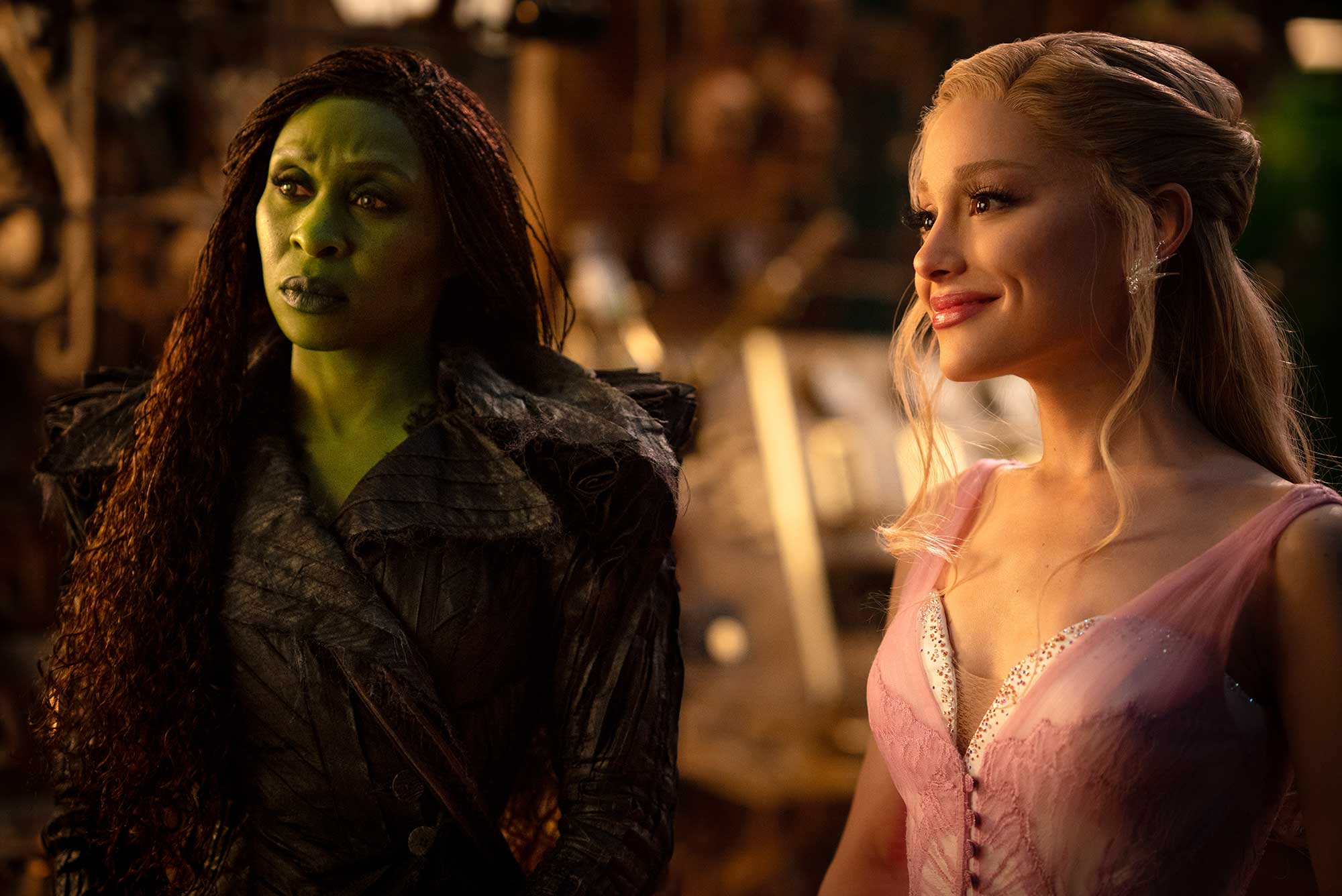
Cynthia Erivo, Ariana Grande, Jonathan Bailey, Ethan Slater, Bowen Yang, Marissa Bode, Michelle Yeoh, Jeff Goldblum, Paul Tazewell
Wicked: For Good (2025). Universal Pictures

AP: You’ve established a Paul Tazewell Scholarship fund at the University of North Carolina School of the Arts, your alma mater, so you are putting that into action…

PT: As we all know, it’s going to take a lot to continue the support of young designers and young people that are entering into the world of the arts. It was much easier when I was coming up. There were many more programmes, art schools, ways of expanding as a young person. And that’s just becoming harder and harder. If I can be a part of that, that’s really important.

AP: I really loved that during the award season you used social media to introduce all your craftspeople, highlighting their work, and all these amazing, talented hands that help us bring our work to life. 

PT: It’s another huge priority for me, because not everybody is going to be a designer. Shining a light onto the team that makes it happen is so important for me. I can’t work in a vacuum. It doesn’t just miraculously happen. They’re not elves. They’re working very hard to deliver amazing garments. It’s so very important to make sure that people know about them. When I was finishing up Wicked, I was just starting a design for Sleeping Beauty, a story ballet for the Pacific Northwest Ballet company in Seattle, as well as Suffs and Death Becomes Her. So I was working on the three designs as we were finishing up Wicked with three different teams.

Cynthia Erivo, Ariana Grande, Jonathan Bailey, Ethan Slater, Bowen Yang, Marissa Bode, Michelle Yeoh, Jeff Goldblum, Paul Tazewell
Wicked: For Good (2025). Universal Pictures

AP: How do you manage it all?

PT: When I was doing Wicked, because of the scope, I had to clear the plate. I’ve heard of other designers taking on two films at the same time. I’ve never tried to do that. But you just have to be really diligent about how you schedule, and what you say yes to. And making sure that you have the support. I like the abundance of creating, and I’ve lived through lots of chaos in that process. At this stage in the game, I choose to have it be a little less crazy. You know, as full as possible, but as stress-free as possible as well! I’m very grateful because this is not an easy career to be a part of. It is a challenging road to make this decision with a lot of compromises, whether it’s about time and family, or whether it’s about how you live. You have to create that love of what you’re doing so that you will give over to what is required to do it, and to do it well.

I definitely respect what this calling is, and hopefully I can always be joyful in doing it, and create other opportunities for myself and for other people that are joyful. 


Words & Interview by ARIANNE PHILLIPS
As told to JANE CROWTHER
Carol / Caravaggio / Far from Heaven / Gangs of New York / Orlando / Snow White / Velvet Goldmine 

August 22, 2025

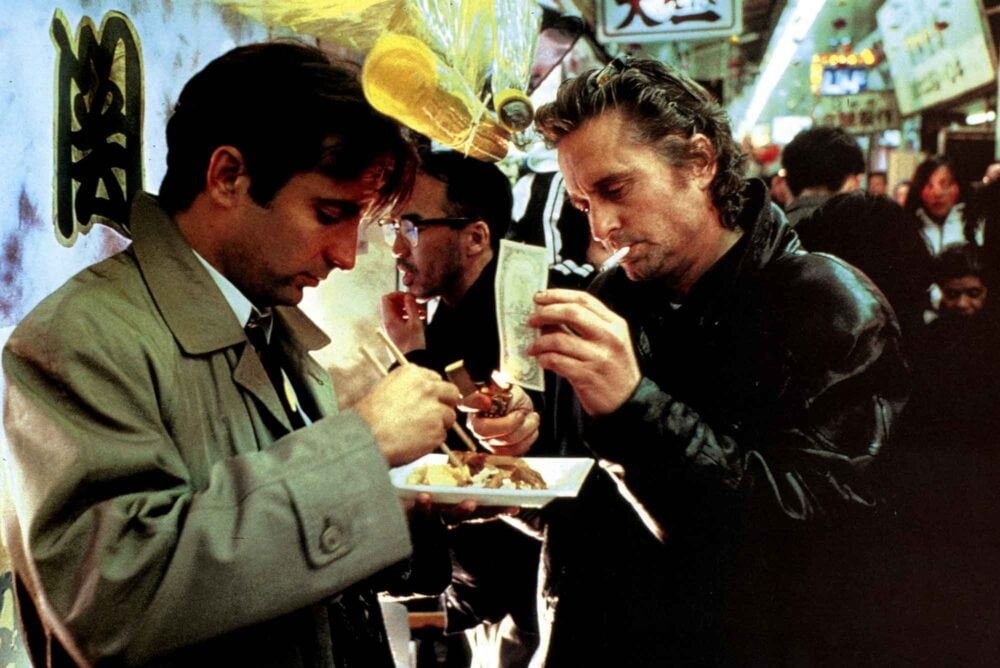
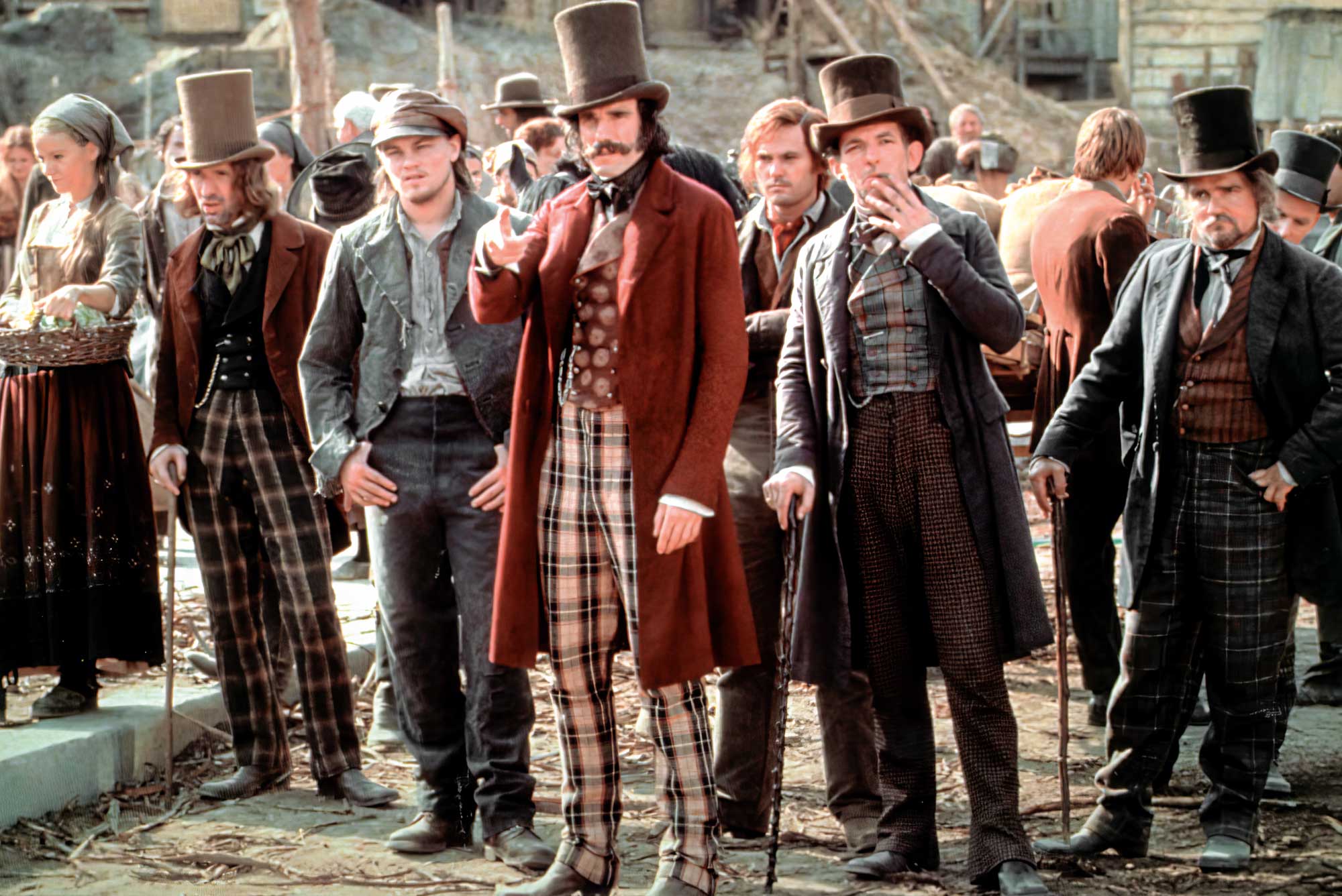
Gangs of New York, Sandy Powell

Words & Interview by ARIANNE PHILLIPS
As told to JANE CROWTHER


The award-winning British costume designer who regularly reteams with the cream of directors tells Arianne Phillips about starting out with Lindsay Kemp, continuing to learn on the job and her signature personal style.

Sandy Powell is one of our most accomplished and celebrated filmmakers in the field of costume design – an incredibly prolific and visionary artist. She has well over 50 feature films to her credit. Sandy has designed some of the most groundbreaking, influential, enduring, visually stunning and iconic films of our time, some of which include Caravaggio, Orlando, The Crying Game, Interview with the Vampire, Michael Collins, The Wings of the Dove, Velvet Goldmine, The End of the Affair, Far from Heaven, Gangs of New York, The Aviator, The Wolf of Wall Street, Cinderella, Carol, The Favourite, Mary Poppins Returns, Living and The Irishman. Her esteemed list of directors she has collaborated with reads like a who’s who of some of our greatest and most important filmmakers, among them Derek Jarman, Julie Taymor, Sally Potter, Neil Jordan, Stephen Frears, Todd Haynes, Mike Figgis, Rob Marshall, Yorgos Lanthimos, and perhaps the greatest of his generation, Martin Scorsese.

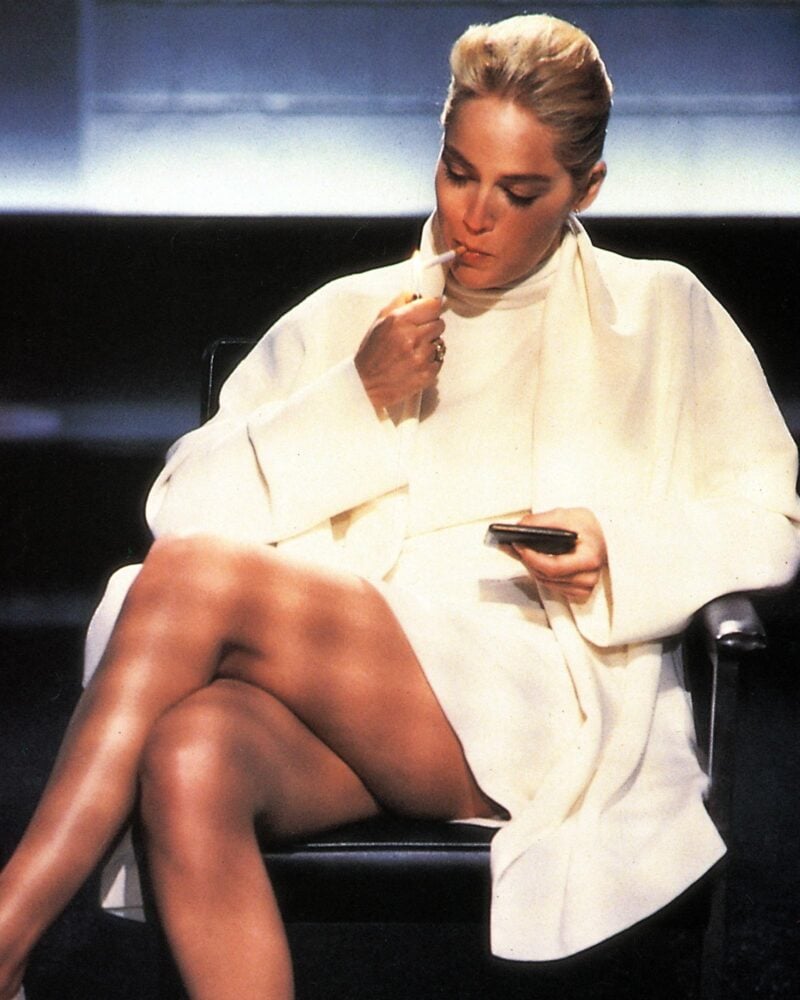
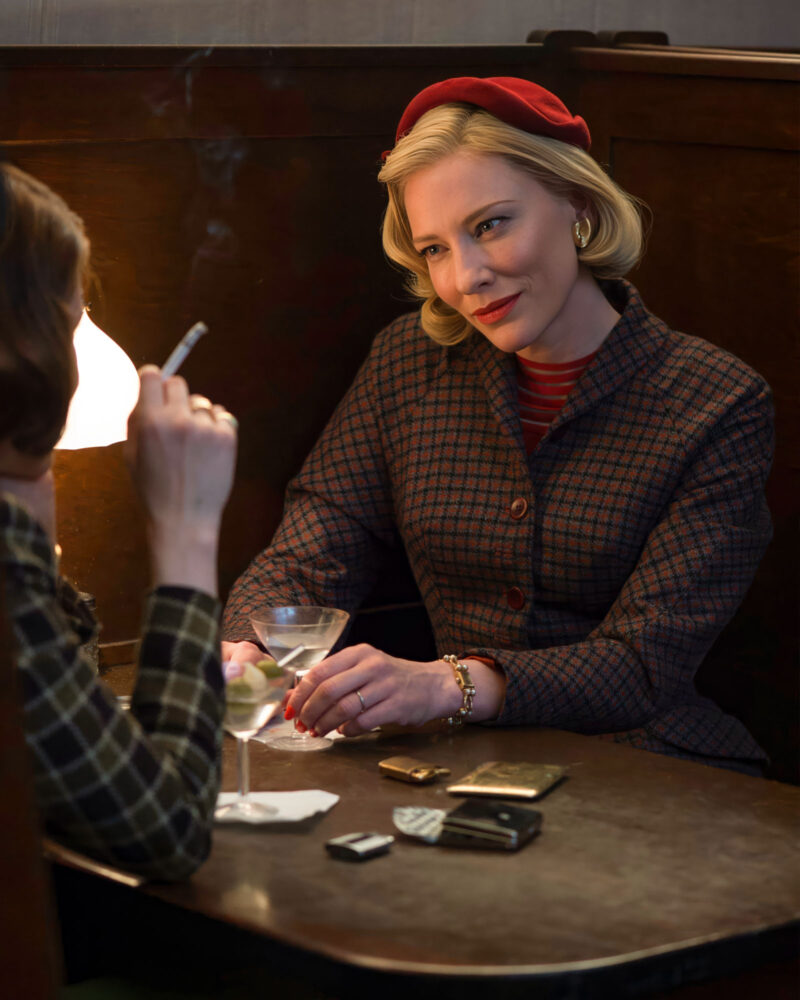
Cate Blanchett, Carol, Sandy Powell
Carol, 2015. TCD/Prod.DB/Alamy

Sandy started out as a student at Saint Martin’s School of Art and the Central School of Art in London where she specialised in theatre design, after which she started working alongside the great multidisciplinary artist, Lindsay Kemp. She has rightfully been acknowledged and awarded for her prolific and visionary work. The most notable is that she’s been nominated 15 times for an Academy Award, for which she has won three – for Shakespeare in Love, The Aviator and The Young Victoria. She has been nominated 16 times for a BAFTA award and won four, the fourth being in 2023 when she was awarded the prestigious BAFTA Academy Fellowship Award. Sandy was awarded an OBE in 2011 and has recently been promoted to a CBE. In 2013, she was made a Royal Designer for Industry by the Royal Society of Arts and, in October 2024, Savannah College of Art and Design (SCAD) presented ‘Dressing the Part: Costume Design for Film’ a comprehensive exhibition of 70 costumes from nearly 30 of Sandy’s films, spanning her 40-year illustrious career.

AP: At what point did you know that you wanted to pursue costume design? What was your entry path?

SP: That didn’t actually happen until I was in my teens, but from as young as I can remember, I was interested in clothes. I made dolls’ clothes. And then really quite early on, I attempted to make myself something. I think before I even knew how to sew, I cut up a skirt of my mother’s to try to make a pair of shorts. I was about four or five. There was a little girl who lived down the road from me and she had this amazing outfit that her parents bought her from Carnaby Street, psychedelic patterned little shorts, but with a tunic dress over the top. I was desperate for one of those. So I tried to make my own. I then got my mum to teach me how to make clothes, so I grew up choosing fabrics, and looking through the pattern books, and I used to make my own fashion magazines as well.

AP: I learned about choreographer Lindsay Kemp because of my own fascination as a teenager with David Bowie. So how did you connect with him? 

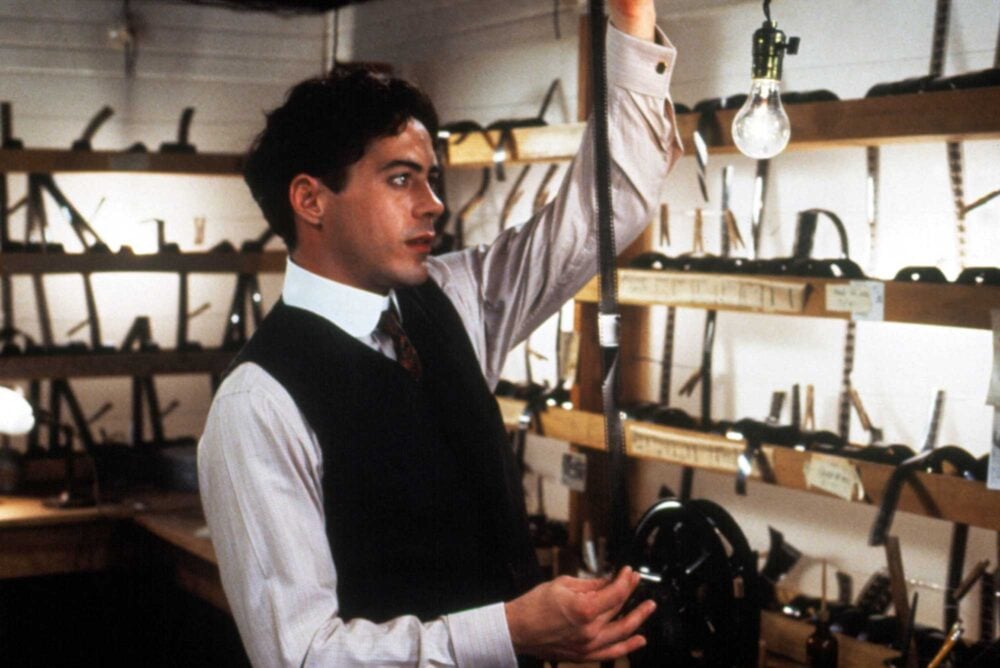
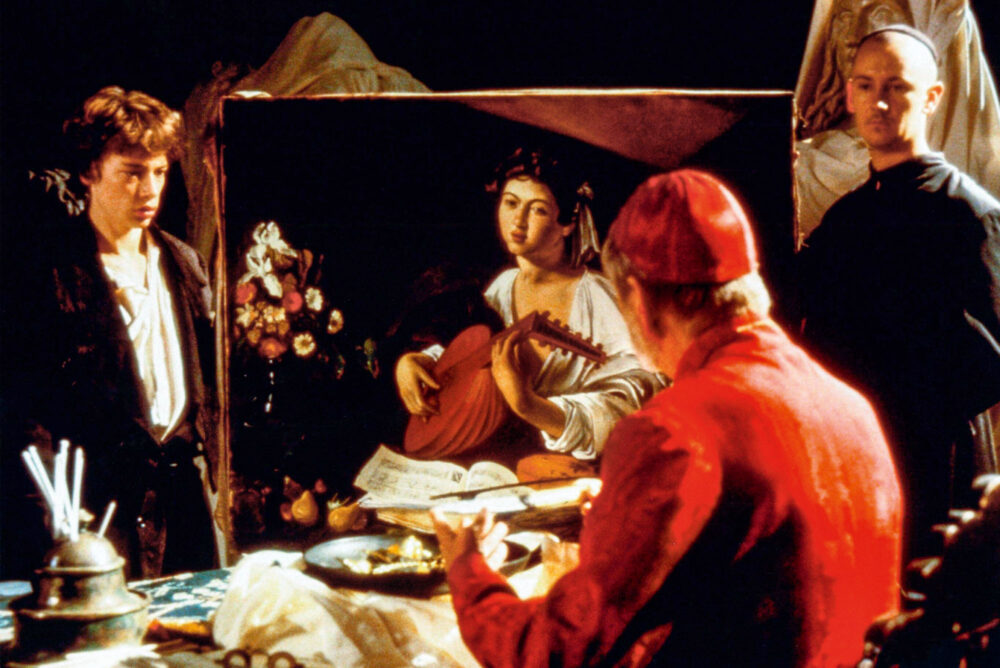
Dexter Fletcher, Michael Gough, Caravagio, Sandy Powell
Caravaggio, 1986. Cinematic/Alamy

SP: Like you, I read everything printed about David Bowie, so I learned about this amazing-looking man [Kemp]. And then I think I was 16 or 17 at school and I saw his company perform Flowers at the Roundhouse Theatre at Chalk Farm – it was like nothing I’d ever seen or experienced before. It was just the most magical, intoxicating event. But it wasn’t until a few years later when I was at Central School of Art doing a Theatre Design course that I got to meet him in person. At the end of my second year, Lindsay Kemp was doing dance classes at the Pineapple Dance Centre in Covent Garden. So I took myself off, and did a dance class and at the end, I went up and said, ‘I saw you when I was 16. I love your work. Do you want to have a look at some of mine?’ He said, ‘Yeah. Let’s go to the pub.’ And that was it. By the end of the summer, I was jumping on a plane, and went to Barcelona where he was living at the time to stay with him. He just said, ‘Oh, come and work for me.’ I then went home, spoke to my parents, called my college, and said, ‘I’m having a year out before the final year.’ I never went back. We stayed close friends until he died in 2019. He continued to be inspiring, amazing and funny.

AP: Then your first film was Caravaggio with Derek Jarman. How did you connect with him? 

SP: I did the same thing as I did with Lindsay, really. I cold-called him. I was working in fringe theatre in the early ’80s, designing the sets and the costumes. I realised I was more interested in the costumes than the sets. I’d seen a couple of Derek’s films and I thought, ‘He’d be an interesting person to work with.’ A male friend of mine said, ‘Oh, I see Derek quite often in Heaven [nightclub]. I’ll get his phone number for you.’ So I basically got his phone number, called him up, and said, ‘Look, I’ve got a show on at the ICA. Would you like to come and see it?’ He came to see the show I’d done, and invited me back to tea. And that was the start of that relationship. Again – luck. What’s interesting about both of those people was that they were both incredibly generous with their knowledge, and surrounded themselves with young people who they then gave loads of trust to. I think that’s an incredibly generous thing to do, to give everybody their first chance. It’s amazing.

AP: Tell me about your experience of working on Caravaggio

SP: I was thrown in the deep end. I was making the costumes with my assistant, Annie Symons, who’s now a costume designer as well. Honestly, we were two weeks of production before either one of us should be on set while they’re shooting! We were filming in this massive warehouse in Limehouse. We had no idea that that’s what you had to do. But, you know, we learned!

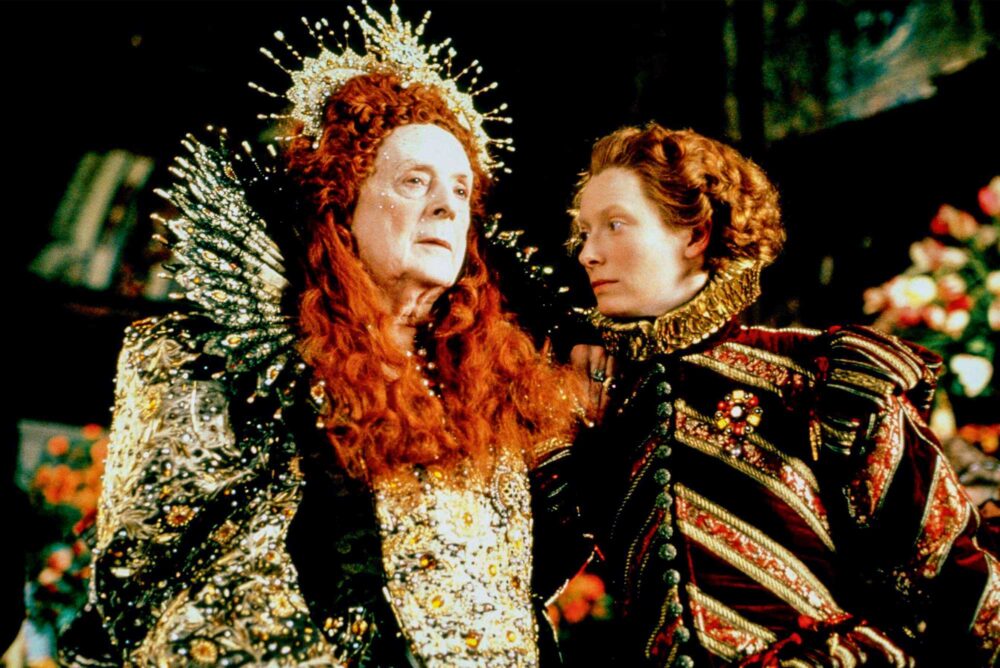
Quentin Crisp, Tilda Swinton, Orlando, Sandy Powell
Orlando, 1992. Maximum Film/Alamy

AP: You also worked with Sally Potter on Orlando… 

SP: By the time I did Orlando, I’d already done a few more films with Tilda [Swinton] and Derek. Back in the early days, I’d do anything for the experience and for the job. One of my college tutors said, ‘When you’re starting out, you say yes to everything, because whatever it is, you’re going to learn something. It’s going to be a valuable experience.’ Looking back on it, I think we were so lucky then, because it felt like there were so many more interesting things to do, and people taking risks, as there was more money put into the lower-budget end of things, both in theatre and in film. What attracts me to a project now – is the script and the director. I usually now say it’s got to be a film that I would pay money to go and see. A film that I would want to see is a film that I would like to work on. 

AP: The thing that struck me about your CV is these repeat relationships. There are multiple films with Todd Haynes, Martin Scorsese, Julie Taymor, Neil Jordan, Derek Jarman and Mike Figgis. What do you attribute to these enduring relationships and collaborations?

SP: You have to get on as human beings, as people. You have to like each other. With the director you have to work creatively well together. At the end, it comes down to respect and trust. And probably the most important thing is communication. And if you crack that, then you’re there – you’re halfway there. So I guess the relationships that endure are the ones where it works out, really.

AP: What did that feel like to see your career represented by the SCAD exhibition? 

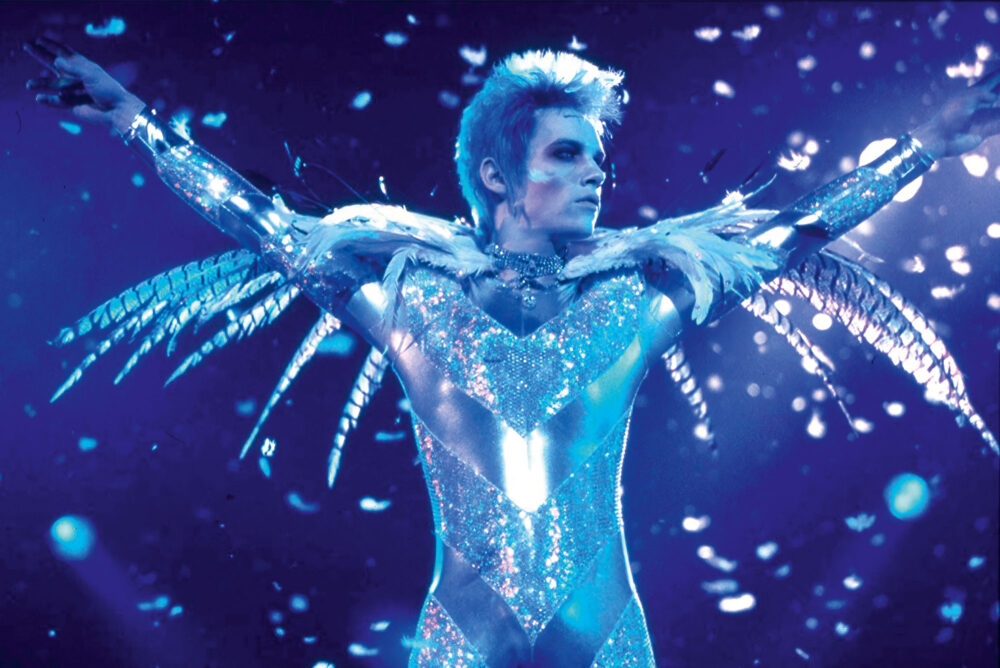
Jonathan Rhys Meyers, Sandy Powell, Velvet Goldmine
Velvet Goldmine, 1998. Pictorial Press Ltd/Alamy

SP: It was like seeing your life flash before you. I suddenly thought: it’s 40 years of my life. But not only the work. You just remember what was going on in your life. And that was really quite emotional. So that was a career highlight. And most of the costumes in the exhibition were mine. I’d actually been collecting them, over the years. Because as you know, at the end of films, it’s really sad when you have to say goodbye to everything. And then, quite often, they just disappear. They get sold. They get packed up in boxes and left in some warehouse somewhere. And then years later, everyone forgets where they are, or what’s in that box. It’s not in my contract to keep costumes but a couple of times, there’s been an actor who has it in their contract they can keep the costumes, and then they give them to me, which is great. Or if there are doubles or multiples made, I ask if I can take one. And I’m glad I’ve taken care of them, so they now have a new life.

AP: Can you think of any particular experiences on any of your film projects that are career highlights for you?

SP: Obviously Caravaggio as the first one. Orlando as well, but then I might jump to Velvet Goldmine with Todd, which was an amazing experience. Another good one – Gangs of New York. I think probably it’s one of the highlights simply because, obviously, it’s my first film with Marty. But it was epic. It was extraordinary. It got bigger and bigger and bigger. And we shot the whole thing at Cinecittà, so I got to live in Rome for almost a year. Marty said that he wanted world in the Five Points to be a sort of world of its own. He gave me that freedom to come up with things… he responds very well. He’s very, very visual. He’s also amazing with providing reference. Back in the day, you’d get a box full of VHS [tapes]. For Gangs, I had to watch an entire film to look for a stripe on a collar. 

Then there was Cinderella. I really enjoyed doing Cate [Blanchett] for that, as the stepmother. Cinderella’s blue ballgown haunts me because every young person in the world loves that dress more than anything else! It didn’t occur to me when I started that I would be doing anything like the original, animated version. I went through many different colours and what I ended up with was a mix of different colours making up a blue that worked on Lily [James]. But then afterwards I realised that maybe if I’d done – I don’t know – an emerald green dress, somebody from Disney probably would have had something to say about it! But I didn’t remember there being a directive. I guess Carol is the other big one.

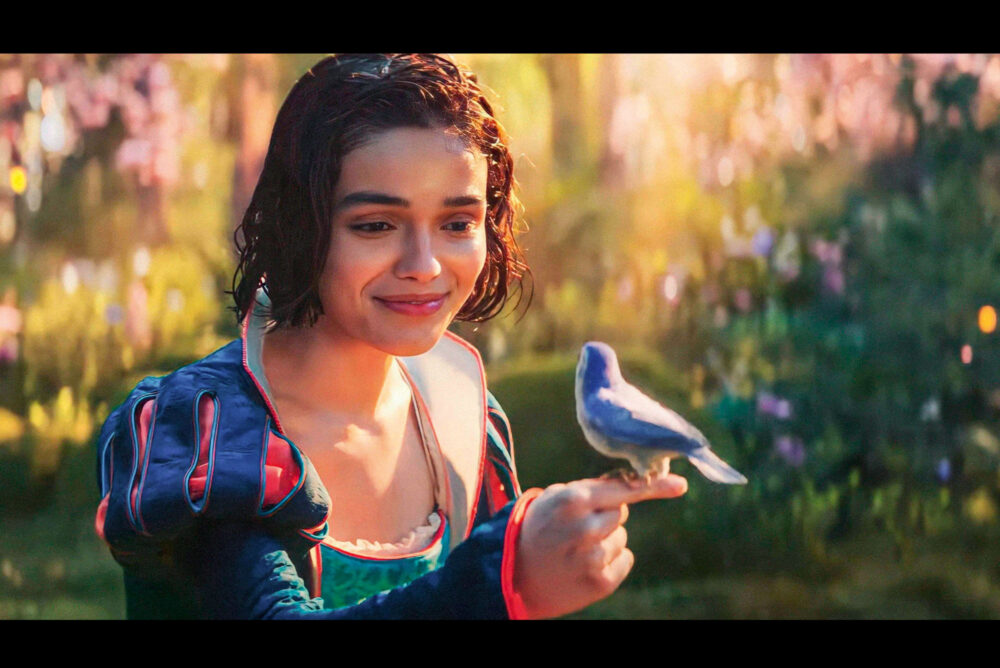
Snow White, Sandy Powell, Rachel Zegler
Snow White, 2025. Album/Alamy

AP: What have you just wrapped on?

SP: That’s a film called The Bitter End, and it’s about Wallis Simpson in her older years, after the death of her husband, the Duke of Windsor. He passed away in 1972, and this film goes from 1973 to about 1980. Wallis Simpson is played by Joan Collins, and then the other protagonist in it, is a lawyer called Maître Blum, who’s played by Isabella Rossellini, who’s very thrilled to be playing her first baddie ever in her entire career! Obviously that was the main attraction of doing a film like this. The two main characters are two older females. How often does that happen? And The Bride is a wild, wild ride! It’s a film written and directed by Maggie Gyllenhaal, starring Jessie Buckley and Christian Bale. And it’s a very loose take on the Bride of Frankenstein story set in the 1930s. It’s out there. That script read like somebody taking a lot of risks. I guess it could be described as a punky, 1930s world. 

AP: What advice would you give students who want to pursue this career? 

SP: I think it’s: be prepared to work hard. Unfortunately, a lot of younger people now expect things to happen a lot quicker. They expect success or notoriety or whatever or fame to happen a lot quicker, simply because of social media. This is different. This is hard graft. It’s work. Be prepared to do the work, and to put the hours in at the beginning. I also think you should learn to sew. As a designer, I think you’ve got to learn the basics of making clothes. Obviously you don’t have to be the best in the world. But I really think you should understand construction. Doing a nice drawing means absolutely nothing if you don’t know how to specifically communicate that, if you don’t know how the costume is put together. To actually understand what isn’t working in a fitting – this only works if you know how things are put together. It helps if you understand what your cutter is talking about, or wanting to do to make something work. You’ve got to have the basic skills.

AP: You’re known for your personal style – is that an important part of being a costume designer?

SP: I’ve always enjoyed dressing up; I’ve been a show-off in that sense, I suppose. I’ve enjoyed expressing myself through clothing. I also think that as a costume designer, the first thing you have to do when you meet an actor is getting their trust. And I think if you look OK yourself, you’re a little bit of the way there. I like to think that that gives somebody confidence in me. 

AP: Is there a person or a genre you haven’t worked with yet that you would really love to?

SP: No. I’m not interested in spacesuits at all. Or creatures or Hobbits or superhero outfits. Other people are much, much better at that. I just like doing more of the same. You still continue to learn something new every time you do a job, even if it’s a period you’ve done five times before. 

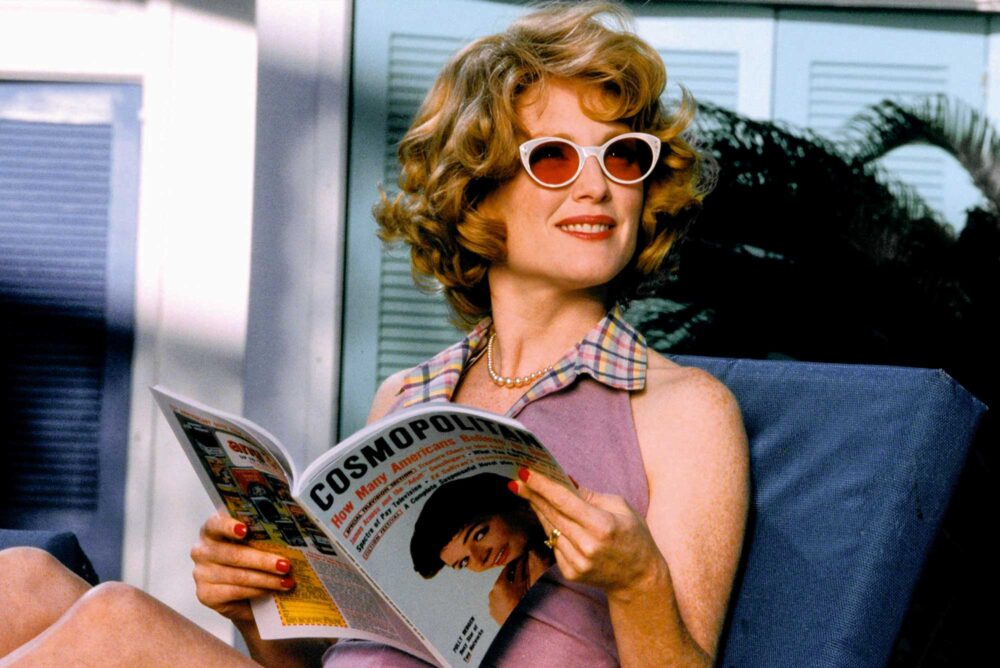
Far from Heaven, Julianne Moore, Sandy Powell
Far from Heaven, 2002. Cinematic/Alamy

Words& Interview by ARIANNE PHILLIPS
As told to JANE CROWTHER
Carol / Caravaggio / Far from Heaven / Gangs of New York / Orlando / Snow White / Velvet Goldmine 

Words & Interview by ARIANNE PHILLIPS


The trailblazing, award-winning costume designer, who has worked with filmmakers from Spike Lee and John Singleton to Ava DuVernay and Ryan Coogler, tells Arianne Phillips about being a ‘first’ in Oscar history and how community has shaped her career.

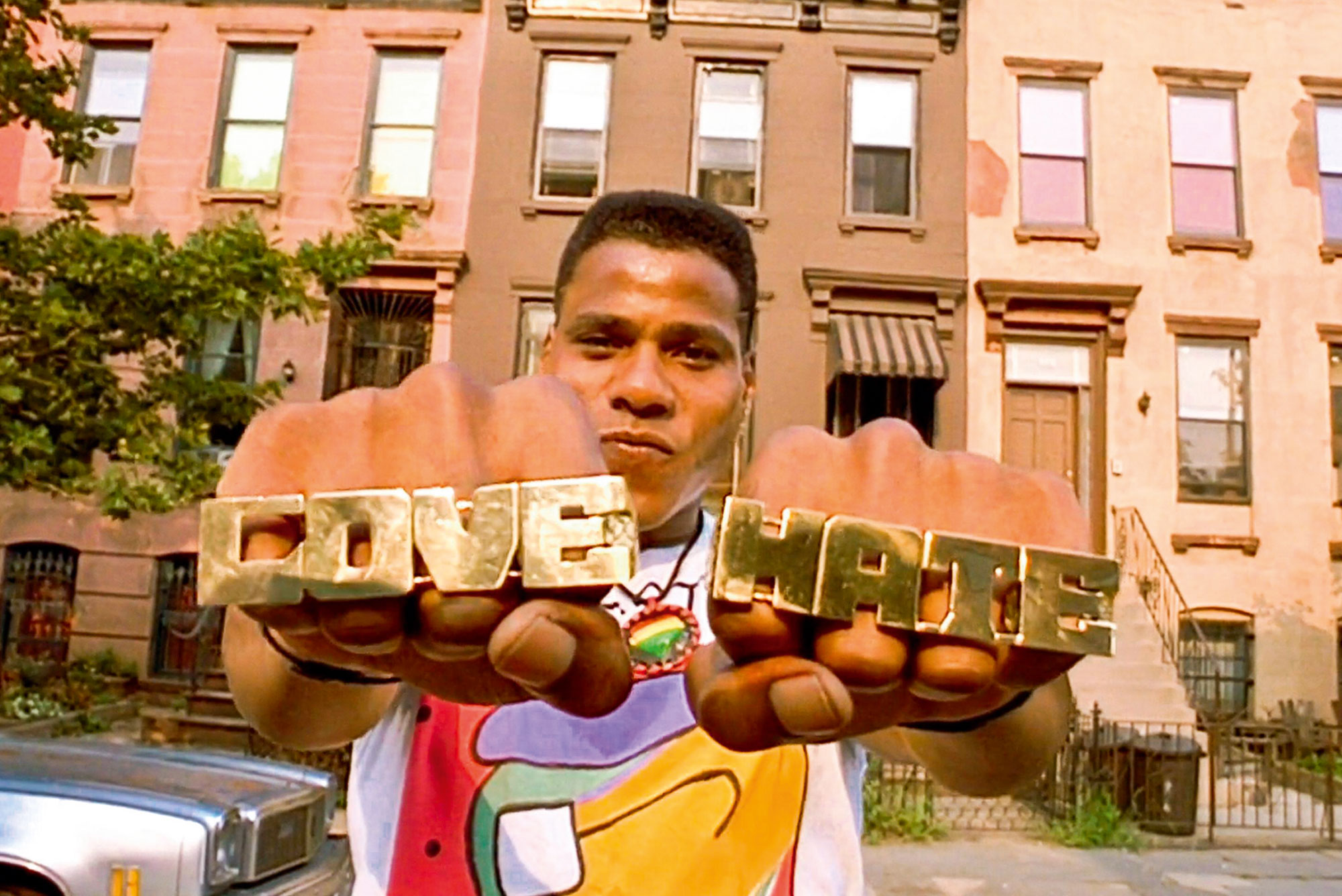
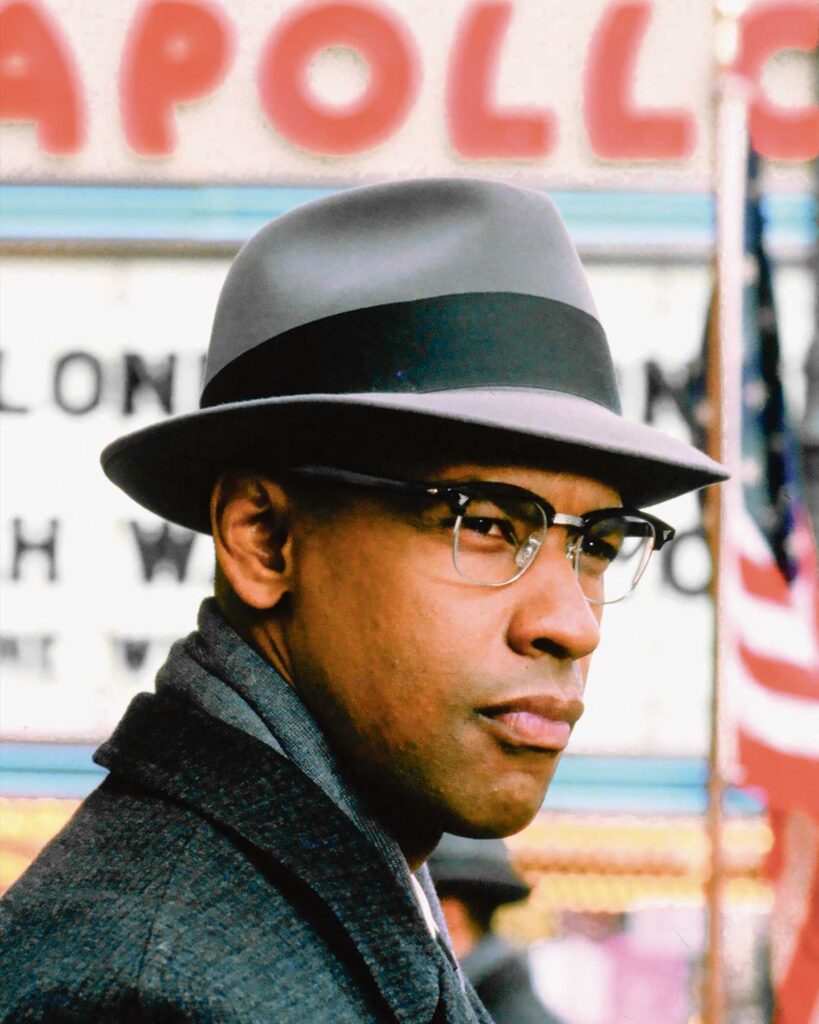
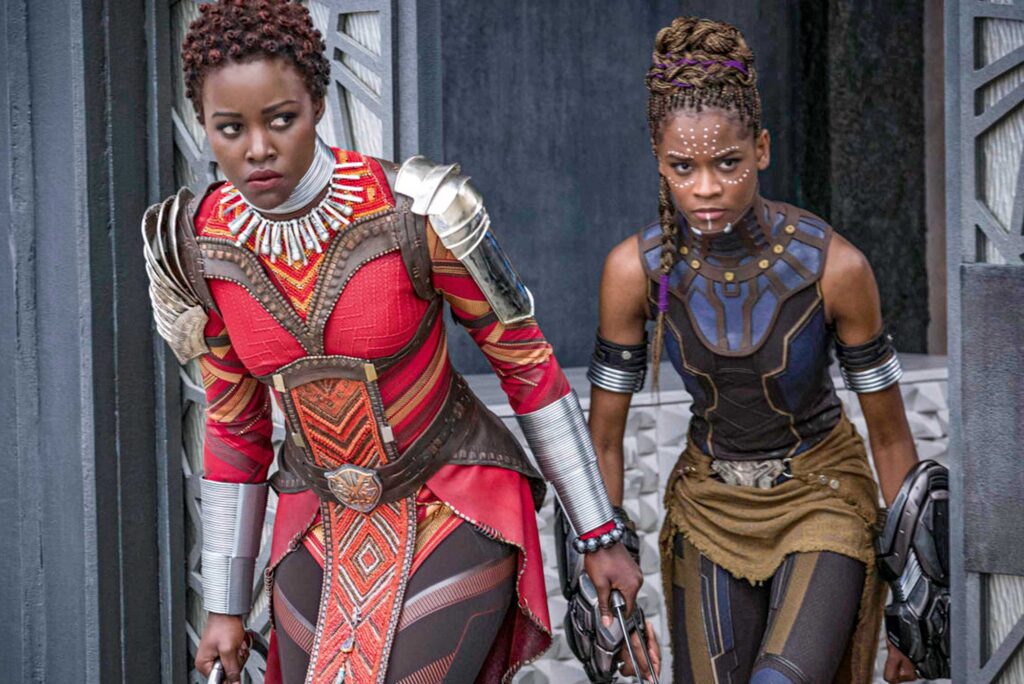
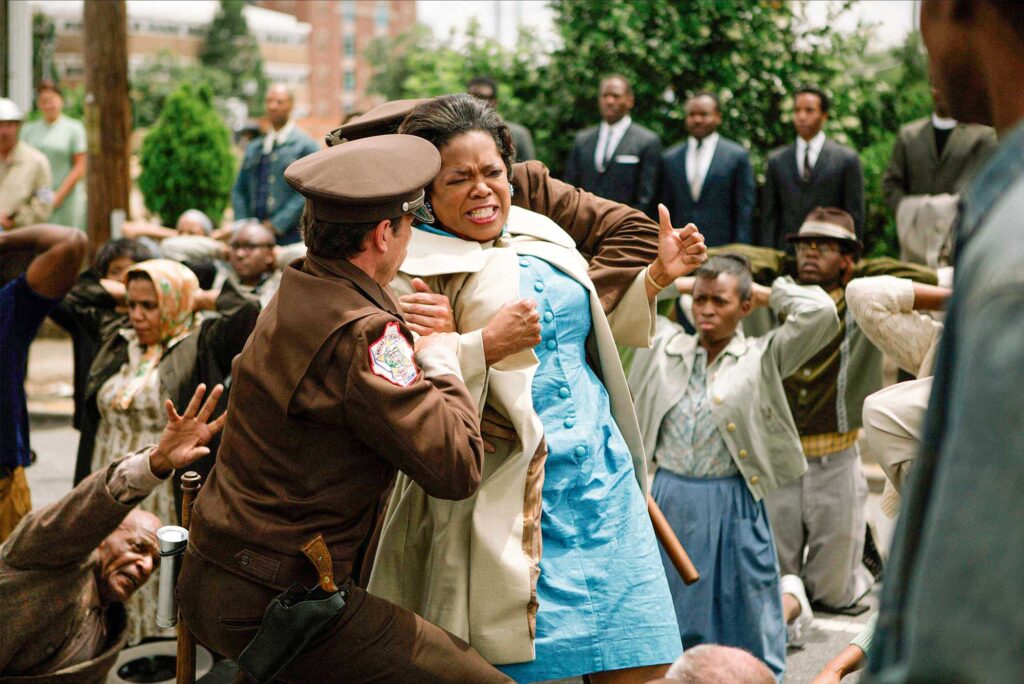
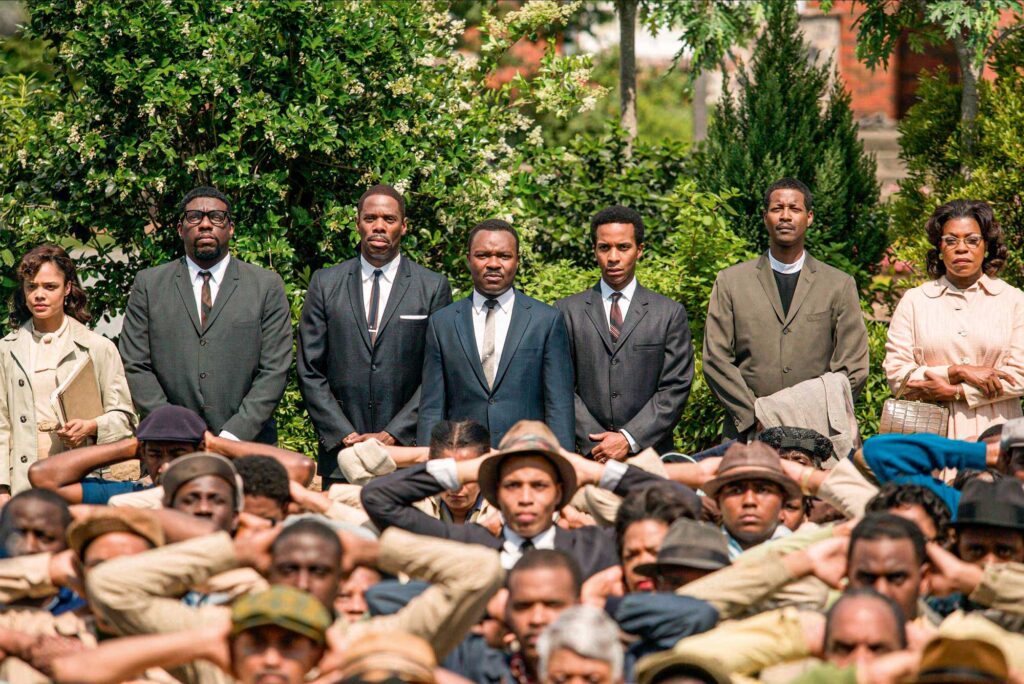
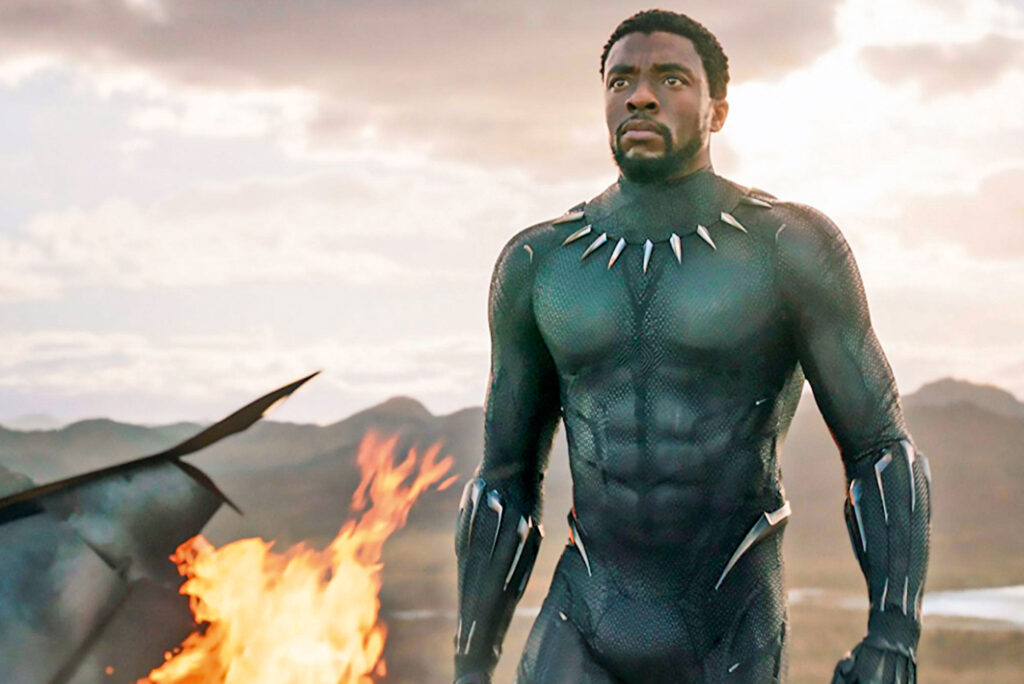
Ruth E. Carter is a costume designer extraordinaire and her body of work speaks for itself. She has designed costumes for beloved and game-changing films such as Do the Right Thing, Malcolm X, Amistad, How Stella Got Her Groove Back, What’s Love Got to Do with It?, Selma, Dolemite Is My Name, Coming 2 America 2, Black Panther and Wakanda Forever. She’s been nominated four times for an Academy Award, of which she won twice – making history as the first African-American costume designer to win an Oscar, as well as the first African-American woman to win multiple Oscars in any given category. In 2019, she received the Costume Designer Guild’s career achievement award and is the second costume designer to ever have a star on the Hollywood Walk of Fame (after Edith Head). Not only a prolific artist, she’s also a leader in the costume community, serving as a governor of the costume designers’ branch of the Academy of Motion Picture Arts and Sciences. Her book, The Art of Ruth Carter, was published in 2023 and her latest project, Sinners, is currently in cinemas.

AP: Let’s talk a little bit about your origin story. Where did you grow up, and what brought you to costume design?

RC: I grew up in Massachusetts in a little town called Springfield, the home of the Basketball Hall of Fame. My mother was a psychologist for the city – and I say that because my mom was the first person who actually taught me how to see people, and see the stories behind the people. I had two brothers who were visual artists – my brother who’s closest to me in age really loved to sketch. He loved pencil and graphite. We would sketch faces. We had a little mouse that we drew. He wore a tam [hat], and had the Black Power fist up all the time. It was fun! My oldest brother, Robert, did fine painting, oils and portraits. We all looked up to him. So my family was artistic but I tried to divert away from it when I went to college and majored in education. I decided to change my major to theatre arts, and very soon was known on campus as the costume designer. My main focus was to get theatre projects done, whether it was the music department doing a musical, or a fraternity doing some special step show, or Black theatre. They weren’t teaching costume design in the theatre department at the time. I went into a little costume shop that was in the theatre department. It was uninhabited. No one was using it. But when I opened up that door, it became my learning lab.

Black Panther, Black Panther: Wakanda Forever, Do the Right Thing, Malcolm X, Ruth E. Carter, Selma
Malcom X, 1992. AJ Pics/Alamy

AP: I relate to that as a theatre kid. In your career you’ve really touched on every genre from historical pieces to biopics to comedies. What informs your choices? 

RC: I would love to be the person who chooses, who goes out into the backyard to my film tree, and I pick: ‘Oh, I love this one, and then I love that one.’ But I feel like I have a certain reputation, and the films that are being offered to me, they’re in my wheelhouse. It doesn’t mean that you’re typecast, just that people think that this is something that you would be inspired to do. I’m always given the challenge. I’d love to do something one day with one person in it – you know, Krapp’s Last Tape. But I get the ones with the armies and the battles, with a cast of hundreds. I’ve been really fortunate to have offers that are really juicy, that are interesting and challenging. And that’s what I look for. I really love when I admire the filmmaker, but I also love to support young filmmakers that have promise, and I really want a good experience – for them to learn as well. When I first met Ryan [Coogler] at Marvel, I sat across a young filmmaker that admired Spike Lee, and told me that he was happy that I came in to interview. He admired my work as a student of film. So when that happens, it charges you up, and you go, ‘I am going to do the best I can for this young filmmaker, because it’s really about being part of a film family, and really liking the person you’re working for.’

Black Panther, Black Panther: Wakanda Forever, Do the Right Thing, Malcolm X, Ruth E. Carter, Selma
Black Panther, 2018. Moviestore Collection Ltd/Alamy

AP: You created a travelling exhibition – Afrofuturism in Costume Design – your book also touched on this. I wondered if you could just illuminate a little for our audience about your relationship to Afrofuturism? 

RC: I feel that my whole career has encapsulated Afrofuture. What we know of Afrofuture is taking culture and infusing it with technology, and presenting it in a way that, you know… What would things be like without colonisation? How would this technology have been advanced by these different cultures? I take Afrofuturism a step further. When I’m on the set with Spike Lee and he’s envisioning the story of Do the Right Thing, he is bringing in prose and political statements. He’s creating a protest film. I feel that Spike is embodying his own Afrofuturism, his view of a better tomorrow where we see ourselves on screen in a way that is much more realistic to what we know, and how we see our community, and how we know beauty. It’s retraining the eye, not only to see costumes in a new lens, or  through beauty, but also to retrain the eye to see beauty standards differently. I think that those kinds of edicts are the things that I grew in this industry to embody and embrace, because I had a mission. I had a responsibility to that, because I was blazing a trail for the future costume designers who looked like me, and I wanted them to feel not pigeonholed or in a box to do things a certain way. When we crafted Mo’ Better Blues, we showed Denzel Washington and Wesley Snipes on stage in the jazz club. These were the images that we weren’t seeing in cinema. Also, Ava DuVernay on the set of Selma, directing. You know, we’re not only teaching through the medium of film and storytelling – we’re also teaching by example. Now our community could see a woman directing. Or a story being told about your neighbourhood. That, for me, is Afrofuture. That’s how you groom the Afrofuture for yourself and for your community.

AP: You designed films with Spike Lee and John Singleton… 

RC: I met John Singleton at a panel where Spike was speaking. It was such a tight, little network in the ’90s that you might be out partying with John Singleton, having never worked with him, but we were a little film tribe. 

AP: I think that one of the attractive aspects for me as a young person coming into filmmaking was the collaborative, communal idea. As artists, when we have a director, or even an actor, with the same vision and purpose, we can really be creative. 

RC: And sometimes it’s just about helping them find the creativity. A lot of times, our actors will come to us from another set with very little prep, and you’ve been on it for weeks, just delving into research, and you’ve collected all kinds of things that you’re excited to show them and share with them. I’ve had someone like Forest Whitaker ask to see more of my research so that he could spend some time with it in his hotel. When they are like that, you know that they are committed to creating a great character. 

AP: I’ve had that happen when they come into the fitting room, and they say, ‘Thank you. I didn’t know who I was.’ A director that I’ve worked with says that the fitting room is the most important because it’s the portal into the film. And oftentimes we’re talking to an actor, or maybe a day player, that hasn’t even got to set to sit down with the director.

RC: I’ve had an actor say his first sitting is his first rehearsal. It’s really beautiful.

Black Panther, Black Panther: Wakanda Forever, Do the Right Thing, Malcolm X, Ruth E. Carter, Selma
Selma, 2014. Maximum Film/Alamy
Black Panther, Black Panther: Wakanda Forever, Do the Right Thing, Malcolm X, Ruth E. Carter, Selma
Selma, 2014. Maximum Film/Alamy

AP: Can you talk a little bit about biographies versus dramas? And the challenges of dressing historical figures? 

RC: Fortunately, with someone like Malcolm X, there were quite a few photographs of him, but not enough of him as he was a young boy in the dance hall years, and all of the years where he hustled in New York City. It becomes a relationship you have with the character or the person, gathering what you can see of them, and also imagining during the times what they would be challenged with. No one’s life that we portray in biopics is exactly the way that it was in their real life, even though we attempt to get as close as we can, because we only have two hours to tell their whole life. And we have to make it cinematic, and make you feel empathy, and make you cry, and make you laugh. I research a lot and that tells you things that you wouldn’t know. Like they built stoves in Detroit, so that informs ageing of the costumes – that these people who are workers coming down the street to eat, or were coming home, they could have worked at the furnace supply factory.

AP: Do you have any career highlights that stand out for you? 

RC: First, I have to say that those years in the ’90s, bouncing back and forth between LA and New York every year, going to New York to work with Spike, and then coming back to California to work with Robert Townsend and Keenen Ivory Wayans – I really got both sides of the coin. I was able to do comedies like I’m Gonna Git You Sucka and B*A*P*S and understand their perspective – and then to go back and work with Spike on something rich like Do the Right Thing and Mo’ Better Blues and Crooklyn and Clockers. Really just the experience of both the East Coast and the West Coast in that way, every year for 14 years, was an incredible experience for me. But I would say that the one experience that stands out the most is being in Egypt, shooting Malcom X’s hajj to Mecca, having built the hajj in the desert, because we couldn’t go into the Holy City and shoot there. We rebuilt it. Our first day of shooting, we were shooting at the pyramids, and we left the hotel – it was still dark out – because we wanted to shoot a priest singing the morning prayer at the pyramids. I’m standing in the desert with Denzel Washington, on a Spike Lee joint, looking at the pyramids with a Muslim priest singing the prayer – it was so spiritual and so meaningful. It was an experience that you seldom see anymore, because movies will put a green screen around the whole set, and be in Egypt. But we were actually there. 

AP: In terms of being the first Black woman to win an Oscar, and the second time in the same category – how does that resonate for you, not only in your accomplishment but in general?

RC: In 1993 I was nominated for Malcolm X. I was the first Black woman to be nominated for costume design. I was like, ‘Wow.’ But then I thought, you know, ‘Wow, it’s 1993. In this day and age, we’re still examining firsts.’ So that told me that the film industry was not wide open. I was able to do something that could open a door. And so my accomplishment then formed what this is going to mean for the culture. As time went on, Amistad happened, and meeting Steven Spielberg, and working on set with Steven, was another highlight. And then I was nominated. It was the loneliest nomination ever because the film didn’t get the nomination. But I was reminded that this is not the reason you’re doing this; it isn’t the crux of what makes this experience so impactful and so important for you. 

And then Black Panther happened. It was incredibly hard. It was really immersive. I look at pictures of myself, and I’m like, ‘Oof, there’s another bad hair day!’ But you had to give it your all. So to win for Black Panther, it was bigger than anything. To stand on that stage, and look out and see Spike sitting there, to see Chadwick Boseman, just smiling big and bright – it felt like I was still doing this for the culture; still achieving these goals for the community; still being an example for the next young girl coming in behind me, to show that they can, too. And that’s really what I was overwhelmed with joy about. And social media made it undeniable, because now you see the audience. You see what they want, and you’re able to actually give it to them, and talk about it. When the trailer for Black Panther dropped, I’m sitting at home, and I saw something come over my phone on Twitter. It was a question about the Himba tribe. I answered the question, and then it blew up.

Black Panther, Black Panther: Wakanda Forever, Do the Right Thing, Malcolm X, Ruth E. Carter, Selma
Black Panther, 2018. Pictorial Press Ltd/Alamy

AP: Can you tell us about Ryan Coogler’s latest film, Sinners, with Michael B Jordan – a departure for you because it’s a horror film? 

RC: I had to get used to putting blood all over the costumes! We had to have things built in multiples because it was the 1920s, Mississippi Delta. And then, all of a sudden, here comes the vampires. It was a lot of fun. It was really wonderful to paint that landscape, to get that richness of time and place and people, and then depart from it, and have the fighting off of vampires, and stakes, and bites, and blood. Yeah, it got pretty messy [laughs].

AP: And now you are producing a film with Serena Williams… 

RC: We are telling the story of Ann Lowe, who was a fashion designer. She was the first Black woman to have a shop on Madison Avenue. Her clientele were all of the high upper-class families in New York. She did a lot of debutantes, and Jackie Kennedy’s mom brought Jackie to Ann Lowe to have her wedding dress designed. When it was reported in the New York Times about Jackie Kennedy’s beautiful dress, she was listed as the ‘Negro Seamstress’. This was 1953. The Civil Rights Movement was just coming in. So to navigate these rich families, she had to kind of code switch. She had 35 people working for her. She wasn’t sewing on a sewing machine at home. She had a business. Her work is amazing, and it’s at the African American Museum in DC. It’s at the Met. People have collected her pieces in museums, but nobody knows, still, very much about her. So we are hellbent on giving her her flowers, and also showing how she was navigating the times, and how she was this genius of a woman who was doing all of these beautiful dresses.

AP: What advice would you give to a young person who wants to be a filmmaker?

RC:  I think a young person who wants to become a costume designer, really needs to be committed to it. It’s a whole life experience when you’re doing costumes, and it’s not always glamorous. Come into this knowing that this is something that you really want to do, and you’re always going to be a student of it. The minute you think you know, then you’re only scratching the surface. 

Black Panther, Black Panther: Wakanda Forever, Do the Right Thing, Malcolm X, Ruth E. Carter, Selma
School Daze (1988). Alamy

Words by RUTH E. CARTER/ARIANNE PHILLIPS
Do The Right Thing / Malcom X / Black Panther / Black Panther: Wakanda Forever / School Daze

February 10, 2025

catherine martin, elvis, moulin rouge, romeo + juliet, the great gatsby

Words by CATHERINE MARTIN/ARIANNE PHILLIPS
Introduction by JEREMY LANGMEAD


The highly decorated costume and production designer behind opulent visual feasts such Romeo + Juliet, Moulin Rouge and Elvis talks Arianne Phillips through her career, ChatGPT, parental inspiration and her nemesis on set.

Catherine Martin is a true polymath. She has an extraordinary ability to bring to life, through her award-winning costume, production and set designs, the vision of her partner in life, and in film, the director Baz Luhrmann. Together they had created visually spectacular and compelling storytelling through movies such as Romeo + Juliet, Moulin Rouge, The Great Gatsby and Elvis.

Catherine has had 78 awards nominations and 62 wins, including four Oscars. In fact, she has been nominated for and twice won two Oscars in the same year – costume and production design for Moulin Rouge and The Great Gatsby. The only woman to do so since Edith Head in the 1950s. 

Here Catherine, with her trademark modesty and good humour, talks to Arianne about balancing high creativity and daunting logistics, setting boundaries when working with your partner, and raising children to researching Joan of Arc.

AP:  Hi Catherine. So great to meet you. We’ve never actually met.

CM: I know. And I’m a huge fan of what you do. I went and saw all the Madonna shows and saw what you did for her, and I just thought, ‘Wow!’

AP: Thank you. Well what I love about you is that you’re a multi-hyphenate – not just a costume designer, production designer, producer, but you’re also an entrepreneur, and you do interiors. I’m so just thrilled to hear about your process and what it’s like having your life partner also be your creative partner. And when do you have time for all this? You also have a family. How did this multi-hyphenate life begin?

CM: Thank you. Well when I was still studying at NIDA (National Institute of Dramatic Arts) in Sydney I worked on set design and costume projects for the theatre. And so when I met Baz, who had graduated from NIDA just before me, I’d already had experience of both when we started working together on Strictly Ballroom (1992).   

catherine martin, elvis, moulin rouge, romeo + juliet, the great gatsby
Strictly Ballroom, 1992. RANK/Alamy

AP: A lot of people don’t understand the tradition that in the theatre, set designers will often also design the costumes. There’s a real fluid flow in theatre and in opera. What I love about your trajectory is that both you and Baz have this real theatre foundation, and it really makes sense that you’re able to continue this type of fluid work between sets and costumes in the films you create. 

CM: Absolutely. Baz always says that in film a lot of the time sets are the costumes because 30% of a film is in close-up. And then if you have a big crowd scene, well, the set is kind of obliterated by the crowd – and it is they who create the atmosphere or the milieu in which the story is told. So he’s very focused on everything visual. You know, every single detail he will have a perspective on. Baz is a visualist, and he will have a strong idea of how he wants something to look. He’ll rip pictures out of magazines; he will draw little scribbly pictures that are very helpful; he is now, very scarily, starting to talk to Chat GPT. And what I think is incredible is that I can’t get good pictures out of Chat GPT, but he talks to it like a director and corrects it and then the images actually make sense. I just go, how can you make such great pictures? I’m meant to be somebody who’s a designer and I can barely get it to give me a cat that doesn’t have 6 legs. 

AP: It’s a testament to his verbal acumen that he’s able to express aesthetics, because that is a gift and a skill. In my experience most directors are completely unable to express aesthetics, which is so crazy. 

CM: He has a really strong aesthetic, obviously. But at the same time, what makes it great is he’s not like, you know, Charlie Chaplin, the great dictator, with a big ball running around his office. He’s actually engaging with you as a true collaborator: ‘now how do we work this out?’ And he doesn’t do it just with design. He’ll do it with music. He’ll do it with movement. He’ll do it with the actors. So what’s rewarding is you’re not just another cog in the wheel. You feel connected to all the other people in the team. 

AP: You both have such a strong aesthetic and visual identity, I wonder what movies you loved or that had inspired you when you first started out creating your own stories? 

CM: I think the movie that absolutely struck me the most when I was a kid was The Wizard of Oz. I think I first saw it when I was 10. My dad is a huge movie buff. Even though he’s a professor of French, and a specialist in 18th-century French literature, he’s just loved the movies from when he was a child. He was actually a child actor. And he would tell you all about how they did everything – like when someone’s telling you about the special camera they invented for Snow White, the multi-plane camera so that it felt like you were moving through time and space. When you’re a child, it sometimes takes the magic out of it all, but noone could take the magic out, or the fear I had, from those monkeys. I still find them terrifying. And I really wanted those red shoes with the sparkles on them. And I also liked the pale blue socks she wore with the red shoes. I thought it was so ugly, but so good. And this is now very politically incorrect, but you must remember that I was a child when I first saw it, but I was in awe of Gone With the Wind. It was just so enormous and epic. 

catherine martin, elvis, moulin rouge, romeo + juliet, the great gatsby
Moulin Rouge!, 2021. 20th Century Fox/Alamy

AP: The scale, magic and colours of those epic movies are all reflected in your work. As is the transportive nature of those films – whether it’s through Moulin Rouge or The Great Gatsby. I’m  just curious about when you are in the early development phase with your films, and you and Baz have privilege of being partners in life, as well as in film, do you discuss your work at the dinner table… how you come together with your early ideas about the films that you’re deciding to make? 

CM: It has to be relatively disciplined because, ultimately, Baz is the decision maker. And we’ve had to learn to have a process for him to discover what he wants to actually make the next time – because he commits hook, line and sinker. So every time we go into that moment he needs to go off on a kind of quest to find that idea that he wants to commit to. And then there’s a process of him telling the larger group the story. So I would be one of the first people to hear that story. And then he would tell our other colleagues. And then he might start talking to the casting director about it in order to start fleshing out the story for himself. 

Baz is in a writing mode at the moment, and that’s a very specific and singular thing for him. And whilst he’s on that journey I will do external kind of research. His next project is Jeanne D’Arc and I will obviously read the book on which the story is based and generally research around the subject. We’ve already done some field trips to see various people and places and museums. In fact, I’m going to Rouen tomorrow to see where poor Joan of Arc was burned at the stake. But in earnest, I’ll be invited into the design process in a quite formal way 

AP: I get it.

CM: So, yes, we talk about everything and anything. But when you work and live together, you kind of have to have systems in order to create the space for the other person to not trample them creatively. So I know if Baz has a really good chance to brief me, he’ll give me the space and time to give it my best shot, then I’ll be ready to present it to a group. And presenting can be really traumatising because when you present something you actually see all the flaws that were not real to you when you were just sitting in your room by yourself, or with your immediate team, or whatever. But what’s great is that it doesn’t matter if you fail. You just have to go back to the drawing board and give it your best. 

AP: Catherine, when you speak about presenting to the group, it’s reminiscent of what we do in theatre, right, or in opera when you present. And I love that process, that structure, because it is exactly what you say: when you do present it’s like reading your writing out loud. Then you understand, ‘oh, I need to work on this more, this doesn’t work’, but that is such a gift. Having done a little bit of opera and a little bit of theatre, I found that that process is nerve wracking, but wholly rewarding. And I am jealous that you have this partnership and this structure that you’re able to do that with your film work. That’s fabulous. 

CM: The big advantage with theatre is that you effectively have 100 opening nights, instead of one. Whereas someone could be wearing a terrible wig on opening night in the play, for whatever reason, you can fix it in the run. Once you’ve shot something, you can never change it. Perhaps with visual effects, but costume fixes are a lower priority in that budget. Most people would rather fix a stunt or a building than a costume or a wig. 

AP: Yeah, that’s right. 

CM: I’m always, like, ‘can you close the shirt? And what about the fact that the sock’s not long enough going up into the trunk?’ I can see these are the things that as costume designers drive us crazy, right? And, oh my god, I wish there was a special erase button for bad shoes. Why is that person with the bad shoes right in the front? Can you put good shoes on? 

AP: Ha. Always. How do you manage your team when you are designing sets and costumes, and you’re also a producer…how does that work? 

CM: Well, it takes me nearly to the brink of a nervous breakdown. And in fact, although it was only partially to do with work, but a combination of COVID, two children in their late teens, my mother breaking a hip, and so much to do that I actually did have a bit of a nervous breakdown…

AP: I’m sorry to hear that. 

catherine martin, elvis, moulin rouge, romeo + juliet, the great gatsby
Elvis, 2022. Warner Bros. Entertainment Inc./Alamy

CM: It was just a lot. So, you know, Elvis wasn’t a perfect journey because I really did become extremely depressed at one point. And you don’t realise that that’s happening to you. It’s just like the oxygen’s being taken out of the room in tiny little gulps. And one of our children was having, you know, suicidal ideation. They’re totally fine now. That’s the thing about children, that one minute it’s like the end of the world for them, and then they turn around and say ‘that’s over now, I’m good’. I wish I was as resilient. So it’s not perfect, you know, all the time. And I think that was just a really tough period. And I underestimated too how much work Elvis would be. Initially I thought the movie might be a bit of a psychological rest because we were not world-building from scratch, we were recreating one. But, of course, it wasn’t like that at all. It was world-building and there were around 9,000 complete outfits. And sometimes I just felt like I was in Indiana Jones and there was a giant ball coming behind me. And I kept thinking ‘how can there be 105 speaking parts?’ And I was a producer. And I would go to my fellow producers and colleague, Schulyer Weiss – because his creative area is casting – can you cut some of these parts because there aren’t enough clothes in the world! 

AP: Wow, I can imagine. This Bob Dylan movie I just did, A Complete Unknown, had 120 speaking parts. It’s a lot. 

CM: It is. Since Elvis, however, things have changed so much. Both kids are at university; they have their own lives; one is living at home at the moment, and the other one lives three minutes away in an apartment. And it means I’ve just had more creative opportunity this year in a way that I haven’t before because, you know, I’m now less tied to the children. I love my children. Best thing I ever did. But you go through this weird seesaw moment where you go, ‘oh my god, they’re leaving home. The whole meaning of my life has been removed. This is a disaster’. And then you go, ‘oh, freedom, freedom!’

AP: Ha. Because, as you’ve alluded to, there are so many logistics to plan and solve in your work with Baz, how are you able to separate the vision and the practicals when planning a project so that one doesn’t hamper the other?

CM: I think you have to have the idea first. You have to have the concept, the idea, and then you have to work out how to do it. Obviously, when people whose names shall remain nameless – but their name might rhyme with Faz – ask you to build the Eiffel Tower the day before the Eiffel Tower has to be there, maybe you do get a little tight in the chest. But you’ve got to go: ‘Okay. Now you may not be able to build the Eiffel Tower, but what are they actually saying to you? What do they actually want? What does the Eiffel Tower symbolise? What does it mean? Why do we need it? Okay, now what’s the solution?’ It’s the same thing in costumes all the time. Actors might not like something they’re wearing. And, usually, for a very good reason, but it might not be the reason they’re saying. You have to sort of get into the head of the person to understand what they’re really trying to tell you because then you can find a solution that satisfies the problem. 

catherine martin, elvis, moulin rouge, romeo + juliet, the great gatsby
Romeo + Juliet, 1996. 20th Century Fox/Alamy

AP: Yes. It’s solving a riddle. And I think that is one of the crazy masochistic reasons why I keep working on another film is that it is that riddle, that creative riddle, between practicality and creativity – and how the two shall meet. It can take a lot out of you and also give you a lot of gifts, too, in the end. 

CM: This is true. I have been criticised for saying this in the past, but I believe that what separates a designer from an artist is that a designer is problem solving. A design is about a situation that you’re presented with: whether it’s a script, a person or wet weather. And a director who’s explaining to you how they want the movie to be, and an actor that has certain views on their character, and your job is to thread the needle between all those people. 

AP: Good point. What’s been the biggest challenge you’ve faced in all the films that you’ve worked on? Is there a particular scene?

CM: I think I was really nervous before filming the ‘68 special in Elvis because I saw all the clothes and it just really didn’t come together until I saw everyone in hair and makeup. I just thought, ‘what is this?’ It just felt so discombobulated. But then with hair and makeup it all came together. Hair and make-up is a really unsung department. They really can save you. Good hair and makeup is just invaluable for creating character and mood and bringing everything together. You know, that was pretty terrifying. And it’s what we shot first on Elvis

catherine martin, elvis, moulin rouge, romeo + juliet, the great gatsby
The great Gatsby, 2013.  Warner Bros. Entertainment Inc./Alamy

AP: You pulled it off. So great. 

CM: Thank you. And when you think that was entirely shot in Australia. And it’s so under the skin, you can’t see it. So beautifully done. Yes, it was just that first day shooting the ‘68 special that felt like we had so much to lose. Ultimately, with all the more complex scenes we film, I just always feel so grateful when nothing explodes, no one gets hurt, the clothes stay on everyone, the work is good, everyone’s happy, the props worked… props are always my nemesis. Not so much the set dressing props – I love set dressing – it’s just those props that are handled by actors. It’s so interesting because someone like Leonardo DiCaprio or Hugh Jackman can get the worst prop, the prop that doesn’t work, and you’ll say to them, ‘can you just make this work? I’m so sorry this is a disaster. And I’m just terrible’. And they can, you know, they can basically bring an inanimate object to life. And then there are other people who can’t sign a check. And it doesn’t matter how many pens you bring them, just no pen works. You can have 7,000 pens and I can still hear my name being called over the radio to come to set. 

AP: The same with a wardrobe malfunction, too. Some people are just able to handle it. When you’re working with a brilliant performer they know instinctively how to create the illusion. We’re all creating illusions. And Catherine, you are a master of this, your work is extraordinary.


Words by CATHERINE MARTIN/ARIANNE PHILLIPS
Introduction by JEREMY LANGMEAD
A Single Man / Once Upon A Time in…Hollywood / Joker: Folie à Deux / A Complete Unknown

November 15, 2024

Arianne Phillips, Greg Williams, Hollywood Authentic, Jeremy Langmead, Joker: Folie à Deux

Words by JEREMY LANGMEAD


Hollywood Authentic’s correspondent, costumier Arianne Phillips, has the tables turned as she looks back at her own illustrious career crafting clothing for films including A Single Man, Once Upon a Time… in Hollywood, Joker: Folie à Deux and the upcoming Dylan biopic A Complete Unknown.

Arianne Phillips is one of the most prolific, talented and versatile costume designers working in the industry today. She has won acclaim and award nominations for everything from giant commercial blockbusters to influential art-house movies, iconic music videos to Madonna’s concert tours, and worked with an enviable array of directors and actors. Arianne is also a favourite of the fashion world: her costume designs for Tom Ford’s A Single Man, Quentin Tarantino’s Once Upon a Time… in Hollywood, and Madonna’s W.E. have inspired designers and led to her working with Prada and designing menswear collections alongside Matthew Vaughn for the retailer Mr Porter. She’s also responsible for the costumes of two of the most anticipated films of the moment: Joker: Folie à Deux by Todd Phillips and A Complete Unknown, James Mangold’s forthcoming Bob Dylan biopic starring Timothée Chalamet. So, it seemed the right time to put Hollywood Authentic’s costume correspondent under the spotlight for a change.

JL: When we worked together on a 2019 documentary that Lenny Kravitz and I executive produced about you – Arianne Phillips: Dressing the Part – we described you as the misfit rebel who became a powerful creative force in both the movie and fashion industries. How did that misfit rebel successfully succeed in two notoriously competitive industries?

AP: Well, let’s see, how did it all begin? It’s not a linear journey. My mom had me when she was 20 and my dad was 24, and my sister and I, we just went on this fabulous adventure with them. In California we were exposed to a lot of art, music, writing and poetry, and I think that was what really stayed with me. I was in an atmosphere of creativity and experimentation. I enjoy taking the path unknown. Because I’ve just worked on the Bob Dylan biopic, A Complete Unknown, I keep referring to his songs, and the lyrics ‘The times they are a-changin’’ resonate with me. I’ve always just kept taking risks. 

JL: Did you study costume at college? 

AP: I wanted to go to college to learn art. And then I quickly got distracted and moved to New York. I was obsessed with British street culture and fashion, and the magazines. I got really great advice from a very respected fashion photographer, Arthur Elgort, who I had the pleasure to meet during those early days. He said, ‘You know, I can’t do much for you. I’m established. Come up with your own way, find like-minded people and collaborate with your friends.’ So I really dug into that, and I met so many wonderful people in New York, as you do as a young person, and I think that was the thing that really propelled me into this kind of multi-discipline career. Until then, if you loved fashion you were either a costume designer for a film, or a stylist for musicians, or you were a fashion editor. Those things did not cross over. But I think I was the new kid who never really wanted to belong to one group, never felt quite comfortable in any of those worlds full-time. And then the connecting thread for me, ultimately, was storytelling through costume, through clothing…creating characters. And I was lucky enough to get to do that, quite early on, with so many great artists – Lenny and Madonna and Courtney Love.

A Single Man, Arianne Phillips, Greg Williams, Hollywood Authentic, Jeremy Langmead
A Single Man, 2009. The Weinstein Company/Alamy

JL: So it was always creativity, new challenges and inspiring collaborators that drove you forward at this stage?

AP: Yes. The financial aspect of it never really factored in. I knew that if I went down the commercial route – which is easy; I watched a lot of colleagues end up doing commercials for TV and stuff – then I would get addicted to that comfortable lifestyle. I mean, it’s worked out fine for me, but I always chose a project that would be unique. In the last film I worked on, I had 40 people in my department. The new film I’m about to start work on will have just me and two other people, with a budget of only $30,000 for costumes for the whole movie. The average budget for costumes on a big movie is a million plus. And last year I did an off-Broadway play where it was just me and one other person. This approach is crucial to how I try to keep my own self relevant to myself; to keep me a little bit hungry, to keep it real.

JL: I was talking to the actor Dan Levy recently and he was describing how intimidating the first days on set shooting can be when you suddenly have to start working closely with huge teams of people you’ve perhaps never met before. How do you cope with that… especially as you have to have quite an intimate relationship with some of those characters very quickly because you’re dressing them?

AP: It is crazy, at least with actors, because we’re the only department that’s like, ‘Nice to meet you, can you take your clothes off please?’ It is very intimate. But it’s really about building trust, listening to the people you’re working with. It was so hard during Covid when we were masked. And what I ended up doing when filming Don’t Worry Darling was requesting Zoom calls with the actors first so I could get to know them, and read them. Then by the time they came in to the room and we were all masked you already had an understanding.

JL: Do you still get nervous?

AP: I still get butterflies. I can’t sleep the first night before shooting. The night before I was due to work with Madonna for the first time, I was a wreck. I didn’t sleep at all. But at the same time I still get so excited with what I get to do. And still recognise how lucky I am being out there working with such creative people; being in Paris with Madonna and going out to dinner with Jean Paul Gaultier, receiving three Oscar nominations. I mean, there’s just so many ‘pinch me’ moments. 

JL: Which was the first mainstream movie you got work on?

AP: My first big break was doing The Crow [Alex Proyas’ 1994 thriller] but I couldn’t embrace that as a success because it was a tragedy. It was Brandon Lee [who was accidentally killed on set] who had invited me to work on it. So the joy of it was completely demolished. Then I did a small film for HBO directed by Christopher Guest called Attack of the 50-Foot Woman and then I worked on Tank Girl. But I would say that The People vs. Larry Flynt was my first legitimate character-driven, non-genre film. I felt like I could earn my parents’ respect because I had seen Milos Forman films with them back in the day. So that was a seminal moment for me.

Kingsman: The Secret Service, Arianne Phillips, Greg Williams, Hollywood Authentic, Jeremy Langmead
Kingsman: The Secret Service, 2014. 20th Century Studios/Alamy

JL: When we first met you were working on the Kingsman movies with Matthew Vaughan and I remember coming on set and I was gobsmacked at the number of lead actors you had to work with, extras you had to dress, the multitude of different costume trucks on the lot. The logistics you had to manage were extraordinary.

AP: I dare say Matthew Vaughan is unique in terms of logistics. I mean, he has a nimble quality in the way that he directs. So he directs these large-budget films, but with the attitude and the nimbleness of an independent filmmaker. So nothing’s too challenging, nothing’s not doable. Both of those first two Kingsman movies were really, really logistically challenging, and they took a toll on all of us who were making the films, because the thing about Matthew, and I think the reason why he’s such a brilliant filmmaker, is he takes so many risks and he does kind of the unthinkable. 

JL: You not only had to create the costumes for the movie, but you also knew they were going to become the first of a legitimate menswear collection that would be sold in stores. And that Kingsman clothing brand still exists today. Is it easier creating costumes that will end up in a storage depot or ones that you know will live on in the real world? 

AP: I was really excited about that challenge. It’s quite sad at the end of a movie when you put the costumes away in a box. I don’t keep the costumes, the film studio does. You put them in a box, they go into storage and you usually never see them again. There are a number of film studios that once you wrap a film, they try to recoup money and so sell off costumes. And it’s so sad. There’s also the horrible situation, which has happened to many of my colleagues, and to me a couple of times, where the film studio’s marketing department makes a separate deal with some mass fast-fashion brand and creates a version of the costumes that has nothing to do with you. And it looks like crap. So I thought Kingsman was like a litmus test for me. I kind of felt, not that it was altruistic, but that if I can make this happen, it could be a little bit of a benchmark for my colleagues. 

JL: Are there no proper costume archives?

AP: Well, you know, in different ways. Madonna has a really impressive archive, and I’m sure people have seen the Céline Dion documentary in which she shows the camera crew around her archive. Madonna’s is even bigger. So you have artists who have personal archives. And then you have ones like those at the V&A or the Metropolitan Museum. They have fashion archives where they have certain film pieces that they feel are culturally relevant, but they’re not necessarily pure costume archives. You also have a lot of private collectors. And there’s the Academy of Motion Picture Arts and Sciences in Los Angeles. They’ve started a really beautiful costume archive. I actually have donated bits and bobs that I have been allowed to keep by producers on certain films. 

A Complete Unknown, Arianne Phillips, Greg Williams, Hollywood Authentic, Jeremy Langmead
A Complete Unknown, 2024. Searchlight Pictures/Alamy

JL: Well let’s jump to two new movies with extraordinary costumes but in very different ways. A Complete Unknown tells the story leading up to Bob Dylan’s first appearance with electric instruments at the Newport Folk Festival in 1965. It’s directed by James Mangold with whom you also worked on Walk the Line nearly 20 years ago. Is it easier or harder creating costumes for a real character who is known and instantly recognisable or a fictional one? 

AP: Well, being a massive Bob Dylan fan – he is part of the soundtrack of my childhood – I just felt what was needed in my bones. I started reading biographies about him and those who were in his circle, and I learned a lot. Our film is very specific; set over a period of four years at the beginning of the 1960s, it’s about the making of Bob Dylan, the poet, the icon, the rock star that we know today. It’s like his origin story. Personal research is more challenging. It’s like being a detective. The best thing for me as a designer is what I call the character arc. In this film it’s very succinct. The changes he went through from 1961 to ’63 to ’65, they’re very definitive. 

The hardest thing to get right for period films is denim because it changes so much and often doesn’t exist in that form anymore. Bob wore denim throughout his life and to this day. It was clear from early research he wore predominantly Levi’s. Luckily, I have worked with Levi’s previously and know the wonderful people that work there . That was the first call I made a couple years ago when I started researching for the film. I reached out to them asking if they could help me identify what Bob was wearing, denim-wise. So together with the help of the team in the archive and design dept. at Levi’s I was able to create Bob’s denim story. First you see him early on in “worker” style “carpenter” jeans like Woody Guthrie wore, and then in 1962/63 he starts wearing the more recognizable Levi’s. His girlfriend at the time, Suze Rotolo, who’s on the cover of the album The Free Wheelin’ Bob Dylan, make a denim insert for his jeans so that they would fit around his boots because he always wore boots. So, in 1963, Bob Dylan wore the first flares. And then he ended up wearing very skinny jeans in 1965, which Levi’s recreated for us. Bob’s denim jeans and boots visually inform and express his style evolution in ‘becoming’ the Bob Dylan we know today.

Walk the Line, Arianne Phillips, Greg Williams, Hollywood Authentic, Jeremy Langmead
Walk the Line, 2005. 20th Century Fox/Alamy

JL: When you’re in the process, do you know that you’ve truly caught the character in the hair, make-up, and costume? 

AP: Well, I can’t speak for Timmy [Chalamet, playing Dylan]. But I can say two moments when we first thought it was there. I did many fittings with Timmy – he has almost 70 changes in the film – but I would say the first day he brought a guitar to the fitting was really helpful to see how he would stand with the instrument. And when I put sunglasses on him in a fitting, that was very exciting. And then when we got closer to shooting and Jamie Leigh McIntosh, who’s the hair designer, was working on the wig – he wasn’t always wearing a wig; he also used his own hair – but that was a moment.

Timmy is remarkable. I mean he had to learn the lyrics for 40 or 50 songs for our film. So when he would come to the fittings he was very comfortable. You know, he would sing and play the guitar. And that really helped me a lot. And we played the music and we kind of went into this sacred space. Fittings are when the character comes alive.

JL: You created the costumes for Joker: Folie à Deux, which reunites you with Joaquin Phoenix who you worked with on Walk the Line. How do you bring alive such visually compelling characters as Joker and Harley Quinn?

AP: I was the new kid on the block with that movie. The first Todd Phillips’ Joker was designed by the brilliant Mark Bridges, a friend of mine. So I had the great good fortune to build on what he had created. On the first day when I was working with Joaquin he came in and said, ‘Well, I guess we only work on movies with music in them.’ It’s not a musical, but there are a lot of songs. Music is intrinsic to the way this story moves. It was lovely to be reunited with him in such a different role. I admire him so much and I love him as a person. Just being around Joaquin, it’s like you want some of that to rub off on you. He’s brilliant. He’s very generous and kind. He would hate that I’m saying this. He’s just very respectful, and he’s committed. 

JL: And, of course, you also worked with Lady Gaga. Is it easier or harder working with someone who has a strong sense of style, clothes and costume drama herself? 

AP: I have to say that working with Stefani – it’s hard for me to call her Lady Gaga because it sounds weird – will be one of my career highlights. She’s so generous, so committed, so willing… and so much fun. And she was a new kid on the block, too, for this movie and so we bonded over that. We did multiple fittings and the journey to finding her character in the costumes was just so rewarding. It helped that she is so used to developing characters on stage, that she’s so smart, and she has such a great level of references that we were able to riff on a higher level than with most people. She was 100 per cent committed. I mean, Lady Gaga was left at the door. This was all about Stefani, the actress. She was everything that I could hope for when I walk into a fitting room with an actor. She was willing to try, and open to, everything. And also had great ideas of her own.

JL: Your final question is a tough one. If you were stranded on a desert island with only one of the films you’ve worked on, which would it be?

AP: Wow. That’s impossible. It depends on what my mood is at the time. But W.E. [the 2011 film about Wallis Simpson and the Duke of Windsor directed by Madonna, for which Arianne was nominated for an Academy Award]. I’m very proud of that movie. Working with Madonna as a director is my favourite way to work with her because she’s just such a great partner and just so engaging. Otherwise probably A Complete Unknown and A Single Man are the follow-ups – A Single Man is a beautiful, beautiful film that I think is also an important one. And also, I hope, a film I’ve yet to make.

W.E., Arianne Phillips, Greg Williams, Hollywood Authentic, Jeremy Langmead
W.E., 2011. StudioCanal UK/Alamy

Words by JEREMY LANGMEAD
A Single Man / Once Upon A Time in…Hollywood / Joker: Folie à Deux / A Complete Unknown