


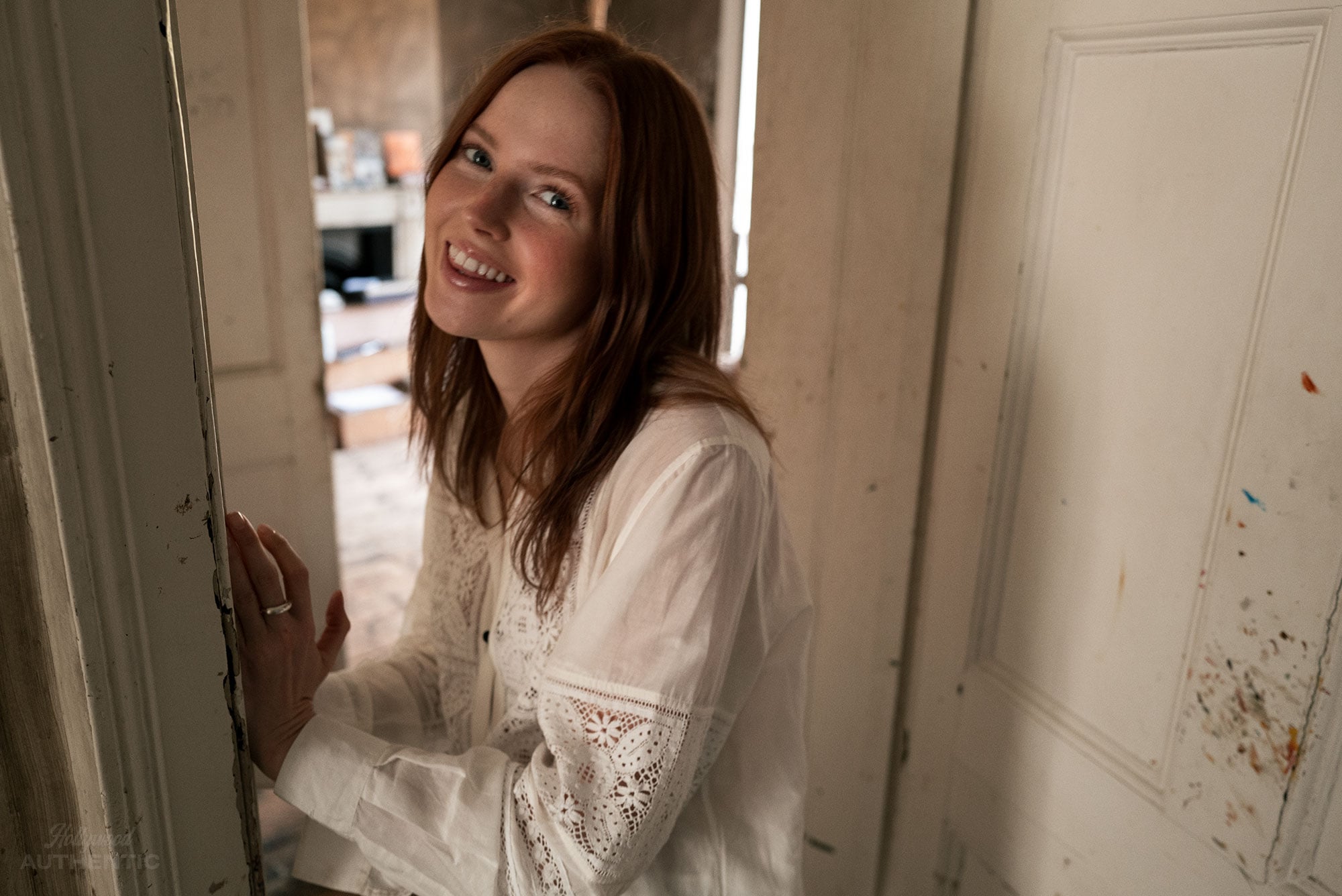
Photographs & interview by GREG WILLIAMS
As told to JANE CROWTHER
Actor Ellie Bamber visits Lucian Freud’s former studio with Greg Williams to discuss channelling Kate Moss, finding peace and the confidence her latest project has given her.
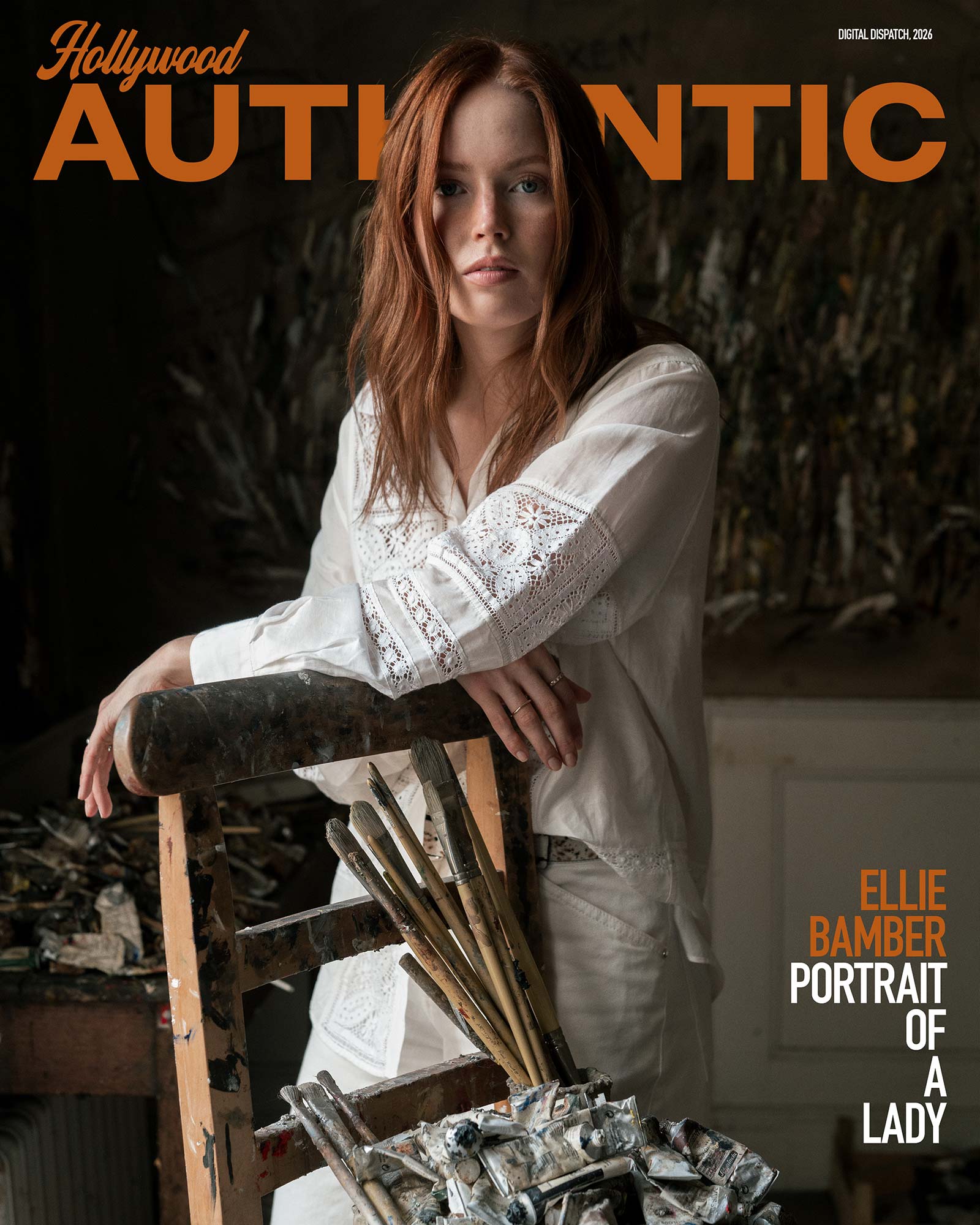
Kensington Church Street is buzzing with commuters and shoppers when I meet English actor Ellie Bamber outside a Georgian grade II-listed townhouse. She has been here before, like the woman she plays in her upcoming film, Moss & Freud. This address was the former home and studio of Lucian Freud, from the ’70s until the artist’s death in 2011, and it’s where Kate Moss sat for Freud over a series of evenings between 2001 and 2002. The duo talked about perception, identity and art as they collaborated on Moss’ portrait during a tumultuous time in the model’s life. By the time she finished her sittings with Freud, Moss was pregnant with her daughter, Lila Grace. The resulting life-sized nude, Naked Portrait, sold for £3.5 million to an unknown buyer.
Bamber, blessed by Moss to play her during this period of her life, also spent time at this house, retracing Kate’s steps and emotional journey before she began filming. ‘She was painted by him in this studio for many, many months in the evenings,’ Ellie tells me as we enter the property, now owned and looked after by David Dawson, a landscape artist and Freud’s longtime assistant for two decades.
I can’t believe that we’re in here. It’s the craziest, craziest thing, there was such an amazing interplay between artist and muse, and what that means, and what that relationship is, and how involved she was in the piece as well
Dawson’s photographs of Freud at work in this house are in the permanent collection of the National Portrait Gallery, and he was the subject of a number of the artist’s portraits including Sunny Morning Eight Legs [1997] and David and Eli [2003]. As a fan of Freud’s work, it’s a thrill for me to step inside; the space is just as he left it, the way it would have been in those evenings when Moss lay on the bed and he painted.
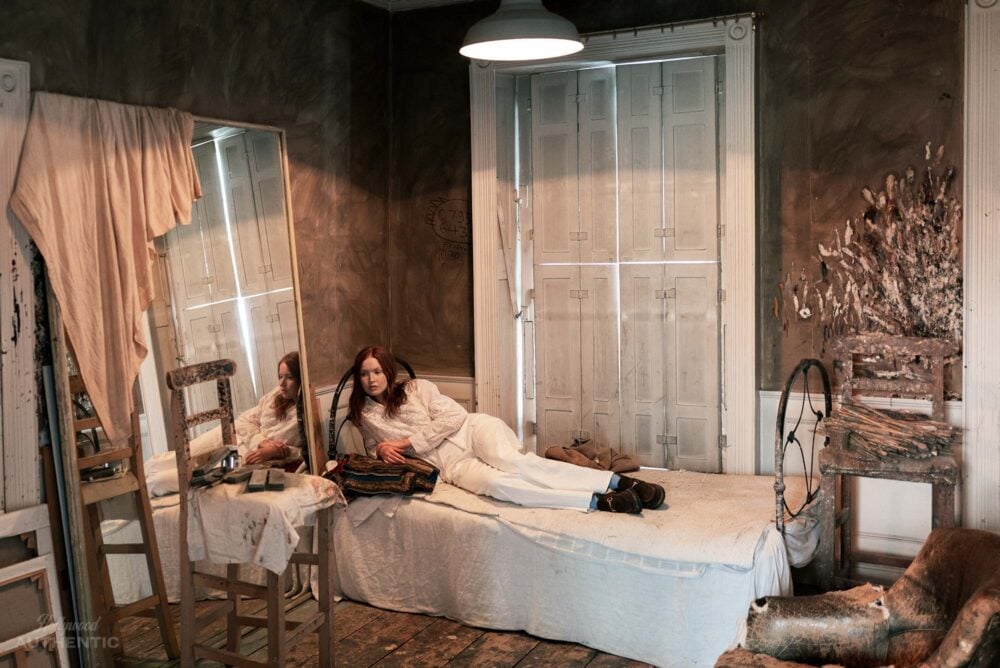
‘It’s so incredible. It’s really a sanctuary,’ Ellie says as she moves through the paint-splattered rooms. ‘I feel like when you’re in here, it has such a powerful effect. And it reminds me so much of the headspace I would have to get into, to think about being painted by someone like Lucian Freud.’ Ellie didn’t film in the space; the studio was recreated as a set inside a similar house, the flicked paint on the walls and discarded rags recreated in painstaking detail. The studio is still a working room – David paints there and lives upstairs. ‘I’ve turned my paintings around so that it doesn’t distract from today,’ David explains modestly. ‘It’s not a shrine or anything. I was in here every day for 20 years. So I didn’t want to get rid of it.’ David was the artist who recreated the Moss painting seen in the film (‘We used Lucian’s painted image and then did some clever handiwork on it’) and this first floor area is the studio where two titans of British culture met, complete with the bed where Moss lay during her sittings. I encourage Ellie to sit on the bed as David leaves us to talk.
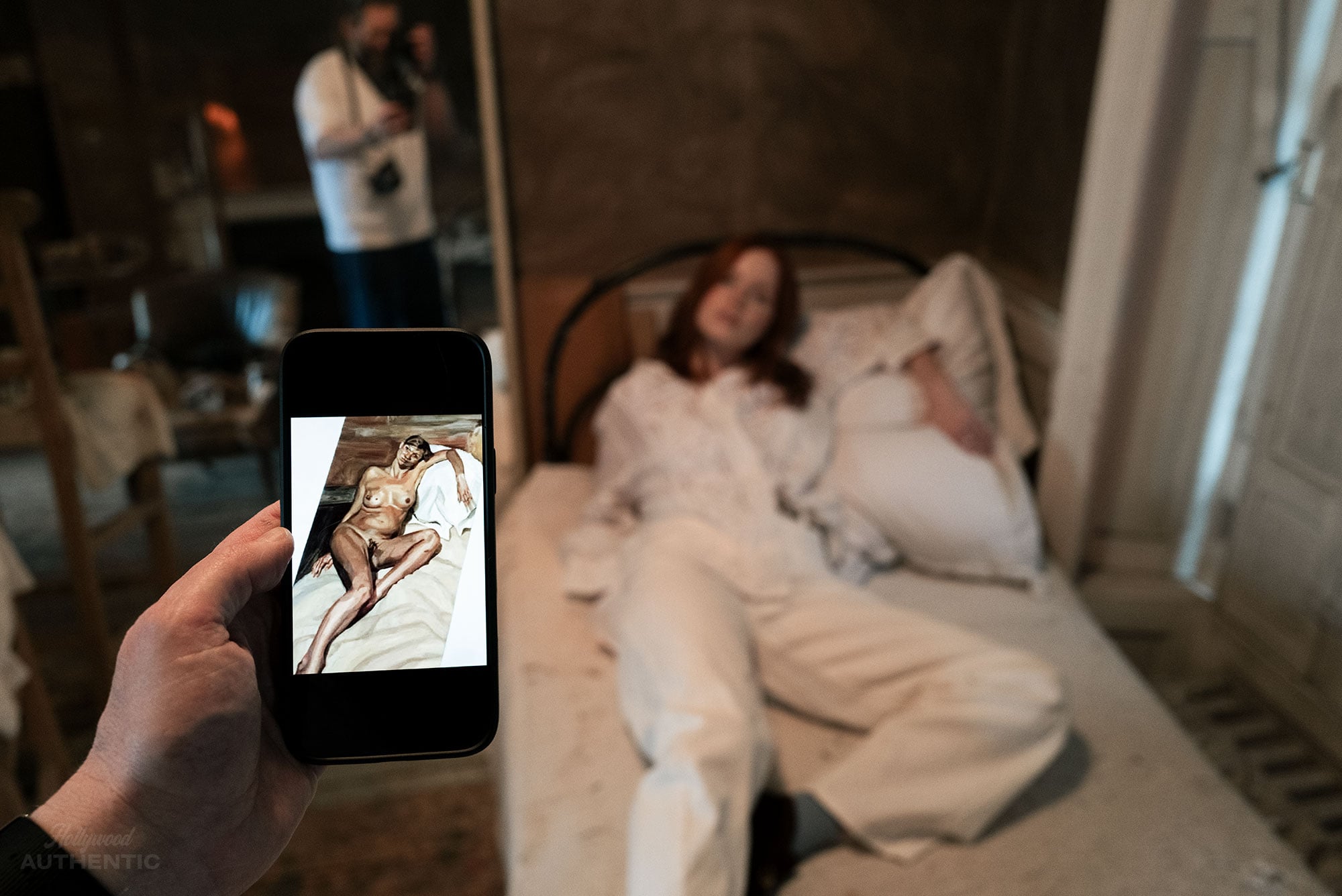
‘I can’t believe that we’re in here. It’s the craziest, craziest thing,’ Ellie marvels and considers the nine months that Moss was in the same place. ‘There was such an amazing interplay between artist and muse, and what that means, and what that relationship is, and how involved she was in the piece as well – like, bringing herself in that moment, you know? And the fact that she decided that she wanted to be nude for the painting as well – I think it meant there was a certain intimacy. It revealed a lot of herself, and I think that him trying to get to the heart of a person is so fascinating. One of my favourite paintings of his is called Hotel Bedroom [1954]. It’s a painting of a lover of Lucian’s. And just the emotion that it evokes, and the tenderness…’
In James Lucas’ film, Freud is played by Derek Jacobi and the duo explore the role of persona in fame, who the real person is behind the celebrity and what is at the truth at the core of an artist. Freud famously turned down painting Princess Diana and the Pope during his career, but was intrigued by Moss after she said in a Dazed & Confused magazine interview that one of her ambitions was to be painted by him. Freud invited her to dinner via his daughter, Bella, and then insisted Moss sit for him consistently, between 7pm and 2am – without being a minute late. The pair discovered shared commonality and, as imagined by writer-director Lucas, forged a unique relationship that transcended either of their worlds. ‘It’s interesting being watched by someone like that, and being painted,’ Ellie says of reconstructing the sittings with Jacobi. ‘The thing that I started to realise is that it’s so different to being photographed, and I feel like I’ve been photographed quite a bit in my life. But being painted is an entirely different thing. I think it was after I finished shooting, my friend asked me to sit for him. Him staring at me, and looking at me so intently… It’s quite affronting, you know?’
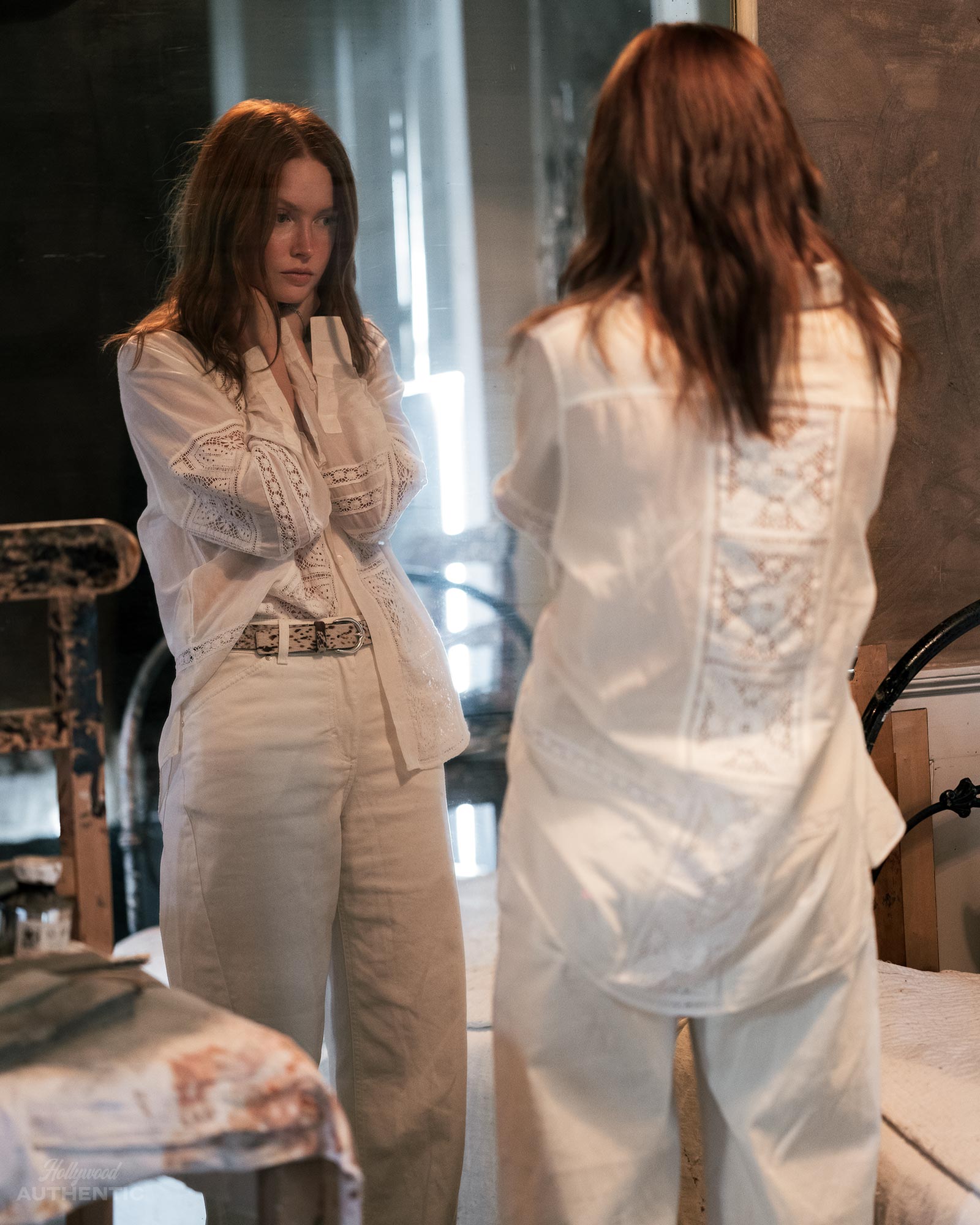
The thing that I started to realise is that it’s so different to being photographed, and I feel like I’ve been photographed quite a bit in my life. But being painted is an entirely different thing.
I think it was after I finished shooting, my friend asked me to sit for him. Him staring at me, and looking at me so intently… It’s quite affronting, you know?
Knowing Moss now, as she exec-produced the film, I ask if Ellie feels that Freud found the supermodel’s soul in the process. ‘It was quite complicated for both of them. I think I’m right in saying that neither of them were totally happy with the painting. Because Kate was going through so much in her life during that time, that it was such a transitional period of her life – and also his – that I feel like maybe he didn’t say everything that he wanted to say, and maybe neither did she.’ I ask her to pose as Moss did, with me taking Freud’s place and we look at the painting on my phone. ‘We had to experiment in the film, like figuring out the best position for you to stay in for a really long time – just practically staying comfy, and being able to hold a certain position. Do you feel like you’re trying to get to the heart of a person when you photograph them?’
I tell her that I do, but l’m not trying to uncover some dark truth. I’m interested in the journey of my subjects, how it shaped them as a creative and as a person. I’m not into celebrity. I’m into artists. I ask about getting to know Kate for the role. ‘She’s a total one-of-a-kind human being. She is so effervescent. The thing that I was so intrigued about when I met her, actually, is that she is just the most amazing storyteller. So spending time with her meant hearing a lot of incredible stories, whether it be about Lucian or about her life. But she has a way of telling a story, which I think she does within her images as well that is so exceptional. She’s a total enigma in that way. She was so generous at letting me step into her world. She’s very funny and very naughty, which is so fun. She’s got the best laugh.’
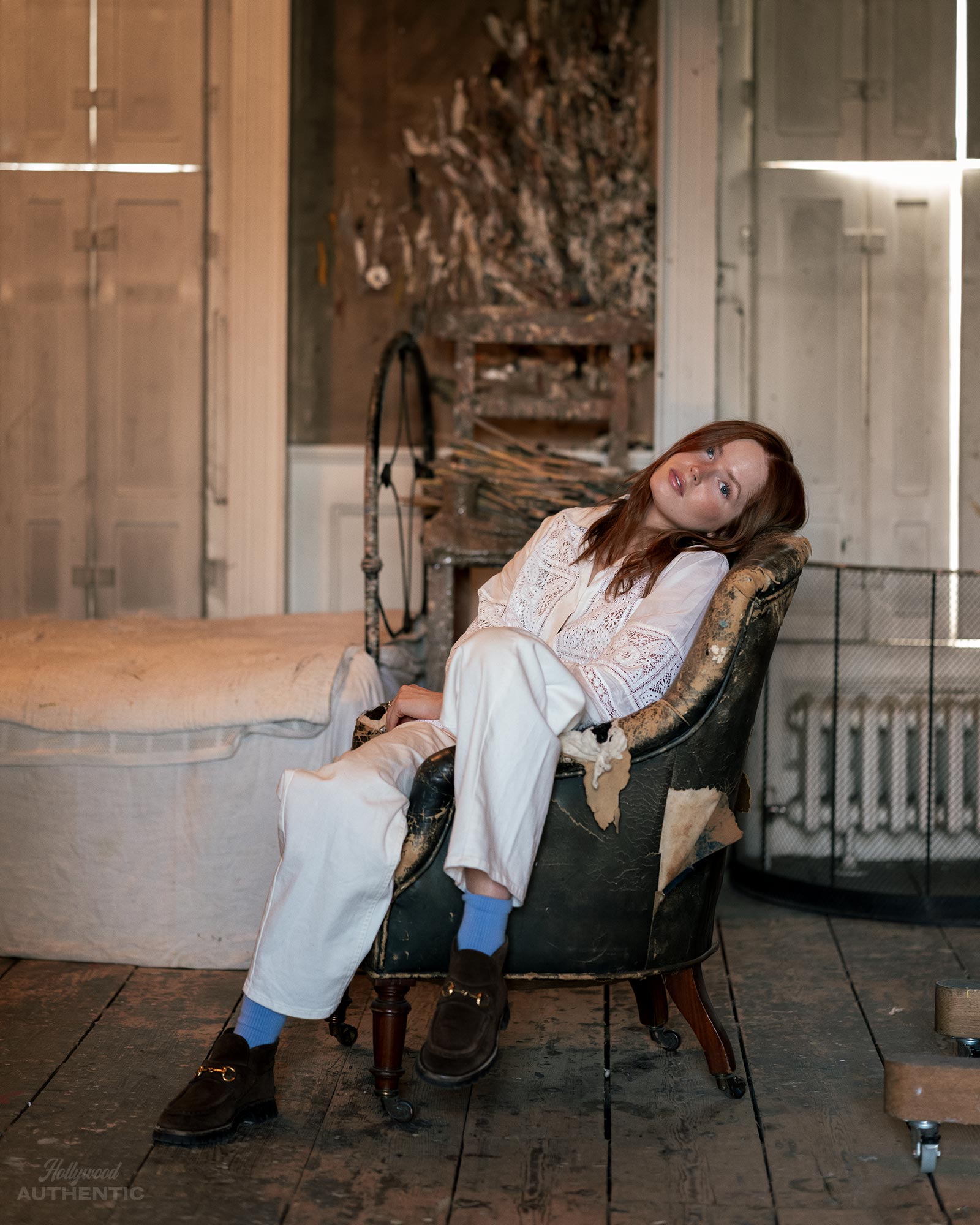
In the film, Ellie captures Moss’ distinct laugh to a tee. I ask if she can do it now, conjure it up in this hallowed space. ‘I haven’t done this in ages. By the way, with the laugh, this was quite funny – my brother had to sit me down and have a word with me. After I finished filming, he was like, “I noticed that your laugh is a bit weird now. It doesn’t feel right, and I’m not happy with it.” She pauses and does a pitch perfect Moss laugh. I’ve shot Kate a few times and can confirm it’s good. ‘The laugh was the thing that I became quite obsessed with.’
I wonder, having examined artistic truth, persona and identity in the film, what the project has taught Ellie. ‘I think, honestly, it gave me a bit more confidence in myself, because Kate’s such a smart decision-maker. She’s got such a confident energy. But she also has a total vulnerability too, which I think is the conversation within the piece as well. The film is all about a woman understanding her place in the world as an artist. Through discovering that conversation, and through Kate’s journey, I think it gave me a lot more confidence in myself, and my decisions, and maybe how I see myself as an artist. Everyone has doubts, and I definitely have doubts. It allowed me to maybe say a little bit of a “bye bye” to some of them, rather than letting them fester, you know?’
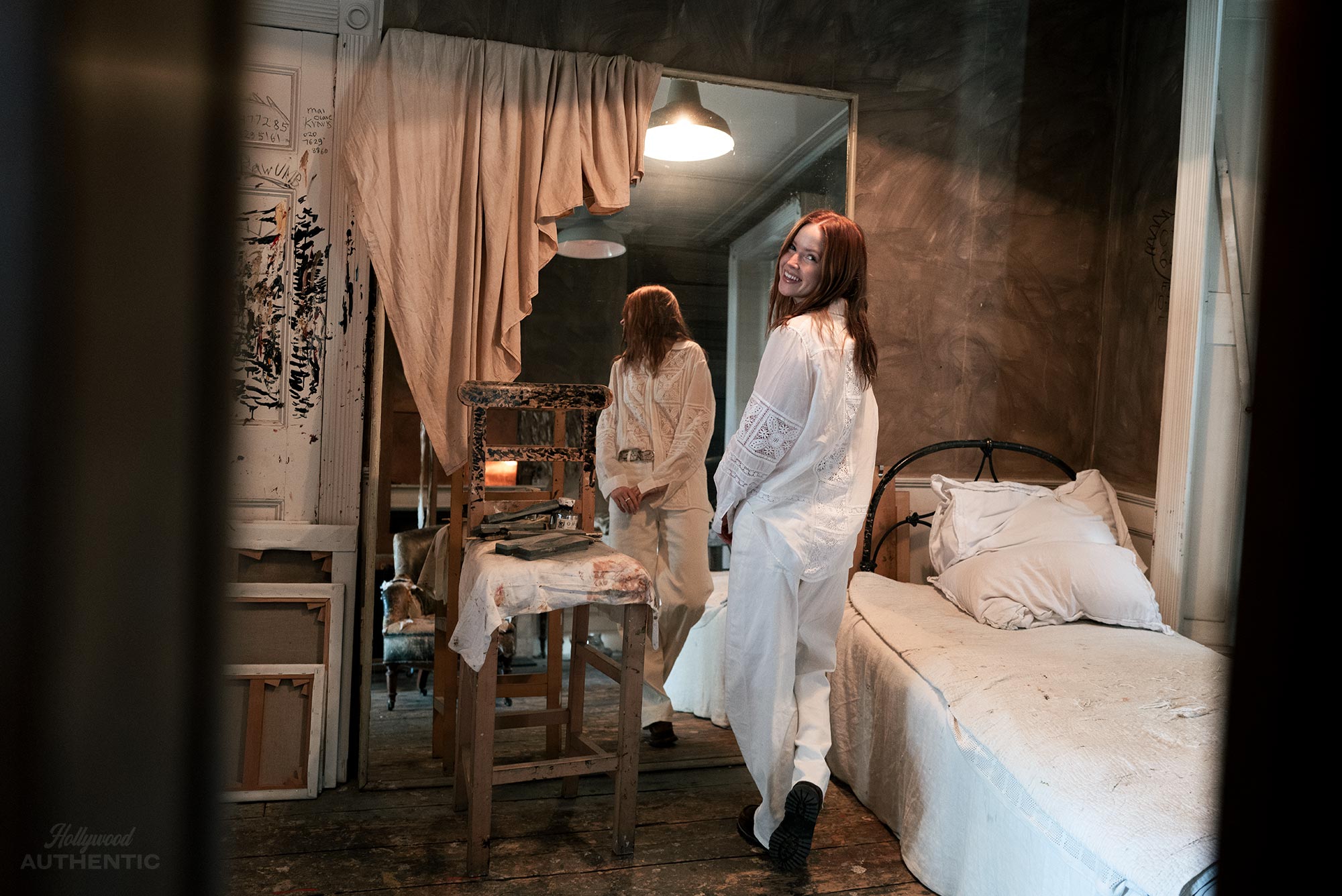
We had to experiment in the film, like figuring out the best position for you to stay in for a really long time – just practically staying comfy, and being able to hold a certain position
Ellie recalls that she had met Moss before getting the role but when discussions got serious she bumped into the model at a mutual friend’s party. ‘It was a whole meeting where we were both like, “Whoa, I can’t believe this is happening right now.” There’s a picture that Jasper [Conran] took of us on his bed together, just lounging about. It was such a coincidence and such a funny meeting.’ Bamber used the photo to announce her casting on social media. ‘It feels like a milestone,’ she says of the project in a career that began with her being scouted to play ‘young Jenny’ in Trevor Nunn’s Aspects of Love at the Menier Chocolate Factory when she was 13. That landed her an agent and opened her up to opportunities in theatre before she moved to film with Pride and Prejudice and Zombies and Tom Ford’s Nocturnal Animals. She played Cosette in the BBC’s Les Misérables, Mandy Rice-Davies in the The Trial of Christine Keeler and led The Serpent for the BBC, as well as Disney+ show, Willow. She’s exec produced a short, There Will Come Soft Rains, and has a packed slate coming up. She’ll appear in family film Animal Friends, IRA drama Stranger With a Camera, Anna Biller chiller The Face of Horror,and is currently filming A Christmas Carol with Johnny Depp. ‘I felt like I had a responsibility to Kate to make it truthful, and show her in a way that was truthful. That was really important to me. And I wanted to handle it with a lot of care.’ She’s anticipating the film’s release with what she describes as ‘excitement slash terror’. ‘But I feel like I’ve made peace with how I feel about it.’
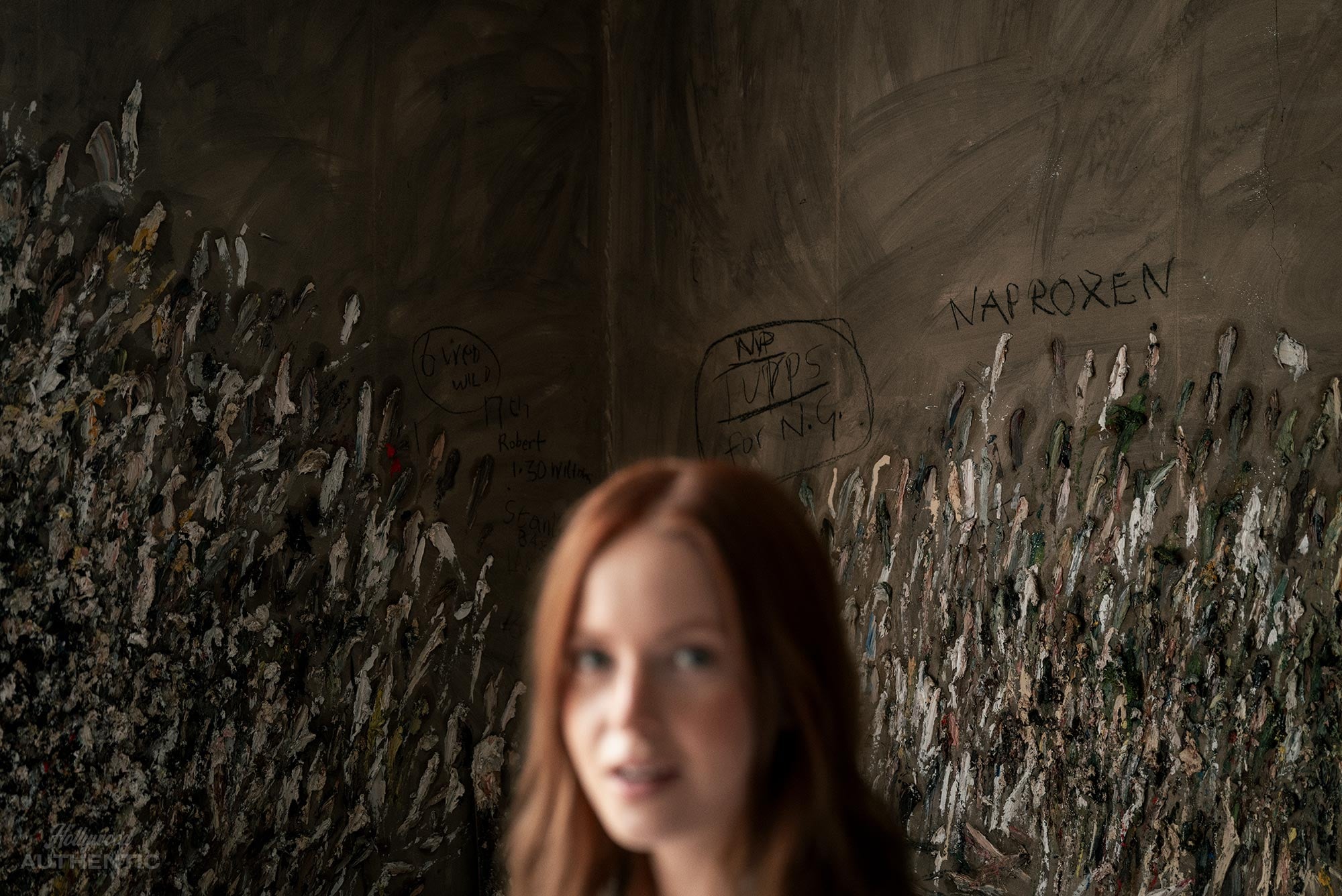
We start to read some of the scrawls on the walls of the studio, left by Freud. The masseuse on Thursday. Portrait of the hand. Celibate. Naproxen. ‘There’s a phone number. It might be quite interesting to ring it up and see who it is,’ she suggests.
I grew up in theatres with parents who worked in the industry myself, so I’m interested to know how Ellie’s theatrical background taps into her work now. ‘This did feel like a play,’ she nods. ‘Working with someone like Sir Derek Jacobi – I mean, when we first met, we had lunch together, and he mentioned Laurence. And I was like “Wait, are you talking about Laurence Olivier?” He’s such an amazing actor, and to be opposite him in scenes where we were just talking in a studio – it did feel like a play.’
As a girl from a small town near Reading, she always dreamt of moving to London and got her wish when she landed a role in High Society at The Old Vic as a 17-year-old. ‘I was quite young and I think at maybe quite a rebellious point of my life,’ she laughs. ‘I think I was figuring it out.’ I ask when she first knew she wanted to act. ‘I was quite young when I really knew, because I would get all of the members of my family to do little shows with me all of the time, and most of the time they would roll their eyes. I did a lot of it when I was younger, and then forgot about it for a while. And then I had this amazing drama teacher who basically convinced me to audition for the school play, then after that, I knew. I didn’t finish school, I didn’t finish my A-levels – I had to do a bit of convincing of my dad. But then there was a conversation as to whether I wanted to go to uni, and I very much knew that I didn’t want to go to uni. But I didn’t have a plan B, because I just knew that that’s what I wanted to do.’
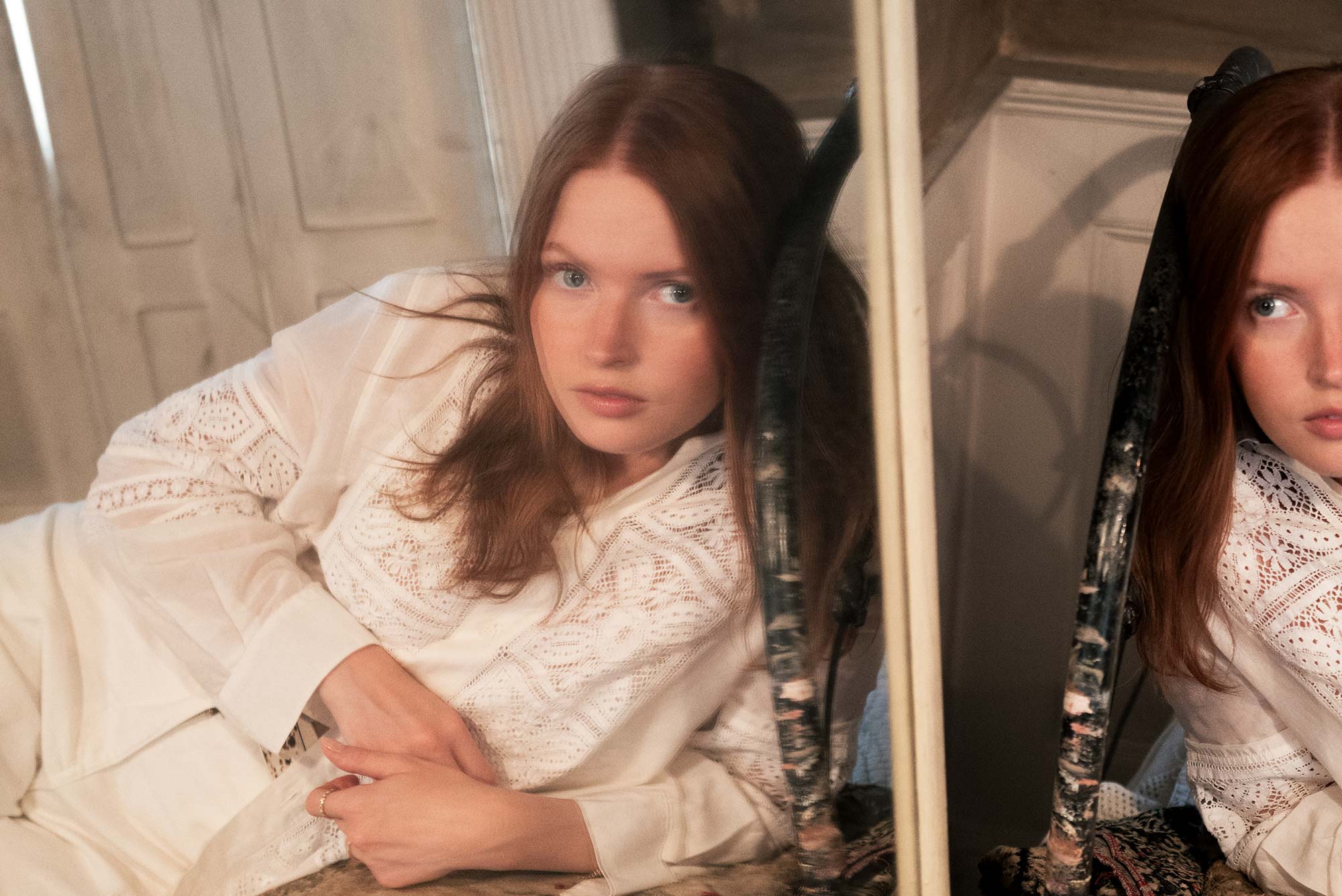
The film is all about a woman understanding her place in the world as an artist. Through discovering that conversation, and through Kate’s journey, I think it gave me a lot more confidence in myself, and my decisions, and maybe how I see myself as an artist
It sounds like she almost manifested a career, willed it into existence. ‘I think there’s a certain amount of fate that I believe in. But also I’ve started doing some producing myself because I feel like I want to be able to try to create the roles that I might want to do, and maybe also other people might want to do too. So I’m really enjoying being on that side of the camera, and creating something from a conception. But I definitely of course have dreams of working with directors or with actors that I love. That’s a big dream for me.’
She considers what might have motivated her to keep pursuing her dreams. She thinks the drive to find agency is born from working from young age. ‘Kate also started working at 15. That was a similarity that I think from the beginning going into it. How can you drive your own journey? Particularly when you’re young, and you’re thrown into a creative environment, how much choice do you have? How much control do you have in your own path? I think that’s been a learning experience for me. I would roll with it to begin with, and go with things, and be quite hopeful. And now I’m quite driven by my choices in what I want to do and where I want to go. So I think maybe that’s where I’ve been on that journey with Kate. It’s feeling more empowered, and having more agency…’
Photographs & interview by GREG WILLIAMS
As told to JANE CROWTHER
Moss & Freud is in cinemas from 29 May
Thanks to David Dawson