
Photographs MARK READ
Words by MATT MAYTUM


A London institution since the 1840s, this grand Italianate palace on Pall Mall has hosted numerous film and literature greats including James Bond, Sherlock Holmes and Paddington Bear. Hollywood Authentic invites you inside the exclusive private members’ space that is a home for progressive thinking and a bastion of tradition: the Reform Club…

James Bond, Mark Read, Paddington Bear, Sherlock Holmes, The Reform Club

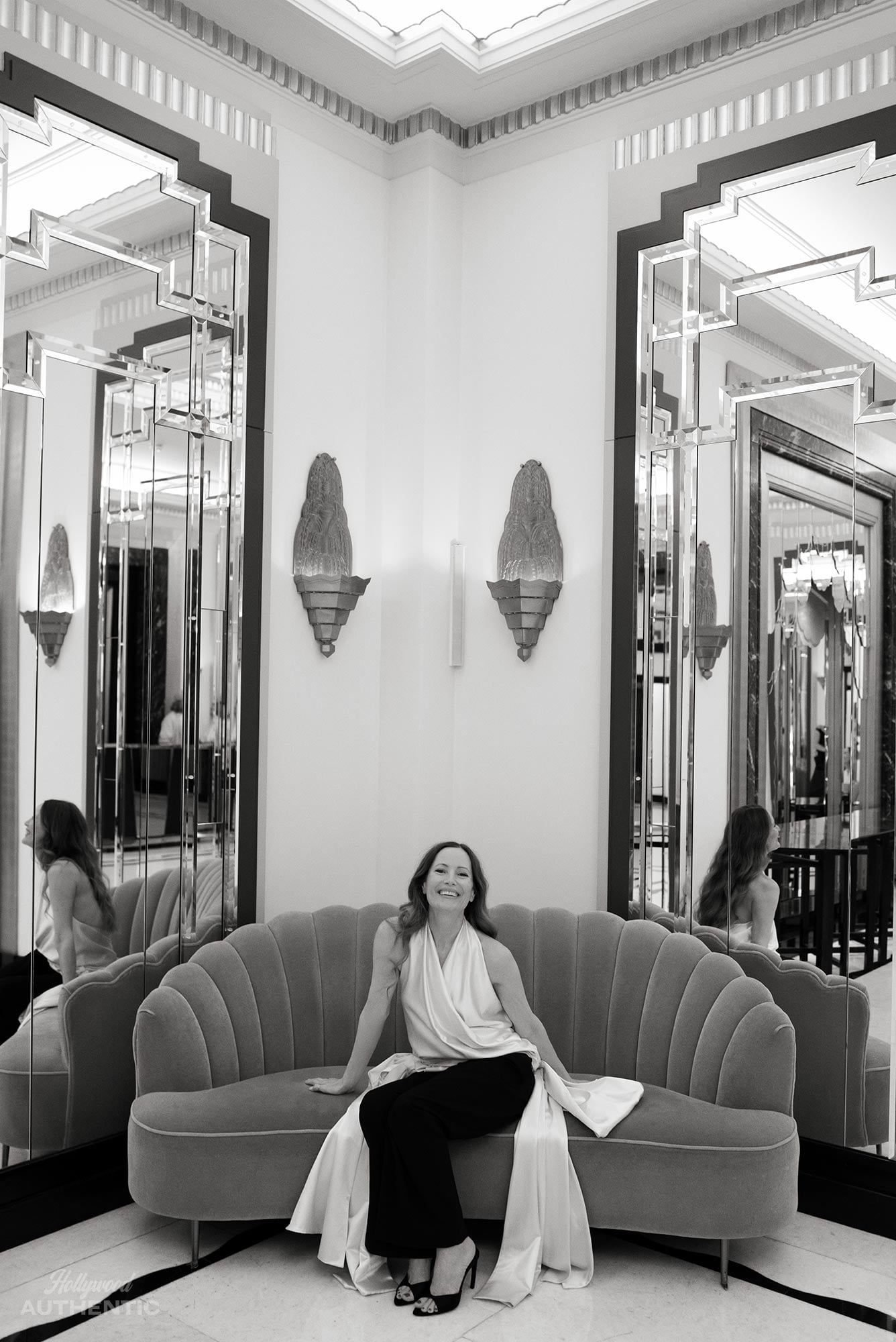
It’s fitting that Sir Arthur Conan Doyle himself was once a member of London’s exclusive Reform Club; the palazzo that has been the Club’s home since 1841 (five years after the club was founded) has served as a shooting location for countless sleuthing films and shows. At least three films based on Doyle’s most famous creation, Sherlock Holmes, have filmed within its Italianate walls. Billy Wilder’s The Private Life of Sherlock Holmes (1970), Guy Ritchie’s 2009 reboot starring Robert Downey Jr., and Will Ferrell’s comedy interpretation, Holmes & Watson (2018), have all used the rarefied setting for a touch of historic British glamour. True to the Conan Doyle tradition, the spirited spin-off featuring Sherlock’s kid sister, Enola Holmes (2020), also paid a visit.

James Bond, Mark Read, Paddington Bear, Sherlock Holmes, The Reform Club

The Reform Club has also hosted a broader variety of screen spies, from both the big and small screen. Two generations of 007 movies have visited the Club’s gilded interiors: Pierce Brosnan’s Die Another Day (2002) and Daniel Craig’s Quantum of Solace (2008). Brosnan even had a fencing match with Madonna in the building, which probably contravenes several guidelines in the Club’s strict rulebook. Operation Mincemeat – which features Ian Fleming as a character – also filmed here.

Spies flock to the Reform Club like moths to a flame, for reasons that aren’t particularly complicated. Situated on Pall Mall in the heart of St. James’s, minutes from Buckingham Palace, it’s at the heart of London’s most influential district. Politics and decision-making are entwined in its legacy, and the building itself has a rare grandeur and exclusivity (spies needing to be more mindful than most of the company they keep).

James Bond, Mark Read, Paddington Bear, Sherlock Holmes, The Reform Club

When the Reform Club was established in 1836, its initial membership brought together the Radicals and Whigs, progressive factions that would later merge to form the Liberal Party. Requiring a grand hub in which to hold their meetings, the Building Committee invited several prominent architects to submit ideas, and Sir Charles Barry – notable for his work on the Houses of Parliament – won the job of designing the political headquarters. The Committee was seeking a home that would ‘excel all other clubs in splendour and convenience’.

Barry had studied in Rome and was inspired by the Italian Renaissance, a notable shift from the gothic style of the ‘Palace of Westminster’. Of particular inspiration to Barry was Rome’s Palazzo Farnese, completed in 1859 by Michelangelo. Running over budget, the clubhouse cost £82,000 to build, and has remained largely unchanged since then, save for careful restoration. The symmetrical Portland stone facade boasts nine bay windows over three floors, and the Italianate door case, at the top of a steep flight of stone steps, is an almost-modest entryway into such a grand and imposing building, which received Grade I-listed status in 1970.

James Bond, Mark Read, Paddington Bear, Sherlock Holmes, The Reform Club

Jules Verne chose to start and end Phileas Fogg’s globe-trotting journey Around the World in Eighty Days, published in 1872, at the Reform Club; and where Michael Palin bookended his celebrated TV show following the same route and deadline

The politics of the Reform Club are not what they once were. It now regards itself as a politically neutral, albeit progressive, space. As early as the 1920s, it had become a purely social spot, though it did still attract important political figures (Churchill resigned after a spat in 1913). It was the first of the traditional gentlemen’s clubs to welcome women as members, which it did in 1981. Though its political leanings may have changed, elsewhere the insides are preserved in time, which is why it’s such a popular spot for filming – used as often for its intricate period detail in the likes of The Four Feathers (2002), Nicholas Nickleby (2002) and Miss Potter (2007) as it is for modern espionage thrillers. And its popularity in fiction is nothing new: Jules Verne chose to start and end Phileas Fogg’s globe-trotting journey Around the World in Eighty Days, published in 1872, at the Reform Club; and where Michael Palin bookended his celebrated TV show following the same route and deadline.

James Bond, Mark Read, Paddington Bear, Sherlock Holmes, The Reform Club

After entering through the main door, the so-called ‘saloon’ is palatially impressive, rising up above to a spectacular atrium, overlooked by the gallery and covered by a glass roof comprising 750 lead crystal lozenges. The mosaic tiled floor of this wow-factor room is hued blue and brown, recalling the Whig political colours (the tones now seen in the club’s signature tie). Though the Club dress code is particular (gentlemen must wear a jacket and shirt with full collar, ladies are required to dress with similar formality), Paddington Bear’s signature duffel coat and hat were allowed through the doors when he arrived there (the building played the Geographers’ Guild) looking for answers to his past in Paddington (2014). The grand room required little dressing to play such a learned institution; viewers can spot former members and founders on the walls as Paddington wanders through. Today, Queen Victoria’s bust presides over the real fire warming the place. For olfactory time travel, the smell of old-fashioned coal smoke permeates throughout this centrepiece space, which leads off to several other key areas in the building.

James Bond, Mark Read, Paddington Bear, Sherlock Holmes, The Reform Club

The restaurant – still known as The Coffee Room from days when a cup of Joe first became fashionable – runs the entire width of the building and overlooks the garden. At the time of the clubhouse’s creation, the kitchens were a priority. Barry designed them in collaboration with noted Victorian chef Alexis Soyer, a French expat who still inspires the restaurant today. His signature dish – lamb cutlets Reform – remains on the menu, its sauce a secret recipe passed down for posterity. Christopher Nolan’s sci-fi twist on a Bond movie, Tenet (2020), saw John David Washington’s protagonist meet Michael Caine for an intel briefing over a (rushed) lunch, with the establishment formality a signifier of the previously hidden strata our hero now has access to. For a more casual dining option, the so-called ‘Strangers’ Room’ offers a buffet lunch most of the year round. Or for that extra indulgent touch, there are bells on the walls that members can press for waiter service for food and drinks.

James Bond, Mark Read, Paddington Bear, Sherlock Holmes, The Reform Club

The Library, Smoking Room and Card Room all also lead off from the Gallery. The gold-leaf-accentuated library is home to over 85,000 books, and offers a sanctuary for quiet repose with a book. Many of the members are authors and their latest works are contributed to the shelves. The Library, established in 1841, will be one of the most recognisable parts of the Reform Club for cinephiles, its mirrored fireplace overmantels boosting the scale and drama of the room. Among the scenes shot here is a moment from the first season of Bridgerton that would no doubt make the founding members blush. In the corner of the Library is a red velvet seat that belonged to former prime minister H.H. Asquith. No one is allowed to sit in it. And be sure not to scale the Victorian library steps that wheel around the room to reach higher shelves. These aren’t the only rules you have to follow, should you ever find yourself inside.

James Bond, Mark Read, Paddington Bear, Sherlock Holmes, The Reform Club

No mobile calls or laptops are allowed, apart from in designated areas (the Study Room is recommended for undisturbed work). The original rules dictate that ‘the open transaction of business is forbidden’. Also a no-no? The games of Hazard and Chance are blacklisted, although for the competitive-minded the Reform Club does have an active bridge and chess club that operates out of the Card Room. In Men in Black: International (2019), Agent H (Chris Hemsworth) finds himself in a high-stakes card game with some unsavoury extra-terrestrials. If golf is more your bag, there are clubs for those too; just don’t go asking for a snooker room, as it’s strictly billiards only here. In the book-lined Smoking Room, there’s a secret door hidden in the bookcase that a waiter will emerge from when delivering drinks, and small lockers are a throwback to where members would store their cigars. The Committee Room continues to be the place ‘where decisions affecting the Club’s affairs have been made since 1841’.

James Bond, Mark Read, Paddington Bear, Sherlock Holmes, The Reform Club

Today, the Reform Club has around 2,900 members. There are 46 bedrooms upstairs for any members and their guests requiring a lengthier stay (Henry James lived at the Club in his final years). Any non-members wanting to peer inside can do so either via the Club’s charitable arm, which offers pre-booked tours to private groups, or via London’s Open House Festival, which runs in September. So if you do want to snoop around it yourself, you don’t have to join the secret service just yet… 

James Bond, Mark Read, Paddington Bear, Sherlock Holmes, The Reform Club

Photographs by MARK READ
Words by MATT MAYTUM
The Reform Club
104 Pall Mall, London SW1Y 5EW
www.reformclub.com

Words by BEN WHEATLEY 


Writer/director Ben Wheatley tells Hollywood Authentic how Ridley Scott’s game-changing sci-fi made an indelible impression on a young future filmmaker – and an industry.

Daryl Hannah, Harrison Ford, Ridley Scott, Rutger Hauer, Sean Young
Warner Bros. Pictures

BLADE RUNNER (1982)
The first time I encountered Blade Runner was as a Marvel comic adaptation. I read the comic first, and then I read the book, Do Androids Dream of Electric Sheep? As a kid who was really into film, I’d heard talk about Blade Runner but at that time I couldn’t see it – once it was out of the cinema, it was gone. I’d heard adults talk about it, and I was very excited about it. But it was too high a certificate to go and see it on a big screen at that point in my life. Back then, I felt starved for science-fiction; if you’d seen Star Wars, Silent Running and 2001, and made your way through Star Trek and Forbidden Planet, you were looking for more. So it was really amazing to see any kind of science-fiction. But to see this sci-fi… I finally saw the film as a teenager on VHS in the mid-’80s – the original version with the voiceover. Blade Runner was a gateway for me to the likes of Metropolis, noir movies and French comics like Métal Hurlant. In that respect, it was a fundamental education for me.

Daryl Hannah, Harrison Ford, Ridley Scott, Rutger Hauer, Sean Young
Warner Bros. Pictures

Part of why I kept going back to it as I got older, is that I appreciated it more and more in terms of the technology of it, and also the way it’s a film that, above all others, bears repeat viewing because it’s so visually dense. The imagery is very hard to take in on one watch. I’m watching it now, years later, and I’m still seeing new things. The way the sets were totally unapologetic – you don’t have to make any excuses for them, they just felt real. The model work, the flying spinners and all of the world-building was incredible. But then add to that the depth of the designs – it’s something that gives it long legs, because you can keep looking at it. Within every frame there’s so much incredible, thought-through imagery. That surely comes from Ridley Scott’s background of doing adverts in the ’70s, and this absolute command of the mid-ground and foreground and background. He’s using the parallax and planes of imagery to really impact on the viewer as they’re watching it. It’s taken me decades to unpack what he’s done, and understand it. 

Daryl Hannah, Harrison Ford, Ridley Scott, Rutger Hauer, Sean Young
Warner Bros. Pictures

There’s an incredible moment where Deckard (Harrison Ford) shoots the replicant that falls through the window of the shop, and then suddenly it’s snowing. It took me about 10 years to work out that the snow is actually inside the shop. And these elements of snow, reflections and blood are all happening at the same time. Scott doesn’t skimp on giving the viewer things to look at. What’s happening directly within a few millimetres of the lens and 50ft away from the lens at the same time are equally complex – it’s part of the magic that just pulls you into the movie, that you can’t escape from. I don’t think you see it in many other films – the command of the images is across all his movies (Gladiator has it, and so does Black Hawk Down), but Blade Runner is the most intense. Perhaps it’s the connection to artist Moebius (aka Jean Giraud); when you see Scott’s storyboards, you see the connection between his – drawings and Moebius’ drawings such as those in comic story The Long Tomorrow, written by Dan O’Bannon, which heavily influenced the look of Blade Runner and Star Wars. You start to join all the dots. Moebius is a very important character in all of this, and also in the unmade version of Dune by Jodorowsky, the main creative team of which would end up working on Alien. It’s heavily French-influenced, but also Japanese-influenced. If you look at Miyazaki’s work, there’s a direct line back to Métal Hurlant. There’s this amazing cross-pollination of culture going on.

Daryl Hannah, Harrison Ford, Ridley Scott, Rutger Hauer, Sean Young
Warner Bros. Pictures

It’s difficult to choose a favourite moment but some of the scenes in Deckard’s apartment… there’s something about that scene where he’s poking around in his mouth, and he takes a shot, and a little bit of blood goes into the vodka. As a viewer you’re thinking, ‘I’m in his apartment. I feel like I’m totally there. This is in the future.’ It’s also the light coming through the window and Ford’s performance. He has this particular position of being a massive movie star, but totally naturalistic. As an actor, it seems like he’s always in a documentary about the film that he’s making. Over time, I’ve looked at his performances, and I really appreciate his hand acting. And he always looks really pained when he’s doing action. It’s part of why you empathise with him. You believe in him, and you want him to survive.

Daryl Hannah, Harrison Ford, Ridley Scott, Rutger Hauer, Sean Young
Warner Bros. Pictures

The scene where he gets taken to the police station is a good example of Ford’s naturalistic performance. He’s a man in a police car, driving somewhere; he’s eating some food, and looking out the window, looking bored. In most science-fiction, everybody’s really amazed about the world that they’re in, because it’s the future. But Ford is bored with this future because it’s his world. There’s nothing to see there that’s interesting. That feels so real. You feel totally immersed. A lot of that immersion is Vangelis’ score, which sounds like nothing else. There’s something about that sweeping electronic sound, which feels like the future. To me, it has never dated. It’s the grandeur of it. The sound is thick. It’s like a syrupy, electronic, unnatural sound. It’s being created by one man, but it feels like a thousand people. The locations are also key to the real-world feeling, too. Scott grounds his story and action in physical locations like the Bradbury Building and the Ennis House in LA. Both buildings have been used in numerous movies, but the way Scott shoots and treats them within the frame makes them feel tangible and unique. 

Daryl Hannah, Harrison Ford, Ridley Scott, Rutger Hauer, Sean Young
Warner Bros. Pictures

The behind-the-scenes story of the film not being quite finished, and then coming back in this special director’s version helps to keep it intriguing for each new generation to discover. I was talking to someone the other day about the film, and they were saying it was a failure at the time it came out, but I don’t believe that. The box office is one thing, but in terms of cultural impact, it was huge. When I started making movies, Ridley Scott seemed totally unobtainable and mysterious – the mastery of what he’s doing seems so far from what you can achieve. It almost seems like magic. I felt that about Michel Gondry, Spielberg and Scorsese. You can’t get a purchase on what they’re doing. But then, over time, you start to understand a little of what they might have done, how they’re thinking. I’ve been given the opportunity to work on a big scale in films like High Rise. Once you graduate out of ultra-low-budget, and you can actually afford to have an art department, then you get a taste of what it could be like to work like Scott. It’s a massive difference between shooting on location where you’re dressing locations, and then being able to control the colours of rooms, the design aesthetic, the story… I can’t imagine the massive pressure he was under as a big studio film, but at the same time to be so singular. It’s still possible, but it’s a set of circumstances that you need to have. To do something so singular now, the studio has got to trust you, and you probably need to have had a string of projects that have made money for everybody.

Daryl Hannah, Harrison Ford, Ridley Scott, Rutger Hauer, Sean Young
Warner Bros. Pictures

I’ve fanboyed about the film and over the years I’ve tracked down storyboards and memorabilia, which is fascinating. I remember having a meeting at RSA Films once, and on the table there was this silver thing that was really familiar. And then I started to realise it was one of the plungers from Alien that Ripley has to push in to blow up the Nostromo. But I’ve not met Ridley. It can’t be underestimated what an influence he’s had on modern cinema. Modern action cinema owes him a massive debt. There are certain factions that suggest that directors don’t get better as they get older, but I don’t believe that. He’s as vital now as he was then. There’s no ‘new Ridley Scott’ working now. He’s it.  


All images © Warner Bros. Pictures
Blade Runner (1982) the original theatrical release
Blade Runner: The Director’s Cut (1992) released after a strong response to test screenings of a workprint
Blade Runner: The Final Cut (2007) Ridley Scott’s definitive Final Cut, including extended scenes and never-before-seen special effects
Ben Wheatley’s Bulk is available to buy on disc. Normalis in US cinemas now and 15 May in the UK

Words by JANE CROWTHER


Lewis Pullman is having an extended moment. Having impressed in Marvel fare, competed with the flyboys as Bob in Top Gun: Maverick and showed off his pipes and moves in The Testament of Ann Lee, he’s dipping his toes in sentimentality and romance in this, a whimsical adap of Shelby Van Pelt’s bestseller. He’s Cameron, a young drifter on a personal mission along the Cascadia coast, stuck in the small town of Sowell Bay when his crappy camper van conks out. Strapped for cash to fix it, a cheery local (Colm Meaney, emanating kindness) gets him a temp job night cleaning at the local aquarium. 

Sally Field, Lewis Pullman, Colm Meaney, Alfred Molina
Netflix

The job is available because widowed Tova (Sally Field) has bust her ankle and can’t polish and mop as thoroughly as she’d like. Tova isn’t only nursing a sprain, she’s heartbroken from long-term grief and the growing realisation that her age and loneliness might mean she needs to leave her lush waterside cabin for a nursing home. Tova chats about all her feelings when she cleans to the aquarium’s octopus, Marcellus, who narrates his own version of events (voiced soothingly by Alfred Molina) as we follow a trio of arcs of three lonely beings who find unexpected connection.

Sally Field, Lewis Pullman, Colm Meaney, Alfred Molina
Diyah Pera/Netflix

A rom-com of sorts that is gently amusing and romantic in platonic love as Tova and Cameron create a slow bond (though he also tries, spikily and entertainingly, to woo a local surf shop owner), Remarkable Bright Creatures is a balm to watch. Filmed in Deep Cove, near Vancouver, the locations are travel porn alone – a beautiful backdrop for the halting relationship between both Tova and Cameron, and Tova and a would be paramour. 

Sally Field, Lewis Pullman, Colm Meaney, Alfred Molina
Netflix

While Marcellus is entirely CG (and excellently rendered), the bright spark between a wounded OAP and hurting young man feels authentic and moving thanks to natural chemistry between Pullman and Field. With nuanced performances that travel from comedy to deep sadness, both make their characters real within a picture postcard setting. The only false note is the gaggle of horny retired friends that Tova has, their hijinks in emotional relief to the quiet work Field is doing.

Sally Field, Lewis Pullman, Colm Meaney, Alfred Molina
Diyah Pera/Netflix

Though the ‘twist’ might be predictable and the action gentle, Remarkably Bright Creatures is the sort of cosy hug of a picture that might take tear ducts by surprise as well as prompt googling trips to British Columbia. Deep Cove is likely to have a busy summer and Pullman net more fans.

Sally Field, Lewis Pullman, Colm Meaney, Alfred Molina

Words by JANE CROWTHER
Pictures courtesy of Netflix
Remarkably Bright Creatures is in cinemas now

May 6, 2026

Amy Wadge, Diane Warren, Fraser T. Smith, The Devil Wears Prada 2

Simone Ashley invites Greg Williams into the recording studio.

May 1, 2026

Adam Scott, Florence Ordesh, Damien McCarthy

Words by JANE CROWTHER


When watching Damien McCarthy’s Irish folk horror it’s impossible not to think about The Shining – and that’s no bad thing. Stephen King’s creeper, and the movie from Kubrick, haunt the odyssey of a misanthropic, depressed and alcoholic writer, Ohm Bauman (Adam Scott) who’s trying to crack the end of his bestselling trilogy and heads to the Emerald Isle to spread the ashes of his dead parents in a spot they apparently loved. Oh, and during Halloween. Though we see Ohm at home (and during the course of proceedings, in a hospital room) the tale essentially  unspools as a bottle episode, confined to the environs of the dated and remote Billberry Woods Hotel. A chintzy, rustic place where goats high on magic mushrooms butt the parked cars, the proprietor tells children stories of local witches who lure victims to a hellscape below ground and the honeymoon suite is locked up to prevent some mysterious horror, it’s the sort of establishment most of us might shudder at and pull a u-turn in the drive.

Adam Scott, Florence Ordesh, Damien McCarthy

But Ohm is a glutton for punishment. Harbouring psychological wounds carried from childhood and a mean streak a mile wide, he glugs whiskey in the bar, belittles and burns a fan bellboy and declares the barkeep’s assertion that a witch is trapped in the honeymoon suite as ‘hokum’. He’s just here to write and not engage in such nonsense. But all work and no play makes Ohm a dull boy. A dark night of the soul brings him close to the glimmer of death and sets him on a quest to find a missing woman (Florence Ordesh), investigate the suite upstairs and come to terms with demons – his own and those that lurk.

Adam Scott, Florence Ordesh, Damien McCarthy

McCarthy’s set up ignores mobile phones from the get-go (no inelegant ‘oh, there’s no signal here’ nonsense, they simply do not exist) and builds a plan of the hotel for audiences to understand. The honeymoon suite is reached by a lurching lift, there are a series of cellars under the hotel, woods surround the property and the hotel is on the cusp of closure for the season. That leaves Ohm alone to battle what he finds upstairs, no staff or passing traffic. And what he discovers is genuinely unsettling – production and sound design combining to create a suite of nightmares, jump-scares deftly deployed to ratchet bpm. It’s impressive how terrifying McCarthy can make the drawing of a chalk circle in the dark or a rabbit TV show on a flickering screen. And the increasing compression of spaces is unpleasantly claustrophobic: scaling the action down from hotel complex to single suite, to a tight-squeeze dumb-waiter system and the corner of a dank cellar. (Definite Blair Witch vibes.)

Adam Scott, Florence Ordesh, Damien McCarthy

Key to selling the scares is Scott – playing an asshole who deserves comeuppance, but with enough soul to deserve our sympathy and good will too. To see such a sardonic man who has no magic in his life understand the darkness at the edge of our physical world feels authentic, his catharsis earned. His unpicking of Ohm’s pain as he’s terrorised makes Hokum a satisfying horror: both thrillingly scary and emotionally resonant– might make you reconsider staying in a rural hostelry.


Words by JANE CROWTHER
Pictures courtesy of Black Bear/Neon
Hokum is in cinemas now

Words by JANE CROWTHER


Twenty years after aspiring journalist Andy Sachs (Anne Hathaway) finally earned the grudging respect of Runway magazine maven – and thinly disguised Anna Wintour avatar – Miranda Priestly (Meryl Streep) via frenemy and tough love shenanigans with assistant Emily (Emily Blunt) and stylist Nigel (Stanley Tucci), the quartet returns. Of course. In the light of Maverick suiting up again and the SATC girls stepping back into their Manolos, legacy sequels and nostalgia-core is big business (Dirty Dancing revisit incoming). The question of whether beloved characters should be exhumed is moot, it’s whether the 2.0 can stand on its own feet as something more than mere fan service, with plenty of cocklewarming callbacks.

Anne Hathaway, Emily Blunt, Kenneth Branagh, Meryl Streep, Simone Ashley, Stanley Tucci
Macall Polay

Devil 2 manages the trick, but only just. In 2026 Andy is a serious award-winning journalist who’s just been made redundant as her paper downsizes, and returns to the Runway offices as features editor after Miranda suffers near-cancellation for her accidental promotion of sweat shops. Nigel is still consigliere to Miranda, Emily is now the head of Dior. There’s a new assistant, Amari, who schools Miranda in what she can’t say during her withering put-downs (Simone Ashley) and a plot that revolves around Andy having to prove her worth to Miranda again as publishing becomes irrelevant in a world of social media. There’s fashion, Diet Coke placement, celebrity cameos (Donatella Versace and Gaga working better than others) plus an awkward romantic sub-plot and a Justin Theroux turn that both feel surplus to requirement. 

Anne Hathaway, Emily Blunt, Kenneth Branagh, Meryl Streep, Simone Ashley, Stanley Tucci
Macall Polay
Anne Hathaway, Emily Blunt, Kenneth Branagh, Meryl Streep, Simone Ashley, Stanley Tucci
Macall Polay

It’s hitting all the right notes of the original (female empowerment, OTT fashion, a nice nod to cerulean) and Streep does get to flex that calm delivery and imperious stare while MVP Blunt brings her excellent comedic timing (biggest laugh is her Italian gag with Versace). But the story situates Miranda as a victim from the start and diminishes her bite, which was a huge part of the deliciousness of the first film. Though she has more fashion, she has fewer words; leaving Andy and Emily to spat in a corporate takeover narrative that doesn’t feel high stakes enough. 

Anne Hathaway, Emily Blunt, Kenneth Branagh, Meryl Streep, Simone Ashley, Stanley Tucci
Macall Polay

Though the denouement of the characters is placed very firmly in this decade and current media landscape, it feels non-essential to non-fans – the pleasure to be found in seeing ‘Spring Florals’ as the theme of the Runway Ball at the Met, understanding why one should never go upstairs in Miranda’s brownstone, the significance of soup in the canteen and the return of a revamped lumpy blue sweater. And Milan looks glam for a third-reel romp. It’s all perfectly entertaining, without being, as Miranda would say, groundbreaking.

Anne Hathaway, Emily Blunt, Kenneth Branagh, Meryl Streep, Simone Ashley, Stanley Tucci
Macall Polay

Words by JANE CROWTHER
Pictures courtesy of 20th Century Studios
The Devil Wears Prada 2 is in cinemas now

April 24, 2026

Colman Domingo, Jaafar Jackson, Juliano Valdi, Nia Long

Words by JANE CROWTHER


That a biopic made with the blessing of the Jackson estate would be a hagiograph of the King of Pop should hardly surprise – so don’t arrive at this rhinestone-covered account of MJ’s rise to superstardom expecting any reference to his personal life or allegations made against him. There’s potential for a probing character study of a damaged Peter Pan figure and the horrors of fame, but this is not that film. 

The movie went into reshoots and was recut after a historical legal NDA was unearthed preventing any deviation from the narrative of The Gospel According to St Michael – so leaving the elephant in the room out of the equation, is Jackson, purely as an artist, brought alive?

Colman Domingo, Jaafar Jackson, Juliano Valdi, Nia Long
Glen Wilson/Lionsgate

Certainly, if you want to see spot-on facsimiles of his most famous pop-culture moments then Antoine Fuqua’s almost mechanical recreations hit the spot. We meet Michael as an Indiana moppet in 1966, the 10-year-old lead singer of a sibling band with stars in his eyes and belt strap welts across his back. Terrorised by unforgiving patriarch Joe Jackson (Colman Domingo with gimlet-eyed intensity) who doesn’t intend to work in a steel mill for the rest of his life, Michael (Juliano Valdi) and his brothers are drilled in their performance with the promise of violence, regardless of the time or the quiet pleas of their mother (Nia Long). Joe’s vicarious drive for fame and fortune takes the Jackson 5 up the charts, to Motown and onto LA where Michael’s growing obsession with animal ‘friends’ and his need to escape his father coalesces. 

Colman Domingo, Jaafar Jackson, Juliano Valdi, Nia Long
Glen Wilson/Lionsgate

As a young man denied a childhood, suffering from vitiligo and squirming under constantly being called ‘big nose’ by his Dad, Michael (Jackson’s real-life nephew, son of Jermaine, Jaafar Jackson) begins to craft his own identity; musically and physically. He starts work on the solo album Off the Wall, sets off on his life-long plastic surgery odyssey, hones his uniform (make-up, aviators, military chic, sequinned socks) and learns to moonwalk.

Colman Domingo, Jaafar Jackson, Juliano Valdi, Nia Long
Glen Wilson/Lionsgate

There’s no denying that Jackson is uncanny as Jacko; nailing his breathy voice, the dazzling smile, the dance moves and the performative shyness. And there’s also no denying the global success of MJ with the bangers that are reenacted with his real vocals. Beat It, Thriller, his electric turn of Billie Jean at the Motown 25 celebration and the iconic Bad tour showstopper are highlights and genuine cultural touchpoints, while fans are catered for with extended worship of his performance of Human Nature at the 1984 Jackson 5 Victory Tour. The dazzle and sparkle, the spins and tippy-toe flexes are all on point, the costumes unimpeachable, the hair and make-up masterful.

Colman Domingo, Jaafar Jackson, Juliano Valdi, Nia Long
Glen Wilson/Lionsgate

But the film comes unstuck in trying to find the soul. Michael is defined only by his hurt and his publicised childlike, messianic qualities (his menagerie of pets, his visits to hospitalised kids, the donation of his payout from Pepsi to a burns unit, his love of Neverland). We are never invited in to understand his unique and bewildering point of view. ‘I want to be a mystery,’ he tells his team, and he certainly remains that here. His motivation, his damage is kept as intangible as all the CGI animals (yes, even Bubbles is rendered in uncanny valley visuals). And leaving the film in 1988 with the promise ‘his story continues…’ allows for any later unpleasantness to go unaddressed.

Colman Domingo, Jaafar Jackson, Juliano Valdi, Nia Long
Glen Wilson/Lionsgate

Viewed merely as a jukebox musical, Michael works – as shiny and showbiz as a bejewelled white glove. As an intimate portrait of an artist and a person, it fails to wrestle with the man in the mirror.


Words by JANE CROWTHER
Pictures courtesy of Lionsgate
Michael is in cinemas now

Photographs & interview by GREG WILLIAMS
As told to
JANE CROWTHER


Actor Simone Ashley is exploring her first passion via a new EP, Songs I Wrote in New York. Greg Williams joins her during two studio sessions over the past year as she finds her sound. 

Amy Wadge, Diane Warren, Fraser T. Smith, The Devil Wears Prada 2

When I meet The Devil Wears Prada 2’s Simone Ashley at producer Fraser T. Smith’s [multi Ivor Novello and Grammy Award winner] Studio outside Henley-on-Thames in early January 2025, I jokingly ask him how the actor is doing outside of her natural filming habitat. ‘Amazingly. We wouldn’t be working with her if she wasn’t any good,’ he grins. ‘We got together doing some film stuff, and then we wrote a few songs, and to me it was apparent that Simone should make an album. So we talked about it, and we’re making the leap. It’s going to be amazing.’ 

The duo are in the process of finalising vocals, mastering and mixing Simone’s debut EP, Songs I Wrote in New York out now. I’ve heard her sing when we hung out in Cannes previously during the film festival, but never as she lays down some tracks. She welcomes me into the room and explains what inspires her to write. When I previously heard her sing in Cannes, it had a bluesy feel. This, she says, is very different. ‘This is more soul pop. And we’ll play you another one that I wrote with Amy Wadge, who’s just amazing. She does a lot of Ed Sheeran’s music. So, very ballad, love-based kind of songs. It started off as a ballad. And then what’s so amazing about Fraser is, I’ll bring an idea, and he can just completely flip it. It was amazing that day, because the sunlight came into the studio, and suddenly there was so much positivity. And I wrote that song in Wales with Amy when I was in a bit of a dark place. It was just shit weather, and cloudy, and dark. And then when it came to the day of recording it, Fraser knows the kind of beats that really resonate with my heart. He started playing this beat, and the sun just came in. And suddenly all these lyrics that came from a place of heartbreak, suddenly turned really positive.’

Amy Wadge, Diane Warren, Fraser T. Smith, The Devil Wears Prada 2

A lot of these songs were inspired by a summer that I had in New York when I first moved there. Working on The Devil Wears Prada 2 was intense – this was the original cast, the original producers, in New York. It was summer in Manhattan and I was in New York, and I was having the time of my life. That really affected how I wrote the songs

Simone and Fraser continue to talk through their process and the sounds they’re using, their enthusiasm infectious. As Fraser plays some beats, Simone sings along. ‘When I was working with Amy, I gave her some of my favourite chords,’ she explains between takes. ‘I’m really drawn to B-flat major, F major, A-flat major for some reason. It sounds so heartbreaking and nostalgic to me, that kind of chord progression. So we just laid out these chords, and I was almost rapping – just riffing all these different things. And then it’s hours of mixing and work with Louis and Fraser. A team effort.’

We meet up again in January in LA, during Golden Globes season – and Simone is working with another musical maestro, multi-award-winning Diane Warren at her Real Songs Studio in Hollywood. The 17-time Oscar nominee is working with Simone on her album, impressed by her songwriting and voice. And Diane isn’t one to blow smoke up asses – her straight-talking manner is apparent the minute I walk through the door. There’s a jar just inside the room that Diane describes in her beautifully fruity language as ‘a jar of fucks – in case you want one’. 

Amy Wadge, Diane Warren, Fraser T. Smith, The Devil Wears Prada 2

Diane has collaborated with Simone on a couple of songs destined for her album. ‘I’m excited,’ the songwriter tells me. ‘She’s an amazing singer.’ Simone has laid down one of Diane’s compositions earlier today and now they are working together on finessing it. Diane plays the melody on the guitar to accompany Simone’s soulful vocals. ‘It’s very exciting to see the magic of when the right artist finds the right song,’ Diane says, comparing Simone’s sound to Sade. ‘I mean, you’re a great singer, and you’re a great artist, and you have your own thing,’ she says. ‘You already have an audience built in that loves you, and loves you from your other work. But once they hear you sing, and they hear you sing these songs – you’re going to have a whole other thing going.’

Over the previous Christmas break, Diane has written a song that she has gifted her new protege. ‘I just write songs that I like. A lot of the time, I don’t even know who the fuck they’re for. But this is perfect for you.’ Simone is beaming. ‘This is a “pinch me” moment for sure.’ she admits. ‘I mean, Diane Warren is the songwriter. It’s a big fucking honour to be here.’ The EP, Simone explains, is inspired by her own experiences while acting. ‘A lot of these songs were inspired by a summer that I had in New York when I first moved there. Working on The Devil Wears Prada 2 was intense – this was the original cast, the original producers, in New York. It was summer in Manhattan and I was in New York, and I was having the time of my life. That really affected how I wrote the songs, and what I brought into the studio. It was what I was experiencing on set, and outside when I wasn’t filming; the nights I had out in New York; the people I met; the friendships and relationships that I had… It all bled into the music.’

Amy Wadge, Diane Warren, Fraser T. Smith, The Devil Wears Prada 2

She goes into the booth to record some vocals under Diane’s direction, honing the tone of the song with different tweaks each time. I ask Diane how she thinks being an actor impacts Simone’s craft in the studio. ‘I think it helps, because you’re a storyteller in another world, too. It’s not just singing a song. You have to convince someone that it’s real. That’s what you do as an actor, and that’s what you do here. And she knows her lines!’ Diane suggests we have a listen back of the work the two have completed together so far, a song under construction, being shaped. ‘What a fucking smash,’ Diane says when it ends. ‘Come on. I think she’s going to have a really big, huge record.’

A couple of weeks later I catch up with Simone in New York during a particularly fierce snowstorm. Now that she’s two years into making her music a reality, I ask what it was that made her want to pursue it, having had such success with acting in Sex Education, Bridgerton and the upcoming, Devil Wears Prada sequel. ‘Something that I’ve always carried with me throughout my life, and especially in my career – I never want to look back and be like, “I wish I gave something a go,”’ she says. ‘I never really wanted to have too many feelings of regret. Regret is something that sometimes you can’t control. But within the things I could control, I always wanted to make sure that I gave it my best shot. I wanted a professional project with my music, a body of work. I never wanted it to come across as a hobby. So about four years ago, I really started talking to people in my team, and was trying to figure out a way of meeting the right people, and finding the right people who had the same belief and vision as me. Perhaps part of me always knew that something like this was inevitably going to happen. But it was more just taking the first initial steps and actually breaking the seal.’

Amy Wadge, Diane Warren, Fraser T. Smith, The Devil Wears Prada 2

Though she’s only recently started writing songs in collaboration with Fraser, Amy Wadge, Diane Warren, Dan and Tolu, Simone has been writing music since her teens. ‘Music has always been something that I had a very strong instinct with. I grew up playing piano, and learning how to write music. I classically trained as a singer. I always write in my journal – lyrics or just ideas – and I would maybe try to match the beats to certain lyrics that I had down, or certain ideas that I had down. When I was working with Dan and Tolu in Brooklyn, that was a very specific form of songwriting – we were just talking for hours. It was the same with Amy Wadge, we just chatted for about six hours, and then we would pull things from our conversations and what we were feeling, and try to convey that conversation in a song, or certain chords would match that feeling. Those are my favourites sometimes, because you take something like that, and then maybe a year later, in the studio with Fraser, it turns into something quite different. But what was important in all of my songwriting process, was that I wanted my lyrics and my songs to feel inclusive – especially writing from a personal place about whatever I was going through, whether it’s a relationship or friendship or a feeling that I had; it was important to me that my audience can listen to it and relate to it in a way.’

Amy Wadge, Diane Warren, Fraser T. Smith, The Devil Wears Prada 2

I ask which artists she’s been inspired by herself and she smiles. ‘When I was a kid, my dad used to play vinyl all the time, just 24/7. So I grew up listening to music since I was a baby, and I could list a million different bands, solo artists, and so many different people.

‘But I think one thing that I’ve learned throughout my career as an actress is to just always compare yourself to yourself. It’s such a strong way to do it. I’m on my own journey with my own timeline. I don’t think I’m comparing it to anyone else’s… yet.’

She admits she’s been ‘surprised in a good way’ by the album that is coming together. ‘We actually have this body of work that, at one point, was living in our imaginations, and then was living in the studio, and living in comps and demos. And now it’s something that I’m almost there to share with everyone…’


Photographs & interview by GREG WILLIAMS
As told to JANE CROWTHER
Songs I Wrote in New York is out now

hollywood authentic, greg williams, hollywood authentic magazine

April 16, 2026

Amy Madigan, Josh O'Connor, Kali Reis, Lily LaTorre, Meghann Fahy

Words by JANE CROWTHER


‘Can you even be a cowboy without cows?’ asks Callie-Rose, the little daughter of Colorado cowpoke Dusty (Josh O’Conner) who has lost his generational ranch to a wildfire, leaving him houseless and untethered. It’s a question writer/director Max Walker-Silverman (who previously produced A Love Song) asks in this delicate ‘slow cinema’ look at the meaning of home and the balm of community – who are any of us without our possessions? Having been almost pathological self sufficient to the point of breaking up his marriage before the fire crept over the ridge to gobble his ancient barn, family house and wooded land; taciturn Dusty finds himself trying to repair both his life and his relationship with his cute-as-a-button kid. 

Amy Madigan, Josh O'Connor, Kali Reis, Lily LaTorre, Meghann Fahy
Jesse Hope/Bleecker Street

Moving into a FEMA–provided trailer park in the middle of the desert with other victims of the fire and given a construction job on the highway, he struggles to recognise himself or how to get back to his comfort zone. ‘That’s not me,’ he dolefully tells his former mother-in-law, Bess (Amy Madigan) of the work holding a stop/go sign, his meetings with the bank in the hope of a loan proving fruitless in the wake of a high-severity burn. He’s got no family except for that of his ex and her new boyfriend, his meagre savings won’t buy him much respite…

Amy Madigan, Josh O'Connor, Kali Reis, Lily LaTorre, Meghann Fahy
Jesse Hope/Bleecker Street

If that sounds bleak, it’s not. In the vein of Nomadland and Train Dreams, Rebuilding places faith in people, kindness and found community. And the healing power of a beautiful landscape, a song sung at dusk and the soft nose of a horse nuzzling a palm. Quiet compassion is woven through the ordinary struggles of Dusty; the auctioneer trying to get an above-value price on the cattle he has to sell, his ex (Meghann Fahy) and her sweet partner supporting him emotionally, in the food and companionship offered by the trailer park dwellers, in the notice in the closed library window that grants free wifi to the displaced people who flock there to fill in their online insurance forms. The folk in this south-west corner of Colorado may be economically challenged but they are rich in gorgeous sunsets and hope in starting over. A reclusive trailer park inhabitant breaks his silence when he finds it in the shoots of fresh buds from a charred tree, Dusty’s neighbour (Kali Reis) looks for it within her belief that she still likes nowhere better than this very spot, and the cowboy will ultimately rediscover his purpose in protecting a new herd.

Amy Madigan, Josh O'Connor, Kali Reis, Lily LaTorre, Meghann Fahy
Jesse Hope/Bleecker Street

O’Conner – so soulful in God’s Own Country – is built for such a role. Always watchful, whether observing workers clearing smoking ash from the ruins of his house or the roll of a silver river through purple twilight, he’s able to convey so much of Dusty’s feelings without ever saying a word. The cast around him is equally as affecting – particularly naturalistic Lily LaTorre as Callie-Rose and Madigan turning her recent horrific performance in Weapons on its head with little more than a warm cameo that leaves a mark as sure as the fireline. 

Amy Madigan, Josh O'Connor, Kali Reis, Lily LaTorre, Meghann Fahy
Jesse Hope/Bleecker Street

As a small, quiet and almost slight take on hardship, Rebuilding takes no big swings, but with its faith in humanity and the idea that home isn’t necessarily where we build walls, it may just be the film we need in the current news cycle. And Jake Xerxes Fussell and James Elkington’s guitar-picking soundtrack stitches it together with love, sounding like aural big skies.

Amy Madigan, Josh O'Connor, Kali Reis, Lily LaTorre, Meghann Fahy
Jesse Hope/Bleecker Street

Words by JANE CROWTHER
Pictures courtesy of Bleecker Street
Rebuilding is in cinemas now

Words by JANE CROWTHER


Gavin (Séamus McLean Ross) and bestie Billy (Samuel Bottomley) long for fame as rap duo Silibil N’ Brains. Trouble is they’re two lads from Dundee in the early noughties, and they can’t get a record company to take them seriously as they repeatedly cold call from local payphones. When they’re not dreaming up Eminen-style lyrics, they work in a call centre where code-switching helps them sell internet services; they swap accent and cadence according to the caller. So it’s hardly surprising that their desperation for a music industry break leads to them deciding to adopt American accents and allow a record company to believe they are from California. But as they begin to achieve their dreams, at what price is their compromise on identity?

Séamus McLean Ross, Samuel Bottomley, James McAvoy, Lucy Halliday

A mirthful set-up, but made all the more ticklesome by the fact that the tale is true – the real-life twosome boasting less convincing Cali drawls than their on-screen avatars and their story previously being told in 2013 documentary, The Great Hip Hop Hoax. With James McAvoy making his directorial debut with a screenplay by Archie Thomson and Elaine Gracie, the grift of a couple of chancers is turned into a bromance, an underdog fable and a celebration of Scottish singularity. McAvoy also plays a nasty record exec with relish and seems to be dipping from the well of good will vibes that made him a star in Starter For Ten. Gavin and Billy are painted as hopeless dreamers trapped in their own lies, their friendship the greatest casualty of their hoodwinking – Billy’s girlfriend Mary (Lucy Halliday) the integrity of the piece. The fictional record company duped by the duo is populated with ruthless career climbers, cynical money grabbers and snobs, allowing audiences to fully root for the rappers whose ruse is bow-tied as a deliberate exercise in exposing the bigotry of the record industry.

Séamus McLean Ross, Samuel Bottomley, James McAvoy, Lucy Halliday

Their likeability is enhanced by Ross and Bottomley’s almost guileless performances. Ross is the child of real Scottish musicians (his parents are Deacon Blue’s Ricky Ross and Lorraine McIntosh) and brings a fury to a man gobbling down a dream knowing it has a limited shelf-life. Bottomley, reminiscent of a Scottish Glen Powell, essays the lure of fame and fortune with a charm and twinkle that outperforms a dreadful mullet. Billy struggles to forget his heritage and rages against the metropolitan elitism and classism controlling entertainment, understanding that to pull away from it is to cause a chasm in a friendship. It’s that relationship that drives investment in a film that is predictable in music-movie highs and lows. But like Silibil and Brains, it’s scrappy, ambitious and ultimately, champions authenticity.

Séamus McLean Ross, Samuel Bottomley, James McAvoy, Lucy Halliday

Words by JANE CROWTHER
Pictures courtesy of StudioCanal
CALIFORNIA SCHEMIN’ is out in cinemas now