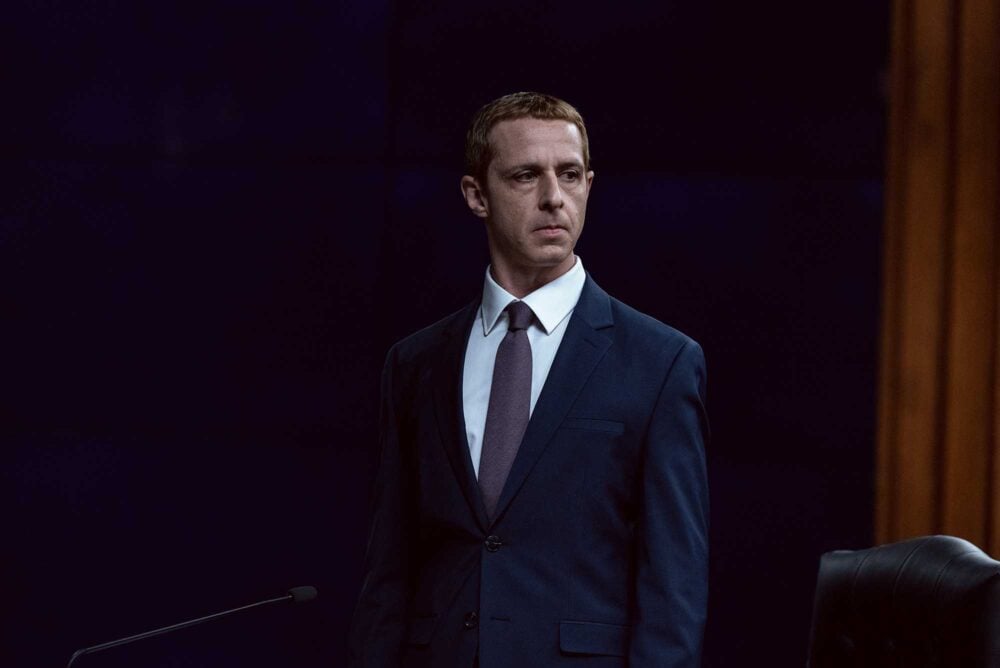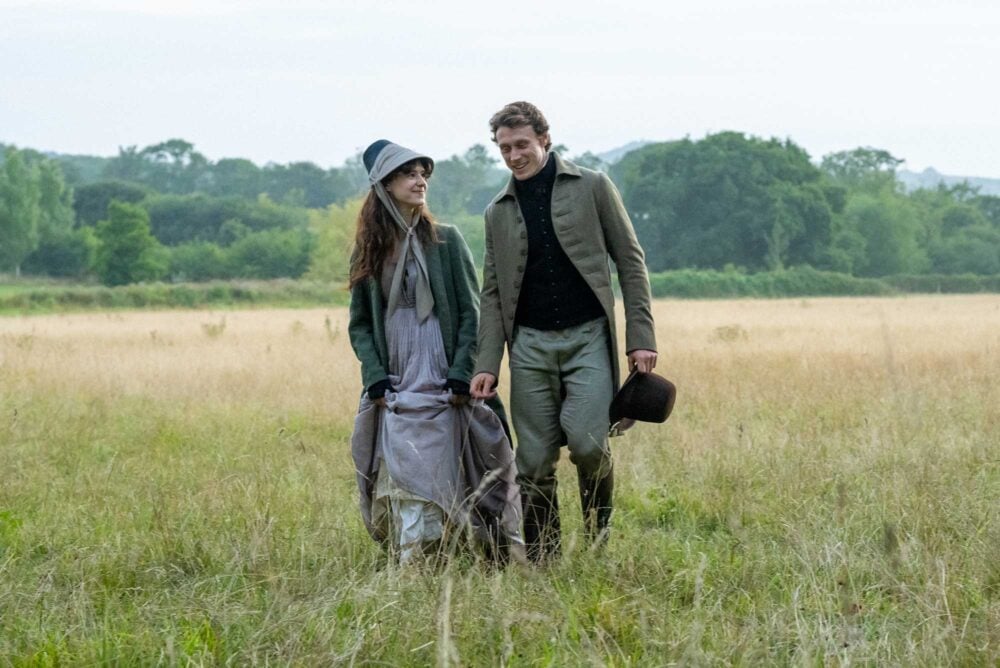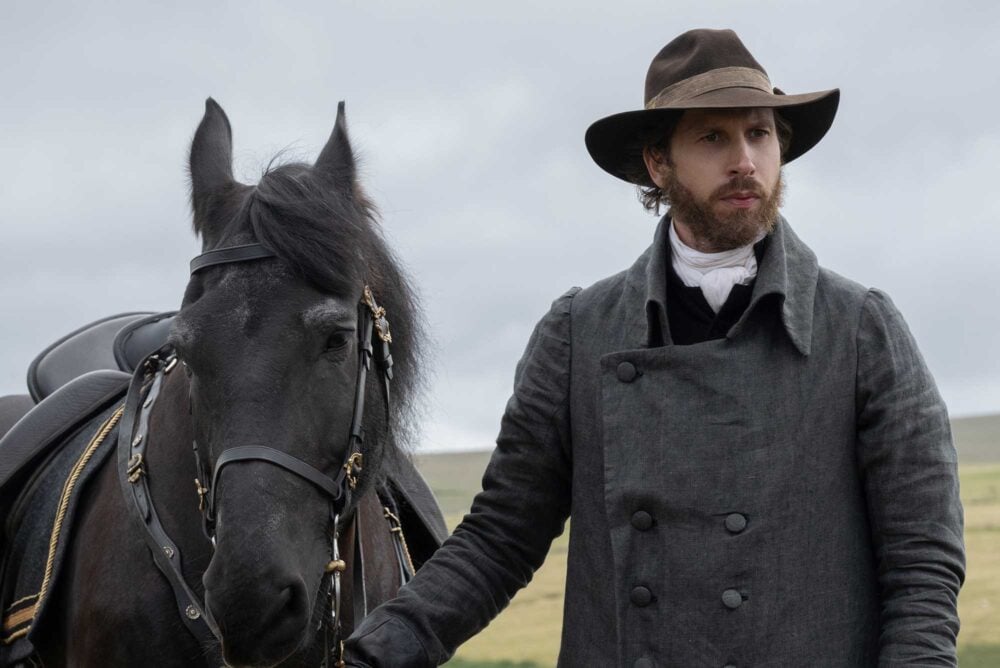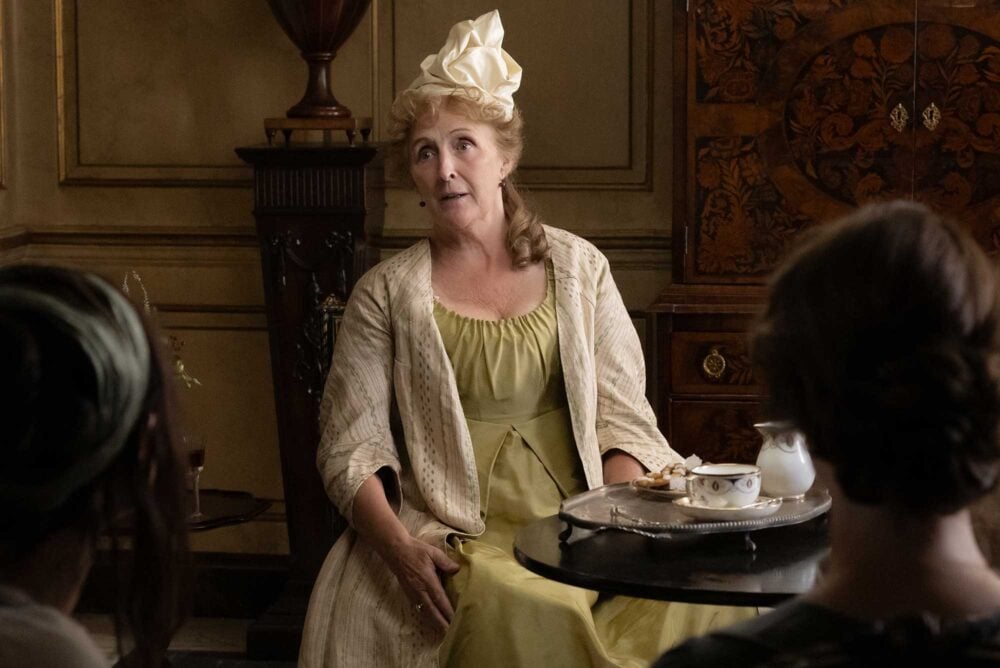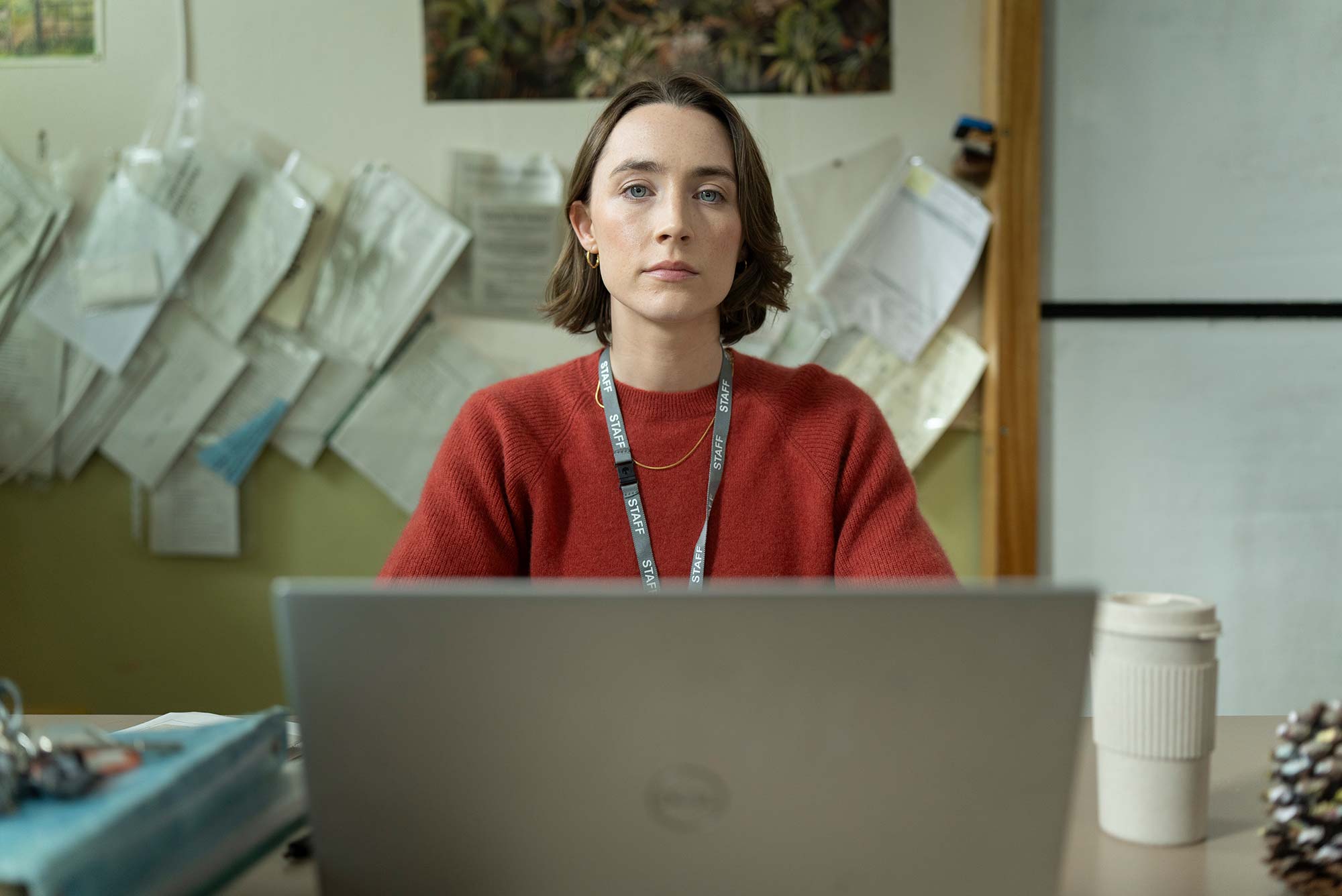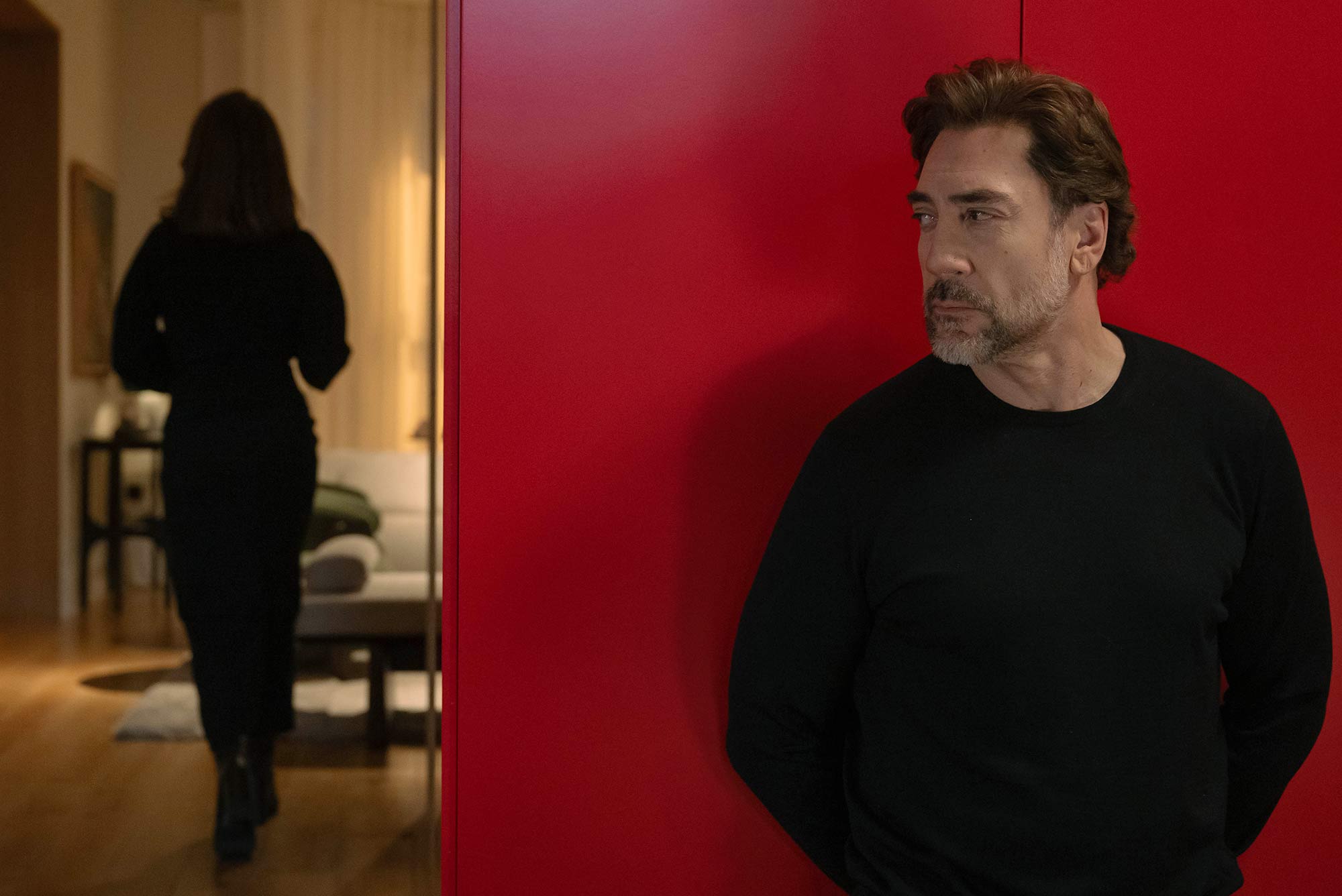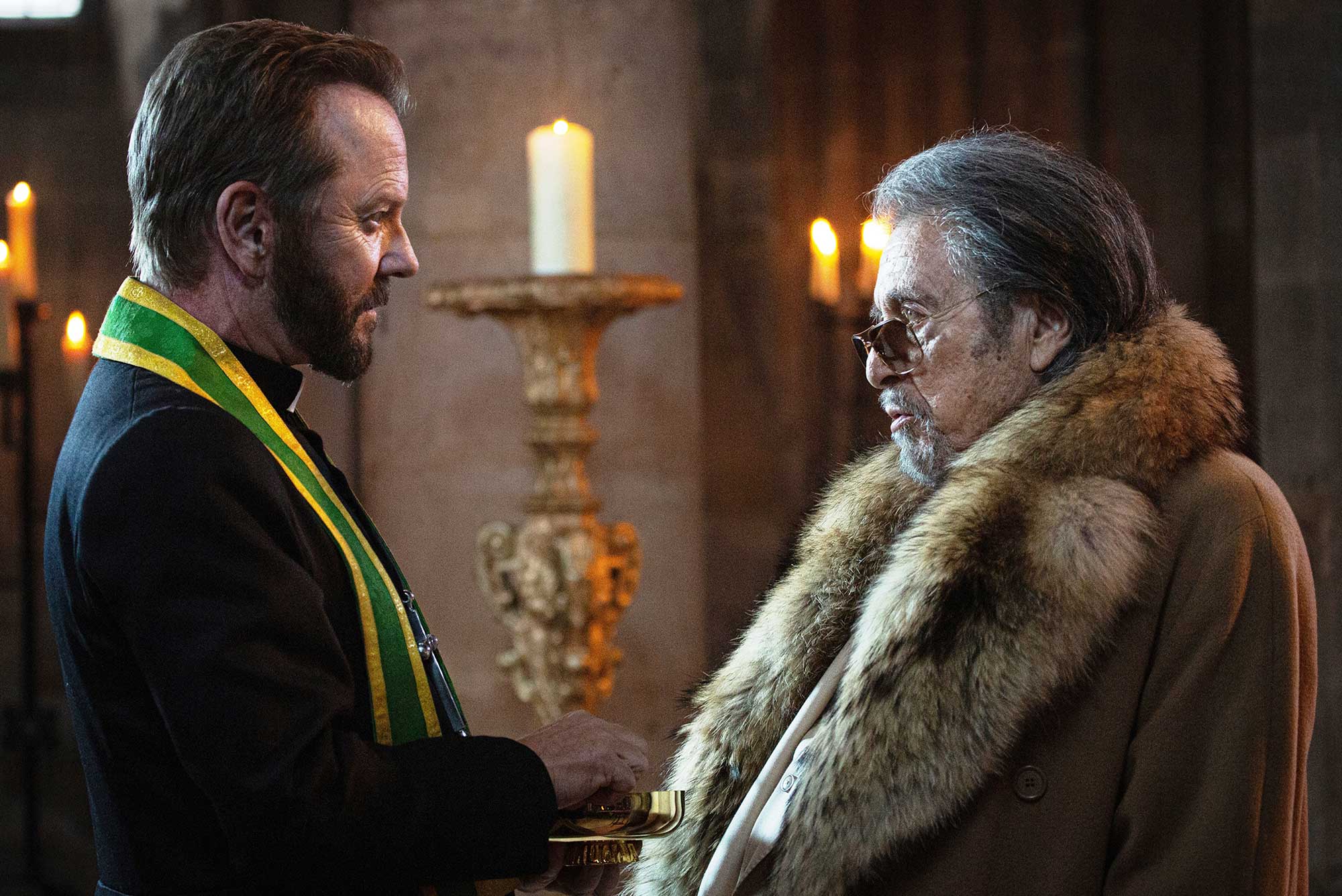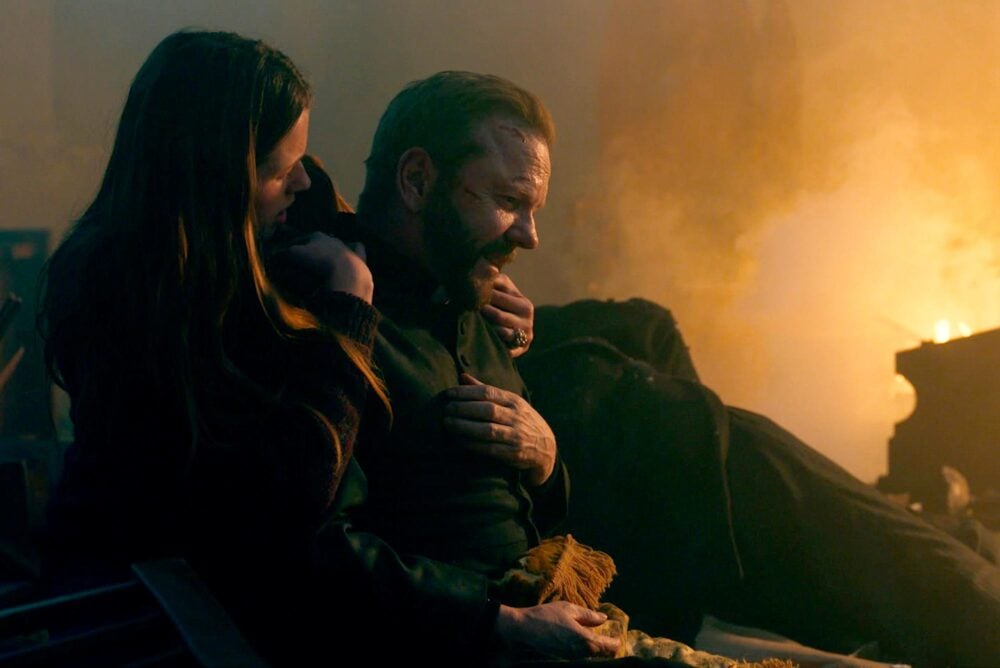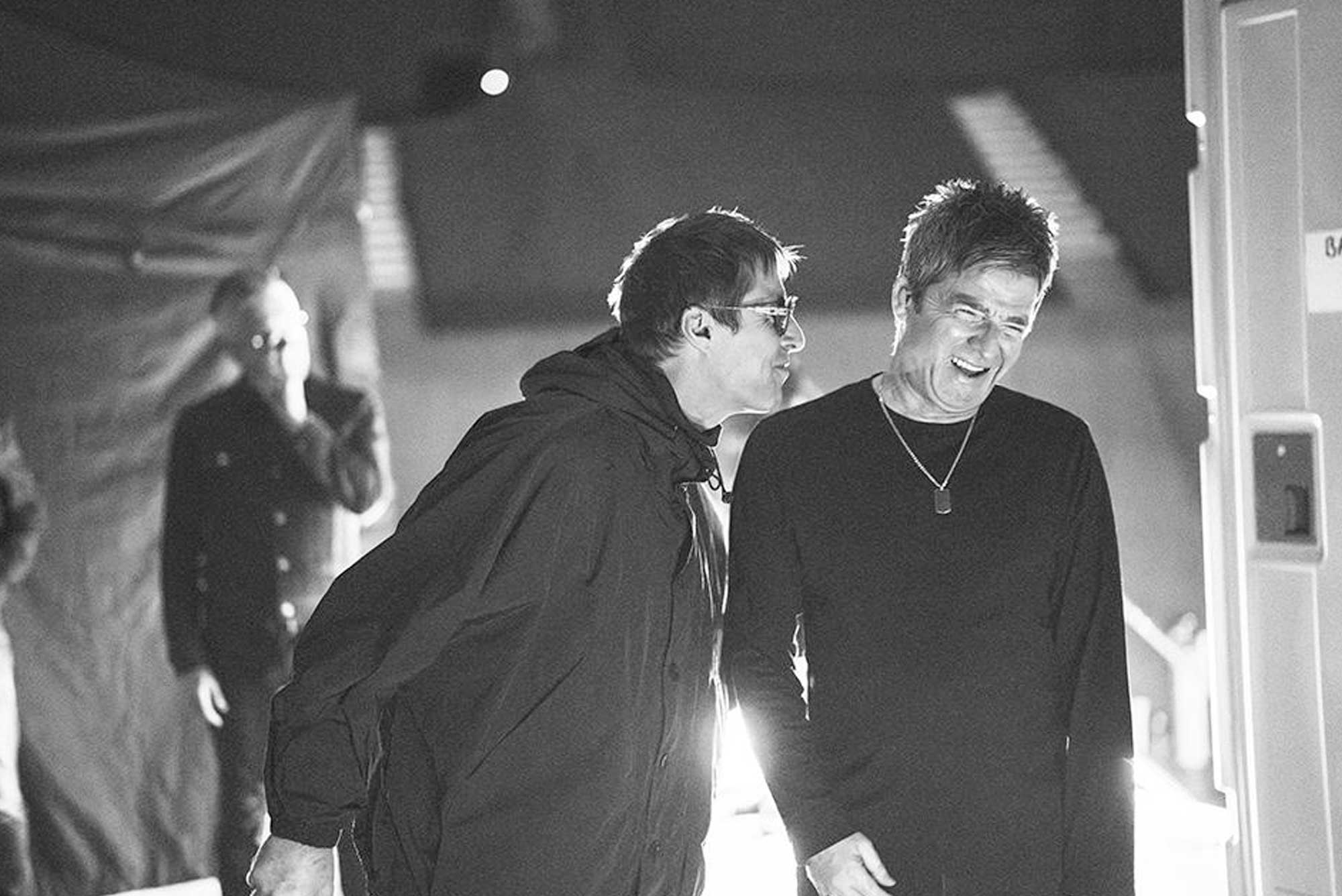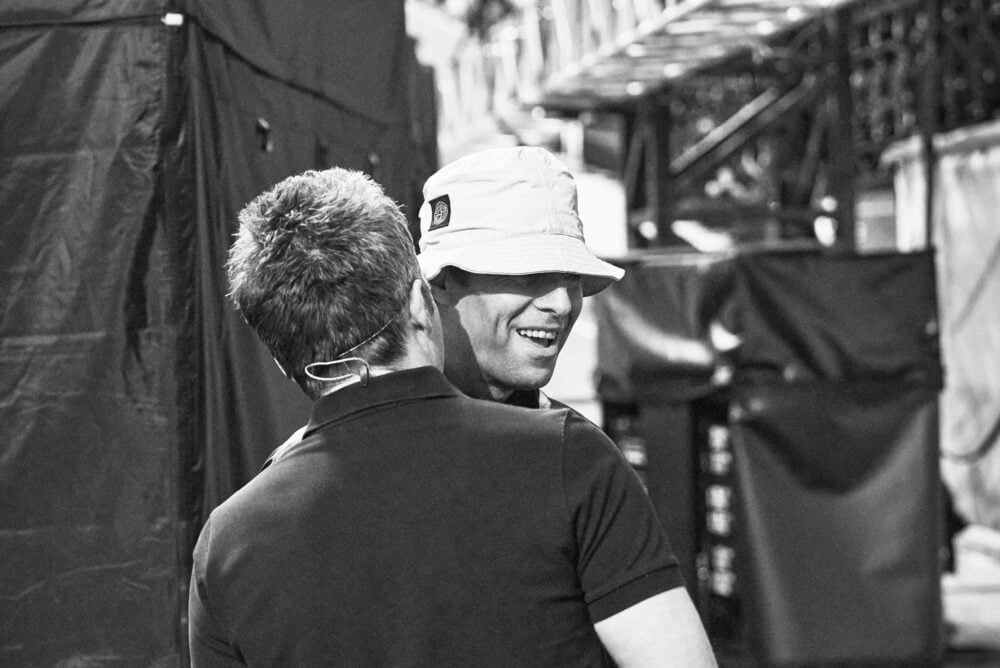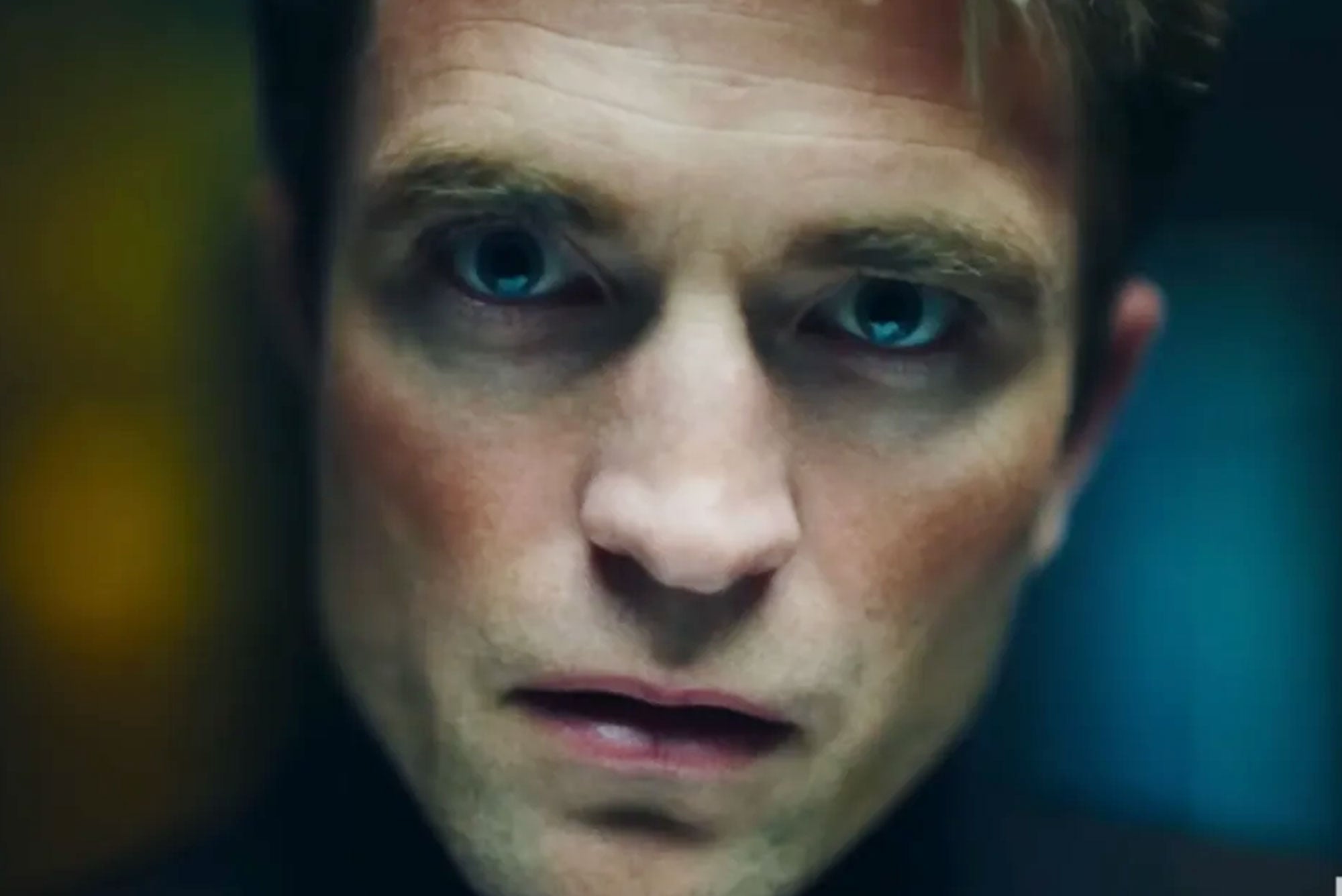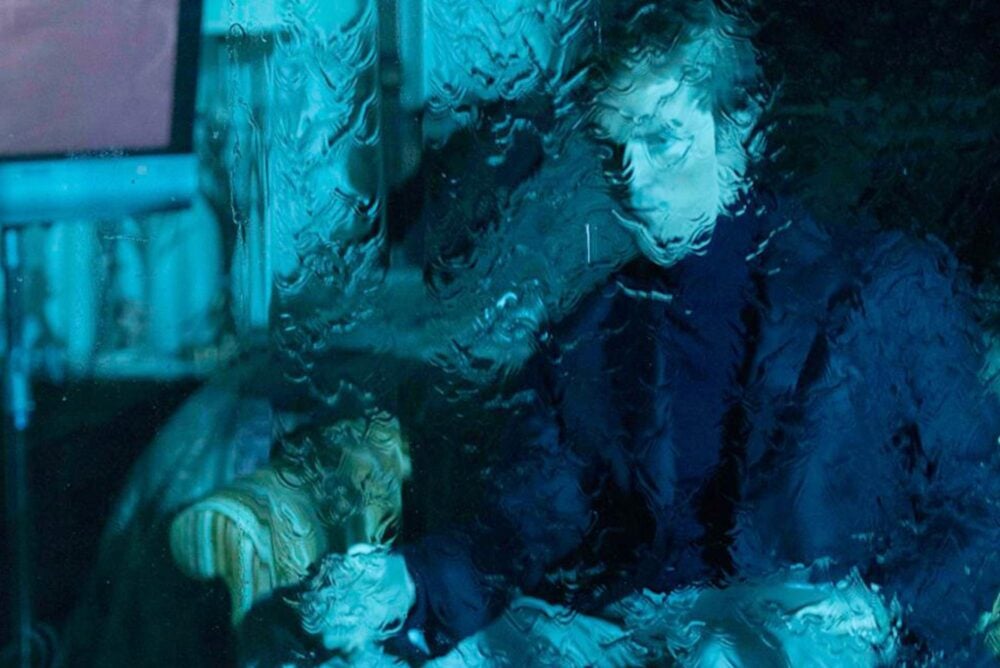


The 8th December 1980 is a grim date for Lennon fans – it’s known that the former Beatle was gunned down by Mark Chapman outside his apartment in New York’s Dakota Building. What is less known is the free-wheeling interview he gave to a radio team from San Francisco in the hours before. Having just made Double Fantasy with his wife, Yoko Ono, after a step back from the spotlight to become a house husband and dad to his son Sean, Lennon was full of renewed creativity and opinions on everything from masculinity, politics and childcare to fame, legacy and artistry. Intro by the team who interviewed Lennon aside, Steven Soderbergh has taken that audio interview and laid it out in all its prescient, charming, time-capsule glory.
Despite the interviewers being warned that Lennon should not be asked about the Beatles or his past, he’s an open subject – volunteering memories of meeting and gelling with McCartney, delving into his first date with Yoko (‘we didn’t make love’) and discussing his party boy era. It’s unusual to hear such a huge star talk in such an unfiltered and personal way, and feels like a true window into the person behind the personality. Also on the table for discussion: the pro and cons of global fame, the public hatred of Yoko, trying to keep your kid off sugar and marketing, the daily schedule of a creative couple and why celebrities are so inclined to join cults and movements. Intelligent, informed and disarmingly self-aware, Lennon is an entertaining orator and in many ways, ahead of his time in his thoughts on working-from-home, ally-ship, Totalitarian governments and polarised politics.
Yoko is equally fascinating, heard at the beginning of the interview but rarely later, despite having insight into a phenomenon that still continues: the particular public punishment of women. It’s clear she and John had a magnetic attraction, understanding and partnership – yet she is sidelined fast, whether by the interviewers at the time or by Soderbergh’s editing. It’s also a shame that the personal photos and footage of both of them run out towards the end of the film to be replaced by AI slop, something it feels likely hand-on creative Lennon would not have been into.
Still, as a film that captures a cultural icon at a crossroads in his life when he felt he was on the cusp of transformation, it’s both sad and celebratory. Lennon had achieved so much before that December morning and felt that he was about to embark on a new phase of prodigious songwriting, instead his potential was extinguished by someone else. It’s a Sliding Doors interview: had he planned a different day after his chat instead of heading out of the door, what might we have seen from him? As a historical record of a mobius strip moment it’s an intrigue.
Words by JANE CROWTHER Images courtesy of MISHPOOKAH ENTERTAINMENT GROUP John Lennon: The Last Interview premiered at the 79th Cannes Film Festival
Jordan Firstman is a knowingly bratty, provocative presence on social media and one might expect his first film to debut at Cannes to be a baiting, meta, Marmite affair that courts controversy. What’s unexpected is that his queer, specific take on Chaplin’s The Kid is universal, warm, funny and full of soulful hope. Like Anora (also produced by Alex Coco), Club Kid transcends its sweary, druggy NSFW settings with vibrant characters and hell-for-leather performances. One doesn’t have to know what being grundled is or the details of Clare Danes’ connection to the Philippines (though ‘normies’ will learn) to understand or fall for it.
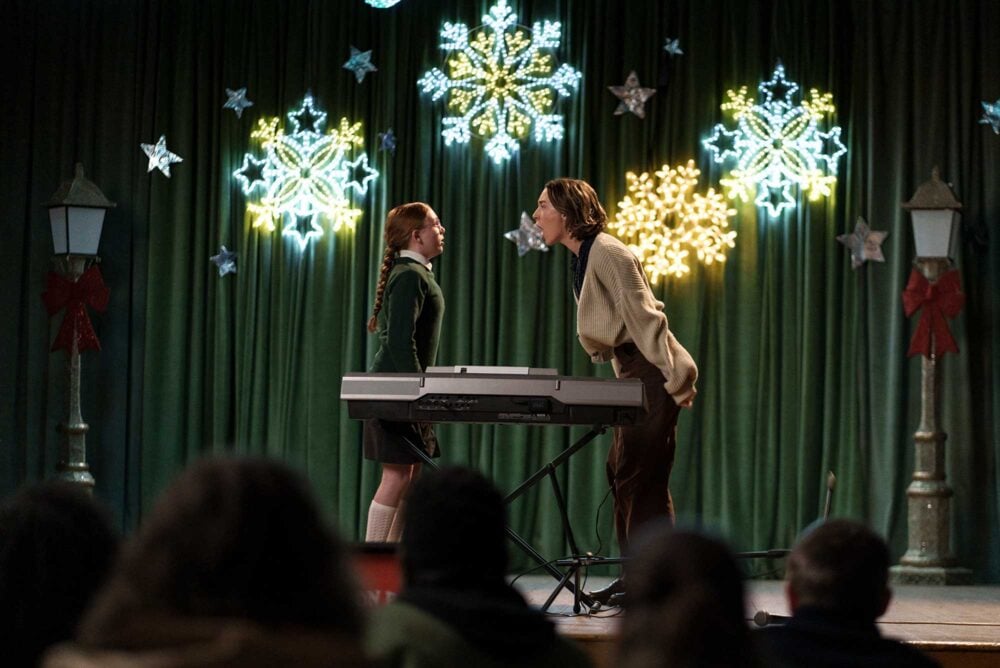
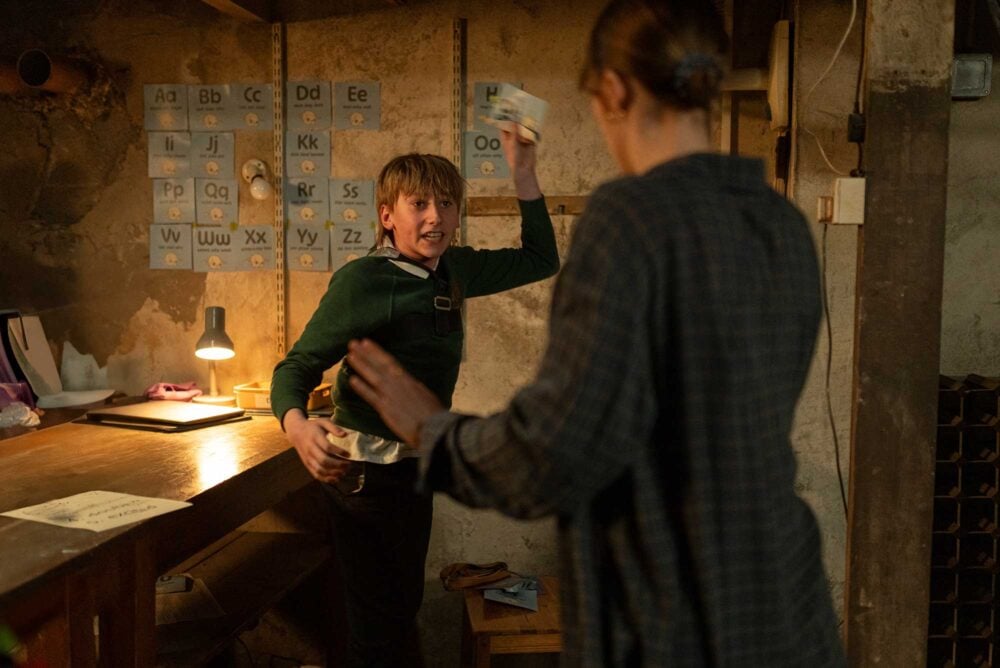
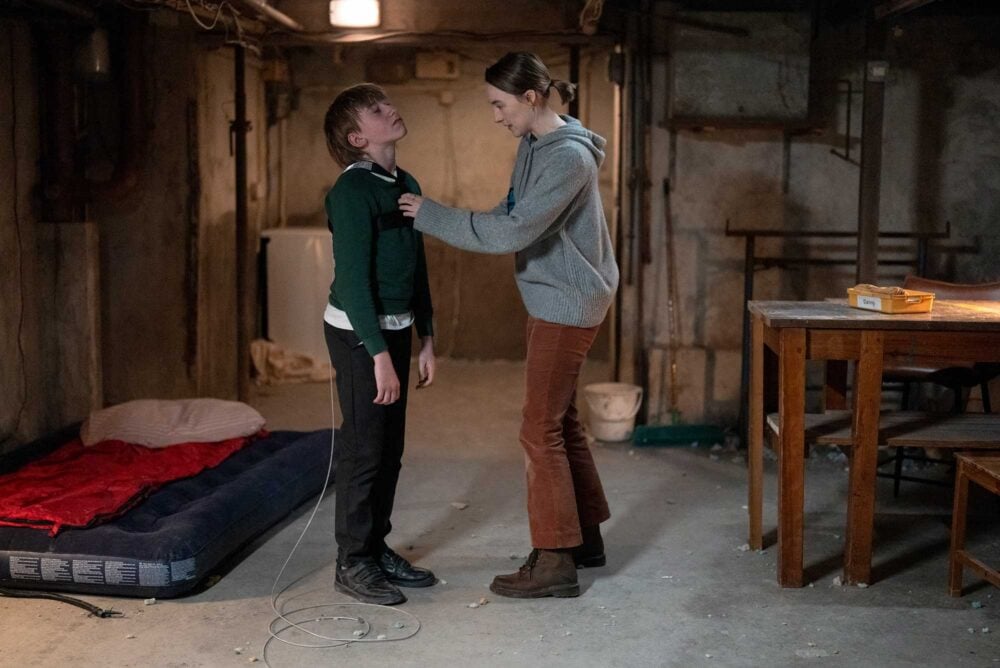
Firstman is front and centre as New York party promoter Peter, who enjoys his events as much as his punters. Collabing with party girl Sophie (Cara Delevingne, excellent), Peter gets the right people, and drugs, in a room – and he does all of them. An intoxicating pre-title sequence literally tags us along for this ride, starting with an Uber ride and descending to the strobing rooms and glitter cannons of Club Labor. For a decade, he exists in a blur of MDMA, GBH, coke and sex, until Sophie tires of his chaos and a figure from his drug-hazed past arrives on his doorstep with the product of an orgiastic night in tow; a 10 year-old British kid, Arlo (Reggie Absalom). Like Three Men and A Baby but with more queens, fisting chat and inappropriate slogan tees, Peter must learn to be a father and, in the process, learn the value of a created family.
That sweet through-line is constantly juxtaposed with salty bitching, inventive swearing and laugh-out-loud moments (a dairy intolerance vomit, the unlikely May-December romance between Peter’s houseguest and the OAP downstairs, a UK lawyer who likes Drag Race). And paternal love isn’t the only tenderness nurtured. In trying to gel with Arlo, Peter meets child psychologist Oscar (Diego Calva, emitting pure warmth) and discovers a relationship doesn’t have to be limited to one night stands. The two men have incendiary chemistry; a fizzy moment where they decide not to kiss in Central Park is magic while Oscar’s embrace at a point of emotional turbulence for Peter will prompt tears. There’s also strong solidarity from Peter’s ‘freak’ friends group which is heartwarming to watch; especially DJ Saffron (Saturn Risin9) who teaches Arlo the decks and his ex Devon (Nigil Whyte) who mixes parental advice with sex suggestions. Even bitchy coke queen Sophie operates with a morality code, albeit one of being strung out around the clock.
Club Kid may open a window of a super cool NY community (and their slang) but it also has something to say about Peter Pan lifestyles and responsible parenting, there’s a moving earnestness at play amid the snark. And though Arlo seems something of a fantasy child (he’s not messed up by a family tragedy, accepts Peter immediately and is just so damn cute), the lack of character depth here can be excused by the authenticity elsewhere. Sincere, saucy and loaded with tunes (from Rihanna to Ethel Cain), Firstman’s film was understandably snapped up at Cannes. Like last year’s Pillion, this is a filthy-gorgeous crowd-pleaser with immense heart.
Words by JANE CROWTHER Image courtesy of A24 Club Kid premiered at the 79th Cannes Film Festival
Paweł Pawlikowski’s latest film is beautifully calibrated and poignant – and proof that running times do not need to be bombastic to tell a profound story. In just 82 minutes, Fatherland explores big themes of art and legacy while also teasing out conversation points of parental overshadowing, national identity and the small things that break a dam of contained grief. Sumptuous monochrome and academy ratio, it’s a period piece with plenty to say about the 21st century, and a cinematic treat that demands big screen viewing – with the drama of screen curtains closing to accommodate its pleasingly old-school format.
Mubi
It opens with a phone call between siblings; depressed Klaus (August Diehl) and pragmatic Erika (Sandra Hüller), the adult children of celebrated German writer and egghead, Thomas Mann. Erika wants Klaus to attend a trip their father is about to embark on, Klaus is unsure. The rest of the film tracks the trip in question as Mann (Hanns Zischler) returns to his homeland in 1949 to receive two awards for his work, after fleeing the nation for America during WWII. Erika is his helpmeet; driver, translator, secretary, publicist, stylist. As the duo travel between destroyed Frankfurt and the Weimar communist sector, family tragedy reshapes their experience and their relationship.
Though this ostensibly is a story of a male genius (Mann is a Nobel prizewinner and intellectual), the real focus is Erika, a formidably accomplished woman whose calm calculation snaps during a sharp conversation with a Nazi actor during a party and when drunk former soldiers carouse outside her window. Though she is fluent in multiple languages, a writer and a former actor, her most powerful act comes in gently taking the hand of an old man struggling to process his feelings or forgive himself for narcissism. Though the whole cast is excellent, Hüller is exemplary. The way she holds a cigarette informs an audience, just as the micro twist of her mouth betrays the feelings she doesn’t give voice to. And the recreation of a destroyed post-war Germany is like dreamlike time-travel. Every shot is gorgeous, but a couple of sequences of the Manns driving through bombed, shattered streets and along East German lanes feel like historical gems liberated from long lost archives.
Mubi
While Mann talks loftily of art and what society should look like, the parallels between a fledgling East German tightening control via autocracy and a Trump-era America are easily found. Recognisable too are the concepts of being on the right side of history and the way that art can illuminate and soothe. Whether a Bach fan or not, the moment one of his pieces plays in a devastated building, is a haunting, healing moment of hope. It transports, just as Pawlikowski’s movie does.
Words by JANE CROWTHER Images courtesy of MUBI Fatherland premiered at the 79th Cannes Film Festival
I Saw The TV Glow creator, Jane Schoenbrun, returns with another zeitgeisty future-cult exploring fandom and the blur between art and life – bowing at Cannes in a gush of blood and fried chicken dipping sauce. Taking place in a world where eighties slasher franchise Camp Miasma exists (a seven-picture series that is realised nostalgically and brilliantly in a bang-on credit sequence), Sundance darling, Kris (Hacks’ Hannah Einbinder) is asked to bring her woke smarts to rebooting the artistically zeroed but still monetisable brand. Or as the constantly reanimated series is described by her, ‘zombie IP’.
Ryan Plummer/Plan B Entertainment
A director with ideas about the intersection of queerness and cultural monstrosity in horror – this one has a murderer who rises from the lake at the teen camp wearing a vent hood to terrorise nubile, scantily clad girls with a spear – Kris arranges to meet with the original final girl of the franchise, Billy (Gillian Anderson). A Norma Desmond-esque recluse who lives at the location used in the first film, Billy has a Southern accent that drips like molasses from her scarlet lips and a penchant for fried chicken. Swishing around her trapped-in-time house in sexy peignoirs or Hitchcock Blonde hats, she is alluring to Kris, a queer ‘pip squeak’ who is disassociated from her own desire in bed. Kris is seduced by the idea that Billy reached the most exquisite orgasm of her life while viewing herself as both killer and victim during filming. In accessing the male gaze of the lake-dwelling murderer, known as ‘Little Death’ (he evokes post-coital ‘petit mort’, geddit?), Billy has stepped into her power and a liminal space where art/reality fuse. Do the movies create Little Death or does he create the movies? And just how much fake blood can spew from beheaded and impaled bodies?
Schoenbrun has recently transitioned and while their psychosexual dark comedy horror sharply analyses the idea of gender dysmorphia via horror tropes, it also dismantles the libidinal and misogynistic aspects of slasher films by inviting audiences to consider why we are so often asked to root for female victims while also given the POV of their male predators. But those are only two aspects of a film loaded with concepts to consider on multiple views. The impact of porn (also a VHS boom industry) on female eroticism, the exploration of consent and the numerous sly nods to cinematic iconography are also offered for the unpacking.
But even if you don’t want to parse it, Camp Miasma, offers a fun time at the flicks. Both Einbinder and Anderson are delicious to watch – Einbinder comedic while leaning into the terror, Anderson Southern gothic vamping without ever mocking. There’s banging needle drops from Counting Crows, REM and Donna Lewis, decapitated heads sighing ‘bummer’ with their last breath and pleasing visual effects that provide a tangible sense of the video cassette age. Twin Peaks DNA ripples through the bloodlust, a sense of watching something smart – the sort of jewel-box movie that probably will play at midnight screenings in the future and inspire fan theories. The meaning of ‘miasma’ is of an unpleasant or unhealthy smell or vapour, and while Schoenbrun’s reflexive romp dwells in death and franchises past their sell-by date, it’s certainly no stinker itself.
Words by JANE CROWTHER Images courtesy of Plan B Entertainment Teenage Sex and Death at Camp Miasma premiered at the 79th Cannes Film Festival
Closeness and Beanpole filmmaker Kantemir Balagov debuts his first English language movie at Cannes this year and, unfortunately, the third time is not the charm. Set in New Jersey, it tracks a blue collar Circassian family running a failing diner where delens (regional cheese and potato pies) are talked about incessantly and the minutiae of working class life is considered enough of a narrative hook. Azik (Barry Keoghan) is a whimsical chef who claims to make his excellent conserve out butterflies. ‘I can make anything,’ he boasts to his gambling, wrestling crew who swig vodka and rough house through the restaurant after hours. Only, he can’t. A widowed dad to a 16 year-old wrestling champ, Tamir (Talga Akdogan) – who behaves more like the parent in the relationship – Azik can’t make a living or much of himself. He’d like to work at a mate’s new flashy restaurant but fails to recommend himself, his idea of a gift to his son is a visit to a local sex worker, and his male pride is constantly pricked by Marat (Harry Melling), a shifty livewire whose mood seems always in flux. Azik’s heavily pregnant sister, Zayla (Riley Keough) despairs at the lack of purpose as she furiously mops the floors and phones an absent husband.
Why Not Productions
Masculinity is prided within this group – the ability to provide for family, pin a man to the floor, seduce women in bars. Marat struggles with all of them, baiting Azik with macho posturing that has fatal consequences. There’s also a pink pelican that wanders around the family’s plant-strewn house clapping its beak together and watching the cast with doleful eyes. The bird is incredibly engaging where the characters are not. The film closes with a celebrity cameo that feels unmoored and unearned.
Why Not Productions
As a study of the Circassian community and toxic machismo, Butterfly Jam never digs deep enough into either. Delens and a professional funeral mourner played for comedy aside, there’s little to learn about the culture or diaspora of this group. While the posturing and slighting of male ego is Scorsese-lite and culminates, violently, in something of a cheap shot (narratively and visually). Pink is everywhere – in Tamir’s clothes and wrestling suit, the pelican, the broken candyfloss machine Maret buys, the jam that Azik serves – but within such an unfocused story it adds little meaning. It’s a shame that such a talented filmmaker and his buzzy cast do not have more to say. Like the job that Azik fails to get, it feels like a missed opportunity.
Words by JANE CROWTHER Images courtesy of Why Not Productions Butterfly Jam premiered at the 79th Cannes Film Festival
Steven Soderbergh’s latest twisty thriller features no guns or spies like the entertaining Black Bag, but double-crossing, motive reversal and tart conversation set within the art world are present and correct to delicious effect. The tale may essentially be a two-hander set in a London townhouse with only canvases and paint daubs as the collateral at stake, but there’s plenty of blindsiding and fun to be had.
Claudette Barius/NEON
The ‘Christophers’ of the title are a series of heralded works by enfant terrible painter Julian Sklar (Sir Ian McKellen), a misanthropic grinch who was once a philandering sixties art bad boy whose works and lifestyle were as rock ‘n’ roll as any of his artistic music contemporaries. His pieces have fetched huge sums at auction and now he is artistically blocked; unwilling to complete the set, unable to paint anything new. Instead he grumpily sits in his studio (clearly modelled on Lucian Freud’s) raging against the world – particularly his two adult children (James Cordon and Jessica Gunning) who he accuses of moneygrabbing.
He’s not wrong. The Sklar siblings are keen on getting the Christophers series finished to net them cash (especially as Dad’s health is failing), and they don’t mind how. In the opening of the film, the duo engage art restorer, Lori (Michaela Coel), to act as Julian’s new assistant with the aim of finding the canvases and using her latent forgery skills to finish them. She’s a quiet, watchful woman who went to the same prestigious art school as Julian, yet is working in a food truck rather than pursuing her passion.
Claudette Barius/NEON
When Julian and Lori meet the sparks fly. Used to harranging, bullying and shocking any audience (whether that’s fans paying money for Cameo videos or wannabe painters on his eighties TV art show), he is wrongfooted by Lori’s stoicism, how unimpressed or undaunted she is by him. Lori’s still waters run deep, and as the duo learn more about each other, allegiances change, revenge is served and the art world is lampooned.
Claudette Barius/NEON
McKellen tears into Julian with gusto – ranting about cancel culture, his terrible children, the horror of mediocrity with glee. He’s a monster and initially sucks all the air from the screen, leaving the usually incendiary Coel with little to do but remain passive. But it ultimately works to provide sweet satisfaction when her power arrives. While McKellen hisses zingers, Cordon and Henning are gloriously craven and avaricious as a pair of talentless freeloaders wanting an easy payout.
Claudette Barius/NEON
Ed Solomon’s screenplay questions art (what is true genius? Who should decide it?), the morality of reality TV shows (Julian’s condescension to contestants is the worst kind of cruelty for entertainment) and misogyny (why are men allowed to behave badly and women are not?). His twists and turns are not only fun, they reveal what we as an audience may be guilty of in assumption and profiling. And though we know McKellen is a generational talent, his sketching here of a bitter, performative man hiding self-doubt and fear is something of a masterstroke.
Words by JANE CROWTHER Images courtesy of NEON The Christophersis in UK cinemas 15 May
A London institution since the 1840s, this grand Italianate palace on Pall Mall has hosted numerous film and literature greats including James Bond, Sherlock Holmes and Paddington Bear. Hollywood Authentic invites you inside the exclusive private members’ space that is a home for progressive thinking and a bastion of tradition: the Reform Club…
It’s fitting that Sir Arthur Conan Doyle himself was once a member of London’s exclusive Reform Club; the palazzo that has been the Club’s home since 1841 (five years after the club was founded) has served as a shooting location for countless sleuthing films and shows. At least three films based on Doyle’s most famous creation, Sherlock Holmes, have filmed within its Italianate walls. Billy Wilder’s The Private Life of Sherlock Holmes (1970), Guy Ritchie’s 2009 reboot starring Robert Downey Jr., and Will Ferrell’s comedy interpretation, Holmes & Watson (2018), have all used the rarefied setting for a touch of historic British glamour. True to the Conan Doyle tradition, the spirited spin-off featuring Sherlock’s kid sister, Enola Holmes (2020), also paid a visit.
The Reform Club has also hosted a broader variety of screen spies, from both the big and small screen. Two generations of 007 movies have visited the Club’s gilded interiors: Pierce Brosnan’s Die Another Day (2002) and Daniel Craig’s Quantum of Solace (2008). Brosnan even had a fencing match with Madonna in the building, which probably contravenes several guidelines in the Club’s strict rulebook. Operation Mincemeat – which features Ian Fleming as a character – also filmed here.
Spies flock to the Reform Club like moths to a flame, for reasons that aren’t particularly complicated. Situated on Pall Mall in the heart of St. James’s, minutes from Buckingham Palace, it’s at the heart of London’s most influential district. Politics and decision-making are entwined in its legacy, and the building itself has a rare grandeur and exclusivity (spies needing to be more mindful than most of the company they keep).
When the Reform Club was established in 1836, its initial membership brought together the Radicals and Whigs, progressive factions that would later merge to form the Liberal Party. Requiring a grand hub in which to hold their meetings, the Building Committee invited several prominent architects to submit ideas, and Sir Charles Barry – notable for his work on the Houses of Parliament – won the job of designing the political headquarters. The Committee was seeking a home that would ‘excel all other clubs in splendour and convenience’.
Barry had studied in Rome and was inspired by the Italian Renaissance, a notable shift from the gothic style of the ‘Palace of Westminster’. Of particular inspiration to Barry was Rome’s Palazzo Farnese, completed in 1859 by Michelangelo. Running over budget, the clubhouse cost £82,000 to build, and has remained largely unchanged since then, save for careful restoration. The symmetrical Portland stone facade boasts nine bay windows over three floors, and the Italianate door case, at the top of a steep flight of stone steps, is an almost-modest entryway into such a grand and imposing building, which received Grade I-listed status in 1970.
Jules Verne chose to start and end Phileas Fogg’s globe-trotting journey Around the World in Eighty Days, published in 1872, at the Reform Club; and where Michael Palin bookended his celebrated TV show following the same route and deadline
The politics of the Reform Club are not what they once were. It now regards itself as a politically neutral, albeit progressive, space. As early as the 1920s, it had become a purely social spot, though it did still attract important political figures (Churchill resigned after a spat in 1913). It was the first of the traditional gentlemen’s clubs to welcome women as members, which it did in 1981. Though its political leanings may have changed, elsewhere the insides are preserved in time, which is why it’s such a popular spot for filming – used as often for its intricate period detail in the likes of The Four Feathers (2002), Nicholas Nickleby (2002) and Miss Potter (2007) as it is for modern espionage thrillers. And its popularity in fiction is nothing new: Jules Verne chose to start and end Phileas Fogg’s globe-trotting journey Around the World in Eighty Days, published in 1872, at the Reform Club; and where Michael Palin bookended his celebrated TV show following the same route and deadline.
After entering through the main door, the so-called ‘saloon’ is palatially impressive, rising up above to a spectacular atrium, overlooked by the gallery and covered by a glass roof comprising 750 lead crystal lozenges. The mosaic tiled floor of this wow-factor room is hued blue and brown, recalling the Whig political colours (the tones now seen in the club’s signature tie). Though the Club dress code is particular (gentlemen must wear a jacket and shirt with full collar, ladies are required to dress with similar formality), Paddington Bear’s signature duffel coat and hat were allowed through the doors when he arrived there (the building played the Geographers’ Guild) looking for answers to his past in Paddington (2014). The grand room required little dressing to play such a learned institution; viewers can spot former members and founders on the walls as Paddington wanders through. Today, Queen Victoria’s bust presides over the real fire warming the place. For olfactory time travel, the smell of old-fashioned coal smoke permeates throughout this centrepiece space, which leads off to several other key areas in the building.
The restaurant – still known as The Coffee Room from days when a cup of Joe first became fashionable – runs the entire width of the building and overlooks the garden. At the time of the clubhouse’s creation, the kitchens were a priority. Barry designed them in collaboration with noted Victorian chef Alexis Soyer, a French expat who still inspires the restaurant today. His signature dish – lamb cutlets Reform – remains on the menu, its sauce a secret recipe passed down for posterity. Christopher Nolan’s sci-fi twist on a Bond movie, Tenet (2020), saw John David Washington’s protagonist meet Michael Caine for an intel briefing over a (rushed) lunch, with the establishment formality a signifier of the previously hidden strata our hero now has access to. For a more casual dining option, the so-called ‘Strangers’ Room’ offers a buffet lunch most of the year round. Or for that extra indulgent touch, there are bells on the walls that members can press for waiter service for food and drinks.
The Library, Smoking Room and Card Room all also lead off from the Gallery. The gold-leaf-accentuated library is home to over 85,000 books, and offers a sanctuary for quiet repose with a book. Many of the members are authors and their latest works are contributed to the shelves. The Library, established in 1841, will be one of the most recognisable parts of the Reform Club for cinephiles, its mirrored fireplace overmantels boosting the scale and drama of the room. Among the scenes shot here is a moment from the first season of Bridgerton that would no doubt make the founding members blush. In the corner of the Library is a red velvet seat that belonged to former prime minister H.H. Asquith. No one is allowed to sit in it. And be sure not to scale the Victorian library steps that wheel around the room to reach higher shelves. These aren’t the only rules you have to follow, should you ever find yourself inside.
No mobile calls or laptops are allowed, apart from in designated areas (the Study Room is recommended for undisturbed work). The original rules dictate that ‘the open transaction of business is forbidden’. Also a no-no? The games of Hazard and Chance are blacklisted, although for the competitive-minded the Reform Club does have an active bridge and chess club that operates out of the Card Room. In Men in Black: International (2019), Agent H (Chris Hemsworth) finds himself in a high-stakes card game with some unsavoury extra-terrestrials. If golf is more your bag, there are clubs for those too; just don’t go asking for a snooker room, as it’s strictly billiards only here. In the book-lined Smoking Room, there’s a secret door hidden in the bookcase that a waiter will emerge from when delivering drinks, and small lockers are a throwback to where members would store their cigars. The Committee Room continues to be the place ‘where decisions affecting the Club’s affairs have been made since 1841’.
Today, the Reform Club has around 2,900 members. There are 46 bedrooms upstairs for any members and their guests requiring a lengthier stay (Henry James lived at the Club in his final years). Any non-members wanting to peer inside can do so either via the Club’s charitable arm, which offers pre-booked tours to private groups, or via London’s Open House Festival, which runs in September. So if you do want to snoop around it yourself, you don’t have to join the secret service just yet…
Photographs by MARK READ Words by MATT MAYTUM The Reform Club 104 Pall Mall, London SW1Y 5EW www.reformclub.com
Writer/director Ben Wheatley tells Hollywood Authentic how Ridley Scott’s game-changing sci-fi made an indelible impression on a young future filmmaker – and an industry.
Warner Bros. Pictures
BLADE RUNNER (1982) The first time I encountered Blade Runner was as a Marvel comic adaptation. I read the comic first, and then I read the book, Do Androids Dream of Electric Sheep? As a kid who was really into film, I’d heard talk about Blade Runner but at that time I couldn’t see it – once it was out of the cinema, it was gone. I’d heard adults talk about it, and I was very excited about it. But it was too high a certificate to go and see it on a big screen at that point in my life. Back then, I felt starved for science-fiction; if you’d seen Star Wars, Silent Running and 2001, and made your way through Star Trek and Forbidden Planet, you were looking for more. So it was really amazing to see any kind of science-fiction. But to see this sci-fi… I finally saw the film as a teenager on VHS in the mid-’80s – the original version with the voiceover. Blade Runner was a gateway for me to the likes of Metropolis, noir movies and French comics like Métal Hurlant. In that respect, it was a fundamental education for me.
Warner Bros. Pictures
Part of why I kept going back to it as I got older, is that I appreciated it more and more in terms of the technology of it, and also the way it’s a film that, above all others, bears repeat viewing because it’s so visually dense. The imagery is very hard to take in on one watch. I’m watching it now, years later, and I’m still seeing new things. The way the sets were totally unapologetic – you don’t have to make any excuses for them, they just felt real. The model work, the flying spinners and all of the world-building was incredible. But then add to that the depth of the designs – it’s something that gives it long legs, because you can keep looking at it. Within every frame there’s so much incredible, thought-through imagery. That surely comes from Ridley Scott’s background of doing adverts in the ’70s, and this absolute command of the mid-ground and foreground and background. He’s using the parallax and planes of imagery to really impact on the viewer as they’re watching it. It’s taken me decades to unpack what he’s done, and understand it.
Warner Bros. Pictures
There’s an incredible moment where Deckard (Harrison Ford) shoots the replicant that falls through the window of the shop, and then suddenly it’s snowing. It took me about 10 years to work out that the snow is actually inside the shop. And these elements of snow, reflections and blood are all happening at the same time. Scott doesn’t skimp on giving the viewer things to look at. What’s happening directly within a few millimetres of the lens and 50ft away from the lens at the same time are equally complex – it’s part of the magic that just pulls you into the movie, that you can’t escape from. I don’t think you see it in many other films – the command of the images is across all his movies (Gladiator has it, and so does Black Hawk Down), but Blade Runner is the most intense. Perhaps it’s the connection to artist Moebius (aka Jean Giraud); when you see Scott’s storyboards, you see the connection between his – drawings and Moebius’ drawings such as those in comic story The Long Tomorrow, written by Dan O’Bannon, which heavily influenced the look of Blade Runner and Star Wars. You start to join all the dots. Moebius is a very important character in all of this, and also in the unmade version of Dune by Jodorowsky, the main creative team of which would end up working on Alien. It’s heavily French-influenced, but also Japanese-influenced. If you look at Miyazaki’s work, there’s a direct line back to Métal Hurlant. There’s this amazing cross-pollination of culture going on.
Warner Bros. Pictures
It’s difficult to choose a favourite moment but some of the scenes in Deckard’s apartment… there’s something about that scene where he’s poking around in his mouth, and he takes a shot, and a little bit of blood goes into the vodka. As a viewer you’re thinking, ‘I’m in his apartment. I feel like I’m totally there. This is in the future.’ It’s also the light coming through the window and Ford’s performance. He has this particular position of being a massive movie star, but totally naturalistic. As an actor, it seems like he’s always in a documentary about the film that he’s making. Over time, I’ve looked at his performances, and I really appreciate his hand acting. And he always looks really pained when he’s doing action. It’s part of why you empathise with him. You believe in him, and you want him to survive.
Warner Bros. Pictures
The scene where he gets taken to the police station is a good example of Ford’s naturalistic performance. He’s a man in a police car, driving somewhere; he’s eating some food, and looking out the window, looking bored. In most science-fiction, everybody’s really amazed about the world that they’re in, because it’s the future. But Ford is bored with this future because it’s his world. There’s nothing to see there that’s interesting. That feels so real. You feel totally immersed. A lot of that immersion is Vangelis’ score, which sounds like nothing else. There’s something about that sweeping electronic sound, which feels like the future. To me, it has never dated. It’s the grandeur of it. The sound is thick. It’s like a syrupy, electronic, unnatural sound. It’s being created by one man, but it feels like a thousand people. The locations are also key to the real-world feeling, too. Scott grounds his story and action in physical locations like the Bradbury Building and the Ennis House in LA. Both buildings have been used in numerous movies, but the way Scott shoots and treats them within the frame makes them feel tangible and unique.
Warner Bros. Pictures
The behind-the-scenes story of the film not being quite finished, and then coming back in this special director’s version helps to keep it intriguing for each new generation to discover. I was talking to someone the other day about the film, and they were saying it was a failure at the time it came out, but I don’t believe that. The box office is one thing, but in terms of cultural impact, it was huge. When I started making movies, Ridley Scott seemed totally unobtainable and mysterious – the mastery of what he’s doing seems so far from what you can achieve. It almost seems like magic. I felt that about Michel Gondry, Spielberg and Scorsese. You can’t get a purchase on what they’re doing. But then, over time, you start to understand a little of what they might have done, how they’re thinking. I’ve been given the opportunity to work on a big scale in films like High Rise. Once you graduate out of ultra-low-budget, and you can actually afford to have an art department, then you get a taste of what it could be like to work like Scott. It’s a massive difference between shooting on location where you’re dressing locations, and then being able to control the colours of rooms, the design aesthetic, the story… I can’t imagine the massive pressure he was under as a big studio film, but at the same time to be so singular. It’s still possible, but it’s a set of circumstances that you need to have. To do something so singular now, the studio has got to trust you, and you probably need to have had a string of projects that have made money for everybody.
Warner Bros. Pictures
I’ve fanboyed about the film and over the years I’ve tracked down storyboards and memorabilia, which is fascinating. I remember having a meeting at RSA Films once, and on the table there was this silver thing that was really familiar. And then I started to realise it was one of the plungers from Alien that Ripley has to push in to blow up the Nostromo. But I’ve not met Ridley. It can’t be underestimated what an influence he’s had on modern cinema. Modern action cinema owes him a massive debt. There are certain factions that suggest that directors don’t get better as they get older, but I don’t believe that. He’s as vital now as he was then. There’s no ‘new Ridley Scott’ working now. He’s it.
Lewis Pullman is having an extended moment. Having impressed in Marvel fare, competed with the flyboys as Bob in Top Gun: Maverick and showed off his pipes and moves in The Testament of Ann Lee, he’s dipping his toes in sentimentality and romance in this, a whimsical adap of Shelby Van Pelt’s bestseller. He’s Cameron, a young drifter on a personal mission along the Cascadia coast, stuck in the small town of Sowell Bay when his crappy camper van conks out. Strapped for cash to fix it, a cheery local (Colm Meaney, emanating kindness) gets him a temp job night cleaning at the local aquarium.
Netflix
The job is available because widowed Tova (Sally Field) has bust her ankle and can’t polish and mop as thoroughly as she’d like. Tova isn’t only nursing a sprain, she’s heartbroken from long-term grief and the growing realisation that her age and loneliness might mean she needs to leave her lush waterside cabin for a nursing home. Tova chats about all her feelings when she cleans to the aquarium’s octopus, Marcellus, who narrates his own version of events (voiced soothingly by Alfred Molina) as we follow a trio of arcs of three lonely beings who find unexpected connection.
Diyah Pera/Netflix
A rom-com of sorts that is gently amusing and romantic in platonic love as Tova and Cameron create a slow bond (though he also tries, spikily and entertainingly, to woo a local surf shop owner), Remarkable Bright Creatures is a balm to watch. Filmed in Deep Cove, near Vancouver, the locations are travel porn alone – a beautiful backdrop for the halting relationship between both Tova and Cameron, and Tova and a would be paramour.
Netflix
While Marcellus is entirely CG (and excellently rendered), the bright spark between a wounded OAP and hurting young man feels authentic and moving thanks to natural chemistry between Pullman and Field. With nuanced performances that travel from comedy to deep sadness, both make their characters real within a picture postcard setting. The only false note is the gaggle of horny retired friends that Tova has, their hijinks in emotional relief to the quiet work Field is doing.
Diyah Pera/Netflix
Though the ‘twist’ might be predictable and the action gentle, Remarkably Bright Creatures is the sort of cosy hug of a picture that might take tear ducts by surprise as well as prompt googling trips to British Columbia. Deep Cove is likely to have a busy summer and Pullman net more fans.
When watching Damien McCarthy’s Irish folk horror it’s impossible not to think about The Shining – and that’s no bad thing. Stephen King’s creeper, and the movie from Kubrick, haunt the odyssey of a misanthropic, depressed and alcoholic writer, Ohm Bauman (Adam Scott) who’s trying to crack the end of his bestselling trilogy and heads to the Emerald Isle to spread the ashes of his dead parents in a spot they apparently loved. Oh, and during Halloween. Though we see Ohm at home (and during the course of proceedings, in a hospital room) the tale essentially unspools as a bottle episode, confined to the environs of the dated and remote Billberry Woods Hotel. A chintzy, rustic place where goats high on magic mushrooms butt the parked cars, the proprietor tells children stories of local witches who lure victims to a hellscape below ground and the honeymoon suite is locked up to prevent some mysterious horror, it’s the sort of establishment most of us might shudder at and pull a u-turn in the drive.
But Ohm is a glutton for punishment. Harbouring psychological wounds carried from childhood and a mean streak a mile wide, he glugs whiskey in the bar, belittles and burns a fan bellboy and declares the barkeep’s assertion that a witch is trapped in the honeymoon suite as ‘hokum’. He’s just here to write and not engage in such nonsense. But all work and no play makes Ohm a dull boy. A dark night of the soul brings him close to the glimmer of death and sets him on a quest to find a missing woman (Florence Ordesh), investigate the suite upstairs and come to terms with demons – his own and those that lurk.
McCarthy’s set up ignores mobile phones from the get-go (no inelegant ‘oh, there’s no signal here’ nonsense, they simply do not exist) and builds a plan of the hotel for audiences to understand. The honeymoon suite is reached by a lurching lift, there are a series of cellars under the hotel, woods surround the property and the hotel is on the cusp of closure for the season. That leaves Ohm alone to battle what he finds upstairs, no staff or passing traffic. And what he discovers is genuinely unsettling – production and sound design combining to create a suite of nightmares, jump-scares deftly deployed to ratchet bpm. It’s impressive how terrifying McCarthy can make the drawing of a chalk circle in the dark or a rabbit TV show on a flickering screen. And the increasing compression of spaces is unpleasantly claustrophobic: scaling the action down from hotel complex to single suite, to a tight-squeeze dumb-waiter system and the corner of a dank cellar. (Definite Blair Witch vibes.)
Key to selling the scares is Scott – playing an asshole who deserves comeuppance, but with enough soul to deserve our sympathy and good will too. To see such a sardonic man who has no magic in his life understand the darkness at the edge of our physical world feels authentic, his catharsis earned. His unpicking of Ohm’s pain as he’s terrorised makes Hokum a satisfying horror: both thrillingly scary and emotionally resonant– might make you reconsider staying in a rural hostelry.
Words by JANE CROWTHER Pictures courtesy of Black Bear/Neon Hokum is in cinemas now