CANNES DISPATCH Photographs by GREG WILLIAMS Words by JANE CROWTHER
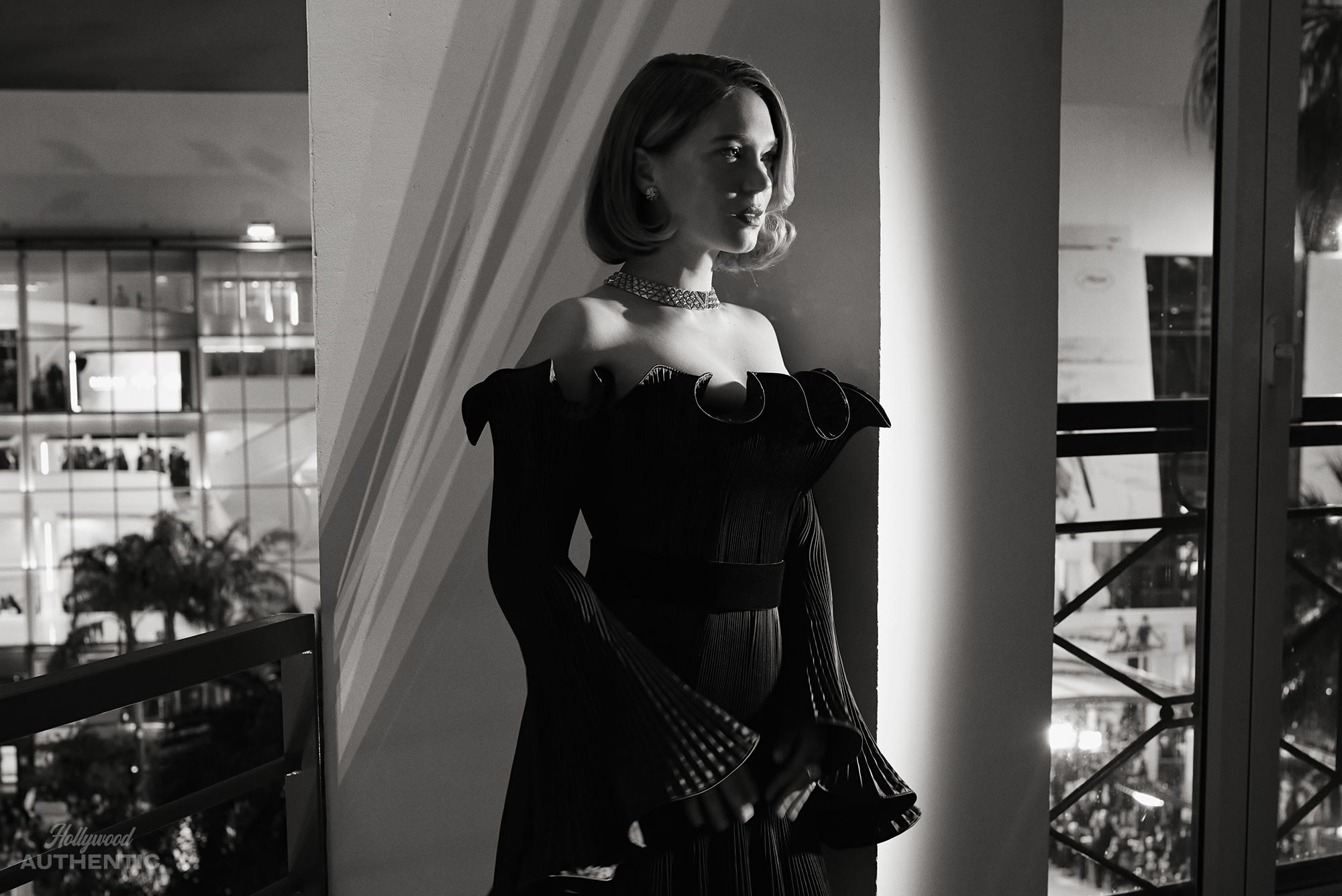
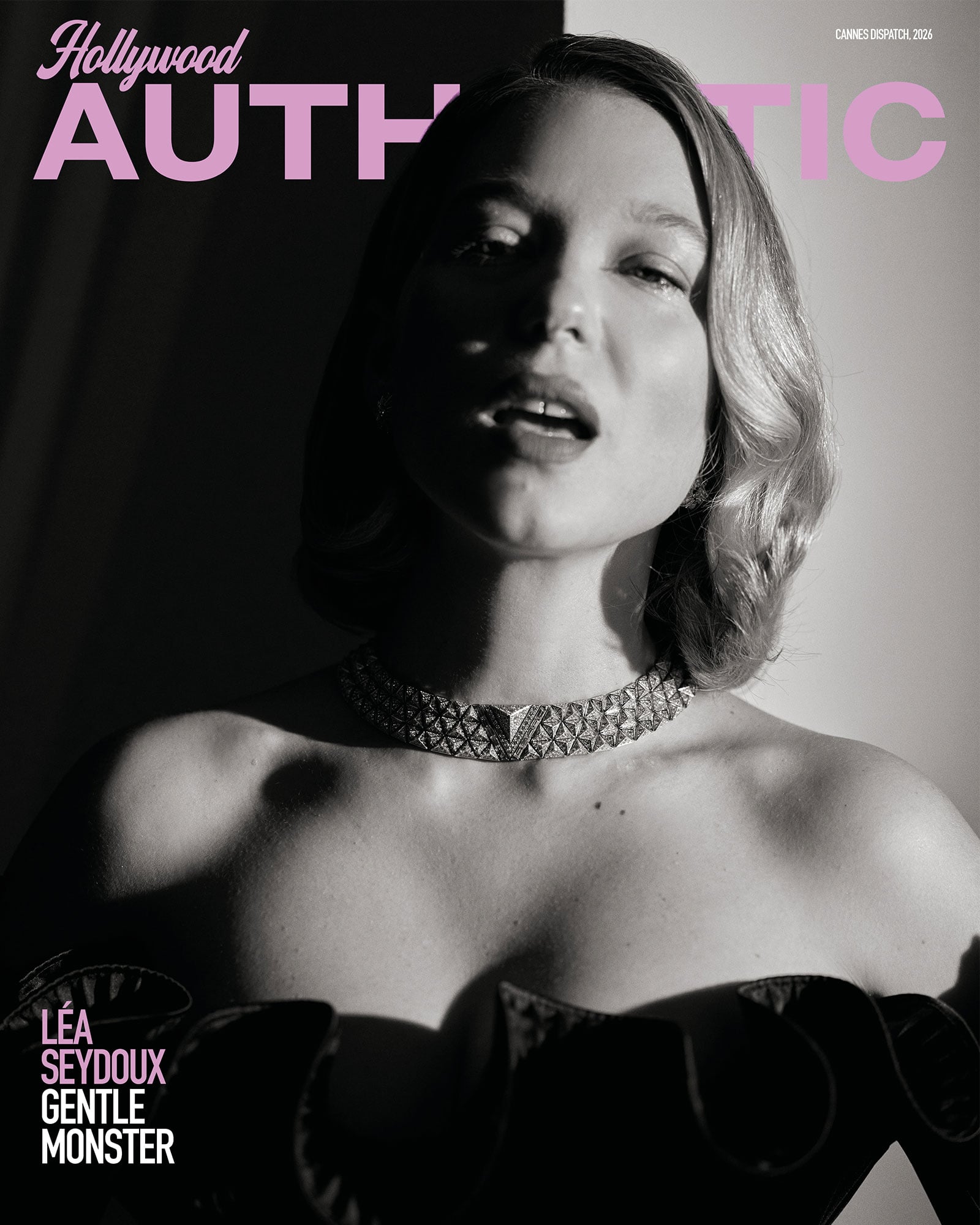
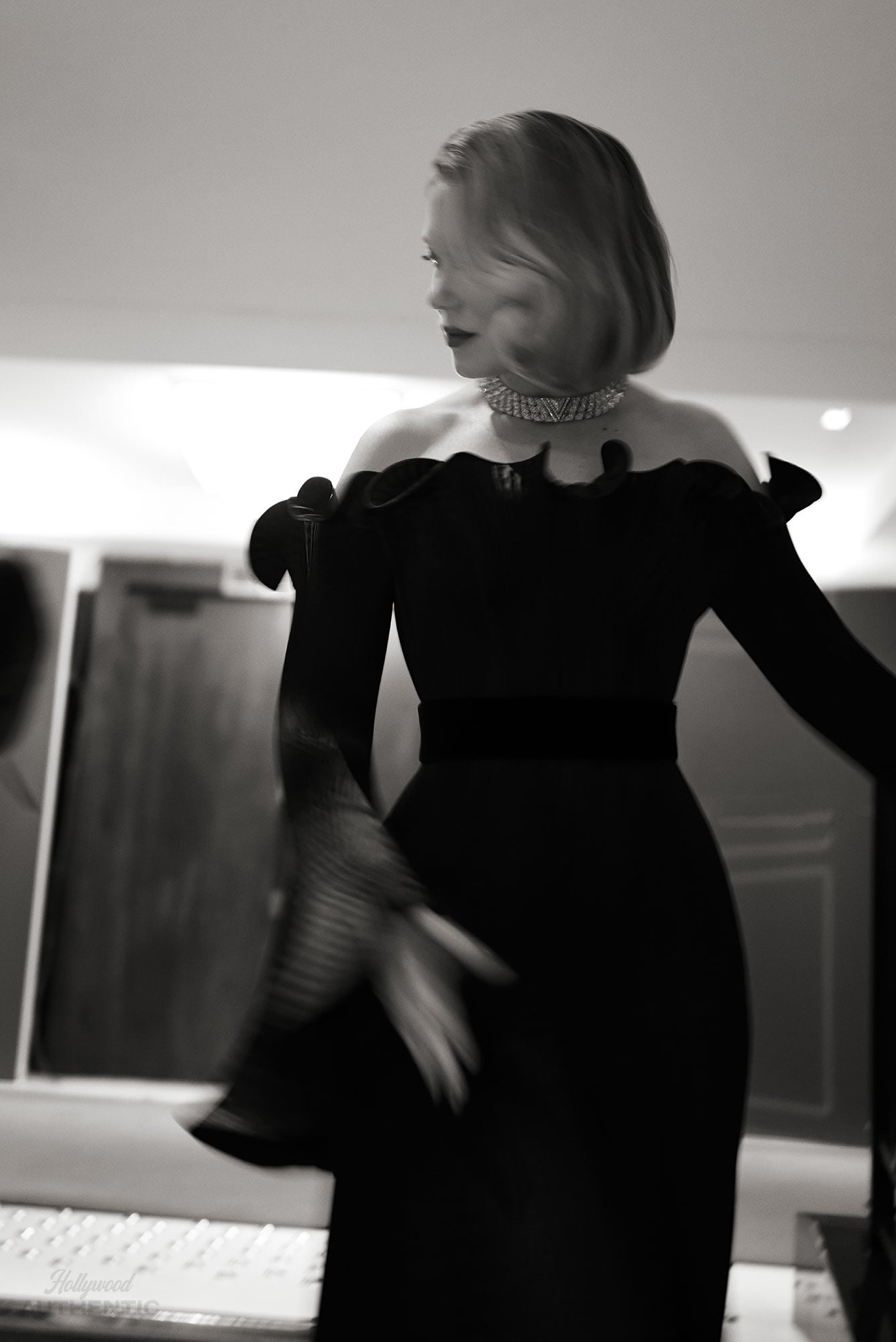
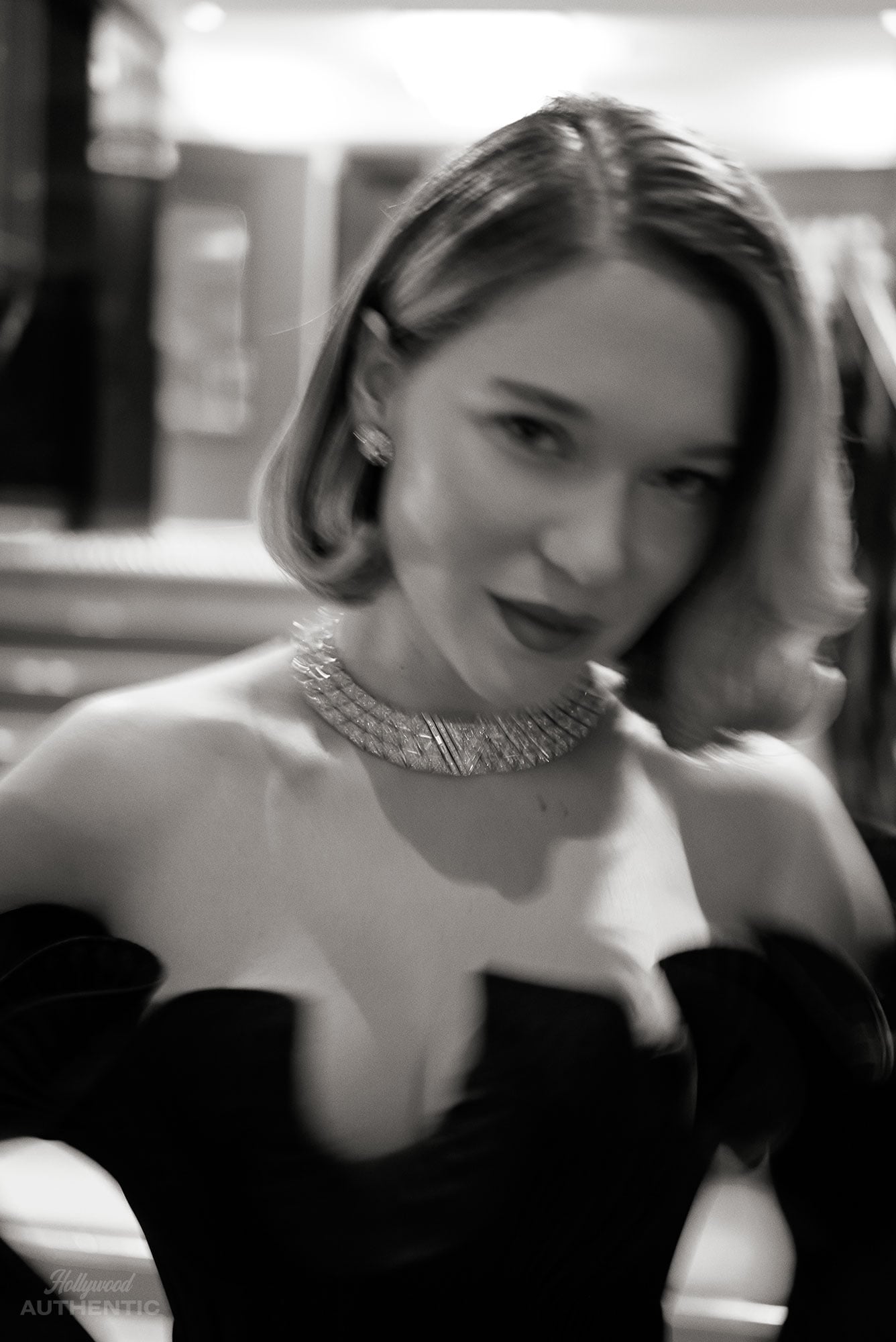
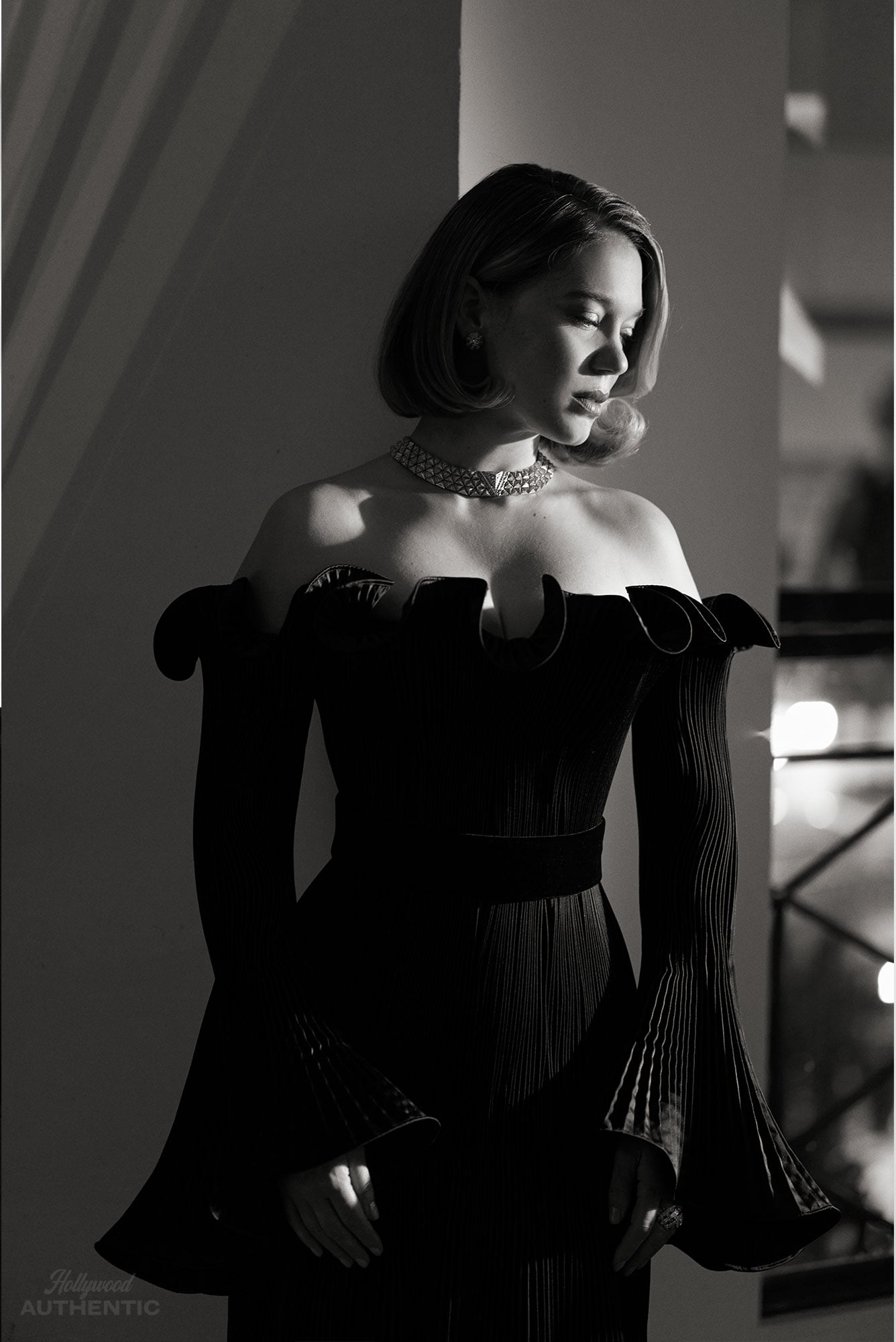
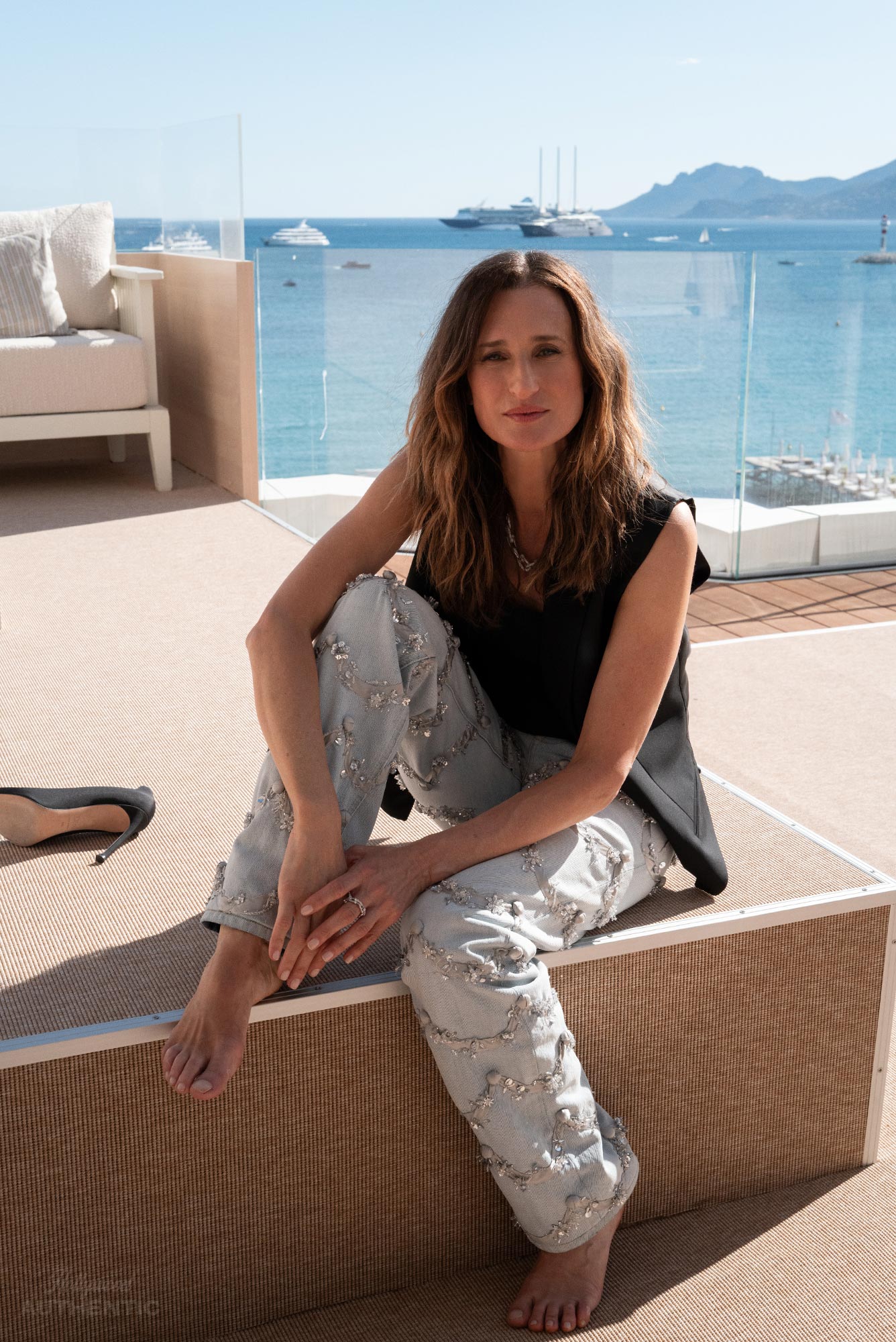
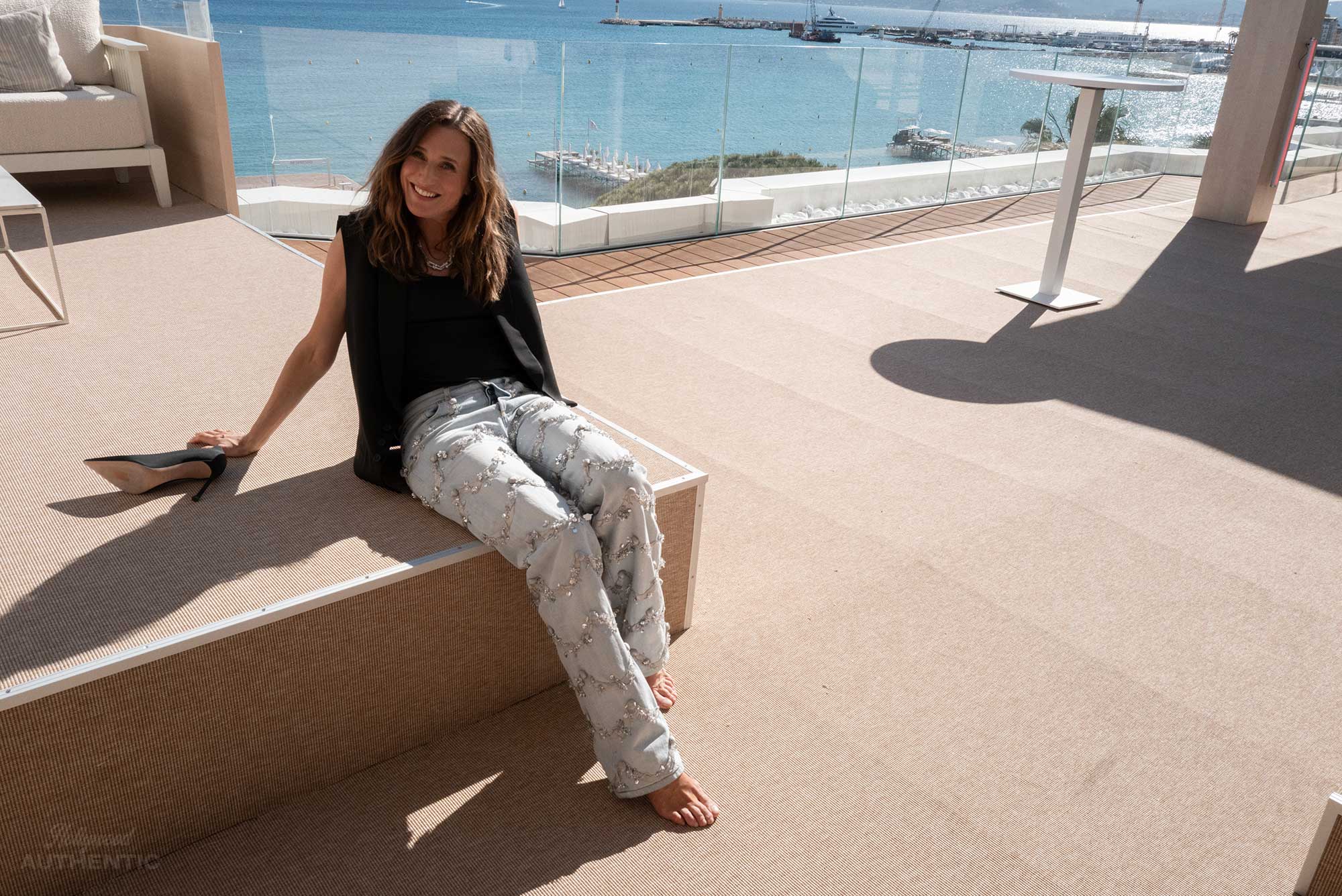
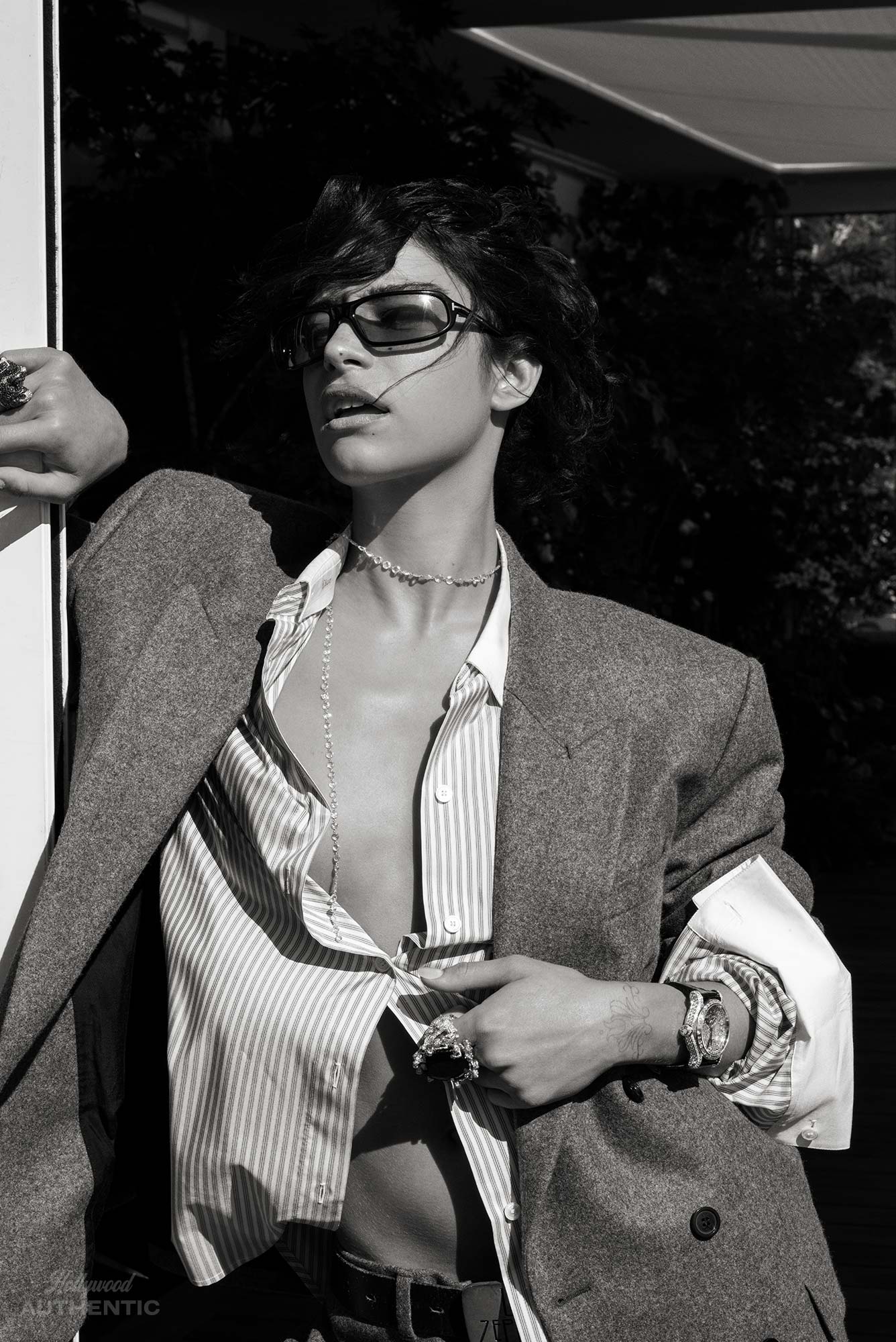
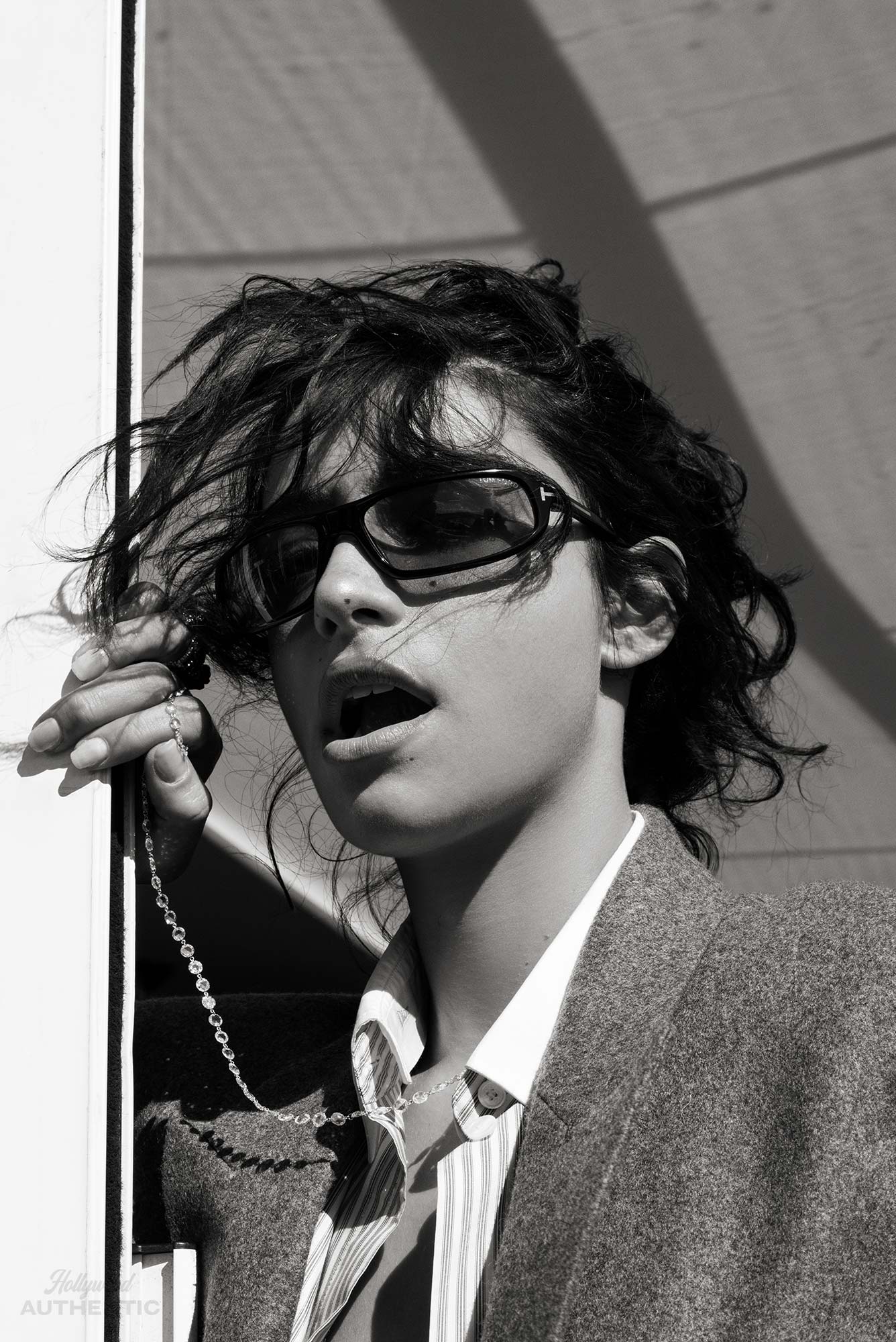
Léa Seydoux and her Blue Is The Warmest Colour co-star Adèle Exarchopoulos were reunited in Cannes as they both arrived at the festival with films this year. The duo shared the Palme d’Or award for their performances as newcomers in 2013, thirteen years later Seydoux in the race for gold again with her role in Marie Kreutzer’s In Competition entry, Gentle Monster. In the Corsage filmmaker’s latest, she plays Lucy, a pianist and mother who is horrified when her husband (played by Laurence Rupp) is investigated by police after child porn is found on his computer. The gentle monster of the title is the seemingly well-adjusted partner Lucy has seen no red flags in, and as the case progresses she experiences rollercoaster emotions of having lived with, and loved, a predator.
The film was initially inspired by a newspaper article Kreutzer read, but gained added resonance when Florian Teichtmeister, the actor who played Emperor Franz-Joseph in Corsage, was found guilty of possessing child porn. Kreutzer told journalists at the press conference in Cannes that she then felt this became more of a reason to create the film and address the subject matter. Seydoux told the conference that the emotionally-charged role was a challenge but a gratifying one. ‘She goes through different states of emotion at the same time as the spectator, you’re totally with her and you feel total empathy,’ she said of her character. ‘You discover the film through her. [In playing her] I tried to live in the spur of the moment and be in the state of total empathy.’ Seydoux was also nervous of singing on camera for the first time in her career, and learnt to play the piano. The film was rapturously received at its premiere, before which Greg Williams shot Seydoux at the Majestic Hotel.
The actor also has Arthur Harari’s body-swap drama The Unknown at the festival, in which she plays a woman who has a one night stand with a man and when she awakes the two have swap consciousnesses. As David, trapped in her body, Seydoux’s character questions identity and gender roles. The two films are vastly different projects but speak to audiences about pertinent themes. As Seydoux told Variety this week; ‘with the fakeness of cinema, you can make the truth appear.’
Photographs by GREG WILLIAMS Words by JANE CROWTHER Gentle Monster and The Unknown premiered at the 79th Cannes Film Festival
CANNES DISPATCH Photographs by GREG WILLIAMS Words by JANE CROWTHER
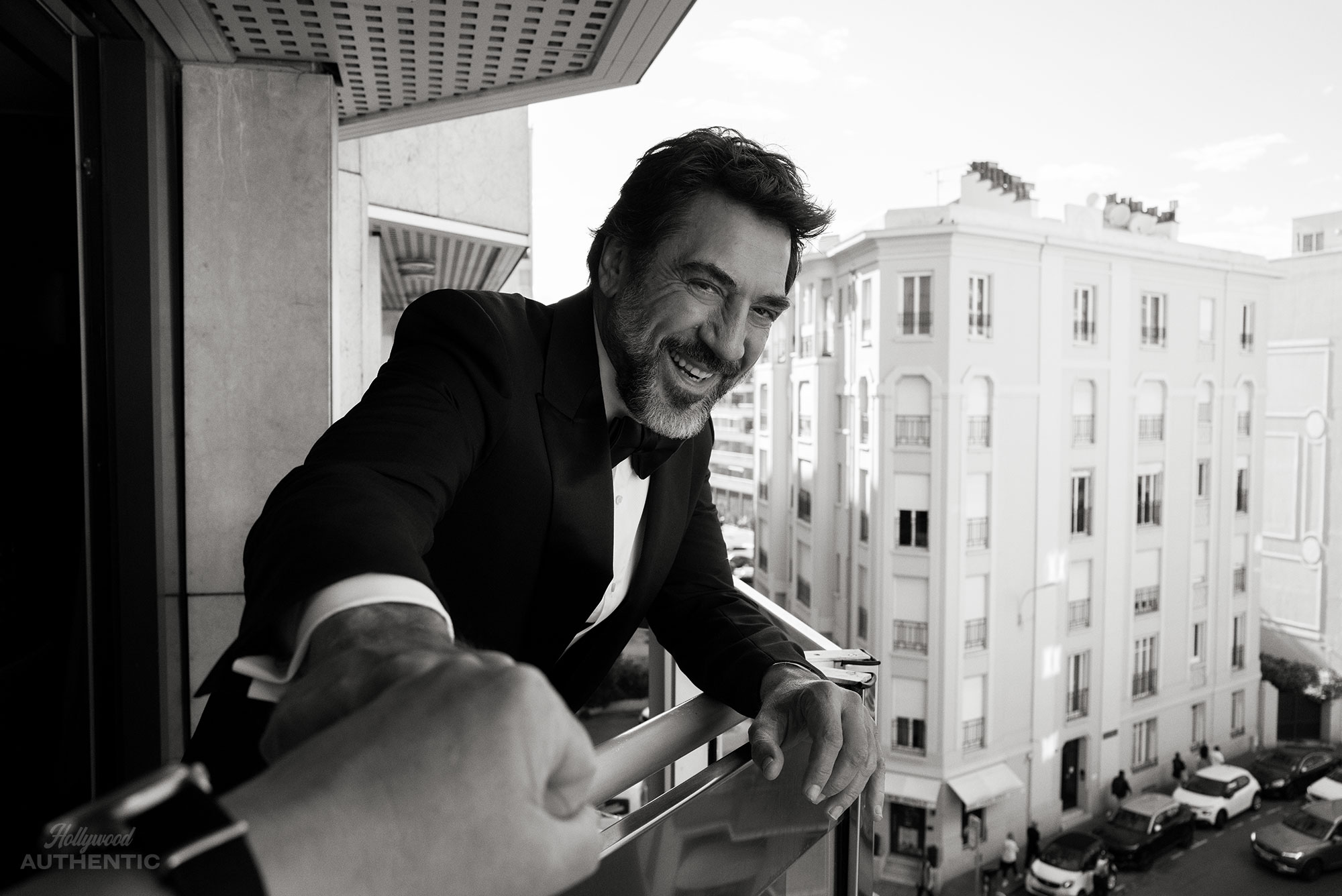
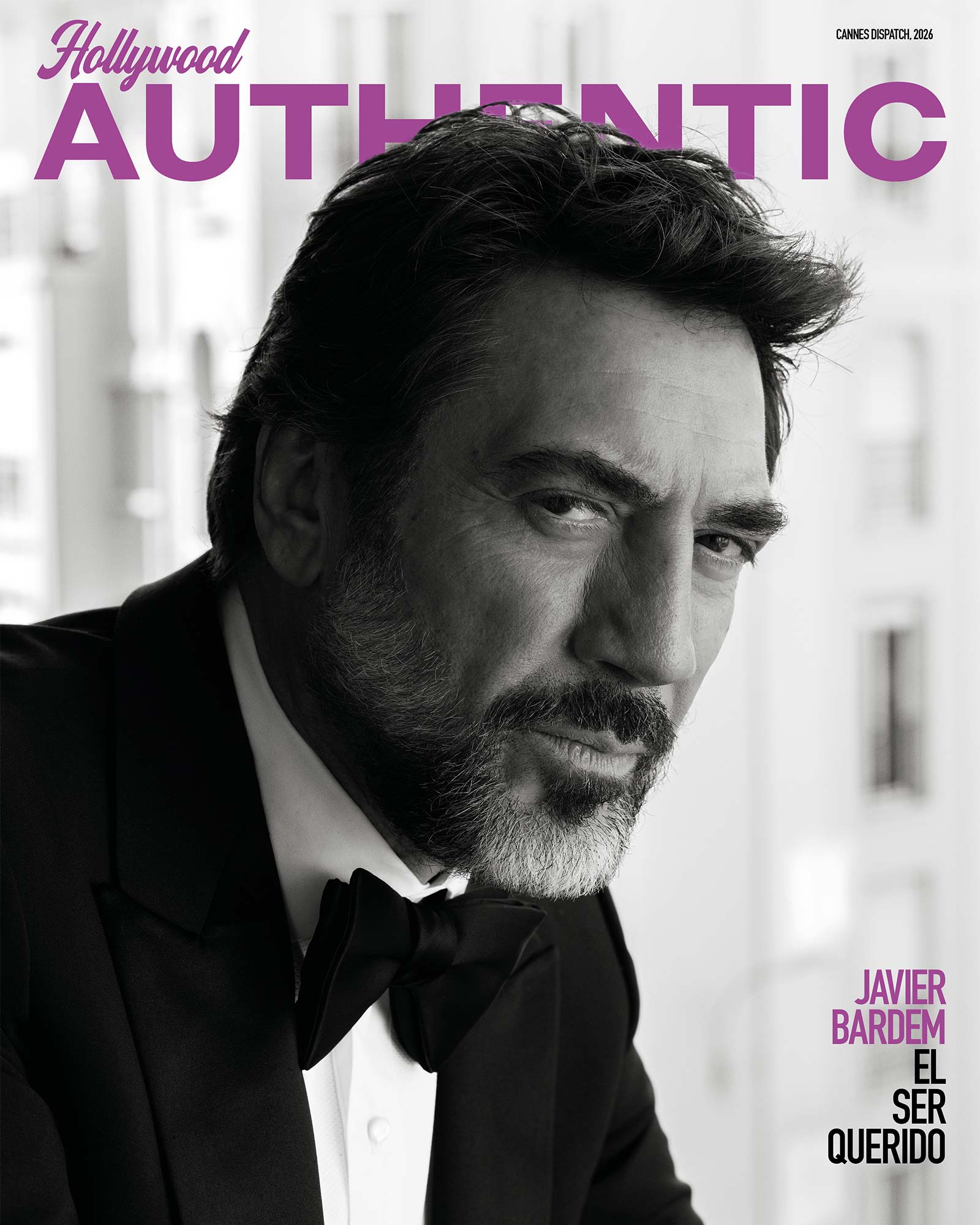
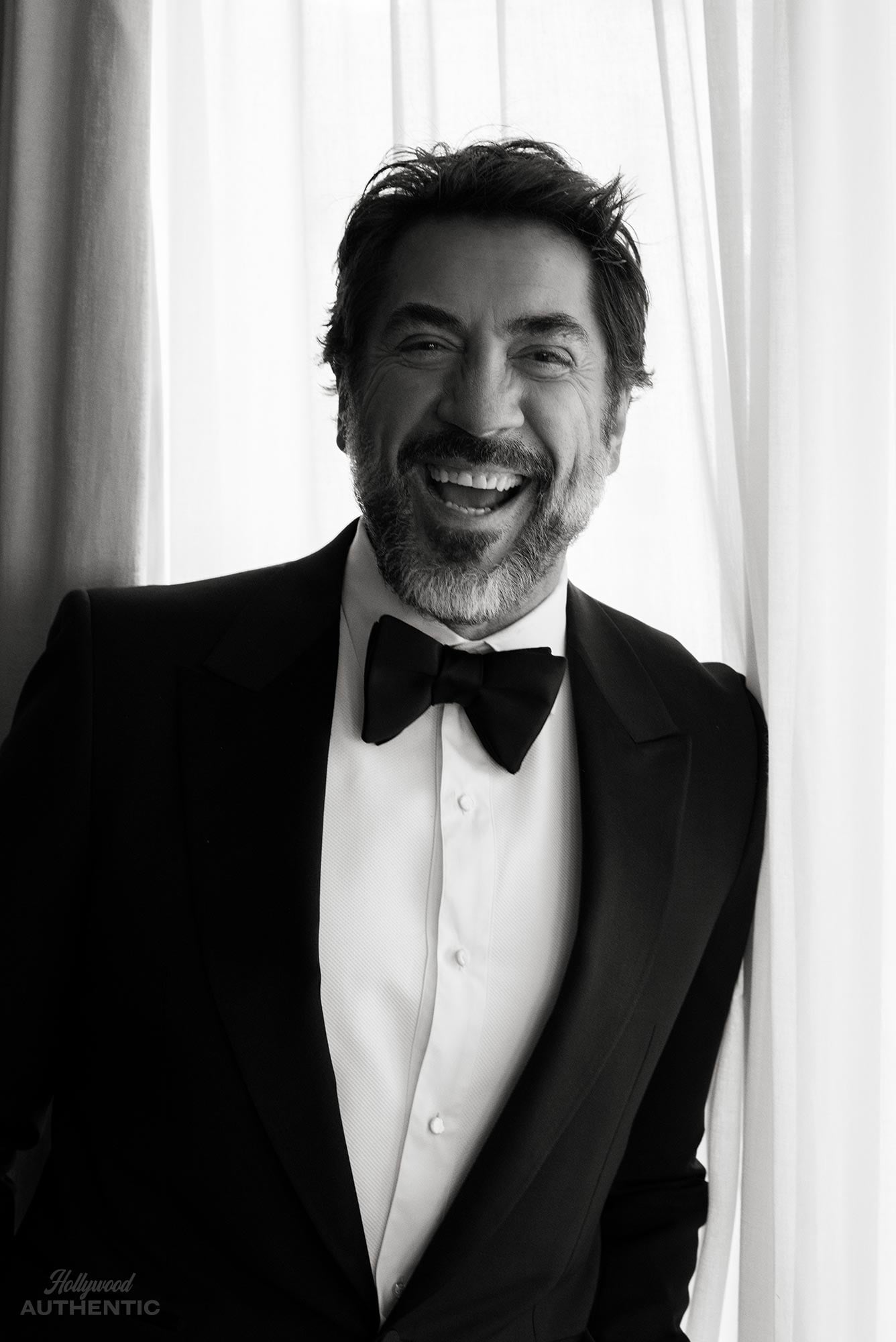
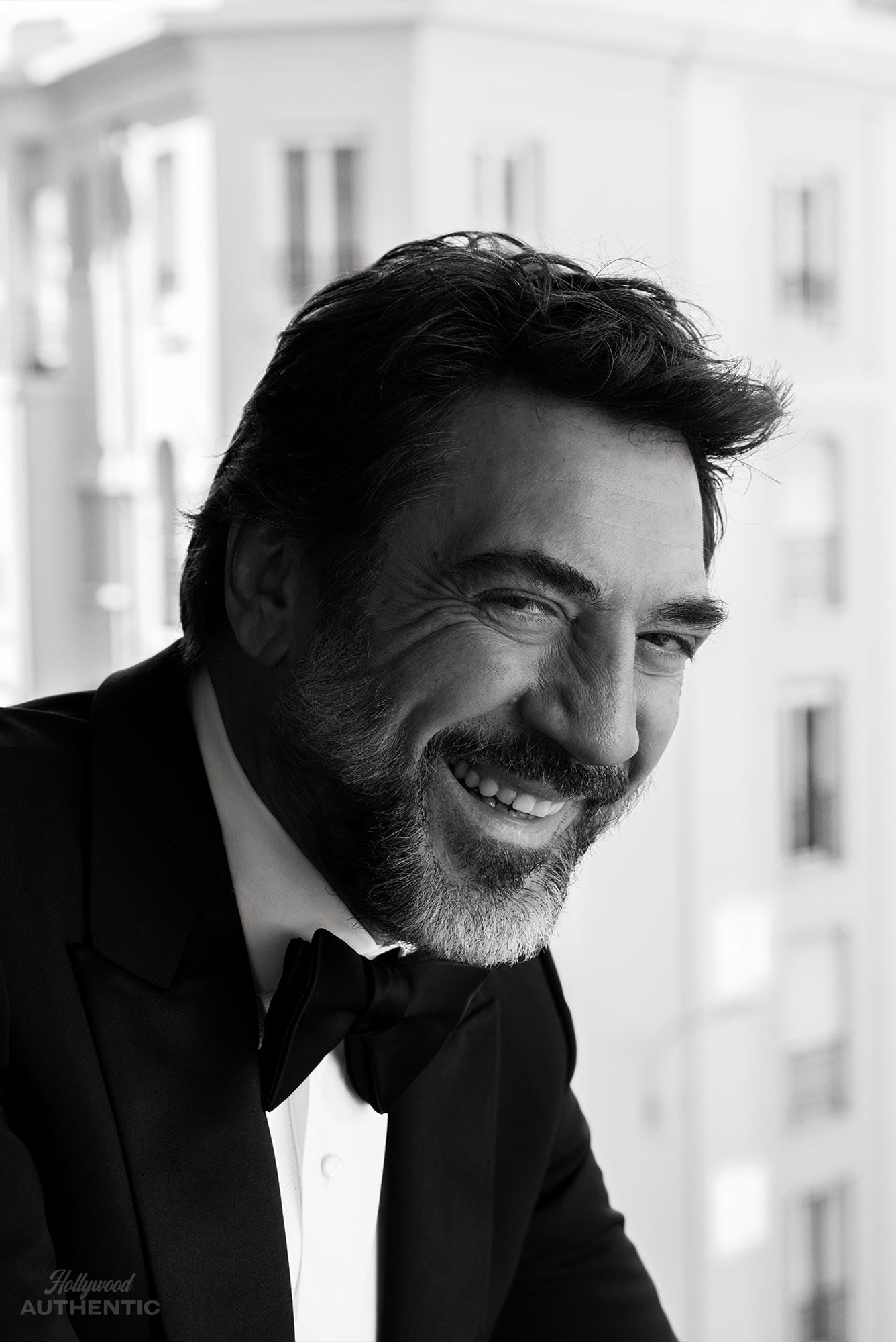
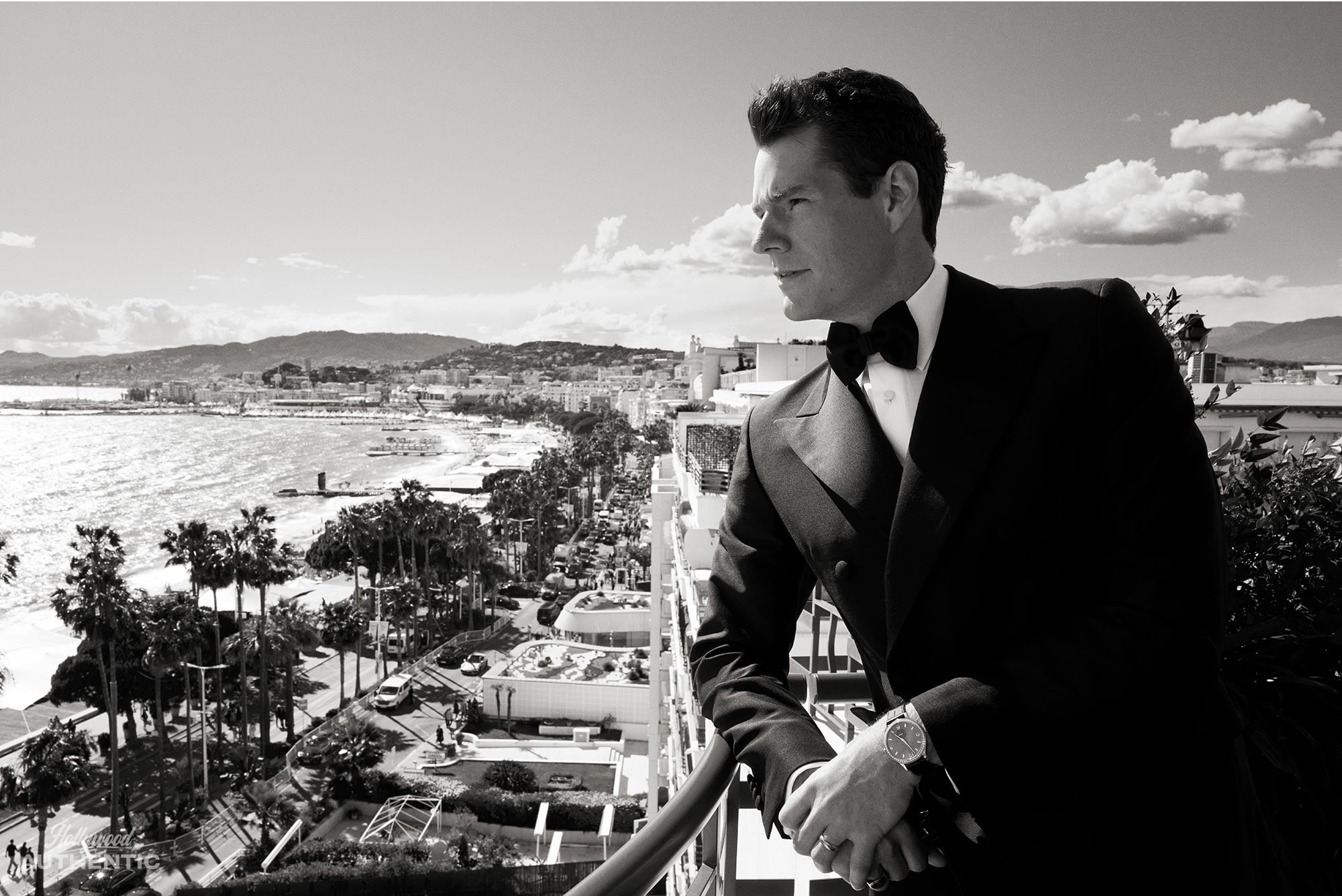
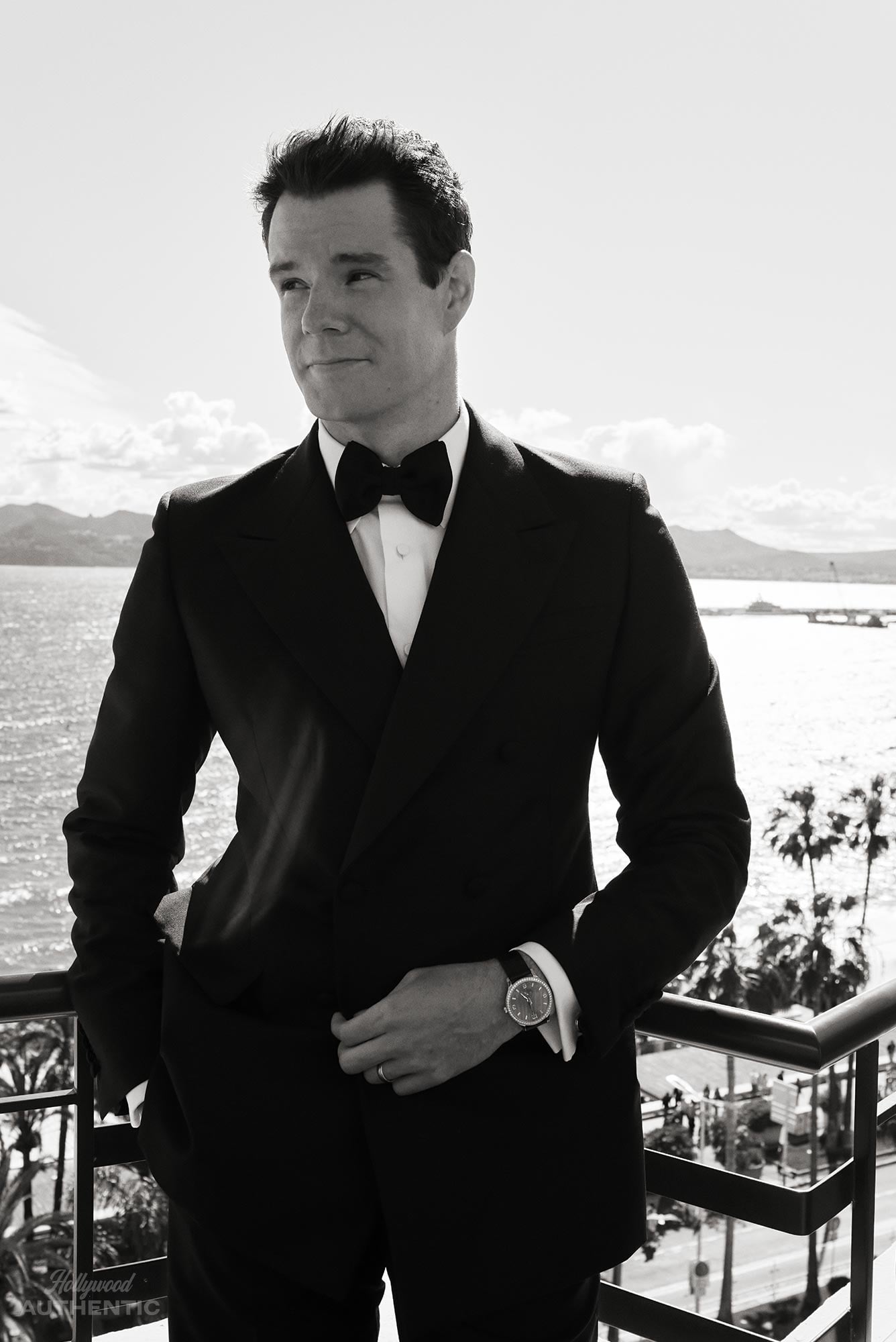
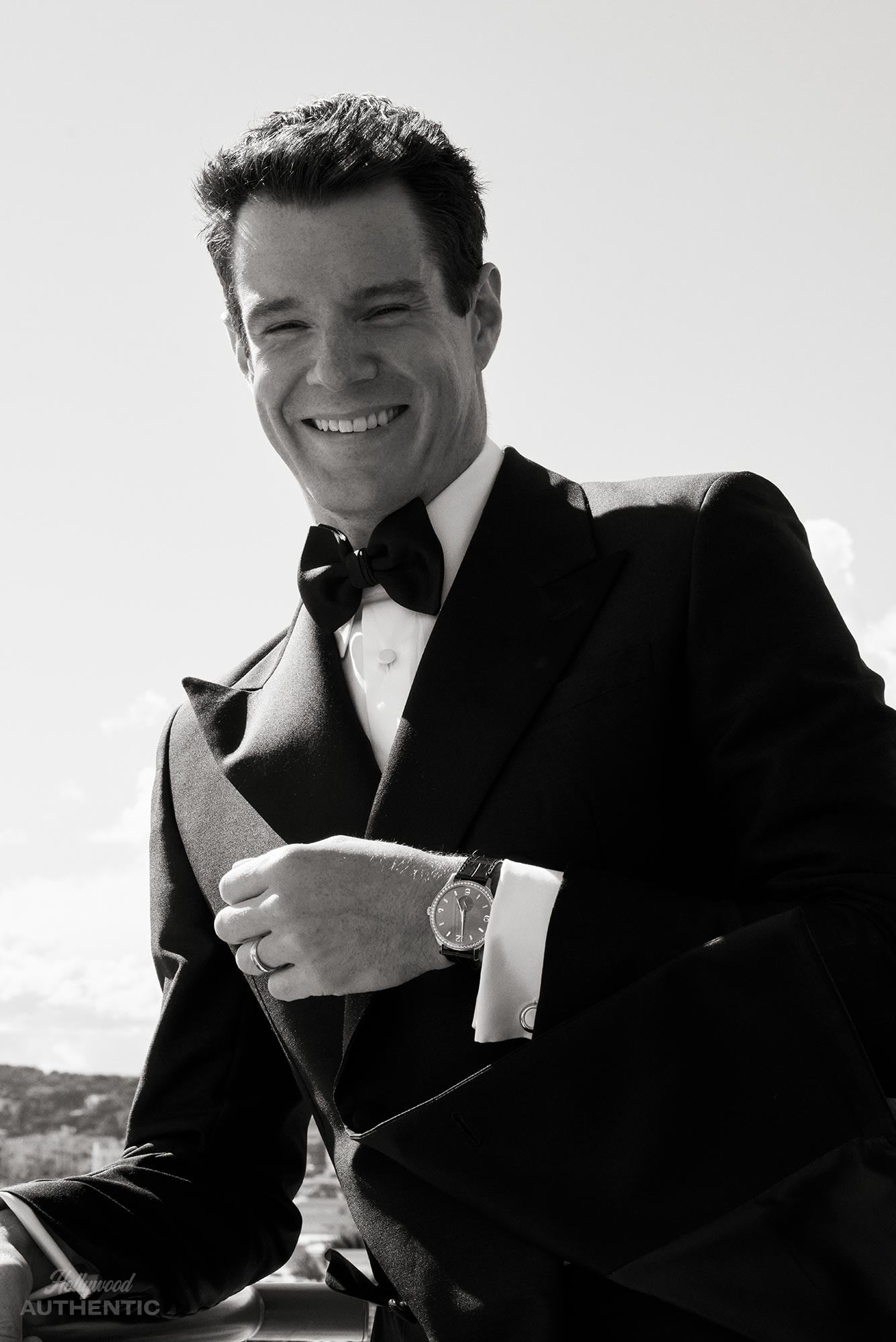
Javier Bardem’s latest film, El ser querido, is the perfect subject matter for a movie premiering at cinéaste Cannes Film Festival – it charts the making of a film as a father and daughter come together to work on a project and their dysfunctional relationship. Greg Williams captured the actor on his balcony at the JW Marriott on the Croisette, before Bardem stepped on the red carpet. In the film from director Rodrigo Sorogoyen, Bardem plays a famous director going through a personal crisis who offers his estranged actor daughter (Victoria Luengo) a role of his latest opus, only for past hurt to surface and Bardem’s volatile helmer to rage about losing the light and eating on camera. He is coercive, threatening and controlling. The toxic masculinity on display is something Bardem said was widespread and institutionalised in his press conference earlier in the day.
‘The problem comes from the bad education that we had received for many ages, which I’m part of. I’m 57 years old, coming from a very machista country called Spain, where there is an average of two women killed monthly by their ex-husbands or ex-boyfriends, which is horrible,’ he told journalists. ‘And we kind of normalised it. I mean, are we fucking nuts? We are killing women because some men think they own them, they possess them.’ He went on to expand the criticism wider than personal or social, to world politics. ‘That problem also goes to Mr. Trump and Mr. Putin and Mr. Netanyahu, the big balls man saying, ‘my cock is bigger than yours, and I’m gonna bomb the shit out of you.’ It’s a fucking male toxic behavior that is creating thousands of dead people, so yeah, we have to talk about it. And I think we are talking about it… We are more aware of it, thankfully, because maybe 20 years ago [this] was something that nobody will pay attention to as a problem, and, and I think this movie speaks about that…in this movie there are three people that say ‘no’ to [my character]: three women.’
Bardem went on to discuss the war in Gaza and to explain his decision to use his stature in the public eye to prompt debate. ‘I don’t have any other power or more power than you guys, but I use it in the best way I know.’ When asked if he worries about being so outspoken he admitted that ‘the fear does exist, granted, but one has to do things even if you feel a bit scared or afraid. You have to be able to look at yourself in the mirror, look at yourself in the eyes. My mother taught me to be the way I am. There is no plan B. This entails consequences, which I am fully ready to shoulder.’
Photographs by GREG WILLIAMS Words by JANE CROWTHER El ser querido premiered at the 79th Cannes Film Festival
CANNES DISPATCH Photographs by GREG WILLIAMS Interview by JANE CROWTHER
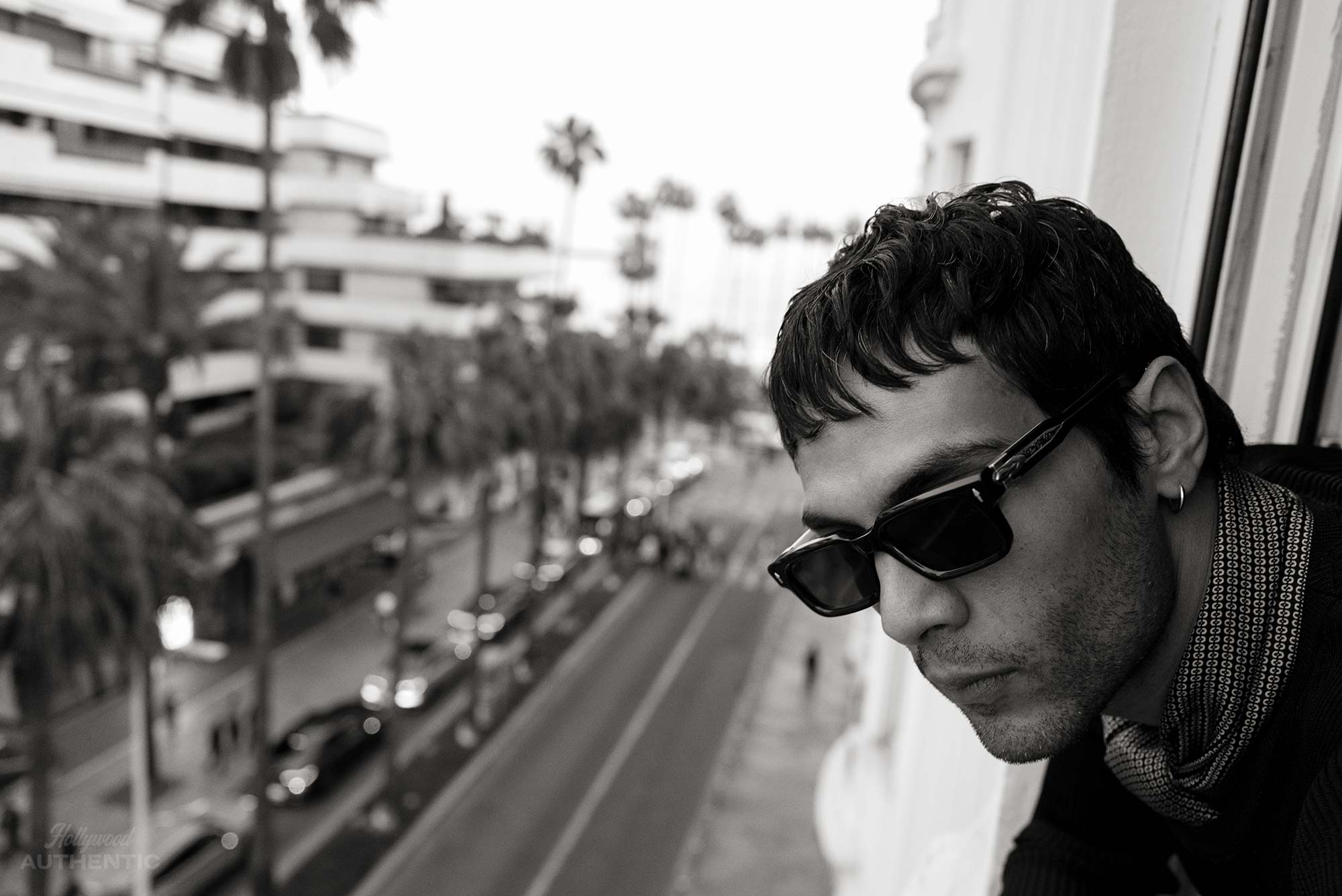
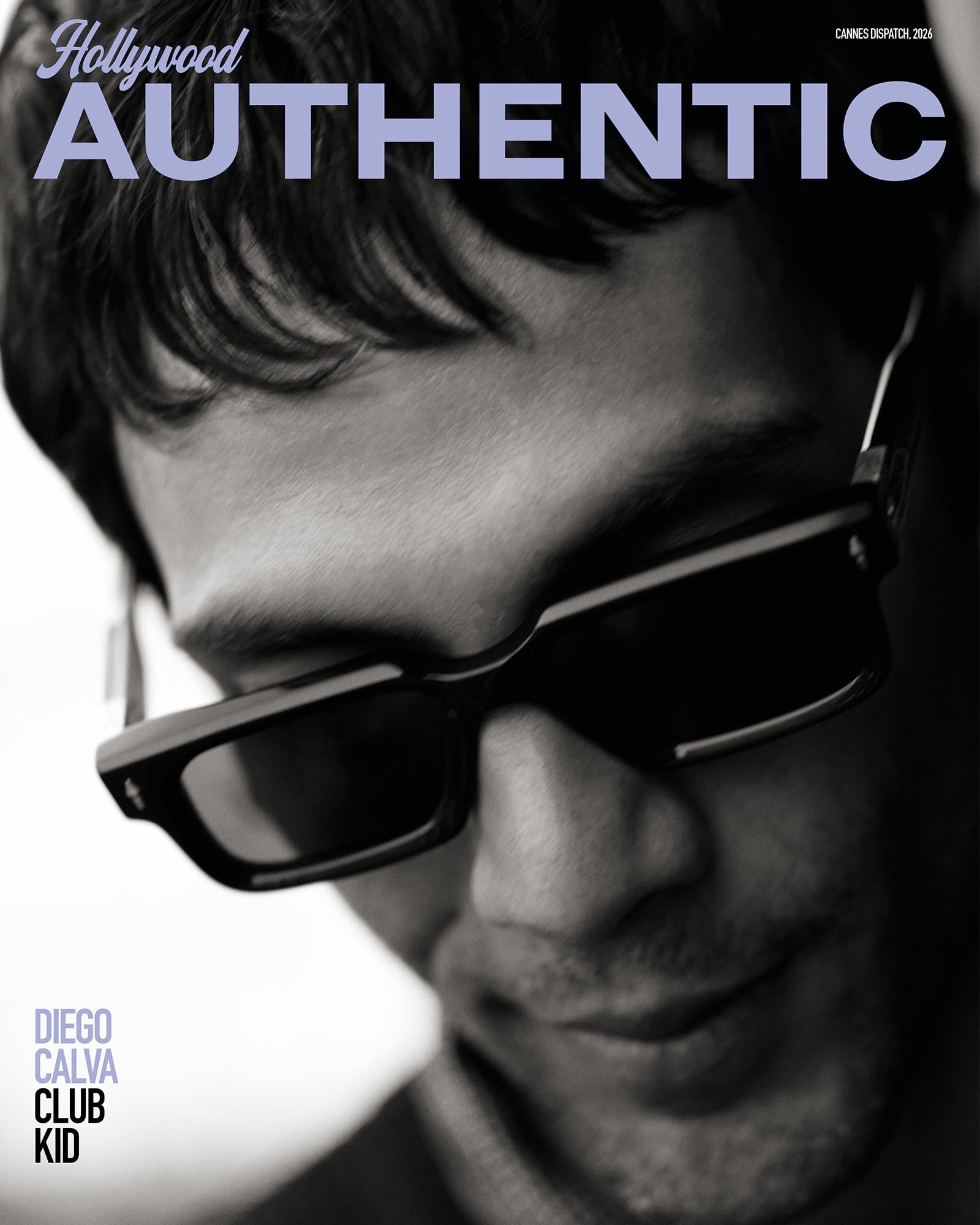
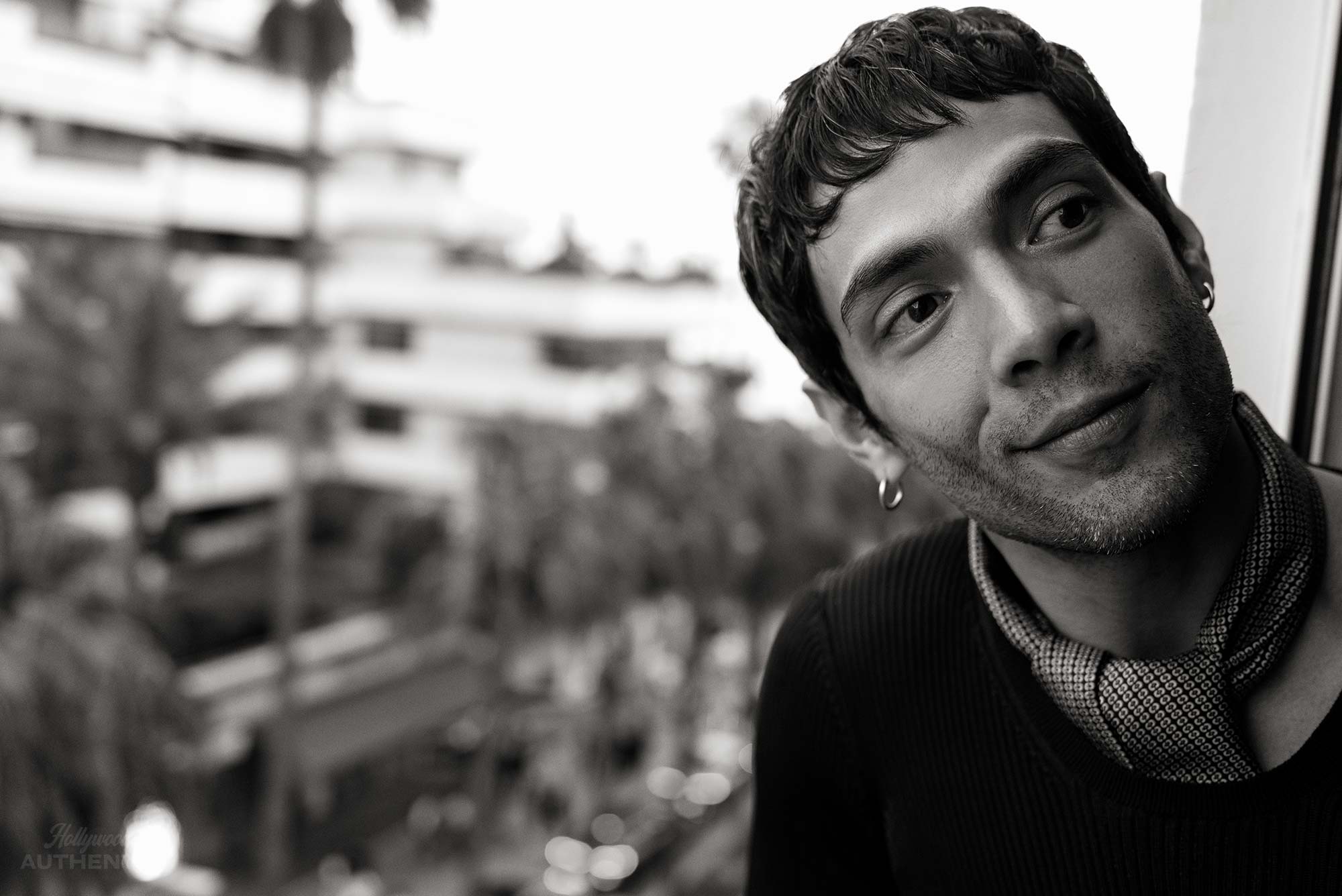
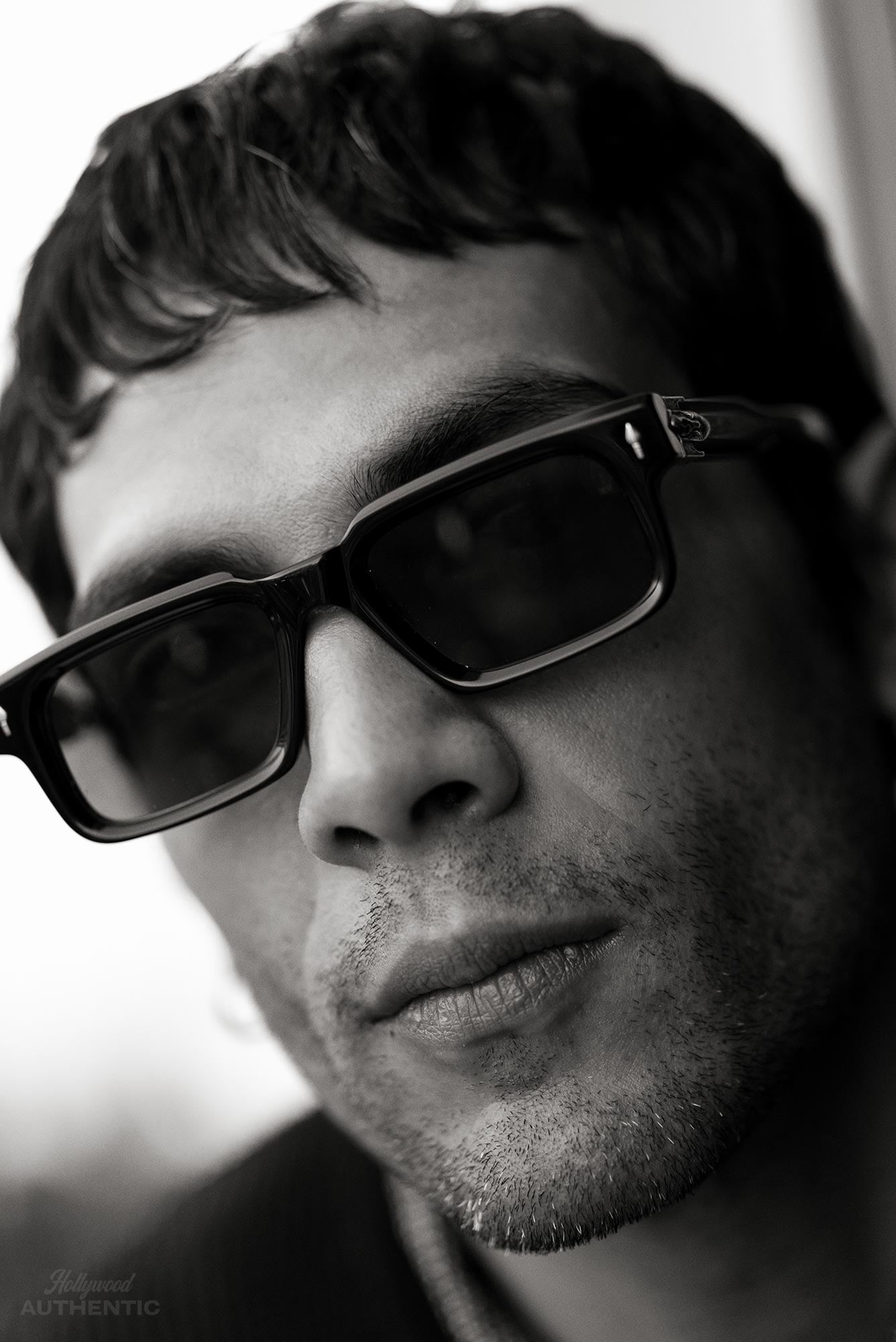
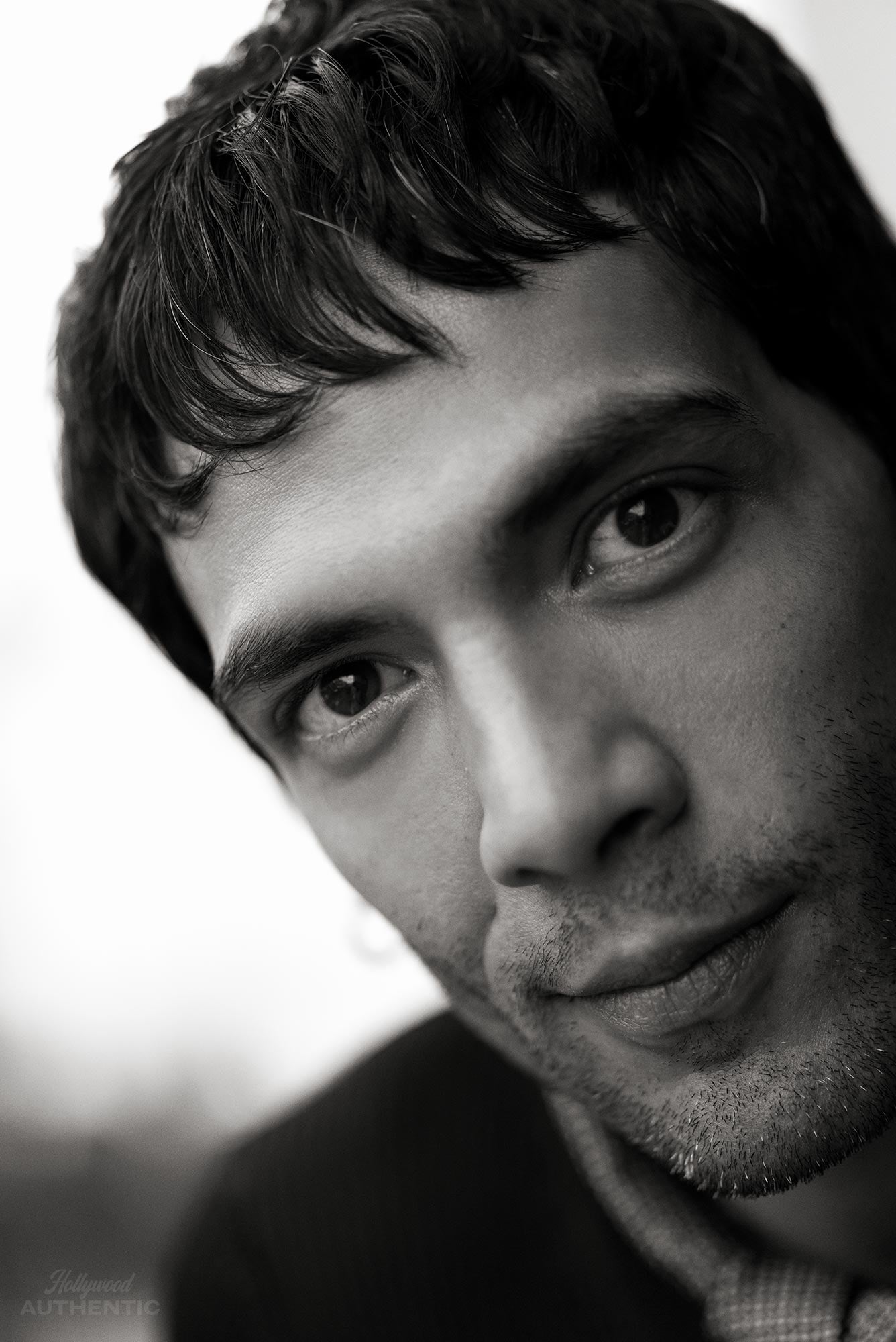
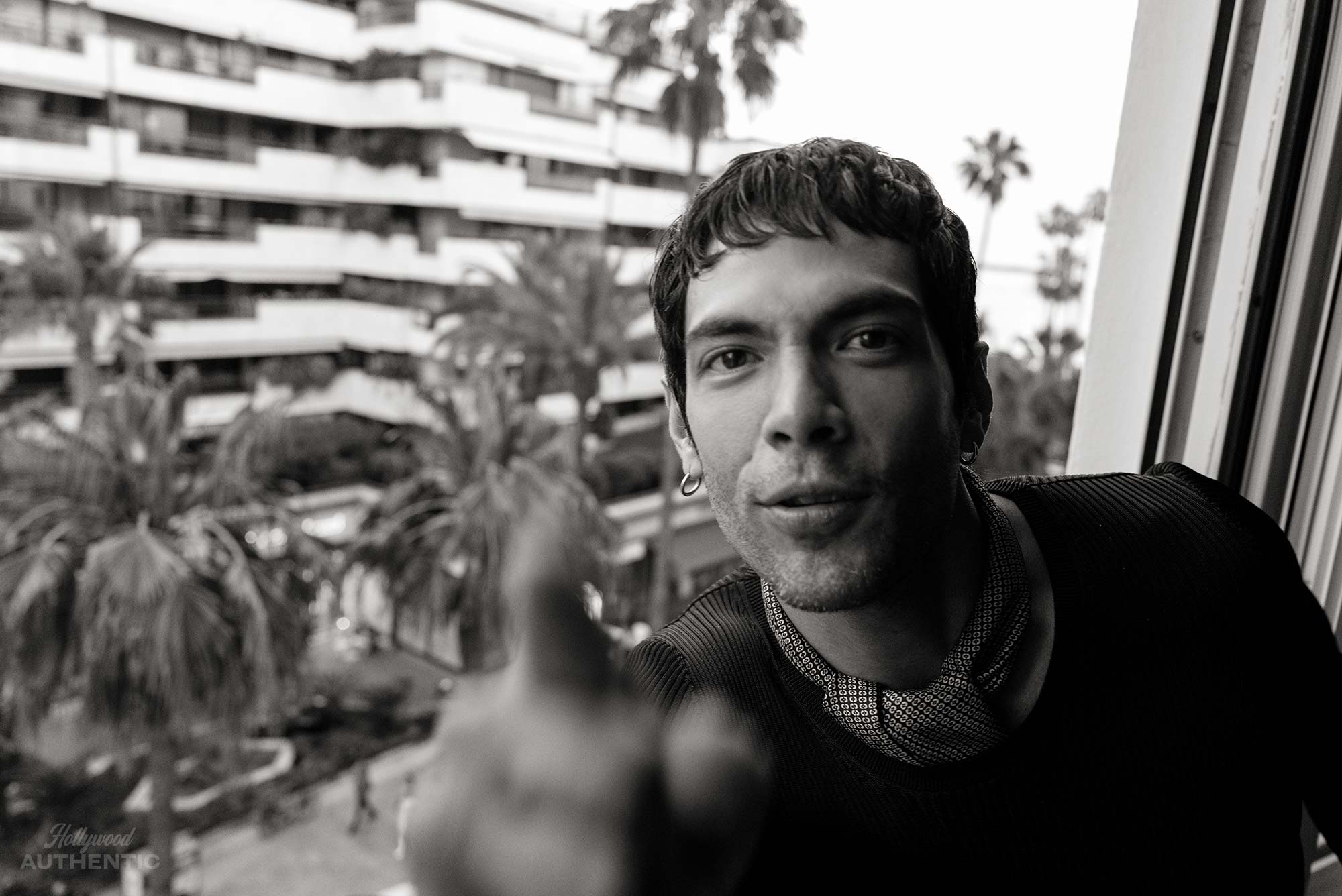
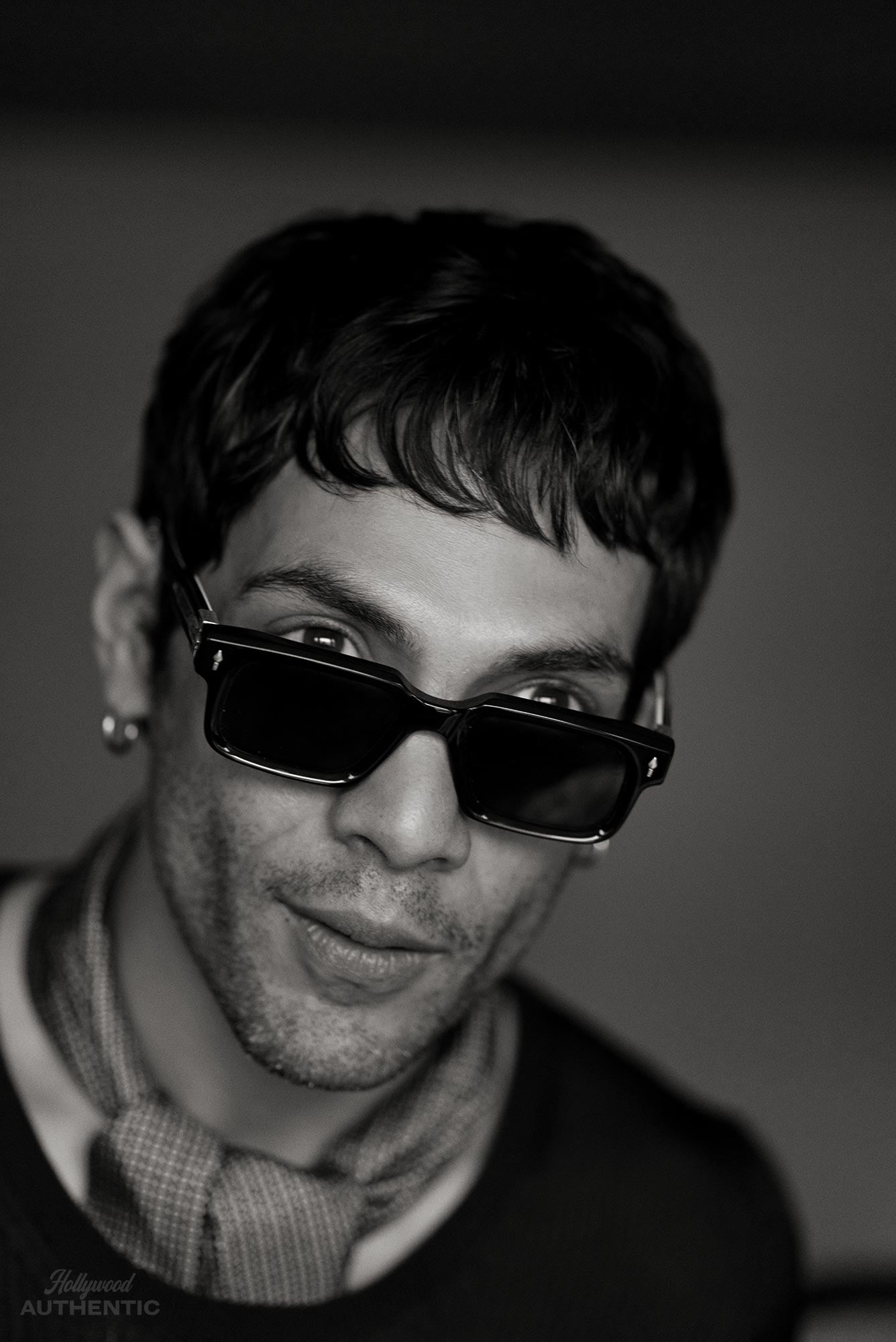
Mexican actor Diego Calva was as thrilled with the film he’s presenting at Cannes as the audience at the premiere who gave Club Kid a rousing seven-minute standing ovation, chanting the name of the child actor in the project as writer-director Jordan Firstman lifted him aloft above the seats. ‘I was in Los Angeles two weeks ago, and the producer called me, and said, ‘We want to do a screening for you, so you can see it before Cannes,’ Calva says over a pick-me-up espresso martini in the bar at the Martinez Hotel when Hollywood Authentic catches up with him. ‘I said, ‘no’. I wanted to see it here. It was my first time watching it, and it just felt really special. Because it’s very specific to this universe of New York, drugs, parties. But it’s also really universal. I love when I do a project that I can show my grandmother, my mum, my junkie friends… and they’re all going to like it!’
A buzzy hit on the Croisette this festival, Club Kid follows Peter, a NY party promoter (played by Firstman) whose drugs/sex/dancing existence is challenged when he discovers he’s father to a young boy (Reggie Absolom). Calva plays a child therapist who epitomes love and tenderness, his warmth extending to a fizzing chemistry with Peter. Firstman first came to prominence via his online presence and has calibrated that into a spiky, funny, heartfelt movie that plays like Chaplin’s The Kid crossed with Trainspotting and Saturday Night Fever. Calva has Instagram and posted footage of the premiere and after-party but, he says, he still likes to think of himself as ‘an outsider’ both in terms of social media and Hollywood – despite having high profile projects under his belt. He’s appeared in Narcos Mexico, made a splash as the lead in Damien Chazelle’s Babylon, appeared opposite Jacob Elordi in On Swift Horses and most recently, joined the award-winning team of The Night Manager for season two.
‘I do belong to movies. Movies are my life. But I don’t want to belong too much to an industry; to feel like, ‘I’m part of this. I control it’. I like the idea of the immigrant, the foreigner who’s visiting this. Nobody owns a movie. The directors, the actors, the producers – we all do the movie. But then the movie is out, and it belongs to everyone. And everyone should be invited to this party called cinema.’ Cannes is certainly a party for cinema and this is Calva’s first time at the event. ‘Being in Cannes for me is really emotional. I was at the party last night, and I called my mom. It was 4am in the morning, but it was 3pm in Mexico. I cried, and I said, ‘Mom, I’m here’. I decided to dedicate my life to movies. Movies saved my life so many times. Now I’m here.’
His writer-director-co-star Jordan Firstman has been equally moved by his experience. He went viral at the premiere by kissing Calva post-credits in a euphoric moment. Calva laughs at the notion that it was wish fulfillment for audience members who’d been so taken with their onscreen relationship, which crackles with want and love. It’s the sort of chemistry that is hard to find. ‘The relationship of a director and an actor is a first date, your first impression,’ he shrugs. ‘Jordan got so open with me. He really told me stories about his life, and why he wanted to do this movie. He told me something really cool: ‘I’m still learning how to be alive’. I love the idea that this movie is a coming of age for a 30-year-old adolescent. When someone is open, and so excited, and has something to say… that’s what all actors want. We really want to be part of someone’s dream – not someone’s job.’ What did the duo discuss on their first ‘date’? ‘ I told him stories about my childhood, living in Mexico City, getting into some situations – I used to be a skateboarder, and I had a record label. And how movies saved my life. You talk about all these things in the first two hours of meeting someone on Zoom, then when I met Jordan in person, he kind of had already built the relationship. When you’re working with someone who has so much love; you want to be part of it. And the chemistry…What is chemistry? First of all, how do you define that?’
When he’s asked to define it, he sips his drink and thinks. ‘Acting is more about silence than talking. Now, I’m talking. This is easy. But being silent… It’s all about the passion of the untold. It’s all about the silence. With Jordan, the silence was so easy. Sometimes, when you act, when you have to cry in a scene, and you’re able to just remember your character’s life, not your own… That’s what I was thinking about in this movie – not acting.’ The movie has the same effect on viewers; though it’s gloriously snarky and funny, the heart is real. At the premiere, tears were flowing amid the fisting gags and vomit scenes. ‘We all have trauma, right?’ Calva says. ‘And trauma is like a hole. We are always trying to fill that hole. What if we realise that that hole makes us more… light. You know? It takes a weight out of us. And also, we can have a party there. That’s Club Kid. It’s a party in the hole of trauma.’
Calva is in town with two movies, he’s also presenting Nicolas Winding Refn’s Her Private Hell in which he has a small, but pivotal role. ‘Her Private Hell is about a completely different story and a completely different situation. Jordan is my fucking friend. Nic is my friend, of course, but it’s different… He likes to play one song during the whole day. One song every day. We were listening to Suicide and Alan Vega, Iggy Pop. He asked me to just look at the lens, and listen to the song one, two, three, four times. And then he’ll say, ‘You did something with your eye. I like it. We have it.’ And what I did… I don’t know. It’s like a mantra. And that’s amazing. Actors are horrible and sensitive, blah blah. But we want to deliver. We want to please. When someone is like, ‘Just be you’ – whoa, we are in fucking trouble. But then he captures you.’
Despite imdb’s claims that he is playing Che Guevara in an upcoming project, he’s not – though he looks just like him. ‘I would love to play Che Guevara – but in a vampire movie. America is the humans. Cuba is the vampires. And we’re conquering the world.’ He is appearing in Danny Ramirez’s football film. Baton, alongside recent Hollywood Authentic subject, Lewis Pullman. ‘I admire Danny so much because as a Latino in Hollywood, he is building a career, and now he is directing and acting and producing. And he invited me to play his best friend in the movie. I play a completely weird character. I’ve never played something like that. I’ve been lead in a movie, right? But I love supporting characters. I love to be part of the universe, and make other people shine in a way that you have more room. For me, the lesson is: Alfred Molina in Boogie Nights – one scene, and you will remember that scene forever. I want to do things like that.’ Based on the love for Club Kid out of Cannes, he’ll be taking his pick…
Photographs by GREG WILLIAMS Interview by JANE CROWTHER Club Kid and Her Private Hell premiered at the 79th Cannes Film Festival
CANNES DISPATCH Photographs by GREG WILLIAMS Interview by JANE CROWTHER
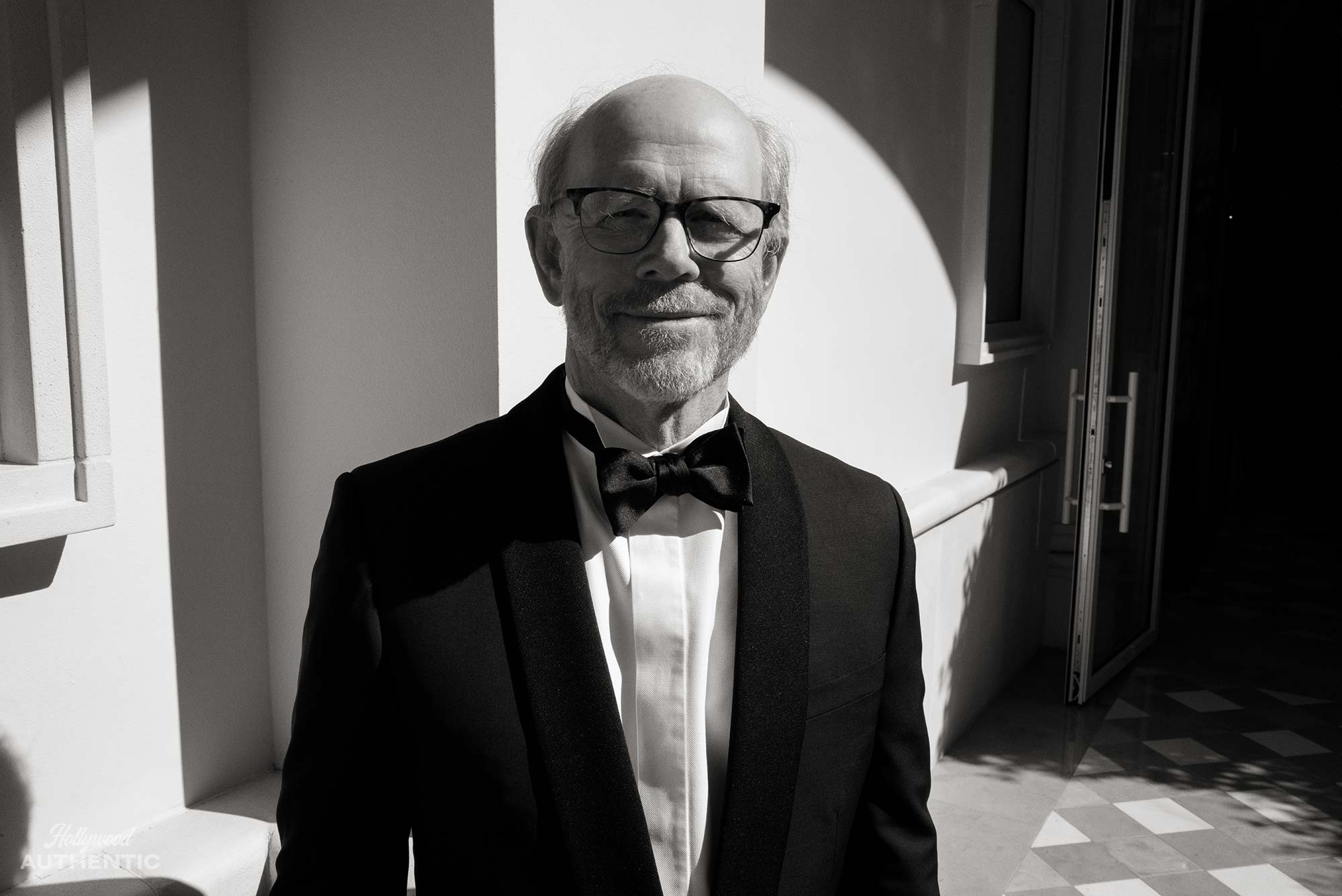
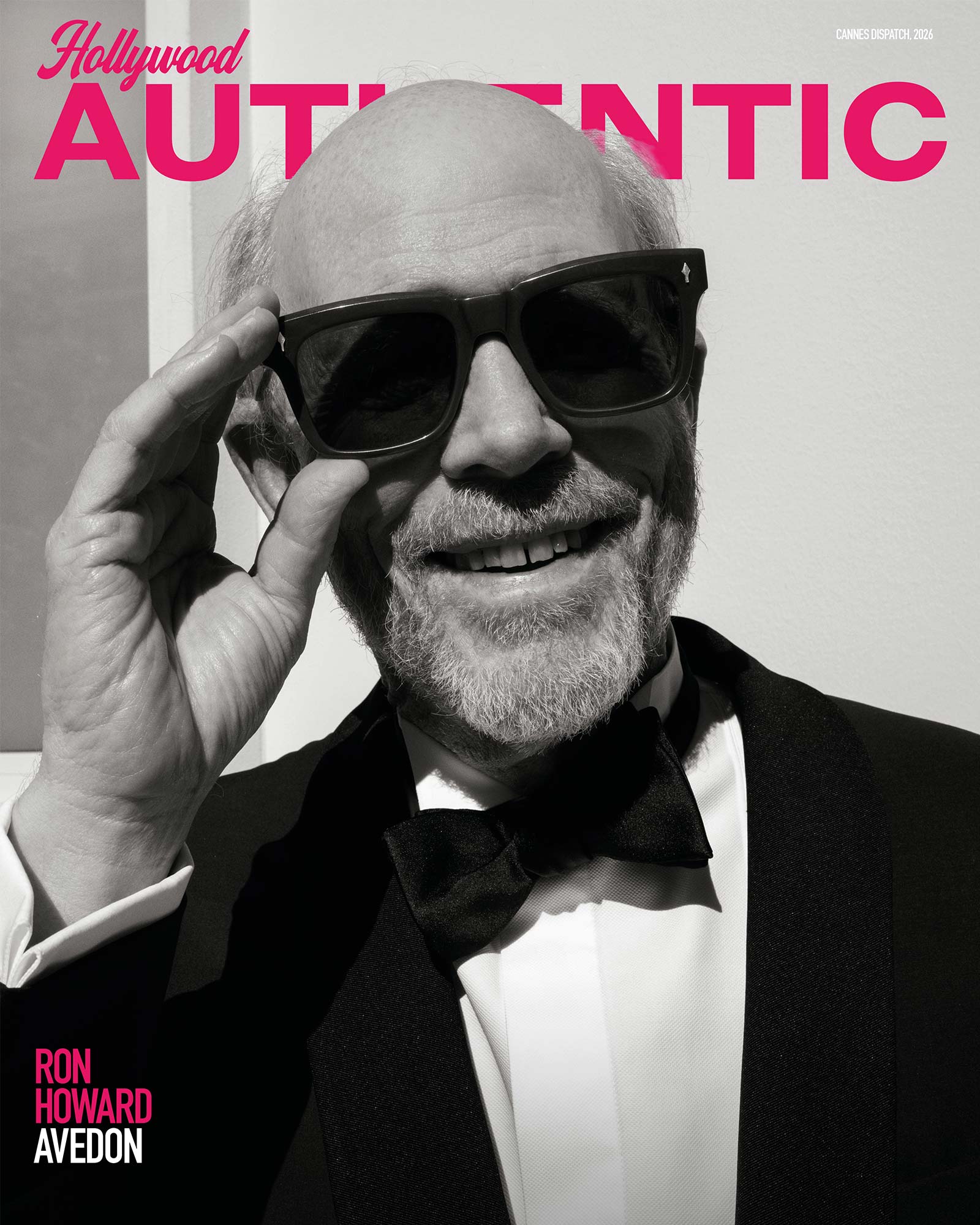
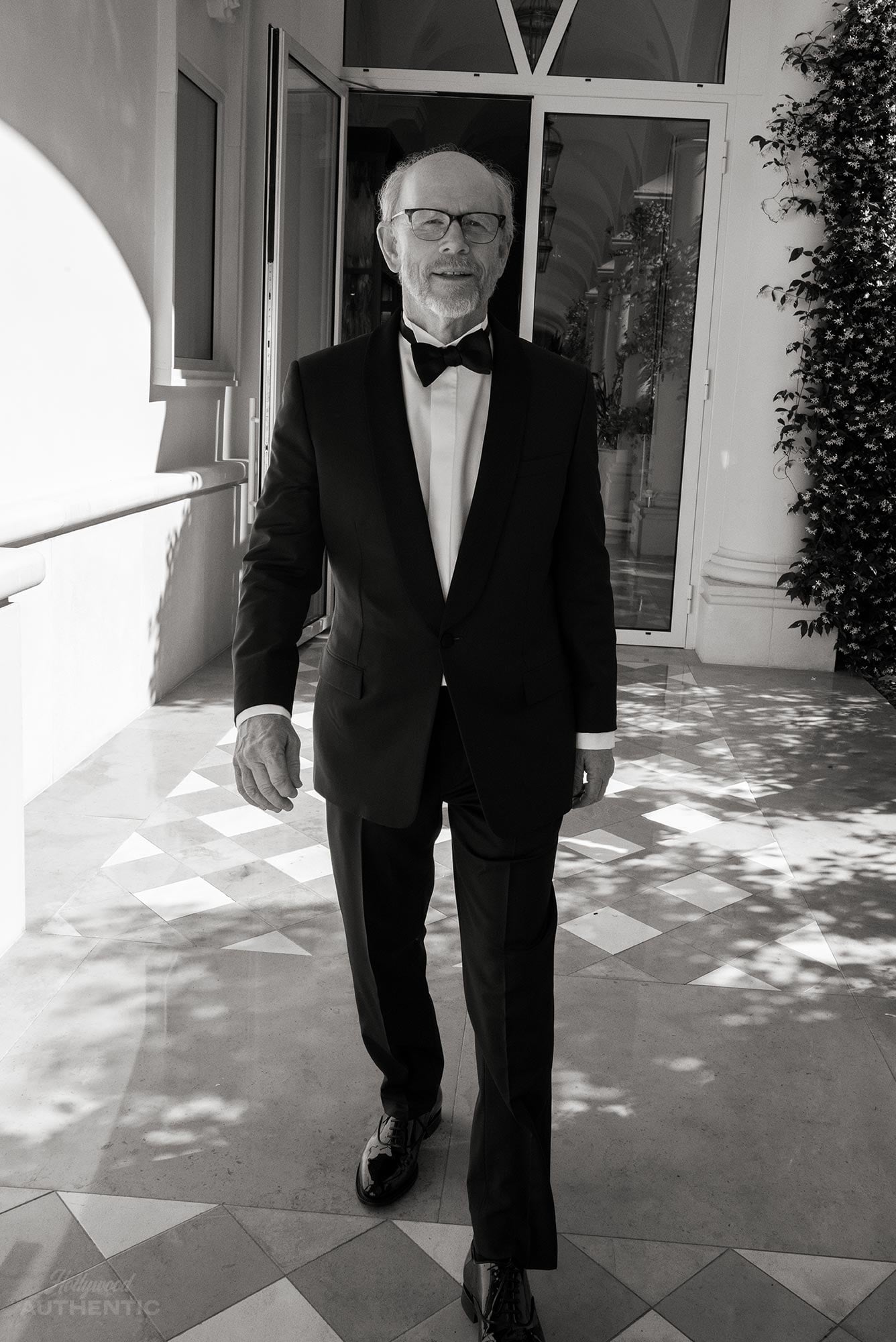
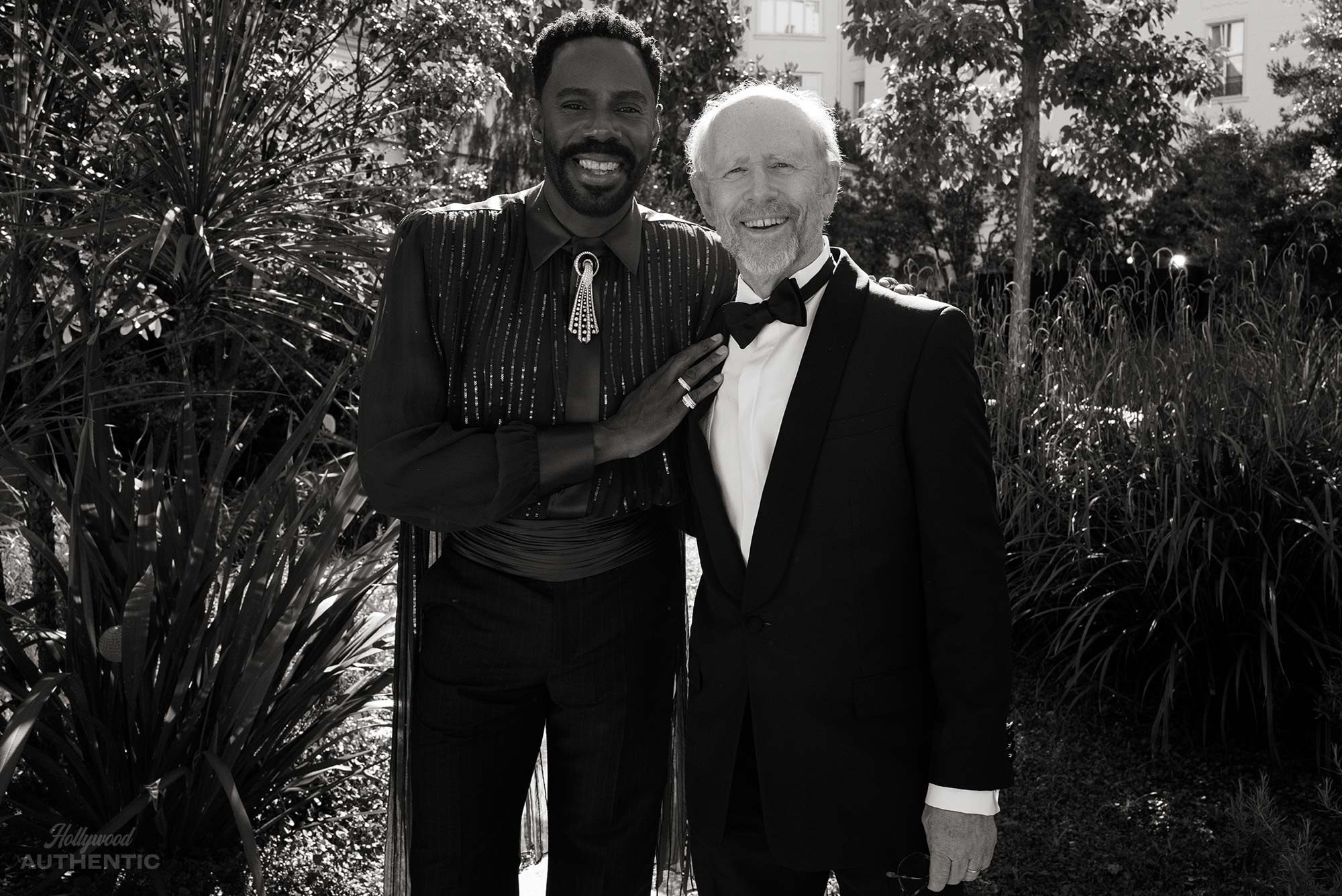
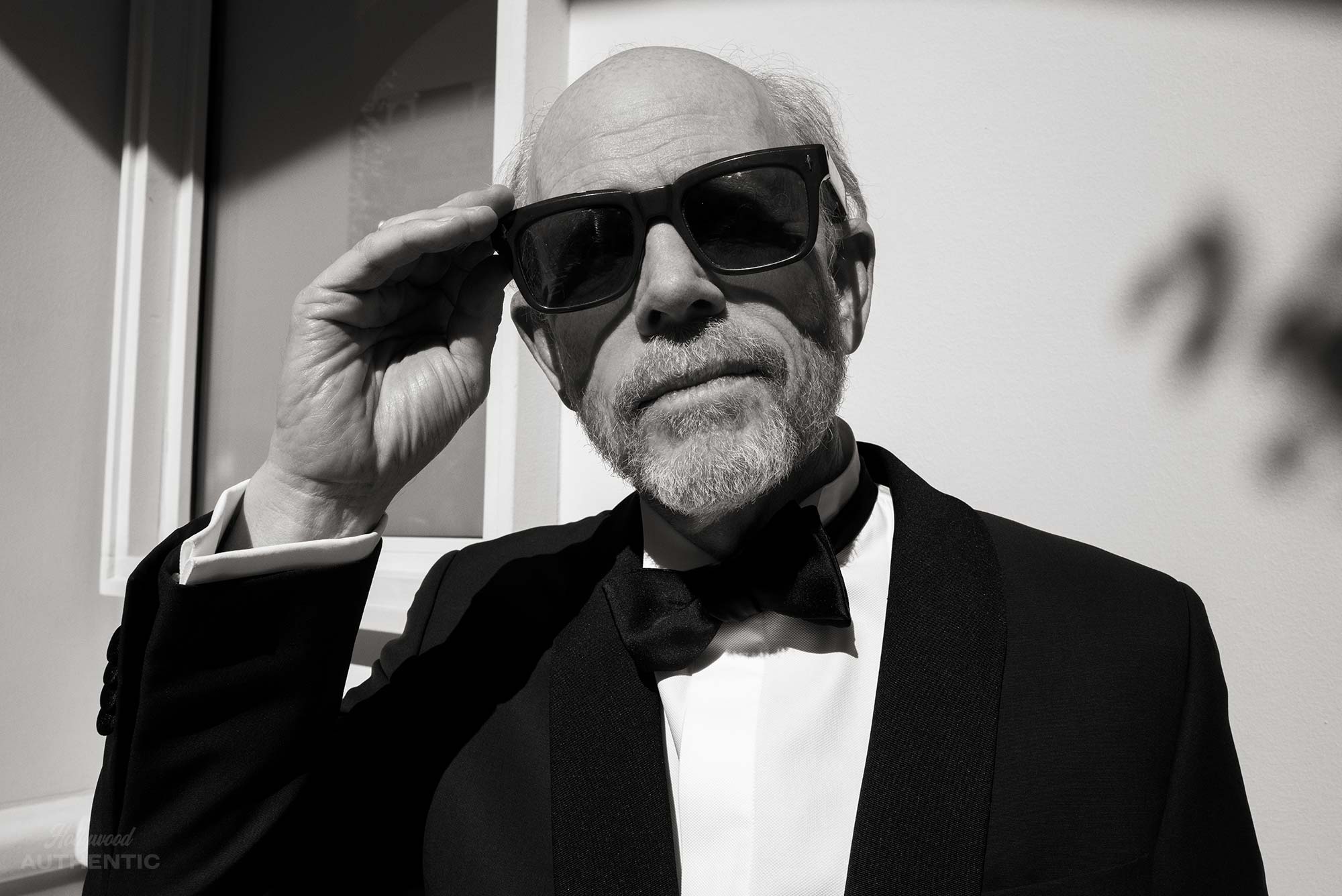
Ron Howard first arrived in Cannes in 1987 with Willow. Since then he’s brought numerous films to the festival and this year he’s debuting his new documentary about the trailblazing photographer, Avedon. As he drinks soothing green tea with honey (he’s been talking too much, he says with a grin) in the Carlton Hotel, he tells Hollywood Authentic how important it is to bring movies to such a tastemaking and illustrious festival. ‘It’s a huge, global stage for cinema. And more than ever – in all the festivals, large and small – it’s important for talent to keep supporting them, because it’s a reminder that it’s fun to gather. It’s stimulating to gather. And it’s community-building if you come together around cinema. You have a shared experience, and then afterwards you talk about it – whether you liked it, or didn’t like it, what it meant to you.’
Audiences will be debating Howard’s documentary this week as it premieres, tracking the career of Richard ‘Dick’ Avedon as he blossomed from an ID card and autopsy snapper in the US navy to a pioneering fashion photographer, ad director and New Yorker lynchpin. Avedon’s work championed under-represented talent, expanded the parameters of beauty and defined visual culture outside of photography. ‘Honestly, I really just knew the name,’ Howard admits of his introduction to the artist. ‘I thought of him as fashion first. I didn’t think of him as any kind of documentarian or journalist. But that’s all my ignorance. What fascinated me most was the range, the creative risk-taking, and yet the success of his work and his career.’ Howard calls this his ‘general, myopic view of my life, which is always kind of what’s right in front of me,’ but he’s been working for decades and also helped define culture with his output as an actor, director and producer. With The Andy Griffiths Show and Happy Days to Splash, Parenthood, Apollo 13, A Beautiful Mind and Frost/Nixon, plus his projects through Imagine Entertainment (24, Friday Night Lights, Arrested Development), he’s helped shape entertainment in the 20th and 21st century.
‘You know, it’s been a lifetime of going from one project to another, and each one demands a lot of focus, whether as a younger guy, when I was a child acting, or as an adult producing and directing,’ he says from under the brim of his trademark baseball hat. Documentary making, he says, is something that comes from being something of a pendant in creating fictional cinemas. He had to get firefighting right in Backdraft, but when he made The Paper, following a group of journalists, he hired consultants to ensure ‘verisimilitude’. And it’s a process that has stuck with each new film he does. ‘I’m a huge baseball fan, so I always say to technical advisors, ‘look, it would really upset me if somebody made a baseball movie, and the centre fielder had a first baseman’s glove on’. The movie I did that was probably the most personal in my entire life was Parenthood, because, at that time, I was right in the middle of raising kids at the age that the kids were in the movie. So until I make a movie about moviemaking, I’m always going to need to educate myself to really understand a subject.’
In researching Avedon he found common ground between his own work and the photographer’s. ‘He really was a director. Sure, he was taking some inspiration from his subjects. But he was also very calculated about the scene he wanted to create, the story he wanted to tell, and the emotion he was looking for. That was very interesting to me.’ In archival footage in the film Avedon says ‘every photograph is accurate and none of them are the truth’. Hollywood Authentic wonders if that’s something Howard relates to in cinema. ‘As Peter Morgan says: you often have to lie on screen in order to get at the greater truth. You have to invent moments; you have to invent scenes that demonstrate what it is you’ve learned about the subject. But in order to get it into the film, it’s going to require some invention.’
Avedon evolved during his career from fashion to cinema (Funny Face was loosely based on him and he consulted on it) to politics. Has Howard’s direction changed in the years he’d been doing it? ‘It hasn’t… The only thing that’s changed is, as monitors have gotten better, I don’t stand next to the camera anymore. But I also don’t go back into some tent that’s far away. Because I do take after take, and in between takes, I want to have a conversation with the actors, so there’s no barrier between me and the key collaborators. I get a lot of steps – a directing day for me 15,000 to 20,000 steps. I pace, and I also hustle from setup to setup. When I was acting, I liked it when we had momentum, and, as a director, I feel the same way. It does mean my staging and camera work does tend to be less technically focused. There are times when a shot needs to be very precise, and we take a long time with it. But I’m more interested in capturing the environment – if that’s outdoors, it’s getting that light, and getting that weather – and what the actors are doing. I want the cutting power of being able to analyse these performances later, and taking people’s best moments, and putting them together. I admire the directors who can do these long, intricate takes, but I don’t quite have the patience for it, and I feel like the greater value proposition for the story and the audience is really more variations from the actors.’
Directing a documentary is a different discipline, he says. ‘That’s about discovering moments in archival footage, or maybe accidents in verité scenes that you’ve been able to shoot, or responses to questions. But you can’t really provoke it.’ The process of making the film also made Howard appreciate anew the art of photography, especially in a world of AI. ‘I did become very interested in him as a creator who was sharing a vision. The novelty of what tech has brought us – the facile nature of it; the speed of it – is kind of exciting and fun. But I think we’re already as a society beginning to recognise how important curation is, and that something filtered through an expert, an artist; someone who lives and breathes whatever discipline they’re engaged in, is elevated.’
Photographs by GREG WILLIAMS Interview by JANE CROWTHER Avedon premiered at the 79th Cannes Film Festival
CANNES DISPATCH Photographs by GREG WILLIAMS Interview by JANE CROWTHER
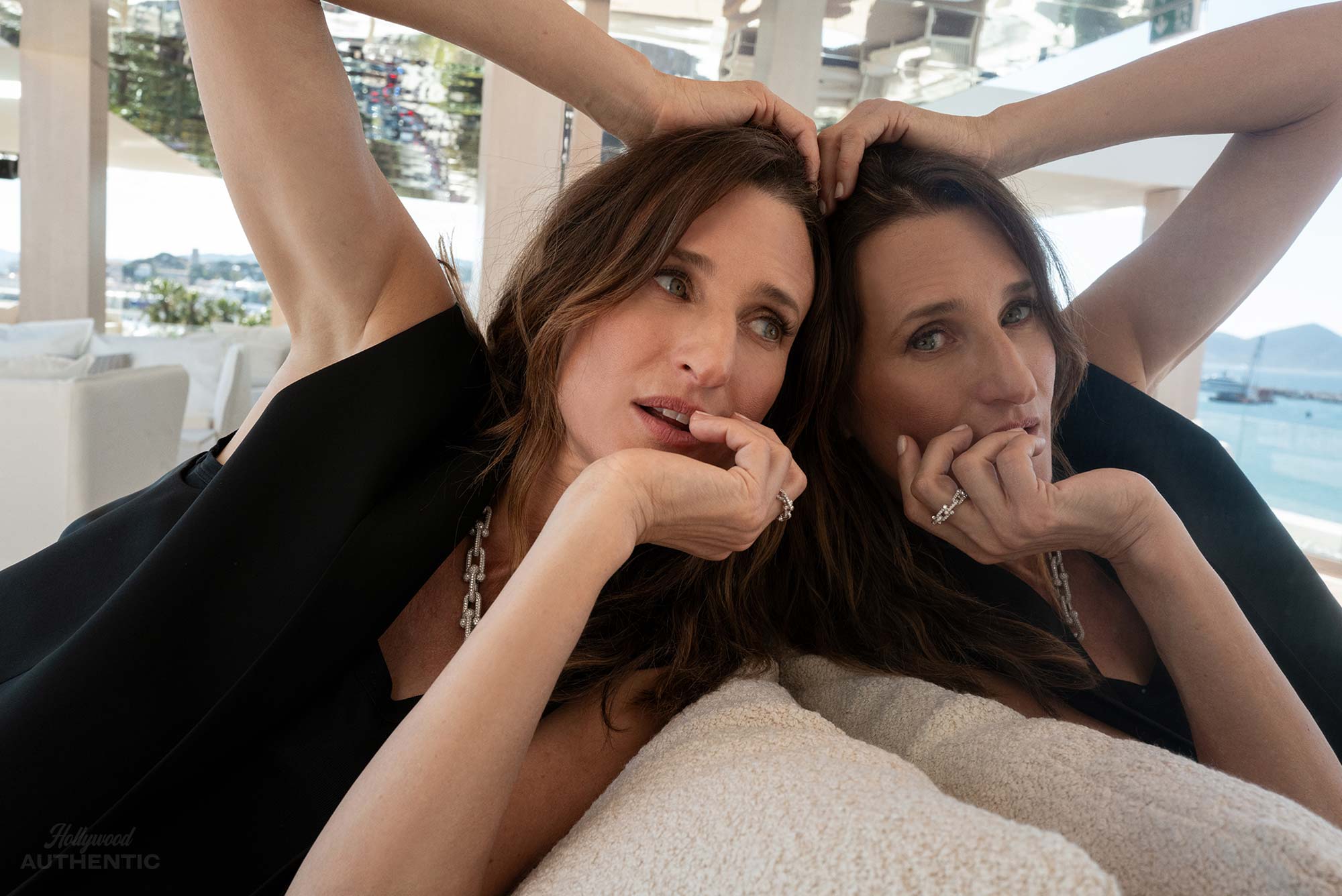
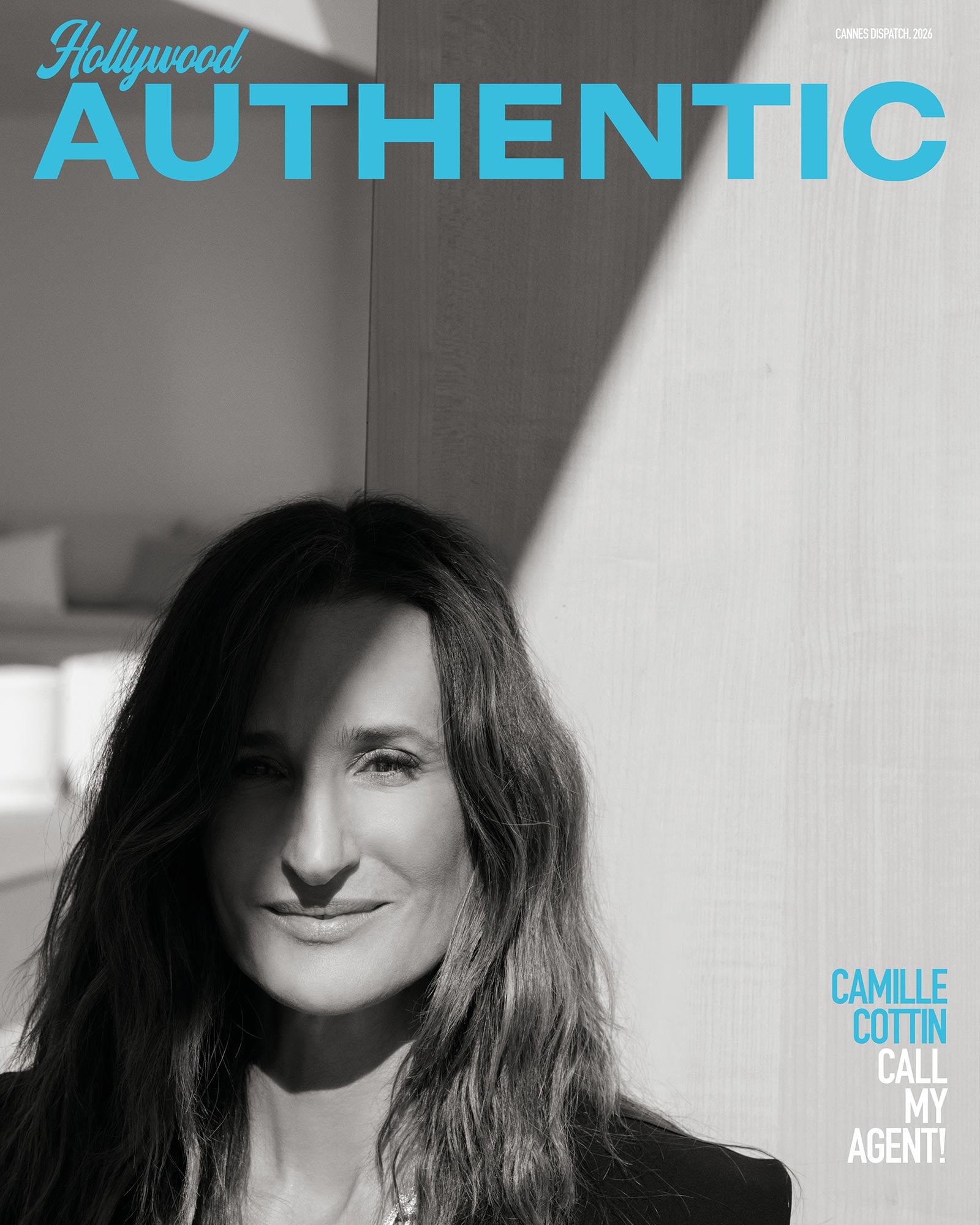
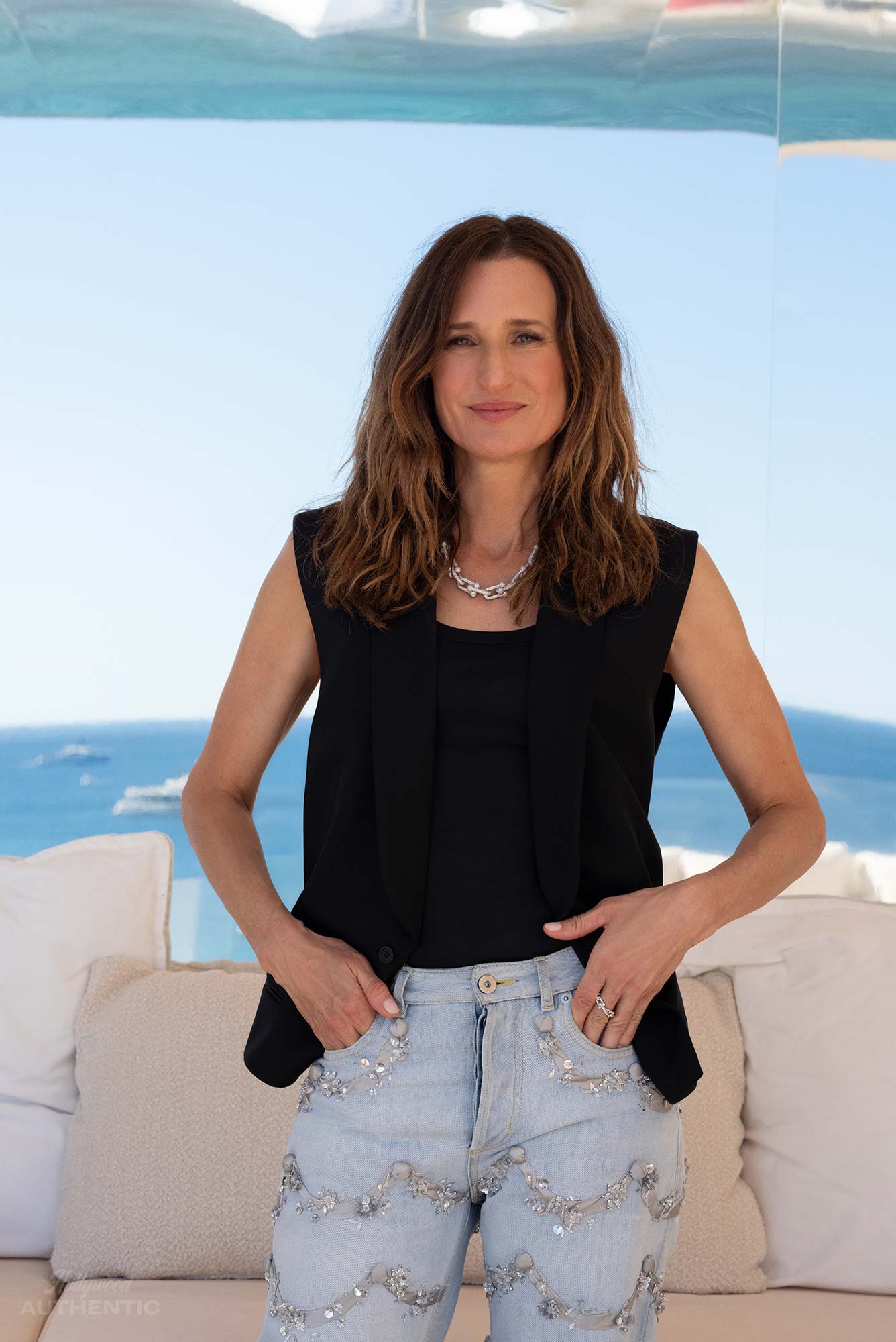
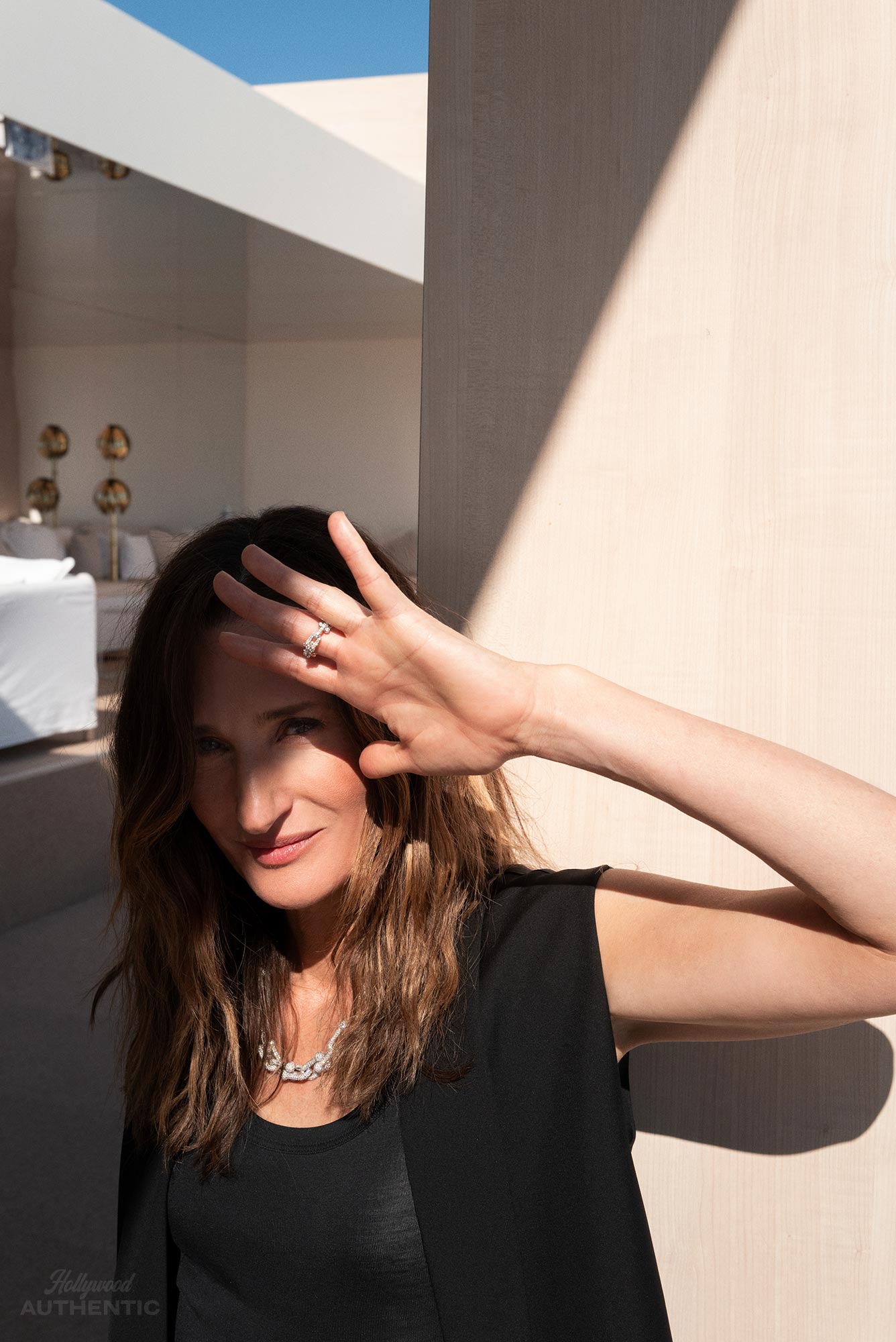
Camille Cottin calls the particular bewilderment of a film festival ‘the vortex at Cannes,’ when Hollywood Authentic sits down with her at the JW Marriott on the Croisette, which is teeming with delegates and film fans. ‘Here, time is no more!’ she jokes, ‘Everything is completely changed – all perception of reality – when you’re here. You take big cars to go about 10 metres. You no longer talk in distance, it’s just ‘Majestic to Martinez’. Night is day, day is night. You talk about money as if you’re talking about love…’ Cottin has arrived in Cannes ahead of walking the red carpet of the premiere of Guillaume Canet and Marion Cotillard’s Karma alongside her fictional ASK agency team from global TV phenomenon Call My Agent!, to announce that the feature film of the show is arriving on Netflix in September. The show was a success in France before becoming a belated global hit and nearly six years after the final season, will return with George Clooney, Vincent Macaigne and Laetitia Casta playing themselves.
Fans of the show will remember discussion of the Cannes Film Festival in season two, when the whole agency wanted to attend such an important event, so it’s only fitting that the team should kick off their promotion in this storied place. ‘The show is about our industry, so I think it makes sense. And also, there’s going to be something a bit meta, regarding the script, the fact that we’re here. We’ve added a piece to the puzzle, I would say. I don’t want to spoil things…’ she says. What we do know is that Cottin’s spiky character, Andréa Martel, will be directing her own movie in the film, so perhaps Andréa will be climbing the famous red steps herself? ‘Of course, when you direct a film, being at Cannes is something that I suppose every director dreams of,’ she teases.
She’s not giving plot or guest appearances away, but the actor will discuss why the team is returning to the ASK offices after the show finished. ‘I think it came from a deep attachment to the characters and the relationship between them. There’s something quite generous and tender to that show regarding the humour, regarding the perception of our contemporaries in the industry. And I think it was the desire to continue this communication with the fans. The funny thing is that when we stopped filming and COVID happened, that’s when people outside France discovered it. So it’s maybe about bringing it back to the present.’ With its insider, meta comedy the show has spawned international remakes and, some might say, inspired The Studio. Not bad for a project that Cottin admits wasn’t an immediate hit. ‘Even in France, they didn’t want it at the beginning, because they thought it was too niche.’ She hasn’t watched the other versions of the show, but thinks that her character is such an intriguing creation that it translates across language and culture (though Andréa’s queerness was changed to heterosexual in the Turkish version).
‘It was great the way she didn’t try to be loved. I think it’s incredible, not only for the gay community, but as a woman, being completely free from the perception of others, and from the need to seduce or to be loved or to be approved. It’s something that is terribly cathartic and empowering and juicy to watch. And she’s absolutely not nice, which is quite funny. You could hate her, but she has a lot of integrity. That’s why she’s not a toxic person – because she is what she says she is, and she does what she says.’
Though she’d been a success in France, the role gave Cottin access to a wider range of work, and she’s since appeared in Stillwater with Matt Damon, then Allied, A Haunting in Venice and Golda. ‘That was something I dreamed of,’ she says of expanding her canvas. ‘I spent five years in London when I was a teenager, and I’ve spent a lot of time in Spain. I have this desire to work in other cultures. Working in a foreign language with another culture – it really turns me on. It excites me. I find it thrilling and exciting and interesting. I would be sad if I had to stay in one place, in one surrounding, in my four walls.’ She enjoys the discipline of acting in another language, she says. ‘Normally when you act, you really focus on how you feel, rather than how it sounds. When you’re acting you hope to lose your awareness of how it looks and how it sounds, and you’re just going through the beauty of how it feels. That’s the thing we’re all searching for. But in another language you have to have that awareness.You have to be aware of the shape of your tongue, your mouth. There are certain sounds that after some time you will not be able to imitate, because it has a certain shape…’ She smiles. ‘I’ve got the French mouth.’
She will be using her Mother tongue in the upcoming sumptuous French adaptation of Les Misérables.‘I think we have now, in our French industry, lots of appetite for putting on screen some of our best classics. And obviously it’s fun, because when I was cheeky to the director, he said, ‘Victor Hugo, what a showrunner’.’ She’s also filmed Edward Berger’s The Riders with Brad Pitt. ‘I loved working with Edward Berger. He gives you a lot of freedom, and at the same time he’s very precise. And even though he’s focused on what he does, he’s warm. And Brad is so kind.’ Now she’s worked with Pitt, Damon and, with the new Call My Agent! film, Clooney, it feels like she’s working her way through the Ocean’s 11 team. She laughs. ‘I’m desperately in need of Julia,’ she says before she disappears back into the vortex of the Croisette…
Photographs by GREG WILLIAMS Interview by JANE CROWTHER Call My Agent! The Movie arrives on Netflix 10 September 2026
Photographs & interview by GREG WILLIAMS As told to JANE CROWTHER
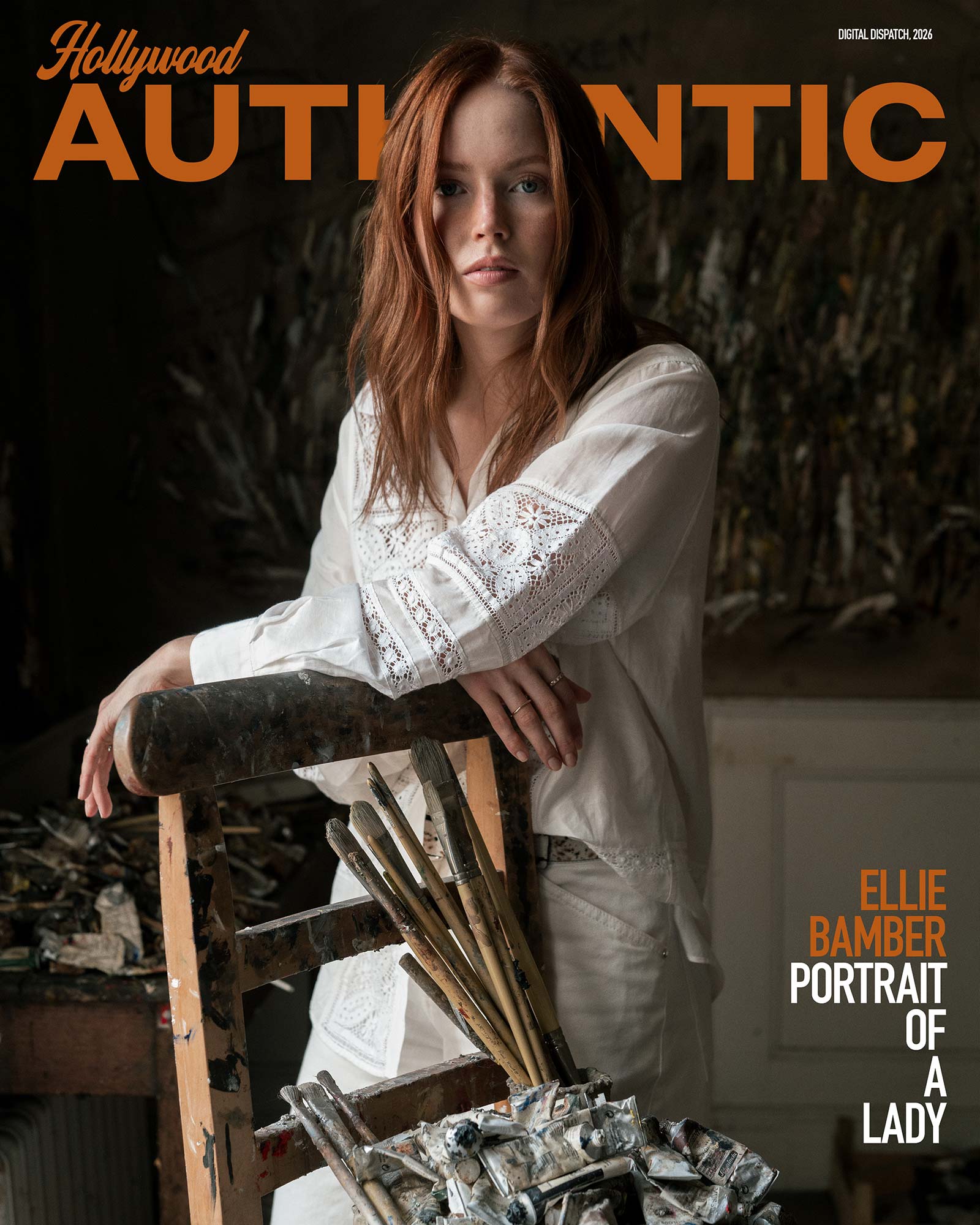
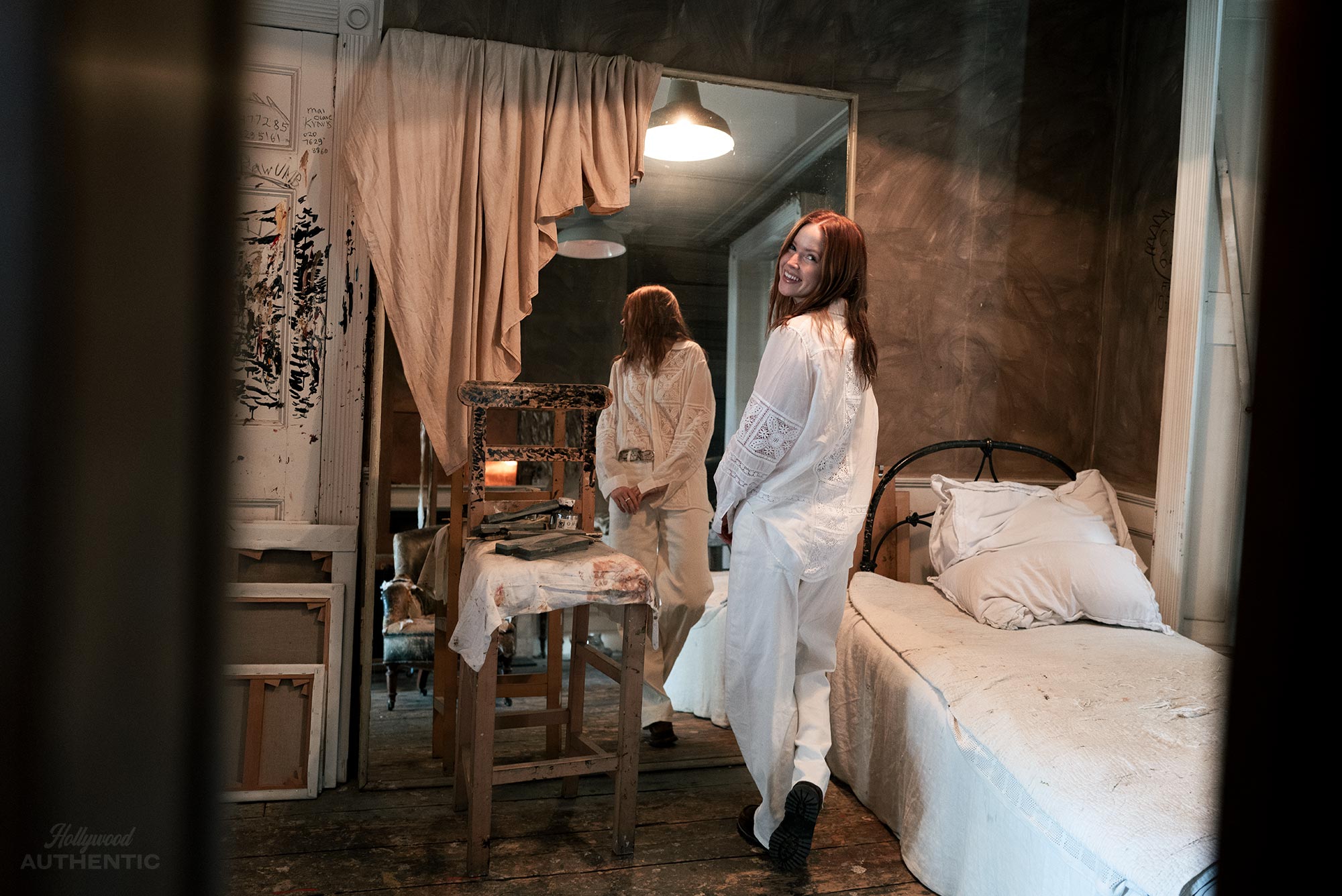
Actor Ellie Bamber visits Lucian Freud’s former studio with Greg Williams to discuss channelling Kate Moss, finding peace and the confidence her latest project has given her.
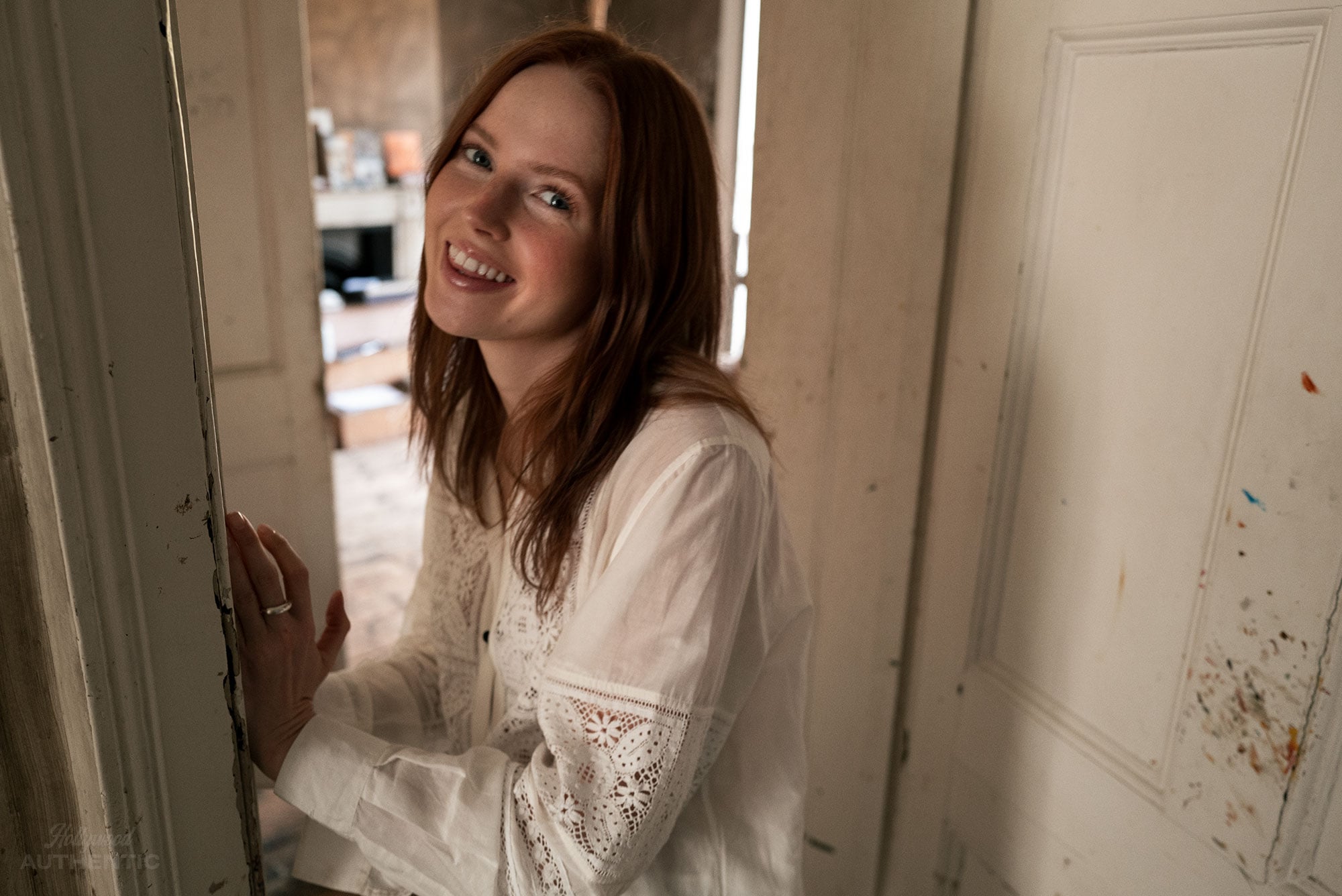
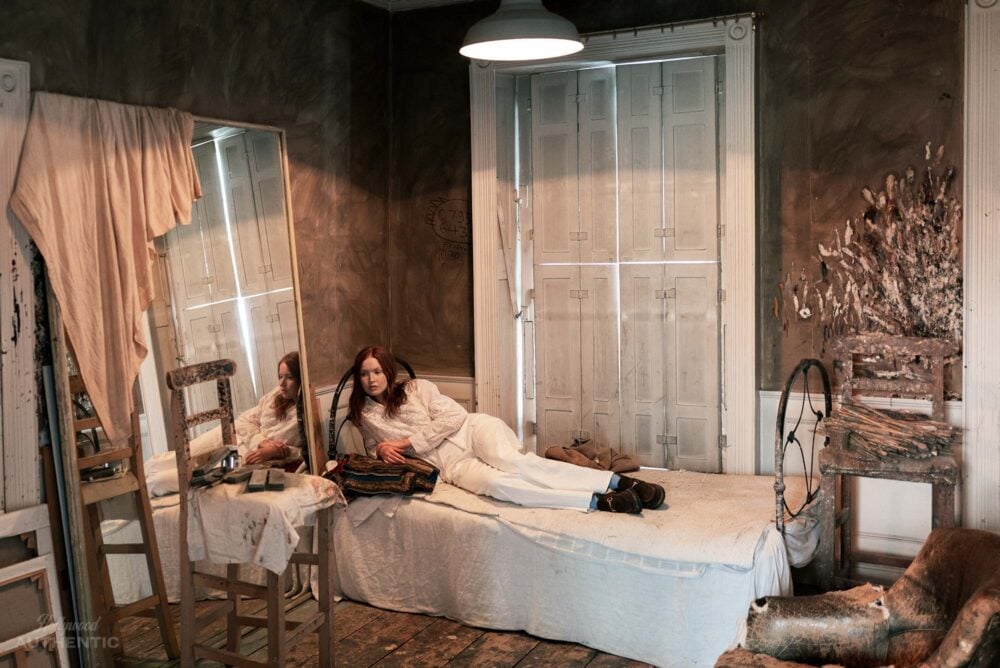
Kensington Church Street is buzzing with commuters and shoppers when I meet English actor Ellie Bamber outside a Georgian grade II-listed townhouse. She has been here before, like the woman she plays in her upcoming film, Moss & Freud. This address was the former home and studio of Lucian Freud, from the ’70s until the artist’s death in 2011, and it’s where Kate Moss sat for Freud over a series of evenings between 2001 and 2002. The duo talked about perception, identity and art as they collaborated on Moss’ portrait during a tumultuous time in the model’s life. By the time she finished her sittings with Freud, Moss was pregnant with her daughter, Lila Grace. The resulting life-sized nude, Naked Portrait, sold for £3.5 million to an unknown buyer.
Bamber, blessed by Moss to play her during this period of her life, also spent time at this house, retracing Kate’s steps and emotional journey before she began filming. ‘She was painted by him in this studio for many, many months in the evenings,’ Ellie tells me as we enter the property, now owned and looked after by David Dawson, a landscape artist and Freud’s longtime assistant for two decades.
I can’t believe that we’re in here. It’s the craziest, craziest thing, there was such an amazing interplay between artist and muse, and what that means, and what that relationship is, and how involved she was in the piece as well
Dawson’s photographs of Freud at work in this house are in the permanent collection of the National Portrait Gallery, and he was the subject of a number of the artist’s portraits including Sunny Morning Eight Legs [1997] and David and Eli [2003]. As a fan of Freud’s work, it’s a thrill for me to step inside; the space is just as he left it, the way it would have been in those evenings when Moss lay on the bed and he painted.
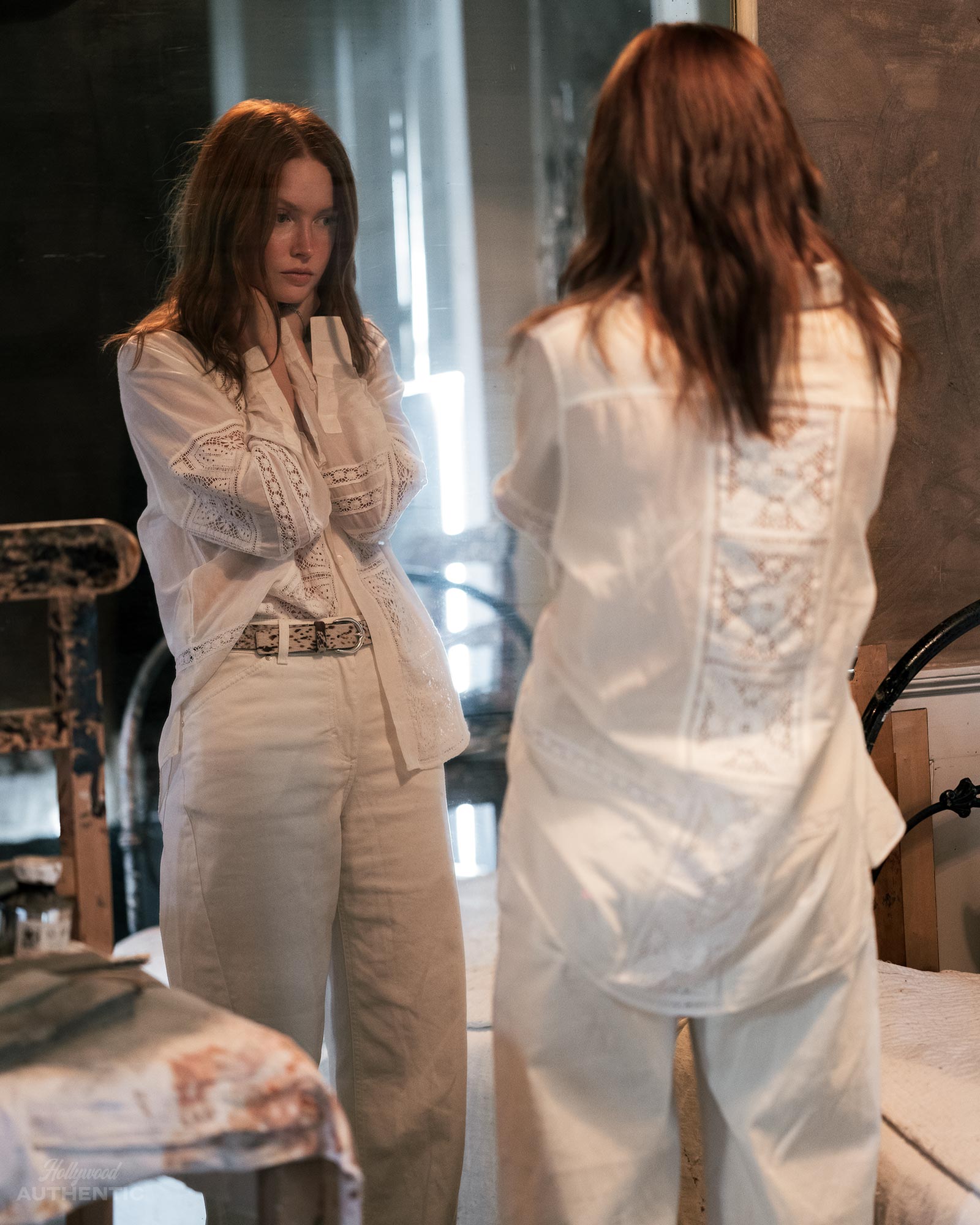
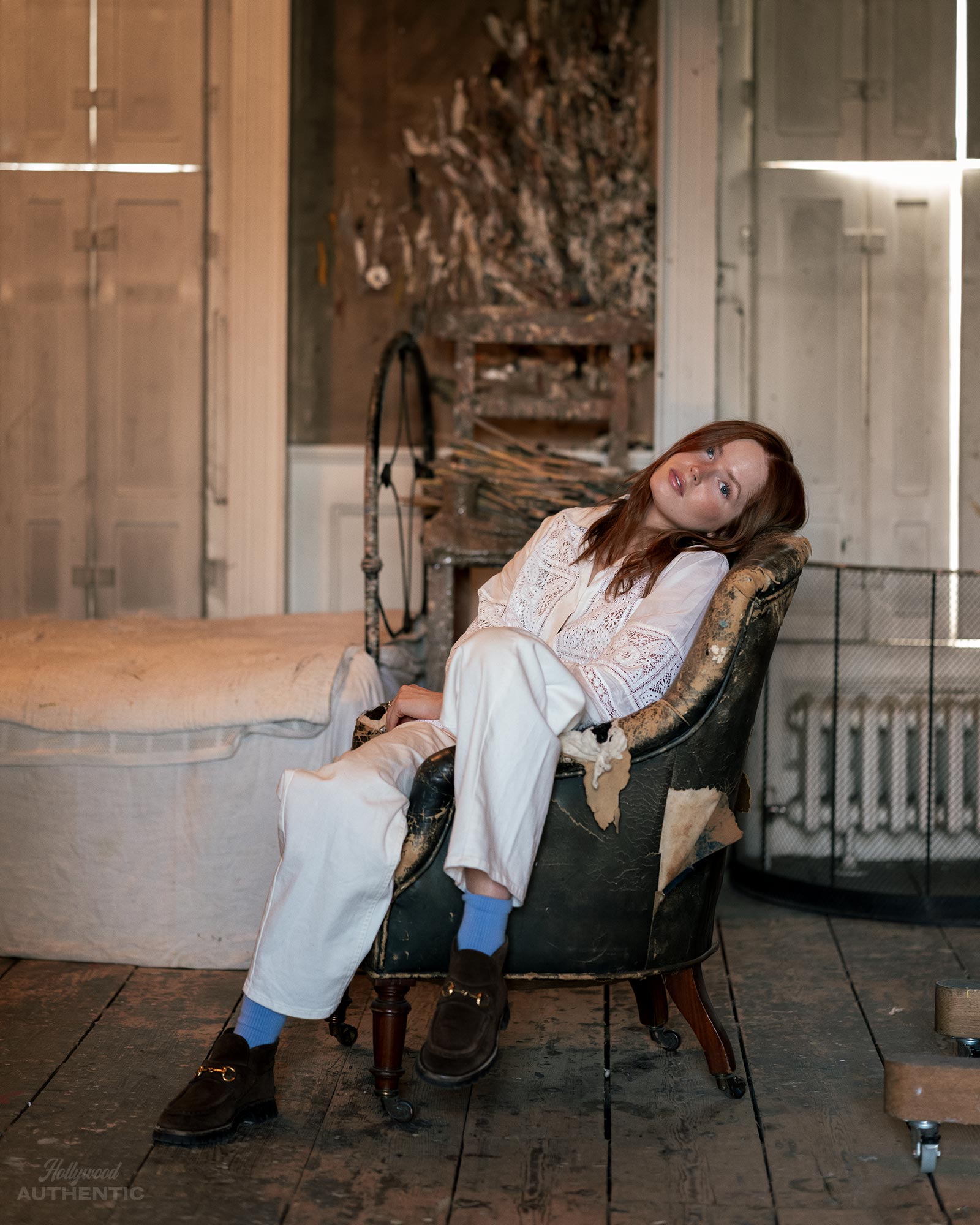
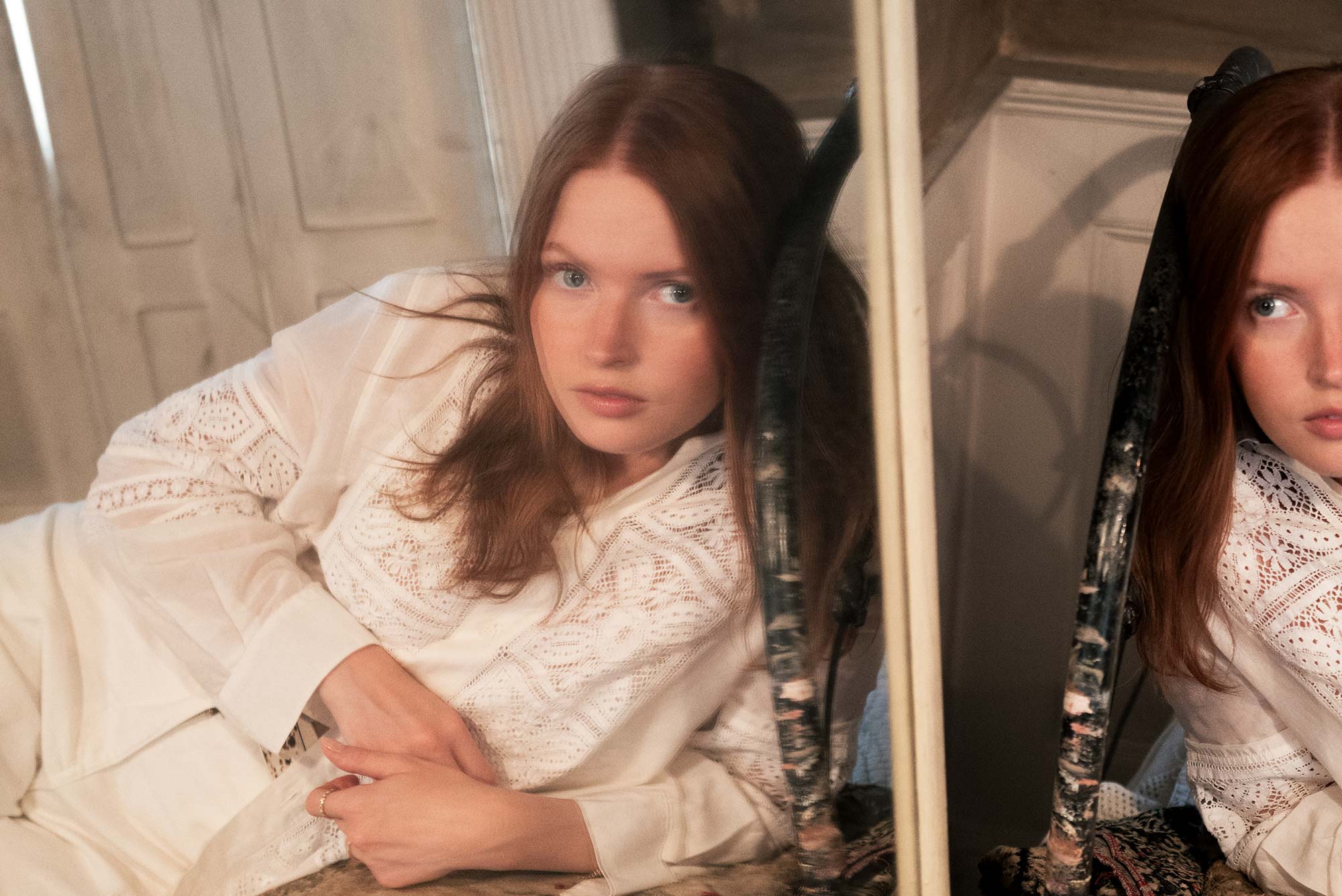
‘It’s so incredible. It’s really a sanctuary,’ Ellie says as she moves through the paint-splattered rooms. ‘I feel like when you’re in here, it has such a powerful effect. And it reminds me so much of the headspace I would have to get into, to think about being painted by someone like Lucian Freud.’ Ellie didn’t film in the space; the studio was recreated as a set inside a similar house, the flicked paint on the walls and discarded rags recreated in painstaking detail. The studio is still a working room – David paints there and lives upstairs. ‘I’ve turned my paintings around so that it doesn’t distract from today,’ David explains modestly. ‘It’s not a shrine or anything. I was in here every day for 20 years. So I didn’t want to get rid of it.’ David was the artist who recreated the Moss painting seen in the film (‘We used Lucian’s painted image and then did some clever handiwork on it’) and this first floor area is the studio where two titans of British culture met, complete with the bed where Moss lay during her sittings. I encourage Ellie to sit on the bed as David leaves us to talk.
‘I can’t believe that we’re in here. It’s the craziest, craziest thing,’ Ellie marvels and considers the nine months that Moss was in the same place. ‘There was such an amazing interplay between artist and muse, and what that means, and what that relationship is, and how involved she was in the piece as well – like, bringing herself in that moment, you know? And the fact that she decided that she wanted to be nude for the painting as well – I think it meant there was a certain intimacy. It revealed a lot of herself, and I think that him trying to get to the heart of a person is so fascinating. One of my favourite paintings of his is called Hotel Bedroom [1954]. It’s a painting of a lover of Lucian’s. And just the emotion that it evokes, and the tenderness…’
In James Lucas’ film, Freud is played by Derek Jacobi and the duo explore the role of persona in fame, who the real person is behind the celebrity and what is at the truth at the core of an artist. Freud famously turned down painting Princess Diana and the Pope during his career, but was intrigued by Moss after she said in a Dazed & Confused magazine interview that one of her ambitions was to be painted by him. Freud invited her to dinner via his daughter, Bella, and then insisted Moss sit for him consistently, between 7pm and 2am – without being a minute late. The pair discovered shared commonality and, as imagined by writer-director Lucas, forged a unique relationship that transcended either of their worlds. ‘It’s interesting being watched by someone like that, and being painted,’ Ellie says of reconstructing the sittings with Jacobi. ‘The thing that I started to realise is that it’s so different to being photographed, and I feel like I’ve been photographed quite a bit in my life. But being painted is an entirely different thing. I think it was after I finished shooting, my friend asked me to sit for him. Him staring at me, and looking at me so intently… It’s quite affronting, you know?’
The thing that I started to realise is that it’s so different to being photographed, and I feel like I’ve been photographed quite a bit in my life. But being painted is an entirely different thing. I think it was after I finished shooting, my friend asked me to sit for him. Him staring at me, and looking at me so intently… It’s quite affronting, you know?
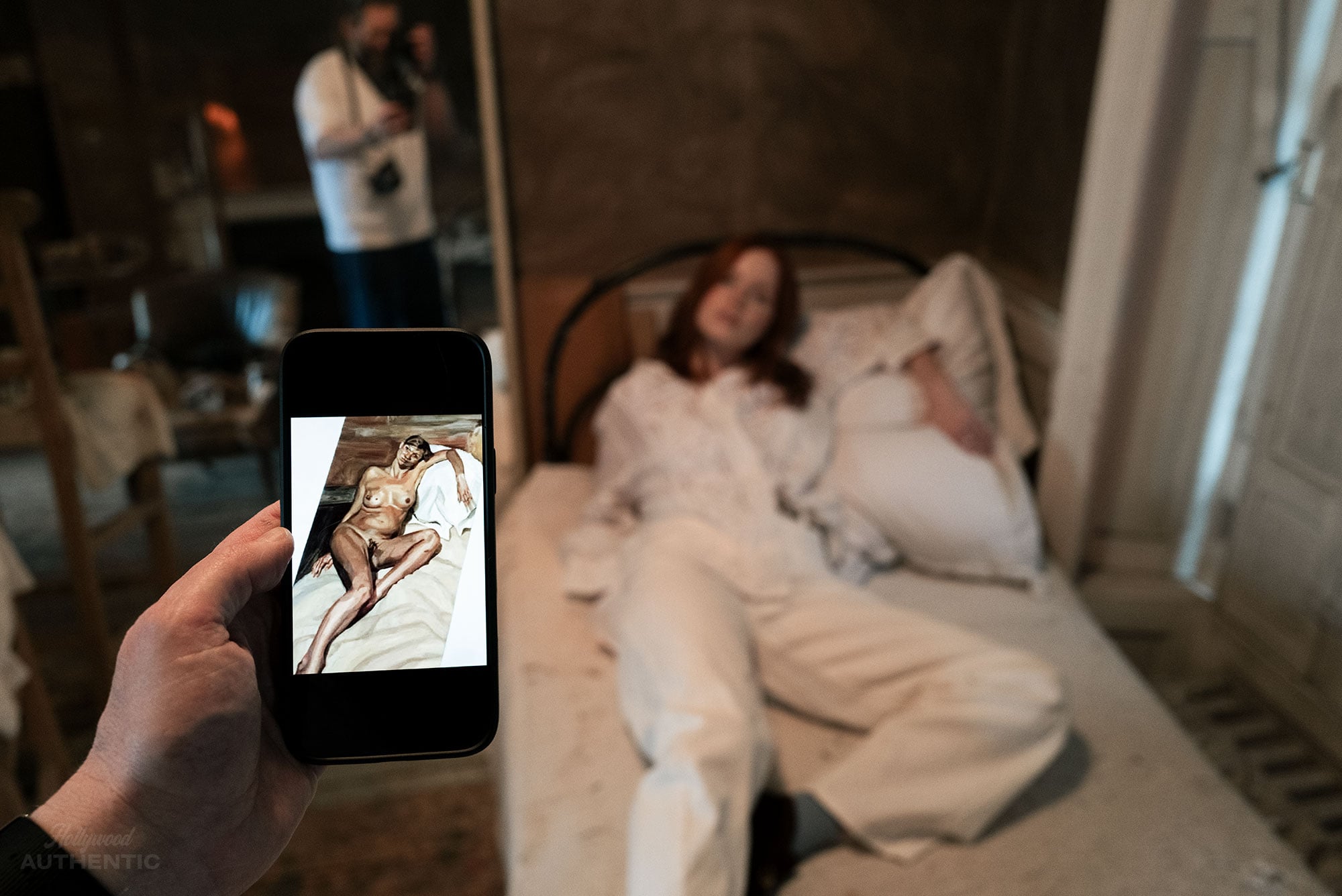
Knowing Moss now, as she exec-produced the film, I ask if Ellie feels that Freud found the supermodel’s soul in the process. ‘It was quite complicated for both of them. I think I’m right in saying that neither of them were totally happy with the painting. Because Kate was going through so much in her life during that time, that it was such a transitional period of her life – and also his – that I feel like maybe he didn’t say everything that he wanted to say, and maybe neither did she.’ I ask her to pose as Moss did, with me taking Freud’s place and we look at the painting on my phone. ‘We had to experiment in the film, like figuring out the best position for you to stay in for a really long time – just practically staying comfy, and being able to hold a certain position. Do you feel like you’re trying to get to the heart of a person when you photograph them?’
I tell her that I do, but l’m not trying to uncover some dark truth. I’m interested in the journey of my subjects, how it shaped them as a creative and as a person. I’m not into celebrity. I’m into artists. I ask about getting to know Kate for the role. ‘She’s a total one-of-a-kind human being. She is so effervescent. The thing that I was so intrigued about when I met her, actually, is that she is just the most amazing storyteller. So spending time with her meant hearing a lot of incredible stories, whether it be about Lucian or about her life. But she has a way of telling a story, which I think she does within her images as well that is so exceptional. She’s a total enigma in that way. She was so generous at letting me step into her world. She’s very funny and very naughty, which is so fun. She’s got the best laugh.’
In the film, Ellie captures Moss’ distinct laugh to a tee. I ask if she can do it now, conjure it up in this hallowed space. ‘I haven’t done this in ages. By the way, with the laugh, this was quite funny – my brother had to sit me down and have a word with me. After I finished filming, he was like, “I noticed that your laugh is a bit weird now. It doesn’t feel right, and I’m not happy with it.” She pauses and does a pitch perfect Moss laugh. I’ve shot Kate a few times and can confirm it’s good. ‘The laugh was the thing that I became quite obsessed with.’
I wonder, having examined artistic truth, persona and identity in the film, what the project has taught Ellie. ‘I think, honestly, it gave me a bit more confidence in myself, because Kate’s such a smart decision-maker. She’s got such a confident energy. But she also has a total vulnerability too, which I think is the conversation within the piece as well. The film is all about a woman understanding her place in the world as an artist. Through discovering that conversation, and through Kate’s journey, I think it gave me a lot more confidence in myself, and my decisions, and maybe how I see myself as an artist. Everyone has doubts, and I definitely have doubts. It allowed me to maybe say a little bit of a “bye bye” to some of them, rather than letting them fester, you know?’
We had to experiment in the film, like figuring out the best position for you to stay in for a really long time – just practically staying comfy, and being able to hold a certain position
Ellie recalls that she had met Moss before getting the role but when discussions got serious she bumped into the model at a mutual friend’s party. ‘It was a whole meeting where we were both like, “Whoa, I can’t believe this is happening right now.” There’s a picture that Jasper [Conran] took of us on his bed together, just lounging about. It was such a coincidence and such a funny meeting.’ Bamber used the photo to announce her casting on social media. ‘It feels like a milestone,’ she says of the project in a career that began with her being scouted to play ‘young Jenny’ in Trevor Nunn’s Aspects of Love at the Menier Chocolate Factory when she was 13. That landed her an agent and opened her up to opportunities in theatre before she moved to film with Pride and Prejudice and Zombies and Tom Ford’s Nocturnal Animals. She played Cosette in the BBC’s Les Misérables, Mandy Rice-Davies in the The Trial of Christine Keeler and led The Serpent for the BBC, as well as Disney+ show, Willow. She’s exec produced a short, There Will Come Soft Rains, and has a packed slate coming up. She’ll appear in family film Animal Friends, IRA drama Stranger With a Camera, Anna Biller chiller The Face of Horror,and is currently filming A Christmas Carol with Johnny Depp. ‘I felt like I had a responsibility to Kate to make it truthful, and show her in a way that was truthful. That was really important to me. And I wanted to handle it with a lot of care.’ She’s anticipating the film’s release with what she describes as ‘excitement slash terror’. ‘But I feel like I’ve made peace with how I feel about it.’
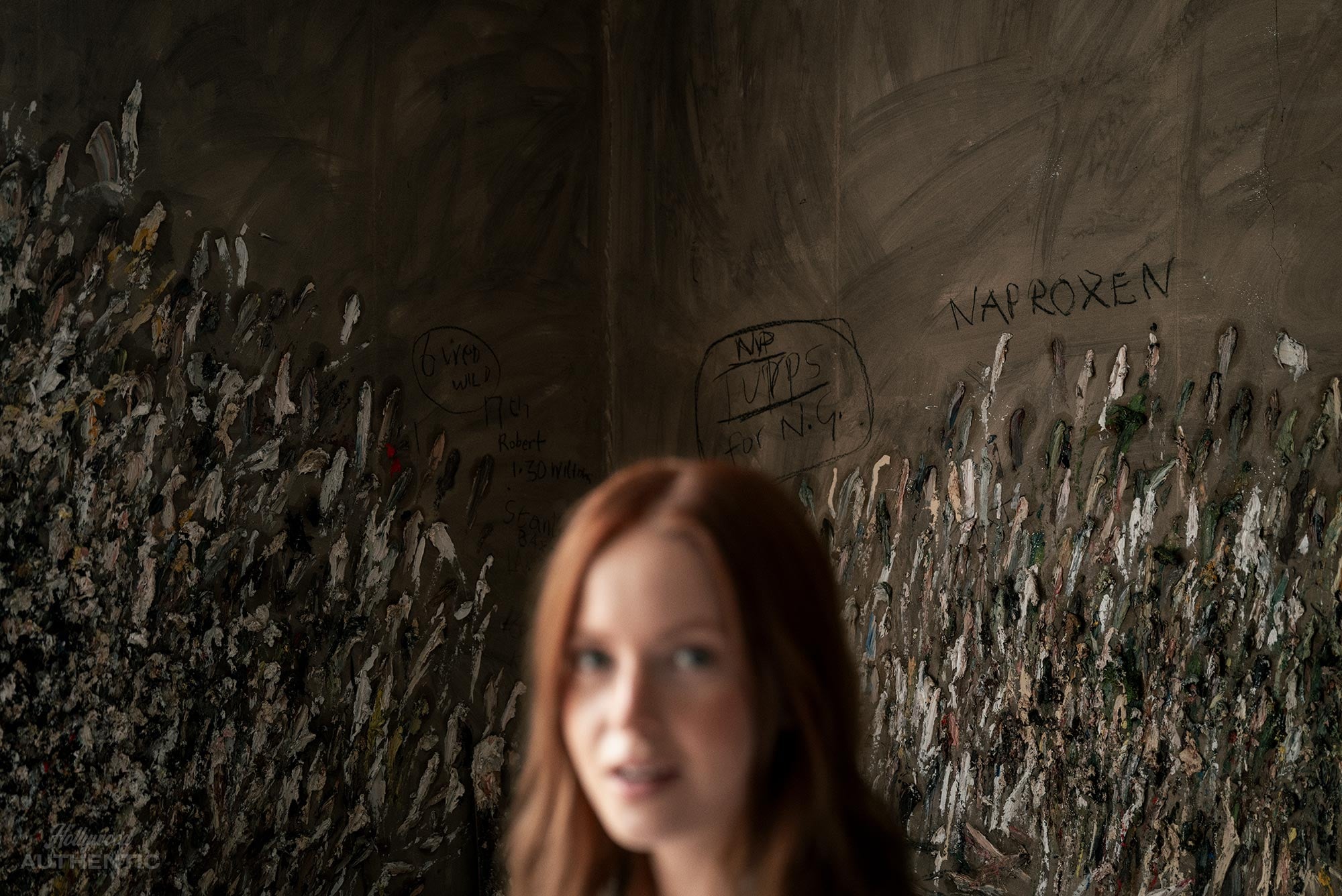
We start to read some of the scrawls on the walls of the studio, left by Freud. The masseuse on Thursday. Portrait of the hand. Celibate. Naproxen. ‘There’s a phone number. It might be quite interesting to ring it up and see who it is,’ she suggests.
I grew up in theatres with parents who worked in the industry myself, so I’m interested to know how Ellie’s theatrical background taps into her work now. ‘This did feel like a play,’ she nods. ‘Working with someone like Sir Derek Jacobi – I mean, when we first met, we had lunch together, and he mentioned Laurence. And I was like “Wait, are you talking about Laurence Olivier?” He’s such an amazing actor, and to be opposite him in scenes where we were just talking in a studio – it did feel like a play.’
As a girl from a small town near Reading, she always dreamt of moving to London and got her wish when she landed a role in High Society at The Old Vic as a 17-year-old. ‘I was quite young and I think at maybe quite a rebellious point of my life,’ she laughs. ‘I think I was figuring it out.’ I ask when she first knew she wanted to act. ‘I was quite young when I really knew, because I would get all of the members of my family to do little shows with me all of the time, and most of the time they would roll their eyes. I did a lot of it when I was younger, and then forgot about it for a while. And then I had this amazing drama teacher who basically convinced me to audition for the school play, then after that, I knew. I didn’t finish school, I didn’t finish my A-levels – I had to do a bit of convincing of my dad. But then there was a conversation as to whether I wanted to go to uni, and I very much knew that I didn’t want to go to uni. But I didn’t have a plan B, because I just knew that that’s what I wanted to do.’
The film is all about a woman understanding her place in the world as an artist. Through discovering that conversation, and through Kate’s journey, I think it gave me a lot more confidence in myself, and my decisions, and maybe how I see myself as an artist
It sounds like she almost manifested a career, willed it into existence. ‘I think there’s a certain amount of fate that I believe in. But also I’ve started doing some producing myself because I feel like I want to be able to try to create the roles that I might want to do, and maybe also other people might want to do too. So I’m really enjoying being on that side of the camera, and creating something from a conception. But I definitely of course have dreams of working with directors or with actors that I love. That’s a big dream for me.’
She considers what might have motivated her to keep pursuing her dreams. She thinks the drive to find agency is born from working from young age. ‘Kate also started working at 15. That was a similarity that I think from the beginning going into it. How can you drive your own journey? Particularly when you’re young, and you’re thrown into a creative environment, how much choice do you have? How much control do you have in your own path? I think that’s been a learning experience for me. I would roll with it to begin with, and go with things, and be quite hopeful. And now I’m quite driven by my choices in what I want to do and where I want to go. So I think maybe that’s where I’ve been on that journey with Kate. It’s feeling more empowered, and having more agency…’
Photographs & interview by GREG WILLIAMS As told to JANE CROWTHER Moss & Freud is in cinemas from 29 May Thanks to David Dawson
CANNES DISPATCH Photographs by GREG WILLIAMS Words by JANE CROWTHER
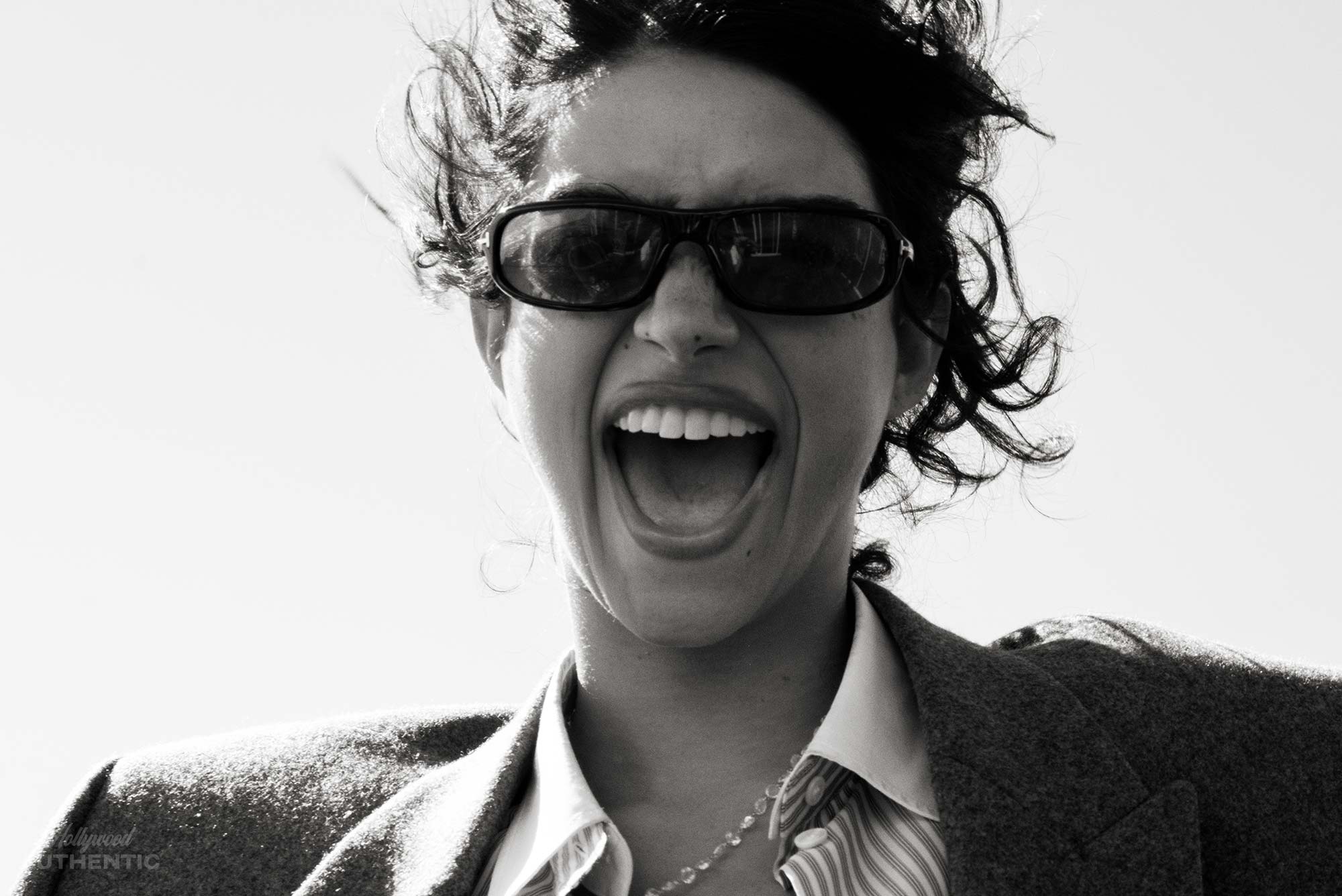
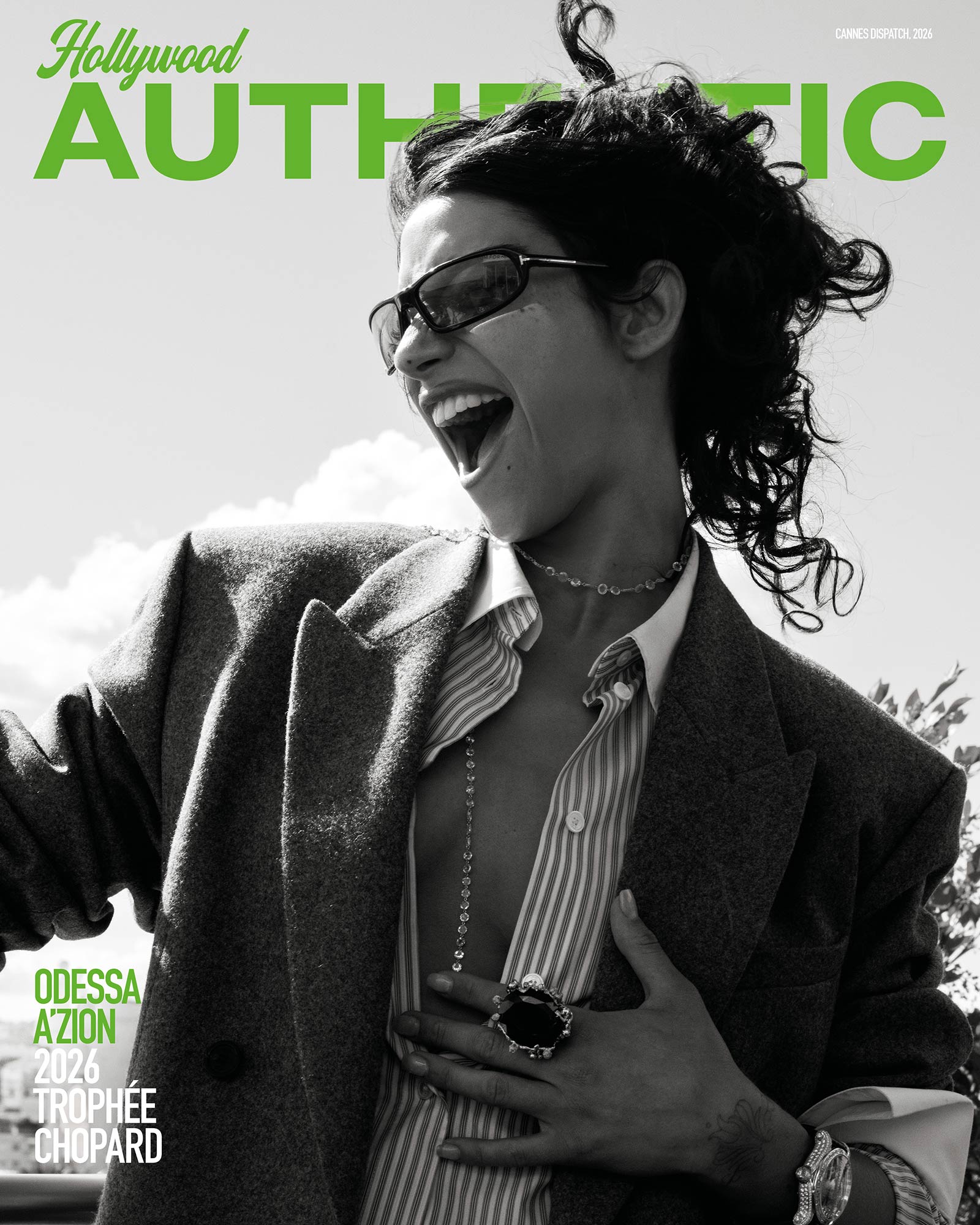
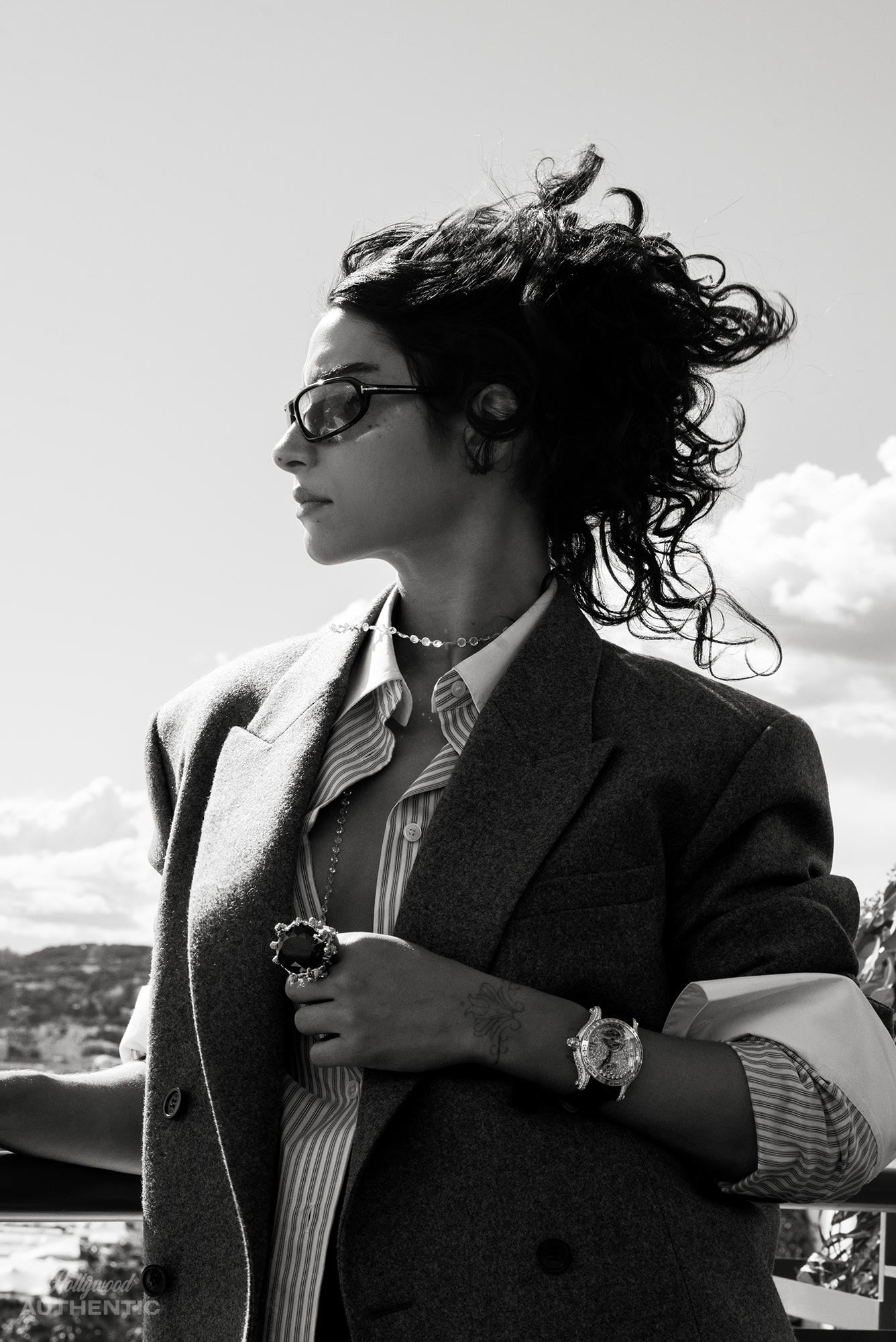
2026 TROPHÉE CHOPARD ‘I’ve never been here before and never thought in a million years that this would be happening the first time that I came here,’ Marty Supreme actor Odessa A’zion told the audience at this year’s Chopard Trophy ceremony, presented by French icon Isabelle Huppert. Photographed by Greg Williams at the Martinez Hotel’s Chopard terrace before festivities, the American actor was recognised alongside Connor Swindells as a next generation talent at the jeweller’s annual festival award.
‘Cannes is a place of memory, but it’s also a place of birth. Every year, new faces appear,’ Huppert said in her welcoming address. ‘Tonight, we celebrate two singular presences, two sensibilities, two paths that are only beginning to be written and that we already want to follow’. When she took to the stage to accept her gold and silver film reel trophy, A’zion said, ‘I don’t know why you guys chose me, but I’m so grateful. There are so many actors that I admire who are part of this lineage of this award and this is so crazy. This is really cool.’
A’zion hit big this year as Marty’s childhood sweetheart in Josh Safdie’s award-winning film but has risen to prominence in I Love LA, She Rides Shotgun, Sitting in Bars with Cake and Fresh Kills. She has a packed slate ahead with Justine Triet’s psychological thriller, Fonda opposite Andrew Scott and Mia Goth, as well as Mother Courage with Sarah Paulson and Naomi Watts.
Having awarded new talent since 2001, The Trophée Chopard has a long list of previous recipients who have consolidated their wins with stellar careers including Marion Cotillard, James McAvoy, Léa Seydoux, Diane Kruger, Florence Pugh, Jessie Buckley, Gael García Bernal, Anya Taylor Joy and Naomi Ackie. The celebration, co-hosted by Chopard’s Caroline Scheufele, festival president Iris Knobloch, and general delegate Thierry Frémaux, was attended by a glittering guestlist who ate dinner by Michelin-starred chef, Bruno Oger, and enjoyed a performance from pianist Gina Alice Adlinger at the Carlton Beach Club on Cannes’ golden sands.
Photographs by GREG WILLIAMS Words by JANE CROWTHER Trophée Chopard (Chopard Trophy) is awarded by a jury of professionals to two young actors in order to recognise and encourage their career
CANNES DISPATCH Photographs by GREG WILLIAMS Words by JANE CROWTHER
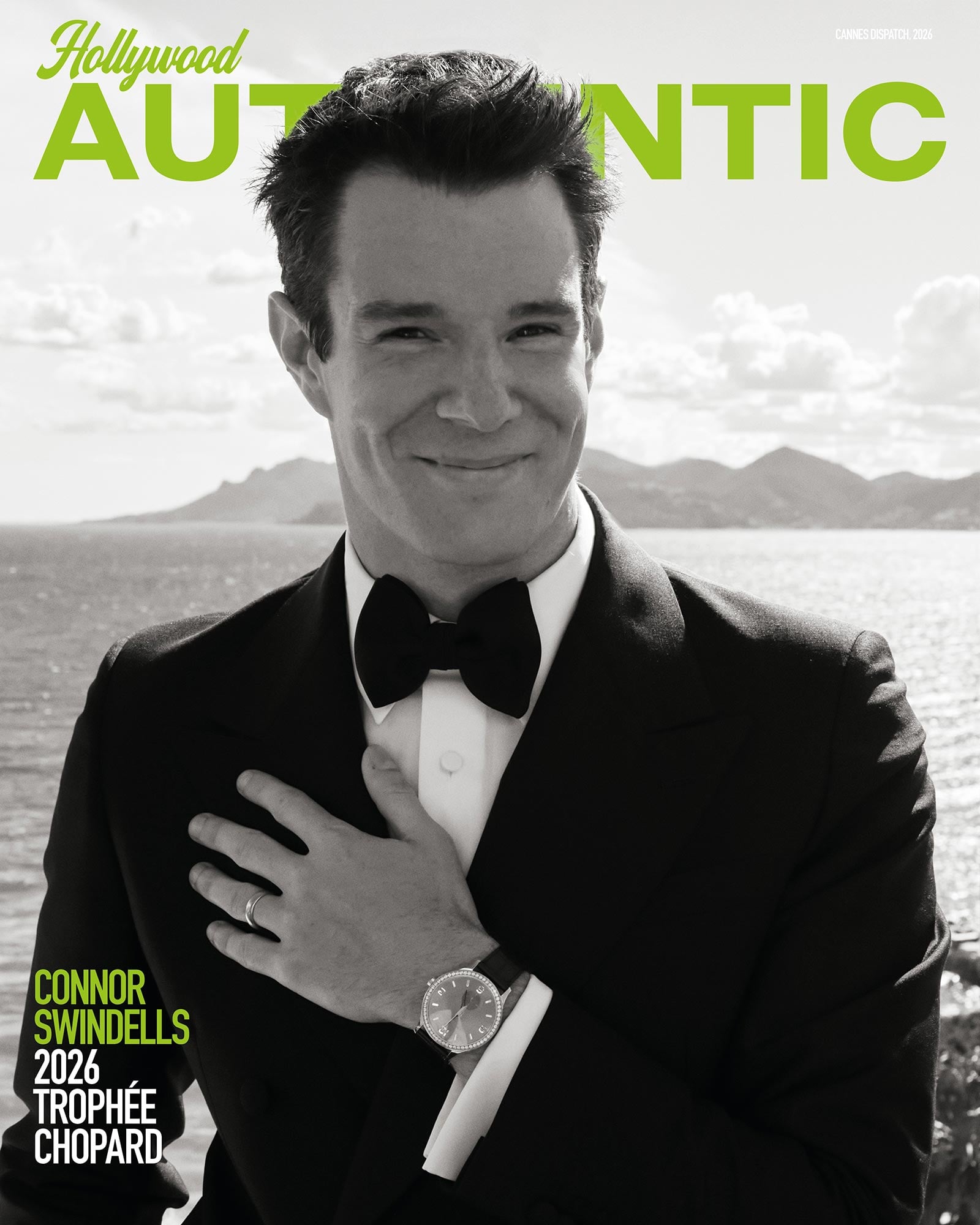
2026 TROPHÉE CHOPARD ‘This is surreal,’ Sex Education breakout Connor Swindells admitted ahead of being presented with the Chopard Trophy by French icon Isabelle Huppert. Photographed by Greg Williams at the Martinez Hotel’s Chopard terrace pre-ceremony, the British actor was recognised alongside Odessa A’zion as a next generation talent at the jeweller’s annual festival award evening at the Carlton Beach Club attended by many established artists. Huppert said the award ‘recognises a movement, a promise, something that is already there yet still in the process of becoming.’ For Swindells that promise began with Sex Education and gathered pace with turns in Emma, The Vanishing, SAS Rogue Heroes, William Tell and Barbie. His upcoming projects continue that trajectory – he’ll appear in Ruben Östlund’s The Entertainment System Is Down and Kayleigh Llewellyn’s The Dreamlands.
The Trophée Chopard has form in recognising talent destined for the stratosphere: in the past it’s been awarded to to the likes of Marion Cotillard, Léa Seydoux, Diane Kruger, Florence Pugh, Jessie Buckley, Kingsley Ben-Adir, Mike Faist and Gael García Bernal. All have seen their careers soar but Huppert cautioned Swindells and A’zion as they moved forward in their path. ‘Success is uncertain, capricious, and sometimes deceptive. I wish you something else — I wish you freedom. The freedom to choose. The freedom to refuse. The freedom to explore unexpected territories. The freedom to be yourselves. The freedom to dream. And above all, the freedom to remain faithful to that mystery that brought you here, because that mystery is what makes great actors.’
In accepting his award Swindells thanked his late mother, who tragically died of bowel cancer when he was seven years old. ‘My mother’s name is Phoebe. She died when I was very young and sadly, she didn’t get to see any of this, but this definitely would not be possible if not for her. She’s been an amazing spirit that’s been with me all this time.’
The celebration, co-hosted by Chopard’s Caroline Scheufele, festival president Iris Knobloch, and general delegate Thierry Frémaux, is in its 26th year and Swindells took home a gold and silver film reel trophy from the luxury jewellery house after a dinner by Michelin-starred chef, Bruno Oger, a performance from pianist Gina Alice Adlinger and dancing til the small hours.
Photographs by GREG WILLIAMS Words by JANE CROWTHER Trophée Chopard (Chopard Trophy) is awarded by a jury of professionals to two young actors in order to recognise and encourage their career
CANNES DISPATCH Photographs by GREG WILLIAMS Words by JANE CROWTHER
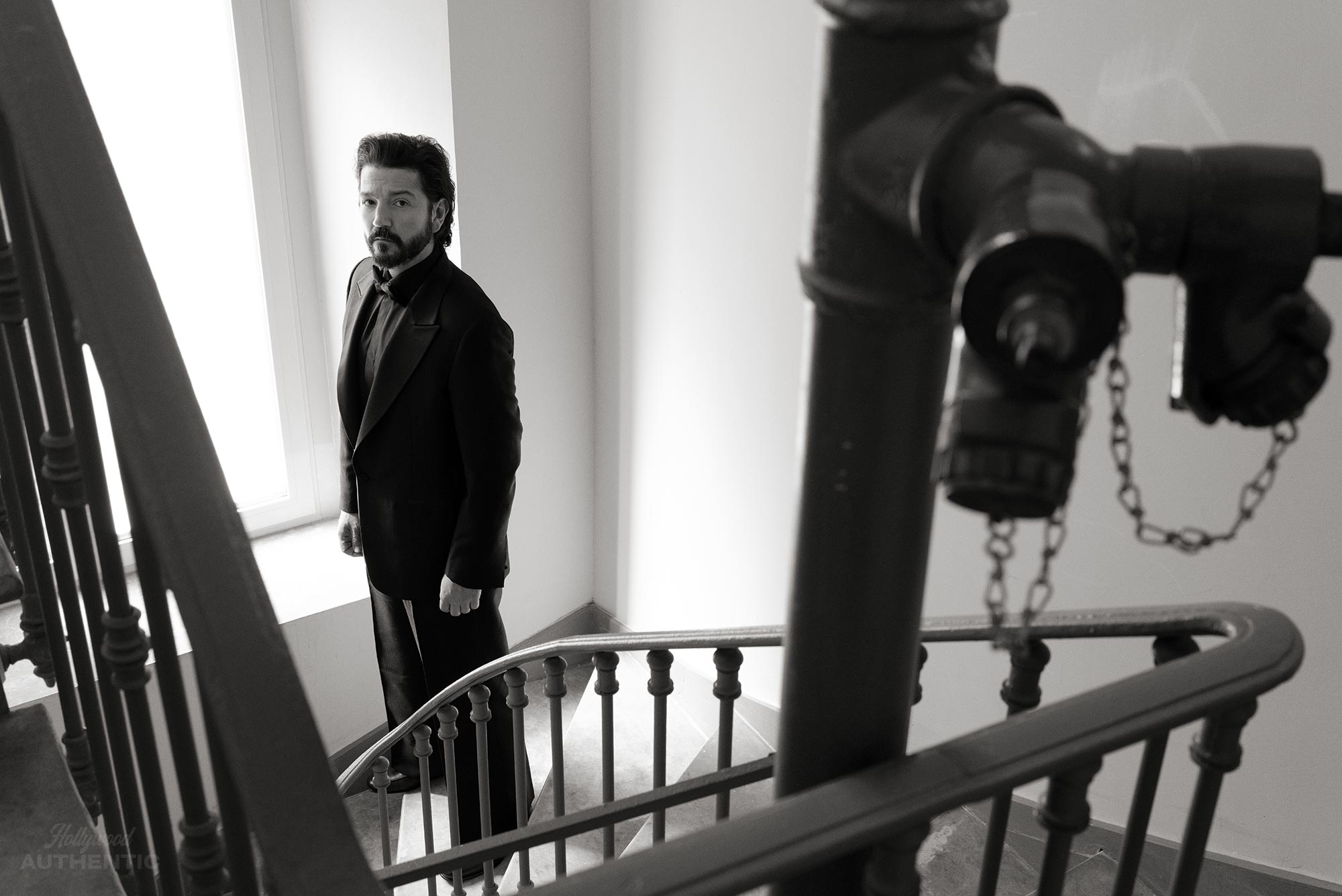
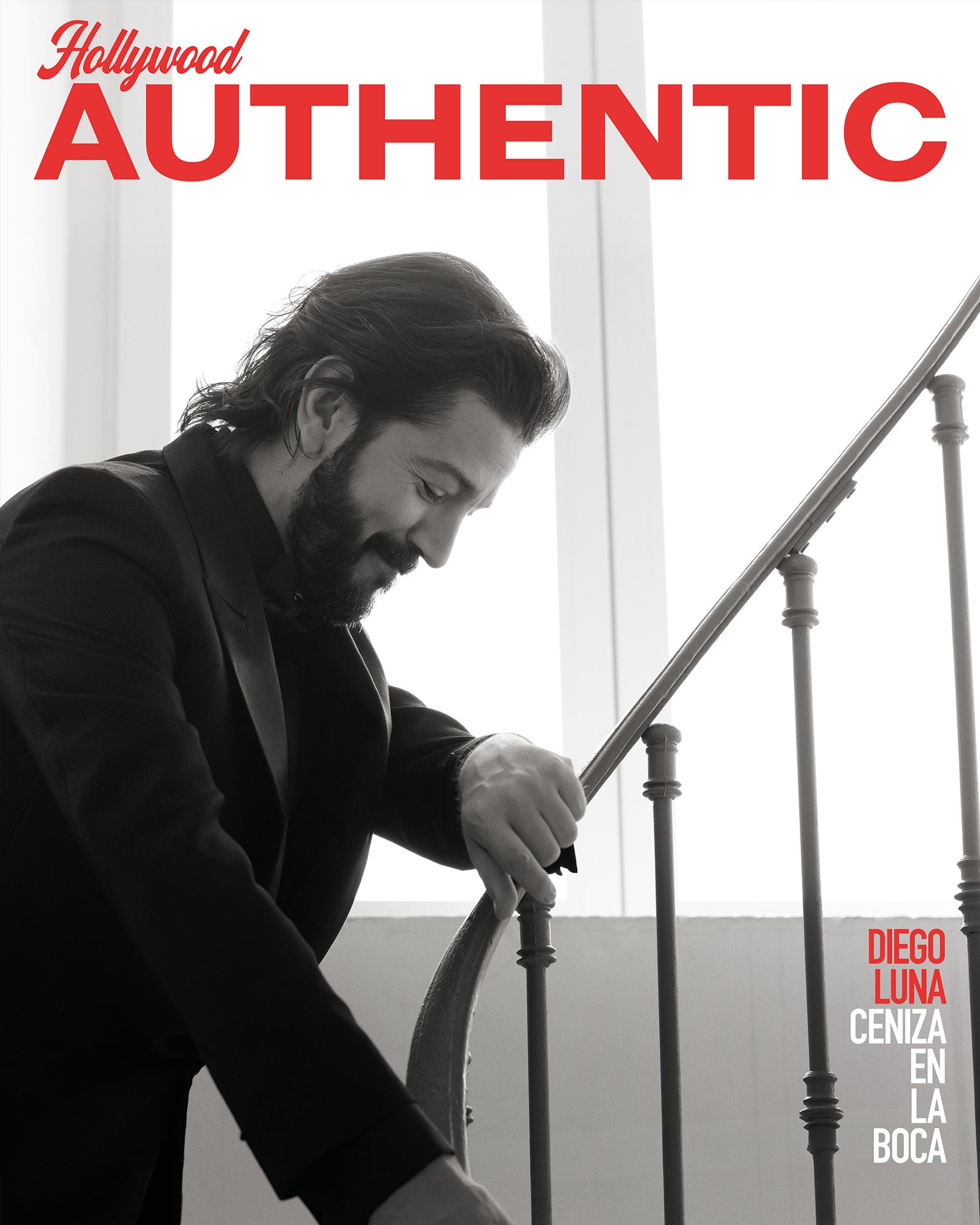
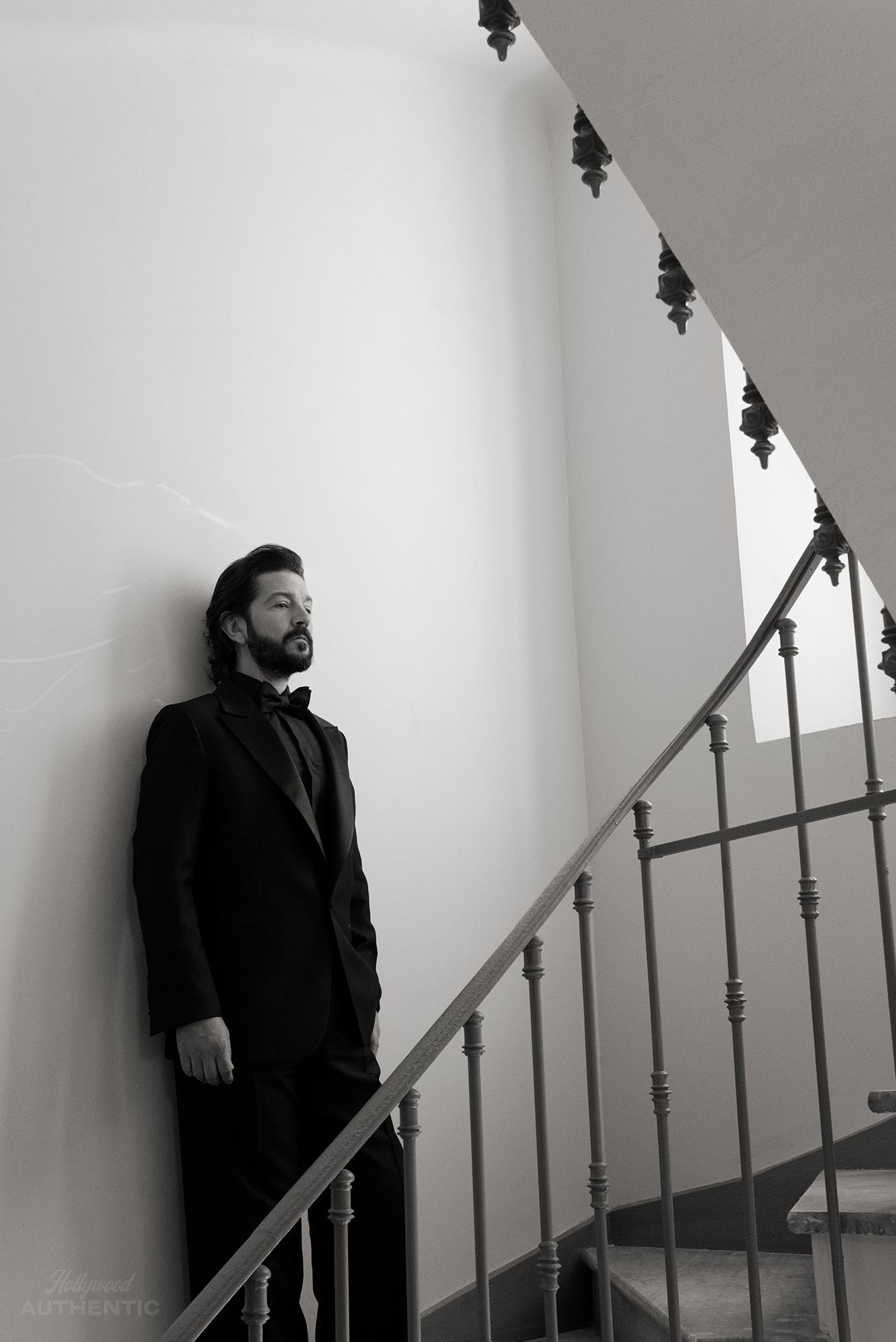
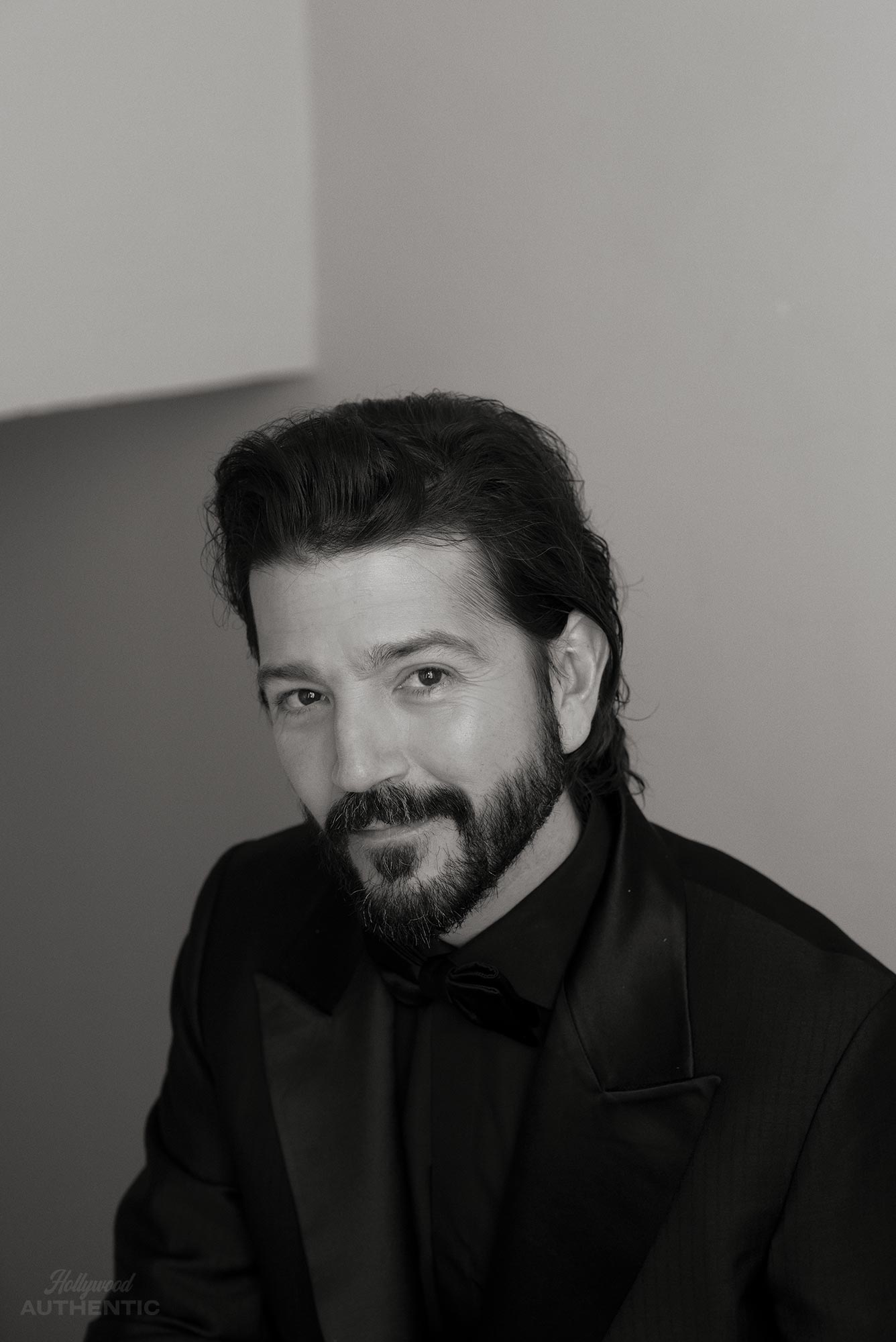
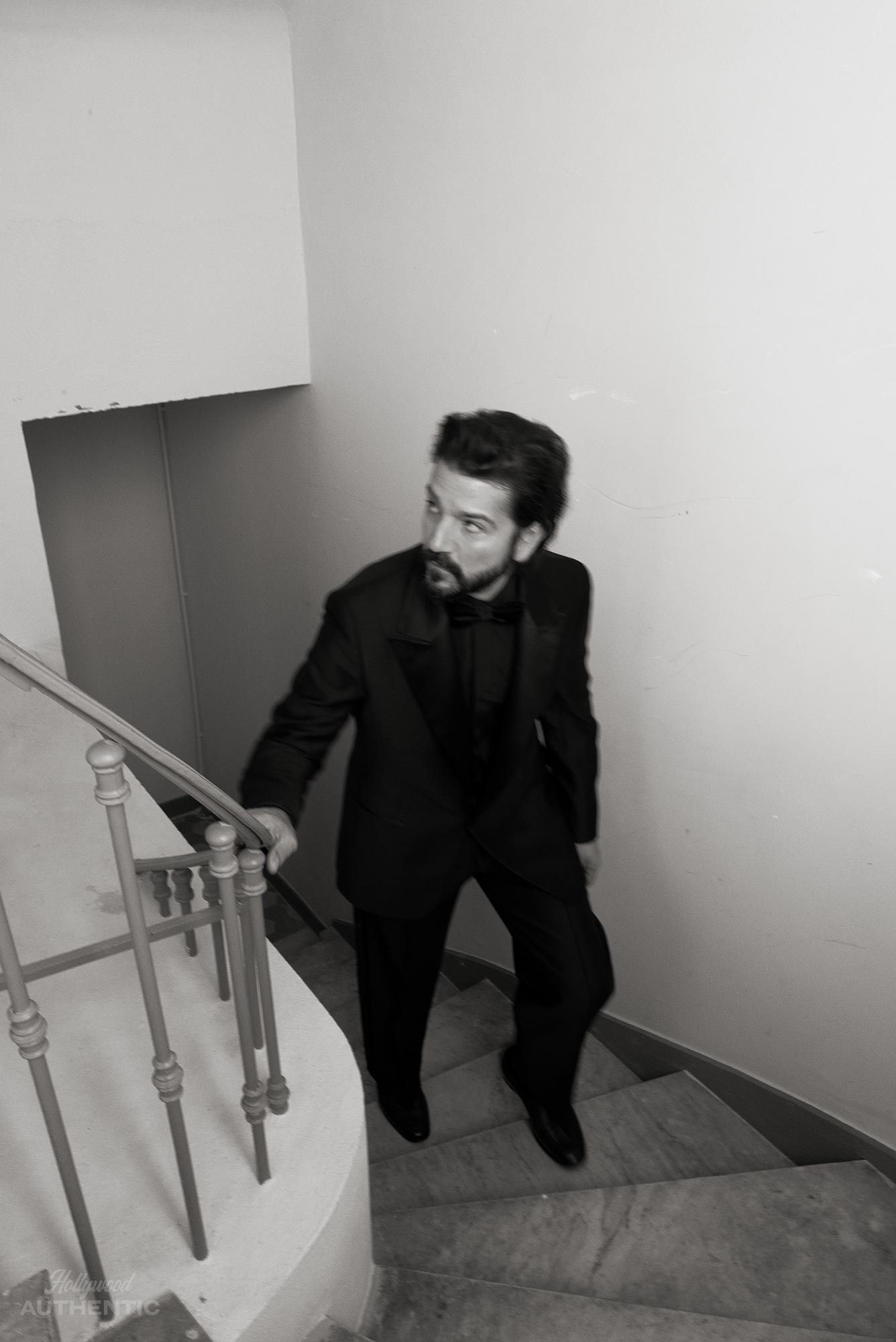
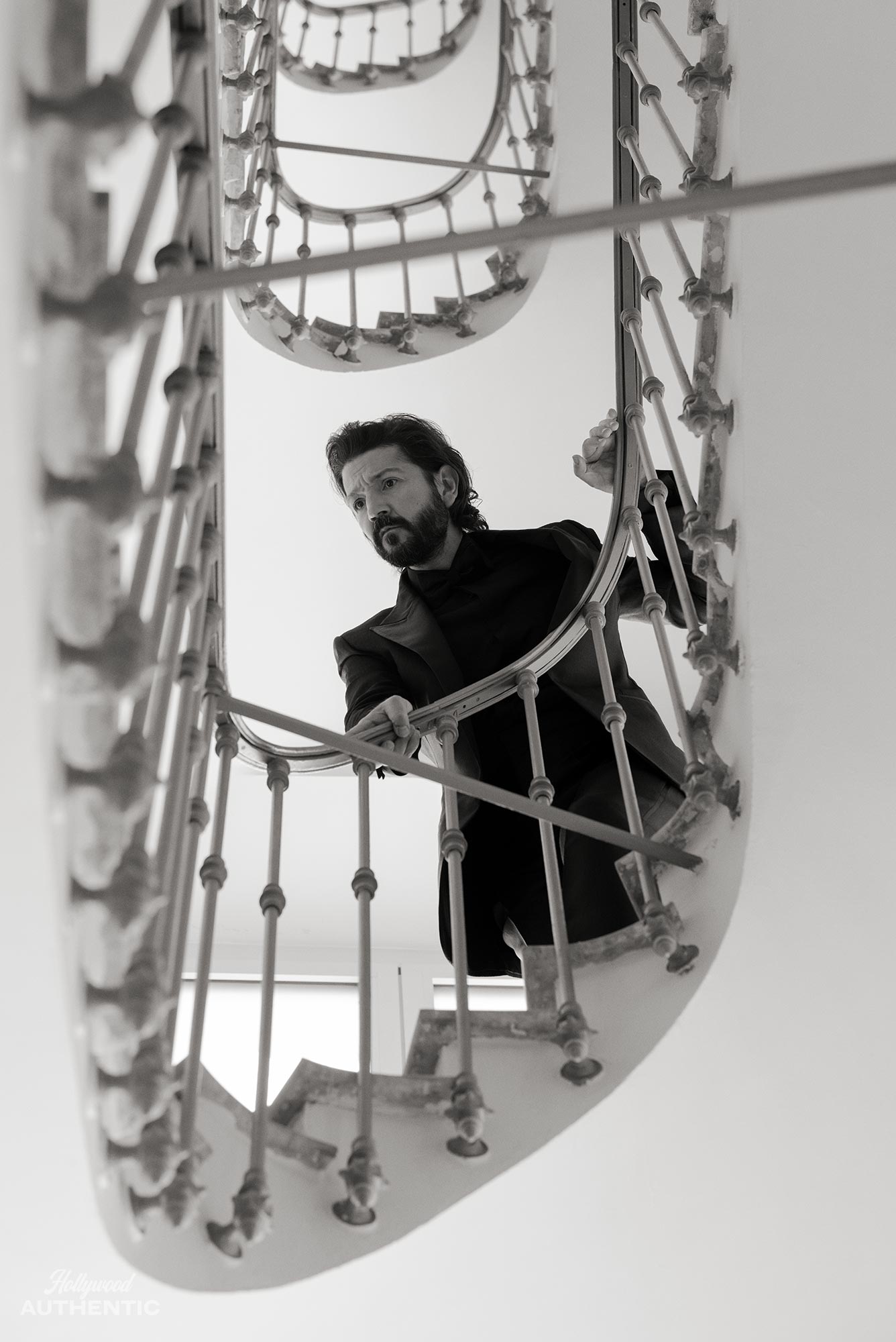
Diego Luna’s return to directing – and his premiere of his fourth film, Ceniza en la Boca, at Cannes Film Festival – became something of an Y Tu Mama Tambien reunion. The film that made him a global star also gave him a lifelong friendship with director Alfonso Cuaron and co-star Gael Garcia Bernal. Both were present when Luna bowed his latest project in the Cannes Palais, Cuaron cheering on his protege and Bernal as executive producer on the film. Greg Williams captured him at the Martinez Hotel before he premiered his project.
A timely character study, his film tracks a pair of Mexican siblings abandoned by their mother (Adriana Paz) when she departs to Spain to escape the violence of her hometown. Eight years later, the children, 21 year-old Lucila (Anna Diaz) and teen Diego (Sergio Bautista), follow her to Madrid where a life of economic hardship and xenophobia awaits. Based on Brenda Navarro’s 2022 novel, the movie follows the numerous low-paid jobs Lucila must take to scrape her rent together, the sly ways in which she is disenfranchised by her employers and how a dream of safety (financially and emotionally) is so often out of reach.
Though it may not be Luna’s own experience of working abroad (he’s appeared in Star Wars films and TV, found success and happiness), the story is somewhat personal. ‘It’s a beautiful story, hard and difficult, about migration from a perspective we don’t see much,’ Luna told Cannes. ‘My mother died when I was two, so the subject of parents not being around hits me profoundly.’ He told Variety that ‘often, we have to grow up to understand what our parents did for us or didn’t do for us’.
The film touches on a hot topic as Spain has become a gateway for Latin Americans into Europe during the Trump administration. It also explores the concept of home, how to mourn or honour a family member and the gig economy. Cannes is a familiar place for Luna to debut his film; he first attended in 2003 as an actor in Soldados de Salamina, and has returned for Mister Lonely in 2007, as director of Abel in 2010 and as a Un Certain Regard jury member in 2016. Ceniza en la Boca has been bought by Netflix for Spanish-speaking territories and will bow in 2027.
Photographs by GREG WILLIAMS Words by JANE CROWTHER Ceniza en la Boca premiered at the 79th Cannes Film Festival and will debut on Netflix in 2027
CANNES DISPATCH Photographs & interview by GREG WILLIAMS As told to JANE CROWTHER
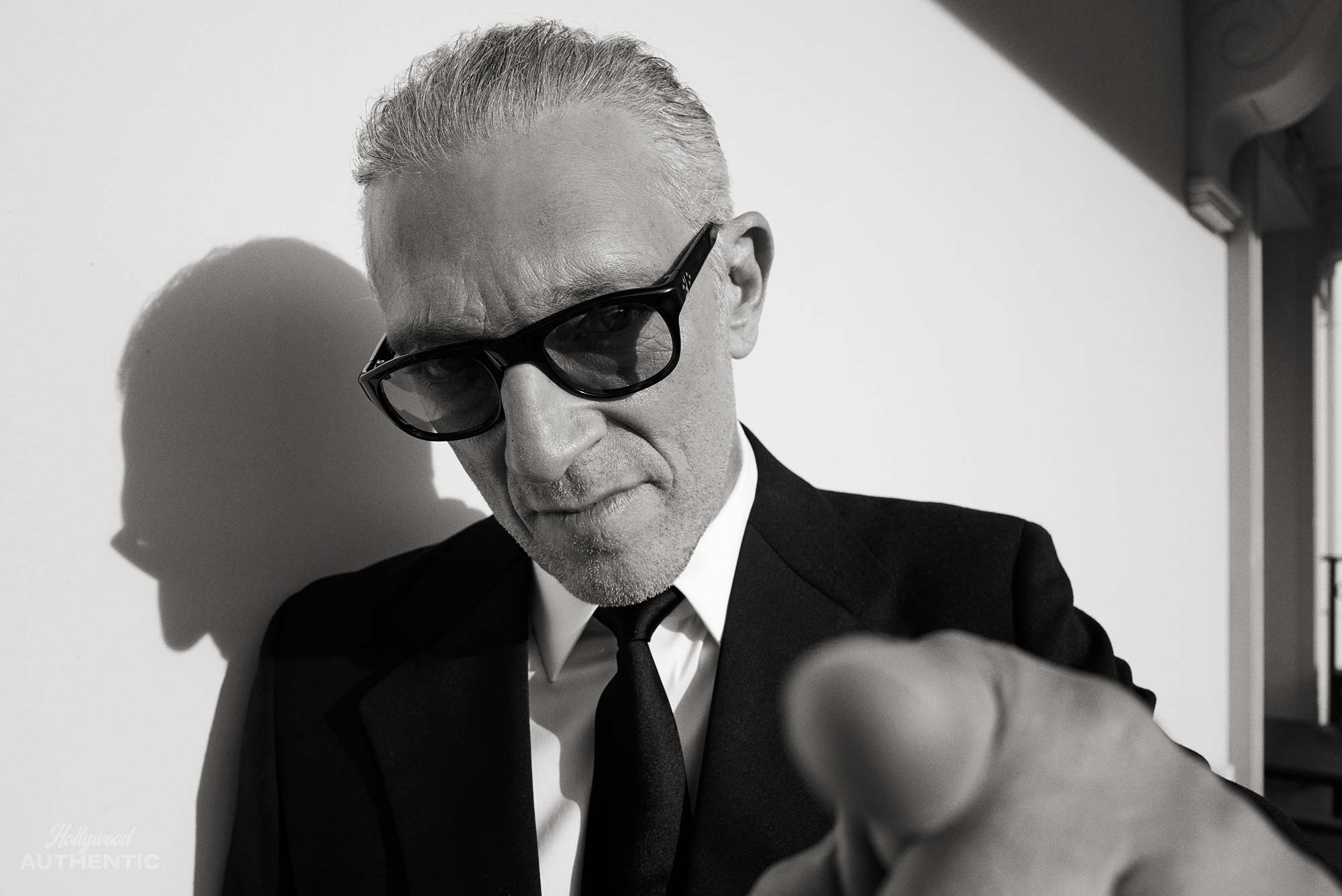
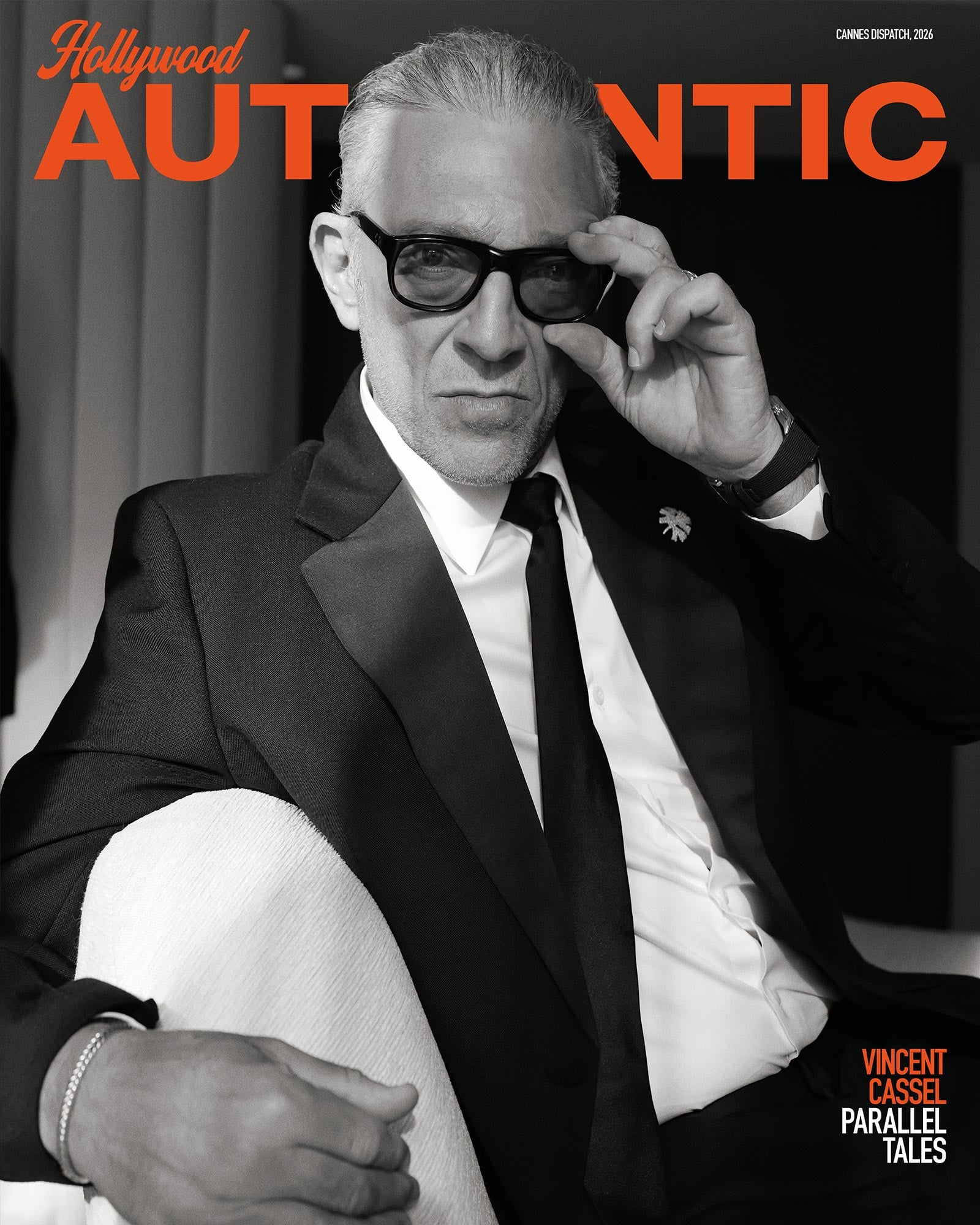
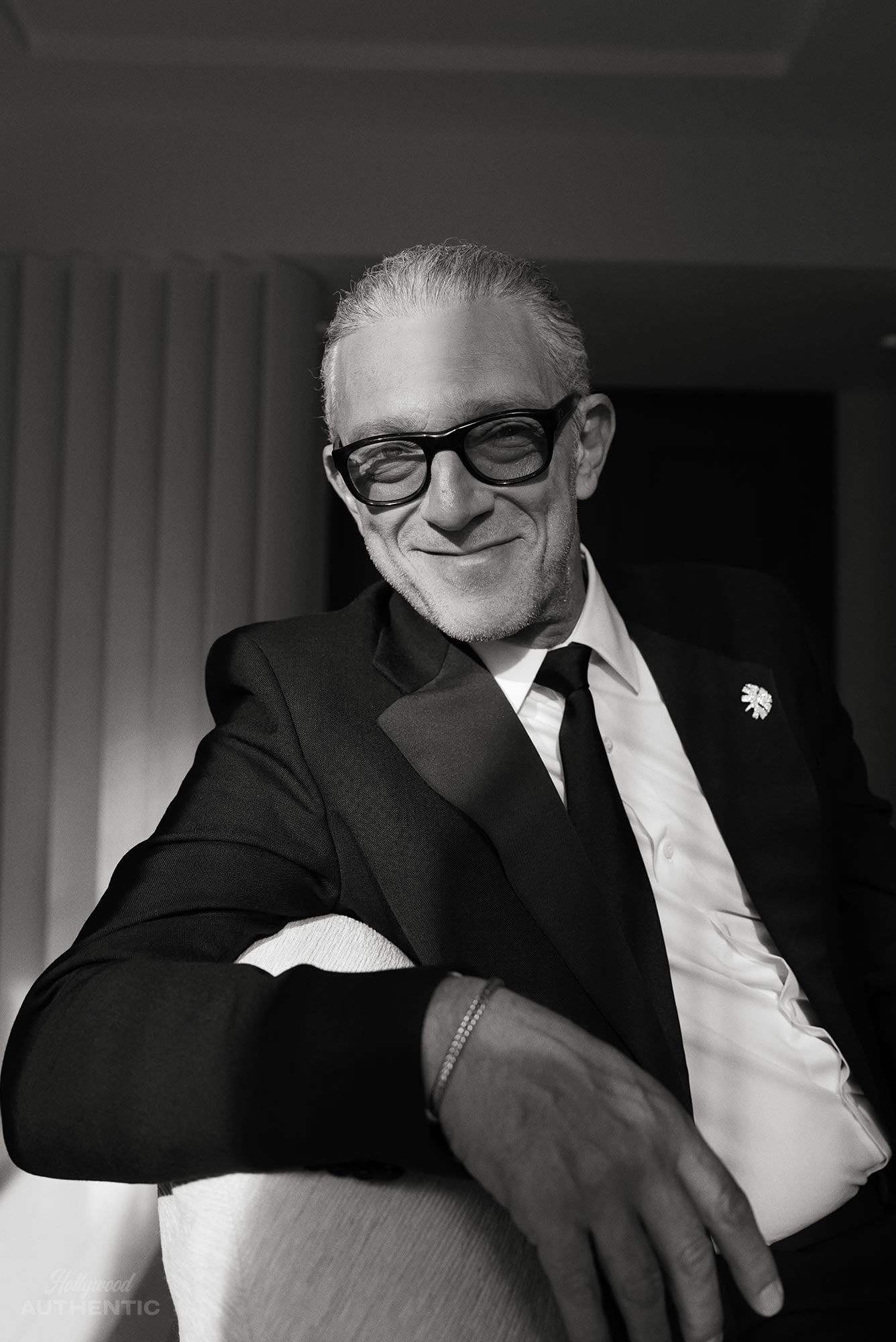
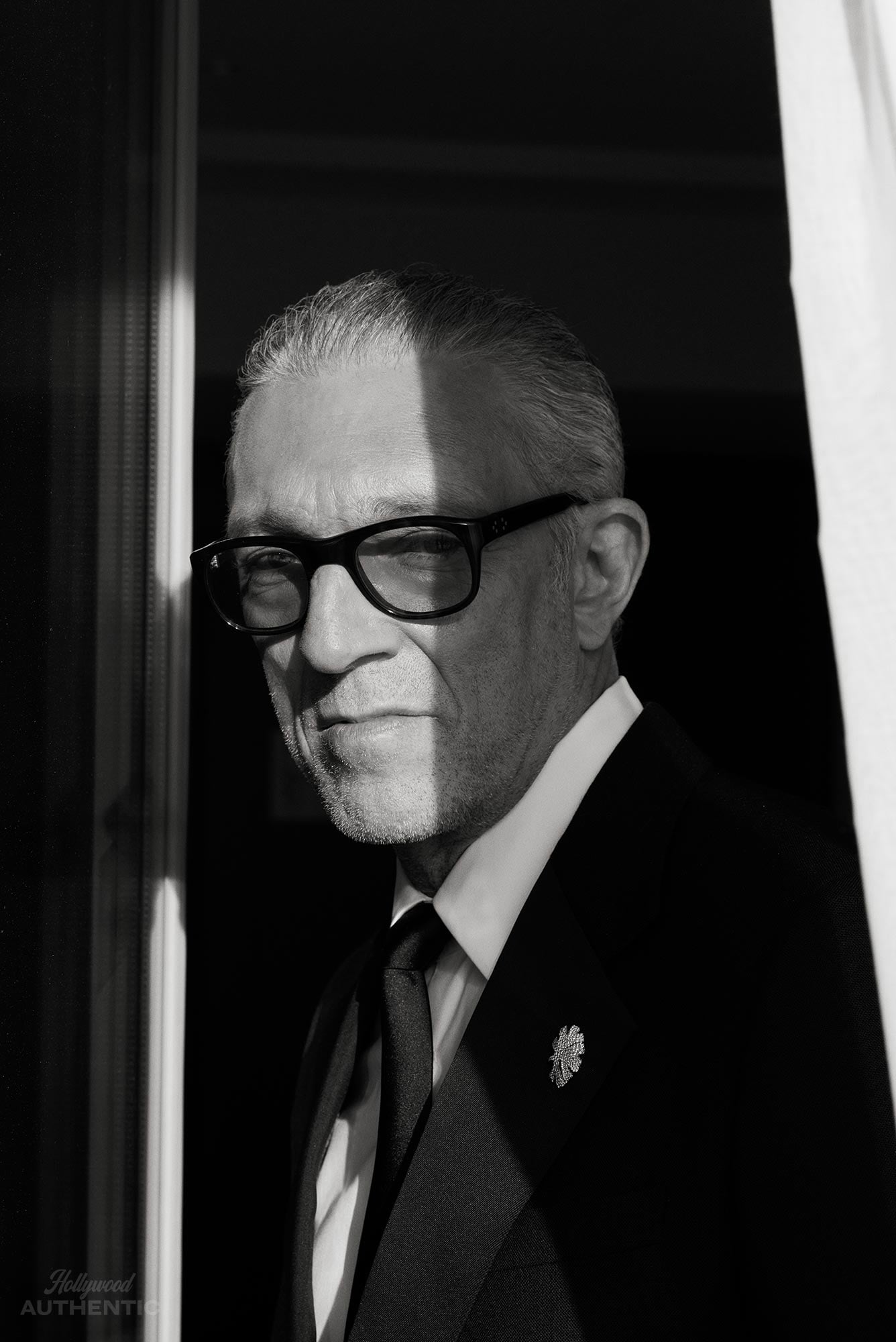
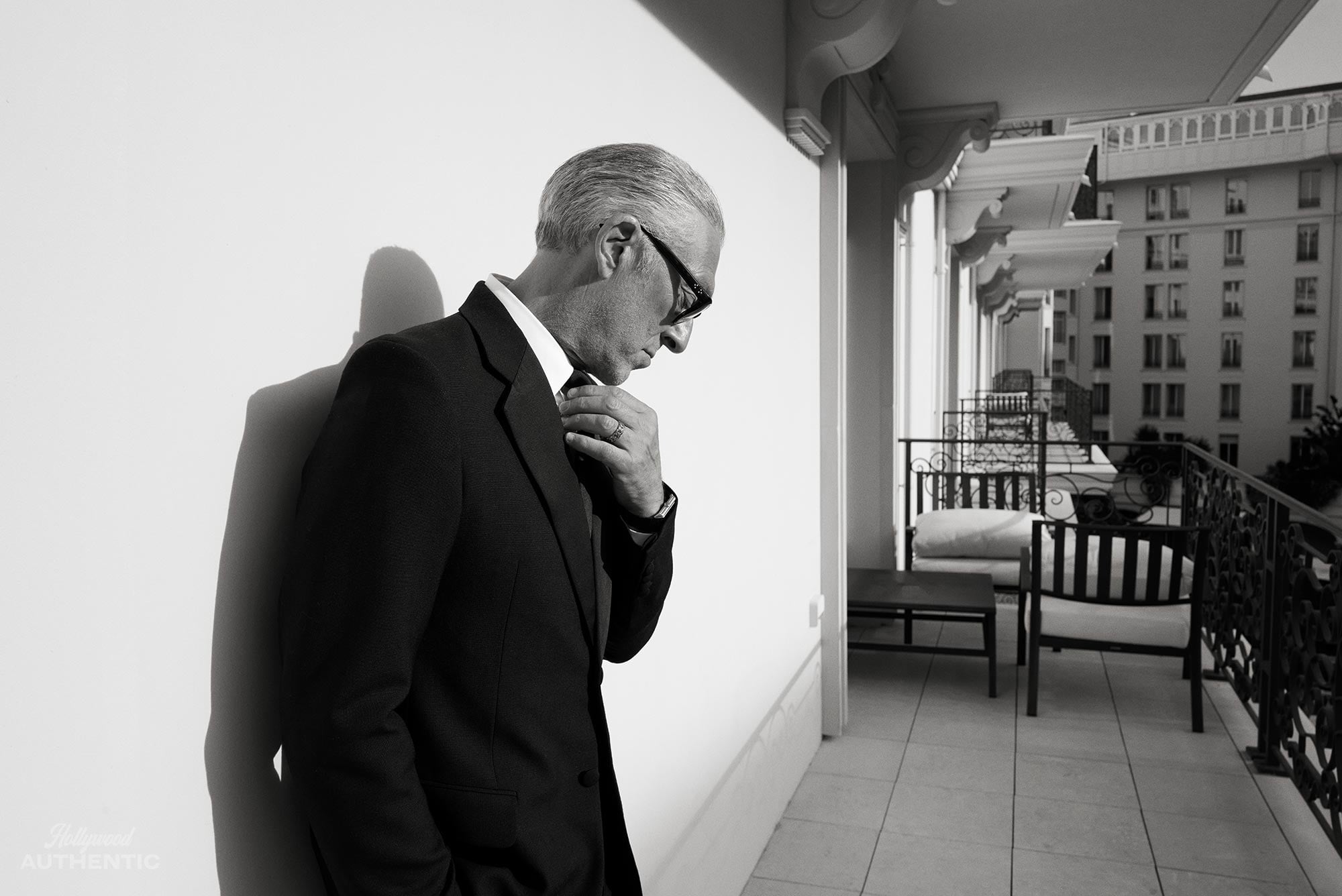
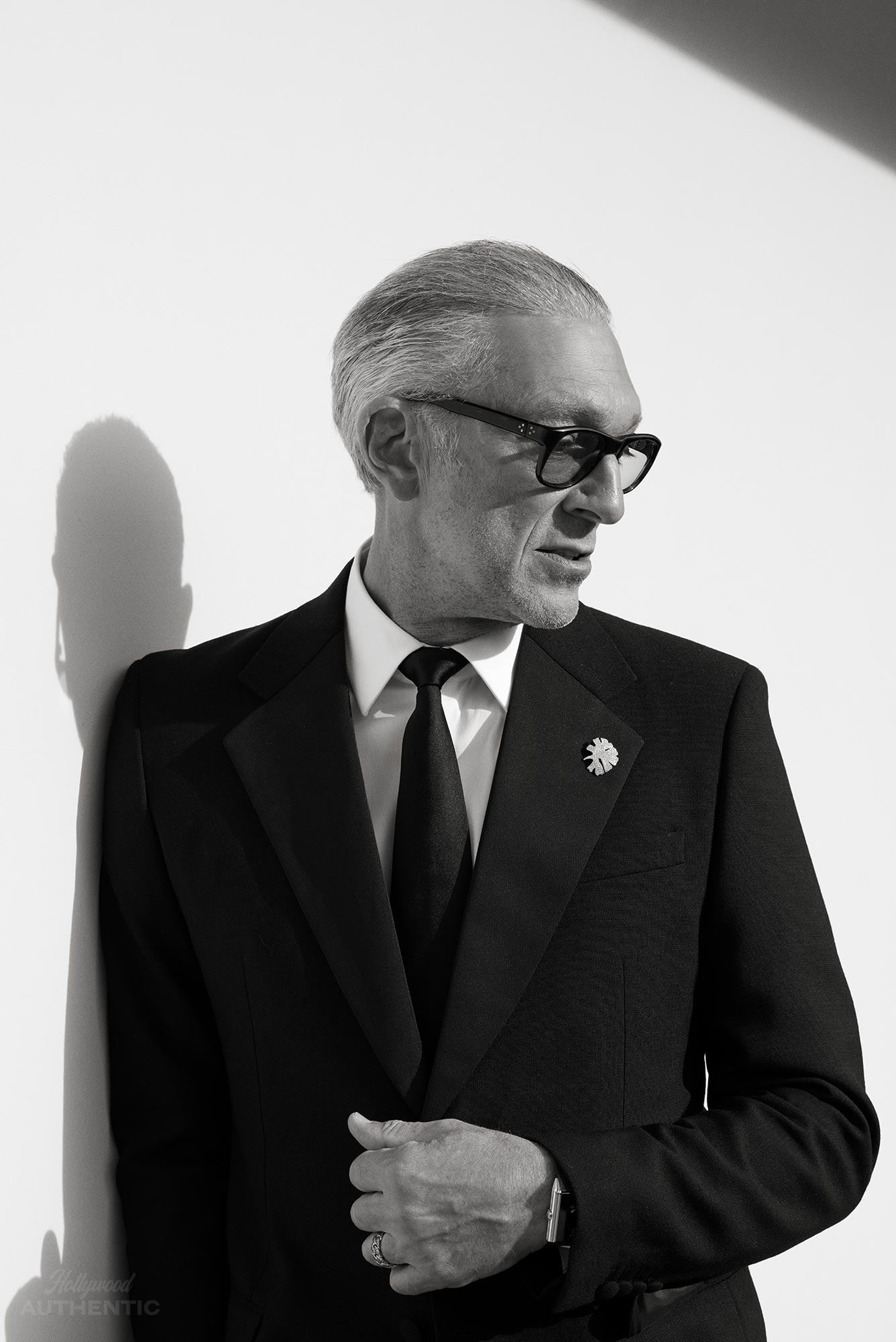
Vincent Cassel admits that his first time visiting Cannes film festival was by hitchhiking. These days the celebrated French actor need not thumb for a lift and he returns to the Croisette with award-winning Asghar Farhadi’s Parallel Tales, premiering at Cannes’ Grand Théâtre Lumière on Thursday night. Farhadi’s exploration of voyeurism is playing in competition at this year’s festival and stars Cassel in a dual role alongside French icons Isabelle Huppert and Catherine Deneuve.
Huppert plays Sylvie, a novelist who starts spying on two men (Cassel and Pierre Niney) and a woman (Virginie Efira) living across the street, hoping for inspiration for her next book. Hiring an assistant (Adam Bessa) to help her sort her thoughts, Sylvie begins to blur reality and fiction as she writes alternative existences she sees through her telescope..
Loosely inspired by the sixth episode of Krzysztof Kieslowski’s Dekalog, Parallel Tales premiered in the famous Lumiere Theatre at the 79th Cannes Film Festival. Cassel told festival press that the dual role he played was ripe for playfulness and that he might have been tempted to act ‘less well’ as the fictional character; ‘but it’s not something I was able to do!’
Greg Williams photographed the actor at the famed Carlton Hotel before the film premiered to a five minute standing ovation.
Photographs & interview by GREG WILLIAMS As told to JANE CROWTHER Parallel Talespremiered at the 79th Cannes Film Festival