
Debut writer-director Agathe Riedinger’s sharply observed and slyly feminist drama is a Cinderella story for the influencer generation – a tale of good girls and dreams dressed up in boob jobs, stripper heels and TikTok dances. It focuses on 19 year-old Liane (Malou Khebizi, luminous) from Frejus who is manifesting being ‘the French Kim Kardashian’ via an audition for a scripted reality show that could boost her from her hard-scrabble existence living with a callous mother and bankrolling her club trips and cosmetic surgery with shoplifting. A self-assured hot mess who can handle the lascivious advances of passing men and sprint miles in her vertiginous diamante heels, Liane is aware that her self image and reality do not marry up. Having treated herself to breast enlargements, her carefully curated look of hair-extensions, heavy brows, glossy lips and provocative clothing put her on the short list for joining a dating reality show as well as being slut-shamed on public transport. But though she seems as hard as a diamond, this vulnerable teen has been in foster care, regularly prays, is a virgin and has high self-worth.
It’s this dichotomy that fascinates Riedinger as her lens lingers on Liane’s body, her unwavering takes on the emotions fluttering across her lead’s face as Liane attends a clinical audition (and is made to strip to her underwear while being asked questions about standing up for herself), flirts with a local boy (who inevitably and disappointingly asks to see her breasts) and, in a seeming act of dangerous self-sabotage, crashes a wealthy party and offers to dance for a group of older men who literally stroke their thighs while watching her. As viewers we constantly worry for her as we watch her negotiate a world that is cruel and patriarchal, constantly waiting for the other (high heeled) shoe to drop.
That Riedinger keeps us guessing as to whether Liane will transform into an insta princess is one of the intrigues of the film, but so is Khebizi, a first-time screen actor who inhabits the role so thoroughly and messily it’s impossible to not want the best for her. It’s also an empowering experience that feels like a fresh take on the madonna/whore complex. As Liane says defiantly; “if girls want to wear mini skirts and twerk in clubs they don’t deserve your scorn.” This one certainly doesn’t.
An impressive debut from both director and star –Wild Diamond marks two fledgling careers worth watching
For years, George Miller’s post-apocalyptic saga has been all about Max Rockatansky. The Road Warrior – first played by Mel Gibson and, in 2015’s Mad Max: Fury Road, by Tom Hardy – has been the iconic lone wolf at the heart of these films. But his latest chapter Furiosa: A Mad Max Saga flips it, brilliantly, switching focus to the breakout character from Fury Road.
Played originally by Charlize Theron, Furiosa was every bit the equal to Max, as she led a posse of female escapees from The Citadel, the impregnable fortress ruled by the foul-looking Immortan Joe. Miller now backtracks fifteen years, giving us Furiosa’s origin story, in this thrilling blockbuster, packed to the rafters with insane action set-pieces perfectly tailored for the big screen.
Across five chapters, the film begins with Furiosa as a girl (Alyla Browne, who also featured in Miller’s Three Thousands Years of Longing). She falls into the hands of Dementus (Chris Hemsworth, ditching his Thor persona for some villainous fun), the leader of a gang of marauders who has designs on The Citadel and finding the “place of abundance” where Furiosa comes from.
When Dementus tortures and kills her mother in front of her, Furiosa’s fury rises, inspiring a quest for revenge that will stay with her for years, even after she is taken by Immortan Joe for his baby-producing harem. As she grows into a young woman (The Northman’s Anya Taylor-Joy), she learns how to cultivate her warrior skills, thanks in part to Tom Burke’s Praetorian Jack, a highly skilled driver for Immortan Joe who has completed more runs on Fury Road than anyone else. This all leads to the film’s staggering central sequence, an aerial attack on the armoured War Rig that includes predators on flying motorbikes. In one jaw-on-the-floor moment, a car even flips up onto the bonnet on the War Rig as it’s in full motion. If The Fall Guy, the recent movie with Ryan Gosling, suggests stunt men deserve an Oscar, the stunt team – led by Guy Norris – deserve every award going.
Likewise, the sheer craft on Furiosa – the costumes, the sets, the cinematography – astounds. And whether it’s a moody Burke or a menacing Hemsworth, the performances ace it. At its heart, Browne and Taylor-Joy shoulder the burden of bringing Furiosa to the screen with aplomb and, in their hands, she’s one of the great modern heroines of Hollywood action cinema.
George Miller’s Furiosa: A Mad Max Saga staring Anya Taylor-Joy, Chris Hemsworth and Alyla Browne is screening at the 77th Cannes Film Festival and will release in cinemas 24 May
Archly meta and reflexive, Quentin Dupieux’s cheeky comedy is precisely the sort of movie to open a film festival – with its fourth wall breaks, mid-scene appeals to film buffs and discussion on the purpose of art. Audiences for Cannes’ opening night film ate up a self-described indie that has plenty to say as its scatty characters seem to say nothing at all.
The Second Act of the title is a remote restaurant where a trembling, anxious waiter opens up and nervously flicks on the lights. On their way to his eaterie are two sets of characters – besties Willy (Raphaël Quenard) and David (Louis Garrel) who discuss the annoying girlfriend that David is trying to jettison as they stride down the road. That girlfriend, Florence (Lea Seydoux), is driving to meet them at the titular rendezvous with her Papa (Vincent Lindon), convinced David is ‘the one’. But before any sort of narrative can form, David and Willy discuss trans women and bisexuality and address the camera directly as they worry about their opinions having the potential to cancel them. Meanwhile, in the car, Florence’s father quits the film production we are watching and argues that acting and filmmaker are ridiculous artifice, pointless in a violent world of war and poverty. That waiter at the restaurant awaits their arrival, his anxiety rising for his big break as a featured background artist, and the ‘director’ is an AI app…
Like a cinematic onion, The Second Act continually sheds its artistic layers, keeping audiences on their toes in questioning what’s ‘real’ and the value of the seventh art. Even if you don’t like this, Dupieux seems to be saying, cinema is vital; ‘movies are cool!’ Seydoux argues at one point and a dolly track is lensed with love. The device of constantly upending expectation with cast/characters spatting about semantics and talking in circles is simultaneously self-indulgent and self-aware but makes some spiky points about the disenfranchisement of artists, the rise of algorithms and the value of acting (Seydoux’s actress calls her mother at one point to blub about her day while her heart surgeon mum saves lives). And despite some dextrous physical comedy from Manuel Guillot as the waiter with serious pouring issues, the film ends with a violent, bleak act that is open to interpretation.
Brisk at under 90 minutes, The Second Act is a slight concoction that plays like a successor to Woody Allen and asks viewers to take nothing too seriously. Unless it’s a call from Paul Thomas Anderson…
Quentin Dupieux’s The Second Act starring Lea Seydoux, Louis Garrel, Raphaël Quenard and Vincent Lindon is screening at the 77th Cannes Film Festival. Release date TBC
Words by ARIANNE PHILLIPS As told to JEREMY LANGMEAD
When Pulp Fiction was released 30 years ago, it wasn’t long before the wardrobe worn by Uma Thurman’s gangster wife Mia Wallace influenced a generation of designers: 1995’s catwalks from Miu Miu to Alexander McQueen boasted a multitude of over-sized white shirts fit for a twist-dancing, milkshake-sipping bad girl. The movie even prompted sell-outs of Chanel’s iconic nail colour, Rouge Noir (Vamp in the US). Here, Arianne Phillips sits down with Betsy Heimann to explore the road to creating such an iconic moment on celluloid.
‘On the eve of Pulp Fiction’s 30th anniversary, I had the good fortune to discuss the film’s iconic and culture-shifting costume design with one of our most respected and revered costume designers, Betsy Heimann. Her stellar body of work underscores generational filmmaking at its finest, with her designs featured in Reservoir Dogs, Get Shorty, Jerry Maguire, Almost Famous, Vanilla Sky, Lady in the Water, Green Book and many other memorable films. Betsy’s costume design for Pulp Fiction remains as relevant today as when the film premiered in 1994.
Betsy is an artist; a truly remarkable and talented costume designer whose brilliant work with Quentin Tarantino significantly contributed to the enduring success of his first two films. It also benefitted me 26 years later when I was invited to design Quentin’s Once Upon a Time in…Hollywood. I was so excited to speak to Betsy about the early days with Quentin, their process creating the visual language that we have come to know unmistakably as a “Tarantino film”, and designing and imagining the world of Pulp Fiction.’
AP: Watching Pulp Fiction again this week I thought about you so much, and what we have in common. I worked with Quentin on his last film, Once Upon a Time in…Hollywood, and I really have to hand it to you that you really are a part of the visual language that Quentin is so known for – whether it’s the Hawaiian shirt on Tim Roth in Pulp Fiction (a look that re-surfaces on Brad Pitt in Once Upon a Time in…Hollywood) or Quentin’s love of a leather jacket and a T-shirt, or a black-and-white motif… this is the Tarantino language that you both created together. I’m curious to learn from you what your process was like with the young Quentin when you worked together on Reservoir Dogs. How did that happen?
BH: I met [producer] Lawrence Bender at a New Year’s Eve party and we just got chatting and he invited me to a screening of a small indie film that he had worked on, and then it evolved into him sending me scripts and asking what did I think it would cost to do the costumes for them. And I would help out with the budgets. And then, one day, he sent me this script for Reservoir Dogs. It was fascinating. I had a costume career before Reservoir Dogs – I worked my way up from seamstress – but I had never read anything like this. I said to myself, you know, they’re gonna get good actors for this because there are pages of dialogue. So when Lawrence called me up and asked, ‘So what do you think?’ I said, ‘Err, who’s doing the costumes for this movie?’ He said, ‘I don’t know yet.’ And I said, ‘I’ll do it. I wanna do it.’ He told me they didn’t have any money. And I told him I didn’t care. That’s how it happened.
AP: And what was your impression of Quentin when you first met him?
BH: Oh, his enthusiasm was so contagious. And he was very organised. I remember being very impressed that he was so prepared. He was very grateful. And I just thought, I like this kid and I like being with him, and I love his enthusiasm. And then I went over to his apartment and we started watching movies together. Quentin was always visual. We’d go through the whole script visually. And our language was the language of film. I remember one conversation most vividly about Pulp Fiction. It was about Butch, about Bruce Willis’ costume. I said I think he should wear a leather jacket. He said, yes, I want a leather jacket like Nick Nolte’s in Who’ll Stop the Rain; so I sourced a similar old brown pigskin suede one, put it in the car, and Quentin and I drove out to Malibu where we had a meeting with Bruce. Demi [Moore] was there and Bruce brought all of these 1980s and 1990s leather jackets he liked – he must have had 10, but they were all oversized – and mine looked quite skimpy in comparison. But Quentin liked it, so Bruce tried it on. He put it on and said to me, ‘Well, are you gonna drag it behind a truck?’ And I said, ‘Oh, you mean age it? Yes, and with you in it.’
AP: I love it. Another of the things that I was really noticing when rewatching it was the day players and all the ancillary characters are wonderful characters whether it’s Christopher Walken, Harvey Keitel, Amanda Plummer, Eric Stoltz or Kathy Griffin. You did such a beautiful job of letting us know who these characters were in such a quick, short time period, the costumes really allowed us to just get there immediately. You infused so much storytelling into your costumes, it’s so impressive.
BH: Well, thank you very much. Yes, it was a big cast. As with Reservoir Dogs. We had a very big warehouse that we prepped and shot in. When I would get the things together for the fitting, I would call Quentin and he’d come in and he’d peek his head in and he would say ‘great’. But we had discussed it all before. One of the things that he and I did is watch anime cartoons. And one of them was Speed Racer. And I remembered that when we were prepping Pulp Fiction.
AP: And you put Eric Stoltz in that T-shirt, right?
BH: Yes. I said to Quentin, I think Speed Racer is the way to go. For me, I always tell a story about the character to get inspiration. And he said that he had one in his closet and so he went and got the T-shirt. There was a lot of spontaneous back and forth.
AP: These graphic T-shirts are a part of Quentin’s language. In my experience with him, he had a lot of graphic T-shirt ideas for Once Upon a Time in…Hollywood.
BH: He has the same respect for the graphic T-shirt that I do. It’s not just, let’s put this guy in a graphic T-shirt, it has to mean something. It’s the same on all the films I’ve worked on. On Jerry Maguire, for example, when he is writing his mission statement, I figured he went to Notre Dame College. And so I called the Student Union and asked where do you guys all hang out? And I found the Little Bar, and I got hold of a T-shirt from them, and that’s the one Maguire is wearing when he writes his mission statement – his college t-shirt, the one he wore when he was full of ideals and full of how he was going to change the world… So every T-shirt for me has meaning.
AP: That’s so great because it gives us little Easter eggs of reality. For me, watching Pulp Fiction, and seeing the Santa Cruz Banana Slugs college T-shirt that Vincent [John Travolta] wears was, like, nobody knows about that T-shirt unless they’ve been there. But Quentin wanted to get across that Jimmy had some connection with Santa Cruz. And so you see how costume can give a character an instant backstory – it really adds another layer and a texture. It’s the same with other clues you used in Reservoir Dogs. Tell us how the black suits came about in that film?
BH: Well, for Reservoir Dogs, my budget was $10,000. So I said, ‘Guys, I can give you four suits with this budget for the film. And I need to keep one clean’.
AP: Four suits for all?
BH: Right. But, you know, we were shooting multiple action scenes with them. So the fact of the matter is that only Harvey Keitel and, briefly, Quentin, wore actual suits. We couldn’t afford them. So I found this stash of 10 black Beatle jackets at American Rag – which is now very hip, but it was a thrift store at the time – and I thought these would work on the younger guys, like Tim Roth and Steve Buscemi. They were great jackets. And then I teamed them with Beatle boots and black jeans. And Quentin was, like, ‘What?’ And I said, ‘Trust me, nobody’s gonna know the difference. It’s gonna be fabulous’.
AP: That was amazing foresight to know that it would work so well on screen and not show.
BH: Well, that’s what we do. That’s what we know as costume designers. The other thing I will tell you is that not all of the jackets people were wearing were black. Some of them were navy, some of them were dark grey. I spent a little bit of time with our cinematographer, Andrzej Sekula, and I would say, ‘Okay, look at this grey suit jacket and look at this black suit jacket. How are you lighting this picture? Are they gonna photograph the same?’ And he would say, yes, and I would trust him.
AP: I think that was ingenious. And it actually gave it a modernity that a regular suit might not have. And a black jean was probably great for all those action scenes because they could put pads under them and you wouldn’t see anything. And back to Pulp Fiction, and they’re also wearing black suits, what was your budget like then?
BH: $36,000. I remember sitting with Quentin at Barney’s Beanery, and I said to him, ‘I really think that Vincent and Jules are Reservoir Dogs.’ And he thought about it. He goes, ‘You know, I like that. I like that’. This time I could do actual suits because now these guys have a little more money. I could do a linen suit with Vincent so that he always looked kind of a mess; and with Jules [Samuel L Jackson] I wanted a very slim-fitting narrow lapel, which was not that popular back then. So I went downtown and I found this Perry Ellis suit that I could get at a discount. And the collars of the shirts were very important to me, too. With Reservoir Dogs, each one of those guys had a different shirt with a different collar and a different width of tie in proportion to the width of their chest. This is all very technical, but it gives them a difference. So in Pulp Fiction, I did that again.
AP: And so Jules had a very narrow collared shirt because he’s the preacher?
BH: Right. And then there’s a bit of a cowboy theme in Pulp Fiction, too. Amanda Plummer has the cowboy boot dialogue, and Jules calls Tim Roth ‘Ringo’ – Gregory Peck played Jimmy Ringo in The Gunfighter. They’re all gunfighters. And so for me there was this kind of a Western influence in the costume. And we all used to shop at King’s Western Wear in the Valley and that’s where I got the idea for the bolo tie. I thought, well, here’s Vincent thinking he’s cool. He’s got his bolo tie on. And Mia [Wallace, played by Uma Thurman] says to him, ‘How are you doing, cowboy?’ And he refers back to her as a cowgirl. So these are all messages to me. So I came up with that idea and Quentin liked it.
AP: A lot of those choices influenced the way people dress then and now. Let’s talk a little bit about Mia. I really was taken by her proportions and how you used them. How did it come to be that her trousers were short, like pedal pushers? The proportions of her outfit work so beautifully, especially in the twist-dancing scene… the way that you tailored that shirt, and it had the French cuff with the cufflink, and the black-and-white motif. I really love the beautiful symmetry of design in that scene. They’re dancing and they look like cake toppers. That scene is burned in our minds forever. It really kicked off a trend.
BH: Well I thought that Mia was really a Reservoir Dog, but she couldn’t express that because she was married to the boss and she had to be chic and glamorous; the eye candy. But on her date with Vincent she wanted to show him that she was one of the guys. And so I said, I wanted her to wear the black and white. But Uma is very tall, and we didn’t have any money, and all the pants weren’t long enough for her, and so I said, ‘What the heck, let’s just cut ‘em off’. I called Chanel and I said the magic words, Uma Thurman – they are magic words, things fall from the heavens – and I told them I needed these gold ballet slippers I had seen in a magazine and they lent us them. And then the shirt had to give her some shape and I wanted it to be oversized because I wanted it to say ‘I’ve got money but I’m also one of you; I’m a bad girl’. And then we added the bandana underneath. So it was another cowboy reference.
AP: And then Mia’s bob. It all works in tandem: the short pants and the oversized shirt, and then that black bob, it’s just so successful.
BH: The bob is all Quentin. It’s based on the old film star Louise Brooks and that’s what he wanted. And so knowing that, you start with that, instead of hoping that it’ll work with what you’re doing, you start with that. That’s the reality. And the reality is the inspiration.
AP: Something else I love, which you do beautifully, is using a costume piece more than once to tell the story; when it starts on one character, then another character wears it. So, for example, we have Vincent wearing his black suit and that wonderful trench coat. And then we have Mia coming back from dinner with him and she has the trench coat on. That’s just beautiful. It says so much. It still looks so great today.
BH: I love that you noticed the raincoat, because that was something I was really, really adamant about. And Quentin liked the idea. I knew that I wanted her dancing around in that big coat and then she could find the drugs in the pocket. I wanted to make it more of a natural thing and so I had to get that coat on him in order to later get it on her. And so I searched everywhere for one of those old gabardine raincoats from the 1950s and found it at Palace Costume.
AP: It worked so well. And I love the colour… it would be easy for it to be a black raincoat but then we would really not see the detail. Also when she puts it on, it’s clearly not her coat. And what’s amazing, again, is the way these characters dressed in Pulp Fiction still inspires the way people dress today. It’s the marriage of your trueness to the characters, but also the fact that you and Quentin really tapped into a fantasy of larger-than-life characters that a part of us would like to be. And elements of the way they looked are attainable: you both turned regular items into iconic ones by the way you used them on the characters.
BH: Yes, I suppose it is the connection that the public makes with the characters. There’s a poignancy to Mia Wallace. I mean, she has to wear the trench coat as she has to find the drugs in the pocket. So therefore she could just ruffle through his coat that’s left on the couch, or she can have it on and reach in the pocket. And these are motions and actions that the audience can relate to.
AP: That’s because these are the choices you made in respect to how you saw these characters. The reason for its influence on fashion is that this film is such a great reflection of what was happening in our culture, and it just resonated with people. These characters are unattainable, but people can create their own versions and make it accessible because the design is so uncluttered, it’s so specific.
This film also is indelibly a part of ‘the film language’ with other costume designers and directors. I’m sure you’ve seen that your work is often referenced or recreated. In the 1990s I was doing a lot of music videos, and I know that this was cited as the pinnacle of cool for so many directors; we’ve seen iterations of it in music videos and fashion magazines. Just this last Halloween, I was in New York and I was invited to a party where everyone was supposed to come dressed as a character from Pulp Fiction. There were 500 people dressed as these characters you helped create…
BH: Who knew that 30 years later we would all still want to dress like the baddies in Pulp Fiction [laughs]. But I’m only as good as my director. I’m inspired by my director. I get all my ideas from the energy that’s coming out of my director. And Quentin was on fire. He was on fire with these two movies, and they were original, and they were different from anything I ever read.
Our fifth issue of Hollywood Authentic marks a full-circle moment and point of change. We first created a simple rag of a magazine – 32 pages, no staples – and took it to Cannes two years ago. This year, we’re bringing our bigger, more beautiful evolution of the magazine back to the festival, now with an expanded team and content.
This issue, we welcome our new contributors shining a unique light on cinema – both the making of it and the enjoyment of it. Gary Oldman and his wife Gisele Schmidt join us to talk through their shared passion for film photography and the shot that sparked their romance. Abbie Cornish parlays her foodie passion into reviewing must-visit restaurants. Legendary costume designer Arianne Phillips provides insight into iconic on-screen wardrobes – having worked with Tarantino on Once Upon A Time…in Hollywood, she interviews Reservoir Dogs and Pulp Fiction costumier, Betsy Heimann. And Esquire’s UK editor-in-chief Alex Bilmes sings the praises of his favourite movie, In The Mood For Love. We’ve also expanded our editorial team and I’m proud to welcome film journalist Jane Crowther as editor-in-chief. Plus architectural photographer (and my college classmate) Mark Read brings his cinematic use of light to the bricks-and-mortar gem of a golden-era picture palace, the United Theater, in downtown LA.
Greg Williams and Zoë Saldaña
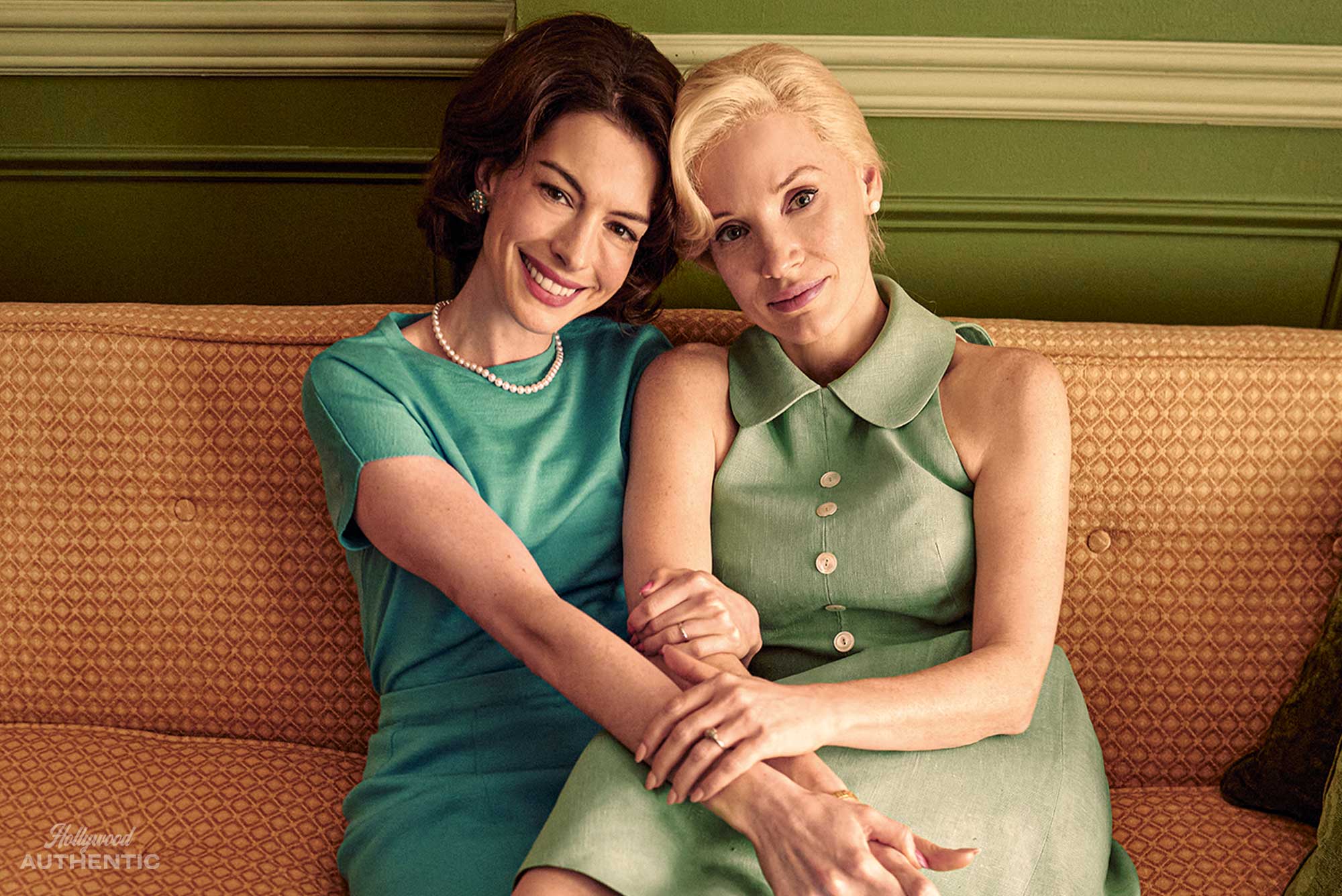
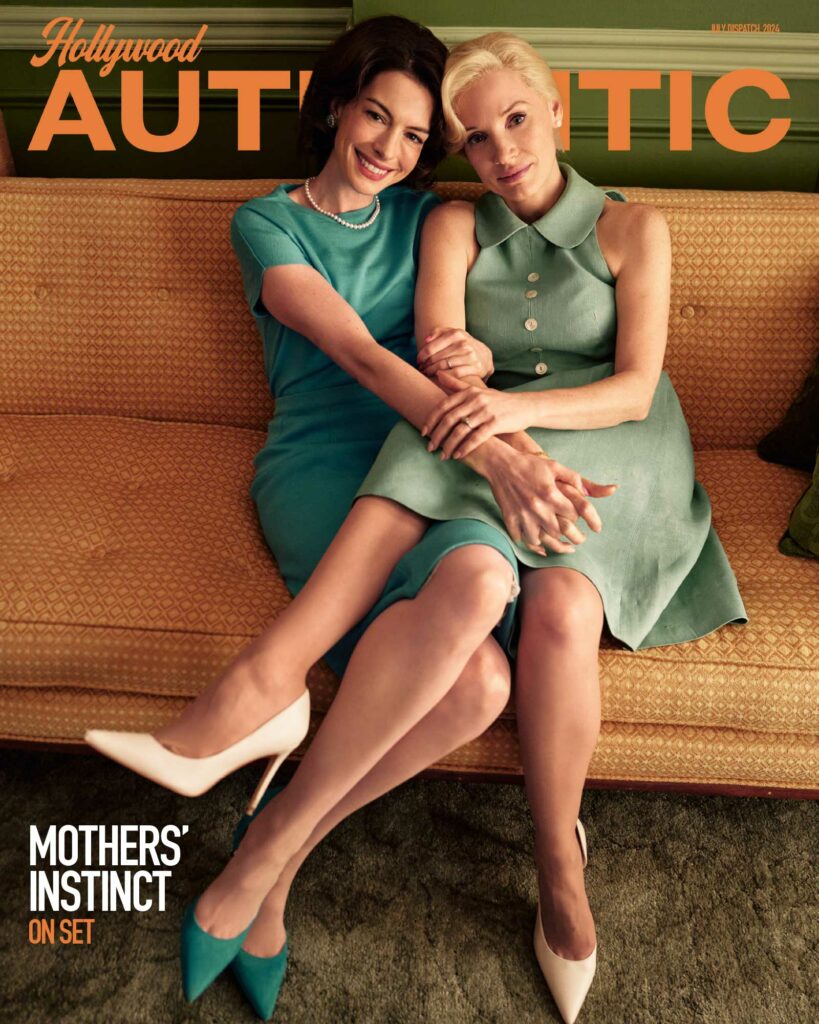
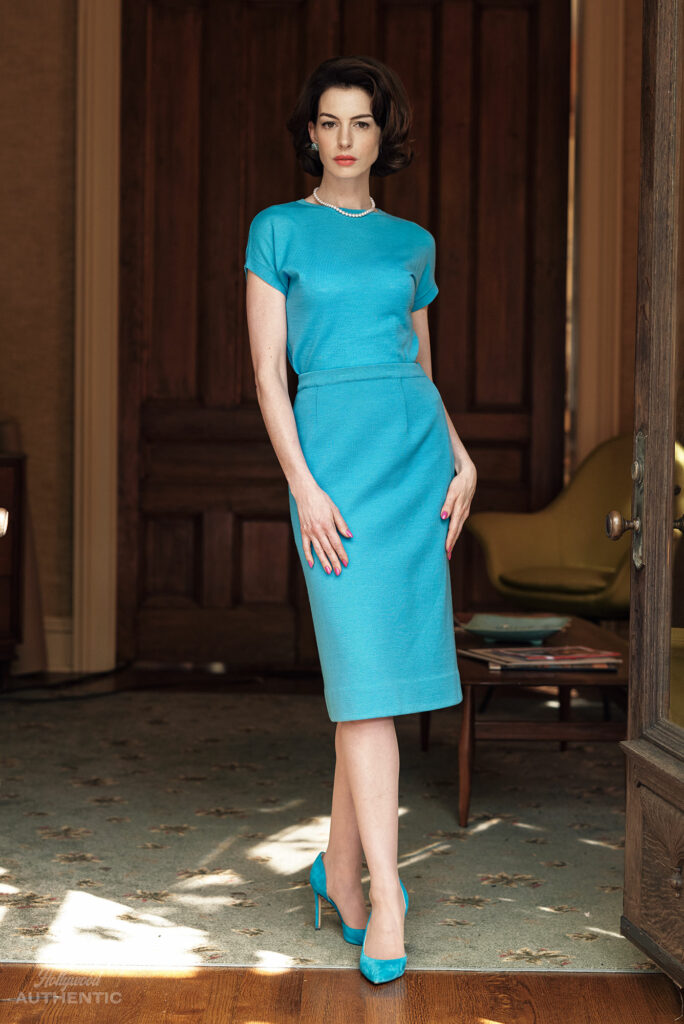
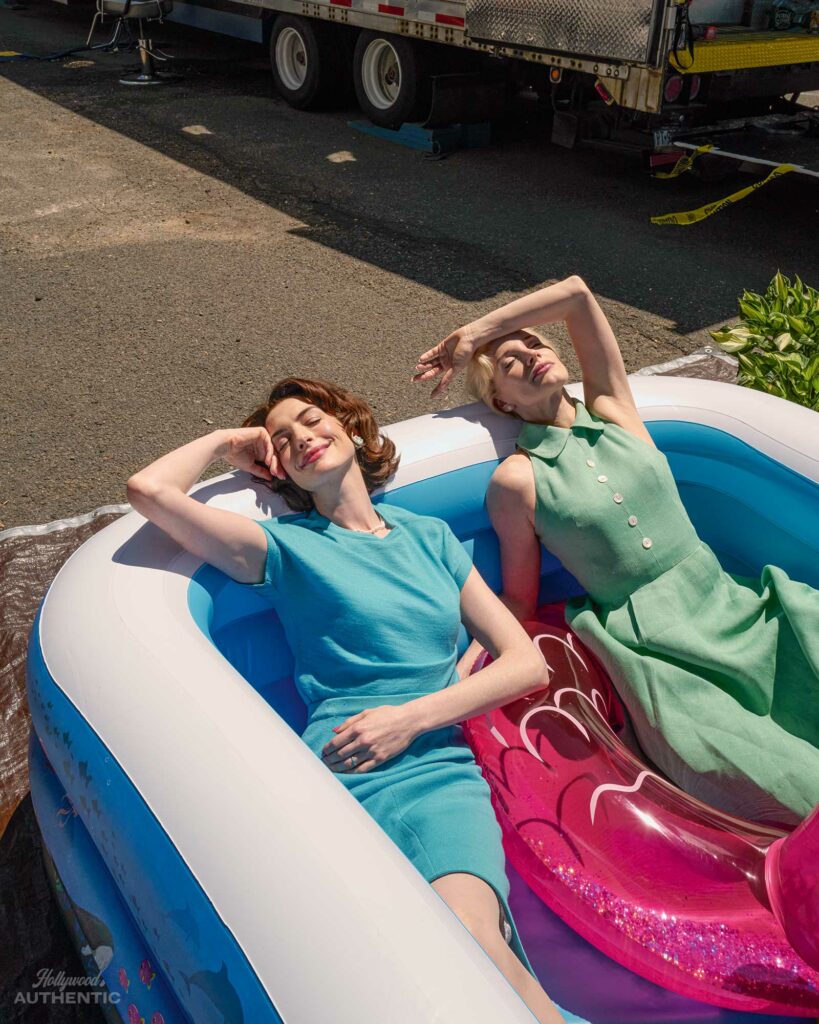
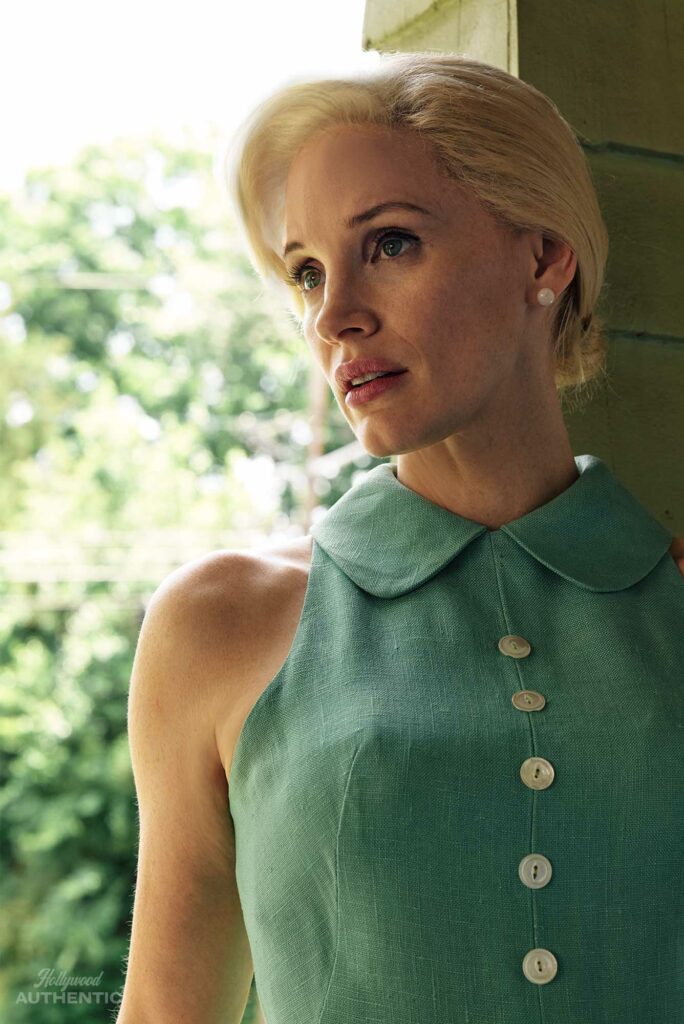
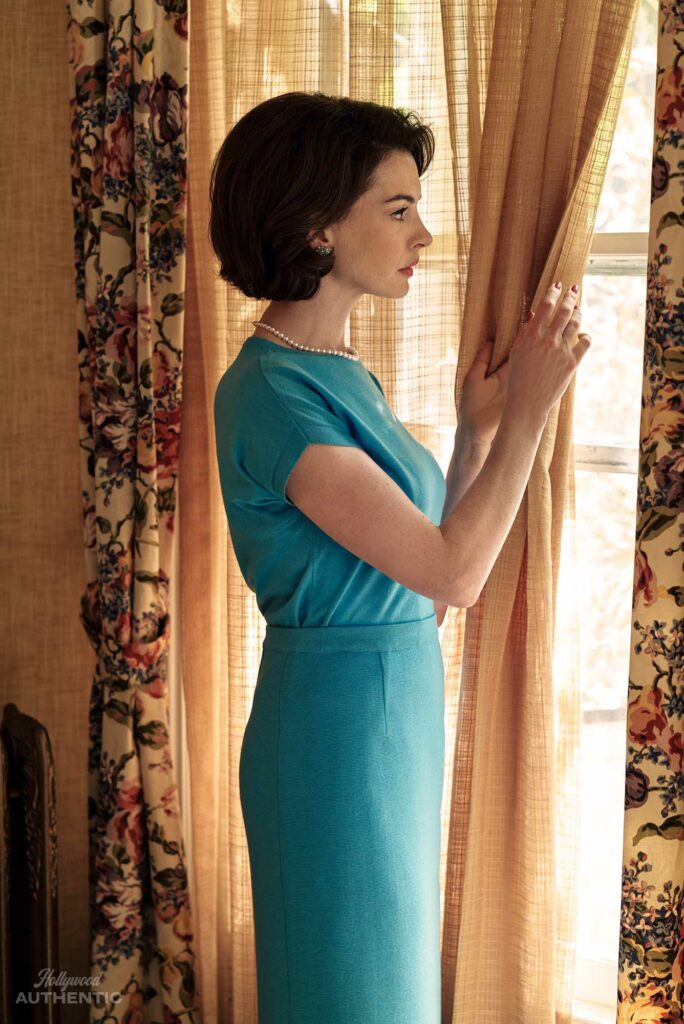
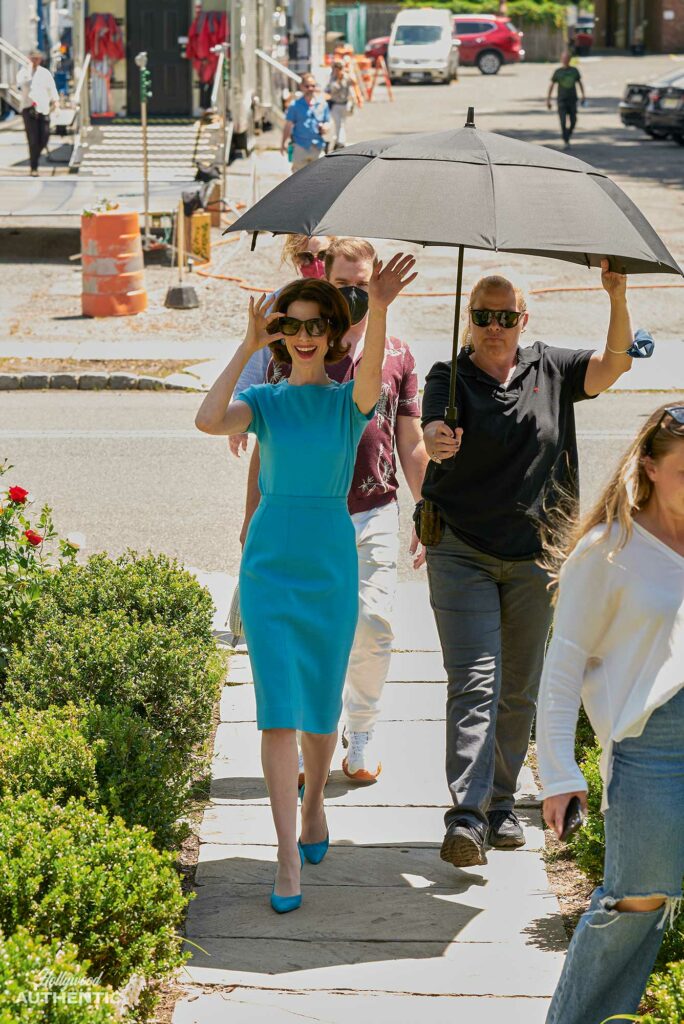
With more pages we’ve been able to tell more stories of the craft, dreams and drive that inspire practitioners in the movie industry. Zoë Saldaña, who graces our cover, invited me to the beach to talk mortality, process and feeling like a diamond. Her ballerina training was evident as she danced across the sand. Also in California, Adria Arjona took me on a DIY journey round LA that provided insight into her acting process. I also hung out with Jack O’Connell in his local London neighbourhood, discussed inspiration with Julia Roberts in her trailer, followed the making of Mothers’ Instinct on set with Anne Hathaway and Jessica Chastain in New Jersey, and talked ‘A Little Nonsense’ with Stephen Merchant.
I would like to say a big thanks to our advertisers for their support in making Hollywood Authentic a reality – I even shot the L’Oréal one you will see in the print edition ;). It’s all quite the glow-up from a garage enterprise to the fully fledged periodical you’re holding in your hands. We made this magazine for those obsessed with cinema and aim to provide an insider’s perspective of the dream factory.
How important is a little bit of nonsense now and then to you? It’s the most important thing. I once had a school report card that criticised me for ‘always finding the joke in everything’. I’ve tried my damnedest to do that ever since.
What, if anything, makes you believe in magic? Derren Brown, the mentalist and illusionist. I know everything he does is misdirection and stagecraft but his mind reading is mind-blowing – and he’s performed tricks on me that defy explanation. I’m angry that I’ll go to my grave not knowing how they’re done.
What was your last act of true cowardice? I told a restaurant chef his food was ‘absolutely friggin’ incredible’ when it was really bland.
What single thing do you miss most when you’re away from home? The basement room I turned into a movie theatre.
Do you have any odd habits or rituals? In my movie theatre, no one is allowed to talk. Or eat. And they have to drink from sippy cups. Not a joke.
What is your party trick? I eat anything. Nowadays everyone has a lactose intolerance or wheat allergy, but you can serve me whatever and I’ll clear my plate.
What is your mantra? ‘Everyone’s guessing.’ No one has life figured out, despite what they may tell you. Everybody is just stumbling along, trying to make their way. Once I realised that, a great burden was lifted from my shoulders.
What is your favourite smell? Napalm in the morning.
What do you always carry with you? The ability to laugh at myself. I don’t trust people who refuse to be the butt of the joke.
What is your guilty pleasure? I kind of enjoyed the lockdown.
Who is the silliest person you know? My partner, Mircea. She can make me laugh so hard with a silly dance.
What would be your least favourite way to die? Without featuring in the Oscars’ ‘In Memoriam’ section.
Stephen Merchant transitioned from stand-up to the screen when he collaborated with Ricky Gervais on writing The Office. It became zeitgeist TV, spawning two series, a Christmas special and the US version. Merchant co-starred in his and Gervais’ follow-up show, Extras. While juggling award-winning stand-up, radio shows, podcasts, producing, directing and screenwriting, Merchant has also acted in numerous films including Hall Pass, Logan and JoJo Rabbit. He is the co-creator, executive producer and writer of The Outlaws, which he also stars in. The third season will be released this summer on BBC and Amazon Prime.
Photograph by GREG WILLIAMS
*Arguably one of the most memorable (and quotable) scenes in 1971’s Willy Wonka & the Chocolate Factory is when Mr Salt mumbles, ‘It’s a lot of nonsense,’ to which Wonka replies, in a sing-song voice, ‘A little nonsense now and then is relished by the wisest men.’
Photographs and interview by GREG WILLIAMS As told to JANE CROWTHER
I’m an island girl. I need to always be close to the water,’ says Zoë Saldaña. ‘As a kid in New York and the Dominican Republic we always went to the water. We always walked on the beach.’ I’ve come to meet Zoë a couple of hours up the coast from LA. She loves the area, promising me that the place ‘compels you to relax’. Downtime is something she takes seriously as she juggles her career and home life with three lively kids, a dog, a cat and two goldfish. We meet at the picturesque El Encanto Hotel in Santa Barbara and her husband of 11 years, artist and filmmaker Marco Perego Saldaña, and her goldendoodle, Dolce, are also waiting with Zoë when I arrive. ‘I feel that this is a part of California that if you never get to go to Portofino in Italy but you come here – then it’s OK, you’re not missing much,’ she says as she welcomes me. ‘This bay area is so beautiful. Everything slows down. And you hear the wind in the trees, and the water. You smell different smells of life. It compels you to choose different thoughts.’
Born in New Jersey to a Dominican dad and Puerto Rican mom and growing up in both New York and the D.R., she now calls California home. ‘In New York I had the metropolis sounds of a city, the culture and access to the world just block by block. You can taste the world and hear the world,’ she says over coffee as we sit on a sunny terrace overlooking lush vegetation. ‘And then in the Caribbean, there was just sun, salt water, family and music – it was great.’ We take a walk with Dolce (full name: Dolce Vita Perego Saldaña), who Zoë soothes with whispered affection. ‘Beso, beso,’ she murmurs, kissing the pooch.
You reach a point in your life that time comes knocking, and says, ‘Hey, you’ve got to pay attention to this. You can’t miss any more moments with these people that are special to you’
Ballet was, she says, initially a way to cope with the move from New York to the Dominican Republic at the age of 10. ‘I was having a hard time making and keeping friends, finding my place, and feeling seen and understood. Even though it’s where our family is from, it was a big culture shock for us. Change is always new and scary at first. And my mom just took me to a ballet class…’ Zoë tells me she found the almost militant nature of training both a comfort and a challenge. ‘There was something about ballet and the bar – my teachers were so rigid and strict. And yet they were like true champions of the progress, effort, determination and sacrifice that I had to make and it became an obsession. It became my cave for 10 years of my life. I never felt that I really mastered it because I never got to be a part of a company, or be the prima ballerina, and I never got to dance in Romeo and Juliet or The Nutcracker. So I always felt like I had failed. After reading Outliers by Malcolm Gladwell, I realised that I did put in 10,000 hours in the span of 10 years. So I did become a master at ballet. Whether I was recognised for it or not, it doesn’t take away the fact that I did it.’
The ballet might not have become a vocation but it did lead to acting after the family returned to NY, with the then 22-year-old getting cast as a dancer for her first screen role in Center Stage in 2000. ‘I never had any formal training when it came to acting. But ballet gave me this connection to my body that I was able to use in those roles I was more qualified for.’ That led to acting opposite Britney Spears in Crossroads, having her first taste of a franchise with Pirates Of The Caribbean: The Curse Of The Black Pearl, inhabiting an icon in Uhura on JJ Abrams’ Star Trek series, bending the limits of CG with Avatar, kicking ass in Colombiana and joining the Marvel stable as green-skinned Gamora in the Guardians Of The Galaxy and Avengers films. Her work on both Avatar movies (with three more incoming) plus Infinity War and Endgame have made her the industry’s highest-grossing actress, and a sci-fi fan favourite. ‘I love science-fiction. I love action. And I love being able to incorporate what I can do [as a ballerina] into that.’
She is currently reading Nicole Avant’s book Think You’ll Be Happy: Moving Through Grief with Grit, Grace, and Gratitude and we discuss the idea of being present and embracing who we are now. ‘My folks are getting older, which hints of time passing and being this invaluable luxury,’ she says. ‘We spend a portion of our lives taking that for granted, we think it’s always going to be there and we’re always going to have time. And then you reach a point in your life that time comes knocking, and says, ‘Hey, you’ve got to pay attention to this. You can’t miss any more birthdays. You can’t miss any more moments with these people that are special to you.’ You’re born a daughter. You’re born a sister. And then as time goes by, you’re a wife, a mother, a professional. You acquire all these titles in your life. And then throughout life there’s this shift where you lose these titles over time. Nothing will ever change the fact that I’m a daughter, but the nearness of death becomes really present when you become older. So vacillating with that conversation is what I want to do. I don’t want to be afraid of it. I want to normalise it in my life, because I want to accept it.’
I feel like a diamond now for the first time in my life. When I was being called a diamond, I felt so insecure. I was so unhappy. Now I feel a different strength, beauty, and curiosity
I ask about her fears. As an actor, as a parent, as a daughter. She pauses. ‘We describe children as fearless. They bang themselves up, fall – then they’ll just get up and try it again. And that’s one thing that we lose when we become older. We become so self-aware of our vulnerability and fragility. And all of a sudden, that fearlessness becomes just fear. I’m learning to make peace with that so that I don’t become this rigid person who becomes so afraid that I stop doing things. There’s so much more I have to do. But I just have to let go of the things that I did, that maybe I won’t be able to do at the magnitude that I was doing them. Tapping into the fact that that’s OK – it’s bliss.’ She laughs. ‘But it comes and goes. There are days in which I wake up, and I’m just like, “fuck, I’m old!” And then there are days in which I’m like, “This is great!”’
Maturing in Hollywood requires a certain fortitude, particularly for women. Halle Berry and Sarah Jessica Parker have recently been unapologetic about ageing and Zoë is cognizant of the tightrope women in the public eye have to walk. ‘I picked a medium in art that relies a lot on the visual – how young you feel, how young you look,’ she says. ‘You get so used to it and it becomes a bad habit where you sometimes spend all of your time thinking about how you look, and not enough time thinking about how you feel. I think we have to talk about that more. There’s so much more to women than their looks and youth. I find women beautiful when they’re five, and when they’re 95. In Hollywood, women are viewed like diamonds when they’re super-new and super-fresh. I feel like a diamond now for the first time in my life. When I was being called a diamond, I felt so insecure. And now I feel a different strength, a different beauty, a different curiosity. I’m ignited by other qualities besides my looks. And those people who see that in me now become so much more meaningful to me.’
I dig into memories to help me transport. I write all over the script, give the role an animal and substitute the characters for somebody I know
We jump in her car and head for the beach. I want to go back to Zoë’s declaration that she has so much more to do. Her future projects include three more Avatar movies with James Cameron and more Star Trek. But first up is a project with Jacques Audiard that taps into her heritage and her dancing background, Emilia Perez. Billed as a musical crime drama, the picture follows a female lawyer in Mexico as she helps a cartel boss evade his enemies and become the woman he’s always wanted to be. Though Zoë has sung on a film before (most recently in animation Maya And The Three) she has never sung in Spanish or on screen. ‘I’m going back to my roots. I’m singing, and I’m dancing, and I’m doing a role in my native tongue,’ she enthuses, admitting that working with Audiard has been something of a dream since she saw The Beat That My Heart Skipped in a movie theatre in NYC in 2005. ‘I remember thinking, “I want to work with this director.” And the fact that I manifested it and then met Jacques Audiard and got to know the whole premise behind Emilia Perez, and the challenge that he was proposing of whether I was going to sing and dance… I was like, “OK!”’
Audiard’s method of working with the same crews is also something Zoë embraces. ‘I like directors that are known in their field for being super-loyal to their people, because I love the crew. They become family to me. They’re the ones that I truly look up to. They’re so unconditional. They’re wonderful people. And whether I’m working out of the UK, New York, Los Angeles or Paris there’s a universality to crew people. They’re decent and they’re hard working.’
Part of the crew on Emilia Perez was famed choreographer Damien Jalet, who put the actress through her paces on a big dance number. ‘If Damien would tell me, “It’ll take you seven hours to learn this,” I would double it. I’d need 14. I’m also dyslexic, I have ADD and I suffer from anxiety. I like to take my time with things. That way it becomes a muscle memory and I force myself to be out of my head. But it was an experience, and I loved it. When you’re a child that has a lot of trauma, and you grow up, and you’re constantly in conflict – as an artist, you’re made to believe that in order for you to be great, you have to be chaotic, and you have to live in conflict. It just becomes so exhausting.’
Zoë lost her father in a car accident when she was nine, the tragic catalyst for her and her two sisters’ move to the Dominican Republic. ‘When you learn to deal with grief at a very early age, it lives with you. It doesn’t go away, you manage it. And every now and then it comes up. If I hear the song Gravity by Sara Bareilles I always think about my mom and dad, because when he passed away they were not in a good place in their marriage. We didn’t have proper closure. I spent so many years thinking of what could and should have been. I never got to see them mature together. And that’s why the Dominican Republic was this bittersweet place, because it is paradise. The food, the people, the culture, the history – I love being Dominican. It’s just so powerful. And yet the reason why, and how, we got there was sad.’
I hear my grandmother’s voice every time I see my children sleep, and I pray over their little, sleepy heads, just like she did, just like she taught my mom to do. That’s a legacy I want to be. That’s immortality
As her now-single mom picked up the pieces of their shattered lives, Zoë recalls the impact her maternal grandmother made on her life. ‘My grandmother was always there. It was always us five – my sisters, myself, my mom, my grandma. It was great! It’s funny, my grandmother prayed a lot, and when she died [in 2019], the prayers stopped.’ Now, she says, she finds herself doing all the things her grandmother used to. ‘Everything that she told me to do my whole life that I would roll my eyes at! I hear her voice every time I see my children sleep, and I pray over their little, sleepy heads, just like she did. That’s a legacy I want to be. That’s immortality.’
We get out of the car and head to the beach below. An invigorating wind blows off the ocean, whipping Zoë’s hair as she leaps along the sea wall. This is a cinch for an actress who did months of parkour, archery and combat training for Avatar – and breath-holding for underwater worlds in Avatar: The Way Of Water. The physical discipline of it tapped into her balletic sensibilities. ‘I’m addicted to seeing myself do things that are unimaginable. For example, in theory, someone will tell me, “You’re going to follow these exercises, and you’re going to hold your breath for five minutes if you want.” I’m like, “Get the fuck out of here!” she says. ‘And all of a sudden, every time you do it, it’s three minutes, four minutes, five minutes… And then you find yourself doing it on your own time and teaching your kids to do it. They are dolphins, marine animals. And it’s particularly important to me because being an island girl, we all had to learn how to swim. You come out of the water, and you go back into it.’
As she dances on the sand, her coat billowing behind her and pelicans flying across the water, I ask what she next sees herself doing that is unimaginable? “I would love to do a comedy – I only just did my first romantic series From Scratch in 2022. Before that I’d never been in a romance besides one that’s between two worlds when aliens are coming for you!’ I ask her about the fact that she is now, according to Wikipedia, the highest-grossing actress in the world. ‘I can’t grasp it,’ she says. ‘I can’t conceive of it. So all I keep doing is repeating what I’ve been told my whole life: be grateful. I know what it’s going to mean to so many young girls or boys out there who feel like they don’t belong, and they’re trying to find their place. Somebody did before you did, so that means you can, too.’
That doesn’t mean she’s invincible. Later, as we return to the warmth of indoors and a rehearsal studio, Zoë applies an ice pack to her knee. ‘This is the acceptance of my physical limitations,’ she smiles. ‘And learning to love my body as it is now. It’s a crazy, beautiful time.’ We return to the subject of gravity – something she seems to defy in her roles but that she’s now feeling and welcoming into her life. ‘I now feel the floor. When I used to dance, I didn’t feel it. My teachers would say, “Use the floor.” And I couldn’t because I was always jumping higher. You would do your grand jeté across the room, and then I would run back, because I couldn’t wait to do it again.’ That rigour is still a part of her acting practice. She’s worked with the same acting coach for over 20 years and breaks down roles in the same way she did when starting out. ‘I dig into whatever memories I have that may be similar that help me transport. I write all over the script, and I give the role an animal, I substitute the characters for somebody that I may know. Other times, it’s just endless conversations with the director, creating a very vivid backstory for the character – so much so I’m getting air in her lungs. For instance, the film that I did with my husband, The Absence of Eden, I play this woman who is undocumented. She feels like she has no choice but to flee her situation in Mexico and cross the US border. I didn’t want to do this technical research on the politics of how we feel about immigration. I felt the character is not right or wrong. She’s just scared, hungry and lonely. She is loyal. She’s the things that felt familiar to me. For Rita, the character I play in Emilia Perez, she’s so invisible. And that invisibility has turned into resentment. We’ve all experienced events in our lives where we have felt really strong, strong feelings and I channel that. It was incredibly enriching to play someone like her.’
‘One time, a really good friend gave me a critique that I wasn’t ready to hear, but I’m so grateful that she said it. She said, “I can’t wait for you to lower this guard down. You’re such a guarded actor,” And when I heard that I was taken aback, but she was right. I can’t watch myself. There’s nothing I do that I like. I like the movies. I love what everybody else does. I love the choices the director has made. I don’t like the way I carry out things. When I sit through a premiere and watch myself I’m cringing. I’m sick to my stomach. I think it’s because I just don’t want to deal with the fact that deep, deep down there’s always going to be that dancer in me that doesn’t think I’m good enough. That I just got here by chance.’
Zoë sits for a beat and processes this self-criticism. ‘There is a simple compromise though,’ she says. ‘Just do what you want. There are so many projects that I should do right now, but there are so many more I want to do. I’m going to see if by following that desire versus duty, that one day I will be able to sit through a whole thing that I’ve done, and enjoy it along with everybody else.’
Photographs, words and video by GREG WILLIAMS As told to JANE CROWTHER Zöe Saldaña stars in Emilia Perezwhich opens in Cannes. By Saint Laurent Productions, Why Not Productions, Page 114 and Pimentia Films