Photographs by GREG WILLIAMS Words by JANE CROWTHER
Paolo Sorrentino’s latest muse burns the screen up in Parthenope. Hollywood Authentic meets the Italian actor who made the leap from extra to lead to talk beauty, fame and the advice Gary Oldman gave her.
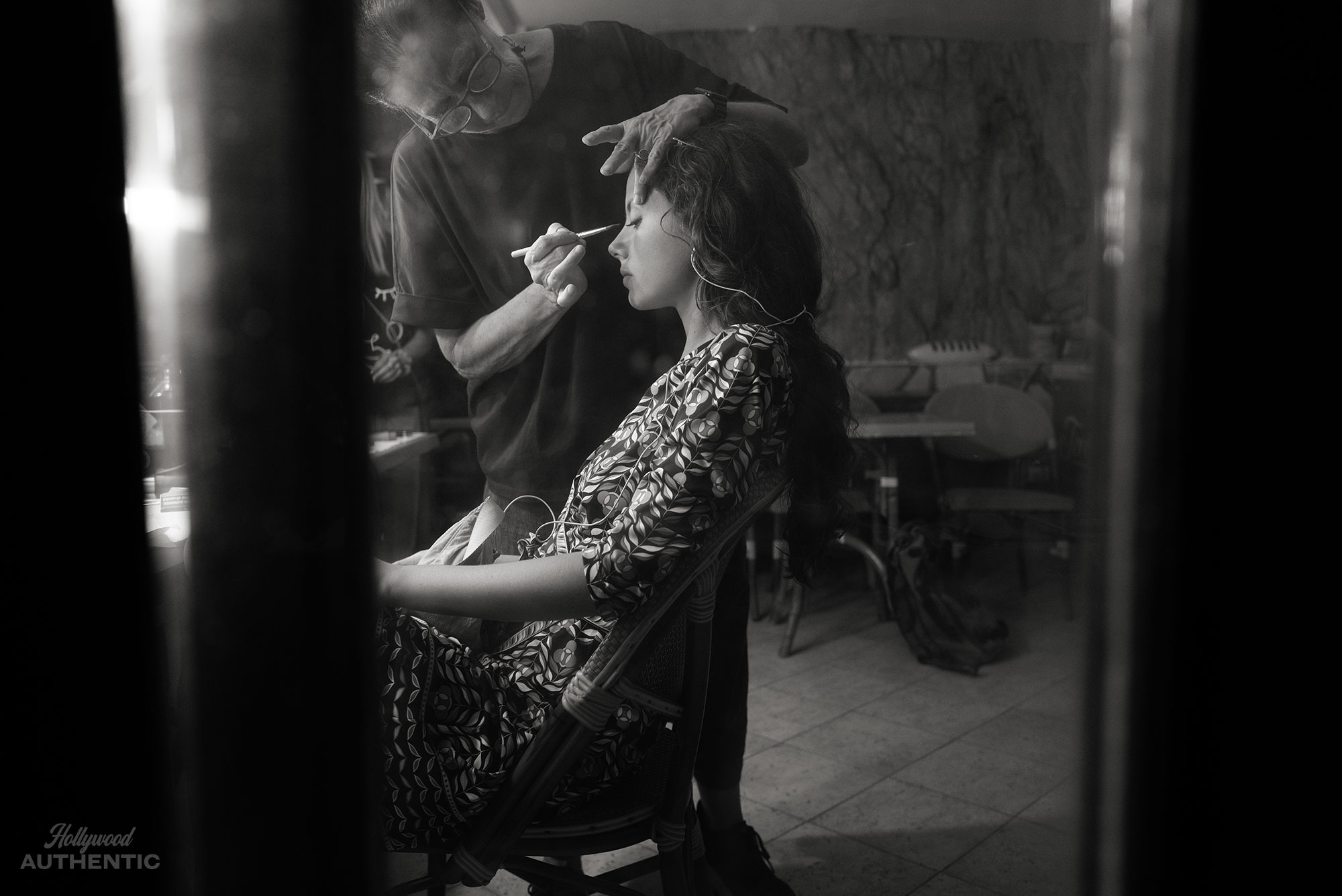
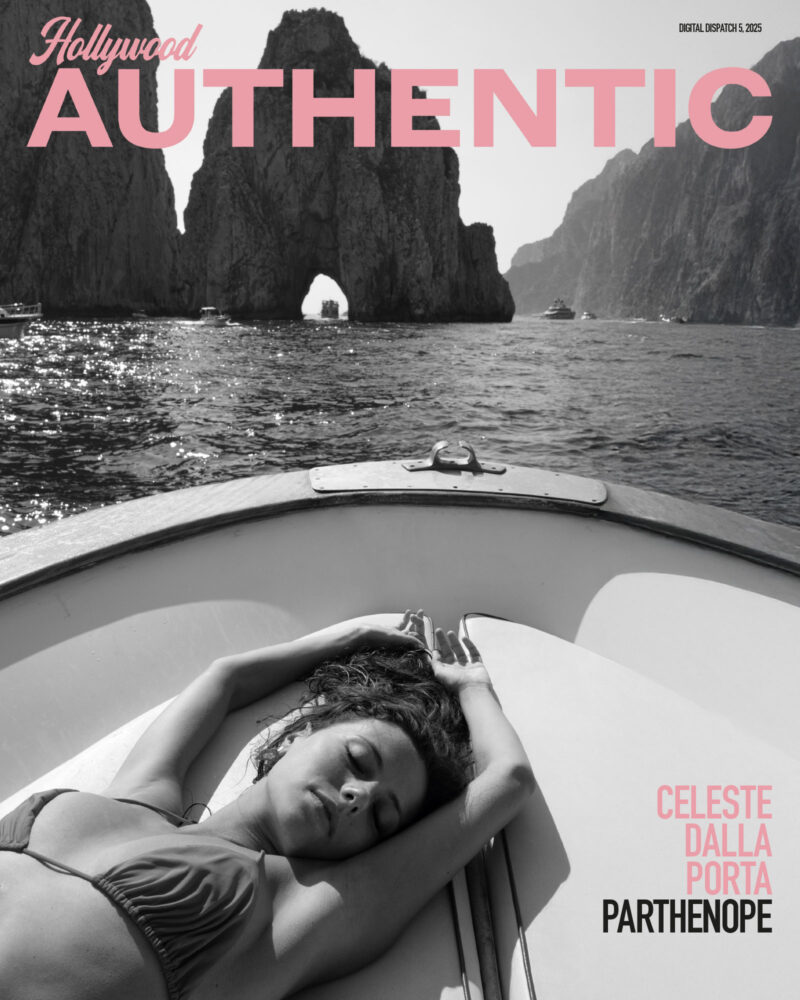
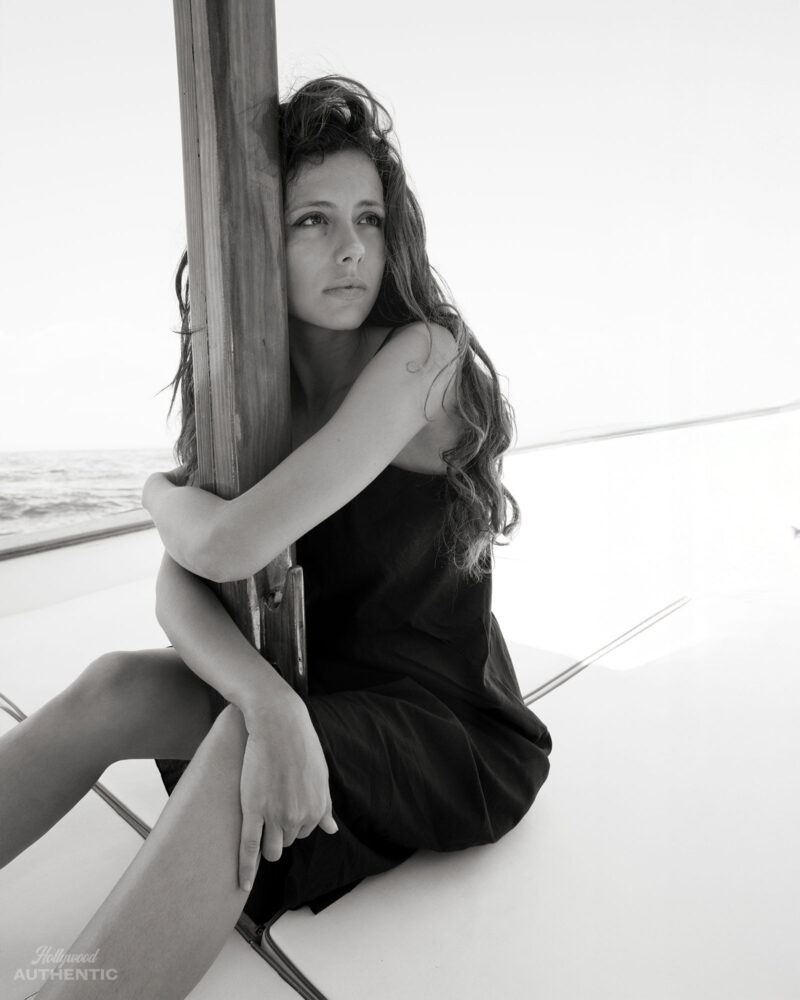
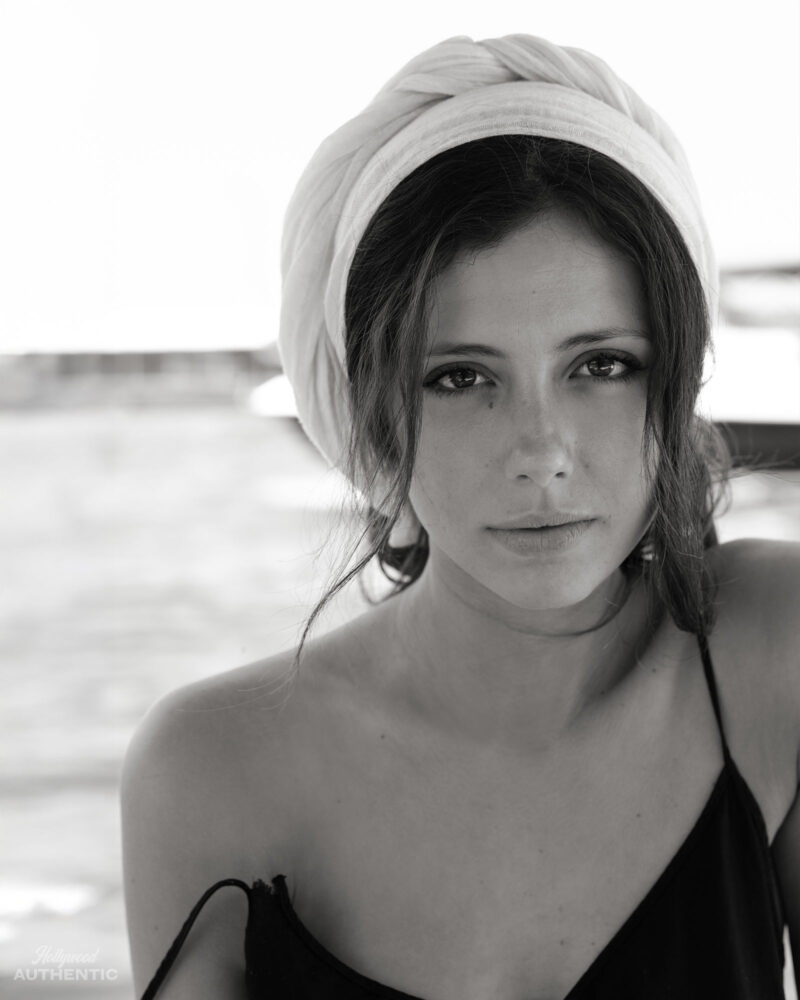
Sitting on the rooftop of the JW Marriott in Cannes, writer-director Paolo Sorrentino considers on his latest love letter to his home town of Naples. Why, he contemplates, did he choose to tell his story through the Greek myth of Parthenope (who precipitated the creation of the Bay of Naples) and focus on the siren at the heart of it? ‘What I wanted to do was to tell the story of a girl, a woman, from the moment she is born, to the moment in which she becomes an elderly person. What I really had at heart was telling how time changes us. And it does change us, even if we wear wonderful clothes.’ His currently leading lady certainly wears wonderful things in the sensual, smouldering film that almost gives audiences sunburn when watching. Sorrentino tells the tale of ‘70s Naples teen, Parthenope, born in water and drawn to the sea like a mermaid – seducing men without even trying as she puffs on cigarettes in a bikini, shimmers in sequins on the island of Capri and titillates in nothing but the ecclesiastical treasures of a horny cardinal.
Quite the ask of any actor, but especially for a newcomer who would have to go toe-to-toe with heavyweight performers such as Gary Oldman, playing real-life writer John Cheever, who is sozzled and depressed on Capri and sees pure beauty in Parthenope. ‘I looked at many Italian actresses,’ Sorrentino admits. ‘In reality, I found her quite soon, because I had already met and worked with Celeste. She was in The Hand of God as an extra. It took me some time to understand whether she was going to be able to handle the role. She had never played a main character.’
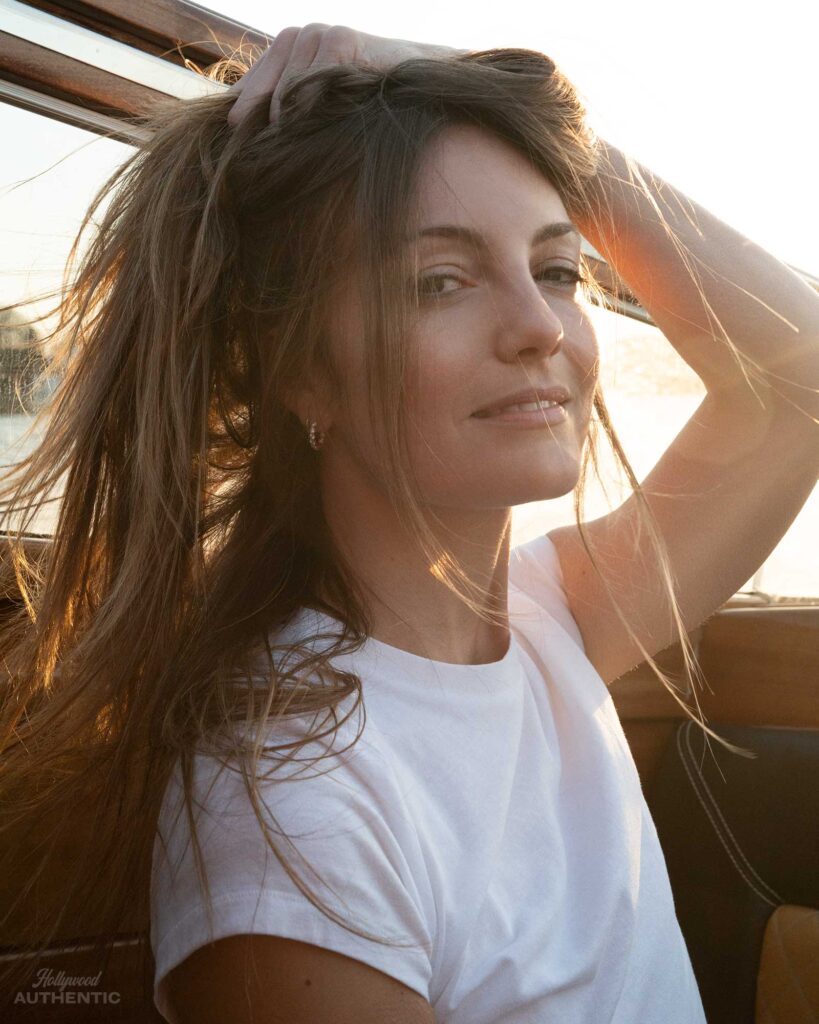
Celeste Dalla Porta, a Milan-born actor whose scene as a background artist had ended up on the cutting room floor, was up for the challenge of conveying the intelligence of Parthenope (she’s a shrewd student anthropologist) as well as her sensuality. ‘I had no doubts, but I was a little bit scared,’ Dalla Porta says, twisting the mermaid ring on her finger that belonged to her character in the film. ‘Once I accepted it, I started questioning myself: will I be able to do it? But I never had a doubt about the project because it’s such a revolutionary thing.’ Her fears about the role also extended to the fame that will surely come with the release of the film, and how her life may change. ‘I don’t know what is in store for me ahead. I’m a little bit scared. But this is what I want to do, and what I always wanted to do, to be an actress.’
I have learned a lot with [Gary Oldman]. He is this huge actor that is so open and so attentive. He paid a lot of attention. He listens to you
The experience of working with Sorrentino was, she says, expansive and supportive. ‘He’s a 360-degrees person. He has a very authentic way of being on set. He knows exactly what he wants, and he guides you to that. But I felt free working with him. Paolo gives freedom to his actors. Of course, they cannot change the story, and they cannot change the text. But he is a man who is really able to listen to what other people have to say, and to see.’ Oldman was also something of an artistic reference point during the process despite only working for a few days together. ‘I have learned a lot with him. He is this huge actor that is so open and so attentive. He paid a lot of attention. He listens to you. So, on a human level, it was also such a great experience.’
The idea of weaponised beauty is explored in the film as Parthenope leaves a trail of broken hearts in her wake. Though Dalla Porta is shot in stunning light and via an appreciative lens she doesn’t consider herself a beauty. ‘I don’t think Paolo picked me or chose me because I’m beautiful. Beauty can also be something ugly and is subjective, and something that changes over time. In Parthenope beauty is a metaphor for youth. And youth – we all remember it as something very beautiful. We think about it as something very beautiful, and something that we idealise. But then Parthenope grows up. She moves into another phase of her life, and that’s when the movie changes. There is a different photography and different people around her, and a different way of looking at her.’
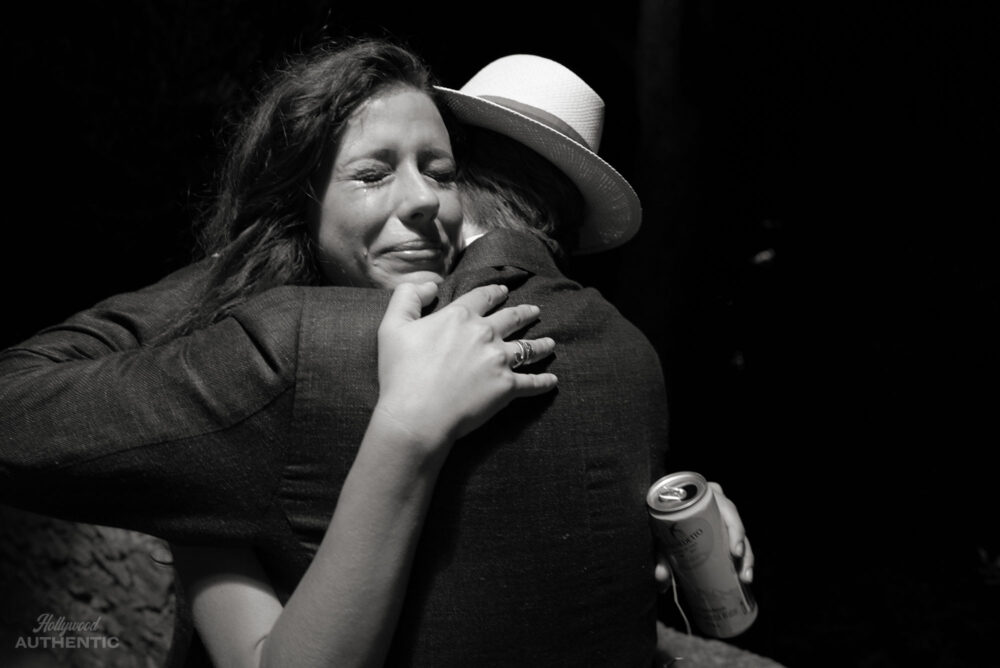
Celeste Dalla Porta says goodbye to Gary Oldman
Having been the toast of Cannes when the film premiered at the festival last year, Dalla Porta is now looking for future projects. ‘I love Alice Rohrwacher. I find her to be a great, great artist, and I like her poetic way to see the world, and to tell stories. Ruben Östlund, I admire very much. Valerio Mieli – he made just a few films, but all of them talk about love. I’m super-romantic, and I love romanticism, and I love films that talk about love.’ As she navigates her way through her career she is also adhering to the advice Oldman gave to her about the business. As he tells Hollywood Authentic, their off-set relationship somewhat mirrored the one between their two characters, a mentor and a student. ‘The dynamic was very much like that with me and Celeste, because I’ve had this career, and I’m older. This is her first job, and she’s naïve. For Cheever, I think there’s an innocence and a purity that he can’t have back, that he can’t reclaim. Celeste will have an innocence and a purity that she will not be able to ever get back after this film comes out.’
Dalla Porta smiles as she recalls their chats on-set. ’He said that I have to protect what I have inside myself. I have to protect the beauty of simple things. That is something that we all have, and that we need to protect. It was very simple advice, but very important. If fame comes because you have made something that makes you feel happy inside, and it’s something you are happy with – why not? That’s what I want. And then people talk about the fame that is this kind of monster that is waiting…’ She shrugs. ‘I try to stay in the present, and to live in this moment.’
Written and directed by Academy Award Winner Paolo Sorrentino Starring, in alphabetical order: Dario Aita, Celeste Dalla Porta, Silvia Degrandi, Isabella Ferrari, Lorenzo Gleijeses, Biagio Izzo, Marlon Joubert, Peppe Lanzetta, Nello Mascia, Gary Oldman, Silvio Orlando, Luisa Ranieri, Daniele Rienzo, Stefania Sandrelli and Alfonso Santagata. A Fremantle film, an Italian-French co-production The Apartment – Pathé in association with Numero 10, in association with PiperFilm and Saint Laurent by Anthony Vaccarello with Logical Content Ventures with the support of Canal+ with the participation of Cine+. Produced by Lorenzo Mieli for The Apartment, a Fremantle Group company, Anthony Vaccarello for Saint Laurent, Paolo Sorrentino for Numero 10, Ardavan Safaee for Pathé. International Distribution: Pathé, Northern US Distribution: A24, Italian distribution: PiperFilm.
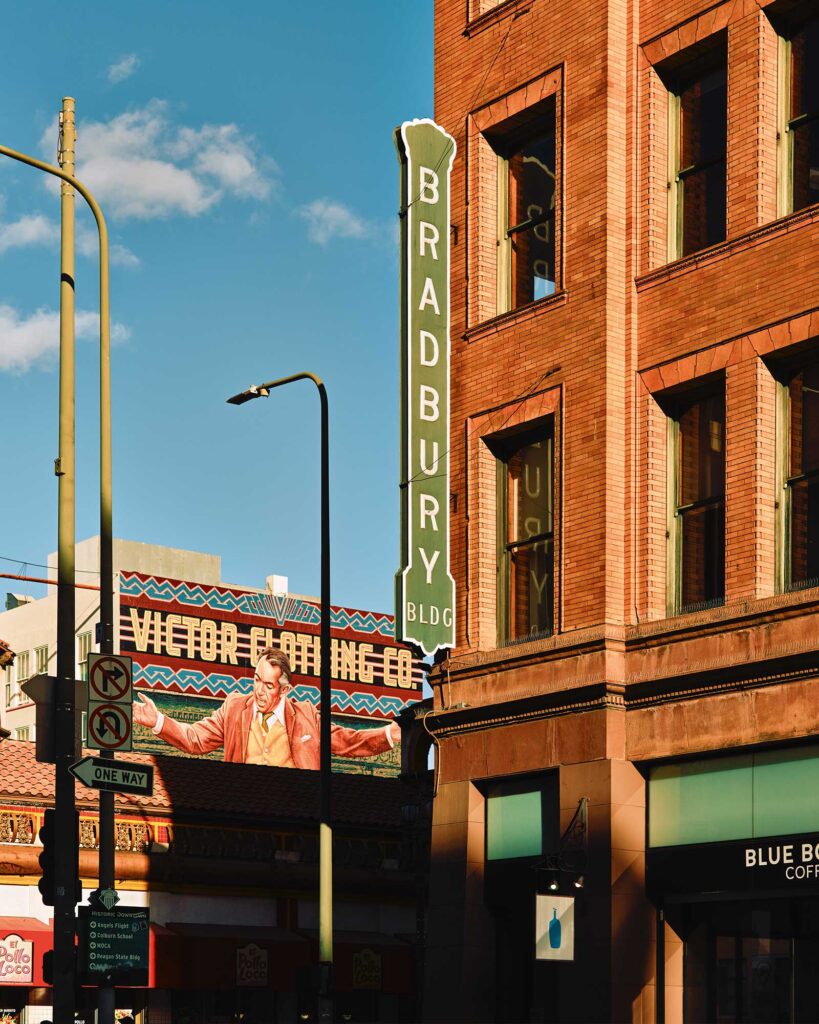
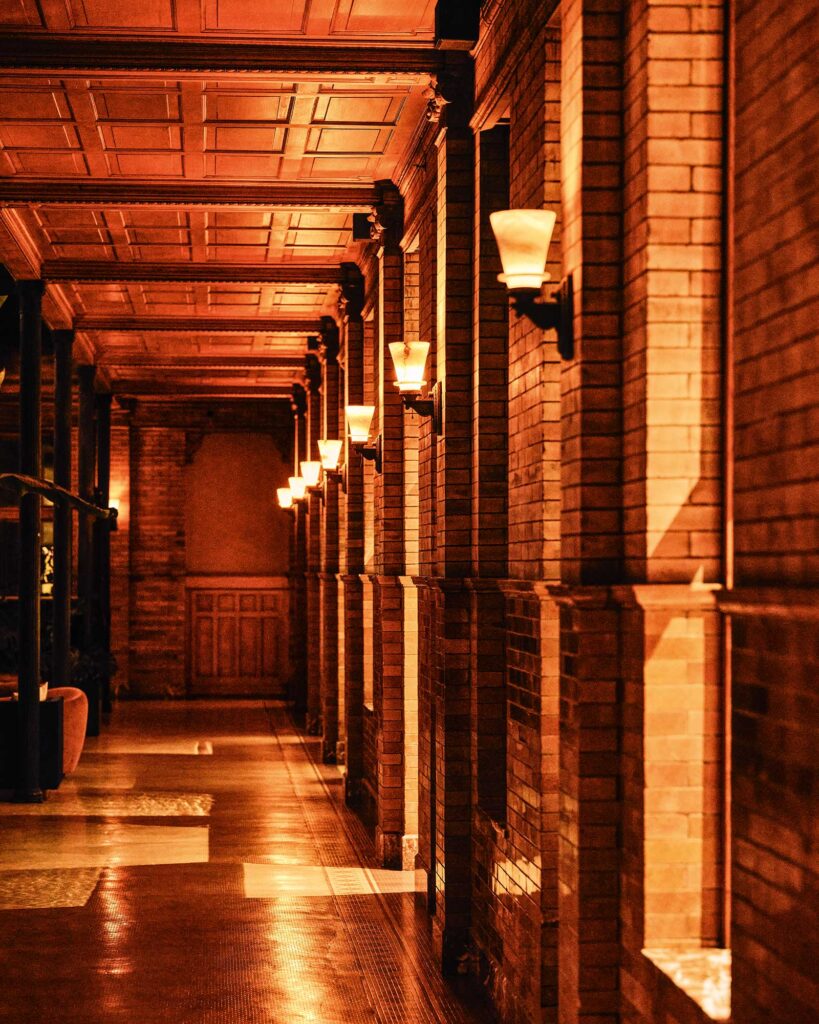
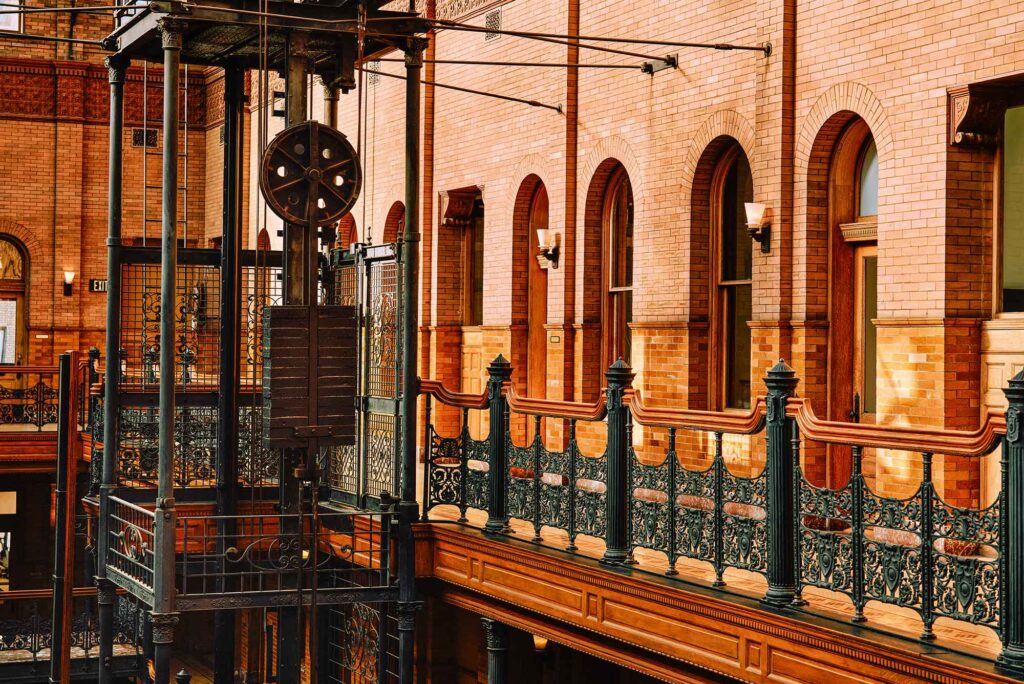
Created for work but famed for film flights of fancy, Hollywood Authentic celebrates downtown LA’s Bradbury Building, a storied location fit for a Blade Runner.
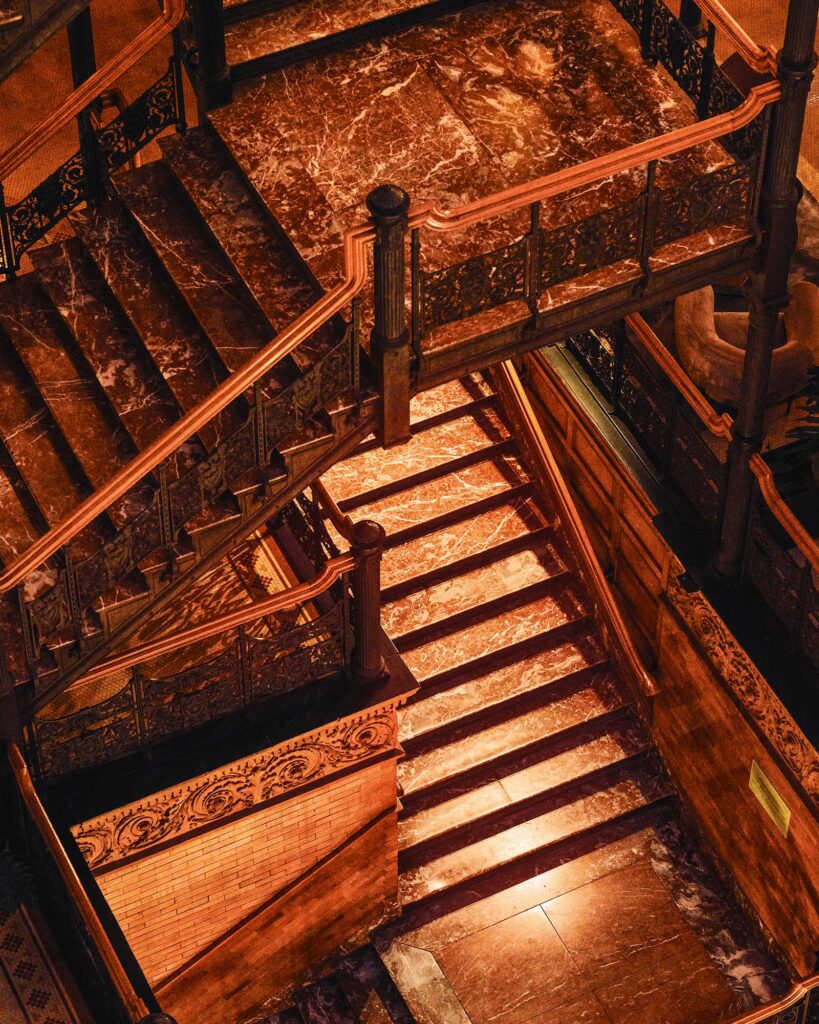
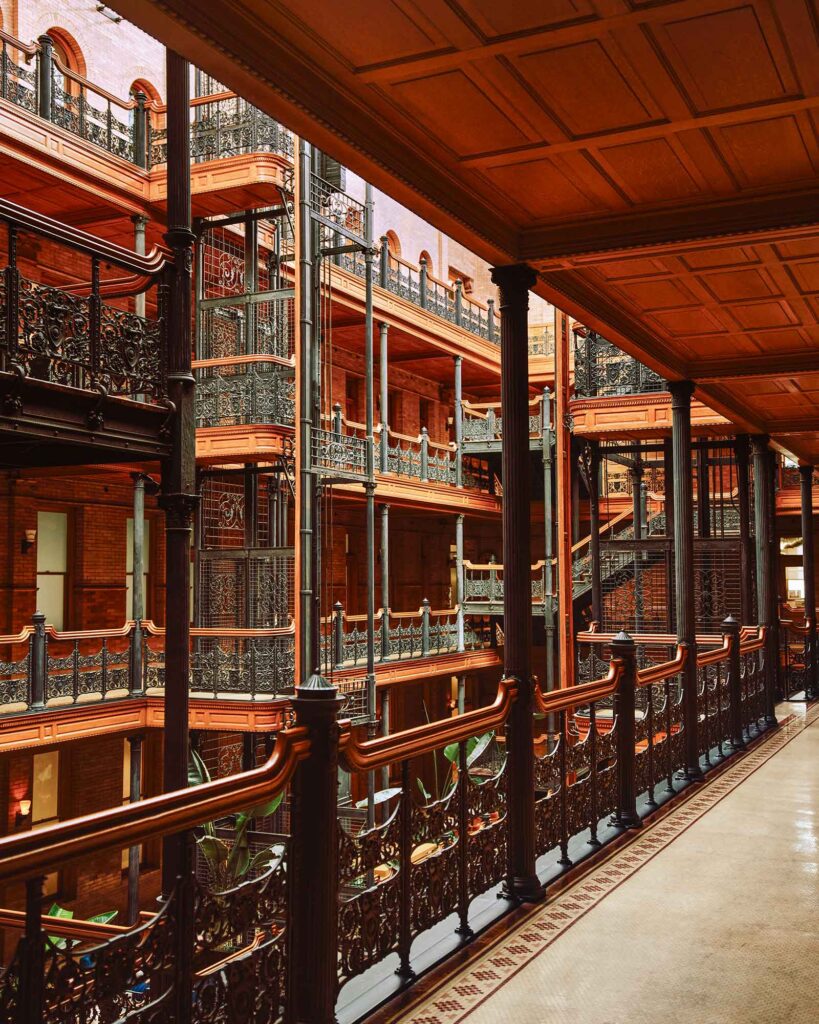
When Victorian millionaire Lewis Bradbury decided to build an office for him to commute to, he didn’t want to travel far. His lavish 50-room mansion on Bunker Hill in Downtown LA looked over real estate on 3rd Street, and Bradbury bought land to create a magnificent office block a 10-minute walk from his front door. (From 1901, he might have used the Angel’s Flight funicular railway to glide up and down the hill.) He died in 1892, just months before the build was completed, so he never saw the finished magnificence of the ornate wrought-iron railings and birdcage elevators, soaring skylights and gorgeous tilework that make this La-La landmark a regular stop for gawking walking tours and ensure it is now a part of cinematic history.
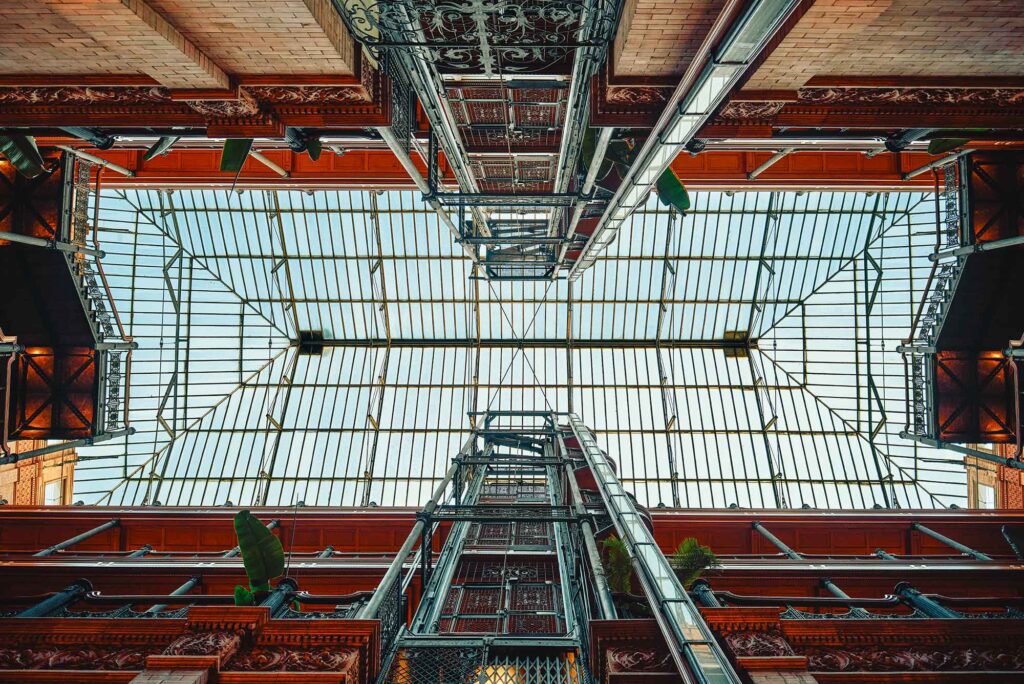
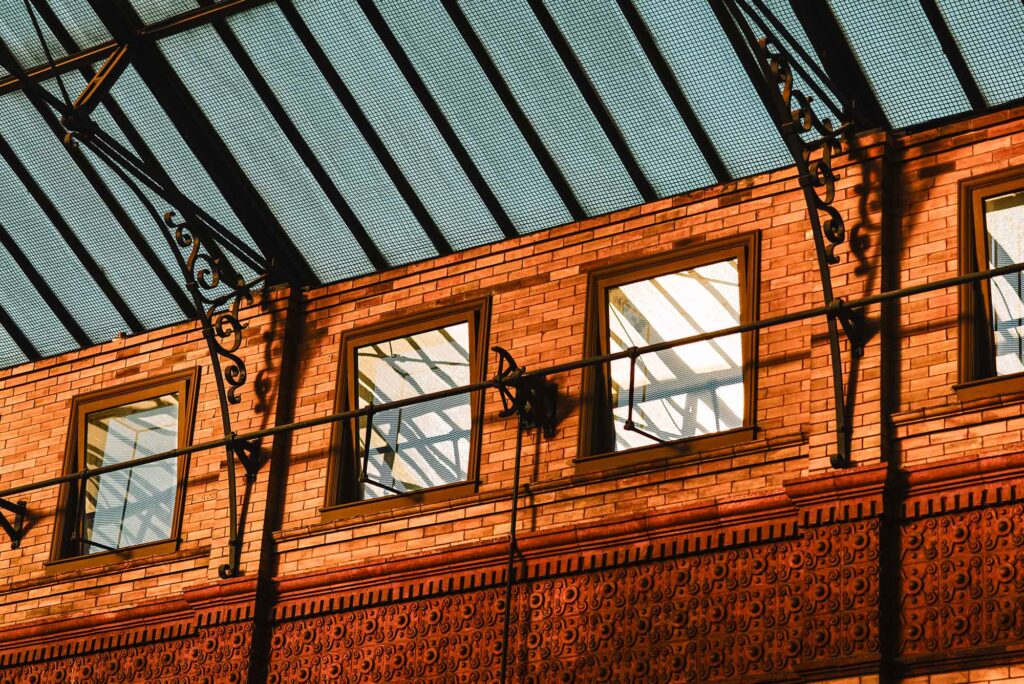
Bradbury wanted to exhibit the wealth he had amassed from gold and silver mining and, after a false start with an architect he lost faith in, he commissioned a young draftsman, George Wyman, to design his monument. Wyman, for his part, was unsure of taking on such a huge project as a first gig, but took the job despite his inexperience after he consulted his dead brother via Ouija board. The fledgling architect had his eye on the future when he conceived the building – taking inspiration from an 1888 time travel sci-fi novel by Edward Bellamy. In Looking Backward, the year 2000 was envisaged as a Socialist Utopian society where buildings were high rises with glass roofs. In Wyman’s futuristic interpretation, he designed a huge glass atrium under which wrought-iron railings hung like vegetation, and marble staircases and detailed elevators transported workers up and down the five floors – run on a counterweighted water system that came from a natural spring discovered under the site during construction. (They were later converted to hydraulic power.)
During its construction, Wyman imported Italian marble, Mexican tiles and French wrought iron (which was shown at the Chicago World’s Fair as new-fangled before being installed in the atrium). It cost Bradbury half a million dollars – a huge amount even for a millionaire who liked to flash his cash – and opened in 1893 to tenants such as Bradbury’s own legal team. It has maintained its use as a commercial building since then, one of the oldest in LA – though it had a period during the Prohibition era when a speakeasy was run out of the basement with booze distributed via a network of tunnels. It’s now the only commercial office building in Los Angeles to be designated as a National Historic Landmark. And though it has had a recent period-sympathetic restoration courtesy of the ownership team, Downtown Properties (who also look after The Hollywood Roosevelt Hotel), now boasting a co-working office, gallery space and a buzzy members-only bar; the lure of many visiting the building is the chance to walk in the rain-drenched footsteps of replicant hunter, Deckard.
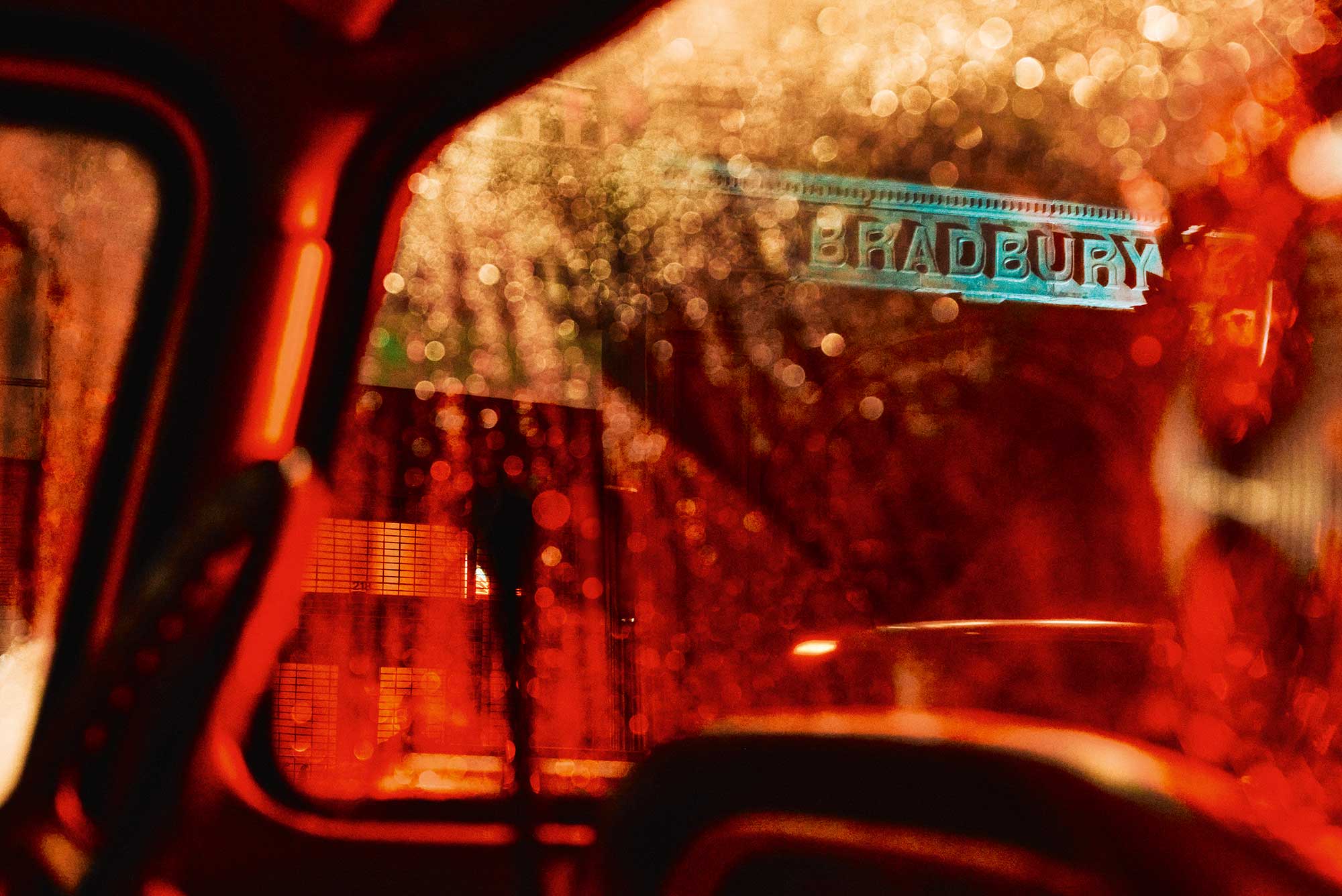
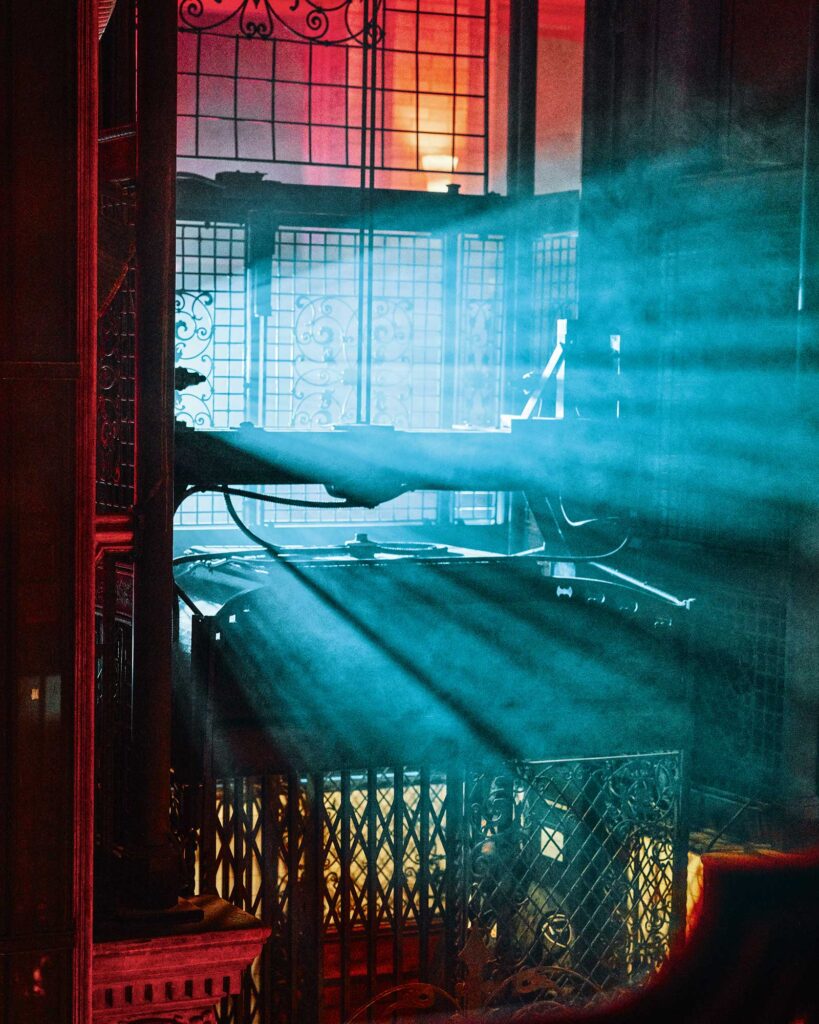
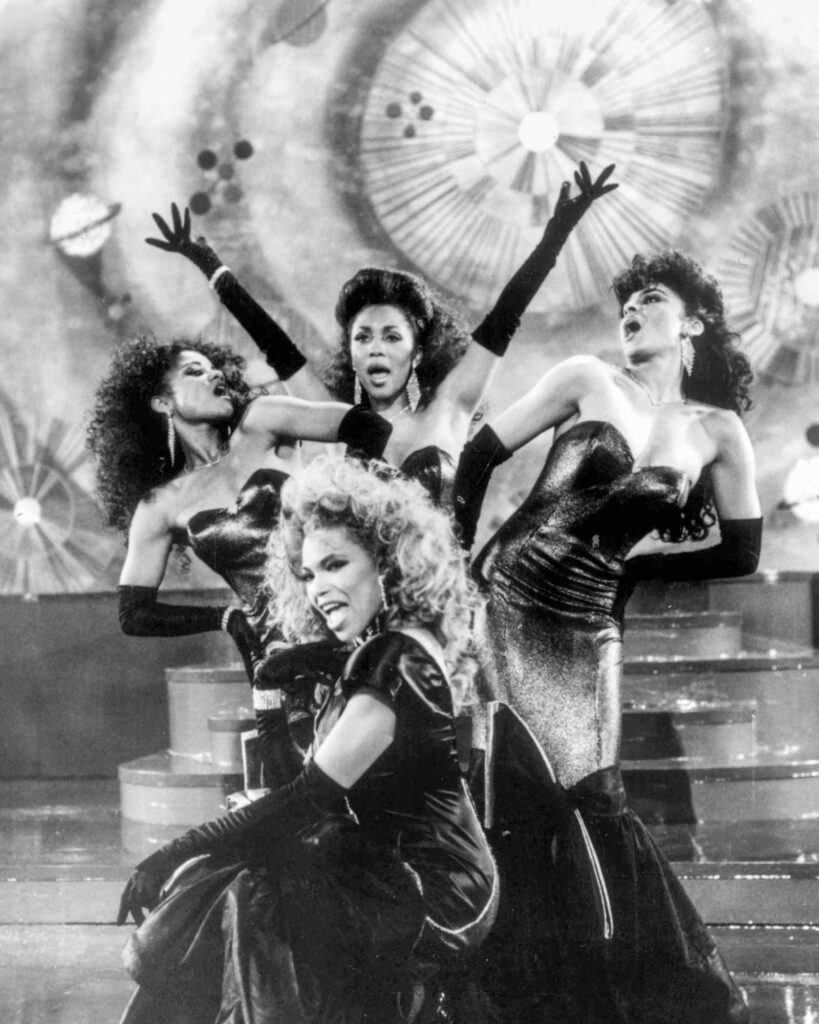
Blade Runner, Ridley Scott’s trailblazing 1982 neo-noir sci-fi, was shot here when the production was looking for a location to play the home of replicant godfather, Tyrell, who LAPD’s Rick Deckard (Harrison Ford) pays a visit to – only to find Daryl Hannah’s backflipping Pris and a much-quoted denouement on the roof with Rutger Hauer’s Roy Batty. Deckard peers out of his car window at the stone-carved Bradbury sign from 3rd Street, before making his way into a lobby dressed for the 21st century (2017) – an advertising blimp floating above in a neon sky, casting light into the darkness of the distinct balconies and elevator shafts. Scott’s cyberpunk vibe nodded to Old Hollywood, and the Bradbury certainly matched that aesthetic – not only in its looming shadows but the fact that noirs such as 1944’s Double Indemnity, 1949’s D.O.A. and 1951’s M had also used the place as a location. Later, the building would be Jack Nicholson’s offices in Wolf, and the workspace of Joseph Gordon-Levitt’s romantic greetings card writer in 500 Days of Summer. In The Artist, Jean Dujardin’s silent era star passes Bérénice Bejo’s ingenue on the recognisable stairs, representing the trajectory of their characters’ careers as he walks down and she skips up. And Janet Jackson’s Rhythm Nation music video also used the dry-ice swirled elevators and plant room. The Bradbury is also a literary inspiration: it’s the stand-in for the Belmont in Raymond Chandler’s The High Window, described by his PI Marlowe as ‘eight stories of nothing’ with a ‘dark narrow lobby… as dirty as a chicken yard’.
For Scott’s story, the building was set-dressed to look dilapidated, with lights rigged to track across the staircases. The nearby Grand Union train station stood in for Police HQ, while Frank Lloyd Wright’s distinctive Ennis House in Los Feliz was Deckard’s home. The use of real buildings was a deliberate choice for Scott who said ‘if the future is one you can see and touch, it makes you a little uneasier because you feel it’s just round the corner’. It worked for the celebrated author of the short story, Do Android Dream Of Electric Sheep?, on which the film is based, Philip K Dick. ‘It’s like being transported to the ultimate city of the future, with all the good things and all the bad things about it,’ he enthused after seeing Scott’s slick, neon-drenched vision for his tale in a pre-visualisation reel.
Hollywood Authentic couldn’t resist using our own theatrics during our shoot, getting permission to use smoke in the listed building to replicate a Blade Runner vibe
Though the offices above the lobby are not open to visitors (so no looking for Pris in the rooms above), the Bradbury understands the interest in its architectural and cinematic legacy. The impressive lobby is open to the public throughout the working day in the week and over lunch at the weekend when the bustling Central Market opposite is a hive of activity. Anyone can take a detour to crane their neck at the Victorian glazing overhead, the manned elevators and lacework bannisters. There is a way to earn the privilege of climbing the stairs like the LAPD’s finest Blade Runner: the work and desk spaces are available to rent and Wyman’s Bar – where a lifesized Deckard print decorates the wall – offers ‘social memberships’.
Photographs & Interview by GREG WILLIAMS As told to JANE CROWTHER
They met when they were cast together, married seven years later, and now live in East London. Greg Williams takes a taxi ride to the two actors’ ‘nest’ as they talk chemistry reads, dyslexia and there being no place like home.
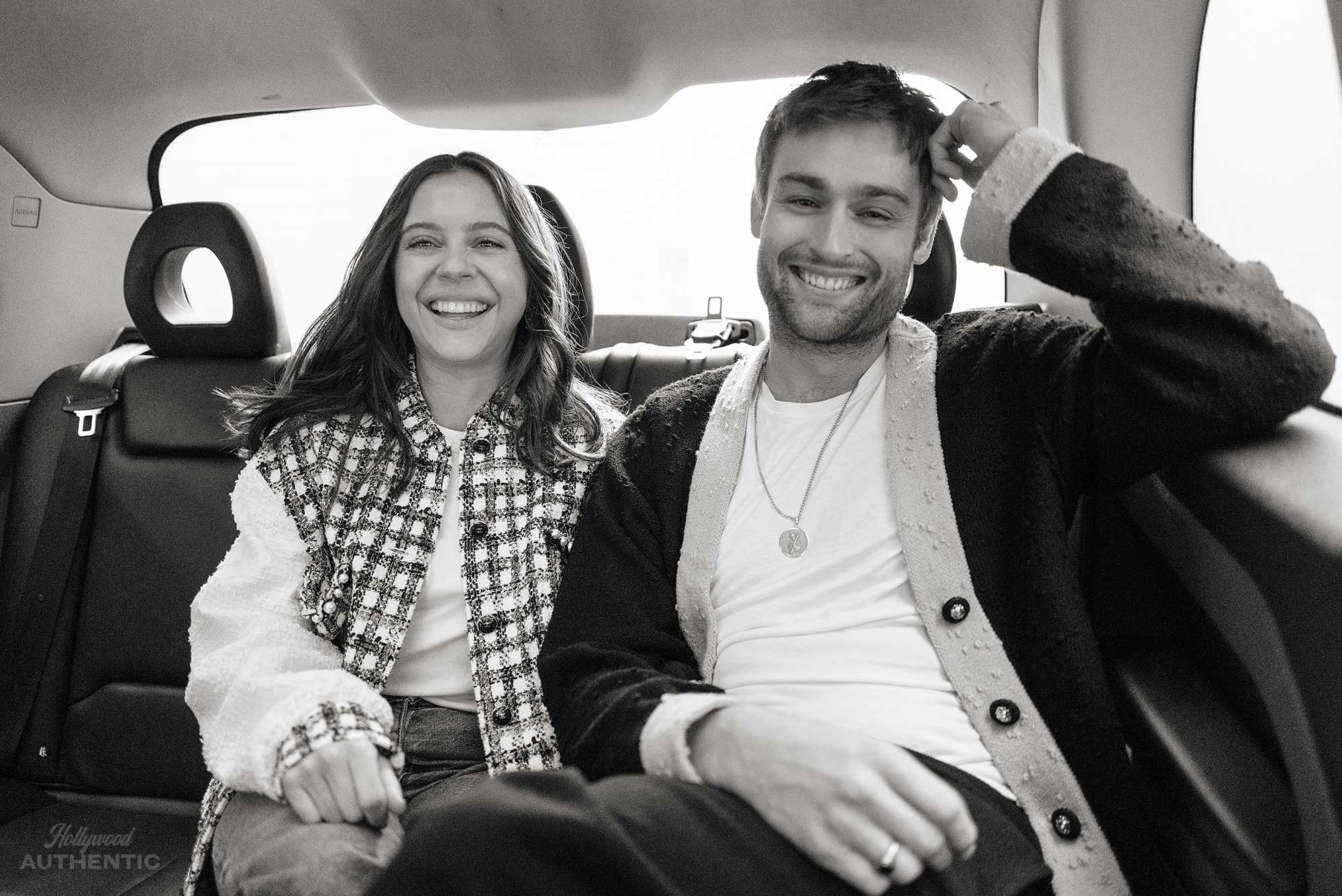
‘Booth and Powley’, as Bel laughingly refers to herself and her husband, are finishing off a fitting at Chanel’s London HQ when I catch up with them on a fresh February day. Suited and booted in Mayfair, the duo jump in a black cab to travel home to their house in De Beauvoir, East London. ‘We’re married but we don’t have the same name,’ Booth says as he clicks his seatbelt. ‘I didn’t want to wake up and for Bel Powley to not exist anymore.’ Powley looks at him fondly and, as we sit in the capital’s traffic, I ask how the two of them first met. ‘At a chemistry read audition,’ she recalls. ‘I was so excited. Doug was really famous, and I remember telling my girlfriends. In the scene, they kissed, and I was like, ‘Should we just do it for real?’ And we kissed in the audition. Doug didn’t get the part, and I got the part.’
That fateful audition was three years before they were cast together in Mary Shelley – a biopic of the Frankenstein author with Powley playing stepsister to Elle Fanning’s Mary, and Booth playing the poet (Percy) Shelley. ‘I remember, on the first-ever night out, we were in Dublin,’ Booth says of the production. ‘I took a picture of Bel and I wrote on Instagram, “I love her”…’ ‘And the rest is history,’ Powley finishes his sentence. They’ve been together nine years, getting married at Petersham Nurseries in Richmond in October 2023. ‘I woke up in the morning, and I was like, “I just want to do it all over again, right now,”’ Powley says. ‘I think in 10 years’ time, we’ll get married again.’
A pair of Londoners – Booth was born in Greenwich to a painter mum and financier Dad, moving to Kent as a kid; Powley was born and bred in Shepherd’s Bush – the couple now live in a house they bought together and moved into during lockdown. They both began their careers early. Booth suffers from dyslexia, which made schooling difficult and now means reading a script is slow and his wife sometimes has to read menus in restaurants. ‘When you’re learning lines, you’re attaching words to an emotional response or an emotional journey through scenes. It’s a completely different thing,’ he explains. ‘Just words as facts on a page, I find… it swims. I just can’t put the dots together. That’s why I struggled at school.’ Focusing on acting became a way to make sense of the world for him. He was signed to an agent at 15, dropped his studies and landed a role at 16 in From Time To Time, opposite Maggie Smith and Timothy Spall. ‘I remember just being on set, having no idea about where you’re meant to stand. The idea of hitting a mark was just, you know… So I basically learned on the job.’ He never looked back. His breakout role was playing Boy George in Worried About the Boy, quickly followed by Pip in the BBC’s Great Expectations, a biblical son in Noah and a toff in The Riot Club. Last year, he wowed the Toronto International Film Festival with his role in Young Werther and awaits the release of Terrence Malick’s long-gestated The Way of the Wind.
Powley, meanwhile, Booth says proudly, was something of a ‘Hermione Granger’ at school. ‘I was a really geeky kid,’ she nods. ‘I was bullied quite badly at school. I didn’t have that many friends. I never even really wanted to be an actor. I was really academic. But my dad’s an actor [Mark Powley], and my mum’s a casting director [Janis Jaffa]. So it was always kind of in the family. I went to a Saturday drama group called Youngblood Theatre Company, which was all improvisation-based, where I met a lot of my mates. A casting director came in once to cast a CBBC show called M.I. High about child spies, and I got the job. So I basically ended up being a child actor, to my parents’ dismay, because they thought I was going to be the first academic of the family. I ended up following in my dad’s footsteps.’ Powley was nominated for BAFTA’s rising star in 2016 and has since mixed TV, theatre and film – most recently, on The Morning Show, showing the boys a thing or two as a wartime spy in Masters of the Air and as a 17th-century maid in upcoming period satire, Savage House. She’s next filming Inheritance, exploring colonialism, in Jamaica.
I ask if either of them felt that they were artists as kids. ‘When I was a teenager, I just liked acting because it was independence. I was earning my own money. I wanted to move out of home,’ Powley considers. ‘But I think it wasn’t until in my 20s when I started doing movies and other mediums that I really started to learn my own taste and creativity. What I’ve learned over time is to trust my gut instinct, and what speaks to me – that feeling is in your soul, when you read a project or start to understand the character. So yeah, now I do feel like an artist.’
‘As you get older, it’s about refining that play into something that is artistic, and that’s actually poetic, and is something that feeds your inner soul, as well as just being a game,’ Booth agrees as we pull up to their terraced house on a leafy street. ‘Also so much of our job is about an internal life. When you’re a child, you’re often having to play emotions that you’ve never actually discovered before. Your canvas just gets so much bigger when you’re older. You have your heart broken. You have your first panic attack. You need to experience a bit of life to be able to portray all of life.’
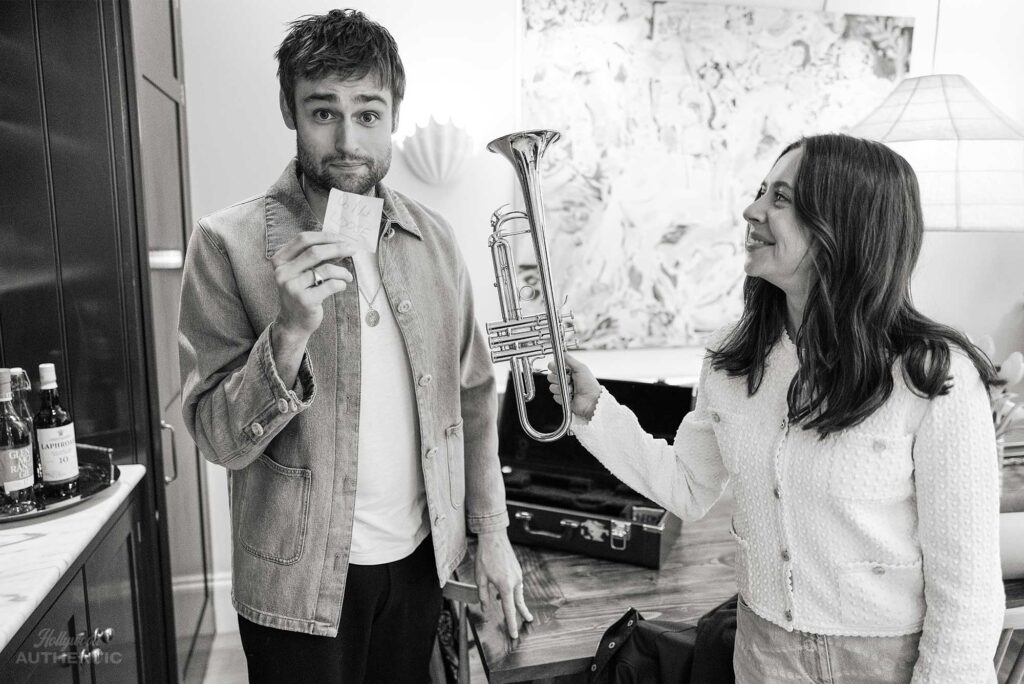
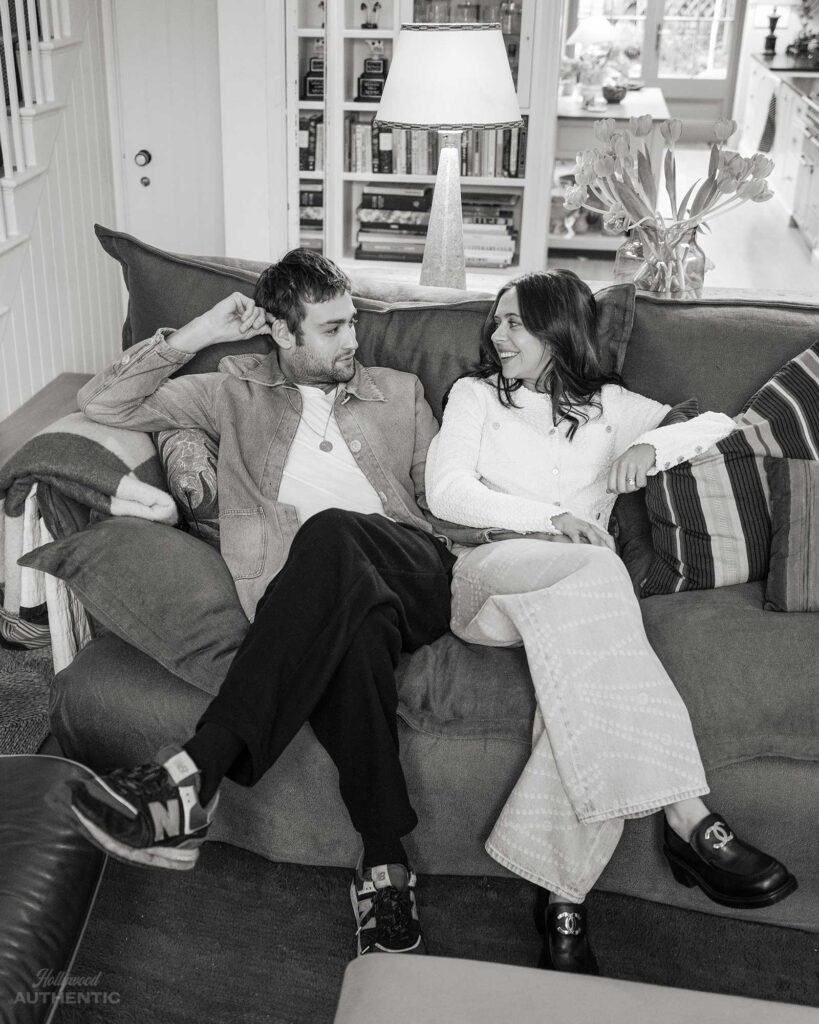
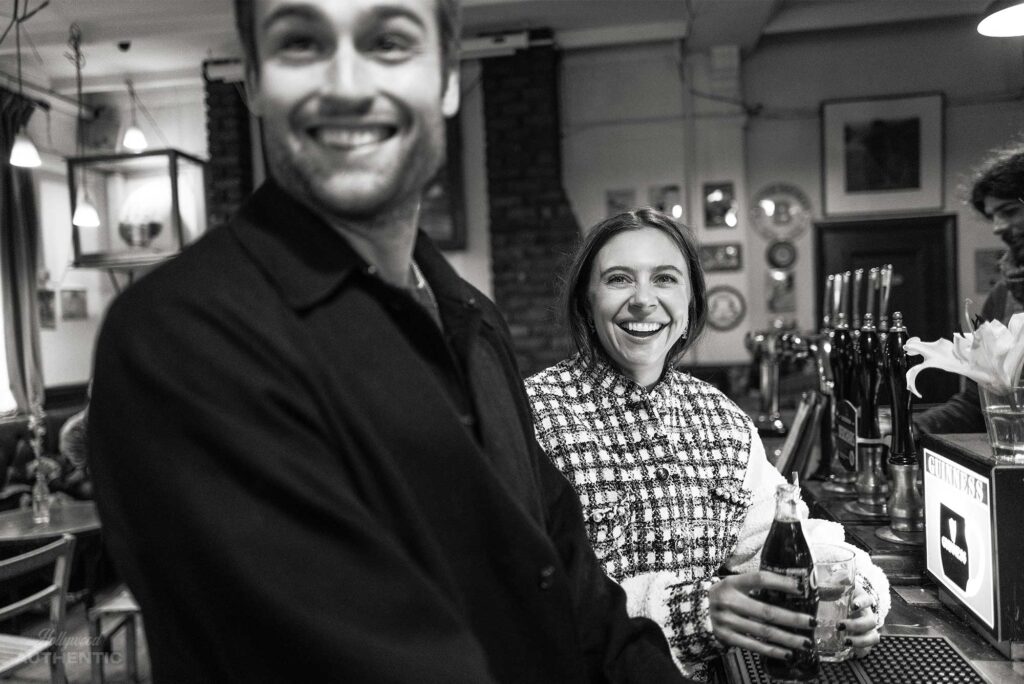
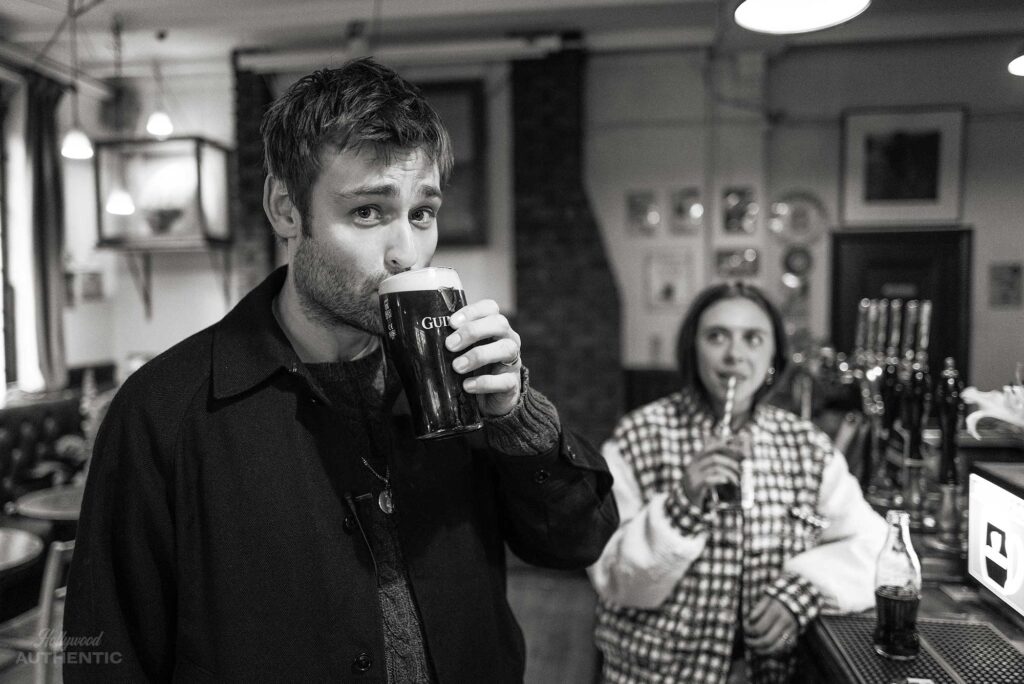
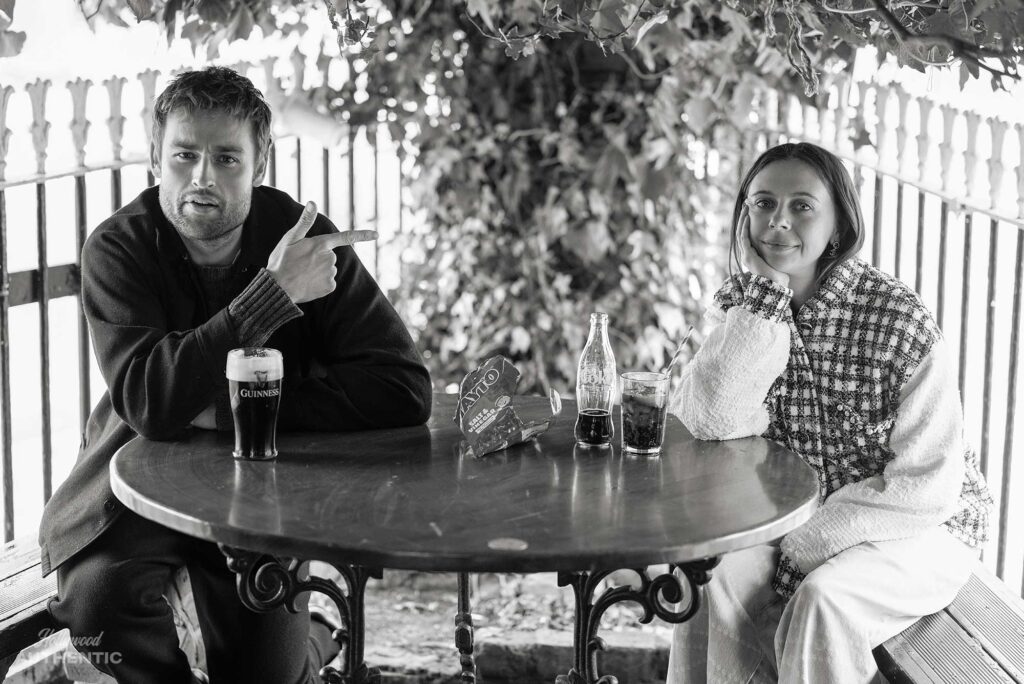
We hurry into the house and get the fire and peppermint tea on to chase away the chill. The duo have renovated the place and taken care to choose all aspects of the rebuild together. ‘We live such nomadic lifestyles with our job, home is really important,’ Powley says as she points out beloved items: a wedding plate made by a ceramist friend, her piano, Booth’s childhood trumpet, their Tomo Campbell painting. Booth’s trumpet case still contains a childhood handwritten note to himself that reveals his dyslexia. ‘Do not loose,’ he reads out and laughs. In a cupboard I find the pair’s camera equipment and backdrops for self-taping, and ask whether they’d like to work together again in the future. They’ve both exec-produced recent projects, says Booth; ‘We like the idea of creatively developing something together.’ For now, the thing they want to do together is pop down to the local pub. We walk to the Victorian pub a few streets away and they show me their favourite seat over a pint of Guinness, a diet Coke and a bag of crisps. It’s a cosy scene and Powley clearly feels the pull of the familiar as they discuss the travel that acting affords. ‘When I was shooting The Morning Show, we lived in LA for nine months and really loved it,’ she says and smiles at Booth. ‘But, still, the feeling of going home at the end, it’s second to none…’
The Disclaimer actor tells Hollywood Authentic about her appreciation for specific Skittles, magicians, puppies and pina coladas.
How important is a little bit of nonsense now and then to you? It’s vital for survival. Oxygen… water… food… NONSENSE.
What, if anything, makes you believe in magic? Science. The computer chip. Evolution. Warm summer nights. Love. Really good magicians.
What was your last act of true cowardice? Probably a situation where I was caring too much about what other people think… but I’m quite brave.
What single thing do you miss most when you’re away from home? My shepherd dog Sky. She’s a little weirdo, too.
Do you have any odd habits or rituals? I have to sleep on the side of the bed furthest from the door. I only eat red and purple skittles. The volume on the TV must be a multiple of 5 or 10. I like to race against my car navigation app. Always singing and dancing around the house.
What is your party trick? I can set my hand on fire with a lighter… briefly.
What is your mantra? Don’t overshare, retain mystery. But 99.9% of the time I do the opposite.
What is your favourite smell? My mum.
What do you always carry with you? An uncontrollable need for approval.
What is your guilty pleasure? Reality TV. Especially the shows that unstable people go on to find someone to marry! In front of the world! It’s nuts, and I’m totally here for it. I don’t like drama in my life but I’m addicted to watching other people’s.
Who is the silliest person you know? My best friend Tarik. The most uniquely entertaining human, he will make any time or topic hilarious. He told me a story about someone stealing his lunch the other day, and, well, I guess you kind of had to be there…
What would be your least favourite way to die? Medieval stretch rack.
What’s your idea of heaven? Sun, sand, sea, pina coladas and puppies.
Australian actor Leila George has appeared onstage in Chekhov’s The Seagull at The Perth Theatre with her mother, Greta Scacchi, and made her feature debut in Mortal Engines. She impressed in The Kid, Gonzo Girl, He Ain’t Heavy and playing Janine ‘Smurf’ Cody in limited TV show Animal Kingdom. Last year, she dazzled at Venice Film Festival with her key role in Alfonso Cuarón’s Disclaimer. She’s just completed Netflix’s upcoming series The Beast in Me with Matthew Rhys and Claire Danes, and is currently shooting opposite Alan Ritchson and Owen Wilson in Scott Waugh’s film Runner.
Photograph by GREG WILLIAMS The Beast in Me is out on Netflix later this year
*Arguably one of the most memorable (and quotable) scenes in 1971’s Willy Wonka & the Chocolate Factory is when Mr Salt mumbles, ‘It’s a lot of nonsense,’ to which Wonka replies, in a sing-song voice, ‘A little nonsense now and then is relished by the wisest men.’
The trailblazing, award-winning costume designer, who has worked with filmmakers from Spike Lee and John Singleton to Ava DuVernay and Ryan Coogler, tells Arianne Phillips about being a ‘first’ in Oscar history and how community has shaped her career.
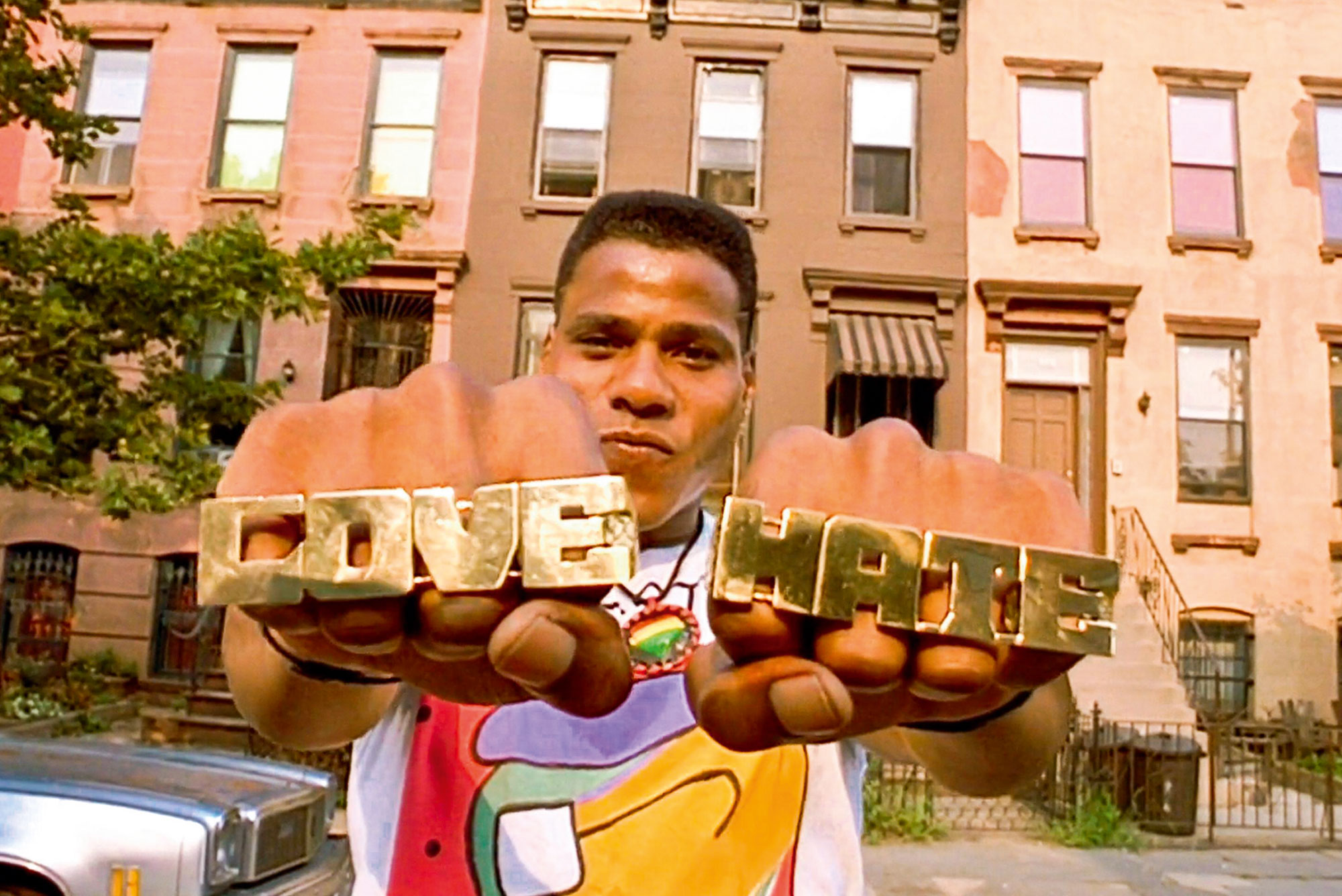
Ruth E. Carter is a costume designer extraordinaire and her body of work speaks for itself. She has designed costumes for beloved and game-changing films such as Do the Right Thing, Malcolm X, Amistad, How Stella Got Her Groove Back, What’s Love Got to Do with It?, Selma, Dolemite Is My Name, Coming 2 America 2, Black Panther and Wakanda Forever. She’s been nominated four times for an Academy Award, of which she won twice – making history as the first African-American costume designer to win an Oscar, as well as the first African-American woman to win multiple Oscars in any given category. In 2019, she received the Costume Designer Guild’s career achievement award and is the second costume designer to ever have a star on the Hollywood Walk of Fame (after Edith Head). Not only a prolific artist, she’s also a leader in the costume community, serving as a governor of the costume designers’ branch of the Academy of Motion Picture Arts and Sciences. Her book, The Art of Ruth Carter, was published in 2023 and her latest project, Sinners, is currently in cinemas.
AP: Let’s talk a little bit about your origin story. Where did you grow up, and what brought you to costume design?
RC: I grew up in Massachusetts in a little town called Springfield, the home of the Basketball Hall of Fame. My mother was a psychologist for the city – and I say that because my mom was the first person who actually taught me how to see people, and see the stories behind the people. I had two brothers who were visual artists – my brother who’s closest to me in age really loved to sketch. He loved pencil and graphite. We would sketch faces. We had a little mouse that we drew. He wore a tam [hat], and had the Black Power fist up all the time. It was fun! My oldest brother, Robert, did fine painting, oils and portraits. We all looked up to him. So my family was artistic but I tried to divert away from it when I went to college and majored in education. I decided to change my major to theatre arts, and very soon was known on campus as the costume designer. My main focus was to get theatre projects done, whether it was the music department doing a musical, or a fraternity doing some special step show, or Black theatre. They weren’t teaching costume design in the theatre department at the time. I went into a little costume shop that was in the theatre department. It was uninhabited. No one was using it. But when I opened up that door, it became my learning lab.
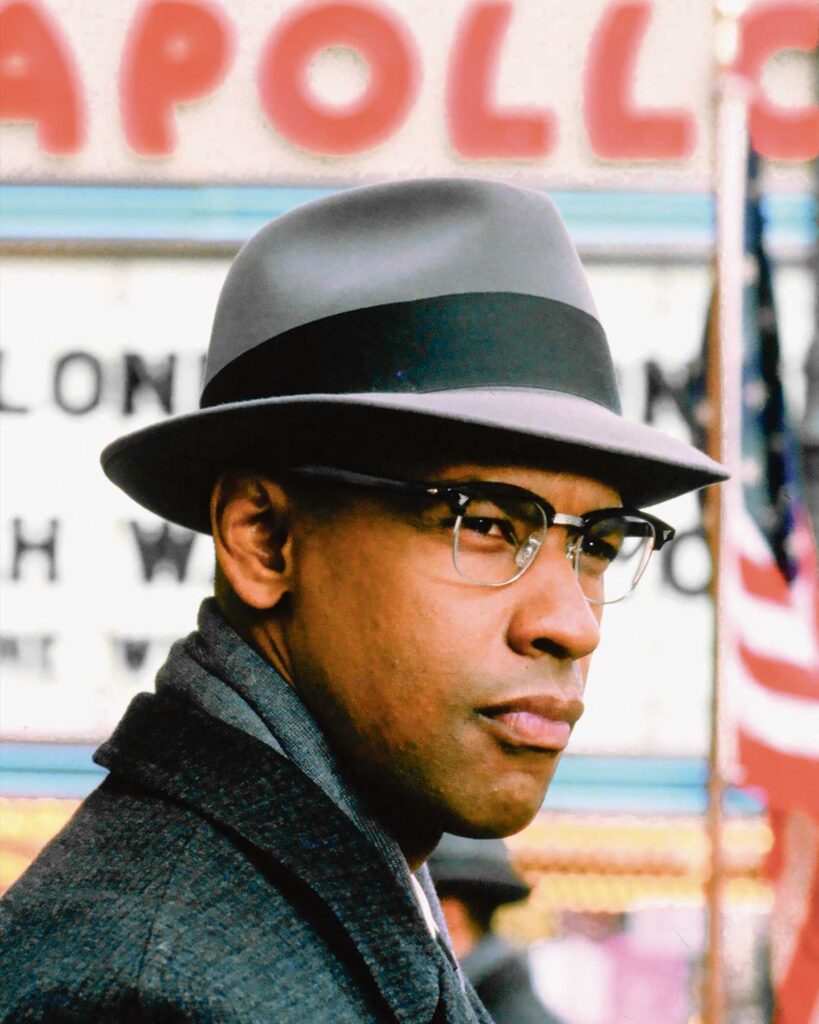
Malcom X, 1992. AJ Pics/Alamy
AP: I relate to that as a theatre kid. In your career you’ve really touched on every genre from historical pieces to biopics to comedies. What informs your choices?
RC: I would love to be the person who chooses, who goes out into the backyard to my film tree, and I pick: ‘Oh, I love this one, and then I love that one.’ But I feel like I have a certain reputation, and the films that are being offered to me, they’re in my wheelhouse. It doesn’t mean that you’re typecast, just that people think that this is something that you would be inspired to do. I’m always given the challenge. I’d love to do something one day with one person in it – you know, Krapp’s Last Tape. But I get the ones with the armies and the battles, with a cast of hundreds. I’ve been really fortunate to have offers that are really juicy, that are interesting and challenging. And that’s what I look for. I really love when I admire the filmmaker, but I also love to support young filmmakers that have promise, and I really want a good experience – for them to learn as well. When I first met Ryan [Coogler] at Marvel, I sat across a young filmmaker that admired Spike Lee, and told me that he was happy that I came in to interview. He admired my work as a student of film. So when that happens, it charges you up, and you go, ‘I am going to do the best I can for this young filmmaker, because it’s really about being part of a film family, and really liking the person you’re working for.’
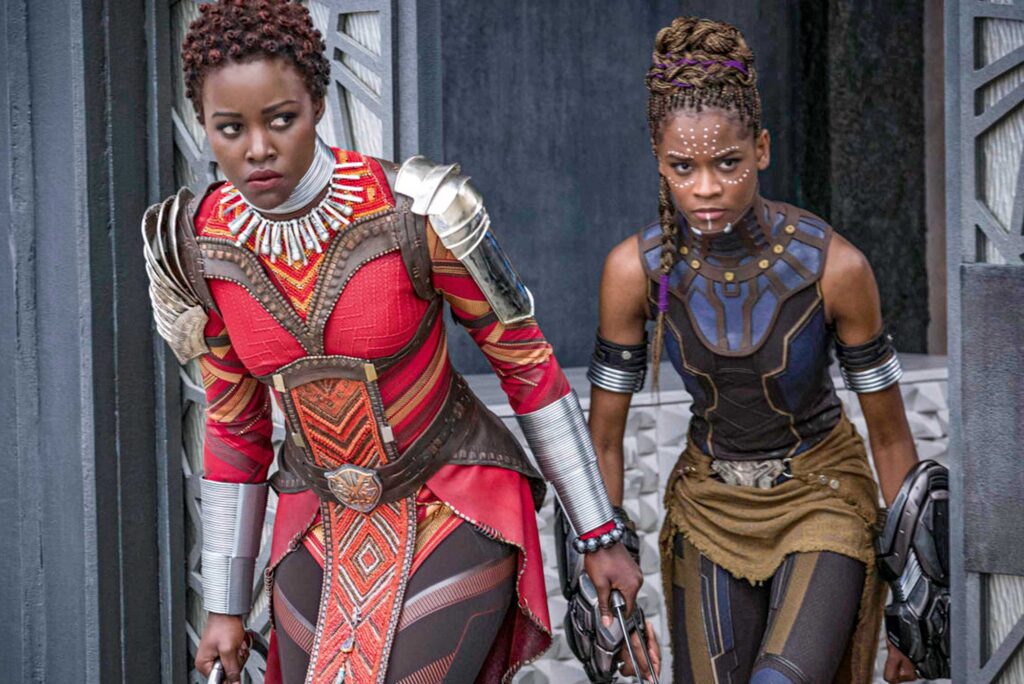
Black Panther, 2018. Moviestore Collection Ltd/Alamy
AP: You created a travelling exhibition – Afrofuturism in Costume Design – your book also touched on this. I wondered if you could just illuminate a little for our audience about your relationship to Afrofuturism?
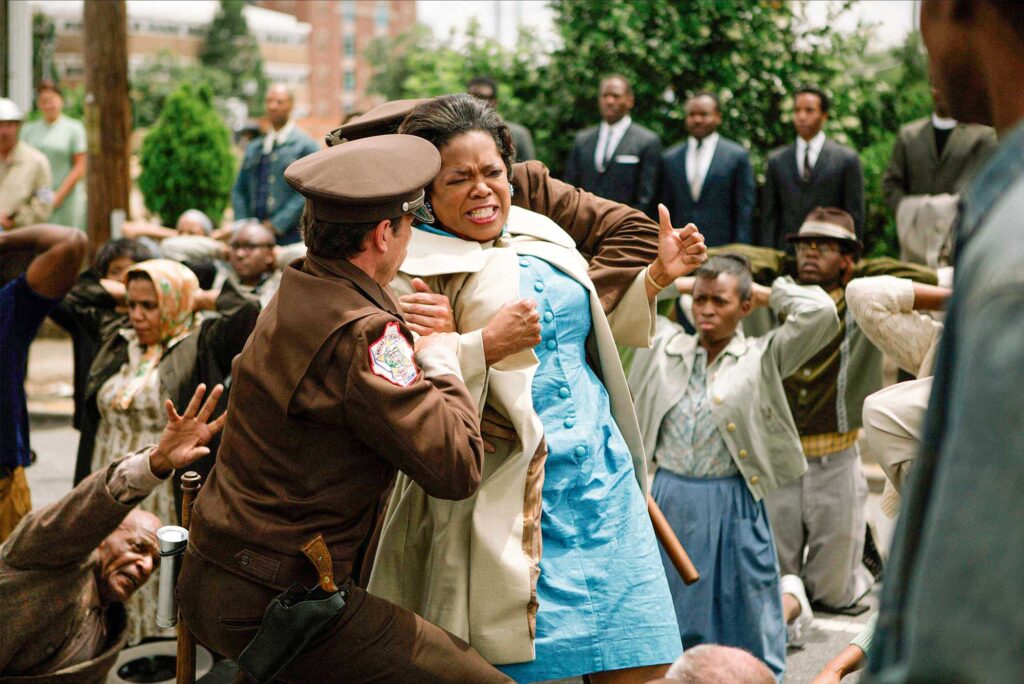
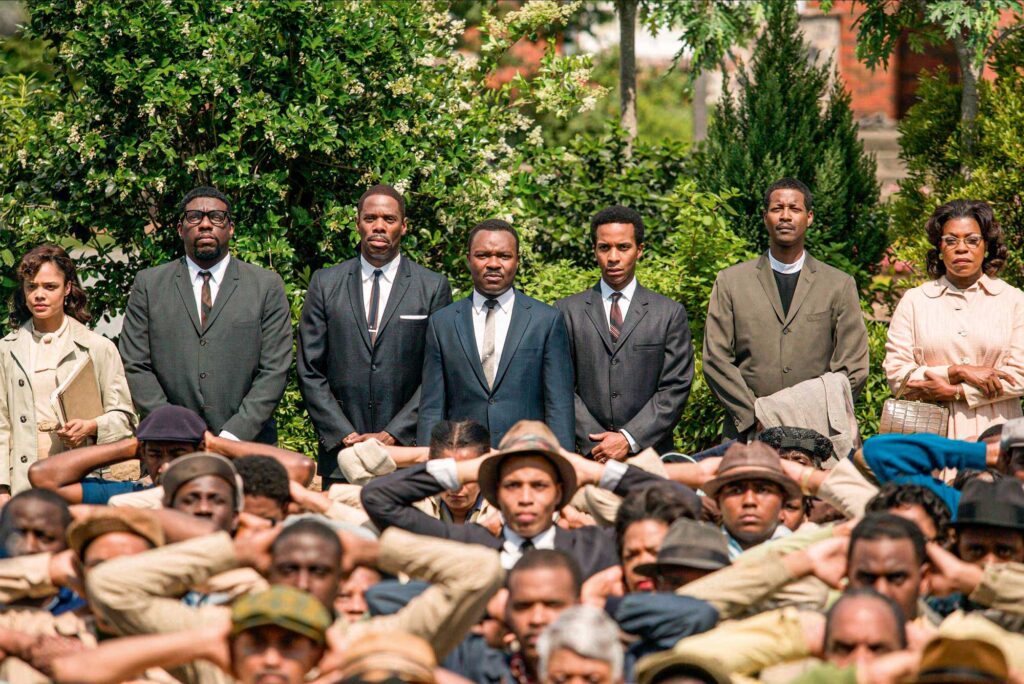
RC: I feel that my whole career has encapsulated Afrofuture. What we know of Afrofuture is taking culture and infusing it with technology, and presenting it in a way that, you know… What would things be like without colonisation? How would this technology have been advanced by these different cultures? I take Afrofuturism a step further. When I’m on the set with Spike Lee and he’s envisioning the story of Do the Right Thing, he is bringing in prose and political statements. He’s creating a protest film. I feel that Spike is embodying his own Afrofuturism, his view of a better tomorrow where we see ourselves on screen in a way that is much more realistic to what we know, and how we see our community, and how we know beauty. It’s retraining the eye, not only to see costumes in a new lens, or through beauty, but also to retrain the eye to see beauty standards differently. I think that those kinds of edicts are the things that I grew in this industry to embody and embrace, because I had a mission. I had a responsibility to that, because I was blazing a trail for the future costume designers who looked like me, and I wanted them to feel not pigeonholed or in a box to do things a certain way. When we crafted Mo’ Better Blues, we showed Denzel Washington and Wesley Snipes on stage in the jazz club. These were the images that we weren’t seeing in cinema. Also, Ava DuVernay on the set of Selma, directing. You know, we’re not only teaching through the medium of film and storytelling – we’re also teaching by example. Now our community could see a woman directing. Or a story being told about your neighbourhood. That, for me, is Afrofuture. That’s how you groom the Afrofuture for yourself and for your community.
AP: You designed films with Spike Lee and John Singleton…
RC: I met John Singleton at a panel where Spike was speaking. It was such a tight, little network in the ’90s that you might be out partying with John Singleton, having never worked with him, but we were a little film tribe.
AP: I think that one of the attractive aspects for me as a young person coming into filmmaking was the collaborative, communal idea. As artists, when we have a director, or even an actor, with the same vision and purpose, we can really be creative.
RC: And sometimes it’s just about helping them find the creativity. A lot of times, our actors will come to us from another set with very little prep, and you’ve been on it for weeks, just delving into research, and you’ve collected all kinds of things that you’re excited to show them and share with them. I’ve had someone like Forest Whitaker ask to see more of my research so that he could spend some time with it in his hotel. When they are like that, you know that they are committed to creating a great character.
AP: I’ve had that happen when they come into the fitting room, and they say, ‘Thank you. I didn’t know who I was.’ A director that I’ve worked with says that the fitting room is the most important because it’s the portal into the film. And oftentimes we’re talking to an actor, or maybe a day player, that hasn’t even got to set to sit down with the director.
RC: I’ve had an actor say his first sitting is his first rehearsal. It’s really beautiful.
Selma, 2014. Maximum Film/AlamySelma, 2014. Maximum Film/Alamy
AP: Can you talk a little bit about biographies versus dramas? And the challenges of dressing historical figures?
RC: Fortunately, with someone like Malcolm X, there were quite a few photographs of him, but not enough of him as he was a young boy in the dance hall years, and all of the years where he hustled in New York City. It becomes a relationship you have with the character or the person, gathering what you can see of them, and also imagining during the times what they would be challenged with. No one’s life that we portray in biopics is exactly the way that it was in their real life, even though we attempt to get as close as we can, because we only have two hours to tell their whole life. And we have to make it cinematic, and make you feel empathy, and make you cry, and make you laugh. I research a lot and that tells you things that you wouldn’t know. Like they built stoves in Detroit, so that informs ageing of the costumes – that these people who are workers coming down the street to eat, or were coming home, they could have worked at the furnace supply factory.
AP: Do you have any career highlights that stand out for you?
RC: First, I have to say that those years in the ’90s, bouncing back and forth between LA and New York every year, going to New York to work with Spike, and then coming back to California to work with Robert Townsend and Keenen Ivory Wayans – I really got both sides of the coin. I was able to do comedies like I’m Gonna Git You Sucka and B*A*P*S and understand their perspective – and then to go back and work with Spike on something rich like Do the Right Thing and Mo’ Better Blues and Crooklyn and Clockers. Really just the experience of both the East Coast and the West Coast in that way, every year for 14 years, was an incredible experience for me. But I would say that the one experience that stands out the most is being in Egypt, shooting Malcom X’s hajj to Mecca, having built the hajj in the desert, because we couldn’t go into the Holy City and shoot there. We rebuilt it. Our first day of shooting, we were shooting at the pyramids, and we left the hotel – it was still dark out – because we wanted to shoot a priest singing the morning prayer at the pyramids. I’m standing in the desert with Denzel Washington, on a Spike Lee joint, looking at the pyramids with a Muslim priest singing the prayer – it was so spiritual and so meaningful. It was an experience that you seldom see anymore, because movies will put a green screen around the whole set, and be in Egypt. But we were actually there.
AP: In terms of being the first Black woman to win an Oscar, and the second time in the same category – how does that resonate for you, not only in your accomplishment but in general?
RC: In 1993 I was nominated for Malcolm X. I was the first Black woman to be nominated for costume design. I was like, ‘Wow.’ But then I thought, you know, ‘Wow, it’s 1993. In this day and age, we’re still examining firsts.’ So that told me that the film industry was not wide open. I was able to do something that could open a door. And so my accomplishment then formed what this is going to mean for the culture. As time went on, Amistad happened, and meeting Steven Spielberg, and working on set with Steven, was another highlight. And then I was nominated. It was the loneliest nomination ever because the film didn’t get the nomination. But I was reminded that this is not the reason you’re doing this; it isn’t the crux of what makes this experience so impactful and so important for you.
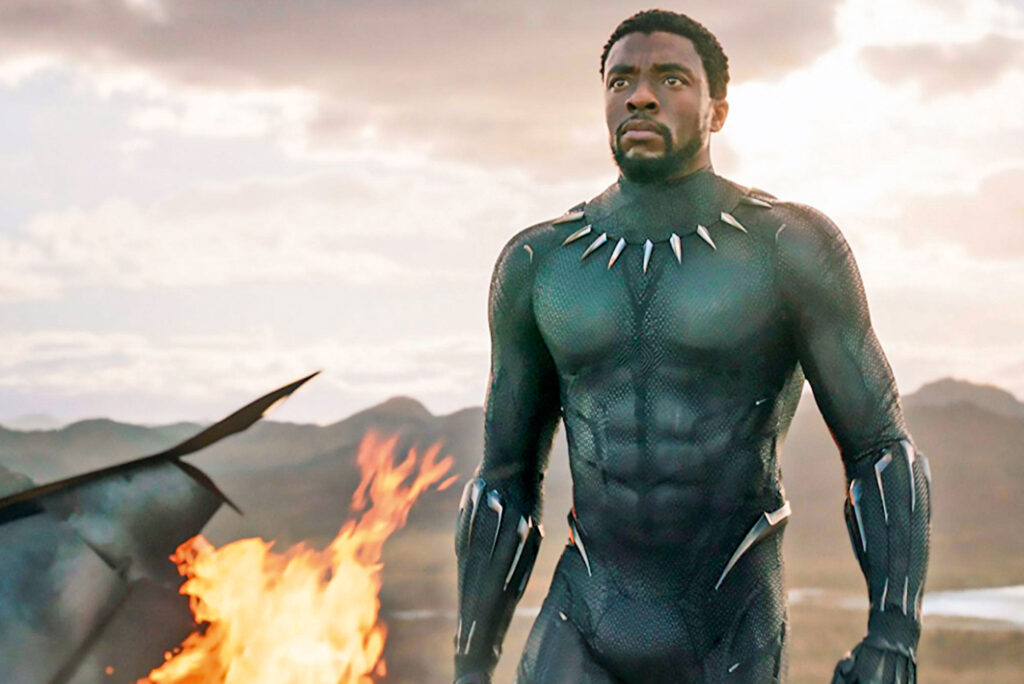
And then Black Panther happened. It was incredibly hard. It was really immersive. I look at pictures of myself, and I’m like, ‘Oof, there’s another bad hair day!’ But you had to give it your all. So to win for Black Panther, it was bigger than anything. To stand on that stage, and look out and see Spike sitting there, to see Chadwick Boseman, just smiling big and bright – it felt like I was still doing this for the culture; still achieving these goals for the community; still being an example for the next young girl coming in behind me, to show that they can, too. And that’s really what I was overwhelmed with joy about. And social media made it undeniable, because now you see the audience. You see what they want, and you’re able to actually give it to them, and talk about it. When the trailer for Black Panther dropped, I’m sitting at home, and I saw something come over my phone on Twitter. It was a question about the Himba tribe. I answered the question, and then it blew up.
Black Panther, 2018. Pictorial Press Ltd/Alamy
AP: Can you tell us about Ryan Coogler’s latest film, Sinners, with Michael B Jordan – a departure for you because it’s a horror film?
RC: I had to get used to putting blood all over the costumes! We had to have things built in multiples because it was the 1920s, Mississippi Delta. And then, all of a sudden, here comes the vampires. It was a lot of fun. It was really wonderful to paint that landscape, to get that richness of time and place and people, and then depart from it, and have the fighting off of vampires, and stakes, and bites, and blood. Yeah, it got pretty messy [laughs].
AP: And now you are producing a film with Serena Williams…
RC: We are telling the story of Ann Lowe, who was a fashion designer. She was the first Black woman to have a shop on Madison Avenue. Her clientele were all of the high upper-class families in New York. She did a lot of debutantes, and Jackie Kennedy’s mom brought Jackie to Ann Lowe to have her wedding dress designed. When it was reported in the New York Times about Jackie Kennedy’s beautiful dress, she was listed as the ‘Negro Seamstress’. This was 1953. The Civil Rights Movement was just coming in. So to navigate these rich families, she had to kind of code switch. She had 35 people working for her. She wasn’t sewing on a sewing machine at home. She had a business. Her work is amazing, and it’s at the African American Museum in DC. It’s at the Met. People have collected her pieces in museums, but nobody knows, still, very much about her. So we are hellbent on giving her her flowers, and also showing how she was navigating the times, and how she was this genius of a woman who was doing all of these beautiful dresses.
AP: What advice would you give to a young person who wants to be a filmmaker?
RC: I think a young person who wants to become a costume designer, really needs to be committed to it. It’s a whole life experience when you’re doing costumes, and it’s not always glamorous. Come into this knowing that this is something that you really want to do, and you’re always going to be a student of it. The minute you think you know, then you’re only scratching the surface.
Photographs & interview by GREG WILLIAMS As told to JANE CROWTHER
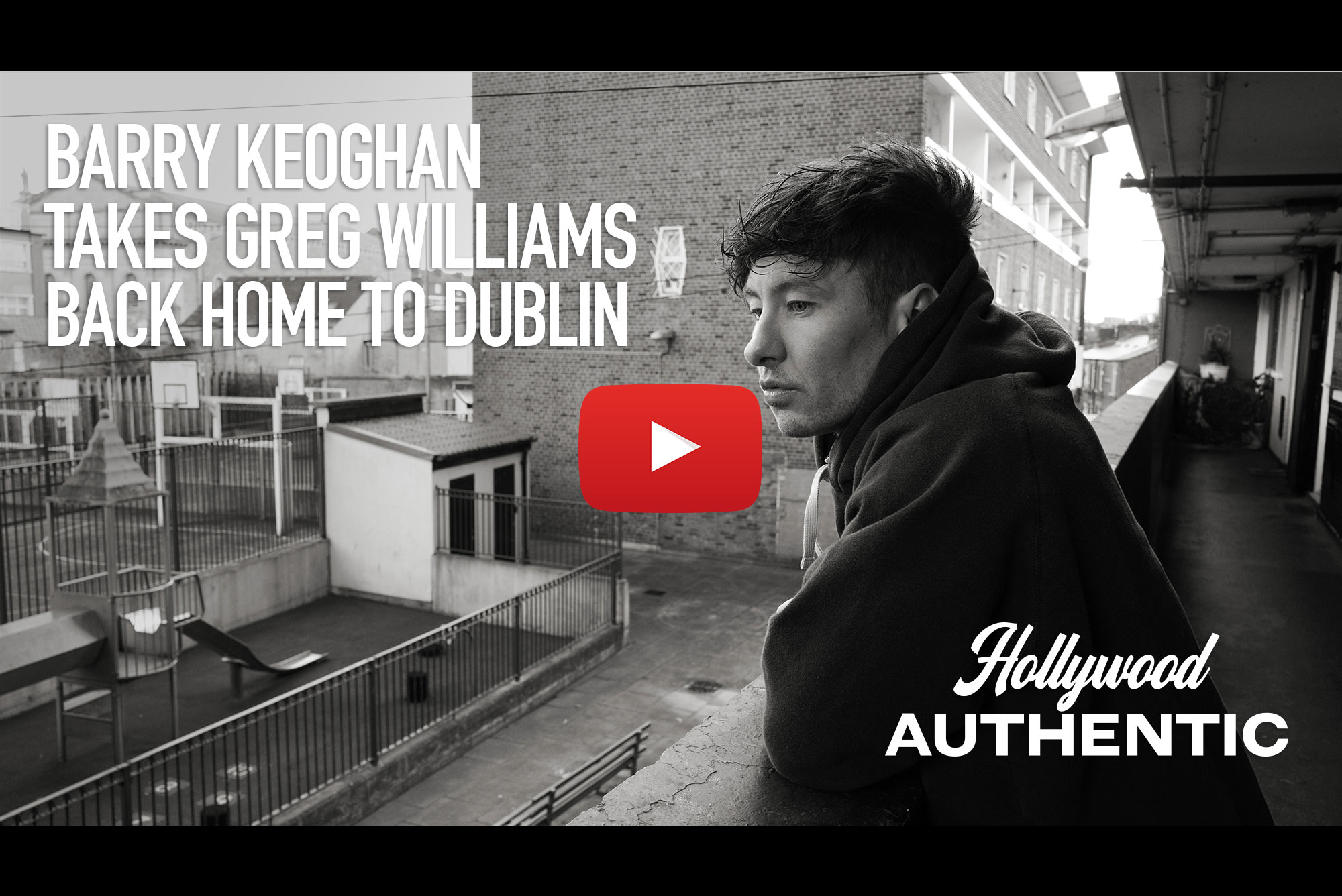
Greg Williams travels to Dublin with Barry Keoghan as they explore the actor’s tough childhood and the challenging moments that shaped him.
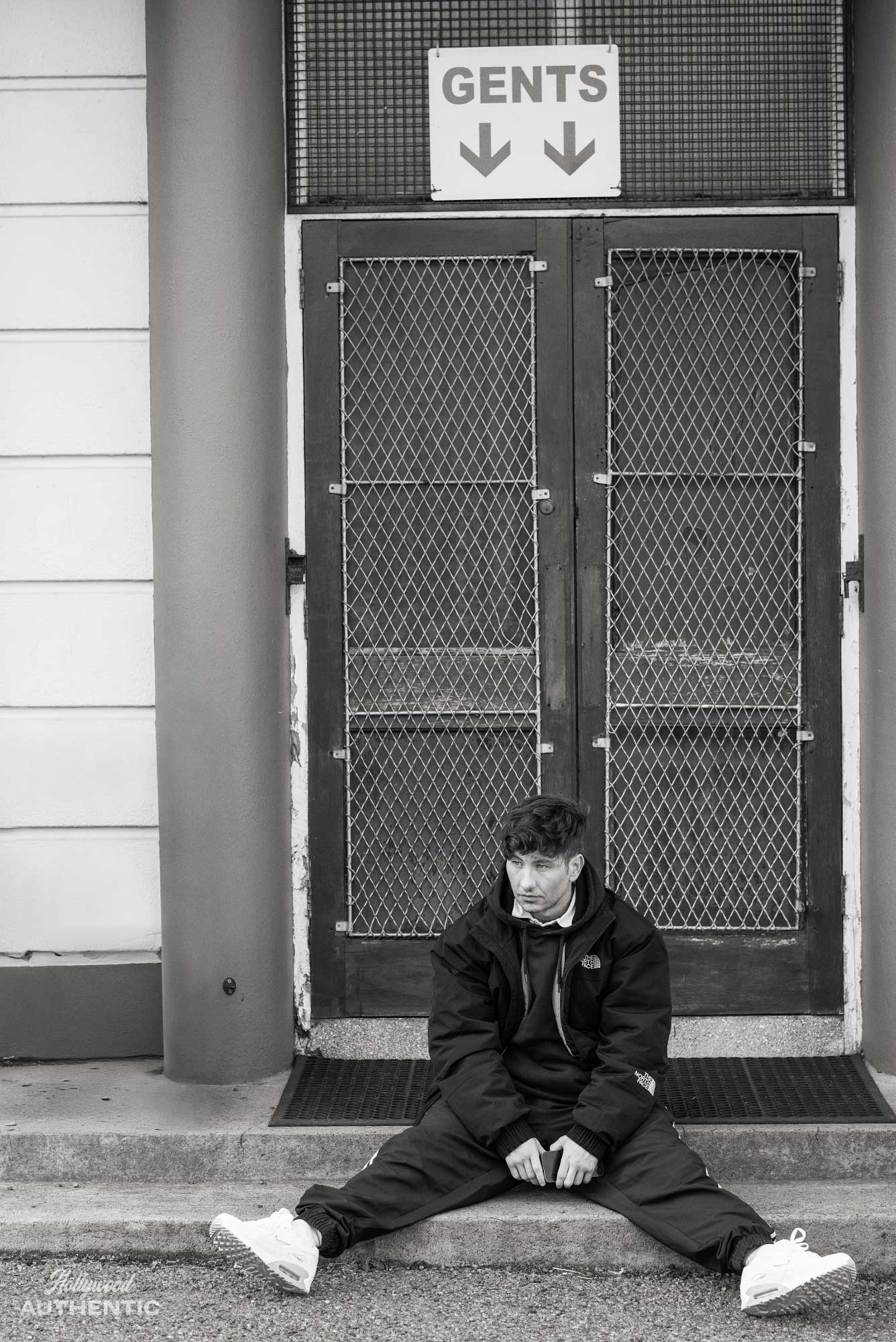
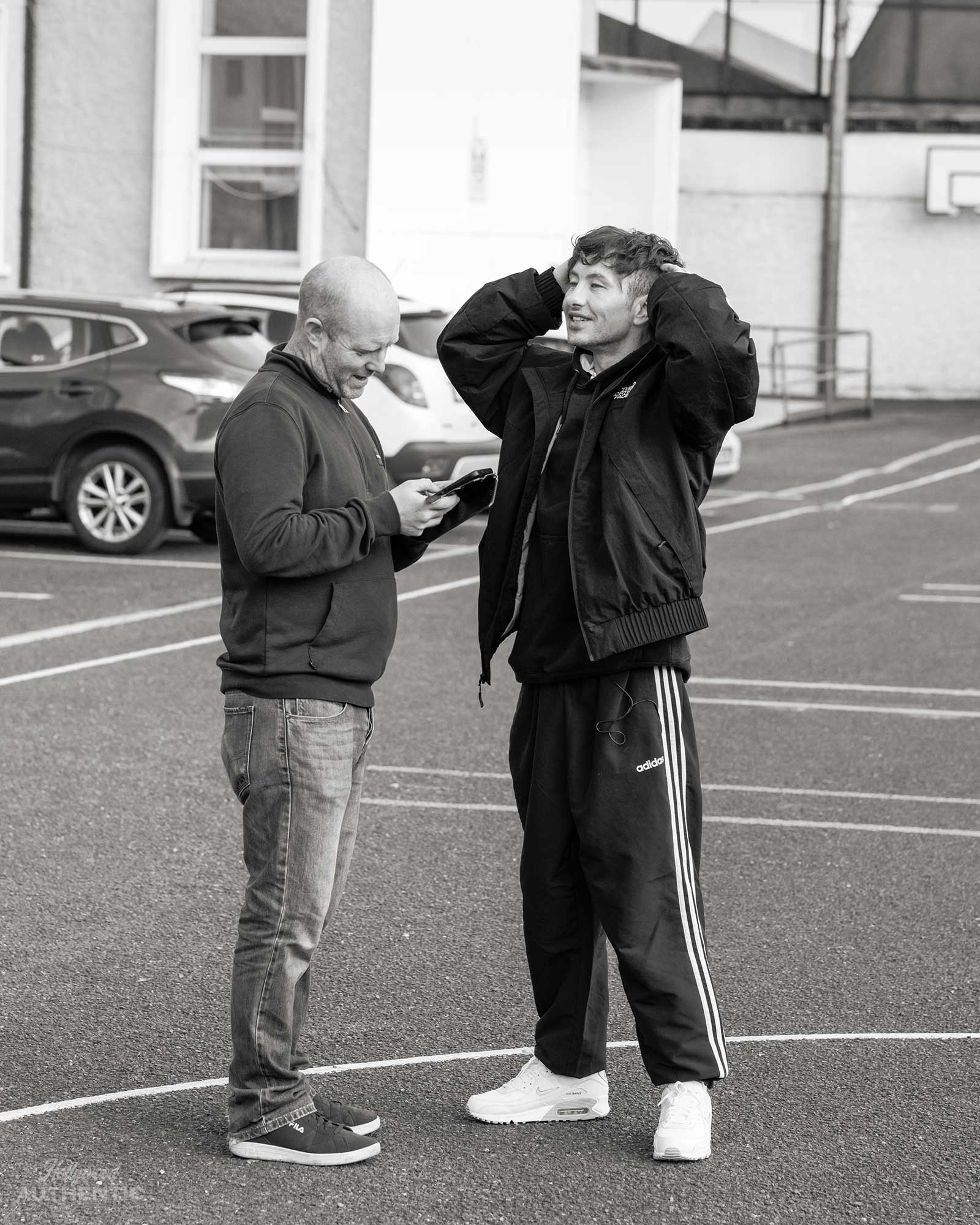
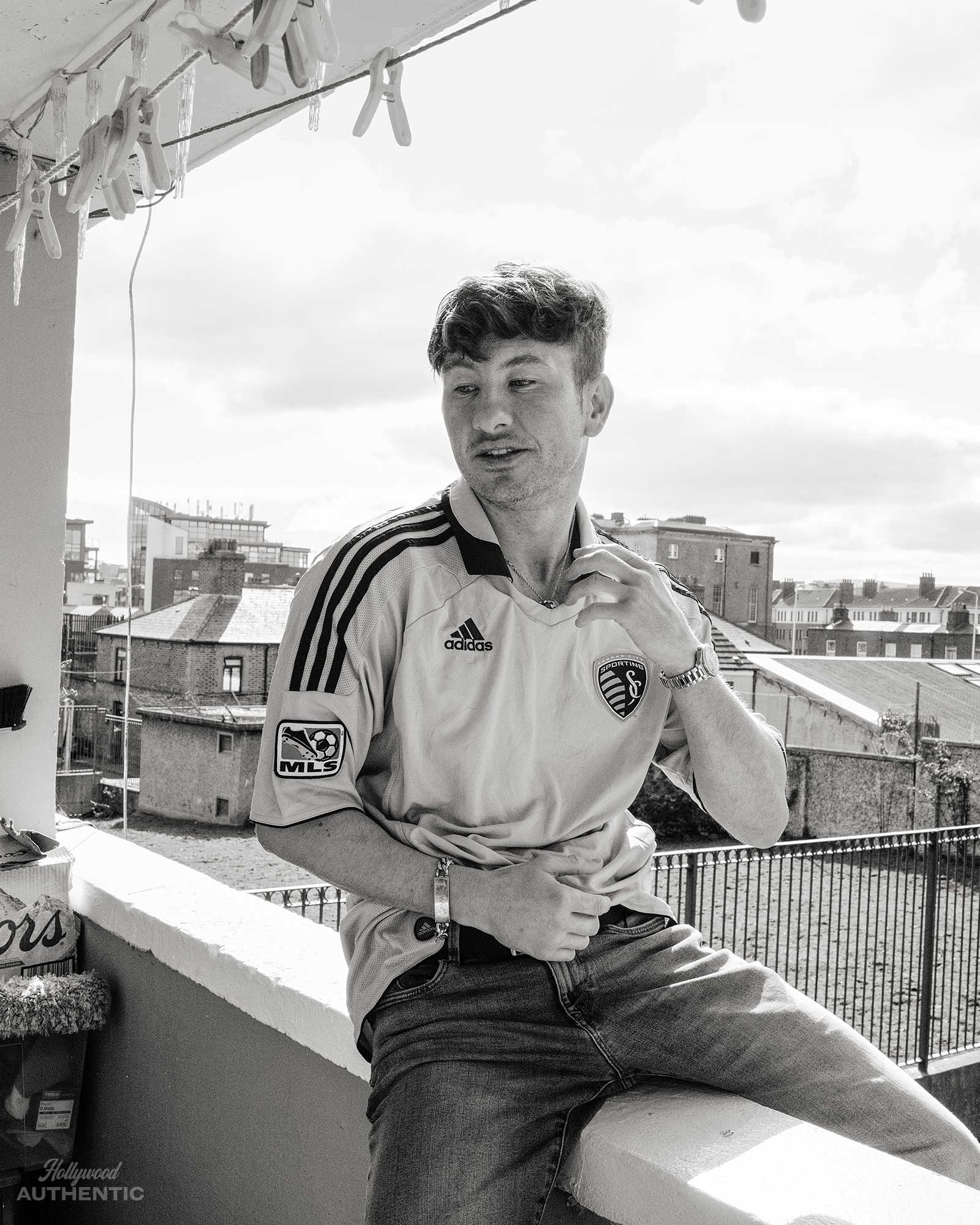
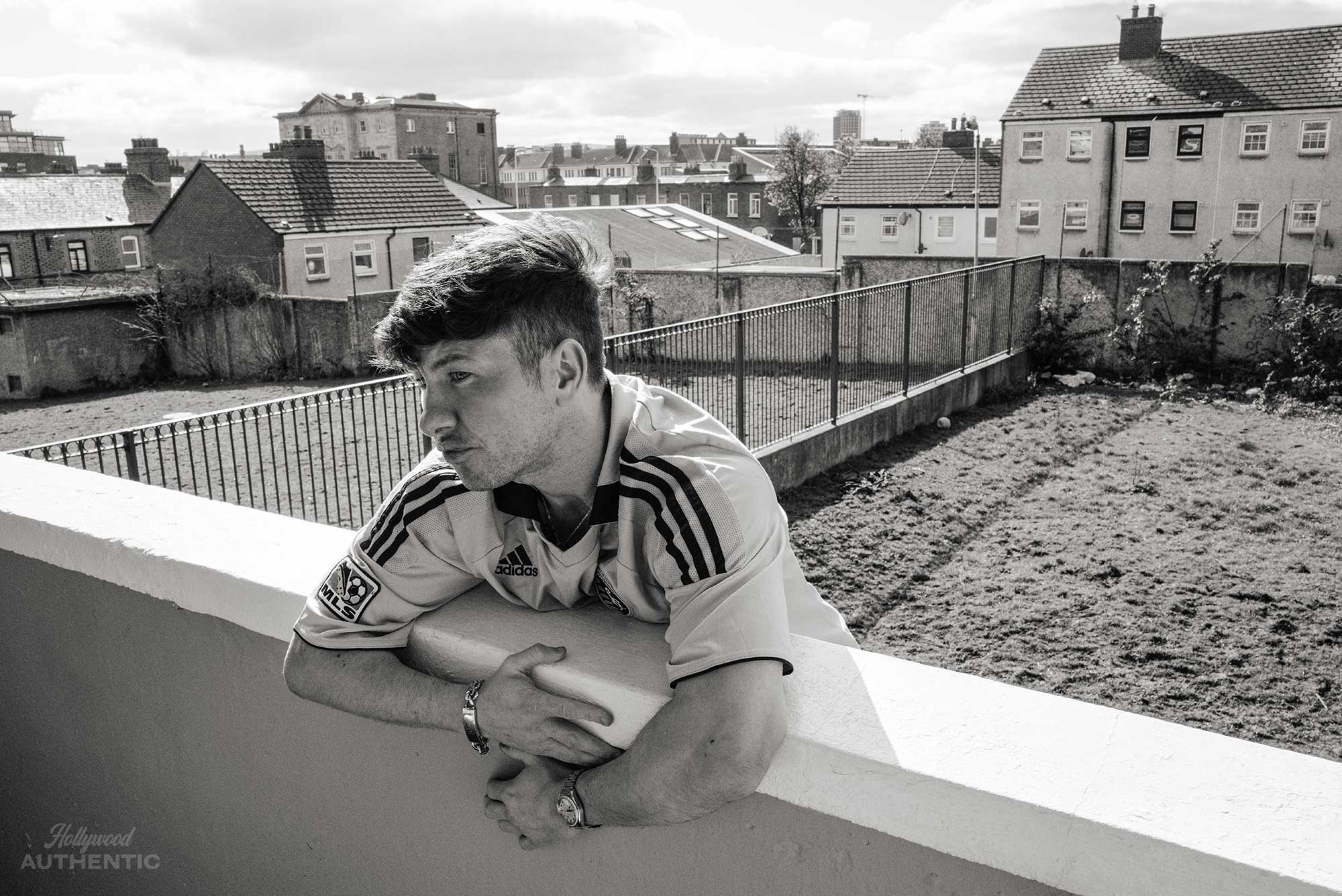
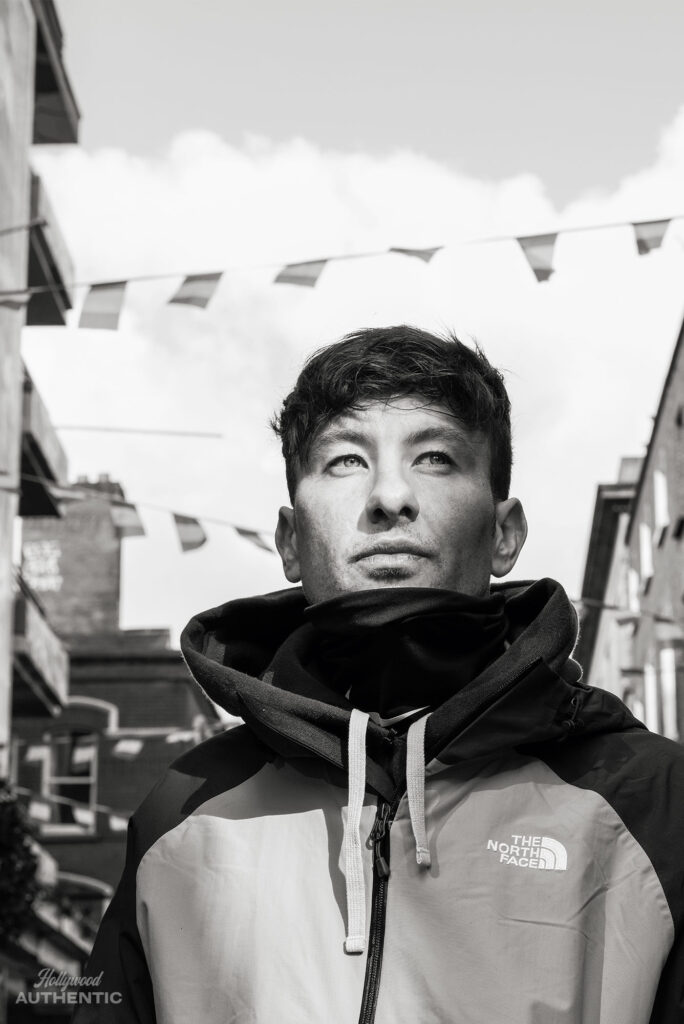
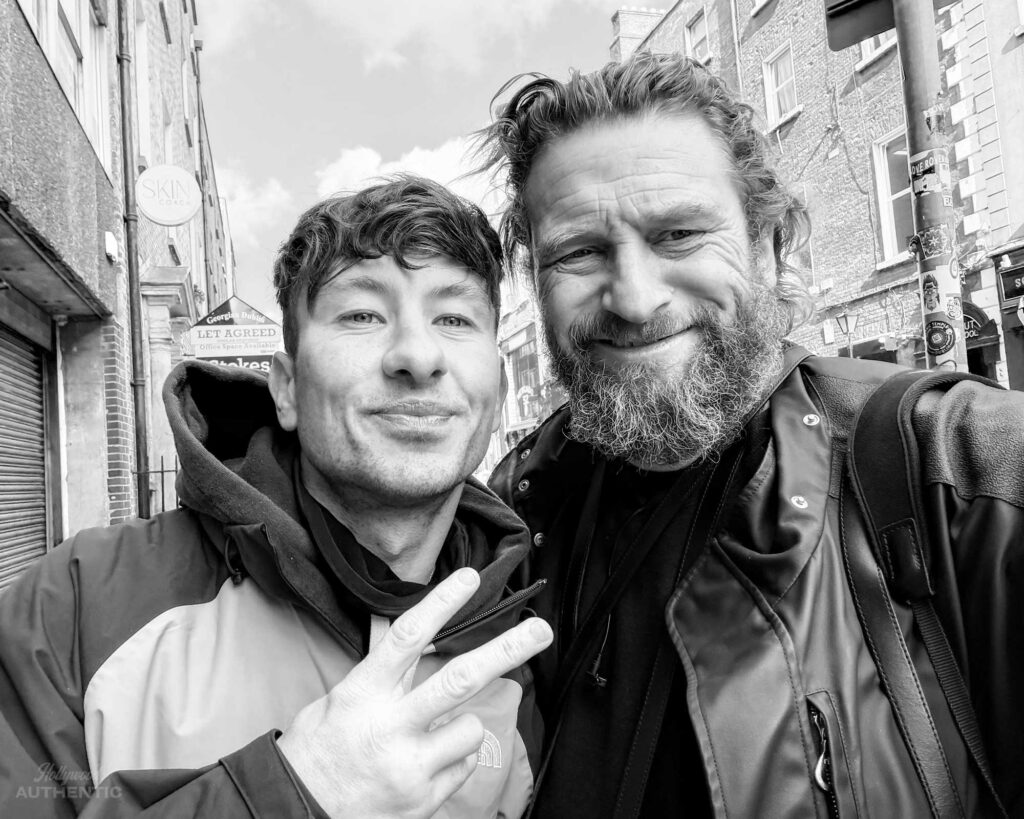
As we hang out in a suite at a luxury Merrion Hotel in Dublin in early March, Barry Keoghan is reminding me of another time, over a year ago, when we were together at the Governor’s Ball in LA. ‘That was different back then, wasn’t it?’ he says. It certainly was. Back then, Keoghan was racing around the world in a blur of promotion and awards season, seemingly having the time of his life. But today, he reveals that not everything was all as it seemed. I’ve known Barry for a number of years, and discussed a deep-dive interview like this one many times, but as his trajectory rose with affecting and nuanced performances in films such as Dunkirk, American Animals, The Banshees of Inisherin and Saltburn, the opportunity to talk properly became more difficult. And so did his personal life. Now, back home in Ireland and fighting fit, Barry wants to take me on a tour of his city and the formative places he grew up, and on that journey I discover heartbreaking moments that inform his acting and the past that coalesced in a moment when he realised he had to change how he was living.
I ice the face because Paul Newman used to do it
Before we hit the road, Barry ices his face in the bathroom sink. ‘I ice the face because Paul Newman used to do it,’ he explains with a cheeky smile before blasting the hairdryer. He’s been to sportswear store JD Sports to pick out hoodies and trainers like he used to wear as a kid and is revelling in the time-travel aspect of this as his younger brother, Eric, joins us, along with his old friend, Taylor. The hotel, Barry notes, is on the same square as Dublin’s Natural History Museum. ‘There’s more history in this room, here, than there is out there,’ Barry says fondly. We’re going to delve into that history on this trip.
We all set off with Barry’s trusted driver, Niall, to tour around the spots in Dublin that formed the 32-year-old actor. It’s a bright sunny day as the brothers discuss where they should start. As the kids of a mother who died from heroin addiction, they spent many years of their childhood in and out of foster homes, and we pass the foster care office near Croke Park where they used to be picked up by a series of new foster parents (the brothers lived in 14 different homes between the ages of five and nine). On the way, we drive past a murky body of water, Dublin’s quay, and the actor laughs. ‘We used to jump in over there. We all got this green shit coming out of here [he indicates to his ear]. We went to the doctor. The doctor was like, “Are you jumping into the quay as well?” Everyone had green pus…’
When we get to a spot overlooking the 80,000-seater Croke Park football stadium in the north of the city, we get out of the car to take a look. Barry is good at soccer and boxing, but Gaelic football isn’t his thing. ‘I don’t have the patience for it. Just kick the ball, will you?’ he chuckles. He looks down on the streets surrounding the stadium. ‘This area, it shaped me. Sheriff Street and East Wall. This is all Dublin One. Up there, where Croke Park is, that’s my area. But this is the docklands. My granddad used to live down here, in all of these areas. I’ve spent many times down here – many nights, many fights. Yeah, it’s amazing, this place.’ Barry’s grandfather was a dockworker who died at 54, leaving behind 10 children and a wife, Barry’s beloved nannie, Patty, who we’ll be meeting with later.
It’s where I started my acting. Then they banned me from doing plays because I was bold. Misbehaving. Whatever you want to call it
We jump back into the car to head down to Croke Park, past a house Barry used to live in with his mum as a little child, the flats he stayed in later as a teen, the church he got communion in and his former primary and secondary school, O’Connell. ‘It’s where I started my acting. Then they banned me from doing plays because I was bold. Misbehaving. Whatever you want to call it.’ We stop at the school and get out of the car for a look around, with Barry pointing out the PE hall where he performed in drama, the area he liked to play football. ‘This is where I did my first Christmas play. It was Oliver!,’ he recalls as the deputy headteacher comes out of the building to greet him. Barry’s presence soon brings more well wishers who want photos with the former pupil. ‘Local boy done good,’ says a teacher proudly. ‘He’s an inspiration to all the kids around here. For everyone around here.’ ‘If we only knew that when he was here!’ jokes another. It’s clear to me that Barry was a handful. He starts talking about schoolyard fights. I ask him how many he had. ‘150!’ How many did you win? ‘160!’ Barry happily takes pictures with staff and pupils. ‘It wasn’t like this when I was here,’ he laughs. ‘I’d be getting told to leave!’
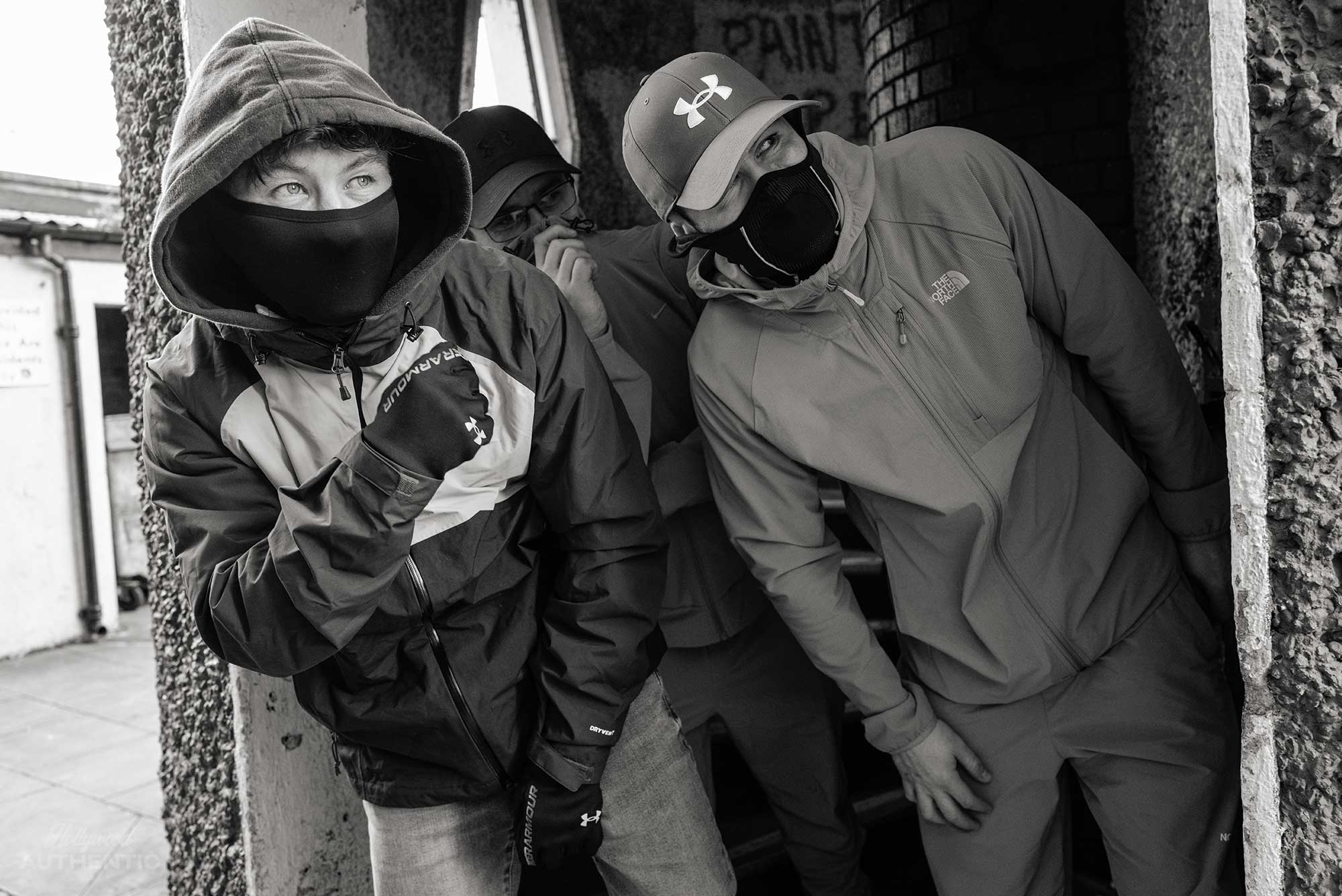
When we can tear ourselves away, Barry talks about the daft things he’d get up to as a kid and regales me with tales of mischief. We walk down a street that he tells me is infamous for shootings where local rule means that those not from there are not allowed. ‘You wouldn’t get in, Greg,’ Eric nods. I feel safe in their presence. ‘This street has a lot of history,’ Barry says. ‘Stephen Gately [from Boyzone] came up there, and Colin Farrell, Jim Sheridan, the filmmaker. The boxer Kellie Harrington, The footballer Troy Parrott – I mean, there’s loads of talent. I played football for Sheriff Youth Club.’ His friend, Taylor, knows Barry from those days. ‘We got to know each other through youth clubs,’ Barry explains. ‘We’re kind of similar but from different areas. But our mums passed early. So we have similar backgrounds, and we’re both into acting. We just stayed close. We’d stand there together on this tower, that I’m going to show you, at four in the morning, just talking about how proud our mothers would be, and just talking about ringing Colin Farrell…’ He later got to act opposite the fellow Irishman in The Killing of a Sacred Deer and The Banshees of Inisherin. Farrell has, he says, ‘always been there. Even now, through the tough times and good times. And so has Cillian [Murphy].’
The next day we travel to Nannie’s home, where he and Eric lived from the age of nine. Niall picks us up again and Barry tells me about their special relationship, which extends beyond Niall merely piloting his car. Having had a meteoric rise after a starmaking turn in Irish indie film Between the Canals in 2010, Barry went on to high-profile projects with storied directors: Yorgos Lanthimos’ The Killing of a Sacred Deer, Christopher Nolan’s Dunkirk, Bart Layton’s American Animals, David Lowery’s The Green Knight, Martin McDonagh’s The Banshees of Inisherin (which netted him an Oscar nomination for best supporting actor), Emerald Fennell’s Saltburn. He tore up the small screen in Top Boy and Masters of the Air and wowed Cannes with Bird. His career could not have been going better. And in his personal life he welcomed a baby boy, Brando, in August 2022. But Barry was privately struggling. He is open about his quest for sobriety. ‘Niall literally drove me and put me on a plane himself, came with me and brought me to the rehab in England. I went back to visit. It was nice to see the staff again, and for them to see the change in me. They were quite emotional about it. I’m forever grateful. When I say that Niall is the best, I mean it, because no one else put me on the plane, by the hand, literally got on the plane with me.’
This street has a lot of history. Stephen Gately [from Boyzone] came up there, and Colin Farrell, Jim Sheridan, the filmmaker. The boxer Kellie Harrington, The footballer Troy Parrott – I mean, there’s loads of talent
As we drive, Barry tells me about skipping school and the trouble he got into as a teen, the youth clubs that used to feed him and his brother when they’d missed meals at home. ‘It was a full circle yesterday, seeing that teacher come out from school,’ he admits. ‘But I don’t think acting got nurtured enough. When I said I wanted to be an actor, I wasn’t taken seriously. It was more like, “OK, we’re going to send you to study drama and all that.” I went, “But that’s not what I want to do. I want to do practical. I don’t feel you can learn acting.” And that was always the Plan B to them. They were like, “But what’s your Plan A?” I was like, “That is my Plan A. I don’t have a Plan B.” It was such a far reach for people to think of me being an actor.’
As a kid, living with his nannie after unstable years in and out of foster homes, Barry dreamt of acting while watching classics. ‘I’d watch these movies at my nannie’s at night-time like Cool Hand Luke and Marlon Brando movies. That was my way of learning behaviour from men. Because I didn’t have a father figure. I was looking at these men, and how they behaved. I was very fixated on how they just moved, and had composure. I didn’t have someone in the house showing me how to shave, or saying, “Don’t punch someone in the balls.” I had an uncle, Alan – he passed away. Heroin. He was my nannie’s boy. He was very present for us for a good few years. He was my mum’s brother. But he passed away. He was only 40. He had an overdose.’
Downstairs is the only bit of light I feel left here for me. It’s that bulb downstairs, which is my nannie and that
Barry’s grandmother lost three of her 10 children to drugs. His mother, Debbie, the second youngest, was tragically one of them. In the wake of that seismic event, Barry was a kid dealing with grief and poverty, looking for a way to act. He found it one day, in an ad in a shop window. ‘Kathleen’s is a shop where I’d seen my first acting notice,’ he explains as he urges Niall to drive to the shop. Standing outside, near to a statue in remembrance of those who have died from heroin, Barry shivers slightly in the crisp air. ‘I used to come from my youth club. My boxing club was there. So I came here, and I’d seen it. It basically said they were looking for non-actors. They were looking for kids who have scramblers and bikes. I took the number. I literally went and rang it up on my nannie’s phone. I remember the call saying, “Yeah, yeah. We’re just waiting on finance.” I was like, “What does that even mean?” I was just ringing it because you’d get paid 120 Euros. But I knew I wanted to try it. I was like, “I could be in a movie.”’
I’d watch these movies at my nannie’s at night-time like Cool Hand Luke and Marlon Brando movies. That was my way of learning behaviour from men. Because I didn’t have a father figure
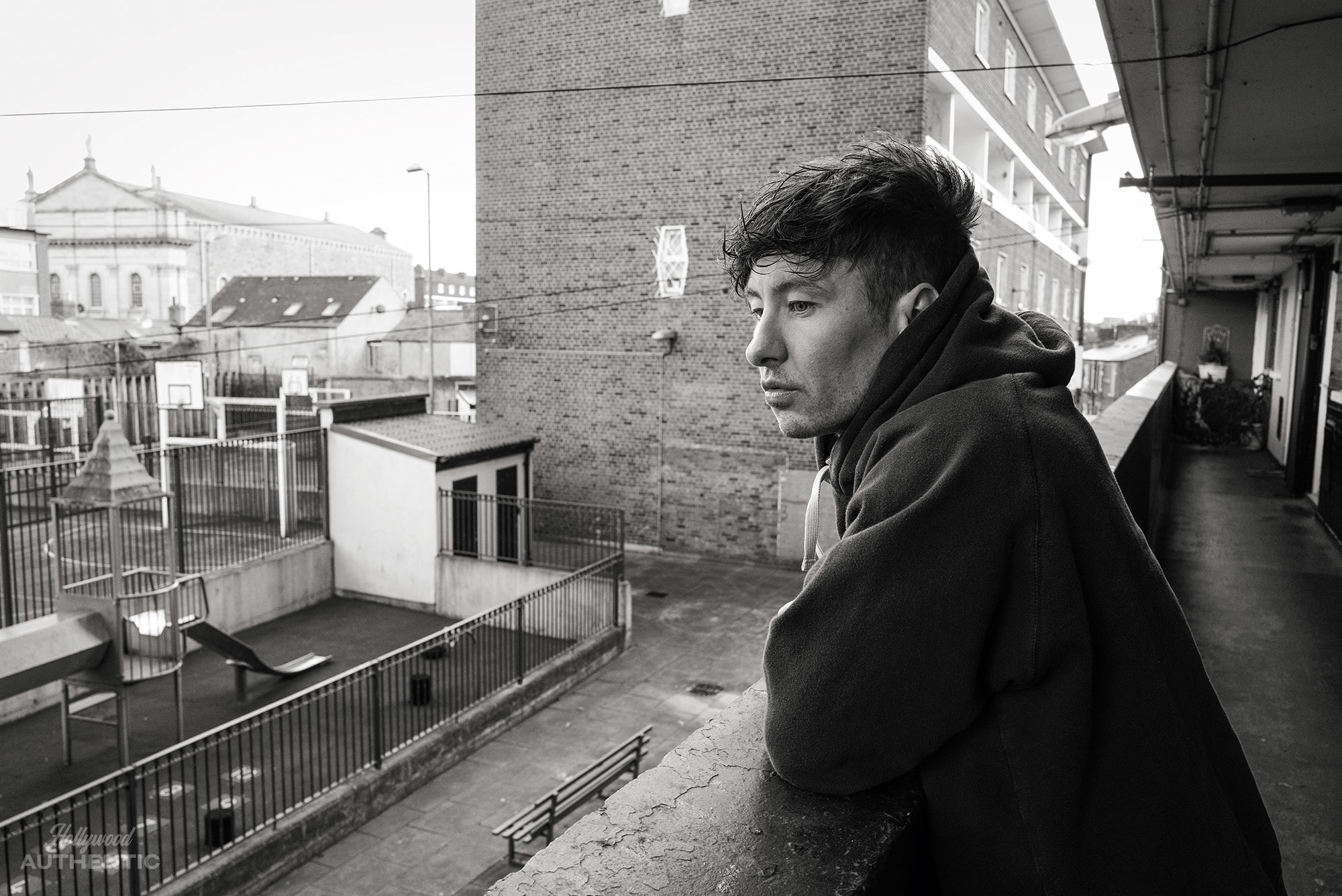
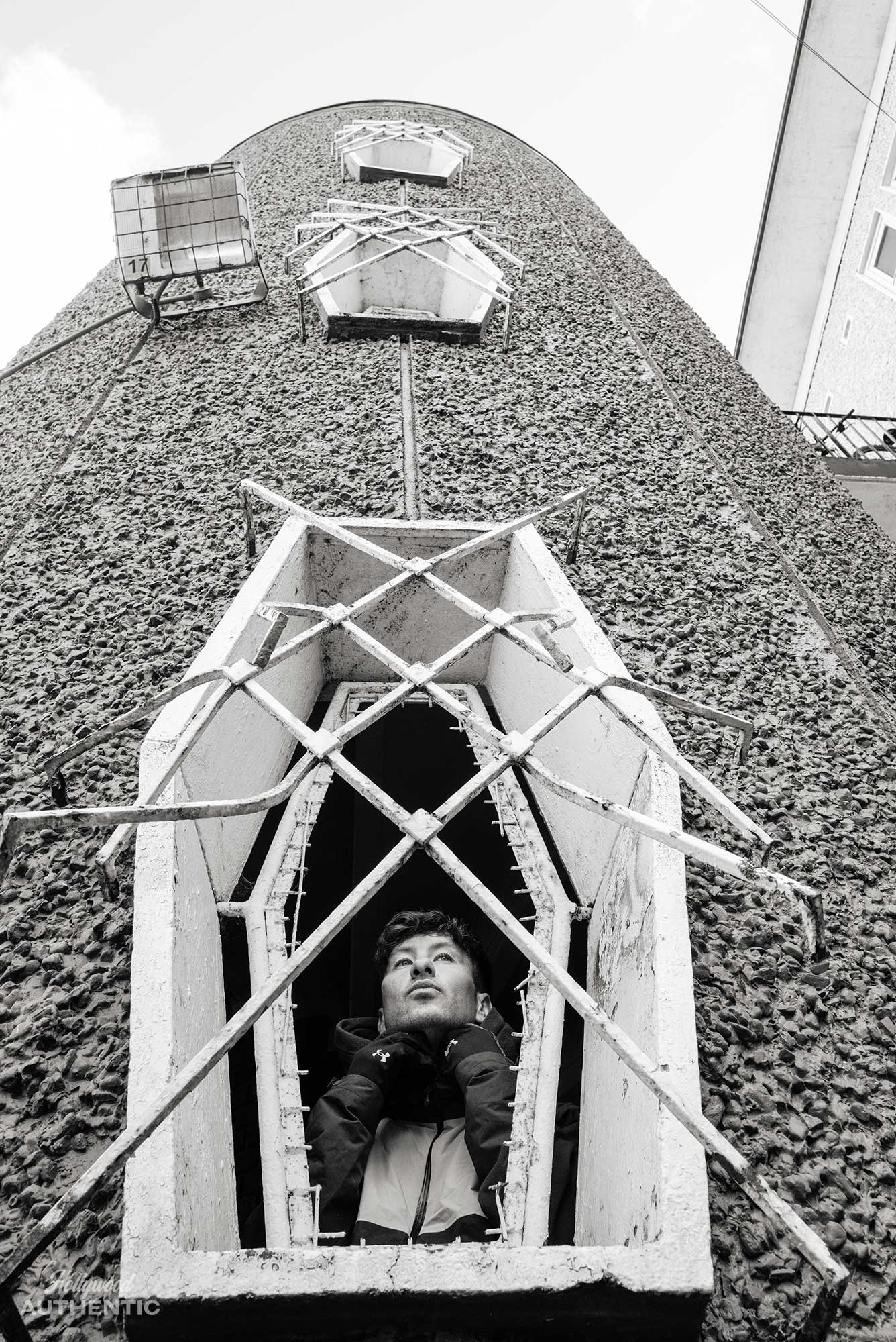
He got his wish. A role as a Sheriff Street kid in crime drama Between the Canals kicked off a career and eventually took him away from here. We travel on, past the chip shop, and a meeting with two local women who stop us to tell Barry all the news. We pass the youth club he, his brother and Taylor used to go to, the disused old folks’ home where they used to camp out, the house doors they used to kick, playing ‘knick-knack’ (a version of Doorbell Ditch or Knock Down Ginger); ‘We used to run along and kick every single door, and get chased.’ We arrive at the block of flats where they lived for a while. ‘Come on, into the tower,’ Barry invites as he ducks into a stairwell, a wide spiral staircase leading up to each floor of his block. ‘I used to look out here in the morning,’ he says, peering through a window across the city. ‘I sprayed my name here. Baz…’
We arrive at the boys’ nannie’s house where they are both greeted with delight and hugs. Barry sits next to his nannie to catch up on local gossip and she sings us all an Irish song to great praise, before he shows me round the flat. It’s a two-bedroom but at one time had 12 people living under the roof when the Keoghan brothers finally arrived after more than a year of social services vetting. Barry leads me upstairs to the room he used to sleep in. His aunt has handed him his mum’s diary, which she journalled in most nights in the days leading up to her death in 2003, after a period in rehab. He’s seen photos of it before but never held it. He opens it carefully. He reads some of the entries aloud from it. One reads: ‘Well, tonight went okay for me so I hope I have the strength to not touch anything tomorrow.’ It’s heartbreaking. ‘I got to read that at Christmas. I sent a picture to my brother, because he was in rehab over Christmas. I sent him that picture of her last page. I said, “Just look at that. You’ve got a chance now.” You can feel the pain in this.’
I got to read that [his mum’s diary] at Christmas. I sent a picture to my brother, because he was in rehab over Christmas. I sent him that picture of her last page. I said, ‘Just look at that. You’ve got a chance now.’ You can feel the pain in this
He looks around the room. ‘We had bunk beds. We had a PlayStation… I’d always leave that window open, because I loved the noise of all the fighting outside, and all the windows going through, and the fucking arguments you hear. That, for me, would be peaceful. Actually, I might stay here tonight.’ He calls down the stairs, asking if he can stay. His cousin, Gemma, who now lives in the room, shouts no, it’s her room. He laughs. His mum’s diary makes him think about addiction again. ‘I remember being kids here and hearing my mum scream through the letterbox, asking for us, while she’s battling addiction, while she’s looking for money to score. And we were just told to stay in bed. We weren’t to go down and hug her.’ His honesty and pain brings tears to my eyes and I tell him so. I can’t imagine my own child going through this.
‘I’m not in denial anymore. I understand that I do have an addiction, and I am an addict. You know, when you accept that, you finally can move on, and learn to work with it.
I apologise too, mainly to myself more than anything else for all the pain I’ve put people and myself through
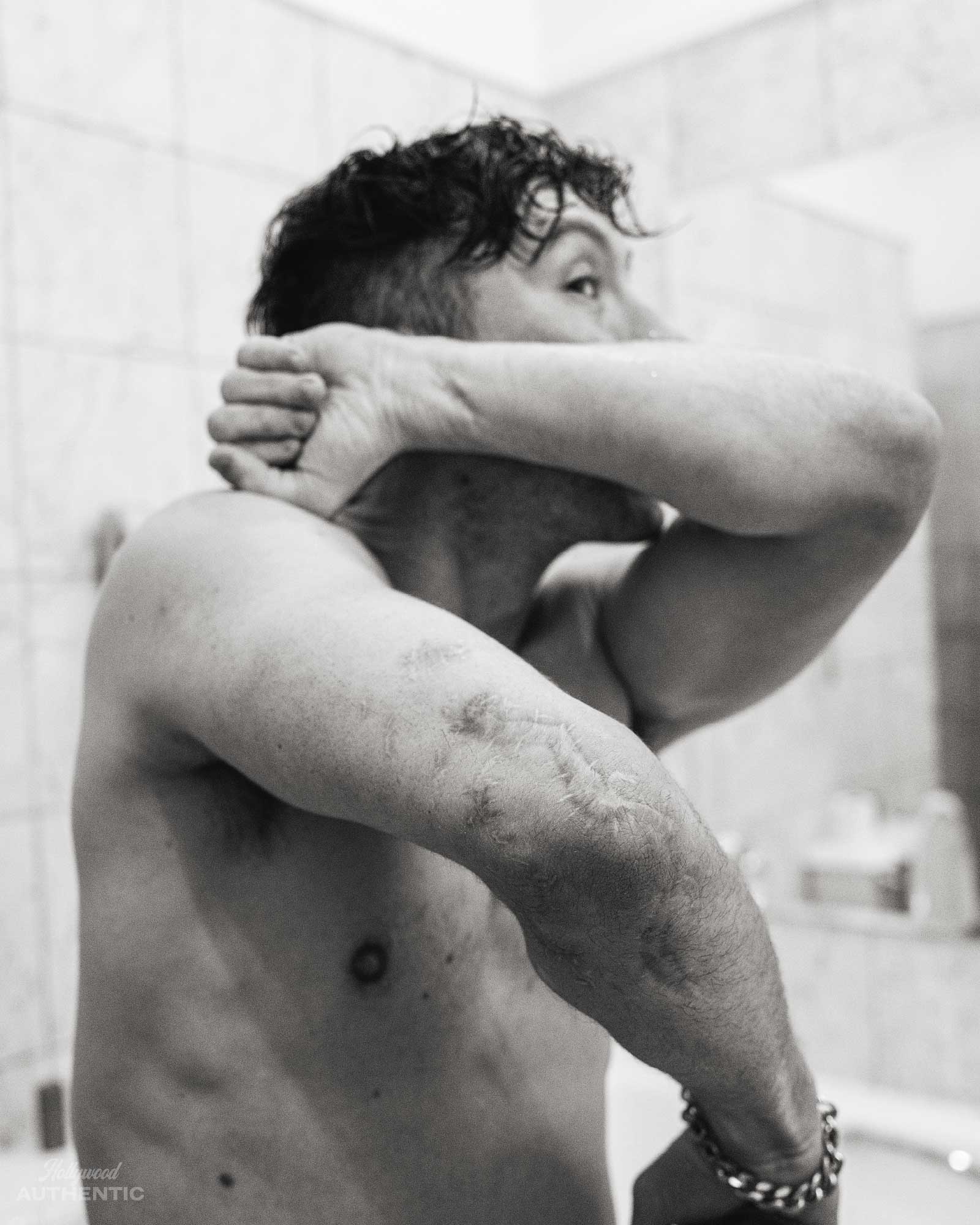
‘My father passed away as a result of similar and I lost my mum to it. I’ve lost two uncles and a cousin to drugs. That should be enough to go, “OK, if I dabble here, I’m fucked.” But your curiosity is a powerful thing. Sometimes it’s beneficial, and sometimes it’s detrimental. For me, it was detrimental. Even my own son coming into this world didn’t stop me from being curious. You know, you go to LA, you go to Hollywood, wherever the big scene is. There’s an enormous amount of pressure, and a different lifestyle that is good and bad for you. You’re around the scene. You just happen to be the one that ends up doing it.’ He pulls up his sleeves to show me marks on his arms from injuries sustained while high. ‘I’ve got scars here to literally prove it. They’re a result of using. I’m at peace now, and responsible for everything that I do. I’m accepting. I’m present. I’m content. I’m a father. I’m getting to just see that haze that was once there – it’s just a bit sharper now, and colourful.’ I tell Barry I’ve seen a huge change in him. ‘Thanks man. I feel like I’ve arrived. I apologise, too, mainly to myself more than anything else for all the pain I’ve put people and myself through.’
“Downstairs is the only bit of light I feel left here for me. It’s that bulb downstairs, which is my Nannie and that. But there’s amazing people around here who have suffered a lot… I just want people to get an insight into where I come from. I’m very proud to carry that, and for people out in the acting world and the industry to understand that there’s a lot weighing on this.’
He puts the diary away, carefully, reverentially, and we go back downstairs to the lounge filled with chatter and warmth. I ask Eric what kind of brother Barry was growing up. ‘We were partners. But when push came to shove, he would be my protector. He still is. I look to him as a father figure type of thing. And he’s helped me. When we were kids [social services] tried to separate me and Barry because no one wants to take two kids together. It was complex but they kept us together… We were inseparable for years. Even when it came to fighting. If one of us was fighting, the other person would be fighting as well’.
When I said I wanted to be an actor, I wasn’t taken seriously. It was more like, ‘OK, we’re going to send you to study drama and all that.’ I went, ‘But that’s not what I want to do. I want to do practical… That is my Plan A. I don’t have a Plan B’
Barry kisses his Nannie goodbye and we go outside to the balcony that runs along the flats, where he used to climb up when locked out of the main front door at the bottom of the building. ‘I’d climb onto other people’s balconies that had parties.’ He clambers over the side now for old time’s sake and tells me how everyone used to know where he lived from the green scuff marks on his trainers from scaling the green-painted railings. Everyone knows where he’s from now, greetings are shouted across the flats, balconies and from the street. ‘Baz’ from Summerhill waves back.
We head back out into the street, where Barry meets old friends, a long-lost cousin and kids he used to grow up with. They discuss their lives before we head back into central Dublin to the Cineworld Cinema where he spent many hours dreaming in front of the screen. ‘This is the main cinema I used to go to, on the mitch [ditching] from school. Every week. Like twice a week.’ He points out a side door where he used to sneak in, when he’d run out of money to pay. He backs up to the door, looks around, kicks the door open and dashes up the stairs to illustrate. Back in the day he got caught and was eventually barred. ‘I remember coming to the Dunkirk premiere, and getting in here, and them not knowing that I was in the film. They were like, “You’re not allowed in.” I said, “It’s my movie, though.” They were like, “No, no. You’re not allowed in.” It was a whole thing… It was just a turning point for me.’ He notes a poster featuring Robert Pattinson and an action figure of Chris Hemsworth as Thor in the lobby. ‘All the people in the cinema now, I know,’ he marvels. ‘I just worked with him,’ he says, pointing at Hemsworth.
I just want people to get an insight into where I come from. I’m very proud to carry that, and for people out in the acting world and the industry to understand that there’s a lot weighing on this
As we walk through the shopping centre, Barry is approached by fans asking for pictures. He gives them gladly. I ask at what point he felt he was truly an actor. ‘I think [aged] 24. Dunkirk and Sacred Deer. I was starting to really work with really strong filmmakers.’ Those experiences have shaped what he wants to make going forward. He’s currently prepping to play Ringo Starr for Sam Mendes’ quartet of Beatles biopics. ‘I’m trying to let my hair grow for The Beatles, isn’t it?’ he says. ‘I’ve been drumming for five months. I’ve got a lot of similarities to Ringo. You know, his story is absolutely beautiful. I felt he was always an outsider trying to get in, even with the lads. I can resonate with that. He always wanted approval, and – almost – to be loved. It’s heartbreaking, the script that I read. It’s gorgeous.’
He tells me that he always immerses himself in a character to prepare for a role, namechecking actors such as Daniel Day Lewis, Christian Bale, Marlon Brando and Ben Mendelsohn as artists he admires. ‘Now that I’m in a healthy place I can constructively go to places, creatively and artistically, in a way that I couldn’t before. I can leave it there and put it to bed rather than erratically reaching for some sort of raw emotion to bring to the screen and not knowing what to do with it afterwards. I always took it seriously, but now I’m able to really constructively go there, to a place that I’m at peace with. I’m constantly trying to elevate as an actor and to prove myself. I always say the only person that stands in my way – and this is for everything, not only acting or performances – is myself, when self-doubt creeps in. I put my own obstacles in place. No one else is responsible for me achieving or getting to a place of contentness or success. The only person that is responsible for that is me, and I’ve learned that in the course of sobriety.’
He’s also part of the cast of Crime 101, where he worked alongside Hemsworth, Halle Berry, Monica Barbaro and Mark Ruffalo for his American Animals director, Bart Layton. And in May, he’ll appear in Abel Tesfaye’s (AKA The Weeknd) psychological thriller, Hurry Up Tomorrow, inspired by the singer’s January-released album. Keoghan and Jenna Ortega will play characters orbiting a fictionalised version of Tesfaye as he struggles with fame, expectation and existential crisis.
‘I play Lee, his manager,’ Barry explains. ‘It’s taking The Weeknd, with his name and who he is, and looking into the life of Abel – the madness, the pressures. We’re getting an insight into an artist of his calibre, fame and stature. It’s not all glitz and glamour, or what it seems to be. It can even be a little tougher because you’re trying to remain private, and live up to this mythical name, and this legendary status, and you can’t show any weakness or any vulnerabilities. The film humanises him – and getting to work alongside him, I got to see him go to places that not a lot of people go to, or try to reach. It’s looking at what we can all relate to as not only artists, but as humans. But for anyone involved in the industry, we certainly will be able to relate to it. Definitely.’ Will it make fans think about how they interact with artists? ‘Yeah, artists and actors and musicians – we do have feelings.’ Working with a music phenomenon like Tesfaye must have also been great prep for playing Ringo. Barry laughs. ‘Definitely! Getting to hang out with him, and go over and eat dinner with him on Christmas Day, and to chill out, and then see the world and how they see Abel. And what I want to bring forward in playing Ringo is the humanising aspect. Have I met him? Not yet. I do plan on it. But he’s such a legend.’ He mentions how Starr accidentally announced that Barry was playing him before official confirmation was made. ‘That was such a Barry thing to do, letting that news out,’ he chuckles. ‘That’s why I think we’re kind of perfect in that world together.’ The proper announcement came at Las Vegas Cinemacon after we meet in Dublin. I ask Barry a few weeks later how the experience was of standing as the Fab Four on stage with Paul Mescal (Paul), Harris Dickinson (John) and Joseph Quinn (George). ‘We all had a moment backstage and it was so, so beautiful. It was such an exciting thing, to step out and be announced as The Beatles.’
For now, he’s wrapped on the upcoming Peaky Blinders film and flexing his producing muscles with his production company, Wolfcub, with his old friend and producer, Desmond Byrne. ‘It’s called Wolfcub, because Keoghan means “wolf cub” in Irish,’ he smiles. The company is co-producing a prequel to Top Boy, set in Dublin and opening up the background of the character he previously played in the show. ‘I felt the character had more to talk about, and more to say. To show you that these boys that you met today – just even one or two – they have charm, and they look innocent. But there’s an edge there, you know? I wanted to do that with the character.’ Wolfcub is also producing Billy the Kid with Ed Guiney, and a Manchester United project. ‘Ed Guiney’s Element Pictures, and Josey and Margot Robbie’s LuckyChap – they’re the sort of companies I want to follow, making good quality, really well-written movies with strong filmmakers.’
As we walk further we discuss social media – something Barry once embraced but has recently deactivated after a tough time in the court of keyboard warriors in the wake of his break-up with the singer Sabrina Carpenter. ‘There was just so much on social media that wasn’t real. You know, we’re all going to check it. Anyone that tells you that they don’t check or search their name – they’re just telling absolute pony. Because we do. Us, as actors, we want to know to a degree what’s being said, and reviews, and whatever. But I was just getting an awful lot of slander. I can deal with that, and I can deal with people attacking my life… and then just more came from it. There were people knocking on the door where my boy lives. There were people at my nannie’s house. I just found it very unfair. So I released a statement, and I came off Instagram.’ He smiles wryly. ‘For me, Instagram was a place where I was finding validation, and looking for that validation – false validation. Posting selfies and pictures of me in the gym. And I was like, “Why am I doing this?” I was searching for this dopamine hit that you get from sharing selfies. People appreciate you as an actor when they can’t really put two and two together, and they get more immersed in your roles, and they can lose themselves in your characters. They can’t go, “No, he does this from Instagram.” For me, it was getting that mystique back, and also not needing that assurance anymore from strangers. I find myself looking up more. I find myself involved in my work more. I find myself present and engaged more. And, certainly, people don’t have a judgement on me anymore because they’ve nothing to base it on, on Instagram. They meet you for who you are.’
We’re nearly at the end of our walk. The light is fading in Dublin and it’s time to return to the hotel. As we walk, we arrive at the 123 bus stop and he pauses next to it. He’s remembering something else. ‘So this bus stop – we used to wait here. It was two €2.20 to ride the bus. So I always leave €2.20 on my mum’s grave, even now. Because I used to go to an acting workshop on it. I’d wait long nights for that bus.’ As if manifested, the 123 rounds the corner, heading towards us, slowing down for possible passengers. Barry smiles. He won’t be taking this one…
Hurry Up Tomorrowis in cinemas from 16 May. Grooming: Charley McEwen at The One Agency
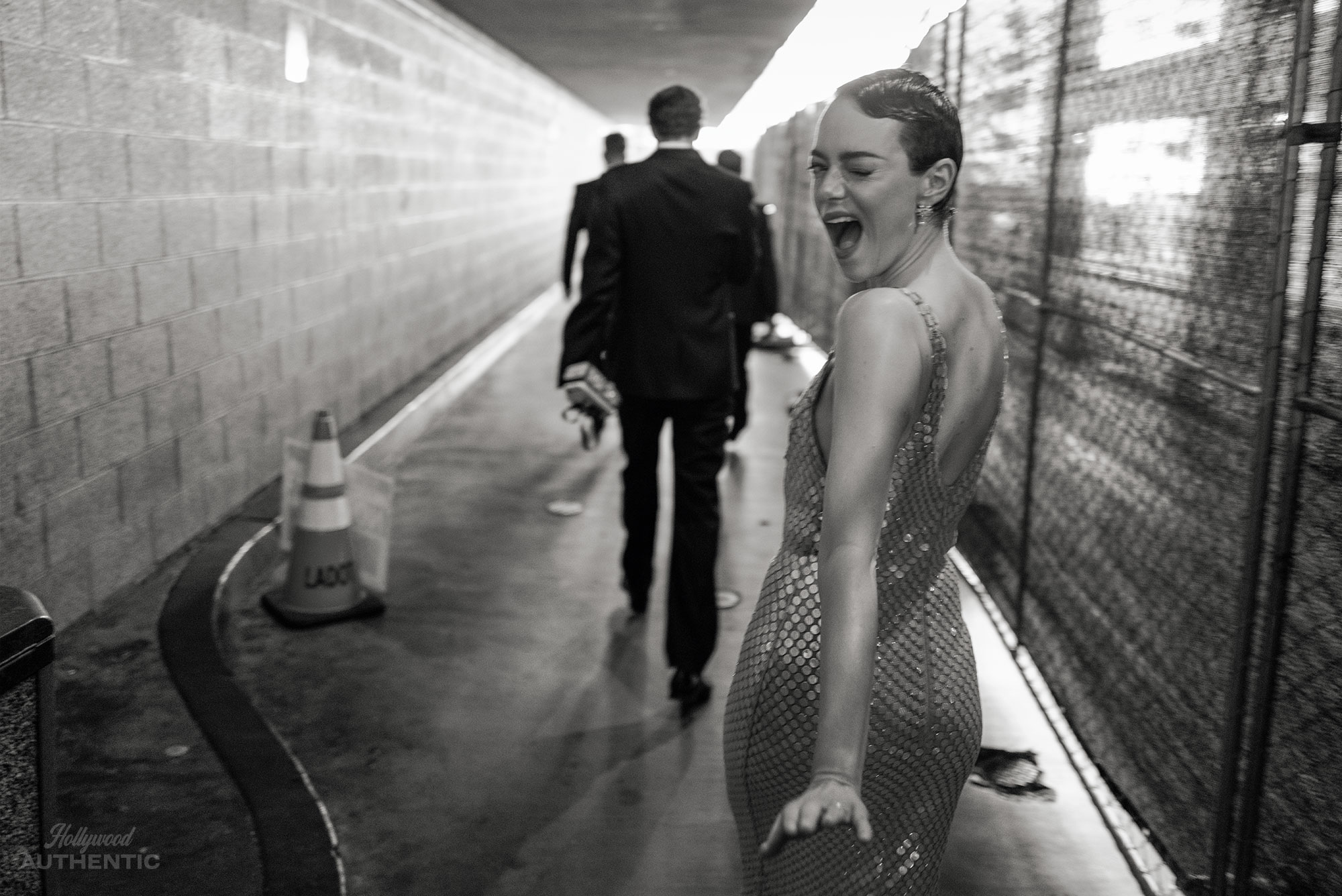
Greg Williams takes pause to consider the bigger picture on images seen small on his social media. This issue: Emma Stone on her way to present best actress at the 2025 Academy Awards.
This picture works for me on several levels. Firstly, its imperfections add to its authenticity. I love the grit of the dimly lit passage. The picture has motion blur and technically it is under-exposed. However, that only adds to its authenticity and drama – pin sharp and bright, I don’t think I’d like it as much.
Then we have the centre point perspective. It’s shot on a wide lens. Emma’s husband, Dave McCary, is walking in front and having him slap bang in the middle of frame creates the perfect centre focus point for the image. The walls to the left and the fence to the right create that vanishing point ‘zoom’ perspective around Dave.
I didn’t do any retouching on the image. Even the traffic cone to the left adds to the authenticity – if I was retouching, I’d have painted it out. Instead it gives a balance to the picture.
Lastly, and most importantly, we have Emma. It was a bit of a hurry to get her from her hotel suite, through a maze of corridors, lifts and kitchens to a back door where she was walking to eventually arrive at the Oscars red carpet. I simply called out for her to look back and I pulled a silly face and got this reaction. I just shot this one frame; I wasn’t even looking through the camera, I just got lucky.
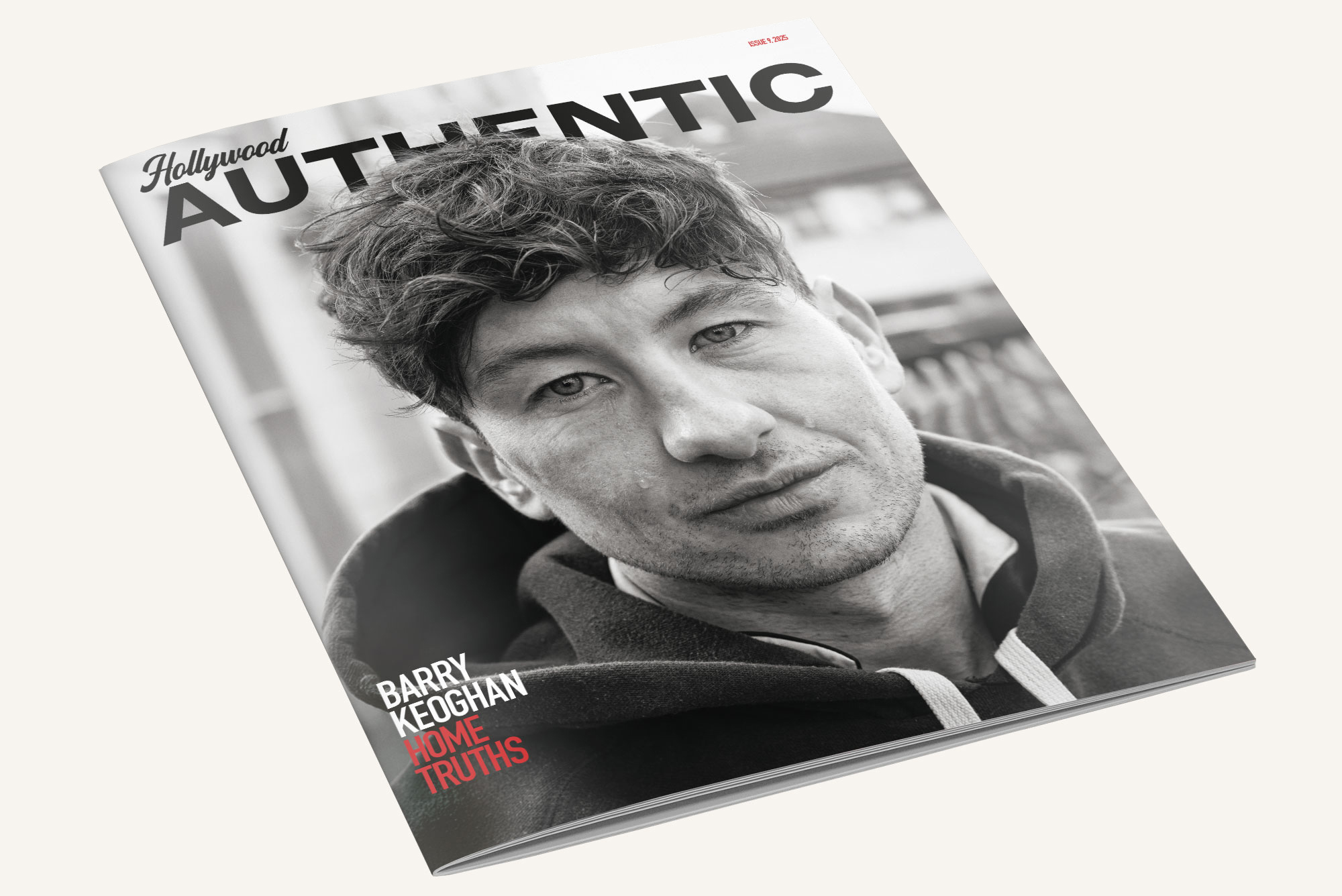
Years ago – before Banshees or Saltburn – Barry Keoghan came to my studio and we started talking about photography and us working together. I asked Barry about his start and he told me the story of his difficult beginning in Dublin. It was heartbreaking and vital. I told him, ‘That’s the story I want to explore with you.’ It’s taken several years of back and forth to get to the point of us both flying into his home town and taking a trip around memory lane with him for the unflinching cover story you’re about to read.
Not all the memories are good. But Barry was generous in opening up to me about his family life, the loss of his mother to heroin, his addiction and his sobriety as we returned to the homes he’d lived in and the streets he’d played in. This was raw, unfiltered recollection and for me, is a truly authentic tale that connects my photo-journalism roots with my work in entertainment more than any other I’ve done. This is a story of rising: how does someone start with every excuse in the world not to succeed and then excel?
Barry’s vulnerability and honesty about pain, and his ability to channel that and bring it to the screen, is what makes him such an incredible actor – and it’s what costs him every time he performs. The bravery to feel is something that links all the subjects of our photo stories this issue.
Douglas Booth talks about dyslexia and the cost of acting for him in contrast to his wife, Bel Powley. Kaia Gerber allows the darkness she sometimes feels in, so that she can access a character on stage. David Oyelowo discusses what the actors he admires give to roles and the sacrifice required as a Black actor from a small country like the UK. It’s this humanity that makes them all connect to audiences, and makes them fascinating individuals to shoot.
Elsewhere in the issue, Havoc director Gareth Evans talks about the detail Tom Hardy puts into characterisation. Costume designer Ruth E. Carter discusses the dedication and vision needed to rise to the position she has reached as a history-making Oscar winner (and the doors she has opened for others). And photographer Mark Read captures one man’s temple to his own success in an LA building that holds numerous movie memories in its walls. All are testament to the power of graft and taking chances. As Oyelowo says, ‘The difference between good and great is hard work…’