

December 10, 2024

Nicholas Hoult takes Greg Williams to the races.

Words by STEPHEN BOGART
As told to JANE CROWTHER


Humphrey Bogart’s son with Lauren Bacall, Stephen, gave his blessing to writer-director Kathryn Ferguson’s documentary Bogart: Life Comes in Flashes which charts his father’s career and legacy via the instrumental women in his life; his mother and his four wives.

As the co-manager of the Humphrey Bogart Estate, you don’t want people to run roughshod over the image of someone who has been historically at such heights. I’m not famous, but my father was famous and somebody’s going to try to screw you over. They’re going to try to do stuff that you probably don’t want to have done. This has not been my life’s work, but it’s been important to me to do that. And in order to do that, you have to do trademarks. You have to do licensing. You have to do that legally. Or else it just goes to the public domain. So it’s a double-edged sword. You really have to do it, even if you don’t want to.

bogart: life comes in flashes, humphrey bogart, stephen bogart, universal pictures
Maud Humphrey and Humphrey Bogart © Image courtesy of Universal Pictures

The estate gets a lot of requests and if the request was going to be the cookie-cutter bio of ‘movie, movie, movie, movie, movie, meets Betty [Bacall], movie, dead’ I wasn’t interested. I voiced one of those [Bogart: The Untold Story, 1997) before, and my mother did Bacall on Bogart for PBS. But the way that Kathryn [Ferguson] proposed us doing it was totally different from any biography I’d seen on anybody. And there aren’t many people who had a succession of women in their lives who have affected them so specifically. It was so incredibly different. And it turned out to be really spectacular. I am not a complete expert on my father at all. I worked for CBS and Court TV and NBC. I’ve been working my whole life – not at this. I never thought about his relationship with his prior wives [stage actor Helen Menkin, film actors Mary Phillips, Mayo Methot and Lauren Bacall]. So all of that was new to me. 

Some of it was not new – like the footage I am in as a child [8 year-old Stephen is seen attending his father’s star-studded Beverly Hills funeral in 1957]. I remember, I had my hand over my face when I’m walking out of the funeral because I’m blocking it from the photographers. I’m not crying or anything. But I don’t remember during the funeral. I don’t even know if I remember that part, but I remember it because I’m seeing it on video. 

bogart: life comes in flashes, humphrey bogart, stephen bogart, universal pictures
Humphrey Bogart © Image courtesy of Universal Pictures

I’ve been my father’s son for as long as I’ve been born, obviously. So I’m used to [the idea of having famous parents]. My friends were just friends. They may have been Liza [Minelli], Sammy Cahn’s kid Stevie… these were the people I hung around with, but they were just friends. I was just a normal kid. I only realised my parents were famous when I went to my father’s funeral – all those people, and all the press. Then all of a sudden it was over, and stuff started to happen. My whole life changed. We moved and lived in England for a while, and we moved back to New York. I had three dogs and a cat – and no more. We got rid of the dogs. We got rid of the cat. We got rid of the house. We got rid of the school. We got rid of the state. And we moved to England, and got rid of the country. And then we came back to New York. There were a lot of losses along the way.

It was annoying [to be known as the son of Humphrey Bogart] as a teenager, in my twenties, my thirties… It’s even annoying now! I would not introduce myself using my last name, because then I wouldn’t have to deal with: ‘Oh, are you…?’ But my close friends know who I am, and they know all of this, but they don’t care. That’s what’s most important.

bogart: life comes in flashes, humphrey bogart, stephen bogart, universal pictures
Lauren Bacall © Image courtesy of Universal Pictures

My parents were probably one of the top five couples of the 20th century. You’ve got the Kennedys. You’ve got Edward and Wallis Warfield Simpson, and you’ve Charles and Di. They were right up there with these in terms of fame. So I think they just went through life knowing that. They went through their 12 years together knowing that. They stood out. But they always put their marriage first.

My father loved to sail [on his boat, the Santana]. I was not allowed to go on the boat until I could swim. I’d go down to the boat, and I’d be on the boat while I was in the dock, before he went out. It sank in San Francisco Bay, and a guy pulled it up, and fixed it up. He didn’t really change it. So I went on it then, when I wrote my book [Bogart: In Search Of My Father]. There’s footage in the film of me on Satana but I don’t remember this stuff. That’s the thing. I see it, and I say, ‘Oh, I did that. Yeah, I can see that’. But there’s no visceral memory of it within me. That’s a strange thing.

bogart: life comes in flashes, humphrey bogart, stephen bogart, universal pictures
Humphrey Bogart and Mayo Methot © Image courtesy of Universal Pictures
bogart: life comes in flashes, humphrey bogart, stephen bogart, universal pictures
Mary Philips and Humphrey Bogart © Image courtesy of Universal Pictures

I don’t know what my father would think of the movie because it’s not all hearts and flowers. It takes a somewhat negative – especially by today’s standards – view of him. But he was tremendously proud of his work, and he loved his work. He loved making movies. That was what was most important to him. And making a living! He liked money – he liked the nice house, the nice boat, the nice car, and all that. 

Did I ever consider following in my father’s footsteps? I’m not an idiot. Can you imagine becoming an actor, and having to live up to that hype? No way. Plus I’m not very good at it. My parents made me do it. They made me be in plays when I was in middle school. I played Bianca in The Taming of the Shrew in an all-boys school. And I played General Snippet in The Mouse that Roared, but I’m not very good, and I don’t really like being someone else. It’s not my thing. Although if [Bogart] had lived longer, who knows? I don’t know that he would have encouraged me. I might have gravitated to it just because you’re in that milieu, so why not?

bogart: life comes in flashes, humphrey bogart, stephen bogart, universal pictures
Katharine Hepburn and Humphrey Bogart © Image courtesy of Universal Pictures
bogart: life comes in flashes, humphrey bogart, stephen bogart, universal pictures
Helen Menken © Universal Pictures

I have no idea why my father continues to fascinate us. If I did, I’d be selling it, and I’d be a billionaire! It’s inexplicable. People have asked me that all the time. Yeah, he died young, and he was a fine actor, but even he says he didn’t know how he ended up the way he did.

He’s a movie star to other people but my father to me. When I think of him it’s in a sports coat. I think of him on a boat. He was around for such a short time in my life. I didn’t know who he was, which is why I wrote the book, and why we did the documentary.

bogart: life comes in flashes, humphrey bogart, stephen bogart, universal pictures
Humphrey Bogart, Lauren Bacall and Stephen Bogart © Image courtesy of Universal Pictures

Words by STEPHEN BOGART
As told to JANE CROWTHER
Bogart: Life Comes in Flashes is available on digital download now

December 6, 2024

amy adams, arleigh snowden, marielle heller, nightbitch, scoot mcnairy

Words by JANE CROWTHER


You don’t have to be a parent or have been part of raising a child to feel the vibes of Marielle Heller’s adaptation of Rachel Yoder’s novel. But anyone who has ever played the hundredth mindnumbing toddler game in a day, cleaned up ankle-biter messes on rinse and repeat or prayed that the little darling goes to sleep in hour four of lullabies will feel seen watching Amy Adams, as an unnamed mother, lie facedown and aghast on the carpet of her living room while her child jumps on her. 

Following the internal monologue of our nameless protagonist, Nightbitch introduces us to a woman who used to identify as an artist with a vibrant life in Manhattan and now struggles to find a clean shirt in a daily suburban routine of caring for her child while her sweet, feckless husband (Scoot McNairy) works away during the week. Heller depicts this as a relentless, machinery hum of monotony – the same hash browns for breakfast, the walk to the park, the fraught bathtime, the wind-down routine, the sleepless nights. The Mother dreams of shouting her real thoughts at former colleagues she meets in the supermarket who ask ‘Don’t you just love being a Mom?’, of running away from the sunny mums she meets at baby book club, of ripping her husband’s throat out when he returns to complain about his room service and tell her that ‘happiness is a choice’. Which is when a pack of dogs start showing up at the Mother’s door, when she starts to grow hair, likes eating a raw steak, when a nub protrudes from the base of her back like a tail… Is the Mother becoming something else?

With its flirtation with body horror (pus-filled sores are poked with needles), transformation and society’s rigid view of ‘good’ women, Nightbitch shares similar themes with The Substance. Tonally though, it’s a gentler rage against the machine. Fans of the book will perhaps feel that a certain cat incident lacks, ahem, bite, while the ferocity of Yoder’s societal critique is softened. But while the satire might be less savage, the commitment of Adams is not. In a truly vanity-free portrayal, she sticks the landing of playing a believable messy woman trapped in a maternal Groundhog Day and wracked with guilt for having wished for it. And when she’s digging into the back garden earth, nose pressed to soil and nails seamed with filth, she’s a feral, joyous creature that you’ll want to run the streets with. 

Though it wants its doggy treat and to eat it, Nightbitch is nevertheless another encouraging step towards a world in which every type of woman and female experience is represented onscreen – and will certainly play like gangbusters at mother and baby screenings.

amy adams, arleigh snowden, marielle heller, nightbitch, scoot mcnairy

Words by JANE CROWTHER
Nightbitch is in cinemas now

December 6, 2024

cate blanchett, charles dance, evan johnson, galen johnson, guy maddin, nikki amuka-bird, rumours

Words by JANE CROWTHER


Cate Blanchett and Charles Dance lead an ensemble cast as the fictional German Chancellor and POTUS in Evan Johnson, Galen Johnson and Guy Maddin’s political satire, Rumours. They tell Hollywood Authentic about night shoots, AI fears, outlawing pineapples and tall poppy syndrome.

What happens when the seven leaders of the richest democracies in the world walk into the woods together…? Sounds like the start of a joke, and in the hands of trifecta writer-directors Guy Maddin, Evan Johnson and Galen Johnson it is. An absurdist satire that follows the fortunes of the world leaders at a G7 summit when their staff suddenly disappear leaving them defenseless and vulnerable, Rumours takes in masturbating bogmen, AI ChatBots, a giant brain the size of a car and woodland trysts as the group tries to reach civilization. It was a Cannes Festival hit earlier this summer and Hollywood Authentic sat down to chat with the actors at the heart of the film: meet German Chancellor Hilda Ortmann (Cate Blanchett), American president Edison Wolcott (Charles Dance), British PM Cardosa Dewindt (Nikki Amuka-Bird), Canadian Prime Minister Maxime Laplace (Roy Dupuis), PM of Italy Sylvain Broulez (Denis Ménochet) and Italy’s leader Antonio Lamorte (Rolando Ravello)…

cate blanchett, charles dance, evan johnson, galen johnson, guy maddin, nikki amuka-bird, rumours

What was it like shooting for 23 nights in the woods?

Cate Blanchett: Honestly, when Guy approached me about this, I thought we’d be shooting in Winnipeg and I’d be in his lounge room, or in some sort of mocked-up soundstage. And all of a sudden, we were in a forest in Budapest doing five weeks of nights. It wasn’t what I expected. I’d never done that many night shoots back to back. But there’s something kind of magical about it because you are on a time that only we understand. You wake up at 2 in the afternoon. 

Nikki Amuka-Bird: We definitely understand what it’s like to overcome your fatigue, and the characters are kind of delirious. We were getting more and more delirious as it goes on. It was very useful in that way.

Delirious is how you might describe the movie itself…

Charles Dance: It’s not a Marvel picture. Guy Maddin really is an arthouse director but this is not purely an arthouse film.

Nikki Amuka-Bird: I find it quite hard to express, in a linear way, what the story is about. I start with the G7, and then say: from there, it goes on to become this enormous, surreal, endless nightmare. What’s so great with Guy and the boys is that they’re not afraid to play with genre. It’s a bit horror, it’s a bit satire, it’s a bit zombie movie. It defies expectations.

It’s apocalyptic – do you think that’s the movie we need right now when we’re talking world politics?

Denis Ménochet: Not really. There’s a lot of good things in the world still. There are good people I know, and good things. I don’t want to think like that because otherwise you don’t enjoy yourself. No?

Nikki Amuka-Bird: I’m embarrassed to say that I’m an eternal optimist. Yeah, there’s a lot to be afraid of at the moment. It seems like an omni-crisis. But I do have this kind of faith in humanity at the end of the day to somehow turn itself around. I think that’s what we’re looking at in the movie. What if you’re only left with that fear and confusion? How does that evolve, and where does that end up?

Cate Blanchett: Yeah, and what happens when all of the signifiers of your life, and your position, and your relationships drop away? And then suddenly you’re in a gazebo, and you don’t know how long you’ve been there. It’s a bit like A Midsummer Night’s Dream. They’ve suddenly all gone. It just suddenly changes, and you’re in this altered state.  Look, I think somehow, now, the setting and the atmosphere and the tone and the image that they finally look out on seems much more possible than it did 15 years ago. It’s important to look at those things head on. But sometimes if you talk about them in a head-on way, you lose an audience. How do you use the collective anxiety and despair that any thinking person – apart from Denis – is feeling? But also invite an audience to laugh at it, and feel like they could go out slightly refreshed and more purposeful? And if it makes them talk about those things, I think it’s fantastic. It did feel more and more like a documentary.

cate blanchett, charles dance, evan johnson, galen johnson, guy maddin, nikki amuka-bird, rumours

Are you an eternal optimist like Nikki is?

Cate Blanchett: I think I’m probably an optimistic pessimist. You know, plan for the worst, hope for the best. I don’t like making fun of the state of the world. I love the world. I don’t think what we’re doing to the planet is at all amusing. I don’t think systemic, fiscal inequality is at all amusing. But you can satirise it, and invite people to see it and talk about it. That’s what I love about cinema. It asks you to engage in the world of someone else’s invention, and to imagine a way into different storylines. It’s expansive as an audience member, and I certainly find that as an actor.

Charles Dance: I despair with politics, really. The worst thing that happened, of course, was that [Britain] decided to leave the European Union. It was one of the most depressing days in the history of my country. But I didn’t look at this script politically, actually, at all. For me I thought this was a cross between Luis Buñuel and an episode of Monty Python’s Flying Circus. And I’m a fan of both of those things. It’s why I wanted to do it. 

Rolando Ravello: For me, I think that an actor or a director or a screenwriter has the possibility to come up with a way of thinking for people. For me, it’s an occasion to speak with other people – only speak without judgement. To only speak to reflect. This is important for me.

Cate Blanchett: I feel like this is as much a comedy or a satire or a tragedy as it is an episode of Scooby Doo. I’ve never seen the current state of affairs played out with that particular tone.  It’s a zombie movie and it’s a Mexican soap opera. And that’s what I was so interested and curious to see what an audience would make of it, because we were discovering the tone as we made it. Guy [Maddin] has always had a unique perspective that’s really playful and wicked and naughty, but also soulful and yearning and so full of self-reflection. It’s almost like a parallel reality that is able to speak, in a way, more truthfully to the environment that we sit in because he’s been so outside of mainstream cinema. If you haven’t seen The Green Fog, I highly recommend it. It’s astonishing.

Roy Dupuis: I had worked with Guy before, and he gave me the two most extraordinary shooting days of my career. It was like being a kid, and doing some sketches in my basement. This shoot was completely different. It was a big production, and very well-written. But there’s one aspect of the movie that kind of gets my interest. It’s the fact the world is changing very quickly, because of – mostly – AI. We hear a lot about it. I’ve been aware of that for the last 10 years, and that’s one aspect that I found interesting.

cate blanchett, charles dance, evan johnson, galen johnson, guy maddin, nikki amuka-bird, rumours

Does AI worry you?

Cate Blanchett: I don’t think we’re going to ever replicate the truly human, because we’re mortal, and that’s what gives us all our activators and all of our understanding and struggle with the world in which we live. That’s why all those middle-aged billionaires are trying to go to Mars, because they’re not confronting the fact that they too shall die, and AI doesn’t have that knowledge. It could replicate a synthetic understanding of that, but it doesn’t have it. I think it’s a huge threat. I was really grateful to the actors’ strike for many reasons, but for bringing that AI conversation into the mainstream. This touches on it, but it’s not a film about AI. But people might step out of the cinema talking about it.

Charles Dance: There were so many extraordinary advances in the last hundred years, far more than there’s been in the last thousand years. Suddenly, we as a species, we’ve yet to learn the law of cause and effect. We think, ‘Yes, we can do this. We can do this. We can do this’. Every now and again, somebody says, ‘Yeah, but what if we do?’ You know? I think that  question that needs to be asked very, very loudly with AI, because it’s incredibly powerful. 

Roy Dupuis: I personally think it’s going replace a lot of jobs, but making movies with real people is going to become precious, also. But I think it will happen. It’s really hard to stop.

Charles Dance: Years ago, I voiced a character in a cartoon. There was a comic in England called the Eagle, and one of the strips in it was a space thing. I went in to voice one of these characters. As I was going in, Albert Finney – bless him – was coming out. He saw me, and he said, ‘The writing’s on the wall, kid’. 

What was it like working with three directors?

Denis Ménochet: It was like a little lab behind the video village. When you asked a question, they would talk about it a little, and then come back to you. It was really amazing with three directors. And Guy Maddin’s sense of humour and dryness is amazing.

Charles Dance: There’s different kinds of directors who try to put performances in, and there’s directors who try to bring performances out. I prefer to work with the latter, but it depends on how good they are. The film industry is not populated completely with wonderful directors. There are some who don’t know their arse from a hole in the ground, in the same way there are actors who really don’t know what they’re doing. But these three managed to create an environment in which we were encouraged to contribute, which is a very healthy way of working. 

Nikki Amuka-Bird: It felt like you could speak to any one of them – you could ask any one of them any question, any time, and they’ve got an answer for you, and they know how to connect with each other. So it was really easy.

cate blanchett, charles dance, evan johnson, galen johnson, guy maddin, nikki amuka-bird, rumours

How did you find your characters, did you base them on anyone?

Cate Blanchett: There’s so few examples of female leadership but there’s certain signifiers for what represents a powerful woman in politics. There’s an iconography to it, and the gestures, and the way the men use it, and the way women have to use those male gestures. You can just see them being coached. They’re so separated from themselves, and the more they live a public life and speak in public, their voice changes. So there was a construct and an artificiality to them as human beings, in a way that I felt that the further they went along, the more human they became. I think we as citizens of our various countries are culpable for creating leaders as part of our societal ID. 

Charles Dance: We purposely didn’t push it in any direction. I guess if somebody sees a parallel in that with me and Joe Biden, then fine. OK. But that wasn’t in my head at the time.

Roy Dupuis: I looked at the archive videos that Guy and Galen and Evan sent us, just to see the body language.

cate blanchett, charles dance, evan johnson, galen johnson, guy maddin, nikki amuka-bird, rumours

What laws would you pass if you took on the role for real?

Cate Blanchett: No pineapple. There’d be no pineapple in Germany. I would outlaw pineapple. I don’t know!

What do you think world leaders will think if they see the film?

Cate Blanchett: I think any leader worth their weight in salt has a sense of humour about themselves. When you lose your sense of humour about yourself and your position…

Did playing these roles make you think about the corruption of power?

Denis Ménochet: It’s very isolating to have too much power, because then you change, and then you have no discernment, and everyone will say yes to you. I think it’s a lonely thing to have power. That’s how I feel.

Cate Blanchett: I think with power, we build people up. We build people up to tear them down. We’ve done that for millennia. I think it’s not only that you might change, but people might change in the way they deal with you.

How do you deal with being built up?

Cate Blanchett: My very first time in Cannes, I was in a very small Australian film in the marketplace, and I literally had bruises on my ribs from being elbowed out of the way to get to whatever movie star was there. And then I was back two years later with a film, being walked down with basically gladiatorial horses, and watching these other people being elbowed. It was so surreal.

Does that experience keep you humble?Cate Blanchett: It tells you how the whole thing is a hall of mirrors. It’s so weird. We are really a weird species. And I think that’s what Guy and Evan and Galen are leaning to – it’s the human insanity.

cate blanchett, charles dance, evan johnson, galen johnson, guy maddin, nikki amuka-bird, rumours

Rumours is in cinemas now


November 28, 2024

conclave, isabella rossolini, john lithgow, lucian msamati, ralph fiennes, stanley tucci

Words by JANE CROWTHER


On paper, Conclave does not sound like a thrilling and slyly comedic drama. Adapted from Robert Harris’ novel, it’s a film that revels in the minutiae and pedantry of pomp and ceremony. In Vatican City, the Pope has departed for the pearly gates, prompting church cardinals from around the globe to gather in their conclave and vote for a new pontiff in a specific and antiquated way. That means camping out in the Sistine Chapel and repeatedly casting votes for their favourite man until a majority decision is reached, for as long as it takes and as the world watches. A sort of Big Brother scenario with rosary beads. 

But in the hands of screenwriter Peter Straughan and director Edward Berger, the repetitive process becomes a ticking timebomb, an intrigue and, yes, a thriller via deliciously tart dialogue, smart editing and an unexpected score that reveals the universal in the specific. The admin of the Catholic Church is rendered as a showcase for many of the deadly sins as the ambitious cardinals bicker, showboat, covet and envy in their bid to become His Holiness. The elegance of that presentation is matched by an ensemble of divinely talented actors.

conclave, isabella rossolini, john lithgow, lucian msamati, ralph fiennes, stanley tucci

Ralph Fiennes is our point of entry into this hidden world as Cardinal Lawrence, a logistics man in the Vatican who organises the religious voting and sleepover in the midst of suffering a crisis of faith. This, points out Stanley Tucci’s liberal contender Bellini, is what makes Lawrence a credible competitor to the throne. Certainly, Lawrence seems a better option than hard-line traditionalist Tedesco (Sergio Castellitto), obsequious Tremblay (John Lithgow) or nakedly ambitious Adeyemi (Lucian Msamati). But as the voting begins and factions and secrets are revealed, the race takes an unexpected turn when an outsider takes the lead. And, as the men of God plot and whisper, pray and pontificate, they are watched by Sister Agnes (Isabella Rossolini), a nun whose army of sisters provide their every need – including some home truths.

conclave, isabella rossolini, john lithgow, lucian msamati, ralph fiennes, stanley tucci

It’s as delicious to watch what isn’t said by such accomplished actors as what is. The curtsy Rossolini executes speaks volumes, as do the constantly-moist eyes of Fiennes as he wrestles with humility and power, the jagged weeping of a cardinal stripped of the big job, the swirl of Castellitto’s theatrical cape. But when they do talk (in brutalist bedrooms, shadowy stairwells, a crimson auditorium) the running time speeds by on amusing moments, plot twists and a finale that is both bombastic and subversive. A movie that engages heart and mind without overstaying its welcome and is a savage piece of cultural observation wrapped in red velvet vestments. Heavenly.


Words by JANE CROWTHER
Conclave is in cinemas now

November 21, 2024

Ariana Grande, Cynthia Erivo, Jeff Goldblum, Jon M. Chu, Michelle Yeoh, Wicked

Words by JANE CROWTHER


That Stephen Schwartz’s hit musical adapted for the big screen would please Ozians was never in doubt. Debuting on Broadway in 2003, Wicked was a musical touchstone for audiences embracing the outlier characters as well as themes of female friendship and being your best bad self. Adapted for cinema by screenwriters Winnie Holzman and Dana Fox, and directed by In The Heights helmer Jon M Chu, it’s a story steeped in film history and designed for cinematic scale – pushing the lurid world of Oz beyond the confines of a theatre stage. So big they split it in half, with part 2 coming next festive season, and a winter release date that lands it right in the middle of awards season like a beautiful pink bubble coming to rest in Munchkinland.

Ariana Grande, Cynthia Erivo, Jeff Goldblum, Jon M. Chu, Michelle Yeoh, Wicked

For non-Ozians then, the premise: a prequel to the 1939 interpretation of L Frank Baum’s book, Wicked charts the key moments that turned two schoolgirls from frenemies to besties and onward to battling witches of the North and West. An origin story, it asks the question whether anyone is born bad or merely formed by circumstance or shaped by myth and media. Opening with the death of the Wicked Witch Of The West (a puddle and that recognisable hat), sugary pink Glinda (Ariana Grande) tells the munchkins that they are now safe and also the story of their friendship. As students at Shiz academy presided over by sorceress Madam Morrible (Michelle Yeoh), spoilt, disingenuous Glinda is roomed with green newcomer Elphaba (Cynthia Erivo), a hurt outcast who is rejected by her father and harbours a telekinesis power that is unleashed by rage and sense of injustice. Both girls fall for vapid Fiyero (Jonathan Bailey) and both journey to Emerald City to meet the wizard (Jeff Goldblum). Both will have very different outcomes… 

All of this is played out over nearly three hours and via numerous songs (two of the show’s bangers, Popular and Defying Gravity show up in Part One) and there is sumptuous production design, kinetic camera swirls, CGI cityscapes, technicolor hoofing and high-note hitting. All as expected from Grande and Erivo, two singers who certainly have pipes. But where Wicked succeeds in spellbinding an audience is not just in the comic hair-tossing of Glinda, the appearance of two OG original Broadway cast members,Goldblum’s jazzy line delivery, the majestic swirl of black cape as Erivo unleashes her full potential while riding a broom… but in the emotional punch it manages to pack. 

Ariana Grande, Cynthia Erivo, Jeff Goldblum, Jon M. Chu, Michelle Yeoh, Wicked

The connection between Glinda and Elphaba feels true as essayed by Grande and Erivo, a sub-plot about the treatment of animals is distressing (possibly too much for young children), the parallels with modern polarising politics are uncomfortable (‘where I come from everyone knows the best way to bring folks together is to give them a really good enemy’ says Goldblum’s dodgy wizard). But the real gut-punch is Erivo – a moment when she wordlessly displays all her emotions at a bullying school dance is tear-inducing and the adrenal spike is sure when she belts out the bars of Defying Gravity from the boiling heavens surrounding Emerald City. At the European premiere in London, her end credit exit prompted a tearful standing ovation and it’s likely it will do the same in cinemas everywhere else. Cynthia Erivo may have departed from Oz, but she enters the awards conversation in a brilliant flash of light. 
Though unlikely to convert musical haters, Wicked is the sort of four-quadrant entertainment that most cinemagoers want at this time of year. Pink does go good with green.

Ariana Grande, Cynthia Erivo, Jeff Goldblum, Jon M. Chu, Michelle Yeoh, Wicked

Words by JANE CROWTHER
Wicked is in cinemas now

Photograph by CHARLIE CLIFT


The star of TV show Dune: Prophecy talks psychedelic bluebells, photographing rubbish and the impact of a cancer diagnosis when we catch up with her in London.

How important is a little bit of nonsense now and then to you?
My favourite pedlar of nonsense was Spike Milligan, who had ‘I told you I was ill’ written on his gravestone. I quoted him to my oncologist when I was diagnosed with cancer. It was a little bit of nonsense then that is important to me now.

What, if anything, makes you believe in magic?
I find things magical, but I don’t believe in magic. I love close-up magic. I think The Prestige is one of my favourite all-time movies. If we’re talking magical, a misty morning in the woods when the bluebells give off a psychedelic haze. The jacaranda in LA does it too. That’s magical. The teeterboard in Cirque du Soleil. That’s magical.

What was your last act of true cowardice?
Since being ill I’ve become rather disinhibited – I‘ve stopped being afraid of the situations that used to make me cowardly. I have undoubtedly been cowardly, but one advantage of being forgetful is you forget things.

What single thing do you miss most when you’re away from home?
Hugging my family. 

Do you have any odd habits or rituals?
I like to photograph dumped rubbish and report it to the council. 

What is your party trick?
Reciting ‘Matilda’ by Hilaire Belloc.

What is your mantra?
Read the question.

What is your favourite smell?
Penhaligon’s Bluebell.

What do you always carry with you?
My place card from the 1999 Oscars with a little hand-drawn picture by David Hockney.  

What is your guilty pleasure?
Brooklyn Nine-Nine

Who is the silliest person you know?
Doug Judy.

An Education, Dune: Prophecy, Olivia Williams, The Father, The Sixth Sense

Bristol Old Vic Theatre School and Royal Shakespeare Company alumni Olivia Williams made her film debut in The Postman before becoming an indelible screen presence in Rushmore and The Sixth Sense. Flashbacks of a Fool, An Education, The Ghost, Anna Karenina, Maps to the Stars and The Father are just some of the movies on her varied CV, and she’s also appeared on the small screen in Emma, Friends, Spaced and The Crown. Her latest role as Tula Harkonnen sees her explore the world of Dune 10,000 years before the events depicted in Denis Villeneuve’s recent movies. Premiering in the autumn on HBO, Dune: Prophecy explores the founding of the fabled matriarchal order, the Bene Gesserit, with Williams playing a Reverend Mother who is integral to its genesis – alongside fellow RSC grad Emily Watson. 


Photographs by CHARLIE CLIFT
Hair and make-up by Ciona Johnson King/Aartlondon
Dune: Prophecy is on HBO and Sky Atlantic now

*Arguably one of the most memorable (and quotable) scenes in 1971’s Willy Wonka & the Chocolate Factory is when Mr Salt mumbles, ‘It’s a lot of nonsense,’ to which Wonka replies, in a sing-song voice, ‘A little nonsense now and then is relished by the wisest men.’

November 15, 2024

Cartier, Gladiator II, Greg Williams, Gucci, Hamnet, Paul Mescal

Photographs by GREG WILLIAMS
Interview by GREG WILLIAMS
& JANE CROWTHER


Gladiator II’s Paul Mescal saddles up to discuss the emotional, psychological and physical ride of acting and the crucial advice Sir Ridley Scott gave him.

On a warm Saturday in July, Paul Mescal is galloping round the indoor riding school belonging to UK movie horse providers and trainers, The Devil’s Horsemen, on a beautiful dark bay 15-hander he learnt to ride for his role in Gladiator II. He nudges the horse, Duke, towards me, clicking his tongue and talking in a soothing tone looking every inch the ‘son of Rome’ that he plays in Ridley Scott’s long-awaited epic, Gladiator II. Despite his easy laugh and Gucci suit, it’s easy to imagine him charging into battle. Set two decades after the events of Scott’s 2000 film, the sequel finds Mescal’s character Lucius – the son of Connie Nielson’s Lucilla from the first movie – in hiding in the province of Numidia when the Roman Empire stages a bloody siege on the port, taking him prisoner and killing his wife. Transported to Rome as a plaything for the city’s brutal games, Lucius crosses paths with twin brother emperors Geta and Caracalla and a gladiator master, Macrinus (Denzel Washington). Driven by vengeance and survival, Lucius challenges the rot of Rome via eye-popping arena battles (rhinos! sharks!) and learns about his own backstory as he does it.  

Cartier, Gladiator II, Greg Williams, Gucci, Hamnet, Paul Mescal

It’s a juicy role for any actor – following Russell Crowe’s indelible performance as Maximus – and one that Mescal admits could have been daunting had he allowed it to be. He’d first watched the original film with his dad at the age of ‘12 or 13’ and it was a movie the family revered. ‘I didn’t fear it,’ he says of taking on the mantle. ‘This ties back to something Ridley said on the first day of filming when we were waiting to get going, and we were all in these little tents. He comes up, smoking a cigar, and he slaps me on the back, and goes, “Just remember, your nerves are no good to me.” I was like, “What the fuck does that mean?” What I took from it was: “This isn’t about you. So whatever legacy the film is taking, you’re actually doing it a disservice if you can’t wear that. It’s bigger than us all making the film. Just go make the film. Go play Lucius.” He might have meant a totally different thing, but I found that comment very liberating. That’s something I’ll always keep forever for big films and small ones: “Get out of your way. Let your ego sit in the corner, and go and do your job.”

Given the job after a half-hour chat with Scott (‘We spoke for about five minutes about the blueprint of Gladiator II, and then we spoke for about 25 minutes about life and Gaelic football and everything inbetween’) the Irishman got straight into training, building up his physicality to convince as a deadly fighter and learning to ride a horse, as well as complete stunts with his four-legged co-star. ‘I had one of the best trainers in the world telling me what to do, when to do it, what to eat, when to eat,’ he says of working out to get the physique that prompted his fellow actor Pedro Pascal to call him ‘Paul the wall’ on set. ‘I wanted him to feel strong. But as much as you have a team of people around you, they can’t lift the weights for you. As much as it’s a physical preparation, it’s also a psychological preparation. You’re preparing your body to be somewhat violent.’ 

Mescal also wanted to be fighting fit in the saddle. As he strokes Duke in the stables he recalls his equine experience pre-Gladiator being limited to riding – and falling off – a horse in County Clare with his uncle. ‘The thing about horses is that they’re so enjoyable and present. The minute you’ve come to a position that feels kind of dangerous, you suddenly realise that they’re 10ft or 12ft tall, and they weigh a tonne, and they’ll run through you for a short cut. It’s mad.’

Cartier, Gladiator II, Greg Williams, Gucci, Hamnet, Paul Mescal

The Devil’s Horsemen have worked with Scott for years and horsemaster and stunt performer Camilla Naprous took the actor to task at their Milton Keynes HQ, helping him feel comfortable around, and on, horses. ‘We did 20 to 30 hours of riding and now I’m fully in love with horses,’ Mescal smiles. He takes Duke to the indoor training area for a couple of laps of relaxed cantering as the stable’s resident dog, Bertie, follows to watch. He looks like a pro, the hours in the saddle having paid off. He admits to pushing his skills further while filming. ‘I like getting technical so when you go to shoot, you’re not nervous. If I’m going to get to set, I’m going to want to do more than we rehearsed – and the only way to do that is by spending time on it. So technically we weren’t allowed to gallop on the film, but I knew that on the day I was going to want to gallop.’ He chuckles. ‘I mean, it’s Gladiator… I’m not going to trot him down!’ 
The dark bay Lusitano 15.2-hand horse he rode in the film, Doctor (who is also the steed in the Lloyds TV adverts), is grazing in a nearby field and is brought out to Mescal as he stands in dappled sunlight under a tree. He greets him as a long lost friend; ‘This is the greatest horse on planet Earth!’ he says affectionately as he pets him. Doctor began film work on Ridley Scott’s 2014 Exodus: Gods and Kings and is retiring after his stint on Gladiator II. In one key scene in the film, Mescal races to confront his onscreen nemesis, catching Doctor by the reins and running alongside him before mounting him as he canters away. He rides the horse through a baying crowd of hundreds to the outskirts of Rome… It’s a classic movie stunt and one that he was keen to do himself. ‘It’s such a brief moment in the film but I think that’s the kind of stuff that I love. It doesn’t matter how small a moment is; all of that stuff
adds to the general texture of the film. You want to see the actors in the film doing the things that they’re setting out to do. That was a big day for me, because a lot of work had gone into it. It would have been a very public embarrassment had I cocked it up. Public shame. And probably an injury, and then the film would have to stop. If I came off the horse, Ridley said I owed him two Bentleys.’

Cartier, Gladiator II, Greg Williams, Gucci, Hamnet, Paul Mescal

As I watch, Mescal shows me how it’s done with a 16.3-hand grey horse that Denzel Washington rode in the film, called Caravel. In the outdoor school, he watches Caravel, mane rippling, as he canters around the edge of the enclosure. After gauging the speed, Mescal runs alongside the cantering horse, matching his pace, mirroring his gait and ultimately, making the fluid leap to the saddle, this time in Gucci and Cartier – a huge grin on his face as he rides in a circle around me. Caravel dances underneath him. ‘That is such a fucking buzz!’ he exclaims, his hand shaking with adrenaline, before asking to do it again. He’s thrilled he can still master the move months later. ‘I loved the physicality of playing Lucius,’ he says of the part. ‘I hadn’t done something like that. As much as I love independent cinema, that was always something that I wanted to do. I knew, also, I wanted to play with how an audience perceives you. I played these cerebral, heady, depressive characters – and this guy’s totally different. He’s direct and animalistic. Just a totally different texture.’

Mescal has certainly played different textures since his breakout role as Connell in Normal People put him at the top of casting wishlists. His turn as a depressed dad in Aftersun was so precise and heartfelt it took Cannes (where I first met him) by storm – and took Mescal on to the Academy Awards for a best actor nomination. His roles in The Lost Daughter and opposite Andrew Scott in All of Us Strangers also netted critical attention. As we leave The Devil’s Horsemen to travel to my home by car for lunch, we talk about the journey he’s made from being the Gaelic football player in Maynooth, County Kildare, to appearing as Jay Gatsby on stage and ultimately beginning work on Chloé Zhao’s eagerly anticipated Hamnet the Monday after this shoot.

Cartier, Gladiator II, Greg Williams, Gucci, Hamnet, Paul Mescal

Born to a school-teacher dad and police-officer mum, Mescal grew up ‘sporty’ and with encouraging parents who ‘never, ever said no’ to his ambitions. ‘The only limitations we had growing up were maybe financial ones. But we never felt that. And it’s probably the greatest magic trick of all time that they were able to pull where I never felt constrained by that.’ A keen Gaelic football and rugby player, Mescal swapped the field for the stage when he attended the Lir Academy in Dublin, graduating with an agent and the lead in the prestigious Gate Theatre’s adaptation of The Great Gatsby. That kick-started an informative two-year run of theatre roles before he was cast in his first screen work on the zeitgeisty Normal People in 2019.

‘The first thing I did was Normal People, and I don’t think you could wish for better material than that. I feel very lucky that I managed to kind of skip the point in people’s careers where you have to just shine in things that aren’t, maybe, as well-written. But I suppose there’s a different pressure that comes with that, because you’re in it at the deep end with material that if you’re not up to it, it will just chew you up and spit you out. That’s the great fear with any work, where the demands of a script are demanding a lot of you. If you’re not meeting the demands, you can’t hide. But that pressure is something I keep going to – I think I seek it out. The word that keeps coming to me is “capacity”. It’s jumping up on a horse, or it’s putting yourself in positions with work, or a shoot like this, for example, that’s going to the limit of something creative. When I’m working under that pressure, it switches off your ego, because you’re panicking. You’re like, “Will I survive this?” Not physically, but will you survive this pursuit, creatively?’

Cartier, Gladiator II, Greg Williams, Gucci, Hamnet, Paul Mescal

I ask how that panic translates when he’s working on a project. ‘There’s pockets in a play, or a film, where you’re like: “There’s going to be something big asked of me on day 12 of the shoot.” There’s certain scenes in a film where you always wish that that scene was another week away. You want to have done it, but the fear and anxiety that comes with doing something that’s going to cost you, or doing something that you don’t know you can do yet – you’re just kind of doing all the work and prep psychologically, and you’re hoping that it’ll come to you on the day. It’s a weird job where it’s not like an Olympian weightlifter where you’ve lifted those weights in your preparation for the Olympics. With acting, you’re doing all this intangible prep that you hope is going to work, and then everything goes quiet, and they’re trying to capture it, and it’s whoever you’re acting with and your neurosis. That’s when you find out. Or that’s when you’re found out.’

Whatever choices he made on Charlotte Wells’ Aftersun alongside onscreen daughter Frankie Corio were exactly the right ones – and he felt that when watching it with an audience for the first time at the Cannes Film Festival in 2022. ‘It wasn’t so much that you watch that film and go, “That’s going to take you to an Oscar nomination”,’ he recalls. ‘It was just the fact that I was so creatively fulfilled by the fact that what Charlotte, myself and Frankie set out to make, moved people in a room. I remember, I got the car back and I asked the driver to pull over. I just walked over to the promenade. I remember thinking, “This film is going to pop off”…’ 

Cartier, Gladiator II, Greg Williams, Gucci, Hamnet, Paul Mescal

With acting, you’re doing all this intangible prep that you hope is going to work, and then everything goes quiet… it’s whoever you’re acting with and your neurosis. That’s when you find out. Or that’s when you’re found out

The feeling, he says, in that moment, is one of creative contentment. ‘I think this job conditions you to be somewhat tense and conscious. You’re committed totally to something, and I don’t think that’s conducive to being content. I’ve kind of an anxious disposition so those pockets of calm and contentment – they normally follow that kind of exhale that you have when you finish a job. And that’s like heaven, that feeling. It’s so brief in comparison to what the marathon of a shoot is, or a 12-week run of a play. But that’s the pay-off.’

For someone who describes himself as ‘deeply impatient’ the calmness of contentment is sometimes at odds with his ambition, hunger and need to chase. ‘Those goal posts are always shifting, I think. I’ll do Gladiator, and then that will calm me, or give me a certain level of contentment, but if anything, it’s gone the opposite direction. You get that contentment for a week or two weeks, and then you’re like, “I want to do something else.” If I was to take two years off, I’d go mad for about six months, but then I would have to pick up something that would satiate or resemble that rhythm of being on set. Something that you can obsess over.’

Cartier, Gladiator II, Greg Williams, Gucci, Hamnet, Paul Mescal

Though he counts photography as one of his current obsessions – he owns and shoots with a vintage Nikon F1 – he is eager to find new characters to play. In a couple of days he’ll start work with Chloé Zhao on Hamnet in Wales. An adaptation of Maggie O’Farrell’s bestselling book, it tells the story of the marriage between William Shakespeare (Mescal) and his wife (Jessie Buckley) in the wake of losing their son, the titular Hamnet. The grief the couple share is partly what powers the playwright to pen Hamlet and Mescal will be riding another of The Devil’s Horsemen’s equine stars in the production. ‘Ultimately it’s quite modern in the sense that it’s the damage that losing a child has on their relationship… Like, they say 70% of marriages don’t survive the loss of a child. It’s devastating. I’m nervous to go there myself, even in a fictitious sense.’

It’s another role that will take an emotional toll on the actor, who’s aware that tonally, there’s been an intense through line in his work to date. ‘I could definitely draw a line between Normal People, Aftersun, and All of Us Strangers – in terms of tone. But the characters are very different. I think a lot of the characters that I play are suffering mentally, and they’re battling inner demons.’ That’s something Mescal can relate to. ‘I definitely have my battles with mental health, for sure,’ he nods. ‘And I’ve made no secret of that. They come and go. But, also, I don’t think that the characters that I’ve played represent my version of that, which feels more interesting to me. I think it’s important to normalise conversation around mental health because it’s so common. I’m not describing a unique experience. It’s unique to me, but it’s totally universal. And I think we’re moving towards a society where it’s OK for men to talk about their own fragility or sadness or depression or whatever word you want to call that.’

Cartier, Gladiator II, Greg Williams, Gucci, Hamnet, Paul Mescal

Those pockets of calm and contentment – they normally follow that kind of exhale that you have when you finish a job. And that’s like heaven, that feeling. It’s so brief in comparison to what the marathon of a shoot is, or a 12-week run of a play. But that’s the payoff

de him feel that his work is useful to viewers. ‘I feel a great sense of pride in getting to represent characters that I understand. I love acting so much, but ultimately you’re providing a service to an audience. You’re hoping that when the lights go dark in a cinema, and you’re portraying a human being, that somebody goes, “oh, that person looks like my friend” or “that person is me” or ‘maybe I do that sometimes’. And it’s a safe environment to consider those things.’

Cartier, Gladiator II, Greg Williams, Gucci, Hamnet, Paul Mescal

Safety is also something that’s important in work – feeling emotionally met by his co-players and being able to go to dark, emotional and psychological spaces. The 28-year-old forms lasting friendships with many of his colleagues such as his Normal People acting partner Daisy Edgar-Jones, to the delight of fans of the projects. ‘Daisy, Saoirse [Ronan], Emily [Watson],’ he nods of the bonds he’s made. ‘Jessie [Buckley], I can already tell, before we’re filming. Josh O’Connor. I’m so lucky. I’m learning as these years go on, that the great thing about those relationships is that that’s the tip of the iceberg. You know, those red-carpet moments, or taking photos with Andrew [Scott] or Saoirse or Daisy, they are – and I’m so lucky to say this – they are some of my best friends. And I think the longer I go into this career, the more I want to keep those relationships. Because they’re not like flashes in the pan. They’re as important to me as my family is, in the sense that I don’t really want to talk a huge amount about those things, because they’re mine.’

Cartier, Gladiator II, Greg Williams, Gucci, Hamnet, Paul Mescal

I feel a great sense of pride in getting to represent characters that I understand. I love acting so much, but ultimately you’re providing a service to an audience. You’re hoping that when the lights go dark in a cinema somebody goes, ‘oh, that person is me

Those friendships are, he admits, even more important when the work gets so deep that it affects him. ‘Whenever I feel low, a lot of the time it’s potentially triggered by characters. It’s not to do with necessarily a Method approach. In fact, I try not to do it that way. But the first couple of times you do a scene that’s particularly traumatising for the character, I’m convinced that your brain doesn’t know that it’s fake. I find that if you’re doing that take seven or eight times, my brain starts to protect me, and it starts to tell me subconsciously, “This isn’t real.” But for the first two or three, your body is like, “What the fuck is going on?” The job is asking your brain to go into places where it can be very difficult, and that’s the only way I know how to do it. You put into it what you get out of it. It costs something to make. It’s nothing to do with this tortured idea of an actor having to lock himself in a cabin for four weeks to kind of get to this state, because that’s not how we walk around. It’s to do with those pressure days on set where you’re wondering if you’re going to get there. There’s an amazing relief that comes with having done it. But there’s also the effect of it that I feel a little bit low at the end of the day.’

Cartier, Gladiator II, Greg Williams, Gucci, Hamnet, Paul Mescal

Mescal wonders if other actors carry the feeling of what the character is going through in the same way, referring to a book he’s read, The Body Keeps the Score. ‘It deals a lot with veterans coming back from Vietnam and post-war stuff. The trauma is held in the body. It has to go somewhere. It goes into the body. Acting and Vietnam are very different things, but it’s all relative to your lived experience. And if my lived experience is genuine, that’s my lived experience. The only way you can sustain a career is if there’s some sort of safety in place. You’re constantly pushing to be as close to the character as you can, but your body sometimes overrides it. Thankfully your body looks after you sometimes, when you need it to. I love the way Andrew Scott talks about how your whole job is to play. It’s play. Even when it’s rough, you’re still playing it. We’re overgrown children.’

Cartier, Gladiator II, Greg Williams, Gucci, Hamnet, Paul Mescal

As we arrive at my house for lunch and a splash in the pond, Mescal talks about the play he got to experience on Gladiator II within Ridley Scott’s arena. At 86-years-old, the director is still as vibrant and enthusiastic about film as any debut artist. ‘He’s one of the all-time greats and he’s as in love with it now as he was 40 or 50 years ago. That’s the dream.’ It also put him toe-to-toe with Denzel Washington, at his waspish best as a charming but ruthless gladiator master who buys Lucius as a weapon and a prize. ‘I mean, you couldn’t dream that up,’ he says of acting opposite Washington. ‘To be not only in a scene with him, but to have Ridley watching it on the monitors. It’s like, “This is peak – people at the top of their game,” and you’re in the middle of it. Denzel is such an incredible actor to watch, not only on screen, but imaging being 5ft away from his face, watching him do it. It’s just a really, really exciting experience.’

Cartier, Gladiator II, Greg Williams, Gucci, Hamnet, Paul Mescal

You’re constantly pushing to be as close to the character as you can, but your body sometimes overrides it. Thankfully your body looks after you sometimes, when you need it to

And though Scott told his lead to throw his nerves out of the window, Mescal is aware that comparisons between him and Russell Crowe are inevitable. ‘The comparison is redundant because it’s two different actors with two very different characters,’ he laughs. ‘The only similarity is that the actors are both playing gladiators in and around the period of Ancient Rome. His spirit lives on in the film in a really strong sense. But I was just like: “I’m not servicing either the first or this film by focusing on that.” It’s naïve to think the comparisons won’t come, but that’s not my chair to lift.’

The film leaves space for more adventure so if audiences respond to Gladiator II, Mescal may be called back to the Colosseum (‘If Rid’s in, I’m in’) and may need to return some of the costume he took home as souvenirs. ‘I may have a couple of the pieces kept, yeah,’ he admits with a truant’s smile before he leaps off the jetty into the water with a gleeful splash. ‘Just to hang up. And then if I ever have kids or grandchildren and they need reminding that their father or grandfather was once cool, I’ll just wheel that out.’ 

Cartier, Gladiator II, Greg Williams, Gucci, Hamnet, Paul Mescal

Gladiator II is in cinemas now. Hamnet will release in 2025
Paul wears Gucci and Cartier
Horses courtesy of The Devil’s Horsemen
www.thedevilshorsemen.com

hollywood authentic, greg williams, hollywood authentic magazine

November 15, 2024

Blink Twice, Greg Williams, Hollywood Authentic, Mickey 17, Naomi Ackie

Photographs & interview by GREG WILLIAMS
As told to JANE CROWTHER


In her downtime between Blink Twice and Mickey 17, the British actor paints with Greg Williams in London as she contemplates her artistic journey and the beauty of an imperfect canvas.

Blink Twice, Greg Williams, Hollywood Authentic, Mickey 17, Naomi Ackie

Naomi Ackie admits she’s a ‘big old perfectionist’ in her work, but when it comes to painting – the messier, the more ‘aimless’, the more imperfect, the better. ‘When you’re acting, there’s this feeling of having to be productive constantly,’ she explains as she sits on the floor of an artist studio off Brick Lane in London, getting her hands dirty with her oil paints. She has arrived in overalls, her hair tied back, ready to get stuck in. ‘Painting feels like a way for me to not be productive but feel creative, even when I’m not actually creating…’ She smears colour across her canvas and stops to admire the way two paints bleed together, discovering the work as she goes. It’s a relatively new hobby for her, born from Covid lockdown after she stole her boyfriend’s painting kit that she’d bought him at Christmas. ‘I don’t really take up a lot of hobbies because I think, ‘If I’m not the best at it, I don’t want to do it,’ she laughs. ‘So then I gave myself a mission, which was to do something that didn’t have to be beautiful. I didn’t have to be perfect. And thus started my ugly painting collection. It felt like therapy. I would have a glass of wine, listen to really good music. And I would just spend hours redoing, scraping… the texture of it makes me feel really good. I love the feeling it gives me.’

Blink Twice, Greg Williams, Hollywood Authentic, Mickey 17, Naomi Ackie

It’s possibly a hobby that’s always been waiting for her, given she studied fashion and textiles in college and had been obsessed with Jackson Pollock as a teen. ‘I grew up in Walthamstow [East London] and as a teenager, I would jump on a train and go to the Tate Modern. There was a Jackson Pollock painting called Summertime there. That was my favourite. And then obviously when the acting thing happened I decided that my focus was just going to be on that.’ 

Inspired by the Harry Potter films at the age of 11, Ackie took up drama out of school and progressed to being a student at The Royal Central School of Speech and Drama. After graduation, she appeared in Doctor Who and miniseries The Five before she made her name in Lady Macbeth alongside Florence Pugh and Cosmo Jarvis. ‘It has stood the test of time as our career starter,’ she says of the film. ‘We did not know it at the time. We were just bumming around in Newcastle for 20 days. I lived with Florence, Cosmo lived two minutes’ walk away in a different house. We’d just drink and chat every evening, and then go in and do some acting.’ That bumming around won numerous BIFAs, including Most Promising Newcomer for Ackie. But while she saw Pugh’s career detonate, her ascent was more of slow burn thanks to a lack of diverse roles. ‘There were no parts available for me to audition for. The path is a bit harder when you’re a person of colour. It’s getting better. But around that time, there was nothing really coming through.’

Things changed after she’d completed TV series The End of the F***ing World and landed a part in one of the biggest movie franchises possible, playing resistance rebel Jannah in Star Wars: The Rise Of Skywalker. ‘It was a big deal,’ she says of the role as well as the importance of representation. ‘I remember going to the office, and J.J. [Abrams, director] was just like, “This is the first time we’re going to see someone, a Black girl… There’s going to be a lot of people looking up to that; a lot of kids looking up to that.” And it was like, “Whoa, that’s really cool.”’ 

The exposure led to roles in Steve McQueen’s Small Axe, in Netflix series Master of None and being offered the opportunity to play an iconic real-life Black figure in Whitney Houston. The experience of making the biopic I Wanna Dance With Somebody was a learning one for Ackie – emotionally and professionally. ‘With Whitney, there was a technical side that had to be practised over and over again, which is something I’m decent at – but I didn’t anticipate the emotional stuff that I would feel outside of the set.’ I ask what that feeling was. ‘Judgement, mate. Judgement that was sometimes imagined. I wasn’t on Instagram. I didn’t know what was being said, or what people’s expectations were. I purposefully took myself out of it, so I wouldn’t have to deal with that. But I imagined it. We’re in a time where everyone’s like, “You can dance like nobody’s watching” but that’s just not realistic! People are watching. I know they’re watching. Sometimes I feel a quite contrived feeling in this work and in my body – those two opposing forces of knowing people are watching you, but also trying to be yourself. My head goes into a spin.’

Playing Whitney also taught her negotiation skills. ‘I had to really advocate for myself on that job. It’s the first lead role I’d ever done, and I had to learn very quickly how to say no, and how to respectfully put my foot down. For so long, I was just so grateful to be here. But when it comes to the work and the opportunities I get, I’m not grateful to have a job, because I know I’m good. But if you’re performing at a high level, and you are suffering underneath that – that can cost you money and energy in the long run. After Whitney, I was spent. I couldn’t work for six months. I was on antidepressants. I’d never put my body through that before. And neither will I again, because it’s not necessary. There’s an immersive way that audiences view actors now, which I think is about partially not just about the story that they’re telling, but what they have to go through to get there. It adds to the mythology of that actor, right? Dedicated. It sends an interesting message that I know I received, and that’s why I went through what I went through on Whitney. I ain’t doing that again. I’ve got a whole life that I’m trying to live. I’m now protective of my time and my energy. I’m not a robot. I have a service. You’re paying me for that service. I want to do it to the best of my ability. So how do we figure out a way for you to get what you want, and for me to get what I want?’

As she admires the canvas, she considers that painting might have helped her through that difficult time. ‘This feels instinctive,’ she says of the piece as she leans in to create a swirl across the canvas. ‘A “who gives a shit” and “dance like nobody’s watching” kind of vibe. And it’s joyful. I think sometimes I’ve lost – and do lose – the joy in my job. It becomes really complicated and hurtful sometimes, and businesslike and hard. I guess I’m speaking about work so much because it takes up so much of my life and also my brain space. I’m trying to rebalance what I have given so much of my life’s energy towards. Also trying to take this job, the idea of what an artist is, and take it off the pedestal. I’m so aware that I’m in an extremely lucky position. But also, on a daily basis, when I wake up in the morning, I’m not like, “I made a film the other day.” You wake up, and your belly’s hurting because you ate too much bread the night before and you’re like, “I should get up and go to the gym, but I can’t be arsed.” And you go on bloody Instagram, and look at other people who are saying that they’re living their lives in a way that you deem is better than yours, or their waistline is slimmer, or their skin looks clearer… I feel guilt for feeling so normal in an industry that is so weird. I complain a lot!’

I ask what she complains about. ‘I complain because I’m a perfectionist. Because I fear that I will never be satisfied. Because sometimes I feel like I can see the cogs of the industry that I belong to turning, and I can see that something in it is broken. What are we saying to people? We’re setting impossible expectations when I know, inside of it, that I am not reaching any of those expectations. The guilt I have when I post on Instagram. The guilt I have when I borrow someone else’s clothes that aren’t mine but in the moment it makes it seem like it’s mine… Most days, I’m questioning what the fuck I’m doing, how I’m doing it, who’s judging me, how I’m judging myself, where I’m not meeting my expectations or someone else’s expectations or my age. When am I meant to have fucking kids? Fucking hell, I don’t own a house yet. I need to buy a house…’ She explodes into contagious laughter again and holds up her multi-coloured palms. ‘I just paint and breathe.’

Blink Twice, Greg Williams, Hollywood Authentic, Mickey 17, Naomi Ackie

I gave myself a mission, which was to do something that didn’t have to be beautiful. I didn’t have to be perfect. And thus started my ugly painting collection. It felt like therapy. I would have a glass of wine, listen to really good music. And I would just spend hours redoing, scraping… the texture of it makes me feel really good. I love the feeling it gives me

I tell her there’s a Leonard Cohen song with lyrics that seem to speak to all of our obsession with the pursuit of perfection. ‘Forget your perfect offering. There is a crack, a crack in everything. And that’s where the light gets in.’ She nods. ‘My mum always used to say, “You can lie to everyone else, but never lie to yourself.” And I took that to heart. No feelings are invalid. It’s what you do with them. Be honest with yourself. I feel like that’s actually kinder to yourself.’ Her mum’s advice is even more bittersweet now – she died of cancer 10 years ago and was a fierce champion of Ackie’s career, despite having no background in it. ‘They’re children of immigrants,’ she says of her parents with Grenada parentage, ‘where you get through, you work hard, you make sure that your kids can set themselves up in a really secure way. Coming from that to me saying, “I want to be an artist in this field we have no connection to!” I think it freaked my mum out. But she was such a good, strategic person. She was like, “If you want to get there in 10 years, you have to do this…” And especially as a working-class Black girl.’ A former seamstress who worked for the NHS, she and Ackie’s Transport for London-employee father moved the family to Walthamstow from Camden where the shy little girl grew to be  a ‘theatre kid’. ‘I hid behind being an actor, and the pursuit of being an actor,’ Ackie recalls of overcoming her shyness. ‘The acting part was like sheer freedom. It was the voice. It was the process. It was meaty. It’s tangible, and you could dig your hands into it. You make something. All of that is still really cool to me. It’s just got a little more complicated the more I’ve worked.’

Those complications include negotiating the public figure side of bigger, more high-profile jobs. ‘The acting part, I don’t have to think about. I’ve practised enough. I’ve studied enough. That arrives. The public figure shit? I’m like: huh? I thought I was just acting, and now it’s a whole, “What’s your brand? What’s your message? What’s your thing? What do you stand for? Who are your followers?” And then you start to feel a little bit like a product or like a billboard. And it pulls you further and further away from the thing that you did it for. Even artists have to eat. You have to make money. We live in a capitalist society so we have to explore our art in the parameters of those with money. And this is an industry that still exists within a system of Eurocentric beauty standards, of a very clear-cut way of what makes money and what has value, that lies outside of talent sometimes.’

Blink Twice, Greg Williams, Hollywood Authentic, Mickey 17, Naomi Ackie

Despite her recognition of a standard-ised ideal of beauty, Ackie admits to feeling intimidated by the template. ‘I go to any event and I’m around what is deemed the most beautiful of beautiful people everywhere. Most of them are lovely and I know they’re feeling exactly the same as me. And yet I go into those spaces, and I leave feeling like, “Oh, I’ve got some work to do. I’ve got to properly gym more. Maybe I should shrink my chin?”’ 

Her face filled the screen in recent feminist thriller Blink Twice, playing the rageful, vengeful lead in an abusive patriarchal scenario. Embraced by audiences and critics, it set Ackie up for her next water-cooler movie, Bong Joon-ho’s subversive sci-fi Mickey 17. ‘I never thought I would be in a Bong Joon-ho film! It’s a really fun, quite cheeky piece of work. And I don’t think it’s what people anticipate it to be. It’s a thing all on its own. It makes me really hope for cinema. We’re in a space where there’s money that needs to be recouped. There are shareholders now. There are owners of these platforms that are not about creating work. It’s about how many streaming people can we get? So this felt like a real breakout of that. And it’s where my heart is at.’

She recently filmed for three days on Asif Kapadia’s docu-drama 2073, exploring the end of the world as we know it thanks to geo-politics, financial inequality, AI and social media manipulation. ‘I’m always thinking that the world is going to end,’ Ackie admits of her attraction to the project. ‘I’m used to thinking about death. I had a little sister who died when I was two and Mum died. So endings are always present in my head.’ After that comes The Thursday Murder Club, an all-star ensemble based on Richard Osman’s bestseller, Boots Riley’s I Love Boosters and Justin Kurzel’s Morning. And Ackie is not only creating oil paintings for herself – she’s written a TV show and a film and aspires to direct. For now though, on the brick floor of the studio, she is focusing entirely on her canvas, in the moment. It’s imperfectly finished. She considers signing it but decides to be more hands-on, leave a mark more unique to her. ‘I’ll put a fingerprint on it…’ 


Photographs & interview by GREG WILLIAMS
As told to JANE CROWTHER
Naomi Ackie stars in Mickey 17, which releases in cinemas on 7 March
Hair by James Catalano, The Wall Group
Make up by Kenneth Soh, The Wall Group

hollywood authentic, greg williams, hollywood authentic magazine

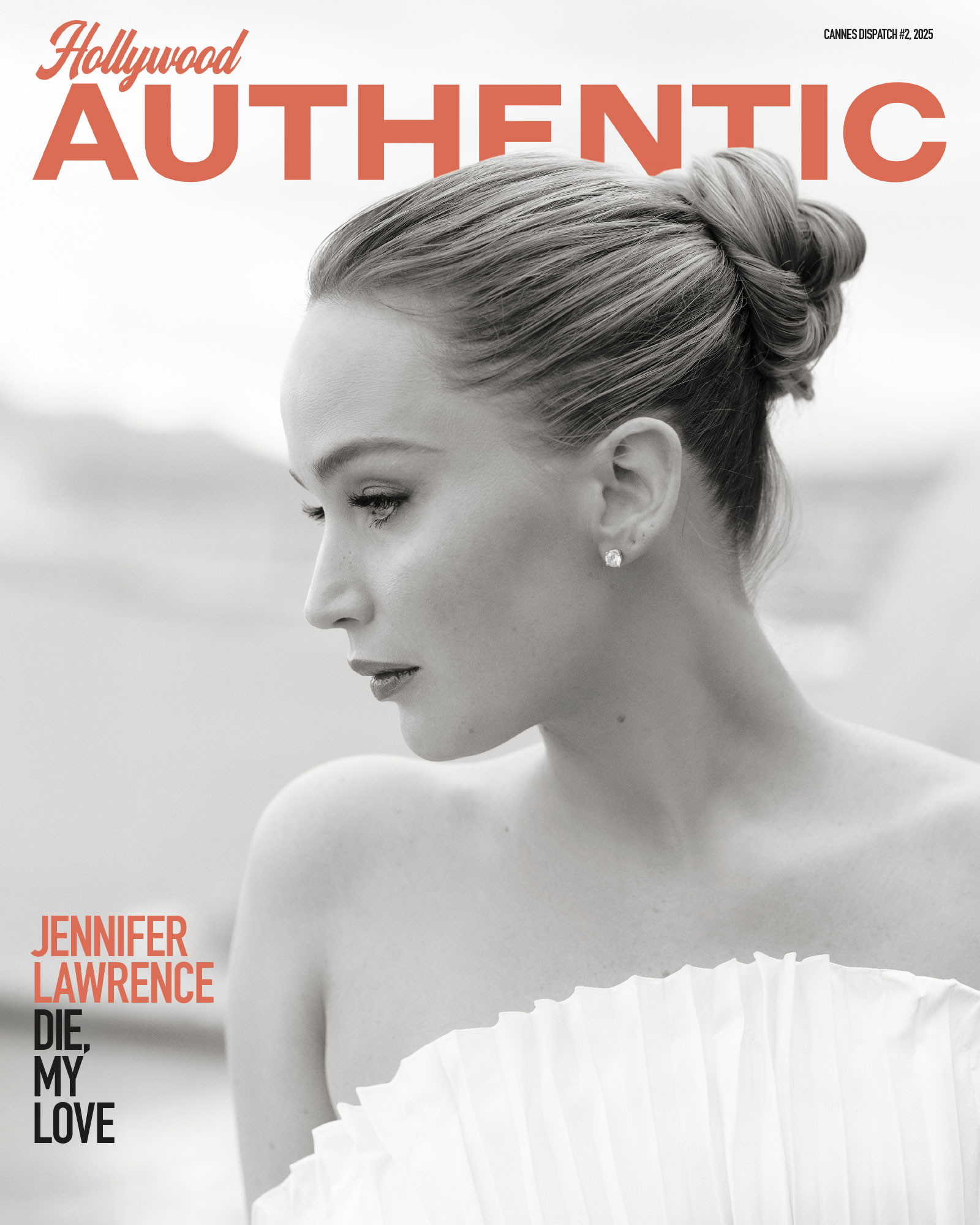
When I first started Hollywood Authentic one of my more cynical friends questioned how Hollywood could possibly be authentic? Especially since it dealt for the most part in fiction. The more I connect with artists who are open, genuine, unapologetically flawed and vulnerable, the more apparent it becomes to me how wrong that friend was. 

Cartier, Gladiator II, Greg Williams, Gucci, Hamnet, Paul Mescal
Paul Mescal by Greg Williams

Take our cover subject, Paul Mescal, who opened up about mental health and self doubt while showing me his horse skills he learned for Gladiator II. Or Naomi Ackie, who creates deliberately ‘ugly paintings’ as a form of therapy against her constant need to strive for perfection. Both remind me of the lyric Ben Mendelsohn once quoted to me from Leonard Cohen’s song Anthem; ‘Forget your perfect offering; There is a crack, a crack in everything – That’s how the light gets in.’ I’m proud that Hollywood Authentic continues to show the cracks – and the light – through honest conversations with artists.

BUY ISSUE 7 HERE

greg williams signature

GREG WILLIAMS
Founder, Hollywood Authentic

hollywood authentic, greg williams, hollywood authentic magazine