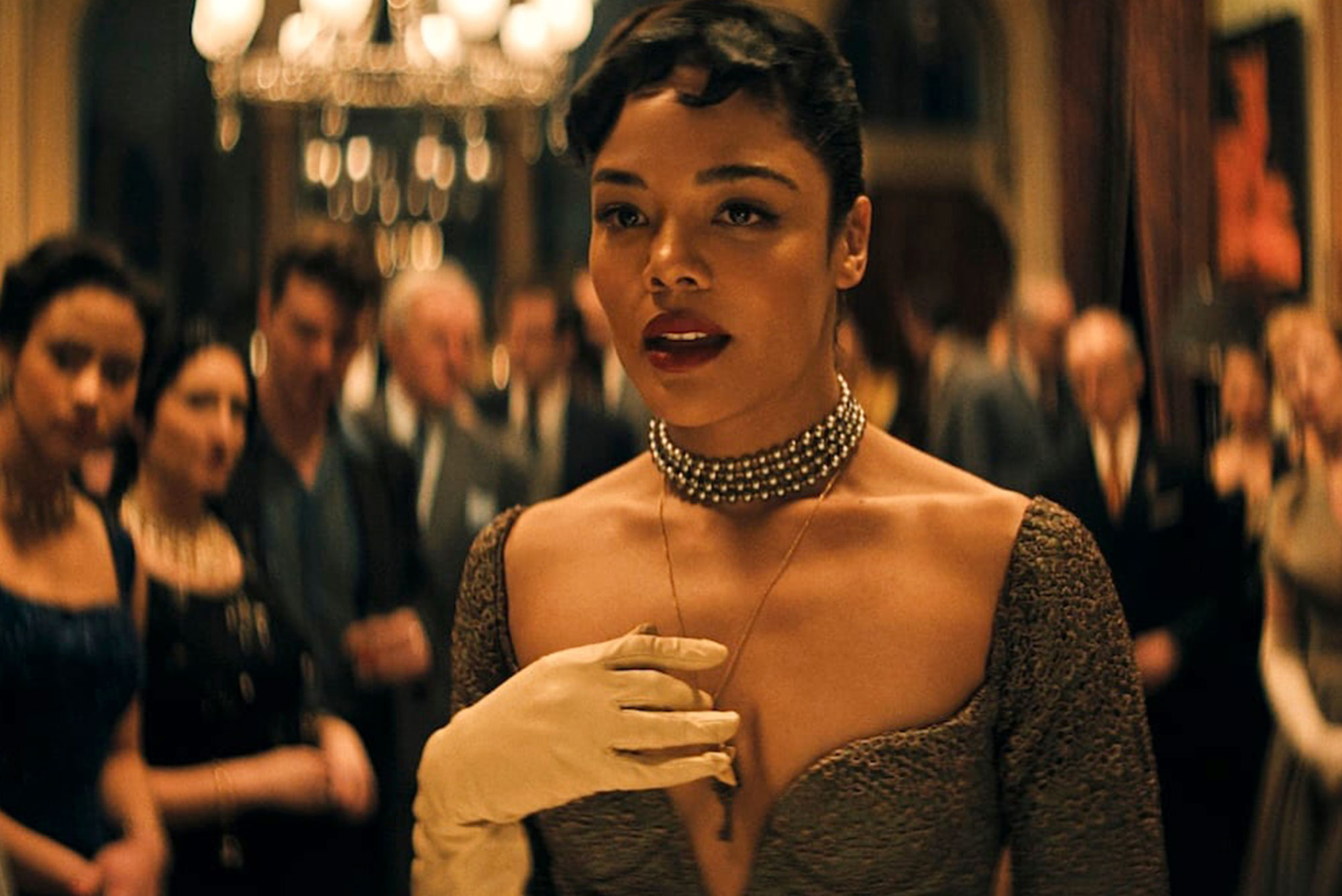
Nia DaCosta puts a new spin on Ibsen’s classic Hedda Gabler by shifting the action from 19th-century Oslo to a sprawling country pile in 1950s England where the titular wife of an academic (Tessa Thompson, with a clipped accent of disdain) throws a house party – impulsively inviting a friend, Eileen (Nina Hoss) who, it transpires, is her ex-lover. ‘Hedda loves to eat out,’ one party wag announces tartly when discussing the dinners the newlyweds have enjoyed on their lavish honeymoon.
Amazon MGM Studios
Eileen is a scholar and rival to Hedda’s hubby George (Tom Bateman), and arrives at the soirée touting the manuscript of her new book, a barely controlled drinking problem and a new love interest (Imogen Poots). If the book is published, Eileen will eclipse George and threaten the precarious life the Gablers share, one party away from not affording their affluent lifestyle and in need of a professorial job which will be bestowed by another party guest, Professor Greenwood (Finbar Lynch). To assure her sexual dominance, social standing and financial security all Hedda needs to do is manipulate her guests during one bacchanalian night of boozing, dancing, skinny-dipping and gun-play…
Amazon MGM Studios
DaCosta’s decision to bring the party described in the play into the forefront of the action is a dramatic improvement, giving this adap a danger and kineticism as Sean Bobbitt’s camera glides from room to room, out into garden mazes, up staircases to whispered power negotiation and to a lake as dark as the secrets of the players.
Amazon MGM Studios
Like a Gatsby party unravelling in real time, relationships are tested, rage and jealousy boils and sex simmers – while the band plays on and chandeliers crash to the floor. At the heart of it all is Thompson in a fabulous dress; sardonic, feral, cruel. It’s an imperious performance that will likely garner noms chatter as well as dislike, while an ambiguous ending change might enrage purists. But for audiences looking for a fresh take on a classic – and one which teases feminism, equality and sexuality from a well-worn text – Hedda is a party invite worth taking up.
Amazon MGM Studios
Words by JANE CROWTHER Pictures courtesy of AMAZON MGM STUDIOS Hedda is in cinemas now
Tourette’s Syndrome is often misunderstood as merely cursing – and I Swear gives plenty of that to comedic effect. But as a study of a debilitating and socially ostracising condition it’s also loaded with compassion, serving as both a useful educational tool and a feelgood Brit film with the social conscience DNA of The Full Monty or Billy Elliot.
Graeme Hunter/StudioCanal
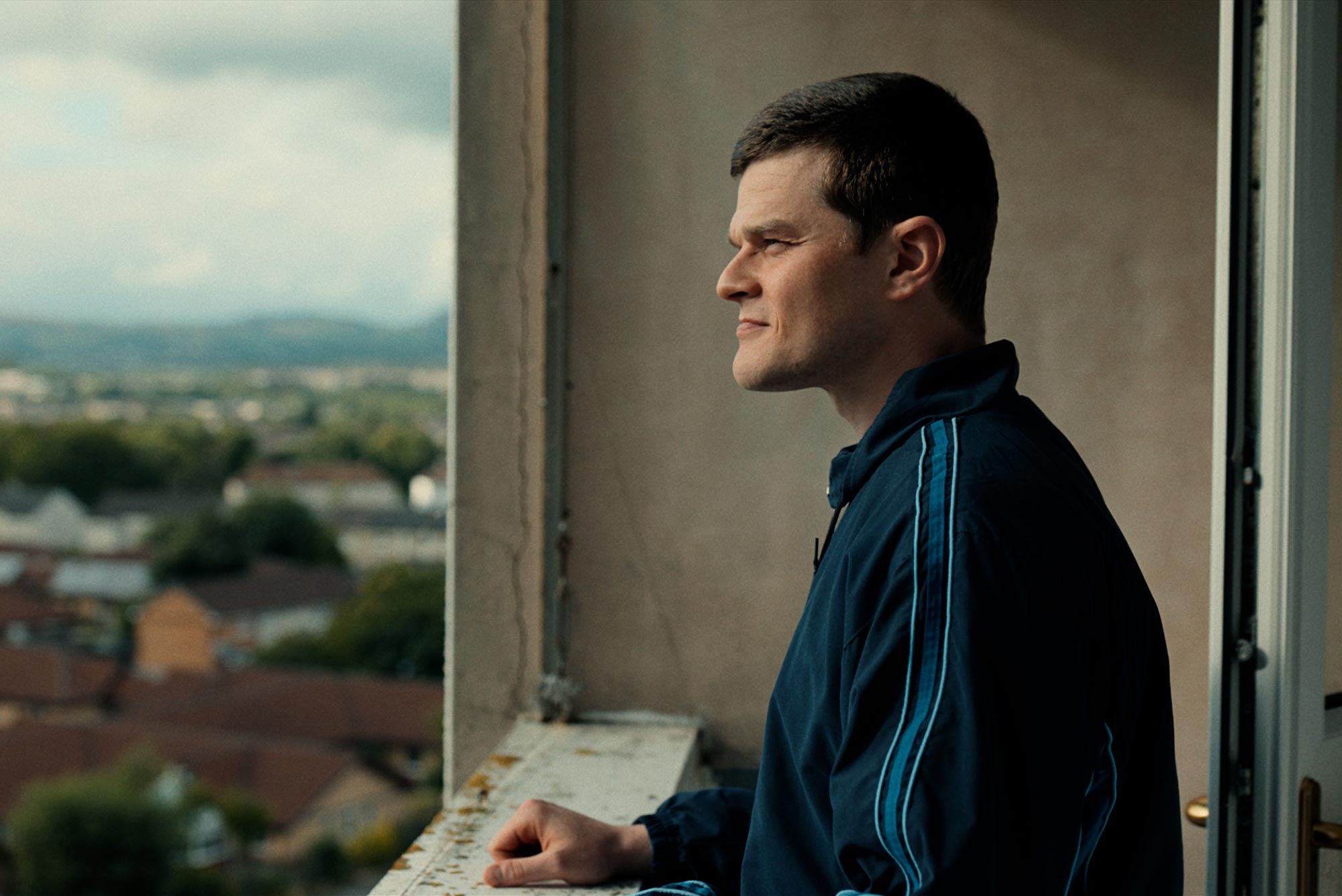
Following the story of Galashiels local John Davidson (Robert Aramayo) as he looks back on his life from an MBE ceremony (where he tells the Queen to F-off), the film charts his difficult journey from developing uncontrollable tics as an 80s teen (Scott Ellis Watson) in an unforgiving school, through an adolescence marked by parental disdain and dust-ups with people taking offence at his outbursts. By the time he’s a young man (now played by Rings of Power’s Aramayo), his prospects of getting a job, friends or a life look bleak. But when he meets a mental health nurse, Dottie (Maxine Peake) and the gruff caretaker of a community centre, Tommy (Peter Mullan), John gets the love and respect he needs to forge a path to becoming a leader in the Tourette’s community and a campaigner for greater understanding. Along the way he’ll suffer false arrest, assault and cruelty, as well as moments that restore a belief in humanity.
Graeme Hunter/StudioCanal
If that sounds dry, it isn’t. Though the script by writer/director Kirk Jones aims to enlighten, there’s inescapable fun to be had in tracking John’s misadventures. Aramayo is supremely charming as a cheeky chap who involuntarily shouts his innermost thoughts, spits food and punches people while also apologising profusely. The hurt in his eyes is as readable as the bravura of his posturing, and his delivery of the tics that mark his condition feels authentic. The resigned dismay on his face as he’s shouting ‘I’m a pedophile!’ or ‘spunk for milk!’ while making a cuppa (and worse) is both undeniably funny and heartbreaking.
Graeme Hunter/StudioCanal
He’s surrounded by similarly excellent performances; Peake is warmth incarnate while Shirley Henderson (as John’s cold Mum) is brilliantly brittle. Very nearly stealing the show, Mullan essays patience and no-nonsense kindness that is a delight to watch. Along the way audiences may learn something – not only about Tourette’s, but also about the resilience and magnificent power for empathy of people. In our current dark times, that feels like a gift at the cinema. It’s also got a banging soundtrack and is likely to figure in the BAFTA shortlist come February. So worth getting a F-ing ticket…
Graeme Hunter/StudioCanal
Words by JANE CROWTHER Pictures courtesy of STUDIOCANAL I Swearis in cinemas now
Photographs by GREG WILLIAMS Words by JANE CROWTHER
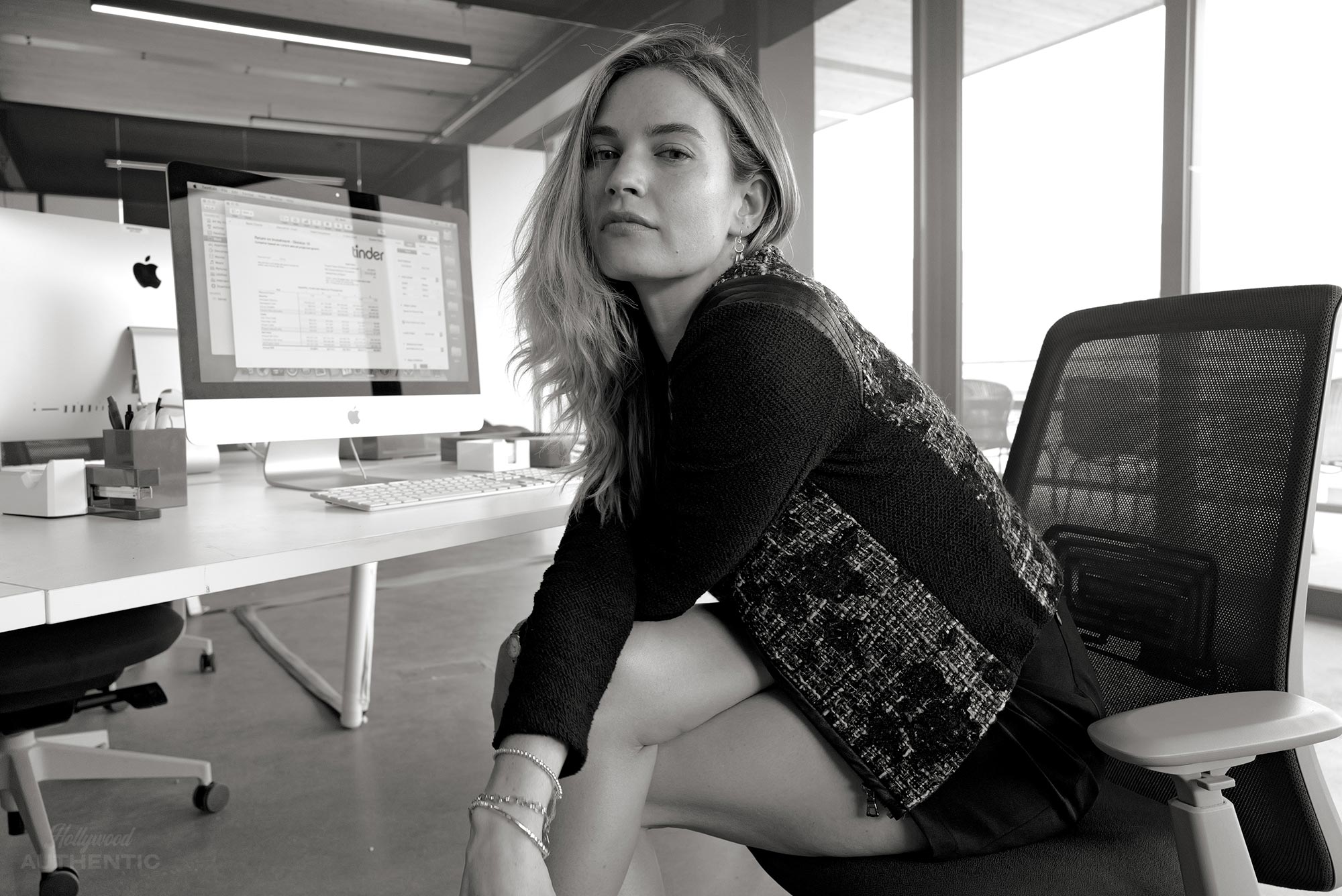
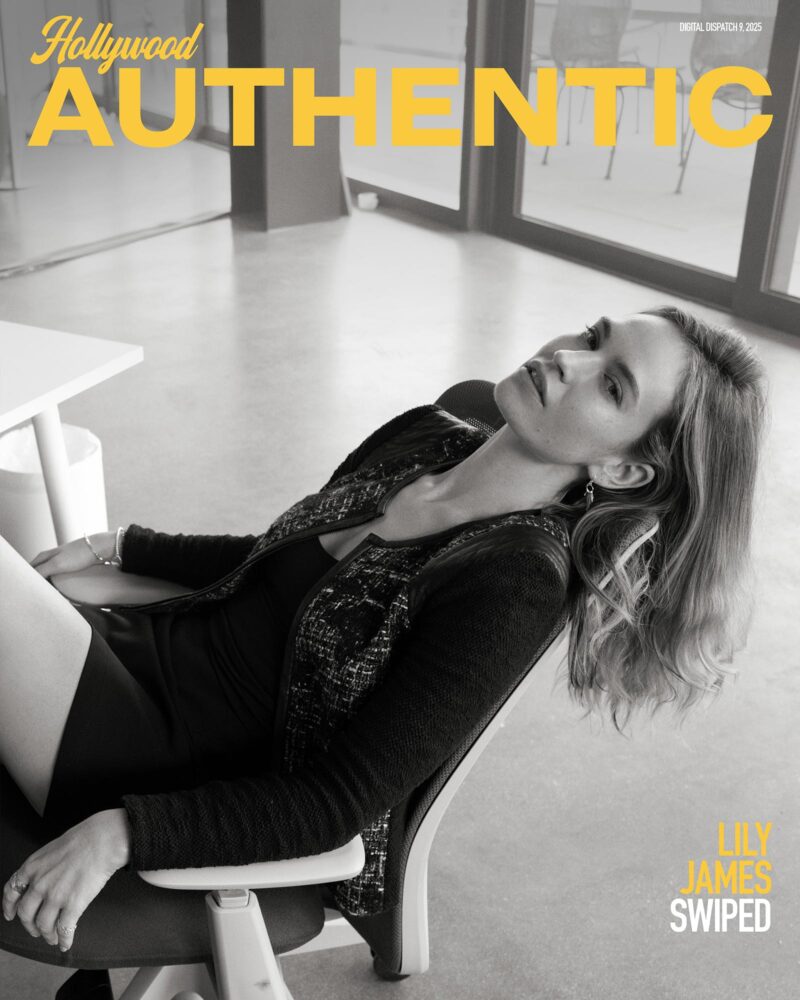
Hollywood Authentic follows Lily James on-set in LA of her first producing project – the biopic of Bumble founder and self-made billionaire Whitney Wolfe Herd – and to the premiere on hometown soil in London. James tells us about the challenge of playing her ‘absolute hero’.
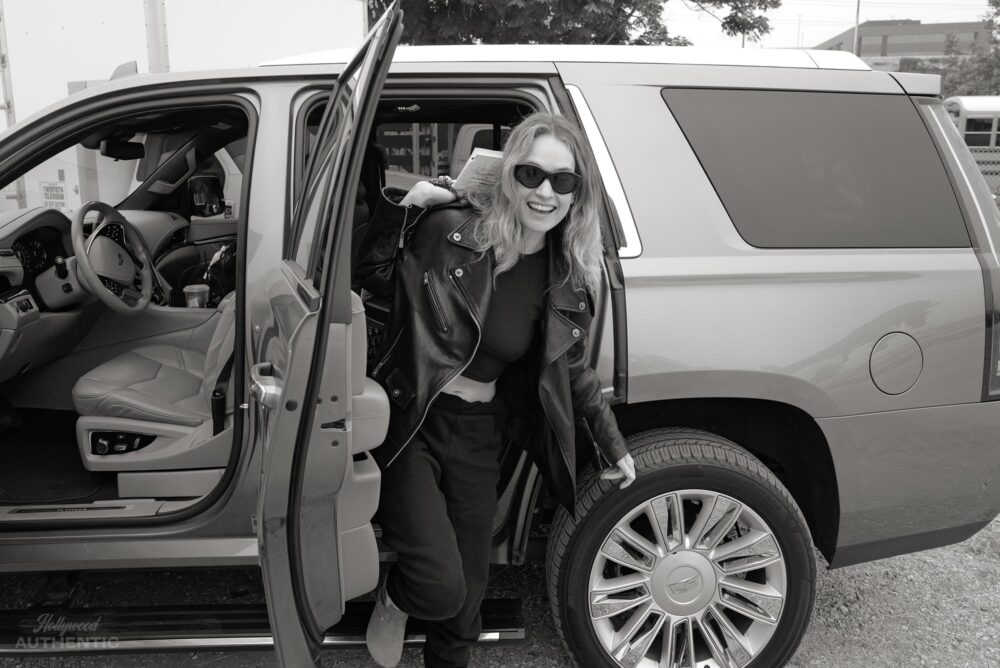
‘I’ve always been hugely protective of the characters I play,’ Lily James tells Hollywood Authentic as she welcomes us into her trailer on the LA set of Swiped in early June 2024, her inaugural project where she leads the cast as well as produces. ‘But this is on a bigger scale.’
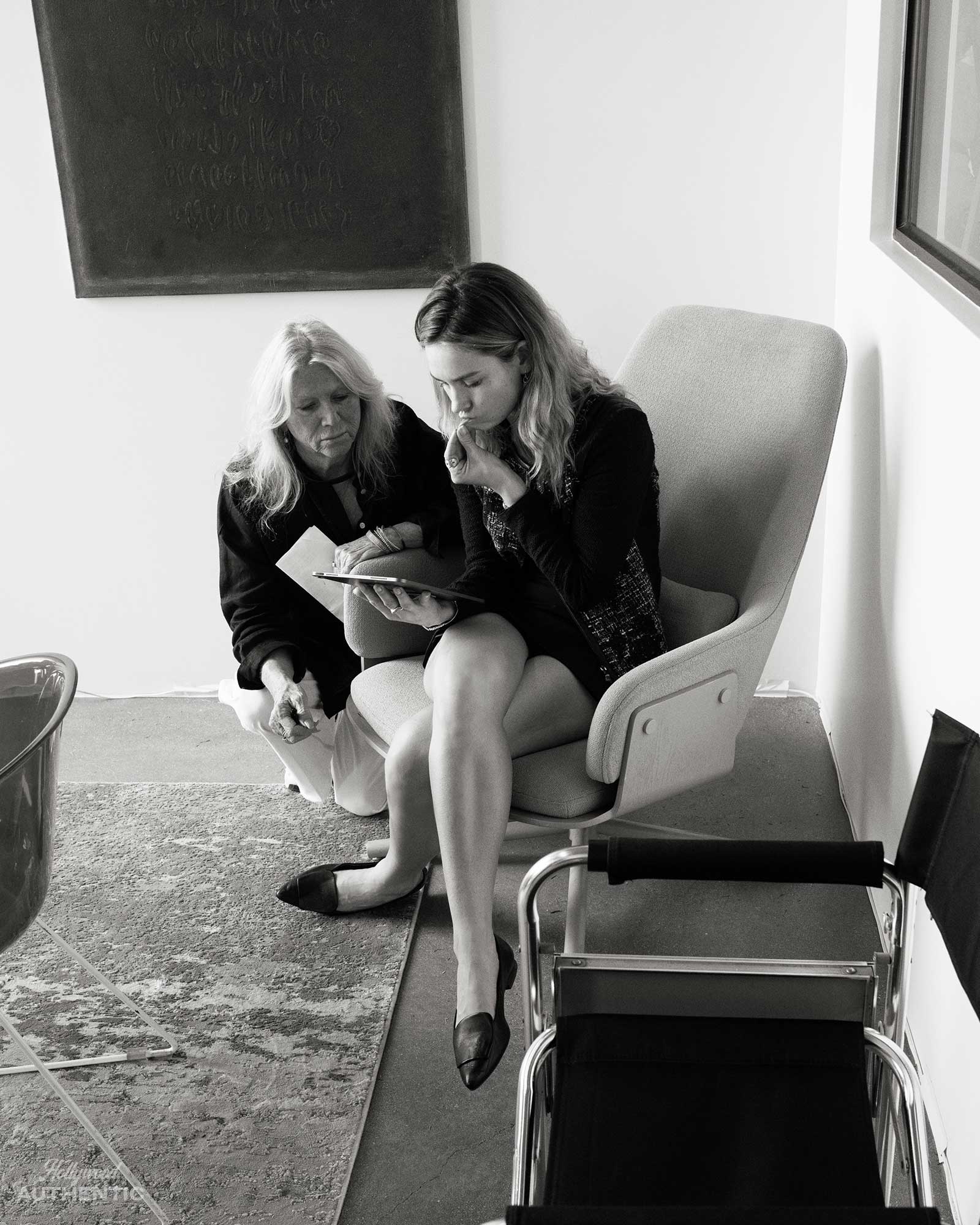
Exec-producing alongside her partner Gala Gordon and producers Sarah Shepherd, Jennifer Gibgot and Andrew Panay, Swiped tells the story of Whitney Wolfe Herd’s phenomenal rise as a co-founder of Tinder before leaving in 2014 to establish Bumble and becoming the first woman to take a company public at the age of 31. James’ Downton Abbey colleague Dan Stevens co-stars as Wolfe Herd’s business partner in the film which releases this week. Rachel Lee Goldenberg directs a script written by herself, Bill Parker and Kim Caramele the film tracks period of time at Tinder and then continues on as she goes onto build bumble becoming at the time the youngest women ever to take a company public. As a production team, the decision was made to use publicly available information to tell this story with a highly experienced research team. They never reached out to Whitney. James herself (seen below with acting coach Leigh Kilton-Smith) became obsessed with reading, listening, and watching everything she could about Wolfe Herd.
‘She was the youngest woman to ever take a company public,’ James says of the Wolfe Herd, transforming into her via blue contact lenses and her signature engaging voice. ‘This is based on her incredible journey to make the Internet safer for women and create a safe space where women can make the first move in their lives and in relationships.’
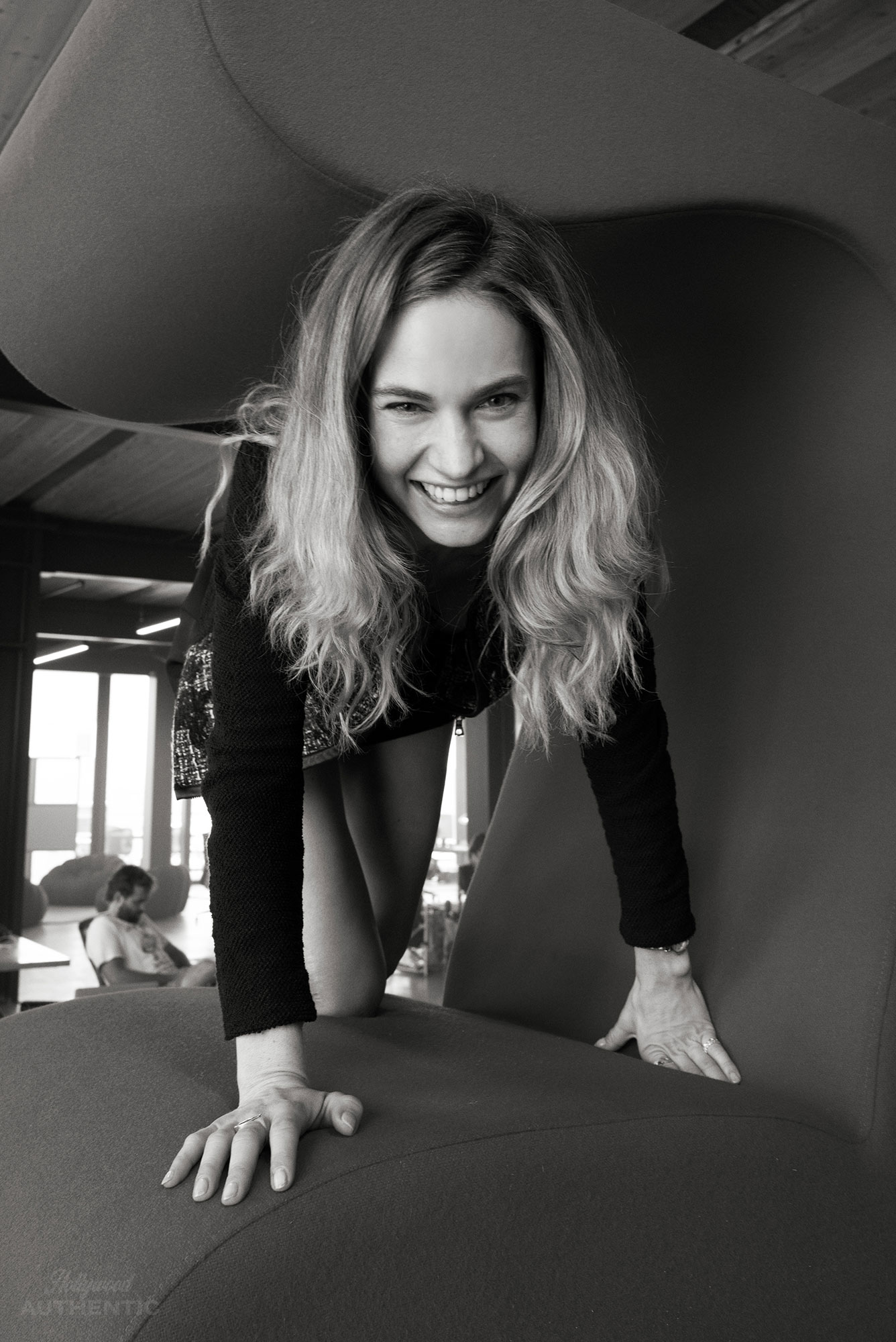
Wolfe Herd built Bumble as CEO and founder, taking the company public in 2021, stepping down in 2023 as a billionaire, trailblazer and innovator. She is something of an inspiration to James who describes her as ‘brilliant’ as she gets ready to film scenes in an office building dressed to look like Tinder HQ. James climbs onto a huge furry ‘E’ in her Wolfe Herd businesswear and loafers. ‘Her superpower is that she makes everyone around her feel safe and comfortable – and fall in love with her. Because she listens and is empathetic to her core. That’s what makes her a great leader and someone people want to follow and work with.’
James is spreading her own leadership wings with her producer hat on – alongside other projects she is developing under her company, Parodos – but is enjoying the challenge. ‘Every day genuinely feels like a fight to make sure that I’m fully happy with everything.’ Bowing at TIFF, Swiped premiered in James’ hometown of London on an overcast day in September where Greg Williams caught her dodging the rain in Soho on her way to the Mayfair Curzon. Like Wolfe Herd, James is enjoying the moments of being a female leader in a male-dominated industry…
Photographs by GREG WILLIAMS Interview by JANE CROWTHER Swiped is available on Disney+ and Hulu now
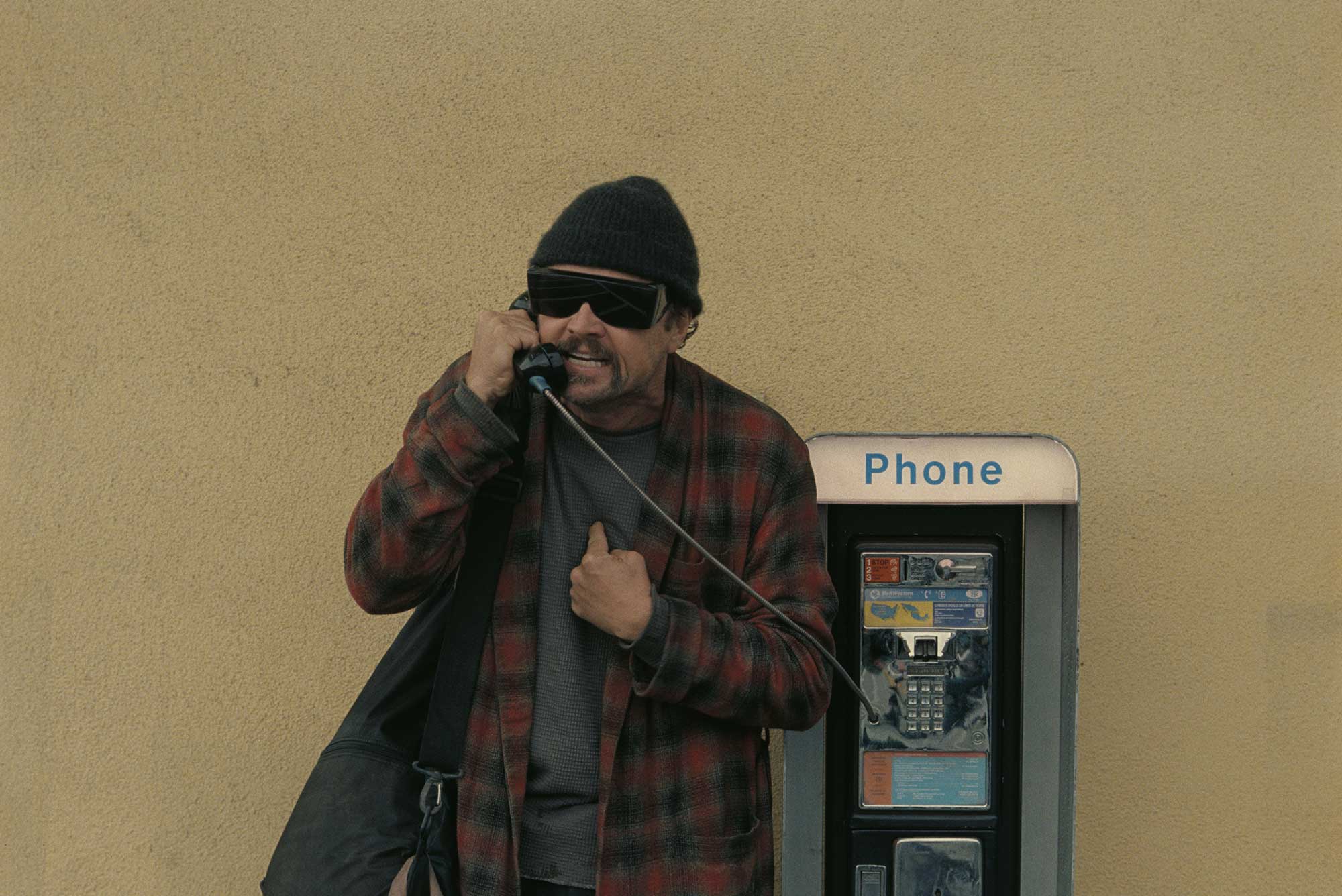
For what is ostensibly a stoner comedy, One Battle After Another moves pretty fast. Opening with a militant counterculture group, The French 75, in El Paso freeing border-crossing detainees from a military compound via gunplay and fireworks, the pace starts at running and doesn’t flag in Paul Thomas Anderson’s most commercial, entertaining project to date. Pat (Leonardo DiCaprio) is the pot-smoking explosives expert of the gang, led by charismatic agent of chaos Perfidia Beverly Hills (Teyana Taylor, electric). The duo are lovers and, during their US/Mexican border compound attack, taunt – in every way – tightly wound Colonel Lockjaw (Sean Penn). A man so coiled his walk is a jerking strut, Lockjaw’s disgust/desire for Perfidia then powers a manhunt for the group, also conducted at a (literal) sprint. Those battles that come one after another are the constant state of flight Pat finds himself in, when 16 years after key events, Lockjaw is still on his tail. And Pat is still baked. As he tells an underground switchboard operator demanding the secret passwords when he dials in for help: “I’ve smoked a lot and I can’t remember…”
Warner Bros. Pictures
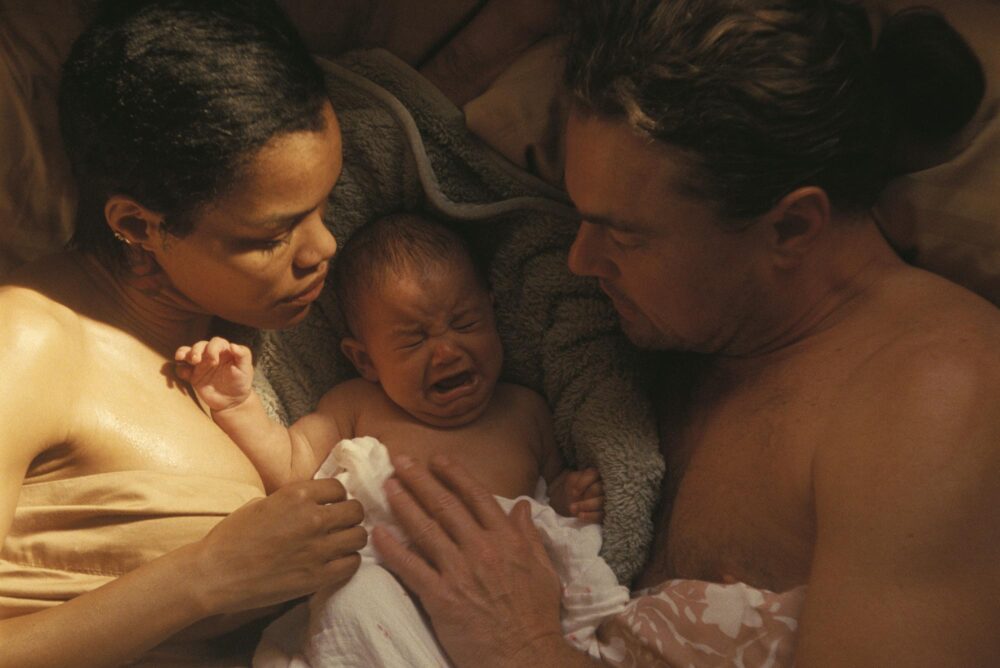
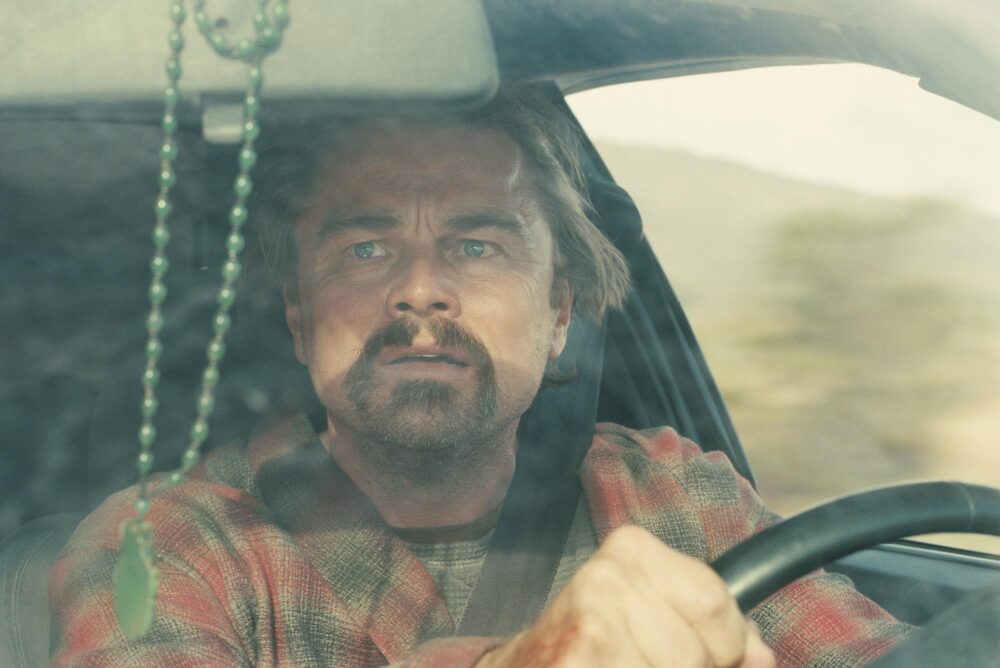
Loosely based on Thomas Pynchon’s Vineland, Anderson takes in themes of immigration, white supremacy, racism and corruption by making them a lot of fun and a lot of a mess. Pat is a befuddled fool who cocks up escapes and rescues but is driven in his mission to protect his teen daughter (Chase Infiniti, superb). He may run around like a headless chicken in a mangy dressing gown, throwing himself inexpertly from a car and falling off roofs, but his paternal love is sure. DiCaprio is a hoot to watch as he careens from one disaster to another, the funniest and loosest he’s been in his career. His nemesis, Lockjaw, is another Penn masterclass. Sketched as a psychological soup of neuroses and kinks, Penn takes Anderson’s character and physically inhabits him to grotesque and fascinating effect. Bulging out of his clothes and, it seems, skin – with a comedy haircut, southern drawl and a barely contained rage – Lockjaw is like a psychotic Foghorn Leghorn on steroids, and a dirty pleasure to watch.
Warner Bros. Pictures
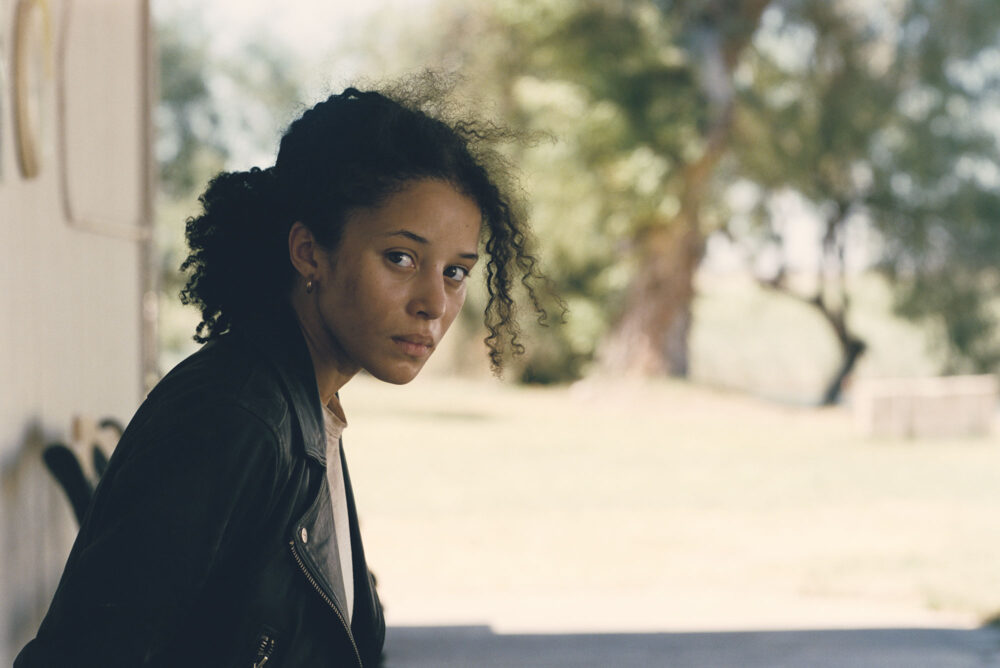
Though DiCaprio and Penn are the main adversaries in this story of 21st-century America, every player is sensational. Benicio del Toro is a cool sensei who likes a beer as he saves the day, Infiniti aces her debut as a collected teen parenting her lackadaisical dad and Tony Goldwyn brings a MAGA chill to proceedings as an industry leader with a secret basement HQ and views that are only missing white hoods. But the absolute comet who blazes through it all – and leaves a vapour trail when off-screen – is Teyana Taylor; magnificently, unapologetically fierce, with two lone eyelash extensions and a semi-automatic, she is one of cinema’s great female creations.
Filmed in VistaVision with a propulsive Johnny Greenwood score and numerous sequences you’ll want to watch on repeat (DiCaprio trying to keep up with parkour dudes, badass nuns, a Christmas meeting in a kitsch bunker, an undulating car chase), One Battle After Another is funny, witty, salient and thrilling. Plenty of bang for your buck.
Warner Bros. Pictures
Words by JANE CROWTHER Pictures courtesy of WARNER BROS. PICTURES One Battle After Anotheris in cinemas now
Photographs by GREG WILLIAMS Interview by HASSAN AKKAD
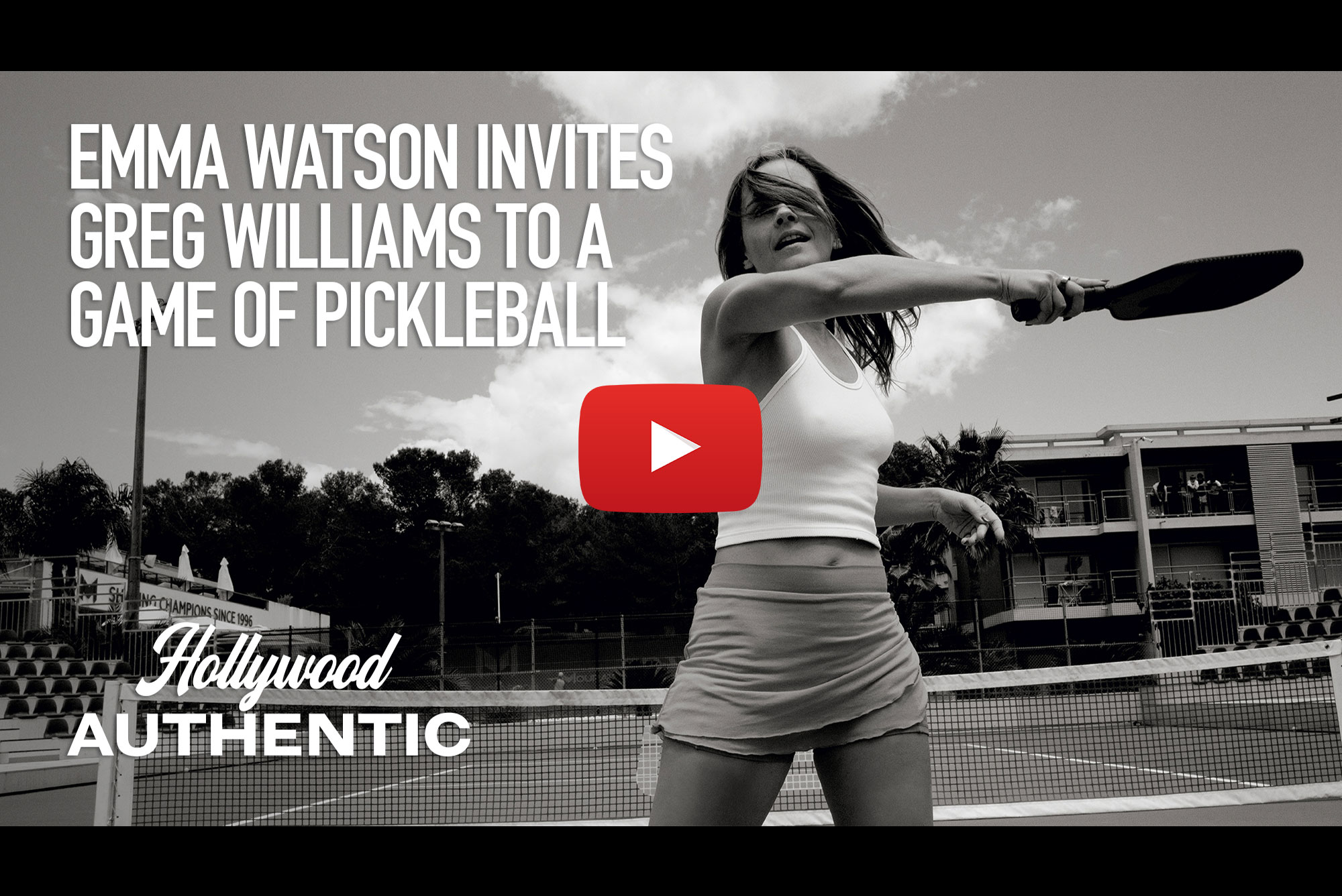
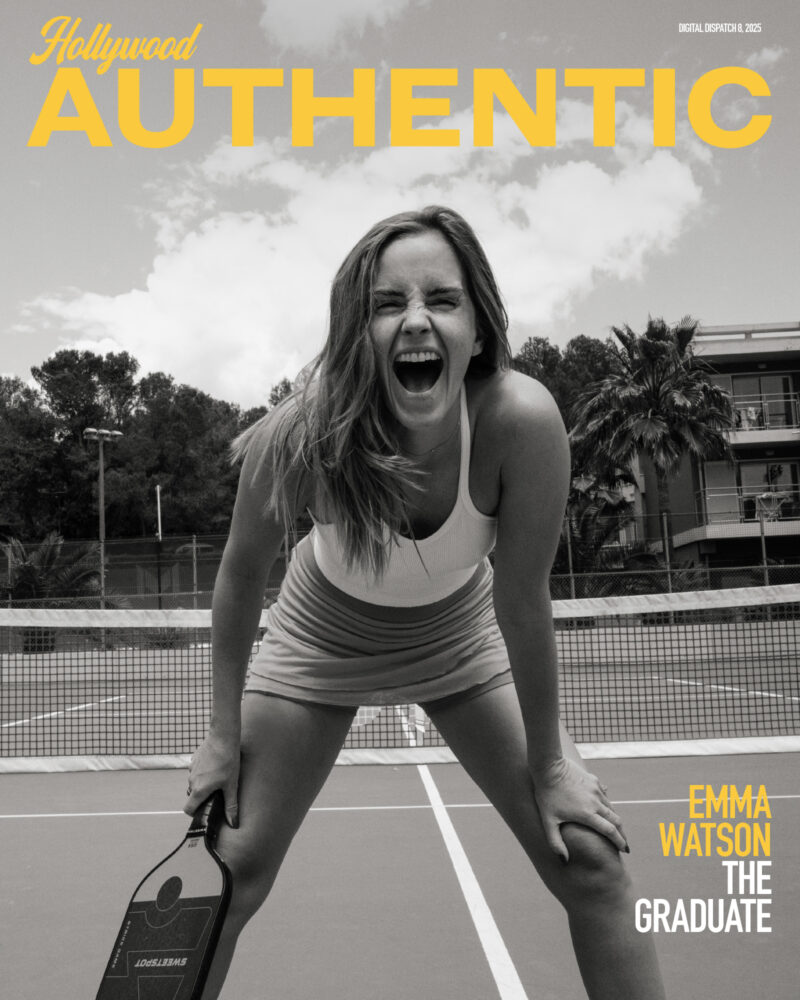
Emma Watson invites Greg Williams to a game of pickleball in Cannes as she revels in being the happiest and healthiest she has ever been. She tells her friend and filmmaker Hassan Akkad about shedding her public persona, holding space for change and how walking away from things is much harder than walking towards them…
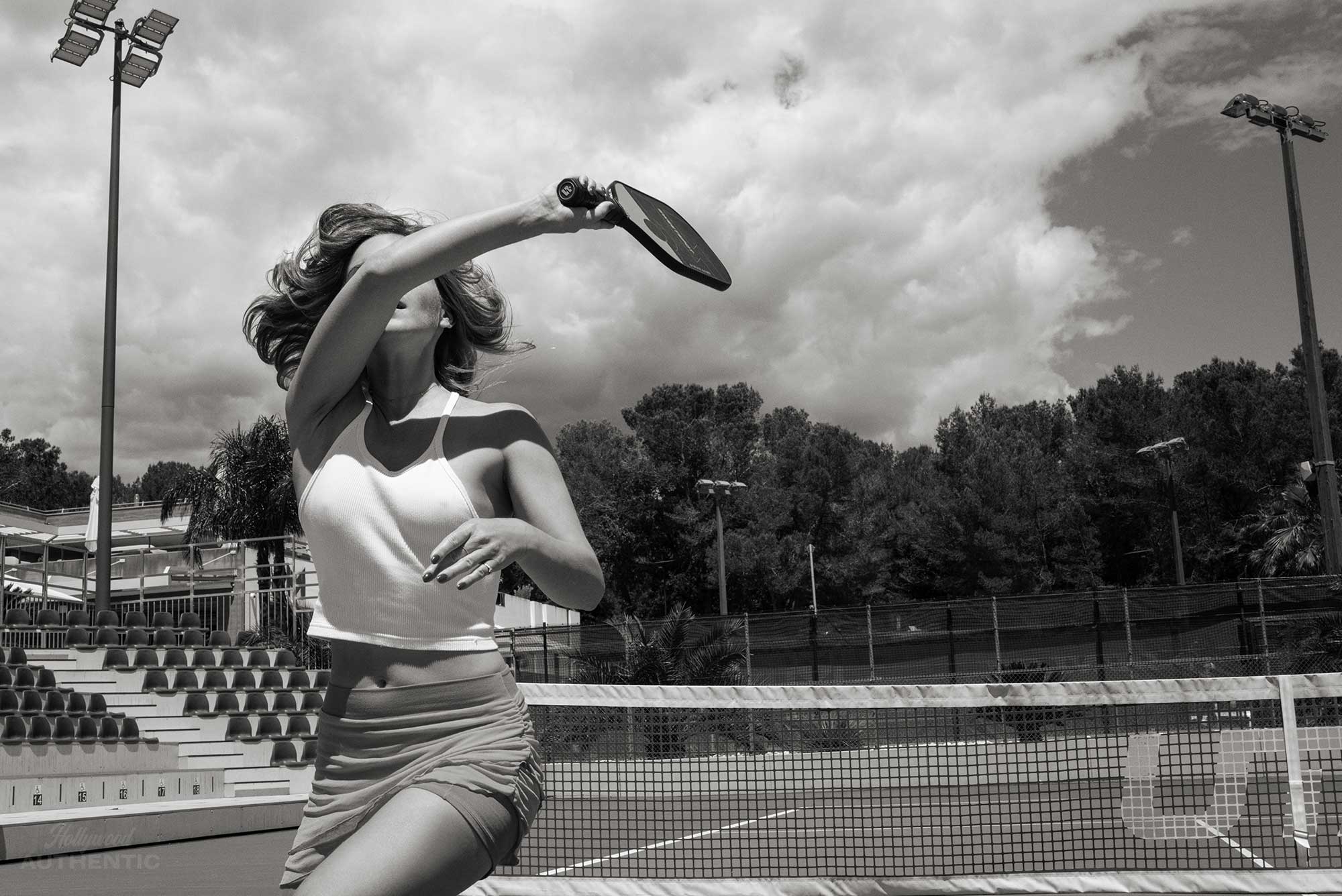
Emma Watson is currently living in the present, practicing being in the world without the pressure of producing. This past May, that meant travelling to the Cannes Film Festival to immerse herself in movies with her friend and filmmaker Hassan Akkad after a self-imposed break from the public eye. It’s there that Greg Williams captured pictures of the actor playing her new obsession: pickleball. ‘It’s the sound the ball makes when you smack it; it’s the best therapy I never paid for,’ she says as she plays. Having had a hectic film career since she was just 10 years old and cast as Hermione Granger in the Harry Potter franchise (going on to The Bling Ring, The Perks of Being a Wallflower, Beauty and the Beast and Little Women), Watson has since taken a calculated step back from acting to continue her education and challenge herself. After they return from the French Riviera, Watson and Akkad catch up to discuss the exploration of creativity and having the courage to leave something behind.
HA: How are you? What’s been going on?
EW: I’m good. Just been working really hard. I’m working on – actually, I’m not going to say what, because then people are like, ‘Well, when is it happening? What’s going on with this thing?’ So I’m just going to say that I’m working on something that I’ve never done before. So I feel a bit like a person who’s in the dark, stumbling around, looking for the edges of something, and hoping [laughs]. It sounds like I’m trying to find a light switch. But it’s good. That’s the process. That’s the process of making things, isn’t it?
HA: It is. Can you give us a hint of what it is?
EW: You know, it’s so funny – I think this is probably why I’ve been avoiding interviews in general. You’re the only person I would agree to speak to. It’s because I’m just not on a linear timeline at the moment for anything. I’m really going on: ‘Does this feel right? Do the stars align?’ I’ve gone super, super extraterrestrial, touchy-feely.
Oddly, somehow, the less I try to do, the more I get done. I don’t know how I would shape the distinction between effort and trying. Or maybe what I would say is: I’m caring, and I’m present
HA: I’ve always hated the question of ‘What are you up to?’. No one needs to be up to anything, I believe.
EW: I agree. And I’m up to lots of things. But I’m feeling this big resistance. Because even once you’ve done whatever the thing is that they’ve managed to get out of you that you’re up to – then the minute you’ve told them that, it’s like, ‘Well, what about next? What are you going to do next?’ It’s very difficult to be a person who’s living in the present moment in this kind of context. I guess that is, as pretentious as it sounds, what I’m striving for at the moment. I want to speak more to a way that I’m being in the world, as opposed to what I’m producing.
HA: You don’t have to justify your existence.
EW: That’s the other thing I feel pressure around. That I don’t have a right to exist if I’m not being productive in a very specific way, or contributing in a very specific way. Oddly, somehow, the less I try to do, the more I get done. I don’t know how I would shape the distinction between effort and trying. Or maybe what I would say is: I’m caring, and I’m present.
HA: I testify to you being caring and present. I think all of your friends also testify to you being a phenomenal friend. Are you happy and healthy? That’s a question that I would like to ask you.
EW: What a question. The only question that really actually matters. I am maybe the happiest and healthiest I’ve ever been. I think what’s interesting about being an actor is, there’s a tendency to sort of fracture yourself into multiple personalities. I’m not just talking about the roles you play, but having the weight of a public persona, that sort of needs constant feeding and sprucing and glamorising. It’s very energy-intensive stuff. And shedding the multiple identities has freed up so much space, I think, for me to be a better sister, daughter, friend, granddaughter, and then artist. And someone who’s trying to do some critical thinking of her own.
HA: Speaking of acting – Greg took those stunning shots of you in Cannes. What were you doing there?
EW: Everyone’s like, ‘What’s the mission here?’ I was like, ‘I just wanted to go and watch films.’ I just wanted to go and be in the room again with people who absolutely are completely, madly obsessed with film. I just wanted to be part of the atmosphere, and also a part of the community. Because while I might not be making work right now, I still do feel that I’m part of a community, and I want to stay connected to that community, and be part of it. Getting to go and to actually just have the time – not to be trying to promote or sell something, but just to be able to have a conversation with someone, and to look at other people’s work is the goal.
HA: I have to mention that moment when we were together watching Jeunes Mères when the cast saw you watching their film with them. It meant the world to them. I don’t know how you felt. I saw it through their eyes how much they appreciated that you were there watching the film with them.
EW: That was very touching for me. There was one specific actress, Janaina Halloy, whose performance was magnificent. I saw her. She clocked eyes with me, and just immediately broke down. I think that has been a theme of my life, and something I’ve talked about before. Which is, we really value this very active, masculine ‘do, create, go’. But it sometimes undervalues receptivity, and listening, and being there. I just felt the immense power of just giving this person a sense that I was listening to her, and that I thought that what she was doing mattered – enough to be there and show up. And I saw it really move her. That meant something to me too, because I realised I was contributing just by being.
While I might not be making work right now, I still do feel that I’m part of a community, and I want to stay connected to that community, and be part of it
HA: Do you miss acting?
EW: In some ways I really won the lottery [with acting], and what happened to me is so unusual. But a bigger component than the actual job itself is the promotion and selling of that piece of work, this piece of art. The balance of that can get quite thrown off. I think I’ll be honest and straight-forward, and say: I do not miss selling things. I found that to be quite soul-destroying. But I do very much miss using my skill-set, and I very much miss the art. I just found I got to do so little of the bit that I actually enjoyed. The moment you get on a film set, you don’t get very long for rehearsal. But the moment you get to talk through a scene – or I got to prepare and think about how I wanted to do something – and then the minute the camera rolls, and getting to just completely forget about everything else in the world other than that one moment – it’s such an intense form of meditation. Because you just cannot be anywhere else. It’s so freeing. I miss that profoundly. But I don’t miss the pressure. I forgot it was a lot of pressure. I did a small thing for a play, just with my friends. I was like, ‘Bloody hell, this is stressful!’ And that wasn’t even for a real public audience or anything. I don’t miss that.
HA: Will you consider doing something behind the camera? Not on screen but behind the screen?
EW: Yes, I think I’d consider everything. The most important thing, really – or the foundation of your life – is your home and friends and family. I think I worked so hard for so long that my life sort of bottomed out. The bottom fell out of the piece, which was actually me and my life. So I needed to go and do some construction work. Some good foundations for anything else to grow from. Because if you don’t have that, there’s a kind of mania that ensues; a kind of panic where you move from one project to the next, kind of terrified of the void in between them. You realise you don’t have a rhythm to your life. I read this thing recently: each day, our daily lives have to have satisfaction and completion and meaning, in and of themselves. I needed to go and rebuild that. And I’m very happy and proud I did. Because walking away from things is much harder than walking towards things. Leaving things, and not knowing, is much harder, I think, than having a goal, and being able to tell everyone exactly what you’re up to. So it felt very courageous at the time. And, if I’m being honest, I was mostly just really afraid and quite scared. But I’m very pleased that it was the right thing. Sometimes the hard thing is the right thing, not the easy thing.
HA: True, true. You have a habit of listening to songs on repeat. Which songs are you currently listening to on repeat?
EW: I’m so glad that you know this about me. It’s lovable or absolutely abhorrent. I’m not sure which one. I’m listening to Brandi Carlile, who wrote this freaking unbelievable song called ‘You Without Me’ that she wrote for her daughter. It gives me chills every time I listen to it. So that’s the song today that I’ve been playing while I’ve been working on my essay. I’m coming on to the eleventh or twelfth listen [laughs].
HA: Why did you pick up a sport that is named after a pickle? What happened there?
EW: A friend of mine’s parents taught me how to play. They’re retired tennis pros. Over time, it’s just grown into kind of an obsession – an obsession I feel good about. If I can do anything meaningful with my life, perhaps it’ll be of being in service to the great game that is pickleball!
HA: Final question is, what’s giving you hope these days?
EW: Aw, that’s a great question. Honestly, it’s being around young people that still see the world as malleable and changeable, and who care deeply about it. I also just love this idea that, yes, I agree change takes a long time, and the hammer will come down a thousand times on the same piece of stone, and nothing will happen. And then all of a sudden, one day, the stone will crack. I think to say, ‘Oh, you know, nothing ever really changes’ – I’m not sure I believe that.
HA: I can testify to that.
EW: I was about to say: where you are, and what you’re up to, is so relevant.
HA: I’d completely given up on ever going back home to Damascus, and then suddenly one day, you know, after 13 years of being away, I was able to go back. I’m here. It’s a bit stressful because ballistic missiles are flying over my head every day. Change can happen with the blink of an eye. Everything could change. Will you visit Damascus one day?
EW: As your invitee, Hassan? Yes. You are truly my family. So, absolutely. But, to your point… Yes, I’m profoundly disappointed that we still live in a world where so much pain and injustice is possible. But, on the other hand, if you look back through time, we have managed to overcome unbelievable, insurmountable terrible things. There are case studies for the impossible being possible. So, you know, I think it’s a case of knowing everything is not OK, but holding space for the fact that, actually, sometimes in the blink of an eye, things can be different.
Photographs and video by GREG WILLIAMS Interview by HASSAN AKKAD
What would happen if The Penguin and Harley Quinn went on a road trip date? Possibly more realistic a proposition than this whimsy from Kogonada which begins with potential but will likely only bring the most gooey romantics along for the whole ride.
Matt Kennedy/Sony Pictures
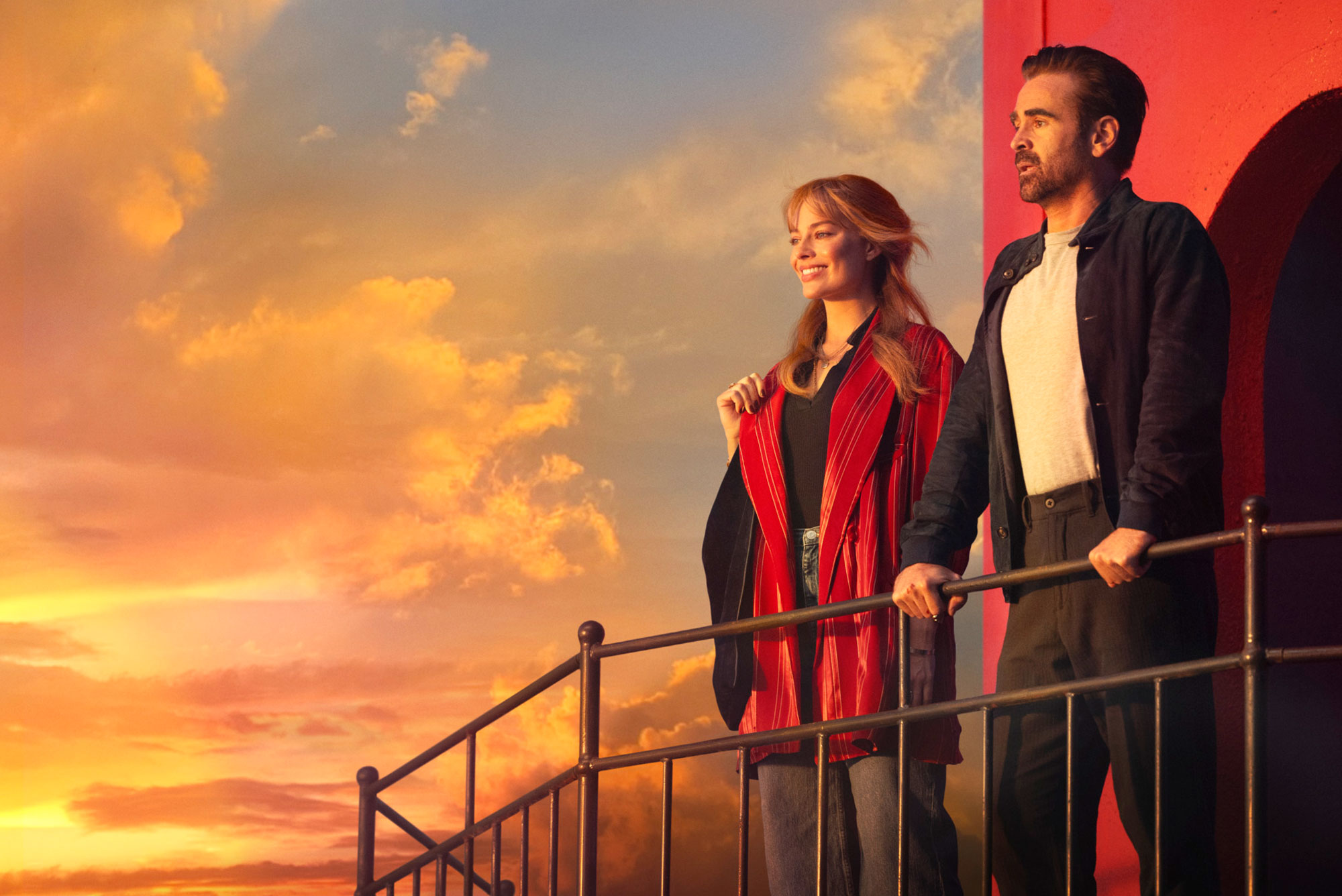
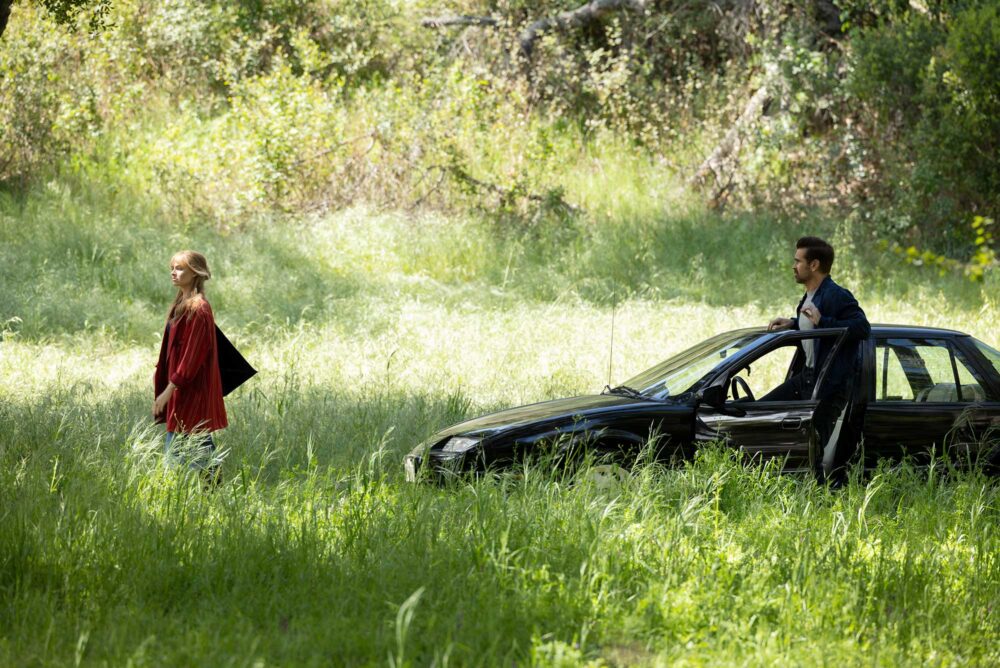
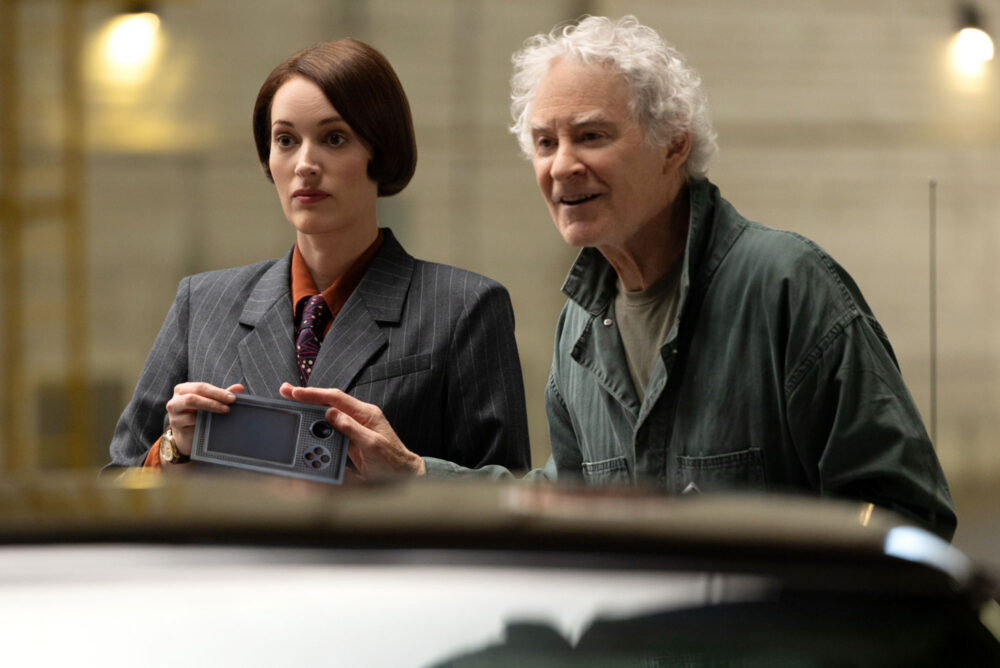
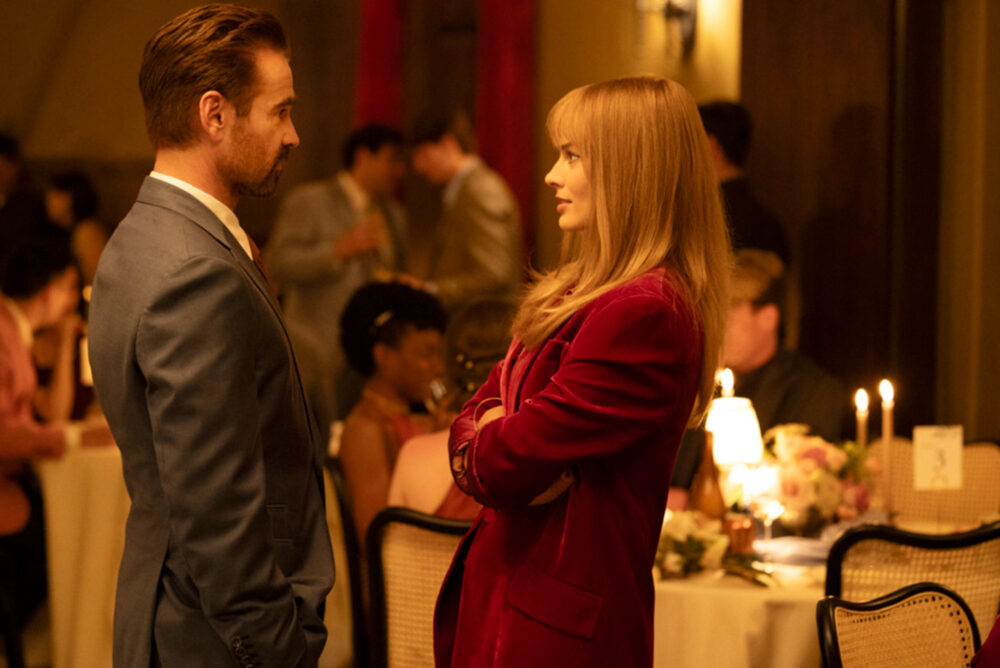
Colin Farrell and Margot Robbie star as David and Sarah (don’t worry, you won’t forget their names, they say them to each other in pretty much every sentence), a pair of singletons at a soggy wedding who bristle at the idea of marriage and commitment. They have both arrived in rental cars hired from a quirky outfit run by Kevin Kline and Phoebe Waller-Bridge doing a German accent. In an opener that plays like Charlie Kaufman, David has found his way there to be offered a crappy 90s car with a weird GPS system by a profanity-dropping saleswoman who sits in a warehouse like a soundstage and instead of going through the collision damage waiver, suggests that all of life is a performance.
Matt Kennedy/Sony PicturesMatt Kennedy/Sony Pictures
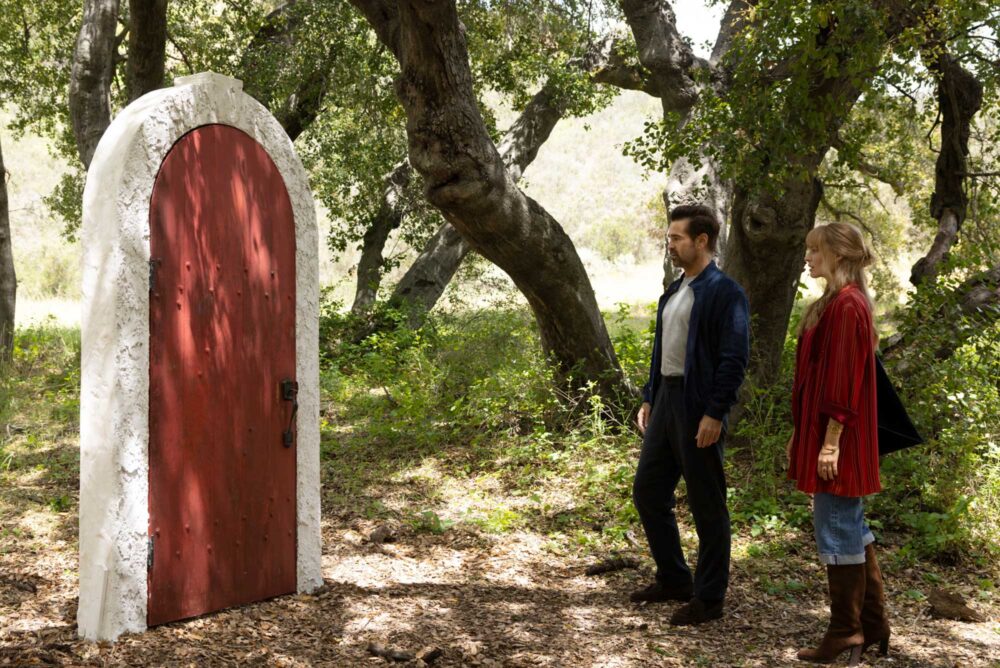
Certainly, we get performance from the two incredibly charismatic leads as a Burger King meet-cute (seriously, you’ll want a Whopper with cheese) morphs into a phantasmagorical odyssey where the magical GPS (voiced by Jodie Turner-Smith) takes the duo to a series of picturesque doors which open to seminal moments in each of their lives. Moments that might explain why they both struggle to maintain a relationship, why they might desperately need each other. David has issues from a high school romantic wipeout and parental expectations of perfection; Sarah is a ‘quirky girl’ who visits museums at night and didn’t tell Mommy she loved her… Everything is colour coded (him: blue, her: red), pretty, whimsical, lens-flared, rainy.
Matt Kennedy/Sony Pictures
There are moments of delight: David performing the lead in his high school play on muscle memory, Sarah returning home for teen-years mashed potatoes and Big on the telly. Together, Farrell and Robbie are electric – but trapped in a film that doesn’t know if it wants to be cute or deep, or both. Tonally, it zig-zags, making it hard to get an emotional read on characters who are both intriguingly self-obsessed and drearily idiosyncratic. The takeaways are that love must be entered into, not just fallen into; that Farrell can sell the hell out a musical number, that Robbie once again proves her ability to make fast food romantic and appetising after Birds Of Prey’s perfect egg sandwich.
A sweet film with good intentions and great collaborators. But one that doesn’t ever transcend the page it’s written on.
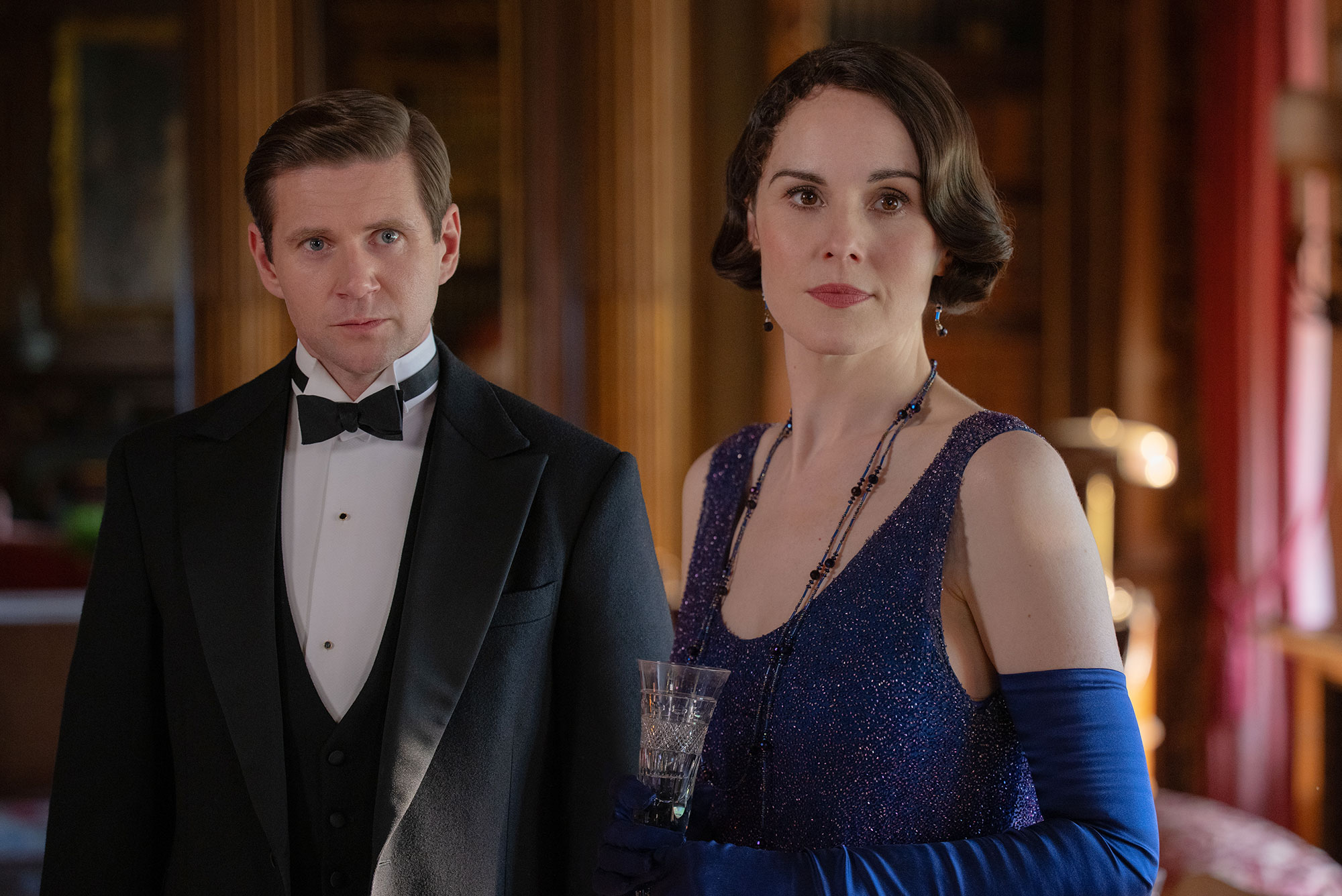
Downton Abbey has bewitched the world over six series with its celebration of a bygone world and Britishisms – and this farewell feature is a fond one, loaded with everything one would expect from such an undertaking. By now we’re in 1930 and the clothes are slinkier, the morals looser and times a-changing. The toffs of Downton are facing financial tightness, the Wall Street crash is wreaking US havoc, social stratas are softening and unbeknownst to anyone, World War II is gestating.
Rory Mulvey/Focus Features
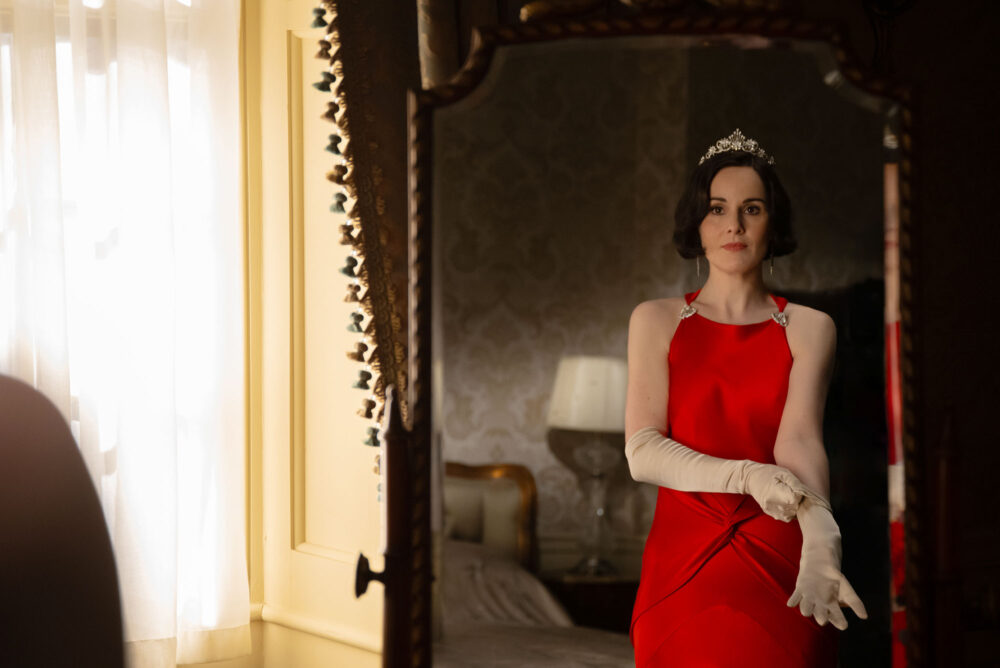
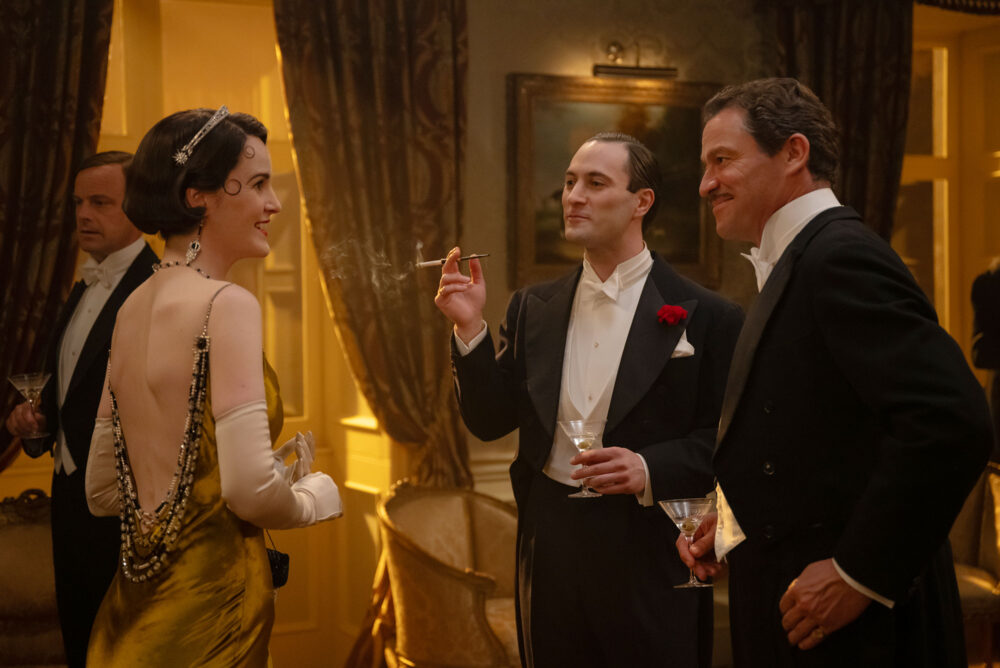
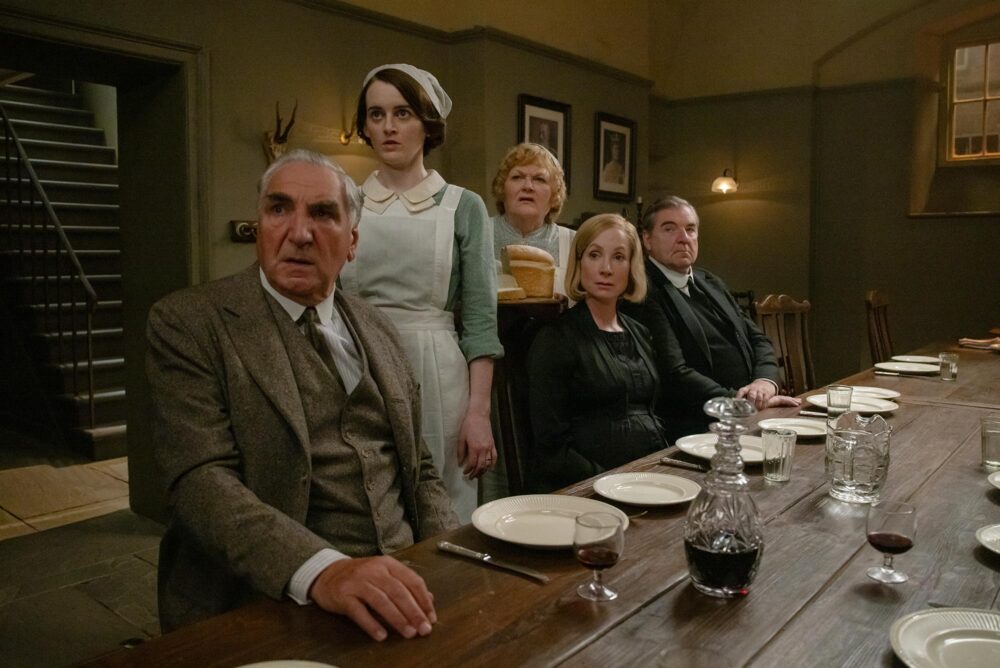
In this between-wars moment Lady Mary (Michelle Dockery) causes controversy when she attends a London party as a divorced woman (and of course, wearing a stunning red dress), the Earl and Countess of Grantham (Hugh Bonneville and Elizabeth McGovern) are contemplating moving into the granny flat recently vacated by the late Dowager Countess Crawley (the late Maggie Smith), and Noël Coward (Arty Froushan) and Uncle Harold (Paul Giamatti) turn up with money woes and lessons in acceptance. Goodbyes are the order of the day; below-stairs Mr Carson (Jim Carter) and Mrs Patmore (Lesley Nicol) are retiring and their send-off allows for audiences to process their own letting go of all the characters.
Rory Mulvey/Focus FeaturesRory Mulvey/Focus Features
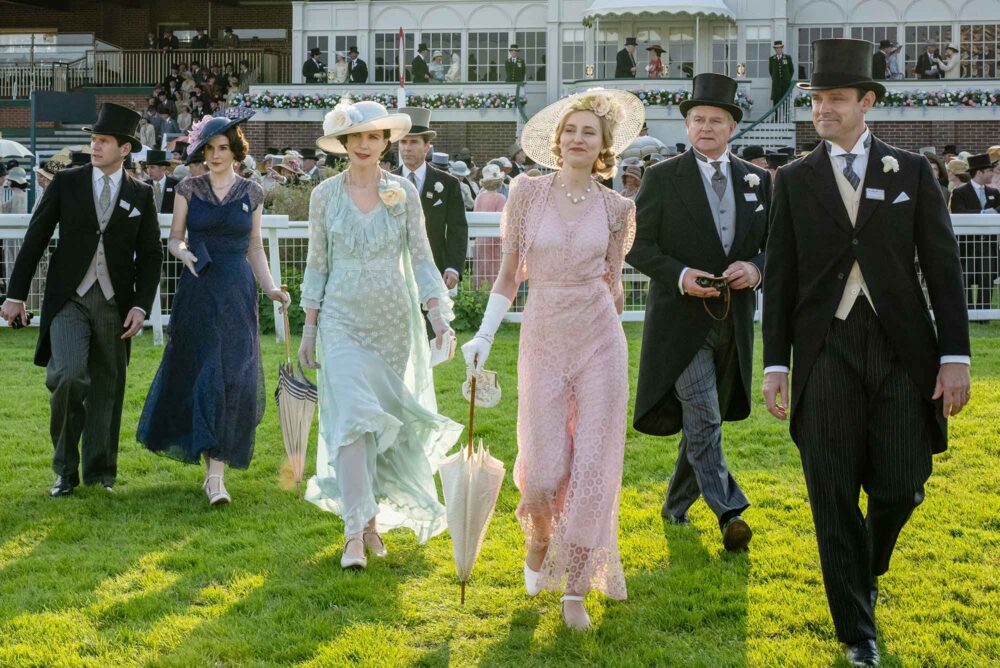
As reliably cosy as the cup of steaming tea served in the library, The Grande Finale ticks all the Downton tropes as it bows out. Society snobbery (at a Mayfair ball and the local agriculture show), a spiffing day out at the races with fabulous period fashions, the servants being sweet on their masters, the aristocrats being the ‘nice’ kind, a huge dinner party causing chaos in the kitchen and, in a button-pushing finale, the ghosts of beloved characters being given their flowers under the gimlet eye of Maggie Smith’s portrait hanging in the main hall. There’s no particular drama (aside from a bit of sauce from Alessandro Nivola’s bounder American visitor) and the silver still gets polished while people sigh about giving up the London town house. Those who have not been along for the ride might wonder about the attraction, but die-hard fans will get their tweed-and-pearls fix.
Photographs by ROWBEN LANTION Words by JANE CROWTHER
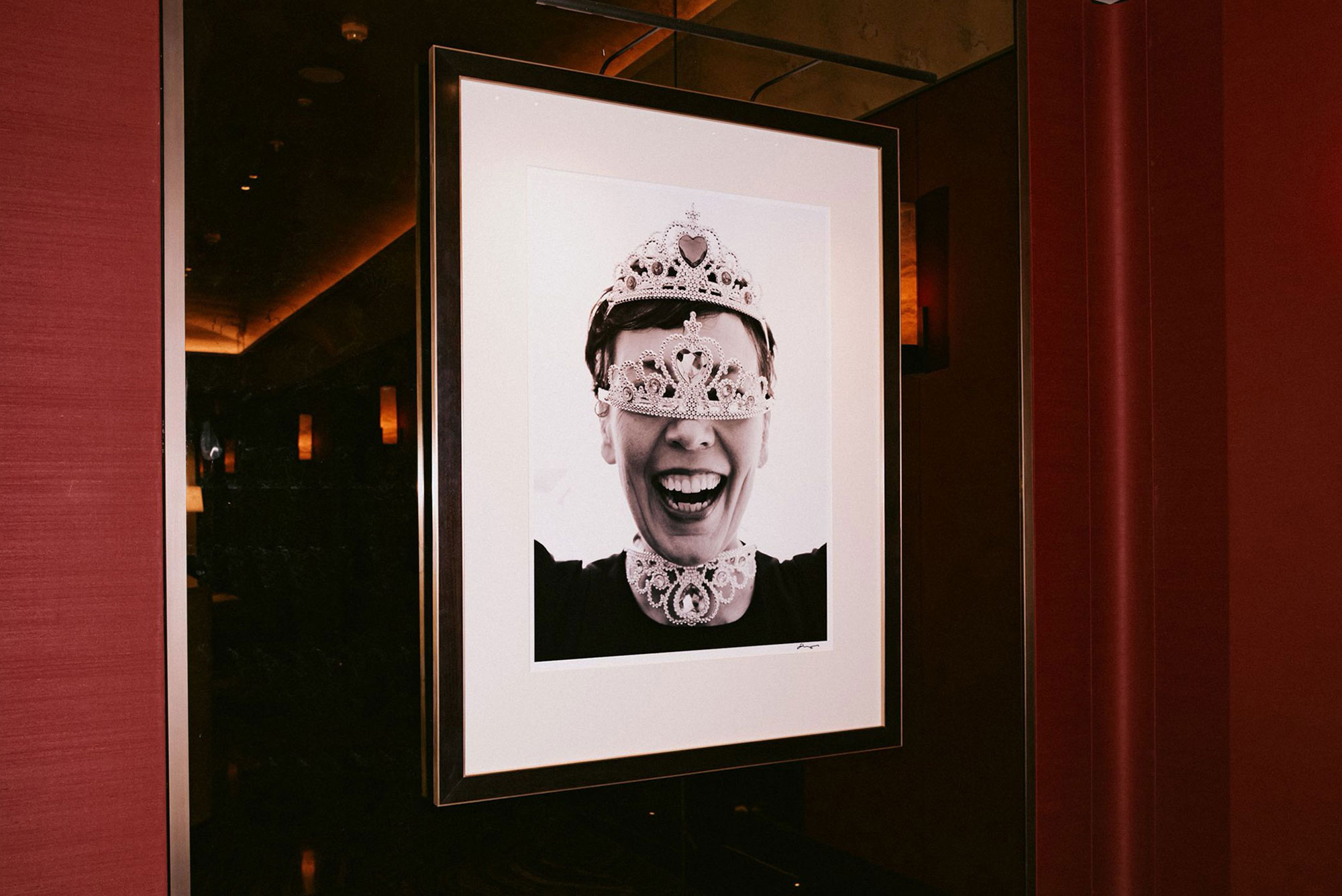
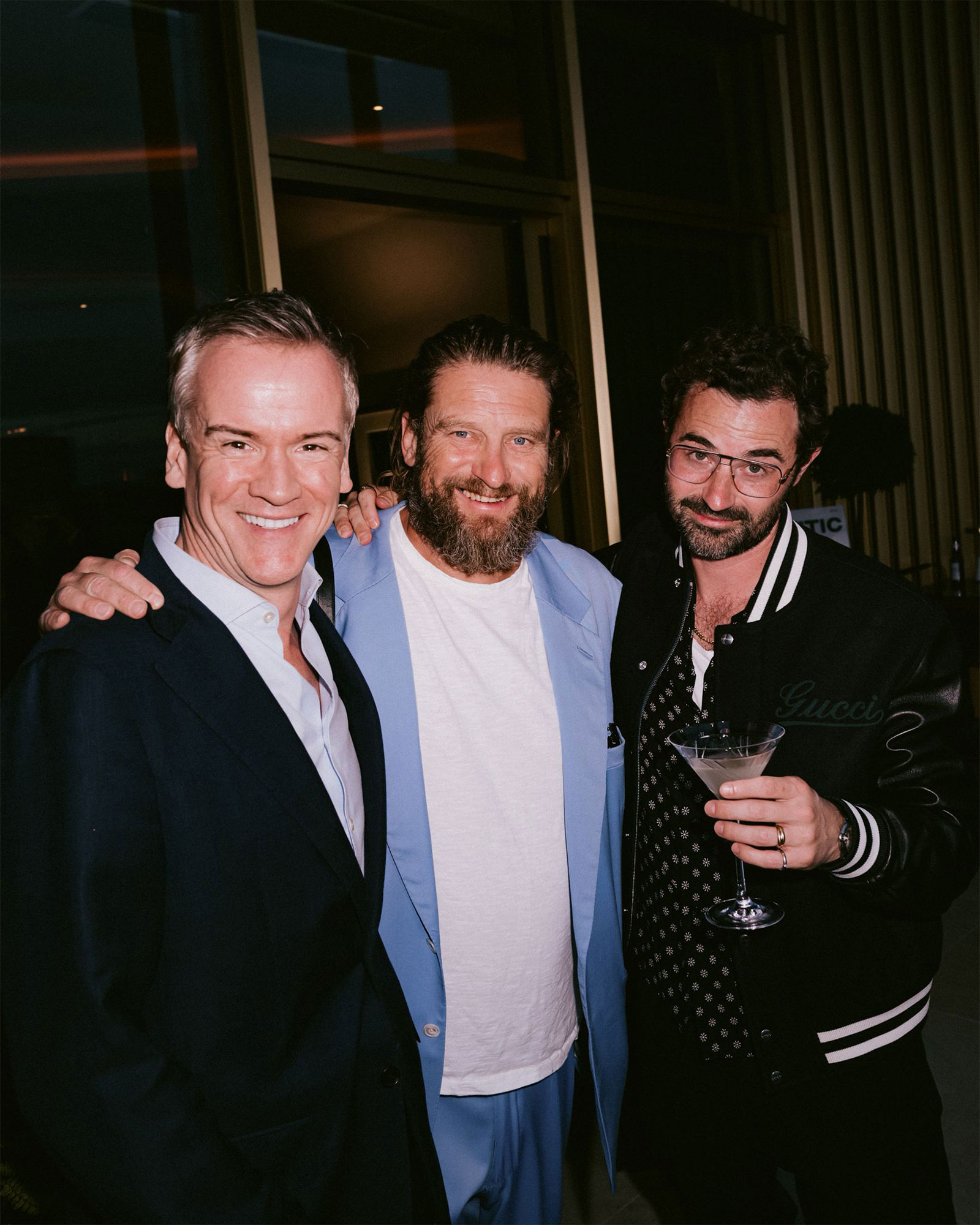
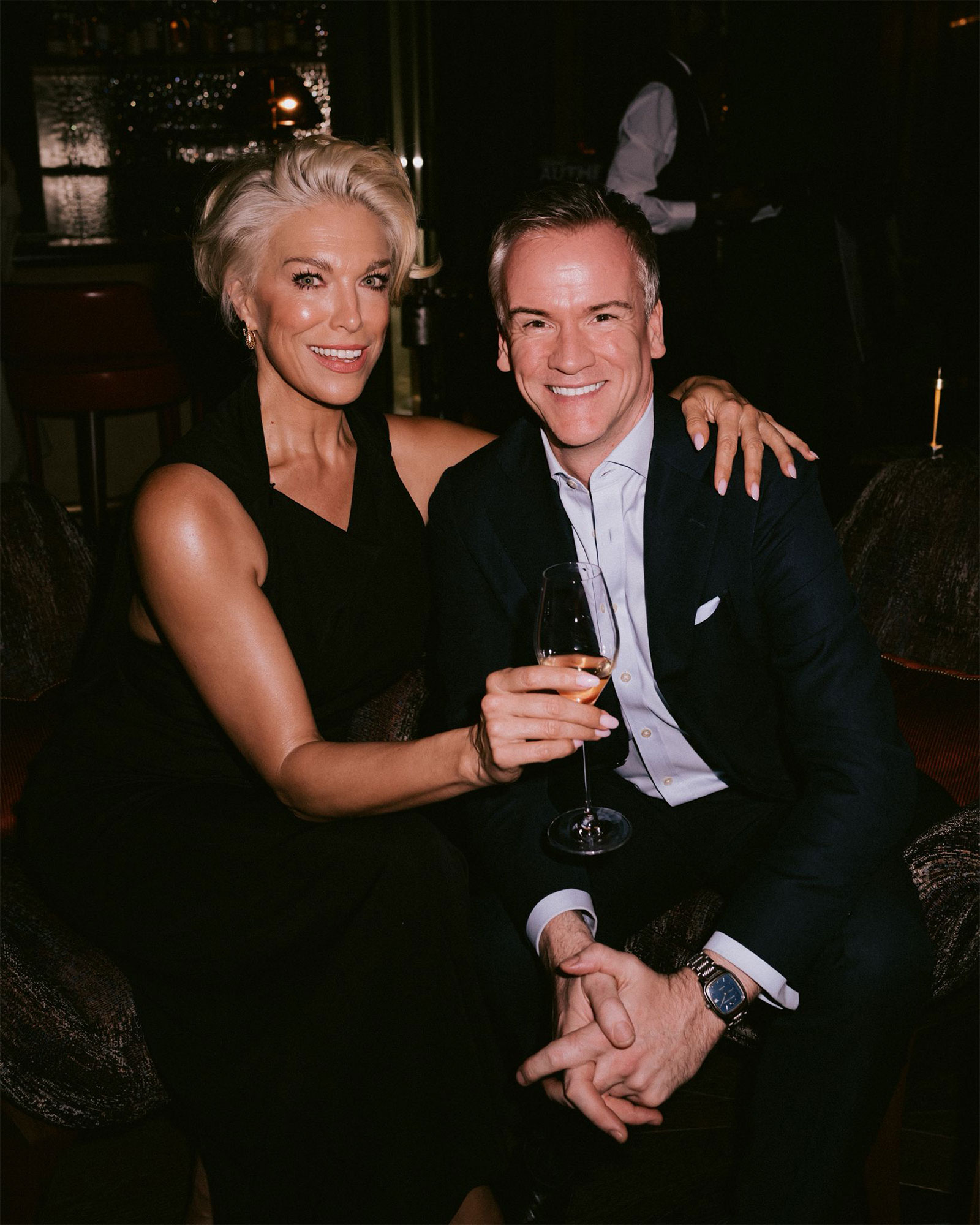
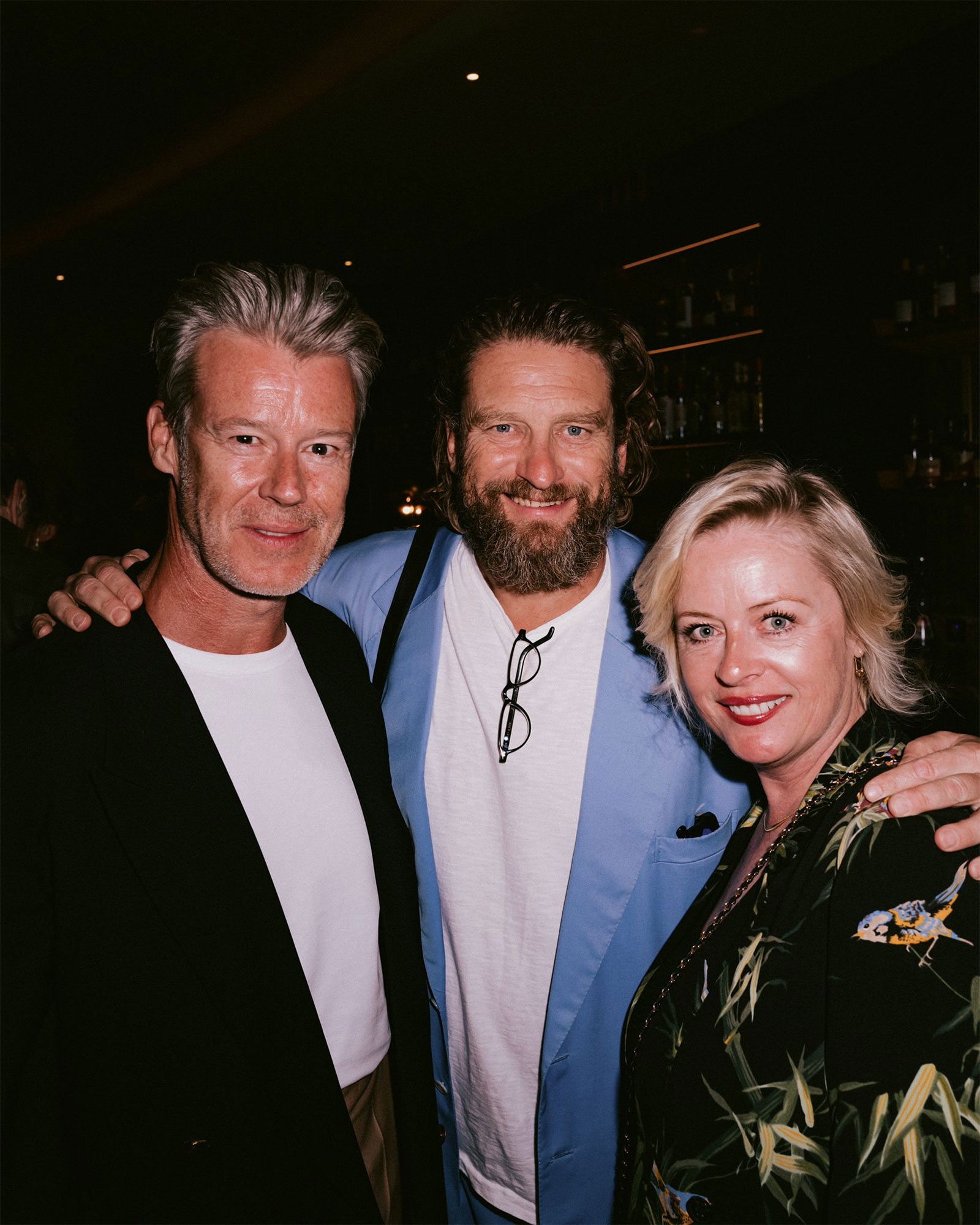
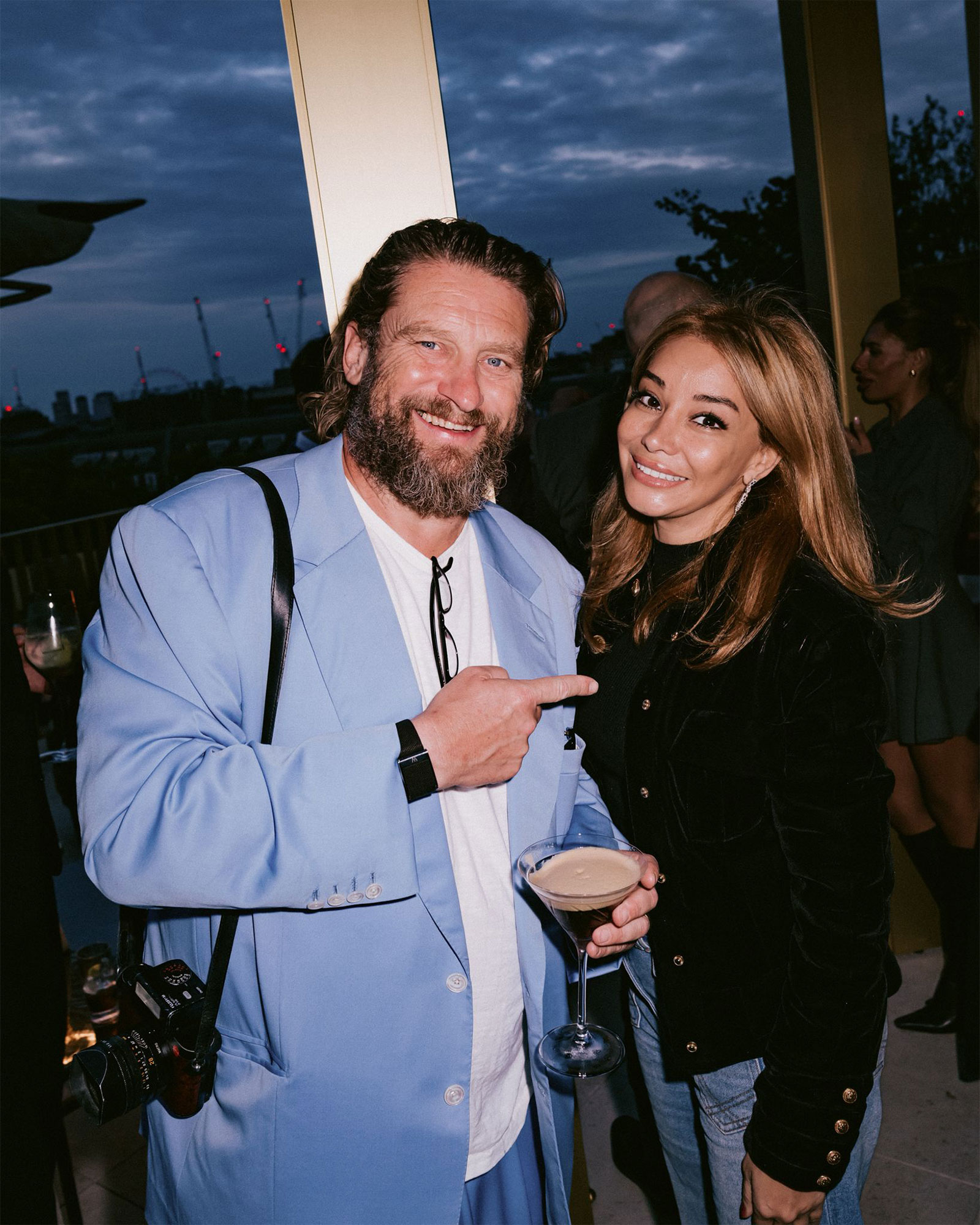
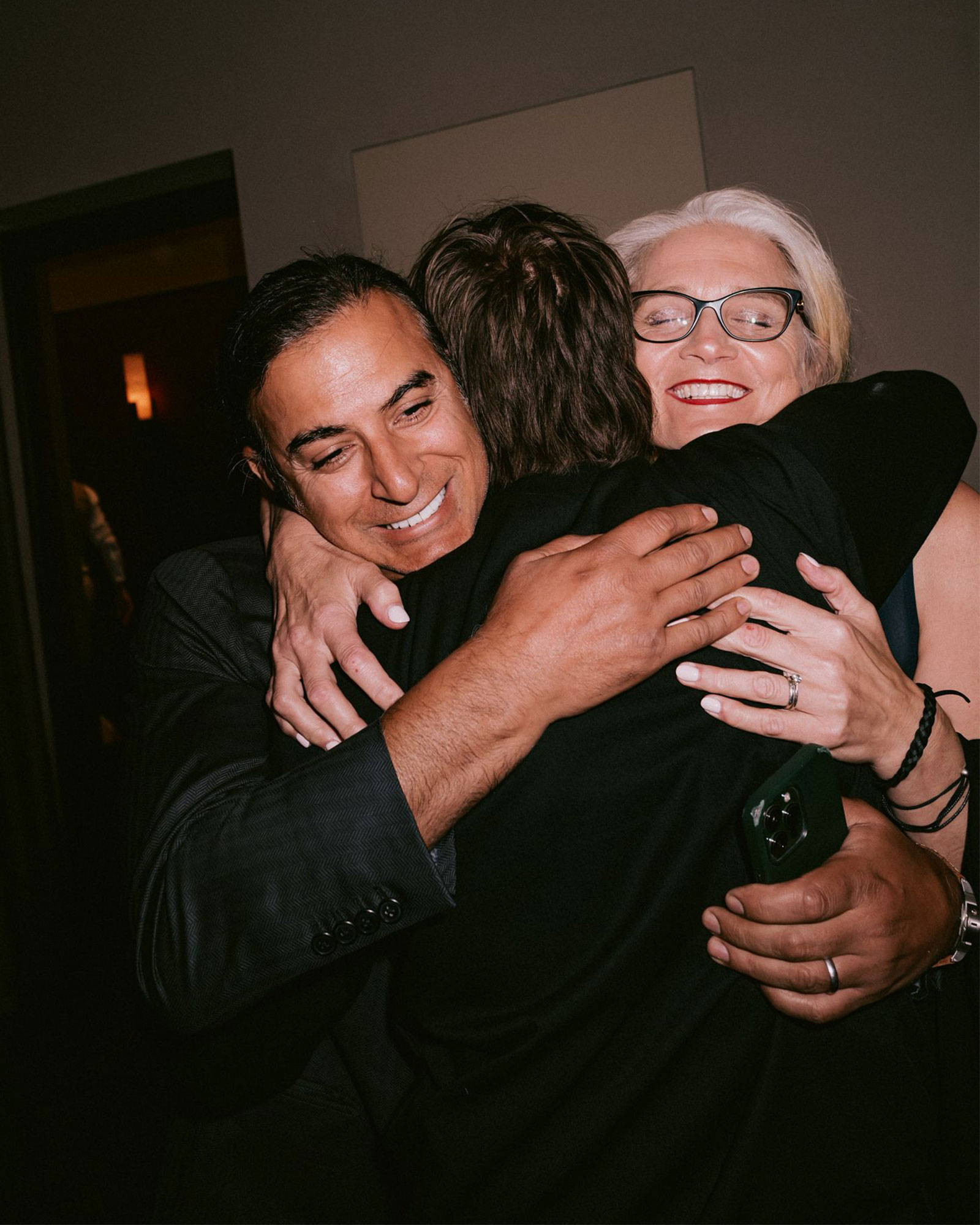
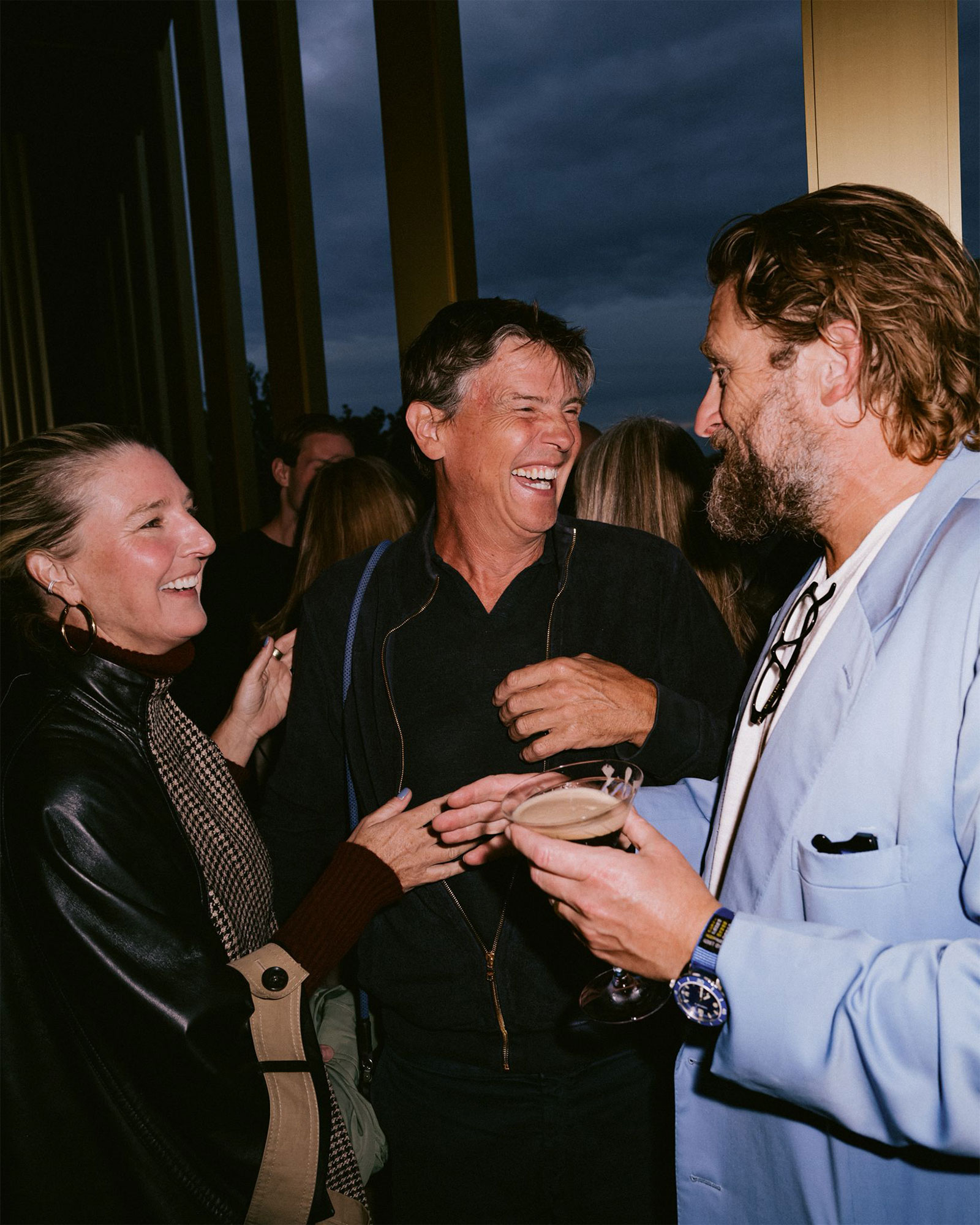
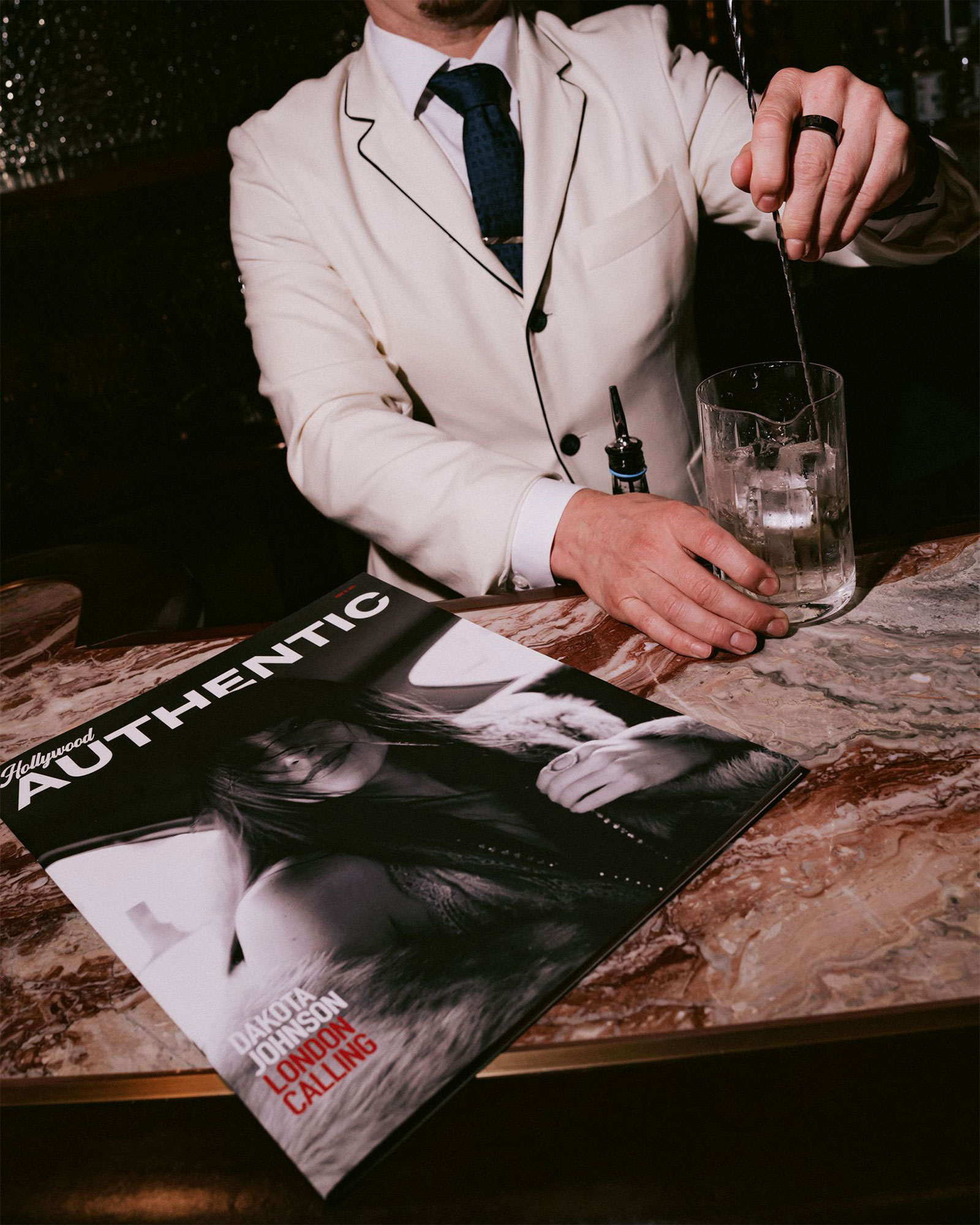
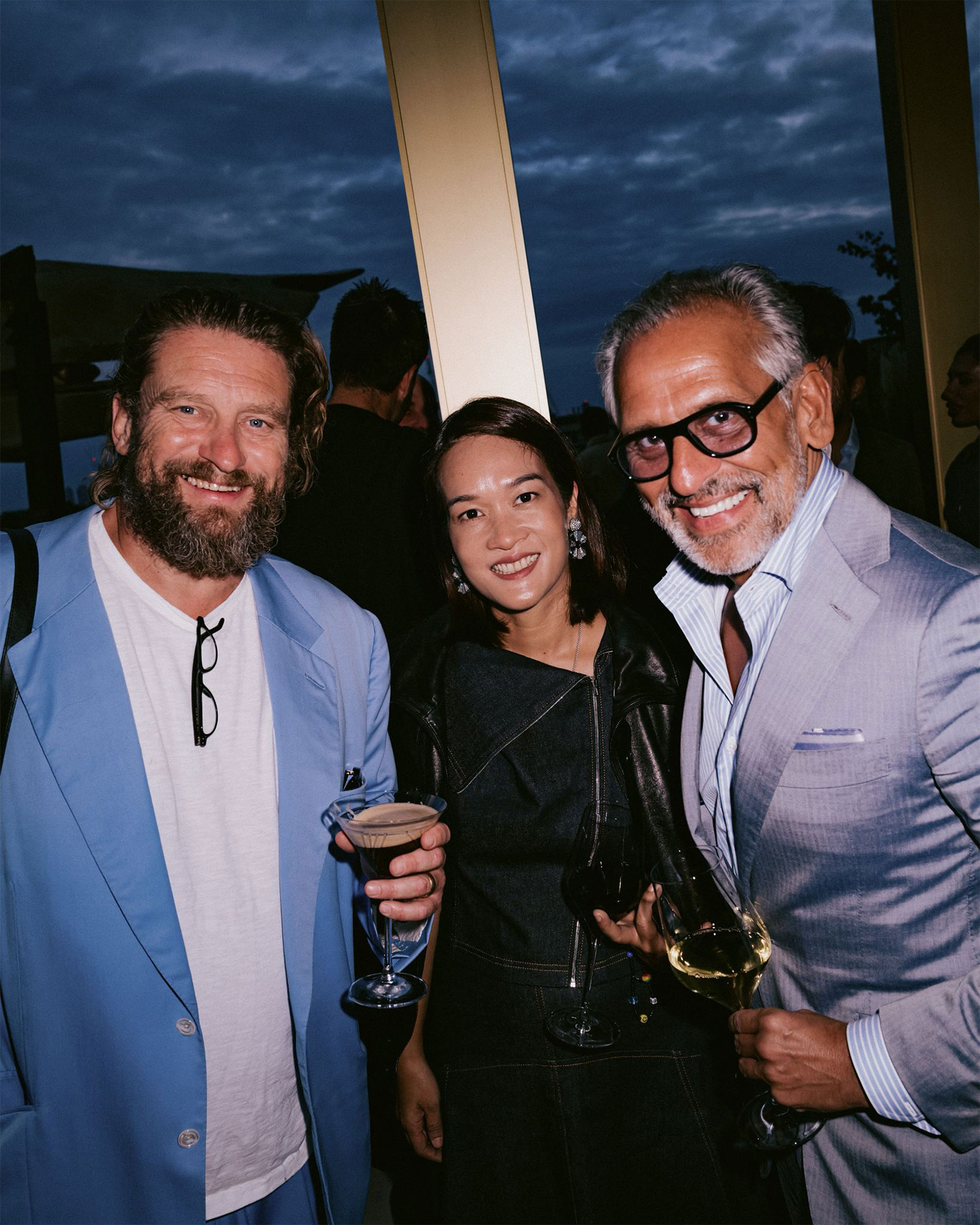
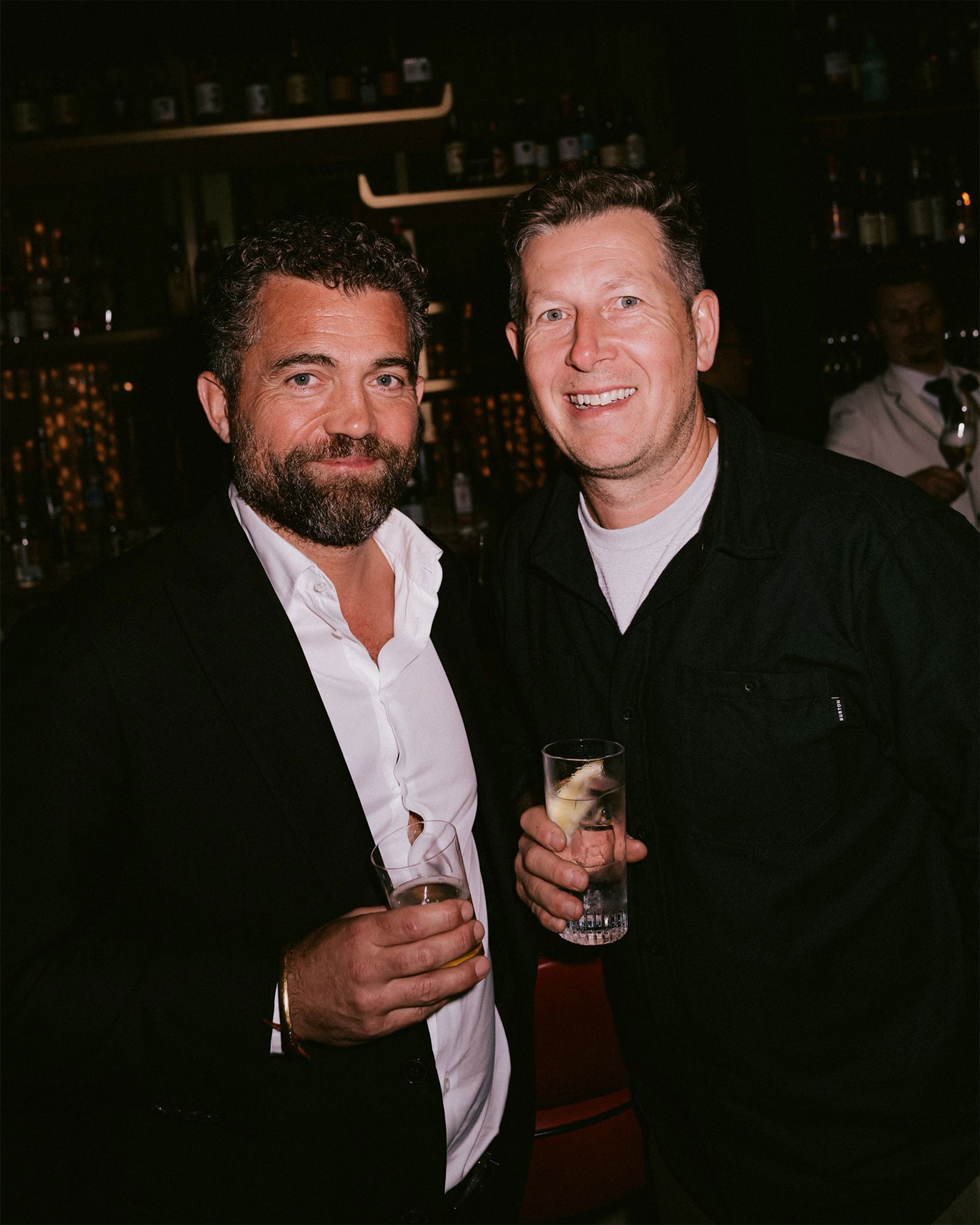
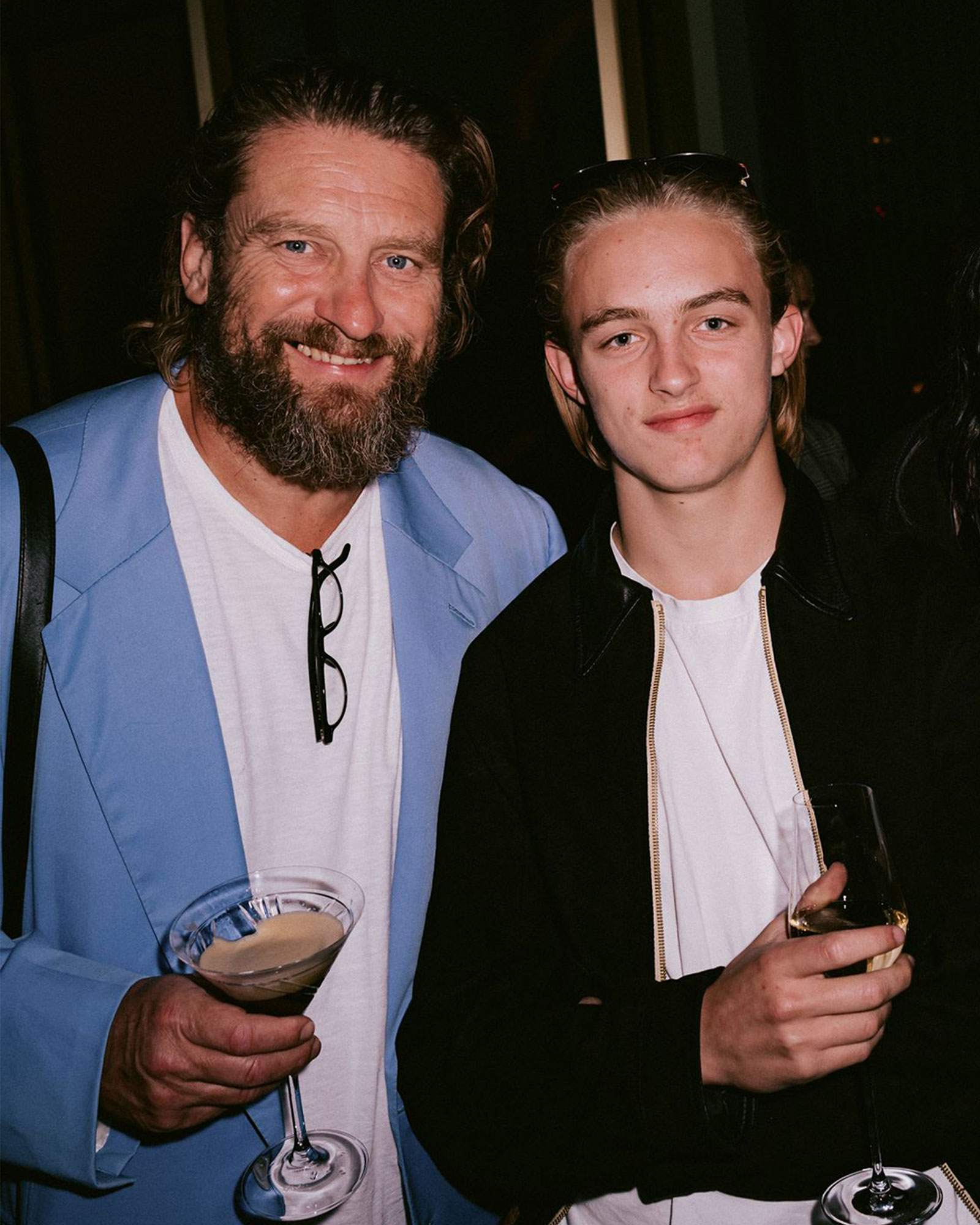
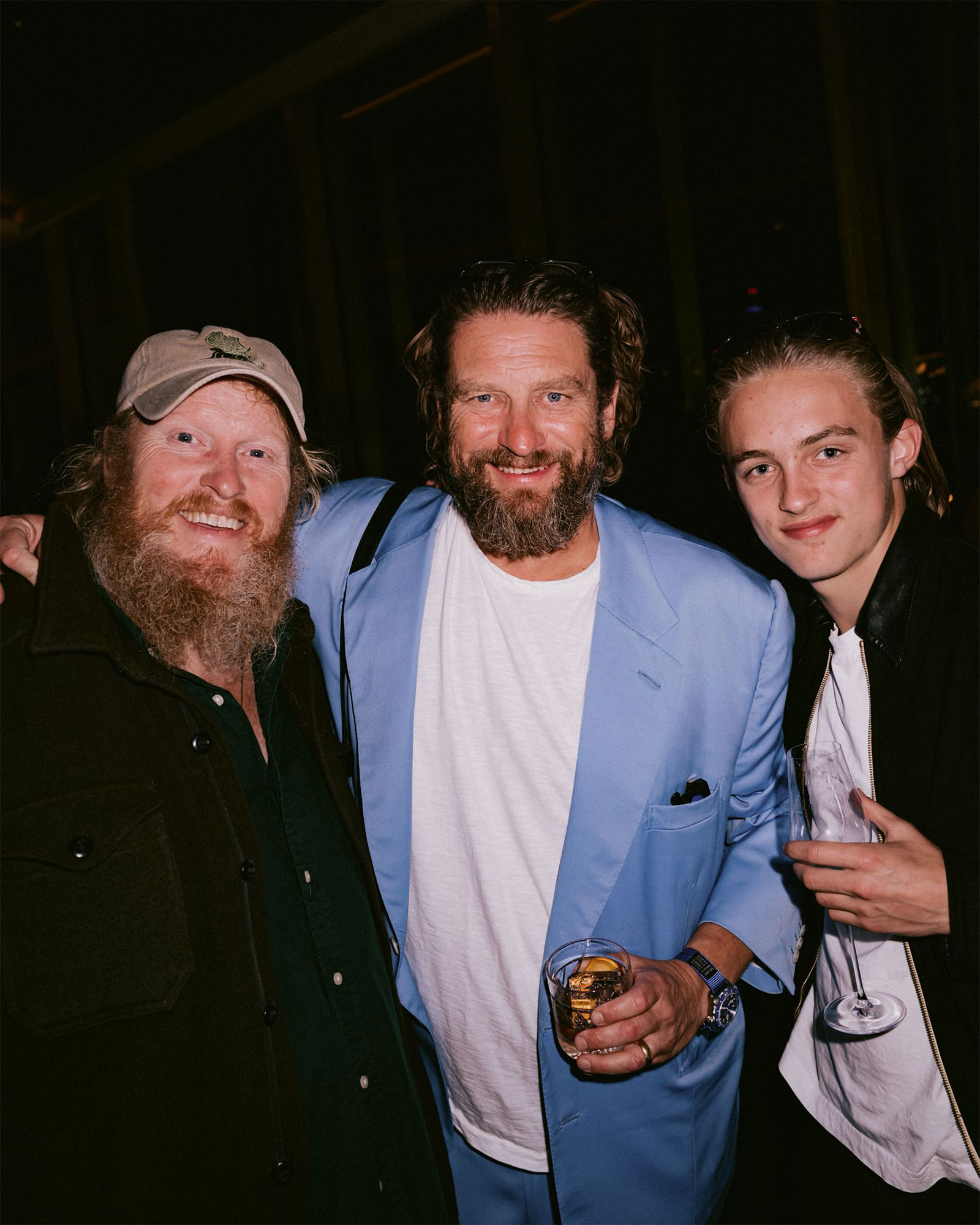
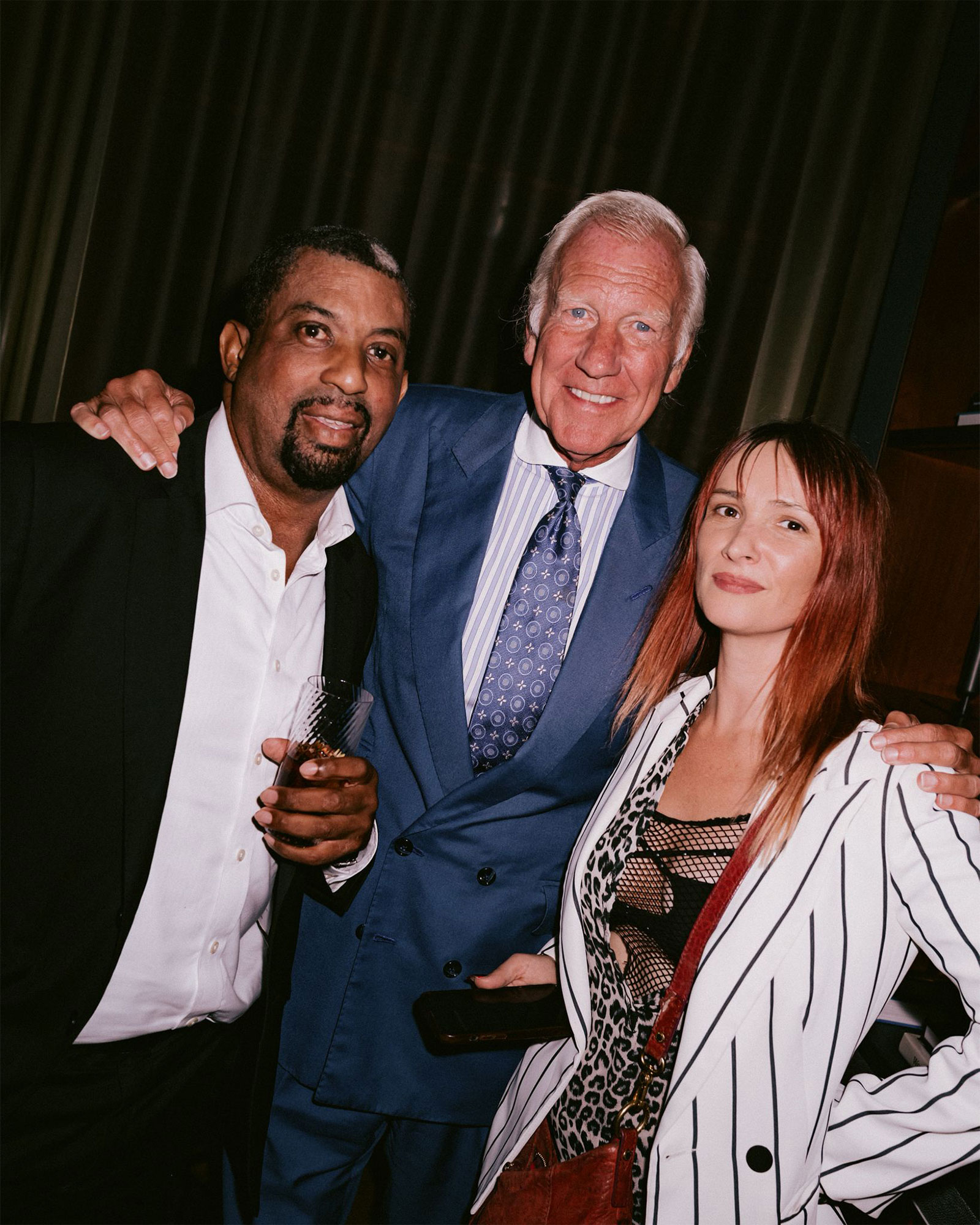
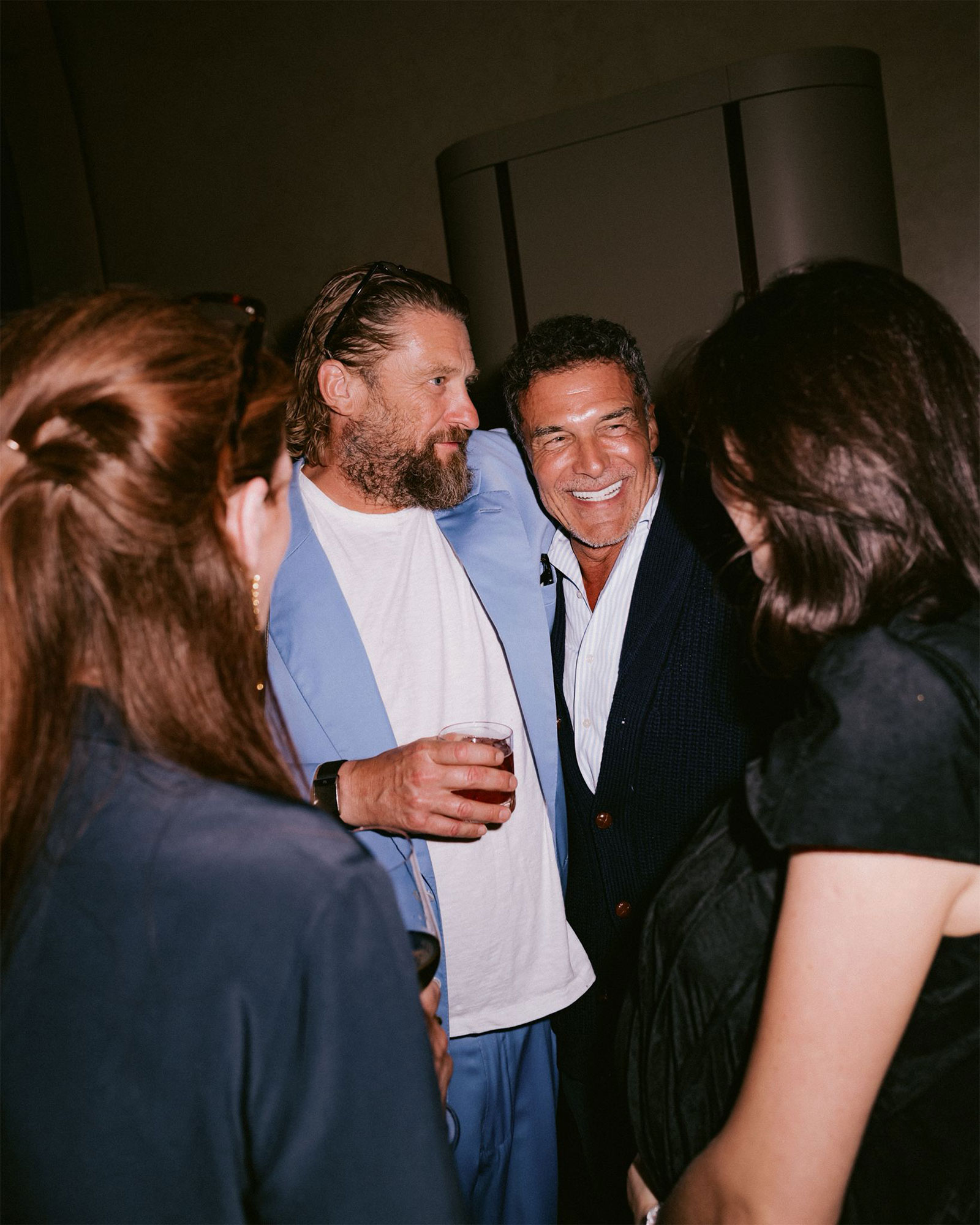
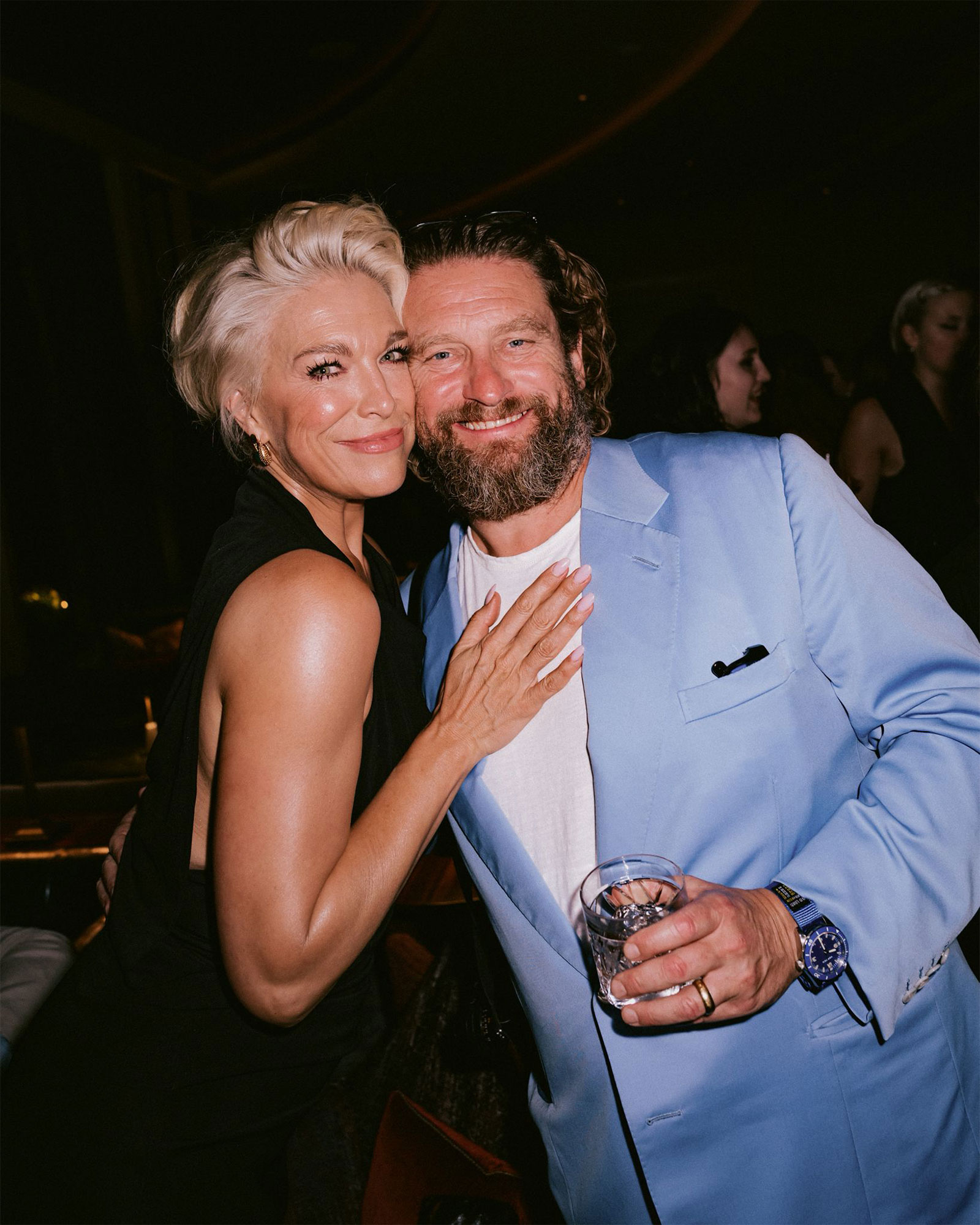
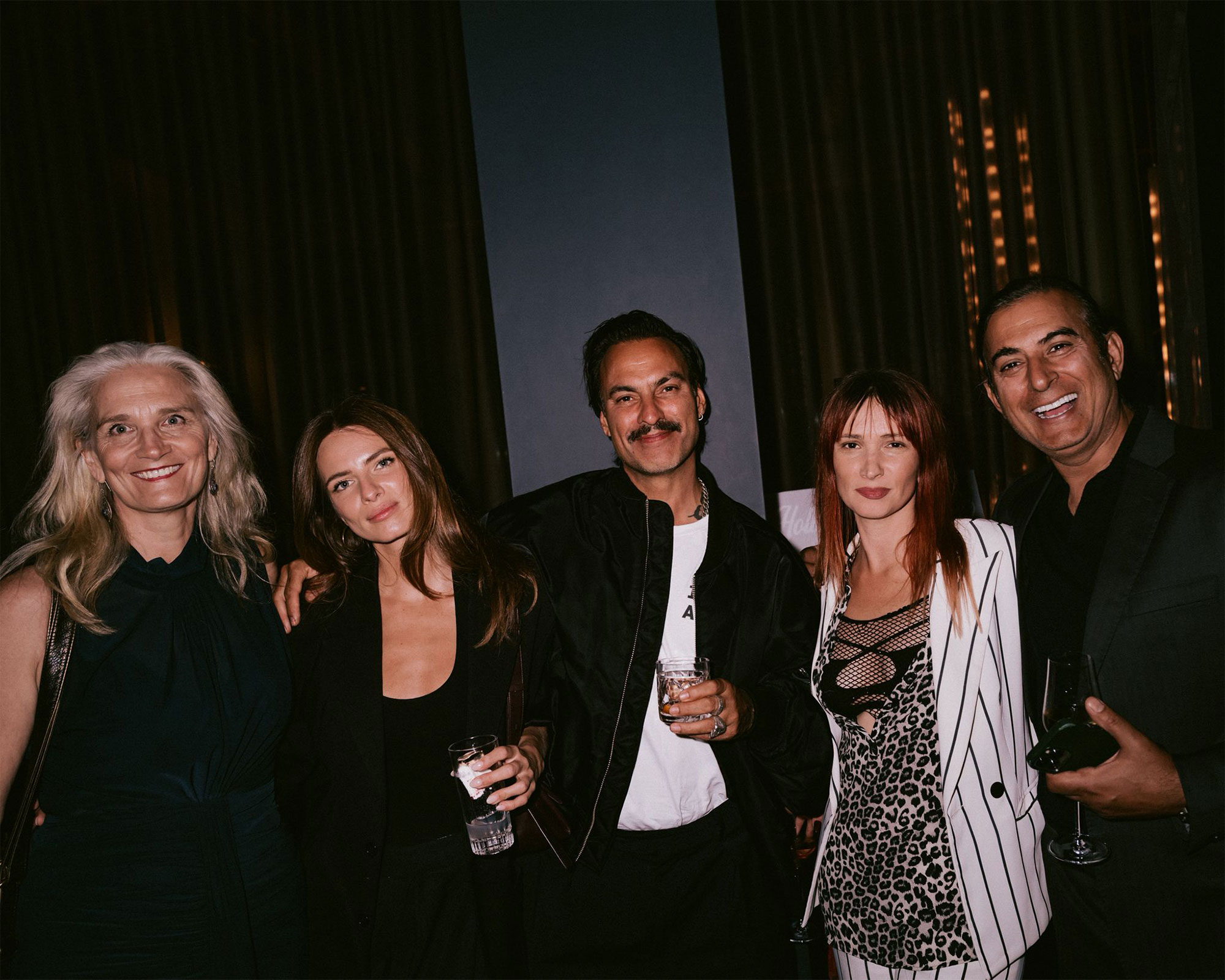
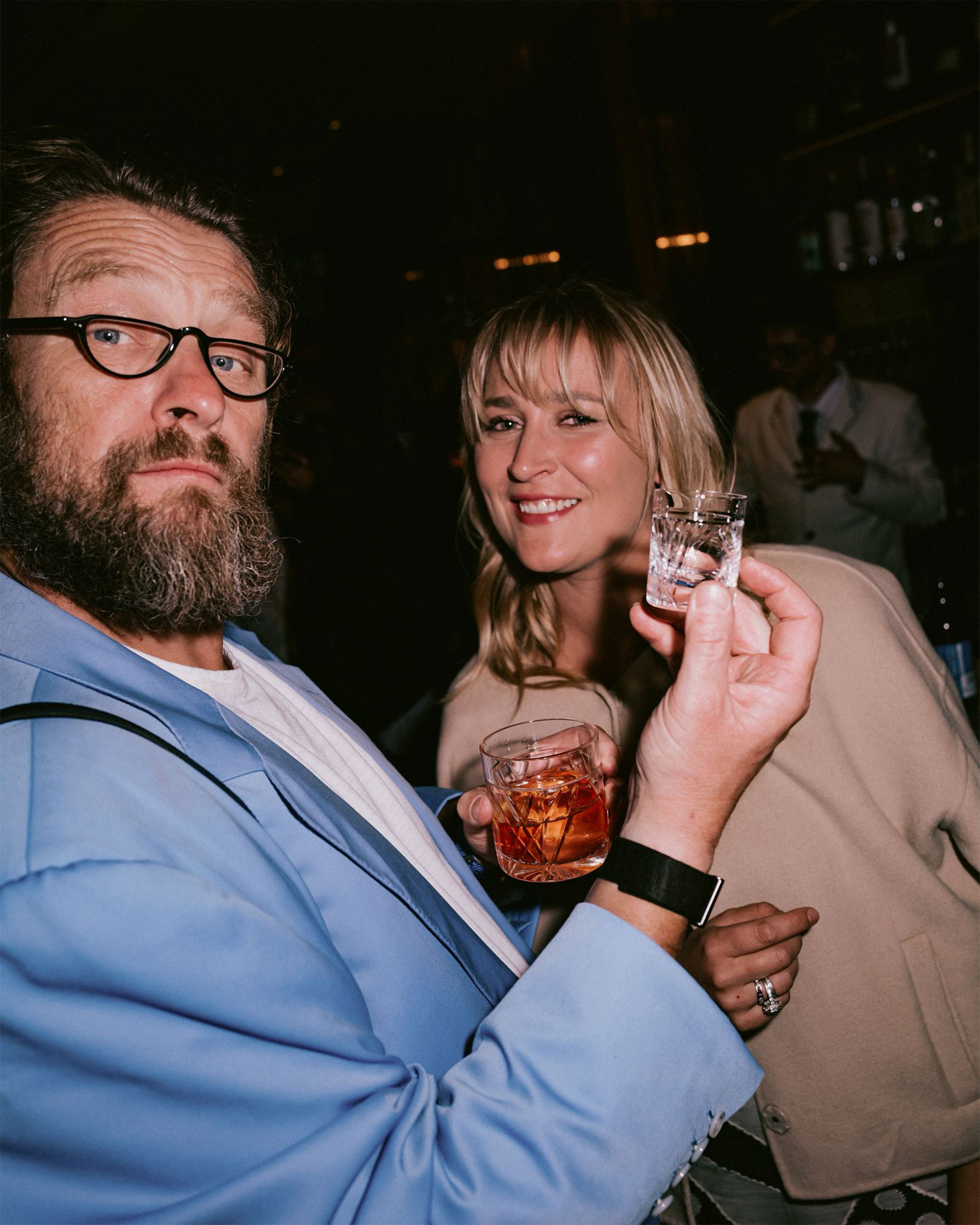
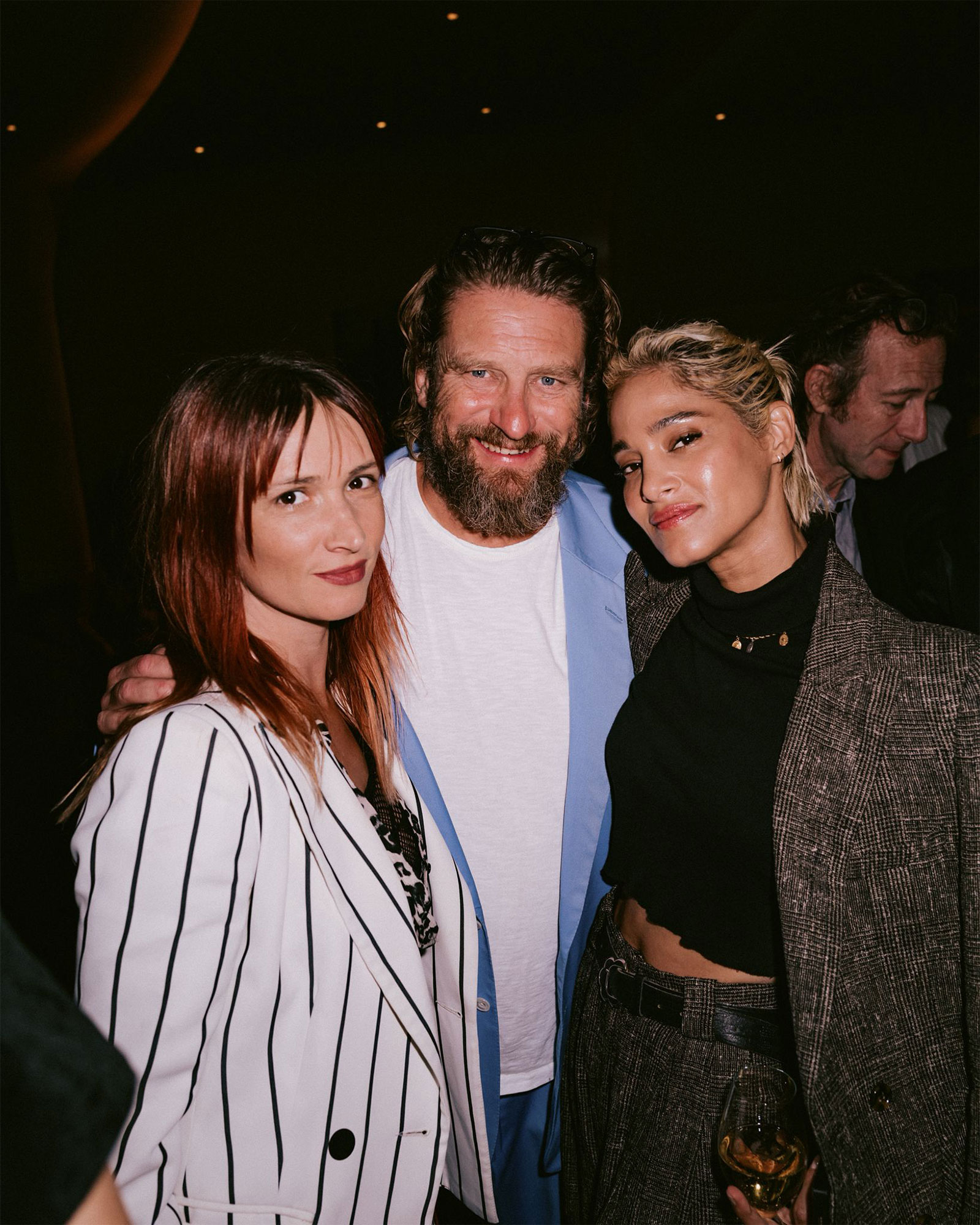
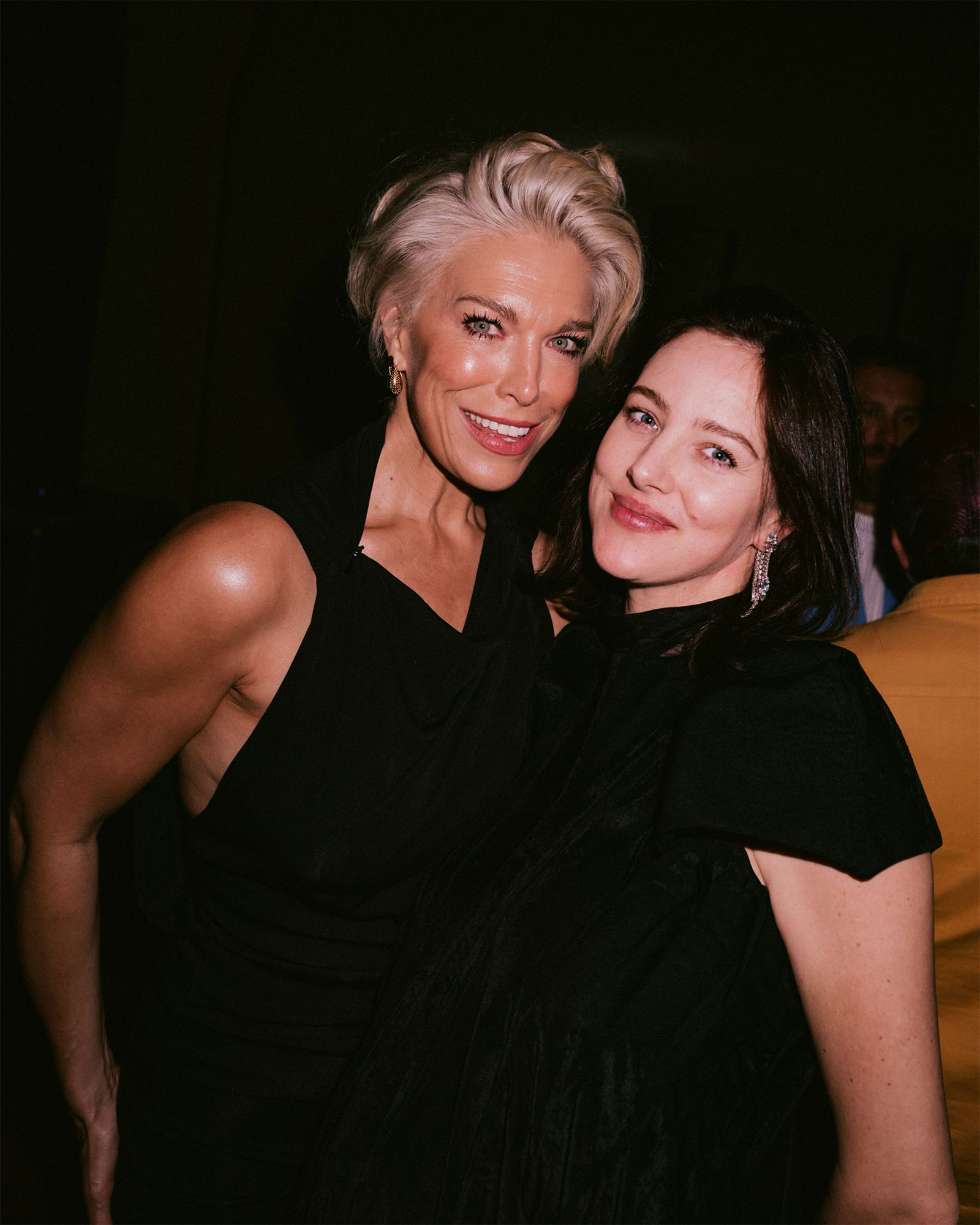
To usher in the release of the tenth issue of Greg Williams’ Hollywood Authentic magazine, the photographer and filmmaker held a rooftop soiree at the newly opened Chancery Rosewood Hotel in Mayfair where guests drank from Hollywood Authentic-designed glassware in the Eagle Bar, perched on the seventh floor building with views of London. The hotel was the location for Williams’ cover shoot with Dakota Johnson for issue 10 and is the former US embassy in Grosvenor Square. The bar is so named for the gold eagle sculpture by Theodore Roszak that is made from former B-52 bombers and hovers over the edge of the building. As night fell and the skyline twinkled, guests including Sofia Boutella, Hannah Waddingham, André Balasz and Jimmy Napes took in the vistas, the nine Greg Williams prints on permanent exhibition throughout the venue and the themed cocktails dispensed from the bar – one of two which crown the roof.
‘When we first started Hollywood Authentic, we were advised that most new magazines don’t make it past their first issue,’ Williams noted. ‘I’m so proud to prove that statistic wrong with issue 10…’
Photographs by ROWBEN LANTION Words by JANE CROWTHER
Photographs by GREG WILLIAMS Words by JANE CROWTHER
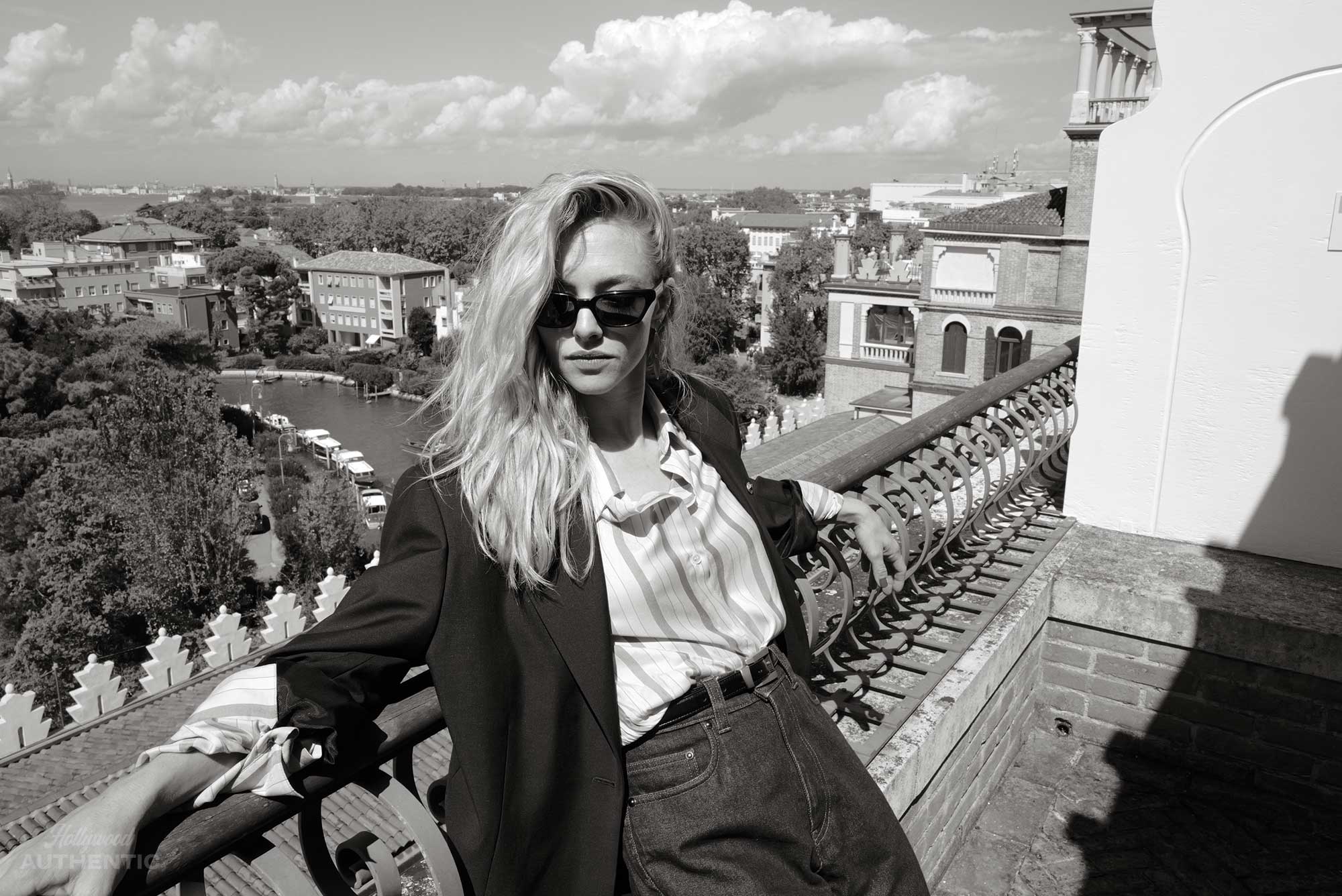
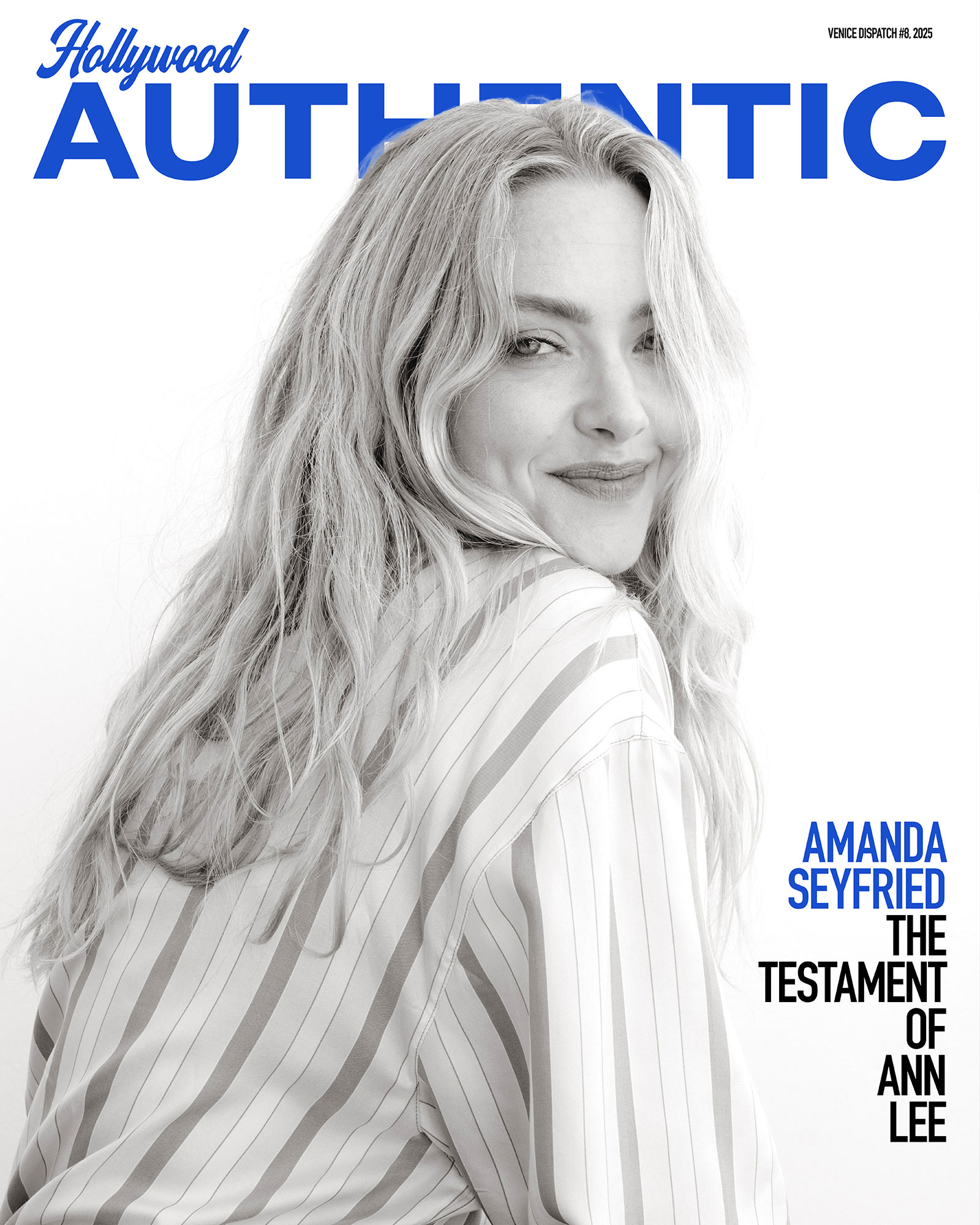
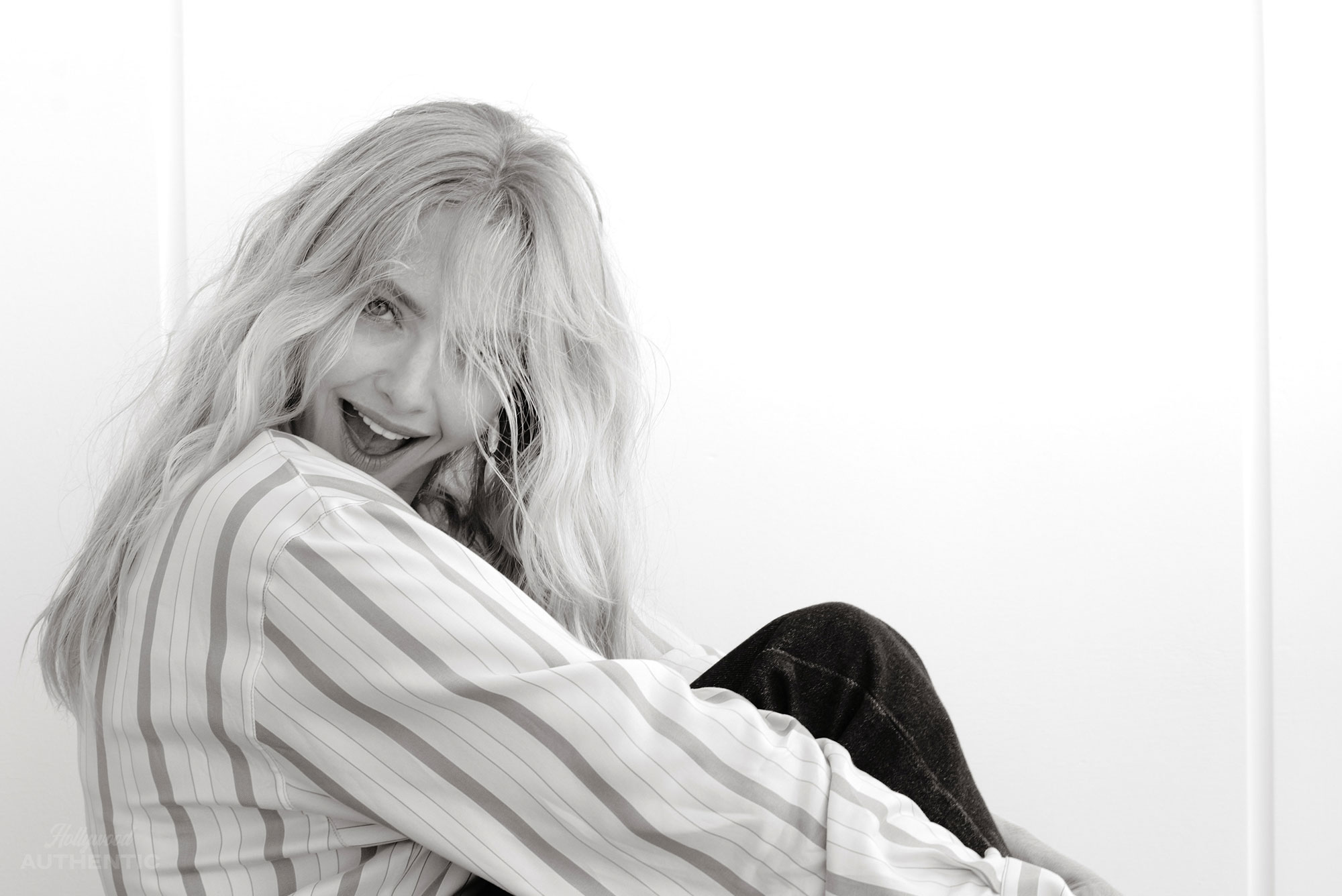
Amanda Seyfried let loose while making her unconventional biopic of Ann Lee, the 18th century leader of religious group, the Shakers – famous for their convulsions, dancing and vocalisation during their worship. Born in Manchester, Ann experienced visions, believed herself to be the second incarnation of Christ and was radical in her teachings. In Mona Fastvold’s film, The Testament Of Ann Lee (which was co-created with The Brutalist writer-director Brady Corbet), Lee is portrayed by Seyfried as a force of nature, inspiring followers and challenging societal norms. When she prays she and the cast dance and move while singing original Shaker hymns, grunting, keening and screaming in a kind of orgiastic ritual.
‘This did feel like an opportunity where there were just no tethers to anything,’ Seyfried told the press in Venice as the film debuted there. ‘Basically, I follow Mona into the light and anything goes because there’s so much freedom, and the only threat is to not use that freedom to your advantage as an artist to go as far deep as you can go to make the craziest sounds. I’ve never been let loose in this way.’
‘The reason I was able to face these challenges as an artist, was because I felt completely protected, held up and surrounded by loving artists, and in a place where everybody knew the value of making this, and understood Mona’s vision. I have to say it, this was incredibly rare and might never happen again.”
Unlike Ann, Seyfried admits she wasn’t always sure of herself. ‘I kept saying [to Mona], ‘go with somebody English,’ because the accent seemed so hard. But she believed in me, and so I believed in me, and here we are.’ Fastvold told journalists that her star possessed the necessary wildness to inhabit the role. ‘Amanda has a lot of power. She’s very strong, a wonderful mother, and she’s a little mad. I knew she could access those things. I saw Amanda was ready to go full force.’
Photographs by GREG WILLIAMS Words by JANE CROWTHER
The Testament of Ann Lee premiered at the 82nd Venice Film Festival Released in cinemas at a later date Amanda Seyfried wears Prada and Tiffany & Co. jewels