
February 26, 2026

Fantasia, Get Smart, Her, The Soloist, The Walt Disney Music Hall, Mario de Lopez

Photographs MARIO DE LOPEZ
Words by MATT MAYTUM


A modern classic that has come to define 21st-century LA, this musical monument to one of Hollywood’s most ambitious producers is an audio and visual masterwork; a striking feat of design embraced by the music community and the movies.

Hollywood Authentic reflects on the genius that inspired the Walt Disney Concert Hall – ‘the light of the Hollywood dream’. 

How long does it take for a building to become a landmark? The Walt Disney Concert Hall in Bunker Hill makes the case that it can happen instantaneously, even if the journey to the opening wasn’t always smooth. Standing as a monument to two giants in their respective fields – pioneering filmmaker Walt Disney and exuberantly ambitious architect Frank Gehry – the venue, which is home to the LA Philharmonic, was conceived as ‘a living room for the city’. That contradiction between welcoming accessibility and imposing achievement defines Disney and Gehry. Both made magic that sprung from pencil sketches.

Fantasia, Get Smart, Her, The Soloist, The Walt Disney Music Hall, Mario de Lopez

To see Gehry’s squiggly starting point for the Concert Hall, it’s almost impossible to fathom what it turned into. There’s a deconstructivist spirit to the gleaming surfaces that make up the striking exterior of the building, which remains open to interpretation. Do you see a futuristic spaceship with sails, or loose, billowing music sheets, or something else entirely? It’s an invitation to imagination, the building’s clean visual sweep belying the technical rigour required to bring it to life when it first opened in 2003. Even if you’ve never been – and a reported four million visitors flocked there within the first three years of opening – you’ve certainly seen its sleek lines in one of its many TV and film appearances. But it wasn’t all plain sailing…

The project began in earnest in 1987, with a $50m donation from Walt’s widow, Lillian Disney, which she bestowed on the Los Angeles Music Center (Lillian would die 10 years later, before the hall was completed). It was a tribute to Walt’s passion for the arts, and music in particular – classical music was central to so many of his animated works, not least the Silly Symphony shorts and his 1940 opus Fantasia, which synchronised classical pieces with shorts of varied animation styles. As Walt’s work made entertainment accessible for all, so would the Concert Hall.

Finding the architect was the first step, and Gehry was eventually chosen as the longlist was whittled down to one (other contenders had included architecture giants Hans Hollein, Gottfried Böhm and James Stirling). Canadian-American Gehry was one of the biggest names in the business at the time, and worked on the Guggenheim Museum Bilbao over a similar time period (though the Spanish building would be completed first, and its shiny metallic finish would eventually inspire the Concert Hall). 

Fantasia, Get Smart, Her, The Soloist, The Walt Disney Music Hall, Mario de Lopez

After landing the appointment, Gehry visited the Berliner Philharmonie concert hall, staying in the city for a week and attending every concert. The feeling of intimacy that architect Hans Scharoun had achieved was inspiring to Gehry, who described the German as ‘a master of people-feeling architecture’. The Walt Disney Concert Hall took the best part of two decades to come together, and there was a period of a couple of years from 1994 where construction stalled entirely, thanks to a runaway budget and reported internal feuding, before it got back on track in 1996, with help from numerous benefactors; many are named on the sweeping tiled wall inside, and the curved staircase is named in honour of film composer Henry Mancini.

Gehry had originally planned to have the Concert Hall finished in stone, which he believed would glow at night. But budgetary concerns twinned with the success of Bilbao made the now iconic metal finish inevitable. Gehry leaned on Dassault Systèmes’ CATIA (Computer-Aided Three-Dimensional Interactive Application) to translate the design into practical plans for contractors. Such VFX tech was necessary to bring his idea into reality; every stainless steel panel used is a unique shape. To avoid the need for rivets, 3M’s VHB Tape – a kind of super, double-sided tape also used on aircraft – held the panels in place.

When it opened in 2003 – at a total cost of $274m – it became an instant classic (despite some protests over the spending given the city’s poor and homeless population).  A review in the New York Times called the Concert Hall ‘a French curve in a city of T squares’, evocatively describing it as ‘the light of the Hollywood dream’. Yes, some of the panels needed to be sanded down as they were creating too much glare for drivers and overheating some nearby apartments, but it’s no surprise that film stars and movie fans have flocked to the location.

Among its notable screen appearances, the Walt Disney Concert Hall is also the setting for a swanky event ahead of the climax of 2008’s Iron Man. Where else for genius, billionaire, playboy, philanthropist Tony Stark? In the same year, it was also featured in a pivotal sequence in spy comedy Get Smart, starring Steve Carell and Anne Hathaway, who are at the venue to stop a bomb threat against the president (James Caan), who’s attending a concert. ‘It’s the crown jewel of LA,’ Get Smart’s location manager Kokayi Ampah said of using it in the film. ‘It says you’re in LA.’

Fantasia, Get Smart, Her, The Soloist, The Walt Disney Music Hall, Mario de Lopez

The project began in earnest in 1987, with a $50m donation from Walt’s widow Lillian Disney, which she bestowed on the Los Angeles Music Center

The Concert Hall also provided near-future vibes for Spike Jonze’s prescient AI-companion romance Her, as Theodore (Joaquin Phoenix) and Samantha (voiced by Scarlett Johansson) people-watch, and Marion Cotillard’s tortured soprano had a residency there in outlandish musical Annette. It received the ultimate decree of pop-culture status with a parody on The Simpsons (featuring a cameo from Gehry himself).

But perhaps its most apt onscreen use was in Joe Wright’s The Soloist, which told the true story of Nathaniel Ayers (Jamie Foxx), a gifted cellist who develops schizophrenia and becomes homeless, before finding a path back via journalist Steve Lopez (Robert Downey Jr.). Because, for all the cinematic showiness of the building’s exterior, it is first and foremost a music venue, and while those sweeping curves continue inside, the wooden surfaces – which glow almost gold – add to a cosy, inviting space.

The acoustics were baked into the design of the building as a priority. Gehry broke away from the conventional ‘shoebox’ layout for a concert hall, to have the seating in the round. While this seating makes it slightly more awkward for visitors to file into, Gehry said that ‘the payoff is incredible’, that the musicians felt more connected to the audience, and vice versa. Testing the sound on a scale model and working with acousticians Yasuhisa Toyota and his predecessor Minoru Nagata, to ensure that there was not a bad seat in the house when it came to sound. With the sound reflection offered by the Douglas fir panelling, there’s no need for audio amplification for any of the 2,265 seats.

A focal point of the hall is the 6,134-pipe organ that Gehry designed in conjunction with organ designer and builder Manuel J. Rosales. The pipes are referred to as French fries for the way they poke out irregularly, in a riposte to the anticipated formality of such an instrument. It’s another fun personal touch in a venue where everything feels generously considered, from the lobby’s ‘trees’ (wood-clad metal beams) to the lily fountain that can be found in the Blue Ribbon Garden. The latter was a tribute to Lillian Disney from Gehry, who instructed Tomas Osinki to build the smooth, wavy structure from thousands of mosaic fragments created from specially acquired Royal Delft Blue porcelain. Gehry had said at the time of completion that he saw the Concert Hall as a ‘kind of flower’ to Lillian, and that expression finds fitting form in this graceful marvel.

Gehry died in December 2025, leaving behind an incredible legacy. Like Walt Disney, Gehry was an innovator who brought art and imagination to the masses. It’s fitting that his most iconic work pays tribute to a fellow trailblazer, and like Walt’s work it will continue to entertain and inspire.  


Photographs by MARIO DE LOPEZ
Words by MATT MAYTUM
The Walt Disney Music Hall
111 S Grand Ave, Los Angeles, CA 90012
www.laphil.com

Words by JANE CROWTHER


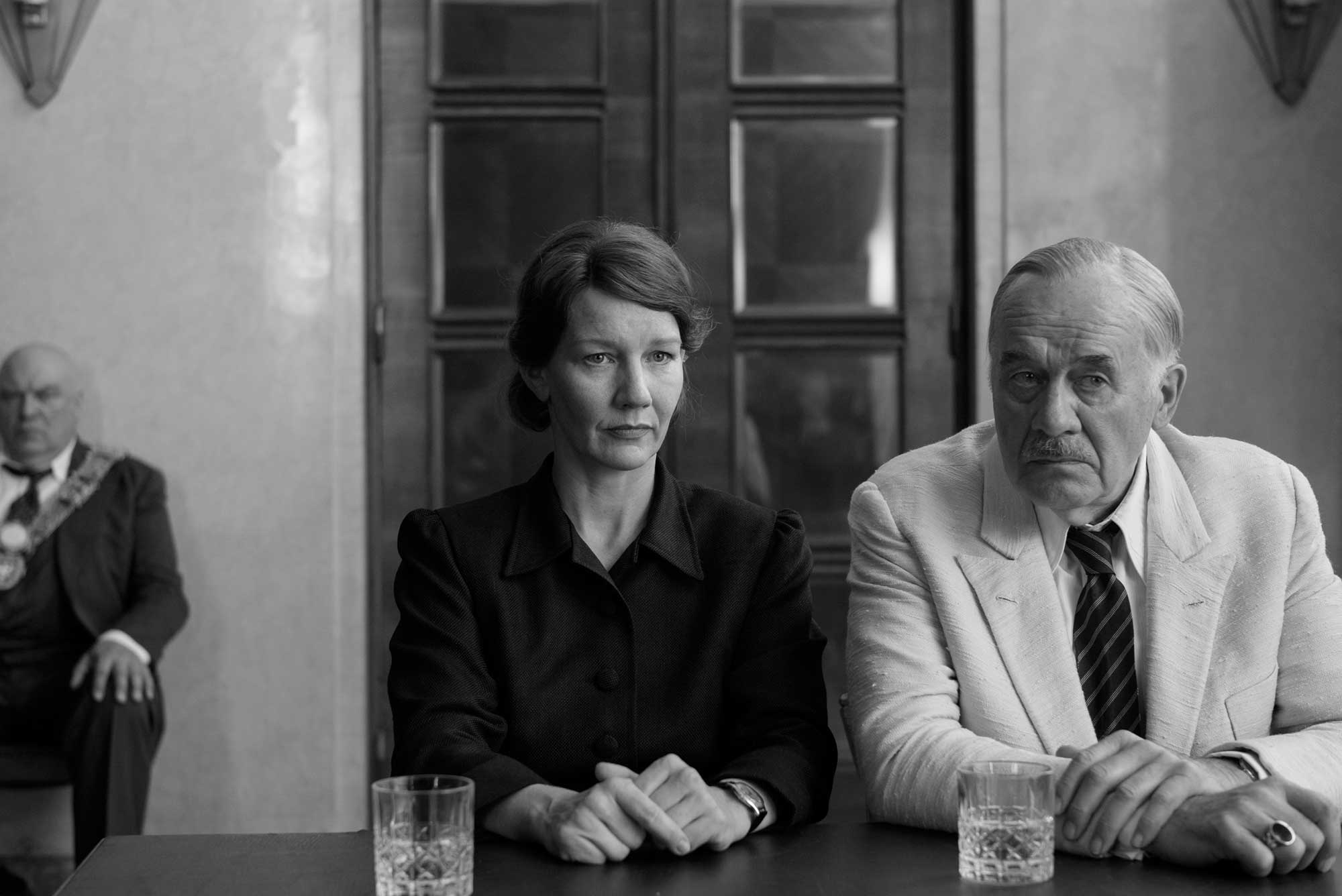
Mona Fastvold’s biopic of the leader of the Shaker religious movement is as unconventional and deliberate a piece of cinema as her last project, the lauded, bum-numbing The Brutalist, which she also co-wrote with her partner Brady Corbet. Incorporating interpretive dance and sung hymns into her story of an 18th century Manchester lass touched by God and inspiring a movement, Fastvold asks audiences to feel the fervour and radical departure presented by Lee, rather than suck up a history lesson in Shakerism. For some viewers, that may feel as though Lee is untethered, lacking in context, as she negotiates growing from a persecuted girl to a leader in the New World. For others it’s a welcome change to the usual cradle-to-grave recounting of historical figures – an invigorating glimpse into an untold life. 

Amanda Seyfried, Christopher Abbott, Lewis Pullman, Stacy Martin, Thomasin McKenzie
Searchlight Pictures

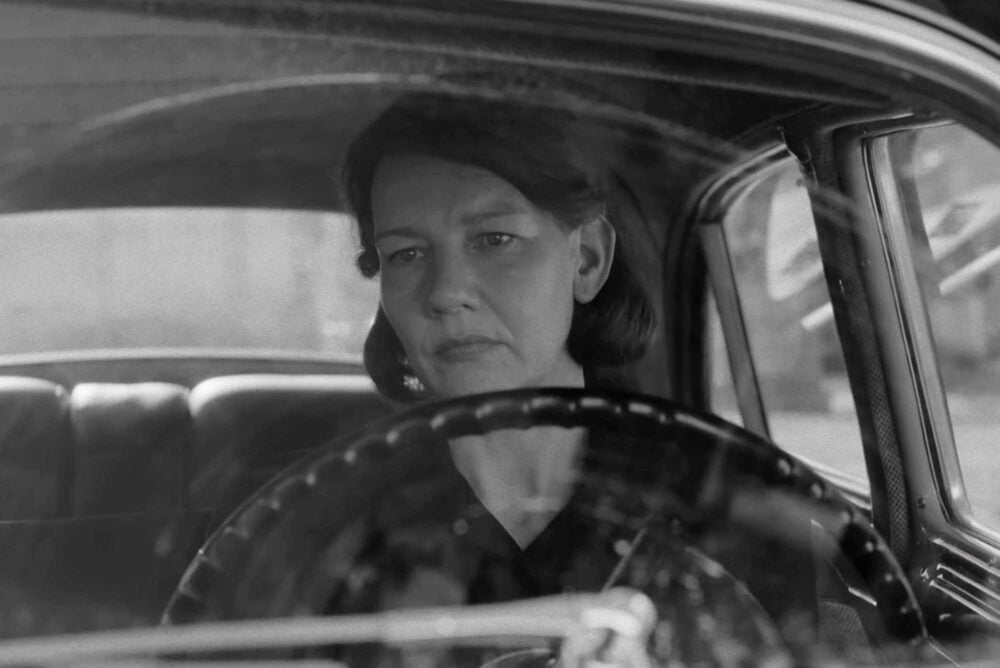
When we first meet Ann (Amanda Seyfried) in the North of England, she is poor and insignificant until she becomes famous for believing herself to be the second messiah – a bold statement in a Christian patriarchal society. Married to Abraham (Christopher Abbott), worshipped by her brother William (Lewis Pullman) and believing that the divine is channelled through devotees via involuntary, ecstatic spasms during prayer, Ann is soon leading a local sect and gathering a community together who abide by the rules of celibacy and physical veneration. In candlelit drawing rooms the cast sway, vibrate and whip their bodies around while singing and stomping, the rhythm and cinematography as seductive as the lure of a new way of approaching Christianity for Lee’s followers.

Amanda Seyfried, Christopher Abbott, Lewis Pullman, Stacy Martin, Thomasin McKenzie
Searchlight Pictures
Amanda Seyfried, Christopher Abbott, Lewis Pullman, Stacy Martin, Thomasin McKenzie
Searchlight Pictures

Imprisoned (and singing from her cell) Ann needs to find a place where her new ideas have the freedom to blossom, where a woman can preach, where new beliefs and immigrants are welcomed. It’s perhaps ironic in today’s political landscape to watch the Shakers set sail to the promised land of upstate New York, where the community grows (and makes excellent furniture). But by the time that Ann is getting grey-haired, after grief has diminished her, it’s hard to determine the takeaway for audiences in this deliberately woozy, slippery and insular portrait. Though the cultural and sociological imprint of Lee may be untapped, audiences will be certain of one thing: that Seyfried should have been in the awards conversation this year for her full-bodied, robust performance.

Amanda Seyfried, Christopher Abbott, Lewis Pullman, Stacy Martin, Thomasin McKenzie
Searchlight Pictures

Words by JANE CROWTHER
Pictures courtesy of Searchlight Pictures
The Testament of Ann Lee premiered at the 82nd Venice Film Festival and is in cinemas now
February 20, 2026

Cartier celebrates BAFTA, High Society, Ocean’s 8, Sunset Boulevard, The Phoenician Scheme

Words by EMILY ZEMLER


From diamond tears to royal engagement rings, bracelets ready for their close-up to bejewelled crucifixes, Cartier jewels have dazzled onscreen since cinema’s inception…

Cartier is one of cinema’s most enduring characters. Since 1926 – when Rudolph Valentino famously donned an iconic Cartier Tank watch – the luxury Maison has established itself as both a cultural icon and a memorable co-star. Its timeless jewellery has appeared in classic films like Sunset Boulevard and more contemporary works like Ocean’s 8 and The Phoenician Scheme.

Cartier celebrates BAFTA, High Society, Ocean’s 8, Sunset Boulevard, The Phoenician Scheme
CARTIER ROSARY 
From Wes Anderson’s 2025 film The Phoenician Scheme

The elegant craftsmanship of Cartier’s jewellery has augmented the magical worlds created by skilful filmmakers for generations, helping to bring the stories to life in ways that feel as real as they do transformative. Over the years, hundreds of films and series have featured Cartier pieces – an extraordinary filmography that outshines the careers of many human actors. But Cartier’s contribution to the landscape of cinema wasn’t inevitable. It took a legacy of craftsmanship, some particularly devoted famous fans and a dedication to storytelling that has spanned time and genre.

Perhaps the link between carats and celluloid was inevitable. Maison Cartier was founded in Paris in 1847, only a few decades before the invention of cinema by Auguste and Louis Lumière, who also first presented their work in the French capital. In 1895, the Lumière brothers began filming short scenes using their newly-created cinématographe, an early motion-picture camera. Later that year, they held the first commercial film screening at a café in Paris, an historic moment that for ever changed the landscape of arts and culture. It wasn’t long after that Cartier and cinema embarked on an undeniable relationship that has lasted for a century.

Cartier celebrates BAFTA, High Society, Ocean’s 8, Sunset Boulevard, The Phoenician Scheme
Jean Cocteau

In 1926, Valentino, arguably one of silent film’s most iconic actors, played dual characters in George Fitzmaurice’s The Son of the Sheik – the final starring role of his career. Embodying both a sheik and his rakish son Ahmed, Valentino convinced the director to let him wear his Tank watch in his scenes, simply because he didn’t want to take his beloved timepiece off. Audiences were delighted by the unlikely detail and the Tank rapidly grew in popularity after its on-screen debut.

Cartier soon established itself as an indelible onscreen partner for the most popular performers of every era. In 1946, Jean Cocteau (who habitually wore two of Cartier’s trademark Trinity rings on his left pinkie finger) directed a reimagining of the classic fairy tale Beauty and the Beast, titled La Belle et La Bête. In the ethereal film, Belle wept Cartier diamonds instead of tears. ‘A fake diamond doesn’t throw fire,’ Cocteau explained of his artistic vision, ‘only a real diamond shimmers.’ The loaned diamonds underscored the emotional quality of the scene, creating a lasting, surrealist image that has since become interlinked with the history of cinema. 

Cartier celebrates BAFTA, High Society, Ocean’s 8, Sunset Boulevard, The Phoenician Scheme
Grace Kelly

Gloria Swanson, too, couldn’t be parted from her Cartier. She was often photographed in her jewels, a signature of her glamorous image. The jewellery accompanied her onscreen Sunset Boulevard: ageing former starlet, Norma Desmond, still sparkled in her choice of jewels if not on the big screen. In the film, Swanson wore two of her own diamond and rock crystal bracelets created in 1930 as part of Desmond’s costume.

In High Society, released in 1956, Grace Kelly wore the jewellery house’s engagement ring, adorned with a 10.48-carat emerald-cut diamond and given to her by Prince Rainier III of Monaco. Like Valentino before her, the actor couldn’t bear to part with it while working, so added the famous ring to the film’s legacy instead. Tracy Lord’s classic platinum and diamond bauble boasted regal veracity for audiences.

More recently, Cartier collaborated on 2018’s Ocean’s 8. The plot centered on the theft of an ornate diamond necklace, made by Maison Cartier and based on a piece created by Cartier London in 1931. Named after Jeanne Toussaint, Cartier’s creative director from 1933 to 1970, the prop mimicked diamonds with zirconium oxides.

Cartier celebrates BAFTA, High Society, Ocean’s 8, Sunset Boulevard, The Phoenician Scheme
Gloria Swanson

The Maison’s skills were again enlisted for Wes Anderson’s recent output, The Phoenician Scheme to recreate a Cartier rosary from the 1880s for the nun protagonist to clutch. ‘It was interesting and fun to do it that way, and I think they look better,’ Anderson said of using actual Cartier jewels in the film.

Cartier has expanded its cinematic presence by contributing new short films to the zeitgeist, and by frequently collaborating with filmmakers such as Johan Renck and Sofia Coppola. ‘Films are made up of many details, and jewellery plays a role in this by showing you the type of character you encounter,’ Coppola noted.

Cartier celebrates BAFTA, High Society, Ocean’s 8, Sunset Boulevard, The Phoenician Scheme
BRACELET, CARTIER PARIS, 1930
Platinum, Diamonds, Rock Crystal

The Maison is also a main sponsor of the annual Venice International Film Festival, an opportunity that more deeply connects Cartier with new and important works from the global cinematic community. Over the years, the jewellery house has hosted Maison ambassadors like Monica Bellucci and Rami Malek, and bestowed the Cartier Glory to the Filmmaker Award to legends like Wes Anderson. This year, Cartier celebrated BAFTA with a glamorous dinner held ahead of the annual EE BAFTA Film Awards, drawing a full-circle movie moment between Valentino’s watch obsession a hundred years ago.

Cinema and jewellery share a commonality in the often unseen craftsmanship that goes on behind the scenes to create the magic onscreen. Like movie productions, Cartier boasts many specialised metiers who craft their own sort of creative sorcery to produce a dazzling work of art. And BAFTA and Cartier share a similarly long history and legacy in showcasing quality and artistry. Though founded in Paris in 1847, a Cartier boutique has stood in London’s New Burlington Street since 1902 and held warrants from members of the British Royal family since 1904. Just steps away, BAFTA HQ resides with a similar dedication to creative excellence and links to the royals. Established in 1947 as the British Film Academy, the organisation became BAFTA eleven years later, with the opening of its Piccadilly home in 1976.

Together, both Cartier and BAFTA have left a lasting mark on our cultural consciousness that continues to sparkle.


Words by EMILY ZEMLER
Cartier Rosary (Credit: Nils Herrmann, Collection Cartier)
Jean Cocteau (Credit: ©️ Luc Fournol / Photo12). Thanks to the Comité Jean Cocteau
Grace Kelly (Credit: ©️ D. Stock / Magnum Photos). With the permission of The Princess Grace Foundation – USA
Gloria Swanson (Credit: Documentation Cartier Paris). Bracelet Cartier Paris, 1930 (Credit: Marian Gérard, Collection Cartier © Cartier)

Cartier, Cartier celebrates BAFTA

February 20, 2026

Joe Keery, Georgina Campbell, Liam Neeson, Lesley Manville, Sosie Bacon

Words by MATT MAYTUM


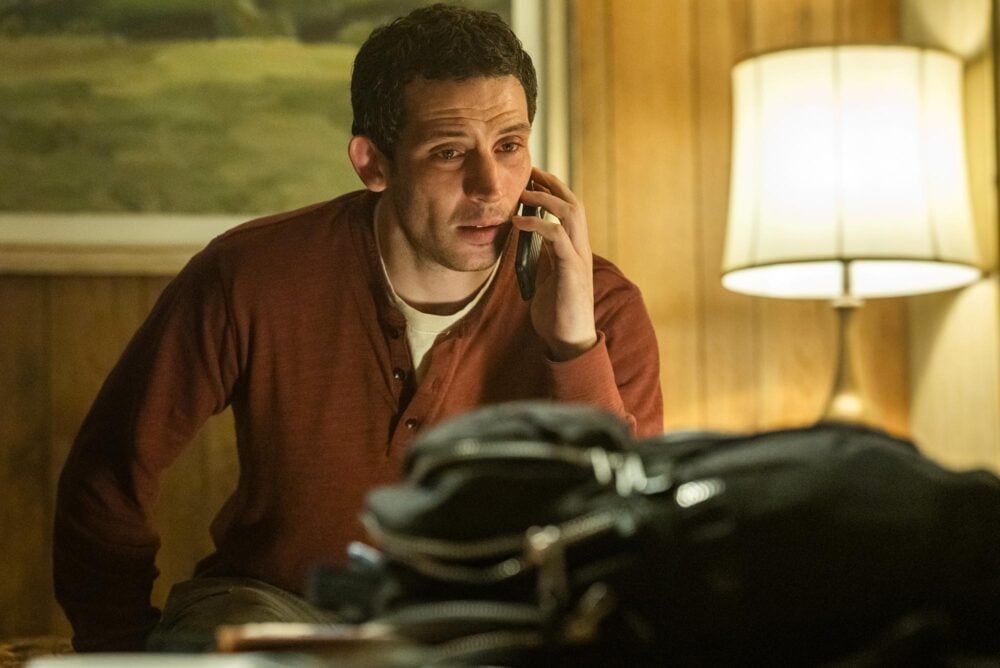
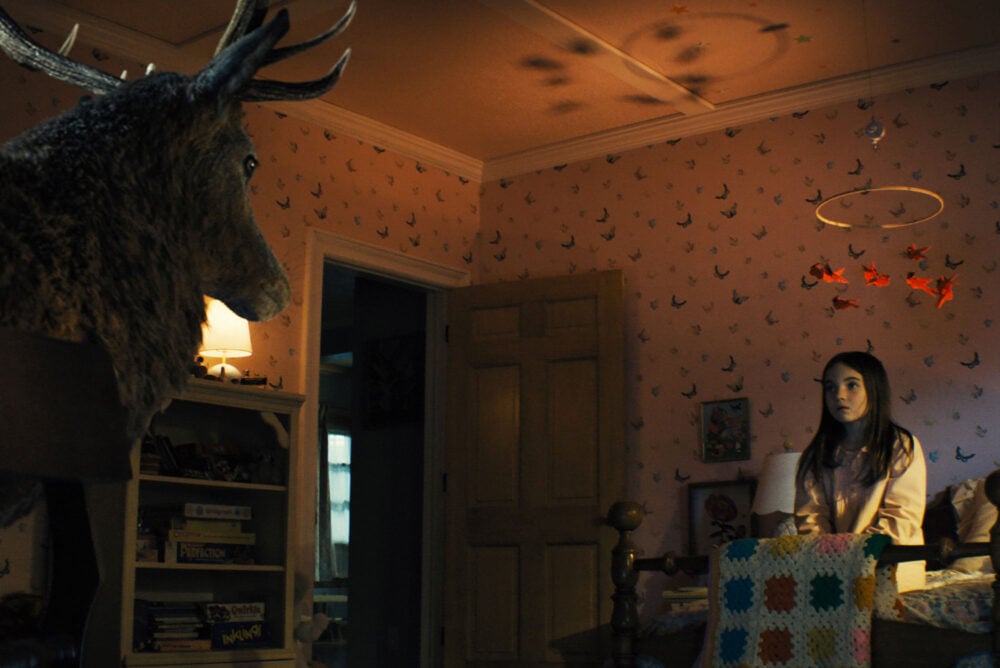
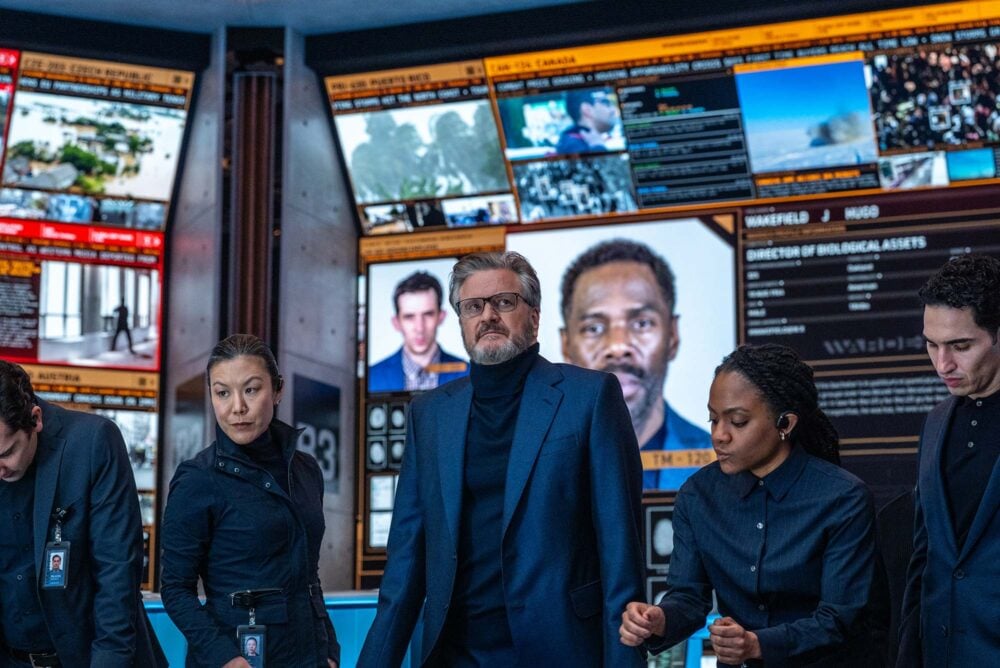
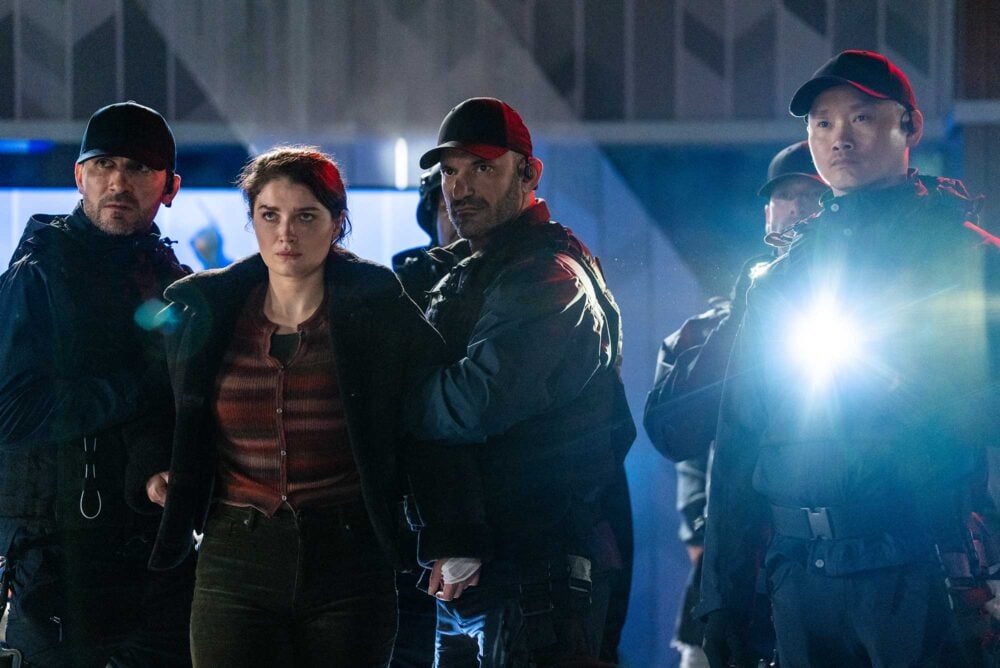
You’ll get a good idea of the tone to expect from sci-fi comedy-horror Cold Storage from its opening info dump. Title cards give a reminder of the (real-life) 1979 incident in which NASA’s Skylab space station fell into the Earth’s atmosphere, with debris scattering over Western Australia. So far, so ominous, until it concludes, ‘Pay attention – this shit is real.’

Joe Keery, Georgina Campbell, Liam Neeson, Lesley Manville, Sosie Bacon
Reiner Bajo/StudioCanal

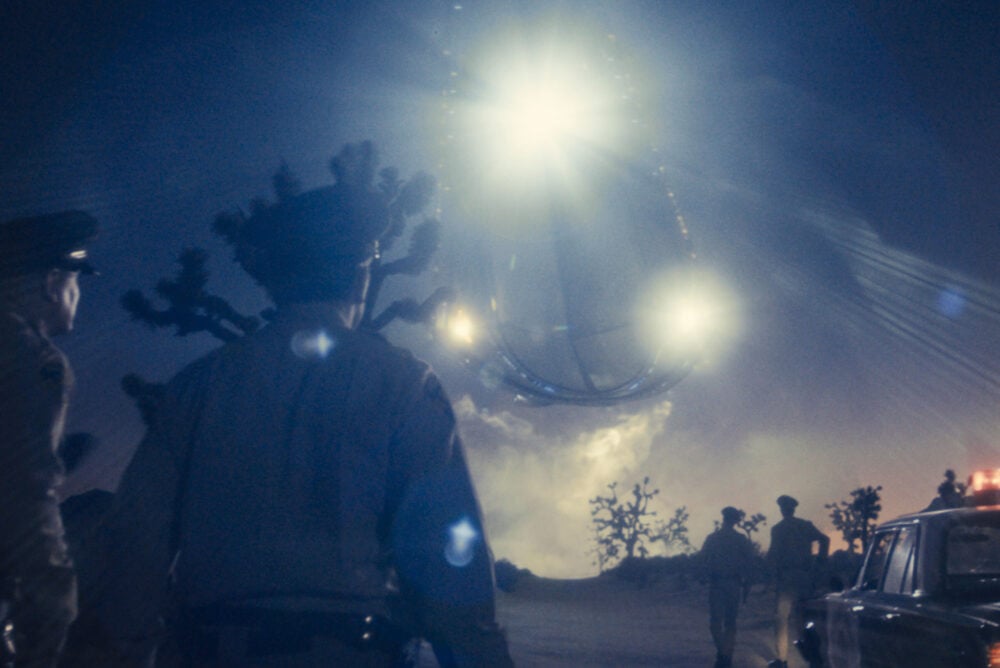
From there we have another scene-setting prologue, which takes place in Australia in the 90s. Military types Robert Quinn and Trinny Romano (Liam Neeson and Lesley Manville, delightful together in the polar opposite of their last collab, weepie terminal-illness drama Ordinary Love) are called in to help Dr. Hero Martins (Sosie Bacon) investigate an incident relating to a debris site. Strap on your hazmat suit… The film quickly sets out its splattery B-movie stall, before the problematic fungus that’s causing the body horror is secured in an underground facility. Cue a timelapse to the present day where the facility is now a self-storage business, and on shift are former prison inmate Teacake (Joe Keery of Stranger Things and Djo fame) and single mum Naomi (Georgina Campbell).

Joe Keery, Georgina Campbell, Liam Neeson, Lesley Manville, Sosie Bacon
Reiner Bajo/StudioCanal

The amiable, flirty co-workers go exploring and accidentally disrupt the extraterrestrially-infused sample (you’d think Campbell would know better than to go exploring creepy basements after starring in Barbarian), and this knowing genre piece conspires to bring some of the worst people in their lives – their boss, her ex – to the facility for one gross night. Contact with the fungus will turn a human (or animal, for that matter) into a bloated zombie that will spew infectious vomit before their body bursts. Director Jonny Campbell (best known for TV work such as Westworld) keeps things moving at a clip, with a sure command of tone. Not only do the jokes keep flying amid set-pieces delivered with no small amount of tension, but he understands first and foremost that this kind of high-concept throwback depends on likeable characters, and Keery and Campbell are immensely easy to root for. Neeson further explores his straight-man comedy chops after The Naked Gun, and he sparks winningly with Manville, who also got the memo (and seems to genuinely welcome) the assignment.

Joe Keery, Georgina Campbell, Liam Neeson, Lesley Manville, Sosie Bacon
Reiner Bajo/StudioCanal

Jurassic Park screenwriter David Koepp (who adapts his own 2019 novel here) is within his comfort zone, delivering a smartly-paced 99 minutes populated with characters who are either appealing or expendable as appropriate, science that’s just about on the right side of believable, and stakes that actually feel perilous. A horror geared towards cheers and laughs over anything more genuinely unsettling, Cold Storage does a neat job of putting the fun into parasitic fungus.

Joe Keery, Georgina Campbell, Liam Neeson, Lesley Manville, Sosie Bacon
Reiner Bajo/StudioCanal

Words by MATT MAYTUM
Pictures courtesy of StudioCanal
Cold Storage is in cinemas now
February 20, 2026

Baz Luhrmann, Elvis Presley, EPiC: Elvis Presley in Concert, EPiC

Photographs by GREG WILLIAMS
Words by MATT MAYTUM


Return of the king… The maestro of movie showmanship revives the king of rock ’n’ roll with unseen footage of Elvis in Vegas to create a unique cinematic experience. Baz Luhrmann tells Hollywood Authentic how he found treasure in salt mines and made a poem of EPiC: Elvis Presley in Concert.

Is it ever possible to recapture the thrill of seeing one of the greatest ever music artists live in their prime? Baz Luhrmann’s EPiC: Elvis Presley in Concert answers that question with a resounding yes. The unearthing of new footage of a cultural touchstone is a gift for die-hard Elvis fans, and offers younger generations the opportunity to see what all the fuss was about. Much more than a concert movie, EPiC sprang from Luhrmann and his team’s archival discoveries during the making of his blockbuster 2022 feature Elvis, starring Austin Butler.

Baz Luhrmann, Elvis Presley, EPiC: Elvis Presley in Concert, EPiC

There’s not a frame of AI or visual effects in this – the only visual effect is the one Elvis has on his audience

Often thought to be apocryphal, lost footage from Elvis’ famous Vegas residency turned out to be more than mere rumour during the making of Elvis. ‘Ernst Jorgensen [author and Elvis expert] said, “You know there are these lost reels of the show?”’ Luhrmann recalls. ‘And I thought to myself, “Wow, maybe we could use that footage in the [Elvis] movie itself, rather than build a stage – because of budgets.”’ The footage – originally shot for doc Elvis: That’s the Way It Is – belonged to MGM and had been stored in salt mines in Kansas, to prevent water from damaging the negative. When Baz’s team went digging, ‘not only did they find the footage,’ he explains between sips of miso soup, ‘they actually found a kind of treasure trove of materials – 69 boxes, 59 hours of footage.’

Baz Luhrmann, Elvis Presley, EPiC: Elvis Presley in Concert, EPiC
Neon/Universal Pictures
Baz Luhrmann, Elvis Presley, EPiC: Elvis Presley in Concert, EPiC
Neon/Universal Pictures

That incredible haul not only contained footage of Elvis’ 1970 Vegas shows at the International Hotel, shot on anamorphic 35mm over six nights; there was also 16mm film of Elvis on tour, and some 8mm, too. But another unexpected find was the key to making EPiC the extraordinary proposition it is. ‘We also found never-before-heard audio of Elvis telling his story in his own words, which is really unusual,’ says Luhrmann, photographed here by Greg Williams when he was at the 2022 Cannes Film Festival, while premiering Elvis there.

Baz Luhrmann, Elvis Presley, EPiC: Elvis Presley in Concert, EPiC
Neon/Universal Pictures

‘Jono [Jonathan] Redman, who’s a producer on this, and my editor, and really my co-creator of this whole venture, said, “We’ve got to make something really special. We can’t just heat up the old documentaries. Can we do something unique?”’ Beyond the technical challenge of restoring the negative to a quality that would hold up on IMAX and syncing the sound, there was the unique opportunity to let Elvis speak in his own words – something fans had never heard before. ‘What we decided on was, rather than reheat old documentaries… What if we were to take this audio that we’d found, and Elvis will sing and tell his story in his own words? There have been many good documentaries, but they were always about other people talking about Elvis. And there’s nothing wrong with that. But sometimes you’ll get a guy who knew him for 10 minutes, having an opinion.’ In part, the lack of Presley speaking his own truth was down to how protective manager Colonel Tom Parker (portrayed by Tom Hanks in Baz’s film) was of Elvis. But if 2022’s Elvis told Parker’s version of events, EPiC tells Elvis’ side of the story. ‘Elvis comes to you, almost like in a dream, and he sings, and he tells his story in a way in which he’s never had the platform [for] before.’

Baz Luhrmann, Elvis Presley, EPiC: Elvis Presley in Concert, EPiC
Neon/Universal Pictures

Some of the footage in EPiC may have been glimpsed before, in black-and-white and bootleg snippets or from different takes or angles, but much of the material in the film is totally unseen, and certainly never with such clarity, offering an unprecedentedly intimate audience with an icon. ‘You will have never seen all of it reproduced at the level it is,’ asserts Luhrmann. ‘I can categorically tell you: there’s not a frame of AI or visual effects in this, other than the titles. The only visual effect in this movie is the visual effect Elvis has on his audience.’

Baz Luhrmann, Elvis Presley, EPiC: Elvis Presley in Concert, EPiC
Neon/Universal Pictures
Baz Luhrmann, Elvis Presley, EPiC: Elvis Presley in Concert, EPiC
Neon/Universal Pictures

With the images polished at Peter Jackson’s Park Road Post Production – where the Kiwi director memorably brought The Beatles: Get Back and Beatles ’64 to vibrant life – a huge challenge involved syncing the sound with the recovered film. ‘While we found all the pictures, it didn’t come with mag tape, which is how they used to record sound, right next to it,’ says Luhrmann. ‘What we were able to do, though, through meticulous research was to get second-generation audio sound. The audio isn’t different. While the picture is different when they strike a print – a work print, to cut and edit – the sound isn’t. So we were able to claw back the original vocal of Elvis and the band.’

Baz Luhrmann, Elvis Presley, EPiC: Elvis Presley in Concert, EPiC
Neon/Universal Pictures

It’s actually an expression, I hope, of the essence, the spirit, and the character of Elvis through song and his words. It’s like a poem more than it is a linear expression of Elvis

Baz Luhrmann, Elvis Presley, EPiC: Elvis Presley in Concert, EPiC
Neon/Universal Pictures

Luhrmann has always been a pioneer when it comes to melding movies and music, and EPiC sees him push those instincts to new levels. Where the recording of the orchestra was inconsistent, he and his team rebuilt some of the backing music via scoring sessions. The film also moves between the actual sound you would’ve heard had you been in the room to remixes Luhrmann refers to as ‘DNA’, adding his trademark sparkle and oomph to the raw material. ‘It’s more than a documentary, and it’s not a concert film,’ he muses. ‘It’s actually an expression, I hope, of the essence, the spirit, and the character of Elvis through song and his words. It’s like a poem more than it is a linear expression of Elvis.’

Baz Luhrmann, Elvis Presley, EPiC: Elvis Presley in Concert, EPiC
Neon/Universal Pictures

And while Luhrmann refuses to speak on behalf of the King of Rock and Roll, he does say that he thinks he would appreciate ‘that he’s being heard and being presented visually and sonically in the best possible quality for the audience and the fans who he dearly loved’. Having worked to craft a big-screen, big-sound cinematic experience that makes viewers feel as though they’ve time-travelled to the International Hotel ballroom with Elvis, Luhrmann intends to get viewers moving, dancing as they did in 1970 and at TIFF when the film premiered. ‘What I hope is that we’ve created a truly theatrical experience, as close to being in the audience as possible.’ 

Baz Luhrmann, Elvis Presley, EPiC: Elvis Presley in Concert, EPiC
Neon/Universal Pictures

Photographs by GREG WILLIAMS
EPiC: Elvis Presley in Concert images © Neon/Universal Pictures
Words by MATT MAYTUM
EPiC: Elvis Presley in Concert is released exclusively in IMAX and is in theatres everywhere now

February 13, 2026

Barry Keoghan, Chris Hemsworth, Crime 101, Halle Berry, Mark Ruffalo, Monica Barbaro

Words by MATT MAYTUM


Sometimes you don’t appreciate what you’ve been missing until you get the chance to sample it again. This supremely slick crime thriller is an emphatic reminder of the pleasures of smart, mainstream entertainment for grown-ups, playing in a cinema rather than episodically on the small screen. A theatrical staple for decades, this kind of star-powered vehicle has lost ground in multiplexes to franchise fare and IP with built-in awareness. But it’s good to have it back.

Barry Keoghan, Chris Hemsworth, Crime 101, Halle Berry, Mark Ruffalo, Monica Barbaro
Amazon MGM Studios

This film marks the fully fledged ‘fictional feature’ debut of writer/director Bart Layton, who previously made terrific fact/fiction-blending documentaries The Imposter and American Animals, the latter particularly blurring the lines as it intercuts between the real people involved in a university book heist and dramatic recreations. Though not based on a true story, Crime 101 – which is adapted from a novella by Don Winslow – has the rigour of a deeply researched undertaking. It stars Chris Hemsworth, Halle Berry and Mark Ruffalo, whose narrative strands soon become entwined. Hemsworth is lone-wolf jewel thief Davis, whose MO is committing meticulously researched jobs along California’s 101 freeway. No one gets hurt, no trace of evidence remains. Detective Lou Lubesnick (Ruffalo) is working a theory that some of these robberies might be connected. Meanwhile, insurance broker Sharon (Berry) sells eye-wateringly high-value policies to extremely wealthy clients, in return for little to no respect from colleagues at her firm.

Barry Keoghan, Chris Hemsworth, Crime 101, Halle Berry, Mark Ruffalo, Monica Barbaro
Amazon MGM Studios

This trio will soon be on a collision course catalysed by wild card crim Ormon (Barry Keoghan, reuniting with Layton after American Animals), who lobs a spanner in the works by taking on a job that Davis deemed too risky. Working with A-list and Oscar-celebrated talent, Layton seems to be a natural at eliciting top-end performances. Hemsworth tamps down his superhero rizz to play the nomadic thief living without any real social connection, and his Marvel ‘friend from work’ Ruffalo is compelling as ever as a stretched-thin cop whose obsessive nature is wrecking his homelife. Berry – in her most gratifying role for some time – gets to dig beneath the surface glamour as a woman coming to see with clarity how her experience and intelligence is being overlooked. Keoghan, meanwhile, is the firecracker popping off chaotically.

Barry Keoghan, Chris Hemsworth, Crime 101, Halle Berry, Mark Ruffalo, Monica Barbaro
Amazon MGM Studios

Adding to the sheen of class is the fact that even minor supporting roles are filled with significant talent – Jennifer Jason Leigh, Nick Nolte, Corey Hawkins – and Monica Barbaro makes the most of limited screentime in Maya, a love interest who cracks Davis’ hermetically sealed shell. It’s also edited with confidence by Jacob Secher Schulsinger and Julian Hart, the separate story strands blended skilfully and often overlapping before you’ve even realised it. It all drives towards a satisfying conclusion that makes good on the build-up’s promise. And while there is a focus on character in this somewhat grounded world, there are a couple of impressively muscular, plot-serving car chases to get the adrenaline pumping, and the whole thing is shot sharply (with some innovative vehicle mounts) by DoP Erik Wilson. The pulsing electronic score by Blanck Mass also sets off the tone nicely.

Michael Mann’s Heat and Thief are clear touchstones, as is William Friedkin’s To Live and Die in L.A., and while it’s practically impossible for any new film to live up to those genre titans, it sure is enjoyable seeing someone giving it a go. 

Barry Keoghan, Chris Hemsworth, Crime 101, Halle Berry, Mark Ruffalo, Monica Barbaro
Amazon MGM Studios

Pictures courtesy of Amazon MGM Studios
Crime 101 opens in cinemas on 13 February

February 10, 2026

Alison Oliver, Emerald Fennell, Hong Chau, Jacob Elordi, Margot Robbie, Shazad Latif

Words by JANE CROWTHER


Designed to titillate with its tongue very much in its flushed cheek, Emerald Fennell’s raunchy take on Charlotte Bronte’s doomy classic sets its stall out from the opening as a hanged man gets an erection, prompting carnality from the assembled crowd – including a shuddering nun. Death and sex continue to be inextricably linked in this tale of two Victorian pseudo-siblings who run wild on the Yorkshire moors and through each others’ dreams as they grow from children to cruel adults locked in a toxic romance. Jettisoning the novel’s bookended story of the fate of the family home, Wuthering Heights, and the generational trauma of the Earnshaws, screenwriter and director, Fennell concentrates on the lethal enmeshment of Cathy (Margot Robbie) and her adopted brother, Heathcliff (Jacob Elordi) which sees them devouring each other in the rain, masturbating on rocky outcrops and smearing fingers through any wet thing they can find (snail trail, damp dough, a gelatined fish mouth, blood). 

Alison Oliver, Emerald Fennell, Hong Chau, Jacob Elordi, Margot Robbie, Shazad Latif
Warner Bros. Pictures

Designed in narrative and production aesthetic as a heaving Mills & Boon cover come to life, Fennell’s iteration has no interest in historical accuracy, Victorian properness or faithfulness to the source. Like Sofia Coppola’s Marie Antoinette, this version of Wuthering Heights is more interested in vibe and feelings. So while Charli XCX’s anachronistic soundtrack thrums over the visuals-destined-to-be-memes, Heathcliff and Cathy pant over each other in deliberately artificial and heightened environments from Suzie Davis that will enrage purists but provide content for TikTokers. Wuthering Heights looks like a tiled abattoir, Thrushcross Grange belonging to third wheel love interest, Edgar (Shazad Latif, bringing real depth to a cock-blocked cuckold) is a pop music video dollhouse (scarlet lacquers floors, flesh walls, lurid gardens), a moors sunset is an atomic orange. And the costumes… Jacqueline Durran’s imagination is unfettered: a Gone With The Wind gown, a busty milkmaid get-up, neon ribboned fripperies for ditzy Isabella (Alison Oliver), a wedding night outfit that wraps Cathy like a boiled sweet. Put it this way, there’s plenty to go at for Halloween hot looks.

Alison Oliver, Emerald Fennell, Hong Chau, Jacob Elordi, Margot Robbie, Shazad Latif
Warner Bros. Pictures

While the willful artifice will surely attract awards attention, the relationship at the (raging) heart of this tale needs to convince and Fennell is predictably unphased by making her characters complicated, messy. Cathy, in Robbie’s hands, is an intriguing OG drama queen, a prick tease, a brat. As he did in Frankenstein, Elordi does considerable heavy lifting in humanising a damaged man; seducing Cathy and audience alike with a spot-on West Yorkshire accent, palpable yearning and a mean streak a mile wide. If anyone needed more evidence that Elordi is destined to be a generational great, Wuthering Heights demonstrates his ability to play convincingly into lusty tropes (the way he says ‘I know’ at one point is likely to rival Colin Firth’s lake swim or Matthew McFadyen’s hand flex in bodice-buster obsessions) but also tap into the psychology of Heathcliff (Fennell’s most modern and interesting scene is a moment of consent in a coercive relationship) and almost single-handedly sell the tragedy of the piece. When he mourns the love lost while wind-whipped on the moors or clings to a silk bedsheet like drowning man, the truth and authenticity of Bronte’s prose is captured.

Alison Oliver, Emerald Fennell, Hong Chau, Jacob Elordi, Margot Robbie, Shazad Latif
Warner Bros. Pictures

Flashy, brash, bombastic, hot and heavy – this Wuthering Heights is like no other, fully committing to its horny-teen concept with all the headlong passion of a ‘handsome brute’ falling for the wrong girl. On that level alone it’s worth seeing and debating. And as they say in Yorkshire: where there’s muck, there’s brass…


Pictures courtesy of Warner Bros. Pictures
Wuthering Heights is in cinemas now
January 24, 2026

Aubry Dullin, Guillaume Marbeck, Richard Linklater, Zoey Deutch

Words by MATT MAYTUM


Literally translated as ‘New Wave’, the term Nouvelle Vague refers to the movement in French cinema that began in the late 1950s and continued throughout the 60s, when a group of rule-breaking critics-turned-auteurs started defying conventions of film storytelling and grammar. It’s no surprise that director Richard Linklater would feel drawn to the movement – over a directing career that has spanned almost four decades, he’s been inventive and experimental in his own unshowy way, playing with time, fact/fiction, animation techniques and more. Here he documents the making of Jean-Luc Godard’s 1960 classic À bout de souffle (aka Breathless).

Aubry Dullin, Guillaume Marbeck, Richard Linklater, Zoey Deutch
Altitude

That film remains vital and fresh today, its jump-cut editing and propulsive momentum as influential as its nonchalantly amoral heroes; it’s a fixture of Greatest Films of All Time lists and Film Studies courses. Risky territory for a contemporary filmmaker to explore, then, but Linklater manages to turn what could’ve felt either dryly academic or wilfully sacrilegious into an extremely fun hangout movie. If it is an exercise, it’s an immensely enjoyable one, carried off with no shortage of style and character. Cinematographer David Chambille shoots in black and white in Academy ratio. The score consists of jazzy, era-specific tracks. The dialogue is (almost entirely) in French, and even the subtitles have a pleasingly retro style. (Now and then, you can even see faux ‘cigarette burns’ pop up in the corner of the screen.) The storytelling is choppy and loose. It’s an extremely convincing recreation of the spirit of the era, and a pleasure to be immersed in.

Aubry Dullin, Guillaume Marbeck, Richard Linklater, Zoey Deutch
Altitude

The casting, too, is spot on. As Godard, Guillaume Marbeck has the necessary charisma to justify why the crew would continue to follow such a chaotic and capricious leader. He also has the insouciance to casually deliver some of the JLG’s celebrated aphorisms; “The best way to criticise a film is to make one,” he says early on of his transition from criticism to directing. Zoey Deutch (from Linklater’s Everybody Wants Some!!) is a fantastic foil as American actress Jean Seberg, providing valuable perspective on Godard’s often frustrating methods, and, like the audience, slowly warming to her new collaborators. Some of the supporting casting is uncannily physically uncanny: Aubry Dullin is an absolute doppelganger for Breathless actor Jean-Paul Belmondo, in looks and screen presence.

At times you even wonder if the film will get finished, as Godard continually seems to get in his own way with on-the-fly script revisions, short shooting days and tricky camera moves; it’s no wonder he ends up in a scuffle with his producer Georges ‘Beau Beau’ de Beauregard (Bruno Dreyfürst) at one point. But throughout, there’s such an infectious spirit of creation, it’s like Linklater is making a rallying cry to grab a camera, get out there and just create. With friends, with conviction, and with gusto. 


Pictures courtesy of Altitude
Nouvelle Vague is in cinemas now
January 16, 2026

Brendan Fraser, Mari Yamamoto, Shannon Mahina Gorman, Takehiro Hira

Words by JANE CROWTHER


Brendan Fraser’s innate likeability is tapped for feel-good warmth in this lightweight drama following a washed-up actor eking out a living in Tokyo and finding an unexpected sense of family. Fraser plays the thesp, Phillip Vanderploeg, with the same sweetness he deployed in The Whale – less gay porn and gorging, but that perennially hopeful expression as he takes unfulfilling bit parts and shonky commercials, the glory days that brought him to Japan clearly long gone. When he’s called to play ‘sad American’ at a funeral (a lovely piece of physical comedy from Fraser as he uncomfortably tries to be inobtrusive) a new world of acting opens up. 

Brendan Fraser, Mari Yamamoto, Shannon Mahina Gorman, Takehiro Hira
James Lisle/Searchlight Pictures

A rental service run by Shinji (Takehiro Hira) offers him a gig as a ‘token white guy’ taking on roles in real people’s lives. Need a fake boyfriend, fake boss, fake journalist to prevent embarrassment at social gatherings? Call big Phil. After a stumble playing a groom to a gay bride who is trying to mollify her trad parents, Phillip gets into the swing of turning up into domestic situations and putting his actor training to good use. So he’s easy-breezy when he’s booked to play a fake dad to a young girl, Mia,(Shannon Mahina Gorman) whose single mum thinks having two parents will go over better for a posh school application. Mia isn’t told of the ruse, she thinks Phillip is her real father, returned after an absence and, after a bumpy start, the duo start to gel. What could possibly go wrong?

Brendan Fraser, Mari Yamamoto, Shannon Mahina Gorman, Takehiro Hira
James Lisle/Searchlight Pictures

Following a well-worn arc, this gentle comedy-drama may not surprise, but that it moves nonetheless is down to Fraser’s delightful screen presence. Whether squashed into the Japanese metro or watching the lives of his neighbours from his apartment window, Fraser exudes a forlorn yearning and optimism for connection that is immediately endearing. When he arrives in his clients’ lives he is respectful, engaged, gentle – less a conman than a guardian angel, his good intentions shining from his open face. And when he begins to bond with Mia, Phillip’s own childhood is revealed, adding emotional depth to a trope as old as Chaplin’s The Kid. Plus, in terms of travel porn, Rental Family makes Japan look beguiling; from a cosy izakaya and a quirky cat festival to Tokyo twinkling neon at night, to karaoke bars and lush green forests. It’s a trip worth taking.

Brendan Fraser, Mari Yamamoto, Shannon Mahina Gorman, Takehiro Hira
James Lisle/Searchlight Pictures

Pictures courtesy of Searchlight Pictures
Rental Family is in cinemas now
January 9, 2026

Chloé Zhao, Jessie Buckley, Joe Alwyn, Paul Mescal, Zac Wishart

Words by JANE CROWTHER


It’s a matter of common knowledge that Shakespeare lost a son, Hamnet, and his subsequent grief informed the crafting of one of his one most celebrated plays delving into sorrow, parenthood and death; Hamlet. The theatrical, narrative and emotionally resonant feat that Chloe Zhao pulls off with Hamnet – blindsiding audiences with devastation despite this prior intel – is uncommon, remarkable.

Chloé Zhao, Jessie Buckley, Joe Alwyn, Paul Mescal, Zac Wishart
Focus Features/Universal Pictures

Adapted by Zhao and Maggie O’Farrell (whose bestseller it is based on), Hamnet charts the romance of the Bard (Paul Mescal) with Agnes (Jessie Buckley) through to their shattering as a family and the premiere performance of Hamlet. While Will is a man of ideas (scraping money together as a teacher while he pens his masterpieces by candlelight at night), Agnes is of the earth – an elemental woman who practices folk magic, wanders the woods in her muddy dress and snoozes in piles of leaves at the foot of mossy, towering oak trees. She burns as brightly as her scarlet gown, a force of nature that knocks Shakespeare off his feet, their hot and fast romance quickly begetting an imminent child and a marriage. Their children are brought up in an atmosphere of love and respect for the earth, closely bonded to each other. Shakespeare travels to London to ply his playwriting, bidding fond farewells to his brood as he commutes (a bittersweet parting moment at a street corner will be recognised by all parents), and the spectre of the plague takes hold.

Death sits alongside family life; is examined when a pet dies, is fought when illness descends. Death destroys and remakes, renders the Shakepeares strangers to each other and also, ultimately, connects them. In exploring the undertow of grief – in a feral howl, in despair, in process and in using it as a tool, Zhao and O’Farrell unpick the universal experience of losing a loved one while also celebrating the power and yes, necessity, of art to reflect, unite and heal.
Chloé Zhao, Jessie Buckley, Joe Alwyn, Paul Mescal, Zac Wishart
Focus Features/Universal Pictures

Key to that transference is the ability of Mescal and Buckley to fully inhabit their characters, convincing immediately of their connection, lust and love – and of their adoration of their onscreen children. Jacobi Jupe (brother of Noah) is astonishing as the boy at the centre of an experience that breaks them; cheeky, sweet, afraid, and vulnerable. The black hole to hell seen at the beginning of the film, the gaping mouth of a dank tunnel in the roots of a tree promises a dark journey of the heart, but even prepared for an emotional assault, what follows is heartbreaking.

Chloé Zhao, Jessie Buckley, Joe Alwyn, Paul Mescal, Zac Wishart
Focus Features/Universal Pictures

Buckley is understandably getting awards heat for her delicate sketching of a woman out of time; both too modern and too grounded in ancient spirituality for Elizabethan life, a ‘witch’ whose ferocious fight for her child is painful and beautiful to watch. Mescal meets her at every step though his role is necessarily more contained, while the Tudor home and village that the couple inhabited (Weobley in Hertfordshire standing in for Stratford) is brought to such visceral life that it seems we can smell the fire smoke and the poultices, taste the food Agnes puts on her heavy wooden table, feel the cool mud splatter in the street. Zhao’s eye for detail and beauty has never been better.

One critic has gone so far as to call Hamnet the ‘greatest film ever made’ and while that description might be up to interpretation of each viewer, what is undeniable is that this is a picture of great humanity, artistry and heart – heavy though it may be.


Pictures courtesy of Focus Features/Universal Pictures
Hamnet is in cinemas now