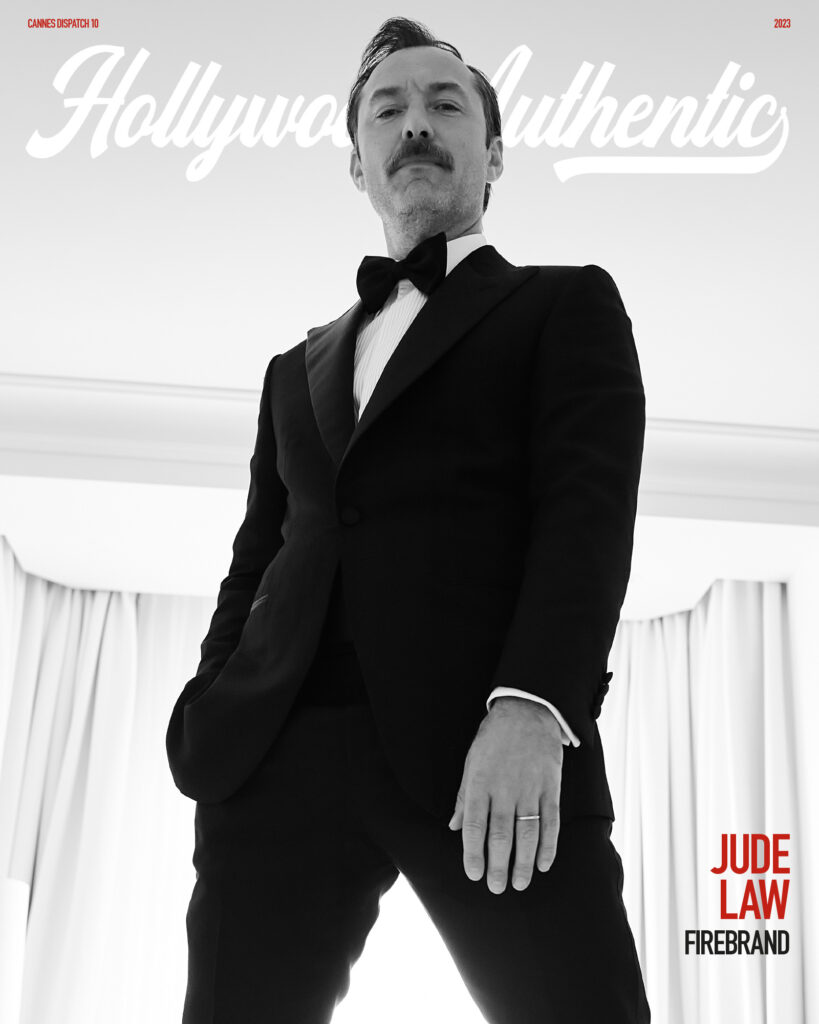
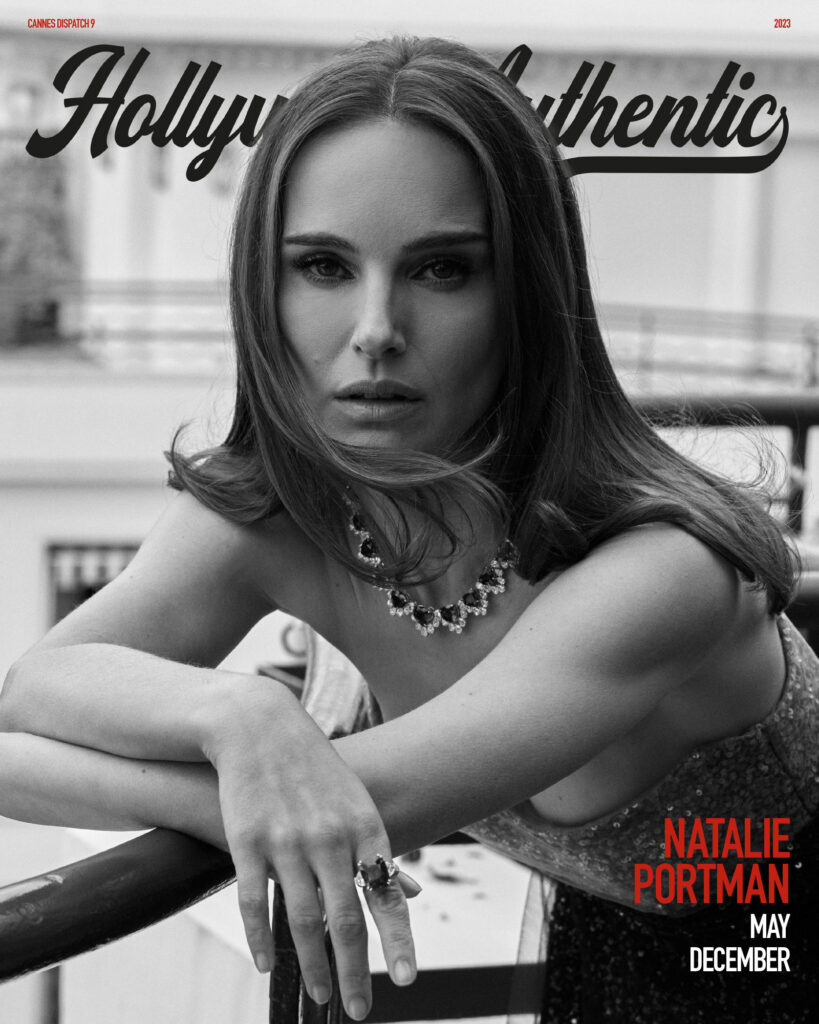
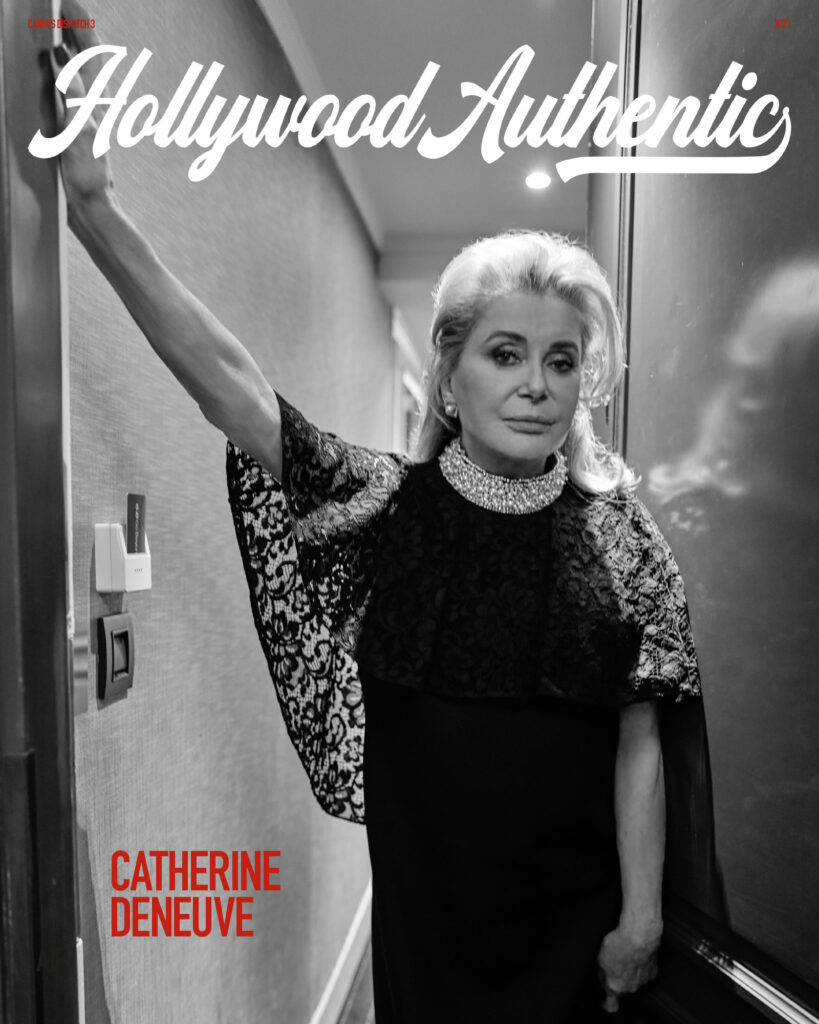
Catherine Deneuve is in Cannes this year. She attended the inauguration ceremony at the 76th Cannes Film Festival and read Lesya Ukrainka’s poem Hope, reciting the piece in French, which was written by the Ukrainian poetess in 1880, when she was eight years old. The poem is translated to English below:
Hope I have no happiness, and I am not free, There’s only one hope left for me: To return to Ukraine once again, And see my native land in the end, Have another look at the blue Dnipro – No matter if I live or die there alone; Have one more look at the steppe and graves, Let one last passionate reverie rave… I have no happiness, and I am not free, There’s only one hope left for me.
Undoubtedly an icon of the silver screen – photographs of the French actress in the ’60s and ’70s are some of the most memorable from the era. This year in Cannes, she is everywhere, because one of those images – photographed on the Côte d’Azur in 1968, during the shooting of La Chamade directed by Alain Cavalier – features as the official poster of the 76th Cannes Film Festival.

Viola Davis is no stranger to Cannes, but this is the first time she is attending as an EGOT winner.
Davis is only one of 18 people to have received the accolade – earning a recent Grammy win for the best audiobook, narration and storytelling recording for her memoir, Finding Me, follows her Emmy win for How to Get Away With Murder (2015), an Oscar for Fences (2017), and a Tony for both King Hedley II (2001) and Fences (2010).
On an unusually rainy evening on the Côte d’Azur, Viola was joined by Julius Tennon – her husband of 20 years and Air co-star – to attend Hirokazu Kore-Eda’s Monster premiere at the Cannes Film Festival.
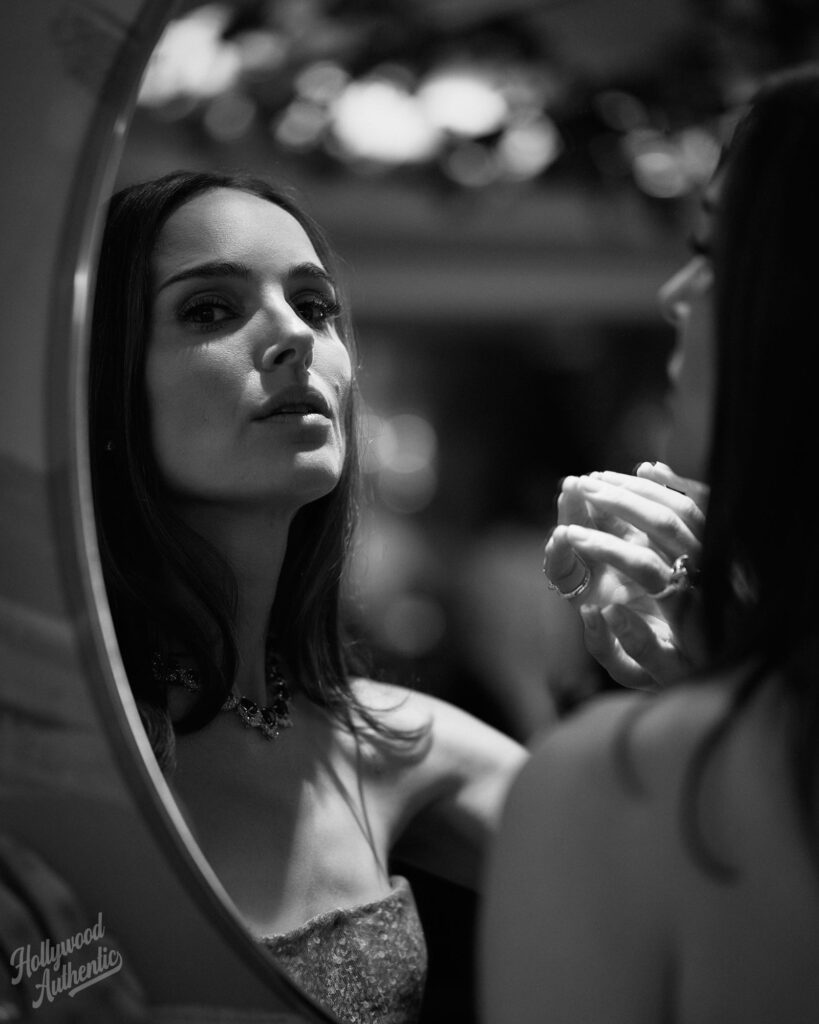
Viola’s latest role as Deloris Jordan, (Michael Jordan’s mother) in the newly-released Air, directed by Ben Affleck, tells the origin story of Nike’s legendary partnership with basketball legend, Michael Jordan. With Davis giving an outstanding performance as the woman who played a big part in moulding her son’s destiny.
Viola Davis wears a custom Valentinogownby Pier Paolo Piccioli and Chopard jewels, styled by Elizabeth Stewart, with hair by Jamika Wilson and make-up by Autumn Moultrie using L’Oréal Paris
You can call it a comeback, but as Johnny Depp tells me, “I mean, you have to have gone away to come back. I didn’t go nowhere…” It was lovely to shoot Johnny on his return to Cannes – and the first major outing in the film world since his highly publicised trial – for the world premiere of Jeanne Du Barry, directed by and co-starring French actress and filmmaker Maïwenn, which opened this year’s Cannes Film Festival.
Johnny is back in the Hollywood spotlight, and it’s a unique moment for the actor. Johnny was last at the Cannes Film Festival for the premiere of Pirates of the Caribbean: On Stranger Tides in 2011. 12 years later, being back in Cannes is somewhat of a phoenix moment for the actor, “That was a real surprise,” he says.
In the car en route to the premiere, he talked about his tight, mischief-filled friendship with Marlon Brando and what it means to him to be welcomed back at Cannes.
How important is a little bit of nonsense now and then to you? A daily necessity for the sake of sanity.
What, if anything, makes you believe in magic? Every show at The Magic Castle in LA – especially the magician with the lemons. You’re dressed to the nines yet feeling like a total kid, watching wide-eyed in giddy wonder. It’s pure joy.
What was your last act of true cowardice? Every time that someone rings me unexpectedly and I have to psych myself up to call back.
What single thing do you miss most when you’re away from home? British cynicism.
Do you have any odd habits or rituals? I don’t think I do. Or, if I do, I’m not aware that they’re odd.
What is your party trick? I’m always disappointed to say I don’t have one… I used to showcase how I can turn my thumbs back to front, but then decided to stop advertising that.
What is your mantra? ‘Feel the fear and do it anyway.’
What is your favourite smell? Those caramelised nut carts on New York City street corners.
What do you always carry with you? A book, mints and a miniature perfume bottle.
What is your guilty pleasure? Gogglebox. Though I barely feel guilty about it, it’s a great show.
Who is the silliest person you know? Our mutual friend Raymond Root. They don’t make ’em much sillier.
What would be your least favourite way to die? Naked.
From silver screen to TV hits, Lucy Boynton has crafted a CV that’s anything but obvious. She can currently be seen in Netflix’s well-received gothic mystery The Pale Blue Eye (based on the book by Louis Bayard), where an 1830s detective crosses paths with Edgar Allan Poe. Her co-stars include Christian Bale and Gillian Anderson. Recent turns in The Ipcress File, Why Didn’t They Ask Evans? and soon Chevalier (as Marie Antoinette) speak to her hectic schedule.
*Arguably one of the most memorable (and quotable) scenes in 1971’s Willy Wonka & the Chocolate Factory is when Mr Salt mumbles, ‘It’s a lot of nonsense,’ to which Wonka replies, in a sing-song voice, ‘A little nonsense now and then is relished by the wisest men.’
There is a map of the world on the wall of Thuso Mbedu’s apartment in the San Fernando Valley, the sprawling satellite suburb that lies to the northwest of the Los Angeles mothership. Written in large, cursive script at the bottom of the poster is the phrase “She’s going places”. A handful of dots are scattered across the representation of the globe, indicating cities and countries that the actor has visited since she moved to the valley in 2020. But, she assures me, the picture is incomplete – she still has to add Utah (Sundance Film Festival), Zurich (movie promotional work), Dubai and Singapore (Christmas/New Year holidays), with – upcoming – Milan and Paris (fashion shows), Seoul, Tokyo and Shanghai (birthday celebrations). She will be 32 this year, although that is hard to believe, given she plays late-teens so convincingly.
Thuso is certainly going places, but what the wallchart can’t really illustrate is just how far she has come in a relatively short time. I am in her apartment to talk about that journey from Pietermaritzburg, a city about 45 minutes from Durban (“Although that depends on who’s driving,” she laughs) to Hollywood’s top table, thanks to a brace of remarkable performances in Amazon’s The Underground Railroad and subsequently, The Woman King, with Viola Davis. There’s a lot to talk about. But first, breakfast.
Here’s the thing, though. Thuso doesn’t really do breakfast. “I have cereal,” she offers. “I find it gives me energy to go and work out. Otherwise, I’ll just grab a banana. I usually have Raisin Bran Crunch, because I’ve got a weird digestive system, so I need to have the bran and the fibre or whatever.”
I don’t usually eat cereal. Or drink cow’s milk. But it is Thuso’s breakfast we are here for, not mine. Then: “And I’m lactose-intolerant. So, it’s oat milk with cereal. Is that OK?” It is. “Although I will sometimes order in an omelette. I love omelettes.”
As Thuso pours us oversize bowls (next to her slender frame anyway) of Raisin Bran, I speculate that the fact she has omelettes delivered suggests she is not much of a hob botherer. “I love food. But hate cooking. I tell people they can come and stay in the spare room, but don’t expect me to look after you. I love the kitchen in my apartment, but mainly because it has great light for selfies.”
So, I ask, if she doesn’t make much use of the oven or hob, what’s in the fridge? She laughs, half embarrassed. “Water. Lots of water.”
So, there is. Plus, half a red onion, which remains a mystery. The water is all Essentia brand. Is that significant? “Yes! Because when I first arrived in America, I thought all the water was disgusting. And then one day our costume department head for The Underground Railroad was, like, ‘Oh, would you like some Essentia?’ So, I had a sip. And it was, like, ‘Oh my gosh, this reminds me of home.’ It was the best-tasting water I ever had. All the South Africans know that when they come to America, they need to get Essentia water, because that’s the water that they’ll enjoy, just like home.” Home, as we shall see, is all-important in appreciating Thuso’s back story. Everything circles round to South Africa and family – or lack of it. In The Woman King, Thuso’s character, Nawi, the wannabe Agojie warrior, tells Viola Davis’s Nanisca that she, too, has suffered in life. This actor didn’t have to dig too deep for that.
“My sister and I lost our mother to a brain tumour when I was four years old. And we didn’t have much of a relationship with our father. He was never in our lives. And so, our grandmother raised us. She was super strict.” Thuso screws her thumbs into the tabletop to press the point home. “Super, super strict, because her second husband – our grandfather had passed away – her second husband was the first black bishop in South Africa. So, we grew up under that – ‘This is so-and-so’s household, you will not misbehave.’ It was scary.”
She had an older sister, though, for support. She laughs, but there is a rueful undertone to it. “I think growing up, between my sister and myself, I was the quieter of the two. I was the more observational one. I guess to some extent the more sensitive of the two as well. And the shy one. My sister was the more extroverted one. We were told that people liked her more. So, I had to accept that that meant people didn’t like me, which was a lonely existence.”
I ask how such a morally conventional and heavily religious family felt about her choice of an acting career. “My mother had wanted to be a geologist. That was her heart, that was her interest. But because the [apartheid] system didn’t allow it, she became a teacher who taught maths, sciences and geography. Under that system, you could become a teacher or a nurse. My grandmother was actually a high-school principal. But we were the first generation who had the option to be doctors or to be whatever it is that we wanted to be. And that was expected of me. And then I chose the arts, which made absolutely no sense to anyone at home.” Another burst of laughter, but this is one of genuine joy, because, of course, things have gone rather well for her.
“Yes, but having told her that I didn’t see myself in an office or a lab coat doing a nine to five, my grandmother didn’t talk to me for about a month, because she really believed that I wouldn’t be there for the family.”
Her eyes widen to emphasise the importance of her next statement. “But our grandmother did a very good job raising us, as hard as it was.” And, obviously, her grandmother is where her drive comes from. “Yes, yes. And my sister and I are super, super close now, especially since our grandmother passed away the year after I finished university and we realised we only have each other in this world.”
That flash of her eyes reminds me of how much she can convey non-verbally. In a review of director Barry Jenkins harrowing, hallucinatory but essential The Underground Railroad, The New York Times said, “Mbedu’s magnetic performance relies as much on gesture and expression as dialogue, her every sign, flinch and defence conveying the muscle memory of terror.” Where, I ask her, does that capacity for mute communication come from?
“I think it’s because of the way I grew up. I’m a person who spends a lot of her time in her head. I think it’s allowing whatever the character’s thought process is to actually happen in real time. Instead of imposing, ‘Oh, she should be feeling like this right now,’ let it happen. And then, as a human being, your face will adjust accordingly.”
That trust in her ability to reflect inner turmoil or joy has served her well. After success in her homeland, particularly from her International Emmy-winning portrayal of Winnie in the teen drama Is’thunzi, she was given the opportunity to display her craft on an international stage, and she grabbed it with both hands and all her heart. Her performances as Cora, the escaped slave in The Underground Railroad, and Nawi, the kick-ass fighter in The Woman King, demonstrated that extraordinary gift for externalising the internal without resorting to dialogue or exposition.
Thuso clearly had to train hard for the latter role and, as we move to her compact gym and she demonstrates the hi-tech treadmill (“My favourite”) and her boxing skills, she explains that she has kept up the demanding physical regime from The Woman King. “I work out with Gabriela Mclain, who was our trainer and nutritionist for the movie, between four and six times a week, depending on the schedule. Obviously, you have to stop when you do press for the movie, but I’m getting back into it now. And then we did different types of martial arts. So, at some point I went and got myself this bag so I could box. Now, I want to go back to Muay Thai as well, because I started that for the movie.”
Is the physical side just part of her discipline as an actor? “I spoke with Danny Hernandez, our stunt coordinator, who knows that I did fall in love with [the training]. He was just, like, ‘Keep going,’ so that I am ready for the next project, so that I don’t feel like I have to start from zero again when the next opportunity arrives.”
So, what is the next opportunity? Because it must be a very exciting time to be Thuso Mbedu. It’s hard to believe the phone ever stops ringing. “It is exciting,” she agrees. “I’m also in a space where, again, I’m getting opportunities that I wouldn’t have gotten in the past, having conversations with the different studios. Not only are they, like, ‘Oh, we’ve got these types of project that you could fit in,’ they’re also asking, ‘What would you like to develop?’ And that’s where my mind is. Hence, reading up on different things, putting ideas to paper.”
This reading up on different things includes researching the techniques of anime, manga and American comic books – she is keen to write an anime script, having been a huge fan of Dragon Ball Z while growing up in South Africa. (Show time coincided with afternoon prayers, so she and her sister would alter the living-room wall clock to make sure devotions would be over by the time that afternoon’s episode began.) She is also learning Korean for her birthday travels. “The heads-up was that they don’t speak as much English as you might expect in Seoul, so I thought I’d learn some of the language. And it is kicking my bum.”
Also on her slate is a new deal with Paramount+ to create shows with a message – albeit not as preachy as that sounds – which will be the direct descendant of MTV Shuga, a Pan-African series she acted in, which tackled tough themes, such as living with AIDS and gender identity. “The new deal is about creating stories that will educate people in Africa, sub-Saharan Africa and South Africa about climate, health and equality. And so, it can be a documentary, it can be a film, it can be a series. And they liked the ideas that we had given them, and so the next step is to develop it.”
It is interesting that, rather than looking for the next blockbuster, Thuso is keen on ploughing some of her good fortune back into her homeland and beyond. Where did this drive to serve come from? “I think at some point in high school, it was a case of knowing that my life could have turned out completely differently, had it not been for our grandmother. And so, I had the conviction that I should be that for someone else, even if it’s just one person. And so now I’m, like, OK, how do I use the gifts and the talents that I have to help someone else?”
So, is this where the plan to help fund an orphanage comes from – an idea I have heard she has talked about? “It is. I really believe that I’m on planet Earth to help those who do not have, to help enrich their lives in different ways that could literally be just me being there with them, listening to what they have to say to me, aiding financially, physically. And, yeah, I think that is my ultimate purpose. But before we even get to the orphanage, I want to actively try and find bursaries and scholarships for kids that can’t afford to go to school and have people fund them. The orphanage is my ultimate, ultimate, ultimate, in terms of changing lives. And then volunteering as well, so that by the time we are able to make the orphanage, it’s not a completely foreign experience to me. In the past when I was in South Africa, I’d volunteer at different orphanages to just come hang out with the kids a little bit, which was also scary for me because growing up, being super shy as I am, I always thought kids don’t like me.”
Given she has such an obviously fun and generous personality – as well as a whole arsenal of infectious laughs to call upon – I suggest that this is hard to believe. She shrugs. “I was told they didn’t like me, so I thought it was true. As a result, going into spaces where I have to interact with kids, I’m, like, ‘Are they going to like me? Am I going to make them cry?’ or whatever. But it’s been beautiful. And, of course, I have my first niece, my favourite person. She’s a kid who really likes me, and I get so surprised every time. I’m just, like, ‘Wow, she still likes me. Oh my gosh.’ It makes me so happy.”
It turns out Thuso has a whole “Wall of Happiness” – which is exactly that, a collage of beaming Thuso Mbedus with various friends, co-workers and family (including sister and niece) and at shoots for the likes of The Hollywood Reporter. “It’s random moments in my life. I know what is happening on the day in each picture and what about it brought me joy. Yeah.”
After we say goodbye and I am sitting in an Uber taking me back to LA proper, I realise something about the past few hours, an impression that has been forming throughout the morning. Although I have been invited into Thuso’s home, the place is low on creature comforts and high on practicality. The house seems to be entirely organised for the purpose of completing Thuso’s life mission: books for current projects, books for future projects, press photos, a trophy cabinet full of awards for her performance in The Underground Railroad, bottles of water, a desk and a gym. It all has a function. This is mission control for someone who has a plan. Put simply, Thuso Mbedu wants to change the world.
The Underground Railroad is available now on Amazon Prime Video; The Woman King is in cinemas now
People don’t really appreciate what a crazy life it is being an actor. If I was a big film star, well, I’d do maybe two films a year. But I have to do six or more. Because I am always the slightly out-of-focus best friend, never the lead. So I’ve done something like 120 films. When I was doing [US TV series and movie] Ray Donovan, my life was one third in America doing that, one third on another film set somewhere and one third back in the UK. And when I am here, I always try to get back to Hackney.
I was brought up on the Hackney Road. Not the gentrified bit – Shoreditch or Hoxton. A lot of the people I grew up with are still there, still living on the same estate. And I pine for those guys, I really miss them, especially Emanuel Mitchell. He is St Lucian and, basically, he taught me to dance. He was a bit older than me, three or four years. So I was, like, 13 or 14 and he was 17. And my mum used to say to him: ‘Make sure you get Eddie home by 10pm.’ And he always did. Even if he was busy pulling a bird, he’d break off to make sure I got back home. When we went for a night out, we always used to go out dancing.
My kids are teenagers now and the oldest ones go clubbing. I tell them that we used to drink a tin of Tennent’s Super to get a buzz on and that was it. We couldn’t afford drinks at the club. And we never got stoned, never got out of control, because some of the places we went to were really dangerous if you didn’t keep your wits about you. One of the ways to stay out of trouble was just to keep dancing. And so, we danced. I never used to pull. Emanuel did – I couldn’t pull a toilet chain.
We also danced at home. We would take all the furniture out of one house and move it into the other – Emanuel’s into mine or vice versa. And we’d bring in this big sound system. We had Paul Campbell on the door. “Meatballs” we called him [after Campbell’s Meatballs], a very handsome guy. He made sure only the right people came in. Mind you, I reckon if you bunged him a jacks [£5] you’d get through the door. And we played music and danced till five in the morning. Mostly James Brown and a lot of Northern soul and rare groove. We used to do the drops and everything. There was one we used to do and someone said to me, that’s called the Wigan Roll and I never knew that. We just did it.
When was the last time I had a good dance? Not that long ago, at my wife’s 50th. She said, you know, Eddie, it’s not going to be all about the dancing. But it was. And I think I got half cut and one of my kids went up to Emanuel – they love him, too – and said, look after Dad, will you? Which is funny because he’s been looking after me most of my life.
Emanuel had two brothers and two sisters, and when I was young, I spent probably more time in their house than in my own, because my mum and dad had a difficult marriage. Everyone used to come to the Mitchells’ place. All nationalities, all welcome. And if you walked into the kitchen, you’d have to put some water on the rice to make sure it didn’t burn. Because there was always rice and peas on the go – Joyce, his mum, would feed the neighbourhood and she was a single mother, a cleaner, bringing up five kids in a council flat. If it wasn’t for his family taking me in, I think I would have been all over the place. I owe him. I lived on that estate from the age of four and left when I was 28. So, we were friends for a long time. Still are. And he’s still a fantastic dancer and a fabulous artist.
His dad wasn’t around. Not many dads were. Every dad had a court order against them. The rule was, if you saw your dad, you had to tell your mum, who’d call the police!
My mother got me this T-shirt once and it said: One Race, The Human Race. I used to wear it when we’d go and stand on the corner because the NF [the National Front, a UK far-right political party] were walking past and we’d swear as they came by. Because we’d face them down. I was talking about this with someone the other day, the rise of populism and racism that we are seeing around the world. We were dealing with that back then. When you hear politicians trying to bend to these people or yield to them, you can’t do that with racists. You can’t bend to them. You’ve just got to call them out. We’ve been calling them out all our lives.
In retrospect, I think there were certain signs that suggested I might be an actor even when I was a boy. WhenI was a kid, I used to sit on my dad’s knee and watch movies. His favourite actors were Robert Duvall and Gene Hackman. And I remember watching The Godfather, which is actually my favourite film, and I was always drawn to Duvall, because he was so silent and so minimalist in what he did. He expressed so much by doing so little. My old man, he always used to point at him and say – he plays a good part. I always wondered: what does that mean? He plays a good part. And so, I would look closely at what he was doing or not doing and so probably had an appreciation of good acting even then.
Later on, Bob Hoskins was a massive influence on me. To watch films like The Long Good Friday and to hear someone like Bob speak, with that accent, and for that character to be the protagonist of the story, was a real eye opener. I remember, he swore on screen and it was authentic. Usually, you’d hear someone swear and it never sounded right. And Bob swore and I thought, that sounds just like my dad.
I also remember being mesmerised by this cover photo on The Face magazine. It was the new generation of young British actors. Tim Roth, Gary Oldman and so on. It was Gary who really stood out. He’s just phenomenal, as an actor and a director. Some time later, I was telling Jack English, who was the unit photographer on a movie I was doing, that I was a big fan of Gary’s work. A few days later Jack said, I’ve got a message for you from Gary, an email. Not a long one. It said: ‘Eddie, be an international actor’. What he meant was, don’t only be a London actor. Try and work with people from different countries, cultures and backgrounds. It was wonderful. I’ve never spoken to him since, I don’t know him in person. But it was quite a profound thing to say, really.
Something else I had to learn was not to be afraid of long-form television. I was always scared of doing episodic-style dramas, and I didn’t know how you could,as an actor, tell the arc of the story and balance it out over such a long time span. I turned down a role on Boardwalk Empire because I wasn’t sure how to do it. But when I did Ray Donovan, the guy who became the show runner, David Hollander, he was a great help in guiding me through it. He taught me how you would set some things up in one episode and pay it off three or four episodes down the line or even a season later.
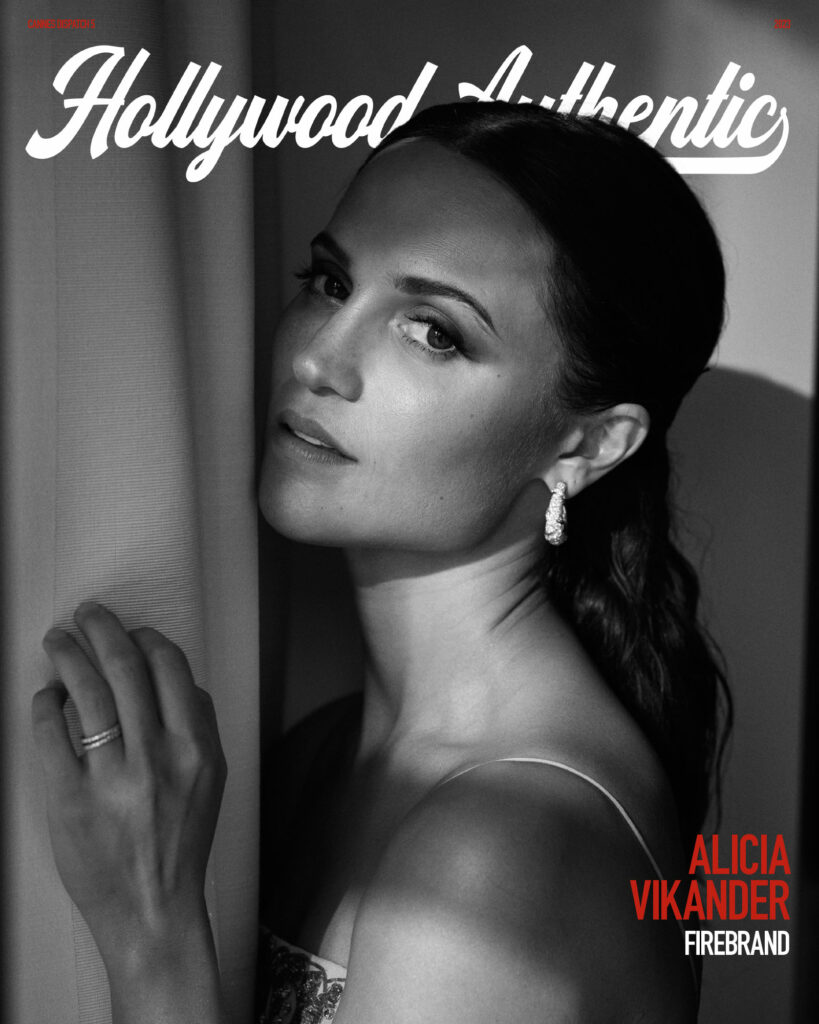
There was never an “Eddie Marsan” type, I was never really put forward for one kind of role. It was always a different sort of character. Nobody has ever asked me to play myself. They do with some actors, the ones with charisma who cost 20 million dollars. I was always hired to play someone else, not me. It was a struggle to begin with, but as I have got older it is to my advantage because nobody has a fixed idea about me. Some will know me from Ray Donovan, others from something like Happy-Go-Lucky or Ridley Road. So, I’m offered a very broad variety of parts. I have just worked with Guy Ritchie on a couple of projects, including Operation Fortune, a spy spoof with Jason Statham and Hugh Grant. I’ve also played John Adams, the American president, in a miniseries called Franklin, which has Michael Douglas as Benjamin Franklin, which we shot in Paris. It is about him going to France to raise funds for the American War of Independence. I did some work on a film called Midas Man, where I play Brian Epstein’s dad. It’s a very good script, although it is on hold right now. You might have thought there wasn’t much left to say about The Beatles, but it’s a great story. And then there’s Firebrand, about Henry VIII’s last wife, in which I play Edward Seymour, brother of Jane Seymour. Then there is The Power, which is based on a novel – it has a brilliant premise, in that women gain the power to electrocute men. Which gives them control over them. So, yes, there’s lots of very varied work, which I am grateful for.
One of the reasons I like going back to my old neighbourhood is those people knew me and loved me before I was any kind of famous. They loved me when there was nothing in it for them. Now, I have a lot of people who want to talk to me because I have a level of fame. Being well-known from film or TV is a weird business. It can be very lonely, because you meet people and they don’t react as they would to anyone else. When I go back to Emanuel and his family I can relax. We don’t talk about my work, we talk about the kids or what’s happened to the local area or about our dancing days.
In a way, it was the dancing that really got me into acting. I was dancing in a club in Hackney and some guy came over and asked if we wanted to be extras in a movie. So, we said yes, and I ended up watching Jamie Foreman do a scene. And he was great. I loved it. I was a printer at the time and I just thought: that’s what I want to do. So that’s it. I became an actor.
Eddie Marsan stars in the TV miniseries The Thief, His Wife and the Canoe, and appears in the film Vesper, released on 21 October 2022
How important is a little bit of nonsense now and then to you? As important as sex.
What, if anything, makes you believe in magic? The band Pilot.
What was your last act of true cowardice? I’m afraid to say it was when I bottled singing Backstreet Boys at karaoke.
What single thing do you miss most when you’re away from home? Heinz baked beans.
Do you have any odd habits or rituals? None that I would tell you about.
What is your party trick? I can do the three-pronged tongue thing.
What is your mantra? Arrive late, leave late.
What is your favourite smell? Anything burning.
What do you always carry with you? A sense of humour.
What is your guilty pleasure? The Tiny Meat Gang podcast.
Who is the silliest person you know? Jack Dylan Grazer [who plays his brother in 2022’s Dreamin’ Wild].
What would be your least favourite way to die? Of old age. Not any fun…
Seventeen-year-old Noah Jupe has had quite a career for one so young. But then you could say he was born into the business: his dad is Chris Jupe, filmmaker and producer, and his mum, actor and writer Katy Cavanagh-Jupe. With roles in the TV series The Night Manager and films Suburbicon, A Quiet Place (and its sequel) and Ford v Ferrari, he also starred in director Alma Har’el’s Honey Boy, an American coming-of-age film, for which he received a nomination for the Independent Spirit Award for Best Supporting Male. Jupe says he wants to pursue a career making movies like The Deer Hunter, Fargo and Magnolia. That sounds like a fine ambition.
*Arguably one of the most memorable (and quotable) scenes in 1971’s Willy Wonka & the Chocolate Factory is when Mr Salt mumbles, ‘It’s a lot of nonsense,’ to which Wonka replies, in a sing-song voice, ‘A little nonsense now and then is relished by the wisest men.’
When I was a really young child watching Disney films, I enjoyed the escapism. It was about being somewhere other than in the room, a distraction; and after being immersed for two hours I’d pretend to stay in that world for a while longer. I liked impersonating the characters, the manipulation of the voice and making people laugh. But I didn’t think of it as acting. And I didn’t want to be an actor. I wanted to sing, which is what I did until I ended up at drama school, where I realised that acting was going to take over as I was learning so much about myself.
But the singing helped. And it’s still in there, helping me find musicality in scripts. When you read a script you try to find the rhythm you naturally have and marry it with the rhythm that someone has written for you. My years of music have helped me pick the roles I should be doing – when the words just bounce off the page. But a script will also connect with me on an instinctive level. I’ve read heart-wrenching scripts but not felt anything, and I know if I don’t feel anything at that point it will be too much of a jump to perform it. At other times, the writing might not be heart-wrenching at all, but I’ve cried my eyes out, so I know my soul is connected to it.
I’m also looking to see whether I can trust the director. Do I feel their process is going to match mine, or if not, will it stretch me as an actor? You can almost sense that elasticity in a script – you can feel the challenge and the trepidation. Sometimes I say to myself, you can’t do it, but those are the ones I like to run towards. The ones that will change me as a human being. Because I don’t want to separate my work from my personal life. Work is helping me to grow as a woman, and to impart education and knowledge through these narratives. So I just know if it’s right. A lot of the women in my family have a knowing, and that has been passed down.
One thing I like is for my roles to have a degree of physicality. It’s a way into a character. In my first film, Fast Girls, I played an elite sprinter. I immersed myself in the preparation, and it was then that I also realised that in getting ready for a role I like to disappear as much as I can, as early as I can. Some people might not hear from me for a while, but in order to get to that place where you are fully committed you need to go away. It was all gym, track, diet.
I’d played sports at school and ran, did the high jump and long jump, so I felt I could do it. And when I look at that performance now, I feel I was just being myself. But I can see now that there is a little bit of you in the characters you play, and I’ve learned to use it. To use my background, and the things that make me happy or unhappy, or fearful. Use them as a springboard. Like when I played a single mother in a Marvel film [the pilot Maria Rambeau] and I drew on my own experience growing up with a single mother in Shepherd’s Bush.
My new film is also physical, but on a different level. The Woman King is based on a group of female warriors in Benin in the 18th century and when I read the script I could see the fighting, jumping and how vigorous it would be. The director Gina Prince-Bythewood was adamant that we had to be able to do the stunts ourselves. It’s nice when someone sees your capabilities before you do. And I didn’t see it. I was expecting stunt doubles! But as soon as a woman director sees your physique, your power, your inner strength, it’s a real compliment. I didn’t take that lightly. And I was able to use the training as a gateway into my character: the gravel in her voice, the pain she feels. I know her; she is my mate.
The Woman King was unusual as I was working with a Black female director. Usually I am not. And when I say there’s always a little bit of me in my characters, that goes for the responsibility I feel to ensure the Black experience, and the Black female experience, in particular, is portrayed authentically on screen. That often involves negotiation. When there are people who don’t look like me telling my story it can be weird, as I find myself teaching a whole life history. But if I were to step back and allow creatives to tell my story inaccurately, that would be irresponsible.
Of course, as a young actor it is hard to have agency on a film set and put your hand up and say, I disagree, or I have a better idea. But now, after a few years of doing it, I am confident enough.
That’s not to say my confidence isn’t challenged on occasion. Like when I had to play opposite Daniel Craig in No Time to Die, where I was not only representing a new 007 [her character, Nomi, has taken his code name], but a young, Black, female 007 at that. Daniel was great though, and calmed me completely by saying: ‘This is like an indie [film] with loads of money.’ He meant that we should regard it as just another day at the office, and I realised that though this was Daniel Craig and there were 24 Bond movies that came before and that this really is a cinematic institution, here I was, just showing up for work and creating art. And if I failed to have that attitude I’d be doing myself and the franchise a disservice. So, you come in, you have conversations with the creative team, you collaborate as much as possible, and it will be OK.
What also really comforted me was that we were starting the first two weeks of the shoot in Jamaica. I’m Jamaican, so there could be no more comfortable start to a job than being in Jamaica. Unless it was in Shepherd’s Bush.
Aimee Lou Wood has just stepped inside her house having touched down in the UK from Toronto (and before that, Colorado and Venice), but she’s energetic and lively, just as you would expect from seeing her on screen. She’s currently in film-festival mode, promoting new project Living, and this evening she will head off for a BAFTA event. ‘I thought I would just decide that time zones aren’t real… but it didn’t quite work out that way!’ she laughs.
It’s an exciting time for the 28-year-old. Living is her first lead film role, starring alongside Bill Nighy in an adaptation of the much-loved Japanese 1952 film Ikiru, which was co-written and directed by Akira Kurosawa. The story is kept largely the same, but with the setting seamlessly transposed to post-war London. Nighy is a pen-pushing civil servant working in the town planning department of London’s County Hall, whose rather humdrum existence is upended when he is dealt a terminal cancer diagnosis and given less than a year to live. Keeping this news largely under his (bowler) hat, he searches for meaning and is ultimately inspired to do something worthwhile in his final days via an unexpected friendship with his vibrant young co-worker, Margaret Harris (Wood).
Wood shines as Harris, balancing humour and naivety with quiet ambition, and joy for the small things in life (such as her character’s first ice-cream sundae at Fortnum & Mason). Her wide-eyed pathos is genuinely affecting, and she has natural chemistry with Nighy, for whom she has nothing but praise.
‘Bill is just amazing,’ she enthuses. ‘I’ve loved him forever, so it was a bit of a moment when we went for lunch – me, him and Oliver Hermanus, the director – and I was like, “be cool, be cool!” I did have a bit of a freak out, internally, but he would never have known, thank God!’ The admiration, it seems, is rooted in her respect for his skill: she admits that pivotal scenes with Nighy didn’t require her to act ‘whatsoever’. ‘There’s a scene we have in the pub together and when I left that day I could not stop crying because I’d just witnessed something so special,’ she says. ‘It’s the best acting I’ve ever seen up close.’
Living is Wood’s first major film role, and her next big-screen outing is in the upcoming Seize Them!, starring British comedy heavyweights Nick Frost, Paul Kaye and Jessica Hynes.
Before being catapulted to fame in her BAFTA-winning role as the guileless Aimee Gibbs on Netflix megahit Sex Education, Wood dabbled in theatre while studying at RADA (the Royal Academy of Dramatic Art in London). She returned to the stage in 2020 in a critically acclaimed version of Uncle Vanya in the West End. The Stockport native says that she was captivated by movies and shows as a youngster and recalls a theatre production of Beauty and the Beast that utterly entranced her. ‘I think I saw it about four times,’ she says, ‘but what was great was that I grew up watching everything. My mum would show me all the John Hughes movies and all the ’80s stuff. I always wanted to be Ferris Bueller! My dad showed me all the Oscar winners like Doctor Zhivago. So I had this quite nice breadth [of movies], and then obviously I started exploring my own stuff.’
Drama school was an eye-opener. ‘RADA was quite classical training and most of my peers got into acting through loving the theatre… but actually, looking back on it, it really was film for me, because I didn’t go to the theatre like other people. Some people at drama school grew up in London and would go to the Royal Court regularly from like the age of 11. When I went it was normally to see a pantomime.’
To begin with, she says, she wanted to be a writer. ‘I always had a really vivid imagination and I wrote plays and stories all the time,’ she says. But acting took over: ‘Drama helped me so much because it was where I could really express myself. It was also such a protective shield for me. Like it made school so much easier. Because I had, you know… I could be funny… it was like a comfort blanket for me.’ And it is liberating, she says: ‘Sometimes I feel more like myself when I’m acting, like there’s things I can’t express, usually, that I can through characters and from different people’s stories.’
‘I love Aimee,’ Wood says of her namesake, Aimee Gibbs in Sex Education, who has been a fan-favourite from when the series aired in 2019,due largely to the actor’s impeccable comic timing and the character’s eccentric sincerity. ‘I love how she’s so her own person and so in her own world and says things that are ridiculous with such conviction.’ Aimee’s ‘total space cadet’ character entered more complex and darker territory in season two when she became the victim of a sexual assault. The fallout has been sensitively portrayed over the course of two series.
‘I’m glad they took so much time with it and that it spanned over two seasons,’ Wood says of that plot narrative. ‘It is something that will always be with Aimee. It changed her. It’s not the kind of thing that just “goes away” and they depicted that honestly and delicately. With Sex Education, you can always guarantee that they’re gonna go deeper and deeper into a character, and Aimee was perfect for this storyline because she’s such an everywoman. She is someone who has such faith in people. It’s that sad thing where someone who is so optimistic begins to question the world. It was tectonic for her.’
Aimee Wood seems plenty optimistic herself, though, if a little tired. Warm, witty and chipper – despite the lack of sleep – she heads off for an evening at BAFTA, all smiles.
Living is released in the UK on 4 November; Gemma Billington is a writer for Brummell magazine
How important is a little bit of nonsense now and then to you? Nonsense to me is, among many other things, at the very core of being human – it’s essential to keeping me sane.
What, if anything, makes you believe in magic? Nature makes me believe in magic. I am in awe and intimidated in the face of the force of nature – the vastness of it and its power. It makes me feel that anything is possible – like a drop of water in the middle of the Sahara desert… magic.
What was your last act of true cowardice? I just saw a cockroach which sent me into an emotional spiral. I felt like it was crawling on me and I screamed my lungs out!
What single thing do you miss most when you’re away from home? I think of the whole world as my home. But I have also not lived in my family home [Algeria] for my whole career. I always miss my family – I miss my family all the time as they are not where my current home is either – they are in France and I am in America. My work takes a lot of space in my life and I grew up being encouraged by my artistic family to follow my dreams; but by doing so I am away from them – so yeah, I just miss them. At this point I haven’t seen them in a year, but I hold them in mind and they are in my heart always.
Do you have any odd habits or rituals? I still suck my middle two fingers like when I was a child from time to time… Whenever I do, my brain releases serotonin and I feel comforted.
What is your party trick? I play the ukulele bent over backwards while doing the splits… LOL!
What is your mantra? I am good enough.
What is your favourite smell? The grass in a field after the rain.
What do you always carry with you? Love to give to others.
What is your guilty pleasure? Chocolate chip cookie dough ice cream in cheap cones!
Who is the silliest person you know? I’m honestly right up there… I am goofy and I am clumsy. Dancers can be incredibly clumsy, which I know sounds odd.
What would be your least favourite way to die? Drowning. Or worse: drowning and being liquefied in a pool of sulphuric acid…
Sofia Boutella, actor, dancer and model, left her home country of Algeria in 1992 during the civil war there. She was 10, and journeyed to France with her mother, an architect, and father, a composer, and they settled there. She had studied classical dance since she was five, and at 18 made the French national rhythmic gymnastics team. But while dance has always been a passion (she names Bob Fosse and Fred Astaire as inspirations), and her career as a professional dancer has seen her perform alongside Rihanna and Madonna, lately, acting has taken precedence. You will no doubt remember her break-out role as the lethal, high-kicking blade-shod double-amputee Gazelle in Kingsman: The Secret Service. Since then, there have been many more roles and she is currently filming the lead in Zack Snyder’s Rebel Moon.
*Arguably one of the most memorable (and quotable) scenes in 1971’s Willy Wonka & the Chocolate Factory is when Mr Salt mumbles, ‘It’s a lot of nonsense,’ to which Wonka replies, in a sing-song voice, ‘A little nonsense now and then is relished by the wisest men.’