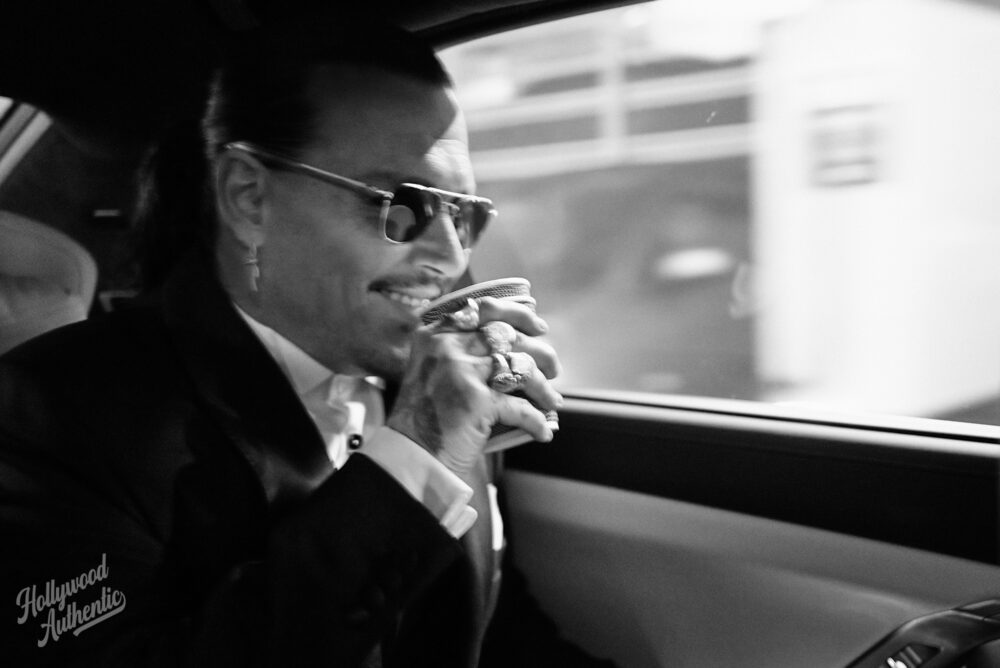



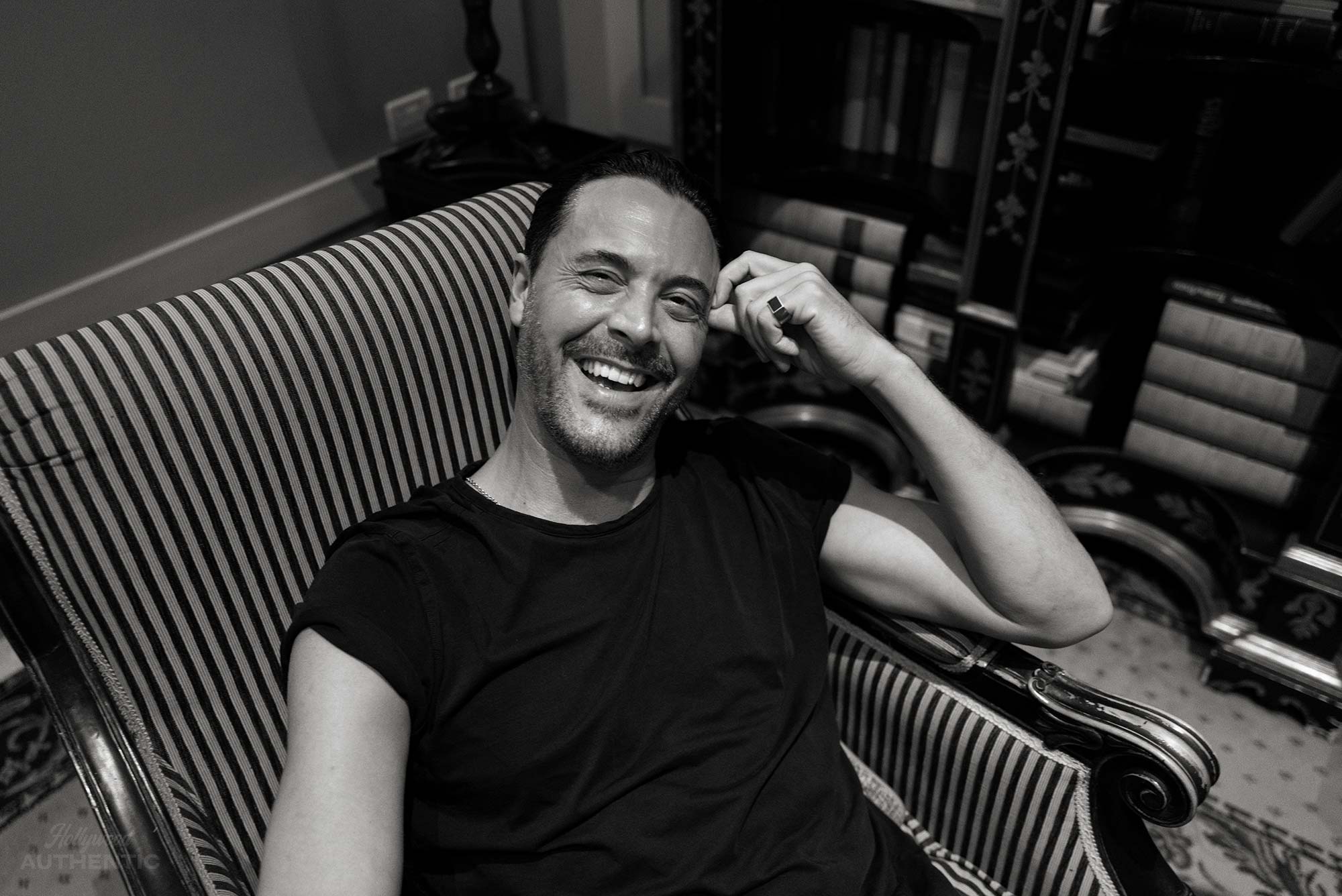

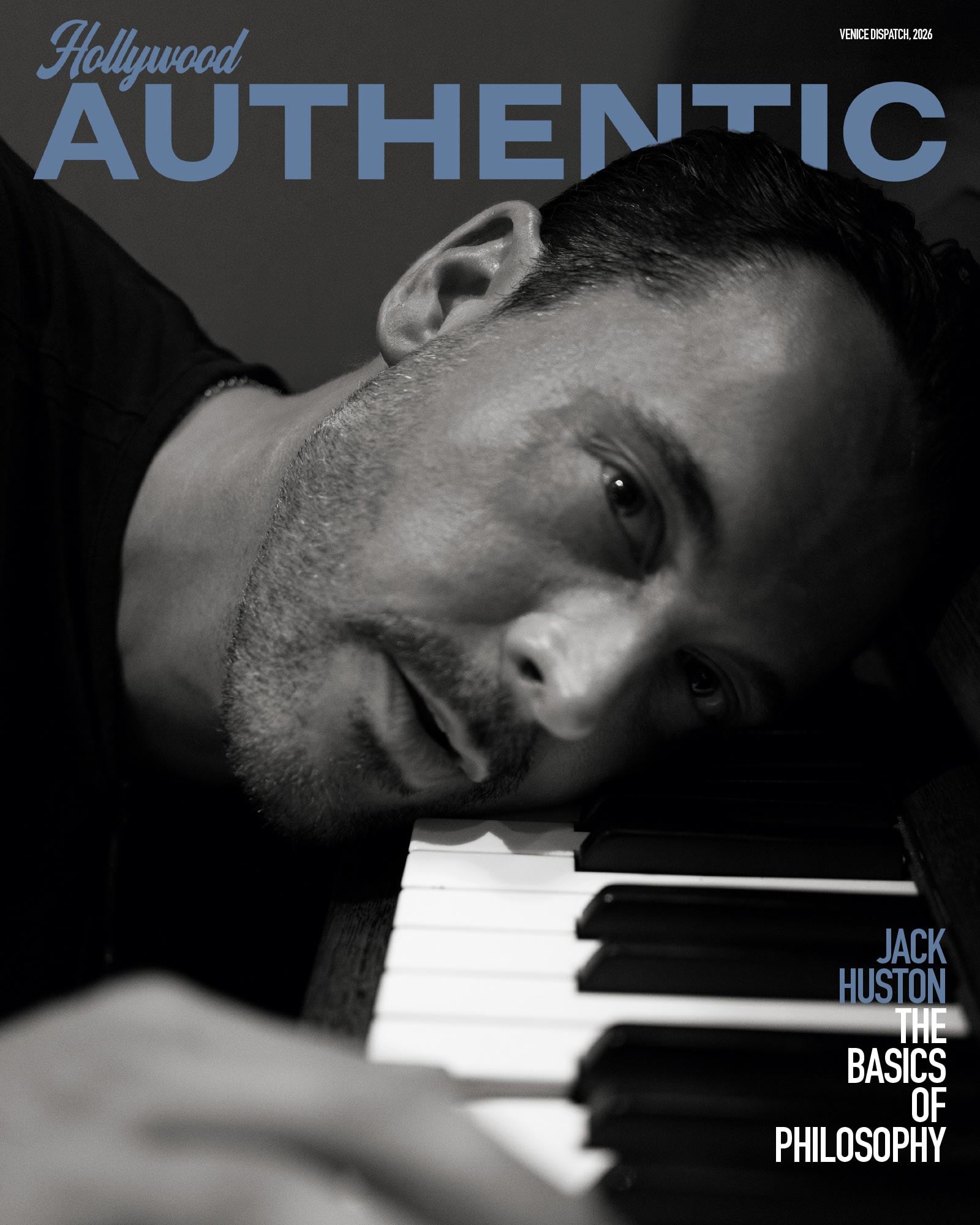
VENICE DISPATCH
Photographs by GREG WILLIAMS
Interview by JANE CROWTHER
The star of Paul Schrader’s latest, The Basics of Philosophy, tells Hollywood Authentic about becoming a ‘man in a room’, his family legacy and stepping behind the camera.
‘I can’t remember the last time I’d read a script and I felt this sort of stone in my stomach, I had to process,’ Jack Huston says of reading the Paul Schrader’s screenplay for his latest film, The Basic of Philosophy, which bowed at this year’s Venice Film Festival. ‘Working with Paul was on my bucket list – I’ve been a huge fan of his for as long as I can remember – and he’s claimed it’s his last ‘man in a room’ films. That’s why it felt like such an honour to be a part of it.’
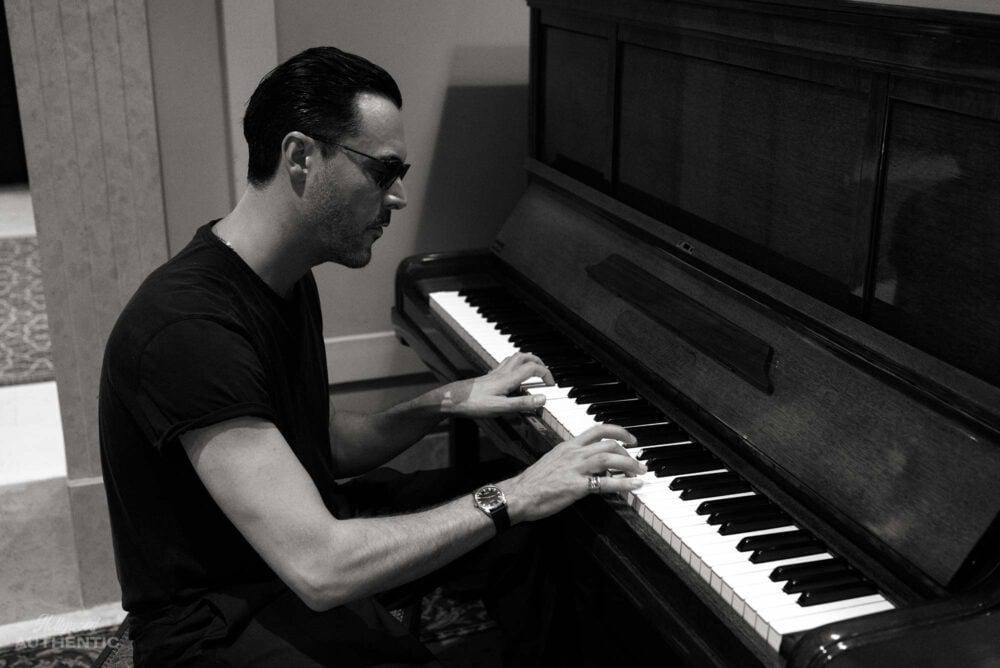
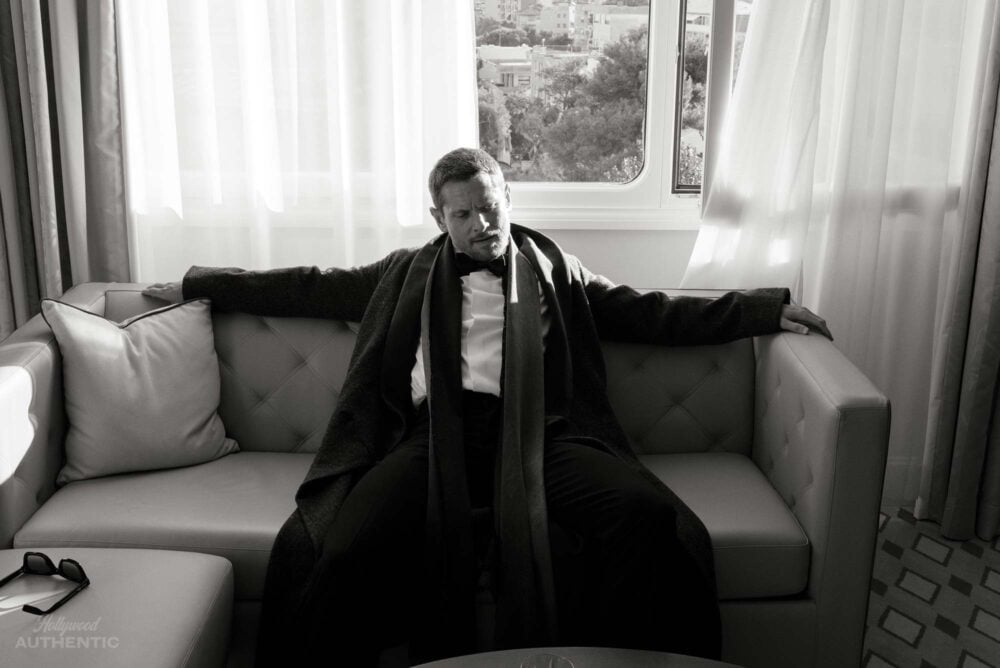
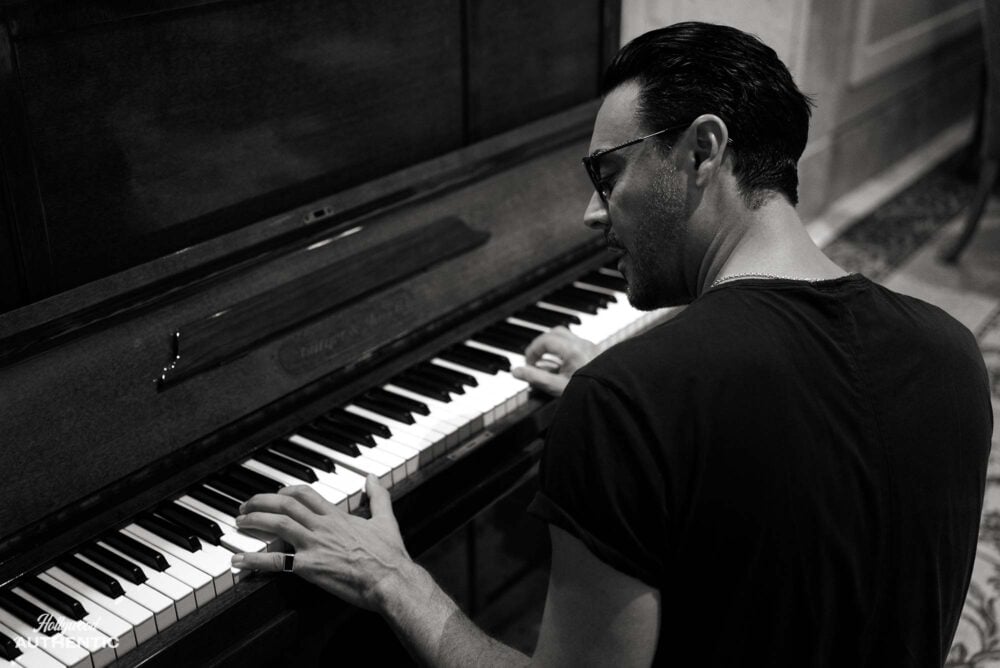
Huston plays a college philosophy professor, John Jorrisen, whose past comes back to haunt him when his father (Bill Pullman) dies. As a younger man he had been a piano player and teacher, and his relationship with one of his young students had crossed the line as they bowed over the keys. Greg Williams captured Huston with a piano during his festival stay at the San Clemente Palace. Schrader’s movie explores redemption, forgiveness, self-flagellation and guilt as Jorrisen works through how to find a way forward.
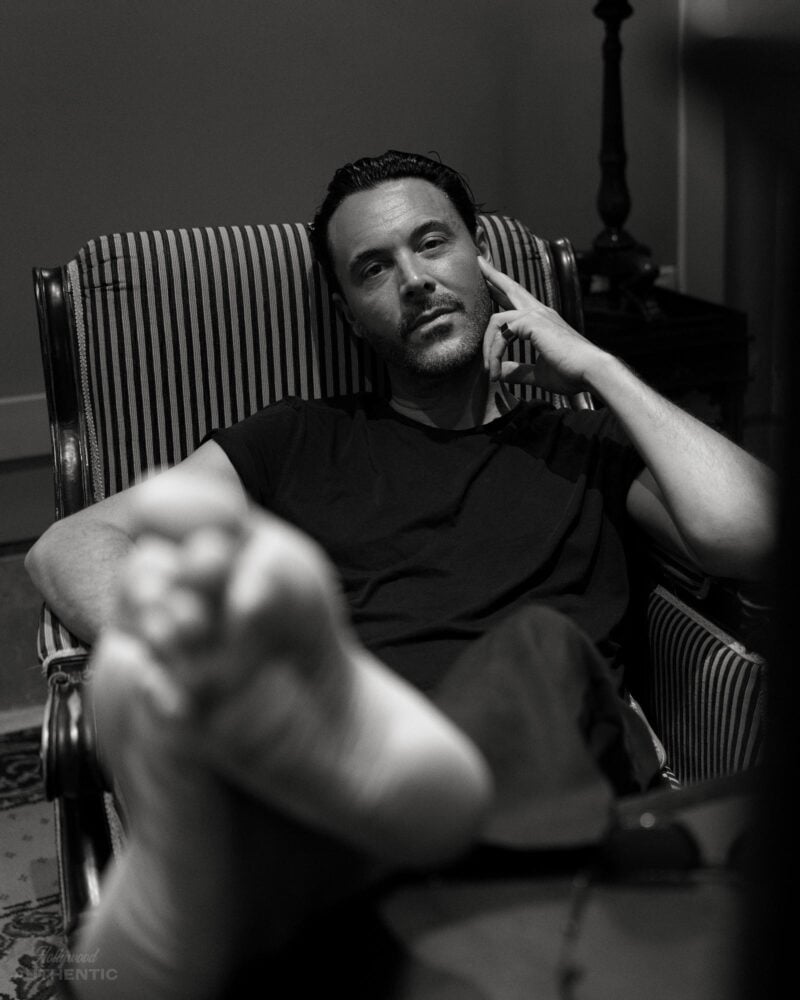
Grooming and peadaphilia are tough subjects to wallow in as an actor, Huston considers over an espresso as he sits poolside at the Blue Lounge on the the beach at Venice’s Lido to discuss his work with Hollywood Authentic. ‘Every time you deal with this subject they paint the abuser as a real monster, a bogeyman. This is the first time I’ve read a script where a writer humanises the abuser, which is far more real because it’s the people living to the left and right of us; the people living in plain sight that actually we usually have to worry about. The part I find the most startling and unnerving of a film like this is how relatable John is. I felt like if I was to do a film of this nature, I would only do it with someone of Paul’s stature and intelligence, because I don’t think it’s something to take lightly.’
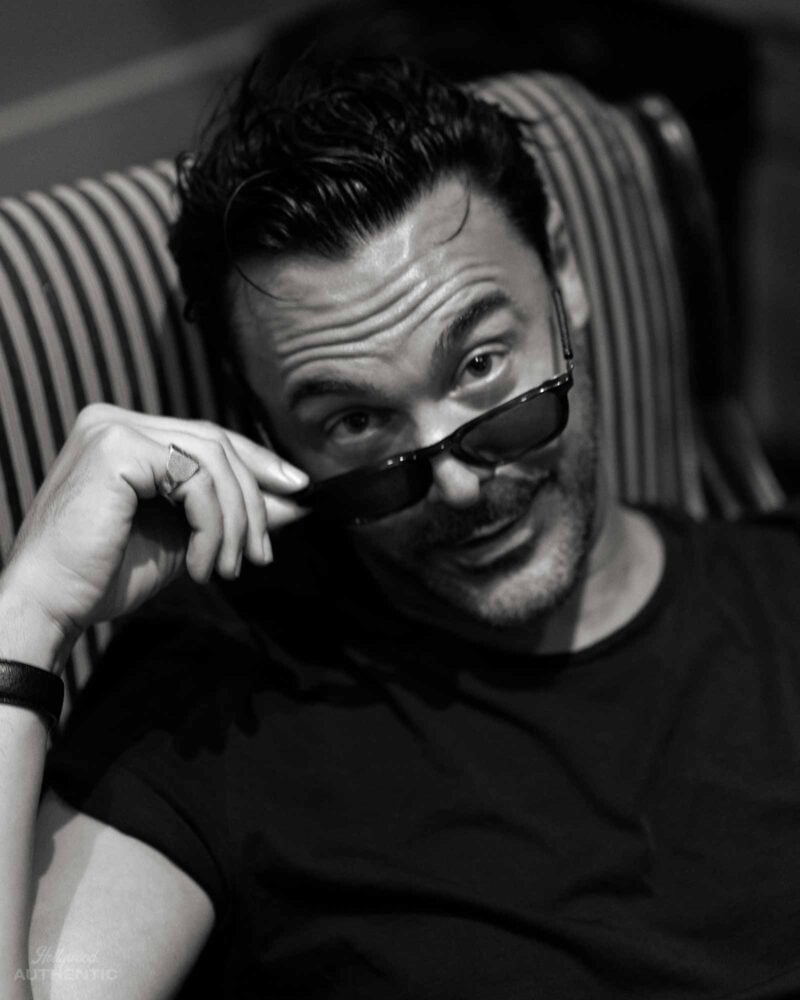
There are many of Schrader’s ‘men in rooms’ who have gone before Huston, not least Richard Gere, who cameos in the film as John’s college president. The actor admits to initially watching many of them when he took on this role. ‘I rewatched First Reformed, and I just remember this sort of starkness. I felt: ‘I’m in such good hands’ with Schrader.’ He also took a dive into the philosophy that his character teaches and wrestles with, specifically Spinoza who John is writing a book about. ‘There’s a great question that Spinoza asks: are we capable of change? That’s a lifelong question. This film is such an exploration of that question, which isn’t answered. It’s posed. Schrader said that he believed the last scene of any film should be the conversation that ensues as the audience leaves the theatre. This film will spark that.’
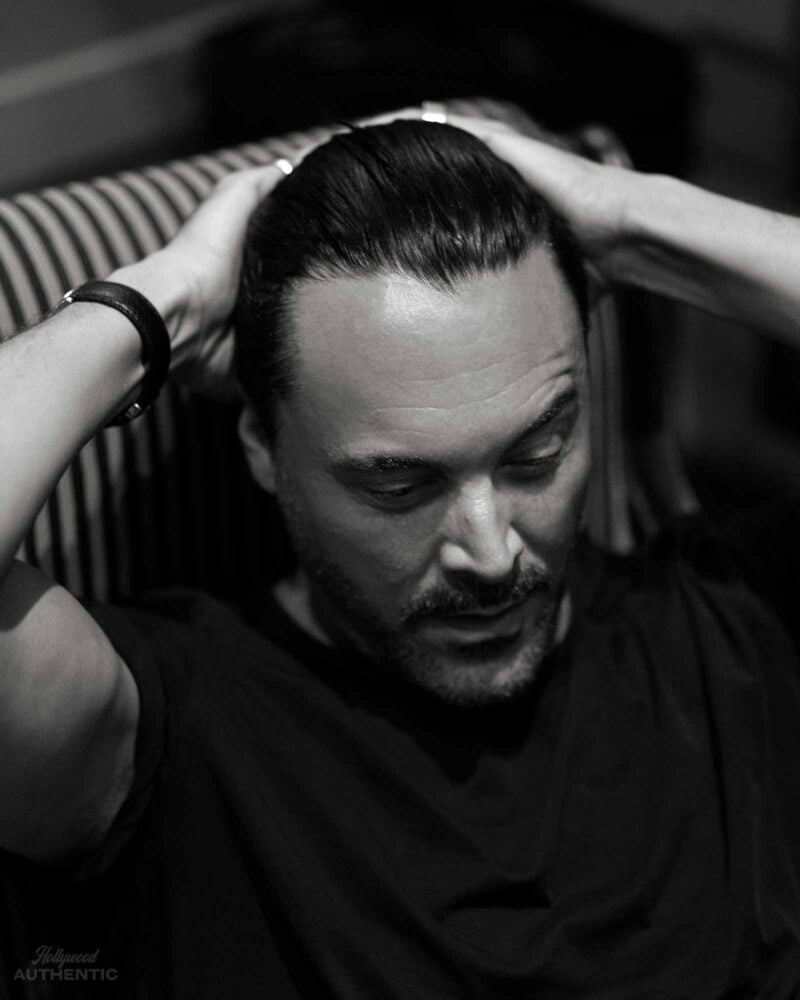
Schrader’s film also explores the nature of legacy – how we want to be remembered, what we leave behind. Huston comes from two families that have their fair share of heritage; he counts John Huston and the first prime minister of Great Britain among his forebears. ‘Legacy is such an interesting thing, isn’t it?’ he muses. ‘Because it’s not real. The idea is purely optics a lot of the time. It’s not actually who we are. So, on one side, I feel a heck of a lot of duty. I’m duty-bound to hold up a certain appearance or standard. But you can become a prisoner to it.’
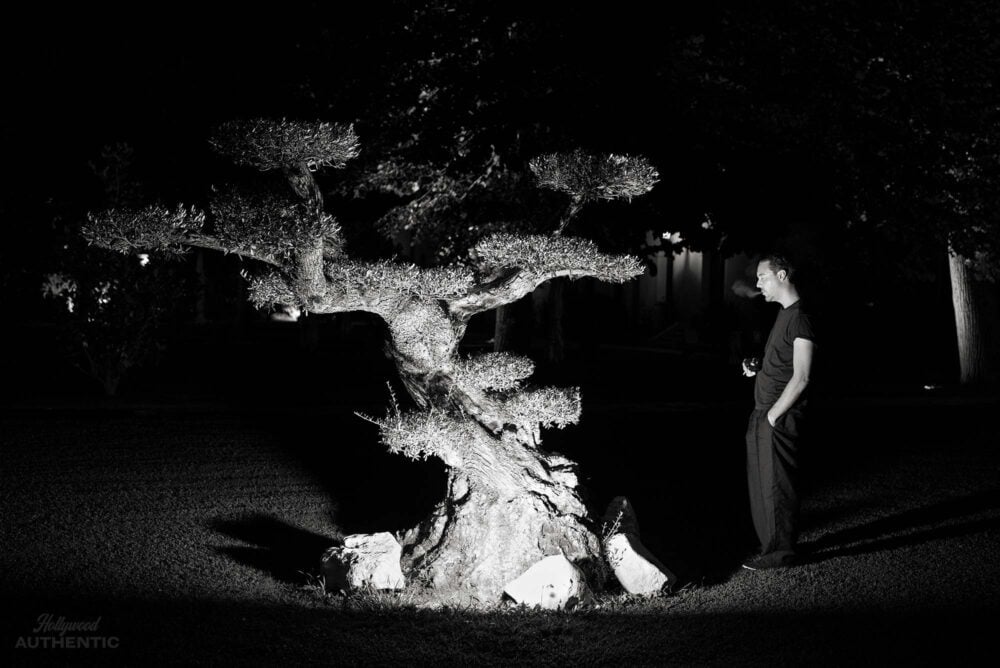
In the movie Jorrisen meets his philosophical hero, taking a stroll with Spinoza as they debate the theory of change. Is there a hero Huston would like to meet and pick the brains of? He replies without hesitation. ‘My grandfather [John Huston]. I’d love it. I was five when he died. I’ve been lucky enough to have such a supportive family, and my uncle Danny, and my aunt Anjelica, and people who have really passed on pearls of wisdom that he passed onto them. But I’d love to talk to him myself. And his advice has already been helpful early in my career. I did a film that’s to be forgotten, but there was a review… My uncle said that my great-grandfather said to my grandfather that you can either believe the good reviews or the bad reviews. You can’t believe both. So what a great way of looking at those things: you can believe what they say that’s bad about you, or you can believe what they say that’s good about you. It’s your choice. How do you see yourself? I thought that was such an interesting switch that made me stop caring about the negatives, and focus on the positives. And then the positive reinforcement that goes from that.’ He pauses. ‘And also don’t read your fucking reviews!’
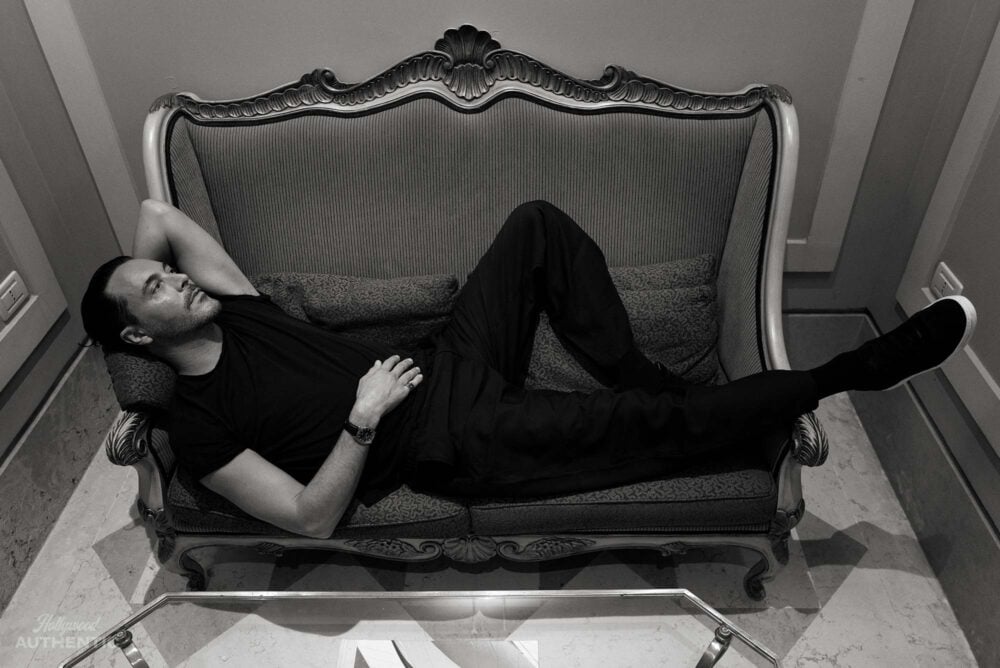
Huston says he’s learnt a great deal in his career, especially from the mistakes he’s made along the way. ‘Now I have a lot more confidence in myself as an actor, because I was given the opportunity to play characters, which is always where I felt far more comfortable. Delving into the character is what makes this job so endlessly fascinating, that we’re able to live these other lives – sometimes lives that we would never go near with a 10ft pole. But being able to explore different people in different parts of life that we wouldn’t usually have that opportunity to do, has opened up a world of intrigue and fascination. That’s the most beautiful part.’
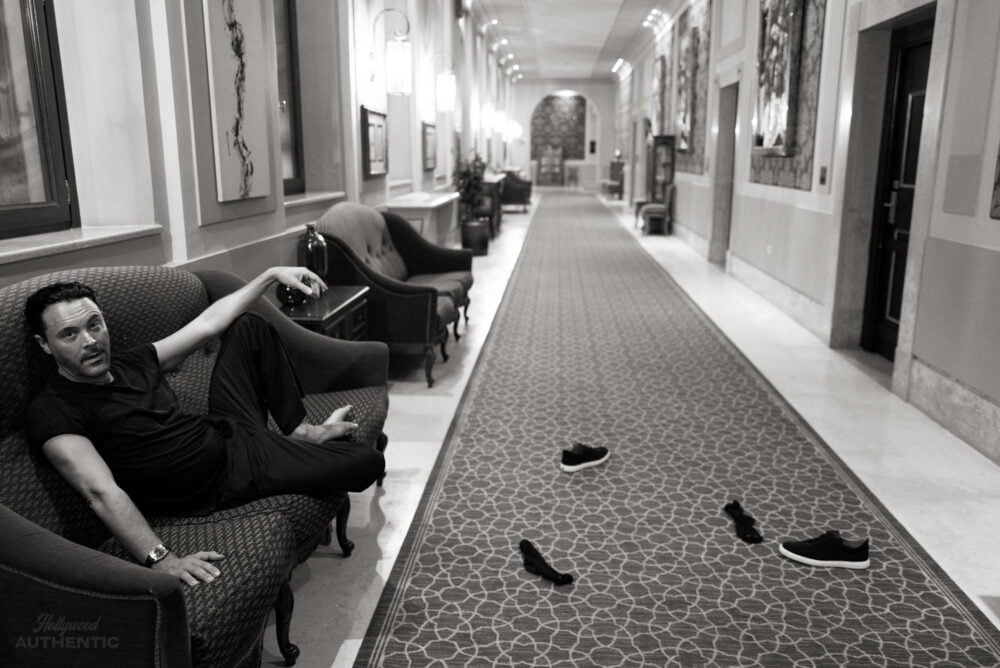
His next big learning curve– and change – is in directing a passion project which he’s written and will direct. Joseph Merrick will track the life of the so-called ‘Elephant Man’ either side of the portion of his life covered by David Lynch’s seismic film starring John Hurt. ‘I would never do something that would step on the toes – or even the toenail – of Lynch’s The Elephant Man, which is probably one of the top five films ever made, and changed my life, and made me want to be in this business in any capacity. But I found a way to tell a part of Joseph’s life that has not been widely told. It’s his childhood, and it’s the last few months of his life where he left London and went to Fawsley Hall to live in nature. It lives ‘arm in arm’ with The Elephant Man and I’ve cast a disabled actor playing Joseph, who we will be announcing soon.’ Huston also has a personal link the Lynch’s film in his off-screen relationship with the late John Hurt. ‘John was my mentor. My nearest and dearest. I loved him dearly. Before he died, he said the sweetest thing; ‘I hope I don’t die before you get the opportunity to direct me’.’ He smiles. ‘He always knew that that’s where my love really lay, on the other side of the camera.’
Photographs by GREG WILLIAMS
Interview by JANE CROWTHER
The Basics of Philosophy premiered at the 83rd Venice Film Festival
Read our review here