

September 8, 2026

Jack Huston, Sofia Boutella, Bill Pullman, Richard Gere
Venice Dispatch ticket
Jack Huston, Sofia Boutella, Bill Pullman, Richard Gere

VENICE DISPATCH
Photographs by GREG WILLIAMS
Interview by JANE CROWTHER


The star of Paul Schrader’s latest, The Basics of Philosophy, tells Hollywood Authentic about becoming a ‘man in a room’, his family legacy and stepping behind the camera.
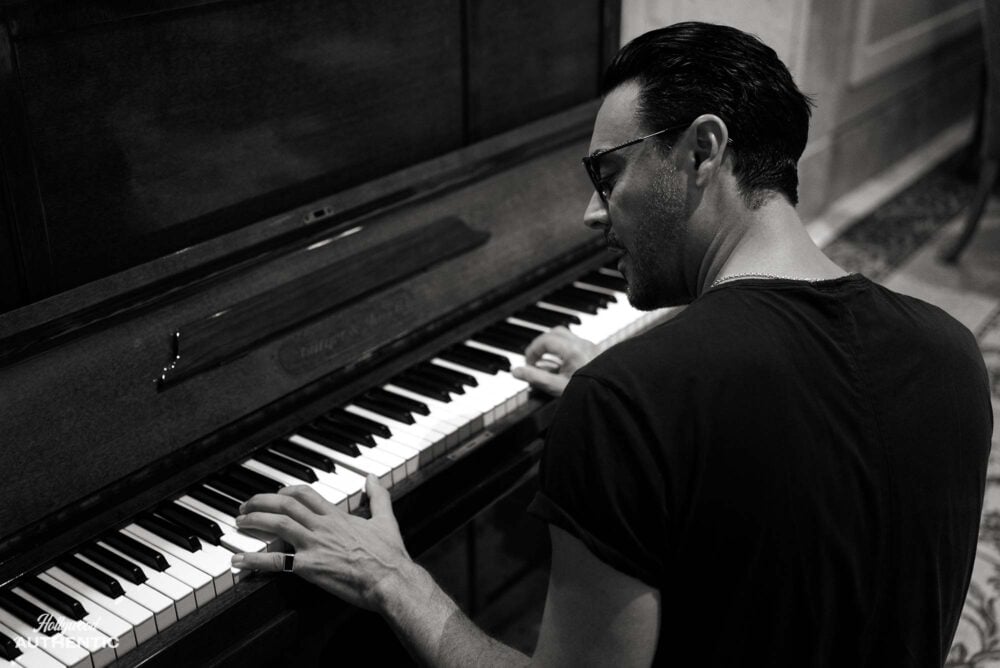
Jack Huston, Sofia Boutella, Bill Pullman, Richard Gere

‘I can’t remember the last time I’d read a script and I felt this sort of stone in my stomach, I had to process,’ Jack Huston says of reading the Paul Schrader’s screenplay for his latest  film, The Basic of Philosophy, which bowed at this year’s Venice Film Festival. ‘Working with Paul was on my bucket list – I’ve been a huge fan of his for as long as I can remember – and he’s claimed it’s his last ‘man in a room’ films. That’s why it felt like such an honour to be a part of it.’
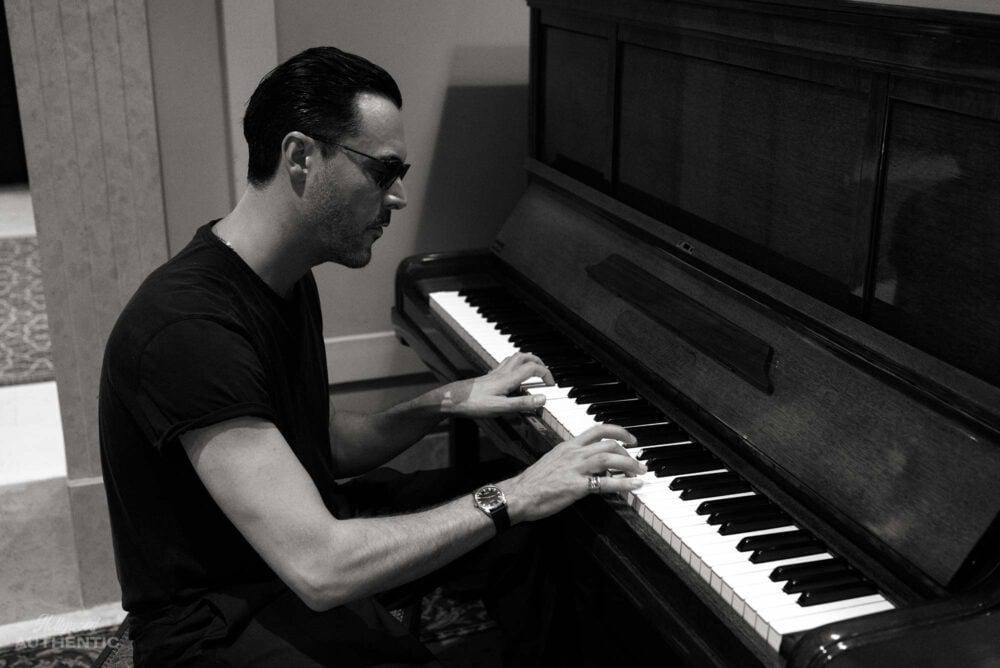
Jack Huston, Sofia Boutella, Bill Pullman, Richard Gere

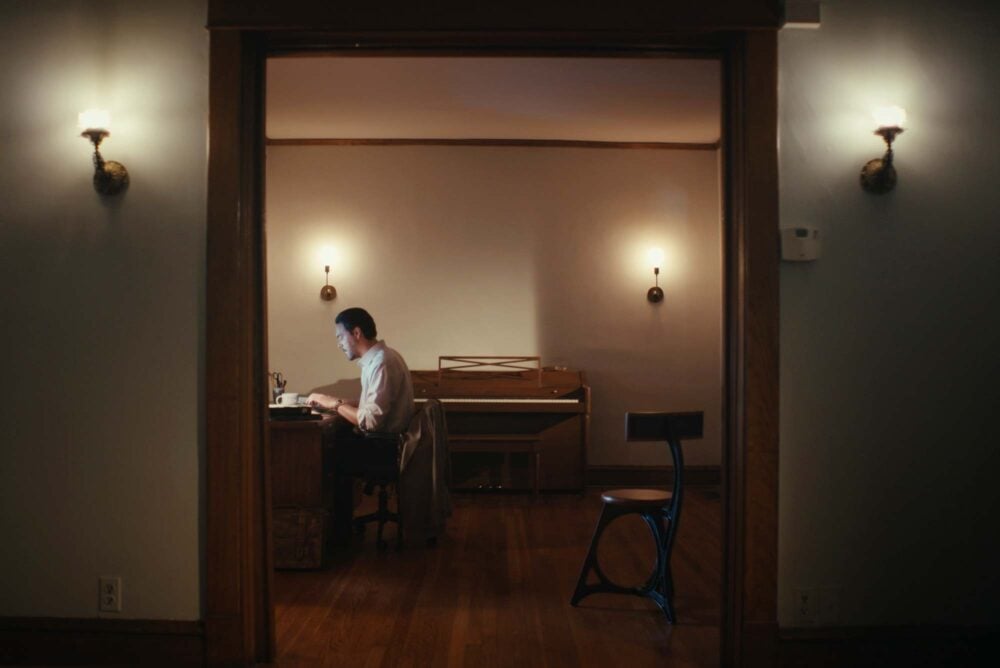
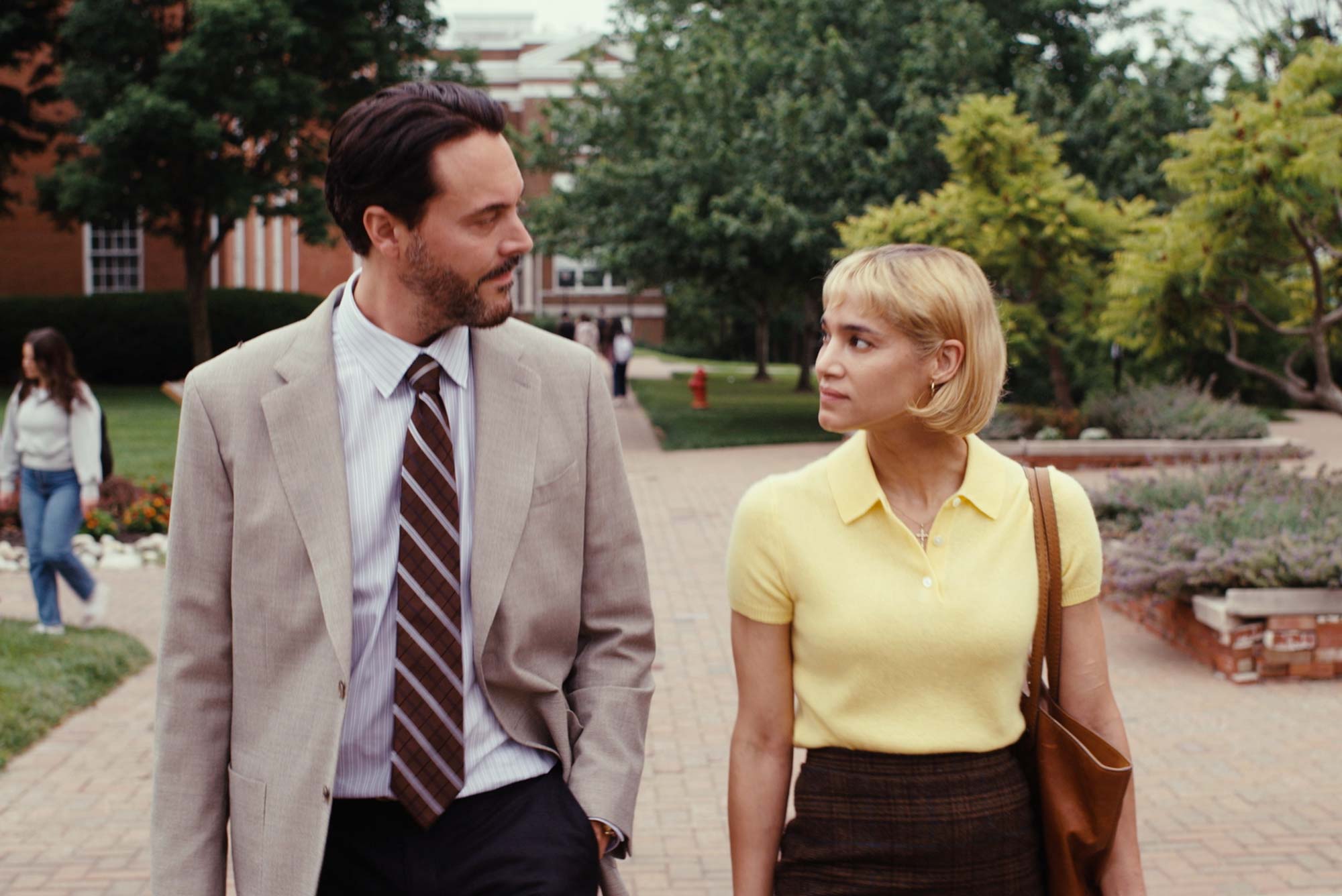
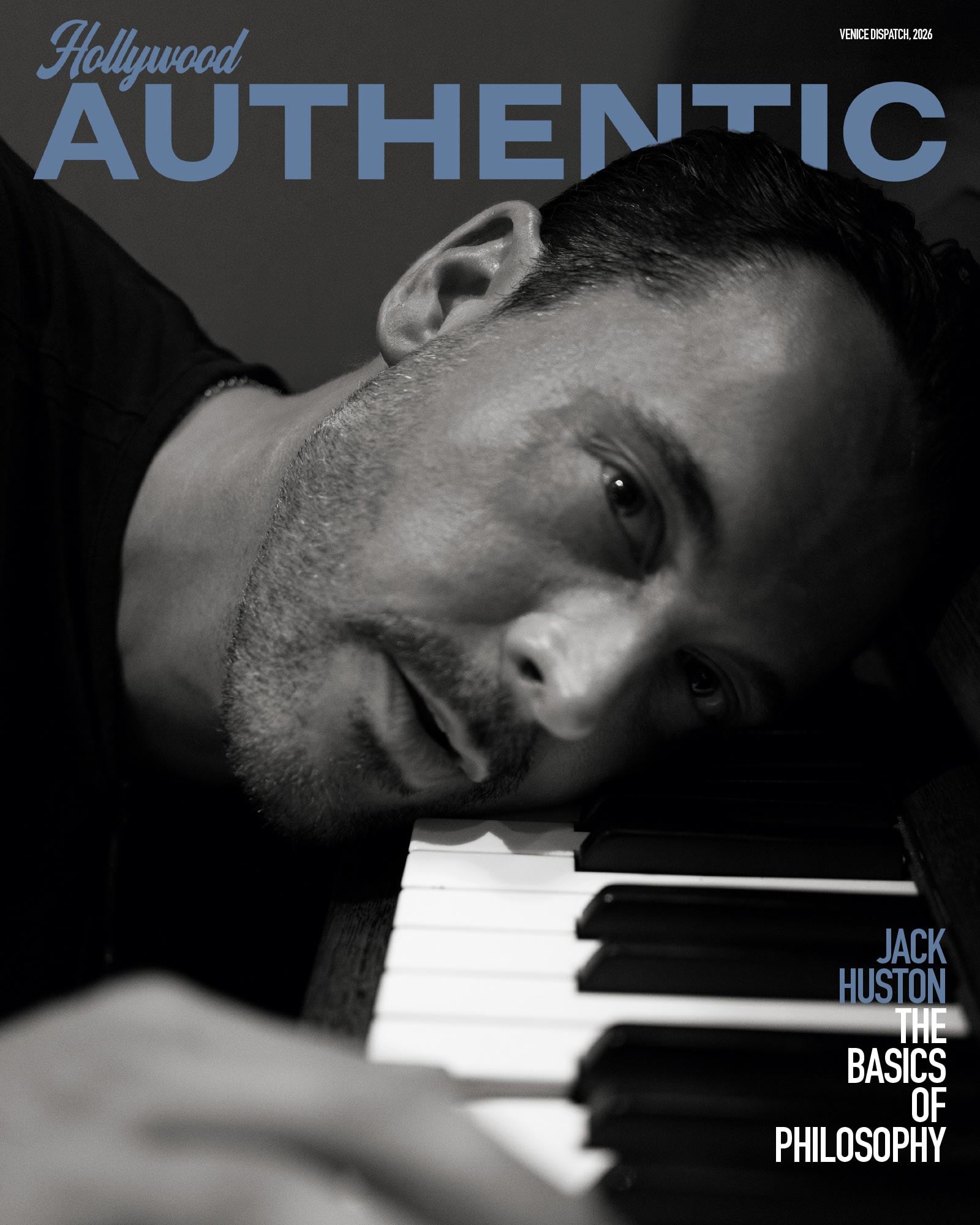
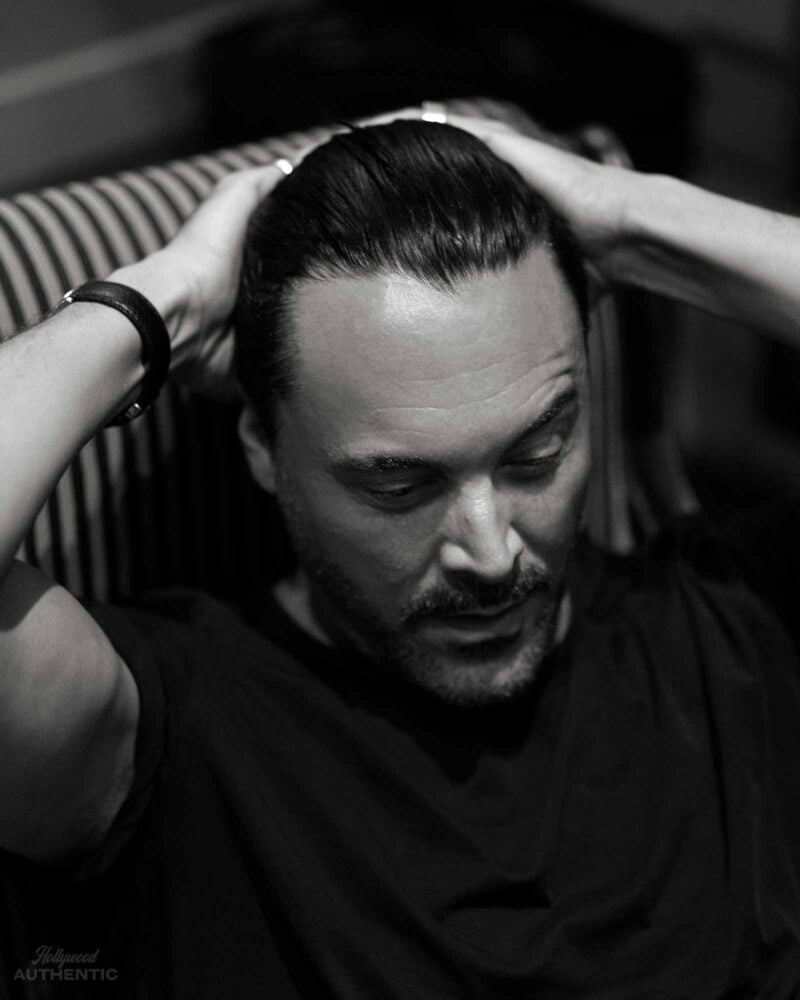
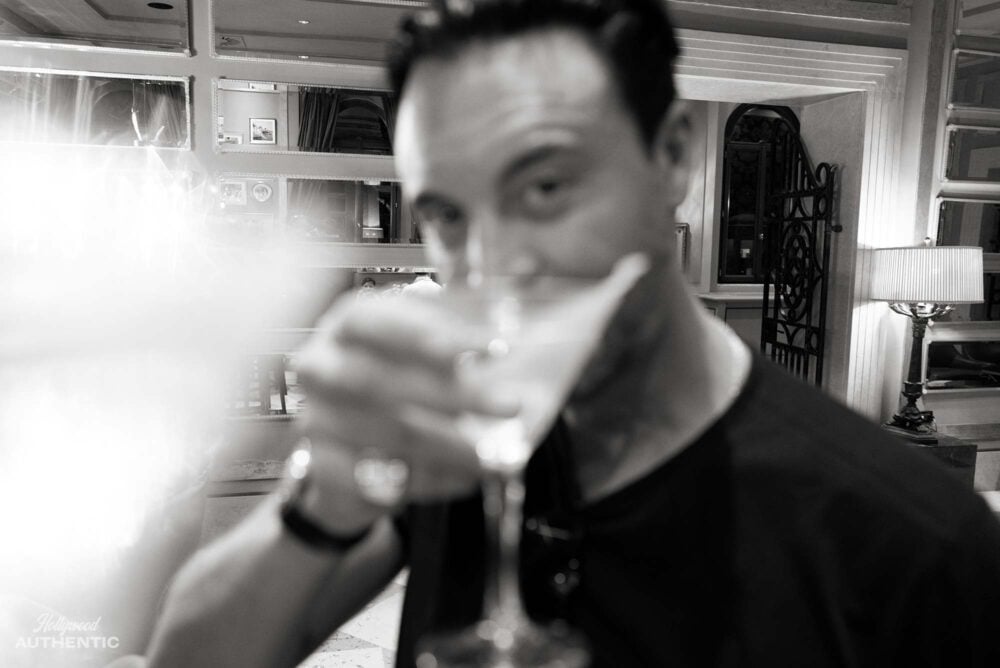
Huston plays a college philosophy professor, John Jorrisen, whose past comes back to haunt him when his father (Bill Pullman) dies. As a younger man he had been a piano player and teacher, and his relationship with one of his young students had crossed the line as they bowed over the keys. Greg Williams captured Huston with a piano during his festival stay at the San Clemente Palace. Schrader’s movie explores redemption, forgiveness, self-flagellation and guilt as Jorrisen works through how to find a way forward.
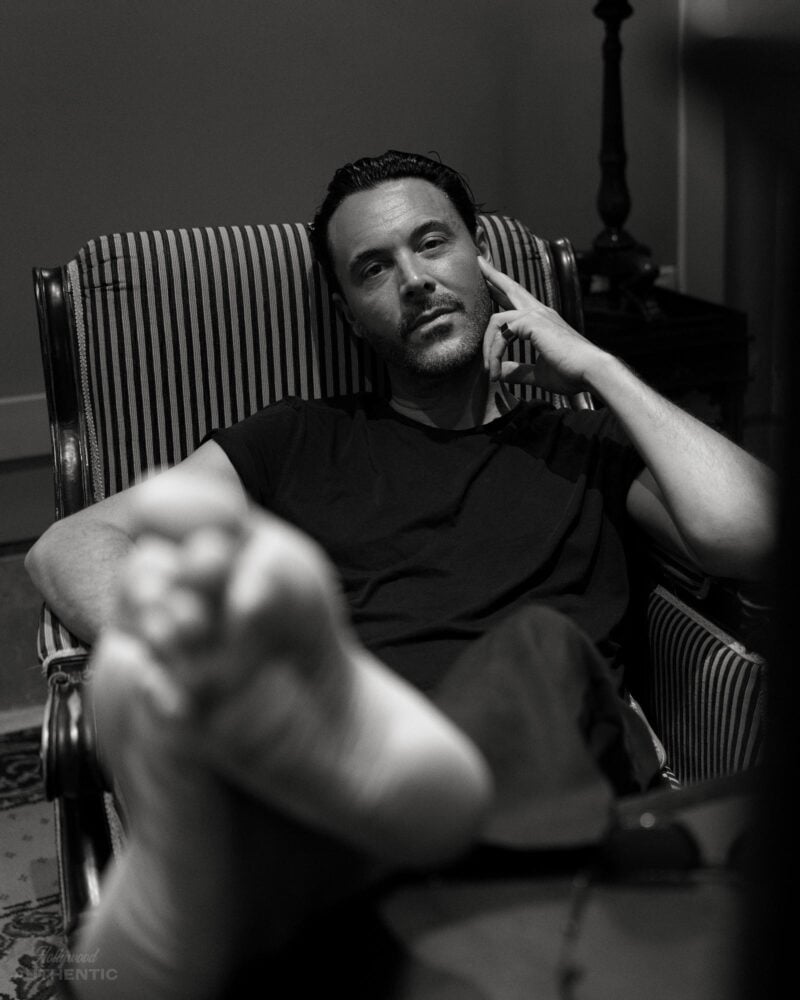
Jack Huston, Sofia Boutella, Bill Pullman, Richard Gere

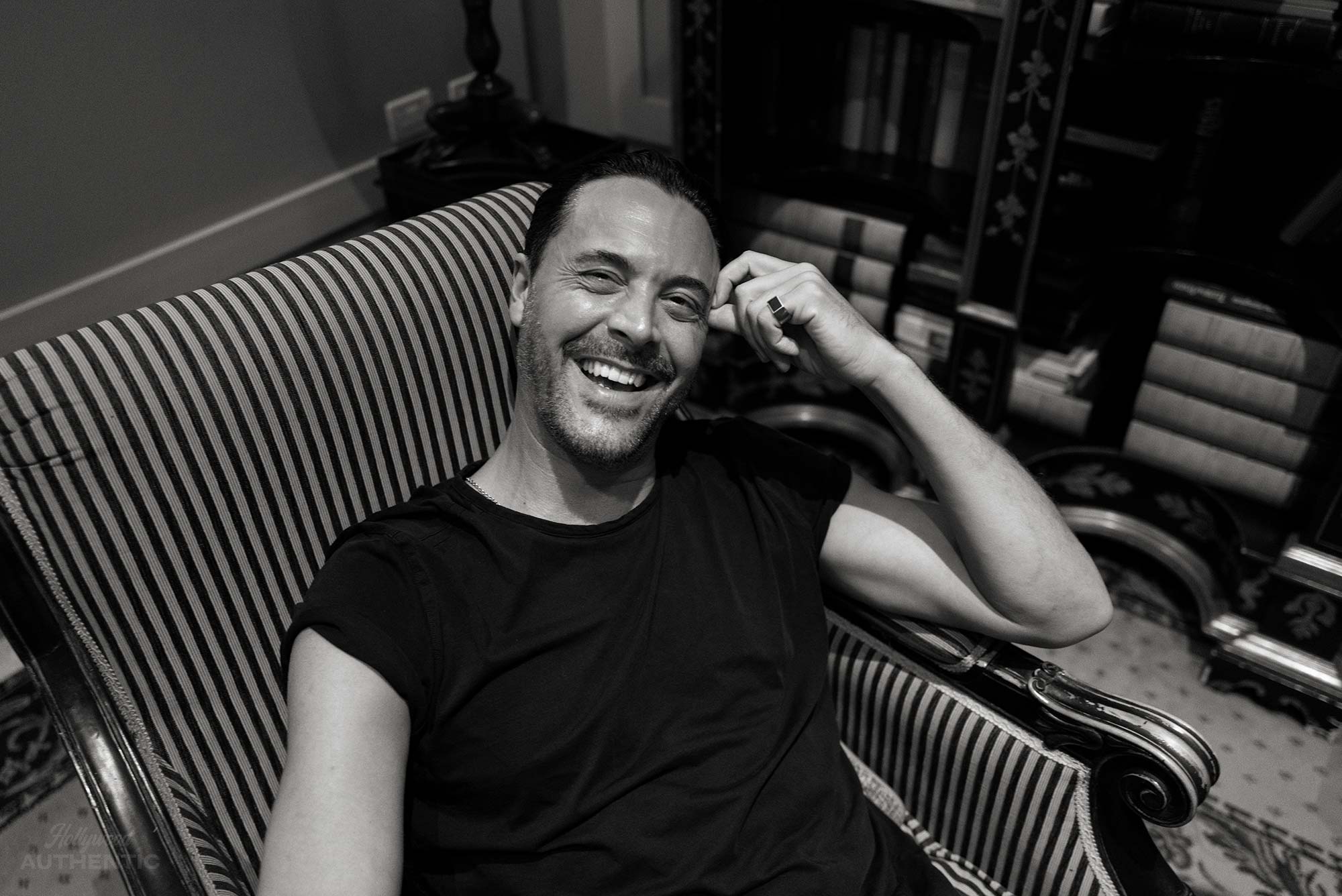
Grooming and peadaphilia are tough subjects to wallow in as an actor, Huston considers over an espresso as he sits poolside at the Blue Lounge on the the beach at Venice’s Lido to discuss his work with Hollywood Authentic. ‘Every time you deal with this subject they paint the abuser as a real monster, a bogeyman. This is the first time I’ve read a script where a writer humanises the abuser, which is far more real because it’s the people living to the left and right of us; the people living in plain sight that actually we usually have to worry about. The part I find the most startling and unnerving of a film like this is how relatable John is. I felt like if I was to do a film of this nature, I would only do it with someone of Paul’s stature and intelligence, because I don’t think it’s something to take lightly.’
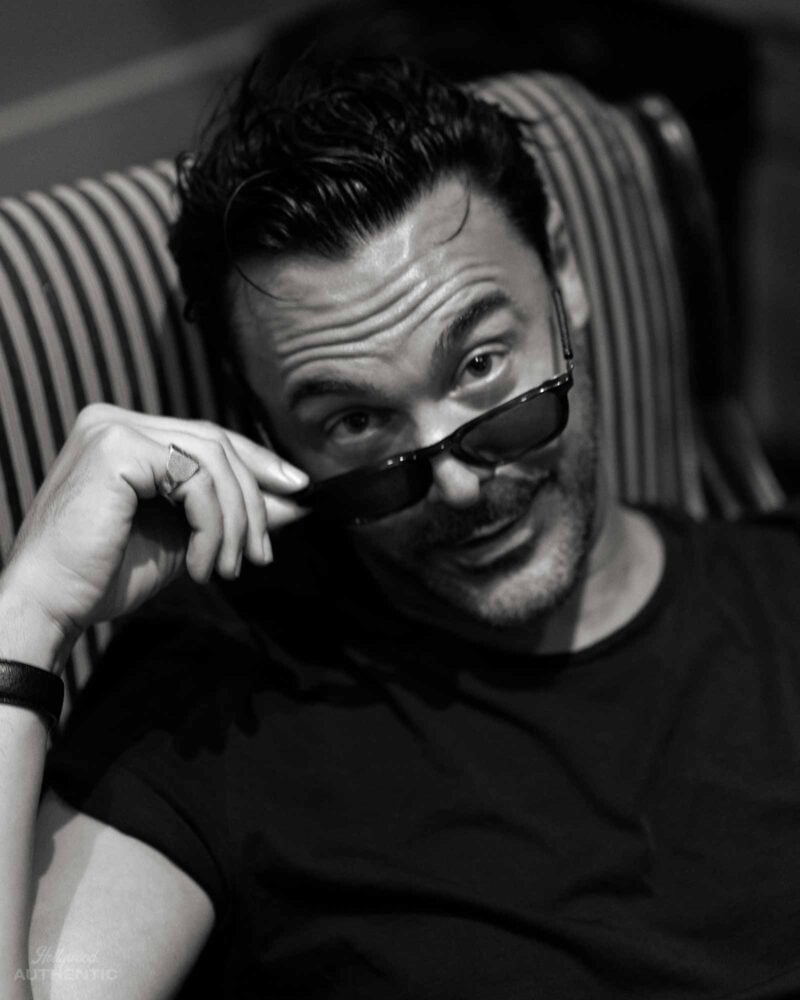
Jack Huston, Sofia Boutella, Bill Pullman, Richard Gere

There are many of Schrader’s ‘men in rooms’ who have gone before Huston, not least Richard Gere, who cameos in the film as John’s college president. The actor admits to initially watching many of them when he took on this role. ‘I rewatched First Reformed, and I just remember this sort of starkness. I felt: ‘I’m in such good hands’ with Schrader.’ He also took a dive into the philosophy that his character teaches and wrestles with, specifically Spinoza who John is writing a book about. ‘There’s a great question that Spinoza asks: are we capable of change? That’s a lifelong question. This film is such an exploration of that question, which isn’t answered. It’s posed. Schrader said that he believed the last scene of any film should be the conversation that ensues as the audience leaves the theatre. This film will spark that.’
Jack Huston, Sofia Boutella, Bill Pullman, Richard Gere

Schrader’s film also explores the nature of legacy – how we want to be remembered, what we leave behind. Huston comes from two families that have their fair share of heritage; he counts John Huston and the first prime minister of Great Britain among his forebears. ‘Legacy is such an interesting thing, isn’t it?’ he muses. ‘Because it’s not real. The idea is purely optics a lot of the time. It’s not actually who we are. So, on one side, I feel a heck of a lot of duty. I’m duty-bound to hold up a certain appearance or standard. But you can become a prisoner to it.’
Jack Huston, Sofia Boutella, Bill Pullman, Richard Gere

In the movie Jorrisen meets his philosophical hero, taking a stroll with Spinoza as they debate the theory of change. Is there a hero Huston would like to meet and pick the brains of? He replies without hesitation. ‘My grandfather [John Huston]. I’d love it. I was five when he died. I’ve been lucky enough to have such a supportive family, and my uncle Danny, and my aunt Anjelica, and people who have really passed on pearls of wisdom that he passed onto them. But I’d love to talk to him myself. And his advice has already been helpful early in my career. I did a film that’s to be forgotten, but there was a review… My uncle said that my great-grandfather said to my grandfather that you can either believe the good reviews or the bad reviews. You can’t believe both. So what a great way of looking at those things: you can believe what they say that’s bad about you, or you can believe what they say that’s good about you. It’s your choice. How do you see yourself? I thought that was such an interesting switch that made me stop caring about the negatives, and focus on the positives. And then the positive reinforcement that goes from that.’ He pauses. ‘And also don’t read your fucking reviews!’
Jack Huston, Sofia Boutella, Bill Pullman, Richard Gere

Huston says he’s learnt a great deal in his career, especially from the mistakes he’s made along the way. ‘Now I have a lot more confidence in myself as an actor, because I was given the opportunity to play characters, which is always where I felt far more comfortable. Delving into the character is what makes this job so endlessly fascinating, that we’re able to live these other lives – sometimes lives that we would never go near with a 10ft pole. But being able to explore different people in different parts of life that we wouldn’t usually have that opportunity to do, has opened up a world of intrigue and fascination. That’s the most beautiful part.’
Jack Huston, Sofia Boutella, Bill Pullman, Richard Gere

His next big learning curve– and change – is in directing a passion project which he’s written and will direct. Joseph Merrick will track the life of the so-called ‘Elephant Man’ either side of the portion of his life covered by David Lynch’s seismic film starring John Hurt. ‘I would never do something that would step on the toes – or even the toenail – of Lynch’s The Elephant Man, which is probably one of the top five films ever made, and changed my life, and made me want to be in this business in any capacity. But I found a way to tell a part of Joseph’s life that has not been widely told. It’s his childhood, and it’s the last few months of his life where he left London and went to Fawsley Hall to live in nature. It lives ‘arm in arm’ with The Elephant Man and I’ve cast a disabled actor playing Joseph, who we will be announcing soon.’ Huston also has a personal link the Lynch’s film in his off-screen relationship with the late John Hurt. ‘John was my mentor. My nearest and dearest. I loved him dearly. Before he died, he said the sweetest thing; ‘I hope I don’t die before you get the opportunity to direct me’.’ He smiles. ‘He always knew that that’s where my love really lay, on the other side of the camera.’
Jack Huston, Sofia Boutella, Bill Pullman, Richard Gere

Photographs by GREG WILLIAMS
Interview by JANE CROWTHER
The Basics of Philosophy premiered at the 83rd Venice Film Festival
Read our review here

September 8, 2026

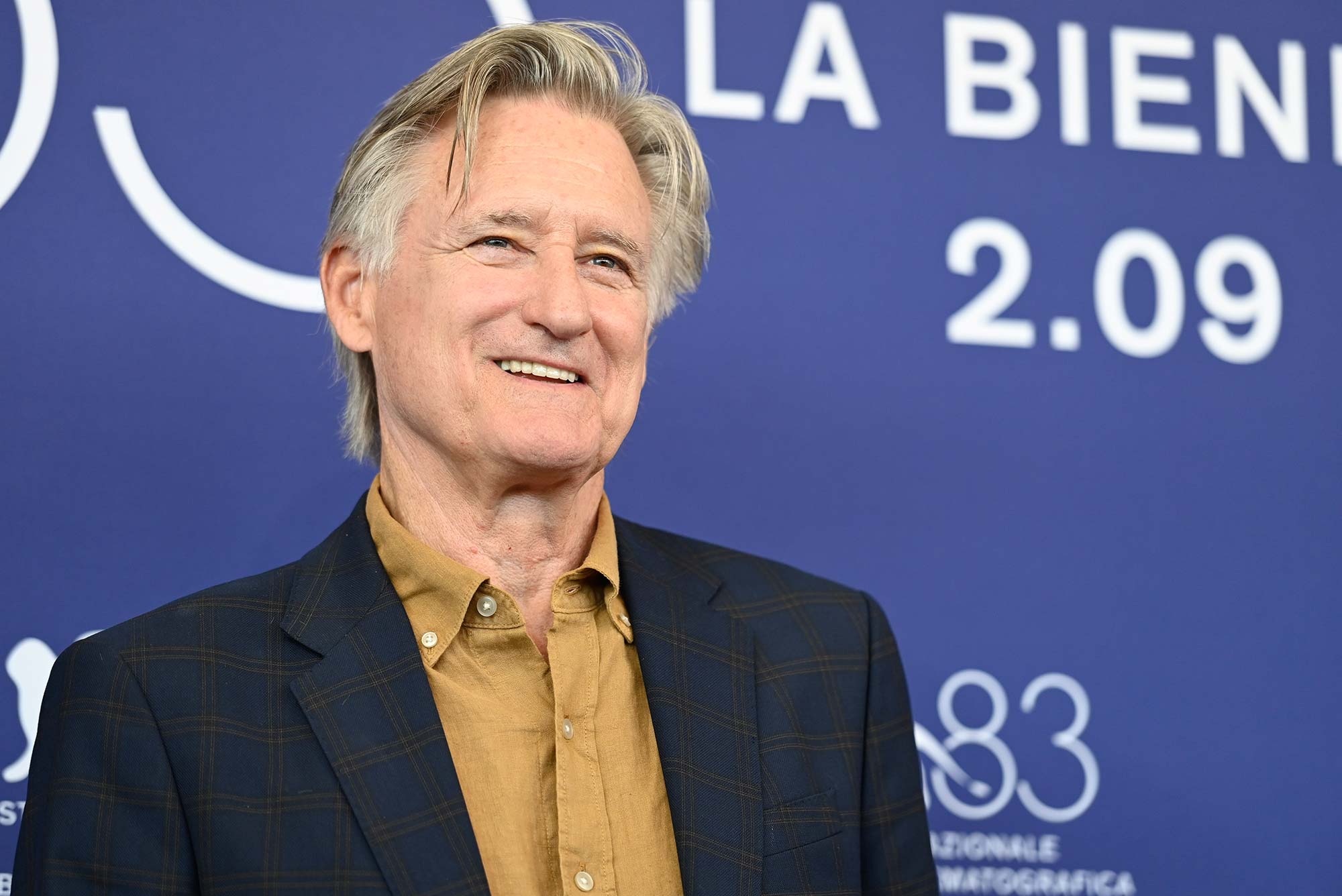
Bill Pullman, Venice Film Festival 2026
Venice Dispatch ticket 2026

Words by JANE CROWTHER
Photograph courtesy of LA BIENNALE DI VENEZIA


The star of The Basics of Philosophy talks about almost quitting acting for jam-making and the importance of maintaining a sense of self in Hollywood as he touches down at Venice Film Festival.

Bill Pullman may have only worked for a day and a half on Paul Schrader’s latest film, The Basics of Philosophy, but he certainly makes an impression as a controlling father whose sense of ‘correctness’ is impressed on his son (Jack Huston). As a father himself to three grown children including actor Lewis Pullman, the actor understands the pressures of parenting – and the impact our own childhood plays on who we become as adults. 

Bill Pullman, Jack Huston, Richard Gere, Sofia Boutella
Noora Films

‘My bedroom was next to my father and mother’s bedroom, and my father was a doctor at an age where, when he was on a call, the calls would come in the middle of the night,’ Pullman recalls of his relationship with his own dad when Hollywood Authentic sits down with him at the beachside Blue Lounge on Venice’s Lido. ‘I used to hear the phone ringing, and I’d hear him instantly screaming. I just thought that was his foible or something, and it was just a strange thing he did. Now, we would say that’s PTSD, you know? But he would never share anything about that. You’d ask him in the morning, ‘Boy, that was a surprising phone call’. ‘Yeah, it took me by surprise,’ he’d say. And that would be it. So it’s that, and how to deal with shame.’

The father Pullman plays in Schrader’s film deals with a great deal of shame as he covers up his son’s illegal indiscretion and forces him to live an idealised life not of his making. ‘Guilt is an intellectual idea. And shame is kind of like when you slip on a banana peel. Your whole body is involved with the embarrassment of it, and the awkwardness of it, and the suddenness of it, and the fear of what people have perceived. I think that kind of thing was of interest to me, to think of someone who was looking to rescue his son out of this lifetime of slipping on banana peels all the time, and triggering this guilt thing.’

Pullman hasn’t slipped on many banana peels professionally having had a decades-long career in film after making his debut in 1986’s Ruthless People and going on to star in movies such as Spaceballs, Sleepless in Seattle, While You Were Sleeping, Independence Day and Lost Highway, as well as numerous stage shows. Often in his roles he succeeds at projecting real decency, perhaps that’s why he’s often stopped by fans who love his portrayal of a president in Independence Day. His character in The Basic Of Philosophy is consumed with the idea of legacy, so does Pullman think about his own? ‘That is a very dodgy thing these days,’ he considers. ‘I think there was an era when you could count on authenticity, and now identity is built on brands, triggers and virtue signalling. It’s very hard to be authentic these days, because it’s not even about being always candid. You know, sometimes it’s what it is to be able to stay inside a certain code of who you are.’

Pullman certainly knows who he is. He had a career as a university professor teaching theatre before he turned to acting and he still continues to keep one foot very squarely in ‘real’ life, talking about the importance of cultivating his ‘civic side’ in his LA neighbourhood. ‘I’ve been trying that whole thing of ‘think global, act local’, you know?’ he says as he describes his involvement with his wife, Tamara Hurwitz, in the Hollywood Orchard, a community initative that is volunteer-led and non-profit and harvests unwanted fruit for donation and fundraising. Pullman got so into the harvesting, jam-making and donating to food kitchens that he describes it as ‘almost like a job’. ‘I thought I was going to quit being an actor,’ he admits. ‘I was like, ‘This could be my life’. It was a sense of what could be provided in an age in which everyone’s so fractured.’ The lure of agriculture and working with his hands is something Pullman has always had in his life, owning a ranch in Montana where the land and local community has preoccupied him rather than Hollywood. ‘There were so many decades where I just was all about getting to the ranch, and doing the agriculture there. But I’m fortunate enough to have some good roles.’

Bill Pullman, Jack Huston, Richard Gere, Sofia Boutella
Noora Films

In a period when Pullman was wondering about switching careers a particular role brought him back to acting. ‘I got an offer to go to the Royal Shakespeare Company in Stratford-upon-Avon to do The Cherry Orchard with Kenneth Branagh and Helen Hunt. That was scary, because it was going back into the whole process of getting the lines, and dealing with a very complicated play, and being surrounded by British people,’ he says. ‘Being ‘in the moment’ in a play was a chance to really use it as a laboratory, because you’re dealing with the same lines night after night. The incentive is to keep inventing, and to keep exploring. That experience made me feel ready to do another movie, and bring a different energy to it.’ 

He’s bringing his renewed energy to the long-awaited Spaceballs sequel, playing alongside his son, Lewis. ‘Lewis said ‘Dad, it’s going to be a crazy thing to do’,’ Pullman recalls of the duo deciding to do the film. ‘And then he said ‘but it’s even crazier not to do it, because it’s the chance to work together, and go to Australia for three and a half months, and live 10 minutes’ walk from each other’s places.’’ Pullman senior will also appear in Everybody Digs Bill Evans, a biography of the titular jazz pianist, and will explore the idea of celebrity in the 21st century with A24’s thriller Famous, with Zac Efron in a dual role as a movie star and an ordinary joe who looks just like him. ‘We’re all faking it ourselves, anyway,’ Pullman says of fame. ‘We’re hideously trying to manufacture something that we could never consistently stick to.’ It’s interesting that Pullman so resolutely doesn’t see himself as a ‘movie star’. He shakes his head and smiles. ‘No, I don’t. I think because I was so late coming to it, and as I was getting success, I was also having a family. You’re sublimating all your ego when you’re changing diapers. And it’s paid off.’ Plus, he says, he’s still all about squeezing the juice out of everything, not just in Hollywood. ‘There’s a lot of parts, there are plays, and there are scripts that are really interesting movies. But, you know, I’m looking at the clock of my life…’


Words by JANE CROWTHER
Images courtesy of NOORA FILMS
The Basics of Philosophy premiered at the 83rd Venice Film Festival
Read our review here
Words by JANE CROWTHER


Paul Schrader continues his ‘Man in a Room’ treatise with this examination of guilt, repression, legacy and the big questions of life: why do we exist? Is change possible? They are themes that have dominated his work for decades and so his latest, following a college professor (Jack Huston) who is hiding a past indiscretion, labouring under the pressure of a controlling father and punishing himself for his proclivities, stays reassuringly in his tried-and-tested lane for fans of his monastic oeuvre. Those looking for the much mused over change might find that the philosophical answer in Schrader’s case is a resounding no. 

Bill Pullman, Jack Huston, Richard Gere, Sofia Boutella
Noora Films

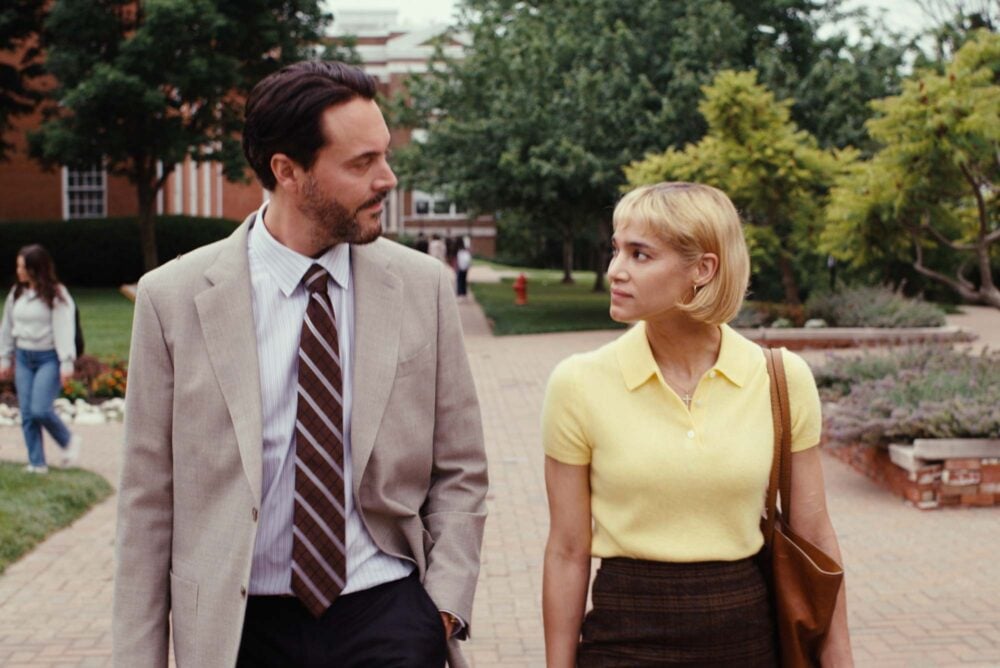
Dr. John Jorrison (Jack Huston) is writing a book on philosopher Spinoza, keeping his romance with colleague Becca (Sofia Boutella) at arms length and dodging the overtures of students who insist that ‘everyone is guilty of something’. When his ailing dad dies (Bill Pullman) the wake sets off a chain of events that uncover an incident of child molestation from John’s past, the pressure from his father to conform to a particular idea of a good and noble life, and sends the prof down a rabbithole of suicide ideation, gay cruising and what forgiveness might look like.

While Schrader may specialise in ‘God’s lonely men’ it seems his expertise does not extend to recognisable gay bars and interactions, or convincing flashback scenes – and his decision to have Spinoza himself (Karl Glusman) visit his protagonist seems hokey and cheap. Fortunately, he has Bill Pullman onboard to deliver authenticity as a prescriptive father who values ‘correctness’, Richard Gere popping up in a cameo to remind us of the genius of American Gigolo and Jack Huston bringing the weight of his own family legacy to the idea of living up to one’s forebears.

Schrader constantly threatens that each picture he creates is his last, but one has to hope that this is not the one the scribe of Taxi Driver, Raging Bull and First Reformed bows out on. While it fits neatly into his canon it might be more engaging to see the filmmaker adhere to Heraclitus’ theory of everything being in constant flux and toy with some change himself. 


Words by JANE CROWTHER
Images courtesy of NOORA FILMS
The Basics of Philosophy premiered at the 83rd Venice Film Festival

May 18, 2024

oh canada, richard gere, urma thurman, jacob elordi, paul schrader

Words by JANE CROWTHER


After Quintin Dupieux and Francis Ford Coppola’s cinematic essays on their relationships with art, Paul Schrader offers his own at Cannes this week. Dedicated to the late author Russell Banks, Schrader explores mortality, legacy and fraudulence in art as he tracks an irascible dying documentary-maker, Leonard Fife (Richard Gere) giving a deathbed career interview to two of his former students (Michael Imperioli and Victoria Hill). A fated artist who has spent his career being lauded for his anti-Vietnam war stance when he fled to Canada as a young man, and his liberal, game-changing documentaries, Leonard demands his wife, Emma (Uma Thurman) be his witness to his last confession. Riddled with cancer and befuddled by Fentanyl, Leonard recalls the true story of his rise to success – one that may be more self serving than selfless.

Leonard is played in flashback by Jacob Elordi who, though a more rangy version of Gere, manages to embody his recognisable strut and his cadence. A studious young man heading for a teaching job in Vermont in 1968, he’s married, father to a toddler (with another on the way) and offered the opportunity of being a CEO with his father-in-law’s business. Given a week to decide as the shadow of Vietnam looms, Leonard takes off to New England with a banker’s cheque to buy a house and put down roots for his family. His odyssey takes a different turn…

Using multiple narratives (Gere and Elordi alternate as Leonard in flashbacks, Leonard and his grown son narrate), B&W and colour, mixed ratios and Thurman in a duel role – she plays Emma and also the hippy wife of a painter in 1968 who pleasures Leonard in a farmhouse – Schrader’s film is a jigsaw puzzle that requires patient assembly by viewers. Is the jumbled and ultimately meaningless last interview of the great Leonard Fife the last firing synapses of a dying, confused man conflating reality and fiction? Or is the film merely a hollow mess? 

While Gere eschews any charm to play Fife as a self-obsessed deserter (politically and romantically), the film belongs to Elordi. Continuing to show his range and savvy choices, the Euphoria and Priscilla star puts flesh on the bones of seemingly callow youth, giving Leonard the humanity he denies himself in the retelling. In Elordi’s hands, Leonard is, if not necessarily commendable, understandable. Schrader lenses him beautifully and he’s missed whenever he’s not on screen.


Paul Schrader’s Oh, Canada starring Richard Gere, Uma Thurman and Jacob Elordi is screening at the 77th Cannes Film Festival. Release date TBC