


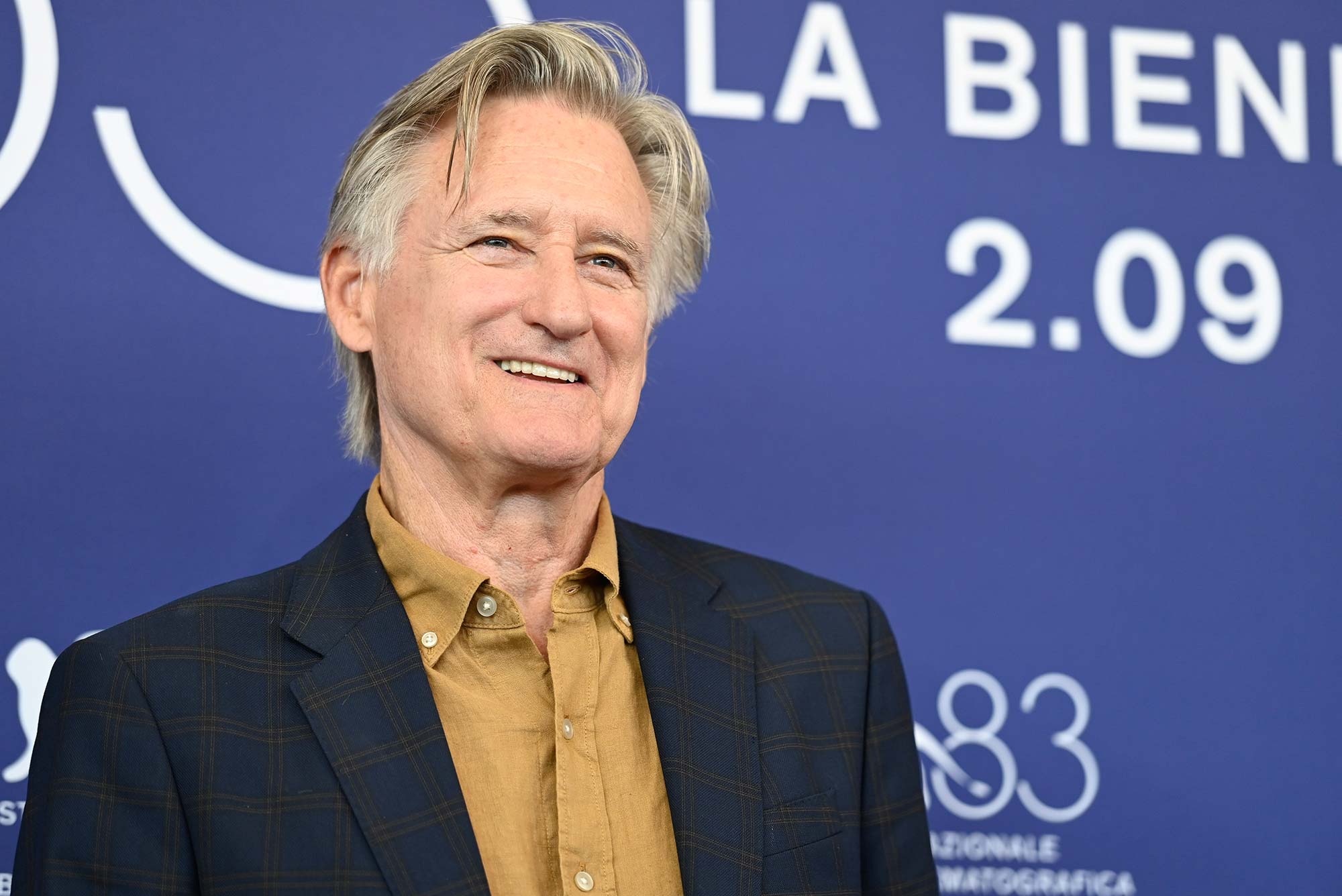

Words by JANE CROWTHER
Photograph courtesy of LA BIENNALE DI VENEZIA
The star of The Basics of Philosophy talks about almost quitting acting for jam-making and the importance of maintaining a sense of self in Hollywood as he touches down at Venice Film Festival.
Bill Pullman may have only worked for a day and a half on Paul Schrader’s latest film, The Basics of Philosophy, but he certainly makes an impression as a controlling father whose sense of ‘correctness’ is impressed on his son (Jack Huston). As a father himself to three grown children including actor Lewis Pullman, the actor understands the pressures of parenting – and the impact our own childhood plays on who we become as adults.
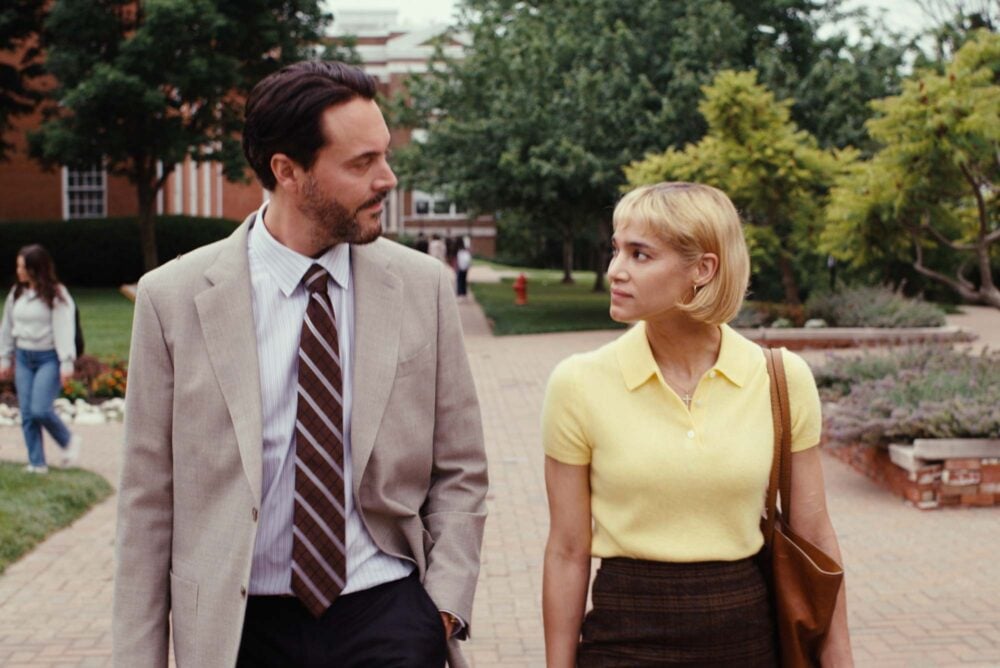
‘My bedroom was next to my father and mother’s bedroom, and my father was a doctor at an age where, when he was on a call, the calls would come in the middle of the night,’ Pullman recalls of his relationship with his own dad when Hollywood Authentic sits down with him at the beachside Blue Lounge on Venice’s Lido. ‘I used to hear the phone ringing, and I’d hear him instantly screaming. I just thought that was his foible or something, and it was just a strange thing he did. Now, we would say that’s PTSD, you know? But he would never share anything about that. You’d ask him in the morning, ‘Boy, that was a surprising phone call’. ‘Yeah, it took me by surprise,’ he’d say. And that would be it. So it’s that, and how to deal with shame.’
The father Pullman plays in Schrader’s film deals with a great deal of shame as he covers up his son’s illegal indiscretion and forces him to live an idealised life not of his making. ‘Guilt is an intellectual idea. And shame is kind of like when you slip on a banana peel. Your whole body is involved with the embarrassment of it, and the awkwardness of it, and the suddenness of it, and the fear of what people have perceived. I think that kind of thing was of interest to me, to think of someone who was looking to rescue his son out of this lifetime of slipping on banana peels all the time, and triggering this guilt thing.’
Pullman hasn’t slipped on many banana peels professionally having had a decades-long career in film after making his debut in 1986’s Ruthless People and going on to star in movies such as Spaceballs, Sleepless in Seattle, While You Were Sleeping, Independence Day and Lost Highway, as well as numerous stage shows. Often in his roles he succeeds at projecting real decency, perhaps that’s why he’s often stopped by fans who love his portrayal of a president in Independence Day. His character in The Basic Of Philosophy is consumed with the idea of legacy, so does Pullman think about his own? ‘That is a very dodgy thing these days,’ he considers. ‘I think there was an era when you could count on authenticity, and now identity is built on brands, triggers and virtue signalling. It’s very hard to be authentic these days, because it’s not even about being always candid. You know, sometimes it’s what it is to be able to stay inside a certain code of who you are.’
Pullman certainly knows who he is. He had a career as a university professor teaching theatre before he turned to acting and he still continues to keep one foot very squarely in ‘real’ life, talking about the importance of cultivating his ‘civic side’ in his LA neighbourhood. ‘I’ve been trying that whole thing of ‘think global, act local’, you know?’ he says as he describes his involvement with his wife, Tamara Hurwitz, in the Hollywood Orchard, a community initative that is volunteer-led and non-profit and harvests unwanted fruit for donation and fundraising. Pullman got so into the harvesting, jam-making and donating to food kitchens that he describes it as ‘almost like a job’. ‘I thought I was going to quit being an actor,’ he admits. ‘I was like, ‘This could be my life’. It was a sense of what could be provided in an age in which everyone’s so fractured.’ The lure of agriculture and working with his hands is something Pullman has always had in his life, owning a ranch in Montana where the land and local community has preoccupied him rather than Hollywood. ‘There were so many decades where I just was all about getting to the ranch, and doing the agriculture there. But I’m fortunate enough to have some good roles.’
In a period when Pullman was wondering about switching careers a particular role brought him back to acting. ‘I got an offer to go to the Royal Shakespeare Company in Stratford-upon-Avon to do The Cherry Orchard with Kenneth Branagh and Helen Hunt. That was scary, because it was going back into the whole process of getting the lines, and dealing with a very complicated play, and being surrounded by British people,’ he says. ‘Being ‘in the moment’ in a play was a chance to really use it as a laboratory, because you’re dealing with the same lines night after night. The incentive is to keep inventing, and to keep exploring. That experience made me feel ready to do another movie, and bring a different energy to it.’
He’s bringing his renewed energy to the long-awaited Spaceballs sequel, playing alongside his son, Lewis. ‘Lewis said ‘Dad, it’s going to be a crazy thing to do’,’ Pullman recalls of the duo deciding to do the film. ‘And then he said ‘but it’s even crazier not to do it, because it’s the chance to work together, and go to Australia for three and a half months, and live 10 minutes’ walk from each other’s places.’’ Pullman senior will also appear in Everybody Digs Bill Evans, a biography of the titular jazz pianist, and will explore the idea of celebrity in the 21st century with A24’s thriller Famous, with Zac Efron in a dual role as a movie star and an ordinary joe who looks just like him. ‘We’re all faking it ourselves, anyway,’ Pullman says of fame. ‘We’re hideously trying to manufacture something that we could never consistently stick to.’ It’s interesting that Pullman so resolutely doesn’t see himself as a ‘movie star’. He shakes his head and smiles. ‘No, I don’t. I think because I was so late coming to it, and as I was getting success, I was also having a family. You’re sublimating all your ego when you’re changing diapers. And it’s paid off.’ Plus, he says, he’s still all about squeezing the juice out of everything, not just in Hollywood. ‘There’s a lot of parts, there are plays, and there are scripts that are really interesting movies. But, you know, I’m looking at the clock of my life…’
Words by JANE CROWTHER
Images courtesy of NOORA FILMS
The Basics of Philosophy premiered at the 83rd Venice Film Festival
Read our review here