



Words by JANE CROWTHER
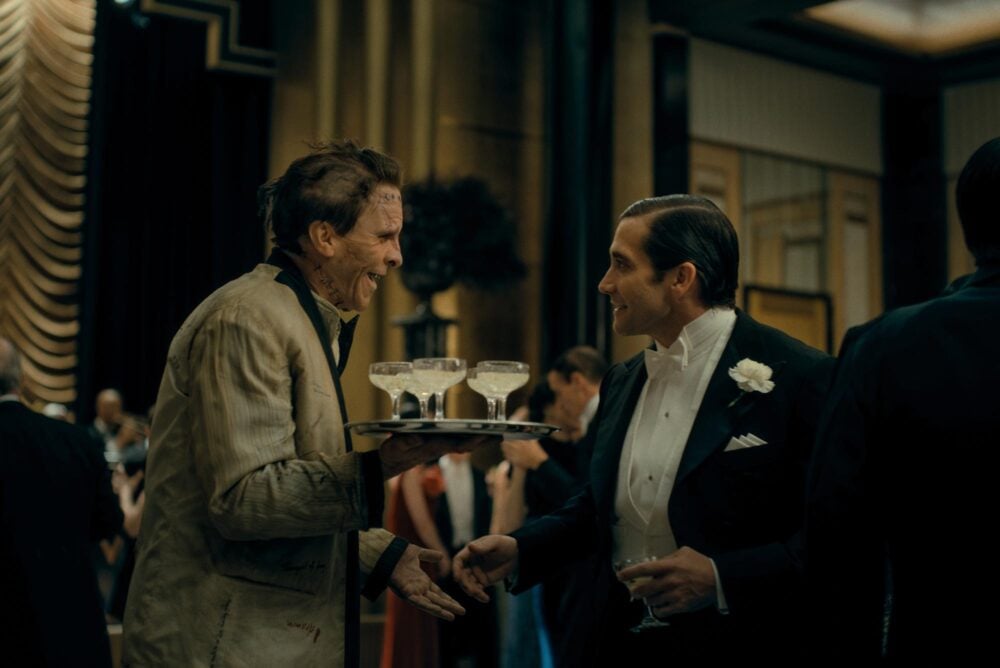
Like buses, we wait ages for a Frankenstein movie, and then two come along at once. Hot on the heels of del Toro’s classic take, comes writer/director Maggie Gyllenhaal’s reanimation, loosely inspired by James Whales’ 1935 hit, The Bride of Frankenstein. Setting her tale in the year that film dominated the box office (1936) Gyllenhaal reimagines the creation of a partner for ‘Frank’ (Christian Bale) – inexplicably still alive after his Victorian adventures – through a feminist lens, giving her Bride (Jessie Buckley) agency, rage against misogyny and a black, splattered lip that inspires a movement. Placing the action in an era where the media helped define monsters (Bonnie and Clyde references are unavoidable), in a golden age of movies, and in pre-WWII time before conflict created some equality for women gives Gyllenhaal plenty to say about Patriarchal society in a frenzied movie that includes dance numbers, head-stomping violence, numerous attempted sexual assaults and a through-line on the importance of consent. It’s a movie that wants to celebrate disobedient, ungovernable, transgressive, ‘difficult’ women, that strives to be a battle cry for a new generation still locked in a gender battle (yes, there’s a blunt ‘me too’ reference), but doesn’t quite get the disparate pieces to fit together. Like Frank’s patchwork body oozing pus from sewn wounds, The Bride! is an ambitious mess.
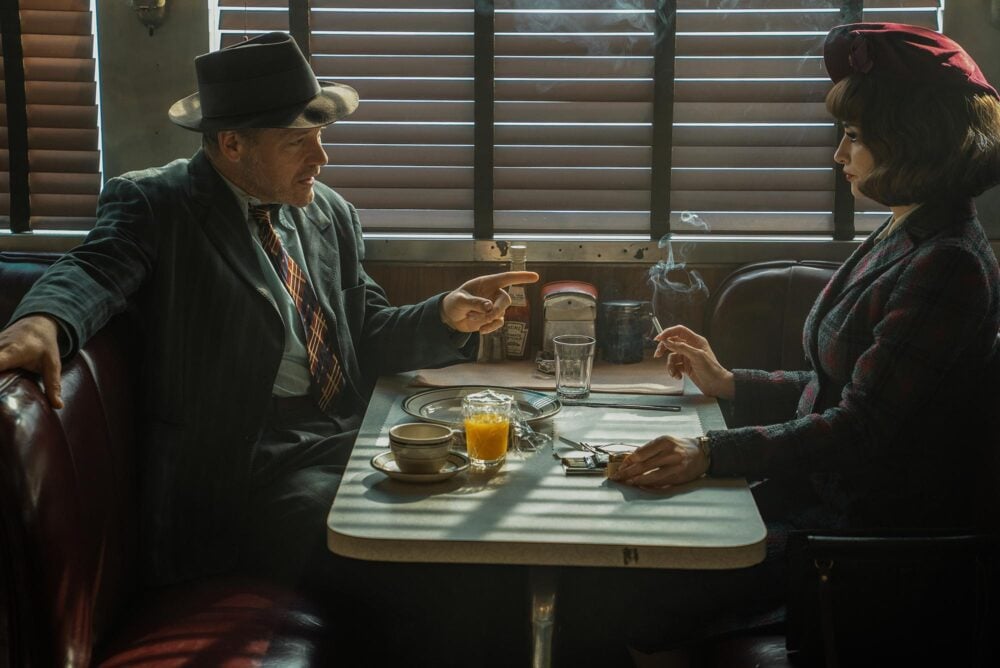
Perhaps the lack of cohesion is down to reported studio meddling, but there’s the possibility of an electrifying film lurking below the scars; Buckley and Bale commit full throttle to a film that plays like the chimera of Dick Tracy and Folie à Deux, Sandy Powell’s beautiful costumes are intriguing in their own right, Hildur Guðnadóttir’s punk-infused score is a banger and there’s a plenty of meta nods to our obsession with beauty, sex and identity. But confusion begins straight out the gate when the first person we’re introduced to is a dead Mary Shelley (Buckley again) addressing the audience to reveal her seminal novel was not the story she really wanted to tell. Rather she’d prefer to weave the tale of Ida, a sex worker for the Chicago mob who Shelley ‘possesses’, making her insolent to a violent gangster and causing her death. Is Ida a construct of Shelley’s imagination, or a real woman haunted by the ghost of a dead novelist? It’s unclear, as is the messaging; Ida rails against the systemic and casual violence towards women yet the film frequently lingers on, and shows that abuse.
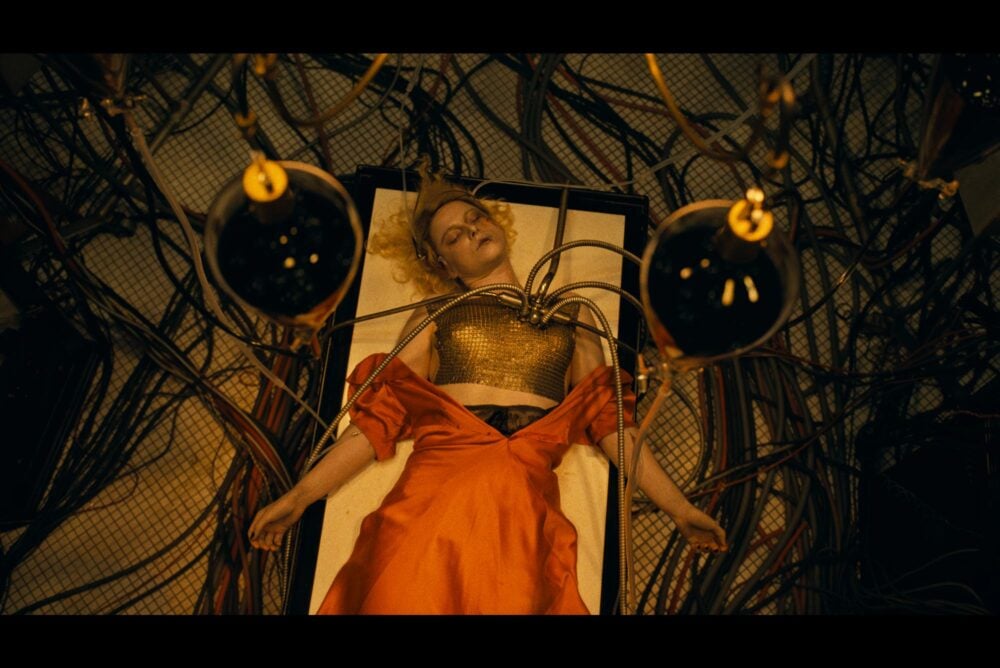
Gender equality is explored in the mad scientist of the piece being a woman (Annette Bening) who agrees to reanimate Ida’s corpse as a mate for lonely, movie-loving Frank, and in a smart detective (Penelope Cruz), a Rosalind Russell clone who is always steps ahead of her male colleague (Peter Sarsgaard). As Ida is reborn as The Bride with no memory of her past and no consideration for societal norms, she questions her identity, is the catalyst for murder and embarks on a cross-country rampage that takes in cinema visits, deb balls and police shootouts – all luridly recounted in the media. ‘Imagine if they got this excited about a lady astronaut,’ a character muses.
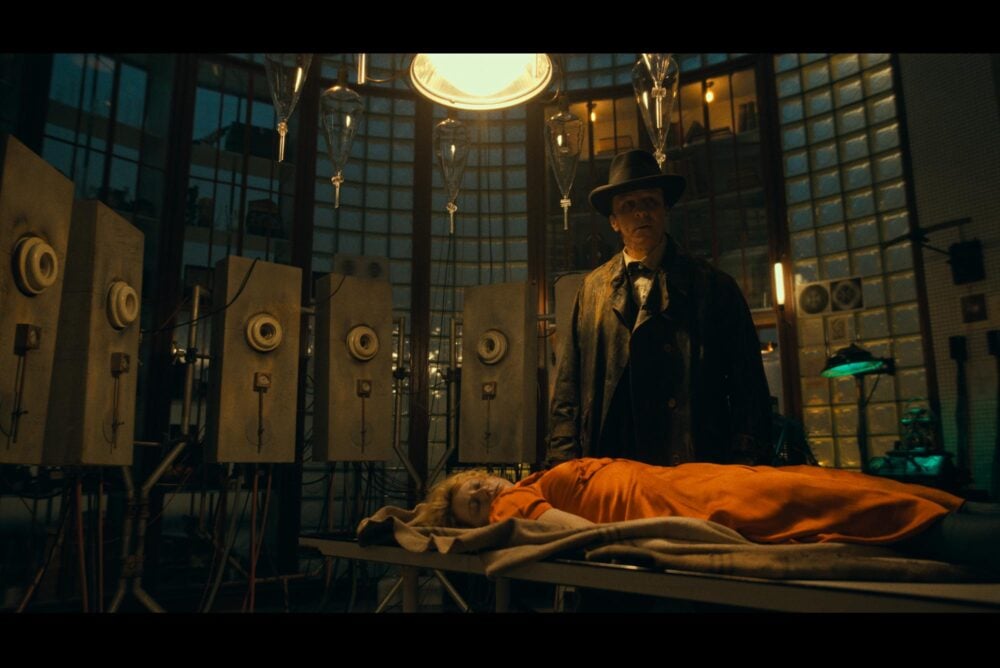
Playing three characters (with two often battling each other inside her body), Buckley is magnetic, making some sense of a woman defined by others and moving through her arc with feral, carnal intensity while Bale aces the loneliness of a unique creature. To watch them howl and stomp is fun in itself, in a film that is certainly visually impressive. But Shelley’s question at the beginning never gets fully or satisfactorily answered; ‘Is this a horror story? A ghost story? Or, most frightening of all, a love story?’ Rather like Ida herself, it’s never entirely sure what it wants to be.
Words by JANE CROWTHER
Pictures courtesy of Warner Bros. Entertainment Inc.
The Bride is in cinemas now