
September 10, 2026

Casey Affleck, Nick Nolte, Ben Mendelsohn, Adalaide Clemons, Scoot McNairy, Atticus Affleck, Emily Alyn Lind, Caylee Cowan

Words by JANE CROWTHER


The ‘company’ of the title of Casey Affleck’s latest written-directed film is the people we sit with, socialise with, invite into our homes. That last bit is key and a giveaway to the plot twist that comes a little too late in this slow-burn, handsomely-mounted, era-hopping Russian doll movie. It begins with a young woman (Emily Alyn Lind) dressed out of style arriving at a Christmas party in the ’70s. Though not known to the host, she’s charitably ushered into the house and begins to hold court telling a story of Tom, an elderly man who died in the company of a stranger in a remote cabin in 1953. Tom (Nick Nolte doing grizzled) discovers a young woman (Caylee Cowan) in the snow and brings her into his humble abode where she begins to tell him a story too. In that tale, a turn-of-the-century homesteading couple (Scoot McNairy and Adelaide Clemens) find a young man in the snow (Atticus Affleck), and drag him in front of their hearth to recover. 

Casey Affleck, Nick Nolte, Ben Mendelsohn, Adalaide Clemons, Scoot McNairy, Atticus Affleck, Emily Alyn Lind, Caylee Cowan
Image Nation Studios/Spooky Pictures

Now, as the stories within stories progress, we look for the common theme. Is it in the otherworldliness of these visitors? Each dresses in black, talks in an olde worlde narrative and seem to have an insolence and poise beyond their years. Is it in the sense of approaching dread as the homesteaders deal with a plague of local murders where hearts are cut from bodies, Tom contemplates his mortality or, in the ’70s, a young man (Indiana Affleck) glowers darkly at the storyteller from across the room? What is the sting in the tale?

To reveal it would be to spoil, but Affleck (co-writing with Ron Hansen) lays clues as characters talk in gothic philosophical terms and move through the painterly vistas. In its use of voiceover and sketching the slow lives of American settlers – and the way that they leave their mark on the world – Company recalls something of Train Dreams. But where Clint Bentley’s film revelled in the simple man and word, Affleck’s narrators get tangled in oblique pondering and references to Persian mystics. It’s difficult to know what anyone is actually trying to say, despite them saying a lot.

The film is a showcase of Affleck’s skill as a director and his family though. Atticus Affleck makes an impression as a mini-me of his dad and pretender to the Chalamet school of precocious, magnetic performance. Affleck senior’s late mother also appears as one of the party guests in the first segment. Meanwhile Nolte and Ben Mendelsohn (as a suspicious Aussie neighbour to the homesteaders) provide a sense of groundedness which keeps the endeavour from floating away on florid ideas of death, life and the meaning of it all. As a genre period piece with an unexpected bite, it’s good looking and stately-paced. But there is a recent existing film (no spoilers) that addresses similar themes to which it will be unfavourable compared.


Words by JANE CROWTHER
Images courtesy of IMAGE NATION STUDIOS/SPOOKY PICTURES
Company premiered at the 83rd Venice Film Festival

December 6, 2024

amy adams, arleigh snowden, marielle heller, nightbitch, scoot mcnairy

Words by JANE CROWTHER


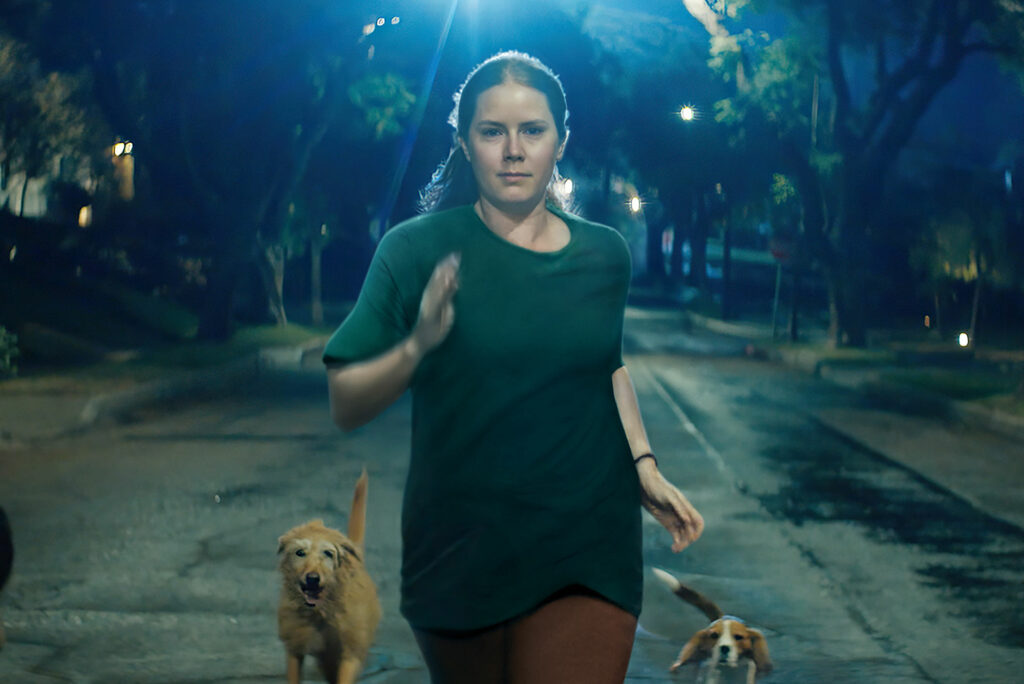
You don’t have to be a parent or have been part of raising a child to feel the vibes of Marielle Heller’s adaptation of Rachel Yoder’s novel. But anyone who has ever played the hundredth mindnumbing toddler game in a day, cleaned up ankle-biter messes on rinse and repeat or prayed that the little darling goes to sleep in hour four of lullabies will feel seen watching Amy Adams, as an unnamed mother, lie facedown and aghast on the carpet of her living room while her child jumps on her. 

Following the internal monologue of our nameless protagonist, Nightbitch introduces us to a woman who used to identify as an artist with a vibrant life in Manhattan and now struggles to find a clean shirt in a daily suburban routine of caring for her child while her sweet, feckless husband (Scoot McNairy) works away during the week. Heller depicts this as a relentless, machinery hum of monotony – the same hash browns for breakfast, the walk to the park, the fraught bathtime, the wind-down routine, the sleepless nights. The Mother dreams of shouting her real thoughts at former colleagues she meets in the supermarket who ask ‘Don’t you just love being a Mom?’, of running away from the sunny mums she meets at baby book club, of ripping her husband’s throat out when he returns to complain about his room service and tell her that ‘happiness is a choice’. Which is when a pack of dogs start showing up at the Mother’s door, when she starts to grow hair, likes eating a raw steak, when a nub protrudes from the base of her back like a tail… Is the Mother becoming something else?

With its flirtation with body horror (pus-filled sores are poked with needles), transformation and society’s rigid view of ‘good’ women, Nightbitch shares similar themes with The Substance. Tonally though, it’s a gentler rage against the machine. Fans of the book will perhaps feel that a certain cat incident lacks, ahem, bite, while the ferocity of Yoder’s societal critique is softened. But while the satire might be less savage, the commitment of Adams is not. In a truly vanity-free portrayal, she sticks the landing of playing a believable messy woman trapped in a maternal Groundhog Day and wracked with guilt for having wished for it. And when she’s digging into the back garden earth, nose pressed to soil and nails seamed with filth, she’s a feral, joyous creature that you’ll want to run the streets with. 

Though it wants its doggy treat and to eat it, Nightbitch is nevertheless another encouraging step towards a world in which every type of woman and female experience is represented onscreen – and will certainly play like gangbusters at mother and baby screenings.

amy adams, arleigh snowden, marielle heller, nightbitch, scoot mcnairy

Words by JANE CROWTHER
Nightbitch is in cinemas now

September 13, 2024

james mcavoy, james watkins, mackenzie davis, scoot mcnairy, speak no evil

Words by JANE CROWTHER


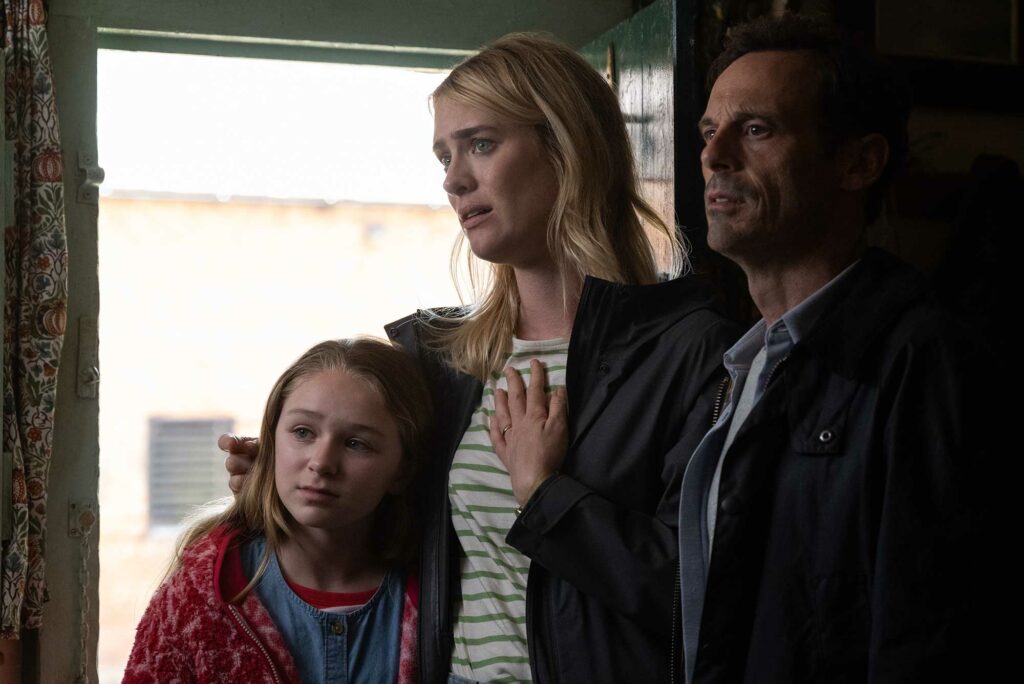
Those who experienced 2022’s Danish horror of the same name may not wish to revisit the particular trauma of that movie, taking in mutilation, social discomfort and a bleakness that snatched breath. A disquieting hit at Sundance, Speak No Evil pitched a Danish couple against a Dutch couple – leveraging middle-class politeness to devastating effect. Now writer/director James Watkins recasts and re-sets the tale in Britain under the Blumhouse shingle, with a reserved American couple, Louise and Ben (Mackenzie Davis and Scoot McNairy), meeting a brash Brit duo, Paddy and Ciara (James McAvoy and Aisling Franciosi), on holiday in Tuscany. Both pairs have kids of a similar age and though they probably wouldn’t usually gel as friends, an alliance is formed and invites to weekends in the country are extended post-vacation. Despite Louise’s misgivings, the American family travels to a rustic farmhouse where Paddy flips from gregarious host to seething bully and back, and the kids discover something terrible in the basement…

james mcavoy, james watkins, mackenzie davis, scoot mcnairy, speak no evil

To discuss specifics of the horror is to spoil the experience of an incremental discomfort for audiences as social niceties are tested to the limit. At what point, Watkins asks throughout, would YOU say something? What inappropriate action, unpleasant comment, disregard of personal values would be the tipping point to cast judgement? As Paddy and Ciara display boorish, cruel and ultimately sinister behaviour, Louise and Ben are forced to confront the unspoken trauma hidden in their own marriage, as well as question their liberal credentials.

That tonal tightrope rests on the performance of Paddy, here essayed by McAvoy, bringing all his charming and venal charisma to the role – delightfully chummy one minute, a savage the next. It’s a monstrously entertaining turn in his hands and one that makes a revised ending work despite softening the nihilism and inhumanity of the original. It also allows more agency for Davies, playing a spikier version of the first film’s fussy wife, a woman who can, and will, bring her own barbarity to the fore when required. As a brisk, assured social horror (with plenty of vengeful tool use) Speak No Evil is a satisfying scare. But those that can bear the terrible sadness and appalling use of secateurs, should also seek out Christian Tafdrup’s urtext version. And hug your children twice as hard after watching either…

james mcavoy, james watkins, mackenzie davis, scoot mcnairy, speak no evil

Words by JANE CROWTHER
Speak No Evil is in cinemas now