



Words by EDGAR WRIGHT
Writer-director Edgar Wright delves into the operatic teenage tragedy and universal cruelty that powers Brian De Palma’s masterful Stephen King adap.
CARRIE (1976)
Brian De Palma’s Carrie is my favourite Stephen King film adaptation. It is, of course, also the first published Stephen King novel and the first screen adaptation of his work. But that doesn’t mean that subsequent adaptations weren’t just as brilliant. There are many films of King’s work that I truly adore – two of my favourites were both directed by the recently, and very sadly, departed Rob Reiner. And yet Carrie remains intensely powerful, not just in the canon of King adaptations, but in how it touches something elemental. It’s a film that feels both very personal to me and, ironically, to almost everyone.
I’ve sometimes described Carrie in a slightly flippant way as ‘the Grease of horror movies’. Both films are about the high-school experience. Both establish cliques: the cool kids, the bullies, the outsiders. Both deal with the anxieties of teenage sexuality, humiliation, desire and the desperate need to belong. Such experiences translate across cultures. Even growing up outside the USA and not having had the ‘high school’ experience, I could still understand exactly what Grease and Carrie were showing me about adolescence and social cruelty. It’s sadly universal and hauntingly relatable.
But there’s another part of that analogy that gets closer to why Carrie means so much to me. The film is not a musical, but it is symphonic in its emotional scale. De Palma, at his very best here, takes raw, painful emotions and elevates them into something heightened, something almost mythic. If Grease is pop operetta, then Carrie is the film equivalent of a teenage tragedy ballad, or ‘death disc’. (The fact that it’s also scored by Italian composer Pino Donnagio, who, before his melancholic film scores, had international hits with melodramatic pop, is the blood-red icing on the cake.)
A better comparison to Carrie might actually be Robert Wise’s West Side Story. Both films centre on teenage tragedy. Both explore nascent, but forbidden, love weighed down by forces far larger than the people involved: the social systems, the peer pressure, the inherited cruelty. They mix romance and violence, sexuality and fear, innocence and brutality. They capture that volatile hormonal intensity of adolescence, where emotions feel life-or-death. They capture something that’s both deeply empathetic and deeply frightening.
Carrie tells the story of a bullied outcast. Sissy Spacek plays the titular Carrie White, a shy, socially isolated teenager raised by a fiercely religious mother whose warped beliefs have left her utterly unprepared for the world. This upbringing manifests brutally in the film’s opening, when Carrie is humiliated in the school shower by her classmates as she experiences her first period. She doesn’t understand what’s happening to her body. Blood runs down her legs, and instead of help, she’s met with cruelty, thrown tampons and echoing laughter.
That moment of humiliation, combined with her lack of understanding that she is simply becoming a woman, is the catalyst that sets everything in motion. It’s a harrowing opening sequence because it feels so horribly plausible. It feels real.
Unbeknownst to Carrie, this trauma also unlocks something else. Since childhood, she has possessed latent telekinetic powers; the ability to move objects with her mind. This ‘gift’ is not presented as a fantasy, but as an extension of her emotional state.
The bullying escalates. The girls responsible are punished with detention, but one of them, Chris Hargensen (played with delicious nastiness by Nancy Allen), receives a harsher penalty: she’s banned from attending the prom. That punishment breeds resentment that curdles into something far worse. What follows is one of the cruelest setups in film history, the plan to humiliate Carrie on, for a teenager, the grandest possible stage: the high-school prom. (Even as a Brit, one can understand the enormity of this occasion).
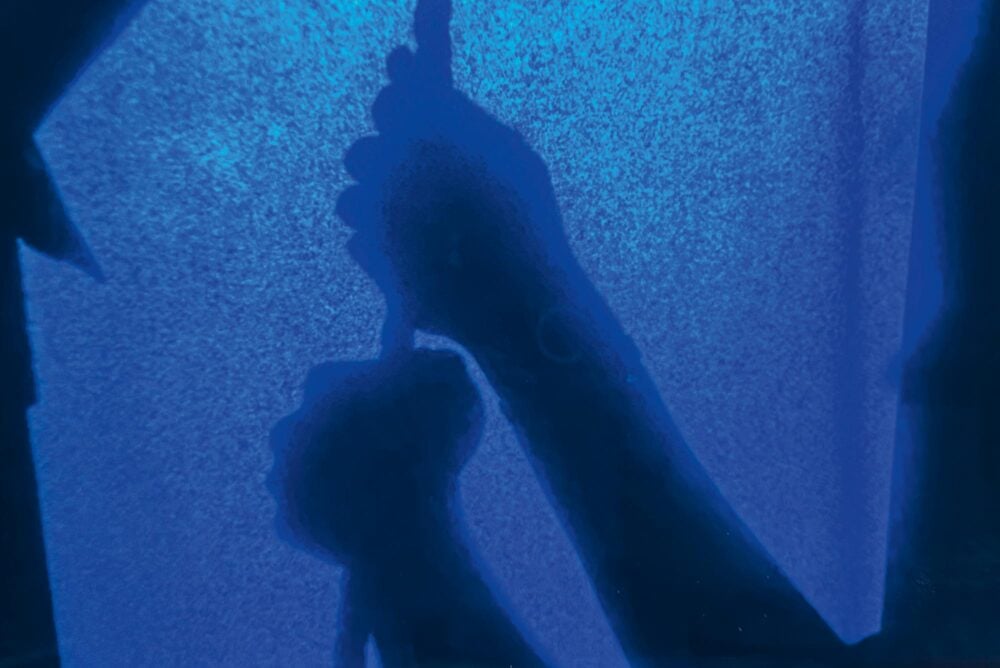
Carrie is paired with Tommy Ross, the archetypal golden-haired high-school prince, and manoeuvred into becoming prom queen. Suspended above the dance floor is a bucket of pig’s blood, waiting to fall. The blood is a deliberate echo of the shower scene, the narrative closing in on itself as humiliation becomes spectacle.
And here is where Carrie does something extraordinary. For a fleeting moment, hope briefly flickers.
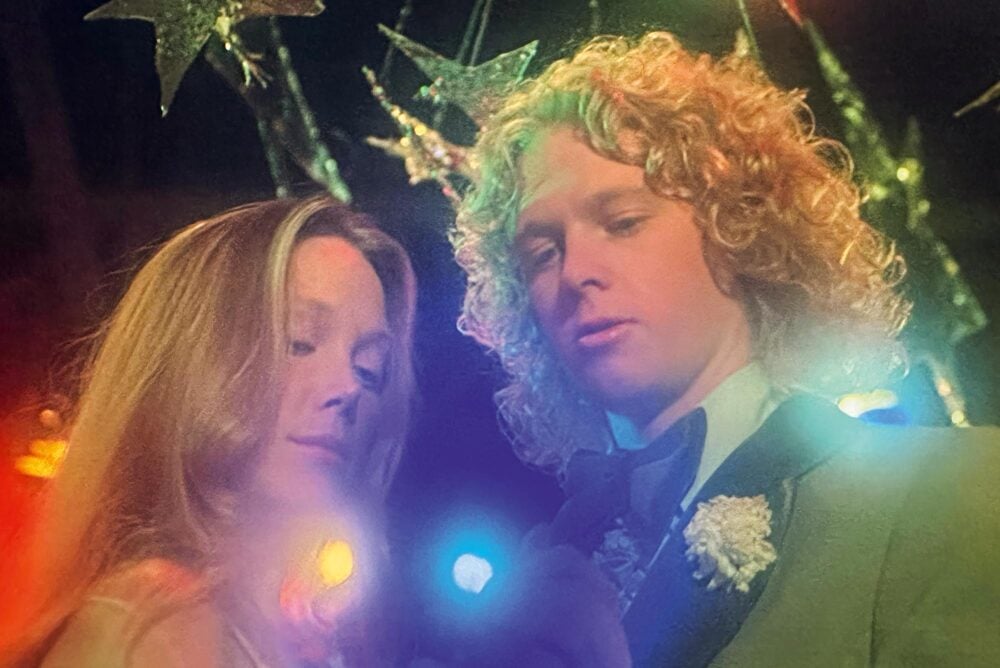
Tommy, initially pressured into taking Carrie by his girlfriend Sue, who is unaware of the true brutality of the prank, begins to genuinely connect with her. Against her mother’s furious objections, Carrie attends the prom and gives herself a makeover, blossoming into the beautiful young woman the world has never seen.
When Carrie and Tommy slow-dance together, De Palma’s camera circles them in a hypnotic 360. And something strange happens for me every time I watch it. Much like the midpoint of Titanic, I get the whimsical notion that maybe this time things will turn out differently. Maybe the iceberg won’t be hit. Maybe the cruelty will stop here.
In theory, you could change the film here, leave the cinema, or stop the tape, and invent your own ending, one where Carrie gets to have this happiness. Because what follows is devastating.
When Carrie and Tommy are announced as Prom King and Queen, Donaggio’s magnificently sinister ‘Bucket of Blood’ cue begins, and there’s an inexorable feeling of dread. The euphoria of Carrie and Tommy’s dance is replaced by the sickening knowledge that public degradation is inevitable. De Palma’s camera cranes with Carrie and Tommy as they take the stage, then travels upward along the rope to the bucket of pig’s blood hanging precariously above them.
As an audience member, you’re caught in an intoxicating mix of emotions. On one hand, you desperately don’t want the blood to fall. Carrie doesn’t deserve any of this. She’s been tortured enough throughout the film, and the idea of taking away this perfect moment feels almost unbearable. And yet, the horror-movie fan in you, and the part of you that has fully sympathised with Carrie as a bullied teenager, also wants to see her unleash apocalyptic revenge. And boy, does she.
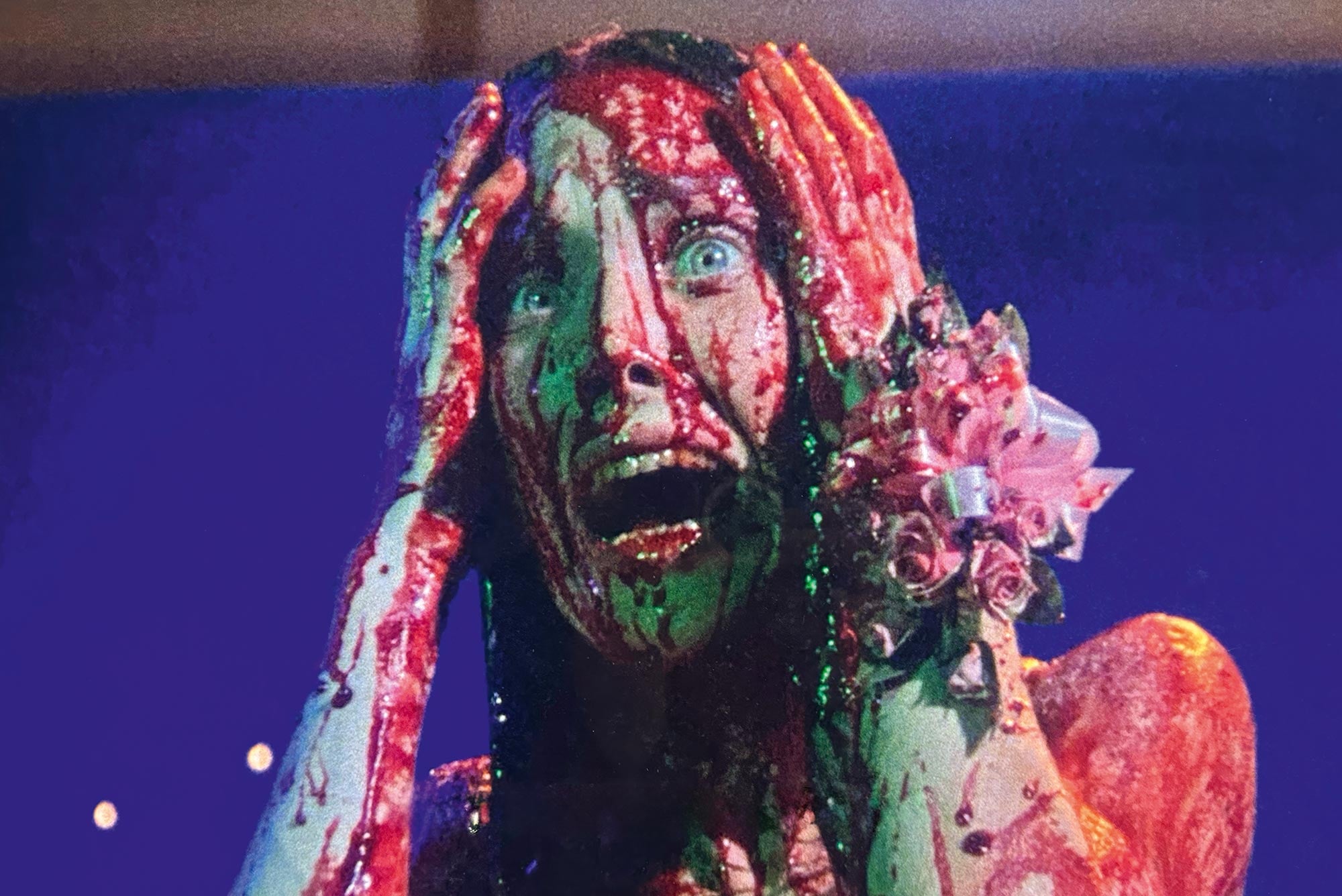
When Carrie wreaks revenge, she does so spectacularly. De Palma uses every cinematic trick at his disposal: harsh red lighting, split-screen, slow motion, fractured lenses, and the disorienting sea of voices inside Carrie’s head confirming what her mother warned her all along: ‘They’re all going to laugh at you.’
There are several moments in this sequence that give me goosebumps. Sometimes an image from a favourite film is burned into your brain, even if it only appears on screen for a second.
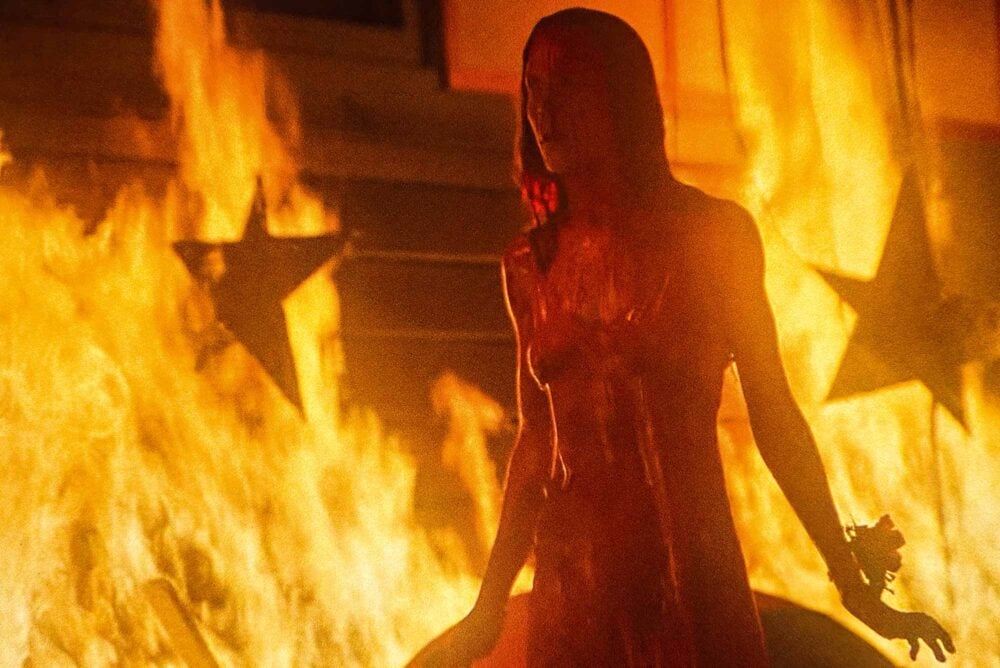
One of those is the horrifically beautiful shot of the prom backdrop bursting into flames behind Carrie White. I’d seen that image in an old copy of Starburst magazine a good 10 years before I was old enough to see Carrie, and even after poring over those pages for hours, seeing it in motion was breathtaking.
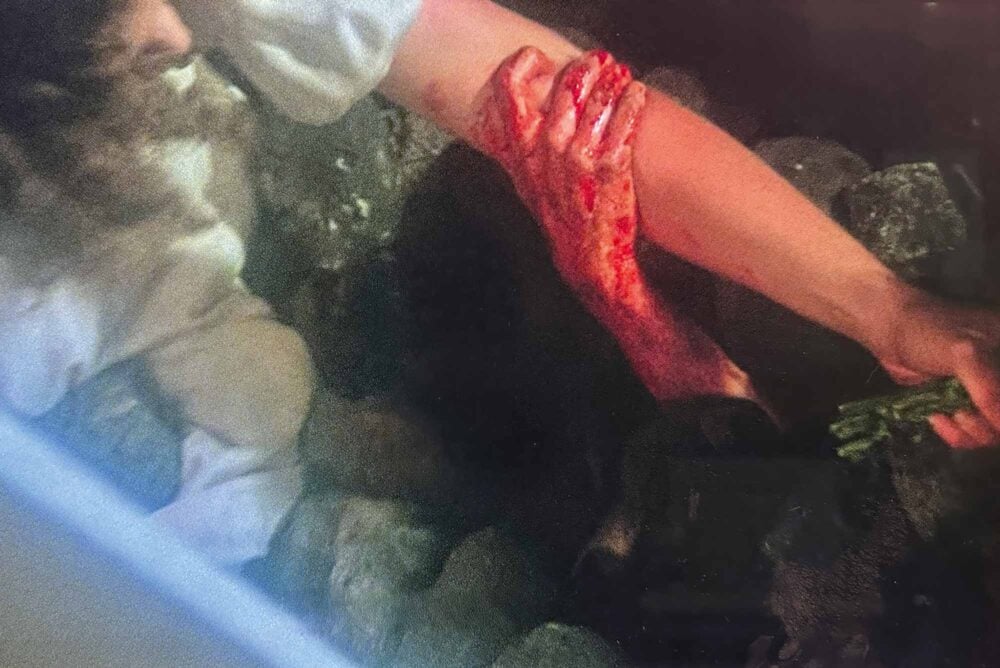
Another devastating element of this climax is that Carrie’s vengeance is so all-consuming that it doesn’t just claim the guilty. Perfectly innocent people, including those who tried to help her, are swept up in the maelstrom of her telekinetic vengeance and die horribly. Everyone in the high-school gym dies except Sue Snell. And even she isn’t truly spared. She’s left with the haunting final shock of Carrie’s hand bursting from the grave, a moment ripped off so many times that its power is taken for granted.
Sue survives, but the memory of Carrie will ruin her forever.
I love that it isn’t clean or black-and-white in its morality, or in its treatment of revenge. And it makes you complicit too, a horror film where you actively want to see the violence unleashed.
In most horror films, your sympathy lies with characters you don’t want to see die. In Halloween, Jamie Lee Curtis, the quintessential final girl, is such a warm presence that you’re invested in Michael Myers not killing her. In Carrie, the audience is primed in a very different way. After watching this girl endure relentless cruelty, you don’t just want to see her destruction of the prom, you crave it.
All of these elements make De Palma’s film feel like even more than the sum of its exceptional parts. It’s pure cinematic opera in every sense of the word: visually, musically and emotionally.
Carrie is, to me, a perfect movie.
All images © United Artists/Amazon MGM Studios
Carrie (1976) is a chilling exploration of supernatural forces, high school cruelty, and teenage anguish – delivering one of the most unforgettable and unsettling prom scenes ever put to screen
The Running Man is currently available via Digital on PVOD platforms and will be available on Blu-ray 2 March