Photographs by GREG WILLIAMS
Interview by GREG WILLIAMS/JANE CROWTHER
She’s made an impression with stage work and Slow Horses, but Rosalind Eleazar gets her star-making moment playing the titular character in Chris Rock’s awards hopeful, Misty Green. Greg Williams spends time with her in London to find out how a kid from Nine Elms found acting via flower markets and fairy hunts.
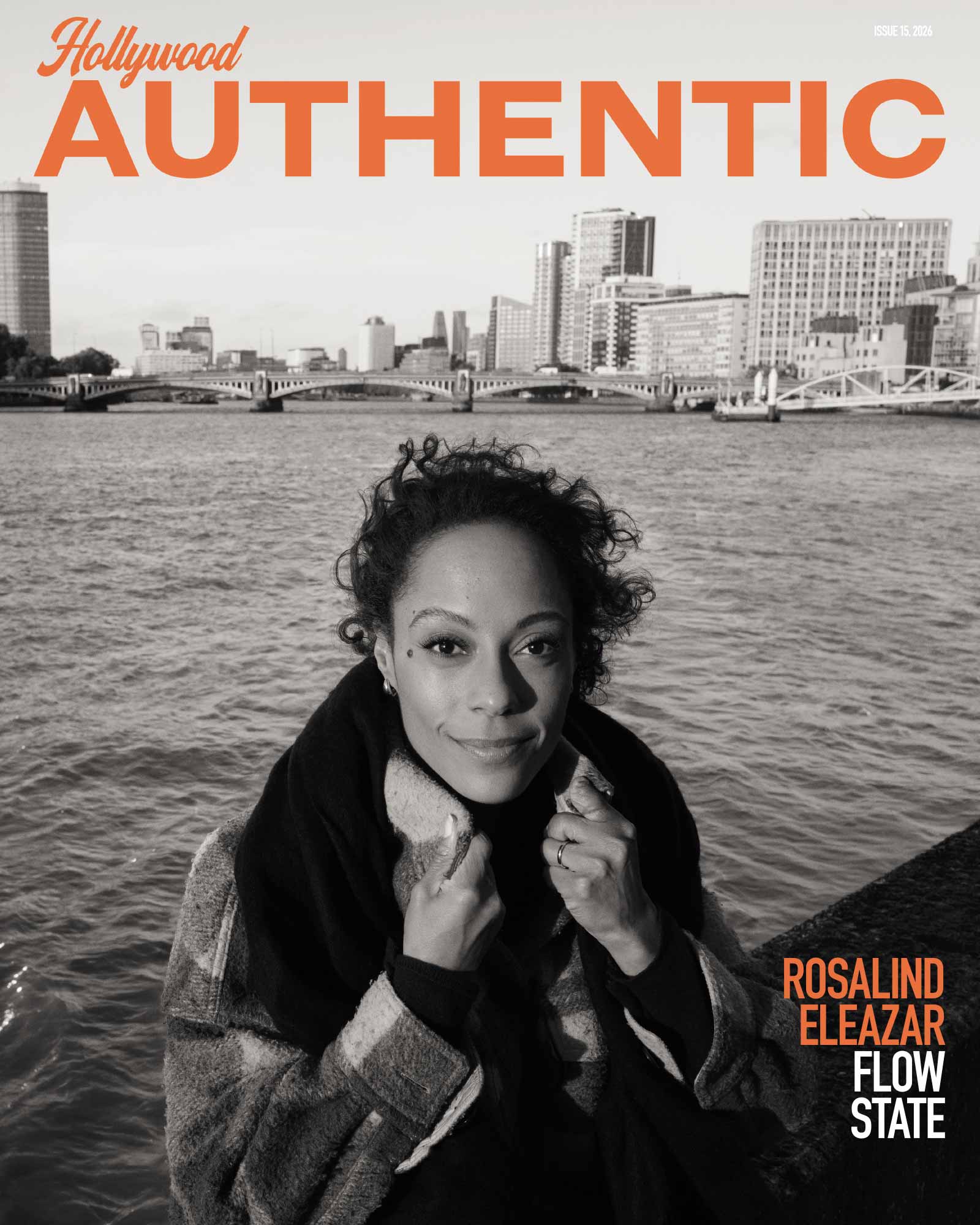
When I watched Chris Rock’s new drama about a messy, charismatic actor, Misty Green, and her self-sabotaging fight to be taken seriously in a Hollywood that doesn’t allow women to age or fail, I was unprepared for the extraordinary performance anchoring the film. I’ve been aware of British actress Rosalind Eleazar since I shot her on the set of Slow Horses several years ago, but I’ve never seen her like this. I suspect her depiction of a Black actor in the film industry will be something that marks a stepping-up moment in her career – so much so that we decided to make her our cover subject. Having watched the film, I immediately wanted to know more about her and what experiences had helped her create such a contradictory, sometimes unlikeable, fierce and fascinating character in Misty. We decided to meet in London in October, just as the city was taken over by the film festival and as she came to the end of filming the latest season of Slow Horses in the capital.
I feel like the fairy hunting probably had quite a profound effect on me. You’re using your imagination. And obviously that’s really, really important for acting. I was an only child and I do think sometimes only children can have wild imaginations, because they don’t necessarily have a sibling that they’re playing with every day. I remember always creating stories. My mum and I were always talking about the lives of other people. And I still do that now
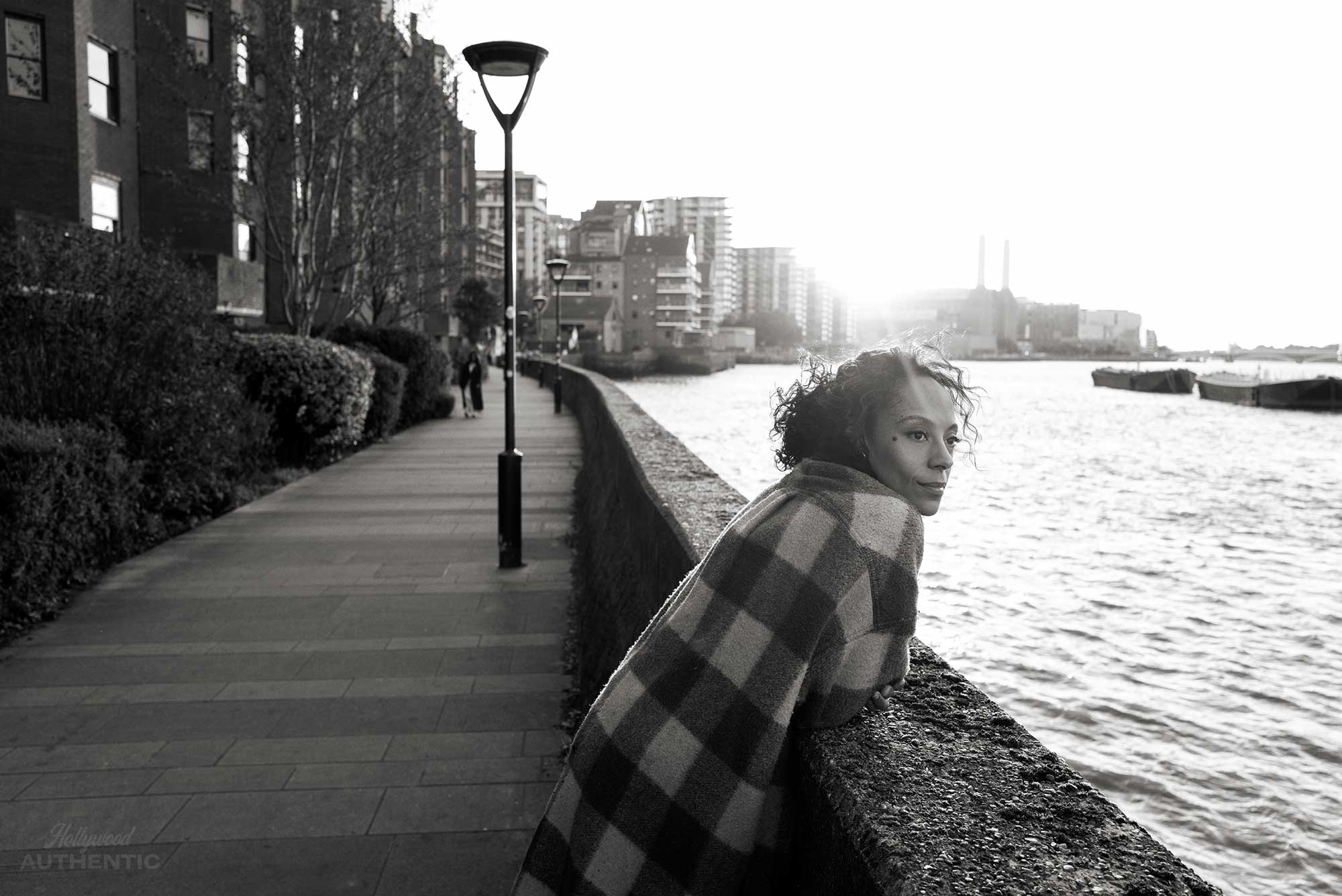
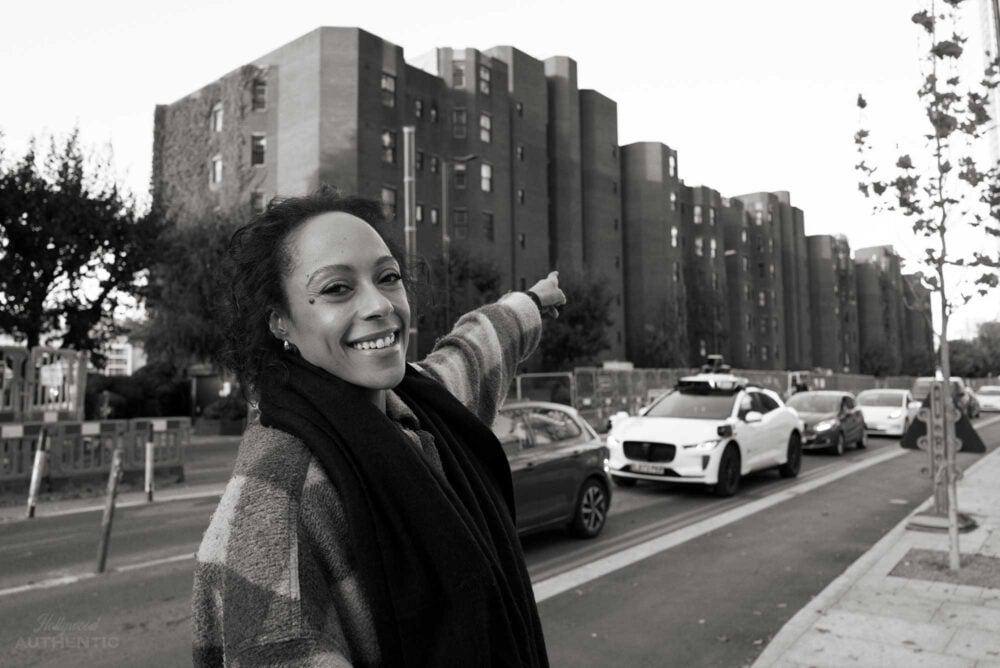
Rosalind grew up in Nine Elms, South London, in a block of flats overlooking the Thames opposite the huge new US Embassy building. ‘It’s mad how much this has all changed,’ she tells me when we connect on the pavement in front of her old home. She lived in a flat here with her single-parent mother until the age of eight, strolling along the riverwalk with her Greek grandmother while her mum worked. Though she doesn’t recall having access to artistic inspiration as a kid, she says she was exposed to different cultures and two whimsical women. ‘There was a flower market here before the American embassy. My mum used to collect all the discarded flowers because she felt sorry for them. I remember walking along the riverbank with my grandmother – we would go fairy hunting. My grandmother had this wild imagination. She made me believe that fairies were in the cement. And all the boats would pass, and my mum and I would make up stories about all the people on the boat. So as a kid, my imagination was stimulated. To me, that’s creative.’ I suggest that the water flowing past her home must have had an impact on her. ‘I love water,’ Rosalind nods. ‘I love fluidity. It’s like having the fluidity within yourself in acting. And looking at it makes me feel super-calm.’

She was also well-travelled as a child. Her mother still works for the shipping company she did when Rosalind was growing up and the two would take trips to places such as Pakistan, Malaysia and Tunisia. ‘I was always surrounded by different cultures and different people. My mum had friends from all over the world who’d come and stay with us. There were always so many different languages being spoken around us. I was quite shy when I was younger. I would just watch a lot. It helped me judge less, empathise more. I feel like one of the most important things as an artist is to not judge – certainly your character. It was important for me not to judge Misty Green, and to get on board with every decision that she makes, no matter how self-destructive or problematic her behaviour is.’ In the film, Misty makes enemies at studios, walks out on jobs, has an abusive relationship with booze and narcotics and commits the career sin of being outspoken – something that comes with a price when she is, as Misty herself puts it, ‘too Black to be with Leo, not Black enough for Damson, not a nepo baby and not a Brit’.
‘It’s a challenge,’ Rosalind admits of empathising with challenging characters, ‘particularly if you’re playing someone who navigates their life very differently to you, but that’s the point of being an actor. What a gift to put yourself in someone else’s shoes as best you can, and figure out how and why they operate. You’d hope that you bring it into your own life as well, after you’ve played these different characters. I don’t want to make it sound like I’m a fricking perfect person. I’m definitely not. But I think it’s important in a world right now where everything is so polarised; there’s no nuance, there’s no grey.’
There’s such a fine balance in our industry between sharing who you are as a person – and not. I like it when I find out about people, but, at the same time, you have to be believable as another character. And the more people know about you, do you become less believable as a character? Maybe
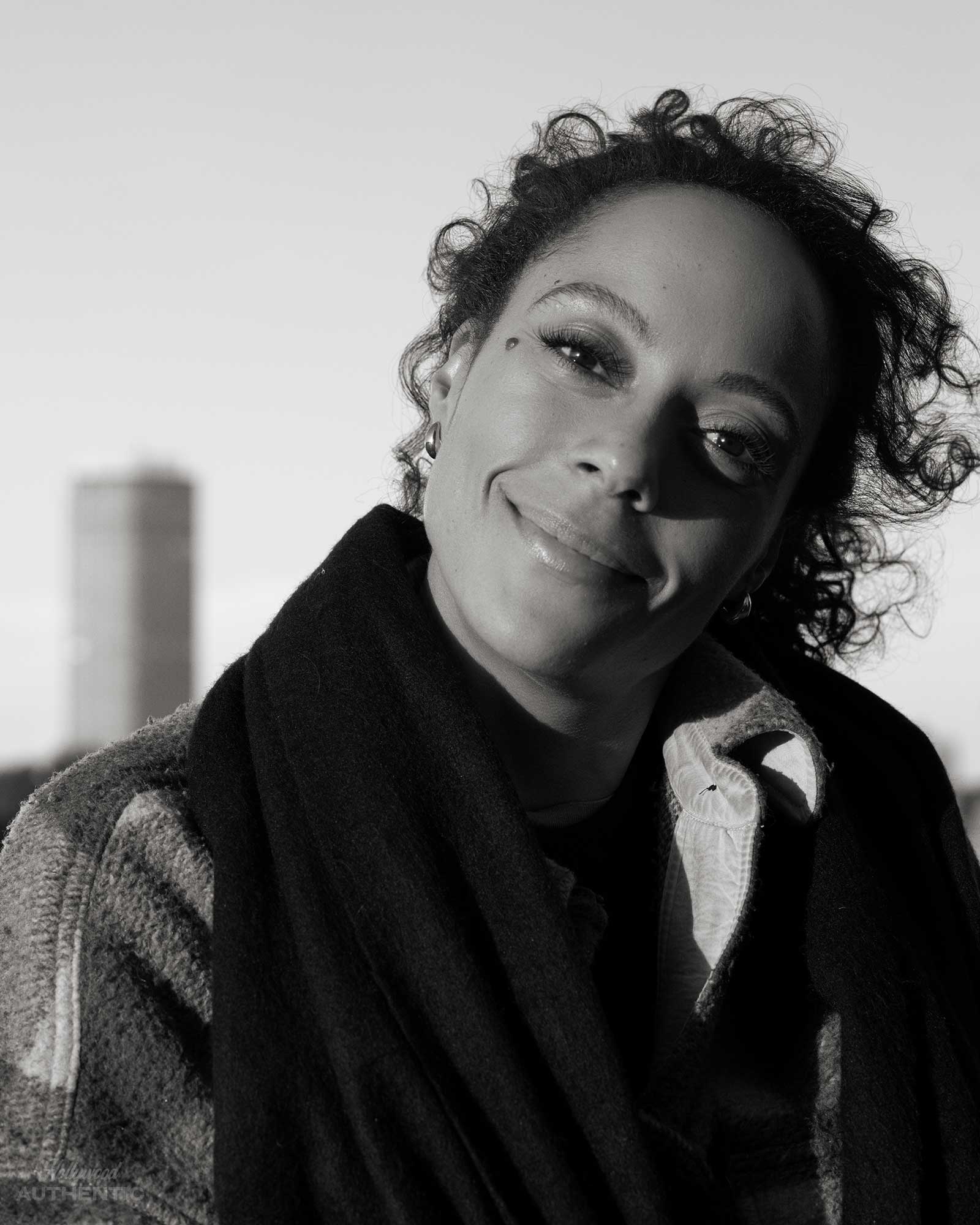
I suggest that we lean into the sense of play and possibility that she taps into as an actor and do some fairy hunting for old time’s sake. Rosalind laughs and begins to scour the riverside for hiding places, just as she did with her ‘Yaya’. It doesn’t take her long to find one. ‘Look, can you see it? It’s got pink hair,’ she whispers, pointing to a crack in the concrete. I tell her I can. ‘I feel like the fairy hunting probably had quite a profound effect on me. You’re using your imagination. And obviously that’s really, really important for acting. I was an only child and I do think sometimes only children can have wild imaginations, because they don’t necessarily have a sibling that they’re playing with every day. I remember always creating stories. My mum and I were always talking about the lives of other people. And I still do that now.’
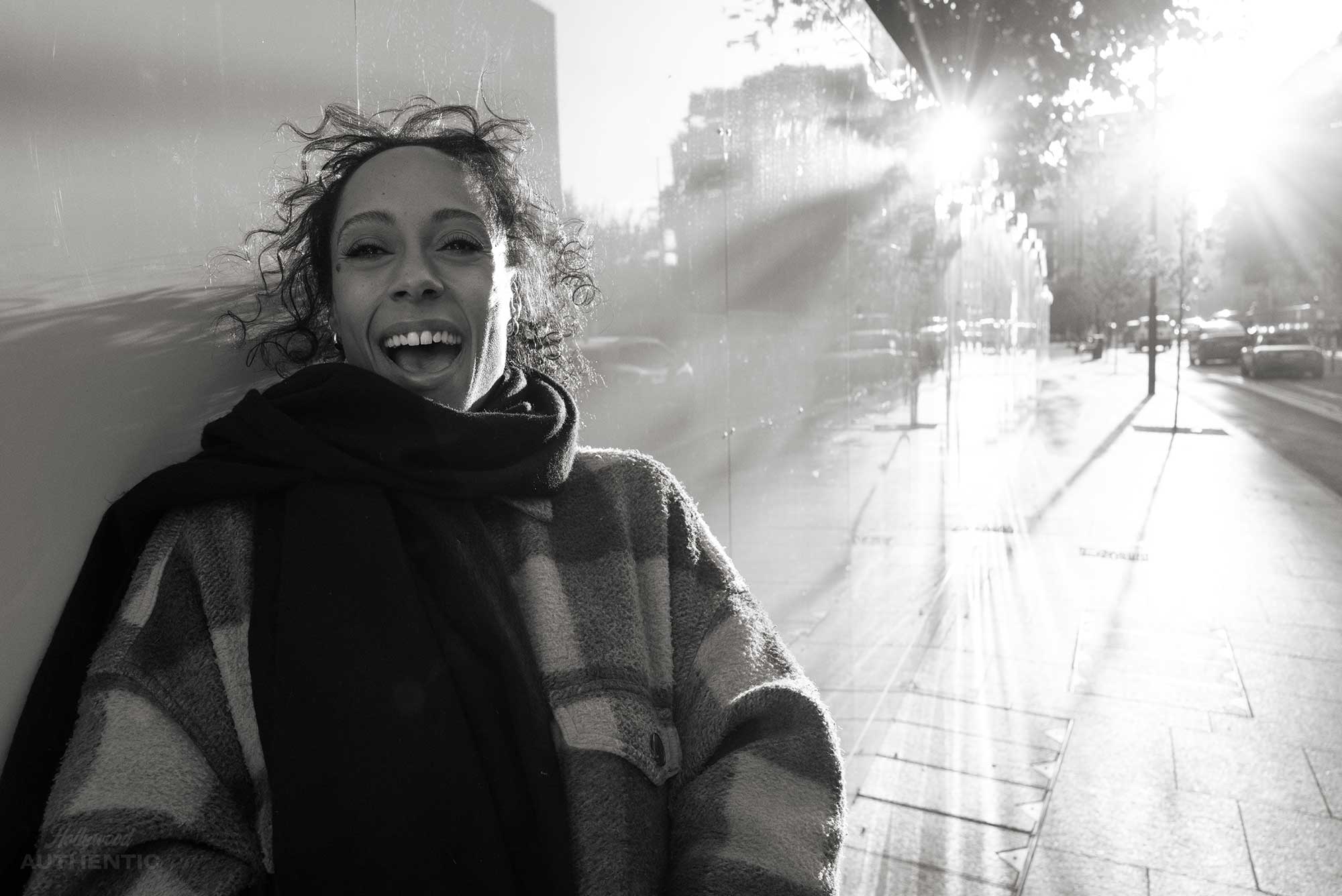
Like many of the actors I talk to, Rosalind was a shy child, encouraged to come out of her shell through performance. She recalls being bullied at school, being pushed down to the floor and staying down. That was not the case when she got on stage. ‘I didn’t have the same inhibitions that I do in my own personal life. That I still do. There’s such a fine balance in our industry between sharing who you are as a person – and not. I like it when I find out about people, but, at the same time, you have to be believable as another character. And the more people know about you, do you become less believable as a character? Maybe.’ We walk on and find another fairy. ‘Hi Clarissa, come out,’ Rosalind says encouragingly. ‘Come say hi.’
Rosalind’s travel experience combined with her degree in Mandarin and Spanish from the University of Nottingham might have made her a good spy – not just the fictional one she plays as Louisa on hit TV show Slow Horses. ‘I applied to work for MI5,’ she tells me. ‘They give you a whole cover story if you get to the interview stage. Mine was something about working for British Gas.’ That didn’t work out but the acting did. After uni, she spent time living in Ghana – where her father, politician Courage Quashigah, was from (he died in 2010) – and working with her half brother in film production. It was, she says self-deprecatingly, a period of ‘finding myself’. When she returned to the UK she applied for London Academy of Music and Dramatic Art (LAMDA), got in and graduated in 2015 as the recipient of the prestigious Spotlight Prize for best drama school graduate. That led to roles in the theatre (more of which later), TV and ultimately, film.
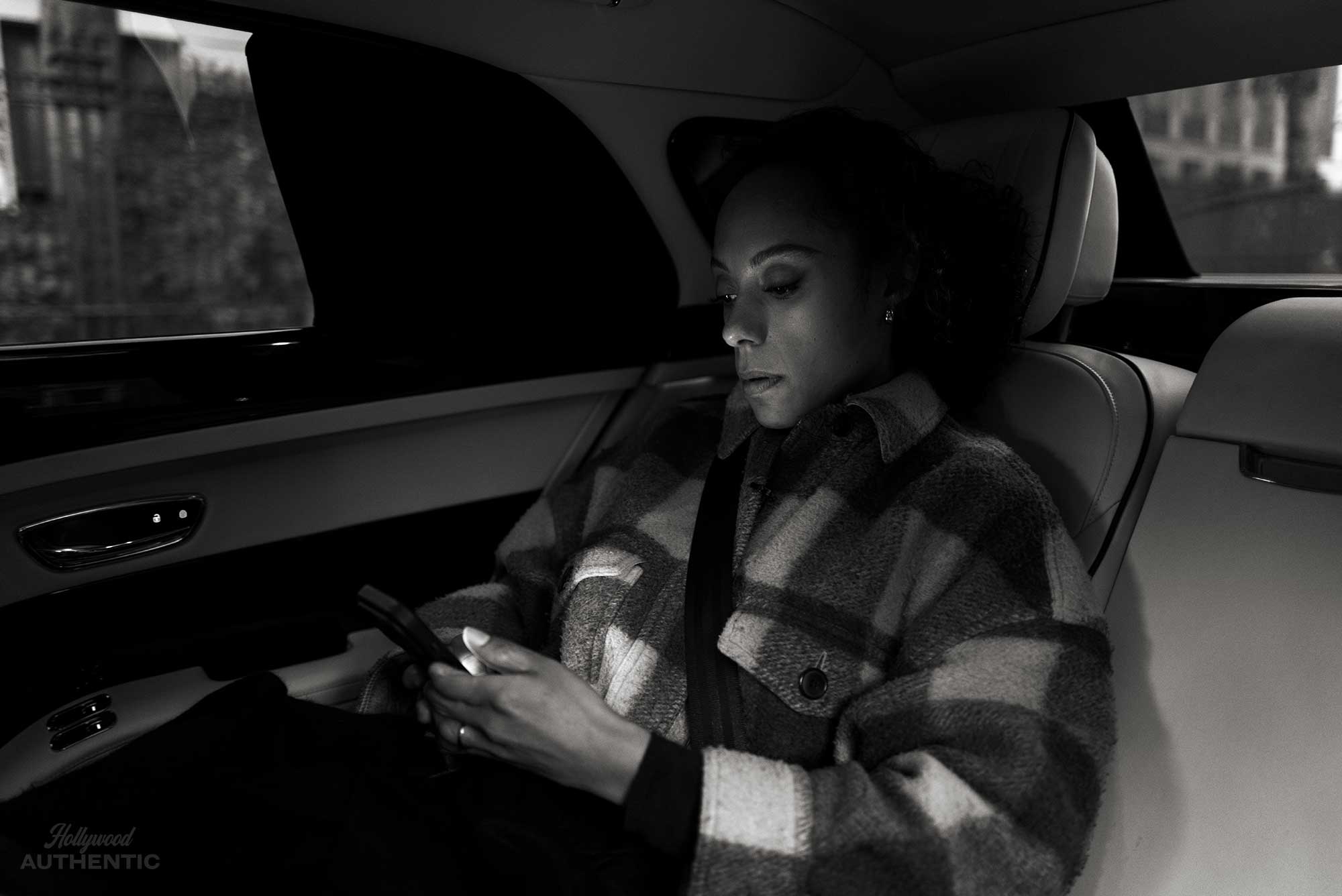
Last night, before our fairy hunting expedition, Rosalind had been attending the Misty Green premiere at the London Film Festival. Later this week, she’ll be travelling with the film to Middleburg, Virginia, on to LA and then to the Newport Beach Film Festival. As it’s seen by voting bodies, her name is being added to nominations lists for the coming awards season. One moment that is grabbing attention is the audition scene where Misty, unprepared and hungover, battles to be noticed in a room of distracted casting directors and interruptions from other actors. It’s a nightmare scenario for anyone trying to get a job, but one that in the crescendo of noise and chaos, Misty delivers an astonishing audition piece. It was something that partly played out in real life when Rosalind auditioned for Misty for writer and director Chris Rock.
I remember one of my final conversations with our principal [at LAMDA] where you talked about what you expect from your career. I went, ‘Well, it’s obvious that I’m not leading lady material.’ It was such a genuine belief that now kind of baffles me. Chris gave me a really big opportunity with Misty Green. He could have got a star to play her because it’s a gift of
a part
‘The second Zoom went really badly,’ she chuckles. ‘I booked a studio, and the studio next door started playing heavy metal right before I started. And I was right next to a train track as well. The wifi started lagging… It was quite meta, because the audition scene in the film was the audition scene. I just don’t think there’s any substitute for being in person. So I eventually went out to LA, and had a chemistry read with Chris. I was desperate to do it, because I haven’t seen this sort of character before. She’s difficult to get on board with. And to me, that’s kind of the point. There’s just so much to unpack with her.’
Rock has said that the character is based on meeting a formerly famous actress during a loop group session. ‘It’s not that I had someone specific in mind when I was creating her,’ Rosalind tells me. ‘She is a bunch of experiences that I’ve had. And Chris has an unusual way of directing. Maybe it’s because he’s a comedian, he’d often listen to the timing of a scene, and the beat and the rhythm of it. But he just really let me be. He has this expression: “My movie, your character.” So I felt free.’ Knowing she had the role, Rosalind flew to LA to dig into Misty as a character during five weeks of prep, staying in her accent and learning how to move like her. ‘It’s not like it was Method acting. But she’s so different in every way to me – even the way she walks. She’s a bit of a jaguar! I wanted to make sure that it felt like second nature before I started filming.’
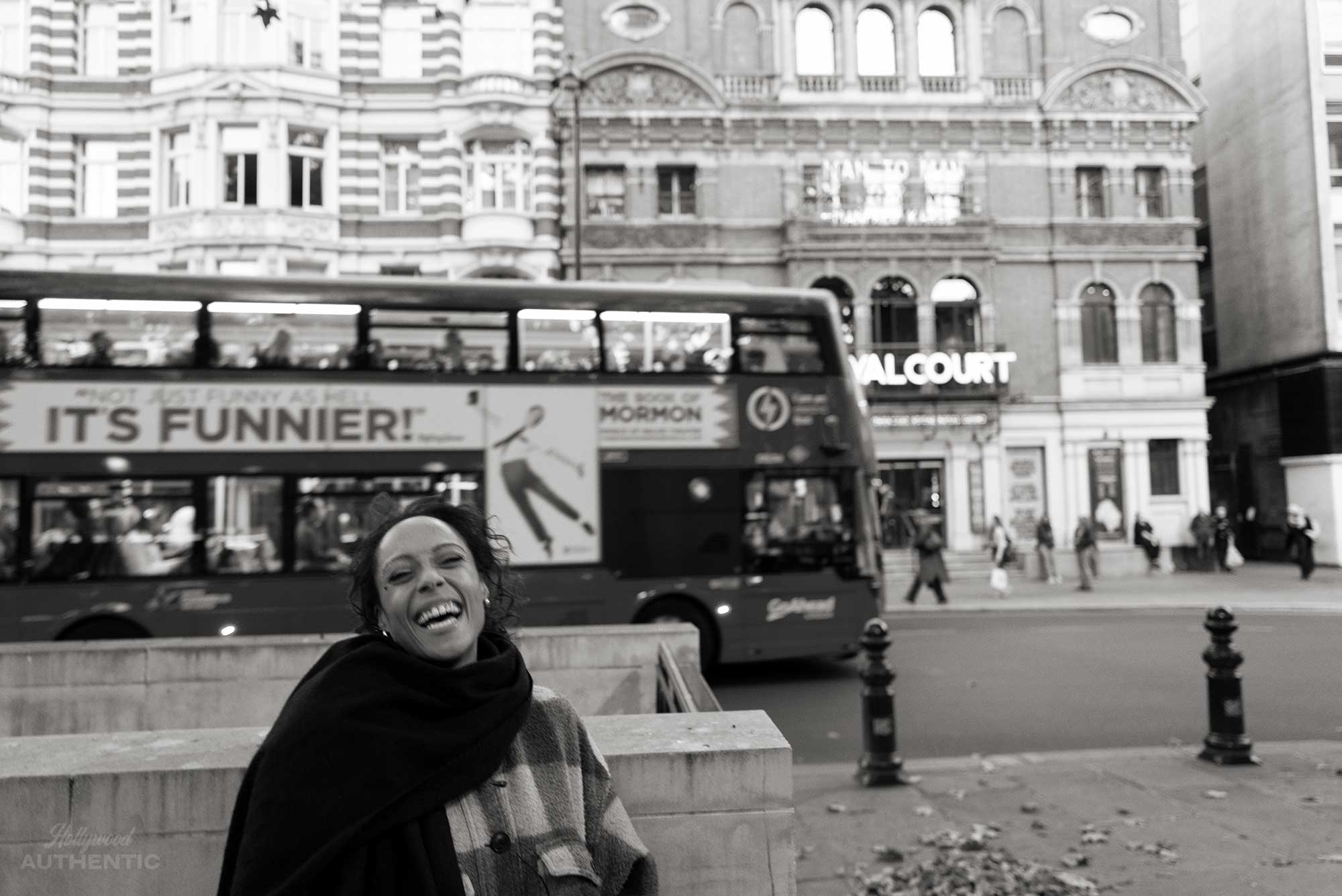
There’s just so many moving parts that are not in your control as an actor, the way the universe aligns for certain things, and doesn’t. It’s mad, in a way
Though Rosalind is a relatively new face, she’s surrounded by prolific film actors in Misty Green: Adam Driver as a shady romantic interest, Anna Kendrick as her bestie, Daniel Kaluuya returning to the screen after a four-year hiatus as Misty’s brother, who is struggling with mental health issues. But writer-director Rock was in no doubt of her ability to stand toe-to-toe with her castmates and bring audiences along for the ride. ‘There were maybe 100 actresses but she was the best actress, the smartest actress – she has the most going on behind her eyes,’ he says. ‘You can feel the gravitas. Not everyone can carry a movie. Whoever got the part had to carry the movie. She’s more than up to the challenge.’
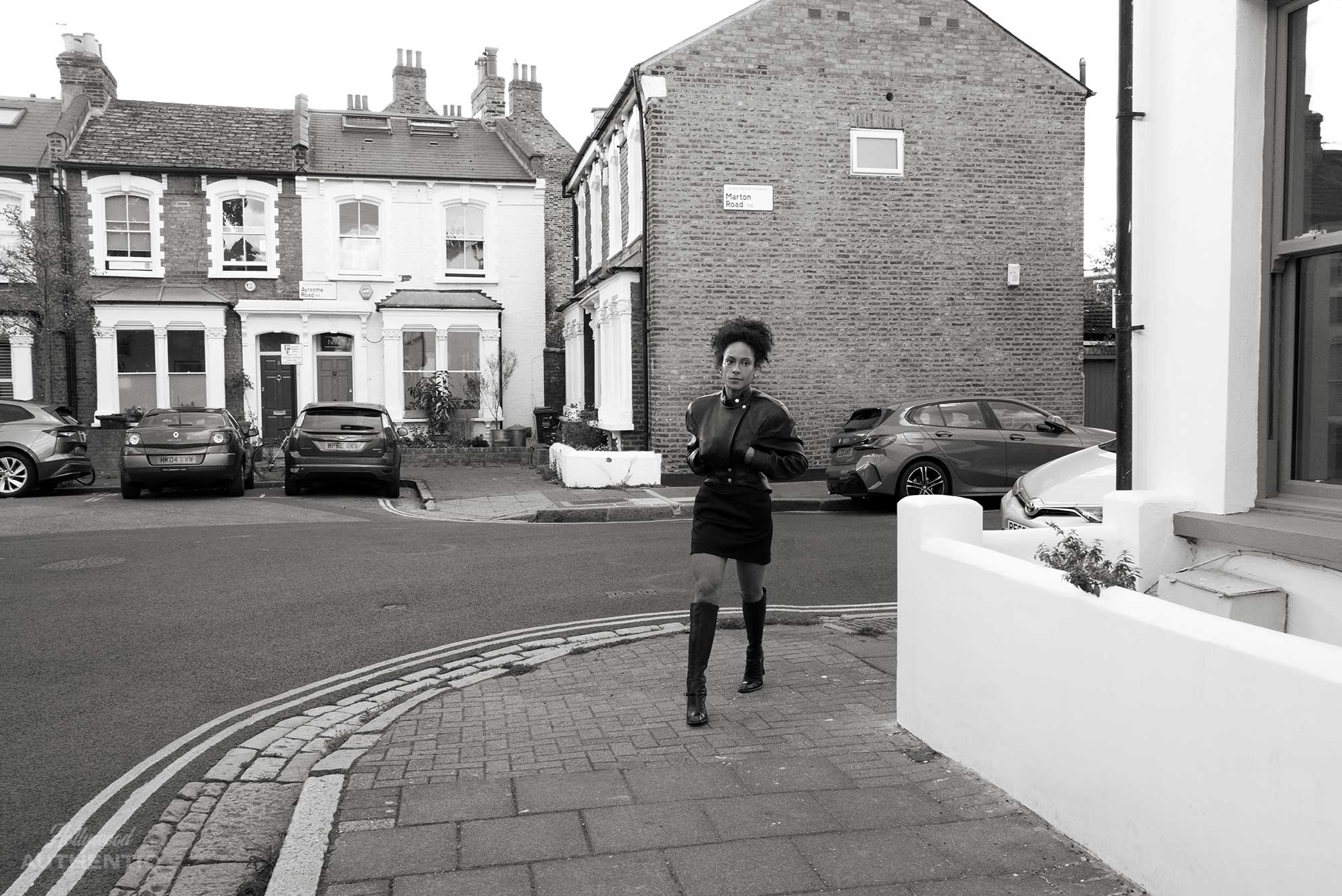
We decide to jump in the car to drive to another key location in Rosalind’s journey to being an actor – the theatre where she completed her first professional job, the Royal Court in Sloane Square. Here, in 2015, she played the younger version of a woman coming to terms with Alzheimer’s in Plaques and Tangles at the Royal Court Upstairs. ‘God, I’ll never forget when I got the call from my agent,’ Rosalind recalls. She’d been through six rounds of auditions straight out of drama school. ‘I was so ecstatic. I couldn’t believe it. I remember getting the first pay cheque for that. It’s just such a special feeling. I opened up a different bank account, because I wanted it to be like marking: “This is a career now.” I don’t know if it ever feels like that until you’ve got your first job.’ On the first night of her play, an audience member fainted, falling forward onto the stage, sending Rosalind into a panic. ‘Now I know what to do if something like that happens. But then, I just thought, “The show must go on.” My agent at the time stood up and went, “Ros, stop! Just stop! Stop acting!”’
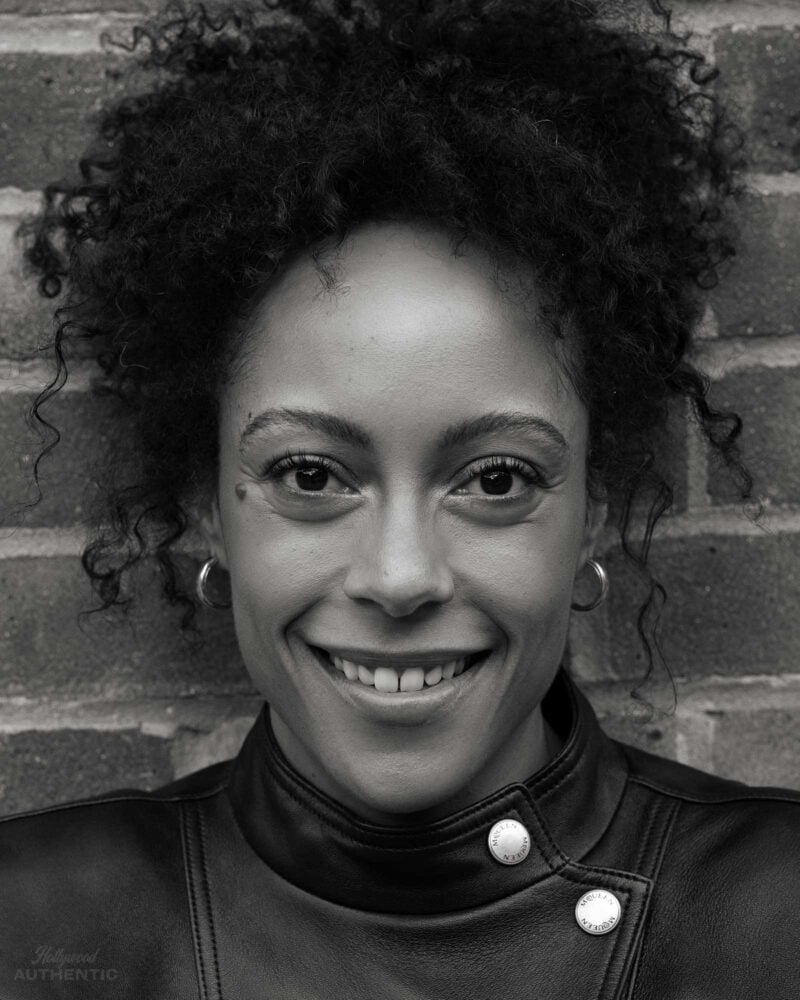
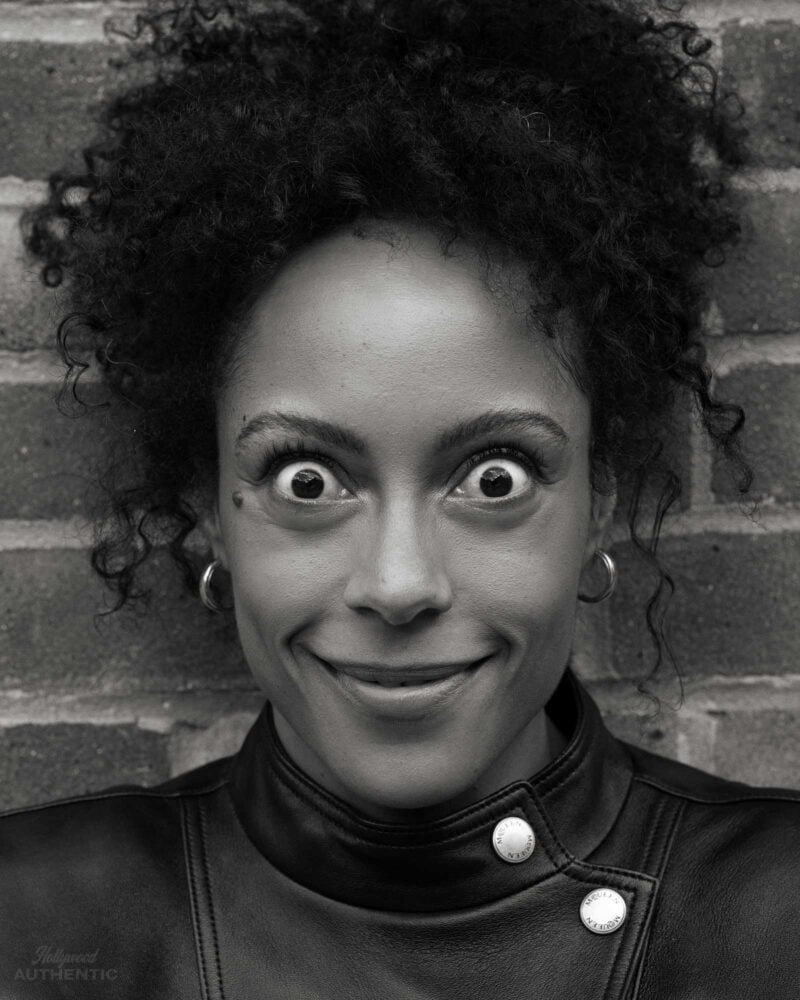
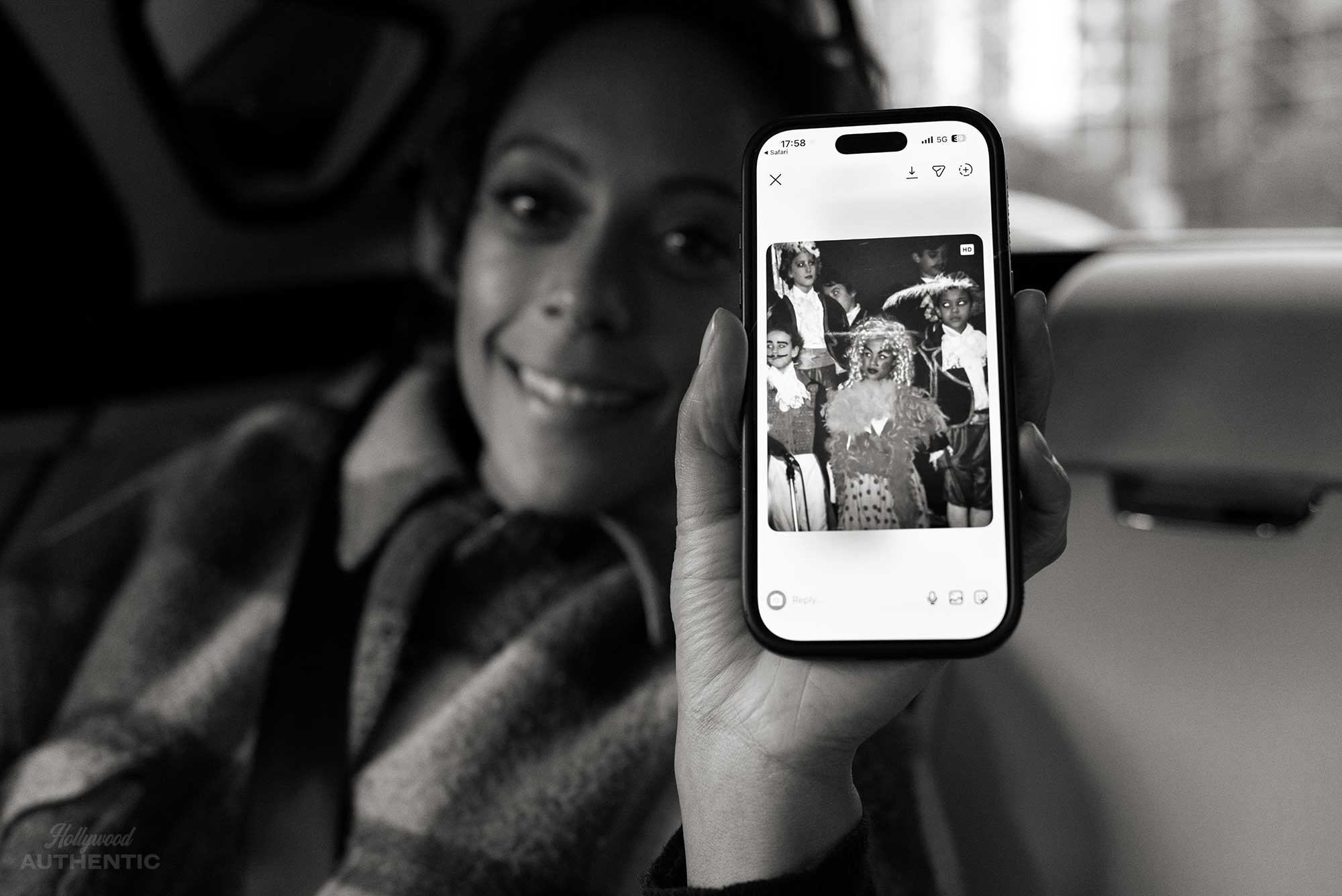
She laughs, but the experience sent her on her way to more theatre and roles in The Personal History of David Copperfield, Howard’s End, Missing You and Rose of Nevada. It’s a far cry from a formative experience being in a school production of Cinderella as a child. ‘I wanted to be Cinderella, but they made me an ugly sister. That’s enough to traumatise a kid for life isn’t it, it was character-building. However, its way more fun to play an ugly sister than Cinderella.’ She carried that idea of always being a supporting actor into drama school. ‘I remember one of my final conversations with our principal where you talked about what you expect from your career. I went, “Well, it’s obvious that I’m not leading lady material.” It was such a genuine belief that now kind of baffles me. Chris gave me a really big opportunity with Misty Green. He could have got a star to play her because it’s a gift of a part.’
As we roll over Chelsea Bridge, she remembers what she bought with some of that first Royal Court paycheque. ‘I bought a bike, because I wanted to cycle around London. This bike has been with me ever since. It was a red bike with a basket, and I absolutely loved it. And yesterday it was stolen.’ She pauses for a minute. ‘Oh, well. New beginnings. I’ll hopefully get another paycheque,’ she laughs. When we arrive in Sloane Square, we take a stroll around the theatre to the stage door. ‘I remember my first day. I’m walking into a rehearsal room with professional actors, and we were standing in a circle. And everyone had a story to tell, because they’d all worked before. So I was like, “I’m Rosalind Eleazar. I’m playing Megan. This is my first day at The Royal Court.” It was special.’
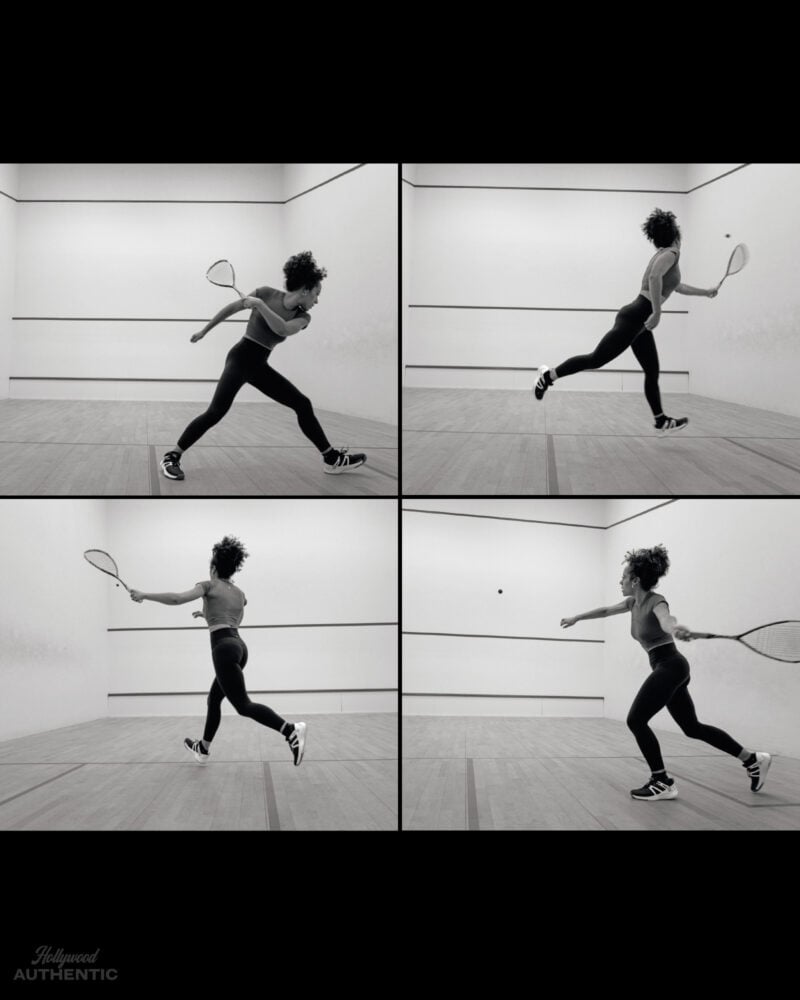
If you try to be too clever, you’re going to lose the point. If you just hit the effing ball, life’s good. Like if you’re doing a take, and you plan what you’re going to do, it’s probably not going to be as good as if you just allow things to happen…
The experience was a teaching one, but Rosalind says that each project is a learning curve. When she was appearing in Uncle Vanya with Richard Armitage in the West End in 2020, she got a taste of using difficulties to her acting advantage when fans of Armitage were distracting her during the performance by filming and talking. ‘I was getting really upset, because it was ruining the show. But that upset went into the scene, and it was very, very different between us that night, it actually affected the scene in a pretty positive way. It’s just about using whatever’s thrown at you.’
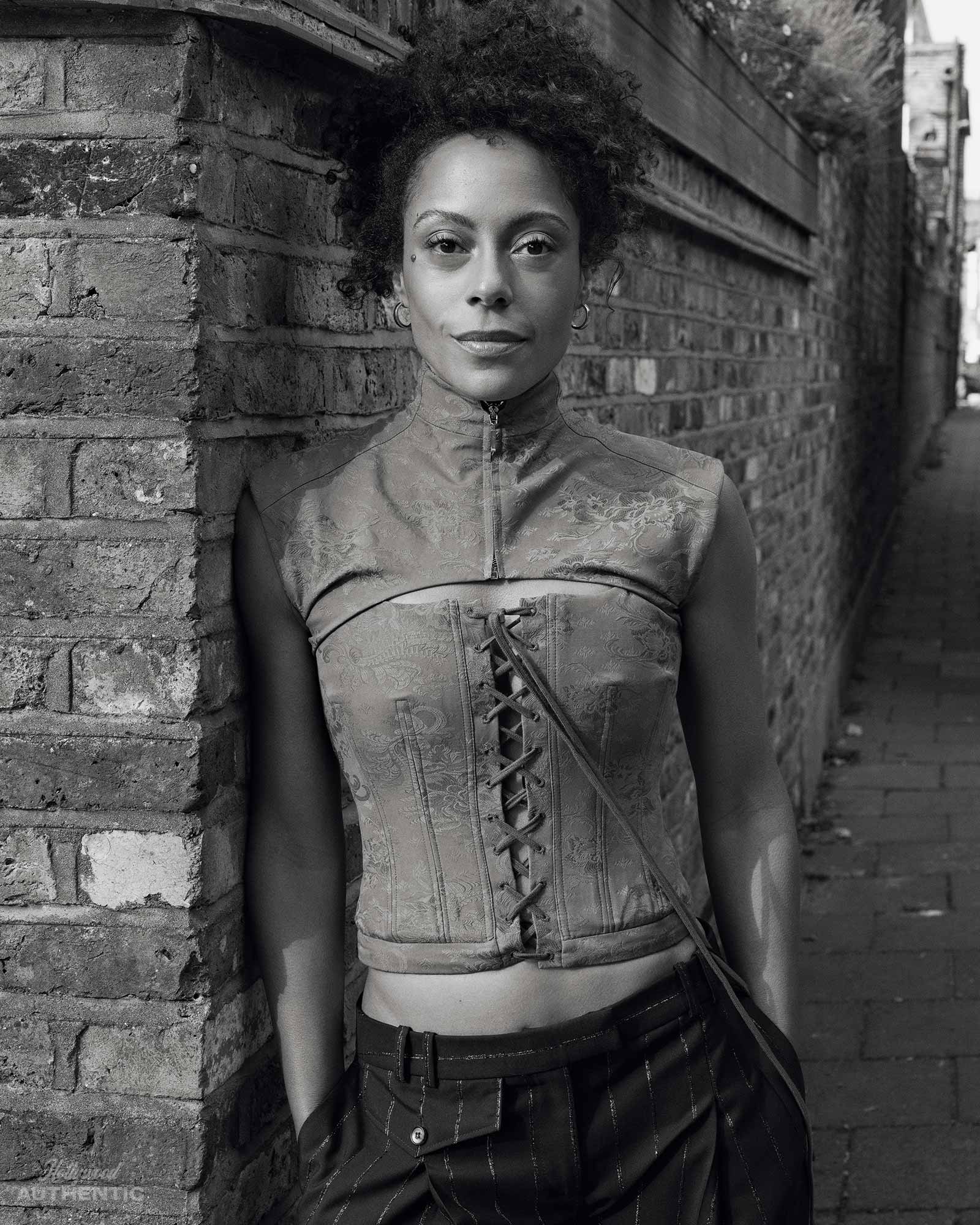
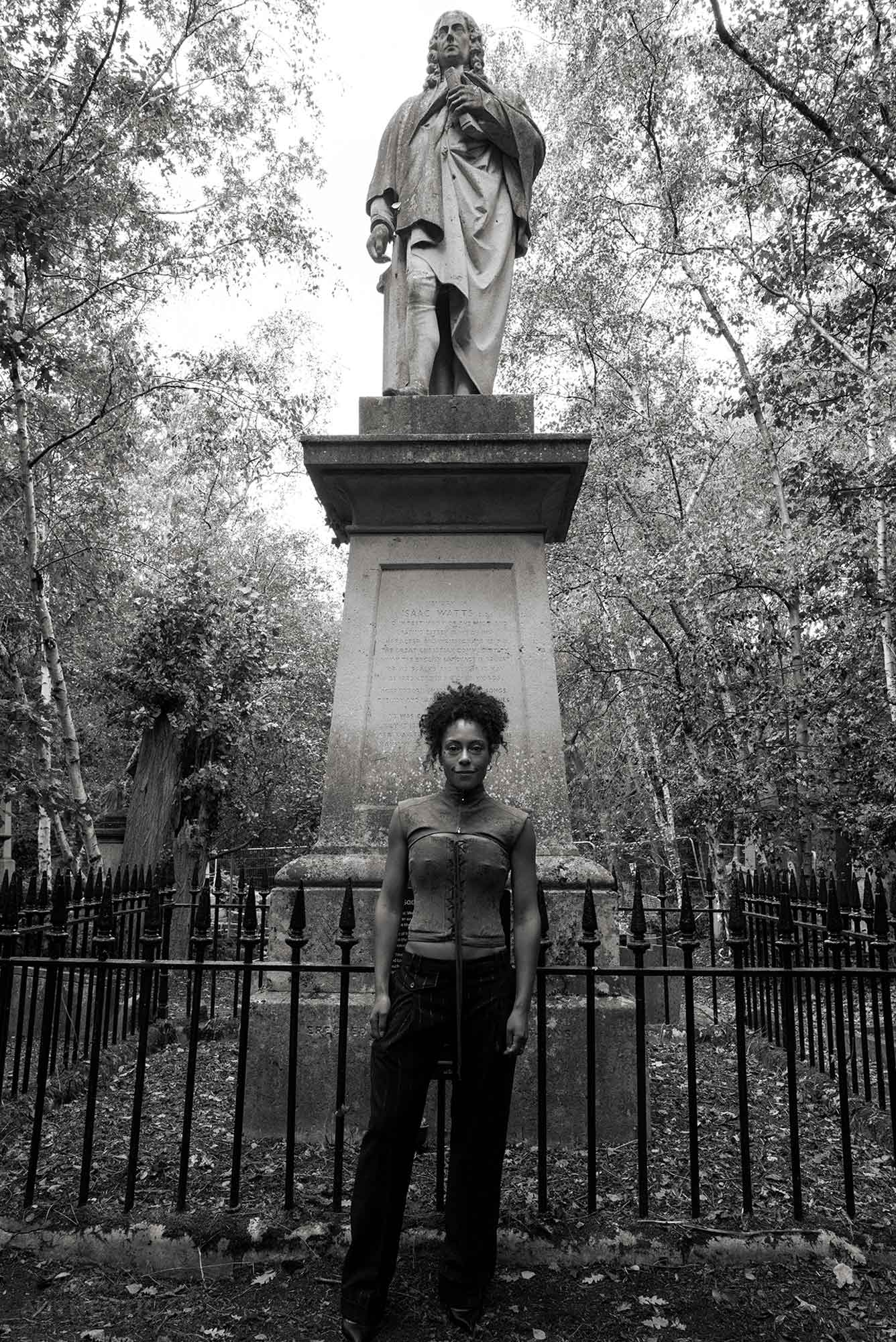
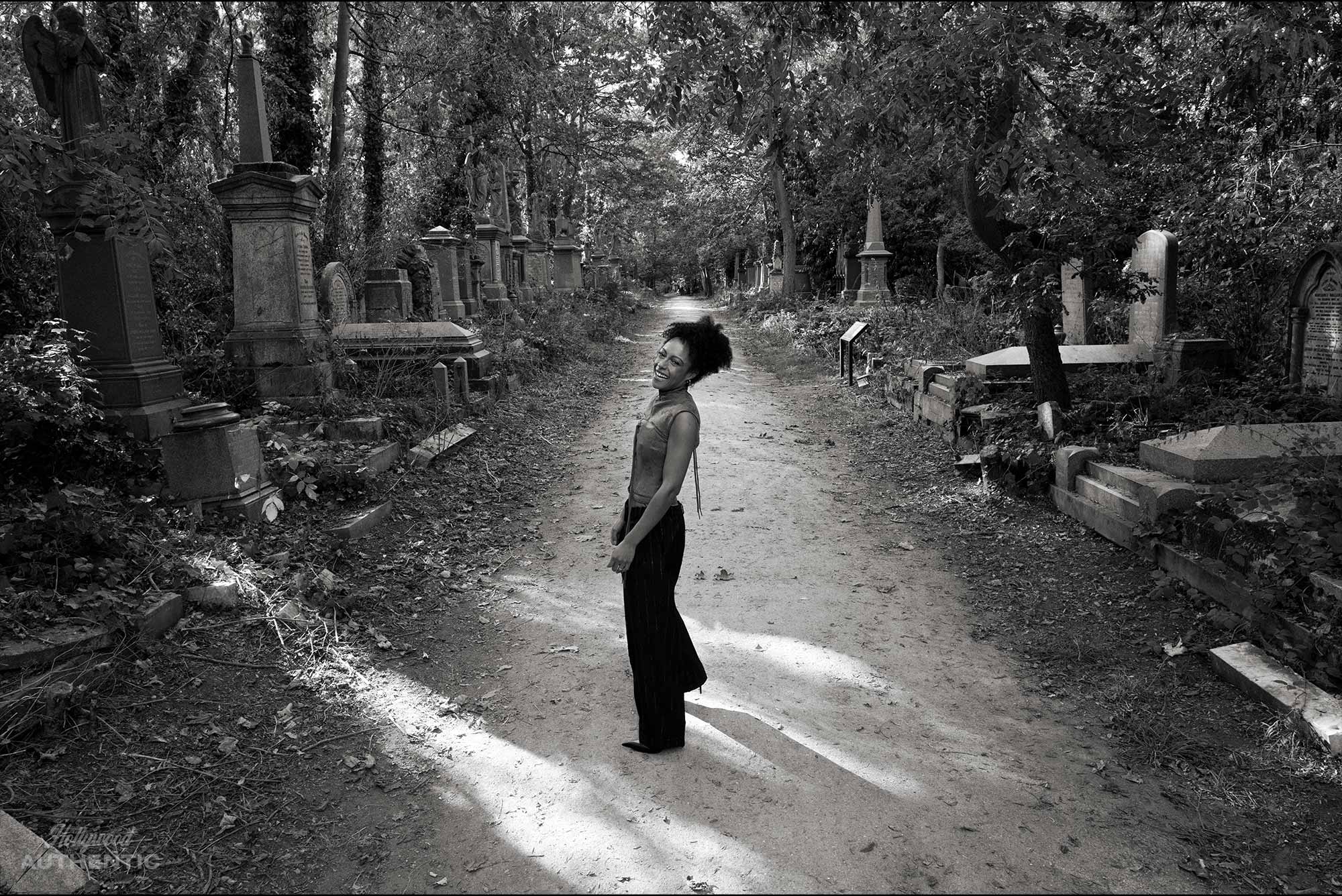
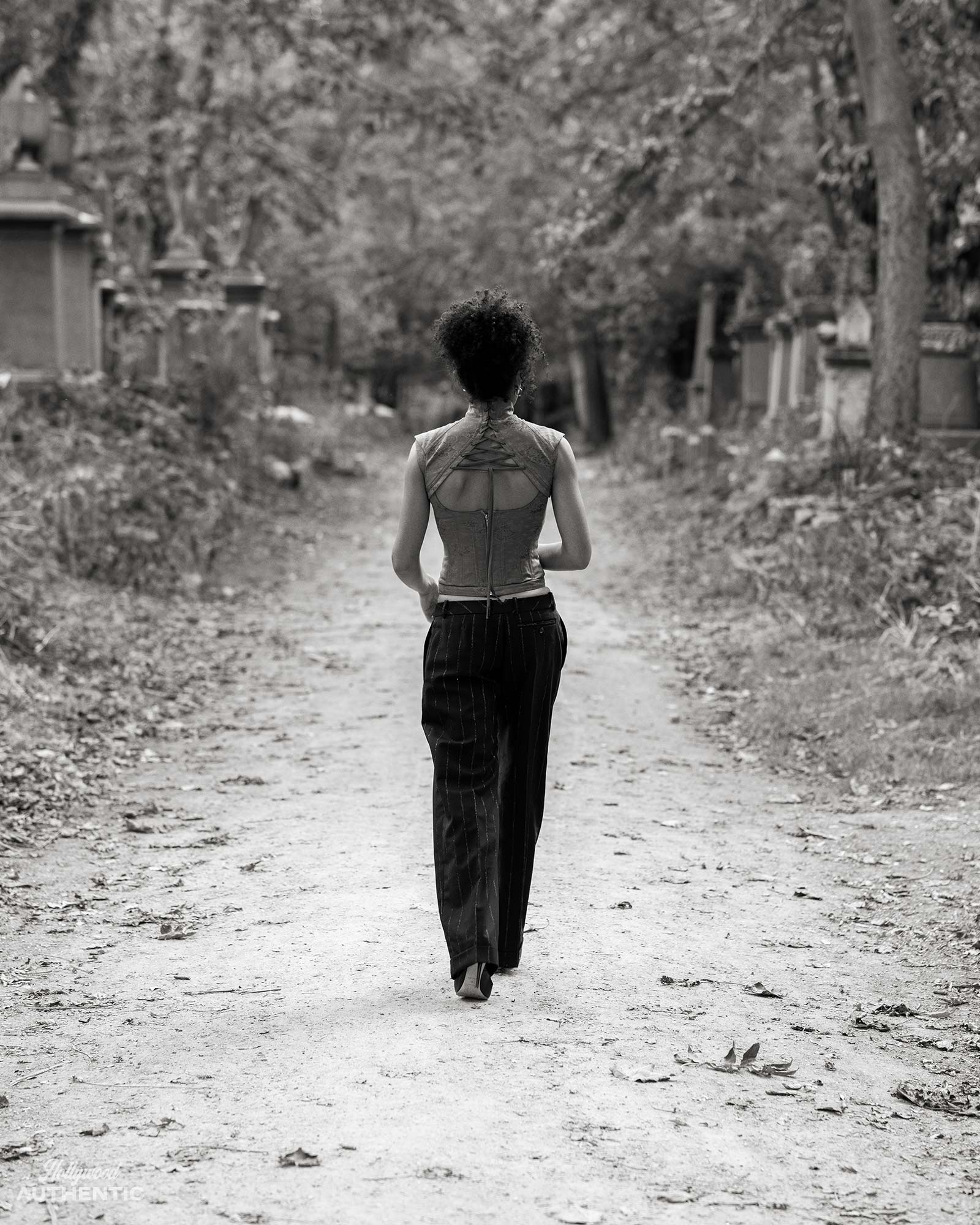
On another day, Rosalind and I meet in East London near where she lives now with her husband, Italian actor, director and producer, Gabriele Lo Giudice. She wants to take a walk through Abney Park, a hidden-away cemetery described on the sign as a ‘peaceful woodland oasis’, where she likes to walk and work. ‘I just put my headphones in and I walk around because I like to learn lines when I’m on the move,’ she tells me as we wander between the headstones. ‘It’s peaceful and my imagination is allowed to run.’
As we read the stones and discover the people buried in the place I ask about the fact that careers such as hers rely so much on luck. It’s rarely only about talent. ‘There’s just so many moving parts that are not in your control as an actor,’ she nods. ‘The way the universe aligns for certain things, and doesn’t. It’s mad, in a way.’ Misty Green is certainly a gift from the universe to showcase Rosalind’s range. ‘After I did Slow Horses for so long, you suddenly get a lot of Louisa-esque characters coming in. For me, I wasn’t too keen on repeating a character that I’ve done before.’ I ask what she’s learned working with Gary Oldman on that show. ‘He’s got an equal measure. He works so hard, and yet he’s also like a child. And those two things make him an incredible actor. He’s just so playful and silly, you know? It’s so fun. But he’s really, really prepared at the same time.
‘I’ve been really lucky that the majority of actors that I’ve worked with are ready to be a bit silly on set. I sometimes lark about a bit, but not in a disrespectful way. I’d be like a kid. You don’t know where you’re going to go. You trust what’s about to unfold.’
On Misty Green, she says she was inspired by Adam Driver’s playful approach to the work. ‘Every take was different. There’s one particular scene where he would bring me a rose in it. There was a lot of improv involved in some of the scenes. There was a lot with this film that was going to really challenge me, and I was somewhat fearful of “can I do it?” But when a project frightens me in some way, and your body feels fear – that’s when I have to do it. That’s the exact thing I have to do.’ I ask if her characters give her something that she doesn’t have in her own personality. ‘Definitely. I think they make you question certain facets of yourself that are less pronounced, or dormant. If you’re playing a character like Misty for a while – it’s not even just playing her. It’s thinking about her consistently. It makes you reflect on how you operate as a person, you know?’
I’ve been really lucky that the majority of actors that I’ve worked with are ready to be a bit silly on set. I sometimes lark about a bit, but not in a disrespectful way. I’d be like a kid. You don’t know where you’re going to go. You trust what’s about to unfold
With Misty Green being an actor trying to get a break, Rosalind perhaps had more to draw on than many characters she plays. ‘It’s a pretty extreme situation that the character’s in,’ she says of Misty, an alcoholic and addict who is evicted, propositioned, involved in a car crash and subjected to a humiliating audition all in the same fortnight. ‘I’ve had bad auditions, but that’s because of me. I haven’t had anyone really be disrespectful. But it certainly can happen, and I’ve heard of horror stories. I think most of our community will recognise a lot of it; we’re jobbing actors. The line about not being a nepo baby or a Brit is more about the things that we sometimes say to ourselves to make us feel better when we haven’t got a part.’ At the same time, she says, this is a film that any audience can feel affinity with. ‘It’s quite a universal story, it isn’t just about the fact that she’s an actress. It’s also about the fact that she is a woman that is struggling with her own mental health issues, and that she is a functioning addict – just in the context of what can be quite a brutal industry.’
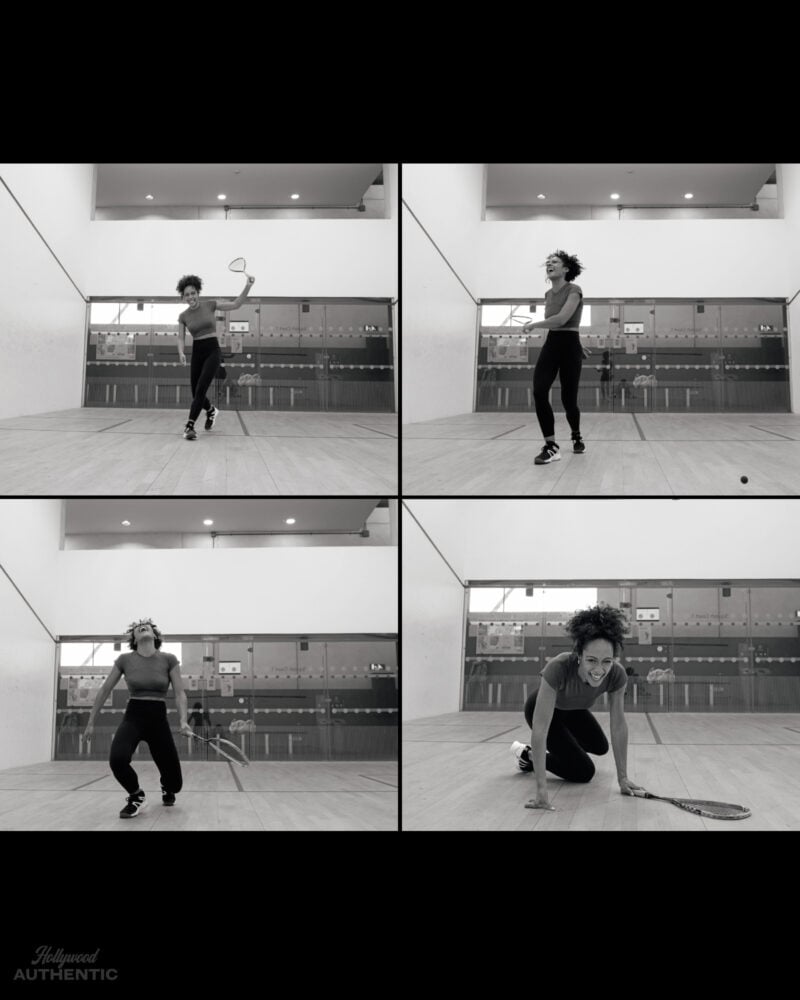
We’re almost lost in the woods so we decide to return to the sports hall where Rosalind also finds contemplation, while playing squash. She picks up a racquet three times a week when she’s in London and uses the court as another place to learn lines. ‘It’s just the best sport. If you get into your head about it; if you plan your shot, you’re going to lose the point,’ she says as we arrive at her local sports centre. It’s a bit like acting, I suggest. ‘Exactly! If you try to be too clever, you’re going to lose the point. If you just hit the effing ball, life’s good.’ When she gets on the court, Rosalind expands on the correlation as she smashes the ball against the wall. ‘Like if you’re doing a take, and you plan what you’re going to do, it’s probably not going to be as good as if you just allow things to happen, and work with the other actor,’ she says between thwacks. ‘I try to be as truthful and as unfussy as I can be, rather than adding loads of things. I think people that are talented have an ability to just fall into the present, and let everything flow. So, keep it simple.’
Rosalind is keeping it simple in the dream role she’d like to play. ‘It’s something I say in every fricking interview,’ she admits. ‘And it’s Cleopatra. I’m desperate to play her. But also kind of all those really, really epic females like Medea and Elektra. I think they would be so good to be adapted for film or TV. I guess I wasn’t old enough to play those characters, and I guess I’m entering into that era, hopefully, where I can. I get asked, “What do you want to do next?” and it’s so character-dependent. Sometimes what you’ve just done dictates what you want to do and what you’re looking for.’ She name-checks Bradley Cooper and Derek Cianfrance as artists she’d like to work with, but she’s also interested in directing herself. ‘I’m writing. I’m forever trying to finish a script that I started a while back, but I’m hoping one day I will direct that.’
As we come to the end of our squash session, I ask Rosalind what project from all of her credits she would encourage people who are just finding her work to see. ‘I would love for people to have seen The Personal History of David Copperfield. I’m really proud of that work as a team, as a collective. And again, like Misty, it’s a character that people wouldn’t normally assume that I could play, because she’s just so bright, and I’ve got a resting bitch face.’ She cackles. ‘When I’m in repose, I just look like I’m about to murder someone!’
I would love for people to have seen The Personal History of David Copperfield. I’m really proud of that work as a team, as a collective. And again, like Misty, it’s a character that people wouldn’t normally assume that I could play, because she’s just so bright, and I’ve got a resting bitch face. When I’m in repose, I just look like I’m about to murder someone!
Misty has a totem of sorts in the film, a coveted Birkin bag that acts as a reminder of her worth and the fact that she has been successful. I wonder if Rosalind has a similar item that tells her she’s made it as an actor. ‘What the bag represents for Misty was something that I was really trying to get my head around, because, for me, objects aren’t really that important.’ She laughs. ‘If my husband bought me a bag for my birthday, it’d be really odd. But I get really sentimental, and I do have objects that I keep with me. I’ve kept the plane ticket when I flew out to LA to meet Chris. And I always take something of my character, something that they have in their home or wear. I kept Misty’s hat because it represents when she’s just herself and pure.’
The film shares some themes with Anora in that it follows an unapologetic woman who is commodified by her industry but refuses to be silenced. And, like Mikey Madison, Rosalind is featuring on awards nomination prediction lists. What does she think about that sort of attention over this role? ‘It’s obviously very nice to be included in these sorts of conversations, but I honestly felt so fricking lucky getting this part and being able to tackle a character like that, which I think can sometimes only come once in someone’s life. We have so many sanitised versions of women, and what drew me to this part was how fucked-up she was, how complicated, how knotty, and how much armour she has. And yet, somewhere under all of that, there’s this incredibly young child that’s just asking for love. Women are often required to show up and be pleasant, otherwise you’re branded as difficult. I can relate to not being able to get out of my own way, and I think that’s a universal theme for most people.’
It’s obviously very nice to be included in these [awards] conversations, but I honestly felt so fricking lucky getting this part and being able to tackle a character like that, which I think can sometimes only come once in someone’s life. We have so many sanitised versions of women, and what drew me to this part was how fucked-up she was, how complicated, how knotty, and how much armour she has
The film also joins a tradition of Hollywood looking at itself; from Sunset Boulevard and A Star Is Born to The Player and La La Land. Why are we so interested in films about making movies, the price of acting and the meaning of performance? ‘We want to see the inner workings of our industry, but also the reckoning with ambition, and how far we will go,’ Rosalind considers. ‘Seeing how it works is something of a particular fascination. And while the industry is brutal, it can also be really beautiful.’
A beautiful aspect of her experience is coming back to her Slow Horses family in between projects. ‘I absolutely love returning to it. It’s such a great drama and cast – it’s like coming home. And the fact that people love it is the cherry on top.’
Photographs by GREG WILLIAMS
Interview by GREG WILLIAMS/JANE CROWTHER
Misty Green is in cinemas now
Nine Elms:
Hair by James Catalano
Make-up by Nikki Wolff
Stoke Newington:
Styling by Wayman + Micah
Hair by Marcia Lee
Make-up by James Molloy