
March 5, 2026

Annette Bening, Christian Bale, Jake Gyllenhaal, Jessie Buckley, Penélope Cruz, Peter Sarsgaard

Words by JANE CROWTHER


Like buses, we wait ages for a Frankenstein movie, and then two come along at once. Hot on the heels of del Toro’s classic take, comes writer/director Maggie Gyllenhaal’s reanimation, loosely inspired by James Whales’ 1935 hit, The Bride of Frankenstein. Setting her tale in the year that film dominated the box office (1936) Gyllenhaal reimagines the creation of a partner for ‘Frank’ (Christian Bale) – inexplicably still alive after his Victorian adventures – through a feminist lens, giving her Bride (Jessie Buckley) agency, rage against misogyny and a black, splattered lip that inspires a movement. Placing the action in an era where the media helped define monsters (Bonnie and Clyde references are unavoidable), in a golden age of movies, and in pre-WWII time before conflict created some equality for women gives Gyllenhaal plenty to say about Patriarchal society in a frenzied movie that includes dance numbers, head-stomping violence, numerous attempted sexual assaults and a through-line on the importance of consent. It’s a movie that wants to celebrate disobedient, ungovernable, transgressive, ‘difficult’ women, that strives to be a battle cry for a new generation still locked in a gender battle (yes, there’s a blunt ‘me too’ reference), but doesn’t quite get the disparate pieces to fit together. Like Frank’s patchwork body oozing pus from sewn wounds, The Bride! is an ambitious mess.
Annette Bening, Christian Bale, Jake Gyllenhaal, Jessie Buckley, Penélope Cruz, Peter Sarsgaard
Niko Tavernise/Warner Bros. Entertainment Inc.

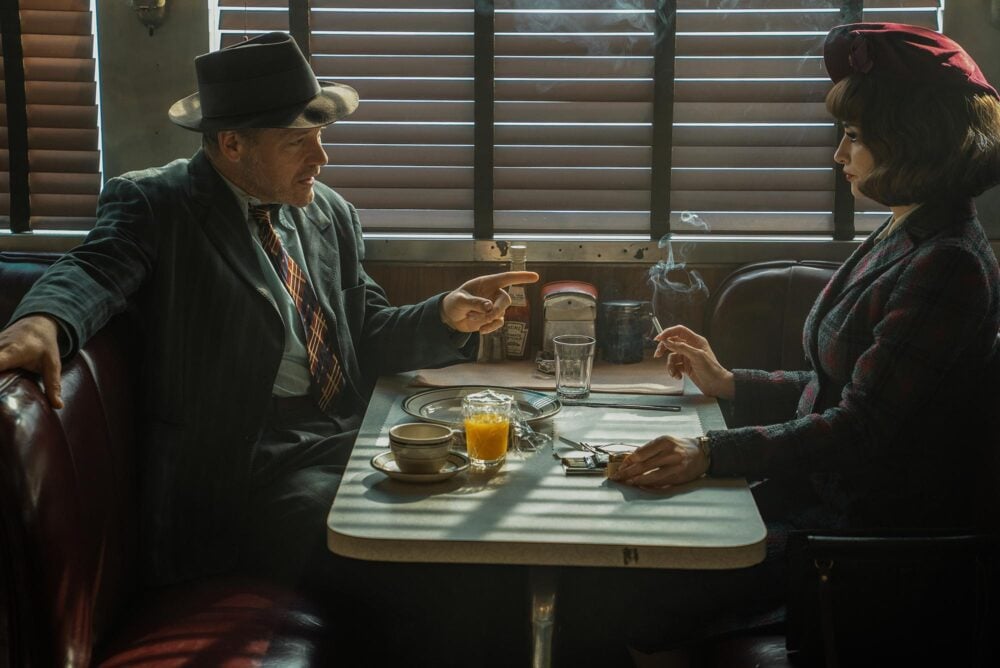
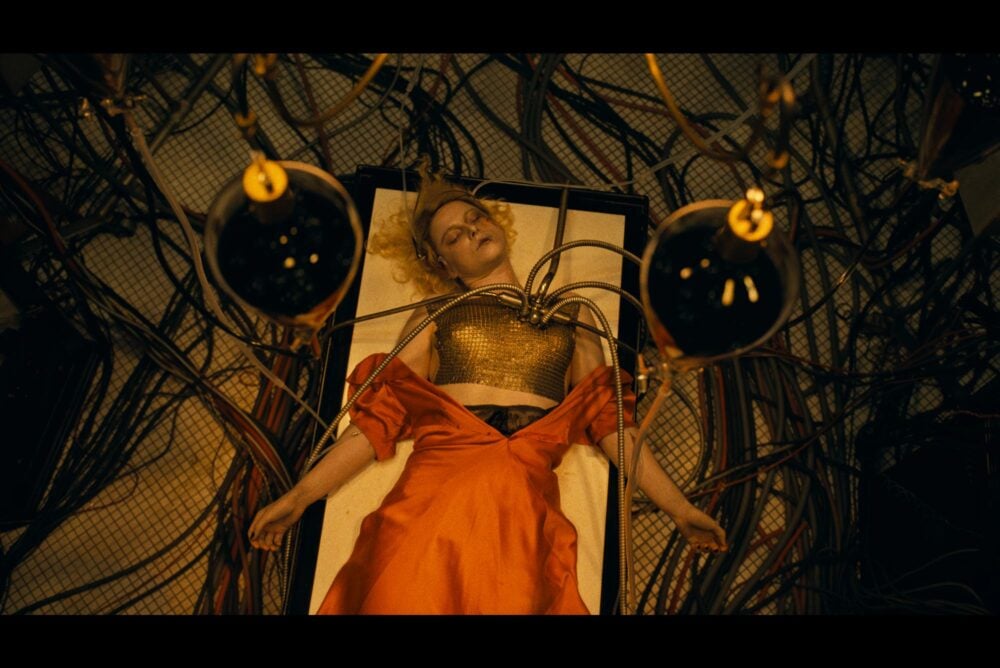
Perhaps the lack of cohesion is down to reported studio meddling, but there’s the possibility of an electrifying film lurking below the scars; Buckley and Bale commit full throttle to a film that plays like the chimera of Dick Tracy and Folie à Deux, Sandy Powell’s beautiful costumes are intriguing in their own right, Hildur Guðnadóttir’s punk-infused score is a banger and there’s a plenty of meta nods to our obsession with beauty, sex and identity. But confusion begins straight out the gate when the first person we’re introduced to is a dead Mary Shelley (Buckley again) addressing the audience to reveal her seminal novel was not the story she really wanted to tell. Rather she’d prefer to weave the tale of Ida, a sex worker for the Chicago mob who Shelley ‘possesses’, making her insolent to a violent gangster and causing her death. Is Ida a construct of Shelley’s imagination, or a real woman haunted by the ghost of a dead novelist? It’s unclear, as is the messaging; Ida rails against the systemic and casual violence towards women yet the film frequently lingers on, and shows that abuse. 
Annette Bening, Christian Bale, Jake Gyllenhaal, Jessie Buckley, Penélope Cruz, Peter Sarsgaard
Warner Bros. Entertainment Inc.

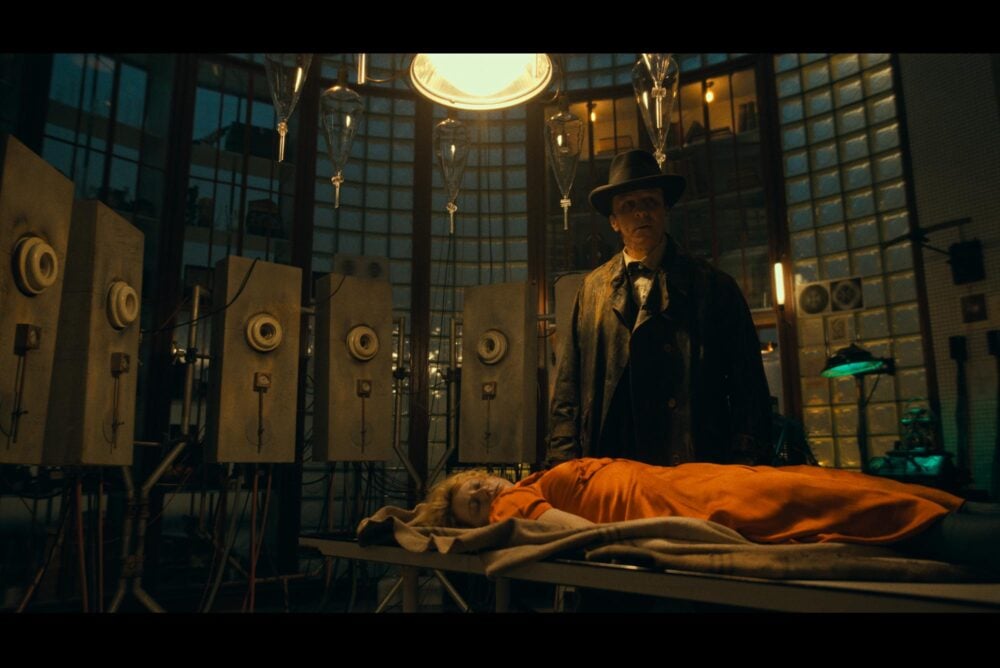
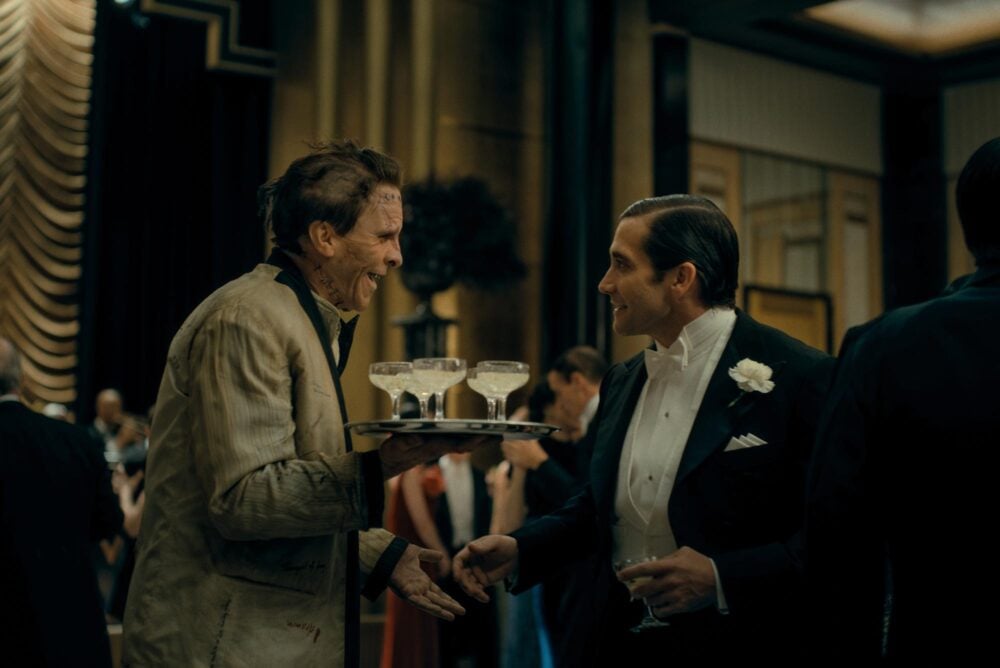
Gender equality is explored in the mad scientist of the piece being a woman (Annette Bening) who agrees to reanimate Ida’s corpse as a mate for lonely, movie-loving Frank, and in a smart detective (Penelope Cruz), a Rosalind Russell clone who is always steps ahead of her male colleague (Peter Sarsgaard). As Ida is reborn as The Bride with no memory of her past and no consideration for societal norms, she questions her identity, is the catalyst for murder and embarks on a cross-country rampage that takes in cinema visits, deb balls and police shootouts – all luridly recounted in the media. ‘Imagine if they got this excited about a lady astronaut,’ a character muses.
Annette Bening, Christian Bale, Jake Gyllenhaal, Jessie Buckley, Penélope Cruz, Peter Sarsgaard
Warner Bros. Entertainment Inc.

Playing three characters (with two often battling each other inside her body), Buckley is magnetic, making some sense of a woman defined by others and moving through her arc with feral, carnal intensity while Bale aces the loneliness of a unique creature. To watch them howl and stomp is fun in itself, in a film that is certainly visually impressive. But Shelley’s question at the beginning never gets fully or satisfactorily answered; ‘Is this a horror story? A ghost story? Or, most frightening of all, a love story?’ Rather like Ida herself, it’s never entirely sure what it wants to be.
Annette Bening, Christian Bale, Jake Gyllenhaal, Jessie Buckley, Penélope Cruz, Peter Sarsgaard
Warner Bros. Entertainment Inc.

Words by JANE CROWTHER
Pictures courtesy of Warner Bros. Entertainment Inc.
The Bride is in cinemas now
January 9, 2026

Chloé Zhao, Jessie Buckley, Joe Alwyn, Paul Mescal, Zac Wishart

Words by JANE CROWTHER


It’s a matter of common knowledge that Shakespeare lost a son, Hamnet, and his subsequent grief informed the crafting of one of his one most celebrated plays delving into sorrow, parenthood and death; Hamlet. The theatrical, narrative and emotionally resonant feat that Chloe Zhao pulls off with Hamnet – blindsiding audiences with devastation despite this prior intel – is uncommon, remarkable.

Chloé Zhao, Jessie Buckley, Joe Alwyn, Paul Mescal, Zac Wishart
Focus Features/Universal Pictures

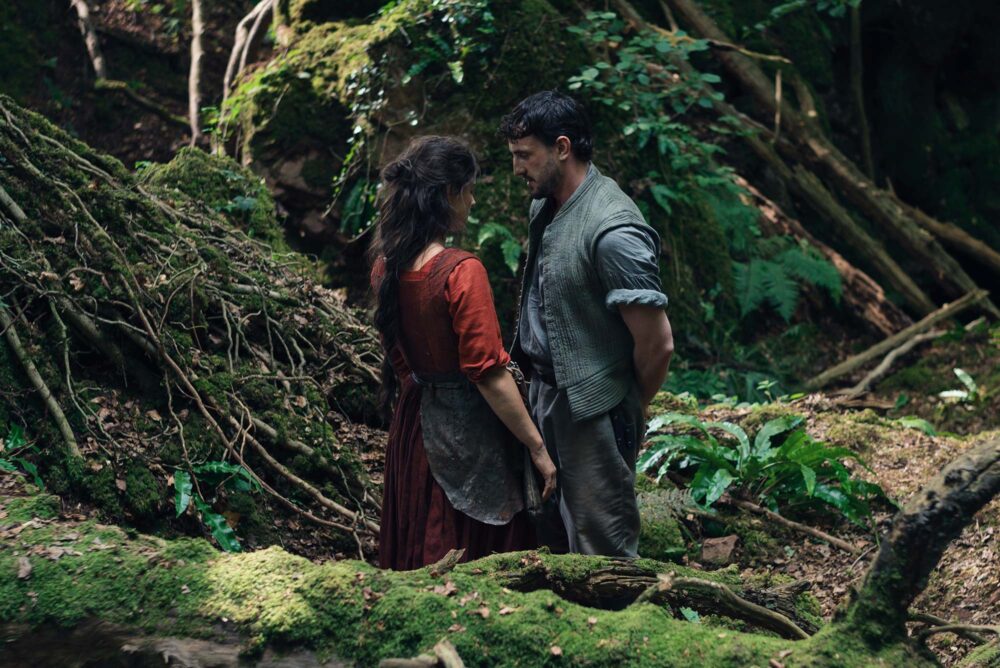
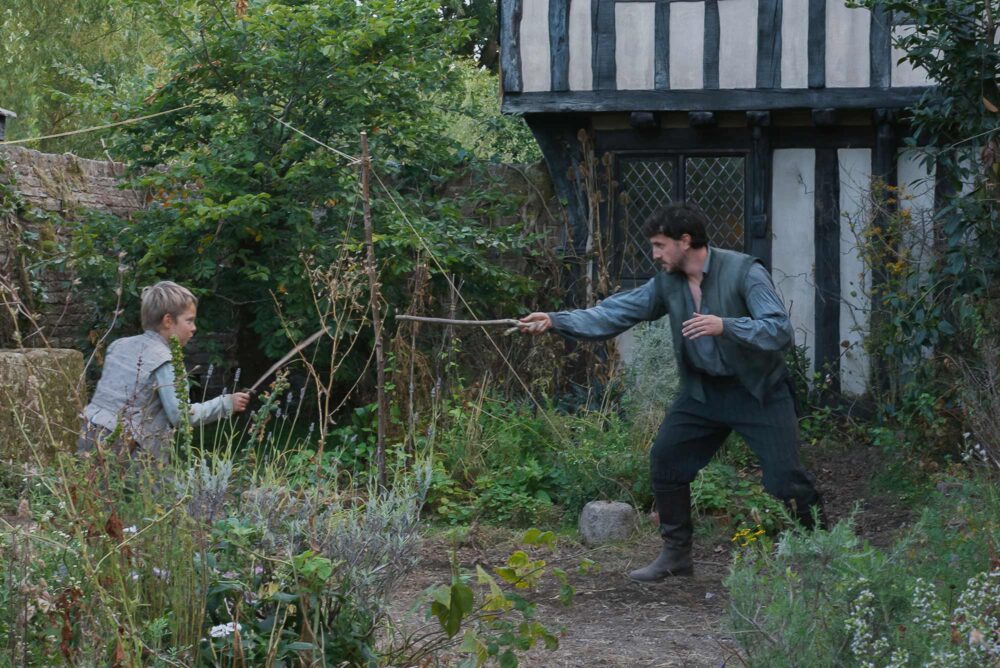
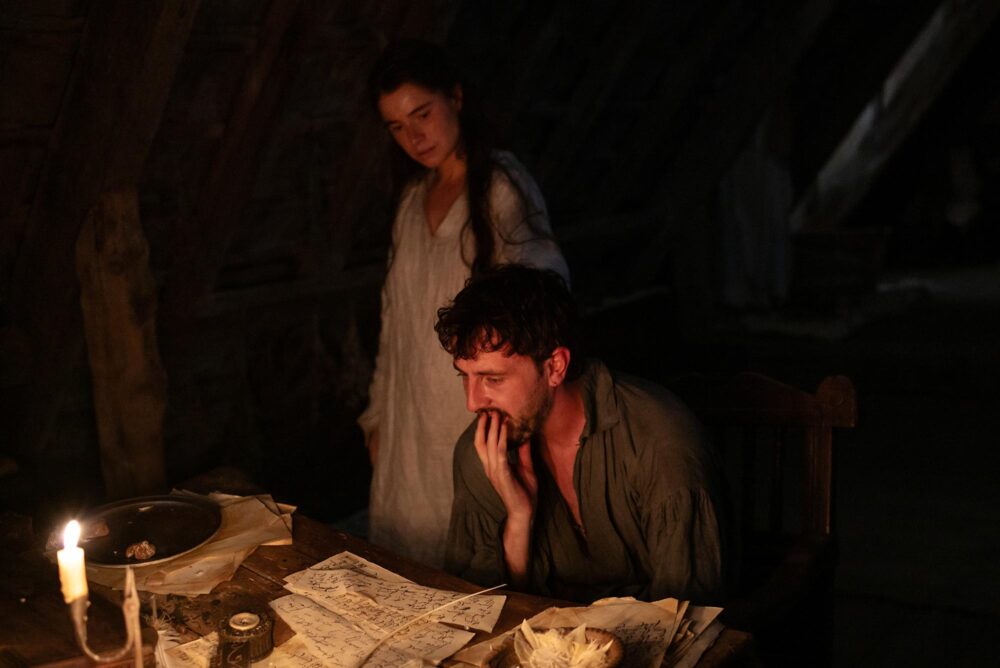
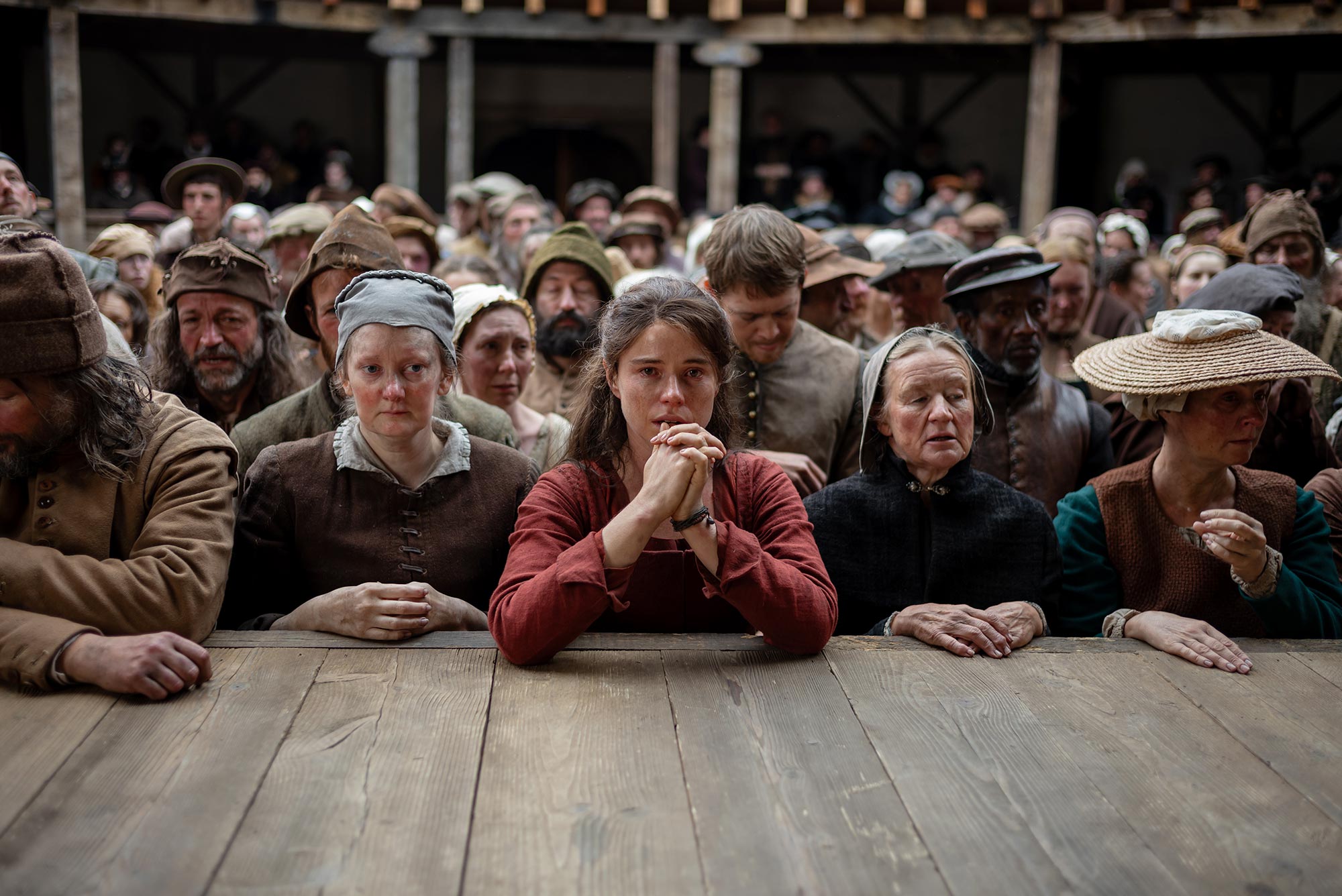
Adapted by Zhao and Maggie O’Farrell (whose bestseller it is based on), Hamnet charts the romance of the Bard (Paul Mescal) with Agnes (Jessie Buckley) through to their shattering as a family and the premiere performance of Hamlet. While Will is a man of ideas (scraping money together as a teacher while he pens his masterpieces by candlelight at night), Agnes is of the earth – an elemental woman who practices folk magic, wanders the woods in her muddy dress and snoozes in piles of leaves at the foot of mossy, towering oak trees. She burns as brightly as her scarlet gown, a force of nature that knocks Shakespeare off his feet, their hot and fast romance quickly begetting an imminent child and a marriage. Their children are brought up in an atmosphere of love and respect for the earth, closely bonded to each other. Shakespeare travels to London to ply his playwriting, bidding fond farewells to his brood as he commutes (a bittersweet parting moment at a street corner will be recognised by all parents), and the spectre of the plague takes hold.

Death sits alongside family life; is examined when a pet dies, is fought when illness descends. Death destroys and remakes, renders the Shakepeares strangers to each other and also, ultimately, connects them. In exploring the undertow of grief – in a feral howl, in despair, in process and in using it as a tool, Zhao and O’Farrell unpick the universal experience of losing a loved one while also celebrating the power and yes, necessity, of art to reflect, unite and heal.

Chloé Zhao, Jessie Buckley, Joe Alwyn, Paul Mescal, Zac Wishart
Focus Features/Universal Pictures

Key to that transference is the ability of Mescal and Buckley to fully inhabit their characters, convincing immediately of their connection, lust and love – and of their adoration of their onscreen children. Jacobi Jupe (brother of Noah) is astonishing as the boy at the centre of an experience that breaks them; cheeky, sweet, afraid, and vulnerable. The black hole to hell seen at the beginning of the film, the gaping mouth of a dank tunnel in the roots of a tree promises a dark journey of the heart, but even prepared for an emotional assault, what follows is heartbreaking.

Chloé Zhao, Jessie Buckley, Joe Alwyn, Paul Mescal, Zac Wishart
Focus Features/Universal Pictures

Buckley is understandably getting awards heat for her delicate sketching of a woman out of time; both too modern and too grounded in ancient spirituality for Elizabethan life, a ‘witch’ whose ferocious fight for her child is painful and beautiful to watch. Mescal meets her at every step though his role is necessarily more contained, while the Tudor home and village that the couple inhabited (Weobley in Hertfordshire standing in for Stratford) is brought to such visceral life that it seems we can smell the fire smoke and the poultices, taste the food Agnes puts on her heavy wooden table, feel the cool mud splatter in the street. Zhao’s eye for detail and beauty has never been better.

One critic has gone so far as to call Hamnet the ‘greatest film ever made’ and while that description might be up to interpretation of each viewer, what is undeniable is that this is a picture of great humanity, artistry and heart – heavy though it may be.


Pictures courtesy of Focus Features/Universal Pictures
Hamnet is in cinemas now