
September 10, 2026

Guy Pearce, Jack O’Connell, Claire Foy, Danny Boyle
Venice Festival ticket
Guy Pearce, Jack O’Connell, Claire Foy, Danny Boyle

VENICE DISPATCH
Photographs by GREG WILLIAMS
Interview by JANE CROWTHER


The Ink actor tells Hollywood Authentic about the art of print, the sexism that women continue to fight and how she surrenders herself to opportunity in film.

Guy Pearce, Jack O’Connell, Claire Foy, Danny Boyle

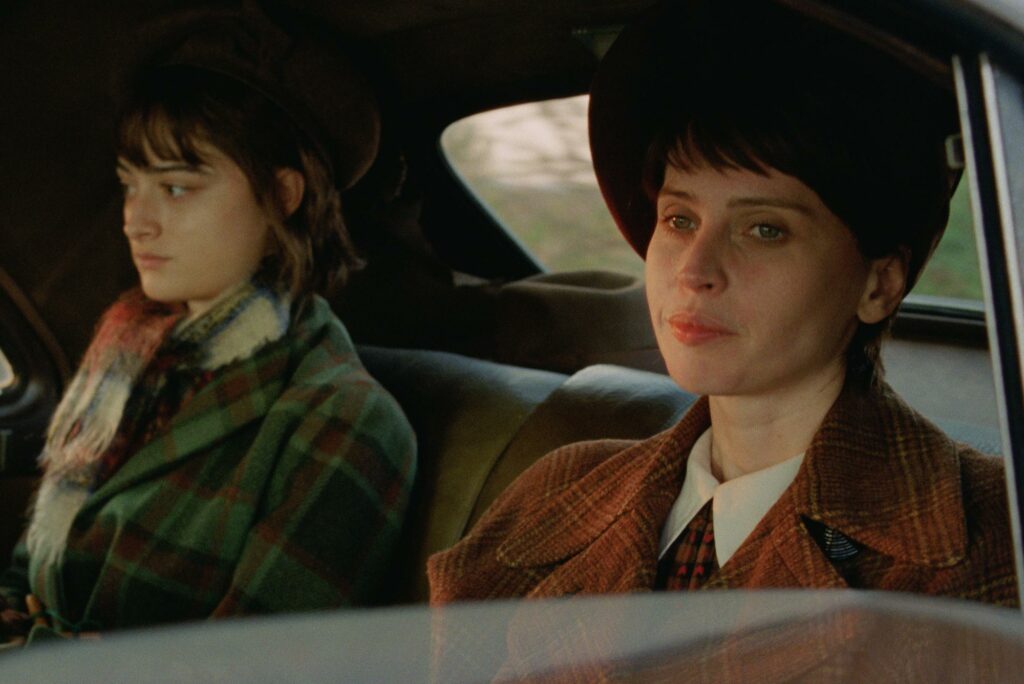
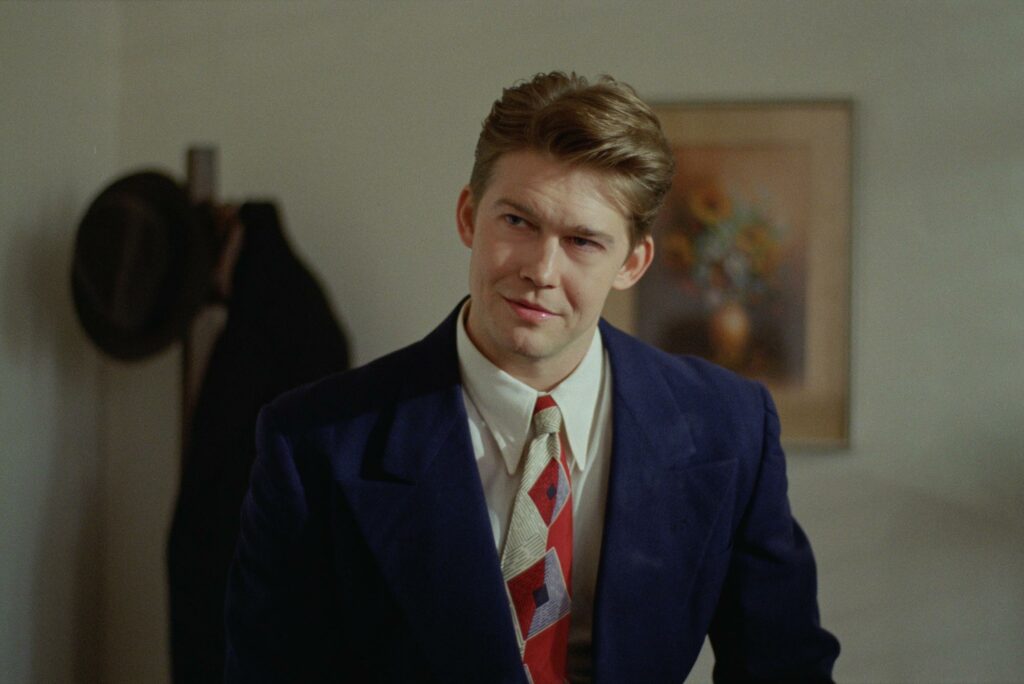
Danny Boyle’s Ink, the opening film of Venice Film Festival this year, is very much about boys’ clubs. The elite, London-centric Fleet Street establishment, the male-dominated newsrooms of the ’60s, the way then-fledgling tabloid The Sun newspaper used female flesh to sell copies. In the middle of the story of proprietor Rupert Murdoch (Guy Pearce) and gonzo editor Larry Lamb (Jack O’Connell) is Jules, a composite character based on a number of female journalists at the time, played by Claire Foy. 

Guy Pearce, Jack O’Connell, Claire Foy, Danny Boyle

‘Obviously lots of the people in the film are based on real, living journalists, and Jules wasn’t,’ Foy tells Hollywood Authentic on her flying visit to the Lido for the red carpet premiere of the film. ‘My job was to draw on experiences of women in editorial positions in 1969 in Fleet Street. So I read lots of accounts like Julie Welch in her book, The Fleet Street Girls, and I spoke to Eve Pollard, and just tried to gather as much information as I possibly could. It was important for me to make sure that I was portraying those women and their experiences, even if they weren’t actually being depicted.’ As Jules, The Sun’s first Women’s Editor, Foy rocks vintage clothes and gives as good as she gets in a bawdy, macho atmosphere where women are either wives or page three girls. ‘Unfortunately, it’s not much of a reach to imagine that scenario,’ Foy says. ‘Roy Greenslade [sub-editor on The Sun in 1969] came in and spoke to us. We really made sure that the environment, the atmosphere, the energy and what appeared on screen was as accurate as it possibly could be. We observed how the printing press worked, learnt about the delineation of the unions and the journalists, and how crucial that was. The artform of what it was to print a newspaper was extraordinary to see.’

Guy Pearce, Jack O’Connell, Claire Foy, Danny Boyle

The idea of sexism is not confined to an era or an industry, as Venice jury president Maggie Gyllenhaal pointed out in her opening press conference – film itself is still a male-dominated industry. ‘Jules is an incredibly bright, ambitious, capable, brilliant journalist, and she knows she is. She’s just not afforded the opportunity of exhibiting that. But she is able to grab hold of an opportunity and make the most of it. And I think that in lots of different professional spheres, that’s what women have had to do. Women have had to prove themselves ten times over for many of the positions that they’re in, and work ten times harder to feel the justification for why they’re allowed to be there. You have to work within it and tolerate it.’’

Guy Pearce, Jack O’Connell, Claire Foy, Danny Boyle

The film also asks audiences to consider their complicity in the tabloid-ification of the media world, even reaching to politics, which Foy thinks is an interesting debate to leave the movie theatre with. It’s a conversation that lots of people are having – where the power lies, and whether the people who are dictating what we absorb and read are really understanding what we want. They just take the numbers, and go, ‘That’s what we should be giving’ without considering whether it’s what anyone wants at all.’ In this respect Ink bucks the trend for movies that are known factors. As an original film based on James Graham’s award-winning play, it’s not a franchise, a reboot or a superhero movie. That, says Foy, is down to the creative spirit and vision of Danny Boyle. ‘What I loved about being with Danny in Venice is that he says what he thinks, what he believes and what he stands for. It’s really refreshing to see someone who has the gravitas, the experience, and the authority to be able to be totally himself as a filmmaker. That doesn’t come without having done decades and decades of incredible work, and also challenging himself, and putting himself in different scenarios as a storyteller. We need to support filmmakers like him. This film is funny and entertaining but it’s also a film of our times.’

Guy Pearce, Jack O’Connell, Claire Foy, Danny Boyle

Foy went straight from the Venice red carpet to starting work on her next project, Lenny Abrahamson’s eight-part adap of David Nicholls’ bestselling book, You Are Here, the story of a midlife romance, co- starring Matthew Macfadyen. She describes herself as ‘very much in the foothills of making it’ but that it is ‘a really beautiful, quiet story’. ‘I just feel really passionate about making things like that, about people who aren’t 20 years old,’ she laughs. ‘Because I’m not anymore.’ She’s also looking to surprise herself with the work she does next. ‘I’m totally surrendered to the industry I’m in. It’s not something I can dictate or control. You just have to go with it, follow your nose and hope that if you go into something with the right intentions, then you’ll have a good time and feel fulfilled. That’s been working well so far…’


Photographs by GREG WILLIAMS
Interview by JANE CROWTHER
Hair by GARETH BROMMELL
Makeup by KELLY CORNWELL
Styling by JONATHAN HUGUET
Claire wears BOTTEGA VENETA
Jewels by SWAROVSKI
Ink premiered at the 83rd Venice Film Festival
Read our review here
September 6, 2026

Claire Foy, Danny Boyle, Guy Pearce, Jack O‘Connell, Ink
venice dispatch ticket
Claire Foy, Danny Boyle, Guy Pearce, Jack O‘Connell, Ink

VENICE DISPATCH
Photographs GREG WILLIAMS
As told to JANE CROWTHER


As his latest film, Ink, debuts in Venice to rave reviews the British actor talks to Hollywood Authentic about awards chatter and how acting expands his heart.

Claire Foy, Danny Boyle, Guy Pearce, Jack O‘Connell, Ink

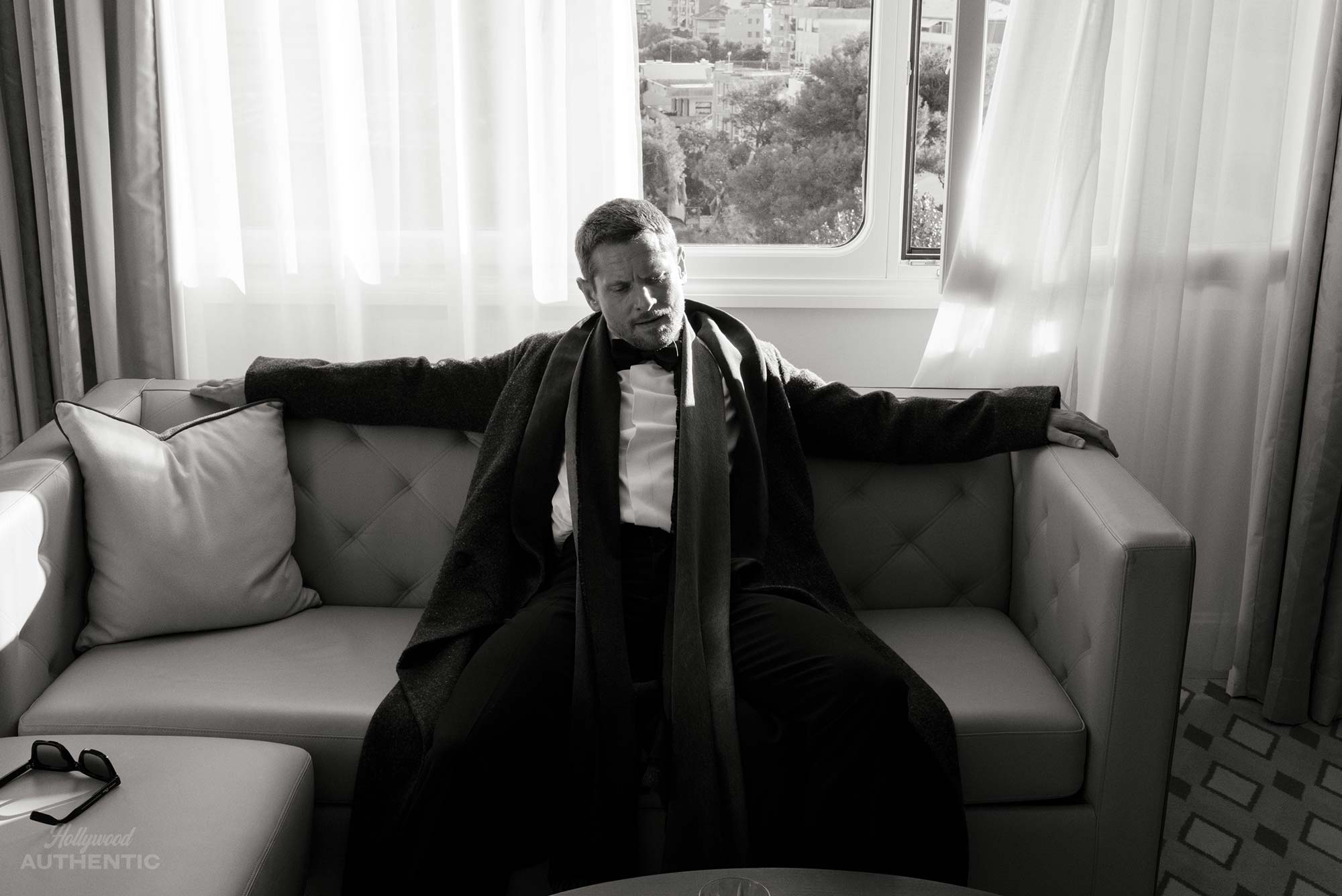
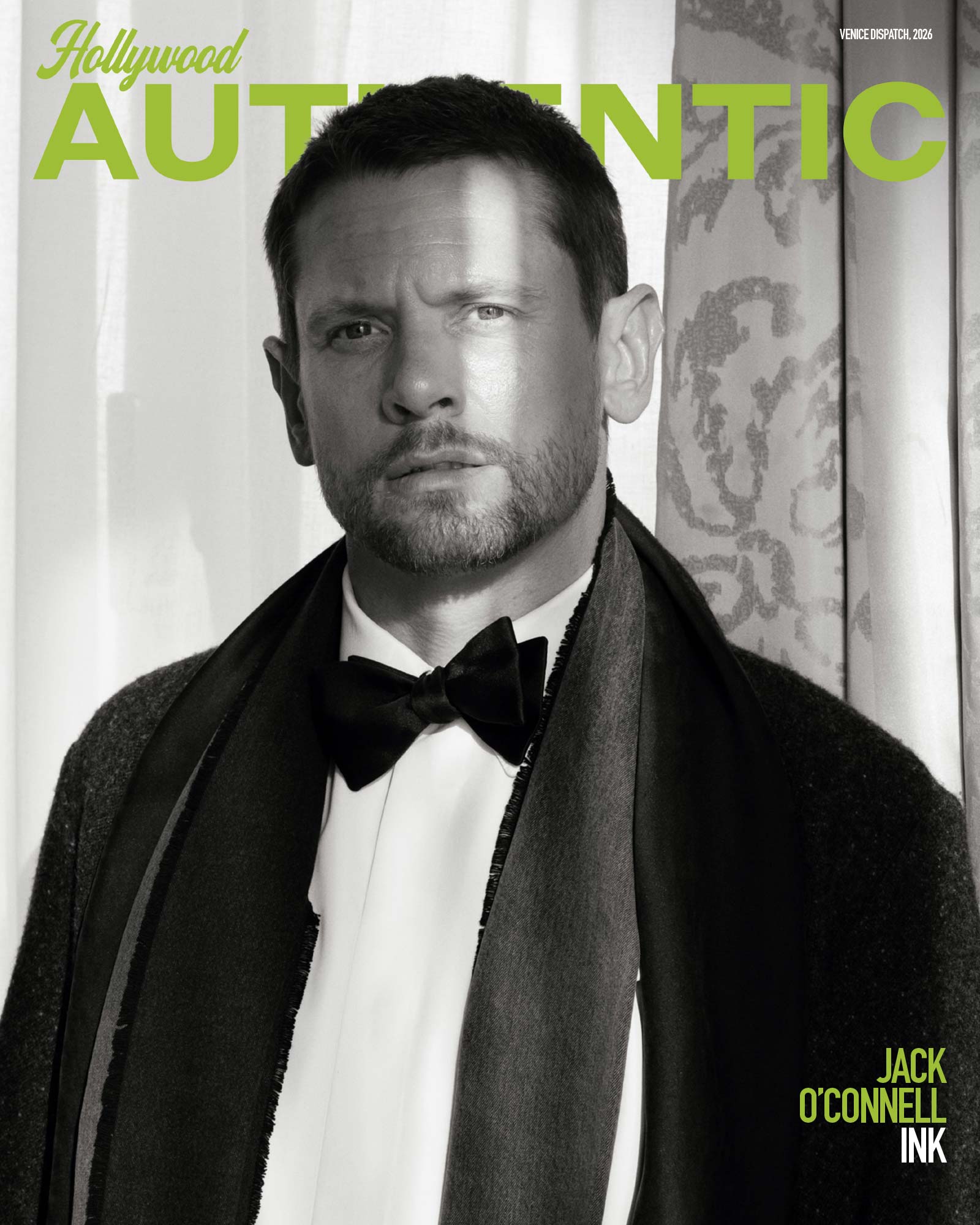
Having worked with Danny Boyle on both 28 Years Later films, Jack O’Connell considered the offer of playing ‘’60s editor of The Sun newspaper, Larry Lamb, in Ink for the director a ‘no-brainer’. ‘But it was quite early on in terms of the journey of the film being made, because Danny didn’t have the money yet,’ O’Connell tells us as the film opens the 83rd Venice Film Festival. ‘So then it became a case of: ‘Right, OK. We need to convince some financiers that this is worth parting with their cash’. He brought me and Guy Pearce in and we did some stuff on camera so that Danny could go and try and raise the funds. It took two-thirds of a year just to get the green light.’ 

Claire Foy, Danny Boyle, Guy Pearce, Jack O‘Connell, Ink

That scrappy, entrepreneurial spirit is a match for the film itself; the story of Rupert Murdoch (Pearce) inviting Lamb (O’Connell) to reinvent a newspaper and tear up all the Fleet Street rules. Yeah, a lot of parallels,’ O’Connell laughs. ‘But also I really value the importance of a free press, and its role within any proper democracy. I have a respect for it and I do like to read newspapers.’ For O’Connell, his perception of the hugely popular newspaper was negatively coloured by a ‘post-Hillsborough perspective’ [when the newspaper falsely reported Liverpool football fans behaviour at the fatal 1989 overcrowding disaster at Hillsborough] so his approach to the role and Lamb’s enthusiasm for it required a research deep dive. ‘I had to undo all of that pre-existing knowledge, and just consider this in its infancy, and who Larry Lamb is, who’s been appointed to grow it. I took myself off to the British Library. I went into their archives. I pulled out some microfiche of editions of The Sun when Larry first took over, and I looked at some prior to him being there. They’re unrecognisable. It was about honing in on that period and getting into Larry’s headspace. There’s a great line in Larry’s book where he said that he felt like he was cooking up the perfect newspaper in his head way before he met Rupert Murdoch. That was a real driver to me.’

Claire Foy, Danny Boyle, Guy Pearce, Jack O‘Connell, Ink

West Yorkshire Lamb and Australian Murdoch were also working against a London-centric establishment and an ‘old boys network’, trying to get a foothold in an industry with a drawbridge mentality. ‘I do relate to it very personally, yes,’ O’Connell, who hails from Derby, admits. ‘Any class-based society is going to have that, you know? And we live in a class-based society. But Larry Lamb was given a knighthood, and he accepted it so I do think he was very seduced by that establishment. The same thing that he was tearing down to begin with, he leaps into bed with eventually. There was this underlying contradiction within him. And I love those roles. I think as an artist, you are fascinated with where people contradict themselves and inconsistencies.’

Claire Foy, Danny Boyle, Guy Pearce, Jack O‘Connell, Ink

Lamb’s obsession with circulation numbers – always trying to best market leader, The Mirror – also had parallels with acting for O’Connell with film often being viewed through the lens of box office takings. ‘It’s figures, isn’t it? Ink feels like a real vehicle for exploring hyper-capitalism. All the journalists that we spoke to that worked there during that time were saying that these were times of plenty, and there was so much spare cash just floating around – which is impossible to imagine for us these days. But they were just rolling in it, and had all these resources. It was hyper capitalism, and they were obsessed with sales and the competition within that. I think that was a huge catalyst in perhaps where they allowed themselves to get carried away.’

Claire Foy, Danny Boyle, Guy Pearce, Jack O‘Connell, Ink

O’Connell is currently experiencing a time of plenty himself, with a recent flurry of high-profile and critically acclaimed roles including award-winning Sinners, 28 Years Later parts 1 and 2, and his upcoming films Godzilla X Kong: Supernova, as well as A Quiet Place Part 3 which has just wrapped. For some audience members it might feel like O’Connell has finally arrived. For him, it’s part of a journey that’s been developing for years. ‘I got into this 20 years ago, and you grow. You get better with every job, and you get to learn by working with people you meet. And I love that about this job. You’re constantly developing, and you’re having your ideas challenged. You never stop evolving for every role. You’re expanding your heart. You’re exploring emotion. It’s such a joy and a pleasure to allow that to inform you.’

Claire Foy, Danny Boyle, Guy Pearce, Jack O‘Connell, Ink

Part of the process has been the mentorship of other artists. ‘Look, to be able to collaborate in this job is the most wonderful thing – just meeting people from all over the world. Even being here promoting films, and getting to meet your heroes. When I was getting into it I was able to look up to these amazing figures. The people that I worked with on my first job – they were generous enough to share what they were good at. And I think there’s a slight responsibility there for me to do the same with people coming into the industry now.’

His busy upcoming slate is as a result of hard graft but there’s no masterplan, he says. ‘You’re trying to pull rabbits out of hats, you know?’ he laughs. ‘In order to excite yourself, and in order to excite others, it’s best to just keep challenging yourself. I like range. My last jobs, they’re all quite distinct. Moving forward, that’s the ethos, that’s exciting to me.’

Claire Foy, Danny Boyle, Guy Pearce, Jack O‘Connell, Ink

Ink’s debut at Venice has kicked off the awards conversation. Is this an important part of the process too? ‘Of course, man. More so from an industry perspective – where it takes you, and the places you get to go, and the people you get to meet. But when you’re working it’s not what you’re thinking about. You know, you end up on set at five in the morning in a fucking disused quarry, up to your ears in shite – it’s a long way away from a gondola in Venice, you know? They’re worlds apart. They’re very, very separate experiences. But it’s a joy. It’s amazing that we get to do it.’


Photographs by GREG WILLIAMS
Interview by JANE CROWTHER
Ink premiered at the 83rd Venice Film Festival
Read our review here
September 4, 2026

Guy Pearce, Jack O’Connell, Claire Foy, Danny Boyle
Ticket
Guy Pearce, Jack O’Connell, Claire Foy, Danny Boyle

VENICE DISPATCH
Photographs GREG WILLIAMS
As told to JANE CROWTHER


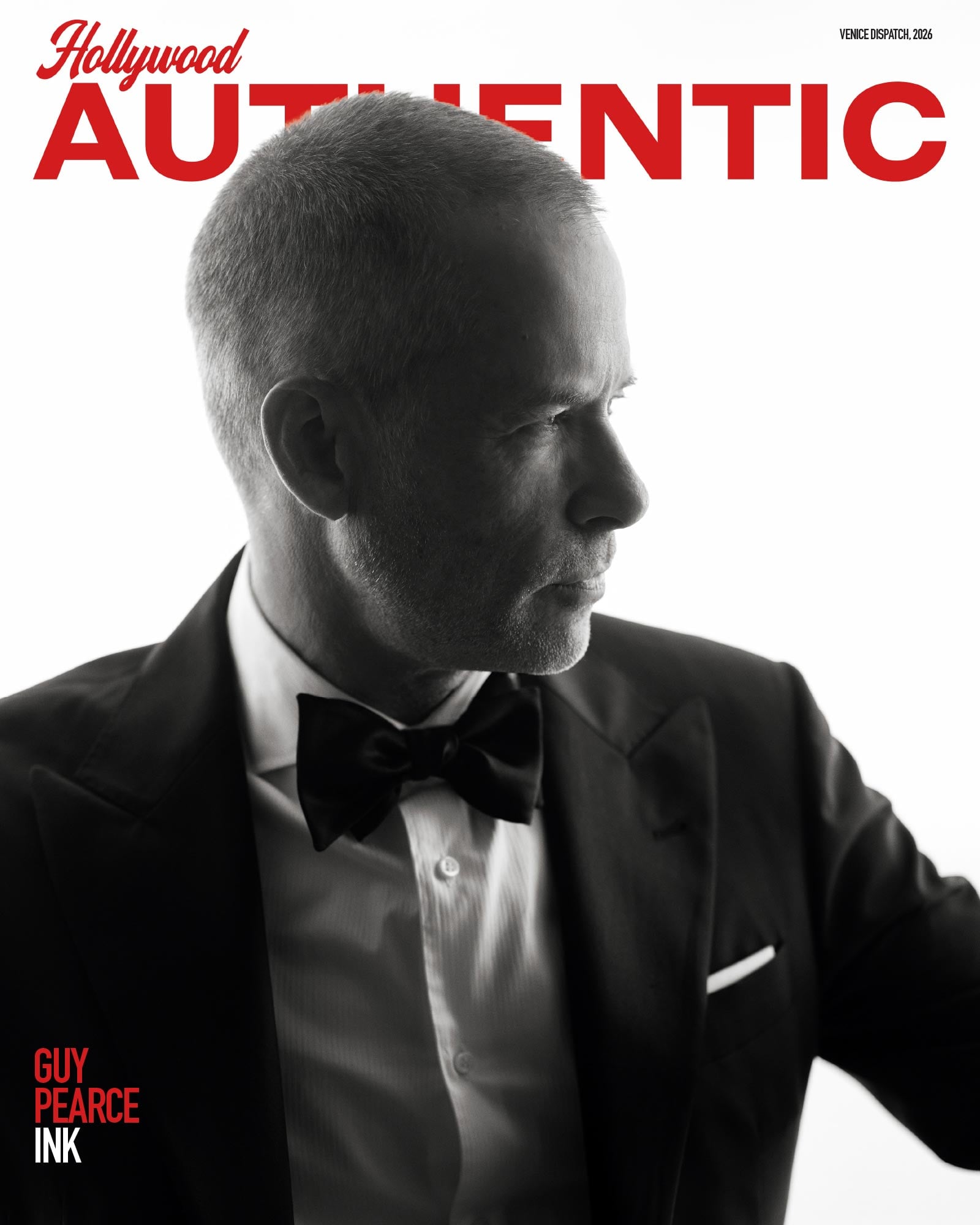
The Australian actor takes on Rupert Murdoch in Danny Boyle’s tabloid tale Ink, opening the Venice Film Festival. He tells Hollywood Authentic about reigning in the profanities and experiencing tabloid hounding with Jason and Kylie…

Guy Pearce, Jack O’Connell, Claire Foy, Danny Boyle

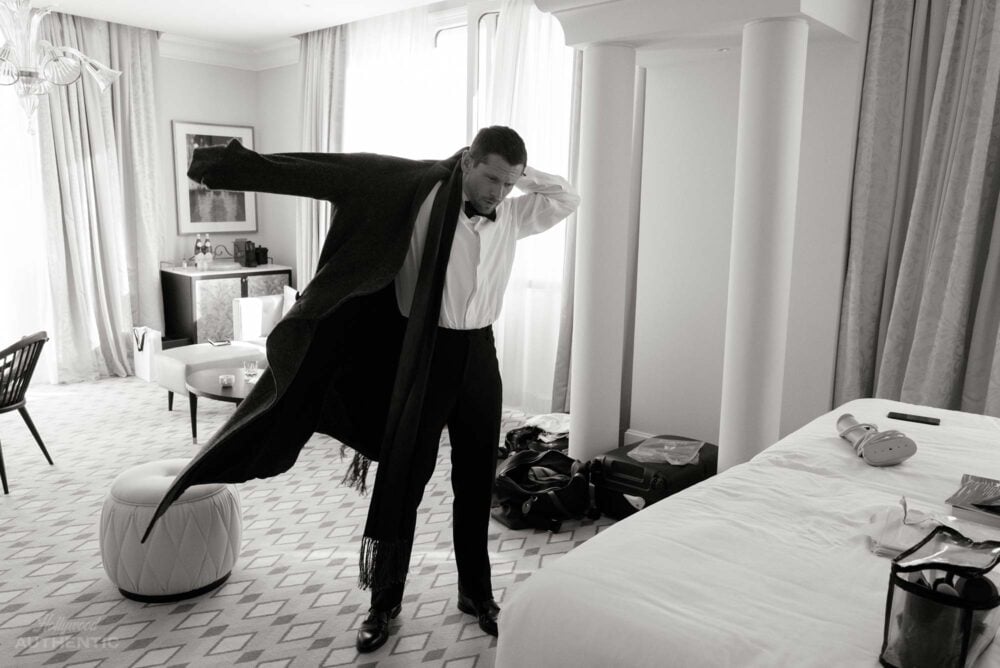
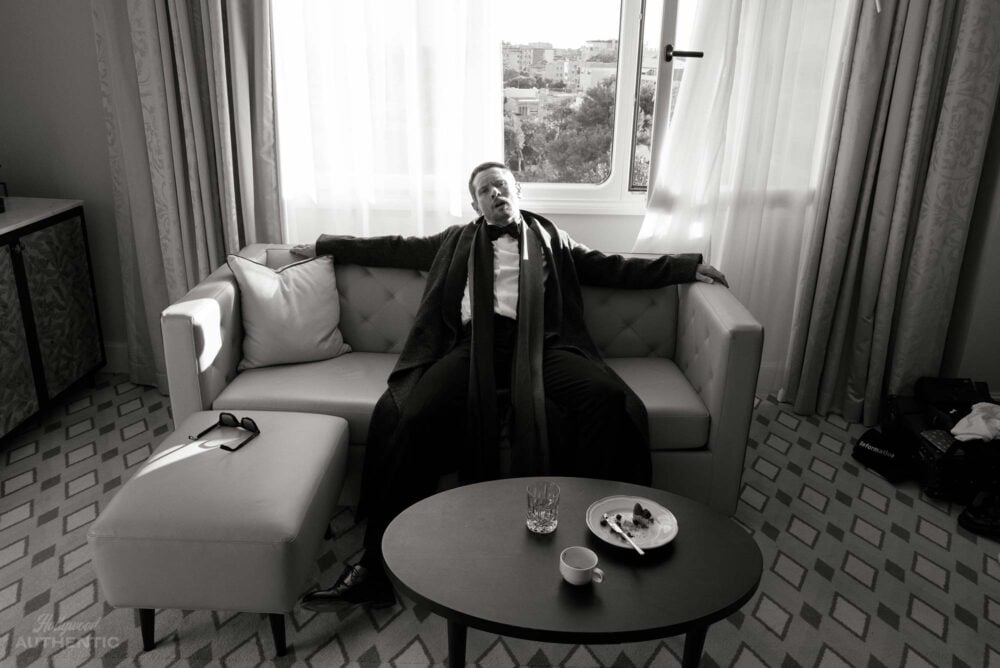
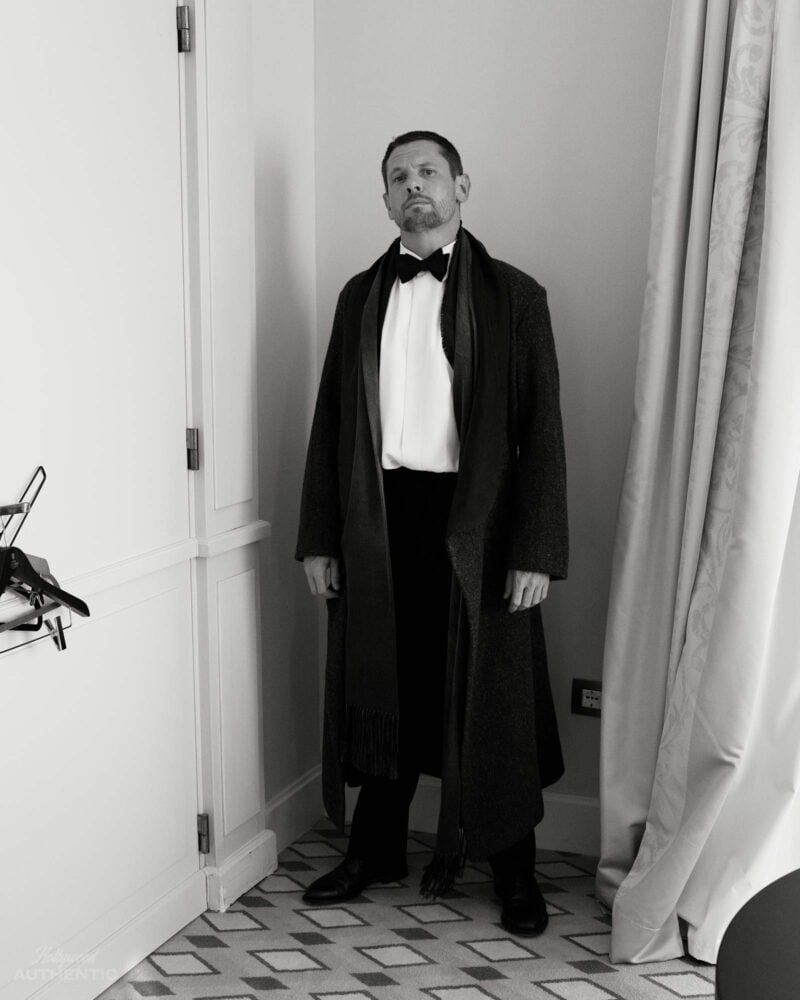
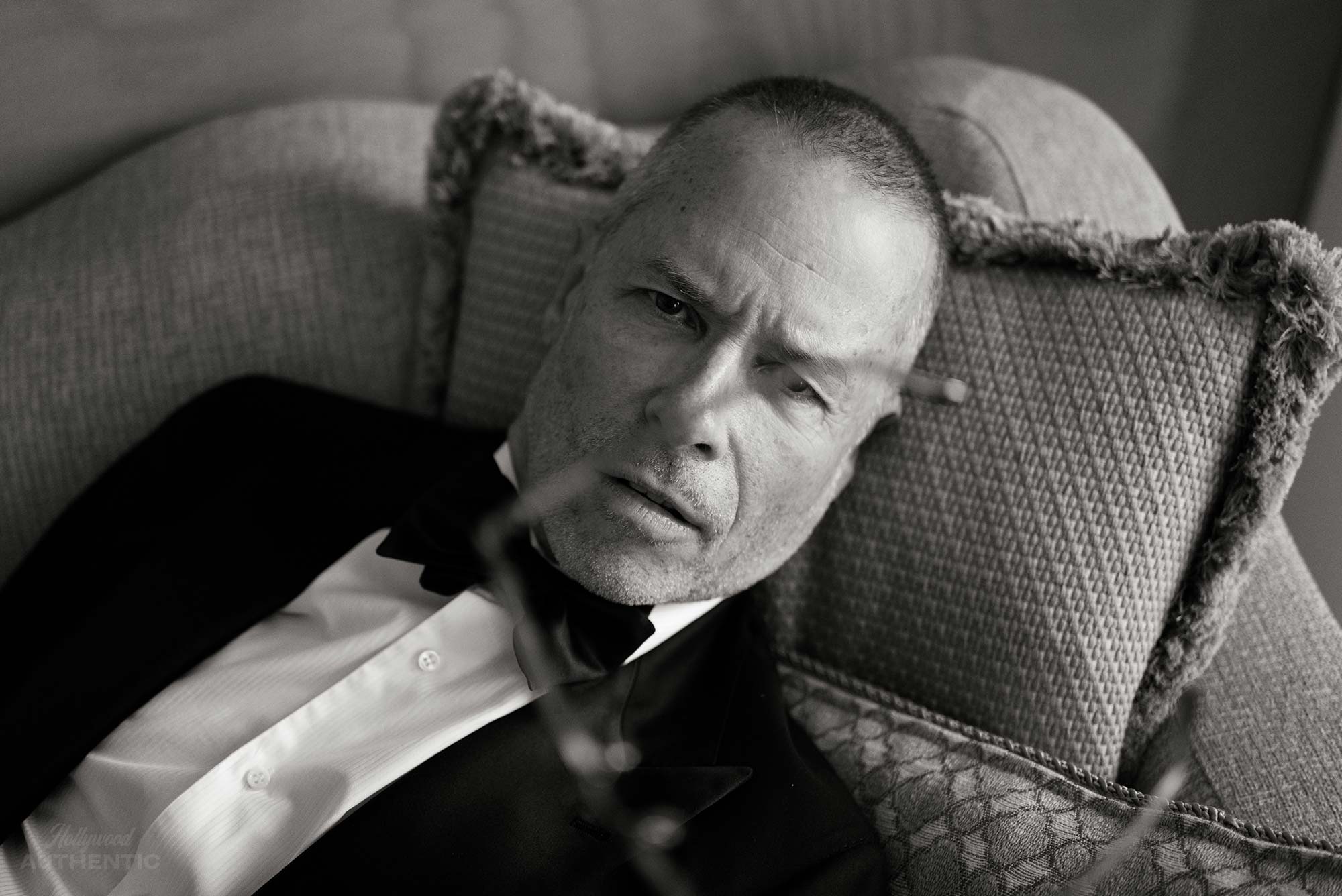
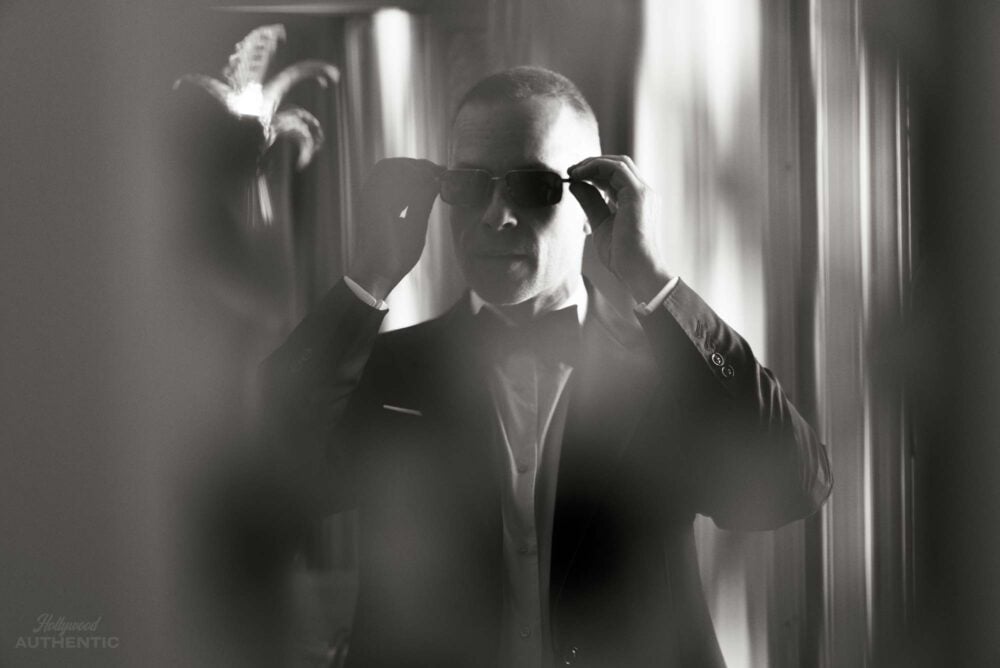
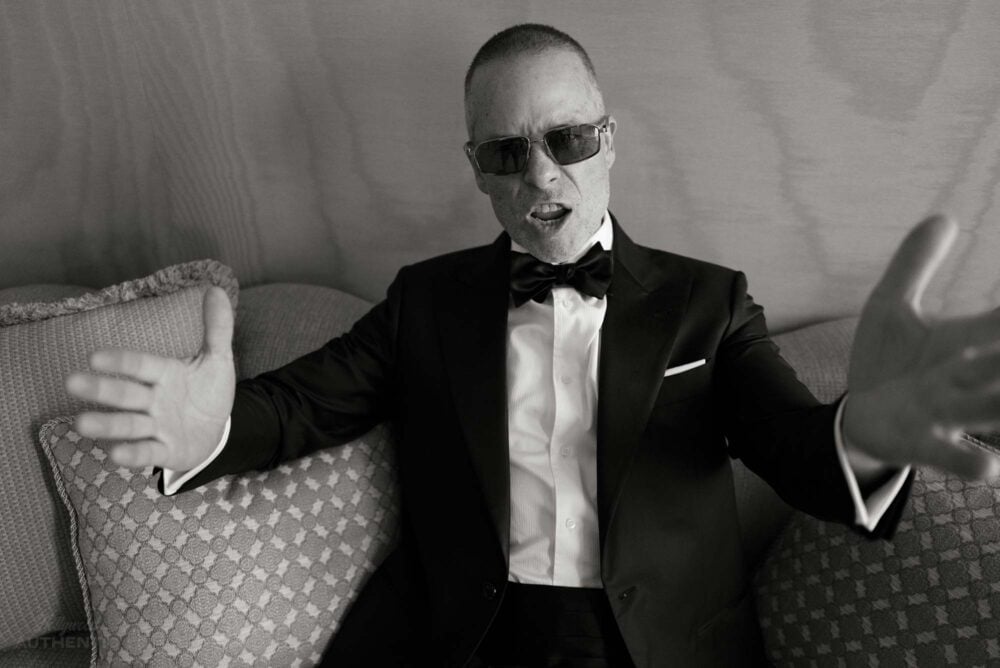
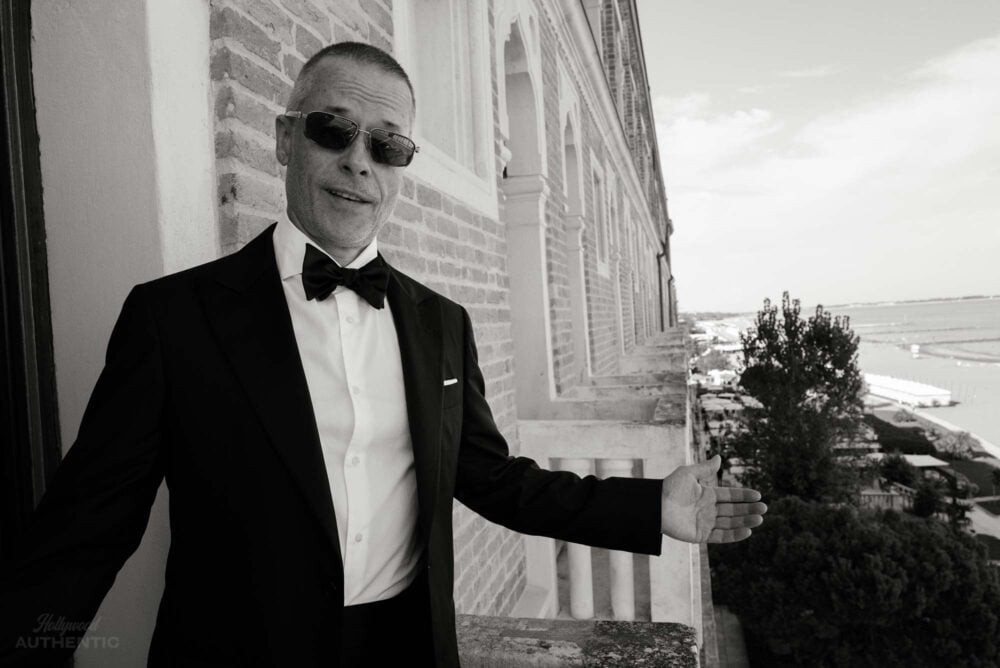
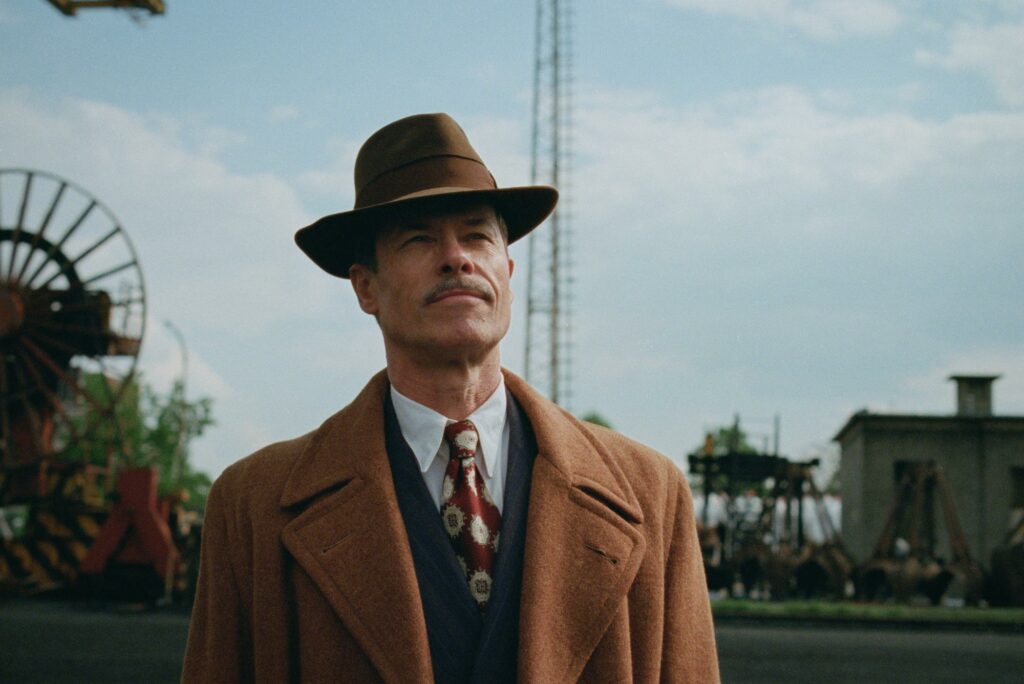
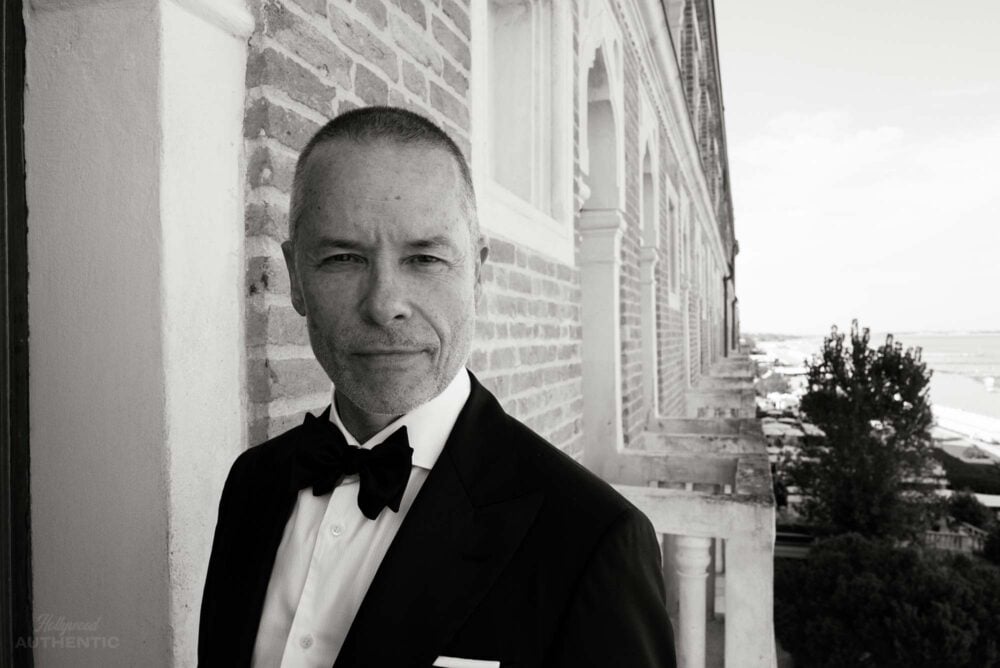
When Danny Boyle came to Guy Pearce to ask him to play media baron Rupert Murdoch in his adaptation of James Graham’s award winning play, the actor felt that he could understand some of the mentality of the notorious newspaper and studio magnate. ‘Obviously, look, I’m Australian,’ he tells Hollywood Authentic as he prepares to walk the red carpet for the film’s premiere in the Lido. ‘I’ve been brought up in a world that’s been aware of Rupert Murdoch for many, many years. He’s a fascinating character for me. I’ve never met him, and prior to doing the film I couldn’t really tell you that I understood who he is. I still probably couldn’t really say that I understand completely who he is. But him trying to crack the UK market… that, I get to a degree. As an Aussie actor, and having known lots of Aussie actors who all go to England and try to break there, it’s something I can relate to.’

Guy Pearce, Jack O’Connell, Claire Foy, Danny Boyle

Pearce could also relate to the product Murdoch created in 1969 in collaboration with editor Larry Lamb (Jack O’Connell); The Sun newspaper and the tabloid culture and circulation wars that followed. Having broken out in the ’80s while on Australian soap Neighbours he had witnessed first-hand some of the press hounding that came with fame. ‘I remember back in the ‘80s in London with Jason [Donovan] and Kylie [Minogue], and the journalists chasing us down the street. But I was really low down on the food chain, you know? I was one of a gang of 20 Neighbours cast where the Terry Wogans of the world would have us on their show, and go, ‘What is it about you Australians that make you think you can act?’ – where you really felt a bit reviled. But I was never a personal target. I never really felt the full force of a tabloid paper at my door, and after me.’

Guy Pearce, Jack O’Connell, Claire Foy, Danny Boyle

What Pearce felt was more relevant to building the characterisation of Murdoch was talking to former journalists and printers who had worked on Fleet Street during its evolution from failing broadsheet to bombastic ‘red top’. ‘Danny brought people in to talk to us during rehearsals, lots of journalists, ex-editors and ex-printers who would sit with us for two hours and go, ‘Wow, let me tell you about the floor in 1969: the drinking, the smoking, the shagging and the late nights and oh my God….’ Though he didn’t meet Murdoch as he prepped to play him, Pearce did chat to his daughter, Elizabeth, to suss out whether his instincts about the man were correct. ‘I felt that there was probably too much swearing from Rupert [in the script]. It’s a fairly common thing to just make Australian characters swear all the time. But when you look at interviews of Rupert from the era he’s a shy, fairly humble, slightly awkward character who has an irreverence about him, and is quite sharp and brilliant. But he’s not a typical Aussie yobbo who’s out there swearing, drinking. throwing things and rooting and fighting. I said to James, ‘I feel like I could play this character without relying on swearing’. And the beauty was that I got to talk to Rupert’s daughter and ask about her dad’s swearing. She said, ‘I don’t think I heard him swear once’. So I took out all the ‘fucks’ and added a ‘fair dinkum’.’

Guy Pearce, Jack O’Connell, Claire Foy, Danny Boyle

Director Boyle inspired Pearce to really explore the building of a surprising character instead of playing a trope we all think we know. ‘Danny’s a wonderfully buoyant, honest, creative and inspirational guy. It’s that energy that he brought to Trainspotting in making us look at a world that was seemingly gross and disgusting, and yet we all just leant forward and went, ‘I want more of this’. You can have a great script, and another director doesn’t quite give it the life that it felt on the page. And vice-versa; you can read a fairly dull script, and a director can bring it to life. But with this, when I watched the film I was jumping out of my chair by the end, going, ‘Wow! Yes! Oh my God! Wow!’ Danny’s energy will take you into that world, and make it exciting.’ And Pearce admits that having Bertie Carvel in the cast – who originated the role of Murdoch in the West End and Broadway – also kept him on his creative toes. ‘He’s such an exquisite actor. Of course, every day when he was there, and I’m playing Murdoch, I’m thinking, ‘Don’t watch what I’m doing. Don’t look. Oh, God’,’ he laughs.

Guy Pearce, Jack O’Connell, Claire Foy, Danny Boyle

As an actor who has taken on numerous roles that began life as books or plays, Pearce is clear that comparison of versions is futile as an artist. ‘Every time I thought about the play, or talked to one of the actors who was in the play, it felt a little bit like a distraction to me. When you do a film, and it’s based on source material it can be an absolute minefield to delve into that material. It can be wonderful, because you get all sorts of other nuances about a character that you might not fully get in a script, like with LA Confidential, for example. But I find the purity of a screenplay – and what it is I’m responding to in the first instance – is really vital to me.’

Guy Pearce, Jack O’Connell, Claire Foy, Danny Boyle

That vitality is what he thinks has made Ink such a barnstorming opener. ‘The kudos and attitude – it feels historic and full of integrity and credibility,’ he says of the festival. And the relevant themes of the piece exploring public appetite for scandal and the increasing tabloid-ification of politics are what will keep audiences talking about it. ‘The sense of responsibility… we’re seeing things being torn down left, right, and centre. But you look back at The Sun, and it seems almost small fry and quaint now. Social media, AI, governments involved with surveillance…  you can see the connection. You could also ask the question: well, was it inevitable anyway? And it’s just that Rupert came along at a time? It’s such a big question, isn’t it, about where we are in the world today?’


Photographs by GREG WILLIAMS
Interview by JANE CROWTHER
Guy wears Brunello Cucinelli
Ink premiered at the 83rd Venice Film Festival. Read our review here
INK

September 2, 2026

Guy Pearce, Jack O’Connell, Claire Foy, Danny Boyle

Words by JANE CROWTHER


James Graham’s award-winning West End and Broadway hit charting the birth of Britain’s The Sun newspaper and tabloid culture served the drama without op-ed – leaving the audience to decide on the morals and ethics at play, and the Pandora’s box such practice opened. Danny Boyle (with Graham adapting his work for screen) makes no apology for drawing a direct line between the ‘move-fast-break-things’ MO of newspaper proprietor Rupert Murdoch and his editor, Larry Lamb, and the latter-day rule-breaking narrators shaping our world. The epoch of The Sun, he posits, is the hellmouth for our problematic 21st century media landscape – that Murdoch and Lamb have blood, as well as ink, on their hands. And that we, as consumers, are as voracious as any hack hounding a story. But there’s also admiration for the underdog ambition and anti-establishment disruption of the endeavour, told with antsy Trainspotting verve and a nostalgic respect for the craft of physical media. 

Guy Pearce, Jack O’Connell, Claire Foy, Danny Boyle
Anthony Dickenson/StudioCanal

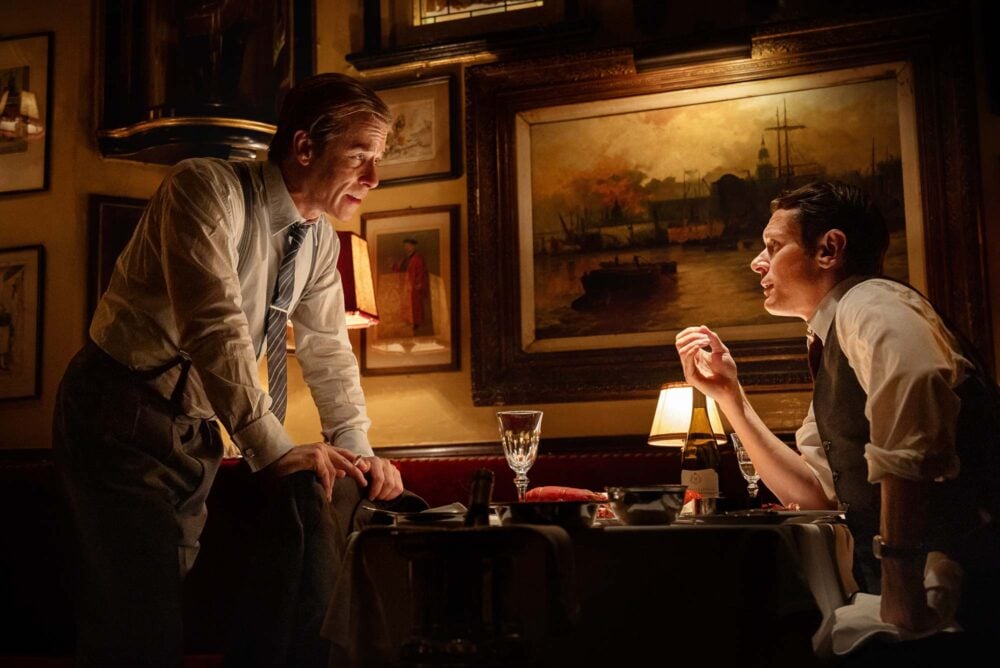
Bookended by two meetings at Rules restaurant in London, Ink begins in 1969 with Aussie businessman Murdoch (Guy Pearce) making Northern journalist Lamb (Jack O’Connell) an offer he can’t refuse over a lobster dinner; editorship of an ailing broadsheet, with no guard rails and the opportunity to stick one in the eye of Fleet Street’s old boy’s network. Wily Lamb immediately tells Murdoch the principles of a good story – the 5 W’s: who, what, where, when and why. The ‘why’ he says, is the least important but it’s an element that drives the tale here with both men’s motivation explored. Ambitious Lamb is hellbent on besting his former employers at The Mirror as well as rattling a London-centric, middle-class and public school establishment that hazed him as a newbie. Murdoch’s desire to screw colonialism comes into focus as he amasses media companies with gimlet-eyed precision while being named ‘the dirty digger’ by Private Eye

Guy Pearce, Jack O’Connell, Claire Foy, Danny Boyle
Anthony Dickenson/StudioCanal

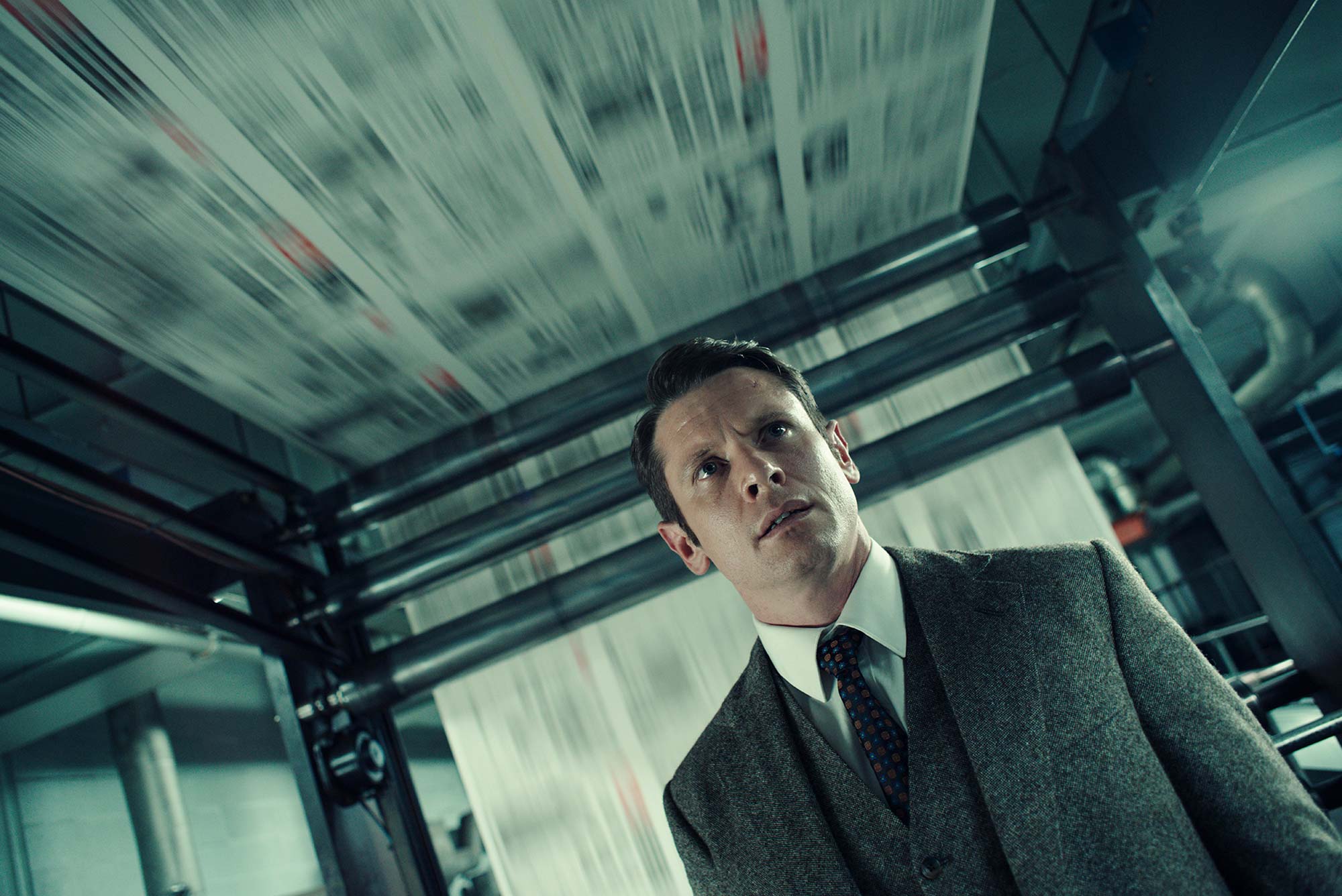
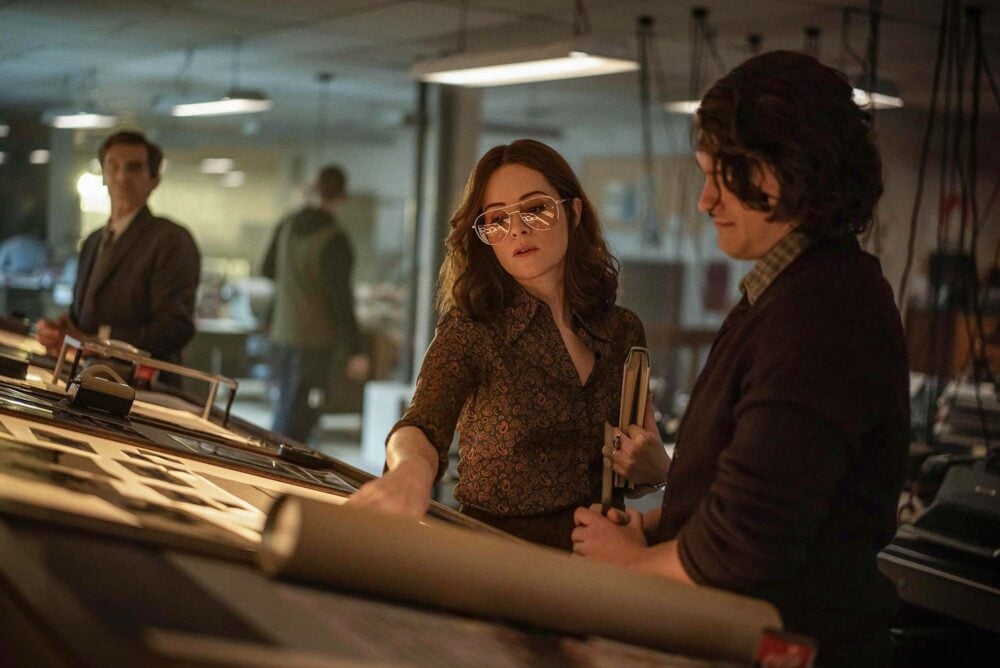
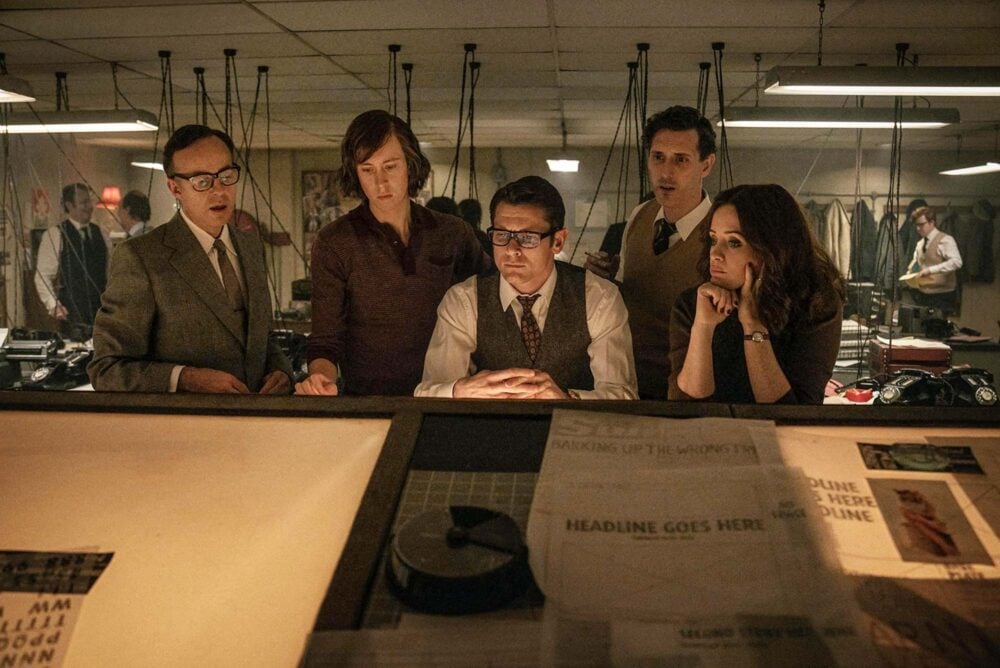
While the ‘why’ percolates, the who, what, where and when is provided as Lamb corrals a scrappy editorial team together like Danny Ocean recruiting his heist gang, enticing specialist journos onboard from Fleet Street bars, bathhouses and in the case of new women’s editor, Jules (a composite character and played by Claire Foy), his extra-marital bed. Moving as fast as the printing presses that are constantly heard as a low thrum throughout the action, Lamb’s initial building of a tabloid is a thrilling and amusing spectacle. In a smoke-filled newsroom of clattering typewriters and stories being slapped on spikes, Lamb demands his team make their work ‘louder’, conducting a brainstorming session to identify the real interests of the working man. TV, sport, personalities, weather and sex are top of the agenda, with the words ‘win’, ‘free’ or ‘love’ on the cover nabbing his staff a bonus. As the circulation figures creep up, the giveaways get sillier (knickers in a tin) and the presses roar, with Boyle leaning into framing and lighting that evokes Citizen Kane and a fondness for a lost world soundtracked by IDLES’ The New Sensation. Lamb swaggers through his domain demanding more WOBs (white on black text), italics, dog’s dicks (exclamation points), bangers (design roundels) as the typesetters sweat over the galley and chase… the sort of Fleet Street nerdism that demands a linotype advisor on the film’s credits.

It’s exhilarating stuff loaded with archival footage and AI-animated Getty images which showcase Murdoch and Lamb’s particular brand of fearless entrepreneurship, and leads them to the Press Council Awards where the elitism and bullying of the industry is laid bare. ‘The Aussie sheep farmer – a seat at the table’ Murdoch glowers of his personal oneupmanship. There is, of course, a price… rats are scuttling around the newsroom, there’s hypocrisy in exposing the failings of public figures and, when a Sun exec’s wife is kidnapped, real consequences in the way Lamb chooses to package the news. Shuttling through the arrival of page three girls, Thatcher, Murdoch’s empire expansion and Lamb’s successor, Kelvin MacKenzie, Boyle speeds up the flickering images to bring us to the sobering present via Princess Diana, Caroline Flack, Zuckerberg, Musk and Trump. 

Guy Pearce, Jack O’Connell, Claire Foy, Danny Boyle
Anthony Dickenson/StudioCanal

Considering the TS Eliot quote that closes this story, it would be easy to simply despise the players but in the hands of Pearce and O’Connell, Murdoch and Lamb remain complex human figures. Pearce’s clenched Murdoch, not yet a media baron, is a fascinating work in progress, while O’Connell gives Lamb a drive and charm that carries some of his more morally dubious choices into pathos. And Boyle’s ability to eddy audiences along with propulsive music, editing and strong period detail is like being sat on one of the tube trains that constantly hurtle through the piece. Entertainment is what Murdoch wanted from his newspaper and it’s what Boyle delivers here.


Words by JANE CROWTHER
Images courtesy of STUDIOCANAL/NETFLIX
Ink premiered at the 83rd Venice Film Festival and will be in cinemas 11 December

January 24, 2025

Adrian Brody, Brady Corbet, Felicity Jones, Guy Pearce, Joe Alwyn

Words by JANE CROWTHER


A talking point at Venice Film Festival for its epic running time (215 minutes including an interval), Brady Corbet’s uncompromising drama finally makes it to cinemas for audiences to decide if it’s as ambitious and empty as the building at the centre of it, or an Oscar-winning masterpiece. Following the life of Jewish architect László Tóth (Adrian Brody) over 33 years, Corbet’s opus tracks the story of America via immigration, anti-semitism, art and commerce.

Adrian Brody, Brady Corbet, Felicity Jones, Guy Pearce, Joe Alwyn
Universal Pictures

Arriving into New York on a boat from Hungary in 1947, László’s and our first view of the Statue Of Liberty is inverted, setting the tone for a film that seeks to play with expectation. László makes his way to Pennsylvania and his cousin (Alessandro Nivola) who gives him shelter in his furniture making business. Called to the home of wealthy industrialist, Harrison Lee Van Buran (Guy Pearce), to create a library for his study, the Eastern European genius’ work is so starkly modern that Harrison is impressed enough to commission him to design a building. The creation of that brutalist building over decades as László’s wife and niece are brought from Hungary and the Tóths become the Van Buran family pets, is the life-work and angst of the film. László attempts to find perfection in draughtsmanship and reconnect with a traumatised wife (Felicity Jones); his benefactor shows his generosity and cruelty…

Adrian Brody, Brady Corbet, Felicity Jones, Guy Pearce, Joe Alwyn
Universal Pictures
Adrian Brody, Brady Corbet, Felicity Jones, Guy Pearce, Joe Alwyn
Universal Pictures

Corbet and Mona Fastvold’s screenplay is dense and chewy, giving Brody the opportunity to show off the soulfulness that won him an Oscar for The Pianist and allowing Pearce to entertain with dangerous bonhomie. The two men dance around each other; one trying not to be obsequious in gratitude, the other trying to conceal his darkness. Waiting for those factors to collide as the building begins to take shape on the hill is much of what drives the film, which thrums with tension – both emotional and aural, thanks to sound design. 

Adrian Brody, Brady Corbet, Felicity Jones, Guy Pearce, Joe Alwyn
Universal Pictures

Lauded by critics during the festival circuit, The Brutalist is likely to be diverse to paying punters. While some will thrill to the immersive, indulgent nature of Corbet’s detailed universe, others will be tested by its unhurried pace, esoteric themes and bum-numbing length. Even the precisely styled credits might annoy. But for those looking for the bombastic results of an auteur with a vision, The Brutalist is arresting cinema that offers a unique experience. Whether you like it or not, depends on your tolerance to the didactic nature of auteurism.


Words by JANE CROWTHER
Photographs courtesy of UNIVERSAL PICTURES
The Brutalist is in cinemas now