Those wanting more earthy romance, mooning about on the moors and frisson rather than the finger sucking, bridle-wearing, mucus-smearing provided in Emerald Fennell’s recent Wuthering Heights may find exactly what they’re looking for in this handsome period romance. With a screenplay by Diana Reid and direction from Georgia Oakley, Sense And Sensibility tips a Georgian hat to modernism and passion while still retaining the character and well, sensibilities of Austen’s work. And though it’s hard to push Ang Lee and Emma Thompson’s excellent 1995 version from the mind while watching, this considered and good-looking piece manages to seduce without ever feeling truly fresh.
Alex Bailey/Focus Features
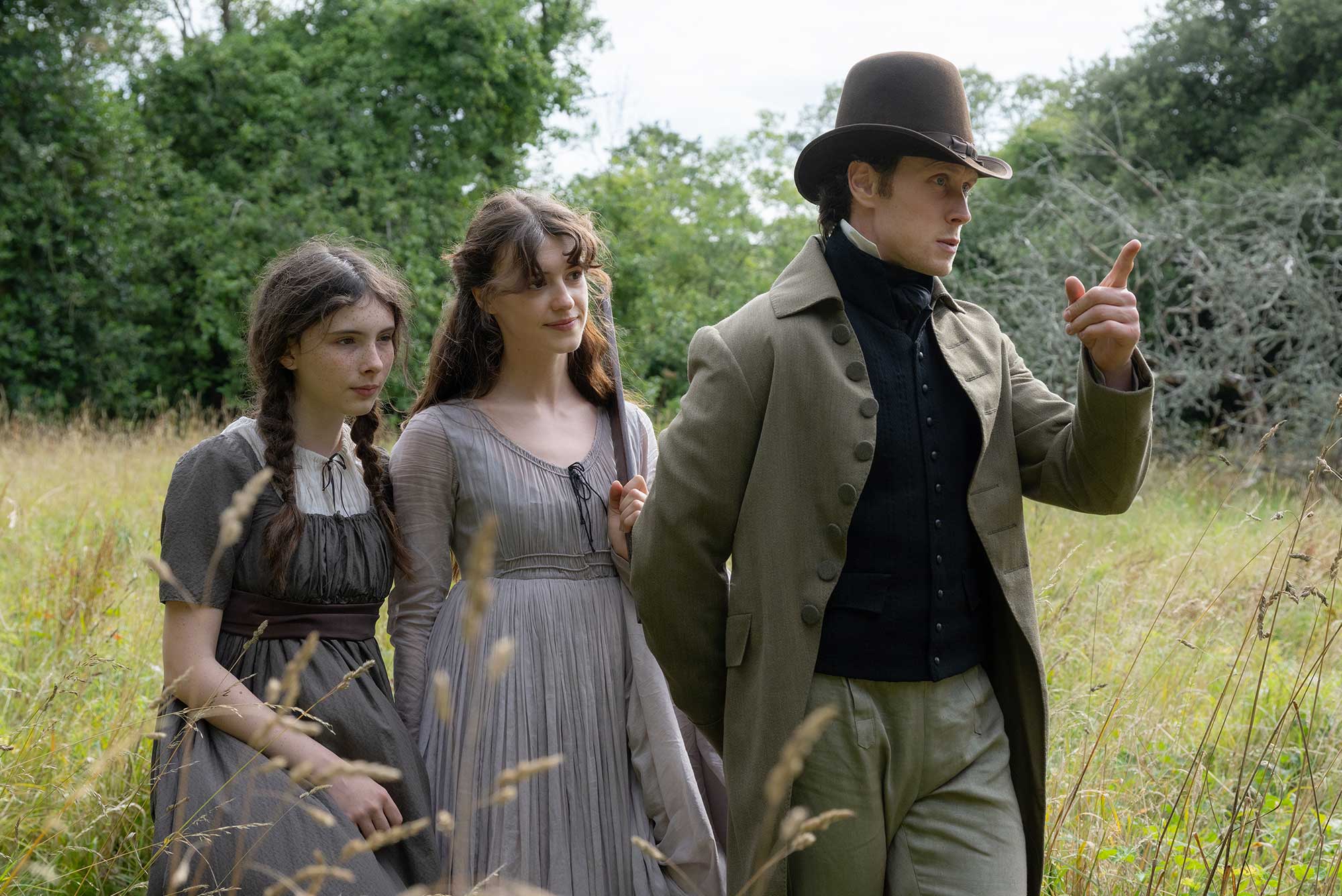
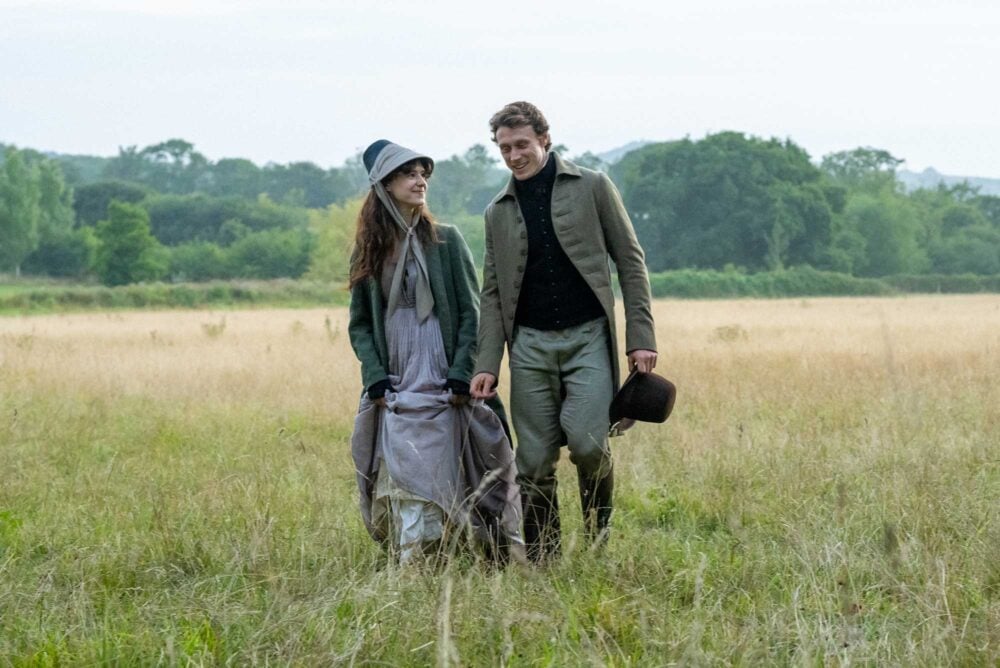
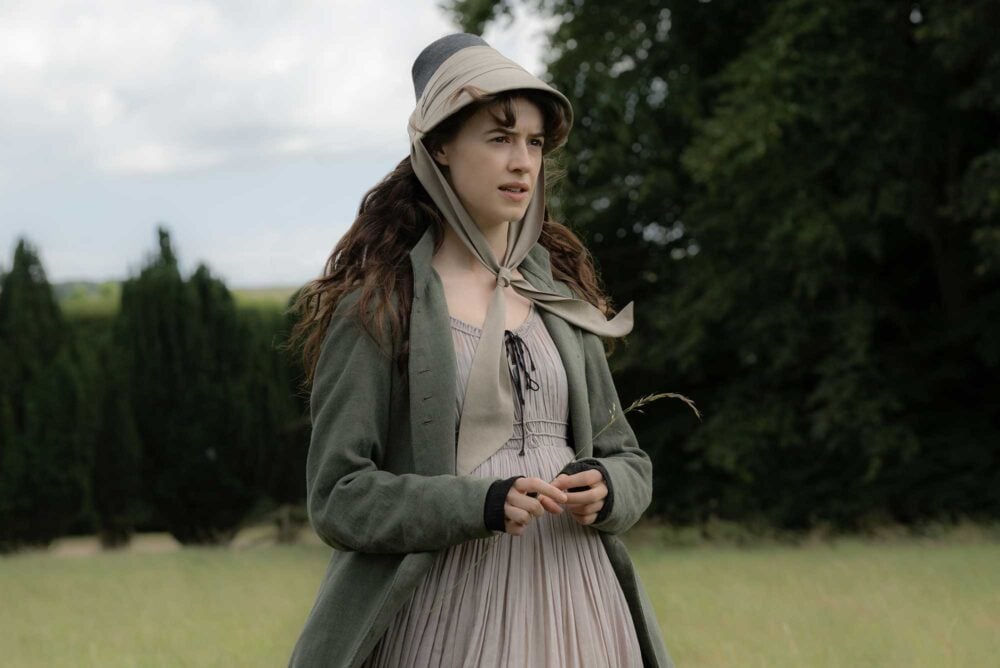
This generation’s sisters, Elinor and Marianne Dashwood, are played by Daisy Edgar-Jones and Esmé Creed-Miles and we find them turfed out of their ancestral home upon the death of their father. With a half brother and his bitchy wife inheriting the family pile, the siblings (and their younger sister Margaret, played winningly by Bodhi Rae Breathnach), are forced to downsize with their mother to a windswept cottage in Devon. Elinor is a sober young woman who haltingly falls for Edward Ferrars (George MacKay) while younger Marianne is wild, a stranger to a hairbrush and looking for torrid romance.
Alex Bailey/Focus Features
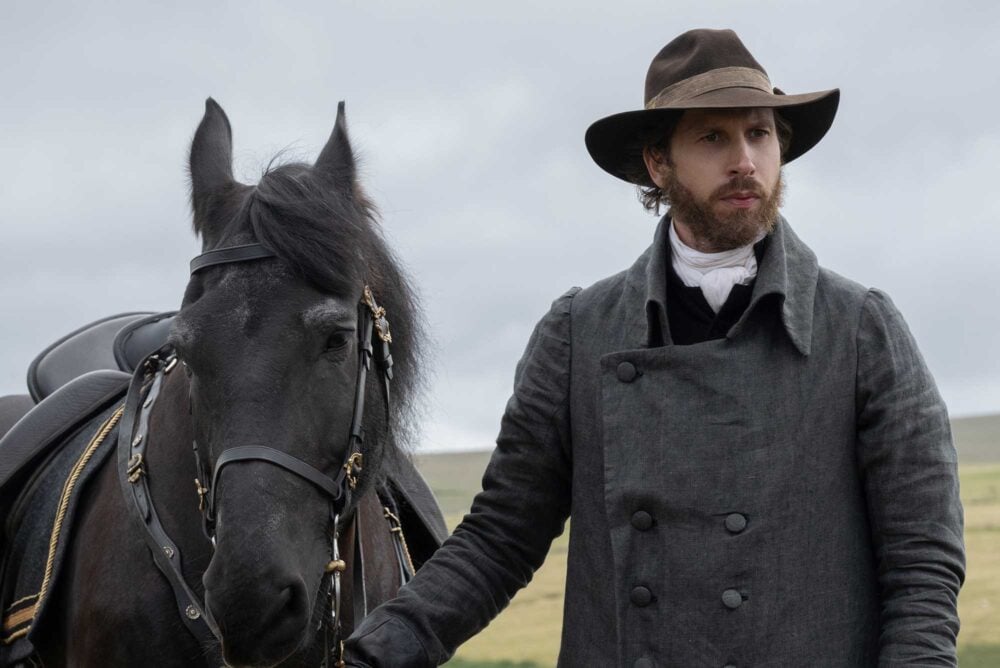
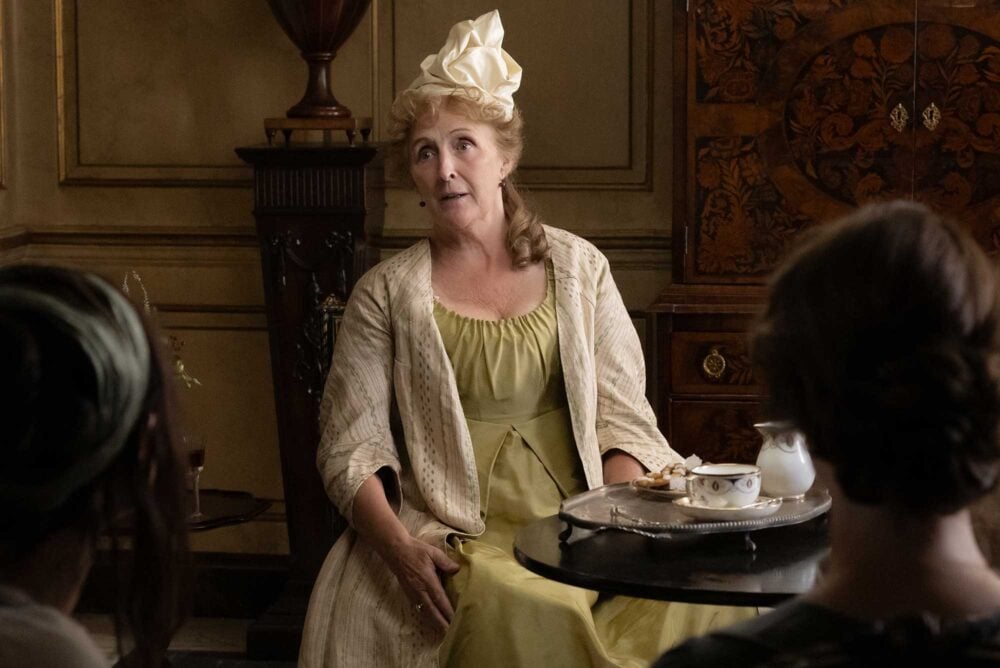
She finds it when rescued from a sprained ankle by Mr Willoughby (Frank Dillane) while spurning the overtures of grumpy ex-military man, Colonel Brandon (Herbert Nordrum and his big beard). Various annoying people interrupt the sisters’ swooning: their Hagrid-esque landlord neighbour and his dull wife, a prattling society wife and – lifting everything with each appearance – a busybody relative, Mrs Jennings, played to hooting perfection by Fiona Shaw. She is MVP along with her snuffling black Pug.
Taking its lead from Joe Wright’s Austen adaptation, the Dashwood world is one of dirty petticoats, lush countryside and grimy nails, but it hits some tonal bumps. There are a couple of ball scenes featuring deliberately anachronistic dancing which jar, there’s a perceptible lack of lust between Marianne and either of her suitors, and there are, frankly, baffling choices of hat wear all round.
Alex Bailey/Focus Features
Mr Willoughby turns up in a floppy headpiece that The Wizard Of Oz’s Scarecrow might have misplaced, there are bonnets like lamp shades. Mrs Jennings dons what looks like meringue and and in one art gallery scene it’s difficult not to note the tiny flowerpot chapeaus of the background artists. That is to say that though engaging (thanks to the efforts of Edgar Jones and Creed Miles), classy and interested in the economic hardships of Regency women, this Sense and Sensibility impresses without ever sweeping you completely off your feet.
Alex Bailey/Focus Features
Words by JANE CROWTHER Images courtesy of FOCUS FEATURES Sense and Sensibility is in cinemas now
Photographs by GREG WILLIAMS Words by JANE CROWTHER
The American chameleon tells Hollywood Authentic about honing his highlands accent for Harvest and the risk that drives his career.
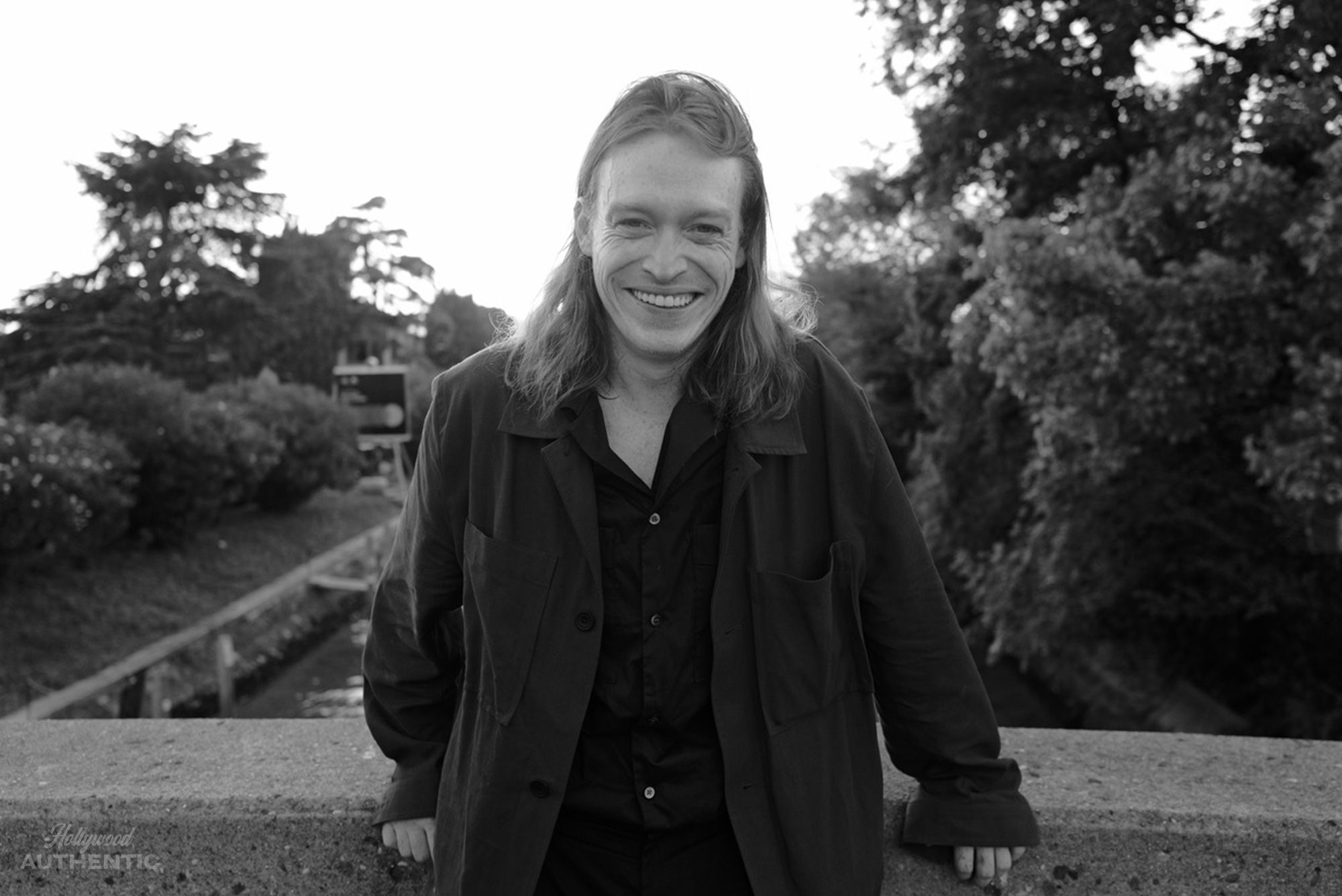
When Caleb Landry Jones arrived at the Venice Film Festival in 2023 to promote Luc Besson’s Dogman he conducted all his press duties in a thick Scottish burr due to jetting in direct from filming Athina Rachel Tsangari’s folk-esque drama Harvest in Oban, Scotland. There he was playing Walter, a Middle-Ages Scot whose community is rocked by the arrival of a stranger. Tsangari’s English-language debut after Attenberg and Chevelier, it was filmed on location with meticulous attention to period detail and taps into themes of racism, colonialism and patriarchal oppression. When Landry Jones arrived in Venice in 2024 with the film, the accent was back to his native Texan as he took in the floating city with Greg Williams one evening and sat down with Hollywood Authentic to discuss how he inhabited a medieval man with a vastly different life experience to his own.
‘Athina wanted us all to wear clogs, because she wanted this specifically in the film,’ he laughs over a beer as he recalls the dedication to authenticity. ‘Somehow I bitched and whined enough to where I could wear boots because I was just worried I’d break an ankle. I’m from Texas, from the suburbs, and I’m used to concrete!’ Landry Jones prepped for playing a man who is at one with nature by taking long walks around Oban. ‘That was also kind of a way into the character – getting to know the land, and getting to know the environment. Because the environment plays such a pivotal role in the film. It’s one of the main characters in the film.’
The whole cast lived in close quarters, echoing the village dynamics of their characters, and Landry Jones stayed in accent for the duration of the shoot – including that trip to Venice. ‘I’m not very good at flipflopping,’ he says of maintaining his accent. ‘I worked for three months with a dialect coach, Conor Fenton, very hard. We had a very important scene and I came the day before I’m shooting that scene to Venice, knowing that the next day, we would be up on that hill, shooting that scene. So I wasn’t going to mess around with any of that, you know?’
I saw A Clockwork Orange, and that’s what started something. After I saw that movie, I started looking at life differently. I watched Fellini, Visconti, Time Bandits and Godard…
Landry Jones is known for his out-there choices – in project and performance – and he admits it’s something he leans towards when choosing people to work with. ‘I think everyone’s afraid to touch certain subject matter. I think everyone’s afraid to take chances. I think there’s a lot of fear that keeps us to some kind of performance or film that we’ve seen a million times over because we’re too afraid to go outside of that. Athina is one of the boldest filmmakers I’ve ever worked with, in this regard.’
Now living in LA, he thinks his upbringing away from Tinseltown is something that contributes to that MO and helped him latch onto the inner workings of a character like Walter, who, on paper, seems vastly different from himself. ‘Where I grew up was just outside of Dallas – Richardson, Texas. It’s a suburb next to the fire station. I could walk to the ice cream. I could walk to school. There was an aspect of knowing your neighbour, which you don’t have so much in Los Angeles, this kind of thing that I could liken to Scotland – a certain kind of humour that exists that I could liken to the Scottish humour in a way. It’s very different worlds, ways of living. But, at the end, it’s still people with beating hearts. We have these commonalities.’
‘I’ve been so fortunate with the things that have come my way. Usually the hardest thing is, you finish a film that you believe in, that you’re proud of, that you’ve had a real experience with the people who are making it, and it’s very hard to figure out: what do you do next? Where do you from here, when that was such an incredible experience? Where do you go from that? I think I’ve just been very fortunate that someone like Luc [Besson] asks me to do something so vastly different from Justin Kurzel with Nitram, and then Athina bringing me into her world, which is so vastly different from anything I’ve done before. Now I suppose I am looking for a challenge. I am looking to stretch. To play the same role again and again sounds like hell. After Get Out, the film I did with Jordan Peele, there was a bunch of people wanting me for the same kind of role in many ways. So I said no to a lot of things. And this was because I didn’t want to repeat myself in that kind of way.’
He will allow himself to repeat working with filmmakers he admires though – he’ll reteam with Besson on his interpretation of Dracula. ‘Working with someone is a kind of repetition I’ve been looking for all my life. But to play the same character again and again is something that sounds like a snoozefest. But Luc saw me as a piece of clay, and ‘what can I do with this piece of clay?’ And then he’s asked me to do something completely different than anything I’ve been asked to do before. A sword fight, and on horses, you know? It made sense to be like, ‘OK, buddy. I don’t understand why, and I don’t know where to start, but let’s start’.’
Risk, he says, is something that’s always been a part of his work and drive. ‘I had $5,000 and knew nobody,’ he says of his move to LA to pursue acting. ‘I had some kind of delusion in my head that I would succeed; that there would be no failure, and that it was impossible. I look back and go, ‘What were you thinking? You didn’t know anybody. What made you think this was going to work?’ But there was something in me. I had a little Quixote. The windmill was real, and there was a giant, and that’s what it was. Nobody was going to be able to pull me from that. And I was very fortunate to meet people that I’m still working with today. I love seeing risk and chance.’
As someone who arrived in California wanting to work with the next Lindsay Anderson, who does Landry Jones have on his list for working with next? ‘I think an agent once asked me that, and I made a list, and they were all dead. They said, ‘Caleb, this is great, but they’re all dead’. It’s not so much to work with these people, but these are the kinds of films and artists that I’m drawn to, and why I went out to Los Angeles, to begin with. At 16, I saw A Clockwork Orange, and that’s what started something. After I saw that movie, I started looking at life differently. I watched Fellini, Visconti, Time Banditsand Godard… Everybody’s very afraid of a lot of things that are happening right now in front of our faces, that we, I think, have a responsibility not to shy away from or water down.’
Photographs by GREG WILLIAMS Words by JANE CROWTHER Harvestis out now in cinemas