


Words by JANE CROWTHER
After her mauling and pile-on post Don’t Worry Darling, Olivia Wilde returns with a sharp, bittersweet observational comedy that shows Booksmart was no fluke. Proving herself both in front of and behind the camera, Wilde gifts audiences something of a throwback: a beautifully lensed, and played, grown-up experience on 35mm film with early Woody Allen vibes.
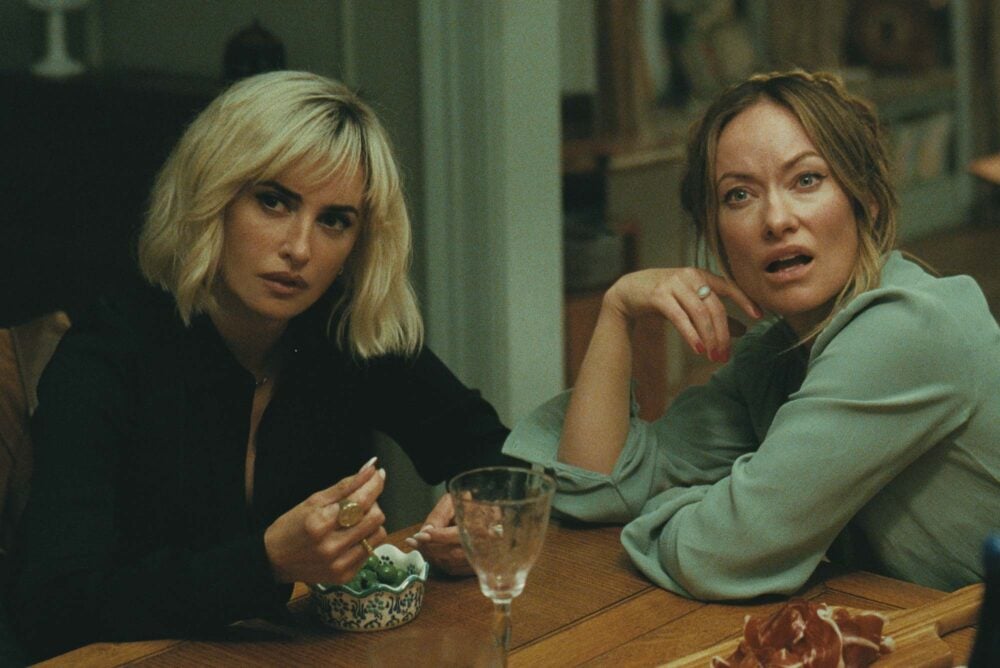
She plays Angela, an arty San Francisco mom and wife, married to music teacher, Joe (Seth Rogan). We first hear them over the opening titles, flirtatiously playing the same tune – a piano duet where they anticipate each key, bum notes laughed off. This was many years previously, because when we meet them in the present their synchronicity is lost, as people they are playing different melodies and keys. He’s pedalled grumpily home from a job he hates and she has spent the day procuring cheese, flowers and a new lounge rug; their distracted, snappy conversation in the hallway revealing the dynamic of their non-existent relationship.
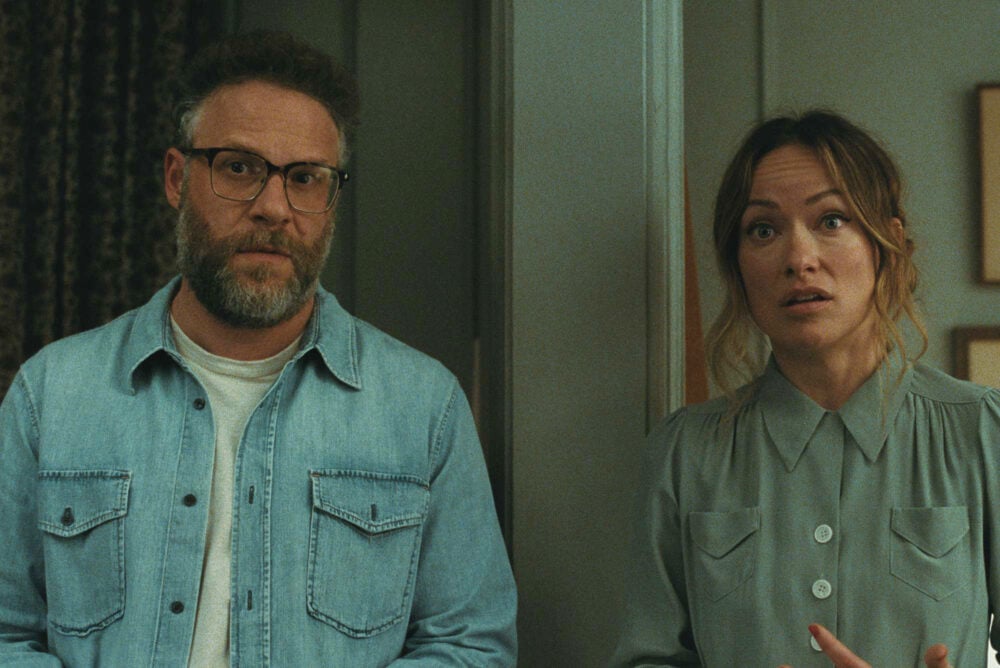
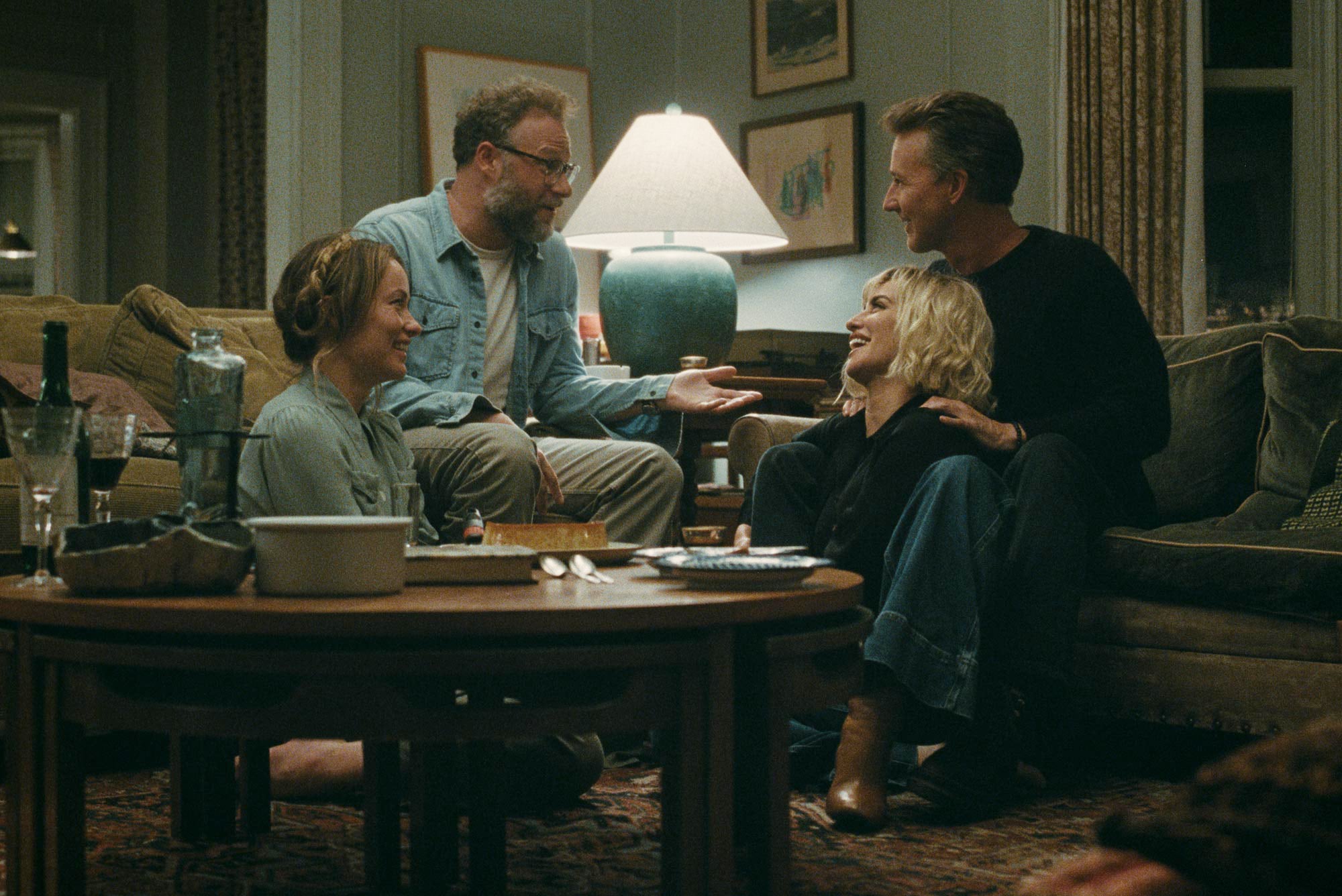
Angela has invited the neighbours from upstairs over which Joe is resistant to and she is excited by. When they arrive, Piña (a peroxide Penélope Cruz) and Hawk (Edward Norton) throw the differences between the couples into stark relief. The neighbours (who habitually have crazy loud sex upstairs), communicate in tender looks, Spanish whispers and lingering touch, exuding a ferocious vitality long missing from Joe and Angela’s co-existence. As the quartet talk in overlapping dialogue the horribly recognisable fissures in Joe and Angela’s relationship become obvious. The scalding look she gives him across the lounge is gold, the tart lines dished out, delicious. ‘This a very cold apartment,’ Angela tells the self-christened Hawk. ‘There’s not a lot of heat’. Well, quite.
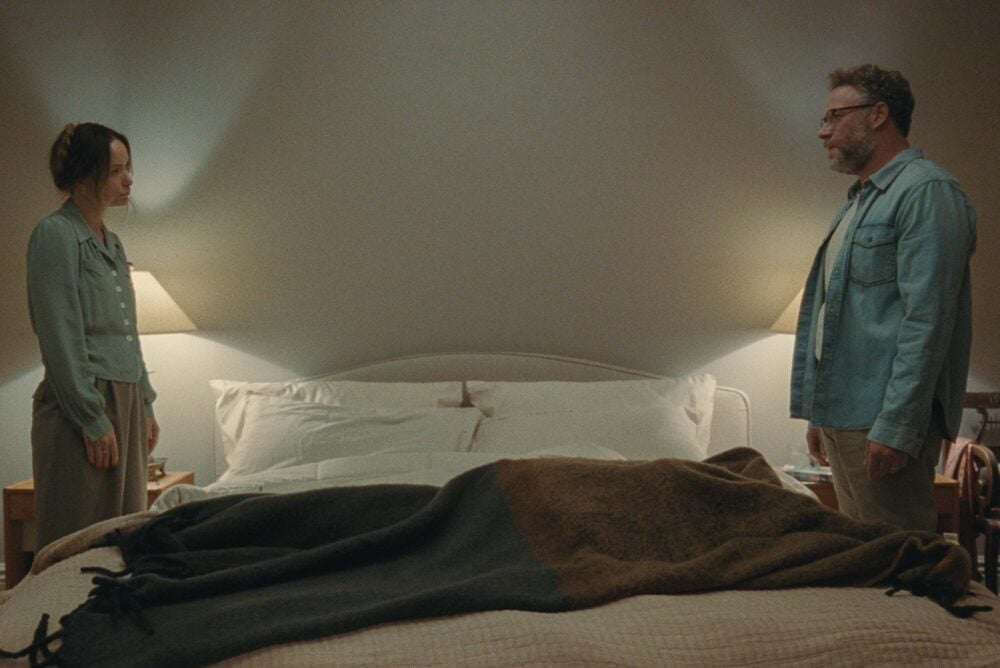
As the evening unravels into radical honest, rolfing, sexual reveals, Sade tunes and Edward Norton nibbling jamon, The Invite takes unexpected turns and lands at a heartfelt moment as Pina, a sexologist, tells some home truths. As a four-hander played over a taut running time and in one set, it’s a testament to both writing and performance that every beat (funny and sad) lands. Co-written by Rashida Jones and Will McCormack (and based on Cesc Gay’s The People Upstairs) it’s by turns hilarious and heartbreaking, zinging along thanks to Wilde’s literally buttoned up people pleasing, MVP Rogen’s comic dexterity, Norton’s ability to walk a line between insufferable and sweet, and Cruz playing into fiery Spanish stereotypes.
Wilde’s eye for detail is evident in the sumptuous production design (the apartment is an LA soundstage but feels like a real, carefully curated space), Arianne Phillips’ storytelling costumes (Pina wears a big goddess ring, Angela matches the tasteful colour of her walls) and the way characters are framed by windows, doorways and the lens itself. Angela and Joe are rarely framed together, their estrangement physical, emotional, spiritual.
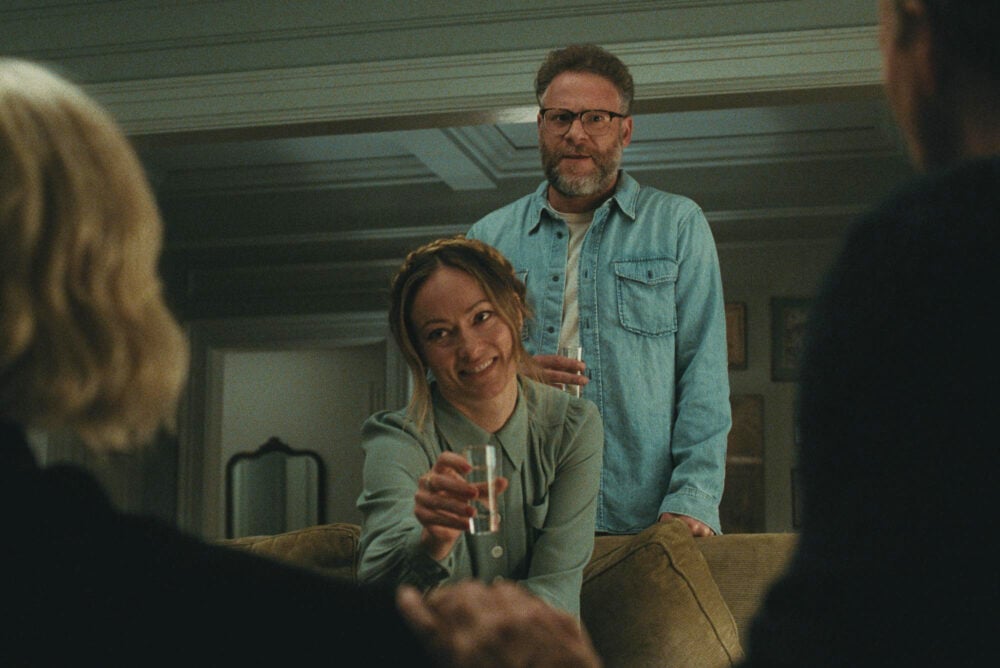
Loaded with social embarrassment, awkwardness, horniness and, ultimately, sadness, The Invite is a hoot – until it isn’t. Then it becomes something fragile and beautiful, a story of hope – and one that could easily be used by marriage counselling therapists as client homework (‘do you see how mean you are to each other?’ Pina asks her hosts). But that doesn’t mean you need to be in an imploding relationship to understand the social politics at play. Wilde’s film is an open house to anyone who’s ever forgotten wine at a dinner party, wondered about their neighbours, attempted to impress or thought dark thoughts about a partner during a gathering. Like The Drama earlier this year, The Invite is a wickedly bitter pill that gives hope that cinema can still produce such treats in an AI, franchise landscape.
Words by JANE CROWTHER
Images courtesy of A24
The Invite is in cinemas now