




VENICE DISPATCH
Photographs by GREG WILLIAMS
Interview by JANE CROWTHER
The star of Father Joe tells Hollywood Authentic how his latest actioner made him fall in love with movies again…

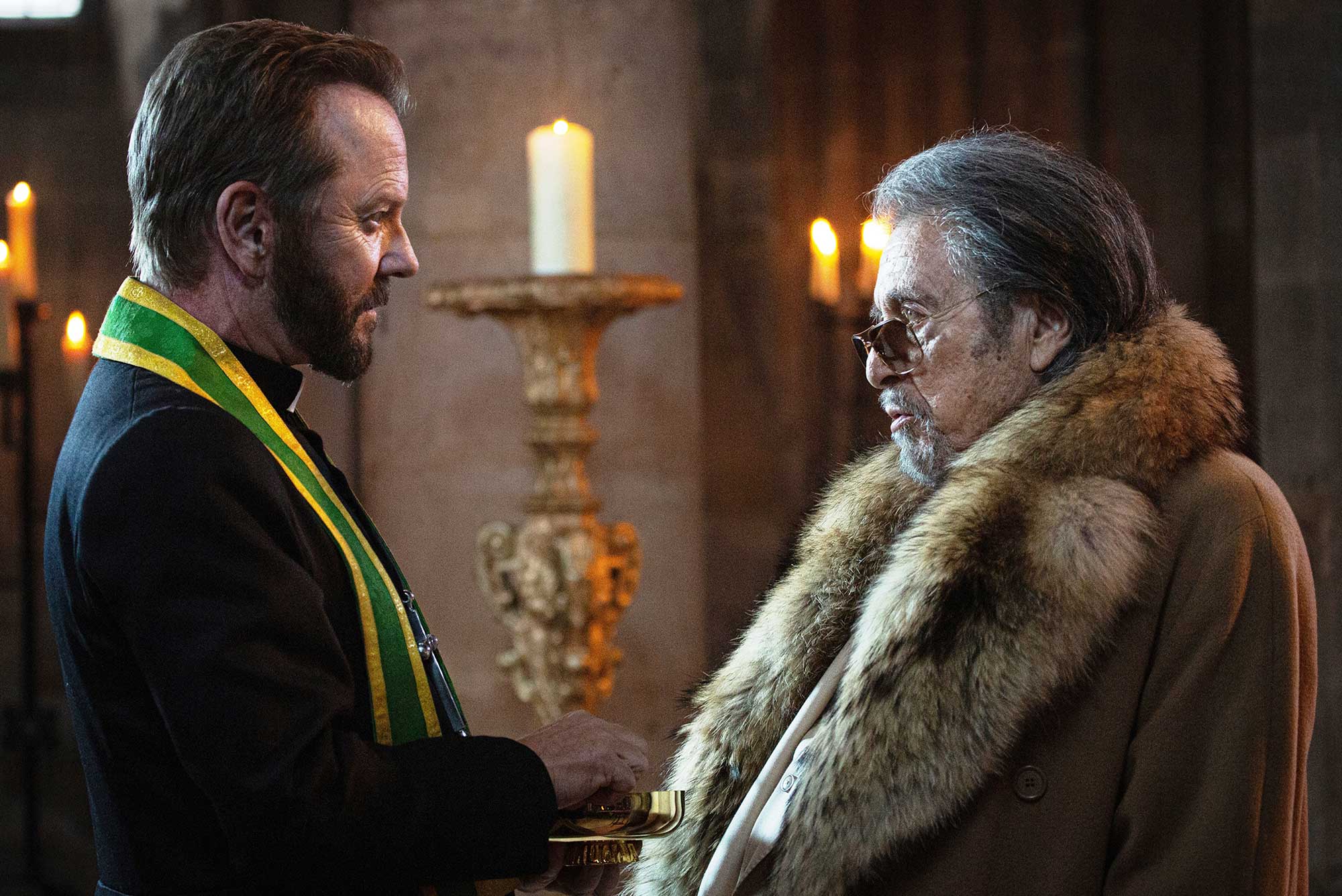
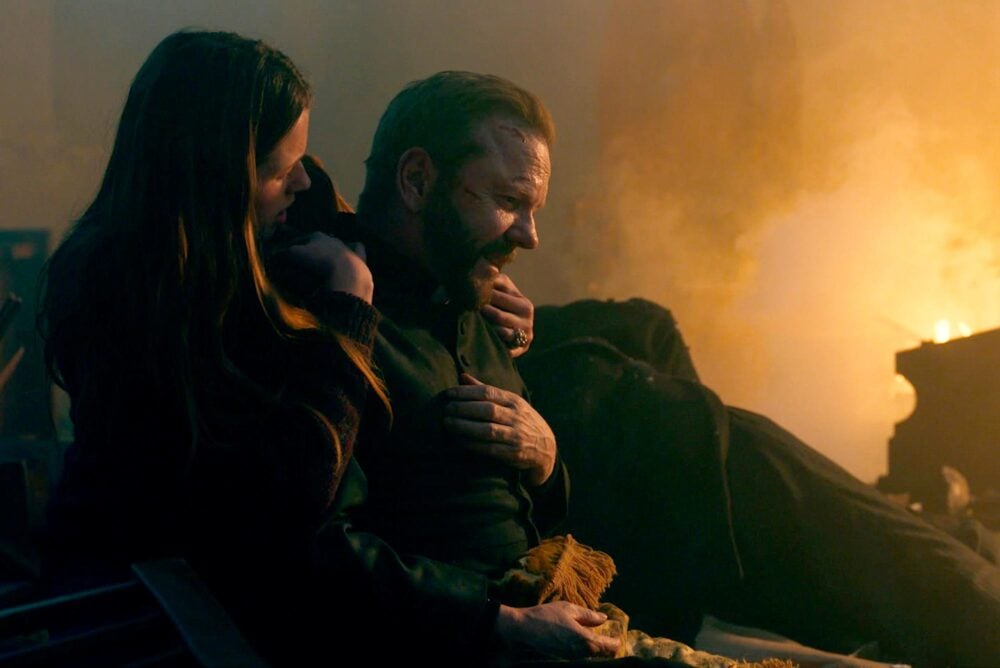
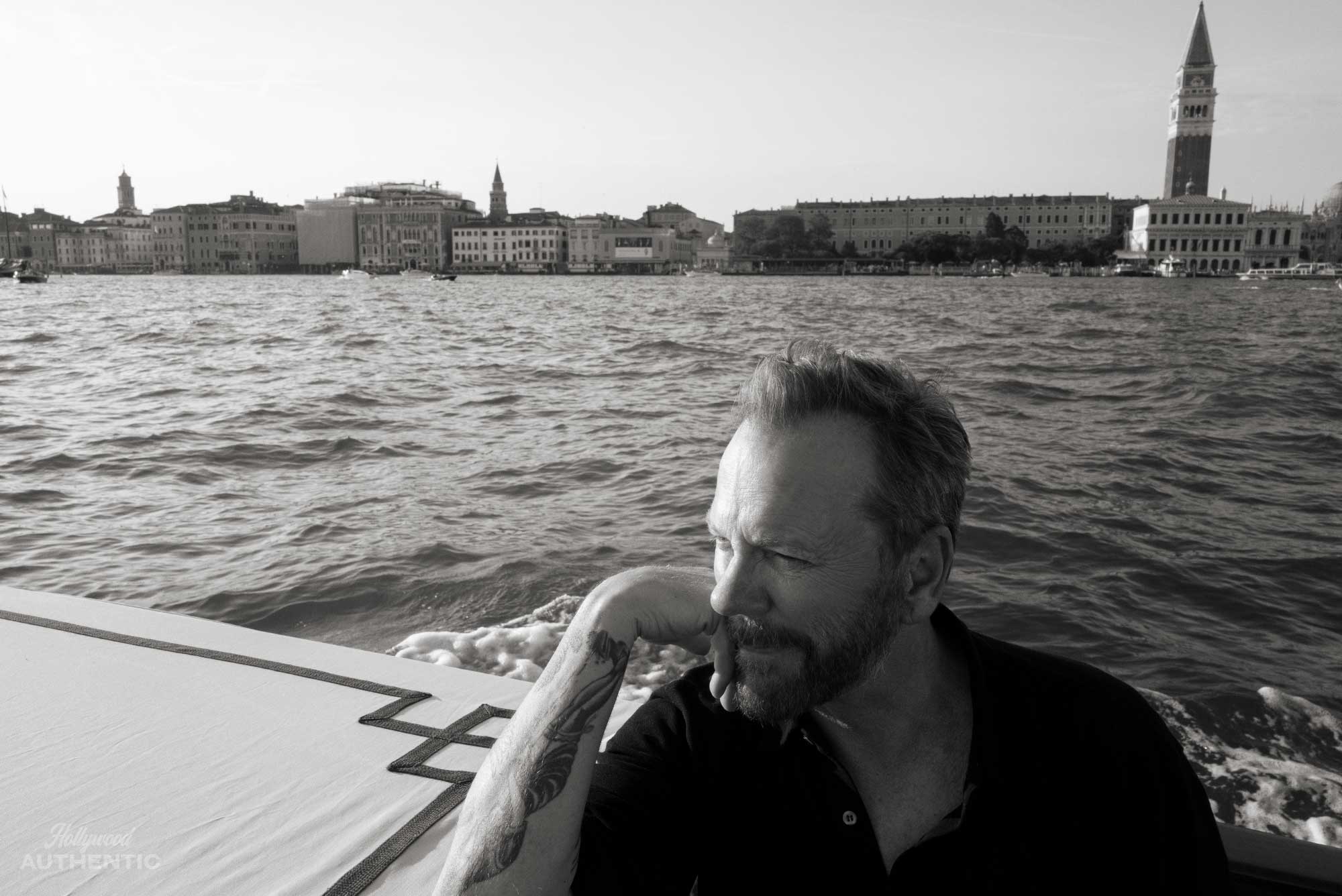
This is not the first time Kiefer Sutherland has been to Venice. Though this year is his inaugural visit to the film festival, with his actioner Father Joe, the actor has a long history with the city going back to his late father’s iconic role in Don’t Look Now. When Donald was making the film, toddler Kiefer was with him. ‘The first time I was here, I was four or five years old. Me and my twin sister – there’s a very funny picture of the two of us hanging out of a second-storey window above a canal, with my dad in the background.’ This time there’s no hanging around; Sutherland is making a whistlestop visit as both actor and producer on the Luc Besson-written film which charts the violent means a special forces war veteran-turned-Catholic priest employs to clean his neighbourhood of drug dealers, organ thieves and the mob in ’90s New York. Besson wrote the screenplay with Sutherland in mind – something he’s tickled pink about, especially the badass outfits and weaponry the holy father gets to wear as he blows up drugs labs, peppers wiseguys with bullets and uses his crucifix as a dagger.
‘I’ve wanted to work with Luc Besson my whole career,’ Sutherland enthuses as he sits with Hollywood Authentic in a villa overlooking the Adriatic pre-premiere. ‘I think I was doing press for Stand by Me in France when I first saw Subway, and I was like, ‘Oh my God, that’s the kind of movie I want to make’. He’s such a creative and versatile filmmaker.’ Besson pitched the script he’d written to Sutherland’s brother, who is also his agent. Sutherland admits to not being initially sold, until he read it. ‘The script was so much better than the pitch. It was very funny. I got it. The sarcasm and very dry humour. I really responded to it, and loved it.’ The actor has producing form having shepherded his long-running TV hit, 24, so jumped on board as producer as well as playing Father Joe, and admits that his enthusiasm for the lower-budget project meant he was bringing his own clothes to the Paris set as possible costumes. ‘I said, ‘I’ve got a great black suit that would be kind of good for the priest’,’ Sutherland chuckles. ‘Then I saw the costume they had made. It was so cool. And it was so much bigger than I had ever possibly imagined it. The frock, the vest with the weapons, the hat… I was like, ‘Holy shit!’ It’s a terrible tale, right? After 45 years of working as a professional actor, your expectations have been so diminished that you’re willing to bring your own clothes to work.’ The pleasant surprise in costume was replicated in every other aspect of production, he says. ‘You’re like, “Oh, this is what movies used to be like. I remember that!’ So I just got really, really excited.’
There are different levels of involvement for actors producing their work, but this is no vanity credit for Sutherland, he insists. ‘When actors become producers, it’s usually because they’re getting a good deal, right? And it’s not like I’m in some room with a visor counting receipts and doing regular producing work. But you sign onto one script and an idea. We made 213 episodes of 24, another 100 of Designated Survivor. There’s no insurance on the rest of those scripts. At least if you’re a producer, you have some say. So it’s an insurance policy more than anything.’

It also meant he could help bring Al Pacino into the cast, playing opposite him as a flamboyant mob kingpin. ‘He’s such a hero of mine,’ he says. ‘There are certain actors I watched growing up – Al Pacino, Gene Hackman, Robert Duvall – and they just defined for you what was good. That this is what you’re paying to see. So there’s always the fear that when you meet someone like that… what if they don’t talk to you, and they don’t like you, and it’s not a good encounter?’ He does a mean Pacino impression as he tells a story about the actor swearing about the huge fur coat he wears in the film. ‘For me, it was amazing, because not only did I meet this really kind, funny person, but the guy who was in The Godfather and Serpico.’
Working with Besson and director Barthélémy Grossman, Sutherland describes his involvement on Father Joe as building the film from the ground up – and that included bringing in a top stunt team to help him kick bad guy ass. During the course of the film Father Joe shoots out kneecaps, poisons with syringes, strafes goon hideouts and in one memorable scene dispatches a series of henchmen in a descending elevator. It’s a set-piece Sutherland is particularly pleased with. ‘We had done all this training, but a lot of the fight sequences got broken down and shortened. The violence is a real character in the context of this film. It’s a fantasy, and it needs to be really artfully done. And a lot of those sequences, when they got shortened, it was just gunplay. I said, ‘I think we’re short in the actual fighting’. And Luc was like. ‘Go fuck yourself,’ but then he went off and wrote the elevator fight. I think he put it in the elevator so that I would never ask him to do that again! But there was something so organic and tactile about being able to work like that. So it really was an experience that reminded me of how we used to make movies. And I miss it.’
To hear him tell it, it sounds like Sutherland had become disillusioned with movie making, and Father Joe has reinvigorated him. He considers this. ‘I think if I’ve learned anything, it’s that you can make things at a price point that are really good. It doesn’t have to be $50 million. When we made Stand by Me, it cost $8 million. At Close Range cost $8 million. The Lost Boys, which was the biggest film I had ever done, cost $14 million. What we’re spending on films now is so past inflation, right? So, yeah, it gave me a lot of enthusiasm about how to go make stuff.’
So now that he is fired up, what does he want to make? ‘I know exactly what I want to go and do. Getting anyone to make it is the hard part. So I’m going to try to figure my way around that because I believe I know how to make something, and if I believe that the story is worth telling, then it probably is. And I should trust that. If the executives that you would normally have to go through to get something like that made, don’t agree with you – what a terrible way to exist, right? You can’t be beholden to that. So I’m in the process of trying to figure out how to raise money to make films.’
He may need to be raising money for a Father Joe sequel given the cheeky open ending of the film. Sutherland smiles. ‘I would certainly love to do it. I think Barthélémy and Luc would love to do it. But those decisions – which is fair and cool – always get made by an audience. I like that, and trust that a lot more than some of the executives I’ve come across over the years. I’ve done a couple of things that I would classify as cinema. I’ve done a lot of films, and I’ve done some movies. And this is a movie. I want people to have fun!’
Photographs by GREG WILLIAMS
Interview by JANE CROWTHER
Father Joe premiered at the 83rd Venice Film Festival
Read our review here