


Photographs & interview GREG WILLIAMS
As told to JANE CROWTHER
Actor, director, writer and painter Rebecca Hall tells Greg Williams about her need to create and her quest for fun during an afternoon meander in Manhattan.

It’s lunchtime when I arrive in a muggy West Village in July to meet Rebecca Hall, so she suggests we grab a bite to eat at one of her favourite spots in the city, the Thai Diner. ‘It used to be a restaurant called Uncle Boons, which was notorious because all the famous chefs of Manhattan would go and eat there after their shifts,’ she explains as we get ready to leave her temporary Manhattan residence, an apartment in the Village, as she juggles all of her projects. ‘I remember going, and completely fell in love with it. It’s viciously spicy Thai food.’
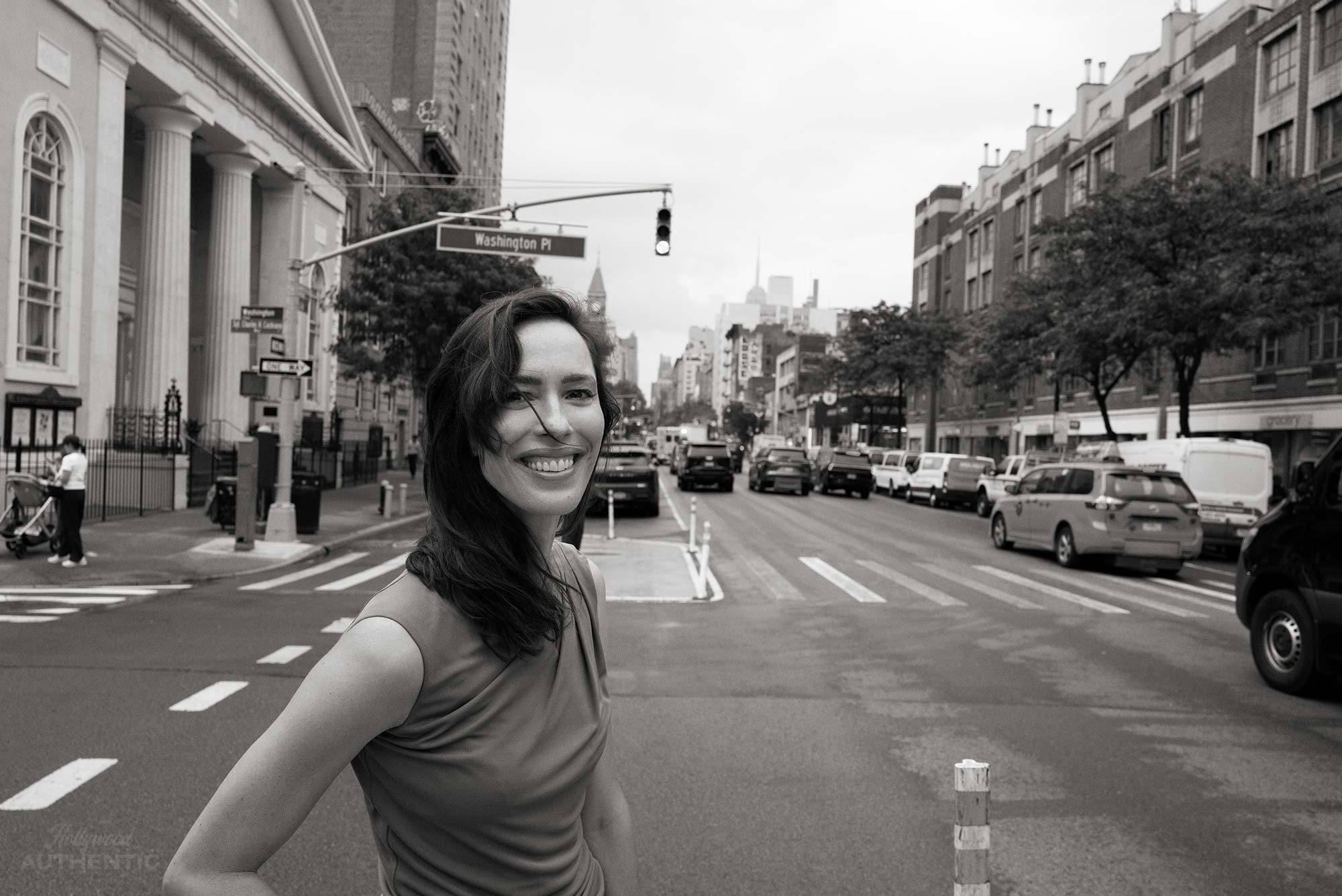
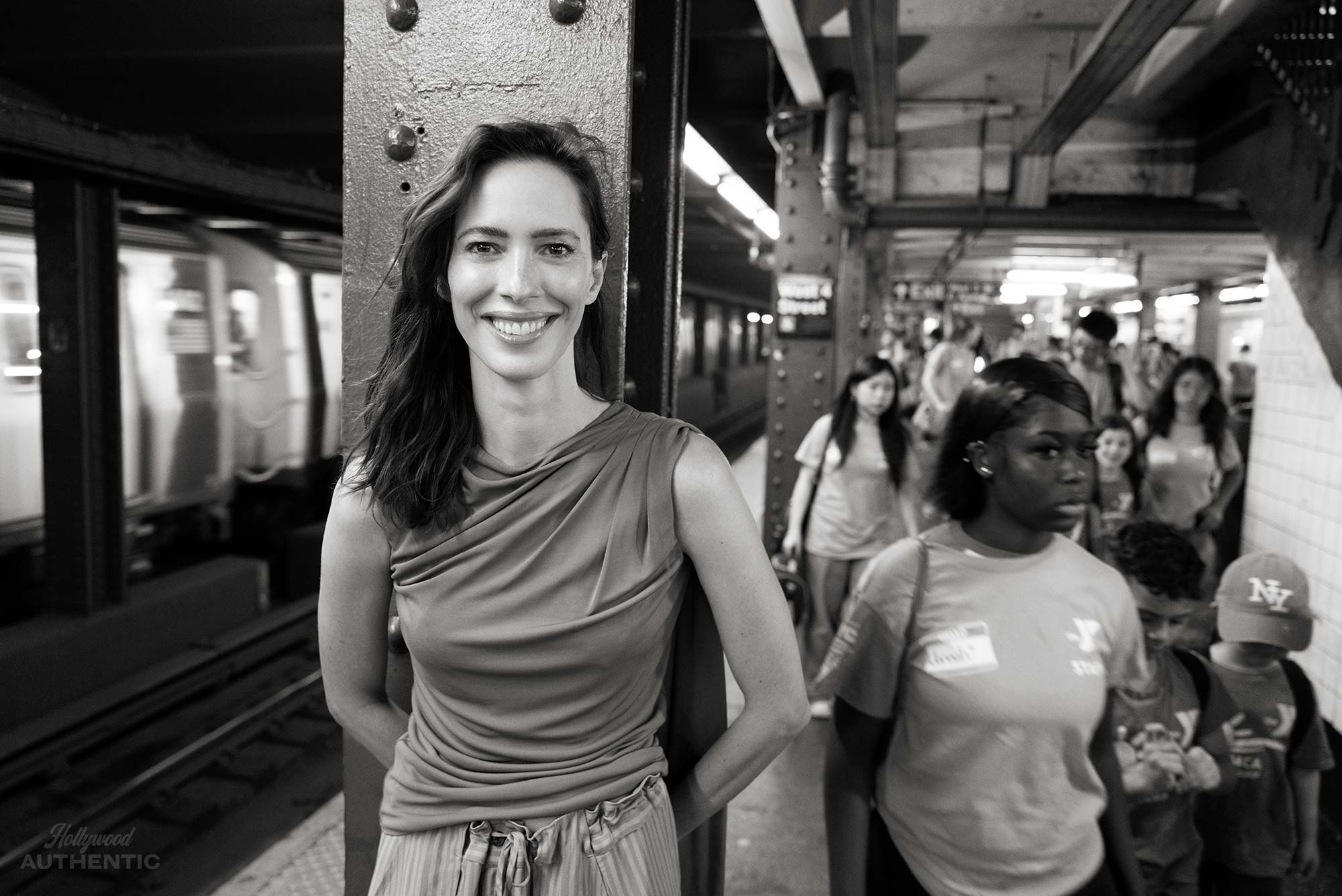
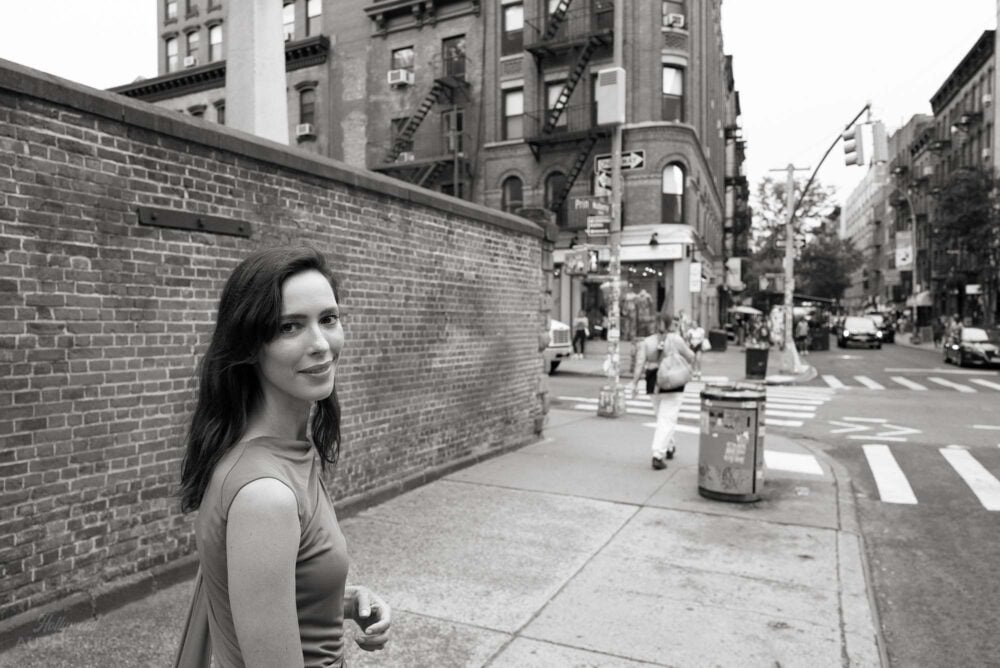
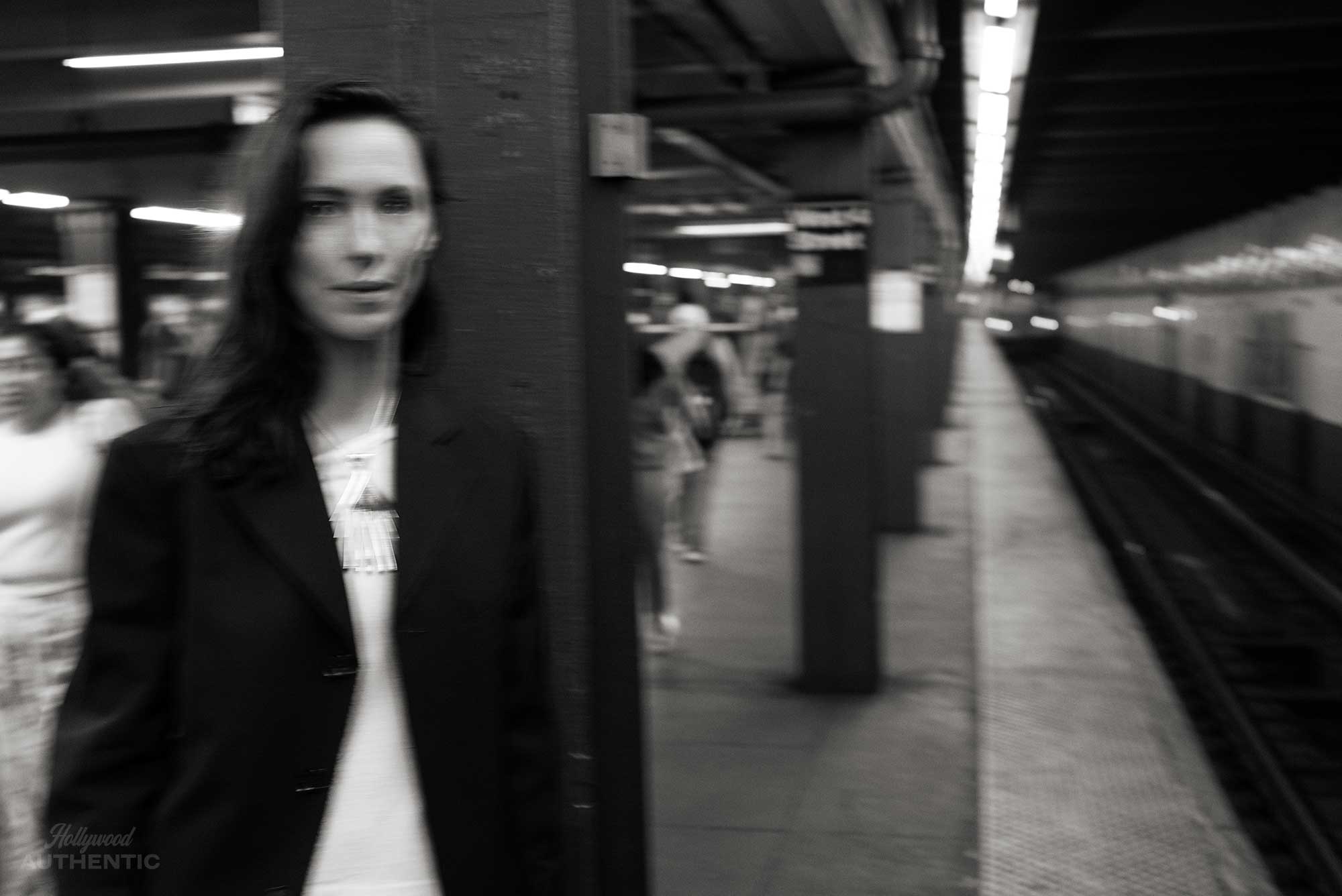
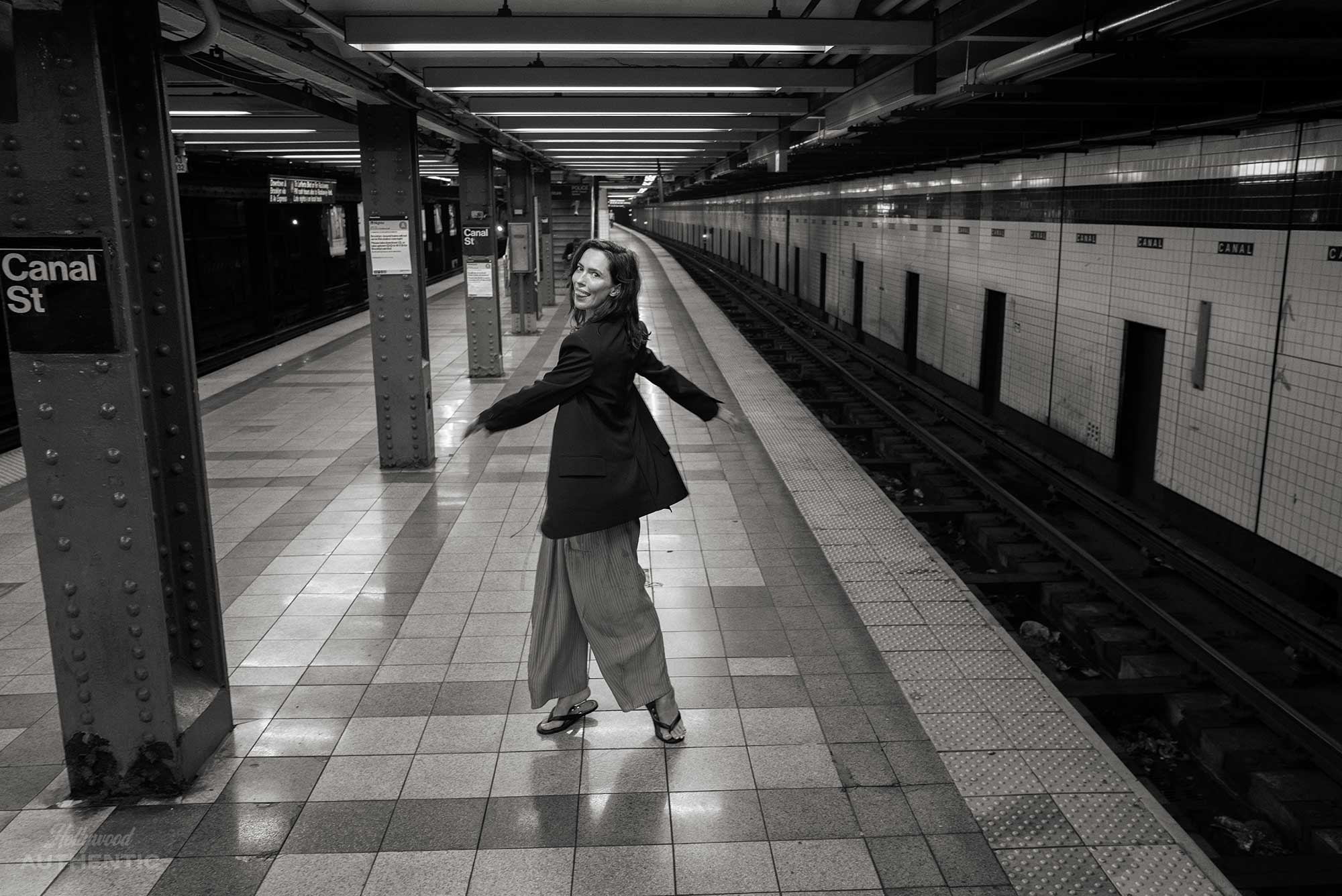
New York is now home to the British American actor, who moved here in 2007 as her career took off with Starter For 10, The Prestige and Vicky Cristina Barcelona. ‘I was staying in friends’ places in the city, and had a flat in London,’ she tells me of toggling between two countries as we walk down the street heading towards the subway. She now lives here with her husband, the actor Morgan Spector, and their child in the Upstate New York countryside. ‘I did that until I met Morgan, and then I kind of had to admit defeat, and realised that I’d become a New Yorker somewhere along the way without even really noticing.’ That’s evidenced as we arrive at the subway station and Rebecca taps herself through the barriers, telling me we’re heading to the B and D lines and leading me to the correct platform. ‘The New York subway is very particular. You can’t replicate it. There was a script that I was working on recently that had a scene in Downtown, on the subway. We were talking about it: “How could we do it? We’ll have to build something, or do something else…’ I was like, “It’s just not going to work unless it’s actually the thing.”’
When the train arrives, we hop on and sit down to discuss one of her upcoming projects, The End of It. The film premiered at Cannes and is set in a near future where people can live forever. Rebecca plays a woman who has ceased to enjoy the experience and wants to draw a close on her life, deciding to make her ending a piece of performance art. Her husband is played by Gael García Bernal, her daughter by Noomi Rapace, and Beanie Feldstein is her robot helpmeet. ‘It’s this brilliant Spanish director, Maria Martinez Bayona,’ she enthuses as we rattle along. ‘She came up with this idea about a movie that’s set in a future when nobody dies, and everyone’s recycling their blood on dialysis machines, essentially, like with their coffee in the morning. They just do this thing. And they can live indefinitely. So nobody dies anymore. And I play a performance artist who probably in her heyday was a Marina Abramović kind of enfant terrible, but there’s this question of: how cutting edge and enfant terrible can you be when you’ve been doing it for 250 years?
On her 250th birthday, she decides that she’s had enough of it all. She announces to her friends and family that she’s going to die, and she’s going to make it her last piece of performance art. The film is about her working through it but it’s also about art, and what makes you relevant, and ego. And it also gets into what a familial relationship is like; what a marriage is like if you don’t die.’ The film also explores legacy, the work left behind by an artist – something of a preoccupation for any actor. ‘It felt really valid, because it takes on the idea of how much art is linked to legacy, and linked to the drive to want to leave some mark of ourselves and therefore how much art is linked to death. It is stark and confronting, and she is complicated. But she is also heroic on some level. Depictions of male artists are often like this – these sort of wild, ego-driven nightmares who are having affairs and behaving terribly – and they’re always lionised. And the moment it’s a woman doing that, it’s a bit like, “Oh! Is she nice? We’re not sure if we like her.”’
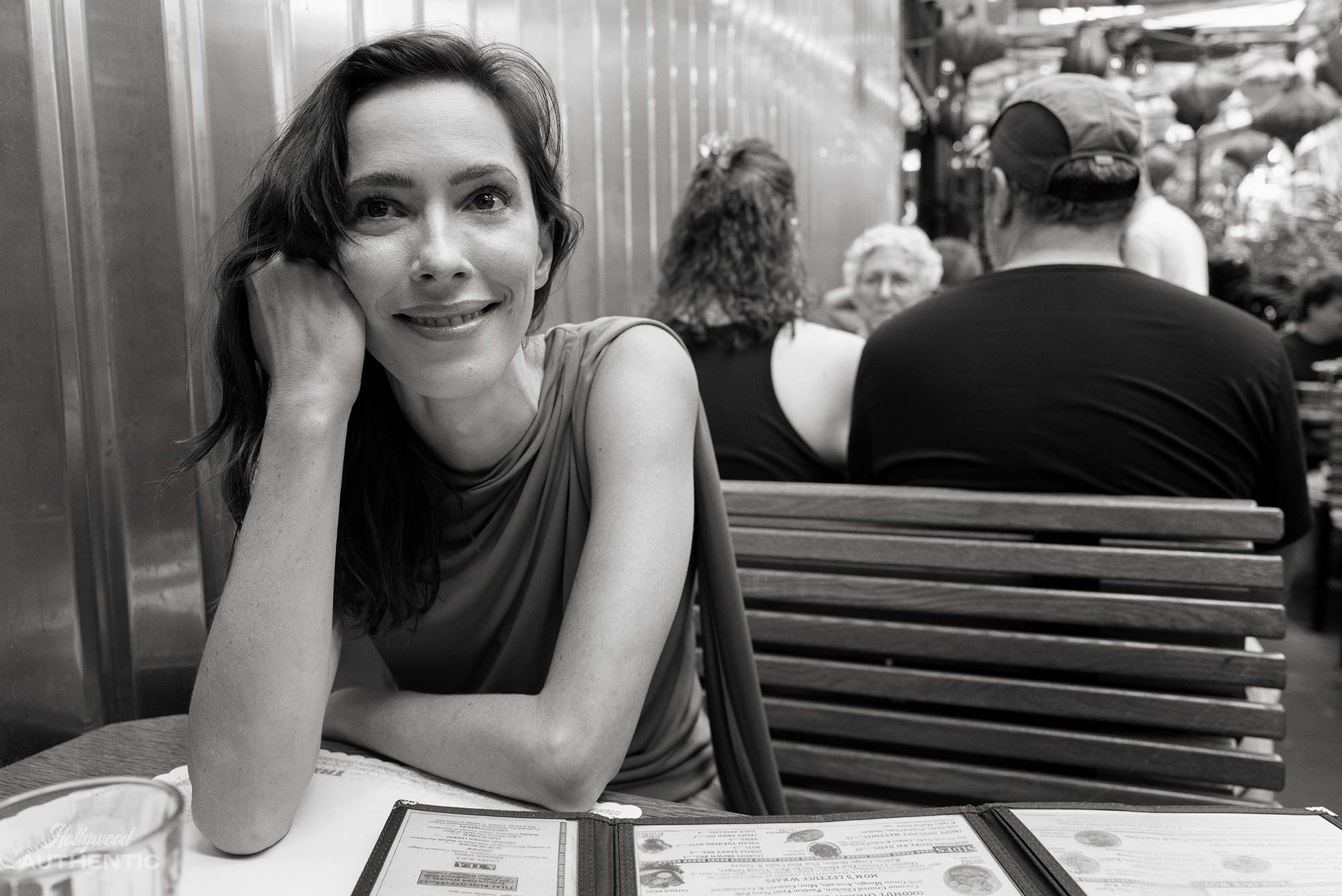
We jump off the train and re-emerge at street level to walk a couple of blocks to the diner. We find a cosy table inside where Rebecca orders her favourite, the papaya salad, and crispy red snapper. We agree to share, and I ask her about Passing, the film she adapted from Nella Larsen’s seminal novel, and directed. It tells the story of a Prohibition-era light-skinned Black woman (Ruth Negga) ‘passing’ as white in New York and reconnecting with her childhood friend (Tessa Thompson). I had rewatched it on the plane to New York and talked to Rebecca’s husband about it when I arrived. He’d told me that she had hand-drawn every frame before starting to shoot, that her attention to detail was impressive. She smiles. ‘If I look back on the storyboards now, I’m pleasantly surprised how much of it is how I drew it,’ she shrugs.
The resulting film is a beautiful study of race and female dynamic in lush black and white. As someone who shoots a lot in monochrome, I loved the choice to go with 1.33:1 ratio black and white. ‘Edu Grau, who was the cinematographer, and I spent a long time thinking about the lenses and the light, and also how much of the objects there should be in the frame, and what the colour should be with everything for the translation to black and white. We ended up painting the walls of that house a fire-engine red. Their makeup was very pronounced. Sometimes they would have purple lipstick on, and sometimes the shades of their dresses… We got papped on the first day, and it was a disaster, because everything looked like the worst clashing. I remember Ruth was wearing pink and mauve and red. It looks ridiculous – but it looked great in black and white.’
The End of It is set in a future when nobody dies. I play a performance artist who probably in her heyday was a Marina Abramović kind of enfant terrible, but there’s this question of: how cutting edge and enfant terrible can you be when you’ve been doing it for 250 years?
It was Rebecca’s first directorial project and played at festivals to critical acclaim – she tells me a funny story about negotiating a remote Sundance Film Festival during Covid and trying to meet Edgar Wright via avatar at a virtual premiere party. As we eat our lunch, I wonder if she’ll be directing more. ‘I want to very much. I have three projects that I’m slowly pushing up the independent movie hill, towards actual shooting.’ I ask about the balance of writing, directing and acting, and how she chooses which to pursue. ‘I mean, you’re touching on an interesting dilemma for me, which is that if you’re interested in doing more than one thing, it’s difficult to time it. Because it’s hard to turn down acting jobs when they’re exciting in order to keep trying to get your independent film made. But part of getting an independent film made is needing to do that 24/7. It took me 15 years to get Passing made. I was doing everything else that I was doing at the same time, but I was always trying to get that film made. There were seven years where I wasn’t, where it was just sitting in a drawer, and I was so confused as to my relationship with it. And then there were eight years of desperately trying to get it made.’
Rebecca’s relationship with the script had added complication and nuance because of her personal connection with the subject matter. Her father was storied director Sir Peter Hall, her mother mezzo-soprano Maria Ewing. ‘My mother was a white-passing Black woman from Detroit who, when she was 16 or 17, realised that she could sing like an opera singer. She literally learned how to sing from listening to records of opera singers, and then mimicking it. And when she was ridiculously young, she went to the Cleveland Institute of Music, and was like, “Knock knock. I’m going to sing.” She got in, and by the time she was 23, she was a diva singing at The Met and The Scala. And she completely transformed her persona from whatever it was she came from, to this very grand, theatrical diva who was white and wouldn’t talk about any of that.’
Race was something that Maria did not discuss with her daughter. ‘Not to me. This is the curious thing. Not that long ago, I found a Desert Island Discs that she did where she’s speaking with a sort of almost strange, transatlantic English accent, and she tells the story of how she found out that she was Black on the radio. And she never told me this story. It was very weird growing up because from my perspective, I would look at her, and I’d think, “You look to me like you’re biracial.” There was no confusion in my mind. So I’d ask her about her family, because she moved to England, and she wasn’t in touch with any of them. And I knew she had sisters still in Detroit, and I knew certain things. But it was confusing, because it would be tropes, or ideas about race that would come out. It was her own internalised racism, if I’m being honest. She would say things to me like, “You know we can dance, and have rhythm, because we’re Black.” And I’d go, “What? Do you want to talk about that some more?” And she’d say, “No, no, never mind. It doesn’t matter. And anyway, look at you – you’re white.” So I knew that there was shame there.’
Maria sadly died in 2022 but saw Rebecca make this movie that spoke so directly to their own experiences. ‘You know, that was my understanding of my racial heritage until I read this book, and then I suddenly understood the context for the many, many people who were white-skinned enough to pass. When I presented that to my mother, it was very complicated for her, because she had to own some things about her father, who was the original one that [passed]. She found out about it because the neighbours found out, and started screaming racist abuse at her when she got home from school. So her first experience of her own racial heritage was racism. I think it impacted her psychologically. And honestly, making that film was how I came to terms with that, and understood it.’
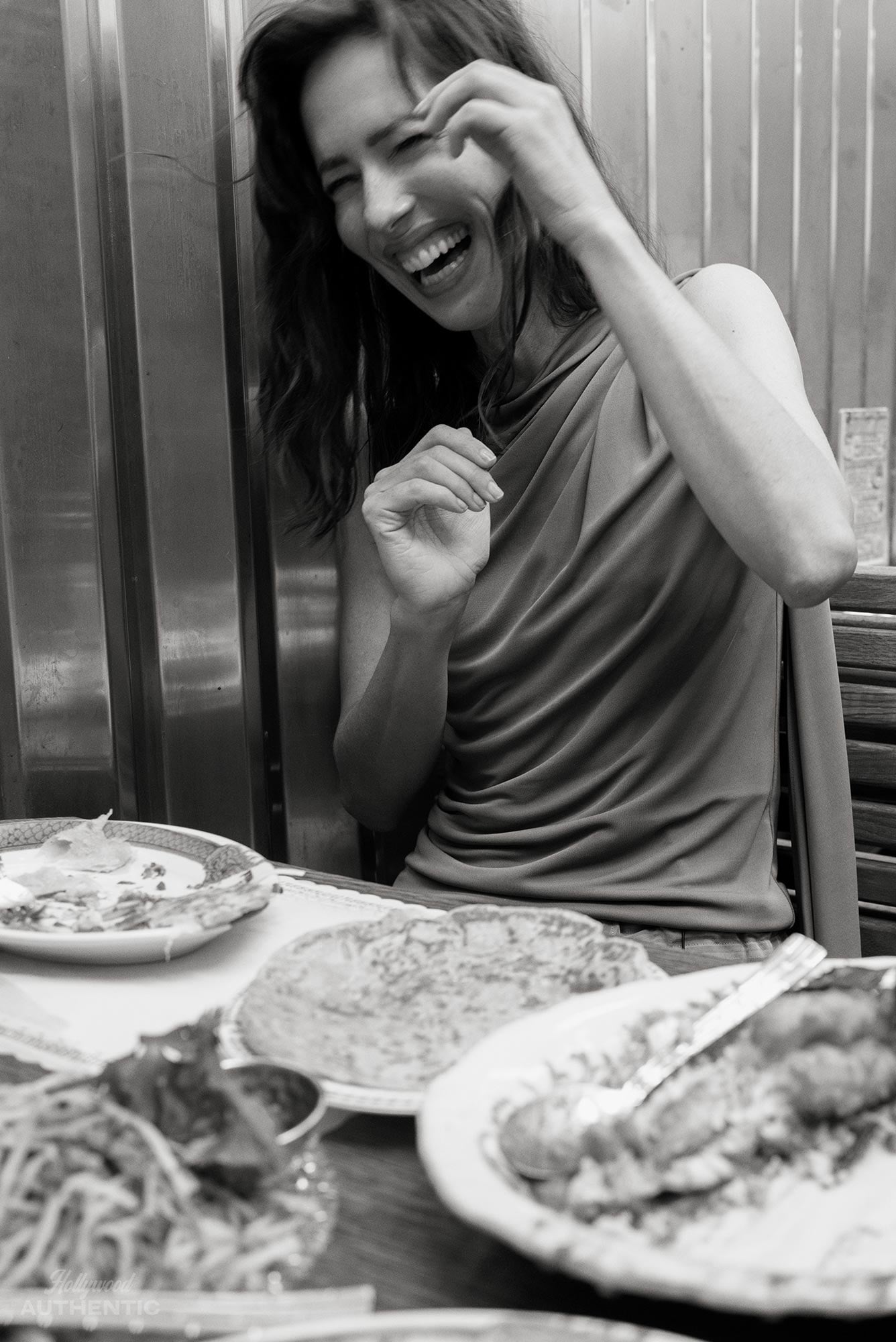
There is a strong mother-daughter through-line in The End of It as Rebecca’s character fights with and comes to terms with her daughter. I tell Rebecca that I asked her on-screen daughter (and my friend), Noomi Rapace, to describe Rebecca to me before we met. Noomi said that her cinematic mum was ‘one of the kindest, most classy, gentle, fun, best’ actresses she’d worked with. Rebecca smiles fondly when I play her the voice note over our papaya salad. She recalls the most fun the duo had on set, a food fight. ‘It was an indie, you know? We didn’t have many costume resets. They really had to try to capture it in one, which was great for us, because we could just really go for it.’
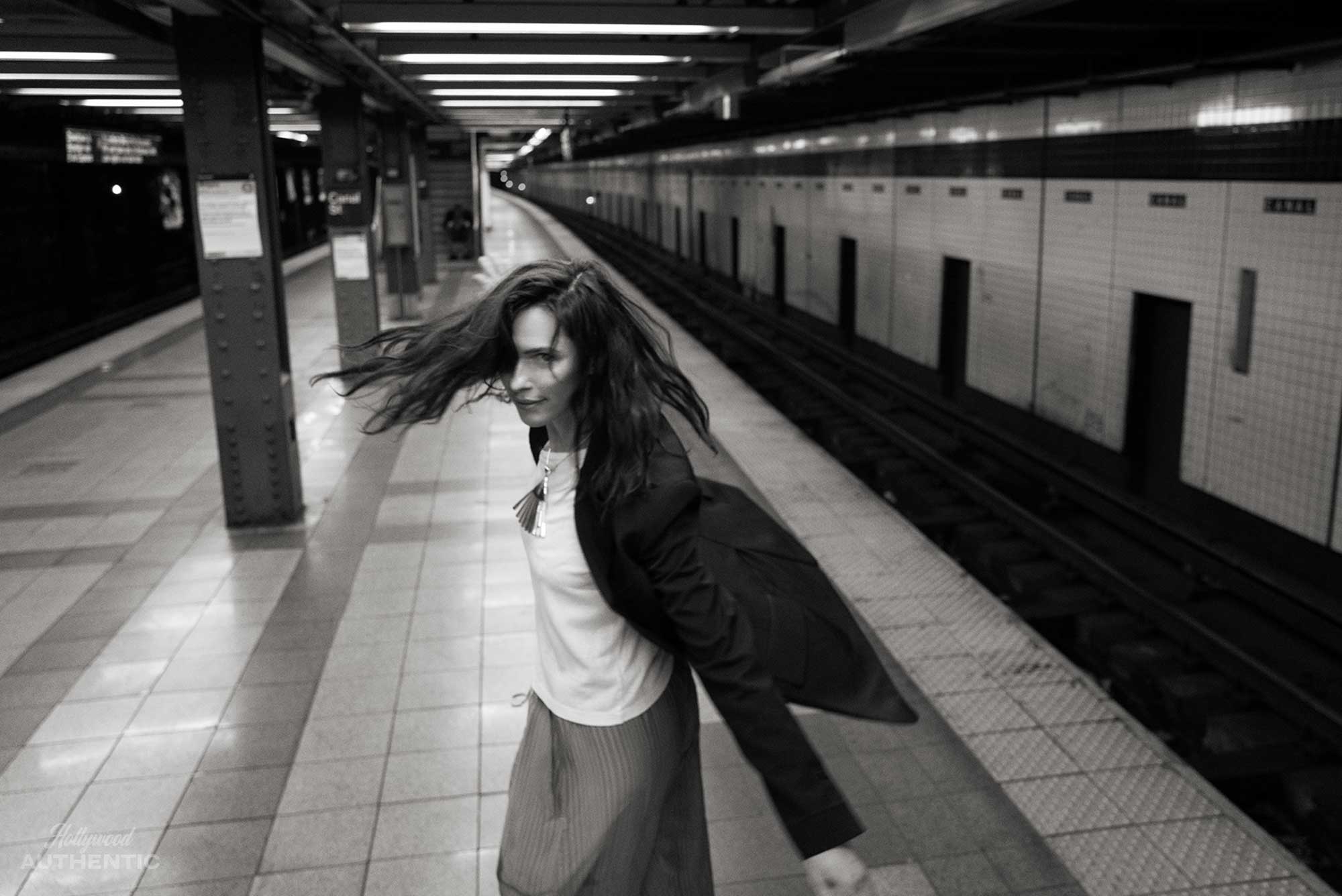
My mother was a white-passing Black woman from Detroit who, when she was 16 or 17, realised that she could sing like an opera singer. She literally learned how to sing from listening to records of opera singers, and then mimicking it. And when she was ridiculously young, she went to the Cleveland Institute of Music
Speaking of going for it, I want to talk to Rebecca about her performance in Christine, which charts the real-life story of Christine Chubbuck, a TV reporter who took her own life during a live show in the ’70s. The film is 10 years old this year and Rebecca will be doing some Q&As in New York to celebrate a decade since she went very deep into a character. ‘It still remains one of the films that I’m most proud of, and I think it was slightly ahead of its time – the concept of “if it bleeds, it leads” media, the endless cycle of doomscrolling and how that affects us, isolation, lack of connection… all the themes of the movie. It took a lot out of me.’ I’m fascinated by process and how actors find their characters, so I dig into this further. ‘There was a little bit of footage of the real Christine Chubbuck interviewing people, that’s all that exists,’ Rebecca tells me. ‘So I had something to go on. Even though I wasn’t necessarily doing exactly her, I ended up placing her vocal register very differently to mine. Her physical gait, I made very different to my own. So I spent a long time trying to walk and move and sound like that, and to make it comfortable in my body. It’s not like I make a choice to make a character physically like this. It comes out of an emotional understanding of the character. And then I try to let my body become what that would become instinctively. I remember testing it out on the street, and going into stores, and talking to people in shops. Just to see if I felt self-conscious, or if it was OK, or if I could just let it go. I don’t always do that, by the way. I think I’m very malleable as an actor. For me, it really is, “What does this part require for me to do in order to get there?” The only thing that I religiously do is make a chart. I have a kind of technique.’
She explains her ‘emotional chart technique’ in which she crafts an emotional road map of the character on a piece of A2. ‘It helps when you’re shooting out of sequence. I basically do a thought bubble of an emotional state for that scene, and then I do a little arrow, and it’s the emotional state for the next scene. So it ends up being this kind of weird, sprawling diagram. But then you can locate a scene, and know exactly where you’ve been emotionally, and where you’ve got to get to.’
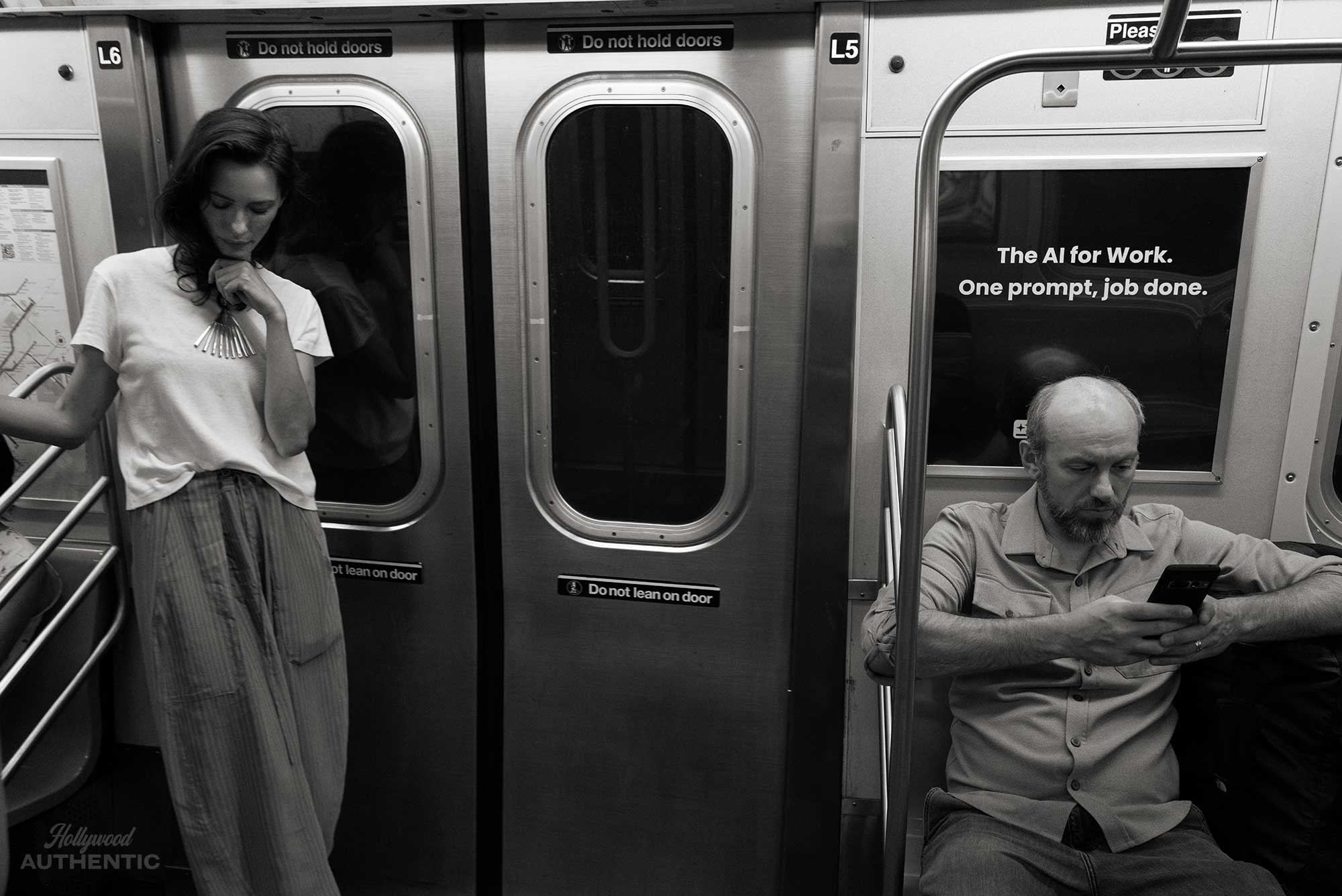
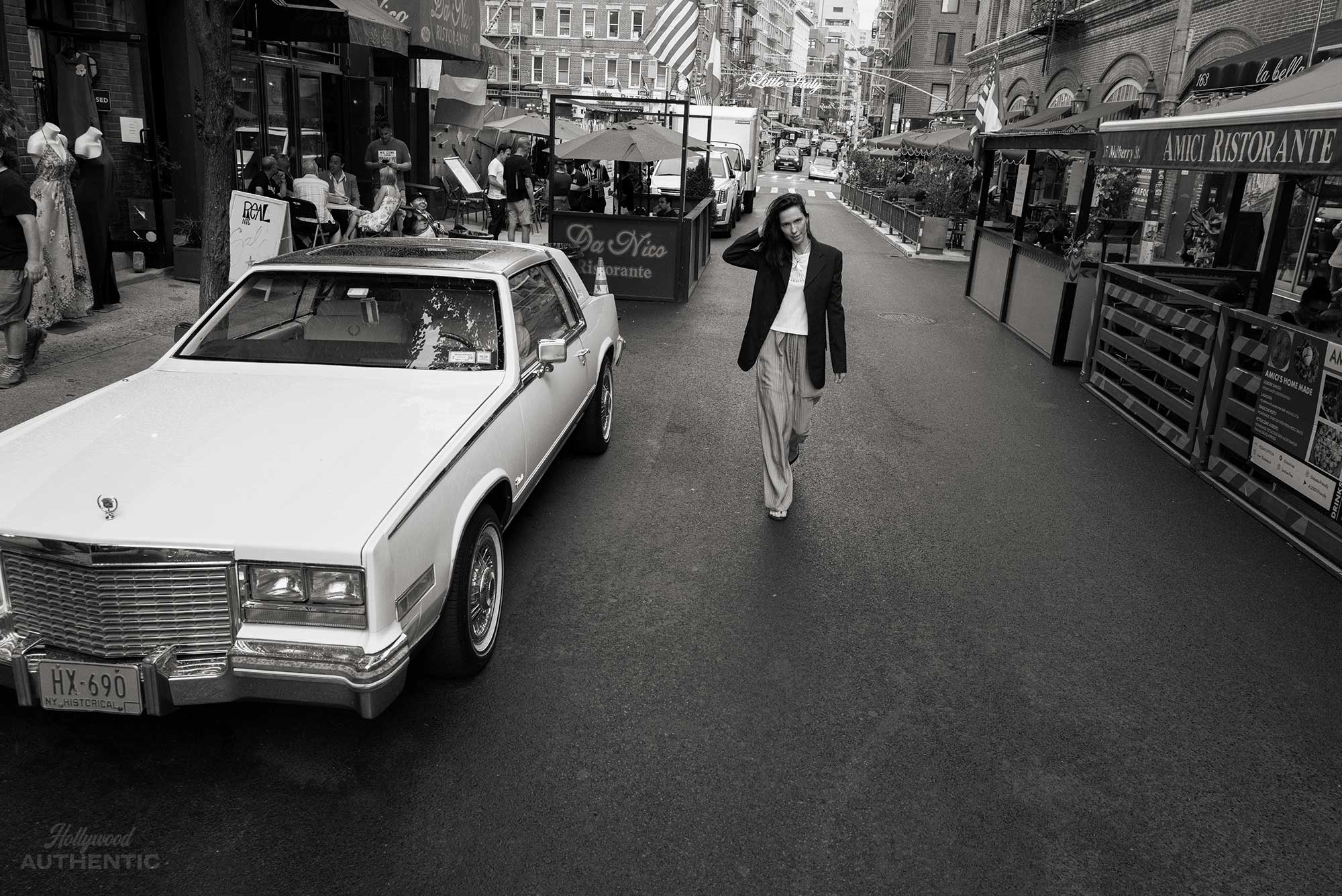
When we’ve chased down our lunch with a mango rice pudding, we head back outside to the street where it has started to rain and a welcome breeze is now blowing. We decide to walk back to Rebecca’s apartment. As we wander, Rebecca tells me about her painting. ‘I’ve been painting since I was very young. I haven’t had any formal training, but I’ve always drawn pictures of people. Drawing pictures of faces and people and characters has been a huge part of my acting practice, actually. It was part of the process. I don’t always do it, but there was definitely a time in my life where I would draw myself in character, or I would draw what I thought the character looked like. But the painting really took off when I moved to the countryside, and had space to actually get messy.’ Though she has an Instagram account, she didn’t post a great deal in the past (‘very half-arsedly’ is how she describes her engagement). Now she posts her artwork, is selling her output (Sarah Paulson has one of her pieces) and recently did a show at the Half Gallery. Now, she says, she just needs to have time to paint some more. It’s little surprise she’s struggling to find a moment – she has four projects coming out and has just wrapped on filming Debs Paterson’s Zero Protocol. ‘I play an NYPD deputy commissioner of operations,’ she says of that role. ‘It’s about when something crazy happens in New York, the people who deal with those kinds of dramas before it goes federal. It’s in real-time and my job is to shut down Manhattan due to a contagious outbreak on the Lower East Side, and I’ve got to shut down the island before it gets off the bridges.’
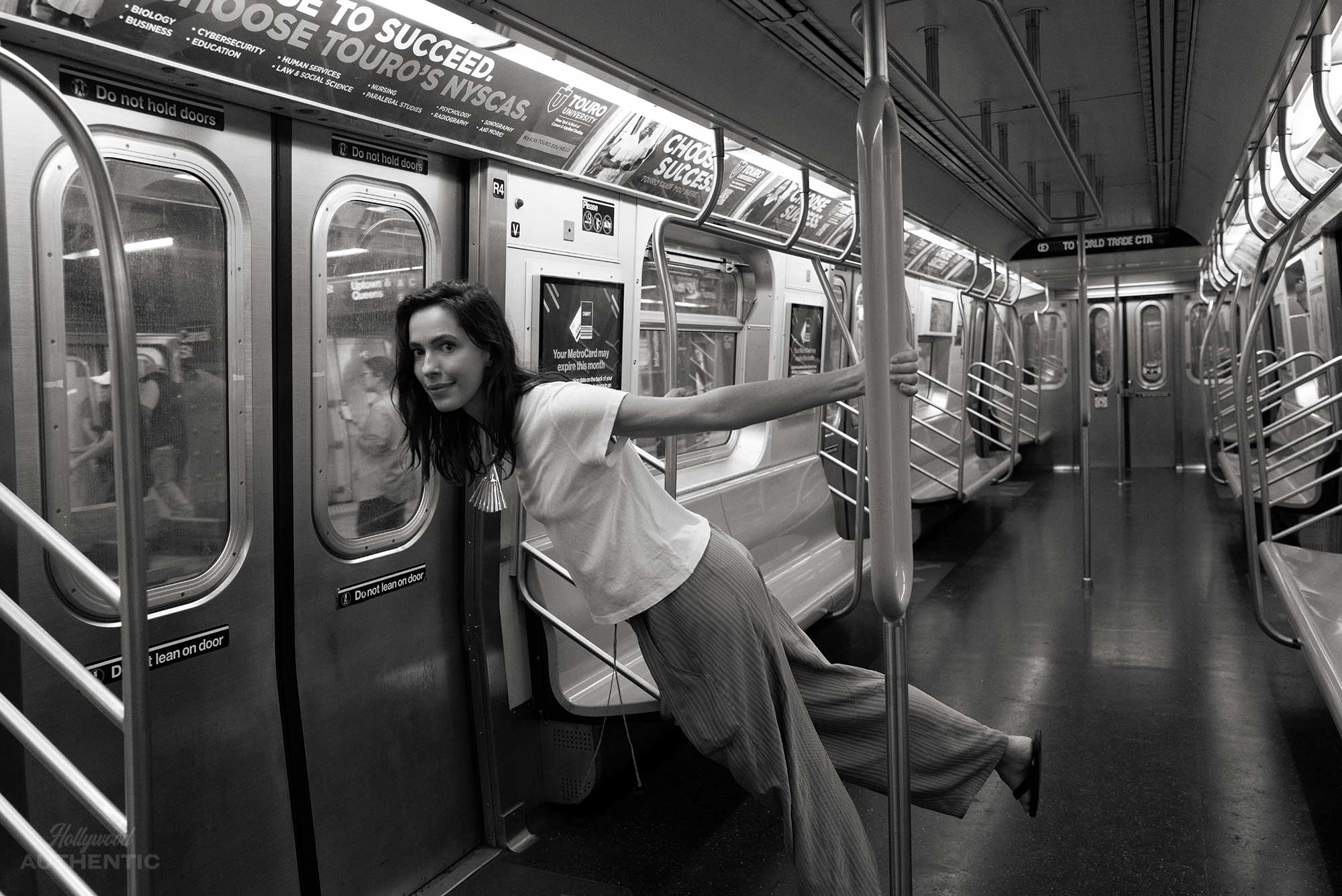
In addition to The End of It, she has Adam Wingard’s Onslaught hitting cinemas in September, Ryan Murphy and Ian Brennan’s Netflix series Monster show exploring Lizzie Borden’s crime, and another Cannes premiere, Ira Sachs’ The Man I Love. In Onslaught, she reteams with her Godzilla vs Kong colleagues, Adam Wingard and Dan Stevens, for a ’80s-tinged actioner following an ex-army mother (Adria Arjona) trying to protect her daughter from genetically engineered super-soldiers. Rebecca and Stevens play the German baddies of the piece, with Rebecca as his dominatrix handler. ‘I was like, “Oh, Adam Wingard, you’re insane, and I love your brain. That sounds hilarious,”’ she says of the pitch. ‘I don’t know that I would be super-excited about playing a dominatrix handler to someone I didn’t know, but the fact that Dan and I share years and years of knowing each other, meant that we could really have a giggle about it, and really go for it as well. There’s a trust there that’s inbuilt.’ The film is a ‘Terminator kind of movie, with this female lead at the centre of it, who is the hero. It’s nostalgic, but also completely fresh at the same time. It’s a big swing in an exciting way.’
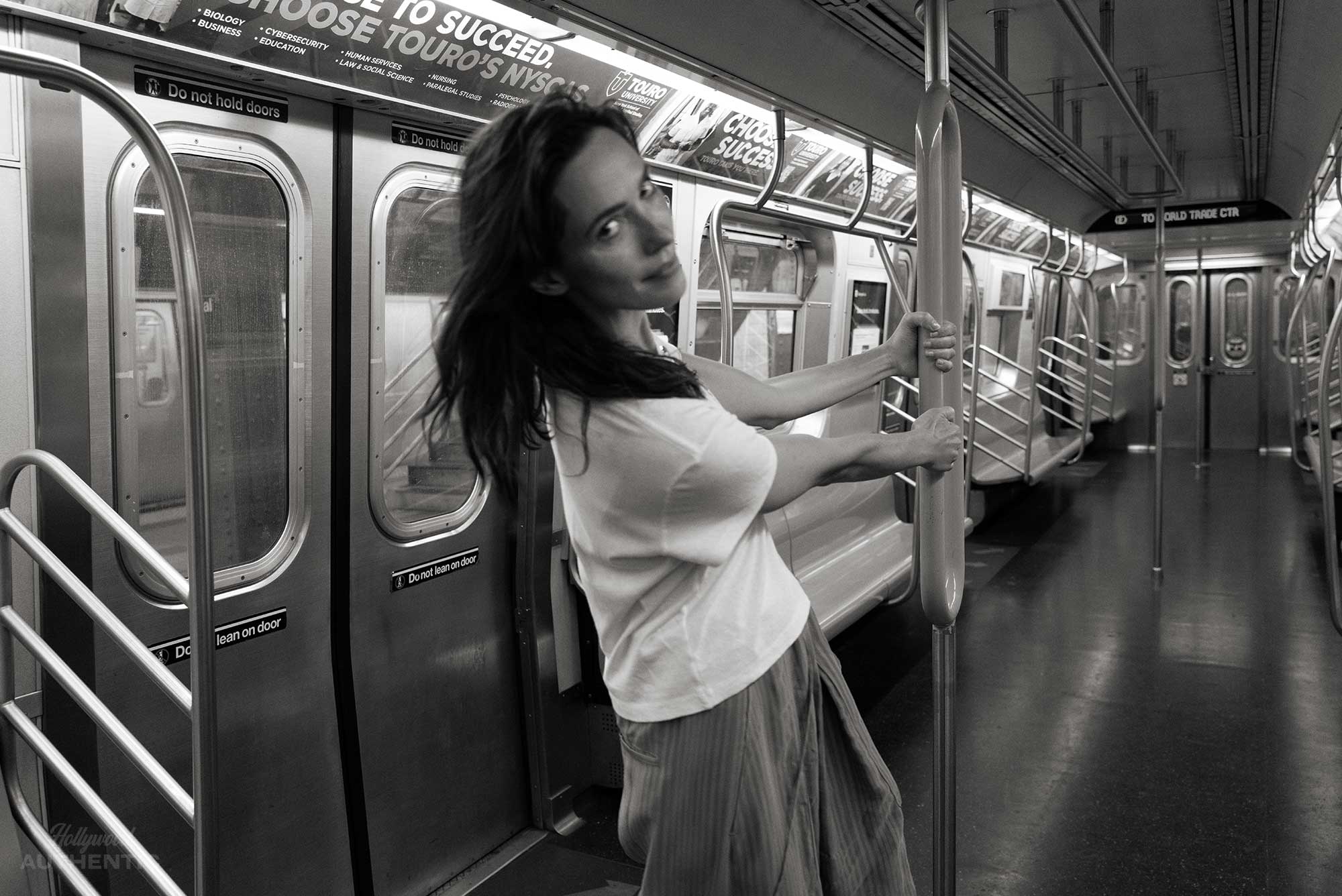
She says she’s embracing a bit of a baddie era. ‘I’m really into playing the baddies. I’ve not done it, really, and it’s super-liberating and it opens up a whole new chapter of possible play. I feel that no one really expects me to push into that kind of territory, and I’m really game to, actually.’ Also in that territory is her role in Monster, playing Borden’s step-mother, Abby. ‘It’s as if Ryan Murphy did Cinderella. Abby is possibly the ultimate baddie – really, really evil. But also a product of her times, and in a messy, horrible, loveless marriage, and probably quite a controlled alcoholic. It felt a bit, to me, as if Faye Dunaway in Mommie Dearest and Vivian Pickles in Harold and Maude had a baby, that would be this character. And even though she’s a villain, it’s definitely a comic turn. I was playing it straight, but I understood the ask, and I understood the comedic value of it.’
As we walk down Little Italy streets that look so perfectly New York a film crew is shooting on one, I ask Rebecca for her best ‘New York story’. She laughs and tells me about the time that Scarlett Johansson invited her to the Met Gala as her date after they worked together on The Prestige and Vicky Cristina. ‘I had not done much else, and I was not flush – I was living with a very impoverished singer-songwriter boyfriend. And we were kind of living off his meagre earnings that he would get after singing in a little East Village bar and I would go round with his little fedora and pick up the tips. I needed to get glam and jewels for the gala. Scarlett sent me off to one of these big places to pick out a diamond. It was a bit like the Pretty Woman moment. And they made me sign the release saying that if I don’t get it back the following day, it’s on me, and I’m liable for something like 75 grand. And I go to The Met, and I sit next to David Bowie. And it’s one of the great nights of my life. I get to the next destination, which is George Clooney’s birthday party. George Cooney turns around to me, and he says, “Hello. I’m George,” and I notice the ring is not on my finger. I never said to George Clooney, “Nice to meet you. My name’s Rebecca.” Instead, I gasped, “Look at my hand!” and I turned around, and I never see him again.’ She relays her desperate measures to find the ring she could not afford. She returned to The Met with no luck. Went back to the Clooney party and combed the floor with the help of Dominic Cooper and Rosamund Pike to no avail. ‘I get back to my apartment. I don’t have a key. So I’m in a Dolce & Gabbana ballgown on the stoop of this building. Ringless. Mascara down my face. And I just remember some fabulous queen walks past me, and is like, [snaps fingers] “You go girl!” I was like, “Ah, New York.”’ The happy outcome was that the ring was found at the Met, turned into security and the next morning she jumped on the subway to Queens to retrieve it.

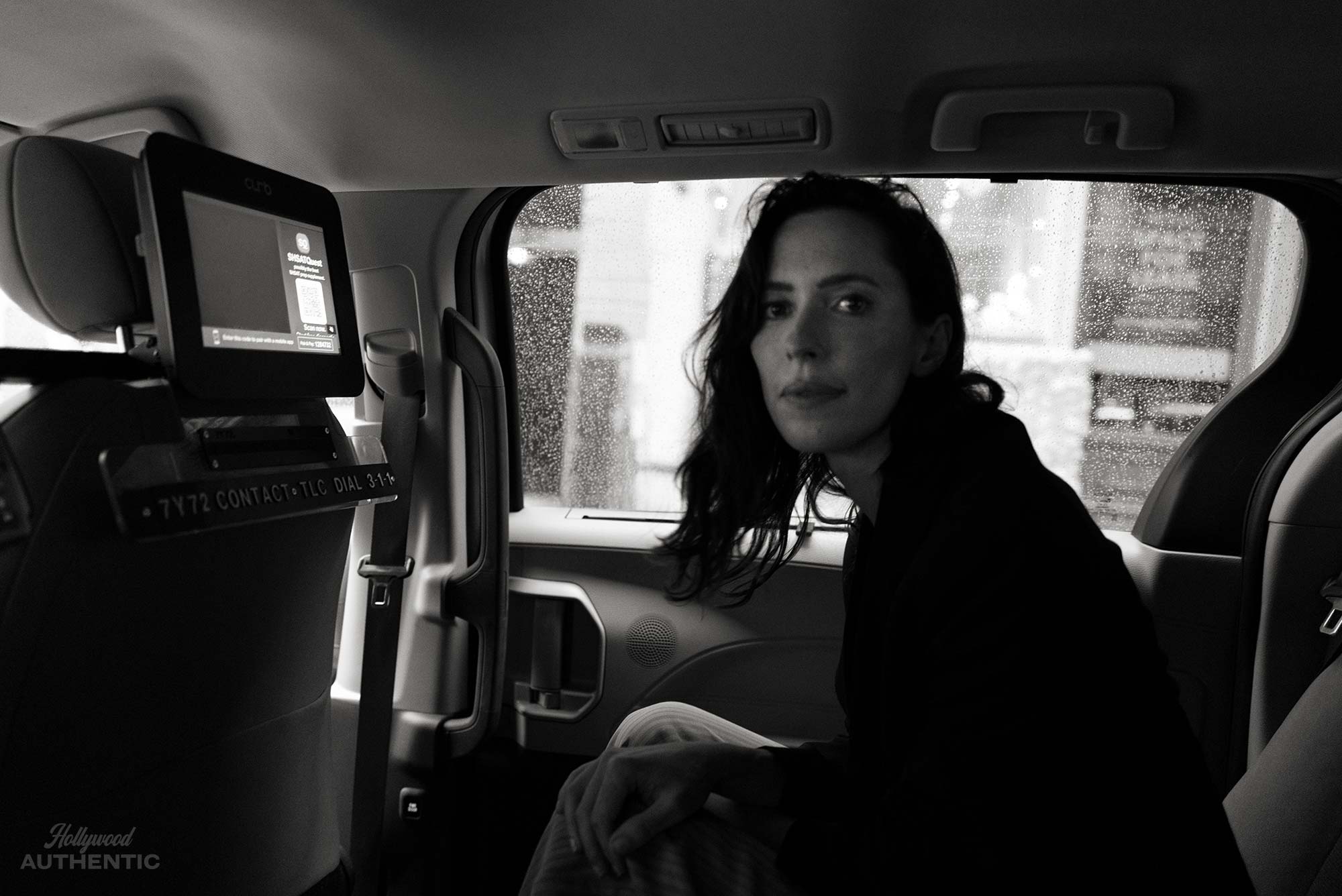
As we’re talking New York stories, we decide to jump in a yellow cab to finish the journey. Settled in the back, we discuss Rebecca’s upbringing across the Atlantic in Britain. Her parents divorced when she was little and she went to boarding school when she wasn’t living with her mother in Sussex, or spending weekends and holidays in London with her dad. In both parental homes, Rebecca was exposed to her parents’ work and the theatre. ‘I spent a lot of time running around backstage and being in rehearsal rooms. My mum would sing a lot at The Met here, and at LA Opera. I have vivid memories of those backstage areas, and the people there. When I was younger, my dad was settled at The Old Vic for a chunk.’ Her first acting role was aged nine in Hall’s TV drama, The Camomile Lawn. ‘My father always told me that I was sat outside while he was doing auditions, and he’d seen a lot of little girls to play this part, and had not been happy with any of them, and kept describing something else, and the producers were frustrated. Eventually the producers asked, “Why don’t you just read your daughter? She seems to be the thing that you’re talking about.” And apparently I said, “I’ve always wanted to be an actor.” Whether or not this is true, I have no idea. But I have to say: I can’t really remember a time where I didn’t want to be an actor. I don’t think it was really about the performative aspect of it, I wasn’t craving the limelight. I was a very shy child, but I did want to disappear into characters all the time.’
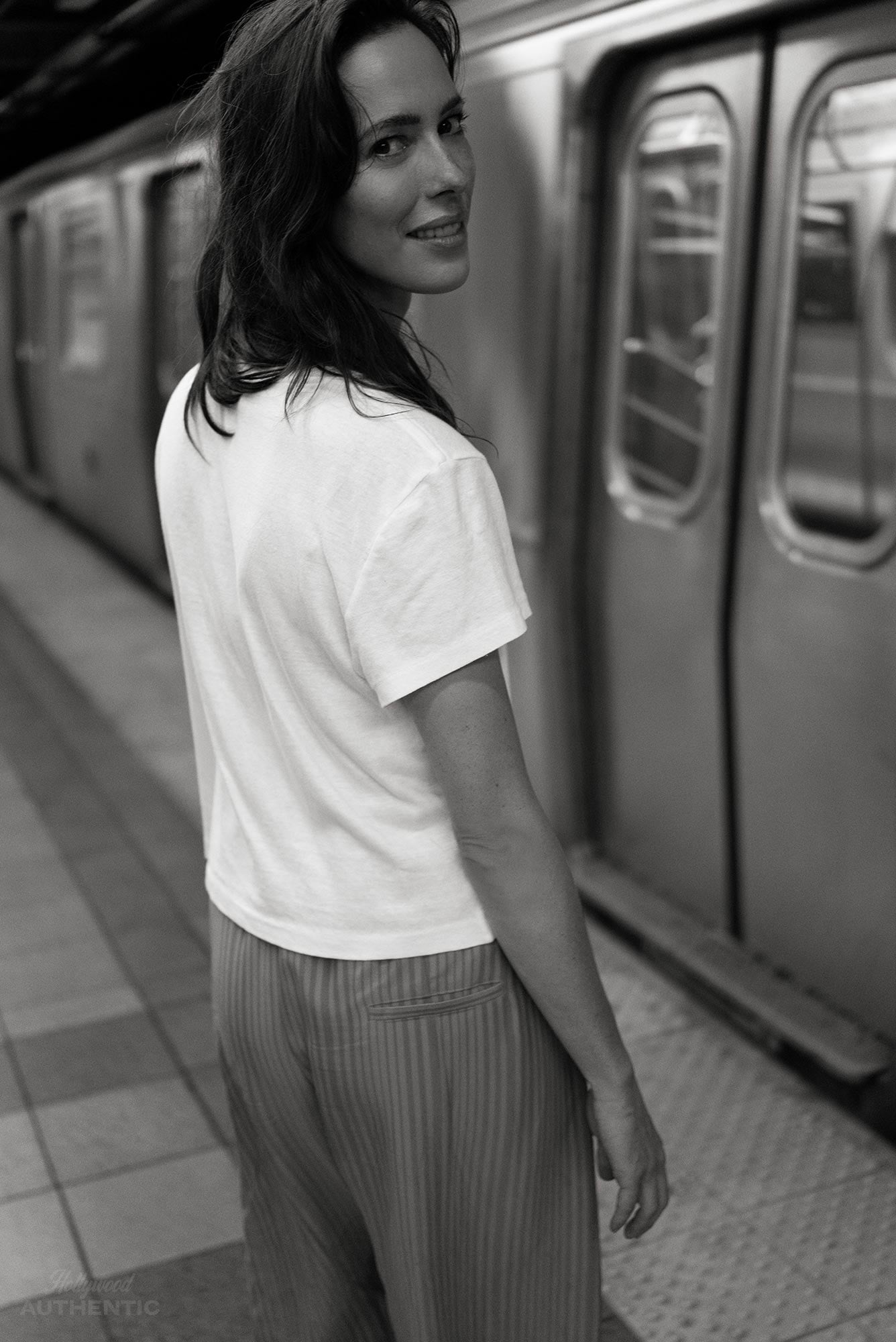
I needed to get glam and jewels for the gala. Scarlett [Johansson] sent me off to one of these big places to pick out a diamond. It was a bit like the Pretty Woman moment. And they made me sign the release saying that if I don’t get it back the following day, it’s on me, and I’m liable for something like 75 grand. And I go to The Met, and I sit next to David Bowie. And it’s one of the great nights of my life
I’m reminded of another thing Noomi Rapace said of Rebecca. That she has a good balance between control and childlike innocence. ‘As in, I’m a big kid? That’s very accurate,’ she laughs. ‘I’m deeply immature, is the truth. I think all actors share that. It’s an extension of play. If you can’t abandon yourself to that, and be prepared to look like an absolute twit, then you’re doing the wrong profession. When I’m acting, I have a lot of fun. I love the play element of it. Even when the material is torturous, I don’t find the experience torturous. I think about the way that David Lynch talked about his crews, and the atmosphere that he liked to have, and how he worked as a director. I’m really on board with that idea that everyone should be having fun, whatever the department, because creativity doesn’t happen outside of freedom. There has to be a little capacity for anarchy, right? And a kind of chaos and magic and all of that. If it feels beleaguered and too important, I think it loses its charm.’ Lynch is a big inspiration to her; she practices transcendental meditation twice a day inspired by him and adheres to his theory of Catching The Big Fish. In his book of the same name, he posits that we don’t create ideas, we catch them. We go down a David Lynch rabbit-hole for a while before we decide to skip Manhattan’s traffic and jump back on the subway. The rain has slicked Manhattan and caused gridlock.
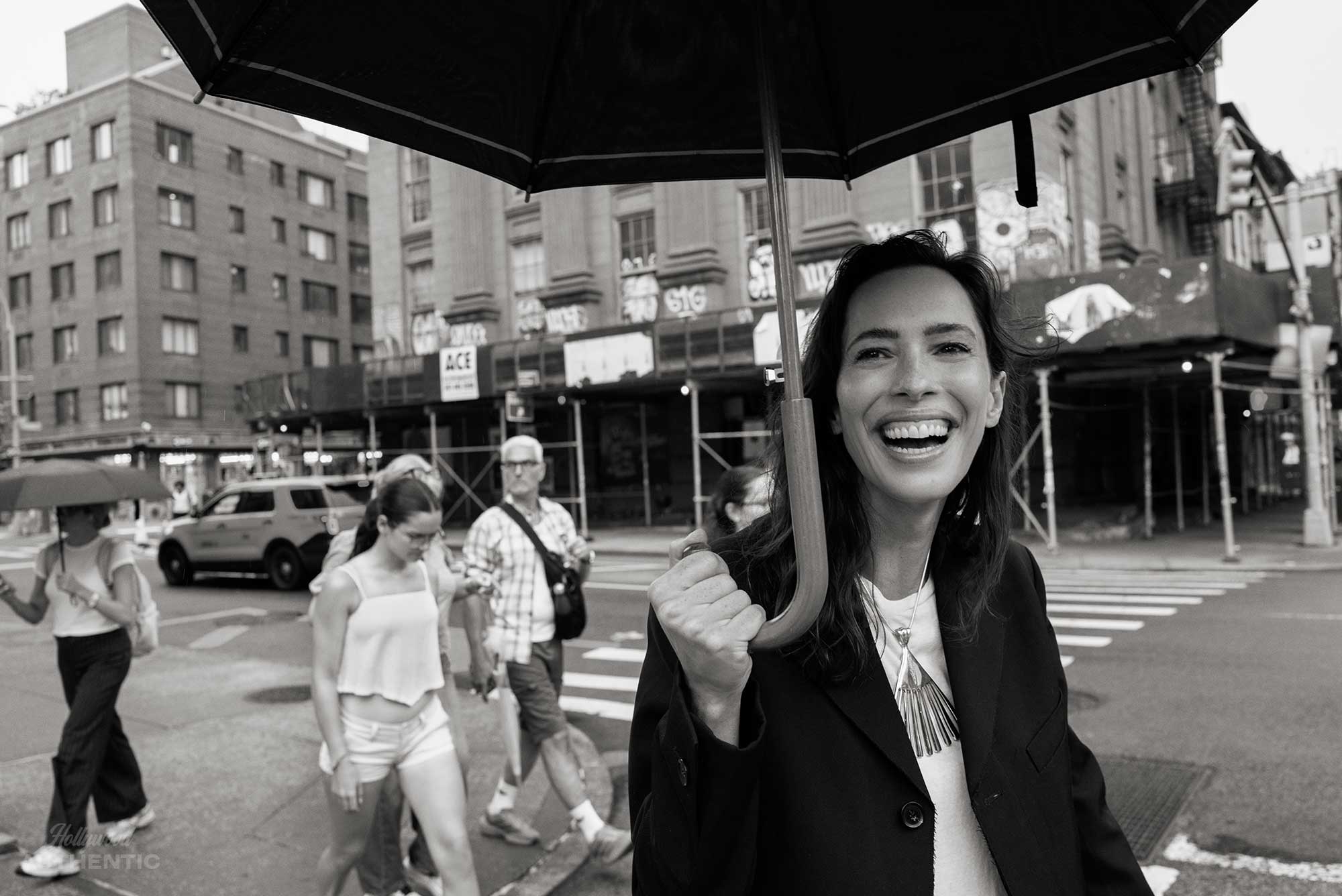
When we get on the subway car, I ask if she is recognised much – she is after all in a massive franchise, the Monsterverse. ‘Mostly I go quite invisible. It’s New York. No one cares.’ Though a man standing nearby smiles and says ‘I’m a big fan’ before returning to his book. We move on to talking about her multi-discipline approach to art. ‘It’s all different ways of expressing whatever I need to express,’ she says as the carriage empties out and we have it to ourselves. ‘It feels like if I just stay still, I immediately have a compulsion to create something in some way. And I don’t know where it comes from. I don’t know what the impulse is. And I don’t really care if people see it on some level. I just have to do it.’
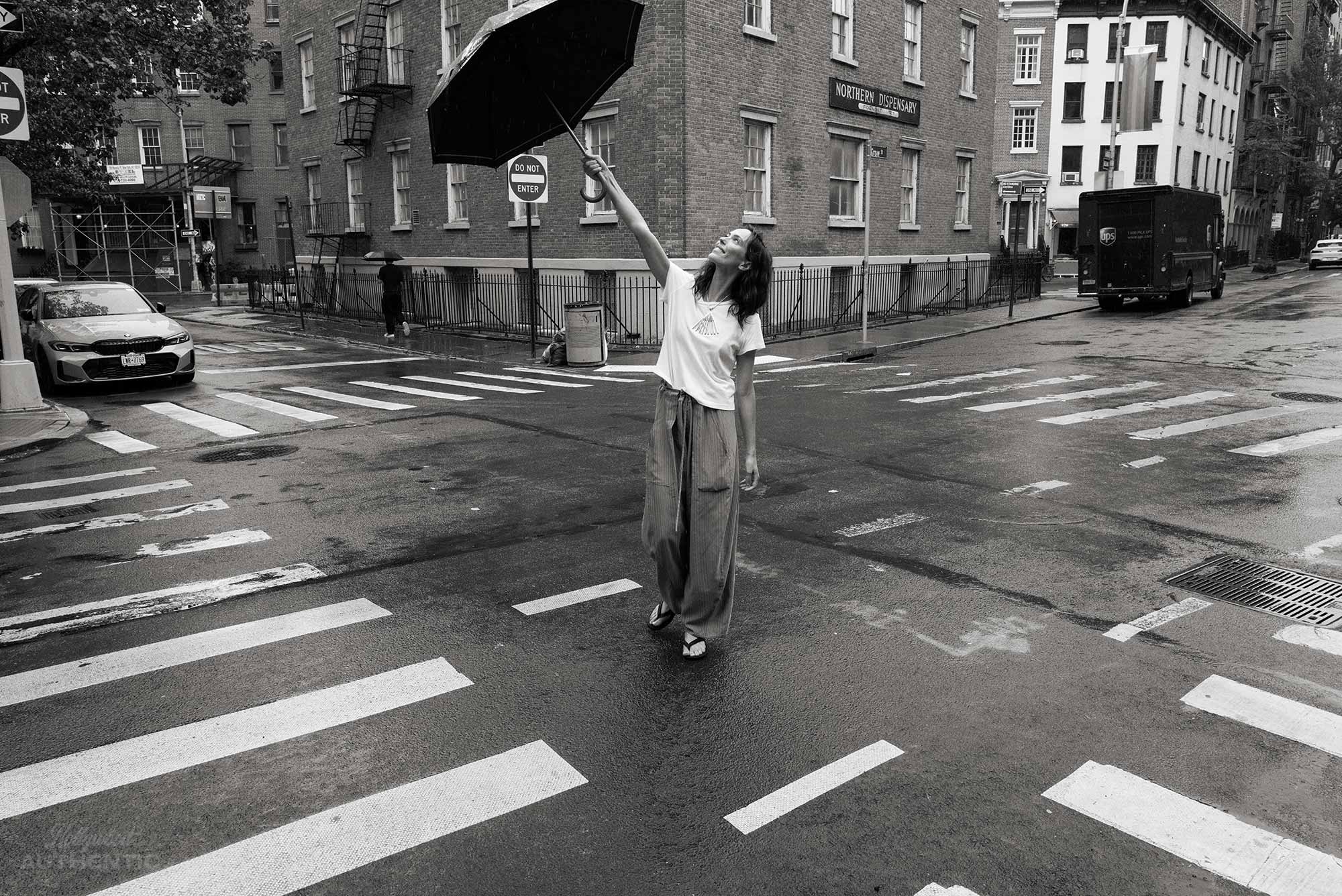
When we emerge in the West Village, we pass the Waverley Diner, another favourite haunt. It’s here she met director Ira Sachs, who she’s worked with on Peter Hujar’s Day and incoming The Man I Love with Rami Malek. Malek plays a gay performance artist living with AIDs in ’80s New York with Rebecca playing his sister. ‘There’s a trust that has been built up between Ira and I. He has become a very dear friend of mine, as well as someone who I love to work with. I want to support his films, regardless of what the part is, because I know they’re going to be interesting. He allows an actor to flesh out the subtext of the character. Often, there’s not much written. It’s always indirect. There’s never the scene between the brother and sister that explains their whole relationship. There’s hardly ever any exposition of any kind. Instead, what you get is what you infer from the still moments between the events. It’s a very brave, interesting kind of filmmaking that fascinates me. And also, what he asks of actors is actually an awful lot, because he wants things to be so real. Every director has their own version of what “real” means to them. Ira’s version is so pared back. If you do anything that smacks of performance – unless it is the character performing – then he will just stop you. He never wants any rehearsal for this reason. He doesn’t want anything to be wasted. He wants the camera to pick up everything, even if it’s messy, sloppy, you don’t know what you’re doing. Those inaccuracies actually have a truth to them that he wants. So you enter his world, and you either get it right, or you get it really wrong. It’s a lot for an actor to work out what it is. But I love entering his worlds. I think that’s how he gets the intimacy that everyone talks about with an Ira Sachs film. They are intimate, and they feel intimate to make.’
There are so many things that drive my choices. I don’t have hard and fast rules about it. But I think increasingly I’m drawn to stuff that I think I’m going to enjoy making. And I do want to get back to my roots a little bit. I started out my career mostly in comic-leaning dramas or dramedies. I love comedy, the timing of it, and I really want to find my way back into that
We head to the Three Lives & Company book store, a heaven for someone who describes herself as ‘very booky’. It’s church quiet inside and we whisper as we wander the shelves. I tell her that I’m dyslexic and she tells me she struggles with numbers. ‘Numbers flip around when I’m trying to write them down, the shapes change and I find maths almost impossible. Music – I see certain colours. And certain people, I see different kinds of symbols or something. I don’t know. So maybe it is a gift.’ She also thinks in films, she says. ‘I don’t write anything that isn’t a screenplay. I like coming up with the story, and visually imagining it, and then doing my best to describe it. I recently wrote an animated film for adults, a sort of raucous fairytale. It was interesting because I realised that unlike writing regular, real-world, live-action screenplays with a budget in mind, the only limits of it were my own imagination. You can dream anything. And then I realised that maybe I’m more interested in the actual writing as well. I might be on a journey with that.’
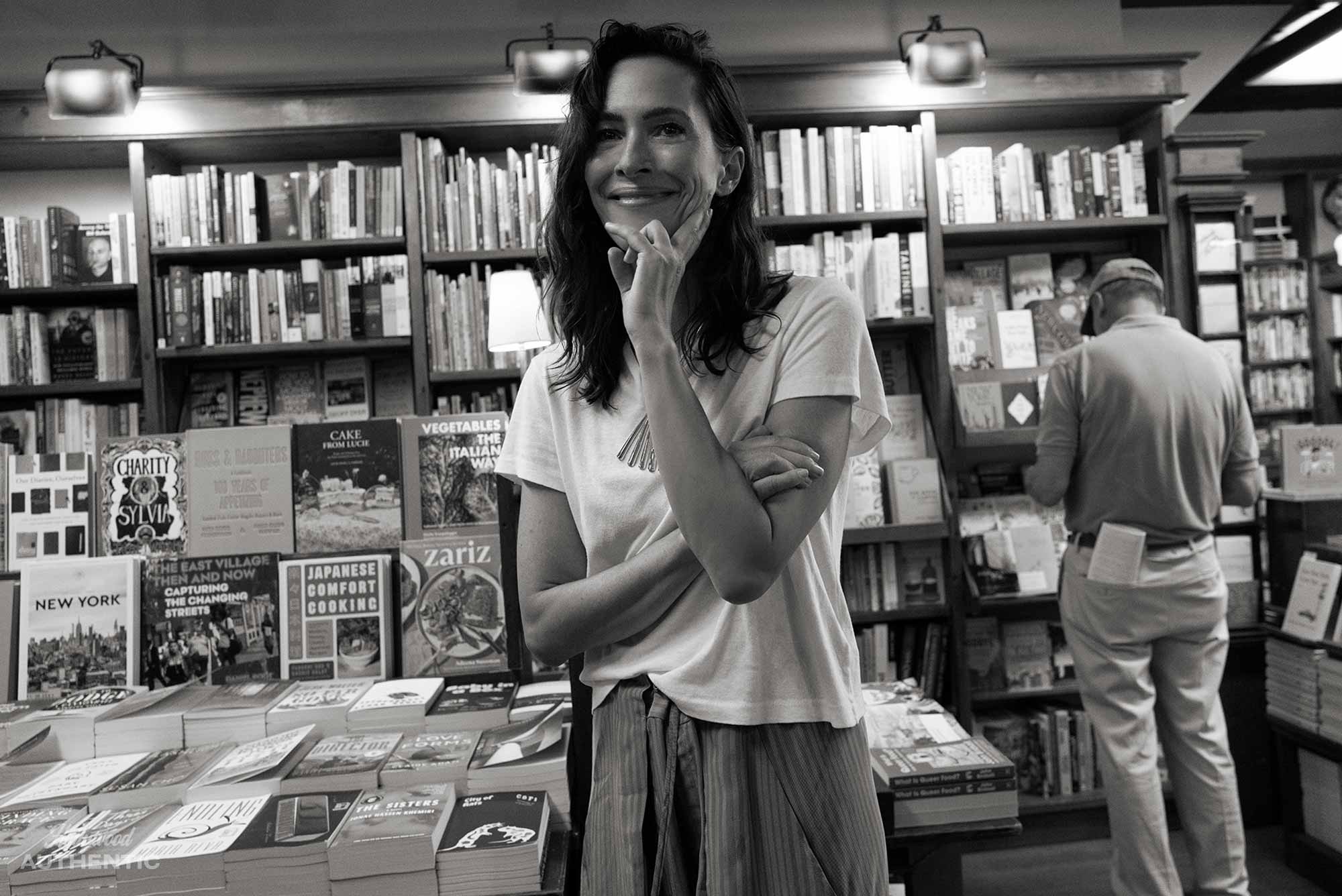
We leave Three Lives without a book this time and head back to the apartment. It has stopped raining and the city is sparkling from the downpour. Our wander round Manhattan has been creatively energising for me and I thank Rebecca for showing me around her New York. Before I head back to the airport, I ask what she’s looking for now in her next artistic endeavour. ‘There are so many things that drive my choices. I don’t have hard and fast rules about it. But I think increasingly I’m drawn to stuff that I think I’m going to enjoy making. And I do want to get back to my roots a little bit. I started out my career mostly in comic-leaning dramas or dramedies. I love comedy, the timing of it, and I really want to find my way back into that. I don’t think people think of me to do anything that isn’t really a heavy lift. And it’s hard to turn down those roles. I’m not that dark a person despite having done a lot of dark material. I think I’ve always done a lot of dark material because I’ve always felt I could handle it, because I am quite a light person in that regard.’ As she slips back into her apartment building she smiles and leaves me with her professional intention. ‘I’m going into my fun era…’
Photographs & interview by GREG WILLIAMS
As told to JANE CROWTHER
Onslaught is in cinemas 4 September
Monster: The Lizzie Borden Story is coming to Netflix
The End of It is coming to cinemas
The Man I Love is coming to cinemas
Hair by Ben Skervin
Make-up by Matin Maulawizada
Styling by Bailey Moon/ Brigade Talent
Pants by Kallmeyer. Blazer by Proenza Schouler. T-shirt Stylist’s own