


Photographs & interview by GREG WILLIAMS
As told to JANE CROWTHER
As she prepares to release her directorial debut, Goodbye June, Kate Winslet returns to her creative and family roots in Reading with Greg Williams and takes a trip down memory lane.

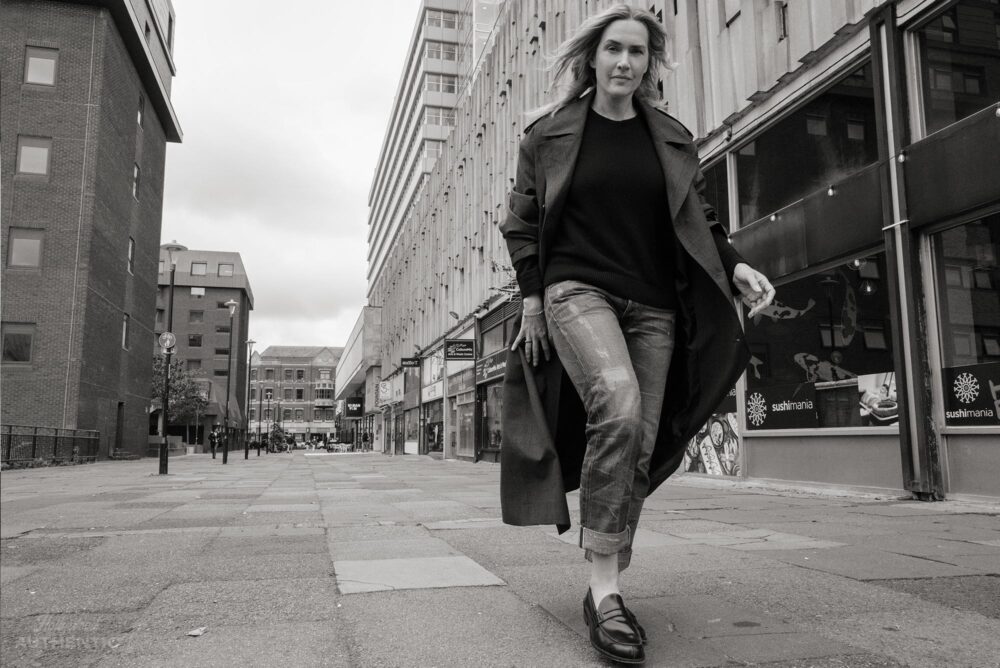
Kate Winslet is studying the information board of the number 17 bus in Reading town centre on an autumnal October morning. She smiles and turns to me. ‘It says here: “Your bus fare could take you anywhere.” That’s actually incredibly moving, because it was things like bus fares and saving for train fares that did take me to London for auditions. It took me to the delicatessen to earn the money to pay for the train fares to go to auditions, where I would then start getting jobs in London. I was always getting on one stop later, and off one stop earlier, to just save a bit off the bus fare. I would get the train from Reading to London a lot. I’d run around with my little A to Z, running from audition to audition. You just hoped you’re going to get a gig…’
Kate has been getting the gig for some years now. The Oscar-winning actor hasn’t stopped working since landing her calling-card role as Juliet in Peter Jackson’s Heavenly Creatures as a 17-year-old, which took her away from her hometown in the South of England to New Zealand – and beyond. Having played a diverse range of roles during a glittering career, Kate is now challenging herself in a different way: as director. As she turns a milestone birthday, she’s putting the finishing touches to her directorial debut, Goodbye June, a heartfelt family comi-drama following spatting siblings as they come together to look after their ailing mother at Christmas time. Before we travelled to Reading for a trip down memory lane, I watched Kate finesse the sound mix of her film at Abbey Road Studios a few days earlier, where she has previously worked in a producer capacity on Lee and The Regime. Today we’ve arrived in the Berkshire town for the actor/director to revisit her childhood haunts and home, to process the progress she’s made from being a little girl from humble beginnings who wanted to perform.
While we stand at the bus stop, the purple number 17 appears as if on cue. ‘It cost about 30p to get home and it stopped a little bit before our house…’ As we linger in town, she recalls getting her ears pierced in a local jewellers and reminisces about Butts shopping centre and the treats she coveted from there. ‘They had a big sweet shop in there called Confetti. We weren’t really allowed sweets, mainly because they were expensive. But I do remember on our birthdays, my mum would always include a big bag of pick ‘n’ mix from Confetti.’ The Winslets lived in Reading as an artistic family; dad Roger was a part-time actor who worked a variety of jobs between roles, mum Sally was a part-time nanny. Kate grew up one of four siblings with an older sister, Anna, a younger sister, Beth, and a younger brother, Joss. The children were part of an amateur dramatic company who regularly performed at the town’s Hexagon Theatre, a Brutalist behemoth on the ring road. While there, Kate auditioned for TV and film roles and, as a teen, started to save money from the paying gigs she landed. ‘I used to do a lot of children’s voiceovers for foreign films because I had a very good ear for accents. So I would do Danish films into American, and things like that. I could just start saving, you know, for a life.’

I was always getting on one stop later, and off one stop earlier, to just save a bit off the bus fare. I would get the train from Reading to London a lot. I’d run around with my little A to Z, running from audition to audition
Her life now is all over the world as she travels for work. But as a teenager, Reading was her domain. ‘I lived here until I was 17 years old, and I got my first movie. The Hexagon Theatre is the first place I ever went on stage, when I was 11 years old, in a production of Bugsy Malone.’ As we drive over to the Hexagon to relive those days, Kate opens up about her family. ‘You know, people often don’t believe this about me… I speak very well, so it sounds like I would have been very well-educated, well-bred, from privilege, etcetera. And that’s not the case at all. My parents had very, very, very little. The one thing that they did do for us, because it was free, was that they enrolled us in a fantastic theatre company [Starmaker] that was based here in Reading, which was so incredible and phenomenally diverse and inclusive, and took kids from about the age of eight right through to adults. It was our first proper introduction to what it means to be part of a functioning creative community, when you put on a show, and create a piece of art in any way that involves multiple people.’

We arrive at the theatre and I ask what being part of a creative community felt like to that little girl. ‘You all had to listen and muck in – and also concentrate. We had a lot of dance routines and tons of dialogue we had to learn, and you all had to look out for each other, and take it in turns to get the parts. I never actually did get very massive parts with that theatre company, but it didn’t matter, because they made everyone feel equally as important. It was one of the best things I think our parents did for us, because it meant that our life didn’t revolve around school, and the minutiae of school playground politics. I didn’t particularly like school and I don’t think I really thrived there. But it was here that I really did thrive. My mum and dad probably did feel terrible guilt that they couldn’t pay for things like piano lessons or a proper dance school or acting school – but what they could do was give us these experiences of community, and being part of something that meant that our self-esteem as people was always pretty well-rounded, you know?’


She pauses. ‘It’s so much harder for kids now with social media and people constantly comparing themselves to one another, and wanting to be liked, and falling apart if they’re disliked. It’s so insane. It’s an invented form of how one’s natural self-esteem should grow, when in actual fact it’s just being part of life and communicating with others that often gives you the best measure of who you’re becoming within the world, and your place in the world, and figuring out who you want to be. We were just so lucky that we had that. Thank God mobile phones didn’t exist.’

When we arrive at the theatre we find the places she remembers: the stairwell where the bigger kids stole crafty smoking breaks or ‘snogs’, the massive red theatre sign out front and the front-of-house lobby inside (‘It smells the same!’ she marvels). As we walk inside to explore, I ask if she feels that she draws from those formative experiences when working now? ‘To me, I was learning how to act here. I was learning how to do all of it – the acting and the dancing and the singing, which is quite significant, because you learn to understand your body as something that you have to take care of. And also you learn its limits. There’s things that you learn, and that also involves an enormous amount of trust. So the way in which I think I learned to listen and respect a space that had other people in it – that really did begin here. And actually directing now – I was acutely aware of my own capacity to pull everyone in. I’ve always done that as an actor. But as a director, it’s completely 100% the job to do that, to pull everyone in. And because the film that I made is about a family, I wanted the on-set experience to feel as close to that as possible, so that everyone was just doing it by osmosis.’

You know, people often don’t believe this about me… I speak very well, so it sounds like I would have been very well-educated, well-bred, from privilege, etcetera. And that’s not the case at all. My parents had very, very, very little. The one thing that they did do for us, because it was free, was that they enrolled us in a fantastic theatre company
Written by Kate’s son, Joe Anders, the film follows June (played by Helen Mirren), the matriarch of her family; mother to four disparate grown kids (Winslet, Andrea Riseborough, Toni Collette and Johnny Flynn), grandmother to a number of kids and wife to Timothy Spall’s befuddled pensioner. Battling terminal cancer in hospital, June approaches Christmas as her health declines, hoping to see her argumentative offspring united and to depart on her own terms. Kate worked as director to create a company feeling among the cast, something she can trace back to the years she spent here. ‘Being part of experiences I had here for a formative time of my life – it definitely set me up in terms of reaching for community, time and time again.’

We find the stage door and the memories come flooding back. ‘On the first night, my mum and dad would always find a way to send flowers. That was just incredible – to be a child, and to be sent flowers by your parents. I remember seeing my mum’s little handwriting on the card. I was never the star. I never got the main part. It never occurred to me, because that wasn’t why I was doing it. I never sought out fame. I wasn’t setting myself up mentally ever for fulfilling a big dream of becoming a famous actress. I just thought, “Well, if I’m lucky, I might get the odd episode of Casualty, and a bit of theatre, and voiceover work.” And I thought, “Well, that would be incredible if I could make a living that way.” I didn’t anticipate any of this to have happened to me.’

Though she started out as an amateur performer at the Hexagon, Kate soon transferred that experience to drama school and beginning to get paid work. ‘I got a part bursary, and my grandmother contributed something for the first year,’ she says of affording a fee-paying school. ‘Then I started to get this voiceover work and that went towards the fees. I was able to gradually actually pay for those school fees myself.’ We head backstage where Kate recalls the way to stage left and right, the sound of tap shoes clattering along the corridors. She remembers the dressing rooms, the excitement, the noise, the nerves… ‘It was nervous excitement. It wasn’t a proper, real stage fright. I’ve successfully avoided putting myself in a position where I would feel stage fright, because somehow as a grown-up I haven’t done any theatre. The last play I did was when I was 18 years old, and I did a production of What the Butler Saw at The Royal Exchange in Manchester. And it was amazing. But I was terrified.’
To me, I was learning how to act here. I was learning how to do all of it – the acting and the dancing and the singing, which is quite significant, because you learn to understand your body as something that you have to take care of
It seems strange to hear an actor who has achieved so much on film and in TV admit to such a thing. She laughs. ‘As an actor, most of the prep time is really spent just shitting yourself, procrastinating… If I’m getting ready for a film, I’ll wake up at half-three in the morning, and think, “Oh, well, I’m awake now. I might as well get up and panic a bit more.” I’m then pacing the floor, learning lines in the dark, or figuring out character stuff. And that experience of preparation for a film can often be a little bit destructive because there is so much panic that goes on. And then when you start, it’s all fine. You’re in it. And with Goodbye June, I didn’t have time to think about nerves. And we had a good rehearsal period that was very concentrated because I know what a nightmare it is as an actor to be on a roll in rehearsal, and suddenly be pulled away for dialect coaching, or for fight practice…’
Her directorial debut seems to have been a way to put right some of the pet peeves she might have had in front of the camera. ‘I was able to do a lot of things that I’d had on my private wish list,’ she nods. ‘As an actress I’d thought to myself, “One day, if I ever direct, I really would love to not have booms on poles. I would really love to have locked-off cameras, and the crew just walk away, so the actors can just be in that space together.” And I was able to do that on Goodbye June. It was also really important that we created a really respectful, calm, mindful, inclusive on-set environment. We had a child actor on set with special needs and a child who was neurodivergent, so it mattered that everyone felt safe and supported – because it’s not something that often gets given as much consideration. I did feel that having experienced really beneficial working environments – and some less beneficial ones – during a 33-year career, I was able to implement my own dream environment as an actor and provide it for the other actors.’
With its messy family dynamics and dialogue, audiences will no doubt recognise many aspects of family life in Kate’s film. ‘I think some of our most complicated relationships in life are with the people that we love the most of all in the whole wide world. And to be able to create that, I knew that I would have to provide an environment in which everybody felt not just safe and heard – but sometimes held, because every one of our cast members had experienced loss in some way, either of a parent or of a very close family member or past love. Sharing those stories was hard for them. But when you do something like Goodbye June, which is about family and loss in equal measure, you know as an actor that you are going to have to talk about the hard stuff that you try to leave behind. This was a space that all of that had to be included.’

Inspired by Mike Leigh and Ken Loach, Kate worked closely with her cinematographer, Alwin Küchler, to capture the mechanics of a family as they rowed and reconciled. She relished the edit, the sound mix, the whole creative process. ‘I loved it all. I absolutely want to do more. You know, I’ve worked with some incredible directors and I’ve also worked with some directors who were maybe less comfortable working with actors, more visual directors. And so there are certainly things that I have learned myself were absolutely areas to avoid with actors. Sometimes I’ve hung on to things I know I wouldn’t say to an actor, because those things were just either unnerving to me or simply not helpful. But I had huge support from Francis Lee who reminded me to trust myself. Todd Field and Todd Haynes were also brilliantly supportive and encouraging, and Jocelyn Moorhouse, who pointed out certain things that she felt I could lean into within my own integrity as a creative.’
Part of helming a project was setting the tone for the 35-day shoot – one that she admits crew members were uncharacteristically reluctant to leave by the end of a filming experience she describes as ‘warm’. ‘How I am in my life is a big smile on your face and lots of good, positive energy. And I’ve always been like that as an actor because when you’re number one on the call sheet, that comes with a responsibility, your energy is 100% setting the tone. So if you’ve had an argument with somebody at home or a colleague has upset you or something’s not gone according to plan, you have to leave that at the door. You can change the course of the entire day and often you can make things fantastic if you just decide that you’re going to put that energy into it. And so as the director, I was doing that tenfold. I definitely learnt that as a director, you just wear the stress on the inside!’


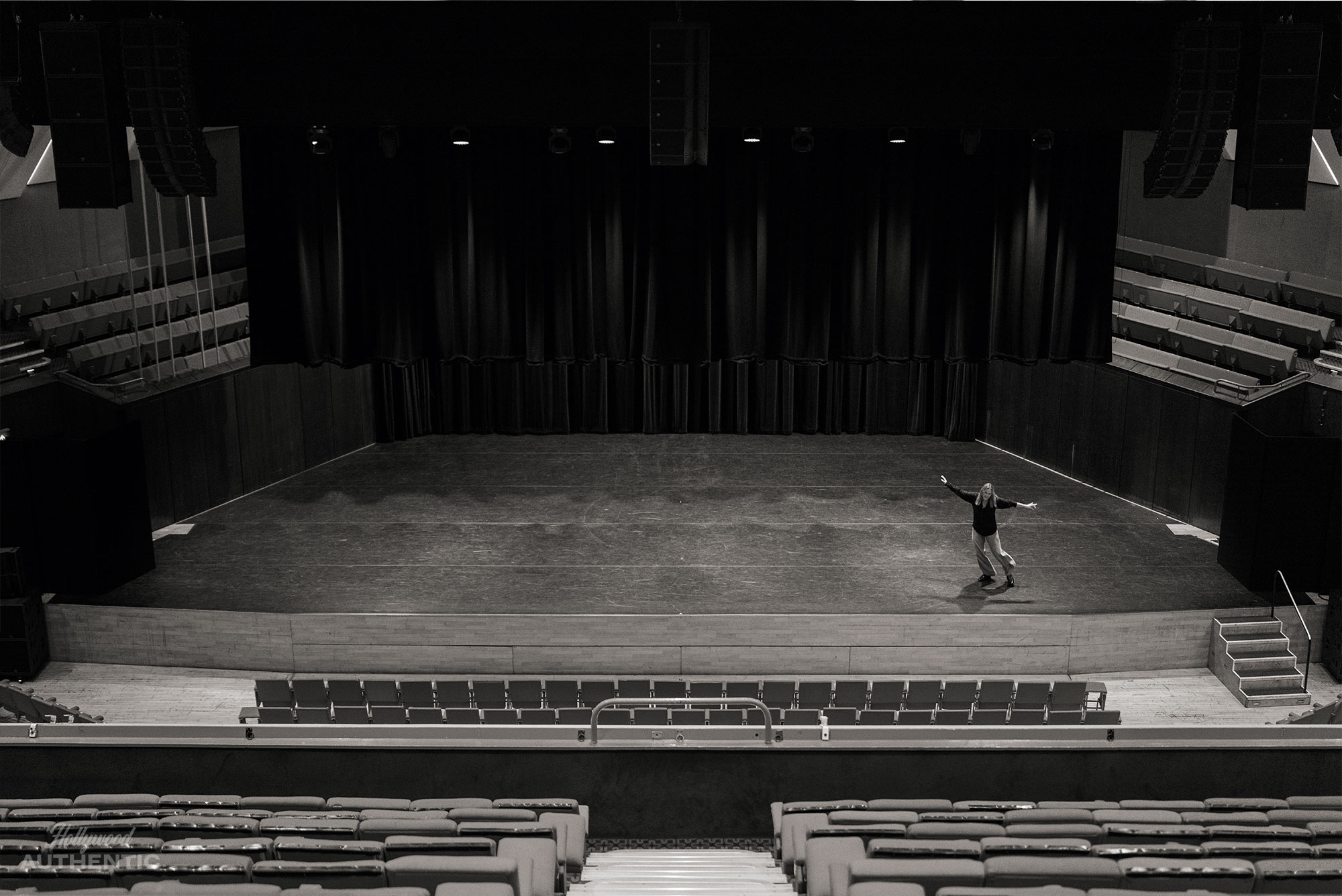
We make our way out to the stage, where Kate is astonished anew at the size of the venue, the number of seats looking back at her. ‘When you’re a little kid, this is huge!’ As she stands looking out to the stalls I wonder if she’d like to do theatre now. ‘I’ve several times come very, very close, and then timing hasn’t worked. And I think part of the reason why I still haven’t really done theatre is because I had a child when I was really young. I had Mia [Threapleton] when I was 25. Theatre is actually quite impractical when you’re a parent, because it’s evenings and all of your weekend. Whereas at least with filming hours, even though the hours are much longer, you’re not really working on the weekends, and usually you can get back in time to put the kids to bed. So that makes a big difference.’

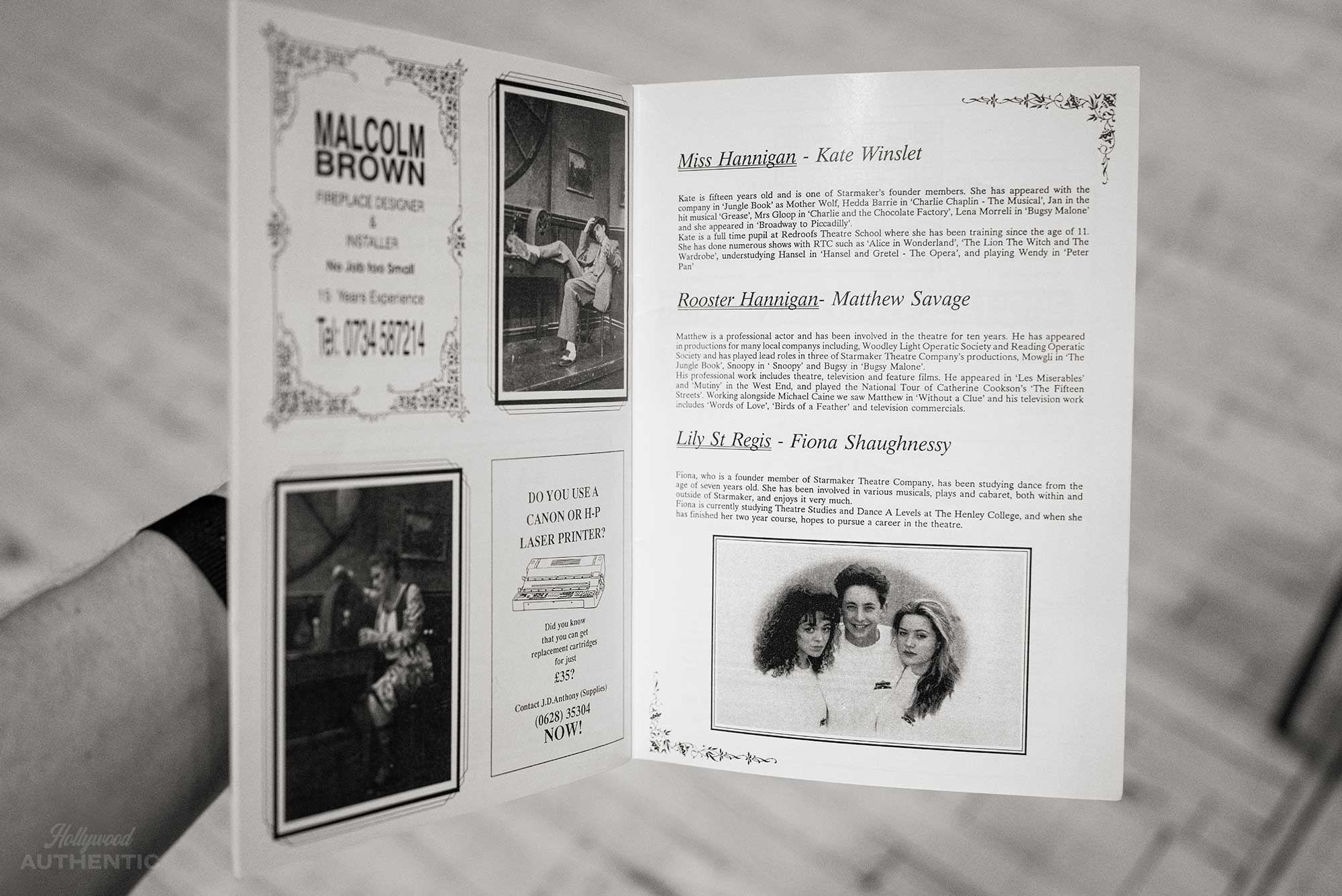
As she turns back to the stage she remembers her tap choreography from one of her childhood shows, muscle memory kicking in. She tap dances with a grin on her face… When we leave the stage, we find a souvenir programme from a production of Annie that Kate starred in as Miss Hannigan. She turns the pages reverentially, finding a photo of herself at 15. ‘In the production of Annie that my sister Anna was in five years previously, in that production was a young Christian Bale who was also in this theatre company. He was an extraordinary tap dancer, he danced on the top of a stack of rotating suitcases.’ She relates a story of a castmate who talked of disliking her body because of how it was perceived by the boys in the company. She shakes her head. In her career she’s been subject to media dissection of her own body. ‘Sometimes I think so much has changed, and sometimes I think absolutely nothing has changed at all. It’s a constant thing, isn’t it?’
Real life vs dramatic life is something I want to ask her about. Her family make-up is similar to the one at the centre of Goodbye June. She’s one of four, and like Spall’s disabled dad, Kate’s father suffered a terrible accident when his foot was severed at the ankle by a boat rope. ‘His foot was put back on in a massive 18-hour operation during which he nearly died twice. So we grew up with our whole universe quite altered from that time, because life was already quite challenging in terms of financial resources and just trying to get by. And then things got a whole lot harder when Dad became disabled.’ There’s also a family link in that the screenplay is written by her son, Joe. ‘Joe got a place in screenwriting school after he finished his A levels. When he left school, he really struggled just to declare the fact that he did think he would like to go into the film industry. I did feel that very strongly, and I think there was a part of him that was almost resisting it being true. Perhaps like me, he would never want to do anything unless he felt he could really do it, or make a meaningful contribution to anything. So he got a place at screenwriting school, and he was encouraged by a fantastic writing tutor: “Write what you know, Joe.” The most significant thing that had happened in his life was the loss of his grandmother, my mum, and when she died, he was 13-and-a-half. We really all came together as a family, and gave her this passing that not only she deserved but would have wanted. He was struck by how for so few people that is ever the case, whether it’s just sheer geographics; whether it’s that death can creep up and take you by surprise; or for other more complicated family reasons. So he created a story that was predominantly about a family coming together as they were adjusting to the impending loss of the matriarch. The framework is very similar to my own family: sisters, a brother, a mum and dad who have been married forever. My parents were married forever until my mum passed away. And that was the backdrop.’
Kate was originally going to produce the film, and play the character of organising daughter, Julia (because she wanted to play the sister who was least like herself) but as she discussed who should direct she felt she couldn’t give the feature away to anyone else. That was when she realised she wanted to direct. ‘As an actor, it matters to me to tell stories that not just hopefully resonate with people, but that do make them feel that their stories do have a place to be told. I hope that if I do go on, and continue to be a director that I continue in that vein of making sure that people are given a platform to have a voice, and getting those stories told. Because, so often, that doesn’t necessarily happen.’

When you do something like Goodbye June, which is about family and loss in equal measure, you know as an actor that you are going to have to talk about the hard stuff that you try to leave behind. This was a space that all of that had to be included
We decide to head out to the deli where Kate worked as a teenager, and jump in the car for the short journey. ‘It was where I was working when I received the phone call to tell me I had been cast in Heavenly Creatures, and that was the film that really did start my whole career. It’s crazy – 33 years ago,’ she tells me as she drives. After she filmed the movie she went straight back to work, just as her dad always did. ‘Well, yeah, because that’s what the life of an actor is. That’s also what I’d grown up seeing. Even though there were lots of actors in my family, they were completely impoverished. It’s actually typically very hard to make a living – still, today – as an actor. You always have to have a fallback plan. So I just went straight back to work, thinking, “Well, I’ll do this, then, until the next audition comes in…”’

The next auditions came; she worked on Sense and Sensibility and Jude (‘So at that point, I was then able to make a living from acting’) and then Titanic came along. She stands outside the former deli, now a Vietnamese pho restaurant, and thinks about her past when a local woman called Maureen approaches to ask what we are doing. When she asks Kate what she does as a job, Kate replies, ‘I do films.’ She chats to Maureen and some other wellwishers that ask for photos and talks about her roles. They are delighted when she poses for pictures and tells them how pleased she is to meet them. When we leave to drive on to her old family home, Kate tells me how much she appreciates such interactions. ‘In the early parts of my career, the mainstream media in this country was really, really not very pleasant about me. So I learned quite a long time ago how to not care what people think. But it’s very different to caring about what people feel. And I do care about what people feel. How I make people feel is very important.’

I learned quite a long time ago how to not care what people think. But it’s very different to caring about what people feel. And I do care about what people feel. How I make people feel is very important
Learning is also important to her. ‘I’ve always said this: you can never stop learning as an actor. If you decide you know everything, you are fucked, because it means that you’ll stop listening, and you won’t pay attention – not just to what other actors say, but what they might bring into a room that could genuinely have an impact on the performance you’re about to give that you may have thought was going to come out of you in a certain way. Going into directing, I genuinely did feel solid in terms of what to do with a group of actors, and how to put a story together. But of course there were going to be things that I had never done before, you know? The wealth of information and knowledge that I was able to gain from working with these brilliant people [on Goodbye June] – it was just incredible. I never want to not do it. It’s the most intense, consistent period of absolutely working with no break. I started work on the film on the 3rd of January, and I’ve only just started to draw breath now in October. In theory, I should be exhausted, but I’m not at all. I feel completely empowered and uplifted by the work, because I was just so challenged by it, and felt really enriched by the whole experience, moment to moment.’

As we approach her childhood home on Oxford Road and park up, she tells me that she ensured that experience was paid forward. ‘I had a lot of first-time people on this film. If I was a first-time director and my son was a first-time writer… so I was able to give an opportunity to a first-time composer, a first-time set designer, a first-time costume-designer. These were just wonderful things to be able to do for people.’ I wonder if it’s different putting a project out into the world as a director, rather than an actor. ‘I am nervous about this, actually,’ she admits. ‘But one thing that I have strategically done throughout my career to help me stay grounded and level headed is I don’t read reviews ever. Even if it’s a good one I still won’t read it, because that will stay with me and that doesn’t really help. Of course, we hope that people will watch it, take something from it, be moved by it and hopefully even uplifted by it, because that is what we intend. But I think if I am to try to answer your question, I think it is going to be a bit harder for me to avoid what people think of the film.’

We stand outside the small terraced house where Kate grew up. The house is much run down since Kate lived there as a child, with newspaper instead of curtains and a boarded-up door. It’s not clear if the house is inhabited. ‘I’m fascinated by how similar it is here, but I do feel sad about the house, it’s a shame that it doesn’t look like a home anymore. When we lived here, we were never sad. We were really happy, had a really lovely life. We used to swing on this gate, I remember the sound of the letterbox…’ A passing pedestrian calls out ‘Are you famous?’ and Kate smiles. ‘Well, I could be,’ she laughs. The woman can’t place her til they discuss The Holiday. When she walks away with a selfie, Kate shrugs. ‘See, this happens. She knows I’m famous, but she doesn’t know who I am. But that’s how I’ve survived!’ She tells me she still uses public transport and for the most part moves around without being bothered.


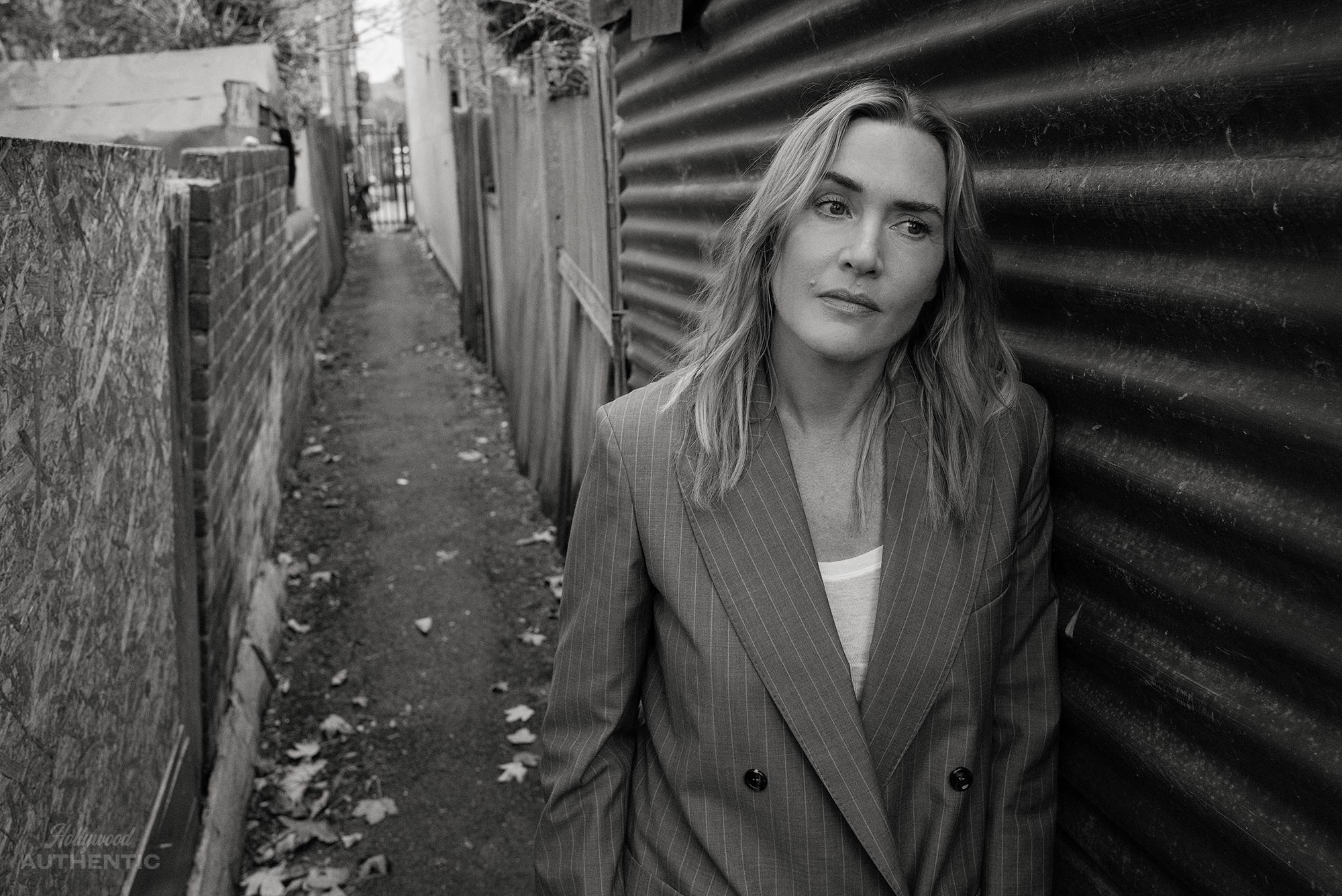
We scoot around the back of the terrace of houses to the alleyway that runs along behind them. ‘I haven’t been down this alleyway since I was 15 years old,’ Kate exclaims and remembers riding her bike down the narrow path. ‘You’d grate your knuckles down the sides.’ We peer into gardens looking for her dad’s shed and her mum’s blackcurrant bush. She yelps when she finds it, and the remnants of her mum’s gardening and paving. ‘We felt really lucky with what we had. We had a home, this nice garden, and we had our rabbit, and our grandmother didn’t live too far away… We were very cramped, and the walls were paper thin, but we were really happy. And not many kids can say that. I do think what my upbringing really did give to me is a sense of perspective on what’s important. And I’ve never, ever, ever lost that perspective. You know, family, gratitude, a shared meal, a shared experience, that sense of community and team spirit. We grew up just getting on with it and making the best of everything. And I still have that same attitude now in an industry in which people can slightly lose their way or lose a sense of priority, and also believe all the “yes” people around them. I’m deeply distrustful of people who say “yes” to me all the time! So, yeah, it’s taught me to be very good at seeing right through all the bullshit!’ She pauses for a moment and looks emotional as she peers over the back fence.

We leave the house and garden behind and as we return to the car I ask how she feels now about returning home to where it all started for her. ‘Reading served me well. But I will say this: I always knew I was just not meant for here. I was meant to be going off, and finding my way somewhere else. I felt that very strongly.’ We pass the number 17 bus stop on the road and she grins. Her bus fare really did take her everywhere…
Photographs and interview by GREG WILLIAMS
As told to JANE CROWTHER
Goodbye June is out in cinemas now and released on Netflix, 24 December
Styling: Cheryl Konteh c/o A-Frame
Hair: Nicola Clarke
Make-up: Lisa Eldridge, c/o Streeters
Thanks to The Hexagon Theatre, Reading
www.whatsonreading.com
Beige striped jacket: Max Mara
White vest: American Vintage
Grey trench coat: Frankie Shop
Black cashmere knit: Theory
Jeans: Ralph Lauren
Loafers: Church’s
Black blazer: Saint Laurent
Black cashmere knit: Theory
Jeans: Ralph Lauren
Loafers: Church’s
Black shirt: Equipment
Grey jeans: FrameTrench coat: Burberry
Sweater: The Frankie Shop