


CANNES DISPATCH
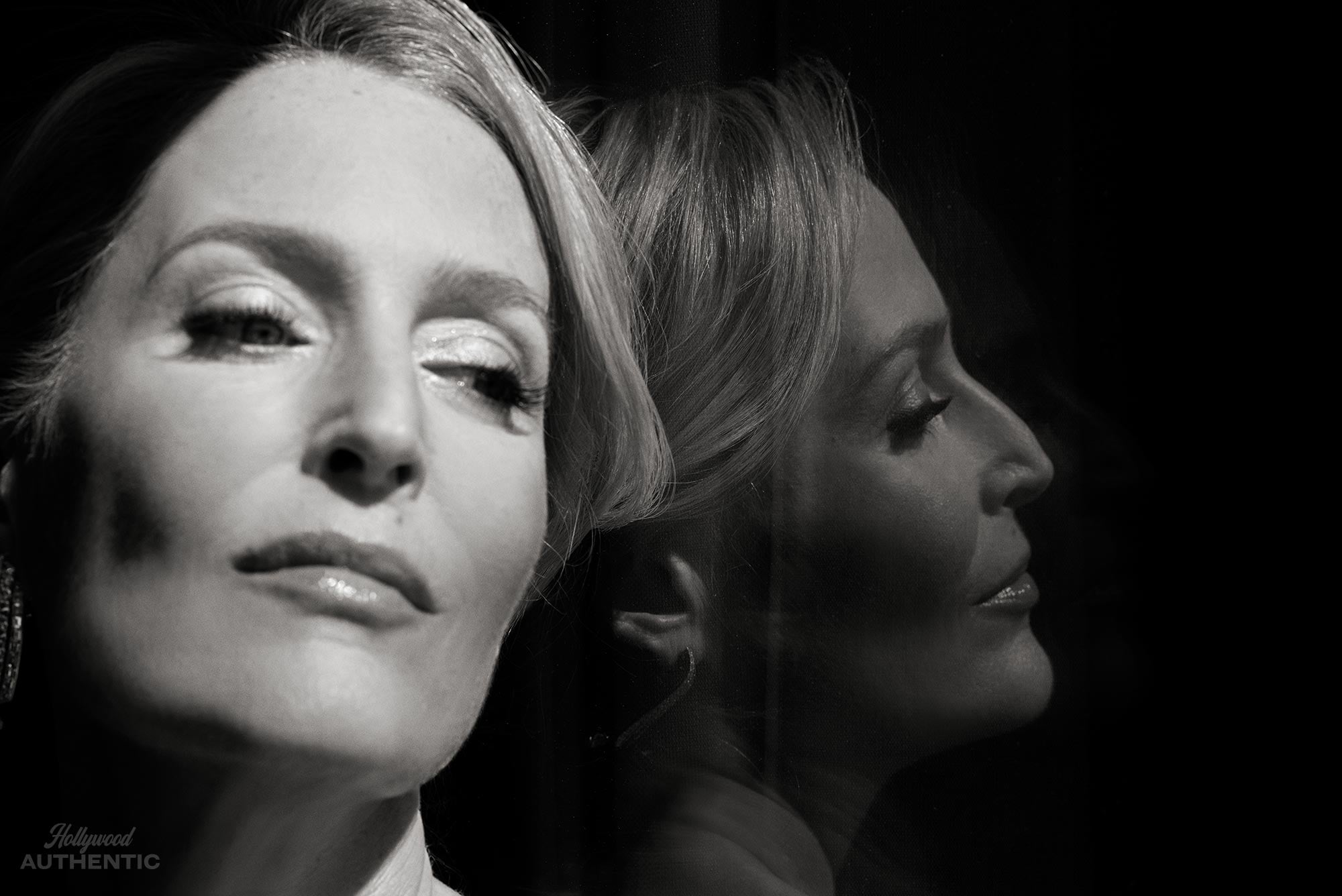
Photographs by GREG WILLIAMS
Interview by JANE CROWTHER
Gillian Anderson opened up Cannes’ Un Certain Regard section this year with a sapphic, psycho-sexual, feminist take on slasher movies where she’s drenched in blood, gorges on fried chicken and makes the phrase ‘dipping sauce’ sound like a sexual invitation. Teenage Sex and Death at Camp Miasma was a hit with the critics on the Croisette and marked the first time Anderson had really stepped into genre cinema after her long run as Agent Scully on X-Files made her wary of repetition and like all us, she watched a terrifying film too young.
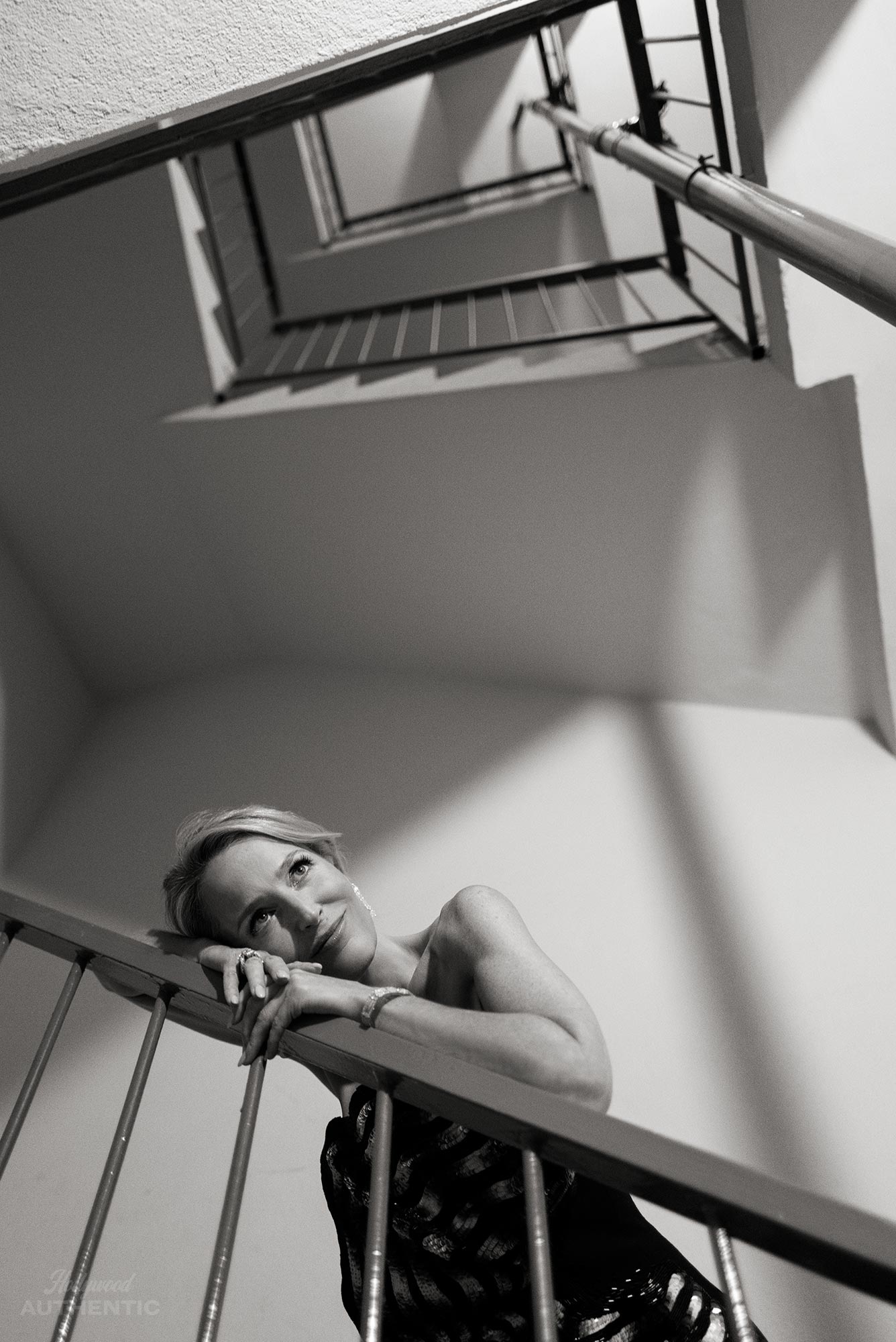
‘I had a bad experience with a horror film, The Texas Chain Saw Massacre, when I was very young, and so even music from horror films can bring panic attacks on me,’ Anderson admits when she chats with Hollywood Authentic in a suite at the JW Marriott, an appropriately red fruit juice in her hand. ‘I have embraced dark true-crime over the past decade, and also, working on X-Files for so long, my daughter jokes that her childhood was spent putting her pram with severed heads in it on set. So it’s been in my periphery for a long time. But I don’t have a real understanding of the history around horror films and subgenres and slashers, etcetera. So this was an education for me.’
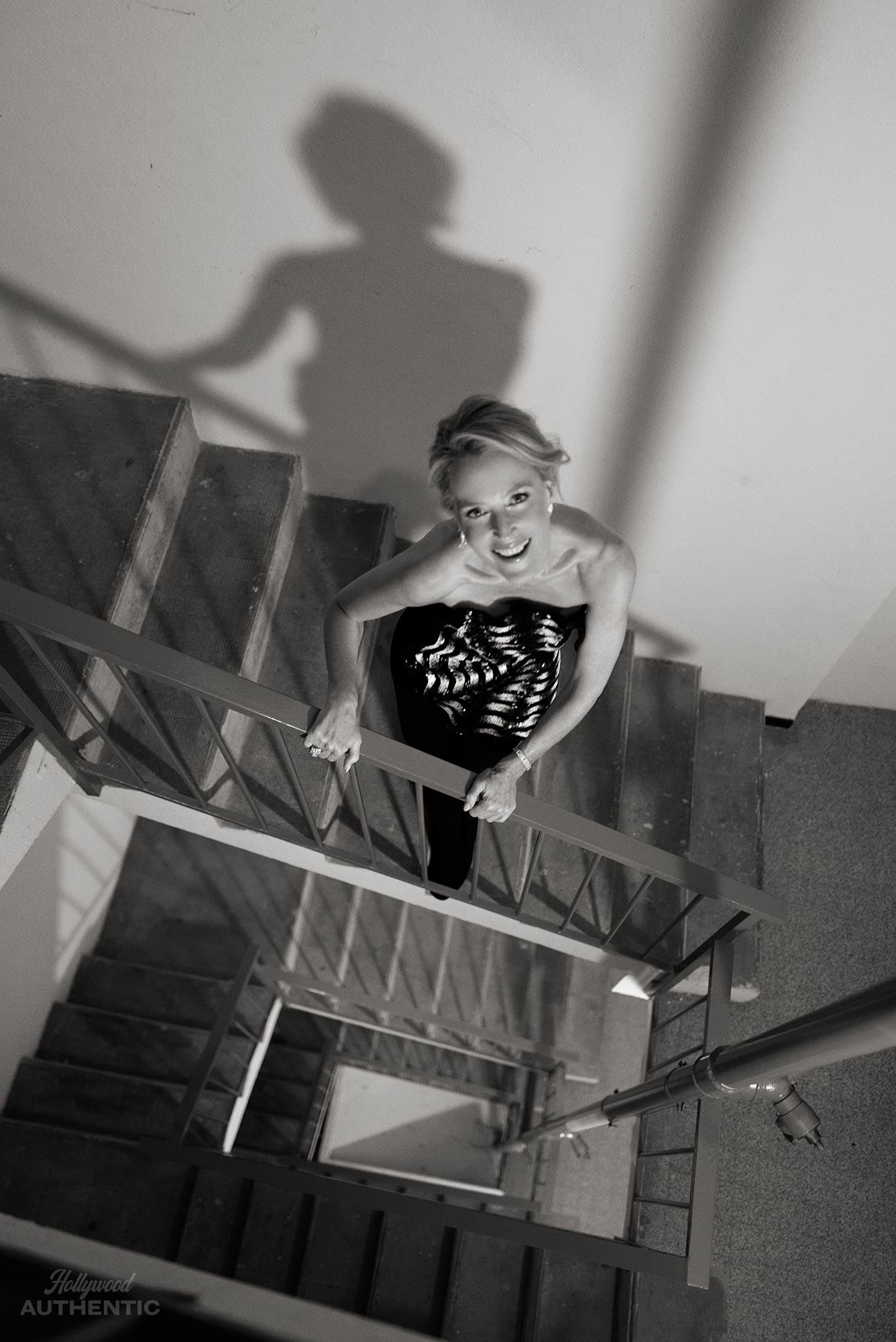
In the film Anderson plays a fan favourite actress, Billy, who starred in a huge franchise and now lives on the set of the original film in which she played the ‘final girl’. When a young director, played by Hannah Einbinder, visits with the intention of rebooting the film series, all hell breaks loose. Serial killers emerge from the lake, heads roll, blood gushes… There’s a knowing wink in casting Anderson with her X-Files past in such a role. ‘I didn’t necessarily reflect on it, but I did understand it enough to be able to embrace it, and take advantage of it as much as possible, to be able to enjoy the moment and the meta element of it,’ she says.
The film also explores generational ideas on gender, identity, and sexuality as Einbender’s director and Anderson’s actress grow closer sexually. ‘I feel like the film is a celebration of the fact that despite their decades’ divide, they’re meeting in common experience. But it was important for me that I really didn’t want for Billy to feel creepy or predatory. My daughter is the same age as Hannah is. For me, it needed to feel very purposeful – and weird in the places where it was meant to be weird. There’s a beauty, I think, in what the film has to say about what we can learn from each other. There is a vital commonality, which is that we are women, you know? So often today, that gets lost in the power struggle within social media – knowing and having information, and having something clever to say – that the universal bond of potential support, of commonality, gets lost. So I think it’s really important that it shows up in this film in a way that is actually profound.’
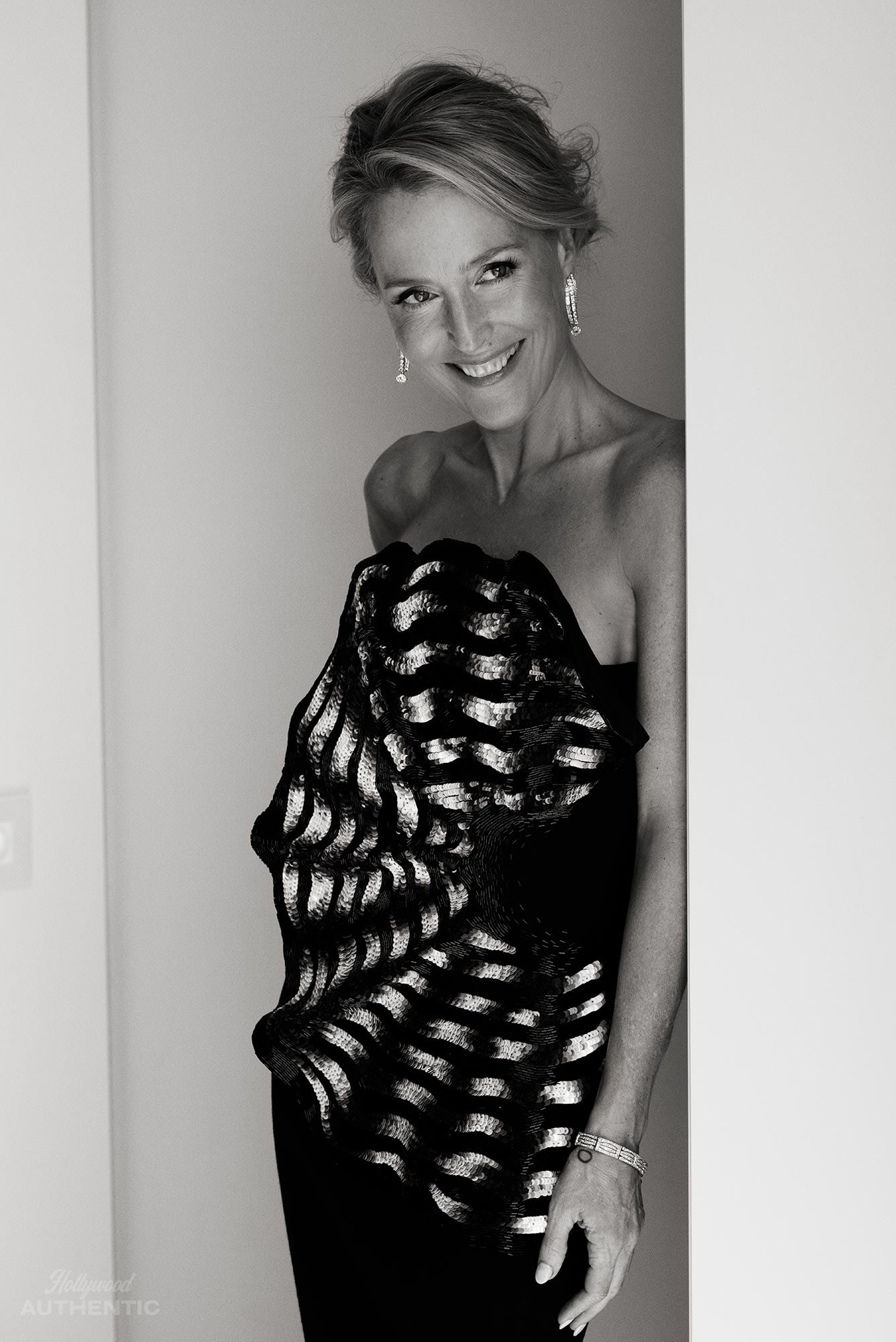
The film also reflects Anderson’s real professional life in that the X-Files is being rebooted right now by Ryan Coogler. ‘It’s being rebooted by a real artist. Ryan Coogler coming in to take over that franchise, is such an interesting and radical concept. Kudos to our showrunner, Chris Carter, the creator, for allowing him to take the helm. It’s when you have a true artist step in and say, ‘I know exactly how to apply my sensibility and gifts to the best parts of what this represents and should be, or should have been’. It’s so interesting to also be in conversation about that at the same time as doing this. I think finally, for the first time in what feels like a very long time, there’s a modicum of hope that the industry isn’t falling backwards off a cliff.’
Though she won’t be drawn on if she’s involved in Coogler’s reboot (‘that’s another conversation, but thank you for asking’ she demurs), Anderson is an enthusiastic torch-bearer for the franchise, attending fan conventions alongside her co-star David Duchovny. ‘I haven’t really been obsessed with anyone, it baffles me a little bit,’ she admits. ‘We were lucky at the beginning because we were shooting in Vancouver, not Los Angeles, and there wasn’t social media which, looking back, was such a gift. I can’t imagine coming up and having to contend with that now. I experience fandom now at Comic-Cons. I recognise how important it is for some people to be face to face with me. I don’t feel like, ‘I’m so cool. They love me so much’. It feels like it’s for what I represent. It almost helps them define who they are, that Scully represents an aspect of their internal life. And I’m happy to show up as the embodiment of that thing.’
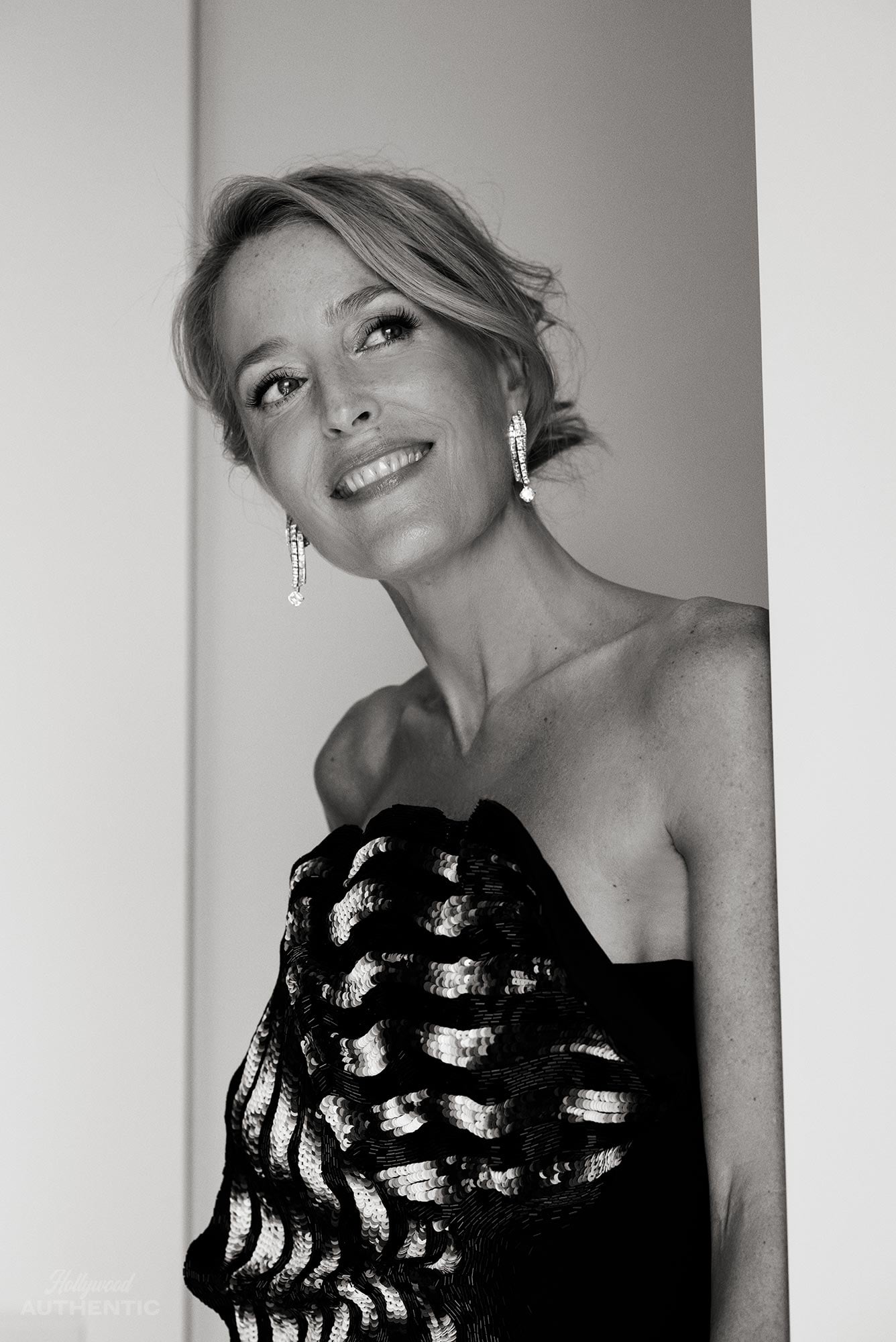
Anderson is busy but admits to trying to think carefully about the projects she takes and what she gives her name to. ‘It’s hard, though. It takes patience. It does take a belief that if you wait and dare to do nothing until the thing arrives that it will come. I do have the tendency to just embrace everything. I enjoy all of it. I end up doing too much. There is a version of me that would do less, and only choose the jewels.’
Photographs by GREG WILLIAMS
Interview by JANE CROWTHER
Teenage Sex and Death at Camp Miasa premiered at the 79th Cannes Film Festival
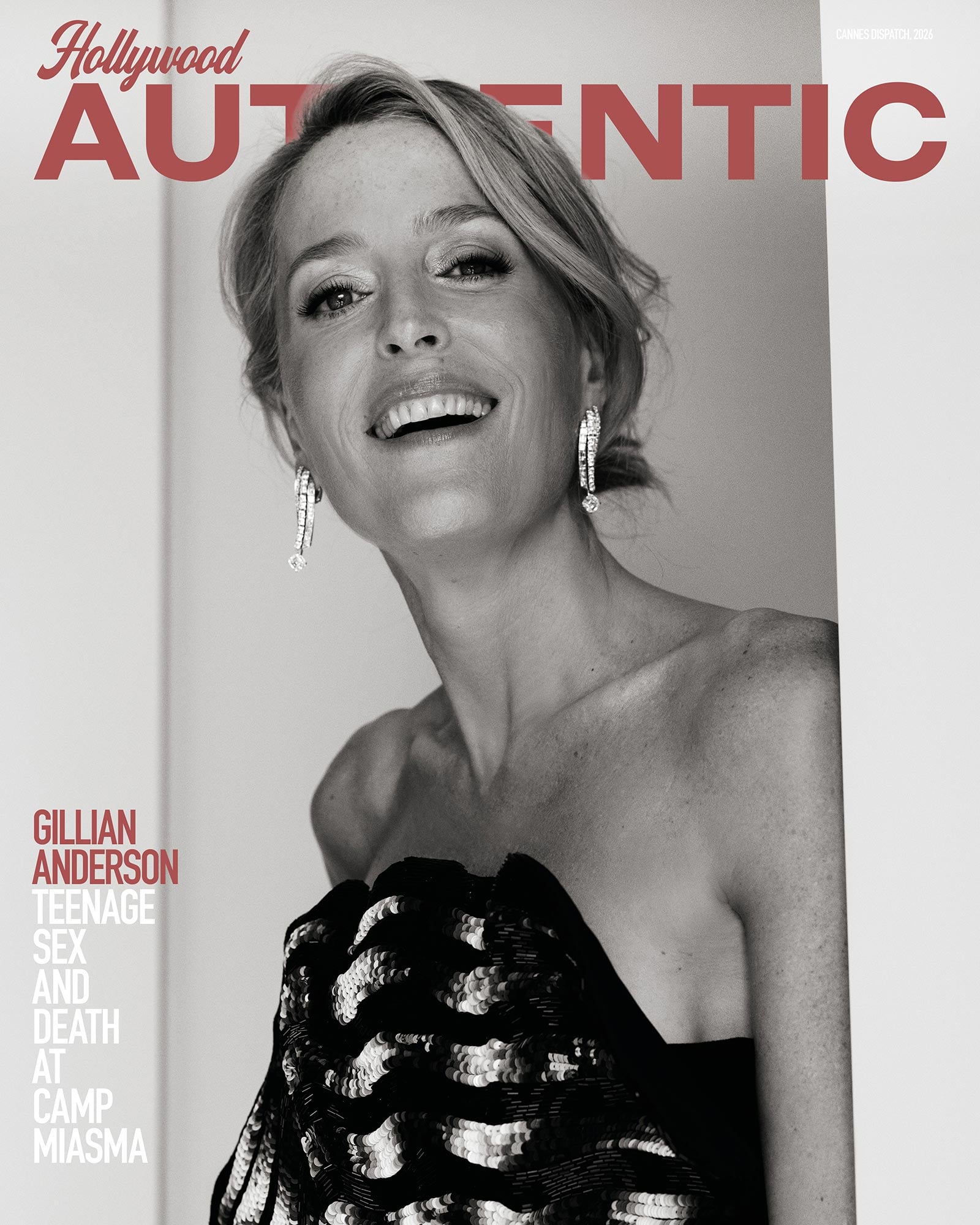
Gillian Anderson wears a custom version the NAVA dress from the Mary Katranzou Resort 2026 collection