


Words by JANE CROWTHER
Jaws traumatised beach dippers and now Brian Duffield’s efficient survival thriller will likely make it even more terrifying to venture out into deeper waters without recalling primal, horrifying sequences in this big-gulp nailbiter. Based on Daniel Kraus’s smart modern flip on the tale of Jonah and the Whale, this real-time nailbiter recalls Buried in its claustrophobic single-location chutzpah and the problem-solving of The Martian, providing a briny cine-ride with a hefty side of sentimentalism. The two do not always dovetail successfully, but this is a big-screen bite that’s easy enough to digest.
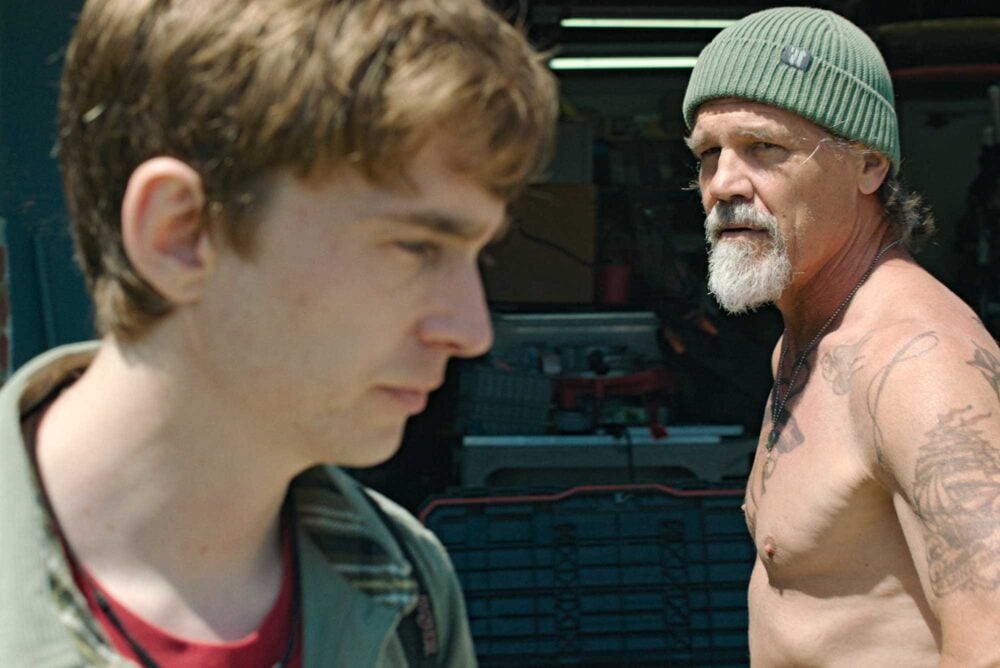
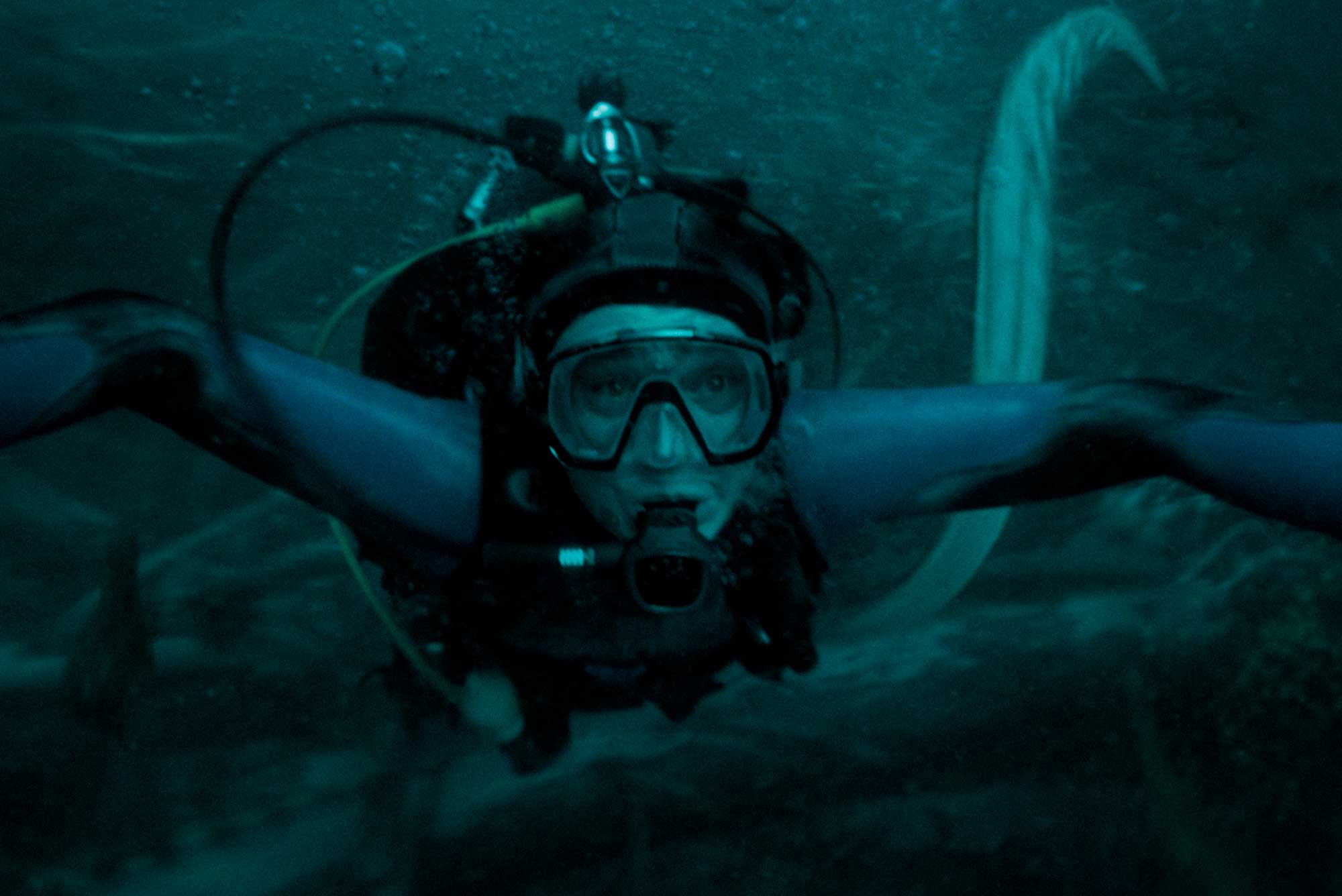
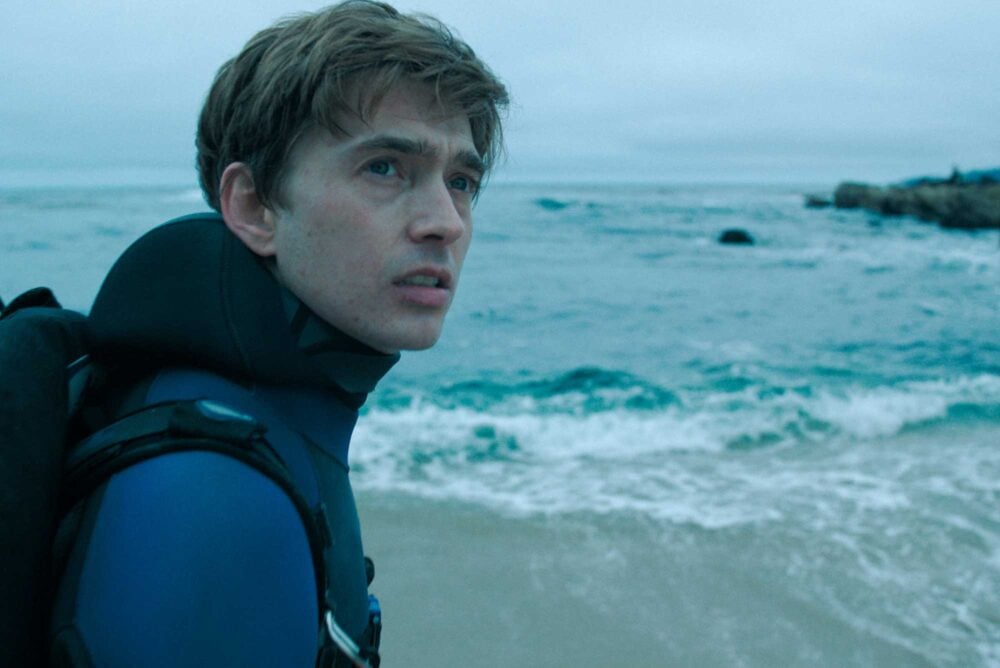
Kraus co-wrote the script (adapted from his bestseller) with Duffield and it shows, with aspects of the book that worked better on the page and in the imagination living alongside a banger of a ‘what-if’ opener. After a prologue watching a salty Central Coast seadog Mitt (Josh Brolin) take his own life by drowning, we meet college student Jay Gardiner (Austin Abrams). The son of Mitt, he decides to come to terms with his Daddy issues and grief by scuba diving to find the lost body of his Pa. But Gardiner Sr shifted his mortal coil in Monastery Beach at Monterey, a beauty spot where the sea shelf drops to a deep trench and all manner of Cetacea and giant squid habitually cruise the dark waters. In a breathless stage-setter, Jay is inadvertently chugged by a Sperm Whale the size of a bus, sucked into its gloopy belly with only an hour of air left in his oxygen tank. (And yes, the press notes assure us, it is possible for a human to end up alive in a Sperm Whale gut according to marine biologists.)
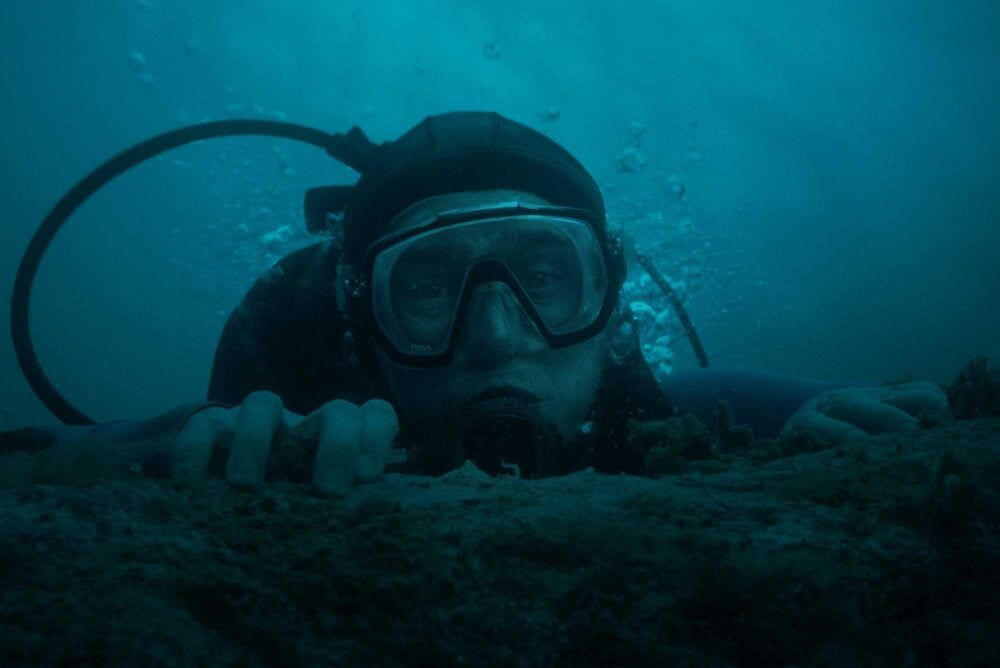
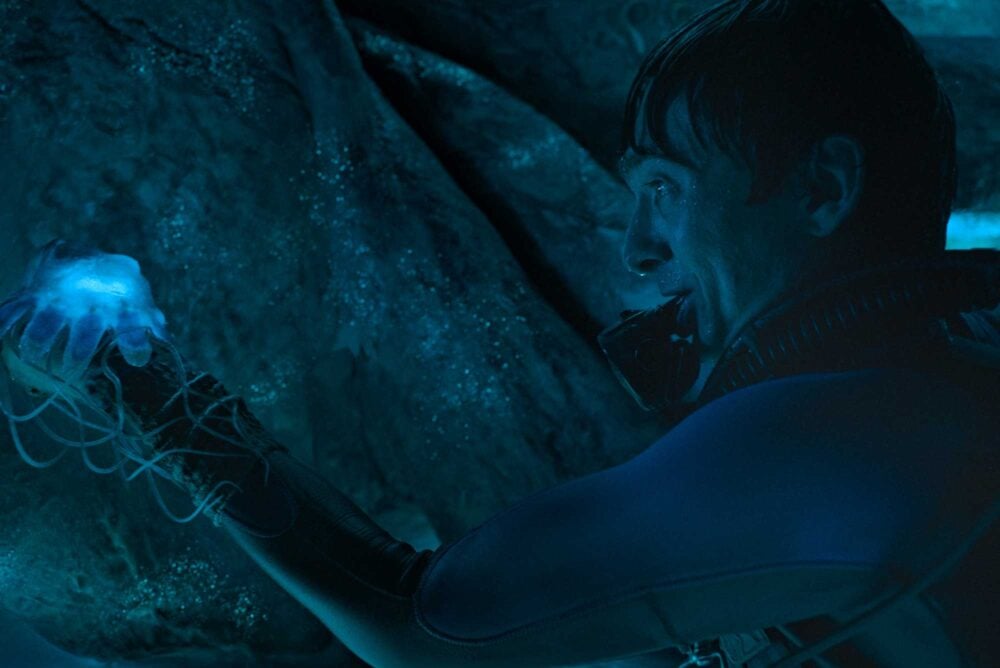
Light is provided by gobbled phosphorescence and glow-in-the-dark jellyfish, but essentially the next hour of the movie is Jay chatting to himself while squashed in slimy internal organs, stomach acid rotting his skin and an understandably furious squid snapping its doomed beak. As he contemplates the way out (whale anus isn’t an option) and has a brief taste of freedom in a gonzo moment that sees him screaming at a tourist boat from the breaching mammal’s gullet, Jay flashes back to moments with his stern Dad and the life lessons he taught.
Mitt was never knowingly wearing a top, obsessed with the sea and constantly pushing his son to follow in his footsteps as a Scuba Captain Ahab type. As played by the always-excellent Brolin he’s the narrative anchor, a messy, bruising Dad who one can imagine screwing up a kid so badly he thinks jumping into whale-infested waters is the best idea. In the duo’s fractious exchanges key info is imparted about the perfect mix for oxygen and the social behaviour of whales. Within an hour, Jay has managed to get months worth of therapy and begins an audacious plan to free himself (just don’t ask questions about The Bends) while having a conversation with his father as the whale. There’s a chat about Nitrogen Narcosis early on in the film and you may wonder if Jay is simply tripping balls at this point, but the film offers this segment with such earnestness you either have to swallow it or it’s jumped the shark.
As a Leviathan race-against-time Whalefall certainly makes a splash, but whether it’s seaworthy depends on personal tolerance to slippery (whale) body horror and mawkishness. The ocean is deeper than the premise, but it’s worth a dip.
Words by JANE CROWTHER
Images courtesy of 20TH CENTURY STUDIOS
Whalefall is in cinemas now