
February 20, 2026

Baz Luhrmann, Elvis Presley, EPiC: Elvis Presley in Concert, EPiC

Photographs by GREG WILLIAMS
Words by MATT MAYTUM


Return of the king… The maestro of movie showmanship revives the king of rock ’n’ roll with unseen footage of Elvis in Vegas to create a unique cinematic experience. Baz Luhrmann tells Hollywood Authentic how he found treasure in salt mines and made a poem of EPiC: Elvis Presley in Concert.

Is it ever possible to recapture the thrill of seeing one of the greatest ever music artists live in their prime? Baz Luhrmann’s EPiC: Elvis Presley in Concert answers that question with a resounding yes. The unearthing of new footage of a cultural touchstone is a gift for die-hard Elvis fans, and offers younger generations the opportunity to see what all the fuss was about. Much more than a concert movie, EPiC sprang from Luhrmann and his team’s archival discoveries during the making of his blockbuster 2022 feature Elvis, starring Austin Butler.
Baz Luhrmann, Elvis Presley, EPiC: Elvis Presley in Concert, EPiC

There’s not a frame of AI or visual effects in this – the only visual effect is the one Elvis has on his audience

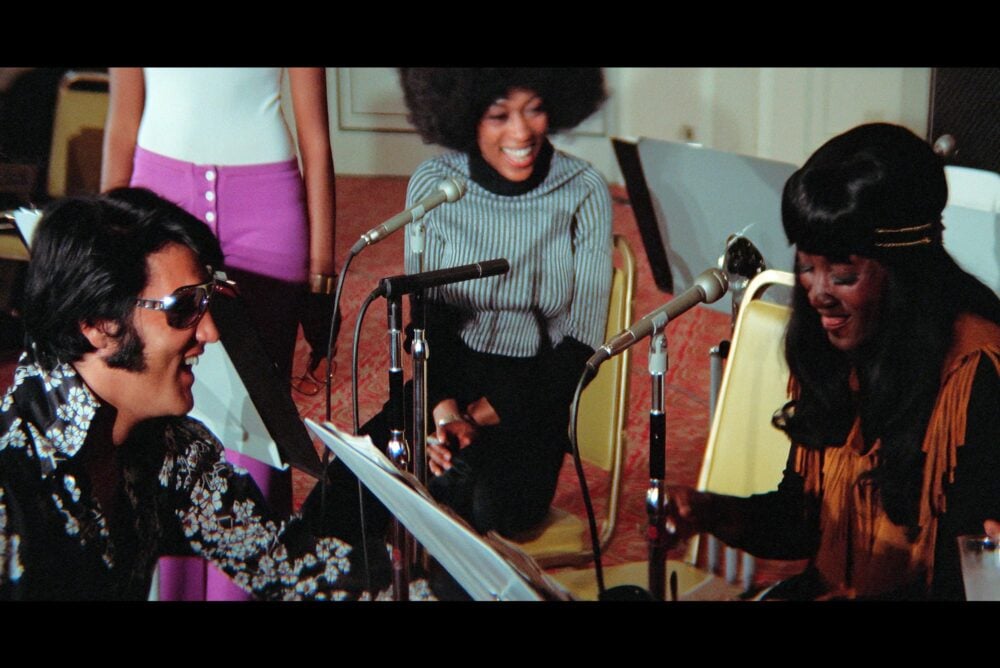
Often thought to be apocryphal, lost footage from Elvis’ famous Vegas residency turned out to be more than mere rumour during the making of Elvis. ‘Ernst Jorgensen [author and Elvis expert] said, “You know there are these lost reels of the show?”’ Luhrmann recalls. ‘And I thought to myself, “Wow, maybe we could use that footage in the [Elvis] movie itself, rather than build a stage – because of budgets.”’ The footage – originally shot for doc Elvis: That’s the Way It Is – belonged to MGM and had been stored in salt mines in Kansas, to prevent water from damaging the negative. When Baz’s team went digging, ‘not only did they find the footage,’ he explains between sips of miso soup, ‘they actually found a kind of treasure trove of materials – 69 boxes, 59 hours of footage.’
Baz Luhrmann, Elvis Presley, EPiC: Elvis Presley in Concert, EPiC
Neon/Universal Pictures
Baz Luhrmann, Elvis Presley, EPiC: Elvis Presley in Concert, EPiC
Neon/Universal Pictures

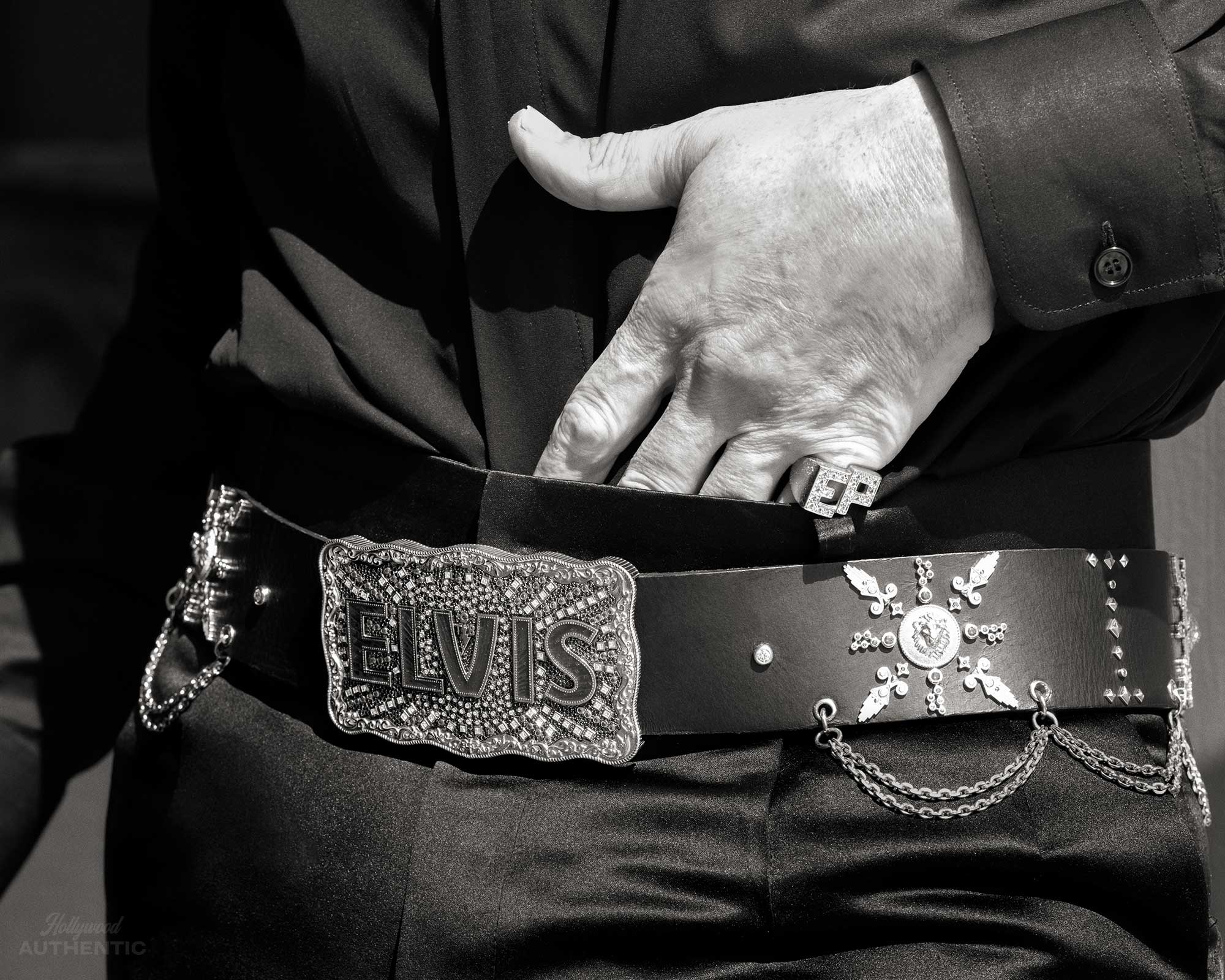
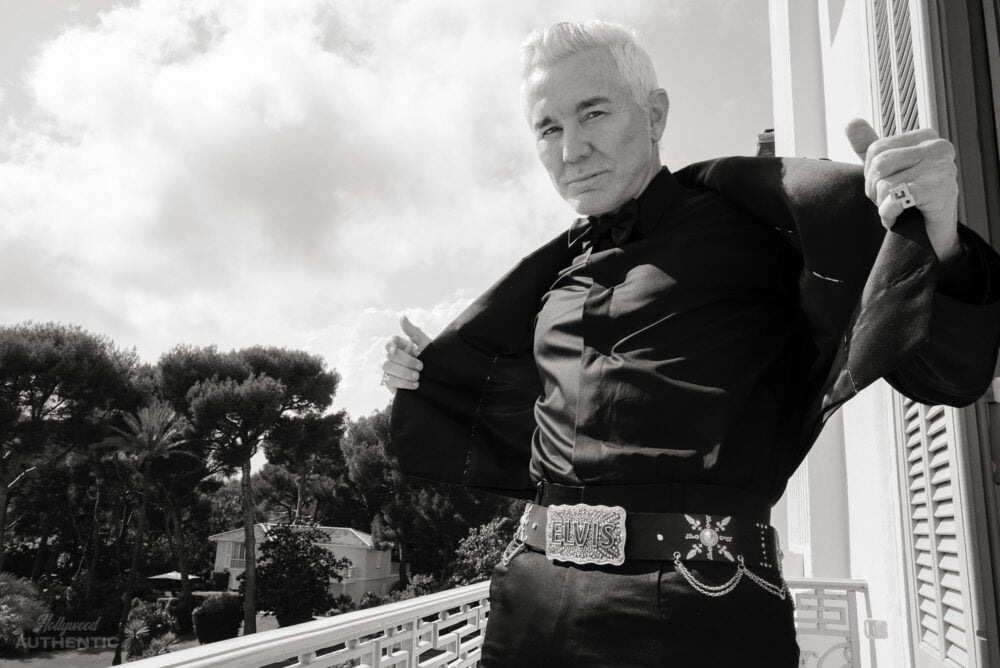
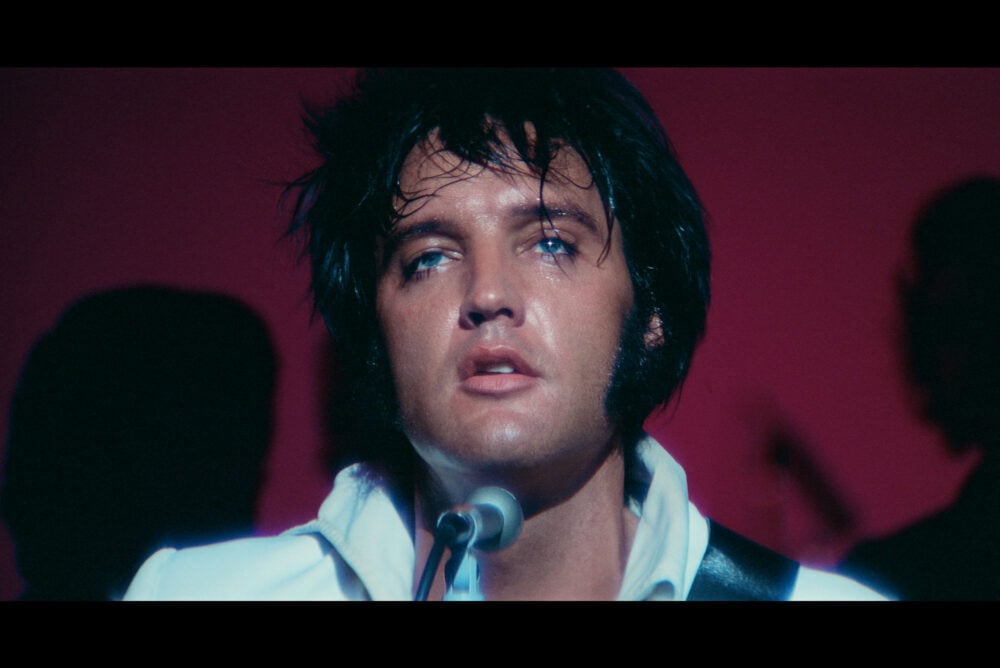
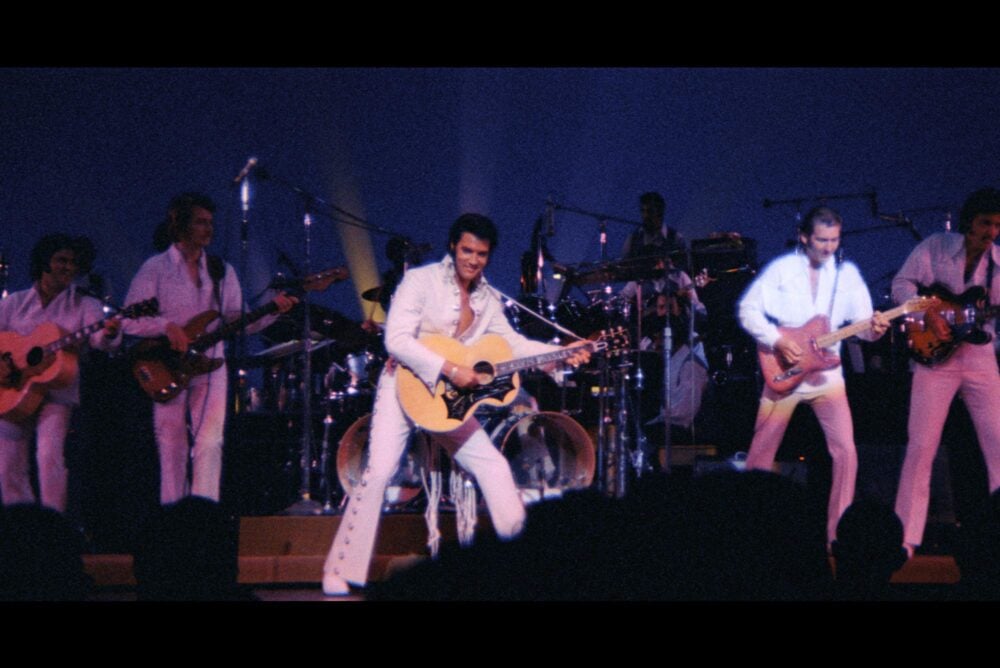
That incredible haul not only contained footage of Elvis’ 1970 Vegas shows at the International Hotel, shot on anamorphic 35mm over six nights; there was also 16mm film of Elvis on tour, and some 8mm, too. But another unexpected find was the key to making EPiC the extraordinary proposition it is. ‘We also found never-before-heard audio of Elvis telling his story in his own words, which is really unusual,’ says Luhrmann, photographed here by Greg Williams when he was at the 2022 Cannes Film Festival, while premiering Elvis there.
Baz Luhrmann, Elvis Presley, EPiC: Elvis Presley in Concert, EPiC
Neon/Universal Pictures

‘Jono [Jonathan] Redman, who’s a producer on this, and my editor, and really my co-creator of this whole venture, said, “We’ve got to make something really special. We can’t just heat up the old documentaries. Can we do something unique?”’ Beyond the technical challenge of restoring the negative to a quality that would hold up on IMAX and syncing the sound, there was the unique opportunity to let Elvis speak in his own words – something fans had never heard before. ‘What we decided on was, rather than reheat old documentaries… What if we were to take this audio that we’d found, and Elvis will sing and tell his story in his own words? There have been many good documentaries, but they were always about other people talking about Elvis. And there’s nothing wrong with that. But sometimes you’ll get a guy who knew him for 10 minutes, having an opinion.’ In part, the lack of Presley speaking his own truth was down to how protective manager Colonel Tom Parker (portrayed by Tom Hanks in Baz’s film) was of Elvis. But if 2022’s Elvis told Parker’s version of events, EPiC tells Elvis’ side of the story. ‘Elvis comes to you, almost like in a dream, and he sings, and he tells his story in a way in which he’s never had the platform [for] before.’
Baz Luhrmann, Elvis Presley, EPiC: Elvis Presley in Concert, EPiC
Neon/Universal Pictures

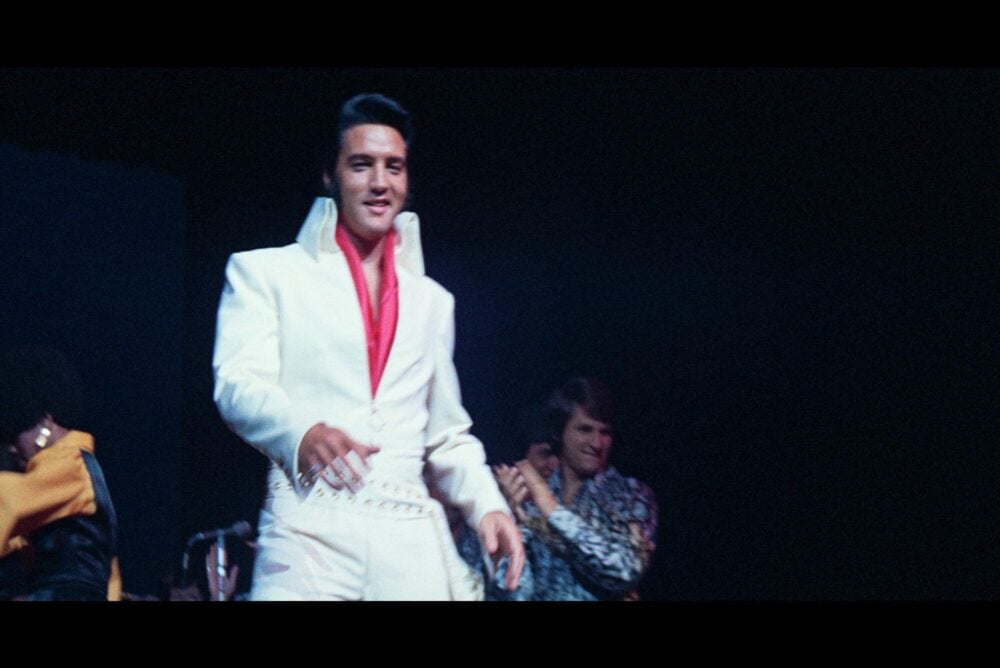
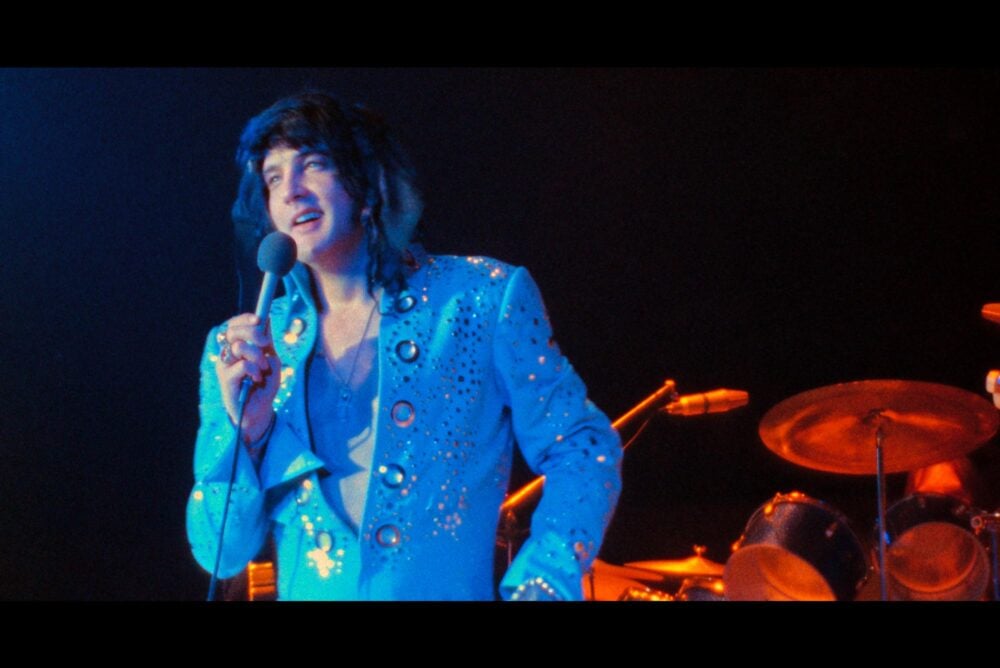
Some of the footage in EPiC may have been glimpsed before, in black-and-white and bootleg snippets or from different takes or angles, but much of the material in the film is totally unseen, and certainly never with such clarity, offering an unprecedentedly intimate audience with an icon. ‘You will have never seen all of it reproduced at the level it is,’ asserts Luhrmann. ‘I can categorically tell you: there’s not a frame of AI or visual effects in this, other than the titles. The only visual effect in this movie is the visual effect Elvis has on his audience.’
Baz Luhrmann, Elvis Presley, EPiC: Elvis Presley in Concert, EPiC
Neon/Universal Pictures
Baz Luhrmann, Elvis Presley, EPiC: Elvis Presley in Concert, EPiC
Neon/Universal Pictures

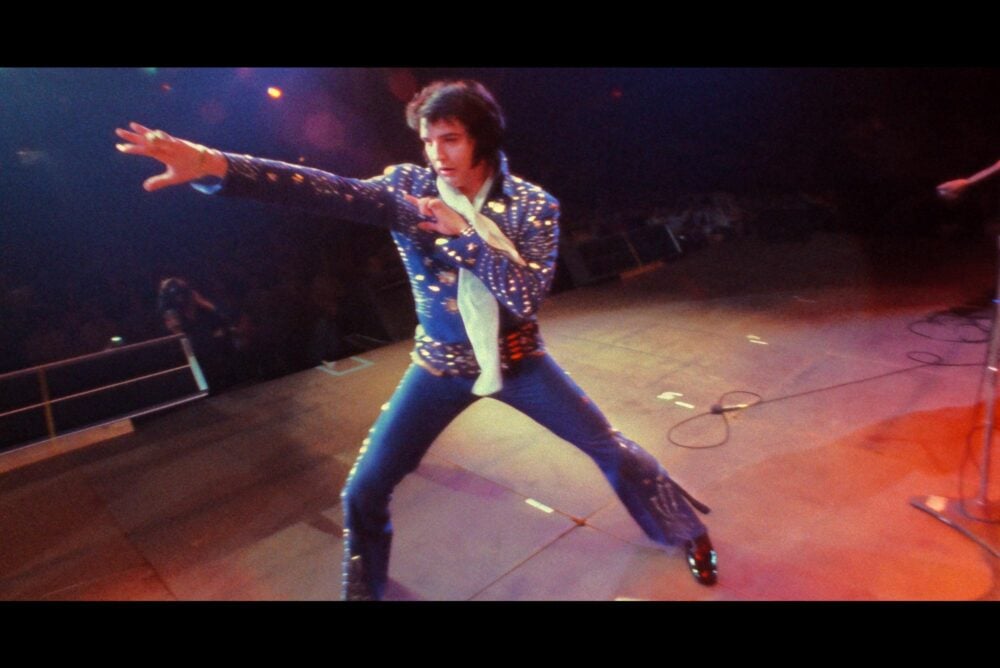
With the images polished at Peter Jackson’s Park Road Post Production – where the Kiwi director memorably brought The Beatles: Get Back and Beatles ’64 to vibrant life – a huge challenge involved syncing the sound with the recovered film. ‘While we found all the pictures, it didn’t come with mag tape, which is how they used to record sound, right next to it,’ says Luhrmann. ‘What we were able to do, though, through meticulous research was to get second-generation audio sound. The audio isn’t different. While the picture is different when they strike a print – a work print, to cut and edit – the sound isn’t. So we were able to claw back the original vocal of Elvis and the band.’
Baz Luhrmann, Elvis Presley, EPiC: Elvis Presley in Concert, EPiC
Neon/Universal Pictures

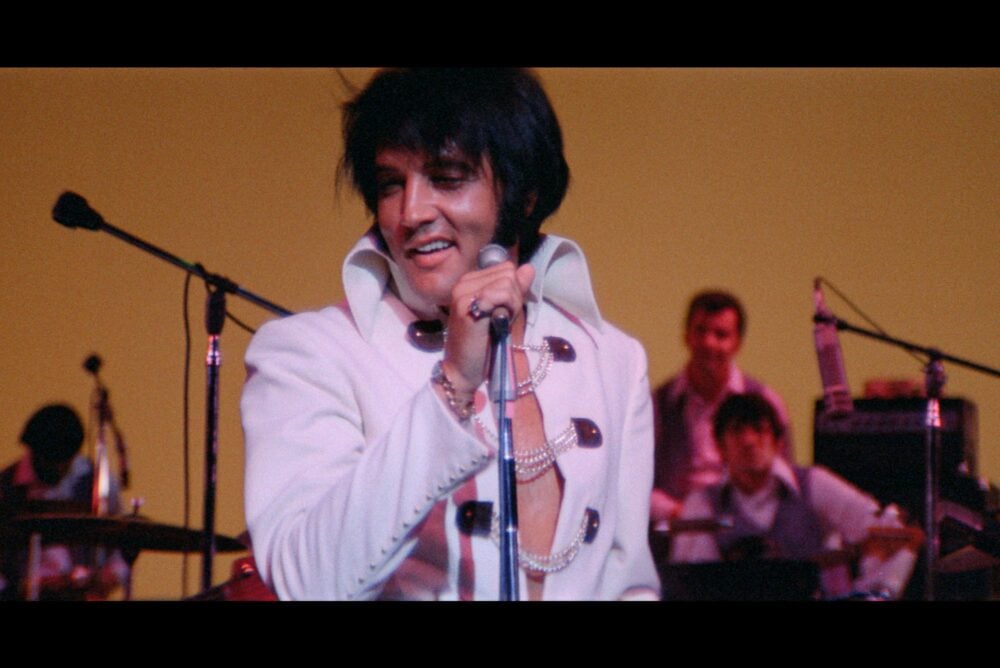
It’s actually an expression, I hope, of the essence, the spirit, and the character of Elvis through song and his words. It’s like a poem more than it is a linear expression of Elvis
Baz Luhrmann, Elvis Presley, EPiC: Elvis Presley in Concert, EPiC
Neon/Universal Pictures

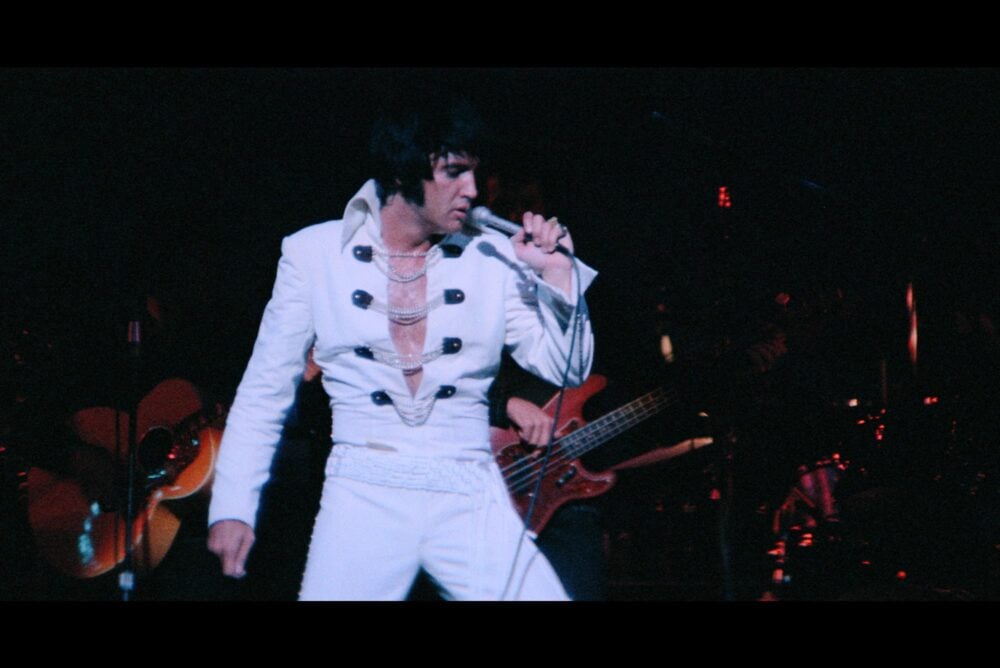
Luhrmann has always been a pioneer when it comes to melding movies and music, and EPiC sees him push those instincts to new levels. Where the recording of the orchestra was inconsistent, he and his team rebuilt some of the backing music via scoring sessions. The film also moves between the actual sound you would’ve heard had you been in the room to remixes Luhrmann refers to as ‘DNA’, adding his trademark sparkle and oomph to the raw material. ‘It’s more than a documentary, and it’s not a concert film,’ he muses. ‘It’s actually an expression, I hope, of the essence, the spirit, and the character of Elvis through song and his words. It’s like a poem more than it is a linear expression of Elvis.’
Baz Luhrmann, Elvis Presley, EPiC: Elvis Presley in Concert, EPiC
Neon/Universal Pictures

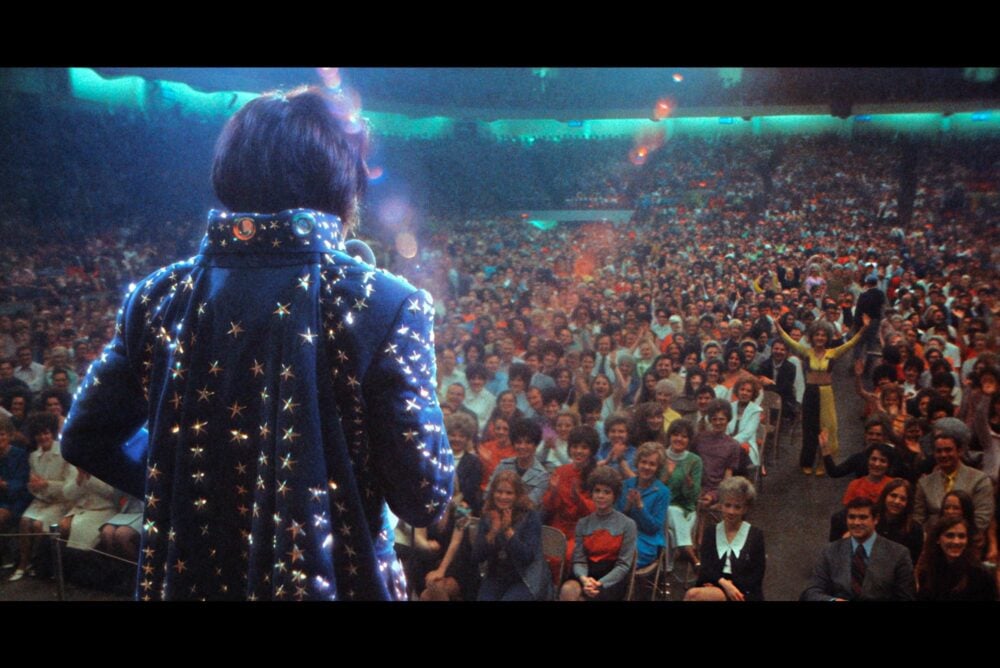
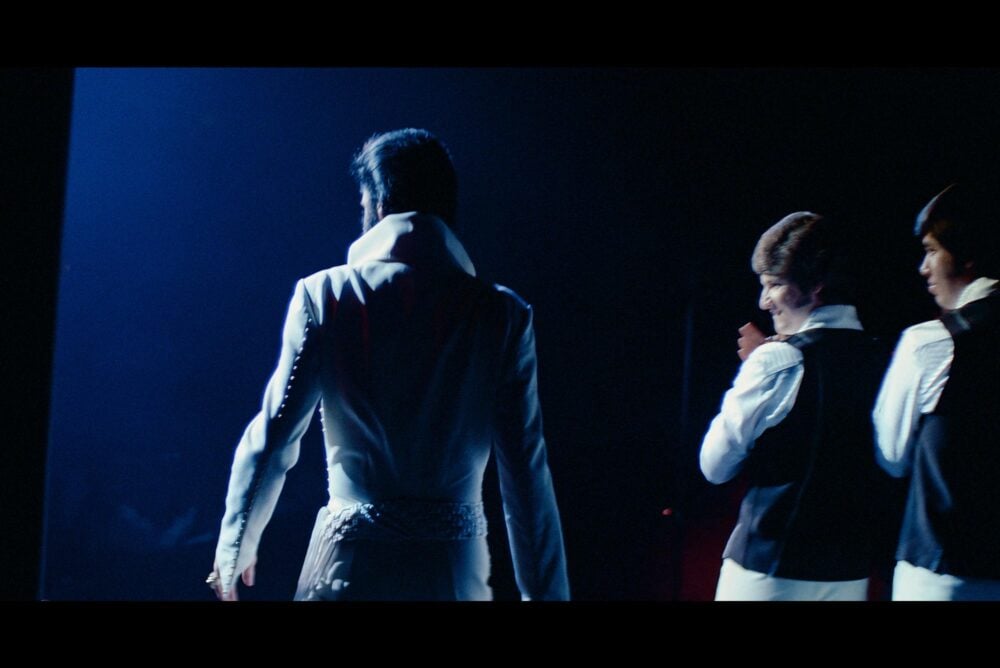
And while Luhrmann refuses to speak on behalf of the King of Rock and Roll, he does say that he thinks he would appreciate ‘that he’s being heard and being presented visually and sonically in the best possible quality for the audience and the fans who he dearly loved’. Having worked to craft a big-screen, big-sound cinematic experience that makes viewers feel as though they’ve time-travelled to the International Hotel ballroom with Elvis, Luhrmann intends to get viewers moving, dancing as they did in 1970 and at TIFF when the film premiered. ‘What I hope is that we’ve created a truly theatrical experience, as close to being in the audience as possible.’ 
Baz Luhrmann, Elvis Presley, EPiC: Elvis Presley in Concert, EPiC
Neon/Universal Pictures

Photographs by GREG WILLIAMS
EPiC: Elvis Presley in Concert images © Neon/Universal Pictures
Words by MATT MAYTUM
EPiC: Elvis Presley in Concert is released exclusively in IMAX and is in theatres everywhere now
February 20, 2026

Cartier celebrates BAFTA, High Society, Ocean’s 8, Sunset Boulevard, The Phoenician Scheme

Words by EMILY ZEMLER


From diamond tears to royal engagement rings, bracelets ready for their close-up to bejewelled crucifixes, Cartier jewels have dazzled onscreen since cinema’s inception…

Cartier is one of cinema’s most enduring characters. Since 1926 – when Rudolph Valentino famously donned an iconic Cartier Tank watch – the luxury Maison has established itself as both a cultural icon and a memorable co-star. Its timeless jewellery has appeared in classic films like Sunset Boulevard and more contemporary works like Ocean’s 8 and The Phoenician Scheme.

Cartier celebrates BAFTA, High Society, Ocean’s 8, Sunset Boulevard, The Phoenician Scheme
CARTIER ROSARY 
From Wes Anderson’s 2025 film The Phoenician Scheme

The elegant craftsmanship of Cartier’s jewellery has augmented the magical worlds created by skilful filmmakers for generations, helping to bring the stories to life in ways that feel as real as they do transformative. Over the years, hundreds of films and series have featured Cartier pieces – an extraordinary filmography that outshines the careers of many human actors. But Cartier’s contribution to the landscape of cinema wasn’t inevitable. It took a legacy of craftsmanship, some particularly devoted famous fans and a dedication to storytelling that has spanned time and genre.

Perhaps the link between carats and celluloid was inevitable. Maison Cartier was founded in Paris in 1847, only a few decades before the invention of cinema by Auguste and Louis Lumière, who also first presented their work in the French capital. In 1895, the Lumière brothers began filming short scenes using their newly-created cinématographe, an early motion-picture camera. Later that year, they held the first commercial film screening at a café in Paris, an historic moment that for ever changed the landscape of arts and culture. It wasn’t long after that Cartier and cinema embarked on an undeniable relationship that has lasted for a century.

Cartier celebrates BAFTA, High Society, Ocean’s 8, Sunset Boulevard, The Phoenician Scheme
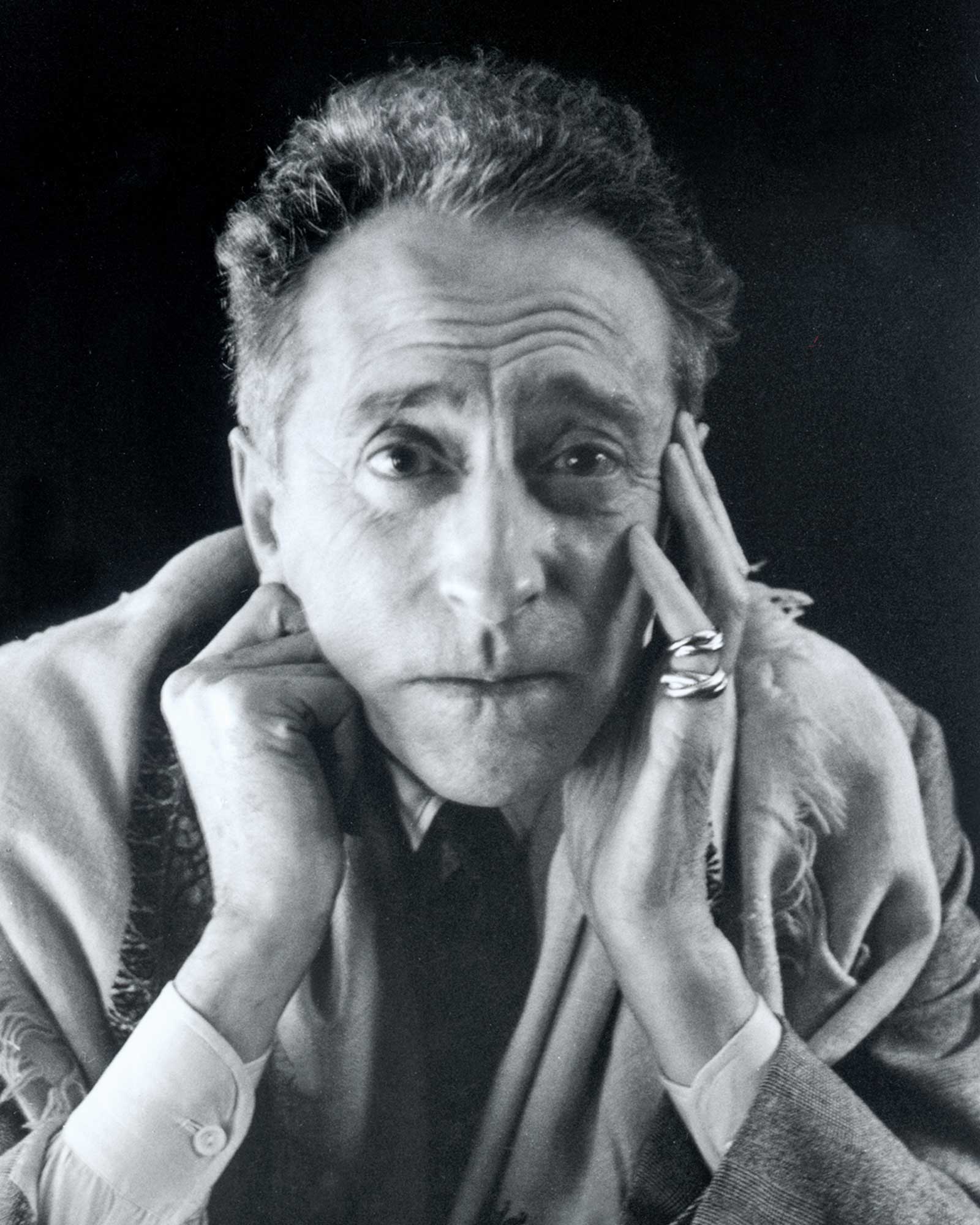
Jean Cocteau

In 1926, Valentino, arguably one of silent film’s most iconic actors, played dual characters in George Fitzmaurice’s The Son of the Sheik – the final starring role of his career. Embodying both a sheik and his rakish son Ahmed, Valentino convinced the director to let him wear his Tank watch in his scenes, simply because he didn’t want to take his beloved timepiece off. Audiences were delighted by the unlikely detail and the Tank rapidly grew in popularity after its on-screen debut.

Cartier soon established itself as an indelible onscreen partner for the most popular performers of every era. In 1946, Jean Cocteau (who habitually wore two of Cartier’s trademark Trinity rings on his left pinkie finger) directed a reimagining of the classic fairy tale Beauty and the Beast, titled La Belle et La Bête. In the ethereal film, Belle wept Cartier diamonds instead of tears. ‘A fake diamond doesn’t throw fire,’ Cocteau explained of his artistic vision, ‘only a real diamond shimmers.’ The loaned diamonds underscored the emotional quality of the scene, creating a lasting, surrealist image that has since become interlinked with the history of cinema. 

Cartier celebrates BAFTA, High Society, Ocean’s 8, Sunset Boulevard, The Phoenician Scheme
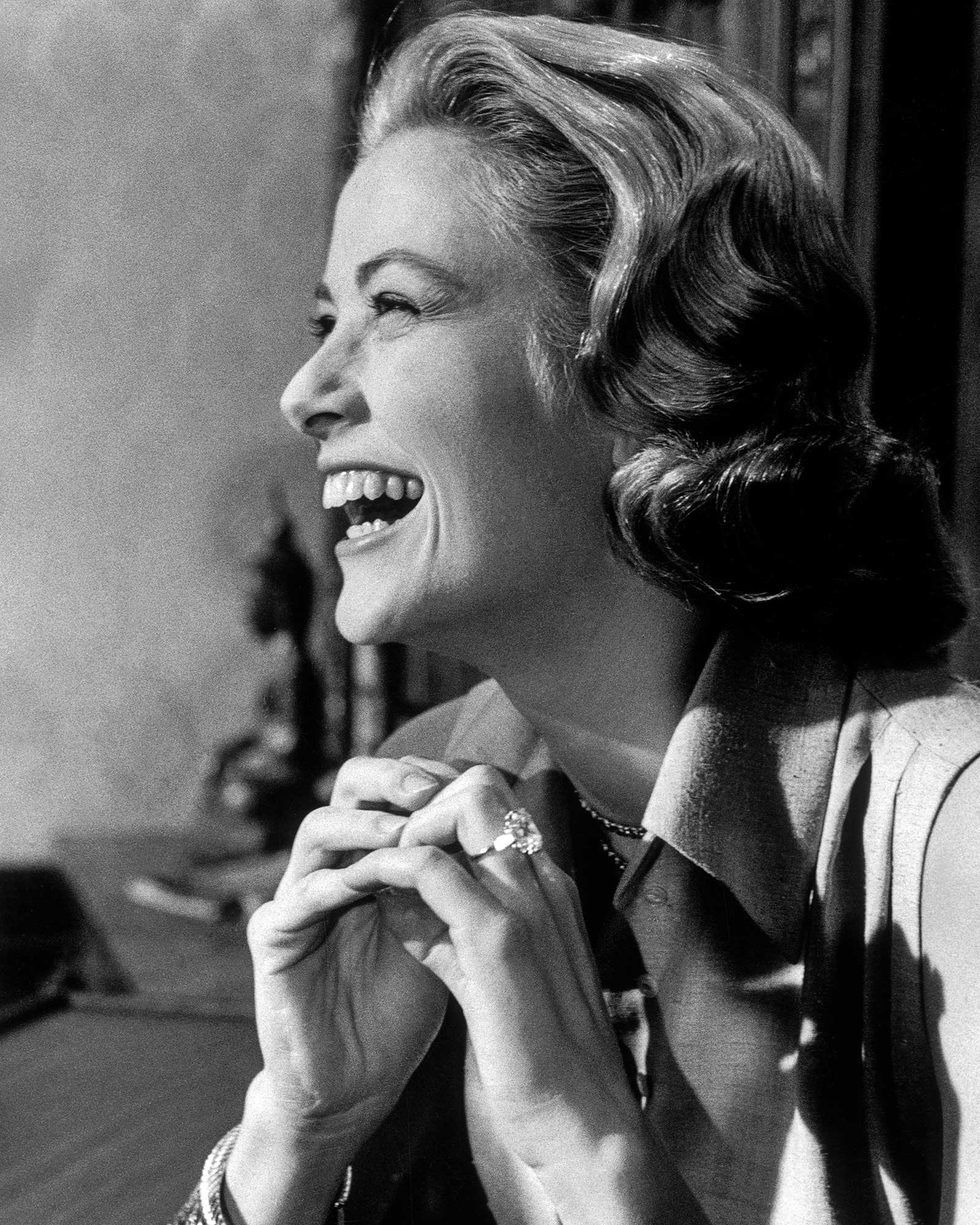
Grace Kelly

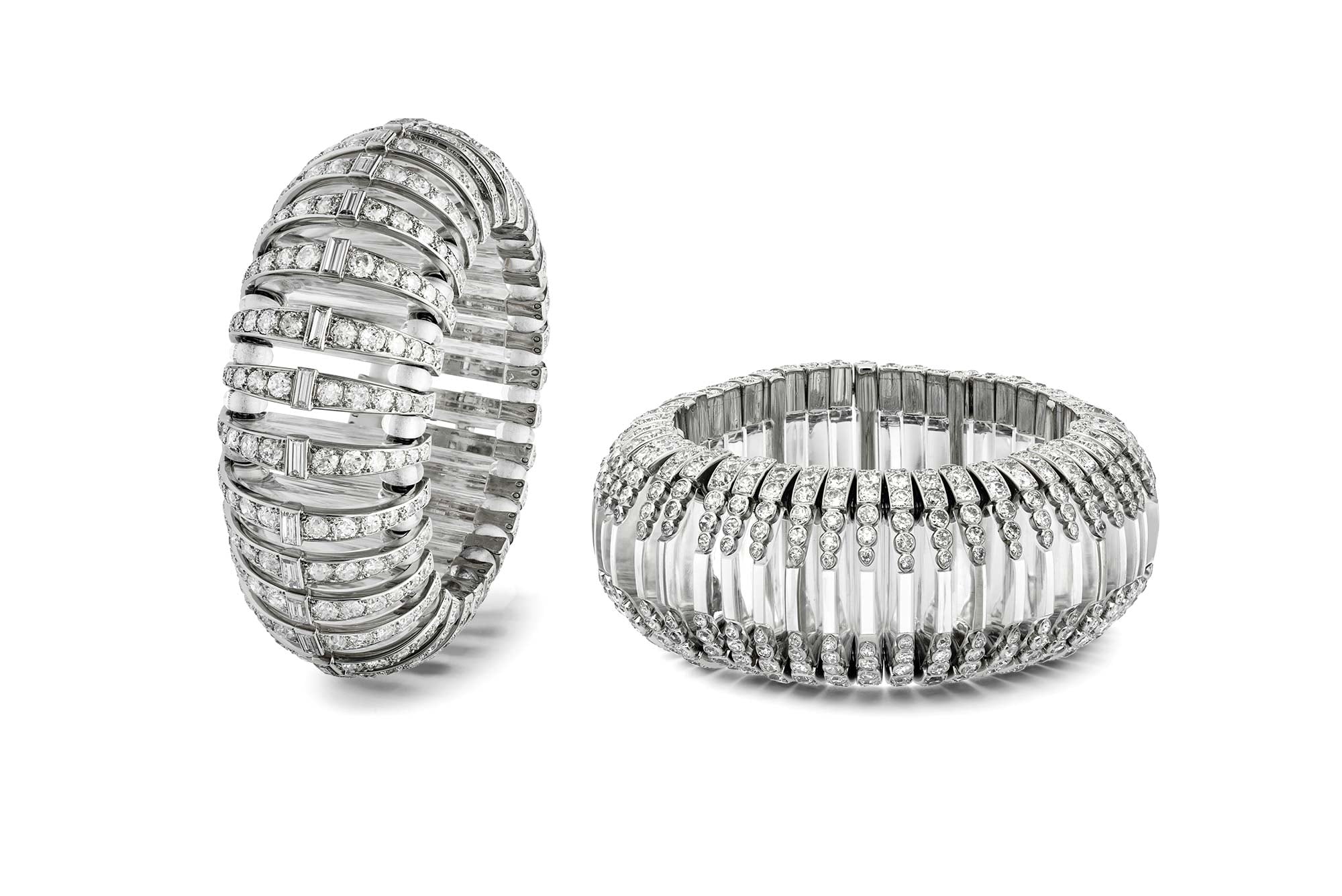
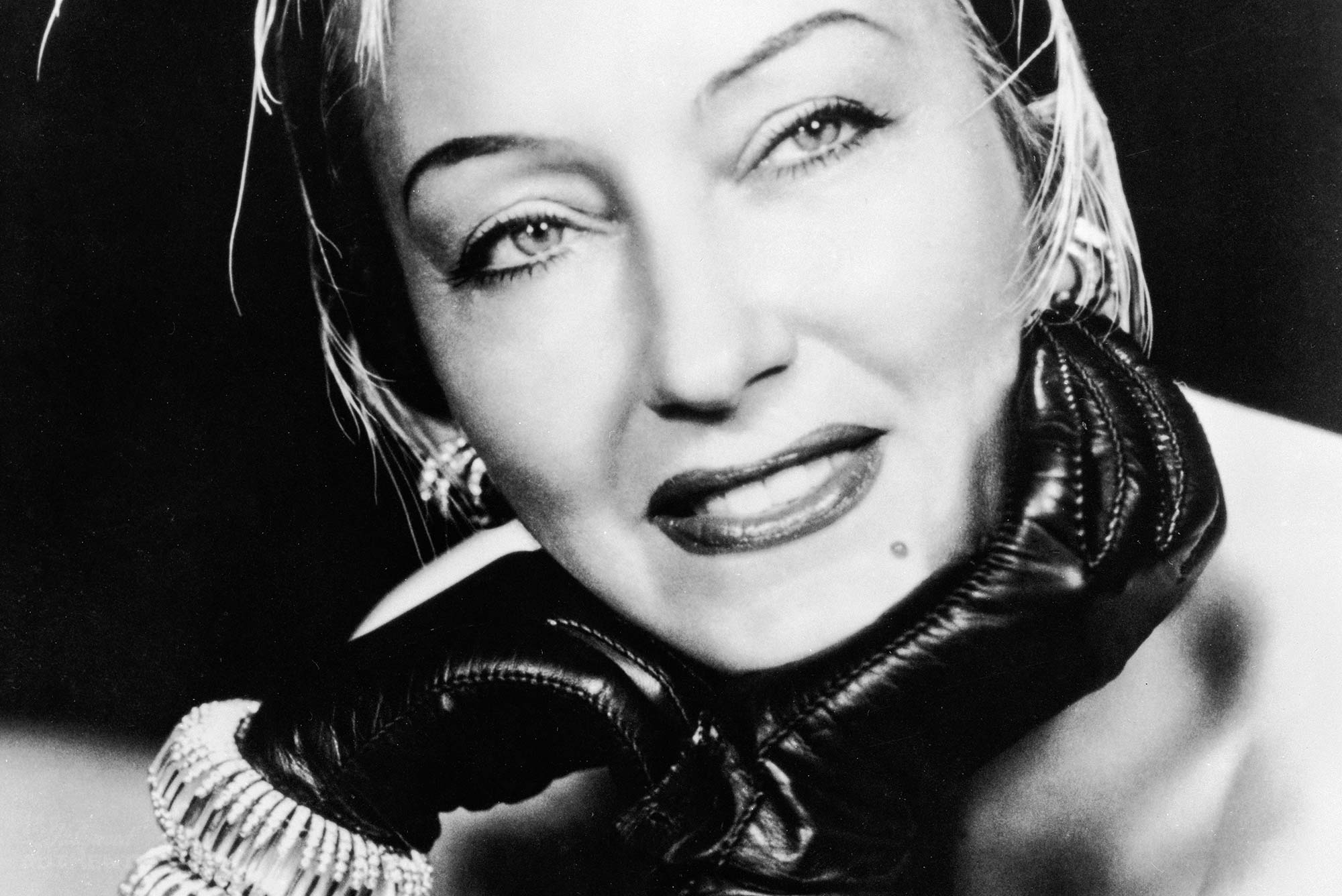
Gloria Swanson, too, couldn’t be parted from her Cartier. She was often photographed in her jewels, a signature of her glamorous image. The jewellery accompanied her onscreen Sunset Boulevard: ageing former starlet, Norma Desmond, still sparkled in her choice of jewels if not on the big screen. In the film, Swanson wore two of her own diamond and rock crystal bracelets created in 1930 as part of Desmond’s costume.

In High Society, released in 1956, Grace Kelly wore the jewellery house’s engagement ring, adorned with a 10.48-carat emerald-cut diamond and given to her by Prince Rainier III of Monaco. Like Valentino before her, the actor couldn’t bear to part with it while working, so added the famous ring to the film’s legacy instead. Tracy Lord’s classic platinum and diamond bauble boasted regal veracity for audiences.

More recently, Cartier collaborated on 2018’s Ocean’s 8. The plot centered on the theft of an ornate diamond necklace, made by Maison Cartier and based on a piece created by Cartier London in 1931. Named after Jeanne Toussaint, Cartier’s creative director from 1933 to 1970, the prop mimicked diamonds with zirconium oxides.

Cartier celebrates BAFTA, High Society, Ocean’s 8, Sunset Boulevard, The Phoenician Scheme
Gloria Swanson

The Maison’s skills were again enlisted for Wes Anderson’s recent output, The Phoenician Scheme to recreate a Cartier rosary from the 1880s for the nun protagonist to clutch. ‘It was interesting and fun to do it that way, and I think they look better,’ Anderson said of using actual Cartier jewels in the film.

Cartier has expanded its cinematic presence by contributing new short films to the zeitgeist, and by frequently collaborating with filmmakers such as Johan Renck and Sofia Coppola. ‘Films are made up of many details, and jewellery plays a role in this by showing you the type of character you encounter,’ Coppola noted.

Cartier celebrates BAFTA, High Society, Ocean’s 8, Sunset Boulevard, The Phoenician Scheme
BRACELET, CARTIER PARIS, 1930
Platinum, Diamonds, Rock Crystal

The Maison is also a main sponsor of the annual Venice International Film Festival, an opportunity that more deeply connects Cartier with new and important works from the global cinematic community. Over the years, the jewellery house has hosted Maison ambassadors like Monica Bellucci and Rami Malek, and bestowed the Cartier Glory to the Filmmaker Award to legends like Wes Anderson. This year, Cartier celebrated BAFTA with a glamorous dinner held ahead of the annual EE BAFTA Film Awards, drawing a full-circle movie moment between Valentino’s watch obsession a hundred years ago.

Cinema and jewellery share a commonality in the often unseen craftsmanship that goes on behind the scenes to create the magic onscreen. Like movie productions, Cartier boasts many specialised metiers who craft their own sort of creative sorcery to produce a dazzling work of art. And BAFTA and Cartier share a similarly long history and legacy in showcasing quality and artistry. Though founded in Paris in 1847, a Cartier boutique has stood in London’s New Burlington Street since 1902 and held warrants from members of the British Royal family since 1904. Just steps away, BAFTA HQ resides with a similar dedication to creative excellence and links to the royals. Established in 1947 as the British Film Academy, the organisation became BAFTA eleven years later, with the opening of its Piccadilly home in 1976.

Together, both Cartier and BAFTA have left a lasting mark on our cultural consciousness that continues to sparkle.


Words by EMILY ZEMLER
Cartier Rosary (Credit: Nils Herrmann, Collection Cartier)
Jean Cocteau (Credit: ©️ Luc Fournol / Photo12). Thanks to the Comité Jean Cocteau
Grace Kelly (Credit: ©️ D. Stock / Magnum Photos). With the permission of The Princess Grace Foundation – USA
Gloria Swanson (Credit: Documentation Cartier Paris). Bracelet Cartier Paris, 1930 (Credit: Marian Gérard, Collection Cartier © Cartier)

Cartier, Cartier celebrates BAFTA

Words by STEPHEN BOGART
As told to JANE CROWTHER


Humphrey Bogart’s son with Lauren Bacall, Stephen, gave his blessing to writer-director Kathryn Ferguson’s documentary Bogart: Life Comes in Flashes which charts his father’s career and legacy via the instrumental women in his life; his mother and his four wives.

As the co-manager of the Humphrey Bogart Estate, you don’t want people to run roughshod over the image of someone who has been historically at such heights. I’m not famous, but my father was famous and somebody’s going to try to screw you over. They’re going to try to do stuff that you probably don’t want to have done. This has not been my life’s work, but it’s been important to me to do that. And in order to do that, you have to do trademarks. You have to do licensing. You have to do that legally. Or else it just goes to the public domain. So it’s a double-edged sword. You really have to do it, even if you don’t want to.

bogart: life comes in flashes, humphrey bogart, stephen bogart, universal pictures
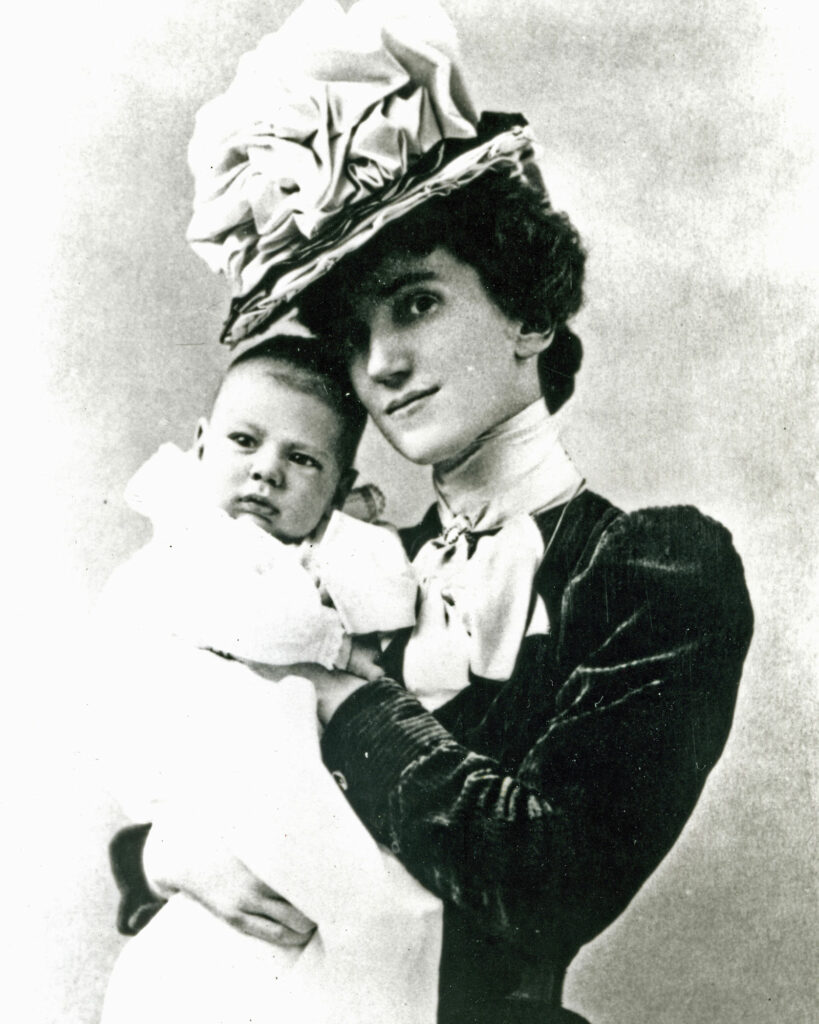
Maud Humphrey and Humphrey Bogart © Image courtesy of Universal Pictures

The estate gets a lot of requests and if the request was going to be the cookie-cutter bio of ‘movie, movie, movie, movie, movie, meets Betty [Bacall], movie, dead’ I wasn’t interested. I voiced one of those [Bogart: The Untold Story, 1997) before, and my mother did Bacall on Bogart for PBS. But the way that Kathryn [Ferguson] proposed us doing it was totally different from any biography I’d seen on anybody. And there aren’t many people who had a succession of women in their lives who have affected them so specifically. It was so incredibly different. And it turned out to be really spectacular. I am not a complete expert on my father at all. I worked for CBS and Court TV and NBC. I’ve been working my whole life – not at this. I never thought about his relationship with his prior wives [stage actor Helen Menkin, film actors Mary Phillips, Mayo Methot and Lauren Bacall]. So all of that was new to me. 

Some of it was not new – like the footage I am in as a child [8 year-old Stephen is seen attending his father’s star-studded Beverly Hills funeral in 1957]. I remember, I had my hand over my face when I’m walking out of the funeral because I’m blocking it from the photographers. I’m not crying or anything. But I don’t remember during the funeral. I don’t even know if I remember that part, but I remember it because I’m seeing it on video. 

bogart: life comes in flashes, humphrey bogart, stephen bogart, universal pictures
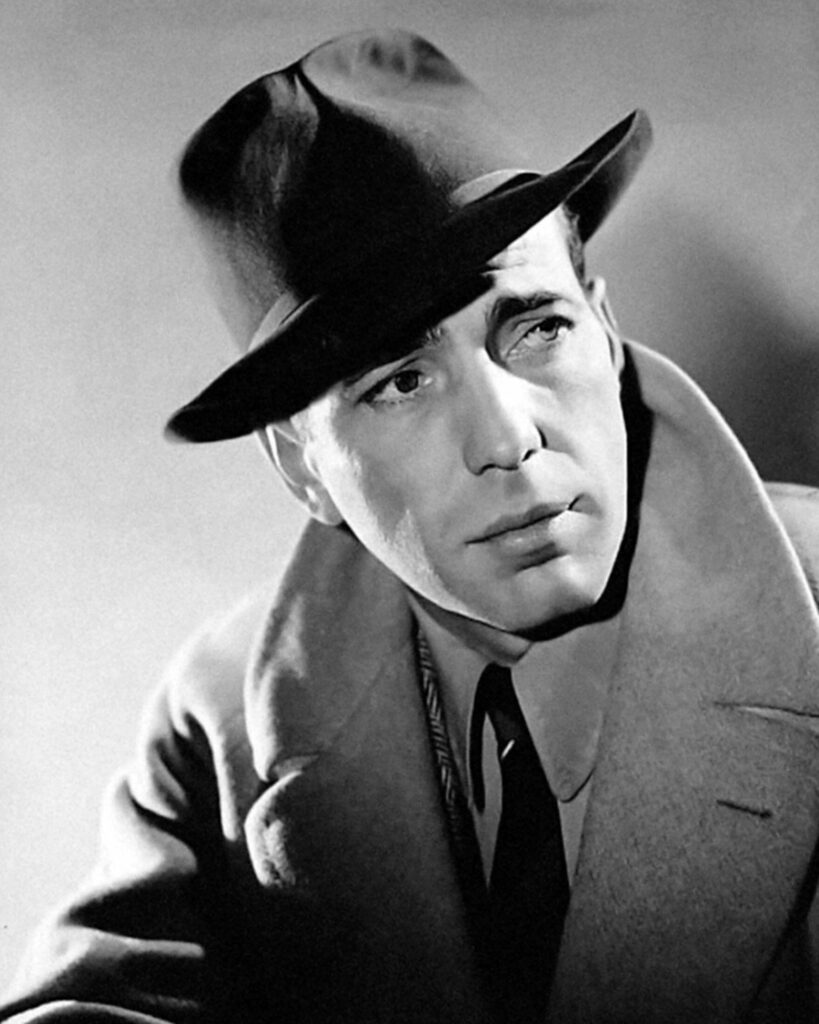
Humphrey Bogart © Image courtesy of Universal Pictures

I’ve been my father’s son for as long as I’ve been born, obviously. So I’m used to [the idea of having famous parents]. My friends were just friends. They may have been Liza [Minelli], Sammy Cahn’s kid Stevie… these were the people I hung around with, but they were just friends. I was just a normal kid. I only realised my parents were famous when I went to my father’s funeral – all those people, and all the press. Then all of a sudden it was over, and stuff started to happen. My whole life changed. We moved and lived in England for a while, and we moved back to New York. I had three dogs and a cat – and no more. We got rid of the dogs. We got rid of the cat. We got rid of the house. We got rid of the school. We got rid of the state. And we moved to England, and got rid of the country. And then we came back to New York. There were a lot of losses along the way.

It was annoying [to be known as the son of Humphrey Bogart] as a teenager, in my twenties, my thirties… It’s even annoying now! I would not introduce myself using my last name, because then I wouldn’t have to deal with: ‘Oh, are you…?’ But my close friends know who I am, and they know all of this, but they don’t care. That’s what’s most important.

bogart: life comes in flashes, humphrey bogart, stephen bogart, universal pictures
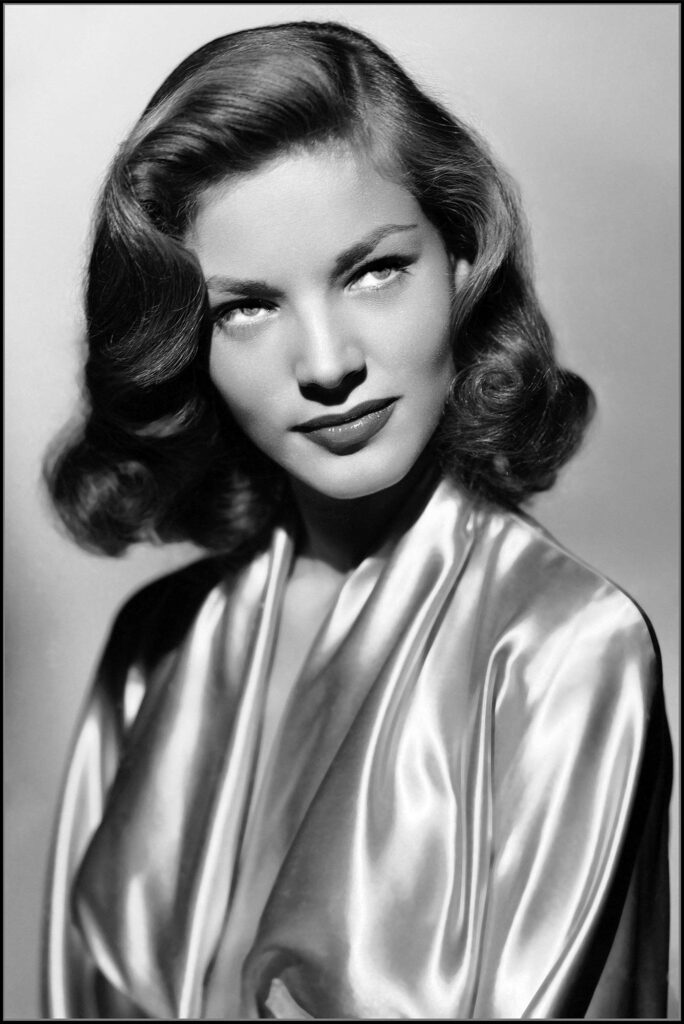
Lauren Bacall © Image courtesy of Universal Pictures

My parents were probably one of the top five couples of the 20th century. You’ve got the Kennedys. You’ve got Edward and Wallis Warfield Simpson, and you’ve Charles and Di. They were right up there with these in terms of fame. So I think they just went through life knowing that. They went through their 12 years together knowing that. They stood out. But they always put their marriage first.

My father loved to sail [on his boat, the Santana]. I was not allowed to go on the boat until I could swim. I’d go down to the boat, and I’d be on the boat while I was in the dock, before he went out. It sank in San Francisco Bay, and a guy pulled it up, and fixed it up. He didn’t really change it. So I went on it then, when I wrote my book [Bogart: In Search Of My Father]. There’s footage in the film of me on Satana but I don’t remember this stuff. That’s the thing. I see it, and I say, ‘Oh, I did that. Yeah, I can see that’. But there’s no visceral memory of it within me. That’s a strange thing.

bogart: life comes in flashes, humphrey bogart, stephen bogart, universal pictures
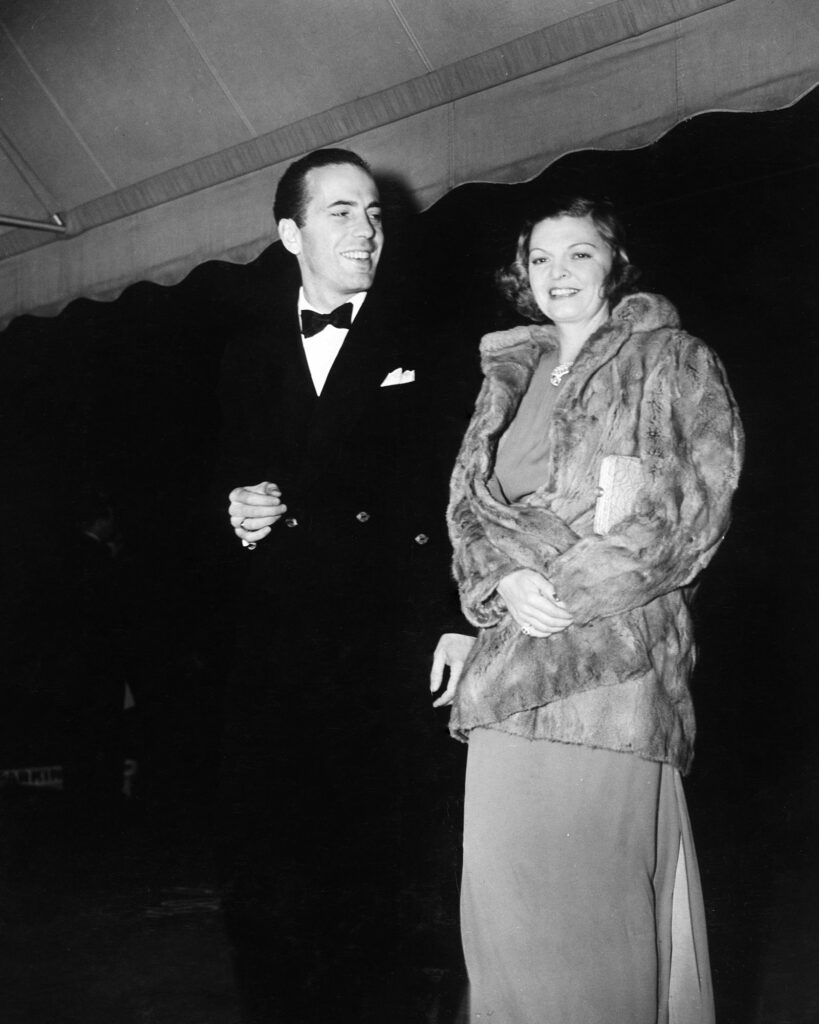
Humphrey Bogart and Mayo Methot © Image courtesy of Universal Pictures
bogart: life comes in flashes, humphrey bogart, stephen bogart, universal pictures
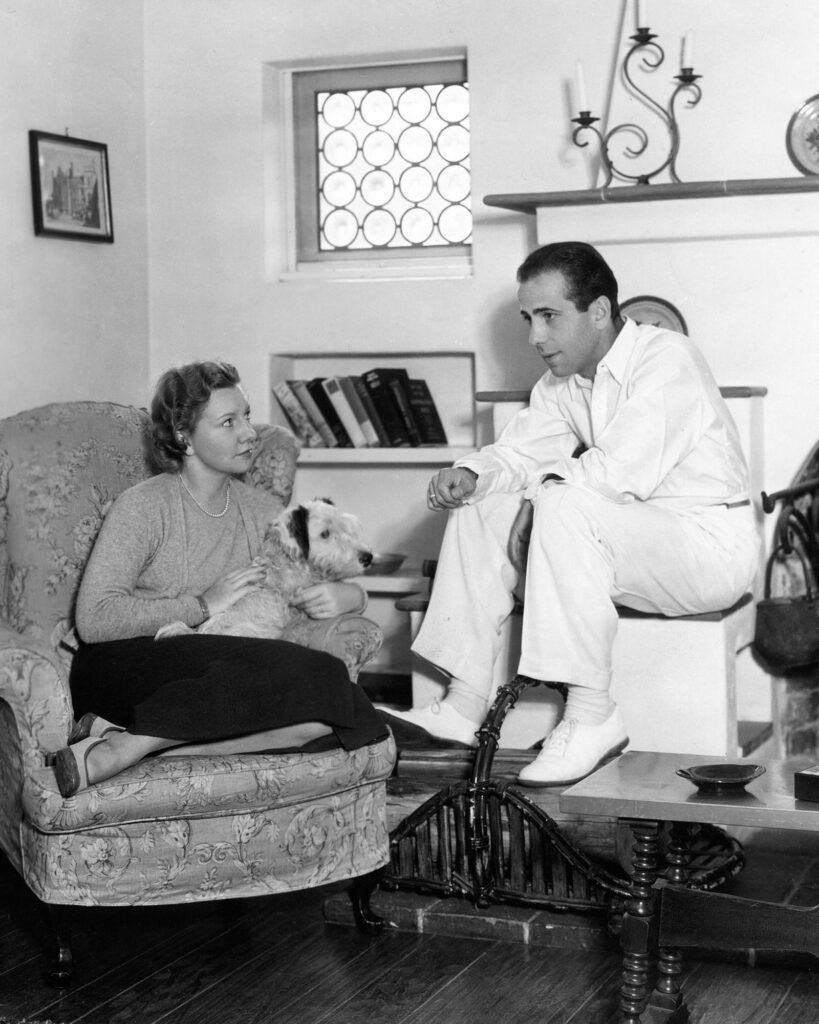
Mary Philips and Humphrey Bogart © Image courtesy of Universal Pictures

I don’t know what my father would think of the movie because it’s not all hearts and flowers. It takes a somewhat negative – especially by today’s standards – view of him. But he was tremendously proud of his work, and he loved his work. He loved making movies. That was what was most important to him. And making a living! He liked money – he liked the nice house, the nice boat, the nice car, and all that. 

Did I ever consider following in my father’s footsteps? I’m not an idiot. Can you imagine becoming an actor, and having to live up to that hype? No way. Plus I’m not very good at it. My parents made me do it. They made me be in plays when I was in middle school. I played Bianca in The Taming of the Shrew in an all-boys school. And I played General Snippet in The Mouse that Roared, but I’m not very good, and I don’t really like being someone else. It’s not my thing. Although if [Bogart] had lived longer, who knows? I don’t know that he would have encouraged me. I might have gravitated to it just because you’re in that milieu, so why not?

bogart: life comes in flashes, humphrey bogart, stephen bogart, universal pictures
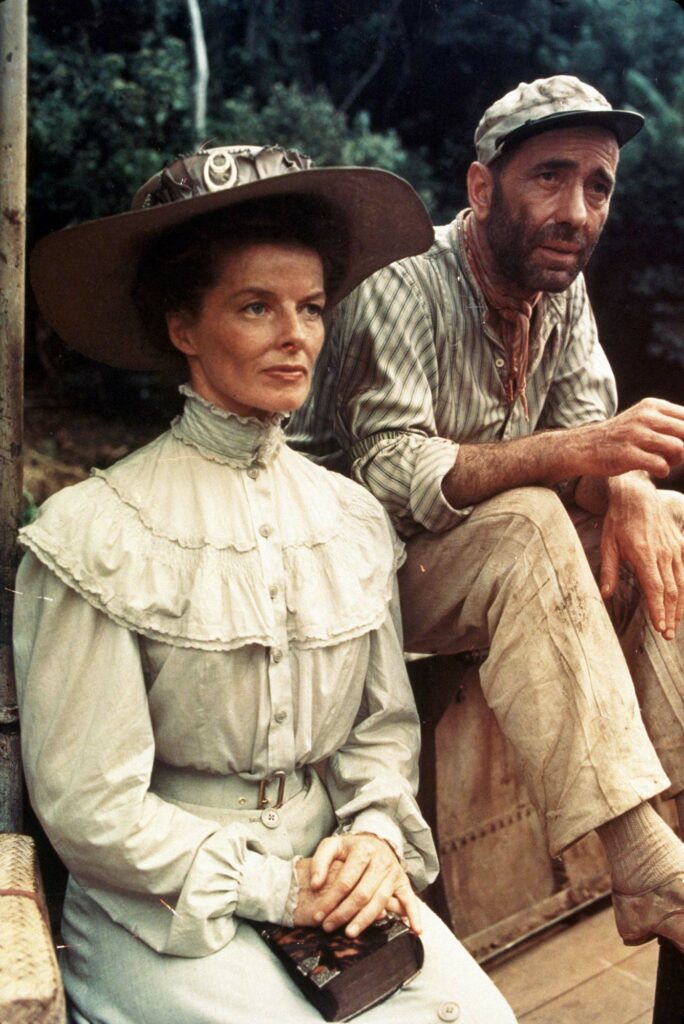
Katharine Hepburn and Humphrey Bogart © Image courtesy of Universal Pictures
bogart: life comes in flashes, humphrey bogart, stephen bogart, universal pictures
Helen Menken © Universal Pictures

I have no idea why my father continues to fascinate us. If I did, I’d be selling it, and I’d be a billionaire! It’s inexplicable. People have asked me that all the time. Yeah, he died young, and he was a fine actor, but even he says he didn’t know how he ended up the way he did.

He’s a movie star to other people but my father to me. When I think of him it’s in a sports coat. I think of him on a boat. He was around for such a short time in my life. I didn’t know who he was, which is why I wrote the book, and why we did the documentary.

bogart: life comes in flashes, humphrey bogart, stephen bogart, universal pictures
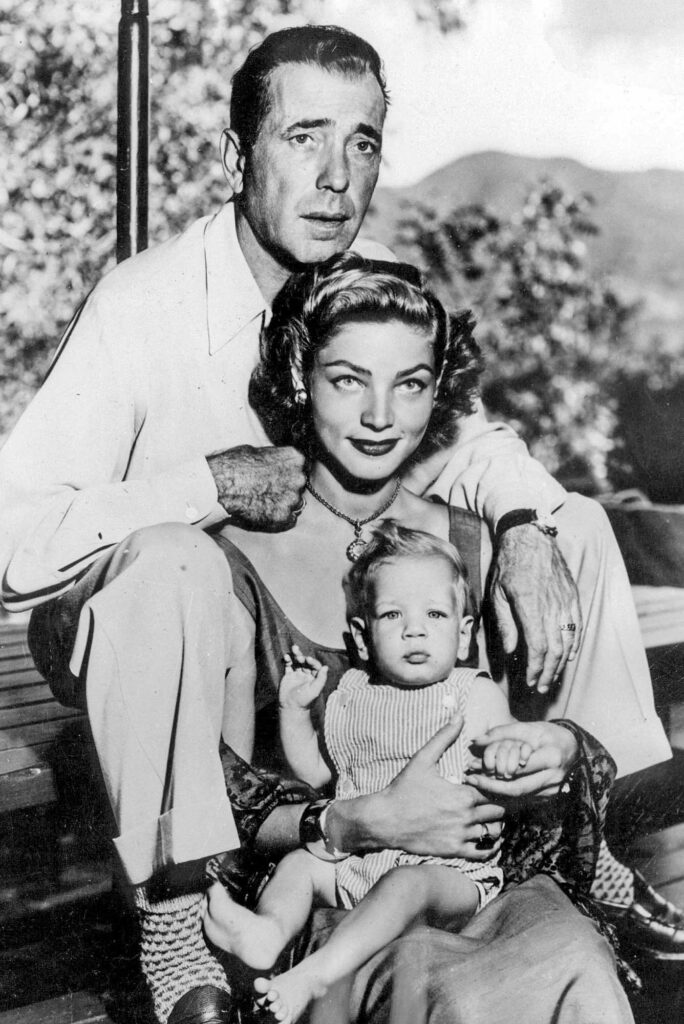
Humphrey Bogart, Lauren Bacall and Stephen Bogart © Image courtesy of Universal Pictures

Words by STEPHEN BOGART
As told to JANE CROWTHER
Bogart: Life Comes in Flashes is available on digital download now

November 15, 2024

Christopher Reeve, Hollywood Authentic, Reel Life, Super/Man – The Christopher Reeve Story

Photographs by MARY ELLEN MARK/REBECCA DICKSON/HERB RITTS
Words by MATTHEW REEVE, ALEXANDRA REEVE & WILL REEVE


The children of Superman star Christopher Reeve celebrate his life as a father, actor, director and disability advocate in the wake of his life-changing accident in a new documentary filled with unseen archive footage and recordings. They tell Hollywood Authentic what ‘Dad’ meant to them on and off screen.

Matthew Reeve: We were approached by an archive producer to tell this story, asking if we had home movies, and would we be interested in this type of project – and we had also, coincidentally, had just boxed up our family home. So we knew what we had. We knew where it was. It was consolidated and accessible. We discussed it and we thought it would be a great project to embark on. The timing was kind of right – enough time had passed where [Christopher Reeve’s] story was still relevant. So it’s been really a case of the stars aligning in this lovely way.

Christopher Reeve, Hollywood Authentic, Reel Life, Super/Man – The Christopher Reeve Story
Credit: Mary Ellen Mark

Alexandra Reeve: We’ve been approached in the past, often by people wanting to do a narrative feature, and we had worried that that would be just too much through rose-coloured glasses, and would only tell one very specific angle on his and [his wife and Will’s mother] Dana’s life. It felt important that if we were going to tell the story, we were going to tell it authentically and truthfully; in a way that allows you to connect with the man, and understand that there were lows as well as highs, that actually the strength in his life is all the more impressive because of the things that he overcame. When [directors] Ian Bonhôte and Peter Ettedgui got attached, it felt like something we could get on board with and participate in fully. We could sit for interviews where we would speak about loss in our family in ways that we’d never spoken about before.

Will Reeve: We said ‘if we do this, we would give all of ourselves’. I think each of us prepared for that moment individually. The night before I knew I was sitting for my interview, I went through a bunch of my mom’s journals. I have family photos all over my apartment anyway, so it wasn’t like I had to dig up too much. I went in prepared to fully and truthfully answer any question that came my way because I wanted it all on record – my experience and feelings. 

Matthew Reeve: Seeing Will and Alexandra’s interviews, and them sharing their thoughts and feelings and memories – they were really the hardest moments and also the most meaningful and rewarding. Certainly we all lived through [Reeve’s horse riding accident, adaptation to paraplegia and death] together but I think when you have someone else asking a question and you’re sharing a perspective with an outsider, you maybe say things you wouldn’t just say in a conversation between siblings.

Will Reeve: We don’t necessarily go back and deconstruct it amongst ourselves because we’re living our full lives. So then to see, all these years later, those experiences through Matthew and Alexandra’s eyes, and for them to see it through my eyes, and realise that we did have that shared experience, but also have different perspectives… We didn’t need this whole process and this project to bring us closer. But it certainly – for me, at least – gave it a more contextualised understanding of their experiences as they’ve related to my experiences. I don’t think in the weeks, months, or years after my mom passed away that I stopped to be like, ‘Hey, guys, just so you know, I wasn’t actually asleep, right?’ [when the news came of Dana Reeve’s passing 12-year-old Will pretended to be asleep] but that’s an example – of which there are many in this film – that the full and comprehensive reliving happens throughout. We go to places, and so does the film, that haven’t been explored before.

Christopher Reeve, Hollywood Authentic, Reel Life, Super/Man – The Christopher Reeve Story
Credit: Rebecca Dickson

Alexandra Reeve: It’s been amazing to see audience reactions [at film festivals] – just how much people are seeing themselves and their own story in this film. It dawned on us that our family circumstances were unique in many ways, but also that the themes in the film are so universal. So people are coming up, and talking about how they’ve navigated a loved one having a cancer, or being a caregiver, or dealing with loss, or thinking about how to stay a good friend after someone’s circumstances have changed. It’s this beautiful, humbling thing for people to see themselves in different moments, and connect to different pieces of this very human story. [Christopher Reeve] felt that too, very deeply – that for many people, he put a face on spinal cord injury and disability more broadly, because people felt they knew him so well from just that level of fame. And so if he could suddenly allow people to connect to his experience, and see beyond the wheelchair to see that he was still the same person – that really there are important, universal lessons to learn from that more generally.

Will Reeve: I know that it’s been a gift for me to see this film and use it personally as a way to make the image I have of my dad’s life and my mum’s life and our family’s story more vivid, and fill in some gaps, or further shade in some details that I either wasn’t yet alive for, or wasn’t aware of at the time. In psychology, it’s called a compositive memory, where you form an image in your mind that’s based off of photos and videos you’ve seen, and stories you’ve been told. Seeing those moments come back to life was a really touching and meaningful way to revisit the past. And then seeing everything that came before me – the Superman years, and even prior to that – to get to have a 360-degree view of his life in such a cinematic way has been one of the great blessings of this experience. And it was a disorientating experience at first to watch it, being like, ‘No, that’s me. This is about us’.

Matthew Reeve: There is no Christopher Reeve story without Dana Reeve, in the simplest form. It was not mandated by us in any way, but I think as the directors did their research, and we’d done our interviews, I think it became very clear to them just how important she was to us as a mother and stepmother, and how important she was to our father, and just what a remarkable, magical human being she was.

Alexandra Reeve: And to show our blended family, too [Matthew and Alexandra’s mother Gae Exton also appears in the film]. To be able to show that with the nuance, and the thoughtfulness to say, ‘You can have a relationship for 10 years. It can be the grounding moment for you, and then that can change. And then you can find your great love. And that those things can be in harmony together, and you can raise children stably throughout all that turmoil’. That side of a personal relationship doesn’t often get modelled on screen, and I’m really glad that they captured it as they did.

Christopher Reeve, Hollywood Authentic, Reel Life, Super/Man – The Christopher Reeve Story
Credit: Warner Bros. Pictures

Will Reeve: I love that people get to see [my dad’s] silly, goofy, mischievous side. His public image, certainly as Superman, was literally the Man of Steel, and the dashing leading man with big muscles and the blue eyes. But he was human and grounded. He was a fun hang. His active dynamic lifestyle was of just always doing a million different activities, and always being on the go. I’m glad that people got to see his humanity throughout, which manifests itself a lot in his cheekiness.

Matthew Reeve: He was skilled in so many different things: flying aeroplanes, scuba diving, playing the piano, speaking fluent French, flying across the Atlantic solo twice, and gliding. He’d go up in open cockpit biplanes. I don’t think people really knew that.

Alexandra Reeve: For me, when I look back on my dad, the lessons I try to draw are that he was so determined and so self-disciplined in everything he did. And that’s a personality trait that was there way before the accident – it’s what allowed him to excel. And it was what got him through after the accident. Just the strength of character, and to keep persevering, but also to push himself to new challenges. He pushed himself to the limit every single day, no matter what the circumstances were – whether it was getting in shape for Superman, getting really good at skiing, or learning to ride a horse, or going out and directing a film after the accident. 

Will Reeve: The way that my parents remain present in my life now is through the values that they instilled in each of us. I get told pretty often how proud my parents would be of me, which is nice to hear. It’s not always true, by the way – I’m quite human! But they would be proud of my humanity as well. I know that if I live in accordance with the values and standards and expectations set by my parents in the short time we had together that everything in my life will align so that I am living in a way that honours them, and would certainly make them proud. And I don’t have to wonder what they would think or say or feel because I know, based on the time we had together, the proper path as defined by them.

Matthew Reeve: I think Dad would feel proud of this film because it’s a beautiful work of art. And it’s just him on the poster, and he’s had a whole movie made about him. The actor in him would love that!  

Christopher Reeve, Hollywood Authentic, Reel Life, Super/Man – The Christopher Reeve Story
Credit: Herb Ritts

Photographs by MARY ELLEN MARK, REBECCA DICKSON & HERB RITTS
Words by MATTHEW REEVE, ALEXANDRA REEVE & WILL REEVE
As told to JANE CROWTHER
Super/Man – The Christopher Reeve Story is out now in cinemas