
May 25, 2026

Rami Malek, Luther Ford, Tom Sturridge, Rebecca Hall
Cannes Dispatch festival ticket
Rami Malek, Luther Ford, Tom Sturridge, Rebecca Hall

CANNES DISPATCH
Photographs by GREG WILLIAMS
Interview by
JANE CROWTHER


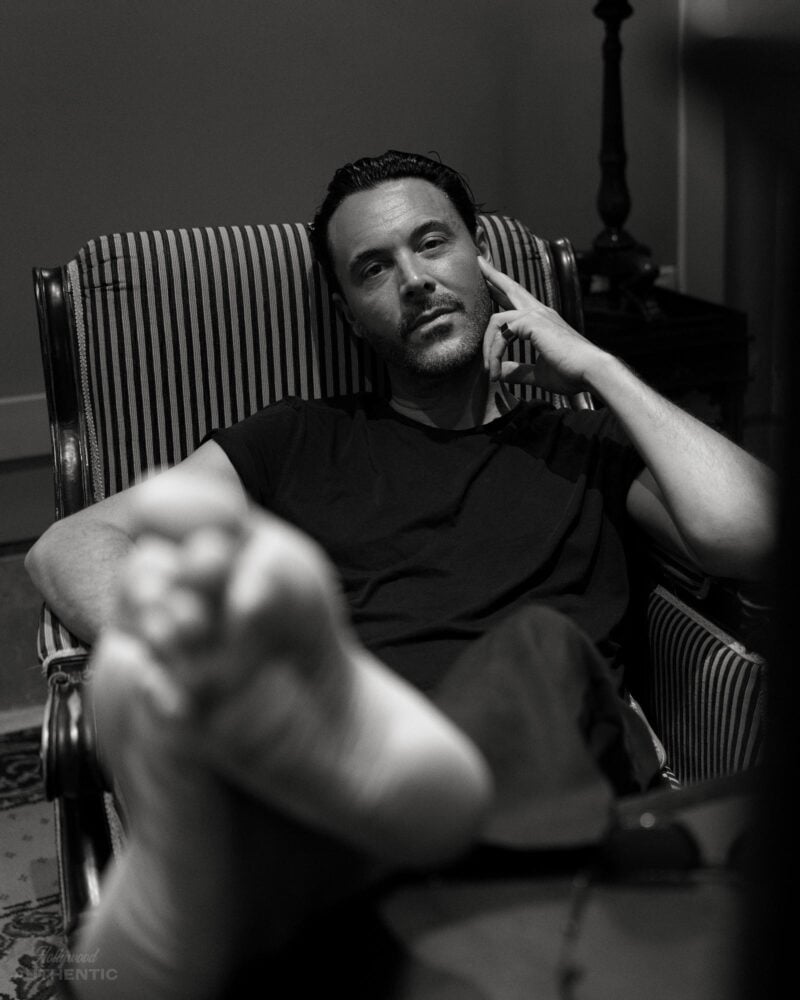
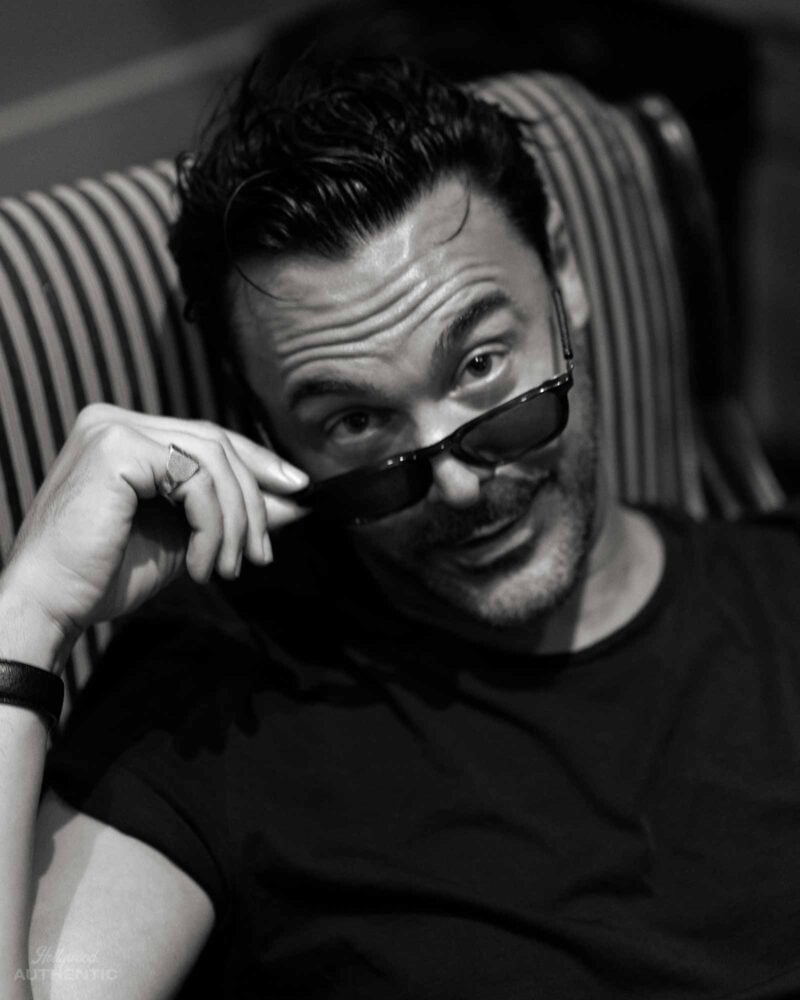
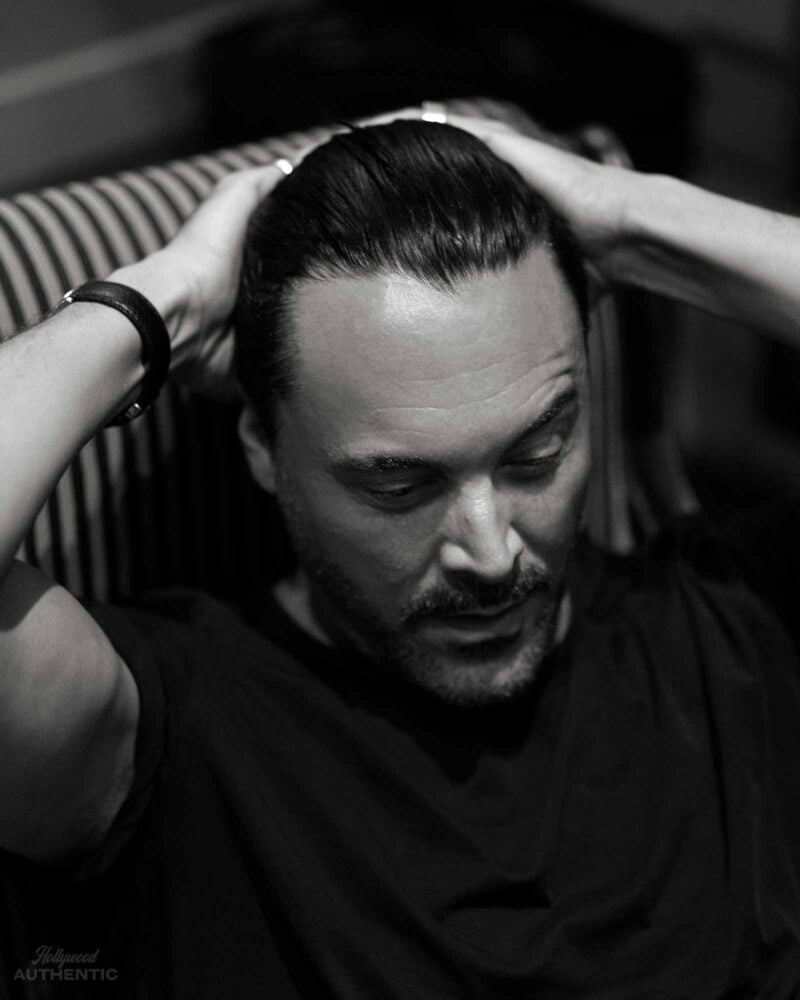
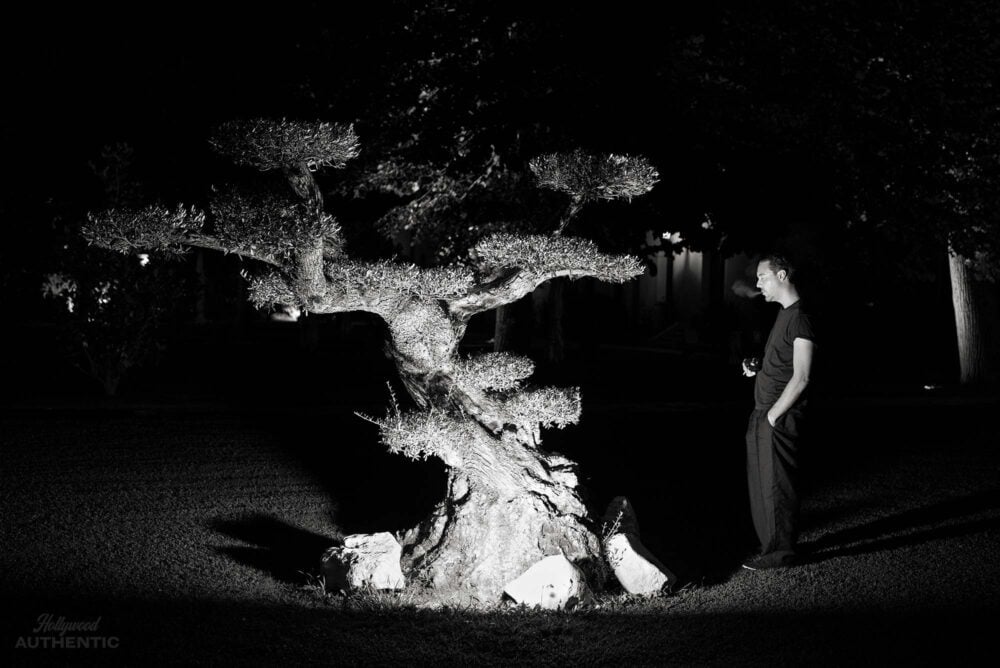
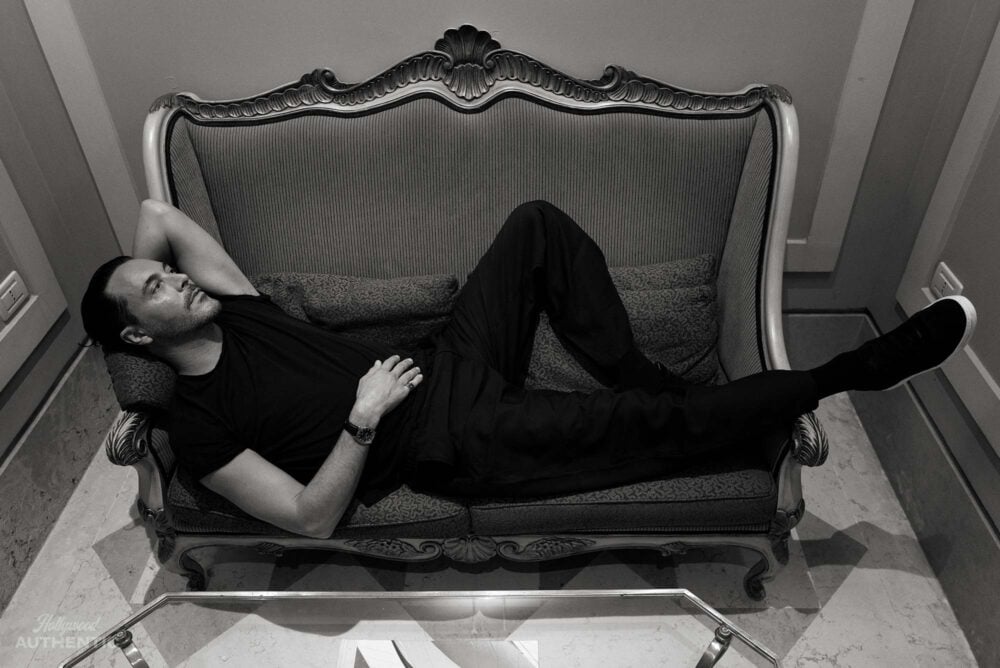
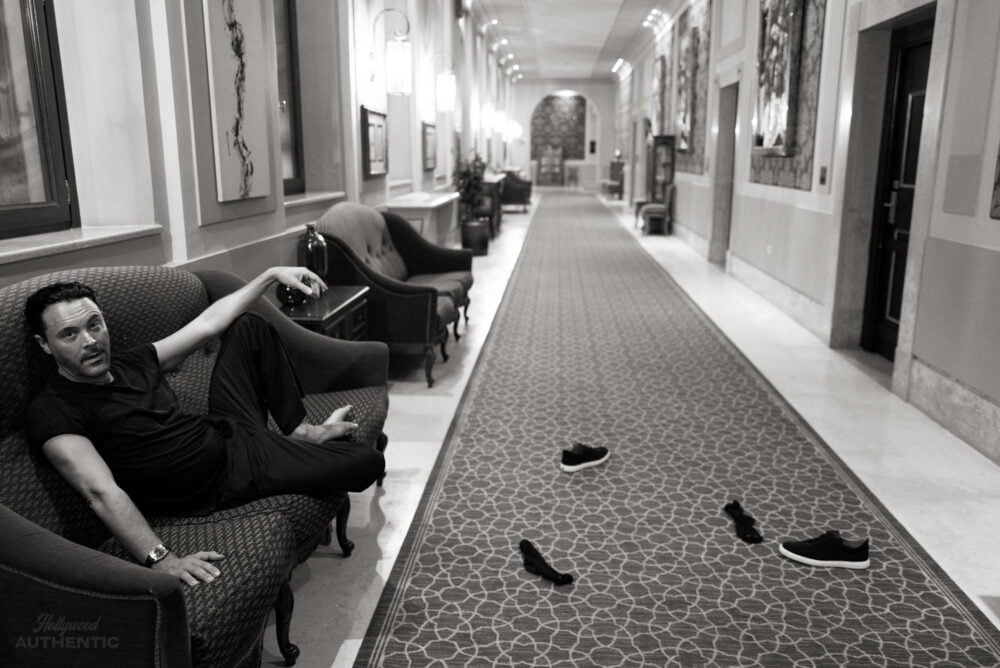
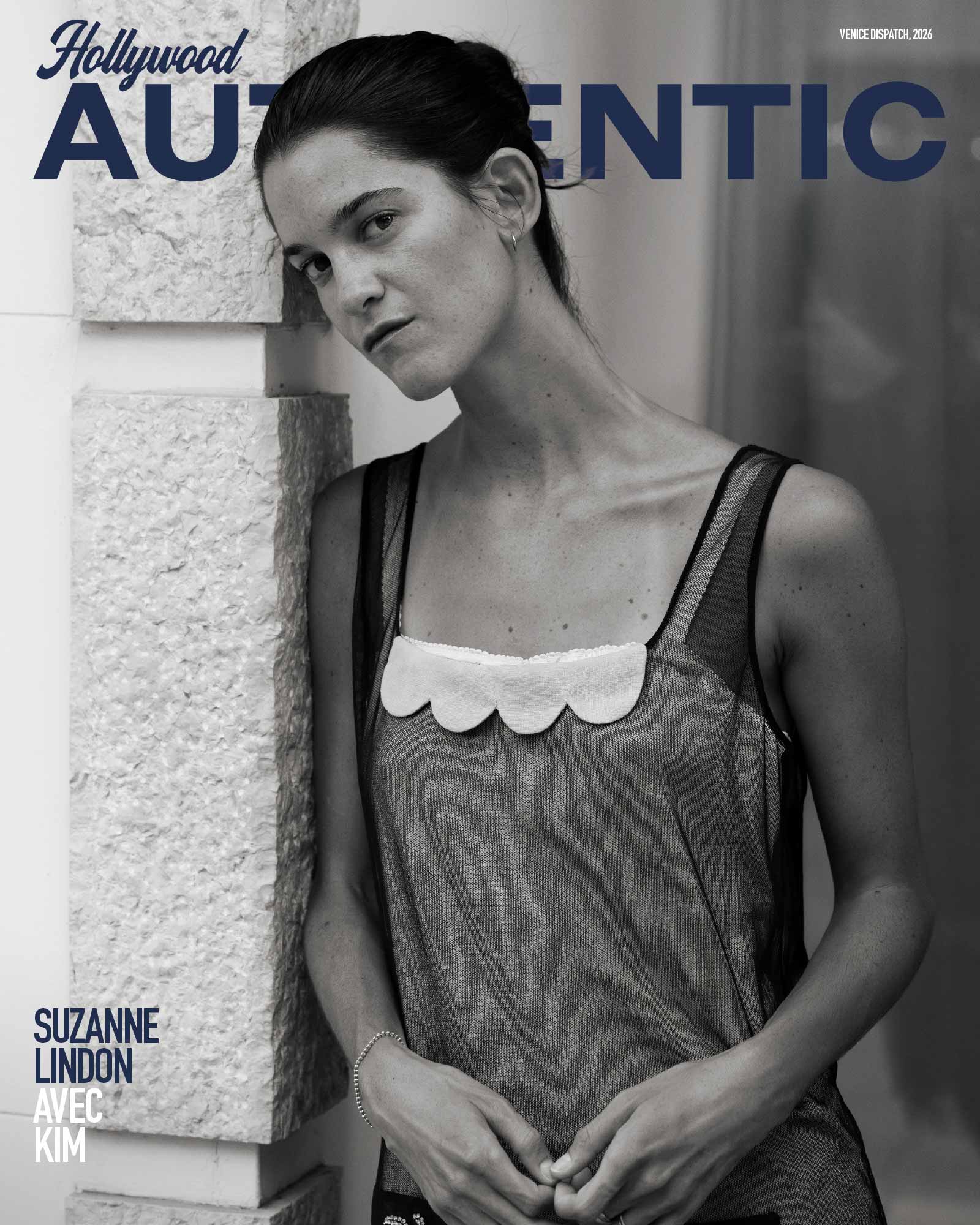
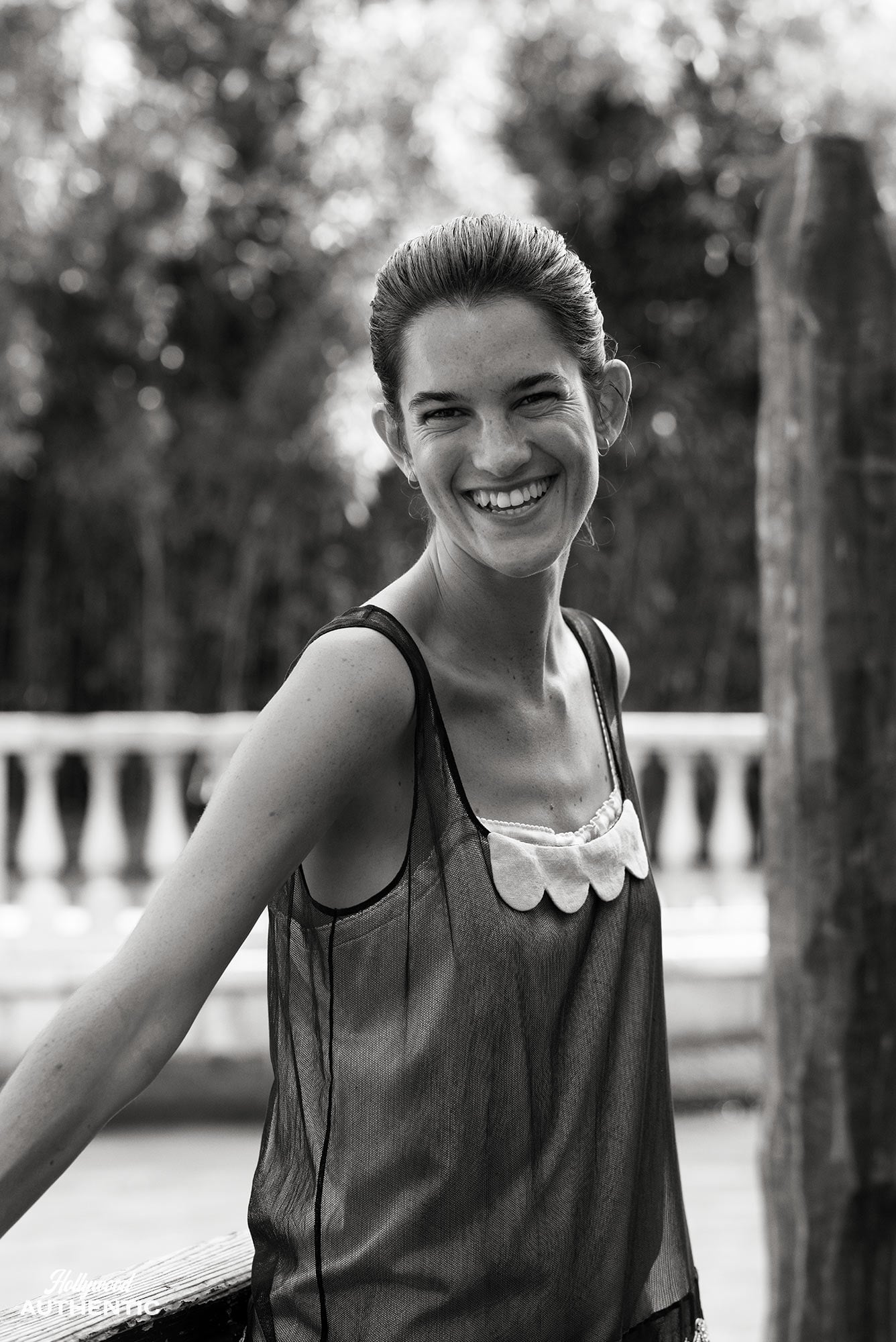
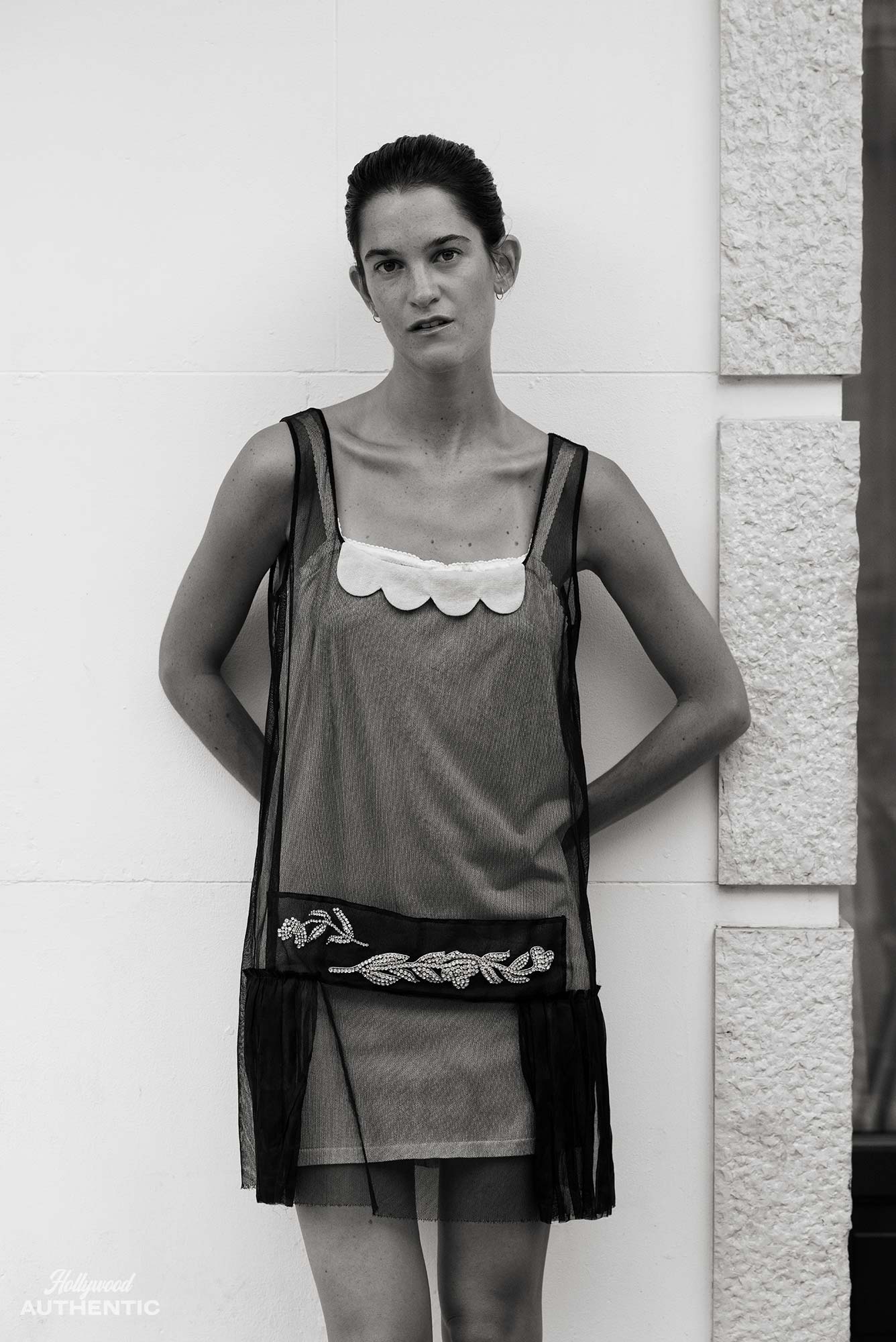
When Greg Williams photographs Tom Sturridge in his Cannes hotel suite just before he walks the red carpet for the premiere of his latest project, Ira Sachs’ The Man I Love, he admits to feeling a little nervous. Not because this is his first time at Cannes but because he would be seeing his film for the first time in the Lumiere Theatre at the Palais. There’s a certain trepidation in that, watching your work with an audience, both discovering it for the first time. ‘The thing that was most special was the room itself – the warmth,’ Sturridge says when Hollywood Authentic catches up with him a few days later. The film received an eight-minute standing ovation and was subject to rapturous reviews. ‘I’ve done that room a couple of times, and it was the most love I’ve ever felt for a film – in my experience. I do prefer, in general, not to watch, but I think when you’re in competition in Cannes, it’s kind of rude not to.’ In Sachs’ period piece, he plays Dennis, the partner of HIV-positive actor Jimmy George (Rami Malek) in Reagan-era New York. As Jimmy voraciously devours life in order to stave off death, Dennis quietly and gently cares for him, ensuring he takes his meds, bathing him, forgiving him. It’s a study of a relationship that lives between the words, Sturridge conveying a long romance through tender glance and touch. 
Rami Malek, Luther Ford, Tom Sturridge, Rebecca Hall

‘My role in it aside, it’s a special piece of work,’ the British actor says bashfully, still discovering how to discuss the film having only just seen it. ‘I think it’s beautiful. What surprised me the most was how it allowed you into that world, that time of New York in 1989, and was so absorbing, tangible.’ He recalls seeing a key scene with Jimmy walking through a club, encountering different characters and essentially a lost world. ‘I became overwhelmingly moved by these extraordinary humans who were the coolest, cleverest, most creative, most brave… And just knowing that we lost so many of them, those humans, just dancing in the club.’ 

The film is low-key in its period styling, specific in tone. Achieved, Sturridge says, from Sachs’ methodology as the cast began preparing. ‘It began with his personal stories. He shared with all of us his recollections of when he first moved to New York. And then, beyond that, he would very organically send pieces of cinema, literature, documentaries, images or weird clips on YouTube. He would make us watch a lot of films that had no literal connection to our story. It was films by Chantal Akerman, Maurice Pialat and Cassavetes, which were much more about trying to suggest a kind of cinematic grammar that he was aiming for. That was profoundly helpful in accessing the sort of truth that he was looking for, in a surprising way, because it wasn’t through an obvious lens.’

Rami Malek, Luther Ford, Tom Sturridge, Rebecca Hall

He namechecks books Borrowed Time by Paul Monette and Dancer from the Dance by Andrew Holleran, as well as documentary How to Survive a Plague by David France, all of which were useful in his pre-production prep. But essential to creating the specific vibe of the project was the trust developed between director and cast. An actor’s relationship with a director is always about trust. Ira is someone who doesn’t like to talk much – or really at all – about the text of the script, or the character. When you’re doing lighting setups before you’re shooting a scene – it’s very normal for actors to run the scene. Ira is allergic to hearing his lines spoken before the camera is rolling. He very much wants everything to be discovered in the moment. That requires a profound amount of faith.’ That faith goes both ways. Without traditional rehearsal time, Sachs had to trust his actors to deliver. ‘Absolutely. This was very much an independent film. We did not have months and months to shoot. If he didn’t get what he wanted; if something magical didn’t happen in those eight minutes, then he was going to be in trouble. But weirdly, it releases a lot of freedom. Feeling the faith from him was very liberating. But most specifically, I knew that I would never leave the scene without him getting what he wanted. Despite all of the ephemeral preparation, and not knowing what you were going to do in the moment – he’s very rigorous and precise once the camera is rolling about getting what he wants. So the combination of that rigour and that freedom was intoxicating.’

Rami Malek, Luther Ford, Tom Sturridge, Rebecca Hall

In order to create a tangible sense of a lived-in relationship with Malek Sturridge connected with the actor beforehand to find an intimacy that translated onscreen. ‘We met a few months before we started shooting, not really talking about the project itself, but just being aware that when you’re portraying people who have loved each other for many years, there is a level of intimacy that you can’t really conjure in the moment. We do have to have an idea of how we’re going to physically communicate with each other. We just spent a lot of time together learning how our bodies work, and move, and finding a kind of physical language.’ The result is an unspoken connection, one that is incredibly evident in a moving scene in which Dennis lovingly bathes Jimmy in a tub. No words are spoken but feelings and stories are told in each gentle caress. ‘I think a performance always sounds stupid when spoken about,’ Sturridge says. ‘But we shot that scene towards the end of the shoot. Whatever subliminal work we’d done up to that point, was allowed to be articulated. Ira put the camera in the room, closed the door, and left us for a long, long, long time. There’s certainly a version of that scene that’s about three hours long.’

Rami Malek, Luther Ford, Tom Sturridge, Rebecca Hall

Like The Man I Love, Sturridge is drawn to projects by their directors and his next two gigs are dream jobs. He has a small role in Mia Hansen-Løve’s If Love Should Die (shooting soon) and worked with Dustin Hoffman on The Revisionist. ‘I think [Hansen-Løve] is one of the greatest filmmakers of any generation, let alone her own. I was fortunate enough to meet her a couple of years ago, and I just basically said, ‘I will make the coffee for you’.’ Working with Hoffman was an education he says as a fan of his career, particularly The Graduate and Midnight Cowboy. ‘He has gifted the world some of the most extraordinary cinematic performances ever. When you have the chance to be in a chamber piece and play the violin with the greatest violinist, it’s too bizarre an opportunity to pass up. He’s someone who just has absolute freedom in the way he performs. He’ll do the scene as written, and then he’ll do the scene absolutely as not written, and then he’ll do the scene in German, and then he’ll do the scene as a lion. He has endless imagination. He’s constantly testing you and pushing you, and trying to drag you into a reality, rather than sitting in the page. For someone of his maturity it’s extraordinarily alive – far beyond anyone I have ever worked with. He’s just constantly filled with ideas and effervescent life.’ So is Sturridge’s goal to be as curious as Hoffman while still working in his eighties? ‘Yeah, absolutely. I still want to care the way he does. He could easily just be putting his feet up now, but he doesn’t want to. Not in a dissimilar way to the story of our film – he needs to create to live.’


Photographs by GREG WILLIAMS
Interview by JANE CROWTHER
Styling by ROSE FORDE
Grooming by ALEXIS DAY
The Man I Love premiered at the 79th Cannes Film Festival

Cannes Dispatch festival ticket
Teenage Sex and Death at Camp Miasma, X-Files, Hannah Einbinder, Jane Schoenbrun

CANNES DISPATCH
Photographs by GREG WILLIAMS
Interview by
JANE CROWTHER


Gillian Anderson opened up Cannes’ Un Certain Regard section this year with a sapphic, psycho-sexual, feminist take on slasher movies where she’s drenched in blood, gorges on fried chicken and makes the phrase ‘dipping sauce’ sound like a sexual invitation. Teenage Sex and Death at Camp Miasma was a hit with the critics on the Croisette and marked the first time Anderson had really stepped into genre cinema after her long run as Agent Scully on X-Files made her wary of repetition and like all us, she watched a terrifying film too young. 

Teenage Sex and Death at Camp Miasma, X-Files, Hannah Einbinder, Jane Schoenbrun

‘I had a bad experience with a horror film, The Texas Chain Saw Massacre, when I was very young, and so even music from horror films can bring panic attacks on me,’ Anderson admits when she chats with Hollywood Authentic in a suite at the JW Marriott, an appropriately red fruit juice in her hand. ‘I have embraced dark true-crime over the past decade, and also, working on X-Files for so long, my daughter jokes that her childhood was spent putting her pram with severed heads in it on set. So it’s been in my periphery for a long time. But I don’t have a real understanding of the history around horror films and subgenres and slashers, etcetera. So this was an education for me.’ 

Teenage Sex and Death at Camp Miasma, X-Files, Hannah Einbinder, Jane Schoenbrun

In the film Anderson plays a fan favourite actress, Billy, who starred in a huge franchise and now lives on the set of the original film in which she played the ‘final girl’. When a young director, played by Hannah Einbinder, visits with the intention of rebooting the film series, all hell breaks loose. Serial killers emerge from the lake, heads roll, blood gushes… There’s a knowing wink in casting Anderson with her X-Files past in such a role.I didn’t necessarily reflect on it, but I did understand it enough to be able to embrace it, and take advantage of it as much as possible, to be able to enjoy the moment and the meta element of it,’ she says.

The film also explores generational ideas on gender, identity, and sexuality as Einbender’s director and Anderson’s actress grow closer sexually. ‘I feel like the film is a celebration of the fact that despite their decades’ divide, they’re meeting in common experience. But it was important for me that I really didn’t want for Billy to feel creepy or predatory. My daughter is the same age as Hannah is. For me, it needed to feel very purposeful – and weird in the places where it was meant to be weird. There’s a beauty, I think, in what the film has to say about what we can learn from each other. There is a vital commonality, which is that we are women, you know? So often today, that gets lost in the power struggle within social media – knowing and having information, and having something clever to say  – that the universal bond of potential support, of commonality, gets lost. So I think it’s really important that it shows up in this film in a way that is actually profound.’

Teenage Sex and Death at Camp Miasma, X-Files, Hannah Einbinder, Jane Schoenbrun

The film also reflects Anderson’s real professional life in that the X-Files is being rebooted right now by Ryan Coogler. ‘It’s being rebooted by a real artist. Ryan Coogler coming in to take over that franchise, is such an interesting and radical concept. Kudos to our showrunner, Chris Carter, the creator, for allowing him to take the helm. It’s when you have a true artist step in and say, ‘I know exactly how to apply my sensibility and gifts to the best parts of what this represents and should be, or should have been’. It’s so interesting to also be in conversation about that at the same time as doing this. I think finally, for the first time in what feels like a very long time, there’s a modicum of hope that the industry isn’t falling backwards off a cliff.’

Though she won’t be drawn on if she’s involved in Coogler’s reboot (‘that’s another conversation, but thank you for asking’ she demurs), Anderson is an enthusiastic torch-bearer for the franchise, attending fan conventions alongside her co-star David Duchovny. ‘I haven’t really been obsessed with anyone, it baffles me a little bit,’ she admits. We were lucky at the beginning because we were shooting in Vancouver, not Los Angeles, and there wasn’t social media which, looking back, was such a gift. I can’t imagine coming up and having to contend with that now. I experience fandom now at Comic-Cons. I recognise how important it is for some people to be face to face with me. I don’t feel like, ‘I’m so cool. They love me so much’. It feels like it’s for what I represent. It almost helps them define who they are, that Scully represents an aspect of their internal life. And I’m happy to show up as the embodiment of that thing.’

Teenage Sex and Death at Camp Miasma, X-Files, Hannah Einbinder, Jane Schoenbrun

Anderson is busy but admits to trying to think carefully about the projects she takes and what she gives her name to. ‘It’s hard, though. It takes patience. It does take a belief that if you wait and dare to do nothing until the thing arrives that it will come. I do have the tendency to just embrace everything. I enjoy all of it. I end up doing too much. There is a version of me that would do less, and only choose the jewels.’


Photographs by GREG WILLIAMS
Interview by JANE CROWTHER
Teenage Sex and Death at Camp Miasa premiered at the 79th Cannes Film Festival
Gillian Anderson wears a custom version the NAVA dress from the Mary Katranzou Resort 2026 collection

May 24, 2026

Diamond, The Untouchables, Dead Again, Phantom Thread
Cannes Dispatch festival ticket
Diamond, The Untouchables, Dead Again, Phantom Thread

CANNES DISPATCH
Photographs by GREG WILLIAMS
Interview by JANE CROWTHER


Andy Garcia had been trying to make his self-written neo-noir, Diamond, for years when he watched Phantom Thread and the pieces of the puzzle came together. ‘I saw this young lady in Phantom Thread, and I said, ‘I’m not making the movie without her’,’ he enthuses about Vicky Krieps to Hollywood Authentic. Krieps plays the movie’s femme fatale, Sharon Cobbs, the enigmatic wife of a murdered billionaire, who is the prime suspect in the case. Sharon brings in period-obsessed PI Joe Diamond (Garcia) to help unravel the truth, with Krieps bringing her disarming and intriguing read to a genre staple. Sharon and Joe dance around each other romantically as Joe uncovers the facts. Garcia is captivated by the actor in real life (‘I love you, Vicky Krieps!’ he says warmly when he sees her as we sit down before the movie premieres) and relates how she inadvertently made him wait for an answer on whether she would take the role. ‘It took a while for her to read it, she made me suffer for a couple of months,’ he smiles. 

Diamond, The Untouchables, Dead Again, Phantom Thread

‘I blame my agent,’ Krieps jokes. ‘But seriously, when it came to me I was a mother of two, you know?’ I was looking after them alone. I was really overwhelmed in my life, generally. And then I watched Ocean’s 11 with my best friend. She kept going on about Andy and after a while, I was thinking, ‘Wait…I think I have an email – a script!’ I read it the same night. And then I replied very fast. It was so well-written. The dialogue was like Billy Wilder. I hadn’t read anything like that, which is why I told him, ‘I’m coming, with whatever – or without – money. I don’t care. Tell me when.’’

Krieps, Garcia says, is incapable of delivering a false note, even within a genre piece. ‘I took it very seriously,’ she says of the process. ‘How could I – someone who’s a cineaste – in full respect of the genre and of all of Hollywood, and all the beauty and the light, bring something from today to this woman? I bring something where a woman doesn’t care if she’s liked or not. I was trying to make her mysterious but also someone who could totally exist for herself.’ The appreciation is mutual between Krieps and actor/writer/director/producer/composer Garcia. ‘I’ve worked with a few actor-directors and there was no conflict between the actor and the director with Andy,’ Krieps nods. ‘He made us feel so free. We had no time and no money, but we felt like: ‘We have all the time in the world. Should we do it again? Let’s do it again.’

Diamond, The Untouchables, Dead Again, Phantom Thread

Though the film is an entertaining, self-aware potboiler with murder, wiseguys and a jazzy soundtrack, Krieps says that the theme playing, like a muted trumpet, under all of it; is love. ‘This film is so unique, because of all these genres, and all that beautiful construction – but at the centre it’s all love. It’s Andy’s love for the story, the story of life itself, music, art. It’s the love for this universe. Diamond is about the love for what has gone, the love for what is here. And all the scenes are good because the people we are working with, there’s love and respect for the other person’s work.’ It’s cinema that is a world away from content churned out by an algorithm, she says, mentioning a streaming service that she did not care to work with. ‘They said the film has to be so that you can watch it on multiple screens. And you have to speak in a way that you can still understand it, but at double speed. I said, ‘Fuck you’. I couldn’t do that.’


Photographs by GREG WILLIAMS
Interview by JANE CROWTHER
Diamond premiered at the 79th Cannes Film Festival

May 24, 2026

Diamond, The Untouchables, Dead Again, Phantom Thread
Cannes Dispatch festival ticket
Diamond, The Untouchables, Dead Again, Phantom Thread

CANNES DISPATCH
Photographs by GREG WILLIAMS
Interview by JANE CROWTHER


During the end credits of Andy Garcia’s new film – in which he produced/directed, took the lead and composed the music – he thanks his daughter, Danielle (who also appears in the movie), for asking him to help with her English homework. The genesis of creating a neo-noir following a period-obsessed gumshoe, Joe Diamond, as he investigates the death of a billionaire and resists the 21st century was a Raymond Chandler assignment for Danielle 20 years ago. Garcia has always loved film noir (and been in films set in the period, including The Untouchables and Dead Again), and discovered a story had been marinating in him for years. ‘I started improvising this character. It was like, ‘Where did that voice come out of me? I didn’t know I had that voice’,’ he tells Hollywood Authentic on the roof terrace of the Marriott in Cannes where he is debuting Joe Diamond. ‘I think we got a ‘B’ on the report card for the homework, but the first thing that came out of me is still in the movie. And then I thought maybe there’s a movie with this guy.’ 

Garcia spent years noodling with Diamond’s characterisation and his rejection of the modern world – he lives a fully analog life despite the Waymo cars and robot deliveries that he runs into around LA. As a Fedora-wearing PI with an office in the Bradbury Building and a 1940 Plymouth Coupe, Joe may be out of step with selfies and TikTok, but he can crack a case using good old fashioned detective work and nous. ‘He’s like Batman. He has a Batcave, which is where he lives, and he’s got one suit, and he’s got his Batcar. Why is he the way he is? I didn’t know what it was until I had this dream. I woke up in the middle of the night and I was crying in my sleep. I immediately wrote ‘the only thing worse than crying yourself to sleep is crying in your sleep’.  And that haunted me. Of course, I’m enamoured with the genre, and the photographic elements and the style of it all, but that was the key.’ 

Diamond, The Untouchables, Dead Again, Phantom Thread

Garcia drew inspiration from photographers such as Fan Ho and Herman Leonard, along with the work of cinematographers Nestor Almendros, Conrad Hall and Gordon Willis, as well as Edward Hopper’s ‘Nighthawks’. And he made LA, a city he’d known since 1978 when he moved there as a young actor, a character in itself with iconic locations such as the Clifton Cafeteria, Angel’s Flight, Central Market and the now-closed Cole’s French Dip and Original Pantry Cage woven into the tale. And while the case at the heart of the story drives the narrative, it is the trauma that Joe lives with that provides the twists. No spoilers on the grief at the heart of the characterisation, but that case involves a murdered billionaire and his beautiful wife, Sharon Cobb, who is the assumed perp by LAPD detective led by Brendan Fraser. ‘When I was thinking about making the movie I wondered who am I going to make the movie with?’ Garcia says. ‘And then I saw this young lady in Phantom Thread, and I said, ‘I’m not making the movie without her’.’

Tapping Vicky Krieps as Sharon, Bill Murray as Joe’s barkeep manager, Danny Huston as an oily lawyer, Rosemary DeWitt as a mysterious romantic prospect and Dustin Hoffman as a joke-cracking, noodle-slurping pathologist, Garcia scraped independent financing together (‘I could never get any support from traditional studios or streamers’) to make his movie in 25 days over 40 locations and 59 sets. As if he didn’t already have enough to do, he also co-wrote the music with jazz legend Arturo Sandoval, and personally performed the Diamond theme. Though it’s period specific and loaded with noir touches and muted trumpets, Diamond is still very much its own thing, says Garcia. ‘It was very important not to fall into the trap – all of us – of ‘this is film noir, and we’re going to smoke the cigarette, and am I a villain or will I be a gentleman or whatever?’ There has to be a true humanity.’ As an actor/director he felt at ease giving his cast what he calls ‘a sacred place for us to play’. ‘Once I know what the composition is, I don’t need to go back to the monitor and interrupt our flow, and say, ‘Let me look at that take, and see how you’re doing’. I’ve worked in movies, even with actors that aren’t directing, who do a take, and then they get up and look at the take. When the actor comes back I go, ‘hey, it’s me and you here. It’s not about what you see in yourself. You’re breaking the energy of what we’re doing here’.  It’s an insecurity. It’s very important that we’re going to discover this thing moment to moment, take to take. It needs to be alive.’

Diamond, The Untouchables, Dead Again, Phantom Thread

A recurring theme in the film is Joe’s dismissal of social media, despite being an urban legend on it – with people he encounters during his investigation understanding him through the lens of TikTok and wanting selfies. ‘The social media world, that whole thing – somehow, it does tank your life,’ Garcia muses. ‘It’s the death of tranquillity in a way. You have to make a choice. Do you abandon it all together, or use it in a constructive way to promote a piece of work? People are starting to make movies to watch on their iPhones. Things have to happen in the first three minutes of the story, or else people will turn it off. But this movie was definitely designed for a big screen.’


Photographs by GREG WILLIAMS
Interview by JANE CROWTHER
Diamond premiered at the 79th Cannes Film Festival

May 24, 2026

Victorian Psycho, Jason Isaacs, Maika Monroe, Thomasin McKenzie
Cannes Dispatch festival ticket
Victorian Psycho, Jason Isaacs, Maika Monroe, Thomasin McKenzie

CANNES DISPATCH
Photographs by GREG WILLIAMS
Interview by
JANE CROWTHER


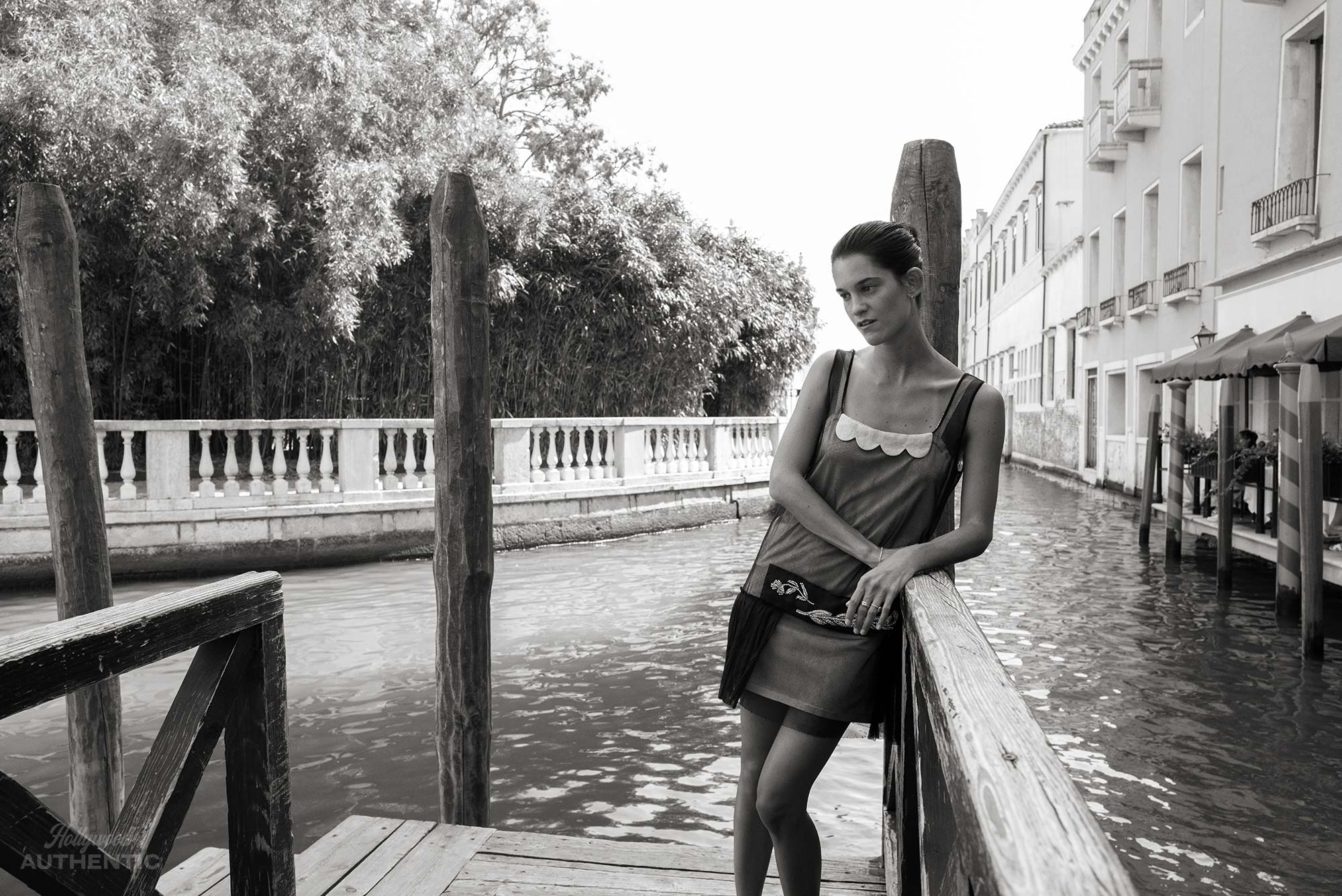
Ruth Wilson describes herself as a ‘Cannes virgin’ when she sits down with Hollywood Authentic on the roof of the Palais de festival and we look down on the crowds and red carpet below. ‘It’s sometimes a bit absurd. I love it. What a wonderful thing to have in celebration of film. But the film is also separate from the other stuff – the side shows. It’s great for people watching.’ People watching is something of a full time occupation for actors and Wilson has arrived at the festival with a film its director, Zachary Wigon, calls ‘demented’. In Victorian Psycho, based on Virginia Feito’s book, she plays Mrs Pounds, the 19th century lady of Ensor House where governess Winifred Notty (Maika Monroe) arrives to care for her two children. Winifred is a Jane Eyre type with blood lust, a woman who struggles to tamp down her murderous instincts while sparring with her snooty employer. A comedy horror that reclaims the genre for women, it shares some sensibilities with Teenage Sex and Death at Camp Miasma which opened the festival’s Un Certain Regard section. 

Victorian Psycho, Jason Isaacs, Maika Monroe, Thomasin McKenzie

There’s a sense that in horror movies women were always the victims, running around in t-shirts and getting wet. So it is exciting to be in a project where the women are the ones in power, taking revenge, are having the fight,’ says Wilson. It’s not the first time she’s dabbled in psychopathic characters – she’s played Alice in Luther since 2010, a trailblazer for unapologetic on-screen women. ‘I love playing those things that are usually attributed to men. It feels like freedom as a performer, as a female.’ There’s also a through-line from Victorian Psycho to Wilson’s breakout role, when she played Jane Eyre in the BBC’s 2006 adaptation of the Charlotte Brontë novel. Many of the tropes of that celebrated tale are subverted and questioned in Victorian Psycho to viciously amusing effect. Wilson is currently reading Villette by Brontë and thinks the rebelliousness of the genre has always been there. ‘She writes very complicated, interesting, funny, dry-witted women. It’s sort of misconceived somehow.’

Victorian Psycho, Jason Isaacs, Maika Monroe, Thomasin McKenzie

Wilson was drawn to the project because of its comedy as well as playing the other side of the Jane Eyre coin – lady of the house rather than ingénue governess. ‘I’d just done a really intense play, which was wonderful, with Michael Shannon [A Moon For The Misbegotten at the Almeida], and I was like, ‘This will be a palate cleanser in its own way’. There’s something really juicy, funny and satirical about it, as well as being violent and gory. There’s something about [Mrs Pounds] – that repression, which is really interesting. When Winifred comes in, there’s a sort of disgust and desire line – a very fine line between the two with her. She’s as psychopathic as Maika’s character in some ways.’

The idea of women being pitted against each other isn’t something new, she reflects. ‘I don’t think it’s modern, it’s always been the case. A repressed group of people will fight for their own freedom – and maybe at the expense of someone else in their group. You’d hope we’d all help each other out, but that’s not always the case. It delves into that female dynamic.’ There’s also something recognisable in the way actresses are measured against each other and the prizing of youth. Wilson nods. ‘I think it’s a really interesting time, actually, for women, and it’s great to have those amazing actors ahead of me, who are ploughing that furrow for me. Your career’s not over in your 40s. It’s only getting more interesting, and that’s really exciting for me. And it’s lovely to see yourself reflected on screen. I’ve just worked with Emma Thompson [on Down Cemetery Road], and she’s an action hero. She’s being blown up, chased and shot at. And she’s like, ‘I’ve never done action. I’m doing action roles in my 60s’. I love that.’

Victorian Psycho, Jason Isaacs, Maika Monroe, Thomasin McKenzie

Coming up she’s returning to the Luther world alongside Idris Elba in the second film of the series. ‘Well, she’s not dead, which is great,’ she laughs when asked what we might expect from Alice, who seemingly died at the end of season five, falling from scaffolding. ‘I hadn’t played her for seven years so stepping back inside her, it was like, ‘Wow, this is interesting. How do I do this?’ But the dynamic is so instinctive with Idris and she comes back a bit darker.’ Given she’s a murderer and a psychopath, how much darker? ‘Darker…’ is all she’ll tease before she goes back to observing the circus on the Cannes Croisette.


Photographs by GREG WILLIAMS
Interview by JANE CROWTHER
I See Buildings Fall Like Lightning premiered at the 79th Cannes Film Festival

Guillaume Canet, Karma, Leonardo Sbaraglia, Roma Elastica

CANNES DISPATCH
Photographs by GREG WILLIAMS
Interview by JANE CROWTHER


Marion Cotillard has brought movies to Cannes numerous times – it’s not her first rodeo – but this year she arrives with two, both special to her for different reasons. ‘These are two movies that I love so much, that were amazing experiences for me as an actress,’ she tells Hollywood Authentic as we catch up with her at The Majestic Hotel on the Croisette just before the premiere for her second film of the fest, Bertrand Mandico’s Roma Elastica. The French actor had debuted Karma days before, her film with her longtime collaborator and former partner, Guillaume Canet (who writes and directs). In it she plays Jeanne, a woman with unspoken trauma who is blamed when her godson goes missing in her care. Jeanne drinks to forget her past, is messy and mysterious; and though the police assume she might be the prime suspect in the boy’s disappearance, her husband (played by Leonardo Sbaraglia) refuses to believe that she could harm a child. When Jeanne disappears, her husband attempts to find her and Karma unwinds the dual stories of each spouse. To say more would be to spoil, but it’s a role that demands a great deal from Cotillard, emotionally and physically, as she fights abuse and cruelty.

Guillaume Canet, Karma, Leonardo Sbaraglia, Roma Elastica

‘Guillaume had wanted to write a movie for me for a long time. We worked together on several movies, but he wanted to write a movie that would be, from the beginning to the end, all about my character,’ Cotillard says of the juicy project. ‘For a few years, I was not very happy with the projects that came my way. I was never totally taken by all the propositions that I had. I really wanted something strong and intense, and he knew that.’ Canet came across an article about a religious community and began to write a story for Cotillard. ‘I strongly responded to this idea,’ Cotillard enthuses. ‘It really got into my blood, and that’s what I need when I get involved in a project. I need to be passionate right away. I felt that I would want to give everything to this character and this film. It’s one of the most beautiful presents that I’ve had as an actress, and especially from him.’

Jeanne is fragile but also strong, cowed but also determined, a treat for an actor to play. ‘What I love about this character is that she doesn’t fit into the world she lives in. Her rebellious soul is turned into craziness. Her nature is stronger than this box we want to put her in. It creates a lot of pain, a lot of anger, a lot of misunderstanding – even from herself.’ The role demands that Cotillard put herself in some dark situations and mindset. How does she protect herself as an actor from being mentally and emotionally hurt by her work? ‘I have to say: I love experiencing very dark and complex characters. And Guillaume knows it,’ she laughs.  ‘He really pushed everything to this intensity, because he knew that that is where I find my power as an actress. That was a very, very intense role for me, and I wanted to dive in 100%. I knew that it would be hard sometimes to go through all of this. But when you trust a director that much; when you know that he’s going to take care of you, and he’s going to be there when emotionally it’s that intense… On a set, he is such a powerhouse, pushing people to give their best.’

Guillaume Canet, Karma, Leonardo Sbaraglia, Roma Elastica

This is an actor who has essayed Lady Macbeth, a paraplegic in Rust & Bone, Edith Piaf. That said, she admits some days were particularly difficult as Jeanne is punished physically and mentally. ‘But I knew that when I would go back to my room after a very intense scene, all the people around would support me and every day was magical because of this. You know that you’re totally free to give everything you have, because you have the support of Guillaume and all the people that he put together to achieve something that is great. I would go back to my room and cry all the tears that I had to cry out, and scream to get those feelings out… because, yes, you’re acting, but your body is really experiencing it. At the end of the day, you need to have this energetic cleaning, so you can start the next day not being in pain because of the character.’On the flipside, Cotillard also has Bertrand Mandico’s Roma Elastica at Cannes. In it she plays a fading eighties film star with a brain tumour who is trying to complete a shoot on a sci-fi set in 2026 and filming in the Italian capital. ‘I didn’t know the work of Bertrand Mandico,’ Cotillard admits. ‘When I received the script and a mood board, it was very peculiar. From the first pages I was taken by the story of this woman, by this world that is so specific to Bertrand Mandico. I loved this very weird project  and I was like, ‘OK, I’m going there’. I love working with artists that have a very strong world and something that you don’t see every day in movies. Artistic projects like Little Girl Blue or The Ice Tower. These are the kinds of movies that I want to be a part of, with these kinds of artists. I want their cinema to exist.’


Photographs by GREG WILLIAMS
Interview by JANE CROWTHER
Karma and Roma Elastica premiered at the 79th Cannes Film Festival

May 22, 2026

Atonement, Indiana Jones and the Dial of Destiny, Milk, Run All Night
Cannes Dispatch festival ticket
Atonement, Indiana Jones and the Dial of Destiny, Milk, Run All Night

CANNES DISPATCH
Photographs by GREG WILLIAMS
Interview by GREG WILLIAMS/JANE CROWTHER


The last time Boyd Holbrook was at Cannes Film Festival he was on the Croisette with Indiana Jones and the Dial of Destiny, a huge operation on a big budget Hollywood film directed by James Mangold. ‘Yeah, they let me tag along on that one,’ he chuckles when I meet him in his modest Airbnb apartment in the centre of Cannes ahead of his premiere. This year, he arrives with a much smaller film (the first feature by Reed Van Dyk), Atonement – a pertinent tale based on a New Yorker article about a US marine who feels compelled to connect to the family who lost all their men during a firefight in the 2003 Iraq war. ‘I’m a small cog in the wheel of a giant film like Indiana Jones. I’m very grateful to be in that. It was such a great experience. But this is obviously such a richer experience in terms of why I got into making movies, and what, to me, cinema is really about.’

Atonement, Indiana Jones and the Dial of Destiny, Milk, Run All Night

Filmed in Jordan and chronologically, Atonement follows Lou (Holbrook) as he engages with his enemy using a 40-cal machine gun during a visceral and terrifying opener where a local family, the Khachaturians, inadvertently get caught in the crossfire. Ten years later, broken and suffering from PTSD like many of his unit, Lou discovers an article written by war reporter Michael Reid (Kenneth Branagh) about the incident and he reaches out to the journalist in the hope of brokering a meeting with the family, now living in California. What follows is a study in the inhumanity of war, the trauma suffered by so many (as a character says ‘when a gun is shot, the bullet goes both ways’) and the hope of reconciliation. ‘Having a mother wave her own baby’s white shirt to surrender is soul-crushing. It’s a reminder of how important life is,’ Boyd tells me as we hang out on his sunny balcony and he considers how pertinent the subject matter has become in light of today’s news headlines. ‘When I found out about this film, I thought it was incredible but maybe not really relevant right now – this happened 23 years ago. And strangely enough, here we are…’

Atonement, Indiana Jones and the Dial of Destiny, Milk, Run All Night

Boyd found the experience of channeling PTSD an overwhelming one. ‘Living in guilt and shame, that’s where Lou’s resonating in life. It’s wreaking so much havoc in his life. There’s the scene outside the club where he literally breaks and has a panic attack. I did so much preparation that I literally had a panic attack. It was so real for me, that I’d taken this woman’s children and husband. I was inconsolable.’ The challenge and investigation that goes into his process as an actor is what he thrives on, he says. ‘I love projects like these where I have no idea how I’m going to crack this. Before this, I did Johnny Cash [in A Complete Unknown]. I knew that Joaquin Phoenix had done it. It’s going to happen, whether you’re ready or not. I love that pressure. It’s so exciting to me, having to figure things out, and to really push myself, and to get scared, and fuck up, and fail, fail, fail, fail, and fail until you get it right; until you start figuring it out. You can’t use any tricks that you used on the last one. You have to start from square one. Every actor is probably going to blow a little bit of smoke and say that they figured it out. You try to do as much prep as you can. But that is also part of it. When you’re there on the day, you’re discovering it. I love being so prepared that I’m free to do whatever I want, and you have new discoveries.’

Acting is also something he doesn’t take for granted. When I mention that I loved his work in Narcos, he smiles. ‘You know, I was about to stop acting, right before Narcos. I’d been in a bunch of films, and filmmakers… I’d done a lot of cool projects, but I just wasn’t making a living. And then Narcos happened, and basically opened up the whole world for me.’ Having gone to a place of almost quitting and then found success has been good for him, he thinks. ‘Some actors have – I won’t use names – come out of the gate really hot. But I think there’s a birth, life, and death to everything. There’s not another man in the world that I would want to be, or have another life than what I have now. I love my journey. I’ve learned so much. I’m an incredibly flawed person, but I found identity and self and so much through trying to portray humanity. I know how pretentious that might sound, but I really care.’ I ask if he stays in character during his process. ‘ No, I genuinely enjoy being on set, and the vibe of the people and everyone there. I love the kind of switching back and forth, and dropping in and dropping out. I only think I can do that because I do a lot of prep work. Do I remember my takes? Yeah. I know exactly how it should be done by the second or third take, because I can’t stand going home and having 20/20 hindsight. I had that early on in my career, and I couldn’t stand that. So now I try to edit that as we go.’

Atonement, Indiana Jones and the Dial of Destiny, Milk, Run All Night

A Kentucky native (‘I’m from a very, very small town in the Appalachia’), he’s the son of a coal miner and real estate agent. Acting wasn’t something that was in his family. ‘I saw a film called Slam by Saul Williams when I was 16. I just knew that that’s what I wanted to do. I was in some programmes for art when I was a kid, because I used to love to draw, and that was up until sixth or eighth grade. In high school, they cut the art programmes. There was no acting in school plays. I had no idea how to do it, but I knew that one day I was going to be an actor.’ An artistic kid, Boyd was a poet in his younger years. ‘Like all poetry, mine was about… everything. I think especially in that pivotal age, our teenage years to your early 20s – it’s all about Rumi and all those poets. ‘Don’t go back to sleep. The breeze at dawn has secrets to tell you.’  I was really interested in that. And now it’s more about expression and performance. ’ I wonder what he might have done for work had acting not worked out. ‘Good question,’ he laughs. ‘I don’t think I can do anything else. I don’t know, man…’

Atonement, Indiana Jones and the Dial of Destiny, Milk, Run All Night

Atonement premiered at the 79th Cannes Film Festival
Boyd wears Loewe 
Stylist Chloe Hartstein at The Wall Group
Grooming Charlie Cullen at Forward Artists

May 21, 2026

Cate Blanchett, Displacement Film Fund, UNHCR’s Global Refugee Forum, Earthshot Prize
Cannes Dispatch festival ticket
Cate Blanchett, Displacement Film Fund, UNHCR’s Global Refugee Forum, Earthshot Prize

CANNES DISPATCH
Photographs by GREG WILLIAMS
Words by JANE CROWTHER


Cate Blanchett has been to Cannes many times; both with her films and as a jury president. But she returns to the festival this year on a more personal mission. She conducted one of the festival’s ‘A Rendez Vous with…’ career Q&As reserved for icons of the film industry as well as appearing on a panel as chair to announce the five filmmakers who will receive a short film grant from the Displacement Film Fund. Initiated at UNHCR’s Global Refugee Forum and now in its second year, the fund champions and funds filmmakers who concentrate their storytelling on displaced people, or have experienced it themselves. Blanchett has worked tirelessly to bring the Fund to life, combining financial support with access to industry networks, and enlisting the help of Hubert Bals Fund and IFFR as Managing Partners. Generous contributions from Master Mind, Uniqlo, Droom en Daad, the Tamer Family Foundation, Amahoro Coalition, and most recently the SP Lohia Foundation made the Fund possible.

Cate Blanchett, Displacement Film Fund, UNHCR’s Global Refugee Forum, Earthshot Prize

This year Blanchett announced that Mohammed Amer, Annemarie Jacir, Akuol de Mabior, Bao Nguyen and Rithy Panh would be allocated at €100,000 budget to tell their stories, with their completed film premiering at the International Film Festival Rotterdam which runs from the 28 January to 7 February 2027. Last year’s shorts were hailed by The Guardian as ‘an anthology of five brilliant miniature artworks – shocking, funny, confessional, and deeply mysterious… a tremendous collection’. The reception cemented the Fund as a vital platform for displaced filmmakers to share voices too often silenced. Those films will also be shown at Tokyo International Film Festival and the New York’s Film Forum in the autumn.

Displacement Film Fund, UNHCR’s Global Refugee Forum, Earthshot Prize
Annemarie Jacir, Bao Nguyen, Cate Blanchett, Akuol de Mabior, Mohammed Amer

Blanchett is a UNHCR Global Goodwill Ambassador and a member of the Earthshot Prize Council as well as an actor and producer, and is passionate about putting a spotlight on unrepresented voices. ‘Our first round of DFF shorts have been met with huge enthusiasm from both the industry and our partners, while challenging expectations about what stories of displacement can look like on screen. The short form is a fantastic medium for these narratives and the way audiences are connecting with the first five films is extraordinary. I’m heartened by the success of our first cohort and thrilled to be revealing the next group of artists to be supported. We’re grateful to be hosted by Thierry Frémaux and the Cannes Film Festival who continue to champion our cause and make space for us in this most celebrated annual gathering of cinema.’

Cate Blanchett, Displacement Film Fund, UNHCR’s Global Refugee Forum, Earthshot Prize

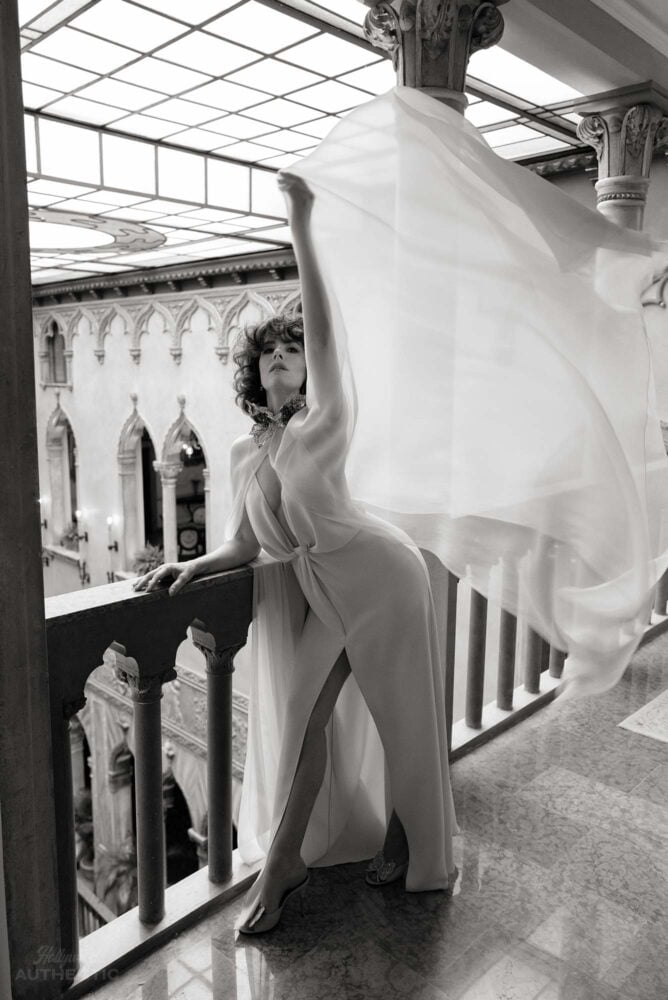
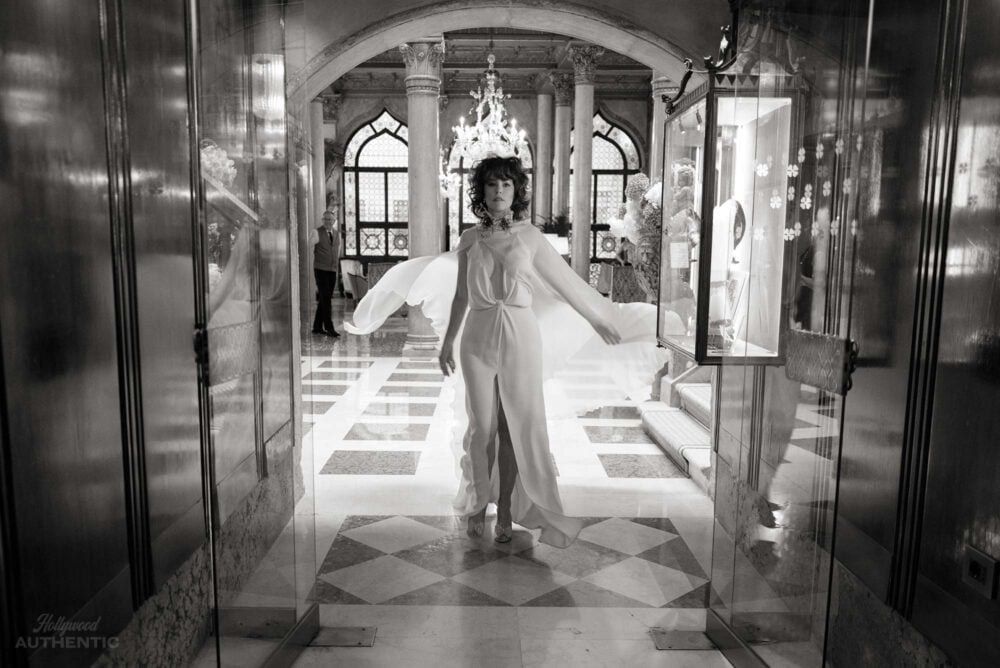
Greg Williams caught her ahead of the premiere of Garance on the roof terrace at the Palais du Festival where her Sarah Burton for Givenchy gown was as dramatic as the tales being told on screen in the theatres downstairs…


Photographs by GREG WILLIAMS
Words by JANE CROWTHER
The Displacement Film Fund is now taking submissions at
www./iffr.com/en/iffr-pro-submissions/film-entry