Words by PETER BERG
Director Peter Berg unpacks how Gaspar Noé’s experimental Climax helped him find a way to depict the horrors of war in his latest project.
CLIMAX (2018)
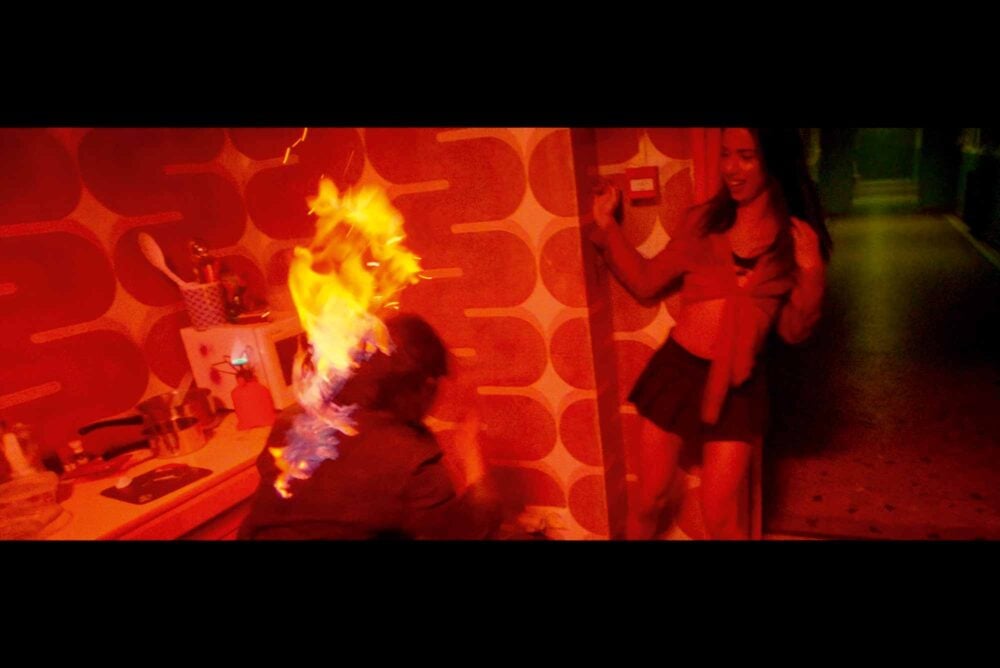
I have watched Gaspar Noé’s Climax several times. It’s a brutal watch. With every viewing, I am re-engaged with the film’s unique ability to flex true immersive power. It is the ability to force the viewer to participate rather than spectate the cinematic experience.
Love it or hate it, you will be hard pressed to deny that Gaspar Noé knows how to put his audience ‘in it’. Noé eviscerates the normal boundaries that exist between an audience and a screen. He grabs you by the throat and pulls you into his viscous abyss. You will not breathe, you will not look away.

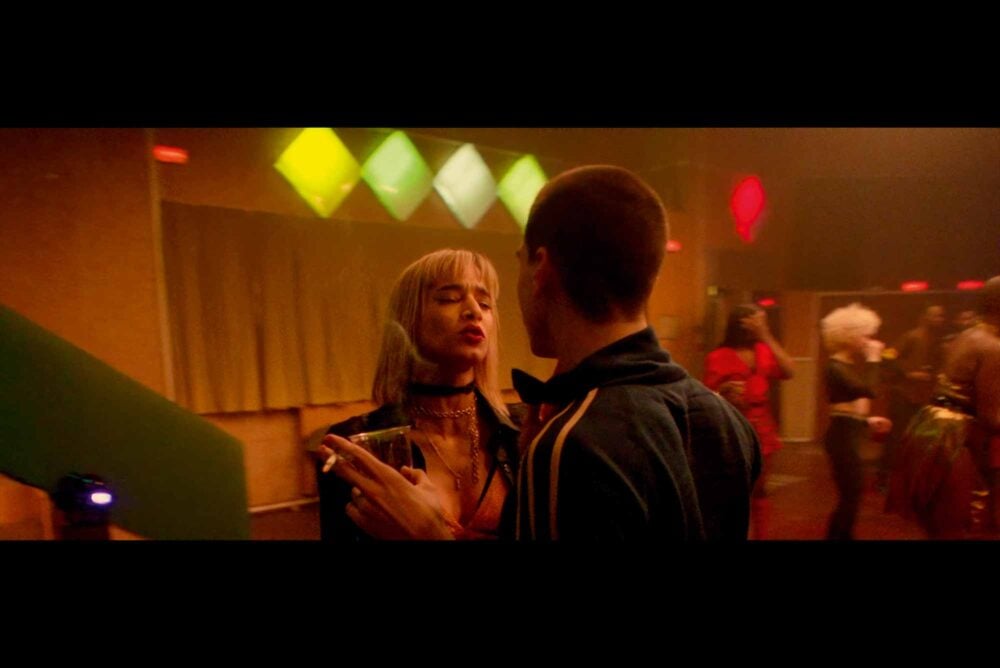
When I first watched Climax, I was struck by something I rarely experience watching a film. I felt physically altered by it. My breathing changed. My perception of time changed. I felt trapped inside the film. Noé wasn’t simply showing me people experiencing a bad LSD trip, he was feeding me LSD, and I was on that bus.
Noé’s ability to immerse an audience was at the forefront of my creative soul when I began writing and directing The Mosquito Bowl.
I knew I wanted to make a war film that honored the young men who fought and died in the Pacific during World War II. I wanted audiences to understand who these boys were before they became Marines. Football players. College students. Young men with girlfriends, families and futures. They had dreams that had nothing to do with war. They were ordinary American boys who found themselves thrust into an extraordinarily violent moment in history. But I also knew that when we followed these boys into combat, I didn’t want the audience to simply watch these men as they journeyed into war. I wanted them to go on that journey.
I wanted immersion.
Most war films, even great ones, give the audience a certain degree of orientation. We understand where the enemy is, where our soldiers are, what the objective is, and what must happen for the mission to succeed. The camera helps us make sense of the chaos. The editing provides geography. The music tells us what to feel. Even in the most violent sequences, there is often an underlying cinematic order.
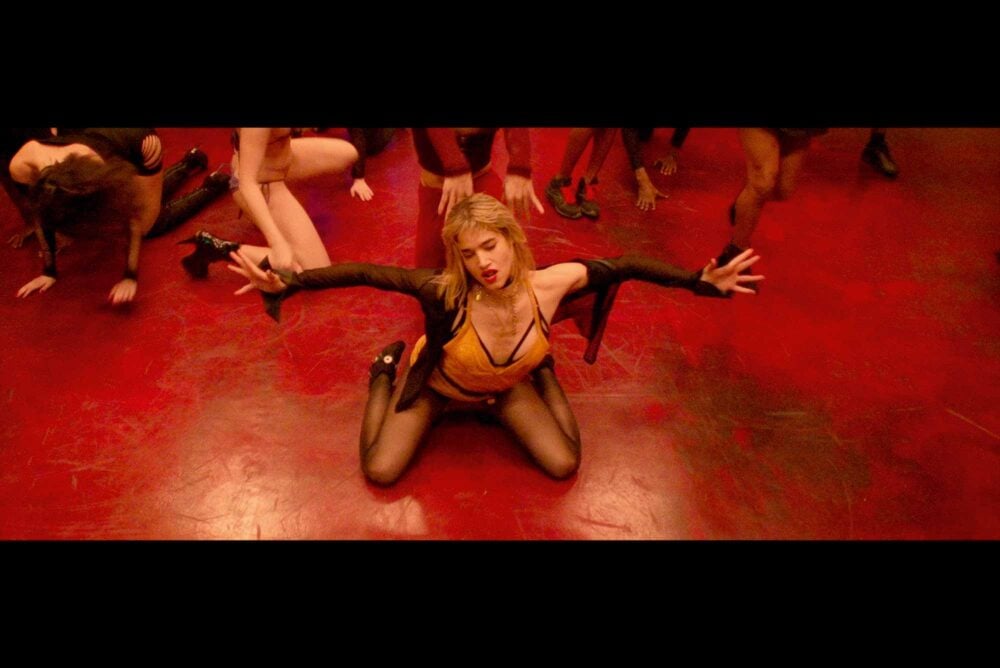
Like Noé in Climax, I wanted to challenge that.
What fascinated me about Climax was the way Noé systematically destroys the audience’s sense of control. The film begins in a recognizable world. There are people, relationships, music, dancing, sexuality, rivalry. There is energy and excitement. Then something shifts. The familiar becomes threatening. The music becomes oppressive. The camera becomes increasingly untethered. Time stretches and collapses. Human behavior becomes unpredictable. What initially feels exhilarating gradually becomes terrifying.
By the time the film reaches its darkest moments, the audience is no longer observing the characters from a safe distance. We are trapped in their collective psychological breakdown.
That was the experience I wanted to explore in The Mosquito Bowl. Not because I wanted to imitate Noé’s imagery or his subject matter. I wanted to borrow something more fundamental: his willingness to use cinema as a form of sensory assault.
Combat, particularly the kind of close-quarters fighting these Marines experienced, is not an orderly event. It is a violent collision of sound, movement, fear, confusion, exhaustion and adrenaline. Men are screaming. Explosions are erupting. Bodies are being torn apart. Visibility is limited. The ground is unstable. Your friends are disappearing. You are trying to understand what is happening while your brain is being overwhelmed by information it cannot possibly process.

I began thinking about combat as an altered state of consciousness. A drug-like experience. Not the pleasurable kind, but a terrifying chemical journey in which adrenaline, cortisol, terror and physical exhaustion combine to radically distort perception.
I wanted the audience to feel that distortion. I wanted sound to become almost unbearable, and moments of extreme violence to arrive without warning. I wanted my audience to feel overwhelmed and assaulted by the experience of fighting in the Pacific Theater. I wanted to hold them, as long as possible, in the apex of that assault.
One of the remarkable things about extreme fear is the way it alters our perception of time. A few seconds can feel like an eternity. An entire sequence of events can disappear into a blur.
Climax understands this. Noé allows scenes to continue long past the point where conventional filmmaking would provide relief. He makes duration itself an instrument of psychological pressure.
That idea influenced the rhythm of combat in The Mosquito Bowl.
I wanted moments when the audience is desperate for relief, when they are uncomfortable, and rescue is nowhere in sight. There was no 911 for the Marines on the beaches of Tarawa and I wanted my audience to feel that. The goal wasn’t chaos and violence for shock value. It was to capture the psychological reality of combat.

What fascinated me about Climax was the way Noé systematically destroys the audience’s sense of control
The fundamental tragedy of The Mosquito Bowl is that these young men enter the war with identities formed by an entirely different world. Football had taught them discipline, courage, loyalty and the importance of protecting the man beside them. Those values remain with them in combat, but the rules governing their lives have been obliterated. On a football field, violence has boundaries. There are referees, clocks, sidelines and a final whistle.
On Okinawa, there is no whistle. There is no referee. No guarantee that courage will be rewarded or that the best man will survive. I wanted the audience to experience this collapse of order alongside the characters.
The influence of Climax became especially meaningful to me in the way Noé takes something associated with beauty, freedom and collective joy – dance – and transforms it into an expression of terror and human disintegration.
In The Mosquito Bowl, I wanted to explore a similar transformation. The physicality that once made these young men exceptional athletes becomes the physicality they need to survive. Their brotherhood, once expressed through football, becomes a matter of life and death. The same bodies that collided on a field for sport are now being destroyed on the battlefield. There is something profoundly disturbing and sad about that transformation. I didn’t want to romanticize it.
I have spent a significant part of my career around soldiers, particularly Marines and special operations personnel. Having witnessed their discipline, humor, loyalty, and their willingness to put themselves in danger for one another, I have enormous respect for them. However, that respect has never made me believe that war itself should be celebrated. In fact, quite the opposite.
The closer I’ve gotten to the people who fight in wars, the more interested I’ve become in the terrible price they pay for decisions made by people who will never experience the consequences firsthand. That is ultimately what The Mosquito Bowl is about.
At the beginning of the film, these young men have lives filled with aspiration and possibility. By the final combat sequences, those possibilities have been violently extinguished. I wanted the experience to become almost unbearable. Not because I enjoy making audiences suffer, but because I believe there are moments in storytelling when discomfort is necessary. Moments when the subject matter demands that we abandon the familiar pleasures of cinema and confront something more difficult. And then, when the violence finally stops, I wanted the silence to mean something.
By the end of this film, I hope the audience will remember the young men they had first met. Their faces. Their friendships. Their humor. Their innocence. They’ll understand that these were not simply casualties in a historical account. They were individual human beings whose lives had been interrupted and ultimately destroyed.
Gaspar Noé reminded me that cinema has the power to operate beyond language and narrative. That a film can reach directly into the human nervous system and create a physiological experience. That was my goal.
The Mosquito Bowl isn’t going to simply explain the horror of war – you will feel it. As the boys go, so do you. You enter the void, lose your bearings and your sense of time, and experience the terrible, hallucinatory madness of combat alongside them. War is not a game. War is the destruction of human possibility. And the young men who are asked to fight it deserve far more than our admiration. They deserve our understanding.
Climax is available to stream on Amazon
The Mosquito Bowl (Dir. Peter Berg) is in cinemas now and will stream on Netflix from 25 November