


Words by JANE CROWTHER
Christopher Nolan’s Homer adaptation is a classic – both in genre and its ability to remain relevant in any age. While it may be a swords-n-sandals epic of myth, set in ‘a time of apparent magic’, the journey of a warrior returning home from war (physically, emotionally, mentally) explores themes of imperialism, PTSD, patriarchy, masculinity, the senselessness of war and the continued importance of writing in an increasingly post-literate, AI world. It is epic in scale, scope, ambition – a true event movie befitting the timeless power of an eighth century text.
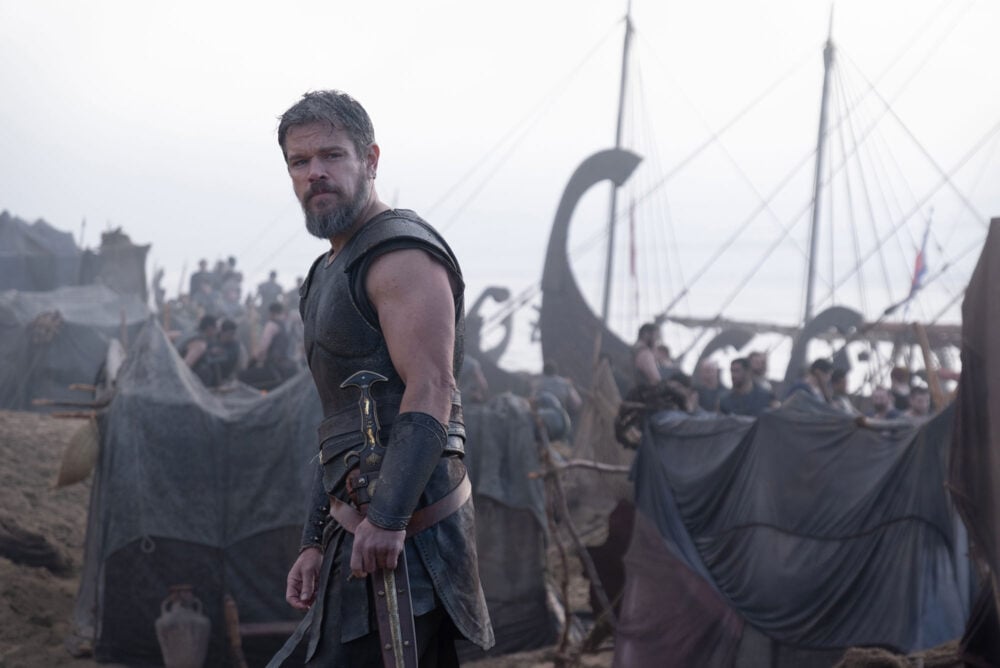
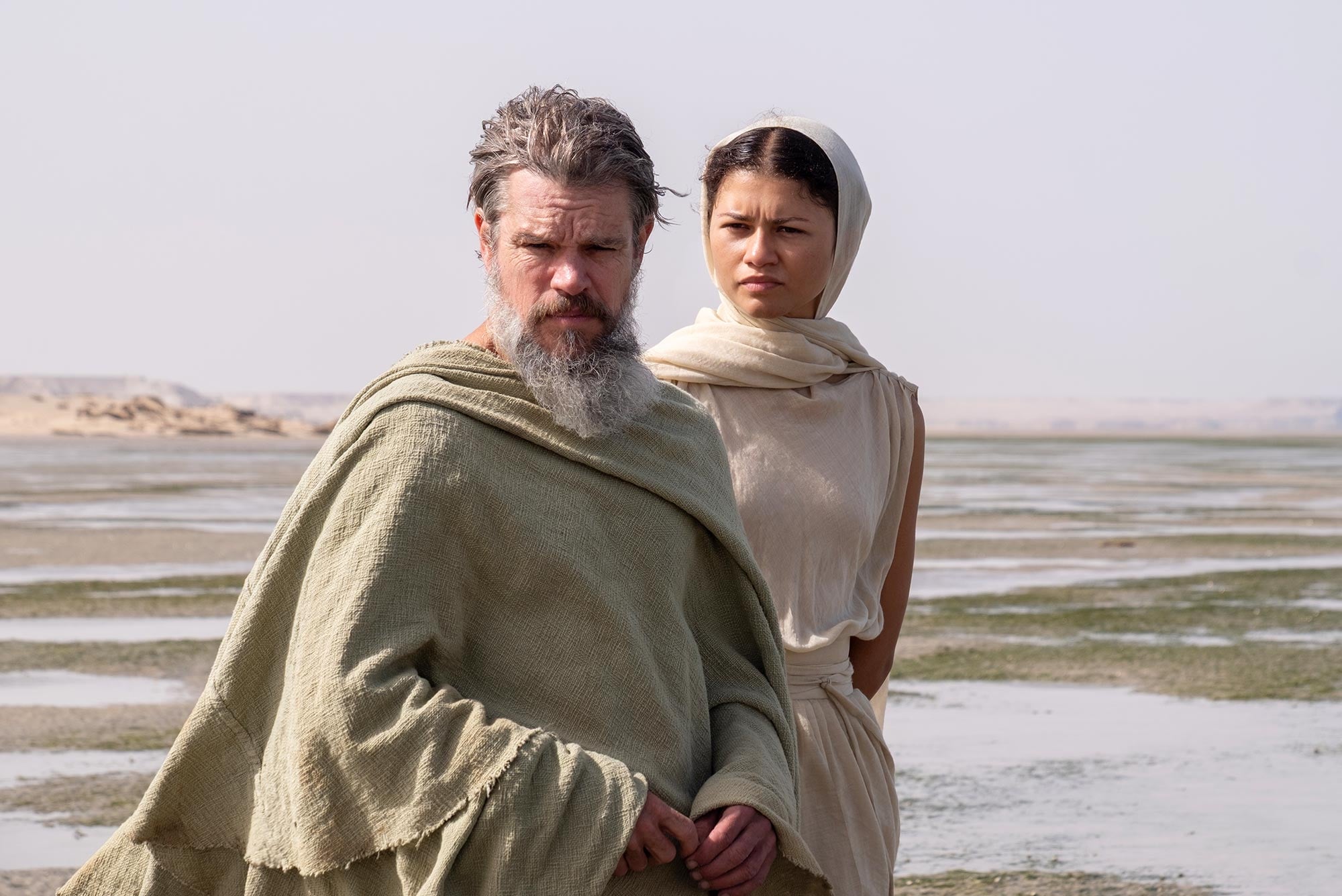
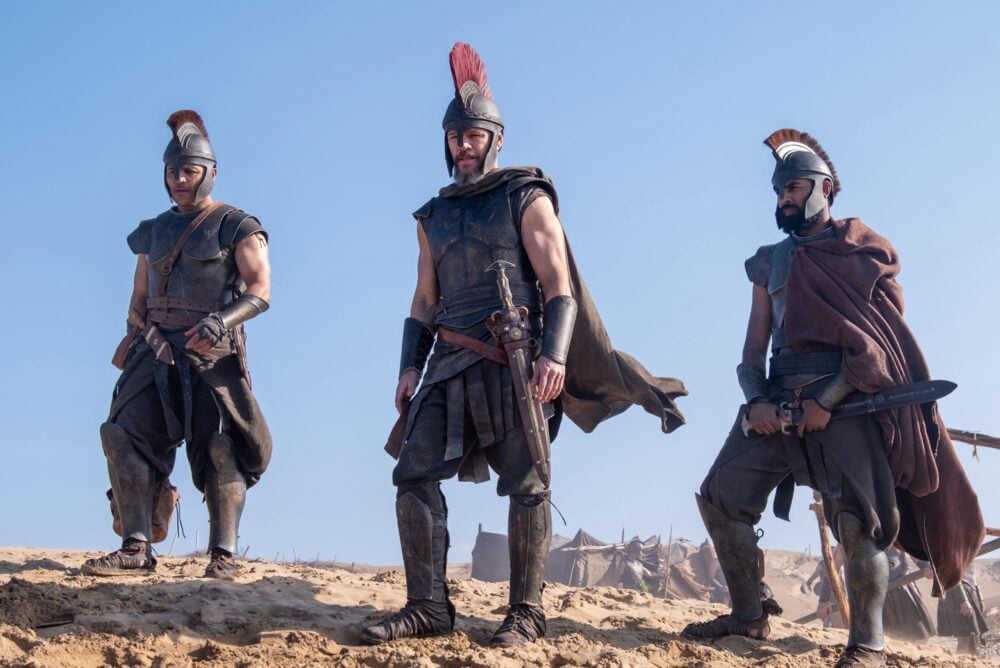
Nolan, of course, can weave narratives and multiple timelines, so he nimbly parses Homer’s time-skipping, media res poem into a three-hour adventure that begins in the royal palace of Ithaca where the queen, Penelope (Anne Hathaway), and her son, Telemachus (Tom Holland), have waited twenty years for the return of their king, Odysseus (Matt Damon) from his battle in Troy. Penelope has spent years fighting off suitors, chief among them Antinous (Robert Pattinson), while Telemachus fiercely believes his father is still alive. For ten of those years Odysseus has been camped on the beaches of Troy trying to figure out how to gain access to the city on a rageful campaign spurred on by Agamemnon (Benny Safdie in a priapic suit of armour) and Menelaus (Jon Bernthal) pursuing his stolen wife, Helen (Lupita Nyong’o) – she whose face launched a thousand ships. His solution of the Trojan Horse allows his troops to sneak into the citadel and Nolan to sneak in questions about how much mankind has advanced from such brutal times with images that evoke 9/11 and a cast that speak in American accents as they pillage, brutalise and destroy. We might as well be watching rolling news were it not for the swords and breastplates. Having seen the horror he has unleashed with his trick, Odysseus’s perilous journey home taking in monsters, gods, witches and trips to Hades becomes not merely a physical challenge but a mental one. Odysseus must come to a moral reckoning in order to earn his place in his wife’s bed, on his throne and in the hearts of audiences.
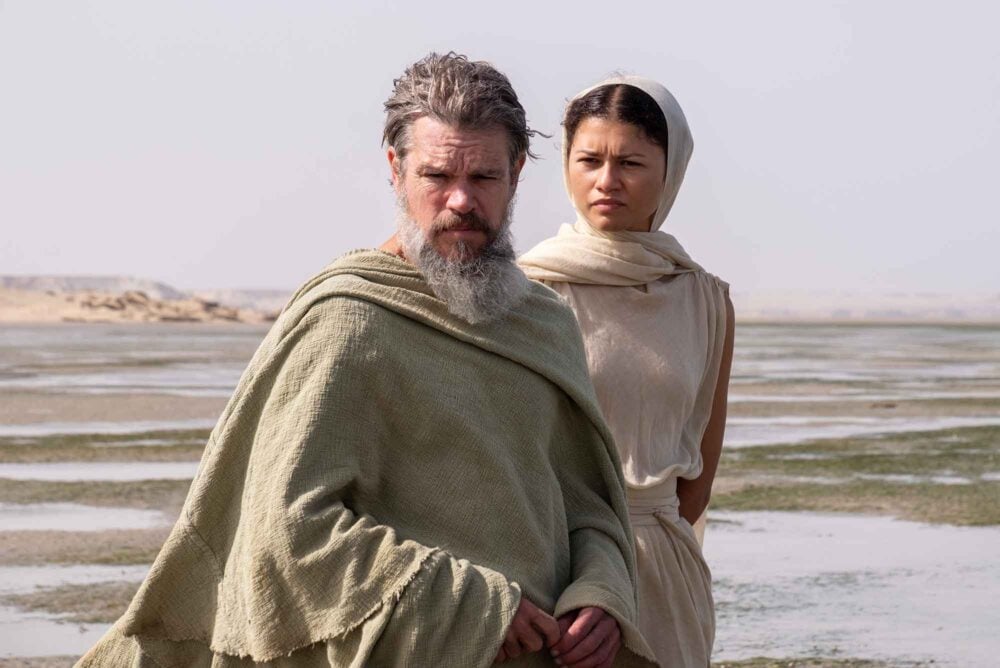
That journey is rendered entirely in IMAX (the first film to do so) and practically – globe-trotting to stunning landscapes, filming in real locations tagged to the myths (the cyclops dwelling is Nestor’s Cave in the Greek Peloponnese) and special effects created in-camera and physically. Some uncanny-valley sad big cats, the cliff monster Scylla and aspects of single-eyed Polyphemus aside, this Greek blockbuster, richly lensed by Hoyte Van Hoytema, feels tactile, grounded, immersive and real. And though characters talk of gods, we only meet tangible, relatable deities. While the denizens of Olympus show their might in storms and strokes of fate, Athena (Zendaya), Calypso (Charlize Theron) and Circe (Samantha Morton in a cracking interpretation of the ‘men are pigs’ myth) appear as real women, and telling manifestations of Odysseus’ guilt, regret and PTSD. Their versions of womanhood are shown through the lens of a man who has abused women through war, misogyny and abandonment – and their mortal counterparts are granted agency and comment. Penelope doesn’t simply pine for her man, she exhibits ambition, rage and cunning, telling her son ‘in this world a man does what he wants, I do what I can’. Helen of Troy displays her disgust at being a possession, her twin Clytemnestra nurses bloody vengeance. Nolan has been criticised in the past for not writing great female parts and this feels like progress.
But, inescapably, men drive the narrative. Damon, leading after supporting in Interstellar and Oppenheimer, brings his Bourne physicality to a role that requires verisimilitude in battle – both in combat with giants, cyclops, Trojan forces and suitors, and internally as he struggles with amnesia, decisions of collateral damage and attempts to obey the moral code of the gods. It’s a performance that recalls Russell Crowe’s dextrous balance of grit and humanity in Gladiator and will likely net Damon similar accolades and gongs. His nemesis is given full baddie credentials by Pattinson, complete with delicious twitching eyes and pissy line reads (think Alan Rickman in Robin Hood: Prince of Thieves) while Holland manages to mature from boy to man during the screentime and impress beyond his Spidey suit. In a stacked cast John Leguizamo shines as the loyal servant of Odysseus and audience proxy, Eumaeus. Though he’s seen chucking puppies off cliffs, his ethics are a guiding force in a world where betrayal, vengeance and power steals are commonplace.
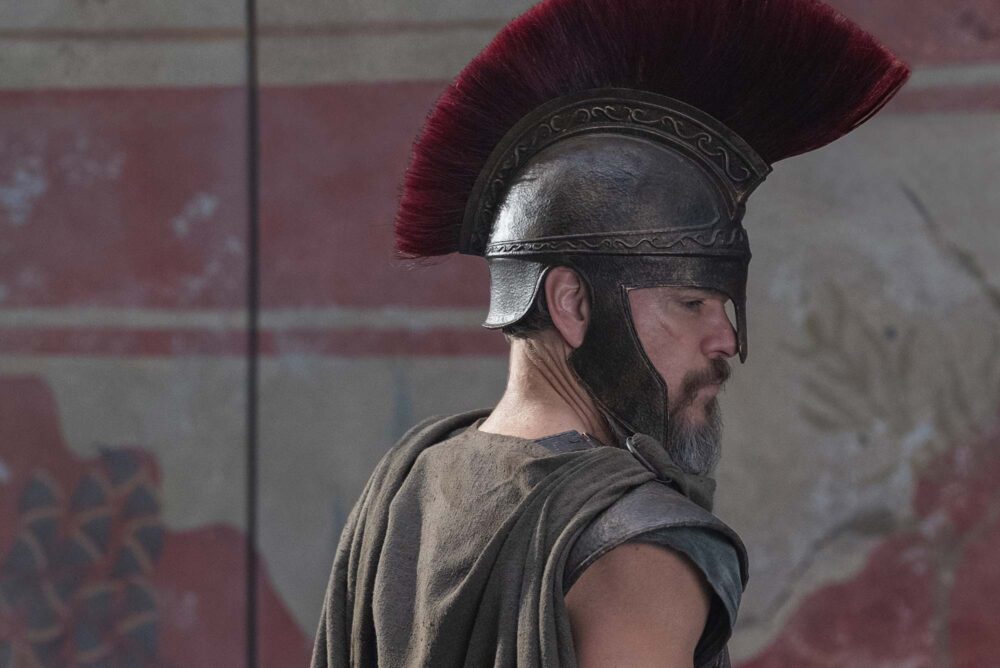
As expected, Nolan’s take on Homer will withstand multiple viewings to appreciate all the moving parts and themes, but as a stand-alone cinema experience it’s the sort of crowdpleasing extravaganza that will invigorate audiences and prove the value of big screen entertainment. And, in an industry that increasingly wants to shrink cinema and replace human endeavour with AI, it’s a battle cry for artistry. As Nolan has one of his characters note in the finale: ‘songs will be all they have to remember those of us who can write’. Well, indeed.
Words by JANE CROWTHER
Images courtesy Universal Pictures
The Odyssey is in cinemas now