


Words by JANE CROWTHER
I Saw The TV Glow creator, Jane Schoenbrun, returns with another zeitgeisty future-cult exploring fandom and the blur between art and life – bowing at Cannes in a gush of blood and fried chicken dipping sauce. Taking place in a world where eighties slasher franchise Camp Miasma exists (a seven-picture series that is realised nostalgically and brilliantly in a bang-on credit sequence), Sundance darling, Kris (Hacks’ Hannah Einbinder) is asked to bring her woke smarts to rebooting the artistically zeroed but still monetisable brand. Or as the constantly reanimated series is described by her, ‘zombie IP’.
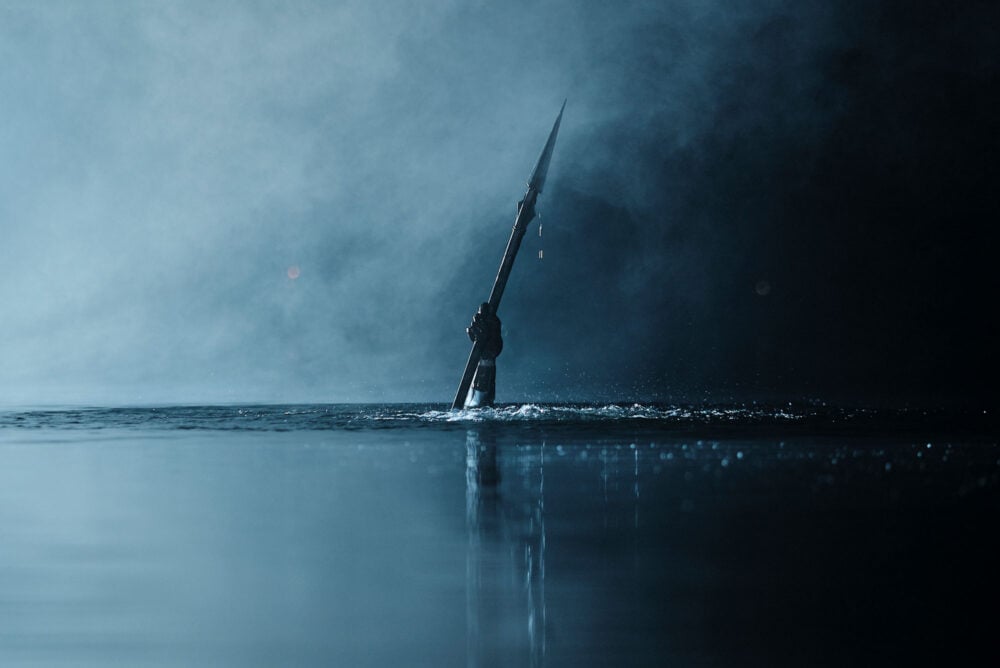
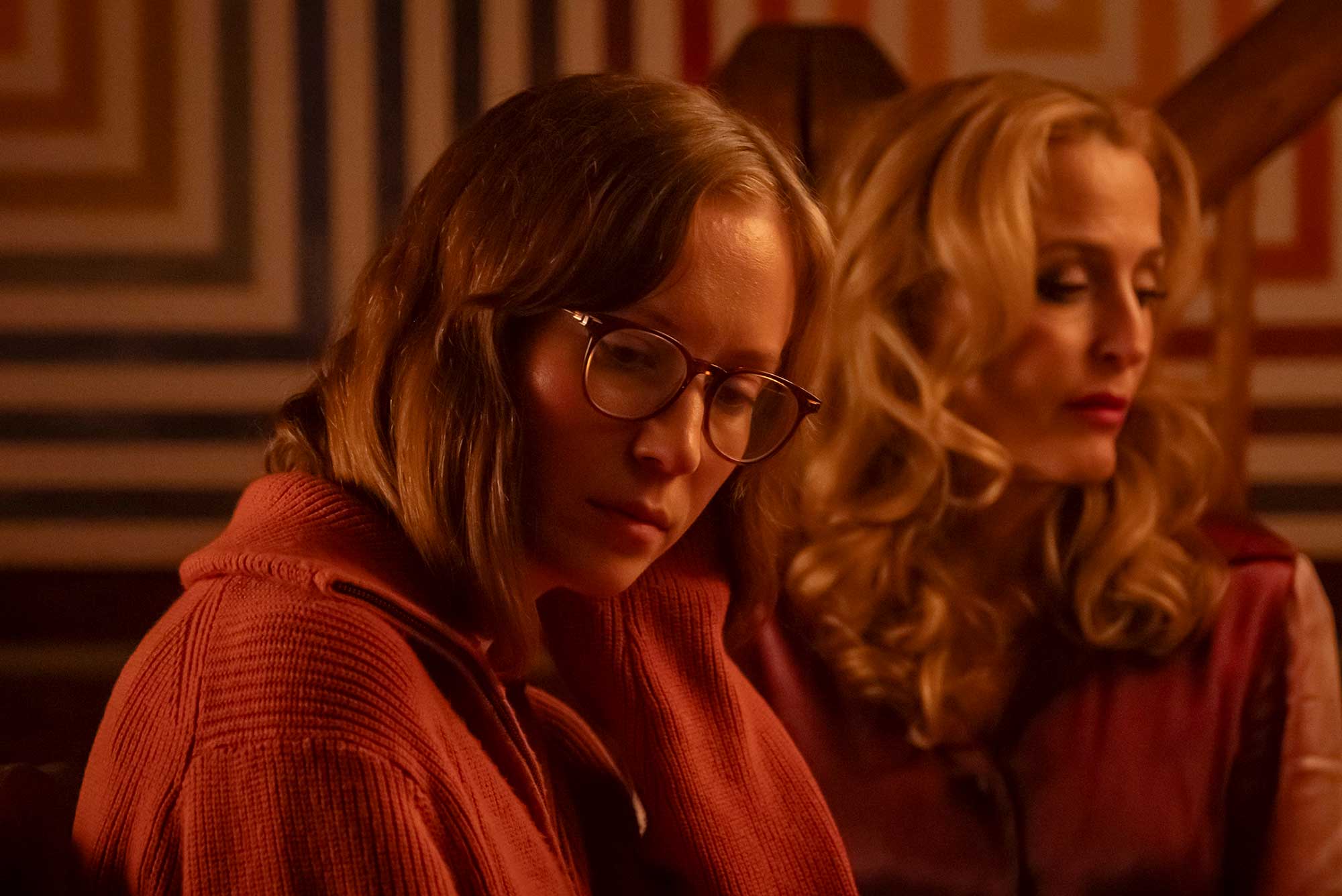
A director with ideas about the intersection of queerness and cultural monstrosity in horror – this one has a murderer who rises from the lake at the teen camp wearing a vent hood to terrorise nubile, scantily clad girls with a spear – Kris arranges to meet with the original final girl of the franchise, Billy (Gillian Anderson). A Norma Desmond-esque recluse who lives at the location used in the first film, Billy has a Southern accent that drips like molasses from her scarlet lips and a penchant for fried chicken. Swishing around her trapped-in-time house in sexy peignoirs or Hitchcock Blonde hats, she is alluring to Kris, a queer ‘pip squeak’ who is disassociated from her own desire in bed. Kris is seduced by the idea that Billy reached the most exquisite orgasm of her life while viewing herself as both killer and victim during filming. In accessing the male gaze of the lake-dwelling murderer, known as ‘Little Death’ (he evokes post-coital ‘petit mort’, geddit?), Billy has stepped into her power and a liminal space where art/reality fuse. Do the movies create Little Death or does he create the movies? And just how much fake blood can spew from beheaded and impaled bodies?
Schoenbrun has recently transitioned and while their psychosexual dark comedy horror sharply analyses the idea of gender dysmorphia via horror tropes, it also dismantles the libidinal and misogynistic aspects of slasher films by inviting audiences to consider why we are so often asked to root for female victims while also given the POV of their male predators. But those are only two aspects of a film loaded with concepts to consider on multiple views. The impact of porn (also a VHS boom industry) on female eroticism, the exploration of consent and the numerous sly nods to cinematic iconography are also offered for the unpacking.
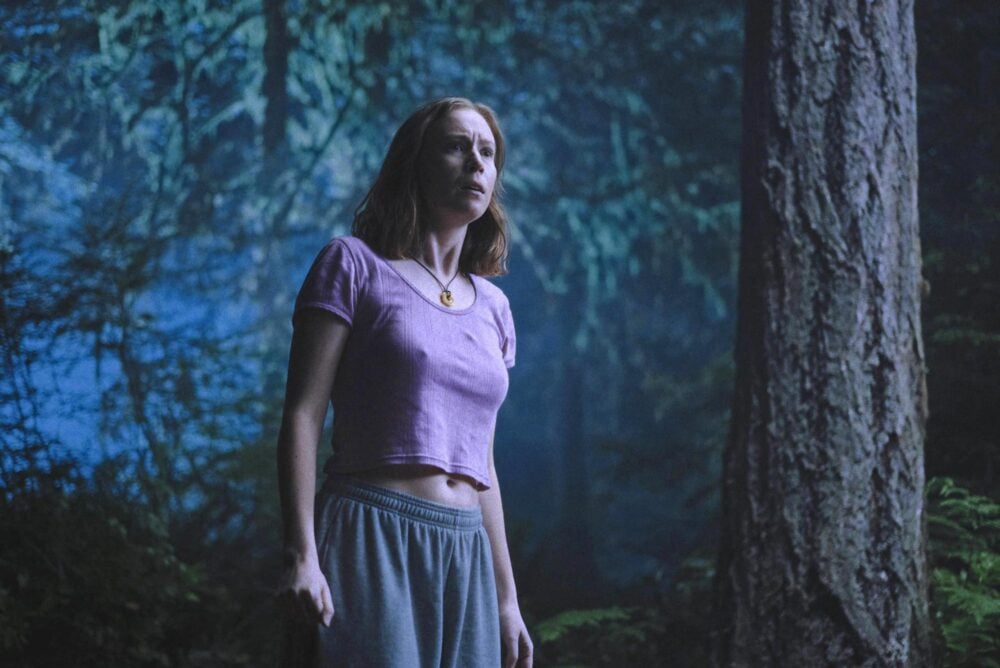
But even if you don’t want to parse it, Camp Miasma, offers a fun time at the flicks. Both Einbinder and Anderson are delicious to watch – Einbinder comedic while leaning into the terror, Anderson Southern gothic vamping without ever mocking. There’s banging needle drops from Counting Crows, REM and Donna Lewis, decapitated heads sighing ‘bummer’ with their last breath and pleasing visual effects that provide a tangible sense of the video cassette age. Twin Peaks DNA ripples through the bloodlust, a sense of watching something smart – the sort of jewel-box movie that probably will play at midnight screenings in the future and inspire fan theories. The meaning of ‘miasma’ is of an unpleasant or unhealthy smell or vapour, and while Schoenbrun’s reflexive romp dwells in death and franchises past their sell-by date, it’s certainly no stinker itself.
Words by JANE CROWTHER
Images courtesy of Plan B Entertainment
Teenage Sex and Death at Camp Miasma premiered at the 79th Cannes Film Festival and is out now