



Words by EMILY ZEMLER
From diamond tears to royal engagement rings, bracelets ready for their close-up to bejewelled crucifixes, Cartier jewels have dazzled onscreen since cinema’s inception…
Cartier is one of cinema’s most enduring characters. Since 1926 – when Rudolph Valentino famously donned an iconic Cartier Tank watch – the luxury Maison has established itself as both a cultural icon and a memorable co-star. Its timeless jewellery has appeared in classic films like Sunset Boulevard and more contemporary works like Ocean’s 8 and The Phoenician Scheme.

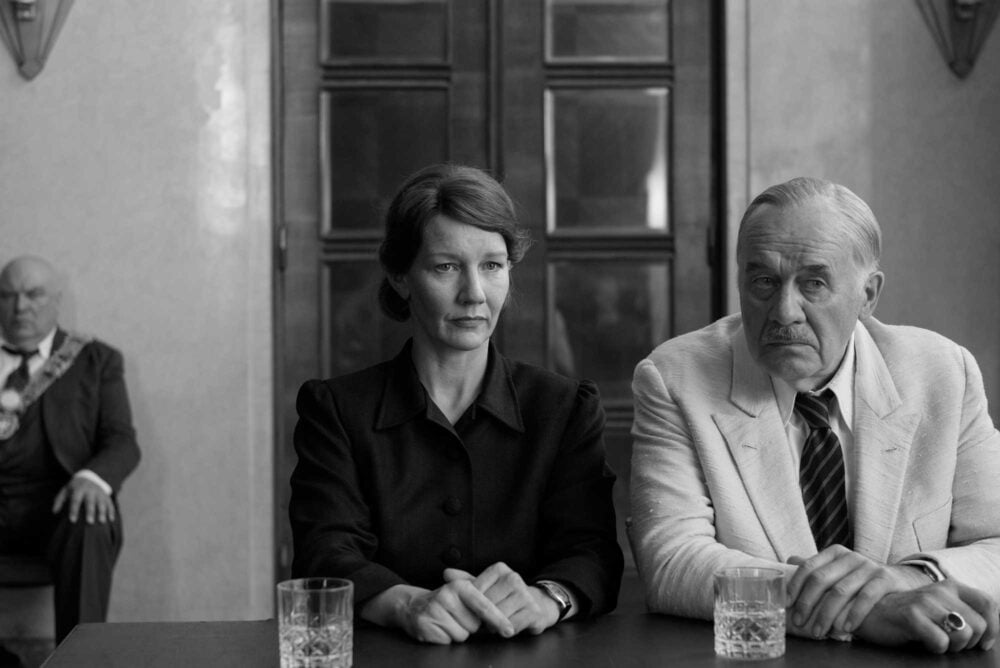
From Wes Anderson’s 2025 film The Phoenician Scheme
The elegant craftsmanship of Cartier’s jewellery has augmented the magical worlds created by skilful filmmakers for generations, helping to bring the stories to life in ways that feel as real as they do transformative. Over the years, hundreds of films and series have featured Cartier pieces – an extraordinary filmography that outshines the careers of many human actors. But Cartier’s contribution to the landscape of cinema wasn’t inevitable. It took a legacy of craftsmanship, some particularly devoted famous fans and a dedication to storytelling that has spanned time and genre.
Perhaps the link between carats and celluloid was inevitable. Maison Cartier was founded in Paris in 1847, only a few decades before the invention of cinema by Auguste and Louis Lumière, who also first presented their work in the French capital. In 1895, the Lumière brothers began filming short scenes using their newly-created cinématographe, an early motion-picture camera. Later that year, they held the first commercial film screening at a café in Paris, an historic moment that for ever changed the landscape of arts and culture. It wasn’t long after that Cartier and cinema embarked on an undeniable relationship that has lasted for a century.

In 1926, Valentino, arguably one of silent film’s most iconic actors, played dual characters in George Fitzmaurice’s The Son of the Sheik – the final starring role of his career. Embodying both a sheik and his rakish son Ahmed, Valentino convinced the director to let him wear his Tank watch in his scenes, simply because he didn’t want to take his beloved timepiece off. Audiences were delighted by the unlikely detail and the Tank rapidly grew in popularity after its on-screen debut.
Cartier soon established itself as an indelible onscreen partner for the most popular performers of every era. In 1946, Jean Cocteau (who habitually wore two of Cartier’s trademark Trinity rings on his left pinkie finger) directed a reimagining of the classic fairy tale Beauty and the Beast, titled La Belle et La Bête. In the ethereal film, Belle wept Cartier diamonds instead of tears. ‘A fake diamond doesn’t throw fire,’ Cocteau explained of his artistic vision, ‘only a real diamond shimmers.’ The loaned diamonds underscored the emotional quality of the scene, creating a lasting, surrealist image that has since become interlinked with the history of cinema.
Gloria Swanson, too, couldn’t be parted from her Cartier. She was often photographed in her jewels, a signature of her glamorous image. The jewellery accompanied her onscreen Sunset Boulevard: ageing former starlet, Norma Desmond, still sparkled in her choice of jewels if not on the big screen. In the film, Swanson wore two of her own diamond and rock crystal bracelets created in 1930 as part of Desmond’s costume.
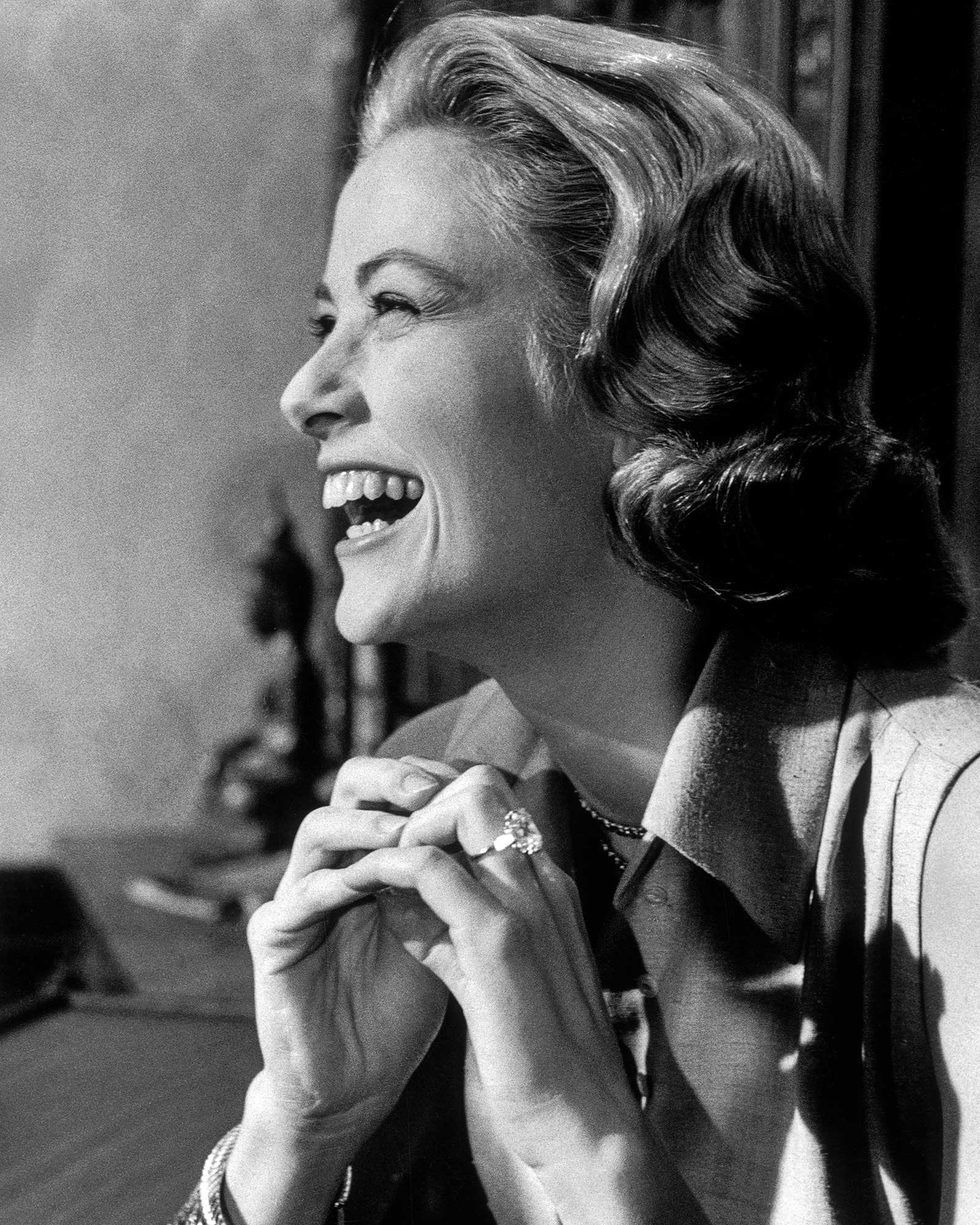
In High Society, released in 1956, Grace Kelly wore the jewellery house’s engagement ring, adorned with a 10.48-carat emerald-cut diamond and given to her by Prince Rainier III of Monaco. Like Valentino before her, the actor couldn’t bear to part with it while working, so added the famous ring to the film’s legacy instead. Tracy Lord’s classic platinum and diamond bauble boasted regal veracity for audiences.
More recently, Cartier collaborated on 2018’s Ocean’s 8. The plot centered on the theft of an ornate diamond necklace, made by Maison Cartier and based on a piece created by Cartier London in 1931. Named after Jeanne Toussaint, Cartier’s creative director from 1933 to 1970, the prop mimicked diamonds with zirconium oxides.

The Maison’s skills were again enlisted for Wes Anderson’s recent output, The Phoenician Scheme to recreate a Cartier rosary from the 1880s for the nun protagonist to clutch. ‘It was interesting and fun to do it that way, and I think they look better,’ Anderson said of using actual Cartier jewels in the film.
Cartier has expanded its cinematic presence by contributing new short films to the zeitgeist, and by frequently collaborating with filmmakers such as Johan Renck and Sofia Coppola. ‘Films are made up of many details, and jewellery plays a role in this by showing you the type of character you encounter,’ Coppola noted.

Platinum, Diamonds, Rock Crystal
The Maison is also a main sponsor of the annual Venice International Film Festival, an opportunity that more deeply connects Cartier with new and important works from the global cinematic community. Over the years, the jewellery house has hosted Maison ambassadors like Monica Bellucci and Rami Malek, and bestowed the Cartier Glory to the Filmmaker Award to legends like Wes Anderson. This year, Cartier celebrated BAFTA with a glamorous dinner held ahead of the annual EE BAFTA Film Awards, drawing a full-circle movie moment between Valentino’s watch obsession a hundred years ago.
Cinema and jewellery share a commonality in the often unseen craftsmanship that goes on behind the scenes to create the magic onscreen. Like movie productions, Cartier boasts many specialised metiers who craft their own sort of creative sorcery to produce a dazzling work of art. And BAFTA and Cartier share a similarly long history and legacy in showcasing quality and artistry. Though founded in Paris in 1847, a Cartier boutique has stood in London’s New Burlington Street since 1902 and held warrants from members of the British Royal family since 1904. Just steps away, BAFTA HQ resides with a similar dedication to creative excellence and links to the royals. Established in 1947 as the British Film Academy, the organisation became BAFTA eleven years later, with the opening of its Piccadilly home in 1976.
Together, both Cartier and BAFTA have left a lasting mark on our cultural consciousness that continues to sparkle.
Words by EMILY ZEMLER
Cartier Rosary (Credit: Nils Herrmann, Collection Cartier)
Jean Cocteau (Credit: ©️ Luc Fournol / Photo12). Thanks to the Comité Jean Cocteau
Grace Kelly (Credit: ©️ D. Stock / Magnum Photos). With the permission of The Princess Grace Foundation – USA
Gloria Swanson (Credit: Documentation Cartier Paris). Bracelet Cartier Paris, 1930 (Credit: Marian Gérard, Collection Cartier © Cartier)